Tag Archives: salvation

Taking the Fork in the Road: Discussing Arminianism and Calvinism, Part 1

arminianism-calvinism-debateThe following paper is based on a faculty workshop given by the writer on October 25, 1971, in a faculty meeting at Faith Baptist Bible College. Frequent questions by students in the area of the sovereignty of God have prompted the writer to put his notes into a more permanent form. Although recognizing the differences that exist among evangelicals, the author believes that the position stated herein approximates most closely the Biblical and historical Baptistic view. This paper must not be construed a the official position of the school. However, it is sent forth with the prayer that it might generate more light than heat and be found profitable by the ever inquiring students…

-Manfred E. Kober, Th.D.
“Divine Election or Human Effort?”

Pastor Randy gave me a copy of this paper during our Wednesday night talk last week and I’m just now getting into it. I’ve read the first two chapters (17 pages) and can’t restrain my response any longer. I’ll write more as I progress through the 50+ pages of Dr. Kober’s paper and hopefully I too will generate “more light than heat.”

Before proceeding, a few things. First of all, I told Pastor Randy that I tend to think of myself as a “generic Christian with a Jewish twist” rather than align with a particular denomination, Baptist or otherwise. I also believe it’s quite possible to be a perfectly well-functioning Christian without declaring to be an Arminianist or a Calvinist. After all, these are systems constructed by theologians and honed by other theologians over the course of many centuries. Sure, they’re both based on scripture, but they are derived from scripture; interpreted from scripture. That doesn’t mean that either system is presupposed by scripture, let alone God. I could wad up both Arminianism and Calvinism in all their variations like so much waste paper and toss them into the trash can, then move on to other matters. My existence as a disciple of the Jewish Messiah does not hinge on making such a decision. Theologians, teachers, and preachers in a formal Christian sense must come up on one side or another but as a plain old “vanilla” Christian, I don’t.

Now on with the show.

The primary task for a theologian is to interpret God’s Word for man. But interpretation is both an art and a science. This means that any exposition of the Bible is guided by specific rules and checks which guard against personal whims and prejudices of the interpreter. The application of these rules demands the greatest care in judgment that the godly and dedicated interpreter can bring to bear upon the text. In that sense interpretation is an art.

-Kober
“Chapter 1: The Duty of the Theologian,” pg 1

I can grasp the science of Biblical translation and interpretation but we must admit that it is the “art” that makes things elusive and ambiguous on occasion. If theology was an “exact science,” we wouldn’t have so many different ideas about what the Bible means. Or would we? After all, even a hard science such as astronomy contains many varying points of view on phenomena we can observe through the electromagnetic spectrum, and sometimes what we see can surprise us and challenge our long-held positions.

Kober has already somewhat contradicted himself (I’m sure he doesn’t see it quite that way and I am stretching my interpretation of “contradicted” a bit) by saying in the introduction that he’s presenting his material from the “historical Baptistic view” and in Chapter 1, he says that the science of Biblical interpretation follows rules and checks “which guard against personal whims and prejudices.” Maybe those rules and checks guard against the interpreter’s personal bias, but what about the bias built into the “historical Baptist view?”

Which aspect of salvation does God the Holy Spirit accent? Is it God’s sovereignty in salvation or the effort of man?

-Kober, pg 2

I’m crying “foul” here. Kober makes it sound like the question at hand is “Does God save or do people save themselves?” Not being a Calvinist, I can still agree that God and only God saves, but the question is, do human beings have any ownership of the process at all. It is God’s “effort” that saves, all a human being has to do is to effectively surrender to God. Is surrender an “effort?” Why do we have to be so “either-or?”

This is something of a side note, but I couldn’t resist finding the following statement somewhat ironic.

Frequently, one encounters a strangely resigned attitude on the part of believers toward certain areas of God’s truth, especially that of election, such as “Oh, well, we will know it all by and by!” This is true of course. But the point is that God has revealed more about His majestic plan of redemption than Christians sometimes realize.

-Kober, pp 2-3

beth-immanuelGiven the multitude of blog posts I’ve just written giving my own interpretation of how Messianic Judaism understands God’s revelation of His “majestic plan of redemption,” I wonder what Dr. Kober would say to the suggestion that he, like the Christians he references, may be unconscious of certain viewpoints on the redemption and salvation of Israel as well as the people of the nations called by God’s Name as presented from outside his own framework?

But back to the main focus on this “meditation.”

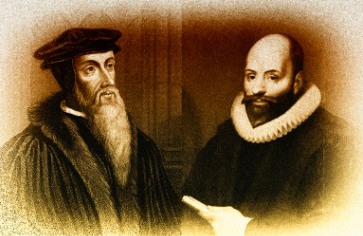
There are two basic ways of approaching the doctrine of salvation. One way is to stress the importance of man and his free will to choose for or against christ; this school of interpretation is called Arminianism, named after James Arminus. The other way of approaching salvation is to stress the importance of God and His sovereign will in bringing men to Himself through Christ; this school of Interpretation is called Calvinism, named for John Calvin. It is unfortunate that one must call himself an Arminian or Calvinist but for theological purposes every Christian is either one or the other.

-Kober
“Chapter 2: The Decrees of God,” pg 4

Is it better to be feared or respected? — I say, is it too much to ask for both?

-Tony Stark (Robert Downey Jr)
Iron Man (2008)

When you come to a fork in the road, take it.

Yogi Berra

That’s kind of my resolution to the problem in a nutshell, and it’s way too early to tip my hand, but I’m doing it anyway. I know people reading this blog post will probably classify me as an Arminian because I’m not a huge fan of God running roughshod over humanity, approving this one for salvation and tossing that one into the fires of the damned for all eternity without so much as a by your leave.

On page 4 of the paper, Kober quotes J.I. Packer saying:

The difference between them is not primarily one of emphasis but one of content. Once proclaims a God who saves; the other speaks of a God who enables man to save himself.

Again, I cry foul because Packer, like Kober, is looking at the picture as an “either-or” equation. Either God is supremely sovereign and saves who He wills and condemns who He wills, all outside the awareness let alone the consent of the people involved (you are saved or “unsaved” before you are ever conceived and born and draw your first breath of life according to a Calvinist) or God has handed some sort of authority over to the human who then does the job of saving himself. It’s not that concrete a choice.

I suppose I’ll be busted because I can’t point to a part of the Bible that says “it can be both” but is that entirely true? I’m going to try to find out and then show you some examples but let me introduce something first.

Jacob was left alone; and a man wrestled with him until daybreak. When the man saw that he did not prevail against Jacob, he struck him on the hip socket; and Jacob’s hip was put out of joint as he wrestled with him. Then he said, “Let me go, for the day is breaking.” But Jacob said, “I will not let you go, unless you bless me.” So he said to him, “What is your name?” And he said, “Jacob.” Then the man said, “You shall no longer be called Jacob, but Israel, for you have striven with God and with humans, and have prevailed.” Then Jacob asked him, “Please tell me your name.” But he said, “Why is it that you ask my name?” And there he blessed him. So Jacob called the place Peniel, saying, “For I have seen God face to face, and yet my life is preserved.”

Genesis 32:24-30 (NRSV)

The name “Israel” can be interpreted a number of ways, but one common meaning is one who struggles with God and prevails (wins). If Jacob struggled with a personified God or an angel of God, logic tells us that a flesh and blood mortal cannot hold his own let alone defeat a supernatural being, particularly if that being is literally the Creator of the Universe or some incarnation of Him.

In some areas of Judaism, it is thought that Jacob’s struggle with God is a picture of how the Jewish people struggle with the difficulties of understanding God’s perfection in an imperfect world. I’ve sat in a local synagogue and listened to the Rabbi disagree with another person’s understanding of God’s sovereignty and say something like “I’m willing to struggle with God on this one.” (not an exact quote)

What if the difficulties we have with the doctrine of salvation are built into the text of the Bible and built into our lives as believers so we can “struggle with God” over them and our relationship with Him? I’m not saying it has to be that way, but it seems like Christians always want definite “either-or” answers to all of the difficult sayings in the Bible, while many religious Jews are willing to live in a state of uncertainty on certain matters, “wrestling with God” over them.

Six million Jews were slaughtered in Hitler’s Holocaust. Many of the Jewish survivors lost their faith and turned their backs on God, and from a human point of view, this is understandable. But many other Jewish survivors found a stronger faith in God as they moved forward with their lives, ultimately raising children and grandchildren with that same abiding faith. How were they able to “wrestle with God” over a seemingly enormous injustice committed or at least allowed by God against His treasured, splendorous people?

Because Arminius was not the systematic theologian that John Calvin was, he did not clearly define his thinking on salvation. As a result, the followers of Arminius distorted his system with views Arminius simply did not hold.

-Kober, pg 5

While this can be taken as a statement of fact regarding the relative backgrounds of Arminius and Calvin, it also reveals (again) the writer’s bias. He is predisposed to select Calvinism over Arminianism, so you could say the paper I’m reading is hardly a balanced and objective examination of the two viewpoints. Nevertheless, I choose to believe that Kober is an honest person who is just trying to “clear the air” about this debate. It doesn’t mean I have to accept the either-or premise of his argument, though.

As I’ve already mentioned, I have a problem with “either-or” and believe that, on some level, the answer can be “both.” While most people may not think of it this way, by “forcing” a decision about God’s thoughts and actions, even based on scripture, we assume that we can know God’s process and intentions to an absolute or at least reasonably knowable and concrete degree, then drag it down from Heaven, so to speak, and into the realm of human understanding at ground level.

It’s almost arrogant to say that the “mechanism” of salvation cannot be mysterious on any level and that we can wholly know all of the little nuts and bolts about how God “does it.” Actually, even the author must admit that we are rather “slippery” on just how many screws God used to put salvation together, and what type of battery he powers the thing with (I’m speaking metaphorically, of course). I’ll get to that tomorrow.

On page six, in describing the “five points of Arminianism,” Kober says, “The faith which God foresaw and…” This wouldn’t be the last time Kober would say or intimate that from the point of creation or before (if “before,” “during,” and “after” have any meaning to God), God looked into the future and saw what was going to happen, like some cheap fortune-teller wielding a crystal ball and some Tarot cards.

New WorldI wrote a response to this idea in relation to Calvinism about a month ago and suggested that God exists outside of time and thus is not subject to its passing as we are. Unlike human beings, God isn’t “trapped” in a little pocket of linear time being carried forward one day at a time whether He wants to be or not. I can’t prove this, but it makes sense (to me anyway) for God to “experience” all of “timespace” as a single instantaneous event, as if everything from the creation of the earth, to Moses parting the Reed sea, to the giving of the Torah at Sinai, to David seeing Bathsheba bathing on a rooftop, to the first birth cries of Mary (Miriam) as Jesus is about to leave her womb, to Jesus breathing his last on the cross, to the first crusade, to the first inquisition, to the first ship to sail to the new world, to the first footstep of man on the moon, as if all those events, and everything else, were happening simultaneously.

God doesn’t “foresee” anything. He just knows because all of Creation from alpha to omega is before Him always. It’s only from our point of view that, when God chooses to touch a specific moment within Creation, we human beings experience God within the context of linear timespace.

Which may be part of the “solution” to the “either-or” problem of God’s Sovereignty vs. Man’s free will. Remember, as Kober writes his paper, he’s the observer. His readers are the observers. We are all the observers of God and it’s our point of view we depend upon. We experience choice and free will because that’s what it looks like from down here. We’re powerless to glean even a hint of God’s perspective and who knows what all this looks like as He sits enthroned in the Heavenly Court?

I have no problem with God being ultimately sovereign and at the same time with humanity experiencing a sense of “partnership” with God in the affairs of the world and in the workings of our lives.

This blog post took on a life of its own and I had to split it into two parts. I continue my discussion of Chapter 2 of Dr. Kober’s article in tomorrow’s morning meditation.

114 days.

Squiggle

squiggly-lineAnd the Lord said to Job: “Shall a faultfinder contend with the Almighty? He who argues with God, let him answer it.”

Then Job answered the Lord and said: “Behold, I am of small account; what shall I answer you? I lay my hand on my mouth. I have spoken once, and I will not answer; twice, but I will proceed no further.”

Job 40:1-5

As it is written, “Jacob I loved, but Esau I hated.”

What shall we say then? Is there injustice on God’s part? By no means! For he says to Moses, “I will have mercy on whom I have mercy, and I will have compassion on whom I have compassion.” So then it depends not on human will or exertion, but on God, who has mercy. For the Scripture says to Pharaoh, “For this very purpose I have raised you up, that I might show my power in you, and that my name might be proclaimed in all the earth.” So then he has mercy on whomever he wills, and he hardens whomever he wills.

You will say to me then, “Why does he still find fault? For who can resist his will?” But who are you, O man, to answer back to God? Will what is molded say to its molder, “Why have you made me like this?” Has the potter no right over the clay, to make out of the same lump one vessel for honorable use and another for dishonorable use? What if God, desiring to show his wrath and to make known his power, has endured with much patience vessels of wrath prepared for destruction, in order to make known the riches of his glory for vessels of mercy, which he has prepared beforehand for glory—even us whom he has called, not from the Jews only but also from the Gentiles?

Romans 9:13-24

Pastor Randy is back!

It’s only temporary as he’s leading a group on a two-week trip to Israel in the middle of this month (and alas, I won’t be going with them), but we renewed our conversation last Wednesday evening. We spent very little time in Lancaster’s Galatians book, but we did revisit Calvin and his five points, otherwise known as “TULIP:”

  • Total Depravity (also known as Total Inability and Original Sin)
  • Unconditional Election
  • Limited Atonement (also known as Particular Atonement)
  • Irresistible Grace
  • Perseverance of the Saints (also known as Once Saved Always Saved)

Oy.

I have to admit, Romans 9:13-24 is a devastating argument and one that I can’t ignore. The last time this came up in our conversations, I blogged about it and came to the uneasy peace that God’s mercy outweighs His justice and He desires that none should die, but all live in Christ.

And even Jesus said that “For God so loved the world, that he gave his only Son, that whoever believes in him should not perish but have eternal life” (John 3:16), which does not seem to mean for God so loved the elect… He loved…loves the world.

But what do I do with all this? I happen to agree that “He who makes the universe makes the rules” and that God is sovereign over all, even when we don’t like how He expresses His ultimate sovereignty over our existence.

If God “pre-chose” who would be saved and who wouldn’t be, who am I to argue?

But one of the things I really like about Judaism is that it’s OK to wrestle with God about the “hard stuff” and not be afraid (though I expect to get banged up in the process).

One theory of “election” is that God already knew before He created the universe who would accept Him in faith and who would not, so the “elect” are simply those who would have chosen God anyway and the “non-elect” are those who, no matter what, would never have accepted God.

eph-2-10-potter-clayBut that’s not how Romans 9:13-24 reads. It reads like God made His decision and, as his creations, as clay jars from the potter’s hands, we have nothing to say about how we are formed, if we are formed “saved” or “doomed.”

On the other hand (I actually argued this last Wednesday), we are all formed in God’s image, which means that everyone has something of the Divine in them/us. We are all searching for God, granted some in pretty malformed ways, but that’s why the very concept of “spirituality” exists in our world.

Pastor Randy didn’t buy it.

But I do remember reading a Rabbinic commentary (I can’t remember where anymore) that said part of being made in God’s image has to do with having a built-in desire to do good as God does good, which may account for both religious people and atheists trying to help our fellow human beings. Even the person who denies the existence of God still is made up of the essence of God, the Divine spark within man.

And free will is one of the effects of being made in God’s image according to the Aish.com Rabbis. But if we are “pre-chosen” since before the creation of the universe and we absolutely cannot lose our salvation as a “pre-chosen” group of people, then free will is an illusion.

Or is it?

I won’t give the details, but Pastor Randy did tell me a story that undercut his own argument. Apparently, he knew a man who was an exceptionally fine Pastor and Christian, a man who served God and man unswervingly for decades, a man who no one doubted was is in God’s hand and that doing the will of God was his only waking thought.

Then he suffered a terrible tragedy, but not one any more difficult than many other Christians. The effect through, was astounding. Again, I won’t paint you the full picture, but this man of God, who even Pastor Randy was convinced was a trustworthy servant of the Most High, did a terrible thing and sinned against not just a few, but ultimately against anyone who had ever believed in him.

Most of the time, if we take a Calvinist point of view, we can look at a “Christian” and realize that they are not really committed to Messiah as shown by their behaviors, their “fruits,” so to speak. Yes, even the best of us struggle with sin, but there’s a difference between that, and remaining captured by the ways of the present world and only paying lip service to God.

The falling of Pastor Randy’s friend was almost literally something that came out of left field, a totally unanticipated event. How could it have possibly happened? Even Pastor Randy is baffled. Either this guy was a world-class actor, or there is something wrong with Calvin’s theory. It could mean that God has allowed some small part of us to be completely outside of His control.

Free will.

fallingBut if God’s plan is absolute, cannot be defeated, and if God Himself can’t be surprised, what do we do with free will and what do we do with election?

We talked about another interesting thing that relates to all of the above: sequencing.

As human beings living in linear time, we understand the world in terms of sequencing. That is, something happens first, then second, then third, and so on.

But as far as I’m concerned, God isn’t subject to linear time. He doesn’t “see into the future” or “look into the past.” He exists outside of creation (although He can intersect it) and is not subject to the rules of our reality. For God, there is no before, during, and after…there is just is.

OK, this is all speculation, but what the heck, I can’t lose anything by giving it a shot.

God decides to create the universe but saying that, it really means that God has already created the universe, God is in the process of creating the universe, and God is about to create the universe, all at once. It also means some interesting things. God gives man free will to choose or not to choose Him but that happens at the same time (everything happens at the same time from God’s point of view) as us making all of the decisions we’re ever going to make from birth to death. Literally, the act of God creating the universe means that He is not just starting the universe and then letting it progress, He’s creating the universe from Big Bang to the last gasp of entropy and everything that occurs in-between in a single, unified act.

Try to get the implications of all this.

It doesn’t mean that God created the universe, and then the earth, and then the garden, and then Adam, and then Eve, and then all the animals, and then watched Adam and Eve sin, and then the fall happened, and then sin entered the world, and then….

It means that God created the universe, sun, moon, stars, earth, garden, humans (all of us), and at the same time, all we humans committed every single event every single living being would ever, ever commit from zero to infinity, all as the same creative act.

Yes, I can’t prove any of it so don’t ask me to try. This is just my imagination shooting off sparks and hoping that some illumination will occur.

But what if it’s true? What would it mean? It would mean that at the instant of creation, predetermination and free will, even seemingly minor and random actions (how dust motes float through the air), all happened in a single instant and as a single action.

It’s only from a human being’s point of view from inside the bubble of creation that concepts like election and free will have any “legs” so to speak. It’s not like God decided who was saved and who wasn’t before they were born, exactly. And it’s not like we have free will to defy God and His plan, exactly. Our decisions from birth to death were all part of the creation process. Yes, we will make, are making, and have made those decisions of our own “free will,” but since our entire lifetimes go “squiggling” across the nearly infinite panorama of cosmic history, we’re all part of the single creative act by God wherein He “created” that history.

It’s terrifically metaphysical and impossible to truly communicate in human language, since we (including me) are all designed to communicate accurately only about the environment contained in God’s creation. “Metacommunication” is practically a “mystic art” since it requires describing the indescribable.

creationThat’s the closest thing I can come up with to explain why God isn’t heartless and cruel (though, as Job 40 and Romans 9 seem to say, I don’t have the right to question…but as Genesis 32 seems to say, I do) and at the same time, feebly try to explain the co-existence of man’s free will and God’s total sovereignty. I know my theory’s got more holes than a golf course, but as I said, it’s the best I can do.

I think God created the universe exercising just slightly more mercy than He did justice, so we’d even have a fighting chance, but given that, at the moment of creation, our lives flashed across history like a hyper-energized photon, so even if creation took any time at all from God’s perspective, within that unimaginably fleeting instant, we made all of the free will decisions we would ever make, and when God declared creation a done deal, so were all our decisions…a lifetime’s worth.

It just seems as if we have future decisions to make from inside linear time.

So God has mercy on whomever He wills and hardens whomever He wills. Because His will was, is, and will be the will of Creation and we human beings willed (are willing, are about to will) inside of that creative act.

A lousy theory, I admit. If you’ve got a better one that explains all the facts and still accounts for God’s sovereign will and man’s free will, I’m all ears.

Oh, and if the hard and fast rule of Divine Election turns out to be true, what do we do about Luke 14:15-24?

142 days.

Lancaster’s Galatians: Sermon Three, Paul’s Gospel, and the Unfair Election

voting-ballot-electionFor I would have you know, brothers, that the gospel that was preached by me is not man’s gospel. For I did not receive it from any man, nor was I taught it, but I received it through a revelation of Jesus Christ.

Galatians 1:11-12

What did Paul mean by “man’s gospel”? He did not mean a false gospel, or a corrupt gospel, or something fleshly and worldly. He meant to differentiate the way that he became a believer from the way that people ordinarily became believers in that day, and he wanted to differentiate between his gospel message and the one the other believers ordinarily proclaimed in his day.

-D. Thomas Lancaster
“Sermon Three: Paul’s Gospel (Galatians 1:11-24)” pg 33
The Holy Epistle to the Galatians

I’m depressed. I’m hitting walls I didn’t know were there, probably because I don’t have much of a formal education in theology or Bible studies.

But let’s go back to the beginning.

Last night was my scheduled Wednesday night conversation with Pastor Randy. I arrived at his office as he was finishing his dinner salad for our discussion on Chapter Three of Lancaster’s book. We ended up talking about topics that didn’t directly relate but were nonetheless interesting (Revelation and the rapture, and the age of the universe, but those are topics for a different time).

As I said in my previous blog post, we’ve been searching for some common ground on the definition of “Torah,” and that does figure heavily into last night’s conversation and this missive.

We focused on Paul’s “my gospel.” Pastor Randy and I agreed that Paul literally wasn’t preaching a separate gospel from the one taught by the other apostles or the one that we have with us today. The differentiation, as we both understood it, was how Paul received the gospel vs. just about everybody else. Paul didn’t take lessons from James and Peter, he received his information, at least initially, directly from Jesus through supernatural means.

“As I was on my way and drew near to Damascus, about noon a great light from heaven suddenly shone around me. And I fell to the ground and heard a voice saying to me, ‘Saul, Saul, why are you persecuting me?’ And I answered, ‘Who are you, Lord?’ And he said to me, ‘I am Jesus of Nazareth, whom you are persecuting.’ Now those who were with me saw the light but did not understand the voice of the one who was speaking to me. And I said, ‘What shall I do, Lord?’ And the Lord said to me, ‘Rise, and go into Damascus, and there you will be told all that is appointed for you to do.’ And since I could not see because of the brightness of that light, I was led by the hand by those who were with me, and came into Damascus.

“When I had returned to Jerusalem and was praying in the temple, I fell into a trance and saw him saying to me, ‘Make haste and get out of Jerusalem quickly, because they will not accept your testimony about me.’ And I said, ‘Lord, they themselves know that in one synagogue after another I imprisoned and beat those who believed in you. And when the blood of Stephen your witness was being shed, I myself was standing by and approving and watching over the garments of those who killed him.’ And he said to me, ‘Go, for I will send you far away to the Gentiles.’”

Acts 22:6-11, 17-21

According to Lancaster (pg 36), the difference between man’s gospel and Paul’s gospel is that Paul’s gospel teaches:

  • Gentiles can inherit eternal life.
  • Gentiles can become part of the Kingdom of Heaven.
  • Gentiles can experience resurrection from the dead.
  • Gentiles have standing among the people of God (i.e., Israel) without becoming Jewish.

It certainly seems to me that Paul “pioneered” the idea that Gentiles could become full covenant members of “the Way” without having to convert to Judaism, but did Paul write his letter before or after Peter’s encounter with Cornelius in Acts 10? Assuming it was after, did Paul know about that encounter? And how do we know that Jesus gave Paul specific instructions relative to the Gentiles that no one else had, particularly by the time he was writing his Galatians letter?

I’m not saying it’s impossible, but Paul still had to come under the authority of the Jerusalem Council, so he couldn’t “shoot from the hip” as far as his ministry to the Gentiles was concerned. The whole point of Acts 15 was putting the status of Gentiles in the Way to the test to determine if they had to convert to Judaism or not. Even if Paul’s authority came directly from Messiah, he still had to respond to James and the Council of Apostles as the Master’s primary representatives in our world.

album-unsavedBut that’s not what worries me.

Pastor and I got around to talking about what Jesus did for the Jewish believers (what he did for the rest of us should be obvious…but apparently it isn’t). I said that he fulfilled the Messianic promises and gave hope for redemption, not only for individual Jews but for the redemption of national Israel. So what did the Jews do for salvation before Jesus? Did the sacrifices in the Temple and earlier, in the Tabernacle save?

No, of course not. Faith is what saves. That goes all the way back to Abraham. It wasn’t the sacrifices as such, but due to their faith, the Jews were saved and they fulfilled the requirement of the sacrifices out of obedience. It’s always been about faith in God, otherwise millions upon millions of Jews who had lived before the birth of Christ would have been set up for failure.

Pastor Randy agreed.

But…

And when the Gentiles heard this, they began rejoicing and glorifying the word of the Lord, and as many as were appointed to eternal life believed.

Acts 13:48

I added the emphasis above to make a point.

I’ve probably heard of the Christian Doctrine of Election before, but never in any real detail. According to Paul (Ephesians 2:8), “for by grace you have been saved through faith. And this is not your own doing; it is the gift of God.” OK, I get that. There’s nothing I can do to earn salvation. No matter how many good deeds I commit, that doesn’t add any “bonus points” to my “salvation score.” Only by the grace of God am I saved.

But what’s my part in the deal? It’s not like I just sit around watching television and God comes over and randomly “zaps” me with salvation. Don’t I do something? Well, Paul did say, “saved through faith.” That is, I have to choose to have faith in God through Christ in order to be saved.

But Pastor Randy asked if even the act of choosing to have faith a “work.” That seemed kind of a stretch to me. In order to be a part of anything, it really helps if you contribute something, even just a tiny bit, so as to have a sense of “ownership” in the process, including salvation.

Long discussion short, Pastor Randy says that God preselects individuals to have faith. Thanks to Adam and Eve, we are all born into a state of sin as our basic nature. We can’t help it. We have no say in the matter. But here’s the kicker. Supposedly, we also have no say in the matter in regard to being saved. By nature, we all would reject Christ if given a choice, because of that nature. Only God implants faith in a human being and only those human beings who God has “programmed” to be capable of faith will ever be saved.

The rest of humanity, not so much. Fires of hell for them, no matter how many times they hear the words of the gospel.

One of my favorite sections of the Bible is the sequence that describes Jacob wrestling with the Angel. From a Jewish point of view, this gives human beings a broad license to “wrestle” with God on ethical and moral issues. We can actually debate God if we think He’s advocating for a position that is unfair or unjust. After all, Abraham did it in the matter of Sodom and Gomorrah. God doesn’t seem to mind.

But am I wrestling with God or with a specific Christian doctrine? I’m definitely wrestling with Pastor Randy. It was one of those times when I was acutely aware that his education in religious matters far, far outstripped my own, and I was absolutely fighting under my weight. It was like I was Justin Bieber trying to go a couple of rounds in the boxing ring with Mike Tyson.

I was going to get slaughtered.

Saying, “Hey, that’s unfair” or “That’s not right” doesn’t cut it if I can’t support my position from the Bible. God doesn’t have to be fair. He told Job that after all the arguing had stopped. He who makes the universe makes the rules. Fairness doesn’t come into play.

But in the aforementioned debate between Abraham and God, Abraham invoked God’s attribute of justice. If God is just, can He perform an unjust act?

Abraham,God_and_two_angelsIf God is just, is it right for him to automatically condemn some and probably most of the entire human race across all of history to eternal damnation and horrible, flaming agony, while preserving only a remnant…and absolutely none of those human beings have a choice in the matter?

Think about it. It’s all Adam’s and Eve’s fault. They are the only ones who ever had a choice. According to “Divine Election,” if you’re saved, it wasn’t your choice, you just got lucky. If you’re not saved, same deal. You just have really crummy luck.

This is why atheists say Christians are crazy and even cruel. I mean, it’s one thing if Jesus offers me the free gift of eternal salvation and I throw it back in his face. Then I can see how I’d deserve condemnation. But to never even have a shot at it?

Pastor Randy, at one point, shared how incredibly grateful he is to God for choosing him for salvation. That’s good for him and maybe good for me, but what about the poor, dumb, characters out there who are among the unchosen and don’t even realize what they’re facing…and if they did, there is absolutely nothing they can do about it. No amount of repenting of sins, turning to God, professing faith in Christ will save them.

Of course, according to Pastor Randy, they wouldn’t desire to do any of that anyway, but no one is born with that desire if we are all born in original sin. What’s the difference between Pastor Randy, who came to faith early in life, and me who came to faith after the age of forty? Was my program from God somehow slightly defective that it waited so long to start to run? I’d heard about Jesus for decades before I came to faith. How come my program didn’t kick in before it did?

However, there are other perspectives. According to Richard Land in his article at ChristianPost.com:

First, we must understand that the Bible reveals two different kinds of election, and much confusion has resulted from failing to see this distinction. Abrahamic Election is substantially different from Salvation Election. Abrahamic Election (Gen. 12:1-3) explains how God chose the Jews to be His chosen people. Salvation Election pertains to God’s elective purpose in how He brings about the eternal salvation of individual human beings, both Jew and Gentile, in both the Old and New Testaments.

Abrahamic Election is corporate, is to special people status, and is not related to anything. Salvation Election is individual and is to eternal salvation. In God’s providence, He has chosen to reveal His dealings with His people more fully in the New Testament. In doing so, a third difference between Abrahamic (corporate) and Salvation (individual) Election is underscored. God revealed in the New Testament that Salvation Election is somehow intertwined with, and connected to foreknowledge in a significant way (Rom. 8:29-30; 11:2; I Pet. 1:2).

“There is no question here of predestination to Heaven or reprobation to hell; …. we are not told here, nor anywhere else, that before children are born it is God’s purpose to send one to heaven and one to hell….The passage has entirely to do with privilege here on earth.” (Ironside, Lectures on the Epistle to the Romans, p. 116)

What if the Bible is telling us in the concept of “foreknowledge” that God does not just know all things that have, or ever will happen, as if they were the present moment to Him, but that He has, and always has had, the “experience” of all things, events, and people as a punctiliar present moment?

That makes a bit more sense and satisfies my personal value of justice. We all have free choice and can choose to accept or reject Jesus. God just knows what choice we’ll make because, while history and our lives seem like a movie that he have to live through frame-by-frame, God sees everything all at once, as if it were a snapshot.

I doubt that’ll satisfy Pastor Randy, and he admits agonizing over this issue before coming to a final decision, but if I have to err, I’d prefer to err on the side of mercy and compassion.

Because if Pastor Randy is right, how does anyone know if he’s really saved?

“Not everyone who says to me, ‘Lord, Lord,’ will enter the kingdom of heaven, but the one who does the will of my Father who is in heaven. On that day many will say to me, ‘Lord, Lord, did we not prophesy in your name, and cast out demons in your name, and do many mighty works in your name?’ And then will I declare to them, ‘I never knew you; depart from me, you workers of lawlessness.’

Matthew 7:21-23

condemnedObviously, not everyone who thinks they’re saved is really saved. Mistakes will be made and errors encountered. What if someone who isn’t supposed to be saved becomes convinced and believes they have faith in Jesus. Maybe they really don’t, but they think they do. It’s not like they’ve made an internal error in thinking, they just aren’t “programmed” to be saved. It’s impossible, from a Divine Election point of view, for that person to be saved.

So on the last day, they find out, “Oops, I’m condemned” and appeal to Jesus and he blows them off, just like that.

Not that it was the person’s fault because they had no choice in the matter!

You can see why I’m depressed and a little disgusted. I think I can remain a Christian and still not have to marry the “Divine Election” theory because if that were the only option, my faith would hang in the balance.

In my last blog, I said:

No human being is a perfectly neutral, objective observer. We all tend to read the Bible, even in its original languages, in terms of what we already “know” about it; that is, what we already believe is says. We translate the ancient Greek and Hebrew text in a manner usually consistent with those beliefs and that means we generally never surprise ourselves with the outcome.

The Bible is the Bible, but doctrine is man-made. The fact that there’s more than one way to interpret how people get saved means there’s more than one way to view the Bible, and thus, God. Right now, I’m a little too upset to go into cold, dispassionate research on this matter, weighing the pros and cons. Right now, if God really is programming us like little widgets, deliberately condemning people to eternal damnation for no better reason than they were just born as human beings in a fallen world, then I am up for a good old fashion wrestling match with God.

I’ll probably lose…but so have billions of other human beings out there. They never had a chance.


Incinerating

onfire.jpgWhen dross is removed from silver, the vessel can emerge for the refiner; when an evildoer is removed from the king, his throne is established in righteousness. Do not glorify yourself in the presence of the king, and do not stand in the place of the great, for it is better that it should be said to you, “Come up here,” than that you be demoted before the prince, as your eyes have seen [happen to others].

Proverbs 25:4-7 (Stone Edition Tanakh)

If a man invites you to his wedding celebration, do not recline at the head or else someone else more honored than you may also be invited there. The host will come to you and him and tell you, “Clear a place for him.” Then you will get up ashamedly to sit at the place at the end. But if you are invited, sit in the place at the end so that the host will come and say to you, “My friend, move up higher than this!” It will bring you honor before those reclining with you. Everyone who lifts himself up will be brought low, but everyone who lowers himself will be lifted up.

Luke 14:7-11 (DHE Gospels)

No, this isn’t another rant about people in the religious world putting on airs and telling the rest of us what is or isn’t right about Christianity and the Bible and such. It’s about something far more serious than that. It’s about ultimate consequences.

“And to the angel of the church in Thyatira write: ‘The words of the Son of God, who has eyes like a flame of fire, and whose feet are like burnished bronze.

“‘I know your works, your love and faith and service and patient endurance, and that your latter works exceed the first. But I have this against you, that you tolerate that woman Jezebel, who calls herself a prophetess and is teaching and seducing my servants to practice sexual immorality and to eat food sacrificed to idols. I gave her time to repent, but she refuses to repent of her sexual immorality. Behold, I will throw her onto a sickbed, and those who commit adultery with her I will throw into great tribulation, unless they repent of her works, and I will strike her children dead. And all the churches will know that I am he who searches mind and heart, and I will give to each of you according to your works. But to the rest of you in Thyatira, who do not hold this teaching, who have not learned what some call the deep things of Satan, to you I say, I do not lay on you any other burden. Only hold fast what you have until I come. The one who conquers and who keeps my works until the end, to him I will give authority over the nations, and he will rule them with a rod of iron, as when earthen pots are broken in pieces, even as I myself have received authority from my Father. And I will give him the morning star. He who has an ear, let him hear what the Spirit says to the churches.’”

Revelation 2:18-29 (ESV)

Please don’t take that quote as if I’m aiming it at you personally. I’m not. I’m just trying to communicate something that I don’t think we always understand. No matter how much we think we’re doing to build up the Kingdom of God, to help other human beings, to study the Bible and learn God’s ways for our lives; no matter how much we believe our acts of righteousness and the faith and zealousness that burns in our hearts means to God, perhaps all that we believe we’ve accomplished doesn’t matter as much as we think. Maybe the Christ, the Jewish Messiah King, who came once and who will return again in glory and in awesome, majestic power, has something against us, just had he had against the church at Thyatira (or the churches of Ephesus, Pergamum, Sardis, Laodicea, and so on).

In my conversation with Pastor Randy last week, we were talking about righteousness (no small subject, that), particularly what we human believers think righteousness is compared to the standards of the Master. Human beings, even the best of us, have a tendency to be a little self-deluding. We like to think things around us and things about ourselves are a little better than they really are. I think that helps us not dwell on futility so much, and keeps us from being depressed, not that we have reason to be if we are disciples of Christ. Nevertheless, most of us go around most of the time thinking we’re a lot “cooler” and more in tune with God than we probably really are.

Pastor Randy and I were discussing what an actual encounter with Jesus would be like. A lot of Christians imagine meeting Jesus to be a very peaceful and comfortable event, like visiting your favorite uncle when you were a child, and you could just hop up on his lap so he could read to you from your favorite story book. Most of us don’t envision such a meeting going like the one John writes of here:

I was in the Spirit on the Lord’s day, and I heard behind me a loud voice like a trumpet saying, “Write what you see in a book and send it to the seven churches, to Ephesus and to Smyrna and to Pergamum and to Thyatira and to Sardis and to Philadelphia and to Laodicea.”

Then I turned to see the voice that was speaking to me, and on turning I saw seven golden lampstands, and in the midst of the lampstands one like a son of man, clothed with a long robe and with a golden sash around his chest. The hairs of his head were white, like white wool, like snow. His eyes were like a flame of fire, his feet were like burnished bronze, refined in a furnace, and his voice was like the roar of many waters. In his right hand he held seven stars, from his mouth came a sharp two-edged sword, and his face was like the sun shining in full strength.

When I saw him, I fell at his feet as though dead.

Revelation 1:10-17 (ESV)

Under heavenNo one wants to visit a “favorite uncle” if he’s so awesome and terrifying that a mere glimpse of him makes us fall down and think we’re going to be incinerated in the next half-second. On the other hand, that seems to be exactly how John experienced his encounter with the risen and living Christ, even though decades before, John had walked in the presence of Jesus and knew no fear. It is no small thing to face the King of Kings and the Lord of Lords and to realize what it is to stare into the eyes of true righteousness. Maybe we have something to be afraid of after all.

“Then he will say to those on his left, ‘Depart from me, you cursed, into the eternal fire prepared for the devil and his angels. For I was hungry and you gave me no food, I was thirsty and you gave me no drink, I was a stranger and you did not welcome me, naked and you did not clothe me, sick and in prison and you did not visit me.’ Then they also will answer, saying, ‘Lord, when did we see you hungry or thirsty or a stranger or naked or sick or in prison, and did not minister to you?’ Then he will answer them, saying, ‘Truly, I say to you, as you did not do it to one of the least of these, you did not do it to me.’ And these will go away into eternal punishment…

Matthew 25:41-46 (ESV)

I’m not saying that a life of faith is futile and that we have to second guess God and wonder at our relationship with Him…not if we’re willing to be really honest with ourselves. I’m saying that no matter what we’ve done and how well we think we’ve served God, we probably aren’t the really big deal we think we are (if that’s what we’re thinking). Imagine meeting the Master is like precious metal being refined. Imagine he can see through all the dross with a gaze that emits a raging fire and burns it all away, revealing the tiny bits and minute portions of what is truly of value hidden deep inside of us.

We have all become like one who is unclean, and all our righteous deeds are like a polluted garment. We all fade like a leaf, and our iniquities, like the wind, take us away.

Isaiah 64:6 (ESV)

…as it is written: “None is righteous, no, not one; no one understands; no one seeks for God. All have turned aside; together they have become worthless; no one does good, not even one.”

Romans 3:10-12 (ESV)

And with all that we think is worthy but is actually worthless is burned away under the Master’s flaming gaze, what will be left of us? We can only hope and pray that he will find some small gem of faith within us that will save us from wrath and destruction.

I’m not trying to depress you, but I am introducing a particularly serious and frightening note to our conversation. Especially in the religious blogosphere and in the Christian discussion boards, we have a tendency to argue points of this and that as if such debates were the most important thing we could be doing for Christ with our entire lives. We appear to believe that Jesus will read our blogs and say something like, “Well written, good and faithful servant,” and then sprinkle a couple of dozen gold crowns upon our noble heads.

Are we really that delusional?

Make every effort to live in peace with everyone and to be holy; without holiness no one will see the Lord. See to it that no one falls short of the grace of God and that no bitter root grows up to cause trouble and defile many. See that no one is sexually immoral, or is godless like Esau, who for a single meal sold his inheritance rights as the oldest son. Afterward, as you know, when he wanted to inherit this blessing, he was rejected. Even though he sought the blessing with tears, he could not change what he had done.

Hebrews 12:14-17 (ESV)

A life of holiness is no small thing. On the one hand, the requirements of a holy life couldn’t be more simple, but on the other hand, living them out is the most difficult thing we can ever attempt. To do so, we must “deny ourselves, pick up our crosses, and follow our Master.” (Matthew 16:24)

No one lives a life of holiness alone. Yes, God sent the Holy Spirit to strengthen, to enable, and to encourage us, but he also sent other believers and a community of fellowship within which we are to learn and to be supported.

You shall know this day and consider it within your heart.

Deuteronomy 4:39

Business people who are involved in many transactions employ accountants to analyze their operations and to determine whether or not they are profitable. They may also seek the help of experts to determine which products are making money and which are losing. Such studies allow them to maximize their profits and minimize their losses. Without such data, they might be doing a great deal of business, but discover at the end of the year that their expenditures exceeded their earnings.

Sensible people give at least as much thought to the quality and achievement of their lives as they do to their businesses. Each asks himself, “Where am I going with my life? What am I doing that is of value? In what ways am I gaining and improving? And which practices should I increase, and which should I eliminate?”

Few people make such reckonings. Many of those that do, do so on their own, without consulting an expert’s opinion. These same people would not think of being their own business analysts and accountants, and they readily pay large sums of money to engage highly qualified experts in these fields.

Jewish ethical works urge us to regularly undergo cheshbon hanefesh, a personal accounting. We would be foolish to approach this accounting of our very lives with any less seriousness than we do our business affairs. We should seek out the “spiritual C.P.A.s,” those who have expertise in spiritual guidance, to help us in our analyses.

Today I shall…

…look for competent guidance in doing a personal moral inventory and in planning my future.

-Rabbi Abraham J. Twerski
“Growing Each Day, Adar 3”
Aish.com

icarus-seeking-lightSome people have criticized my return to church as a kind of “falling away” from what they consider a “better truth” back into what they believe is a corrupt and apostate Christianity. Others applaud my attending church, not for the virtues possessed by a Christian walk, but because they believe I can’t “handle the truth” about God, the Torah, and the particular vision they hold dear to themselves.

I guess you can’t please everyone, but then again, I’m not trying to.

On the other hand, I see in my conversations with Pastor Randy and in what he teaches from the pulpit as what you have just read in Rabbi Twerski’s commentary. While our discussions aren’t specifically about me and my personal future, any interaction involving God, the Bible, and faith can’t fail to have an impact are every individual participating. Whenever two or three of us gather together, Jesus is there with us (Matthew 18:20).

There’s a corresponding message in the Mishnah:

But three who ate at one table and said upon it words of Torah are considered to have eaten from the table of the Omnipresent, as it is written: “And he said to me ‘This is the table which is in the presence of G-d’.”

-quoted from Torah.org

If we are to be consumed, let it be by the Word of God and by the company of people who speak of righteousness, not for their own sakes but for God’s…lest we be consumed by another fire, endure the searing pain of having our “dross” burned away like a bundle of straw in a blast furnace, and be humbled or even humiliated before God and before all other people.

If we have no peace, it is because we have forgotten that we belong to each other. Not all of us can do great things but we can do small things with great love. Every time you smile at someone, it is an action of love, a gift to that person, a beautiful thing.

-Mother Teresa


Tent of David: Returning to Faith

TeshuvahFirst, the Christian church has forgotten that Jesus was and is a practicing Jew. Second, Christians have forgotten the centrality of Israel in God’s plan to redeem the world and her continued covenant status as God’s chosen people. Third, Christianity has an extremely low view of the Torah itself and the commandments God gave to the Jewish people. Fourth, the Christian gospel message, having replaced the broad and majestic vision of the kingdom of heaven with a knowledge-based individualistic salvation, has been emptied of its power.

-Boaz Michael
Chapter 2: The Church Needs to Change (pg 61)
Tent of David: Healing the Vision of the Messianic Gentile

If anything in the above-quoted paragraph shocked you as a Christian, then you probably need to get a copy of Boaz’s book and read it all the way through. However, I’m not writing this “meditation” today to shock you, but to remind you of something.

One of the objections I hear about “going to church” from believers who are not church-goers is that the church gives a whitewashed, “feel good” message, that doesn’t communicate the reality of the Bible, sin, and salvation. That may be true in other churches but it wasn’t in the one I attended last Sunday. It was anything but “whitewashed, feel-good.” The quote I opened this “meditation” with is part of that message. The message is that just because you believe, you may not have a terrifically realistic grip on the consequences of your belief. If you call yourself a Christian or a believer, but still can violate the Word of God with no feelings of guilt, anguish, or remorse, what you have may not even be what is called “faith.” Believing isn’t enough.

-from Day Zero

I mentioned in my last “church report” blog that Pastor Randy delivered anything but a “feel good” sermon about Christians and salvation. In fact, he was very pointed that “just believing” was not enough. We have to remember who Christ is and who we are in him and above all, why he had to die.

Interestingly enough, Boaz’s point about the Christian gospel message being emptied of its power seems to connect quite well to the Pastor’s sermon. Boaz continues.

Yeshua (Jesus) surely preached the gospel; his message – “Repent, for the kingdom of heaven is at hand” – is just as much “the gospel” today as it was two thousand years ago. When Peter adjured the crowds after the coming of the Spirit on Shavuoat in Acts 2:38-39, his message was not “believe in Jesus; go to heaven.” It was “Repent and be baptized every one of you in the name of Jesus Christ for the forgiveness of your sins, and you will receive the gift of the Holy Spirit. For the promise is for you and for your children and for all who are far off, everyone whom the Lord our God calls to himself.

-Michael, pg 87

Admittedly, Peter was delivering this message, the message of salvation, to a totally Jewish audience, and so there is no misunderstanding, let me verify that this message is for the “rest of us” who once were far off.

Therefore remember that at one time you Gentiles in the flesh, called “the uncircumcision” by what is called the circumcision, which is made in the flesh by hands—remember that you were at that time separated from Christ, alienated from the commonwealth of Israel and strangers to the covenants of promise, having no hope and without God in the world. But now in Christ Jesus you who once were far off have been brought near by the blood of Christ.

Ephesians 2:11-13 (ESV)

We non-Jews were also once “far off,” as Peter said, but now we too have been brought near thanks to the Messiah, the Christ.

But if Peter says “Repent, for the kingdom of heaven is at hand,” what does that mean? Does it mean what you think it means?

That is the gospel message. Repent – change the way you live and your life and begin to obey the commandments of God. For the kingdom of heaven is at hand – you can, in some way, bring God’s rule down to earth through your actions; it is possible to “live now for the realization of this Messianic Age” (quoting Levertoff, “Love and the Messianic Age” (Marshfield, Mo: Vine of David, 2009), 32).

-Michael, pg 89

That’s probably not quite what Pastor Randy was getting at in his sermon last Sunday. Pastor was talking about people who have made an intellectual assertion that Jesus is Lord without ever incorporating that knowledge into an actual, lived faith…without any realization that Jesus died for my sins and that I have a personal responsibility to repent and beg for forgiveness.

awareness-of-godThat’s not the wrong thing to do of course, but looking at what Boaz is writing, salvation means more than just the saving of individual upon individual by giving out “go to heaven free” cards. The kingdom of heaven isn’t heaven, according to Boaz, and it has little to do with personal salvation as such, at least not as much as most of us were led to believe. Making a commitment of faith to God through Christ is an entire change of lifestyle in the here and now that has the power to change everything in the here and now. Salvation isn’t just the promise that we’ll go to heaven, it’s the promise that we’ll receive the power to, in some sense, bring heaven to earth.

As Boaz says, Yeshua didn’t simply teach “believe in me and go to heaven when you die.” If you read the Gospels carefully, you’ll see that he doesn’t really mention anything about what happens to you when you die. He mentions what happens to you when you live, if you repent and come to a true and saving faith.

The church needs to change, but not because the church is bad or that Christians are bad. The church needs to change because much of Christianity has taken the message of the Gospel and reduced it down to a simple “get saved” footnote and missed the larger point of what happens while we’re alive. No, it’s not a “works-based” salvation, but one of Pastor Randy’s scripture examples in last Sunday’s sermon was from James.

What good is it, my brothers, if someone says he has faith but does not have works? Can that faith save him? If a brother or sister is poorly clothed and lacking in daily food, and one of you says to them, “Go in peace, be warmed and filled,” without giving them the things needed for the body, what good is that? So also faith by itself, if it does not have works, is dead.

But someone will say, “You have faith and I have works.” Show me your faith apart from your works, and I will show you my faith by my works. You believe that God is one; you do well. Even the demons believe—and shudder! Do you want to be shown, you foolish person, that faith apart from works is useless? Was not Abraham our father justified by works when he offered up his son Isaac on the altar? You see that faith was active along with his works, and faith was completed by his works; and the Scripture was fulfilled that says, “Abraham believed God, and it was counted to him as righteousness”—and he was called a friend of God. You see that a person is justified by works and not by faith alone. And in the same way was not also Rahab the prostitute justified by works when she received the messengers and sent them out by another way? For as the body apart from the spirit is dead, so also faith apart from works is dead.

James 2:14-26 (ESV)

You cannot have a true and saving faith unless it has changed your life. If your every action does not conform to the message of James and you are not behaving in a manner that reflects faith, then you probably should ask yourself if you ever repented at all when you “confessed Christ.” And beyond the “generic” helping to repair the world, as I learned recently (and this is also echoed in Boaz’s book), when we are adjured to help the needy, we in the church have a special duty to assist the poor, the sick, and the needy of Israel as it is said:

Then the King will say to those on his right, ‘Come, you who are blessed by my Father, inherit the kingdom prepared for you from the foundation of the world. For I was hungry and you gave me food, I was thirsty and you gave me drink, I was a stranger and you welcomed me, I was naked and you clothed me, I was sick and you visited me, I was in prison and you came to me.’ Then the righteous will answer him, saying, ‘Lord, when did we see you hungry and feed you, or thirsty and give you drink? And when did we see you a stranger and welcome you, or naked and clothe you? And when did we see you sick or in prison and visit you?’ And the King will answer them, ‘Truly, I say to you, as you did it to one of the least of these my brothers, you did it to me.’

“Then he will say to those on his left, ‘Depart from me, you cursed, into the eternal fire prepared for the devil and his angels. For I was hungry and you gave me no food, I was thirsty and you gave me no drink, I was a stranger and you did not welcome me, naked and you did not clothe me, sick and in prison and you did not visit me.’ Then they also will answer, saying, ‘Lord, when did we see you hungry or thirsty or a stranger or naked or sick or in prison, and did not minister to you?’ Then he will answer them, saying, ‘Truly, I say to you, as you did not do it to one of the least of these, you did not do it to me.’ And these will go away into eternal punishment, but the righteous into eternal life.”

Matthew 25:34-46 (ESV)

sukkoth-feastI know I’ve said a lot of this before, but I want to illustrate that Boaz Michael’s book has a much broader scope than you may have gathered from my previous review. It’s not just directed at those non-Jewish “Messianic” believers who are in the church or who are contemplating returning to church…it’s a message for all believers everywhere who may not have a complete understanding of what the Gospel is trying to tell us.

This is a message about who we are, who we are in Christ, and most importantly, what to do with the rest of our lives. It’s not a message about packing our bags and getting ready for the trip to heaven, it’s about what we do as disciples of the Master and sons and daughters of the living God. Where do we find God? Why are we needed by other people? How do we inspire hope in the world around us and be a light in the darkness?

This is the kingdom of heaven being drawn near to us and to the people around us…by who we are in our faith.

Day Zero

divide-by-zeroThat fall, Pastor S. from a church in another county came to our church to share in a morning service how they felt led to the mission field and were going to go to another country. S. shared his testimony followed by his wife L. L’s testimony paralleled my life closely, baptized at an early age, regular in church and youth activities but still felt empty. However in her early 20s she realized that she had not admitted that she personally was a sinner and that Christ’s death was for her. At that moment, God opened my eyes and I realized why I had been feeling guilty as my own pastor was preaching. I know the facts about Christ, his birth, life and death but had never applied them personally to myself. I had never admitted I personally was a sinner destined to hell without the shed blood of Jesus and had not believed in the reason for his death on the cross. My sin.

-Testimony found in last Sunday’s church bulletin.

There’s more to the writer’s testimony but I decided to quote just the portion specific to this blog post and of course, I took out any information that might identify the parties involved. This is Day Zero, the last few hours of the last day. At midnight tonight, time runs out in my countdown.

Yesterday, I went to church. It was interesting.

I walked in the side door and immediately ran into Pastor Randy. He smiled and greeted me. In a very friendly way, he asked where I’d been the last couple of weeks (he wouldn’t be the only one). He also surprised me. The day I met him and we had our rather lengthy chat in his office, I had volunteered to do some work for the church that is within my skill set. He hadn’t brought it up again, but yesterday, he said he talked with the deacons and they’d like me to proceed. He’ll email me later this week to set up a meeting and tell me what he has in mind. I’ll keep the nature of the work to myself for now, but in the moment that Pastor brought it up, I knew I was committed to the church. Actually, I knew that before I walked in the door that morning.

I also saw Charlie, who teaches my Sunday school class. He said he’d been thinking about me and wondering where I was. I saw Dick and Virgil and a number of other people whose names I still can’t remember (I’m getting better at it, though). People were friendly, but the friendliness was a different quality. I can’t explain it in so many words, but I felt more welcome somehow. As my wife says, maybe what’s different was my attitude.

Church was still church. There was a brief DVD presentation made by missionaries in the Congo. They baptized 18 people in the first month they were there. They make bricks for their worship structure out of clay that has to be dried in the sun. After the first Sunday service, a storm blew the thatch roof off of the structure and they had a “church work day” to put it back up. Services are spoken in French and then translated into one of the indigenous languages. It’s a different world, and yet, we’re all human beings on a journey to encounter God in our lives.

Pastor spoke on Acts 8:9-25. I’d recently covered the same material in D. Thomas Lancaster’s Torah Club Vol. 6, Chronicles of the Apostles, and Pastor Randy’s treatment of Philip’s encounter with Simon in Samaria seemed very different from Torah Club. The immediate impression I got was that the church was trying a little too hard to apply a modern Christian sense of evangelism to people and events that are 2000 years distant. Ancient Judaism likely didn’t concern itself with how converting someone of Simon Magus’s statue would be a big accomplishment.

But he said something else that made more sense.

Even Simon himself believed, and after being baptized he continued with Philip. And seeing signs and great miracles performed, he was amazed…Then they laid their hands on them and they received the Holy Spirit. Now when Simon saw that the Spirit was given through the laying on of the apostles’ hands, he offered them money, saying, “Give me this power also, so that anyone on whom I lay my hands may receive the Holy Spirit.” But Peter said to him, “May your silver perish with you, because you thought you could obtain the gift of God with money! You have neither part nor lot in this matter, for your heart is not right before God.

Acts 8:14, 17-21 (ESV)

simon-the-magicianWhen Simon first hears the Good News from Philip, it seems like he too comes to faith in the Jewish Messiah King and is willing to reconcile his life to the will of the God of Israel. In other words, it seems like he has converted to Christianity. But his subsequent response to seeing the giving of the Holy Spirit indicates that he completely misunderstands what he is observing and what his faith in God is supposed to really mean. Pastor Randy says there is a faith that doesn’t save. And he said more than that.

He ran off a litany of verses from the New Testament, all “convicting Christians of their sin.” Verses such as 2 Cor. 13:5, Gal. 5:19-21, Eph 5:5-6, 1 Jn 3:6-10. Here’s another one.

For this very reason, make every effort to supplement your faith with virtue, and virtue with knowledge, and knowledge with self-control, and self-control with steadfastness, and steadfastness with godliness, and godliness with brotherly affection, and brotherly affection with love. For if these qualities are yours and are increasing, they keep you from being ineffective or unfruitful in the knowledge of our Lord Jesus Christ. For whoever lacks these qualities is so nearsighted that he is blind, having forgotten that he was cleansed from his former sins. Therefore, brothers, be all the more diligent to confirm your calling and election, for if you practice these qualities you will never fall. For in this way there will be richly provided for you an entrance into the eternal kingdom of our Lord and Savior Jesus Christ.

2 Peter 1:5-11 (ESV)

One of the objections I hear about “going to church” from believers who are not church-goers is that the church gives a whitewashed, “feel good” message, that doesn’t communicate the reality of the Bible, sin, and salvation. That may be true in other churches but it wasn’t in the one I attended last Sunday. It was anything but “whitewashed, feel-good.” The quote I opened this “meditation” with is part of that message. The message is that just because you believe, you may not have a terrifically realistic grip on the consequences of your belief. If you call yourself a Christian or a believer, but still can violate the Word of God with no feelings of guilt, anguish, or remorse, what you have may not even be what is called “faith.” Believing isn’t enough.

You believe that God is one; you do well. Even the demons believe—and shudder!

James 2:19 (ESV)

“Not everyone who says to me, ‘Lord, Lord,’ will enter the kingdom of heaven, but the one who does the will of my Father who is in heaven. On that day many will say to me, ‘Lord, Lord, did we not prophesy in your name, and cast out demons in your name, and do many mighty works in your name?’ And then will I declare to them, ‘I never knew you; depart from me, you workers of lawlessness.’

Matthew 7:21-23 (ESV)

Think about the author of the text I quoted from at the top of this blog post. If he hadn’t experienced God’s message about his life, at the end of all things, he might have been one who the Master declared that “I never knew you…depart from me!” How horrible that a person might live that long and believe they are truly in the service of God through Jesus Christ only to be told to their face that they have been woefully mistaken about what faith means. Even performing great signs and wonders isn’t meaningful. Simon in Samaria was a magician who was called “great,” and yet his magic meant nothing to God.

hourglassIn the days of the Torah the great magician Balaam was commissioned by Balak, a King, to curse the Children of Israel. Balaam spoke with God and an angel of the Lord appeared to Balaam, but he was no servant of the God of Israel (see Torah Portion Balak). Yes, what you do matters (James 2:14-24), but behavior, purpose, and intent all go hand in hand. Everyone has times of doubt when we wonder if God will ever come near, including me, but there comes a time that we can’t simply wait on God to tell us what we need to know, we must pursue God with all of our strength, our will, and our resources. If He is our goal, then we have only one avenue to reach it; Jesus Christ and a true and saving faith in the promises of the Messiah.

There’s much more to do once faith is affirmed or reaffirmed, but sometimes you need to touch home plate to make sure your foundation is solid. It’s like I went to church and God asked me, “Do you know what you’re doing here?” “Do you know what you want?” “Are you sure you want this?” The answer is either “yes” or “no.”

My time is up. The clock is running to zero. Before the last hours, minutes, and seconds ticked down and the hourglass emptied, I said, “yes.”