
 It was the summer of 1930, before most of these things had happened…It was several months since I had been in London, and then only in passing, so I had really hardly had seen Father at all since he had entered the hospital the autumn before.
So all of us went to the hospital. Father was in a ward. We had arrived much too early and had to wait. We were in a new wing of the big hospital. The floor was shiny and clean. Vaguely depressed by the smell of sickness and disinfectant and the general medical small that all hospitals have, we sat in a corridor downstairs for upwards of half an hour…
Finally, the clock we had been watching got around to the appropriate hour; we went up an elevator. They all knew where the ward was – it was a different ward. I think they had changed his ward two or three times. And he had had more than one operation. But none of them had been successful.
We went into the ward. Father was in bed, to the left, just as you went in the door.
And when I saw him, I knew at once there was no hope of his living much longer. His face was swollen. His eyes were not clear but, above all, the tumor had raised a tremendous swelling on his forehead.
I said: “How are you, Father?”
He looked at me and put forth his hand, in a confused and unhappy way, and I realized that he could no longer even speak. But at the same time, you could see that he knew us, and knew what was going on, and that his mind was clear, and that he understood everything.
But the sorrow of his great helplessness suddenly fell upon me like a mountain. I was crushed by it. The tears sprang to my eyes. Nobody said anything more.
I hid my face in the blanket and cried. And poor Father wept, too. The others stood by. It was excruciatingly sad. We were completely helpless. There was nothing anyone could do.
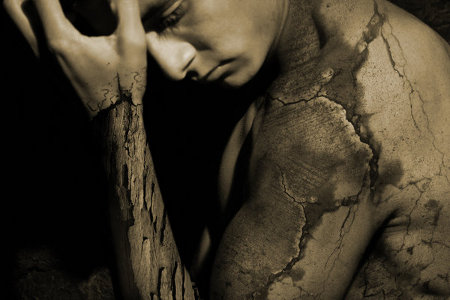
What could I make of so much suffering? There was no way for me, or for anyone else in the family, to get anything out of it. It was a raw wound for which there was no adequate relief. You had to take it, like an animal. We were in the condition of most of the world, the condition of men without faith in the presence of war, disease, pain, starvation, suffering, plague, bombardment, death. You just had to take it, like a dumb animal. Try to avoid it, if you could. But you must eventually reach the point where you can’t avoid it any more. Take it. Try to stupefy yourself, if you like, so that it won’t hurt so much. But you will always have to take some of it. And it will all devour you in the end.
-Thomas Merton
“Chapter Three: The Harrowing of Hell”
pp 90-91
The Seven Storey Mountain: An Autobiography of Faith
Reading this part of the chapter doesn’t hurt so much today as it did when I first read it a day or two ago. It doesn’t hurt so much as it did when I read it the day after writing about Joe and Heidi’s latest scene from their cancer battle. Merton was about 17 years old when he visited his dying Father in the London hospital as described above. He had gone through a few vague encounters with religion up to that point in his life, but none yet with God. So as he said, facing his father’s terrible illness and imminent death was like a “dumb animal” facing a tragedy it could not avoid and had no ability to understand.
Does faith make tragedy easier to handle? Joe and Heidi think so. I can’t imagine what that must be like, and frankly, coward that I am, I don’t want to imagine. Who actually wants to face that and have their faith tested? Peter, James, and John had their faith tested at Gethsemane (Mark 14:32:42) and it was found wanting.
My friend Leah said that having faith helps. When her husband died in a sudden accident many years ago, she went around in a fog for the first twenty-four hours, but after that, it was her faith in God and the certainty of the resurrection that sustained her. It was still “the year from hell” in which she grieved terribly, and any hint of joy was fleeting if present at all, but the presence of God was with her the entire time. She was not alone.
I suspect Merton was alone in his grief and sorrow when he visited his father in the hospital, even though he was surrounded by family. God was there too, but no one noticed. No one except Merton’s father, that is.
In fact, if he could not talk, there were other things he could do. One day I found his bed covered with little sheets of blue note-paper on which he had been drawing. And the drawings were real drawings. But they were unlike anything he had ever done before – pictures of little, irate Byzantine-looking saints with beards and great halos.
Of us all, Father was the only one who really had any kind of faith. And I do not doubt that he had very much of it, and that behind the walls of isolation, his intelligence and his will, unimpaired, and not hampered in any essential way by the partial obstruction of some of his senses, were turned to God, and communed with God Who was with him and in him, and Who gave him, as I believe, light to understand and to make use of his suffering for his own good, and to perfect his soul. It was a great soul, large, full of natural charity. He was a man of exceptional intellectual honesty and sincerity and purity of understanding. And this affliction, this terrible and frightening illness which was relentlessly pressing him down even into the jaws of the tomb, was not destroying him after all.
-Merton pp 91-92
 Merton wrote his autobiography as a young Trappist monk and saw the world and his past through the newly minted lens of his Catholic faith, rather than from the perspective of later in his life as a cleric. I have no idea if, at 17, any of this would have occurred to him, and of course, he had no idea what his father was subjectively experiencing, but his father, a professional artist, was communicating that experience in the only way he knew how. And years later, it’s possible that his son finally understood.
At the time, Merton probably only understood the following, and ironically, decades removed from the event and having lived a completely different life than he, I also understand.
Indeed, the truth that many people never understand, until it is too late, is that the more you try to avoid suffering, the more you suffer, because smaller and more insignificant things begin to torture you, in proportion to your fear of being hurt. The one who does most to avoid suffering is, in the end, the one who suffers most: and his suffering comes to him from things so little and so trivial that one can say that it is no longer objective at all. It is his own existence, his own being, that is at once the subject and the source of his pain, and his very existence and consciousness is his greatest torture.
-Merton, pg 91
I don’t know if Merton captured the ineffable essence of all human suffering in that paragraph or if, by the grace of God, he managed to actually create in that brief stream of words, a completely accurate description that points to my life as it is today specifically for the sake of my soul, but these words speak to me like no other words that I’ve ever read. In virtually one literary breath, Merton describes my predicament and it’s potential cure. In trying to avoid suffering, I have become the author of my own pain. Every little event is registered as another injury, and my very life, with every beat of my heart, is my greatest agony. Each heartbeat is like another splinter inserted into my eyes, and each breath is constricted by a great hand crushing my lungs.
And the cure is to stop avoiding suffering.
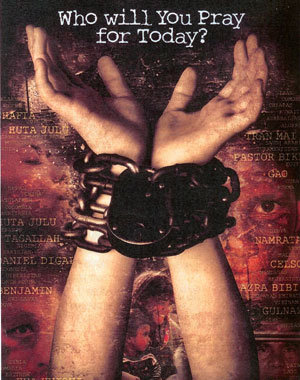
Strange cure, I must admit. After all, who seeks to suffer? Who actually wants their own faith to be tested?
But Peter became a better man after he recovered from denying the Master. Merton believed that, even in terrible suffering, with death waiting for him as close as his shadow, that his father’s soul was becoming better because of his torment. Of course, this is a Catholic’s perspective on the matter, and a 17 year old Merton could not truly assess the condition of his father’s soul, but his father could not avoid suffering and so there he was; drawing “little, irate Byzantine-looking saints with beards and great halos,” and communing with God.
So I went back to school, after seeing Father for a moment on the way through London. I had been back for barely a week when I was summoned, one morning, to the Headmaster’s study, and he gave me a telegram which said that Father was dead.
-Merton, pg 93
And so the great mass of horrible agony and pain is really made up of tiny bits and pieces of frustration and annoyance and sorrow. The missed opportunity to say, “I love you,” the driver that cuts you off on the road, the harsh rebuke from your daughter, the unfriendly chiding of an online critic; these are all filtered through the self and the self-loathing of my existence and my life as I vainly attempt to avoid injury and insult. The harder I try to isolate myself from the “slings and arrows,” the more they strike and stab at me.
Is there some truth after all in letting down my defenses and praying that God stand with me in the face of my own wretched life?
 Ironically, it was famed martial arts master Bruce Lee who said, “Do not pray for an easy life, pray for the strength to endure a difficult one.” On the one hand, I have no control whatsoever, of the seemingly random events of the world around me. But on the other hand, I have a great deal of control about how or if I choose to try to avoid them and, in encountering such events, how I choose to interpret their impact. Am I in pain? It feels that way. Do I have to be? I don’t know.
Rabbi Tzvi Freeman, interpreting the letters and talks of the Rebbe, Rabbi M. M. Schneerson, said:
In the morning, we make our plea as though unable to tolerate another moment. And as evening comes, we demand again as though morning never passed.
We live on the verge of eternity. May we arrive now.
We live on the verge of eternity, as if life were like dancing on the edge of a razor blade, running fast and hard, terrified that if we fall, we’ll be cut to ribbons.
But what if we…what if I chose one day, to deliberately fall off of the edge of the razor, but rather than falling headlong into the sharpened metal and being destroyed in bloody shredded flesh…
…I flew?
 Morning Meditations