
 “Yes, religion consoles us for our fate, but it also moves us to believe that with God’s help, we can change it. Hence the Christians, Jews and others who fought to abolish slavery then, global poverty now.”
Rabbi Jonathan Sacks
from “When People Lose Faith in God, They Lose Faith in Humanity Also”
“To the Jewish mind, the understanding of God is not achieved by referring in a Greek way to timeless qualities fo a Supreme Being, to ideas of goodness or perfection, but rather by sensing the living acts of His concern, to His dynamic attentiveness to man.
Abraham Joshua Heschel
God in Search of Man: A Philosophy of Judaism
“Why would the Jewish people ask for G-d’s name?”
from the Rohr Jewish Learning Institute lesson book
Toward a Meaningful Life
This is the last in my series of blogs based on this Rohr JLI course but probably not the last thing I’ll write about the significance of people and how we can have a relationship with God, which after all, are rather universal questions. Also, the question I’m asking today is really at the heart of just about every article I’ve written on this blog: “Can I apply Jewish wisdom, teachings, mysticism, and folk tales to Christians and our relationship with God through Jesus Christ?”
Gee, that’s quite a mouthful. Here’s what I mean.
Take another look at the link to the Toward a Meaningful Life course work. Notice the title of the course says, “Toward A Meaningful Life: A Soul-searching Journey for Every Jew”, That’s “for every Jew”. Does that mean I’ve been wasting my time going over this material because I’m not Jewish? Has it been written and presented in such as way that it cannot apply in any aspect to a person who isn’t a Jew and specifically can’t apply to a person who is a Christian?
Just about every quote I borrowed from the material I’ve been reading, when it refers to people at all, refers to people; human beings, not necessarily just Jews. Here are a few examples:
The Holy One, Blessed be He, has any number of names. All of these names, however, designate only various aspects of divine manifestation in the world, in particular as these are made known to human beings.
-Rabbi Adin Steinsaltz
“Divine Manifestation”
A human being should feel the same sense of warmth and security when he or she comes home.
-Simon Jacobson
“Why is Home Life So Important?”
The Biblical view of marriage is unique among the many extant religious, philosophical and sociological views. The Bible sees a married couple as two people who have made a contractual agreement…
-Rabbi Pinchas Stolper
“The Man-Woman Dynamic of Ha-Adam: A Jewish Paradigm of Marriage”
Every one of these references can easily be applied to people in general and not just Jews specifically, so it seems as if this material can have meaning for a wider audience. Of course, it is marketed to a Jewish groups rather than to churches, mosques, and corporate management seminars, so I may be wrong in my assumptions here. Also, looking at the quote from Rabbi Stolper’s article, even the title says, “A Jewish Paradigm of Marriage” and he points to the “Biblical view of marriage” being different than other religious perspectives (presumably including Christian perspectives) on the topic, so again, I may be reading too much into his content.
I’m not picking on any of these teaching materials or the contributing authors, but I do want to examine just how far we can generalize concepts and teachings that were originally written for Jewish people living in a completely Jewish ethnic, cultural, and religious context into a much broader population. OK, this material is also for Jews who are not well connected to religious Judaism and designed to help re-connect them to who they are, but that doesn’t necessarily mean we can extend all this to the rest of us, does it?
I spend a lot of thing wondering if I’m taking everything I’m reading too far. I can read something by a Jewish author and see how it might connect to something in a Christian context (at least “Christian” as I understand the term), but that doesn’t mean there’s anything causal going on. To put it another way, just because Rambam wrote something in the 12th century that seems to connect to how I understand the words of Jesus doesn’t necessarily mean the two are related in any sense. It certainly doesn’t mean that the source of what Rambam wrote in any way shape or form, can be traced back to any of Christ’s teachings.
I can’t explain why Jewish teaching materials, commentaries, and lessons call to me in a way that Christian books and blogs never do. Derek Leman recently published a blog post called The Message of Jesus via Scot McKnight (Leman is something of a “fan” of Scot McKnight), After scanning Leman’s blog post, I found that I didn’t have a great deal of interest in what McKnight had to say at the moment. Some of the quotes from McKnight’s materials posted in the comments of Leman’s blog seemed to confirm that McKnight’s opinion of Jews, in relation to the church, weren’t any different than many other Christians: that the Jews are “done” as far as God is concerned, and it’s now all about the church and Jesus. Here’s an example:
“The book stands on four arguments: that the gospel is defined by the apostles in 1 Corinthians 15 as the completion of the Story of Israel in the saving Story of Jesus; that the gospel is found in the Four Gospels; that the gospel was preached by Jesus; and that the sermons in the Book of Acts are the best example of gospeling in the New Testament.”
“The completion of the Story of Israel”? Guess the fat lady has sung.
I suppose I’m being unfair and maybe I should spend some time on McKnight’s blog to see more of what he’s all about, but I really, really get tired of “big shot” Christians saying, “we Christians are so cool and the Jews are toast”. On top of that, Antwuan Malone mirrored a lot of my frustrations with the church in his recent blog post 7 Things Getting Old in the Church…Fast!
I feel like I’m caught between two worlds but I don’t belong in either of them. I don’t belong in a church because of how commercialized and secular most of them have become and frankly, because my perspectives are just too “un-Christian” (if you can’t tell that from reading my blog, you haven’t been paying attention). I don’t belong in the synagogue because, frankly, I’m not Jewish. That is, I’m not connected culturally and ethnically to the Jewish community. I wouldn’t fit in. I’d be too “Christian”.
 Where do I go from here?
I’ve just spent the past week or two spewing my angst on whether I can have a relationship with the Creator of the Universe all over the Internet, so that’s the only place I know where to go. Even then, my relationship with God is far from perfect. I struggle every day with the simplest of ideas, concepts, feelings, or efforts to make the most ephemeral of connections.
Can I apply Jewish themes to a Christian life? I don’t know, but in my case, I’ll probably keep doing it anyway, just because nothing else makes sense to me. Do Jews intend for their themes to be applied to a Christian life? Probably not.
Rabbi Yosef Yitzchok of Lubavitch was famed for both his selfless devotion to the needs of every Jew and for his steadfast stand on the integrity of the Torah. The Rebbe maintained that to deal with the growing danger of assimilation and Jewish rootlessness by compromising on the Torah’s principles will only serve to repel those whom one is seeking to “accommodate”. Deep down, said the Rebbe, the Jew wants the truth; offer him a watered-down quasi-truth and you will drive him even further away from his identity.
Once, Rabbi Yosef Yitzchok was asked: “True, under ideal conditions, one wants his water to be pure. But when a fire rages, is this the time to be particular? The fire must be put out by any and all means at one’s disposal, including polluted or tainted water. The current crisis of identity among the Jewish people is threatening our very existence. Surely it is a time to be more flexible and accommodating.”
Replied the Rebbe: “What you say is true, so long as one battles fire with water. But if one rushes to pour any liquid on the flames, without realizing that his bucket contains say, benzene instead of water, the result is the exact opposite of what one is seeking to accomplish.”
-Rabbi Yanki Tauber
“The Accommodating Firefighter”
Once Upon a Chasid: Parshah Re’eh
Chabad.org
What did Rabbi Tauber’s commentary say? “The current crisis of identity among the Jewish people is threatening our very existence. Surely it is a time to be more flexible and accommodating.” Here’s Rabbi Yitzchok’s response to that suggestion: “What you say is true, so long as one battles fire with water. But if one rushes to pour any liquid on the flames, without realizing that his bucket contains say, benzene instead of water, the result is the exact opposite of what one is seeking to accomplish.”
Expanding that to the current conversation, Judaism can’t extend itself very far outside its own sphere without risking the danger of losing its identity and cultural integrity. Trying to “marry” traditional Jewish and Christian viewpoints and concepts will either water things down too much or, like tossing benzine on a fire, cause an explosion.
Yet, there’s a certain beauty in many of these things I read and then write about, that provides me with a unique way to approach God that wouldn’t be available to me any other way. Even if I’m climbing the proverbial “wrong tree” from everyone else’s point of view, it still seems like the “right tree” to me. It’s the tree that, in the climbing of it, seems to lead to God more than any of the others in the forest.
I came across something at AskNoah.org a few weeks back that I’ve wanted to share: Will Gentiles be permitted to worship at the Third Temple in Jerusalem? When I first read the title, I really wanted the answer to be “yes”. The article answers the question in part, quoting from Isaiah 2:2-3:
“And it will come to pass at the end of days that the mountain of G-d’s House will be firmly established, even higher than the peaks, and all the peoples will flow toward it as a river. And many nations will go and will cry, ‘Let us go up toward the mountain of G-d’s House, to the House of the L-rd of Jacob, and we will learn from His ways and walk in His paths, for out of Zion goes forth Torah and the word of G-d from Jerusalem.’ “
That sounds very much like this:
Then the angel showed me the river of the water of life, as clear as crystal, flowing from the throne of God and of the Lamb down the middle of the great street of the city. On each side of the river stood the tree of life, bearing twelve crops of fruit, yielding its fruit every month. And the leaves of the tree are for the healing of the nations. No longer will there be any curse. The throne of God and of the Lamb will be in the city, and his servants will serve him. They will see his face, and his name will be on their foreheads. There will be no more night. They will not need the light of a lamp or the light of the sun, for the Lord God will give them light. And they will reign for ever and ever. –Revelation 22:1-5
I doubt that I’ve answered my own question. I don’t feel very satisfied with my answer. I feel like I’ve just asked more questions, but right now, this is the path that’s calling me, so this is the path I will walk. A year from now, I can’t say where I’ll be or what I’ll be doing, but with God’s providence and grace, I’ll be where He wants me to be. Someday, Jews and Gentiles will sit down together at the feast of Abraham, Isaac, and Jacob (Matthew 8:11) and all of these questions will be answered. Until then, it’s the questions, not the answers, that drive me.
“If a foreigner who is not of Your people Israel comes from a distant land for the sake of Your name – for they shall hear about Your great name and Your mighty hand and Your outstretched arm – when he comes to pray toward this House, oh, hear in Your heavenly abode and grant all that the foreigner asks You for. Thus all the peoples of the earth will know Your name and revere You, as does Your people Israel; and they will recognize that Your name is attached to this House that I have built.” –I Kings 8:41-43
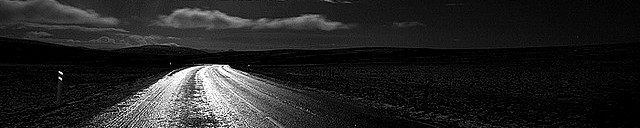
The road is long and often, we travel in the dark.


 Morning Meditations