Tag Archives: teshuvah

Noah: Reminder of the Rainbow

rainbow-israelThe story of one righteous man in an evil generation. The Almighty commands Noah to build the ark on a hill far from the water. He built it over a period of 120 years. People deride Noah and ask him, “Why are you building a boat on a hill?” Noah explains that there will be a flood if people do not correct their ways (according to the comedian Bill Cosby, Noah would ask “How long can you tread water?”). We see from this the patience of the Almighty for people to correct their ways and the genius of arousing people’s curiosity so that they will ask a question and, hopefully, hear the answer.

The generation does not do Teshuva, returning from their evil ways, and God brings a flood for 40 days. ah leave the ark 365 days later when the earth has once again become habitable. The Almighty makes a covenant and makes the rainbow the sign of the covenant that He will never destroy all of life again by water (hence, James Baldwin’s book, The Fire Next Time). When one sees a rainbow it is an omen to do Teshuva — to recognize the mistakes you are making in life, regret them, correct them/make restitution, and ask for forgiveness from anyone you have wronged as well as from the Almighty.

-Rabbi Kalman Packouz
Torah Portion of the Week
Noah, Genesis 6:9-11:32
Aish.com

The rainbow is a sign to do teshuvah. I’d never heard of that before or, if I had, it leaked out of my memory somewhere along the way.

The Jewish world has just completed the period of the High Holidays including Yom Kippur, the Day of Atonement, the most Holy and solemn day on the Jewish religious calendar, a day when every observant Jew seeks to repent and to beg God’s forgiveness and the forgiveness of others. The rest of the world, including most Christians, don’t have much regard for Jewish holidays, but for Christians, you’d think we might take a cue from the rainbow.

Of course, since we have the blood of Jesus covering our sins and we’ve been washed white as snow, most Christians don’t give a great deal of thought to ongoing repentance, forgiveness, and atonement. More’s the pity.

But this is about me, not you. No, I’m not writing this as an exercise in narcissism, but rather as my effort to continue to turn toward God and to seek His face.

The heart of those that seek God shall rejoice. Seek God and His might, constantly seek His countenance

Psalms 105:3-4

As I write this, I didn’t sleep well last night. I thought about seeking God, about recounting His wonders, about remembering His marvels and judgments, but my mind was too clouded and distracted. Reading the Bible while fighting fatigue was unproductive. All I could do was to try to cling to God and pray that He would grant me at least a little bit of rest.

I’ve resolved to meditate on and even to memorize His Word (some of it, anyway) as a way to keep Him and His teachings close to my heart. Last night wasn’t a good time to do that and it reminded me of just how far a journey I must yet travel.
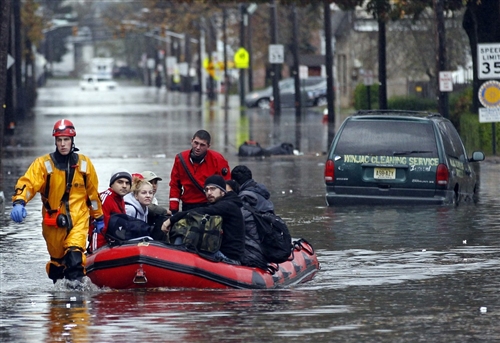
sandy-little-ferry-flooding-hmed-4a_photoblog500If I had known last night what I know this morning, I might have meditated on a rainbow.

Rabbi Yirmiyahu Ullman says that the rainbow is both a curse and a blessing. It’s a curse because it is a reminder that the world deserves to be destroyed for its sins, but that God has promised by covenant not to do so by flooding. Such a grim reminder of destruction that, in slightly smaller ways, we still suffer from today. But then, what else can we say about the rainbow? Rabbi Ullman states this:

The generation of the flood indulged in this worldliness to the point of perversion. Their wanton obsession with variety and variation resulted in their abusing the full gamut of their G-d given powers for the purpose of impurity. The flood purged the world of this impurity and the rainbow was given as a sign and reminder of what results from inundating the world with indulgence. However, the same rainbow simultaneously reminds us to repent from the relentless pursuit of multiplicity drawing us away from G-d. It urges us to direct the full spectrum of our powers and interests over the rainbow to the One on High.

In this way the rainbow is at once both curse and blessing; transgression and repentance; seductively appealing and pristinely beautiful. It depends on what you’re looking for in life. And perhaps that’s why, although it’s forbidden to indulge in the rainbow’s beauty, one may gaze at it – for the purpose of doing teshuva and directing one’s pluralities to G-d — in order to make the blessing.

I think the rainbow is visually appealing so that it will draw our gaze and having done that, remind us that we must continually seek to repent, to do teshuvah, to be reminded that we have a purpose in this world that goes beyond pursuing our individual desires.

I’ll never look at a rainbow the same way again.

One of the fundamental differences in Jewish Law and Noahide Law is that, Jews do not actively pursue Jewish converts, among non-Jewish nations.

The B’nai Noah are already under the Seven Laws, and have been permanently warned concerning their observance, so it is not a matter of trying to “convert” someone, from one religion to another; for the Noahide Code is not a “religion;” and all organized “religions,” are prohibited for the Noahide.

For the Noahide, it is a matter of Teshuva (return to G-d), not proselytization. Similarly a Jew who grew up atheist or agnostic, or who had strayed from the Torah and converted to an idolatrous religion; when he realizes his mistake and returns to Judaism, he does not “convert” back to Judaism; it is a matter of Teshuva, or returning.

It is the same for a Noahide. Others proselytize, Noahides return.

-Shlomo
“The Noahide Teshuva”
Gateway to Heaven

I include this quote because it suggests a very interesting idea. Jewish people are born into a covenant relationship with God whether they want to be or not. When a Jew leads a wholly secular life and later wants to return to God, as “Shlomo” says, that person doesn’t have to “convert” to Judaism, since they’re already Jewish and in relation to God. However, they do have to return to God, to do teshuvah, to repair the damage done in that relationship (I’ll argue that a Messianic Jewish person has not converted to Christianity but rather, made an even more complete return to God by becoming a disciple of Moshiach).

Blessed by GodMost Jewish people don’t recognize the Christian connection to God or that we are the beneficiaries of the blessings of the covenant God made with Abraham. However, they are quite willing to say, as “Shlomo” did above, that all non-Jews already have a covenant relationship with God through Noah. So, from that perspective, a Gentile does not have to “convert” to Judaism or anything else. The Gentile, like the Jew, is born already having a covenant relationship with God and on that basis, must return to God.

And in you all the families of the earth will be blessed.

Genesis 12:3 (NASB)

Now the promises were spoken to Abraham and to his seed. He does not say, “And to seeds,” as referring to many, but rather to one, “And to your seed,” that is, Christ.

Galatians 3:16 (NASB)

Christianity is something else. No one is born a Christian. Even if you are born to parents who are believers, you are not automatically a believer. Each person negotiates their own relationship with God. On the other hand, the covenant God made with Abraham is very old and spans across human history just waiting for any and all of us to grasp it and experience the blessings of the seed, of Messiah. In that sense, are we converting to Christianity or returning to something God intended for us all along?

The Lord is not slow about His promise, as some count slowness, but is patient toward you, not wishing for any to perish but for all to come to repentance.

2 Peter 3:9 (NASB)

Not that all of us will, of course. But we each have a responsibility to turn…to return to Him. It is not a casual act and it’s not something you do once and then it’s done forever. I neglect my relationship with God at my own peril. God created each of us in His own image, and endowed us with free will and a desire to seek Him. Many of us twist or distort those gifts and either go our own merry way in chasing our pleasures, or in seeking “something” we can’t define, become lost in the maze of religions and philosophies, imagining we are wise by worshiping what isn’t alive or even real.

Another Shabbos approaches. Another opportunity to welcome the Lord of the Sabbath (Matthew 12:1-8) beckons. Will the glow of the candles symbolize the warmth of God in my home and my heart? Will I fill in the “missing rainbow colors” in that glow and see the reminder to repent and return?

“A different world cannot be built by indifferent people.”

-Peter Marshall

Good Shabbos.

Yom Kippur: The Brokenhearted Offering

broken-heartedI hated Yom Kippur because it made me feel like a fraud. I would bang away at my chest all day, enumerating all my sins, promising I was repentant. But in my heart I knew that I would return to my mean self the moment the fast was over. I didn’t believe I could ever change, that I was really worthy of life and that I would ever be able to redeem myself. So I would go through the day anxious for it to be over, hating myself for being such a big, fat fraud.

-Eliana Cline
“Why I Hated Yom Kippur”
Aish.com

I’m writing this on Sunday, almost a full week before you’ll read it. Today, my Pastor’s sermon in church was on Yom Kippur. The timing was deliberate. Last week’s sermon, which I missed because I decided to skip church for the holiday weekend, was on Rosh Hashanah. It’s always interesting to hear a sermon in a Christian church about something that is so profoundly Jewish.

Aaron shall place lots upon the two he-goats: one lot “for Hashem” and one lot “for Azazel.” Aaron shall bring near the he-goat designated by lot for Hashem, and make it a sin offering. And the he-goat designated by lot for Azazel shall be stood alive before Hashem, to provide atonement through it, to send it to Azazel to the Wilderness.

Leviticus 16:8-10 (Stone Edition Chumash)

One of the things I’ve come to learn about Jewish holidays and festivals being preached in the church is that these Jewish events can never be allowed to just stand on their own. They always have to “point to Christ.” Otherwise, I guess, they just aren’t really worthy, God-given events all by themselves (that was a little sarcasm).

Anyway, it is Pastor’s opinion that each of these two goats represent the first and second coming of Christ. I have no idea where this idea comes from, but knowing Pastor, it comes from some Christian source or authority. Although I sometimes disagree with him, Pastor does his research and he hardly ever “shoots from the hip” in a sermon.

The analogy, which is how I think of it, falls apart when you realize the Azazel goat (Pastor called it by the more common name “scapegoat”) must bear the sins of Israel and be sent out into the Wilderness, presumably to die. One commentary in my Chumash on verse ten says:

Or HaChaim notes that the goat is referred to here and in verse 21, before the confession, as alive. After Aaron pronounces confession upon it, however, it is no longer called alive, even though it would be some time before it would go to its death. The confession had the effect of placing all of the people’s sins on the goat, which would then carry them off to the desolate Azazel. The presence of such contamination on the goat rendered it spiritually “dead;” thus it was called alive only before Aaron’s confession.

Even if you don’t quite buy what Or HaChaim says, the Azazel goat seems a poor symbol for the King of the Jews returning to redeem Israel in glory and power, leading an army of angelic beings.

But Pastor said a lot of really good things about Yom Kippur and how we Christians can learn from the Day of Atonement. Yes, he said our final atonement is Jesus Christ, who died on the cross for our sins and who was resurrected to give us the promise of eternal life through faith in him.

struggling_prayBut he also deconstructed the mechanism of teshuvah (though he didn’t call it that) as the observant Jewish world sees it, and said point-blank that simply answering an altar call or raising your hand at Christian camp professing belief in Jesus doesn’t automatically grant you the aforementioned eternal life. Seeking atonement of your sins requires much, much more, and we aren’t fully disciples of the Master and Children of God until we do. After that, we still need to have a life of continual repentance, since we sin every day.

Rabbi J. Immanuel Schochet wrote a rather lengthy article called The Dynamics of Teshuvah, which I won’t quote from here. I think it could be called “Everything You Always Wanted To Know About Teshuvah But Were Afraid To Ask.” If you want to know more, Rabbi Schochet’s article is a good source.

But the heart of teshuvah and atonement is contained in the more modest missive written by Rabbi Shlomo Yosef Zelvin called The Master Key:

One year, Rabbi Israel Baal Shem Tov said to Rabbi Ze’ev Kitzes, one of his senior disciples: “You will blow the shofar for us this Rosh Hashanah. I want you to study all the kavanot (Kabbalistic meditations) that pertain to the shofar, so that you should meditate upon them when you do the blowing.”

Rabbi Ze’ev applied himself to the task with joy and trepidation: joy over the great privilege that had been accorded him, and trepidation over the immensity of the responsibility. He studied the Kabbalistic writings that discuss the multifaceted significance of the shofar and what its sounds achieve on the various levels of reality and in the various chambers of the soul. He also prepared a sheet of paper on which he noted the main points of each kavanah, so that he could refer to them when he blew the shofar.

Finally, the great moment arrived. It was the morning of Rosh Hashanah, and Rabbi Ze’ev stood on the reading platform in the center of the Baal Shem Tov’s synagogue amidst the Torah scrolls, surrounded by a sea of tallit-draped bodies. At his table in the southeast corner of the room stood his master, the Baal Shem Tov, his face aflame. An awed silence filled the room in anticipation of the climax of the day—the piercing blasts and sobs of the shofar.

Rabbi Ze’ev reached into his pocket, and his heart froze: the paper had disappeared! He distinctly remembered placing it there that morning, but now it was gone. Furiously, he searched his memory for what he had learned, but his distress over the lost notes seemed to have incapacitated his brain: his mind was a total blank. Tears of frustration filled his eyes. He had disappointed his master, who had entrusted him with this most sacred task. Now he must blow the shofar like a simple horn, without any kavanot. With a despairing heart, Rabbi Ze’ev blew the litany of sounds required by law and, avoiding his master’s eye, resumed his place.

At the conclusion of the day’s prayers, the Baal Shem Tov made his way to the corner where Rabbi Ze’ev sat sobbing under his tallit. “Gut Yom Tov, Reb Ze’ev!” he called. “That was a most extraordinary shofar-blowing we heard today!”

“But Rebbe . . . I . . .”

“In the king’s palace,” said the Baal Shem Tov, “there are many gates and doors, leading to many halls and chambers. The palace-keepers have great rings holding many keys, each of which opens a different door. But there is one key that fits all the locks, a master key that opens all the doors.

“The kavanot are keys, each unlocking another door in our souls, each accessing another chamber in the supernal worlds. But there is one key that unlocks all doors, that opens up for us the innermost chambers of the divine palace. That master key is a broken heart.”

Eliana Cline’s article captured what it is for a Jewish person on Yom Kippur in a more modern setting:

This Yom Kippur, I can feel the pain of not being in a state of connection and own the consequences of my choices. I can say to God, “This is not me,” and mean it. I feel repentant, not from fear – but from a genuine desire for connection, love and transcendence. Getting in touch with my higher self that yearns to be good has enabled me to sense the sadness of my past choices.

The Talmud teaches that on Yom Kippur we are compared to angels. I never really got the comparison. Until now. On Yom Kippur all the daily responsibilities and tasks are removed; it’s a day we transcend the physical and live with total purpose. It’s a day with one sole mission, like an angel, to pray, to think and to connect – to God and to our inner soul.

PrayingWe can choose whether or not to truly repent of our sins and approach God. Most of us most of the time (am I being too cynical?) repent by saying “Sorry” to God, knowing full well, or at least suspecting it in the back of our minds, that we will be revisiting our same old sins again by the by. Repentance for the moment, sin for a lifetime. No wonder Cline felt like a fraud. Most of us should feel the same way.

But Christianity doesn’t have an event on its religious calendar that’s anything like Yom Kippur. Easter probably comes the closest, but that’s a holiday of victory over sin and death, not taking responsibility for sin and repairing relationships with people and with God.

Yom Kippur can seem incredibly depressing if you don’t come at it from the right direction. If you see it as having to wallow in your sins, feeling like a fraud, feeling like an abject failure, then yes, it’s really depressing. You afflict yourself, usually by a complete food and liquid fast for twenty-four hours and a bit more, and hope that’s enough to appease an angry God. But only pagan gods need to be appeased. You can’t “buy off” the One Living God with a sacrifice unless that sacrifice is you!

For You do not desire a sacrifice, else I would give it; a burnt-offering You do not want. The sacrifices God desires are a broken spirit; a heart broken and humbled, O God, You will not despise.

Psalm 51:18-19 (Stone Edition Tanakh)

And by “you,” I mean your broken, humble, and contrite heart.

Take words with you and return to Hashem; say to Him, ‘May you forgive all iniquity and accept good, and let our lips substitute for bulls.’

Hosea 14:3 (Stone Edition Tanakh, verse 2 in Christian Bibles)

Through Him then, let us continually offer up a sacrifice of praise to God, that is, the fruit of lips that give thanks to His name.

Hebrews 13:15 (NASB)

Whether you’re a Christian or a Jew, we all turn to the One God when we repent and ask for forgiveness, though we are unworthy. As Christians, we turn to God through our great intercessor Christ, and we pray that God reveals Himself and his compassion to us through him. I once heard a Jewish person tell me that no man stands between a Jew and his God. I can only ask, especially now, since as you read this, Yom Kippur is just a few hours away, that God reveals all truth, first to the Jews and then to the Gentiles.

Yom Kippur is a gift. It allows us to remove the barriers that separate us from a Holy God and to once again draw near to our Father in Heaven. The gift is offered by grace. All we have to do is accept it. The only cost to us, is to be sincerely brokenhearted.

Have an easy fast and may you be inscribed in the book of life.

12 days.


Make Teshuvah Now

TeshuvahWe have now gone well beyond Moses’ arguments with God. God’s power is not automatic or unbridled; it is, rather, an expression of God’s will. God can choose how and when to use that power. Teshuvah is God’s gift to us, a singular opportunity to sway God from anger to compassion. This distinctively Jewish idea also teaches that, ultimately, it is human beings who have the power to determine how God will use that divine power. We invoke this theme throughout the liturgy of the High Holidays.

-Rabbi Neil Gillman
“Chapter 2: God is Power,” pg 25
The Jewish Approach to God: A Brief Introduction for Christians

I often write about what Messianic Jews have to say to Christians, hopefully in a very positive light, but Rabbi Gillman’s book is what other Jews, those who don’t believe Jesus is the Messiah, have to say to Christians. By providing the Jewish viewpoint on God, Rabbi Gillman is attempting to be a “light to the nations,” showing us who he believes God actually is (as opposed to who Christians think God is).

We don’t often think we can change God’s mind but I think Rabbi Gillman may have a point.

Then Jonah began to go through the city one day’s walk; and he cried out and said, “Yet forty days and Nineveh will be overthrown.”

Then the people of Nineveh believed in God; and they called a fast and put on sackcloth from the greatest to the least of them. When the word reached the king of Nineveh, he arose from his throne, laid aside his robe from him, covered himself with sackcloth and sat on the ashes. He issued a proclamation and it said, “In Nineveh by the decree of the king and his nobles: Do not let man, beast, herd, or flock taste a thing. Do not let them eat or drink water. But both man and beast must be covered with sackcloth; and let men call on God earnestly that each may turn from his wicked way and from the violence which is in his hands. Who knows, God may turn and relent and withdraw His burning anger so that we will not perish.”

When God saw their deeds, that they turned from their wicked way, then God relented concerning the calamity which He had declared He would bring upon them. And He did not do it.

Jonah 3:4-10 (NASB)

Gillman calls Jonah the only successful prophet in the Bible. Typically, all other prophets call for repentance (usually of Israel) and they only receive a deaf ear in return. Often these prophets are killed by the very people they’re trying to save. The prophet warns Israel. Israel ignores the prophet and does not repent. God fulfills the prophesy by doing terrible things to Israel, which usually include war, exile, and death.

…and My people who are called by My name humble themselves and pray and seek My face and turn from their wicked ways, then I will hear from heaven, will forgive their sin and will heal their land.

2 Chronicles 7:14 (NASB)

jewish-repentanceIf the people who are called by God’s Name would humble themselves and pray and seek God’s face and turn from their wickedness, then He would hear from Heaven and forgive their sin and heal their Land. Seems pretty straightforward to me. But then, God set up the conditions. If you do this, then I will do that. If you do not do this, then I will do something else. God is prepared to respond to Israel depending on what choice Israel makes. It’s not as if God changes His mind as such.

But what about this?

The Lord said to Moses, “How long will this people spurn Me? And how long will they not believe in Me, despite all the signs which I have performed in their midst? I will smite them with pestilence and dispossess them, and I will make you into a nation greater and mightier than they.”

But Moses said to the Lord, “Then the Egyptians will hear of it, for by Your strength You brought up this people from their midst, and they will tell it to the inhabitants of this land. They have heard that You, O Lord, are in the midst of this people, for You, O Lord, are seen eye to eye, while Your cloud stands over them; and You go before them in a pillar of cloud by day and in a pillar of fire by night. Now if You slay this people as one man, then the nations who have heard of Your fame will say, ‘Because the Lord could not bring this people into the land which He promised them by oath, therefore He slaughtered them in the wilderness.’ But now, I pray, let the power of the Lord be great, just as You have declared, ‘The Lord is slow to anger and abundant in lovingkindness, forgiving iniquity and transgression; but He will by no means clear the guilty, visiting the iniquity of the fathers on the children to the third and the fourth generations.’ Pardon, I pray, the iniquity of this people according to the greatness of Your lovingkindness, just as You also have forgiven this people, from Egypt even until now.”

So the Lord said, “I have pardoned them according to your word; but indeed, as I live, all the earth will be filled with the glory of the Lord.

Numbers 14:11-21 (NASB)

On the surface, it certainly seems as if God was ready to wipe out the Children of Israel, but Moses, appealing to God’s reputation, gets Him to change His mind. Or was God setting up the situation so that Moses would change his mind? Remember, it’s far easier for a human being to lose his cool than for God to do so. By deliberately putting Moses in between the Children of Israel and God’s wrath, God is forcing Moses to make a choice. Either Moses can side with God and advocate for the destruction of his people, or he can confront God as Israel’s protector…the very role for which God chose Moses.

Ultimately, if God is Sovereign and if His will and His decisions are always perfect, then He really has no need to change His mind. We, on the other hand, have to change our minds all the time, and I think God is at work trying to get us to do this. We are flawed, sinful, imperfect, self-centered creatures and God loves us anyway. It’s like being the Father to billions and billions of two-year olds. We’re all screaming “mine,” all fighting each other over our toys, all hording the goodies for ourselves, and we all don’t want to listen to God telling us to be good and to share.

Yom-Kippur-ShofarYom Kippur starts at sundown on this coming Friday and ends at sundown on Saturday. Although the Day of Atonement has very little meaning to most Christians, we can still allow it to remind us that there may be some people we have hurt and we have neglected to repent of that. We may have sinned against God and have neglected to repent of that. As long as we are alive, we have the opportunity to repent, to turn back to the ways of God, and to make amends with anyone we have injured.

But who knows when one will die?

Rabbi Eliezer said: “Repent one day before your death.” His disciples asked him, “Does, then, one know on what day he will die?” “All the more reason he should repent today, lest he die tomorrow.”

Babylonian Talmud, Shabbat 53a

From that time Jesus began to preach and say, “Repent, for the kingdom of heaven is at hand.”

Matthew 4:17 (NASB)

Even during the days of Mashiach, it will still be permissible for people to repent…but why wait? God is reminding us to make teshuvah now.

Devarim: Lessons in Teshuvah

devout_jewish_prayerThe Torah portion begins with the words:

“These are the things which Moses spoke to all of Israel” (Deut. 1:1).

The Torah then enumerates what is seemingly a list of places the Jewish people had traveled. The Siphre elucidates that out of respect for the Jewish people, Moses alluded to their transgressions by the name of each place, without being explicit. What can we learn from this?

Rabbi Yehuda Leib Chasman of the famed Hebron Yeshiva comments that a person who is sincerely interested in self-improvement and growth only needs a slight hint that he has done something wrong in order to realize that he needs to improve. Such a person looks for opportunities to make positive changes in himself and uses his own ability to think to fill in the details when someone gives him a hint that he has made a mistake. The Jewish people only needed a hint.

The goal of life is to improve and to be the best that you can be. Just like a person interested in becoming rich will use any tip if he thinks it will be of financial benefit, so should we look for messages which will help us improve. Rabbi Yisroel Salanter once asked a shoemaker why he was working so late and with an almost extinguished candle. Replied the shoemaker, “As long as the candle is still burning it is possible to accomplish and mend.” From this Rabbi Salanter understood that “as long as the light of the soul is still going, we must make every effort to accomplish and to mend.”

-Rabbi Kalman Packouz
Dvar Torah based on Growth Through Torah by Rabbi Zelig Pliskin
Commentary on Torah Portion Devarim
Aish.com

Easier said than done.

On the other hand, it seems to be God’s expectation that we should all strive to improve, to make amends, to become better.

When describing Tisha B’Av, Rabbi Packouz says:

Tisha B’Av is a fast day (like Yom Kippur, from sunset one evening until the stars come out the next evening) which culminates a three week mourning period by the Jewish people. One is forbidden to eat or drink, bathe, use moisturizing creams or oils, wear leather shoes or have marital relations. The idea is to minimize pleasure and to let the body feel the distress the soul should feel over these tragedies. Like all fast days, the object is introspection, making a spiritual accounting and correcting our ways — what in Hebrew is called Teshuva — returning to the path of good and righteousness, to the ways of the Torah.

Teshuva is a four part process: 1) We must recognize what we have done wrong and regret it 2) We must stop doing the transgression and correct whatever damage that we can, including asking forgiveness from those whom we have hurt — and making restitution, if due 3) We must accept upon ourselves not to do it again 4) We must verbally ask the Almighty to forgive us.

despairThat sounds a lot more complicated than how most Christians just shoot a quick “forgive me” prayer up to God before continuing on with their business. OK, maybe that was really cynical, but I wonder if a lot of Christians have a concept of repentance the way we see described above.

I hope so. It’s not easy. Maybe if we appreciated from the start how much work it is to repent, how much strife and anguish our mistakes make, the enormous effort that goes into a repair of damaged relationships and of damaged people that will never quite be enough, maybe we’d put more effort into not sinning in the first place.

The goal of life is to improve and to be the best that you can be.

That may be true. But there’s a long, hard distance between the goal and where most of us are on the journey.

According to Rabbi Packouz:

Learning Torah is the heart, soul and lifeblood of the Jewish people. It is the secret of our survival. Learning leads to understanding and understanding leads to doing. One cannot love what he does not know. Learning Torah gives a great joy of understanding life. On Tisha B’Av we are forbidden to learn Torah except those parts dealing with the calamities which the Jewish people have suffered. We must stop, reflect and make changes. Only then will we be able to improve ourselves and make a better world.

In an ideal sense, this is how Jewish people are to approach and immerse themselves in the experience of Tisha B’Av. It is said that the Temple was destroyed because of the lack of love the Jewish people had for one another. This is part of the reason why there is such intense mourning in Jewish communities at this time of year. This is why there is such an emphasis toward teshuvah.

Only when true repentance has been made can the Jewish person move forward and begin the process of self-improvement.

What should the rest of us learn from this? Is our candle still burning?

For a different perspective on this portion of the Sidra, visit Rabbi Yitzchak Ginsburgh’s blog.

Good Shabbos.

75 days.

Getting Ready

TeshuvahRav used to say, “There is no eating or drinking in the World-to-Come…tzaddilkim sit with crowns on their heads and enjoy the glow of the Shechina.” -17a

Rabbi Yosef Leib Bloch illustrated the lesson of this Gemara with the following parable. A man planned to move to America. In those days, the only way to go from Israel to America was by boat. The trip was too long for one excursion, so the boat first stopped in France for two weeks, as the crew prepared the ship for the longer leg of the journey across the Atlantic. The traveler did not know English nor French, and he wanted to prepare himself for the journey, so he began by teaching himself French. When he arrived in France for the two week stay, he began to enjoy conversing with the natives. After the two weeks elapsed, he once again joined the other passengers and crew for the rest of the trip. When the finally arrived in America, the man tried to use his new skill of speaking French, but no one understood him, and he also did not understand the English speakers. Upon observing this, one of the French travelers who was with him on the boat smirked and commented, “It seems quite foolish for you to have spent your time learning French, which you knew you would only use for a total of two weeks, instead of learning English which you knew you would need for the rest of your life!”

This pearl of wisdom in our Gemara which Rav was used to say taught this lesson. A person is in this world for seventy or so years. His permanent abode will be in the eternal world to come. There, the language spoken does not include mundane matters such as jealousy and hatred. Nor is the topic discussed involve eating or drinking. Yet, what do people spend their time doing in this world? They busy themselves becoming inundated with concerns which are of this world, which is only temporary. The language spoken in the World-to-Come is simply where “the tzaddikim sit with their crowns upon their heads, and they radiate in the glow of the Shechina.” When a person comes to the עולם האמת , he will have to explain the language he studied, and whether he is prepared to communicate as is done in the World-to-Come.

Daf Yomi Digest
Stories Off the Daf
“Preparing for the World-to-Come”
Berachos 17

Even though I may not comment or otherwise indicate my presence, I visit a fair number of “religious” blogs on a daily basis and sample their content. A significant number of them indulge in various controversies (think Titus 3:9) and debates that are almost always swept into virtual “black holes;” like immense gravity wells in space that swallow all light and life but return nothing.

It’s like the Jewish gentleman in the above-quoted parable who learned a “language” that would serve him for only two weeks and ignored the greater requirement of learning the “language” he would need for a lifetime. Now imagine learning that the debates and discussions we deem so important in the here and now aren’t what’s really important to God and to our fellow human beings in the long run.

Today is 1 Elul on the Jewish religious calendar. It is, as I previously mentioned, a month in which observant Jews (and perhaps the occasional Christian) all over the world prepare themselves for their most important annual encounter with God.

You can think of the month of Elul in terms of the life you lead. Jews use this entire month to prepare for Rosh Hashanah and Yom Kippur, but our lives, from birth to death, are also a time of preparation.

During Elul, Jews take a frank spiritual assessment of themselves, dedicate themselves to turning away from willful sin, give generously to charity, make increased efforts at Torah study, perform more frequent acts of lovingkindness, and diligently repair relationships that have been damaged. Imagine if all of us did that all of the time? Imagine if doing so was our highest priority?

If you return, O Israel … you shall return unto Me. –Jeremiah 4:1

Today is the first day of Elul, a period of time which is particularly propitious for teshuvah, for it precedes Rosh Hashanah, the Day of Judgment.

Elul and ShofarThe Sages say that the Hebrew letters of the word Elul, form an acrostic for the verse in Song of Songs: I am devoted to my Lover and He is devoted to me (6:3). Song of Songs utilizes the relationship between a bridegroom and his betrothed to depict the relationship between God and Israel. Any separation between the two causes an intense longing for one another, an actual “lovesickness” (ibid. 2:5).

The love between God and Israel is unconditional. Even when Israel behaves in a manner that results in estrangement, that love is not diminished. Israel does not have to restore God’s love, because it is eternal, and His longing for Israel to return to Him is so intense that at the first sign that Israel is ready to abandon its errant ways that led to the estrangement, God will promptly embrace it.

Song of Songs depicts the suffering of Israel sustained at the hands of its enemies, and we can conclude that the Divine distress at this suffering of His beloved Israel is great. Teshuvah is a long process, but all that is needed for the restoration of the ultimate relationship is a beginning: a sincere regret for having deviated from His will, and a resolve to return.

Today I shall…

seek to restore my personal relationship with God by dedicating myself to teshuvah.

-Rabbi Abraham J. Twerski
“Growing Each Day, Elul 1”
Aish.com

Imagine taking the time during the month of Elul, but ultimately with the rest of your life, to restore your relationship with God and with all of the people around you. Now take that imagination and put it into action, turning thoughts and wishes into a tangible reality.

Backward On the Thread of Time

Backwards“It would be easier sometimes to change the past.”
-Jackson Browne
Fountain of Sorrow (1974)

“You can’t unring a bell.”
-Anonymous

Yes, we are physical beings; but there is something in us that transcends the physical. Man is an amalgam of matter and spirit, a marriage of body and soul. It is our spiritual self that persists in the belief that the past can be redeemed. It is our connection with the spiritual essence of our lives that grants us the capacity for teshuvah–the capacity to “return” and retroactively transform the significance of past actions and experiences.

What is this “spiritual essence” with which we seek connection? And how does it enable us to literally change the past?

-Rabbi Yanki Tauber
“How to Change the Past”
Based on letters and talks of the Rebbe
Rabbi M. M. Schneerson
Chabad.org

So, which is it? Can we change the past or not? Rabbi Tauber and musician Jackson Browne say “yes”, but our anonymous bell ringing philosopher says “no”. As we approach Yom Kippur, the holiest day in the Jewish religious calendar, we are reminded of the many mistakes we’ve made over the past year. While remembrance and regrets are part of what makes us human, we often want to forget and to undo those things that we have done. Is there a way? Here’s what Rabbi Tauber has to say:

Not just man, but every object, force and phenomenon has both a “body” and a “soul.” A thing’s body is its physical mass, its quantifiable dimensions, its “hard facts.” A thing’s soul is its deeper significance–the truths it expresses, the function it performs, the purpose it serves.

…man is a spiritual creature in that he imparts significance to his deeds and experiences. Things don’t just happen–they happen for a reason, they mean something, they further a certain objective. The same event can therefore mean different things to different people; by the same token, two very different events may serve the same purpose and elicit identical feelings, imbuing them with kindred souls despite the dissimilarity of their bodies.

The body of our lives is wholly subject to the tyranny of time–the “hard facts” cannot be undone. A missed flight cannot be unmissed; a harsh word uttered to a loved one cannot be unspoken. But the soul of these events can be changed. Here we can literally travel back in time to redefine the significance of what occurred.

So the answer is “yes” and “no”. We cannot physically travel back in time and change a single word uttered in anger or even one careless action, but we can change the soul of the event and we can change our soul, re-making the meaning not only of what we have said and done, but re-making the meaning of our lives. That’s what the Days of Awe are all about, not just saying you’re sorry, and not just asking for forgiveness for your misdeeds, but spiritually, metaphysically, mystically re-creating time and space so that they, and we, are brand new again.

We are also re-creating ourselves so that we are brand new again, clean and pure as we stand before the throne of God.

According to the writer of the book of Hebrews, Messiah has become our High Priest. He entered into the Holy of Holies in heaven—the actual throne room of God—and applied His own blood for atonement. He entered into the presence of God for us so that he might usher us in as well (Hebrews 9:11-12). Messiah is our High Priest, “a minister in the sanctuary and in the true tabernacle, which the LORD pitched, not man” (Hebrews 8:2). Therein he applied his atoning blood. Therefore, the ceremony of the Day of Atonement uniquely patterns the work of Messiah: His death, his sacrifice and the atonement of his blood. We boldly enter the presence of God because the blood of Messiah covers us. Today he stands interceding on our behalf before the throne of God, just like a high priest.

The Holiest Day of the Year
Commentary on Yom Kippur
FFOZ.org

Kol NidreIn the imagery from the Book of Hebrews, we can connect Judaism’s Yom Kippur with the atoning sacrifice of Christ. In Leviticus 16 God told Moses to tell Aaron, the High Priest of the Children of Israel, to enter the Holy of Holies only once a year to make atonement for the people. The FFOZ commentary illustrates how the Messiah, as our High Priest, has made that atonement once and for all on behalf of humanity, and in accordance with the Messianic covenant. He has opened the door and allowed the world to know God.

But Yeshua (Jesus) cried out again with a loud voice, and his spirit departed.

Then the curtain in the Sanctuary was torn from top to bottom into two pieces. The earth quaked, and the rocks were split. The tombs were opened, and many of the holy ones sleeping in the dusty ground were awakened. They came forth from the tombs after his resurrection and entered the Holy City, and they were seen by many.

And when the centurion and the men with him who were guarding Yeshua saw the earthquake and what had happened, they were very terrified, and they said, “Surely this was the son of God.” –Matthew 27:50-54 (DHE Gospels)

Yom Kippur is a solemn reminder of who Christ is and who we are in him and how, even though we cling to the fringes of his garment, we are still frail and prone to weakness.

An interpretation given to the Kol Nidre is that the congregation declares, by implication, at the beginning of Yom Kippur: “See, O Lord, what miserable sinners we are. We make promises to live better lives each year and yet always fall far short of keeping them. Therefore, help us, O Lord, and pardon us for our shortcomings.”

-Rabbi Dr. Louis Jacobs (1920-2006)
“Kol Nidrei: The evening service of Yom Kippur is named after this declaration”
As quoted from My Jewish Learning

As solemn as the Kol Nidre service is, held the evening of Yom Kippur, there is also a promise of the future, a door opens in the fabric of the universe allowing man access to God in humility, awe, and hope. For humanity, the key to the door is Jesus, and once he guides us into the presence of the Most High, we can turn back the clock on events, or perhaps even erase them altogether, through God’s lovingkindness.

On the material surface of our lives, time’s rule is absolute. But on its spiritual inside, the past is but another vista of life, open to exploration and development with the transformative power of teshuvah. -Rabbi Tauber

For as high as the heavens are above the earth,
so great is his steadfast love toward those who fear him;
as far as the east is from the west,
so far does he remove our transgressions from us.
As a father shows compassion to his children,
so the LORD shows compassion to those who fear him.
For he knows our frame;
he remembers that we are dust. –Psalm 103:11-14

Dancing on a stringMy friend Yahnatan on his blog Gathering Sparks posted the following quote from R.R. Reno’s First Things:

I am Christian and not Jewish. I have no real grasp of Hebrew and I only vaguely follow the prayers in my wife’s synagogue. Yet, in the final moments of Yom Kippur I have felt a terrible anguish, yearning to move, and yet immobile, wanting to rush to God’s side and yet nailed to my worldly life. I have shuddered as cantor cries out: “The doors are closing; the doors are closing.” For in those haunting words I hear Jesus saying: “Repent, for the Kingdom of God is at hand.”

I am also a Christian married to a Jewish wife but I don’t believe that applying Yom Kippur to a Christian faith is only for those few of us who are intermarried. God wants all of His people to live, not in the past and not in our sorrow and regrets, but in an active and joyful present life with Him. Heaven doesn’t have to wait. The Kingdom of God is as near as we want it to be. God is as close as the next beat of our hearts. Time is a river and we can swim in pursuit of God, moving upstream and down.

Sacred history may be described as an attempt to overcome the dividing line of past and present, as an attempt to see the past in the present tense (pp 211-12).

All generations of Israel, we are told, were present at Sinai…It was an act of transcending the present, history in reverse: thinking of the future in the present tense (pp 215-16)

Rabbi Abraham Joshua Heschel
God in Search of Man : A Philosophy of Judaism

When we break the fast of Yom Kippur, let us dance with God backward across the strand of time while looking forward to another year ahead in His Holy splendor.