Tag Archives: theology

The Transcendent Path

Tree of LifeIf you find yourself affixed to a single path to truth—the path of prayer and praise, or the path of kindness and love,or the path of wisdom and meditation,or any other path of a singular mode—you are on the wrong path. Truth is not at the end of a path. Truth transcends all paths. Choose a path. But when you must, take the opposite path as well.

-Rabbi Tzvi Freeman
“Two at Once”
Based on letters and talks of the Rebbe, Rabbi M. M. Schneerson
Chabad.org

As human beings, we have a tendency to compartmentalize and specialize our lives. This comes as no surprise to me, since organization of the different elements of life into “categories” is how we understand ourselves. We have an order and a set of habits to what we do. We also have an awareness of what we’re good at and what we aren’t; a set of “gifts” to which we lean upon and if we are kind, offer to others. Organizing our lives by categorization is necessary so we can conceptualize events, circumstances, and objects and make sense of the world around us.

But it can also be a limitation if we believe we are only defined be these categories. Saying, “I’m only good at this, so I won’t try that,” may rob someone who needs you to do “that” for them rather than “this.”

I’m as guilty of this sort of thinking and behaving as anyone. I’m a writer, both professionally and “for fun.” I find that I can clarify my own thinking and understand better what some people are saying to me if I write about those experiences. My Wednesday night meetings with Pastor Randy are a perfect example. He might say a few sentences to me on Wednesday that will fuel my blog posts for an entire week, because I use writing to continually process what he has been teaching.

But I cannot allow writing to be the totality of my identity and my activity. Someone who needs me to give them a lift to a doctor’s appointment because their car broke down won’t be helped if I only write about their need. I should offer them a ride to and from the appointment in my car. I should do something that I’m not accustomed to considering as an “expertise” of mine in order to meet another human being’s need.

Earlier today, I was writing about giving chesed to the stranger, showing someone who needs you a kindness, not because they are your friend or neighbor, but just because they need you.

In the world of “religious blogging,” most of us have a tendency to write about what we’re interested in, and again, I’m no exception. We often write about the theological or doctrinal specifics with which we identify. Jews write about Judaism and Christians write about Christianity. Nothing strange about that. Even within a particular religious structure, we tend to write about those areas of which we are particularly fond or in which we are interested.

I’ve written lately on Divine Election because I was processing that information. For another person, that might be a rather meaningless topic. I’ve read blogs recently about the Leviticus 11 kosher laws, Bibles limited to the New Testament and the Psalms, Shomer Negiah, Good Friday, and other religious subjects. Nothing wrong with writing about any of those religious topics…

…unless they limit what else we should be doing.

We tend to choose a path and then walk it, but then we only walk that path and no other. According to what Rabbi Freeman said above, that’s not the right path. If we are on the path of prayer and praising God but a homeless person on the street needs us to give them something to eat, then we are on the wrong path, at least for that moment. If we are busy donating our time at a shelter or food kitchen, but God needs us to read and meditate upon His Word, then we are on the wrong path, at least for that moment.

The individual’s avoda must be commensurate with his character and innate qualities. There may be one who can drill pearls or polish gems but works at baking bread (the analogy in the realm of avoda may be easily understood). Though baking bread is a most necessary craft and occupation, this person is considered to have committed a “sin.”

“Today’s Day”
Friday, Nissan 25, 10t day of the omer, 5703
Compiled by the Lubavitcher Rebbe
Translated by Yitschak Meir Kagan
Chabad.org

white-pigeon-kotelAvoda is a Hebrew word that is commonly translated as “work,” but among the Chassidim, it “generally refers to Divine service (or worship). For example, it’s part of the Divine service to serve God with joy.” Is who we are as servants of God limited to our theology or our religious identity, or is there something that transcends all that information, and unites us as living, human creations of the Most High God?

We often drone on and on and on about our insights into the Bible, our own theological pet peeves, or about how people with different theological pet peeves annoy us and are guilty of “false teaching,” but do we take the time to transcend our categories, our pigeon-holed lives, and realize that truth is much, much larger than the box we’ve put ourselves in?

And if your brother is not close to you and you do not know him.

Deuteronomy 22:2

Perhaps the reason that other people are not close to you is because you do not know them.

The Chassidic master of Apt said: “As a young man, I was determined to change the world. As I matured, I narrowed my goals to changing my community. Still later, I decided to change only my family. Now I realize that it is all I can do to change myself.”

Some things in the world are givens, and others are modifiable. The only thing we can really modify is ourselves. All other people are givens. Unfortunately, many people assume the reverse to be true. They accept themselves as givens and expect everyone else to change to accommodate them.

(There is one limited exception. When our children are small, we can teach and guide them. When they mature, however, we can no longer mold them.)

Trying to change others is both futile and frustrating. Furthermore, we cannot see other people the way they truly are, as long as we are preoccupied with trying to change them to the way we would like them to be.

The people we should know the most intimately are those who are closest to us. Yet it is precisely these people whom we wish to mold into the image we have developed for them. As long as this attitude prevails, we cannot see them for what they are. How ironic and tragic that those we care for the most may be those we know the least!

Today I shall…

…try to focus any desires to change on myself and let other people determine for themselves who and what they wish to be.

-Rabbi Abraham J. Twerski
“Growing Each Day, Nissan 20”
Aish.com
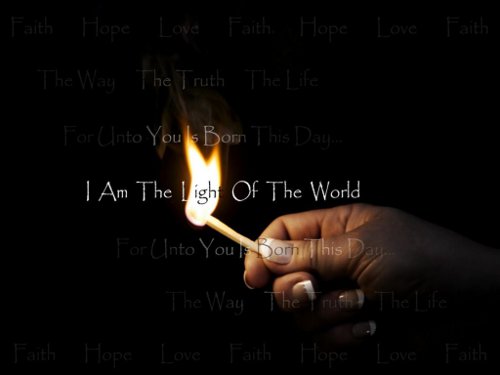
light-of-the-worldTo extend Rabbi Twerski’s metaphor, we can only change the world by changing ourselves. We can only serve God and change the world, by accepting that others will always be different from us and then realize that’s not always a bad thing. We, in the end, are only responsible for who we are. God will not judge us on what other people have done but only on what we have done with our lives. If we have treated others kindly, our theology, doctrine, dogma, or any of the other boxes and pigeon holes we’ve used to categorize and identify ourselves in this world will be worth less than who we are in Christ.

If anyone else thinks he has reason for confidence in the flesh, I have more: circumcised on the eighth day, of the people of Israel, of the tribe of Benjamin, a Hebrew of Hebrews; as to the law, a Pharisee; as to zeal, a persecutor of the church; as to righteousness under the law, blameless. But whatever gain I had, I counted as loss for the sake of Christ. Indeed, I count everything as loss because of the surpassing worth of knowing Christ Jesus my Lord. For his sake I have suffered the loss of all things and count them as rubbish, in order that I may gain Christ.

Philippians 3:4-8

Paul isn’t saying that his being Jewish is literally worthless, and I’m not suggesting that how we study and understand the Word of God is meaningless, either. What I am saying is that, like Paul, there is something much, much greater. The Master taught us that loving God to our fullest extent and loving other human beings as ourselves are the essence of everything in the Bible. He also taught that we would be known as his disciples specifically by our love of one another, a love that goes so far that we would be willing to give up our lives for another if required.

If anything can be said to transcend all of our paths, our categories, our religious posturing, it is love…even love for the unlovable and the unlikable ..especially love for those who otherwise make us feel hurt and angry and aggravated. If we can authentically show them love, then we are better than all of the sermons and blog posts about theology that we could ever produce. Then, we are written in His Book of Life because we have loved.

“When I was young, I admired clever people. Now that I am old, I admire kind people.”

-Abraham Joshua Heschel

We must be more.

Dogma on a Leash

dogma-on-a-leashChristian theology is the enterprise which seeks to construct a coherent system of Christian belief and practice. This is based primarily upon the texts of the Old Testament and the New Testament as well as the historic traditions of Christians. Christian theologians use biblical exegesis, rational analysis, and argument to clarify, examine, understand, explicate, critique, defend or promote Christianity. Theology might be undertaken to help the theologian better understand Christian tenets, make comparisons between Christianity and other traditions, defend Christianity against objections and criticism, facilitate reforms in the Christian church, assist in the propagation of Christianity, draw on the resources of the Christian tradition to address some present situation or need, or for a variety of other reasons.

“Christian theology”
Wikipedia

Your pastor Randy seems to be a Calvinist. Calvinism is one of the most disturbing (and erroneous) christian theologies that I’ve come across.

I extensively addressed the issue of Calvinism on my old blog site and I found that no other topic inspired so many hostile comments:

In your article you write:

“Think about it. It’s all Adam’s and Eve’s fault. They are the only ones who ever had a choice. According to ‘Divine Election,’ “

However the Calvinist view isn’t even as “fair” as that. According to Calvin:

“God not only foresaw that Adam would fall, but also ordained that he should….I confess it is a horrible decree; yet no one can deny but God foreknew Adam’s fall, and therefore foreknew it, because he had ordained it so by his own decree” (Cal. Inst., b. 3, c. 23, sec. 7).

-Onesimus, from comments he made on the blog post
Lancaster’s Galatians: Sermon Three, Paul’s Gospel, and the Unfair Election

I had a kind of revelation this morning (as I write this) while driving to work. Christians have a strong tendency to be critical of the “man-made rulings” of the Jewish sages and rabbis that are binding to various branches of Judaism. Particularly in Orthodox Judaism, Christians see the rabbinic rulings overriding the word of God and elevating the sages to a higher standing than God’s written word.

But I think Christians do exactly the same thing. Consider the words of Onesimus I quoted above. There are all manner of Christian “sages,” such as John Calvin, who issue proclamations that are considered binding by their followers.

I’m really ignorant of all the different doctrines, creeds, and dogmas running around out there, so it’s difficult for me to compare them, let alone claim a specific path for my very own. Trying to look up a comparative list of Christian doctrines is difficult, and the best I could do was About.com. In comparing, for example, Calvinism and Arminianism relative to Divine Election, I found this:

  • Calvinism – Before the foundation of the world, God unconditionally chose some to be saved. Election has nothing to do with man’s future response.
  • Arminianism – Election is based on God’s foreknowledge of those who would believe in him through faith. In other words, God elected those who would choose him of their own free will. Conditional election is based on man’s response.

These are both perfectly acceptable Christian doctrines, but they contradict each other. They are also binding doctrines in terms of the individuals and churches who follow them. How is that different from Jews who choose to follow the dictates of Reform Judaism, vs. those who adhere to Orthodox Judaism or even the Chabad?

The first Big Issue is this: If I’m going to switch my focus to the New Testament, should I continue following all the rules of the Hebrew Bible? In other words, should I keep my beard and fringes? Or should I break out the Gillette Mach3 and order shrimp fajitas?

After asking this question to pretty much every Christian expert I meet, I’ve come to this definitive conclusion: I don’t know.

You can find a small group – a very small group – of Christians who say that every single Old Testament rule should still be followed by everyone. The ultralegalist camp.

On the other end of the spectrum are those Christians who say that Jesus overrode all rules in the Old Testament. He created a new covenant. His death was the ultimate sacrifice, so there’s no need for animal sacrifice – or, for that matter, any other Old Testament laws. Even the famous Ten Commandments are rendered unnecessary by Jesus.

-A.J. Jacobs
“Month Nine: May”, pp 254-5
The Year of Living Biblically: One Man’s Humble Quest to Follow the Bible as Literally as Possible

AJ-Jacobs-bibleI just finished this book, which Pastor Randy lent me, and Jacobs illustrates quite graphically how the Bible, and particularly Christianity, seems so strange when looked at from a complete outsider’s point of view. He had some familiarity with religious Judaism since he’s a secular liberal Jewish person and has religious relatives.

However, in his inventory of the different “Christianities” he was able to contact, he showed his readers quite dramatically how hard it would be to choose one particular path and call it the “right” one. He contacted a number of Christian scholars and pastors to act as advisors, and visited such diverse groups as Answers in Genesis, Jerry Falwell’s MegaChurch, a Gay men’s Christian Bible Study in New York, and a group of “snake handlers” in Tennessee. It doesn’t get more “mixed bag” than this.

Day 292. I’ve got a decent biblical library going now. Perhaps a hundred books or so. And I’ve divided them into sections: Moderate Jewish. Fundamentalist Jewish. Moderate Christian. Fundamentalist Christian. Atheist. Agnostic. Religious Cookbooks.

I’ve tried to keep the conservative books on the right side and the liberal ones on the left. When I started my year, I thought that nothing would go to the right of my Falwell collection. But of course, I was wrong…

-Jacobs, pg 292

Of course, Jacobs was trying to live the Bible as literally as possible, so he skewed his sampling of Judaism and Christianity to those branches that express themselves in a more literal and often, fundamentalist manner. But even restricting himself to those particular “Christianities,” it was still confusing.

There’s a phrase called “Cafeteria Christianity.” It’s a derisive term used by fundamentalist Christians to describe moderate Christians. The idea is that the moderates pick and choose the parts of the Bible they want to follow. They take a nice helping of mercy and compassion. But the ban on homosexuality? They leave that on the countertop.

Fundamentalist Jews don’t use the phrase “Cafeteria Judaism,” but they have the same critique. You must follow all of the Torah, not just the parts that are palatable.

The point is, the religious moderates are inconsistent. They’re just making the Bible conform to their own values.

The year showed me beyond a doubt that everyone practices cafeteria religion. It’s not just the moderates. Fundamentalists do it too. They can’t heap everything on their plate. Otherwise, they’d kick women out of church for saying hello (“the women should keep silence in the churches. For they are not permitted to speak…” -1 Corinthians 14:34) and boot out men for talking about the “Tennessee Titans” (“make no mention of the names of other gods…” -Exodus 23:13).

-Jacobs, pp 327-8

There’s nothing like having an outsider sincerely look at your faith to give you (or me, in this case) fresh perspective.

In reading Jacobs’ book or reviewing the websites I’ve mentioned so far, I wasn’t really satisfied that I got a good look at the different “Christianities” so I kept searching and found a chart of the differences between denominations at religionfacts.com.

It’s too long to quote from in any meaningful fashion, but if you take a look that page, you’ll see how many different ways there are to apply the different Christianities to different doctrines and topics (Trinity, Nature of Christ, Holy Spirit, Original Sin, Free Will, and on and on and on).

So when Pastor presents his point of view and backs it up with scripture, it’s not the only valid Christian point of view. If I disagree with him or even if I am aghast at something he says, it doesn’t automatically mean I have to agree with him, even if I can’t immediately come up with Bible verses that state another perspective.

I remember being told (in a seminary class) that we must choose between Armenian or Calvinist theology. I found it strange to be forced into an either/or position like that.

-Ruth on Facebook

If I were to run all this past the Apostle Paul, what would he say? Would any of this even make sense to him? Would he advise me to take a Calvinist or Armenian approach, or would he think both were equally dodgy? I don’t know. I have said that I think religion evolves over time to meet the needs of each generation, but there’s a difference between adaptation to adjust to new technologies or social situations, and totally new ways of understanding the basic nature a completely unchanging God.

rabbinThe following story is said of Moses (see Menachot 29b.) that when he was about to receive the Torah from God, he saw God attaching crowns to the letters. Moses asked why God was doing this and God answered, “There is a man who will live many generations after you and his name is Akiva, son of Yosef. He will examine every single spike of every letter and draw from them piles upon piles of halachot.”

To help Moses understand, God allowed Moses to visit a class of Rabbi Akiva. As Moses listened to the esteemed Rabbi’s teaching, he couldn’t follow any of it and “became weak with despair.” At the end of the Rabbi’s explanation, a student asked him, “Where do you learn this from,” and the Rabbi replied, “This is an oral tradition passed down from Moses.”

“By those words, Moses was set at ease.”

(see Is It Really the Torah, Or Is It Just the Rabbis for more)

This is midrash and I don’t believe God literally sent Moses forward in time to visit Rabbi Akiva in the early First Century of the common era (but what do I know?), but this tale is meant to illustrate how there can be new interpretations of our original Biblical data designed to illuminate subsequent generations. There are no doubt many matters in Judaism that Moses could not anticipate, so he wouldn’t have looked at the Torah in those ways.

No doubt, there are many issues in modern Christianity that would have escaped Paul, so he wouldn’t have written any of his letters addressing them.

Still, how far afield can Christian doctrine go before it completely escapes the bounds of the intent of the writers of the Bible and more than that, the intent of God? Does God require that we choose between Armenian or Calvinist theology or can we be servants of the Most High and disciples of our Master without doing so?

Is that like asking if a religious Jew can be a good Jew and not choose between the halachot specific to a particular branch of Judaism? If it is, then Christianity is doing almost exactly what Judaism is doing. The only substantial difference, is for Christianity the required responses are largely conceptual (what you believe), and for Judaism the required responses are largely behavioral (what you do).

Maybe we Christians should cut religious Jews some slack or stop being so dogmatic with our doctines…or both.

Lancaster’s Galatians: Sermon Three, Paul’s Gospel, and the Unfair Election

voting-ballot-electionFor I would have you know, brothers, that the gospel that was preached by me is not man’s gospel. For I did not receive it from any man, nor was I taught it, but I received it through a revelation of Jesus Christ.

Galatians 1:11-12

What did Paul mean by “man’s gospel”? He did not mean a false gospel, or a corrupt gospel, or something fleshly and worldly. He meant to differentiate the way that he became a believer from the way that people ordinarily became believers in that day, and he wanted to differentiate between his gospel message and the one the other believers ordinarily proclaimed in his day.

-D. Thomas Lancaster
“Sermon Three: Paul’s Gospel (Galatians 1:11-24)” pg 33
The Holy Epistle to the Galatians

I’m depressed. I’m hitting walls I didn’t know were there, probably because I don’t have much of a formal education in theology or Bible studies.

But let’s go back to the beginning.

Last night was my scheduled Wednesday night conversation with Pastor Randy. I arrived at his office as he was finishing his dinner salad for our discussion on Chapter Three of Lancaster’s book. We ended up talking about topics that didn’t directly relate but were nonetheless interesting (Revelation and the rapture, and the age of the universe, but those are topics for a different time).

As I said in my previous blog post, we’ve been searching for some common ground on the definition of “Torah,” and that does figure heavily into last night’s conversation and this missive.

We focused on Paul’s “my gospel.” Pastor Randy and I agreed that Paul literally wasn’t preaching a separate gospel from the one taught by the other apostles or the one that we have with us today. The differentiation, as we both understood it, was how Paul received the gospel vs. just about everybody else. Paul didn’t take lessons from James and Peter, he received his information, at least initially, directly from Jesus through supernatural means.

“As I was on my way and drew near to Damascus, about noon a great light from heaven suddenly shone around me. And I fell to the ground and heard a voice saying to me, ‘Saul, Saul, why are you persecuting me?’ And I answered, ‘Who are you, Lord?’ And he said to me, ‘I am Jesus of Nazareth, whom you are persecuting.’ Now those who were with me saw the light but did not understand the voice of the one who was speaking to me. And I said, ‘What shall I do, Lord?’ And the Lord said to me, ‘Rise, and go into Damascus, and there you will be told all that is appointed for you to do.’ And since I could not see because of the brightness of that light, I was led by the hand by those who were with me, and came into Damascus.

“When I had returned to Jerusalem and was praying in the temple, I fell into a trance and saw him saying to me, ‘Make haste and get out of Jerusalem quickly, because they will not accept your testimony about me.’ And I said, ‘Lord, they themselves know that in one synagogue after another I imprisoned and beat those who believed in you. And when the blood of Stephen your witness was being shed, I myself was standing by and approving and watching over the garments of those who killed him.’ And he said to me, ‘Go, for I will send you far away to the Gentiles.’”

Acts 22:6-11, 17-21

According to Lancaster (pg 36), the difference between man’s gospel and Paul’s gospel is that Paul’s gospel teaches:

  • Gentiles can inherit eternal life.
  • Gentiles can become part of the Kingdom of Heaven.
  • Gentiles can experience resurrection from the dead.
  • Gentiles have standing among the people of God (i.e., Israel) without becoming Jewish.

It certainly seems to me that Paul “pioneered” the idea that Gentiles could become full covenant members of “the Way” without having to convert to Judaism, but did Paul write his letter before or after Peter’s encounter with Cornelius in Acts 10? Assuming it was after, did Paul know about that encounter? And how do we know that Jesus gave Paul specific instructions relative to the Gentiles that no one else had, particularly by the time he was writing his Galatians letter?

I’m not saying it’s impossible, but Paul still had to come under the authority of the Jerusalem Council, so he couldn’t “shoot from the hip” as far as his ministry to the Gentiles was concerned. The whole point of Acts 15 was putting the status of Gentiles in the Way to the test to determine if they had to convert to Judaism or not. Even if Paul’s authority came directly from Messiah, he still had to respond to James and the Council of Apostles as the Master’s primary representatives in our world.

album-unsavedBut that’s not what worries me.

Pastor and I got around to talking about what Jesus did for the Jewish believers (what he did for the rest of us should be obvious…but apparently it isn’t). I said that he fulfilled the Messianic promises and gave hope for redemption, not only for individual Jews but for the redemption of national Israel. So what did the Jews do for salvation before Jesus? Did the sacrifices in the Temple and earlier, in the Tabernacle save?

No, of course not. Faith is what saves. That goes all the way back to Abraham. It wasn’t the sacrifices as such, but due to their faith, the Jews were saved and they fulfilled the requirement of the sacrifices out of obedience. It’s always been about faith in God, otherwise millions upon millions of Jews who had lived before the birth of Christ would have been set up for failure.

Pastor Randy agreed.

But…

And when the Gentiles heard this, they began rejoicing and glorifying the word of the Lord, and as many as were appointed to eternal life believed.

Acts 13:48

I added the emphasis above to make a point.

I’ve probably heard of the Christian Doctrine of Election before, but never in any real detail. According to Paul (Ephesians 2:8), “for by grace you have been saved through faith. And this is not your own doing; it is the gift of God.” OK, I get that. There’s nothing I can do to earn salvation. No matter how many good deeds I commit, that doesn’t add any “bonus points” to my “salvation score.” Only by the grace of God am I saved.

But what’s my part in the deal? It’s not like I just sit around watching television and God comes over and randomly “zaps” me with salvation. Don’t I do something? Well, Paul did say, “saved through faith.” That is, I have to choose to have faith in God through Christ in order to be saved.

But Pastor Randy asked if even the act of choosing to have faith a “work.” That seemed kind of a stretch to me. In order to be a part of anything, it really helps if you contribute something, even just a tiny bit, so as to have a sense of “ownership” in the process, including salvation.

Long discussion short, Pastor Randy says that God preselects individuals to have faith. Thanks to Adam and Eve, we are all born into a state of sin as our basic nature. We can’t help it. We have no say in the matter. But here’s the kicker. Supposedly, we also have no say in the matter in regard to being saved. By nature, we all would reject Christ if given a choice, because of that nature. Only God implants faith in a human being and only those human beings who God has “programmed” to be capable of faith will ever be saved.

The rest of humanity, not so much. Fires of hell for them, no matter how many times they hear the words of the gospel.

One of my favorite sections of the Bible is the sequence that describes Jacob wrestling with the Angel. From a Jewish point of view, this gives human beings a broad license to “wrestle” with God on ethical and moral issues. We can actually debate God if we think He’s advocating for a position that is unfair or unjust. After all, Abraham did it in the matter of Sodom and Gomorrah. God doesn’t seem to mind.

But am I wrestling with God or with a specific Christian doctrine? I’m definitely wrestling with Pastor Randy. It was one of those times when I was acutely aware that his education in religious matters far, far outstripped my own, and I was absolutely fighting under my weight. It was like I was Justin Bieber trying to go a couple of rounds in the boxing ring with Mike Tyson.

I was going to get slaughtered.

Saying, “Hey, that’s unfair” or “That’s not right” doesn’t cut it if I can’t support my position from the Bible. God doesn’t have to be fair. He told Job that after all the arguing had stopped. He who makes the universe makes the rules. Fairness doesn’t come into play.

But in the aforementioned debate between Abraham and God, Abraham invoked God’s attribute of justice. If God is just, can He perform an unjust act?

Abraham,God_and_two_angelsIf God is just, is it right for him to automatically condemn some and probably most of the entire human race across all of history to eternal damnation and horrible, flaming agony, while preserving only a remnant…and absolutely none of those human beings have a choice in the matter?

Think about it. It’s all Adam’s and Eve’s fault. They are the only ones who ever had a choice. According to “Divine Election,” if you’re saved, it wasn’t your choice, you just got lucky. If you’re not saved, same deal. You just have really crummy luck.

This is why atheists say Christians are crazy and even cruel. I mean, it’s one thing if Jesus offers me the free gift of eternal salvation and I throw it back in his face. Then I can see how I’d deserve condemnation. But to never even have a shot at it?

Pastor Randy, at one point, shared how incredibly grateful he is to God for choosing him for salvation. That’s good for him and maybe good for me, but what about the poor, dumb, characters out there who are among the unchosen and don’t even realize what they’re facing…and if they did, there is absolutely nothing they can do about it. No amount of repenting of sins, turning to God, professing faith in Christ will save them.

Of course, according to Pastor Randy, they wouldn’t desire to do any of that anyway, but no one is born with that desire if we are all born in original sin. What’s the difference between Pastor Randy, who came to faith early in life, and me who came to faith after the age of forty? Was my program from God somehow slightly defective that it waited so long to start to run? I’d heard about Jesus for decades before I came to faith. How come my program didn’t kick in before it did?

However, there are other perspectives. According to Richard Land in his article at ChristianPost.com:

First, we must understand that the Bible reveals two different kinds of election, and much confusion has resulted from failing to see this distinction. Abrahamic Election is substantially different from Salvation Election. Abrahamic Election (Gen. 12:1-3) explains how God chose the Jews to be His chosen people. Salvation Election pertains to God’s elective purpose in how He brings about the eternal salvation of individual human beings, both Jew and Gentile, in both the Old and New Testaments.

Abrahamic Election is corporate, is to special people status, and is not related to anything. Salvation Election is individual and is to eternal salvation. In God’s providence, He has chosen to reveal His dealings with His people more fully in the New Testament. In doing so, a third difference between Abrahamic (corporate) and Salvation (individual) Election is underscored. God revealed in the New Testament that Salvation Election is somehow intertwined with, and connected to foreknowledge in a significant way (Rom. 8:29-30; 11:2; I Pet. 1:2).

“There is no question here of predestination to Heaven or reprobation to hell; …. we are not told here, nor anywhere else, that before children are born it is God’s purpose to send one to heaven and one to hell….The passage has entirely to do with privilege here on earth.” (Ironside, Lectures on the Epistle to the Romans, p. 116)

What if the Bible is telling us in the concept of “foreknowledge” that God does not just know all things that have, or ever will happen, as if they were the present moment to Him, but that He has, and always has had, the “experience” of all things, events, and people as a punctiliar present moment?

That makes a bit more sense and satisfies my personal value of justice. We all have free choice and can choose to accept or reject Jesus. God just knows what choice we’ll make because, while history and our lives seem like a movie that he have to live through frame-by-frame, God sees everything all at once, as if it were a snapshot.

I doubt that’ll satisfy Pastor Randy, and he admits agonizing over this issue before coming to a final decision, but if I have to err, I’d prefer to err on the side of mercy and compassion.

Because if Pastor Randy is right, how does anyone know if he’s really saved?

“Not everyone who says to me, ‘Lord, Lord,’ will enter the kingdom of heaven, but the one who does the will of my Father who is in heaven. On that day many will say to me, ‘Lord, Lord, did we not prophesy in your name, and cast out demons in your name, and do many mighty works in your name?’ And then will I declare to them, ‘I never knew you; depart from me, you workers of lawlessness.’

Matthew 7:21-23

condemnedObviously, not everyone who thinks they’re saved is really saved. Mistakes will be made and errors encountered. What if someone who isn’t supposed to be saved becomes convinced and believes they have faith in Jesus. Maybe they really don’t, but they think they do. It’s not like they’ve made an internal error in thinking, they just aren’t “programmed” to be saved. It’s impossible, from a Divine Election point of view, for that person to be saved.

So on the last day, they find out, “Oops, I’m condemned” and appeal to Jesus and he blows them off, just like that.

Not that it was the person’s fault because they had no choice in the matter!

You can see why I’m depressed and a little disgusted. I think I can remain a Christian and still not have to marry the “Divine Election” theory because if that were the only option, my faith would hang in the balance.

In my last blog, I said:

No human being is a perfectly neutral, objective observer. We all tend to read the Bible, even in its original languages, in terms of what we already “know” about it; that is, what we already believe is says. We translate the ancient Greek and Hebrew text in a manner usually consistent with those beliefs and that means we generally never surprise ourselves with the outcome.

The Bible is the Bible, but doctrine is man-made. The fact that there’s more than one way to interpret how people get saved means there’s more than one way to view the Bible, and thus, God. Right now, I’m a little too upset to go into cold, dispassionate research on this matter, weighing the pros and cons. Right now, if God really is programming us like little widgets, deliberately condemning people to eternal damnation for no better reason than they were just born as human beings in a fallen world, then I am up for a good old fashion wrestling match with God.

I’ll probably lose…but so have billions of other human beings out there. They never had a chance.


Healing the Enemy

healingIt is not incumbent upon you to complete the work.

Ethics of the Fathers 2:21

In economics, the bottom line measures success and failure. Someone who goes into a business venture with complete recklessness, yet makes a great deal of money, is considered a successful entrepreneur. Another person who was extremely cautious and applied sound business principles, yet went bankrupt, is considered a failure.

Unfortunately, we tend to apply these values to our personal, non-business lives. If things do not turn out the way we wish, we may think that we have performed badly. This is not true. If parents abuse and neglect their children, yet one child wins the Nobel Prize, or discovers the cure for cancer, they do not suddenly become good parents. On the other hand, if they did their utmost to raise their children well, yet one becomes a criminal, they are not necessarily bad parents.

We must understand that we have no control over outcome. All we can control is process, i.e. what we do. If we act with sincerity and with the best guidance available, then what we are doing is right.

Parents whose children turn out to be anti-social invariably fault themselves and may be consumed by guilt. Their pain is unavoidable, but their guilt is unjustified.

Humans do not have the gift of prophecy, nor do we always have the most accurate knowledge. We should hold ourselves responsible for that which we can control, but we should not hold ourselves responsible for that which is beyond our control.

Today I shall…

…try to realize that I must judge the correctness of my actions by how I arrive at them, and not by what results from them.

-Rabbi Abraham J. Twerski
“Growing Each Day, Adar 16”
Aish.com

There’s a lot going on here including the struggle to define what is good and what is bad, not only in our own actions, but in the actions of others. We all know our own intent when we say or do something, but even when that intent is good, especially on the Internet, our words can be taken in the wrong way and people can respond with offense and even hurt and anger, as if we had gone out of our way to try to injure them. On the web, that’s usually how we define an “enemy.”

“You have heard that it was said, ‘You shall love your neighbor and hate your enemy.’ But I say to you, Love your enemies and pray for those who persecute you, so that you may be sons of your Father who is in heaven. –Matthew 5:43-45 (ESV)

Bless those who persecute you; bless and do not curse them. Rejoice with those who rejoice, weep with those who weep. Live in harmony with one another. Do not be haughty, but associate with the lowly. Never be wise in your own sight. Repay no one evil for evil, but give thought to do what is honorable in the sight of all. If possible, so far as it depends on you, live peaceably with all. Beloved, never avenge yourselves, but leave it to the wrath of God, for it is written, “Vengeance is mine, I will repay, says the Lord.” To the contrary, “if your enemy is hungry, feed him; if he is thirsty, give him something to drink; for by so doing you will heap burning coals on his head.” Do not be overcome by evil, but overcome evil with good. –Romans 12:14-21 (ESV)

None of this is suggesting that Jesus or Paul wanted us to give a kiss on the cheek to someone who’s holding the barrel of a loaded handgun to our head. It’s not as if we are forbidden from defending ourselves in war or must allow ourselves to be beaten during a robbery attempt. We see Christ’s intent in his juxtaposing the words “neighbor” and “enemy.” Someone can be our “enemy” if they are our next door neighbor. Maybe we’re upset with them because they borrowed our favorite power tool six months ago and never gave it back, or they have a dog that barks half the night but refuses to quiet the animal. For whatever reason, our “neighbor” can become our bitter enemy and they can even say bad things about us and malign our character unjustly.

WrongThis happens a lot on the web and often in blogs and blog comments (and I’ve written about this many times before). While I haven’t been “stung” in a little while, in my readings this morning (as I write this), it occurred to me that misunderstanding and misinformation are rampant on the Internet, and disagreements or differences of opinion on a good many things, but particularly in the world of religion, have created many enemies from the body of our neighbors. Against my better judgment, I’m going to refer to a blog post by Judah Himango, his commentary on a sermon delivered at his wife’s church (Judah attends church with his wife on Sunday but considers his Hebrew Roots congregation, which meets on Saturday, to be his primary place of worship) which Judah calls My experience at church today, a friendly criticism of Pastor Troy Dobbs’ sermon on Jesus and the Sabbath.

In reading Judah’s commentary, I must say that I agree with him that the Pastor in question was not accurate, (in my humble opinion) and that his message from the pulpit reflected a very traditional supersessionist stance which we have often observed in the church historically. I have been fortunate to find a church and a Pastor who sees beyond the rhetoric and back into the Scriptures in a way that reflects what I believe to be the true intent of Jesus and the Apostles relative to Jews, Judaism, and the Torah (although we don’t agree on everything), but many other churches still have a long way to go. Does that make the particular Pastor at Judah’s church my “enemy” or any sort of enemy to those of us to disagree that “the Law was nailed to the cross and replaced by grace?”

Absolutely not. In fact, at one point in the comments section, Judah even defends this Pastor by saying, “Pastor Dobbs has much great teaching.” It’s only on certain points that Judah and Pastor Dobbs disagree; it’s not (I hope) a more general drawing of battle lines between Hebrew Roots and Christianity, as if they were mutually exclusive entities (although I’m disappointed to find out that Judah “posted [a] friendly criticism on the Church’s website, underneath their post for this particular sermon, and on the Church’s Facebook page, but they deleted both..”) I think we in the church should be big enough to take a few criticisms rather than assuming what we say will always be taken as “Gospel” by literally everyone hearing the message without question.

I don’t believe it Judah’s intent to say that only his perspective is correct and everything produced by any Christian Pastor is wrong (unfortunately, a number of people have commented on his blog who seem to have a more “adversarial” relationship with Christianity and the church), but it is all too easy for most of us to start making enemies between different factions of Christianity by pointing out where they (we) disagree and ignoring how much alike both sides actually are. It’s inevitable that we are going to disagree, particularly in the religious blogosphere, but then, what are we supposed to do about it? What did Jesus and Paul say to do in their words as I quoted them above? What did Rabbi Twerski say?

Today I shall try to realize that I must judge the correctness of my actions by how I arrive at them, and not by what results from them.

Said another way, perhaps we should try to realize that we must judge the correctness of the actions of others by how they arrive at them, not by what results from them. If we understand that our good intentions can be misunderstood, then we must certainly grant that same “grace” to others. No, it’s not like we have to agree with everything that everyone else says and we can certainly recognize and challenge error, but the fact that we disagree with someone and think they’re wrong about something doesn’t make them bad or evil, nor does it make them our enemy, unless we choose to decide that they are. churches

Pastor Dobbs isn’t Judah’s enemy and frankly, he isn’t mine, either. Extending that out from individuals to systems, it also doesn’t mean that the church is the enemy of Hebrew Roots or even Messianic Judaism (or any Judaism). Yes, there has been great enmity between Christians and Jews historically, and yes, sermons like those delivered by Pastor Dobbs have often been used to maintain the distance and to some degree, the hostility we sometimes experience between Christians and Jews. To deny the validity of Jews and Judaism within the confines of what once was a sect of Judaism is kind of crazy-making, especially if you think the scriptures support such a position.

But the answer to this problem isn’t to make enemies, to revile “the church,” or to believe that some other movement that exists outside of Christianity is the only valid expression of the worship of Messiah. The answer, or at least part of it, is communication, fellowship, and patience. This is why I thought it was rather poor form of whoever manages the church’s website and Facebook page to remove Judah’s commentary (assuming it was worded in a respectful manner). Of course, depending on the church’s policy on public communications, it might be a conversation that would better be conducted (initially) in private, but even that might not have yielded Judah a friendly and receptive audience.

What to do? There’s probably no one right answer for all people and all churches, but I think part of the answer is what Boaz Michael suggests in his book Tent of David. We need to persist in the church. We need to be present in the church. We need to be the change we want to see in the church, not by forcing our thoughts, feelings, and opinions down the church’s collective throat, but by living the sort of life we believe is right in relation to Jews, Judaism, and Israel. But this doesn’t mean we should act like Jews, Judaism, and Israel (and I said just yesterday, that the best way to preserve the safety and continuance of Judaism and the Jewish people is for we Christians to protect Jewish identity, especially from ourselves).

Paul says we must do our best, as far as it depends on our own behavior, to “live peaceably with all,” which includes those with whom we disagree. And when we disagree, our response is not to beat our “enemy” about the head and shoulders with a blunt instrument (such as a handy Torah scroll), but to “heap burning coals” on their heads by offering them acts of kindness, meeting their needs, and providing for their requirements. Part of that, for some of us anyway, is to show up at church every week, to attend Sunday School, to take a weekday evening class offered at church, to smile and be friendly, to make relationships.

No one is going to listen to us, especially in a disagreement, unless we’ve first established a relationship with them and we’ve demonstrated that we are committed to being part of the church community. Even if we go on a more or less regular basis, if we are going as if we’re just guests and not part of the church, who will want to listen to us? Why will anybody care? They don’t think we care, so why should they?

If you want to inspire change, you have to demonstrate love. This isn’t just one group trying to convince another group to change their minds or to acknowledge that our group may have a valid point. The ability to commit and to show love has much wider and deeper implications.

The purpose of every human being is to serve his Creator, and that is a service of great joy: “I, puny mortal and decidedly finite being, serve with my deeds the Infinite Creator of All Worlds! I am bound to the Source of Life from birth, and all the many raging waters of this world cannot tear me away from that bond. Even if I sometimes fail, I may always return and in a single moment reconnect all my soul.”

-Rabbi Tzvi Freeman
“The Infinite Connection”
Based on letters and talks of the Rebbe
Rabbi M. M. Schneerson
Chabad.org

communityI disagree with Judah that it will always be a mistake to ask anyone who supports Jews, Judaism, the Jewishness of Messiah, and the centrality of Israel to become part of a traditional church (though I admit, it isn’t for everybody). After all, Judah and his wife are part of a church and yet that doesn’t seem to have inhibited his ability to express a differing opinion. I’m a part of my church, and the content of my blog posts should provide ample evidence that I haven’t been “brainwashed” or otherwise inhibited from holding and expressing my individual perspectives. Boaz Michael, who wrote Tent of David, and his wife Amber regularly attend a small Baptist church in their community and yet, he is not only able to write such a book, but his Pastor actually wrote the book’s introduction, endorsing Michael’s views.

The church isn’t a building or a denomination or even a theology. The church is people. The church is the body of Messiah, all of us, each and every individual who acknowledges that Jesus Christ is Lord and Yeshua HaMoshiach is ani or ha-olam (light of the world). Yes, the body of the Messiah seems hopelessly shredded, fragmented, scattered, and dismembered, with the bloody parts strewn to the four corners of the globe. But God has promised to gather the Jews who are called by His Name back to Israel (Zechariah 10:6-8, Micah 2:12) and He has also promised to gather the Gentiles from the nations who are also called by His Name (Zechariah 14:16-19, Amos 9:11-12).

One day the body of the Messiah will be One just as God’s Name is One. The body will still have “parts” even as an individual human body has many parts, but all of those parts must work together in harmony if the body is to live and to maintain good health. So to it will be for the body of Messiah. Yet, we in that body will only wither and die if we say that we reject another body part or that our own part is the only thing the body needs. Can a person live without a heart or a liver? Can the lungs say that they are the only body part the person needs and all of the other parts are “wrong?”

Even when Israel has behaved in total disobedience, God called her back to Him like a groom calls his virgin bride. How can we do any less when we perceive disagreement between ourselves and some other part of the church? I know the analogy is far from perfect, but to believe otherwise is to deny that Christ has a body of those who are called by his name or worse, it’s to say that in our own opinion, we have judged only ourselves to be the “true church” and that all congregations who don’t agree with us right down to the finest theological detail, are not part of the larger Messianic community.

Seize the vision of hope, healing, unity, and community. The beginning of restoration of the body of Christ starts with one person reaching out a friendly hand to another, even when they’ve disagreed, and calling him “brother.”

Sunday School Homework: Acts 9:1-31

paul-on-the-road-to-damascusBut Saul, still breathing threats and murder against the disciples of the Lord, went to the high priest and asked him for letters to the synagogues at Damascus, so that if he found any belonging to the Way, men or women, he might bring them bound to Jerusalem. Now as he went on his way, he approached Damascus, and suddenly a light from heaven shone around him. And falling to the ground he heard a voice saying to him, “Saul, Saul, why are you persecuting me?” And he said, “Who are you, Lord?” And he said, “I am Jesus, whom you are persecuting. But rise and enter the city, and you will be told what you are to do.” The men who were traveling with him stood speechless, hearing the voice but seeing no one. Saul rose from the ground, and although his eyes were opened, he saw nothing. So they led him by the hand and brought him into Damascus. And for three days he was without sight, and neither ate nor drank.

Acts 9:1-9 (ESV)

This is part of the book of Acts generally referred to as “the Conversion of Saul,” and from a traditional Christian point of view, records the event of the Jewish Pharisee Saul, hater of all Christians and followers of Jesus, converting and becoming Paul the Christian, and Apostle to the Gentiles in the diaspora.

If you’ve been reading my blog for very long, you know that I’m not likely to accept the exact understanding most Christians have of this event, but I must say things have been illuminating. A new teacher is taking over the Sunday school class I’m attending and he’s coming in with a different style. It’s not particularly unusual, though. He assigns “homework” for the upcoming Sunday school class, in this case on the aforementioned Acts 9, and presents a series of questions that we students are supposed to research (he provides the relevant scriptures) and answer, and then bring our answers to the next class, which for me, is later today.

I debated within myself (and with God) whether or not I should even write about my Sunday school assignment. After all, my first impression upon receiving my assignment by mail several days ago and taking a look at it, was that it’s rather traditional Christian fare in terms of its content and perspective. I was wondering if there was anything I could learn from it (I know that sounds arrogant on my part, but I’m pretty familiar with how Christian tradition views Saul/Paul). I was also wondering what the rest of the class could learn, since the lesson seems relatively elementary, and I recently discovered that several members of the class are on the church’s board of elders, and thus are likely long-term Christians, well established in their faith and knowledge of the Bible.

I can’t speak for them of course, but I learned a few things.

I tend to think and write thematically, and while I am detail oriented, some of the finer points of scripture escape me at times, or at least don’t make it from short-term to long-term memory. According to Galatians 1:16-19, after Paul’s “conversion,” having his sight restored, and his escape from Damascus (Acts 9:23-25), Paul spent three years in Arabia (presumably it was Arabia) before going to Jerusalem. According to Galatians 1:18-19, once Paul returned from Arabia and journeyed to Jerusalem, he spent fifteen days in the Holy City (Acts 9:26-30) before leaving again (apparently in haste to escape the “Greek-speaking Jews” who were trying to kill him).

paul-damascus-basketI’m not sure those details are important, but they were recorded by Luke and Paul so I suppose I should acknowledge them.

I did find it ironic that Paul most likely discovered that the shoe was on the other foot as he found himself being lowered in a basket, through an opening in the exterior wall of Damascus to escape those trying to kill him.

For some days he was with the disciples at Damascus. And immediately he proclaimed Jesus in the synagogues, saying, “He is the Son of God.” And all who heard him were amazed and said, “Is not this the man who made havoc in Jerusalem of those who called upon this name? And has he not come here for this purpose, to bring them bound before the chief priests?” But Saul increased all the more in strength, and confounded the Jews who lived in Damascus by proving that Jesus was the Christ.

When many days had passed, the Jews plotted to kill him, but their plot became known to Saul. They were watching the gates day and night in order to kill him, but his disciples took him by night and let him down through an opening in the wall, lowering him in a basket.

Acts 9:19-25 (ESV)

Compare that to what we read here:

But Saul, still breathing threats and murder against the disciples of the Lord, went to the high priest and asked him for letters to the synagogues at Damascus, so that if he found any belonging to the Way, men or women, he might bring them bound to Jerusalem.

Acts 1:1-2 (ESV)

In Acts 9:23, when it says the Jews plotted to kill him, the word translated into English as “Jews” is the Greek word “Ioudaioi,” which specifically refers to the Jewish religious leaders and their supporters, not all Jewish people in general. Paul was a representative of the Jewish authorities in Jerusalem, and only a short time before, he was the one who was seeking to imprison and kill the Jewish believers belonging to “the Way.” Now, he was in the exact position of those he formerly sought to harm, and his opponents were the ones who only a tiny march of days before, would have been his allies. It must have been like facing a reflection of his former self as he was before encountering the Master on the road to Damascus. His “Damascus experience” had changed and completely reversed itself from what he thought it was to be when he originally left Jerusalem.

Jesus, it seems, is not without a sense of irony.

And when he had come to Jerusalem, he attempted to join the disciples. And they were all afraid of him, for they did not believe that he was a disciple. But Barnabas took him and brought him to the apostles and declared to them how on the road he had seen the Lord, who spoke to him, and how at Damascus he had preached boldly in the name of Jesus. So he went in and out among them at Jerusalem, preaching boldly in the name of the Lord. And he spoke and disputed against the Hellenists. But they were seeking to kill him. And when the brothers learned this, they brought him down to Caesarea and sent him off to Tarsus.

Acts 9:26-30

OK, let me get this straight. After an absence “off the grid” of three years, Paul returns to Jerusalem and attempts to make contact with the Apostles. They are naturally dubious, since the last time they heard about Paul, he was an enemy of the Way and had made it his “mission” to persecute the movement and eradicate its followers. Now he’s claiming to be one of them, to have had a vision of the Master himself, and that Jesus had given Paul a completely different mission, one of announcing the good news of Messiah to the Gentiles of the nations. It sounds like a bad joke.

PaulFortunately, Barnabas was there to back Paul up and to verify everything Paul was saying. Scripture doesn’t record how the Apostles reacted, but I guess it was favorably enough to allow Paul to go “in and out among them at Jerusalem” and to preach “boldly in the name of the Lord.” However, for whatever reason, Paul found it necessary to speak and dispute against the Hellenists (Greek-speaking Jews) in Jerusalem, which resulted in said-Hellenists wanting to kill him. Again, we don’t have the details, but commentary suggests that these Hellenistic Jews were not believers (as were the “Hellenists” we find in Acts 6:1), however, they may have been some of these guys.

And Stephen, full of grace and power, was doing great wonders and signs among the people. Then some of those who belonged to the synagogue of the Freedmen (as it was called), and of the Cyrenians, and of the Alexandrians, and of those from Cilicia and Asia, rose up and disputed with Stephen. But they could not withstand the wisdom and the Spirit with which he was speaking. Then they secretly instigated men who said, “We have heard him speak blasphemous words against Moses and God.” And they stirred up the people and the elders and the scribes, and they came upon him and seized him and brought him before the council, and they set up false witnesses who said, “This man never ceases to speak words against this holy place and the law, for we have heard him say that this Jesus of Nazareth will destroy this place and will change the customs that Moses delivered to us.”

Acts 6:8-14 (ESV)

That’s just speculation and the interpretation I found in my ESV Bible, but it’s as good as anything, lacking further information. All this does suggest something though.

The main understanding I’ve gained here is that not all Jews were against Paul, against following Jesus as the Messiah, or against the Way. There were obviously believers in Damascus, and Ananias, who was directed by Jesus to restore Paul’s sight (Acts 9:10-16) is thought by Christian tradition to have been the leader of the Jewish believers in that city. It is in the same city after his sight was restored, that Paul (amazingly, given who he was just a few days before) began to proclaim the Master in the local synagogues (Acts 9:19-22) and he did so for “many days” (v 23), and only when the non-believing Jewish religious leaders (as opposed to the Damascus Jews in general) tried to kill Paul (presumably for reasons similar to why Stephen was stoned in Acts 6), that he had to leave in secret.

Similarly, after his three-year absence, Paul returned to Jerusalem to find Jews who were Apostles and followers of Jesus and Jews who were not. The believing Jewish Apostles cautiously supported him (small wonder, given his former reputation) while other Jews, because he spoke against them (the reasons aren’t clear), opposed him and wanted to kill him (a recurring theme in Paul’s life).

prince-of-peaceThe upshot is that “the Jews” as a people and a nation, did not “reject Jesus.” Opinions between Jewish sects varied widely on theological grounds, but the most likely reason why the “official” (that is, established and supported by Rome) Jewish religious leaders wanted to kill Paul (and other members of the Way) was because they were rocking the political boat and upsetting the status quo of a corrupt and invalid leadership that was firmly in Rome’s back pocket.

Even studying for Sunday school, using a traditional Christian Bible and only consulting accepted Christian commentary, I still find that many, many Jews, including one of the (former) chief opponents of the Way, firmly accepted the Gospel message and were loyal and devoted disciples and Apostles of Jesus Christ of Nazareth. Yes, other Jewish sects had reasons not only to disbelieve Jesus was Messiah but to passionately oppose the Jewish sect of the Way, but they didn’t represent all Jews everywhere. Paul spent “many days” in Damascus preaching the message of Messiah among all of the local synagogues (not just those belonging to Christ’s Jewish followers), so obviously he had a Jewish audience who wanted to repeatedly hear what he had to say (we see this again in the latter part of Acts 13 which I’ll introduce tomorrow).

Paul only spent fifteen days in Jerusalem before some of the Jewish believers heard of the plot to kill Paul and helped him escape (Acts 9:30), but he continued to speak boldly in the Master’s name. And even after leaving Jerusalem, we can see the effect of his subsequent journey.

So the church throughout all Judea and Galilee and Samaria had peace and was being built up. And walking in the fear of the Lord and in the comfort of the Holy Spirit, it multiplied.

Acts 9:31 (ESV)

While this translation of the Bible speaks of “the church” throughout all Judea and the Galilee and Samaria, who were the believers living in those regions? Jews and Samaritans. Probably lots of Jews and Samaritans. The first Gentile we know who became a disciple of Jesus was Cornelius, and Peter had yet to encounter him (see Acts 10). The Jews and Samaritans were not Christ’s enemies, at least not all of them. Many desired to hear the message of hope and they believed. Luke’s chronicle in the early chapters of Acts records this clearly. Those Christians who doubt this because of our own traditions may want to re-examine the scriptures with open eyes and see what is actually there.

christian-coffee-cultureJesus said, “salvation is from the Jews.” (John 4:22 ESV). Paul said, “first for the Jew, then for the Gentile.” (Romans 1:16, 2:10 ESV). If we in the church ignore or worse, cut off our root, we separate ourselves from the only source of our faith, our hope, and our salvation.


Oh, one more thing.

And falling to the ground he heard a voice saying to him, “Saul, Saul, why are you persecuting me?” And he said, “Who are you, Lord?” And he said, “I am Jesus, whom you are persecuting.

Acts 9:4-5 (ESV)

I knew of the extremely close association between Jesus and his people Israel and particularly his Jewish disciples, but I didn’t know it was also revealed here. Jesus didn’t ask, “Why are you persecuting my people” or “my disciples” but “Why are you persecuting me.” The better part of a year ago, I painted similar portraits of the Master as the Son of Israel in Minister of Peace and Gift of the Firstborn of Israel. Jesus revealed this part of his nature to Paul as well, and I hadn’t even realized it.

Now I wonder how much of this I should share in Sunday school?

Missing Author

empty-bibleWho wrote the Torah? Most people you ask — depending on your circle of friends — will answer, “A group of very wise men got together and wrote it.” For the past 3,300 years the Jewish people have lived with the consciousness that the Almighty dictated the Torah to Moses who wrote it down word for word, letter by letter. Every Torah-educated Orthodox Jew believes that. Are they fools, fantasizers, misguided religious fanatics?

It will surprise some people to know that for the past 3,300 the Jewish people have taught their children the evidence for the belief that there is a God and that He dictated the Torah to Moses. Actually, I am sure that for the first hundred or two hundred years after the giving of the Torah at Mt. Sinai the authorship of the Torah was not even a question. For generations all a Jewish child had to do was to ask his father if he was at Mt. Sinai or if his father or grandfather was there. Even Moses himself tells all generations to “Go and ask … has a people ever heard the voice of God speaking … as you have heard and survived?” (Deuteronomy 4:32-35).

-Rabbi Kalman Packouz
“Shabbat Shalom Weekly”
Commentary on Torah Portion Vaeira
Aish.com

This post may trouble some readers. It really shouldn’t. Religious leaders in some circles have sought to suppress the overwhelming evidence that something like the Documentary Hypothesis is true. Attacks against this idea usually claim that those who believe this theory simply disbelieve God. Such attacks also tend to refer to Julius Wellhausen and his views, which actually do not represent what is essential about the Documentary Hypothesis. The Documentary Hypothesis (DH) has many forms and is better known as JEDP. In my opinion, the best developed understanding of the DH is found in Richard Friedman’s work, including the very readable Who Wrote the Bible? (which was a bestseller).

-Derek Leman
“Exodus 6:2-3 and the Documentary Hypothesis”
Messianic Jewish Musings

I haven’t revisited this topic in a long time and even after I read Derek’s blog post, I was determined not to regurgitate it again from the murky depths so that it could come back up into the cold light of day. Then I read Rabbi Packouz and I was reminded that there is a fair distance between the stories we tell ourselves about the Bible and the story that the Bible tells us about itself (I know these gentlemen are specifically discussing the Torah, the Five Books of Moses, but I’m choosing to expand the discussion to the Bible as a whole).

I don’t mean the story the Bible tells in the actual text, but the history and evolution of the creation of the Bible as we have it today. I’m no scholar, but even I’ve read enough to realize that the Bible has lots and lots of warts, bruises, wrinkles, and other imperfections. No reliable and trustworthy Bible scholar would suggest that God literally dictated the Bible word-for-word to its various human authors.

So where is God in the Bible? No I don’t mean where is God mentioned, but is there anything of God in the actual composition of the Bible? Or is the Bible just the stories we tell ourselves about it? Frankly, we have told ourselves some pretty interesting stories about the Bible.

One way to establish and support an acceptance of Talmudic interpretation and judgment relative to Torah for post-Second Temple Judaism is to project the values and even the “reality” of Talmud (and later, Kabbalah) not only forward in time but backward. Peering at the Patriarchs through this lens, we can indeed “see” Abraham, Isaac, and Jacob studying Torah and Talmud in the study house of Shem when by historical knowledge and a plain reading of the Torah, such events seem very unlikely to have actually taken place.

-from my blog post:
The Rabbinization of Abraham

study-in-the-darkI periodically wrestle with this issue. Back on my previous blog, I wrote such articles as Reading the Bible in the Dark, The Bible is a Mystery Novel, and Who to Believe. I manage to “tame” the questions and conundrums by reading the Bible as if it were a series of Chassidic, or in my case, Messianic Tales. Maybe that’s the only way to make sense of the Bible, and especially the Gospels.

He read the Gospels in German. Then he obtained a Hebrew version and reread them. Though he was in the midst of a Gentile, Christian city where Jesus was worshiped in churches and honored in every home, Feivel felt the Gospels belonged more to him and the Chasidic world than they did to the Gentiles who revered them. He found the Gospels to be thoroughly Jewish and conceptually similar to Chasidic Judaism. He wondered how Gentile Christians could hope to comprehend Yeshua (Jesus) and His words without the benefit of a classical Jewish education or experience with the esoteric works of the Chasidim.

Taken from Jorge Quinonez:
“Paul Philip Levertoff: Pioneering Hebrew-Christian Scholar and Leader”
Mishkan 37 (2002): 21-34
as quoted from Love and the Messianic Age

But this presents a problem. During last Sunday’s sermon, Pastor said (I don’t have my notes with me, so what I’m about to write isn’t an entirely accurate quote) that the only way to show an unbeliever how to encounter God and come to faith in the Father through Jesus Christ is by reading and using scripture.

Um…whoa. Waitaminute.

Given everything I’ve said above, plus Derek’s commentary, plus just a boatload of Biblical scholars , scripture is not and cannot be the literally dictated words of the God of Heaven as whispered into the little, shell-like ears of the prophets and other writers of the books of the Bible.

In fact, I’m hard-pressed to tell you what the Bible is and who actually wrote it. Even portions of the New Testament weren’t in all likelihood, written by the people whose names are attached to them. Not all of the epistles written by Paul? Probably not. Did the Apostle John who (supposedly) wrote the Gospel of John also write Revelation?

Once you stop taking the Bible for granted, a lot of new territory opens up in front of you…in front of me.

In defense of the Bible (the Torah actually), Rabbi Packouz has this to say:

Perhaps the most powerful example is Shmitah (the Sabbatical year for the land). Modern agriculture science has taught us the value of letting the land rest and replenish itself. A sensible law would be to divide the Land of Israel into 7 regions and each year let one region lie fallow while people eat from the crops of the other 6 regions. However, that’s not the law of the Torah! The Torah writes, “For six years you may plant your fields … but the seventh year is the Sabbath of the land in which you may not plant your fields nor prune your vineyards (Leviticus 25:36).

The WHOLE land is to rest all at the same time! What happens to an agrarian society that stops farming for one year? Starvation! And how long does a religion last that advocates letting the whole land rest in the 7th year? My guess … about 6 years!

Perhaps they could avoid starvation by buying food from surrounding countries? A good idea and a reasonable idea … but the Torah has other plans. The Almighty says, “I have commanded My blessing to you in the sixth year and you will have produce for three years” (Leviticus 25:20-22).

Either one has to be God to have the “audacity” to make a law for the whole land to rest and then to promise a bounty crop 3 times as large as usual in the sixth year — or a stark raving mad lunatic!

Yet, the Jewish people neither starved nor abandoned the Torah! 3,300 years later a sizable portion of our people still adhere to the laws of Torah and still trust in the promises of the Almighty!

How could any human being promise in writing something that requires powers totally beyond his control?

And furthermore, why would anyone be willing to risk his own credibility and the legitimacy of his religion, when it would be easier to present a more rational solution and avoid the credibility issues.

Going to GodCan we accept that somewhere in the pages of the Bible we might actually be able to encounter the Divine? If so, where and how (apart from Shmitah)? If we can’t take the Bible as literally, page-by-page, the Word of God, then what do we consider it? If God is in there somewhere, then is it an intellectual and scholarly race to discover the secret location of the well of God’s Spirit?

Derek Leman seems to think that it’s possible to have a very questioning view of the Bible and yet still have faith:

People get from their religious background the idea that “Moses wrote all” or “Moses wrote almost all” of the Torah. For example, people will say “Moses wrote Genesis.”

This is complicated by things like Yeshua referring to “Moses and the prophets.” People take this to mean that Yeshua, who they suppose was omniscient during his earthly sojourn (but he was not) affirmed that Moses wrote all of Gen-Deut. He did not. His references to Moses actually writing all concern commandments, not narratives. With Moses as the originator of the commandments (or original vessel through whom they were revealed), all the five books are called “of Moses” but this need not mean authorship.

Anyway, because some of the earliest people to doubt Moses as the final author of Torah were skeptics, it is common for people to think anyone with a more complicated view than “Moses wrote it” are doing so because of a small faith or a lack of faith or a dislike of faith.

But I’ve never heard a satisfactory explanation of how other people do it. I only have how I do it and my “method” requires usually suspending disbelief for the sake of faith. I have encountered God before, so in an extraordinarily subjective way, I know He is real, He is alive, and He is God. I’m not going through the crisis of faith I had when I first faced this particular realization, but I do allow myself to periodically become aware of just how fragile a knowledge of God is if based solely on the Bible. On the other hand (and I’ve alluded to this already), basing knowledge of God solely on our experiences with the Holy Spirit can be just as hazardous, because most human beings have very little ability to tell the difference between an emotional experience and a spiritual one (barring the occasional saint or tzaddik).

I may not be able to take everything I read in the Bible and everything that Christianity and Judaism says about those events as actual, factual events (though some of them probably are), but I can still take what I read and what I study and try to apply them so that I can learn to live a better life.

The Patriarch Abraham was tested (by God) ten times and withstood them all. This proves Abraham’s great love for God.

-Ethics of the Fathers 5:3

Abraham was tested with ten trials of progressively increasing severity, ultimately culminating in the test of sacrificing his beloved son Isaac if God so willed.

Abraham successfully passed all the tests. Still, while he did demonstrate his intense loyalty and devotion to God, how did it prove his love for God?

In yesterday’s message we learned that God does not challenge people beyond their capacities. It follows, then, that as they advance in spiritual growth and strength, they actually render themselves vulnerable to trials of greater intensity. In the course of his many trials, Abraham detected this pattern. He could have logically decided to avoid any further spiritual progression, because it might subject him to even greater ordeals than those he had already sustained.

Abraham decided otherwise. He desired so much to come closer to God that he was willing to pay any price. Thus, when he was put to the ultimate task – to sacrifice Isaac – Abraham was not taken aback. He had fully anticipated such an eventuality.

We are not of the mettle of Abraham, and we pray every day, “Do not put us to test.” While we indeed wish to advance spiritually, we ask to be spared the distress of trial. Yet, should we experience adversity in life, we would do well to realize that this may be a testimony to our spiritual strength.

looking-upToday I shall…

try to advance myself spiritually. Although I pray to be spared from distress, I will try not to recoil if adversity does occur.

-Rabbi Abraham J. Twerski
“Growing Each Day, Tevet 26”
Aish.com

Thomas Gray once penned the famous words, “Where ignorance is bliss, ’tis folly to be wise” (in the poem “Ode on a Distant Prospect of Eton College,” 1742). I suppose many “Bible-believing Christians” feel very blissful as long as they don’t consider the rather troubling questions I’m bringing up this morning. On the other hand, once the “bliss bubble” is popped, then we can only face the painful trial of reality, if not the wisdom, of whatever we have left.

Chances are, Abraham never faced the ten challenges, at least as we see chronicled in Pirkei Avot (but not the Bible). Chances are Abraham, Isaac, and Jacob never studied Torah in the academies of Shem and Eber as we learn from the Talmud. Maybe the only place we really encounter God is in our prayers. Or maybe we encounter God everyday, as long as we continue to seek Him.

According to Gedaliah Nigal’s book The Hasidic Tale, some of the goals of the hasidic story are to “rouse its hearers into action for the service of God” and to win “adherents, among them some outstanding individuals, to hasidim.” In relation to this, I’ve said:

The “Chasidim” of Jesus also made sure the stories of their Master were passed on from generation to generation, eventually being recorded and passed on to the future…to us.

Paul Philip Levertoff thought that the teachings of Jesus read like a collection of Chasdic tales. Perhaps as Gentile Christians reading tales of the Chasidim, we can also find a connection to the Messiah, the Prophet, and the greatest Tzadik, whose own death atoned for not just a few, but for all.

Having gone through all this again, I feel reassured.