Tag Archives: torah club

Tales of the Early Church and Judaism

early_judaismWhile the apostles in Jerusalem debated about whether or not to receive Cornelius the God-fearer and his household into the Way, the message was already spreading to Gentiles in other places. Gentiles in the faraway kingdoms of Adiabene and Osroene were learning about the God of the Jews and His Messiah.

The Syriac-speaking kingdom of Adiabene, with its capital at Arbela (modern Arbil, Iraq), straddled the highlands of what is today the Kurdish areas of Iraq, Armenia, and northern Iran. Adiabene was part of the Assyrian province of the Parthian Empire.

Torah Club, Volume 6: Chronicles of the Apostles from First Fruits of Zion (FFOZ)
Torah Portion Miketz (“From the end”) (pg 259)
Commentary on Acts 11:19-20
Additional Reading: Josephus, Antiquities 20:17-96/ii-iv; Eusebius, Ecclesiastical History 1.13

One of the objections I read about Volume 6 of Torah Club recently was its use of non-Biblical information sources. Apparently, this is a big deal for some people who previously found the Torah Club material very illuminating. I guess author D. Thomas Lancaster isn’t supposed to consider other historical documentation when writing about the late Second Temple period and the events surrounding the early church.

That’s pretty strange, since all competent historians and historical theologians review a wide variety of documents and artifacts when studying a specific topic and those documents are frequently referenced by such scholars when they publish their findings. All you have to do is read blogs by theologians such as the one maintained by New Testament scholar Larry Hurtado to see this process in operation. (Additionally, there are many scholars and students who caution us regarding taking everything we read in the Bible as literal fact)

King Abennerig welcomed the young prince into his court and the capital city of Charax Spasinu. Izates quickly won the affection of his host who gave him his daughter Samachos (Sumaqa, Aramaic for “Red”) in marriage and appointed him governor of one of his provinces.

Izates soon learned that Samachos had fallen under the influence of a Jewish teacher. She introduced him to a Jew named Ananias (Chananyah) and the religion of Judaism.

-Lancaster, pg 250

The conversion of Izates to Judaism is a rather well-known story , and it occurred more or less at the same time the Jewish apostle Paul was spreading the Gospel among the Jews and Gentiles in the diaspora. We know that Izates became a God-fearer and student of Judaism and eventually became circumcised and converted to Judaism, however, according to Lancaster, there is some speculation as to whether or not Ananias might have been a disciple of Jesus and a member of the Way. Some have even thought that Ananias might have been the same person we find here.

Now there was a disciple at Damascus named Ananias. The Lord said to him in a vision, “Ananias.” And he said, “Here I am, Lord.” And the Lord said to him, “Rise and go to the street called Straight, and at the house of Judas look for a man of Tarsus named Saul, for behold, he is praying, and he has seen in a vision a man named Ananias come in and lay his hands on him so that he might regain his sight.”

Acts 9:10-12 (ESV)

But unless there’s something more compelling than these two individuals having the same name, I’m not inclined to automatically believe they are the same person. Lancaster seems to take the reader down a particular road, not presenting it as fact, but rather as interesting speculation.

Readers of Josephus have often wondered if Ananias might not have been a believer. His type of active and aggressive proselytism seems more consistent with the disciples of Yeshua than it does with the rest of first-century Judaism. Like the Pauline school of thought, Ananias did not encourage Izates or any of his converts to undergo a formal conversion to become Jewish. He counseled Izates against doing so and encouraged him to remain uncircumcised.

Robert Eisenman speculates that Ananias the merchant is the same as Ananias of Damascus whom Paul encountered. Eisenman also mentions Armenian Christian sources that claim Izates and his mother converted to Christianity – not Judaism. At that early time, “Christianity” was still a sect of Judaism, not an independent religion that could have been defined outside of Judaism. Josephus would not have made the distinction.

Even if Ananias was not a believer or one of the apostles, he taught a type of Judaism for Gentiles similar to the teaching of the apostles.

Like Paul’s converts, Izates became an adherent of Judaism but not Jewish – not a proselyte either. He became a God-fearer.

-Lancaster, pg 250

ancient-rabbi-teachingThis certainly throws a monkey-wrench into the machine. Was Ananias a follower of the Way or not? Even if he wasn’t, he (apparently) was not converting Gentiles to Judaism but instead, going out of his way to make God-fearers and to teach them Judaism.

Again, and I can’t stress this strongly enough, all this is speculation and should be taken with more than a grain of salt. But then again, we have a lack of information regarding the “early church” and the spread of the various Judaisms of that day through their “apostles,” so when operating in a vacuum, we tend to fill the gap with our imagination, stringing the bits of scattered facts together with the thread of our personalities.

Izates ultimately ascended to the throne and his mother also became a student of Judaism (actually, before Izates did and without his knowledge). But while Ananias was content and even insistent that the King and his household not convert to Judaism, other Jews were not.

Sometime later, however, a certain Galilean Jew named Eleazar arrived in Adiabene. He was a sage and Torah scholar. King Izates heard about the arrival of the sage and invited him to visit the royal court. When Eleazar entered the palace, he found Izates seated, reading the Torah of Moses. Like Paul’s theological opponents, Eleazar of Galilee dismissed the God-fearer status as illegitimate. He had some sharp words for the uncircumcised king:

Have you never considered, O King, that you unjustly violate the rule of those laws you are studying, and you are an insult to God himself by omitting to be circumcised. For you should not merely study the commandments; more importantly, you should do what they tell you to do. How long will you continue to be uncircumcised? But if you have not yet read the law about circumcision, and if you are unaware of how great an impiety you are guilty of by neglecting it, read it now.

The king sent immediately for a surgeon. Izates completed his formal conversion to Judaism at Eleazar’s behest and under his supervision. His mother did so as well.

-Lancaster, pg 251

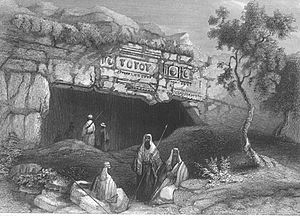
According to Lancaster’s sources, Izates and his mother Helena built palaces for themselves in Jerusalem as well as preparing tombs for themselves so after their eventual demise, they could be interned in the holy city. In fact, some part of this has been substantiated, as the “Tomb of the Kings” in East Jerusalem, north of the Old City walls, has been identified as the tomb of Queen Helena and her sons.

In reading this Torah Club commentary…

Helena submitted herself completely to the authority of the sages. Izates and Helena contributed vast sums toward the Temple…(Queen Helena) also had a golden tablet made and inscribed with the words of the vow of the bitter water for the woman suspected of adultery.

-Lancaster, pg 252

All of this is interesting to be sure, but what does it have to do with us? Even if we choose to buy the speculation that Izates and Helena were followers of the Way and converted to that particular sect of Judaism, since that time, Christianity and Judaism have diverged into radically different trajectories so that one has little to do with the other.
Tomb_of_the_KingsIn the Hebrew/Jewish Roots movement and its variants, there is a particular interest in just how non-Jews were integrated into that sect of Judaism that eventually became known as “Christianity.” I mentioned in Part 1 and Part 2 of my previous commentary on the Torah Club that the “conversion” of Cornelius and his household omitted any actual conversion to Judaism. Like Izates, Cornelius was taught Judaism but not circumcised. There’s no evidence that Peter deliberately discouraged Cornelius from a full conversion, but we don’t know what sort of decision making process occurred among the apostles between Peter’s encounter with Cornelius and Ananias’ encounter with Izates (and we have no real reason to assume that Ananias was also an apostle of the Way).

What we do know is that Izates did keep significant portions of Torah, adhering to Jewish customs and practices which we assume could have included keeping kosher, observing Shabbat, and performing the daily prayers. We certainly have evidence that Izates and Helena, before and after formal conversion, were generous to the Jews and donated to the Temple. This includes Helena purchasing vast quantities of grain and paying for it to be transported on ships to feed the hungry among Israel when she discovered a famine in Jerusalem and Judea (I can’t help but recall Joseph in Egypt in this instance).

Cornelius was also a devout man who observed the set times of prayer, donated funds for the benefit of the Jews, and that these acts were considered by God as a memorial (sacrifice) before him (see Acts 10:1-4). Given that Peter and the other Jews in his party spent several days in the home of Cornelius and likely ate with him and his household, Cornelius probably had kosher food available and maybe even kept a form of kosher himself.

In all this we can construct a model of what it was like (though facts are sparse) to be an early Gentile participant in the sects of Judaism including the Way. We have examples of Gentiles studying Torah and observing some of the mitzvot and either being discouraged when they expressed a desire to convert (Izates) or the option of conversion simply never arising (Cornelius). As we saw above, even Josephus was unlikely to have considered “the Way” as anything separate from the other Jewish sects of the late first century in which some Gentiles were partaking. It is on this basis that many 21st century Gentile believers are adopting some of the modern expressions of the mitzvot, including forms of observing Shabbat, keeping kosher, and davening at the set times of prayer.

Although 2,000 years have passed, there seems to be a hunger among some believers to try to recapture the flavor of the early Gentile disciples of the Way in order to access something they believe is more authentic about their faith. But while observing some of the mitzvot made perfect sense in a religious practice that was completely Jewish in the days of Peter and Paul, does it make any sort of sense now?

I don’t know. Theologically, I don’t think we can really say “no,” since we have precedent in the Bible and other sources, but on the other hand, the Bible and these other sources do not give us a clear picture of Gentiles who had not undergone full conversion observing the mitzvot in the same manner as the born-Jew. In fact, we see in the example of Izates and Eleazar, a definite Jewish objection to an uncircumcised Gentile studying the Torah without actually obeying it by converting to Judaism. This certainly suggests that some sects of Judaism required a Gentile to undergo full conversion prior to observance of the mitzvot, which apparently included even studying the Torah of Moses.

But as I’ve said repeatedly, information is sketchy. We’re not that certain of our facts. Which is a very, very good reason for people who believe they are certain that modern Christians must observe the full Torah mitzvot like a born-Jew or Jewish convert to re-examine their material and their assumptions. I believe Lancaster in this Torah Club commentary took liberties with his information and made certain assumptions to stimulate the imagination of his audience and to get us thinking “outside of the box.” But that’s a long way from saying that his assumptions are facts and that we must treat them as such, altering our faith and our observance accordingly.

pathIt’s interesting and even fun to take what little information we have available to us about the early church and to play a game of “what if.” It’s erroneous and even dangerous to forget that we’re just imagining and to believe the stories we’re building for ourselves. A life of faith is a life of exploration and discovery, but determining the difference between a bit of iron pyrite and a gold nugget is quite a bit harder than we might think.

A final word. If you are a Christian who feels drawn to certain of the mitzvot, if you are inspired by davening with a siddur, by observing the set times of prayer, by lighting the Shabbos candles, by giving tzedakah to the poor among Israel, I can see no reason to object to this. It is what Cornelius would have done. It is what Izates and Helena would have done. But unless you undergo formal conversion through a recognized Jewish authority (which includes circumcision if you are male), it does not make you Jewish nor does it obligate you to keep all of the Torah mitzvot.

While history records that King Izates and his mother fully converted to Judaism and accepted a life of Torah upon themselves, we have no knowledge that Cornelius or any of his household also did so. While Cornelius and his household observed certain of the mitzvot, we have no information that he considered this observance an “obligation” or a “right” but simply a matter of drawing nearer to the God of the Jews, who he came to know as the One God. If we choose to look at our own religious practice as a “drawing nearer” so that we may know God rather than something that is “owed” to us, then perhaps God will hear our prayers and bring us into His Presence in peace.

The Uncircumcised Convert, Part 2

mikveh-project“Can anyone withhold water for baptizing these people, who have received the Holy Spirit just as we have?” And he commanded them to be baptized in the name of Jesus Christ. Then they asked him to remain for some days.

Acts 10:47-48 (ESV)

When Simon Peter heard the Gentiles speaking in the languages and saw that they had received the Spirit just as he and the other Jewish believers had, he could no longer theologically exclude them from participation in the kingdom or discipleship. (see Acts 10:47-48) They had not gone through a legal conversion to become Jewish, nor had they been circumcised. They were still Gentiles, yet they had experienced the Spirit of God, just as the Jewish believers had.

Simon Peter explained to the six men that had accompanied him from Joppa, “Surely no one can refuse the water for these to be baptized who have received the Holy Spirit just as we did, can he?” By skipping circumcision and going directly to immersion, Simon Peter inverted the process by which a Gentile might ordinarily become a disciple of Yeshua. Prior to that occasion, he and the other disciples required a Gentile to first submit to conversion/circumcision. Immersion could follow later.

Torah Club, Volume 6: Chronicles of the Apostles
from First Fruits of Zion (FFOZ)
Torah Portion Vayeshev (“And he dwelt”) (pg 235)
Commentary on Acts 9:32-11:18

If you haven’t done so already, please read Part 1 of this commentary before continuing here.

This is the second time in his commentary on Acts 10 that Lancaster suggests Peter or the other Jewish apostles may have previously converted Gentiles to Judaism by first having them circumcised and then entering them into Jesus discipleship. As I mentioned in Part 1, I can’t think of any record in the Bible that points in this direction. I do note however, that Philip also did not require the Ethiopian eunuch to be circumcised prior to immersion. However, that more than likely means the eunuch was Jewish (and did not need to convert) since Luke makes no point of the eunuch being a Gentile as he does of Cornelius (although as previously mentioned, there are a number of assumptions in play).

What Lancaster says regarding circumcision and conversion of Gentiles does fit nicely into Shaye J.D. Cohen’s opinion (see his book, From the Maccabees to the Mishnah, Second Edition) of how Gentiles were made into Jewish disciples as I mentioned in another commentary.

However, as the history of Israel progressed, the concept of conversation to Judaism for the Gentile began to become more formalized. Cohen cites three essential elements of conversion to Judaism: belief in God, circumcision, and joining the house of Israel. Again, this is a definition of a convert to Judaism, not conditions required for the Gentile to join “the Way” as disciples of Christ. Cohen even references the difference:

For Paul, circumcision represents subjugation to the demands of the Torah (Gal. 3-5).

In other words, while Paul did not see circumcision and thus full obedience to the mitzvot as a requirement for the Gentile Christians, he did see it as a necessary step for full conversion to Judaism. The natural conclusion then is that a Gentile becoming a disciple of the Jewish Messiah in the time of Paul was not the same as a Gentile converting to Judaism.

Another indication that Gentiles entering into Jesus discipleship were not converting to Judaism is found in the aftermath of Peter’s experience with Cornelius.

Now the apostles and the brothers who were throughout Judea heard that the Gentiles also had received the word of God. So when Peter went up to Jerusalem, the circumcision party criticized him, saying, “You went to uncircumcised men and ate with them.”

Acts 11:1-3 (ESV)

This wasn’t exactly a friendly inquiry on the part of Peter’s fellow Jewish apostles.

Rumors of his (Peter’s) activities among the Gentiles preceded him. It did not take long for word of Simon’s Peter’s theological leap and halachic faux pas to reach the rest of the Judean apostolic community. The inclusion of the Samaritans had been controversial enough. Simon’s fraternization with Gentiles raised astonishment and disbelief.

No one objected to Gentiles joining the assembly of Yeshua so long as they first went through a proper conversion, but according to the rumor, that had not happened. People were even saying that Simon Peter had entered the home of the Roman soldier, eaten with him, and invited him to immerse for the name of Yeshua.

Such an association of Gentiles with Jews, and the Gentiles being allowed into discipleship within a Jewish sect without first converting to Judaism, must have seemed outrageous to the Jewish apostolic community in Jerusalem. Luke points out in verse 2 that “circumcision party criticized him,” meaning the people present were Jews, either people born Jewish or converts to Judaism. A Jew eating with a Gentile was a violation of halachah. Lichtenstein in “Commentary on the New Testament” on Acts 11:3 considers this matter further.

“You went to uncircumcized men and ate with them” (Acts 11:3). This does not present a difficulty, for Cornelius was a God-fearer and certainly had kosher food. And the objection of the circumcised men is only about [Peter’s] approaching uncircumcised men and eating with them, for Jews were forbidden to approach a foreigner.

-Lancaster, pg 236

Cohen might not entirely agree with Lichtenstein, since he believes God-fearers were still polytheists, integrating the God of Israel into a panthenon of other “gods.” However, it is quite likely that Peter and the six Jews in his company would not have eaten with Cornelius unless the food was kosher and there’s nothing to say, Cohen aside, that Cornelius must have been polytheistic.

ancient-rabbi-teachingIn his defense, Peter and the other Jews who accompanied him recounted the events that occurred prior to entering the Roman’s home and what happened once Peter engaged Cornelius, including the giving of the Spirit to the Gentiles. (see Acts 11:4-17) Fortunately, upon hearing the explanation, the other apostles understood the graciousness of God, even to the Gentiles.

When they heard these things they fell silent. And they glorified God, saying, “Then to the Gentiles also God has granted repentance that leads to life.”

Acts 11:18 (ESV)

Lancaster presents his final interpretation of the “Cornelius event,” raising another interesting question.

The apostolic leadership accepted Simon Peter’s testimony and the corroboration offered by the six men from Joppa. The were forced to concede that Sinon had acted properly in setting aside the halachah about the uncleanness of Gentiles. More than that, they realized that God accepted the Gentiles into the kingdom. They did not determine whether or not the new Gentile believers should be encouraged to remain God-fearers or go on to full conversion. They only determined that they should receive Gentile brethern without objection as fellow disciples and heirs of the kingdom.

Uncertain of what else to make of the situation, they blessed God.

-Lancaster, pg 237

As we can see, both from the text in Acts and in Lancaster’s interpretation, the early Jewish apostles struggled to understand how to integrate the Gentile disciples into the Jewish Messianic community. The realization that Gentiles may not have to convert to Judaism (and according to Lancaster, at this point the jury was still out on this matter) in order to become disciples was revolutionary. All other sects of Judaism who were actively pursuing Gentiles as disciples required that the Gentiles convert to Judaism as a matter of course. In other words, it was a “no brainer.” Only in the Jesus sect was the method of entering Gentiles into a Jewish sect still something of a question mark. God didn’t just flip some sort of “spiritual switch” and suddenly, all of the apostles “just knew” what to do with the Gentiles and what it all meant.

But if the Gentiles didn’t have to convert; if they didn’t have to accept circumcision, then how was Torah and halachah to be applied to them? As we saw above, Paul and Cohen’s commentary on Paul understand that conversion to Judaism and circumcision meant the Gentiles would be fully obligated to the Torah mitzvot. As of the events in Acts 11 that question hadn’t even been brought up let alone answered. The apostles had no idea what was coming next. Neither did Cornelius and his household or any other Gentiles who subsequently became disciples.

It will be weeks before Lancaster’s Torah Club commentary addresses the events in Acts 15 which presumably will answer these questions. I hope you are looking forward to the future revelations of Volume 6 of the Torah Club as much as I am.

The Uncircumcised Convert, Part 1

corneliusAnd he said to them, “You yourselves know how unlawful it is for a Jew to associate with or to visit anyone of another nation, but God has shown me that I should not call any person common or unclean. So when I was sent for, I came without objection. I ask then why you sent for me.”

Acts 10:28-29 (ESV)

Simon Peter still had no idea why he had been called to Caesarea. The notion of Gentile inclusion in the kingdom had not occurred to him. Though the Master had told the apostles to “make disciples of all the nations” and to witness on His behalf “even to the remotest part of the earth,” He had never implied that this might mean accepting Gentiles as Gentiles (see Matthew 28:19; Acts 1:8). Simon naturally assumed that any Gentiles entering the kingdom and taking on the yoke of discipleship would necessarily convert to become Jewish first.

Torah Club, Volume 6: Chronicles of the Apostles
from First Fruits of Zion (FFOZ)
Torah Portion Vayeshev (“And he dwelt”) (pp 231-2)
Commentary on Acts 9:32-11:18

I don’t know where D. Thomas Lancaster discovered that bit of information about Peter in his commentary on Acts 10 or even if it’s simply an interesting opinion, but if true, then it begs the question, did Peter or any of the other apostles actually convert a Gentile to Judaism as part of the process of making disciples of Yeshua (Jesus) from the nations? As far as I’m aware, there’s no record in the New Testament prior to Acts 10 of the apostles converting a Gentile to Judaism, or allowing a Gentile to enter into the kingdom without conversion in the context of Jesus discipleship. The thousands we see coming to faith in the Jewish Messiah in Acts 2 and later are almost certainly all Jews. For that matter, what do we know of the Ethiopian eunuch encountered by the apostle Philip prior to Peter being summoned by Cornelius?

And he rose and went. And there was an Ethiopian, a eunuch, a court official of Candace, queen of the Ethiopians, who was in charge of all her treasure. He had come to Jerusalem to worship and was returning, seated in his chariot, and he was reading the prophet Isaiah.

Acts 8:27-28 (ESV)

The Ethiopian eunuch is sometimes considered the first Gentile convert (E.g., Eusebius, Ecclesiastical History 2.1.13). That seems unlikely. Luke makes no issue about his non-Jewish status as he does regarding Cornelius in Acts 10. Ethiopia was home to a continuous Jewish presence from the days of Solomon up until the modern era. Beta Israel Jews, also known as Ethiopian Jews, claim Jewish ancestry reaching back to the Solomonic Era. One may safely assume that an Ethiopian who went to the trouble of making a pilgrimage to Jerusalem to worship the LORD in His Temple was Jewish. Luke says, “He had come to Jerusalem to worship” (Acts 8:27). The eunuch had traveled a great distance to reach Jerusalem, more than a month’s travel time. He had probably come to attend one of the pilgrimage festivals. While in Jerusalem, he purchased several Greek versions of the scrolls of the prophets – reading material for the trip home.

Torah Club, Volume 6: Chronicles of the Apostles
from First Fruits of Zion (FFOZ)
Torah Portion Vayetze (“And he went out”) (pp 176-7)
Commentary on Acts 8:1-40

I think we have to accept that Lancaster is making some assumptions here, as he says, but they are certainly compelling assumptions. Luke indeed makes “no big deal” of the Ethiopian eunuch’s conversion to the “Jesus sect” but draws a tremendous amount of attention to Cornelius and his household of Gentiles when they receive the Holy Spirit.

While Peter was still saying these things, the Holy Spirit fell on all who heard the word. And the believers from among the circumcised who had come with Peter were amazed, because the gift of the Holy Spirit was poured out even on the Gentiles.

Acts 10:44-45 (ESV)

Peter and his Jewish companions were astonished that the Gentiles could also receive the Holy Spirit while Philip…but wait. Did the Ethiopian eunuch receive the Spirit during his encounter with Philip?

And the eunuch said to Philip, “About whom, I ask you, does the prophet say this, about himself or about someone else?” Then Philip opened his mouth, and beginning with this Scripture he told him the good news about Jesus. And as they were going along the road they came to some water, and the eunuch said, “See, here is water! What prevents me from being baptized?” And he commanded the chariot to stop, and they both went down into the water, Philip and the eunuch, and he baptized him. And when they came up out of the water, the Spirit of the Lord carried Philip away, and the eunuch saw him no more, and went on his way rejoicing.

Acts 8:34-39 (ESV)

Immediately after rising from the water, Philip is taken away by the Spirit, but there is no mention at all of the Ethiopian eunuch receiving the Spirit as did Cornelius and his household in Acts 10 or the apostles in Acts 2. Of course in Acts 10 the Gentiles received the Spirit (verse 44) and then were baptized in water (verse 48). Did the Ethiopian eunuch receive the Spirit prior to immersion and the event was simply not mentioned by Luke?

Now when they heard this they were cut to the heart, and said to Peter and the rest of the apostles, “Brothers, what shall we do?” And Peter said to them, “Repent and be baptized every one of you in the name of Jesus Christ for the forgiveness of your sins, and you will receive the gift of the Holy Spirit. For the promise is for you and for your children and for all who are far off, everyone whom the Lord our God calls to himself.” And with many other words he bore witness and continued to exhort them, saying, “Save yourselves from this crooked generation.” So those who received his word were baptized, and there were added that day about three thousand souls.

Acts 2:37-41 (ESV)

philip_and_the_ethiopianNotice that Peter tells his Jewish audience that to receive forgiveness of sins, they will receive the gift of the Holy Spirit, but when Luke describes the results in verse 41, he only says, “So those who received his word were baptized, and there were added that day about three thousand souls.” He doesn’t say that after they received his (Peter’s) word, they received the Spirit and then were baptized. It’s possible, given that these were Jews being discussed, Luke assumed his readership would know that they received the Spirit based on verses 1-4. That same thought process might have been in use when Luke describes the baptism of the Ethiopian eunuch in Acts 8. However this is just guess-work on my part.

But while the Jews who received the good news of the Moshiach in Acts 2 came to faith in Jesus but did not have to convert to Judaism (and arguably, neither did the Ethiopian eunuch), what about Cornelius and his household in Acts 10? If Lancaster’s assumption is correct, Peter should have expected Gentiles to convert to Judaism as a part of becoming disciples of the Jewish Messiah.

I mentioned in a previous meditation that Shaye J.D. Cohen in his book, From the Maccabees to the Mishnah, Second Edition said it was not uncommon for those from the various sects of late Second Temple era Judaism to make converts from the Gentiles including the God-fearers. If Peter expected, as did the other Judaisms of his day, that Gentiles would have to convert to Judaism in order to enter into discipleship, then he should have had Cornelius and the other male God-fearers present circumcised as part of the conversion process.

When Simon Peter heard the Gentiles speaking in the languages and saw that they had received the Spirit just as he and the other Jewish believers had, he could no longer theologically exclude them from participation in the kingdom or discipleship. (see Acts 10:47-48) They had not gone through a legal conversion to become Jewish, nor had they been circumcised. They were still Gentiles, yet they had experienced the Spirit of God, just as the Jewish believers had.

Simon Peter explained to the six men that had accompanied him from Joppa, “Surely no one can refuse the water for these to be baptized who have received the Holy Spirit just as we did, can he?” By skipping circumcision and going directly to immersion, Simon Peter inverted the process by which a Gentile might ordinarily become a disciple of Yeshua. Prior to that occasion, he and the other disciples required a Gentile to first submit to conversion/circumcision. Immersion could follow later.

-Lancaster, pg 235

This presentation on Lancaster’s Torah Club commentary went longer than I originally planned, so I’m splitting it into two parts. Please join me tomorrow for the second and final part in Monday’s “morning meditation.”

50 Days: Lessons in Acts and Patience

Then some of those who belonged to the synagogue of the Freedmen (as it was called), and of the Cyrenians, and of the Alexandrians, and of those from Cilicia and Asia, rose up and disputed with Stephen. But they could not withstand the wisdom and the Spirit with which he was speaking. Then they secretly instigated men who said, “We have heard him speak blasphemous words against Moses and God.” And they stirred up the people and the elders and the scribes, and they came upon him and seized him and brought him before the council, and they set up false witnesses who said, “This man never ceases to speak words against this holy place and the law, for we have heard him say that this Jesus of Nazareth will destroy this place and will change the customs that Moses delivered to us.”

And the high priest said, “Are these things so?”

Acts 6:9-14, 7:1 (ESV)

When Caiaphas asked Stephen “Are these charges true,” he in effect asked, “Are you and your sect speaking against Moses, against the Torah, and against the Temple?

The charges were serious, and the trial had ramifications for the entire Yeshua (Jesus) sect (of Judaism). As a community leader over the assembly of Yeshua’s disciples, Stephen represented the beliefs of the whole community. If the court found him guilty of blasphemy or apostasy, they might turn against the whole sect.

Torah Club, Volume 6: Chronicles of the Apostles
from First Fruits of Zion (FFOZ)
Torah Portion Toldot (“Generations”) (pp 141, 143)
Commentary on Acts 7:1-60

Last Sunday, at the local church I attend, Pastor Randy’s sermon, as he covers the book of Acts, was specifically on Acts 7:1-19. Since the portion of Acts covered by Volume 6 of the Torah club for this coming week’s Torah reading is Acts 7, I thought it would be a good opportunity to compare what is being taught about Stephen and his defense to the Sanhedrin in my church vs. FFOZ’s viewpoint on the same event to see the similarities and differences. I didn’t get what I was looking for. Here’s why as outlined in the printed conclusions of the Pastor’s sermon last week:

Conclusion: Stephen’s sermon helps us to remember…

  1. The sovereign activity of God in choosing people, places, and timing in all things.
  2. The sovereign, abundant grace of God toward rebellious sinners always.
  3. The danger of hardening our hearts against God’s grace.
  4. The error of going through outward motions where our hearts are far from God.

While D. Thomas Lancaster in his Torah club study and Pastor Randy in his sermon series are covering identical material from Acts, the purpose and focus in each of their teachings are not at all the same. Lancaster is addressing the issue of whether or not the charges against Stephen were true; was he really speaking against Moses, the Torah, and the Temple as he had been accused of? Pastor Randy, on the other hand, was using Stephen’s “sermon” (it was actually a legal defense and not a “sermon” as we understand the term in the church) as an illustration of God’s grace and mercy to sinners who repent and turn back to God.

Kind of like trying to compare apples and oranges.

Maybe that’s a good thing, because the Sunday school class I go to after services addresses (though tangentially) the content of the lesson from the Pastor. What if the Sunday school teacher asked if the charges against Stephen were true and I answered based on Lancaster?

Of course, the allegations were not true, but was there any basis at all to the charges?

Stephen presented a pro-Temple, pro-Torah apologetic which, in essence, affirmed his orthodoxy within normative Judaism. He cited the biblically based origin for the authority of Moses and the Torah, and he told the story of the origin of the Temple. He went on to make a case for Yeshua, declaring Him to be the “prophet like Moses” who, like Moses himself, suffered His people’s rejection. In the same way, he drew in the Temple theme as he pointed out that Israel’s historical compromises with paganism contrasted against the sanctity of the true Temple. By the end of his defense, he turned the tables around. The accused became the accuser. He claimed that just as the nation of Israel historically rejected Moses, broke the Torah, and compromised with idolatry, the Jewish leadership had committed a similar crime by rejecting the appointed Messiah. (Lancaster, pg 143)

Notice that Lancaster says that Stephen accused the “Jewish leadership” of rejecting the appointed Messiah, not the “Jewish people.” Since thousands upon thousands of Jews in Jerusalem had accepted Jesus as the Messiah in the weeks and months following Pentecost, it would be very difficult to say that the Jews en masse had rejected Jesus.

Lancaster says that the charges against Stephen were absolutely false, but we tend to hear a different message in Christianity (although no such message was presented in last week’s sermon at my church):

Commentators regard it…as an ironic twist that the so-called “false charges” were actually true. For example, F.F. Bruce (from Bruce’s book, “The Book of Acts,” 1988, pg 126) says, “They are called ‘false witnesses’ because, although their reports had a basis of truth, anyone who testifies against a spokesman of God is ipso facto a false witness.” Numerous Christian commentaries insist that, contrary to what Luke tells us, the witnesses were not really false nor were their allegations really lies. From a traditional Christian point of view, Stephen must have taught against the Temple with its obsolete sacrifices, against the Torah with its cancelled ceremonial laws, and against the customs, i.e., the traditions of men. (Lancaster, pg 142)

Remember that I said not too long ago, quoting Pastor Jacob Fronczak’s article, The Five Solas: Sola Scriptura:

Even with the Masoretic traditions, though, many English readings of the Scripture can be divined from a single Hebrew text. Translation committees have to pick one. Many times readings are chosen to emphasize some Messianic prophecy which appears to point to Jesus Christ, while a Jewish translation committee might choose a different readings for the exact opposite reason. Both readings might be technically correct. However doctrinal presuppositions dictate which reading is chosen. In effect, then, when Christians have only an English Bible and no other tools, they are completely unable to interact with the Scripture – the original Greek and Hebrew texts. They are completely dependent on the work of the translator.

If our doctrinal presuppositions dictate how a passage in scripture is rendered from its original language into English (or any other modern language), the same can be true for how we interpret scripture. Even reading the ESV Bible’s translation of Acts 7:1-60, there’s nothing in the plain meaning of the text that indicates Stephen must have been speaking against Moses, the Torah, and the Temple. In fact, the vast majority of his defense reads like a simple history lesson, compressing the relevant sections of the Tanakh (Old Testament) into a few paragraphs. Stephen doesn’t appear to be denigrating the Jewish Torah and traditions but rather defending them. He only accuses the Sanhedrin of going against the Torah and teachings of Moses, in violation of what Jesus himself taught and defended.

You can see why I might be a little hesitant to speak up in Sunday school later today as I did last week.

It’s another Sunday (as you read this) and church services start at 9:30 this morning. I’ll be there again, and I’ll go to Sunday school again, and I don’t really know what I’m going to say or do. Hopefully, nothing stupid, but there are no guarantees. I’ve said and done stupid things before, even when I knew better. Telling what I understand to be “the truth” is not always defensible if I know in advance that the result will be upsetting or harmful to others. Even if I chose to speak, I would have to do so in a way that was not accusatory or offensive to others.

There is a major difference between being critical, and having a positive influence on others by saying things with compassion and true caring. When you sound critical, the person on the receiving end is likely to deny your words, which will be perceived as an attack. And then you won’t accomplish anything.

-Rabbi Zelig Pliskin
“Daily Lift #634, Correct Without Being Critical”
Aish.com

So far, the only person at church who even knows this blog exists is Pastor Randy, and I don’t even know if he has visited here since our first meeting last week. Since it’s not likely anyone else at church knows I write these “morning meditations,” I’m more at liberty to express my thoughts and opinions here than I should be when in Sunday school.

Of course, this is only the second Sunday I will be back in church. I really need to learn to be more patient and not “shoot off my big mouth” just because the Sunday school teacher asks a question and no one answers. Silence isn’t always in invitation for me to “make noise” nor is it a reason to think that I can “correct” anyone else in their beliefs.

Maybe I should be paying more attention to what the Bible is telling me about what I need to do to make me a better person than what I think it says about making others better.


62 Days: Going Back to Ekklesia

And great fear came upon the whole church and upon all who heard of these things.

Acts 5:11 (ESV)

Acts 5:11 is the first time that Luke uses the word “ekklesia” to describe the community of disciples. Christians might be surprised to learn that the word “ekklesia” does not literally mean “church.” Biblical Greek has no word equivalent to our English word “church.” The word “ekklesia” translates the Biblical Hebrew word “Kahal.” Kahal means “assembly,” “congregation,” or “community.” The word ekklesia is interchangeable with “synagogue,” and it appears hundreds of times in the Greek version of the Tanach (Old Testament) to describe the congregation of the people of Israel.

from Torah Club, Volume 6: Chronicles of the Apostles
Torah Portion Vayera (“And he appeared”) (pg 97)
Commentary on Acts 4:32-5:42
Produced by First Fruits of Zion (FFOZ)

What?

Of course, I’ve heard that before, but maybe some of you reading this haven’t. My understanding of the word “ekklesia” is that it can be any collection of people who have gathered for a common purpose. It can as easily be a group of people who have gathered together for a riot or a lynch mob as to worship the God of Israel. A rather startling revelation for anyone who thought that “ekklesia” was a brand new word, something revolutionary for its time, the invention of the Christian church. (Only the Darby Bible Translation, World English Bible, and Young’s Literal Translation render “ekklesia” as “assembly” in Acts 5:11 according to Biblos.com. The other Bibles use the translation “church.”) D. Thomas Lancaster continues his Torah Club commentary on the subject.

By translating the term as “church,” our English Bibles have done us the great disservice of making us think of the church as an entity different, distinct, and outside of Judaism and the Jewish people. The “church” is not a New Testament innovation. When we read the word “church” in our English Bibles, we need to remember that it denotes the assembly of the messianic community within the larger Jewish nation, not something outside of Israel. (pg 97)

So, from Lancaster’s description, we see that the early “Christian church” of the Jewish disciples of Jesus was indeed not some new creation, but a continuation of the Jewish community that they had belonged to since the days when they were first called to follow the Messiah. It was a Jewish community no different from the other communities of the various sects of Judaism that were common in that day.

It almost makes it sound as if Christianity and Judaism are the same thing, but as I previously mentioned, in the modern era, Christians do not practice Judaism.

But our Christian faith was once very much a Judaism, as we see in the early chapters of Acts. I recently talked about this as well, but I’m sure you’re aware that a lot of water has flowed under that particular bridge, and we’ve been taken away from the foundations of the beginning of the Christian faith.

But during the time I’m discussing here, there was no “Christian faith” as we understand the concept. There was just another sect of Judaism that believed it was following the Jewish Messiah. That’s actually not incredibly unusual, as over the long centuries of Jewish history, there have been many would-be Messiahs who have attracted many followers. All those Messiahs and all of those followers have faded away…all except one.

But a Pharisee in the council named Gamaliel, a teacher of the law held in honor by all the people, stood up and gave orders to put the men outside for a little while. And he said to them, “Men of Israel, take care what you are about to do with these men. For before these days Theudas rose up, claiming to be somebody, and a number of men, about four hundred, joined him. He was killed, and all who followed him were dispersed and came to nothing. After him Judas the Galilean rose up in the days of the census and drew away some of the people after him. He too perished, and all who followed him were scattered. So in the present case I tell you, keep away from these men and let them alone, for if this plan or this undertaking is of man, it will fail; but if it is of God, you will not be able to overthrow them. You might even be found opposing God!”

Acts 5:34-39 (ESV)

For nearly 20 centuries, there were no Jewish followers of Jesus, at least none who retained a Jewish ethnic, cultural, and religious identity and lifestyle. Even today, halakhically Jewish disciples of the Jewish Messiah are few in number. Many have abandoned their Jewish identities and have joined “the church,” and they are, for the most part, indistinguishable from the Gentile Christians around them. Some are in the synagogues today and quietly worship alongside their Orthodox, Conservative, or Reform brothers in Jewish community. Very few worship in authentic Messianic Jewish communities, mainly because such communities are extremely difficult to establish and maintain. The overwhelming majority of followers of Christ are Gentiles and they worship in the thousands, tens of thousands, hundreds of thousands of Christian churches in this nation and around the world.

So I’m looking at trying to connect to a church, an “ekklesia,” although as we saw above, “ekklesia” doesn’t mean “church.” But modern convention says that “church” is the only place I have left to go if I want to be a part of the community of the body of Messiah (they’ll call him “Christ” of course).

If I were to print this blog post out and take it with me to my meeting with the Pastor this Saturday (I had to move the appointment time back one day), I wonder what he’d say? I wonder what the church’s board of directors would say if they read it? What would any of the church members say if they could read this commentary about “the church?” Would they find a kindred spirit in me at all, or only some “religious oddball?”

As far as the nature, meaning, and implication of the word “ekklesia” in relation to Acts 5:11 and the early community of disciples of Jesus, I’m not an “oddball” at all, but there’s 2,000 years of Christian culture to address. The “church” isn’t just the community of Christ in the 21st century, it is the collection of all of the doctrines, theologies, dogmas, and philosophies that have been incorporated into what it is to be a Christian and what Christians understand and believe.

Derek Leman’s recent blog post Congregation Lift: The Principle of Aiming High included the following:

In evangelical Christianity (and I was totally immersed as a student at Moody Bible Institute in Chicago, where I got my B.A. in Bible and Theology) I found a principle I came to completely reject. It was the principle of aiming low. In church after church, chapel service after chapel service, the supreme height of Christianity was presented as “getting saved.” Christians lived for getting into heaven. Every sermon had to tell people how to gain access to the place of white clouds and harps. The “born again” experience, interpreted shallowly as “getting in,” was the be-all, end-all, the graduate degree of faith. Whenever deeper subjects came up (discipleship, serious commitment to giving and serving) these were optional add-ons for the few who were called to be more than “saved.”

Church teaching always aimed low. Get them saved. Tell them over and over again. Preach 52 sermons a year that, no matter which Bible text was used, ended up being about afterlife admittance. And this was called “the gospel,” even though it has absolutely nothing to do with the word gospel (euangelion) in the New Testament. The people in the pews were viewed as probably incapable of any higher life with God. So appeals to things like giving, serving, serious pursuit of holiness, were extras to which people would be vaguely invited to discover outside of the weekly 60-minutes for God event.

This makes my “spider-sense tingle” or, put another way, screams “Danger! Danger, Will Robinson” at me. It scares the heck out of me. What am I getting myself into?

Fortunately, Leman goes on to say:

Now, this is not actually Christianity. In my opinion, what goes on in the 60-minutes-for-God event in most church buildings is not Christianity. True Christianity, I would argue, is a beautiful thing. What keeps good people in low-aiming evangelical popular churches? I think it is the fact that small, inner circles of Bible readers in these places all find something deeper than what is presented in the 60-minutes-for God events.

That still makes it sound like finding “true Christianity” is about as simple as locating teeth in the beak of a hen or finding the proverbial needle in a haystack.

But I have to start somewhere.

I once employed an Internet meme stating that “One does not simply learn Torah in a church,” and was promptly, though indirectly chastised by none other than Boaz Michael, who along with his wife, does attend a church in a small town in Missouri. Apparently, the “weightier matters of the Torah” are indeed to be found in the church, or at least in some churches.

My point, a point for congregational life, is this: the Bible and the great thinkers and teachers of Judaism and Christianity, aim high, not low.

What does aiming high in congregational worship, teaching, and discussion mean? It means that leaders are educated and expected to have read other opinions and to be familiar with a broad range of ideas. The “what it means to me” approach to Bible teaching is a disaster. It means that the prayers and songs should call to a deep devotion and a wise faith. It means complexities and realities of suffering, of the failure of goodness to produce a pain-free life, of the highest goals of loving sacrificially, should be the core of the teaching. It means people at all levels of learning and practice should be challenged.

I guess I’m just trying to “psych” myself up for this Saturday. I worked up the nerve yesterday to tell my wife about my appointment and she took it pretty well. I looked for any signs of “discomfort” in her facial expression and body language and listened closely to her vocal tones, but everything indicated that she was calm and accepting of my position. So why do I feel like I just pounded another nail in the coffin of whatever shared faith experience we used to have?

It doesn’t help to have just discovered (literally, as I’m writing this) that people in middle age (i.e. “me”) are the “group making the biggest exodus out the back door of their churches,” according to information I read on Michelle Van Loon’s blog. Lovely. As I’m trying to get back in, all of my age-mates and peers are going back out.

Feinberg’s list of things that push older members out the door tags the usual suspects (changing worship styles, lame small groups, politics, communicators in the pulpit instead of pastors), though I believe that some items on her list torque those over 65 differently than they might if a person was in his or her early 40′s. For instance, Boomers developed church services heavy on entertainment and light on organ music and choirs; older Gen X-ers, now in their forties, came of age in an era when worship style wars had already been fought in many corners of Protestantism. For instance, I appreciate some hymns, but prefer thoughtful, organic modern worship music. I have a long history of breaking into highly inappropriate giggles if I visit a church and find my sung worship accompanied by bombastic organ music (and is there any other kind?).

Organ music? Lame small groups? Communicators instead of pastors? Oy!

Van Loon continues:

That said, those in the second half of life simply can’t freestyle their spiritual lives. God calls us to community, though our relationship with that community can and should change as we mature. (Wouldn’t it be wonderful if church leaders were willing to consider how to better facilitate spiritual growth for those in the second half of life?) Illness, the needs of aging parents and travel change our relationship with regular Sunday morning church attendance. Others find what they have to offer others is better received in contexts (non-profits, missions organizations) other than that of their local church.

I can see there’s no going back to the simple concept of “ekklesia” as Luke describes in Acts: the community of disciples who meet, pray, teach, share, and worship. To be part of a community is to meet the community where they are. It would be nice, as Van Loon says, if “church leaders were willing to consider how to better facilitate spiritual growth for those in the second half of life,” but how is the church supposed to meet me where I am, or is that even the point anymore? Who is supposed to be serving who and why does one even go to church?

So though I disagree with Feinberg on one hand, I agree with her on the other. She’s right: those of us who are older are called to mentor those younger than us, and to give ourselves away in generous, selfless service.

I can’t imagine, “oddball” that I am, even getting that far. In fact, I’m still trying to find out why I’m “going back to church.” I don’t really expect or need to “be fed” by the church, but I can hardly imagine they’d trust me to do any feeding, particularly as a “newbie.” I don’t know that I want to do any feeding. Teaching is draining and as a teacher or just a person, I’ve been wrong before, and I don’t want to take others down a wrong path with me. Maybe, I’ll just see if they need their carpets vacuumed once a week and that will be my Christian “mitzvot,” my way of giving back to a community that seems about as familiar to me (especially reading Van Loon’s blog) as the surface of one of Saturn’s moons.

What am I doing anyway?

Edit: I posted this a day early (it was supposed to be tomorrow’s “morning meditation”) because I had something of an epiphany. You’ll see what it’s all about in tomorrow morning’s blog post.

Giving

Now the full number of those who believed were of one heart and soul, and no one said that any of the things that belonged to him was his own, but they had everything in common. And with great power the apostles were giving their testimony to the resurrection of the Lord Jesus, and great grace was upon them all. There was not a needy person among them, for as many as were owners of lands or houses sold them and brought the proceeds of what was sold and laid it at the apostles’ feet, and it was distributed to each as any had need.

Acts 4:32-35 (ESV)

Communal life was not new to the first century Jews. The Essenses lived in a communal fashion somewhat similar to Luke’s description of the Jerusalem community. The Essenses surrendered property and possessions to the common fund. The disciples’ economic model of common property, shared meals, and communal life might also be compared to the socialist, secular Kibbutz movement in the modern state of Israel.

from Torah Club, Volume 6: Chronicles of the Apostles
Torah Portion Vayera (“And he appeared”) (pg 92)
Commentary on Acts 4:32-5:42
Produced by First Fruits of Zion (FFOZ)

Periodically, religion gets dragged into the political arena (and after all, this is an election year) or it is thrust into such an arena by some of its adherents. Christianity and Judaism are no exceptions, and particularly fundamental Christianity often makes its presence known, for better or for worse, in support or opposition to issues and candidates. On the other hand, there are Christians who use the example of the early Jewish disciples in the passage we see quoted above as an illustration of how we should “redistribute wealth” so that those who have should give to those who do not, creating a balance of sorts, where everyone possesses exactly the same material goods as the next person, with no one having more and no one having less.

I mentioned the concept of “Christian communism” in last week’s study on Acts and suggested that this particular scenario was never meant to be the eternal model of the Christian church. In fact, according to D. Thomas Lancaster’s study on this week’s portion of Acts, this particular type of community was responding to a very specific set of circumstances.

What factors gave rise to the communal economy of the Jerusalem believers? The apostles were all Galileans. None of them owned property in Jerusalem. With them came their families, wives, and children and several more Galilean followers of Yeshua (Jesus). The entire community intended on staying in Jerusalem where they could meet daily in the Temple. The Temple anchored the believing community in Jerusalem. It became their place of assembly and prayer and the central hub from which they proclaimed the gospel. In addition, pilgrims from all over the world, present at Jerusalem for Shavuot, had become disciples. Many elected to relocate to join the community. They were without property or career in Jerusalem. The establishment of the Jerusalem community required a corporate economy. Those relocating to Jerusalem sold their possessions and contributed to the upkeep of the community.

So, taking the specific context into consideration, we don’t particularly see a case where Peter or John cried out, “Hey everybody! Jesus told us sell all our stuff and give it to all the people who don’t have anything!” We also have to keep in mind that all of this giving was totally voluntary. No one was forced to give up all their personal possessions nor was it actually a condition of being part of the community. It was simply a practical consideration, especially for those Jews (and all of the people we’re talking about here are Jewish) who were making “aliyah,” if I can borrow the modern term, and returning to the Land.

But I know you’re thinking about Ananias and Sapphira.

But a man named Ananias, with his wife Sapphira, sold a piece of property, and with his wife’s knowledge he kept back for himself some of the proceeds and brought only a part of it and laid it at the apostles’ feet. But Peter said, “Ananias, why has Satan filled your heart to lie to the Holy Spirit and to keep back for yourself part of the proceeds of the land? While it remained unsold, did it not remain your own? And after it was sold, was it not at your disposal? Why is it that you have contrived this deed in your heart? You have not lied to man but to God.” When Ananias heard these words, he fell down and breathed his last. And great fear came upon all who heard of it. The young men rose and wrapped him up and carried him out and buried him.

After an interval of about three hours his wife came in, not knowing what had happened. And Peter said to her, “Tell me whether you sold the land for so much.” And she said, “Yes, for so much.” But Peter said to her, “How is it that you have agreed together to test the Spirit of the Lord? Behold, the feet of those who have buried your husband are at the door, and they will carry you out.” Immediately she fell down at his feet and breathed her last. When the young men came in they found her dead, and they carried her out and buried her beside her husband. And great fear came upon the whole church and upon all who heard of these things.

Acts 5:1-11 (ESV)

But what was their great crime and why did they die? Was it because they held back some of their wealth from the community? Peter seemed to think it was because they lied to the Holy Spirit. What if they had said, “we are selling our property but are giving only half the proceeds to the community, keeping the other half for ourselves?” Would they have died for being “greedy;” for desiring to keep some of what was rightfully theirs (and Peter acknowledges this)?

Probably not. But Ananias and Sapphira wanted to appear as if they were giving everything to the community when in fact, they kept back some if the profits. They wanted to “look good” and still secretly keep more for themselves. They wanted to have their cake and eat it too, as the saying goes. So it wasn’t greed as such that resulted in their deaths, but greed that lead to lying to God and to the community.

Perhaps the following will help to illustrate what happened and of what sort of economic model the early Jerusalem community was using.

There are four types of people. There’s the man who says, “What’s mine is mine, and what’s yours is yours.” This kind of man is neither good, nor bad, but some say this is the type of person that lived in Sodom. There is the man who says, “What’s mine is yours and what’s yours is mine.” This kind of man is an ignoramus. There is the man who says, “What’s mine is yours and what’s yours is yours.” This is a righteous man. Finally, there is the man that says, “What’s mine is mine, and what’s yours is mine.” This is a wicked man.

m.Avot 5:10

Applying this principle to the Jerusalem community, Lancaster says:

The third expression, “What’s mine is yours and what’s yours is yours,” best expresses our Master’s ideal for His disciples and describes the type of economy practiced by the Jerusalem community. They sold their possessions and goods only to meet the needs of others as those needs arose.

Notice that the focus is not on everyone being compelled to give up everything for the sake of the community, but rather, while you understand the value of giving and hospitality to others, it is not contingent upon the other having the same values as you. You do not demand that the other consider his possessions as yours. You only accept upon yourself the value your possessions also belonging to the other as the other has need of them. (Notice too, that the one who believes that “What’s mine is yours and what’s yours is mine” is considered an ignoramus.)

But again, we need to remember that we are reading here applies specifically to the Jerusalem Community and isn’t necessarily the universal model for what all Christian communities should be like in the world today. There are also other, related principles to keep in mind.

Now we command you, brothers, in the name of our Lord Jesus Christ, that you keep away from any brother who is walking in idleness and not in accord with the tradition that you received from us. For you yourselves know how you ought to imitate us, because we were not idle when we were with you, nor did we eat anyone’s bread without paying for it, but with toil and labor we worked night and day, that we might not be a burden to any of you. It was not because we do not have that right, but to give you in ourselves an example to imitate. For even when we were with you, we would give you this command: If anyone is not willing to work, let him not eat. For we hear that some among you walk in idleness, not busy at work, but busybodies. Now such persons we command and encourage in the Lord Jesus Christ to do their work quietly and to earn their own living.

2 Thessalonians 3:6-12 (ESV)

But if anyone does not provide for his relatives, and especially for members of his household, he has denied the faith and is worse than an unbeliever.

1 Timothy 5:8 (ESV)

As far as Paul’s letters are concerned, we have to be careful to separate out what he intended to be universal principles of the faith vs. specific instructions to those individual churches with particular problems. However as far as the two above-quoted statements, it seems the ideal of being self-supporting and taking care of one’s family first is a good rule of thumb for any Christian. This certainly does not preclude charitable giving, and particularly providing care for the needy, and tzedakah is a long-established mitzvot among the Jews and was taught repeatedly by Jesus. However, none of that suggests we must give to charity before taking care of our families, nor that we should be compelled to give to what others consider a worthy cause at the cost of supporting our families.

But there’s another important example to consider, one presented to us by our own Master.

And he sat down opposite the treasury and watched the people putting money into the offering box. Many rich people put in large sums. And a poor widow came and put in two small copper coins, which make a penny. And he called his disciples to him and said to them, “Truly, I say to you, this poor widow has put in more than all those who are contributing to the offering box. For they all contributed out of their abundance, but she out of her poverty has put in everything she had, all she had to live on.”

Mark 12:41-44 (ESV)

In Judaism, the principle of giving tzedakah does not require that you give yourself into the poorhouse, so to speak, or require that you starve your family for the sake of others, even if those others appear more needy than you. Yet Jesus praises this poor widow who gave all she had to live on to the offering box. I don’t know if this was meant to be taken literally or as a parable to teach a lesson. For instance, the rich gave out of their wealth and thus sacrificed nothing of their own livelihood, so should they be as praiseworthy, giving thousands of dollars (this is just an example) as compared to one who sacrificed all that she had to live on, even though it was only pennies? What it seems Jesus is teaching is not spending yourself into poverty by giving to the poor, but that it is more praiseworthy for the poor to give little and yet have it be a significant impact on their livelihood, than for the rich to give much and to affect them not at all.

The Rebbe and the ChildIt would be like very small child giving everything in her piggy bank to a charity that supports needy children in disadvantaged nations, vs. Bill Gates giving millions to the same charity (although the child, of course, can depend on her parents to provide for her needs).

So what do we see in all of this that applies to Christians today? Christ does not expect us to do without personal possessions or to do away with belongings of our own. It seems the Christian principle of earning your own way and taking care of your own family is an important and even vital one. We are expected to give and give generously to those who are in need (as opposed to those simply in want who can provide for themselves), but Christianity does not require that literally no one has more than another person.

Also, and this is very important, giving is not mandatory and cannot be forced. If you say you are going to give a certain amount or value, then give it and don’t lie, just to be seen as more holy or more like a good guy. On the other hand, if you sell property, for example, and say you will give half the value to charity and keep the other half for yourself, there’s nothing un-Christian about that. Whatever you give, you give out of willingness, not because you were forced or coerced into it, either by your church, or by your government, or by pressure from a “politically correct” social group.

OK, I’m being maybe a little political here, but I’m trying to illustrate a point. Giving and sharing, as far as the Bible is concerned, cannot be defined by a social group, or a cultural value, or a political party, or a government. Charity is between you, those you give to, and God. It cannot be manipulated by any party or entity outside of those involved.

Blessings.