Tag Archives: Torah Portion

70 Days: The Lost Shabbat

Shabbat candlesWhen Lemech named his new son (at the end of last week’s reading, Gen. 5:29), he called the boy “Noach”, saying “this shall comfort us (yeNaCHameinu) from our work and the difficult labor of our hands.” But the name Noach was prophetic in a different vein, as the name also means to be at rest (“NaCH”). The Zohar, the fundamental work of the Kabbalah, of Jewish mysticism, says that “Noach” is thus a hint to the Sabbath, the day of rest. “Shabbos” is derived from the word “SHeVeS,” which also means to be at rest: “for in [the seventh day] He rested (“SHaVaS”) from all His work.” [Gen. 2:3]

In this week’s reading, Noach is commanded to make sure there is a light in the Ark, using the unusual word “Tzohar” (found nowhere else in the Bible) to indicate brightness like midday (“Tzaharayim”). The Avnei Azel writes that when we combine the numerical value of “Tzohar” with that of the Ark, “Tayvah,” the sum is the value of “Shabbos.” The Sabbath encapsulates both the Ark, the shelter from the flood, and the brightness within it.

We live throughout the week with work and other responsibilities, building up (and sometimes crashing down) around us. Shabbos is quite literally a shelter from the storm, and opportunity to withdraw from all the distractions and focus upon what is truly important. It is the busiest executives who, when they decide to fully observe the Sabbath, and stop using all electronic devices and not do business on that day, frequently remark that they don’t know how they survived without it.

Viewed correctly, the Sabbath isn’t about restrictions, but is the opportunity to focus upon the light within.

-Rabbi Yaakov Menken
“The Light Within”
Commentary on Torah Portion Noah
ProjectGenesis.org

I usually “get in trouble” when I post anything mentioning mysticism or Kabbalah, and I want to assure you that I tend to see mystic writings metaphorically, since I am nowhere near being any sort of “mystic” myself. But in reading Rabbi Menken’s commentary on last week’s Torah portion, I can’t help but once again be captured by the “magic” of the Shabbat. I don’t think it’s so much the mechanics of the seventh day, but the idea that God has provided the Jews with a way to wrap themselves inside a comforting blanket of sorts, that provides peace and a special closeness with God for one day a week. It’s as if the week is a cold, winter’s day with an icy wind blowing, freezing you to the marrow as you make your way about your tasks, and Shabbat is staying in bed late in the morning, toasty warm and pleasantly relaxed inside and under your comforter, while that self-same icy wind blows impotently outside.

I have been told more than once that the Shabbat is the sign of the Mosaic covenant with the Children of Israel and as such, is not “transferable” to the rest of the world, but of all the blessings that God provided the Jewish people, I must admit, I continue to “covet” only this one. I find it a particular disappointment that when Jesus made it possible, through certain blessings of the Abrahamic and New covenants, and through his broken body and blood, for we non-Jews to also enter into covenant relationship with God as his disciples, he didn’t make it possible for us to also enter into a weekly Shabbat as well.

More’s the pity.

But then again, early Christianity, when it threw off its Jewish mentors and guides like old rags and “reinvented” itself in the centuries after the destruction of the Temple by the Romans in Holy Jerusalem, set aside many of the “Jewish” aspects of its own Messianic worship, including meeting with other like-minded Gentiles and Jews in the synagogue to daven on Shabbos. We abandoned the potential for such a “rest” in both God the Father and in Christ. We did it to ourselves.

I say all of this because I’ve contacted a Pastor and set up an appointment to meet with him in a little less than two weeks to discuss my “situation.” As I’ve said in other Days blogs, I pretty much have to “fish or cut bait.” I can try to sit on the edge of a razor blade forever, or pick a side and jump off into whatever awaits me below. So I picked a side and jumped. Now, I’ll be in free fall for the next week and a half or so, and then I’ll arrive at ground level and make the first “bounce” in my landing. Believe me, I’ll make sure you hear it when I go “thump.”

But the closer I move toward Christianity and the church, the further I feel I am distancing myself from Judaism and, in some aspects, particularly from my Jewish wife. And as I said, of all the Jewish practices and values I have been exposed to, the Shabbat is the one closest to my heart. Even though the Shabbos candles are no longer lit in my home on Friday evening, I do not abandon it in my heart. But with my body and everything else, having chosen a “course correction” for myself which is designed to increase my trust in God, what am I leaving behind?

In describing the Shabbos, the verse in Bereshis (2:3) writes: “For on it [the seventh day] Hashem rested from all His work which He created לעשות —to do.” This final word in the verse…does not complete the thought of the verse the thought of the verse smoothly, and it seems to even be an extra word altogether.

A cursory observation of the world indicates that Hashem continues to sustain the world on Shabbos just as on every other day. Plants grow and creatures thrive on Shabbos, with the ongoing providence of Hashem overlooking every detail just as on the weekdays. In what manner, then, is the seventh day a day of rest for Hashem?

The Bnei Yisasschar explains that when the world was created, it was set into place with the potential it needed to continue, and for nature to take its course. Creatures were given the instincts necessary to procreate, and plants were placed into their environment for survival and in order to prosper. As the world continues to exist on Shabbos, it is within the realm of work that was put into place before Shabbos, and the work takes place on Shabbos automatically without further input.

The verse tells that Hashem created the world “to be done.” Hashem continually renews the world every moment. Yet, from the day of creation and onward, this supervision of Hashem is manifest in a manner as if the world is set and conducts itself naturally.

Daf Yomi Digest
Gemara Gem
“A World Set in Motion”
Commentary on Shabbos 17

I’ve sometimes wondered about Creation, the Seventh Day, and entropy, that property of all systems including the universe, to go from a more to a less organized state, very slowly running down like an old clock worked by a mainspring (if you’re old enough to remember such clocks and watches). When God “rested” and He built-in to His Creation the ability to continually move forward under its own “momentum,” so to speak, is what we see of the universe’s expansion, and the general long-term decay of systems (including human being “systems”) part of His “rest?”

Jewish philosophy sometimes states that God is continually renewing the universe and if He was to cease, even for the briefest of moments, existence itself would fly apart. But I seem to notice (and I believe the scientific world will agree with me here) that the universe is rather very slowly, ponderously, “flying apart” anyway. Sort of a disturbing counterpart to the “warm, comforting blanket Shabbat’s rest” I described above.
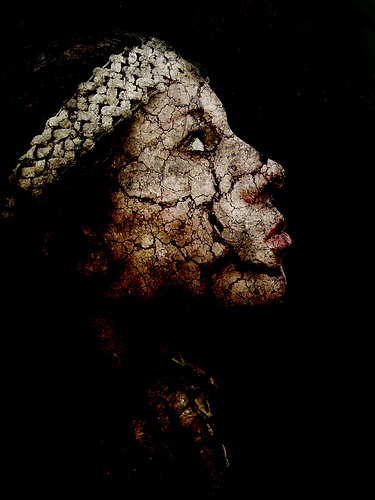
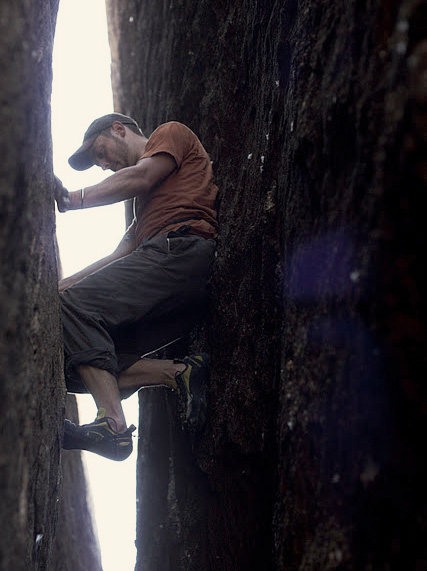
FallingApartBut if God’s rest isn’t a literal, one-to-one model of Shabbat between Creator and creation, then perhaps it is a twist on the metaphor that we should regularly rest in Him, or otherwise “fly apart” for lack of any rest in God at all. However, I understand that we can also consider the Shabbat as a hint or foretaste of the Messianic era to come, when all of our current concerns and labors will come to an end and we will all perpetually rest with Him.

The Jewish people are compared to the stars twinkling in the high heavens. By their light, even he who walks in the darkness of night shall not blunder.

Every Jew, man or woman, possesses enough moral and spiritual strength to influence friends and acquaintances, and bring them into the light.

“Today’s Day”
Wednesday, Cheshvan 5, 5704
Compiled by the Lubavitcher Rebbe
Translated by Yitschak Meir Kagan
Chabad.org

God gave a good many gifts to the Jewish people, not the least of which is the Shabbat. Although both Judaism and Christianity tend to agree that we non-Jews don’t enter into a weekly Shabbat’s rest (no Christian ever treats Sunday like an observant Jew treats the Shabbat, so no, Sunday is not the “Christian Shabbat”), it is much to our own regret that we fail to do so. For we have robbed ourselves of not only a weekly renewal in God, but of a preview of what life will be like when the Jewish King and Lord will take possession of his kingdom, and rule the world in true justice and in peace.

And yet today and in the weeks ahead, I find myself deliberately walking on a path that leads away from that peace. I hope this is me trusting in God rather than me just being foolish.


Noah: Dreading Significance

The Maggid of Mezritch interpreted our Sages’ statement: (Avos 2:1) “Know what is above you,” as: “Know that everything ‘above’ all that transpires in the spiritual realms is ‘from you,’ dependent on your conduct. Each of us has the potential to influence even the most elevated spiritual realms.”

The Torah alludes to this potential in the opening verse of our reading: (Genesis 10:9) “These are the chronicles of Noach. Noach was a righteous man.”

The word noach refers to satisfaction and repose. By repeating the word, the Torah implies that Noach and by extension, every one of his descendants can sow these qualities in two different fields, both among his fellow men, and in the spiritual worlds above.

Every person affects his environment. Our thoughts, words and deeds can inspire peace and tranquillity in our fellow men, helping create meaningful pleasure. And by establishing such conditions in our world, we accentuate similar qualities in the worlds above. To highlight our obligation to spread these virtues, this week’s Torah portion is called Noach.

-Rabbi Eli Touger
“Genuine Satisfaction; Noach’s Legacy”
from the “In the Garden of the Torah” series
Adapted from
Likkutei Sichos, Vol. XX, p. 285ff;
Vol. XXV, p. 23ff
Commentary on Torah Portion Noah
Chabad.org

The higher something is, the lower it falls. So too, the loftiest revelations are to be found in the lowest places.

Therefore, if you find yourself in a place seemingly devoid of anything spiritual—don’t despair. The lower you are, the higher you can reach.

-Rabbi Tzvi Freeman
“Higher Lower”
Based on letters and talks of the Rebbe
Rabbi M. M. Schneerson
Chabad.org

In checking my commentary on this Torah Portion for last year, I noticed that I quoted the same content from Rabbi Touger then as I have just now. But it speaks to me from another direction one year later. I realize (I realized this a year ago, too) that whatever we do in the world has consequences that extend far beyond our world and into the spiritual realms. That means everything we do matters in some mysterious, cosmic sense. It also means that everyone of us matters in ways we can’t even begin to imagine.

That’s almost a shame in my case, because I’m at a point where I would much rather hide from significance than embrace it. I know most people strive all their lives to achieve significance. We want to be significant to our families, we want to be significant to our employers, to our friends, to the community. Some people want and need to be significant to large audiences, spanning the nation or even the globe, though I would imagine those types of people are somewhat rare.

But being significant means taking on responsibilities, and there’s a difference between being noteworthy and doing what it takes to support being noteworthy.

I am aware of the principle in both Christianity and Judaism that directs the member of the community to be in community with their fellows. For a Christian, that generally means going to church, and for most Christians, that’s not a problem. I have known some Christians who have gone to congregation without their spouses, sometimes taking the kids to services, because the spouse is a non-believer. Previously, I regularly attended a congregation of believers without my spouse (though she used to attend) because she stopped being a believer in Christ when she adopted a more traditional identity as a Jew.

I stopped going to that congregation for a lot of very valid reasons (though they are wonderful people and have done nothing wrong), not the least of which was that I abhorred worshiping without my wife at my side. If I couldn’t convince her to join my world, I was (and still am) willing to worship in her’s (though my faith in Jesus remains intact).

That was the plan nearly a year and a half ago and it didn’t happen. It will never happen. The question is, do I keep the peace by not attending any congregation, or do I follow the advice I’ve been receiving from a few people and “trust God” by attending a church?

Enter Noah and this week’s commentary on the Parashah. I’m still contemplating jumping and that first step looks like a doozy.

If I’m going to make a decision, it should be soon. Perhaps I can still become, in some sense, associated with a Christian community and still find an excuse to avoid the “Christmas rush” of programs, plays, and musicals that will occur in December. Waiting too much longer then that will put me into Easter season, and how would I avoid the invitations to the various “ham fests?”

Too cynical or just too nervous?

But like I said, enter this week’s commentary on Noah and the significance all human beings have in every decision we make or fail to make. Do I really dare to imagine that whether or not I go to church has cosmic ramifications? Is that ego or avoiding God?

But you can’t avoid God.

Where shall I go from your Spirit?
Or where shall I flee from your presence?
If I ascend to heaven, you are there!
If I make my bed in Sheol, you are there!
If I take the wings of the morning
and dwell in the uttermost parts of the sea,
even there your hand shall lead me,
and your right hand shall hold me.
If I say, “Surely the darkness shall cover me,
and the light about me be night,”
even the darkness is not dark to you;
the night is bright as the day,
for darkness is as light with you.

Psalm 139:7-12 (ESV)

I sometimes admire (even though I think some of them are misguided) people who state with such assuredness that God has told them “such-and-thus,” as if God were sitting with them at their kitchen table this morning, chatting with them over a cup of coffee or tea. I once had a blog discussion with a Christian fellow who styled himself a “prophet,” and he told me point-blank that was exactly how his conversations with Jesus occurred. I immediately stopped following his blog because, even though he seemed really nice and all, I thought only an ego the size of Montana could imagine the Son of God casually schmoozing with him in his kitchen, with each of them sipping a cuppa.

But who knows? Certainly not me.

I don’t have supernatural revelations telling me to go to the corner of 5th and Main and then await further instructions from the local Angel.

I know, cynical again, right?

Heck, Christians struggle with these questions all the time, right?

Recently I quoted Rabbi Abraham J. Twerski when he said:

The Hebrew word for ark, teivah, has two meanings: it can mean “an ark,” and it can also mean “a word.” In the above verse, the latter meaning tells us that God instructed Noah to “enter into the word.” Rabbi Moshe of Kobrin expounded on this theme, explaining that when we pray, we should “enter into the words,” i.e. totally immerse ourselves into each word of prayer, as though the word is encompassing us.

I can’t avoid God. I can’t avoid my conscience. I can’t avoid the idea that I might have a purpose and a reason beyond pressing a bunch of keys on a keyboard to produce blog posts day after day. I can only choose to attend to God and my conscience or ignore them.

Snakes. Why did it have to be snakes?

-Indiana Jones (Harrison Ford)
from the film Raiders of the Lost Ark (1981)

I know it’s a terrible thing to say, but that’s exactly how I feel. Oh well, maybe I’ll start by emailing the Pastor. Maybe he has some ideas. This is terrible. I’m not looking forward to this at all.

HAL-9000 (voice, Douglas Rain): What is going to happen?
Dave (Keir Dullea): Something wonderful.
HAL-9000: I’m afraid.
Dave: Don’t be. We’ll be together.
HAL-9000: Where will we be?
Dave: Where I am now.

from the film 2010 (1984)

Yeah, well…there’s always hope.

“A rare experience of a moment at daybreak, when something in nature seems to reveal all consciousness, cannot be explained at noon. Yet it is part of the day’s unity.”

–Charles Ives

Good Shabbos.

Genesis: Learning Beginnings

And G-d said: “Let there be a firmament…”

Genesis 1:6

It is written: “Forever, O G-d, Your word stands firm in the heavens.” (It is written: “Forever, O G-d, Your word stands firm in the heavens.” (Psalm 119:89) Rabbi Israel Baal Shem Tov, of blessed memory, explained the verse thus: “Your word” which you uttered, “Let there be a firmament…,” these very words and letters stand firmly forever within the firmament of heaven and are forever clothed within the heavens to give them life and existence. As it is also written, “The word of our G-d shall stand firm forever” (Isaiah 40:8) and “His words live and stand firm forever.” (From the morning prayers) For if these letters were to depart even for an instant, G-d forbid, and return to their source, all the heavens would become nought and absolute nothingness, and it would be as if they had never existed at all, exactly as before the utterance, “Let there be a firmament.”

And so it is with all created things, down to the most corporeal and inanimate of substances. If the letters of the “ten utterances” by which the earth was created during the six days of creation were to depart from it for but an instant, G-d forbid, it would revert to absolute nothingness.

This same thought was expressed by the Ari (Famed kabbalist Rabbi Isaac Luria, 1534-1572), of blessed memory, when he said that even in completely inanimate matter, such as earth and stones and water, there is a soul and spiritual life-force – that is, the letters of Divine “speech” clothed within it which continually grant it life and existence.

-Rabbi Schneur Zalman of Liadi

One year, following the Rosh Hashanah prayers, Rabbi Schneur Zalman of Liadi asked his son, Rabbi DovBer: “What did you think of during your prayers?”

Rabbi DovBer replied that he had contemplated the meaning of the passage, “and every stature shall bow before You” (From the “Nishmas” prayer received on Shabbos) – how the most lofty supernal worlds and spiritual creations negate themselves before the infinite majesty of G-d. “And you, father,” Rabbi DovBer then asked, “with what thought did you pray?”

Replied Rabbi Schneur Zalman: “I contemplated the table at which I stood.”

-Rabbi Yanki Tauber
“Wooden Thoughts”
from the “Once Upon a Chasid” series
Commentary on Torah Portion B’reisheet

“I contemplated the table at which I stood” seems an odd way to begin a commentary on Genesis and the beginning of a new Torah cycle, but it tells us something about how Jews see life and, to some degree, the differences in generations. Maybe it also teaches us something about different levels of learning. Rabbi Zalman’s son, who was undoubtedly at a relatively early stage of his education, was focused on “the most lofty supernal worlds and spiritual creations negate themselves before the infinite majesty of G-d,” which is not such a bad thing to contemplate during prayers. But why then, would his father contemplate the table at which he stood?

What was God creating at the beginning of all things?

“Firmament” has also been translated as “expanse” (JPS Tanakh, NIV Bible, ESV Bible) or “space” (New Living Translation Bible) and can also be rendered as “canopy.” Although we may think of this as “sky” or “heaven,” there is an apparent “physicality” and “permanency” to God’s creating of everything. And why should God have to create the physical and permanent? For us.

Neither Rabbi Zalman nor his son was wrong about what they were contemplating during their prayers, but this also tells us something about the nature of God, man, and this week’s Torah Portion. Heaven and Earth aren’t necessarily the separate things we consider them in Christian thought. Everything, the physical and the spiritual, are from God, so we should consider them equally as eternal (or at least extremely long lasting) gifts from our Creator.

But I mentioned before about the differences between generations and the different levels of learning. The younger learner strives to reach up to God and the spiritual realm, and the older, more experienced Rabbi, has learned to see Him, even in a wooden table. I guess that tells us to relax a little when we think we can’t see God. He’s all around us anyway and in many ways. Even in the humble wooden table we’re standing next to when we pray. However, this isn’t always the traditional experience parents, Jewish or otherwise, have when trying to pass their traditions and culture from one generation to the next.

I also am not scoring high on the Jewish parent scale these days: my older daughter, who turned 9 in August, recently decided she hates all worship services and doesn’t want to go to Hebrew school. Even though she likes her teachers. My response, for now at least, is that she doesn’t have a choice about Hebrew school, so she might as well try to enjoy it. (Yes, I know, that sounds like the horrifically insensitive comment some clueless people make about rape.)

From toddler-hood until now was like a Jewish identity honeymoon; Ellie loved Hebrew school and her only complaint about services — they are a regular part of Hebrew school each week — was that she didn’t always get called up to the bima to read.

In fact, the first year we belonged to the temple it was my younger one — then 4 — who put up a fuss about Hebrew school, wanting instead to hang out with me on Sunday mornings. But after a few months of conflict, Sophie decided she adored her teacher and the teenage assistant teachers. Two years later, she has nary an objection (although I fear I’ll jinx that now), but Ellie complains constantly.

-Julie Wiener
“Tweens and Torahs”
from her “In the Mix” series
TheJewishWeek.com

Wiener’s experience is probably more “normal” in terms of religious parents trying to make sure their children receive a “proper education.” I imagine Christian parents have similar struggles getting their “tweens” to go to Sunday school or some Wednesday night Christian kids meeting.

Last year, for this Torah portion, I talked about rerolling the Torah scroll as, in part, a way to reset the clock and turn everything back to the beginning. In the beginning, we not only find the familiar, but we look at it in new and different ways. That’s why I can write a commentary on Genesis from one year to the next and have them be quite different from one another.

But that’s a mature attitude. For a child, it might be, “Not Genesis again,” as if they were having meatloaf for dinner the third time this week. At a certain age, when children are in-between independence and childhood, they navigate a difficult course between parental priorities and their own.

For Jews, the additional layers aren’t just the religious but the cultural. While Julie Weiner is a Jewish agnostic and thus does not transmit a strong religious tradition down to her two daughters, the fact that she is Jewish means she must transmit a strong Jewish cultural identity to her two daughters. The fact that she’s also intermarried adds another wrinkle to the fabric, but that’s what her blog is all about.

It’s also what my blog is all about. It is sometimes incredibly interesting to be intermarried. There was a time when I attended Shabbat services at the local Reform-Conservative synagogue with my wife and kids (who are all Jewish). I felt pretty out of place at the time, but in my heart, I was worshiping the God of Abraham, Isaac, and Jacob. If I had it to do over again, I would have become much more involved in the synagogue community, but I wasn’t in the right place mentally and spiritually back then.

I had no intention of evangelizing or making a nudnik (pest) out of myself. I tried to fit in as best I could but it wasn’t my culture or my identity. I followed the service and spoke to God, but none of that made me a Jew and really, I wasn’t practicing Judaism. I was worshiping alongside the Jews in the congregation (and since it was Reform, I wasn’t the only non-Jew present). I was “in the mix” to borrow from Weiner’s blog, in a group fraught with “mixes,” but I still was and am a Christian.

Rolling the Torah ScrollI mentioned quite recently that I see the mission of Christianity, and particularly those Christians who have an affinity for Judaism, is to support, promote, and encourage a return to the Torah for the Jewish people in our midst. An extension of that mission is to communicate to other Christians what our mission means and how we see it fitting in to the expansive plans of God.

Julie Weiner is trying to pass down Jewish identity from her generation to her children’s. That presupposes Weiner, as a Jew, having ownership over her Jewish identity. That would seem like a no-brainer for the vast majority of people including the vast majority of Christians and Jews, but as I said before, there are some Christians out there who seem just a little confused about who is Jewish and who isn’t. That question extends outward into the larger, “What is Judaism?” which includes What is Messianic Judaism?

The answers aren’t easy, but we can start at a basic foundation. We can see that being Jewish isn’t just a “religious” thing. Wiener (remember, she’s agnostic) can take her two daughters to Simchat Torah with encouraging results.

For Simchat Torah, I dragged the whole family to services, because I remembered how much fun it had been two years earlier (we had to miss it last year), and both girls love dancing. When I was invited to carry one of the Torah scrolls around the sanctuary, I asked Ellie if she wanted to join me, assuming she’d roll her eyes and say absolutely not. To my surprise, she not only came along (eagerly trailed, of course, by Sophie) but then, when offered a small Torah scroll of her own to carry, proudly took it. To her delight, someone took a picture of her marching around the temple with the Torah. (Yes, it’s a Reform temple, we take pictures on Jewish holidays. Go ahead and judge, judgmental reader.) And she danced with gusto for the rest of the night.

There are a lot of Jews in my area who attend Erev Shabbat services at our local Reform-Conservative shul largely for social, cultural, and community reasons as opposed to “being religious” (the Saturday service is thought as “too religious” by many of the Friday night folks).

Those of us who find Jewish cultural and religious practices attractive for whatever reasons, must strive to remember that attraction does not equal ownership. Julie Wiener and her daughters own their Jewish identity, religious and otherwise, because they’re Jewish. Chances are, most of you reading this blog are not. Chances are, most of you reading this blog have no problem with not being Jewish and thus not claiming Jewish identity, either conceptually or by behavior.

We are at a beginning point in the Torah reading cycle. Jewish children are at a beginning point in understanding and establishing a Jewish identity at the levels of religion, culture, ethnicity, and spirituality. It can be very hard to grant someone something that you don’t understand. How can we give the Torah and Jewish identity back to Jews and Judaism? We may think the Bible has told us all we need to know to comprehend what it is to be a Jew, but unless we grew up in a Jewish home and were raised by Jewish parents, in a lived, experiential sense, we don’t have a clue. We just have a little knowledge and a lot of imagination.

In Genesis, God creates the world and its various components and life forms and He creates man and woman. In Abraham, He created the first Hebrew by covenant relationship. At Sinai, by covenant relationship, He created the people and the nation of Israel, who were separated in perpetuity from the rest of the nations; the rest of humanity, in order to serve God in a very, very specific way.

While we Christians were also “created” in covenant relationship to God through the blood and death and life of Jesus Christ, and we are equal in God’s heart and God’s love to the Jewish people, we are not the same as the Jewish people. How all that will work out after the Messiah comes and after all things that are supposed to come to pass, have long since come to pass, I don’t know. I just know that right now, I’m a Christian. People like Julie Wiener and my wife are Jewish. Being Jewish means a whole lot of things and maybe not exactly the same things to all Jews. On the other hand, when you’re not Jewish, it’s pretty obvious, or it should be. For kids in intermarried families, it can be confusing, but the world has done away with enough Jews over the last 3,500 years or so and we need to stop. We need to make it easier for Jewish kids with intermarried parents to recognize what it is for them to be Jewish and not “muddy the waters” for them, so to speak.

Let the Jewish children have their beginning and discover who they are. We Christians should be busy discovering who we are and then teaching that to our children. May the Jewish and Christian children one day find out who they are in relationship to each other, and may all of our generations on that day, stand before the Throne of God and worship the One.

Ha’azinu: Between Heaven and Earth

Why did Moshe address the earth as well as the heavens? And why did Yeshayahu address the heavens as well as the earth? Why did they not confine themselves to speaking to the realm closest to them?

The answer to these questions depends on a fundamental tenet of Judaism: we must relate to both earth and heaven. For material and spiritual reality are meant to be connected, instead of being left as skew lines. Judaism involves drawing down spiritual reality until it meshes with worldly experience (Moshe’s contribution), while elevating worldly experience until a bond with the spiritual is established (Yeshayahu’s contribution). (see Rambam, Commentary to the Mishnah (Sanhedrin 10:1), the seventh and eighth of the Thirteen Principles of Faith)

Indeed, the two initiatives can be seen as phases in a sequence. By revealing the Torah, Moshe endowed every individual with the potential to become “close to the heavens.” Yeshayahu developed the connection further, making it possible for a person to experience being “close to heavens” while “close to the earth” involved in the mundane details of material life.

-Rabbi Eli Touger
“Close To The Heavens”
From the “In the Garden of Torah” series
Commentary on Torah Portion Ha’azinu
Chabad.org

This is something like what I’ve been trying to say in my Jesus, Halakhah, and the Evolution of Judaism series. There is a dynamic tension in Judaism between Heaven and earth; between God and man, between the Spiritual ideal and the practicality of performing the mitzvot in the secular world. Heaven never changes, but the world in which we live in changes all the time. As we see from Rabbi Touger’s commentary on this week’s Torah portion, we might very well say that a Jew has one foot anchored in Heaven and the other planted firmly on earth.

The Master said it this way:

But now I am coming to you, and these things I speak in the world, that they may have my joy fulfilled in themselves. I have given them your word, and the world has hated them because they are not of the world, just as I am not of the world. I do not ask that you take them out of the world, but that you keep them from the evil one. They are not of the world, just as I am not of the world. Sanctify them in the truth; your word is truth. As you sent me into the world, so I have sent them into the world. And for their sake I consecrate myself, that they also may be sanctified in truth. –John 17:13-19 (ESV)

Just as Jesus was, at that time, in the world but not of the world, this is how he characterized his disciples, who were set apart; sanctified for holy service to God. This is also a good understanding of what I see in Rabbi Touger’s commentary on what the Song of Moses was and is trying to teach the descendents of Jacob and the children of Israel.

And as Christians, this is a lesson we must learn as well.

But it isn’t easy. There’s a very delicate balance going on here. It would be very simple to slip too far one way or the other. If we go too far into the spiritual realm, we might have to leave the world altogether. More often than not though, we would probably just lose our way, walking off of the true path and into realms that involve excessive, arcane spiritual and mystic philosophies that are often mistaken for “mysterious truths” by people who are never satisfied with what God has given them. To go too far in the opposite direction (and this is the mistake most of us make) is to become too much of the world, bending our theologies and philosophies to the demands of a politically correct western culture, and believing that God has not prepared for us His enduring principles and values.

But how do you know if you’re biased too far in one direction or another? How can you tell if you’ve struck the right balance between adhering to eternal truths and adapting your religious practice to the needs of the current generation?

You almost never can tell until you, or someone around you, has gone to one extreme or the other, and then it becomes all too obvious.

How do you steady yourself on the path? That’s not easy, either. But it’s done by surrounding yourself with stable companions in the faith; men and women who are “grounded in the Word” and who have spent much time with God, men and women of prayer, grace, compassion, and acts of charity and kindness. Think of them as there to assist you in the occasional “course correction” that must be made during your journey between birth and God.

Unfortunately, there are always wrong communities that will support and encourage problems:

For the time is coming when people will not endure sound teaching, but having itching ears they will accumulate for themselves teachers to suit their own passions, and will turn away from listening to the truth and wander off into myths. As for you, always be sober-minded, endure suffering, do the work of an evangelist, fulfill your ministry. –2 Timothy 4:3-5 (ESV)

This is a well used and well-abused set of verses because almost everyone in every type of Christian denomination, sect, and variant believes their group is the only one that possesses “sound teaching” and that everyone else who differs from them have “itching ears.” Indeed, the Messianic Jewish and Gentile Hebrew Roots movements are often characterized in the latter category by the mainstream Christian churches, since the focus on Hebraic and Jewish thought is contrary to what most churches teach.

So what do you do? How can you be so sure of yourself?

The scary answer is that, if you are at all honest with yourself and with God, you can’t be too sure. In fact, a little self-doubt is probably healthy. Taking other people’s criticisms to heart, at least temporarily, lets you look at yourself from a different point of view and ask the question, “what if I’m wrong?” I spent about a year on a different blog asking myself that question in many different ways, and my current perspective on this blog is the result. Just two weeks ago, I admitted I was wrong in response to a critic’s complaint, and I started a journey to investigate what the Bible really says about a Christian’s covenant connection to God.

If you assume that you’re never wrong, then you are almost certain to be walking away from God. I’ve met people like that, both in the blogosphere and face-to-face and believe me, they’re scary.

But what can we do when information overload hits, when the words and the texts and the spiritual pronouncements get to be too much? What do you do when you feel like you are about to fall off the tightrope, or that you are running on the edge of a razor blade, in imminent danger of being sliced to ribbons? As the saying goes, you need to “get back to basics.”

My soul thirsts for You; my flesh pines for You.

Psalms 63:2

One Yom Kippur, after the Maariv (evening) services that ended the 25-hour fast, Rabbi Levi Yitzchok of Berdichev exclaimed, “I am thirsty! I am thirsty!” Quickly someone brought him water, but the Rabbi said, “No! I am thirsty!” Hastily they boiled water and brought him coffee, but again he said, “No! No! I am thirsty!” His attendant then asked, “Just what is it you desire?”

“A tractate Succah (the volume of the Talmud dealing with the laws of the festival of Succos).” They brought the desired volume, and the Rabbi began to study the Talmud with great enthusiasm, ignoring the food and drink that were placed before him.

Only after several hours of intense study did the Rabbi breathe a sigh of relief and break his fast. The approaching festival of Succos with its many commandments – only five days after Yom Kippur – had aroused so intense a craving that it obscured the hunger and thirst of the fast.

It is also related that at the end of Succos and Pesach, festivals during which one does not put on tefillin, Rabbi Levi Yitzchok sat at the window, waiting for the first glimmer of dawn which would allow him to fulfill the mitzvah of tefillin after a respite of eight or nine days.

Today I shall…

try to realize that Torah and mitzvos are the nutrients of my life, so that I crave them just as I do food and water when I am hungry or thirsty.

-Rabbi Abraham J. Twerski
“Growing Each Day, Tishrei 11”
Aish.com

The “Torah and mitzvos;” Heaven and earth are the nutrients of life. We crave them like food and water. To extend the metaphor, we need a “balanced diet” to stay healthy. I adopted the name and philosophy for my blog from something written by Rabbi Tzvi Freeman that was based on the letters and talks of the Rebbe, Rabbi M. M. Schneerson:

When you get up in the morning, let the world wait. Defy it a little. First learn something to inspire you. Take a few moments to meditate upon it. And then you may plunge ahead into the darkness, full of light with which to illuminate it.

When you find yourself poised between Heaven and earth, try to balance yourself as much as possible, and then pick up a Bible or perhaps some text produced by a learned sage. Learn one thing that inspires you, that fills you with energy, and prompts you to seize the day…meditate upon it, question it, question your own understanding of it and of yourself for a time. Then start walking forward on your path toward the dawn and let yourself be the light that provides illumination.

I am gratified that this lesson has extended outward a little from my humble blog.

Good Shabbos.

Nitzavim and Rosh Hashanah: Renewing Covenants

…the word nitzavim the core of the blessing given by G-d does not mean merely “standing.” It implies standing with power and strength, as reflected in the phrase: nitzav melech, “the deputy serving as king,” i.e., G-d’s blessing is that our stature will reflect the strength and confidence possessed by a king’s deputy.

This blessing enables us to proceed through each new year with unflinching power; no challenges will budge us from our commitment to the Torah and its mitzvos. On the contrary, we will “proceed from strength to strength” in our endeavor to spread G-dly light throughout the world.

What is the source of this strength? Immutable permanence is a Divine quality. As the prophet proclaims: (Malachi 3:6.) “I, G-d, have not changed,” and our Rabbis explain that one of the basic tenets of our faith is that the Creator is unchanging; (See Rambam, Guide to the Perplexed, Vol. I, ch. 68, et al.) nothing in our world can effect a transition on His part. Nevertheless, G-d has also granted the potential for His unchanging firmness to be reflected in the conduct of mortal beings, for the soul which is granted to every person is “an actual part of G-d.” (Tanya, ch. 2) This inner G-dly core endows every individual with insurmountable resources of strength to continue his Divine service.

-Rabbi Eli Touger
“Standing Before G-d”
from the “In the Garden of Torah” series
Commentary on Torah Portion Nitzavim and Rosh Hashanah
Chabad.org

In just a few days, every religious Jew on earth, including many three day a year Jews, will be standing before the God of their forefathers and participating in events that are thousands of years old, and in a modern response to a very ancient commandment. Christianity has nothing like it. Not even Easter comes close. And yet, it’s not something that God “does” to the Jewish people, but rather, Rosh Hashanah is a fully interactive and participatory event, must like what Rabbi Touger describes in this week’s Torah Portion, where the Children of Israel stand before God and consciously, fully, willingly, and interactively accept upon themselves the Covenant of Sinai and the resultant conditions of the Torah.

What a strange God we have who wants to interact and participate with His people in such Holy rites.

There is a great secret in the drama of Rosh Hashanah. It is the mystery of a Creator asking His creations to participate in the birth of their own world and of themselves. He asks the created beings to ask Him to create them.

The wonder of Rosh Hashanah is between Him as He is Above and Him as He is in within us.

-Rabbi Tzvi Freeman
“The Mystery of Rosh Hashanah”
Based on letters and talks of the Rebbe
Rabbi M. M. Schneerson
Chabad.org

We ask to participate; we are expected to participate in the creation of our own world, of our own lives? How crazy is that? OK, how “mystic” is that?

But then again, how crazy is it to pray to an invisible, unknowable, all-powerful Supreme Being in His Heavens, and expect that He’ll even be willing to listen, let alone answer our humble and sometimes, not-so-humble requests?

For the entire month of Elul, the Jewish religious world has been doing a slow wind up to the High Holidays. Gradually at first, Jews have been praying, studying, repairing damaged relationships, treating people with just a little more respect. Then with more frequency, giving to charity, visiting a sick friend in the hospital, going to shul and davening with a minyan, joining a Talmud class. Finally, at a frenetic pace, making sure they have (if required) tickets for Rosh Hashanah and Yom Kippur services, preparing their homes, sending greeting cards, praying three times a day including the Bedtime Shema, and on and on and…

It’s almost here. Rosh Hashanah begins at sundown this coming Sunday. Erev Shabbat, the Shabbat before the Holidays, is just a few short hours away. It’s here, it’s here, it’s here! “Am I ready?” many Jews ask themselves. “Is my soul ready?” Who is ever really ready for such and awesome encounter with God at such a critical time of year?

In all of this, Jews, and maybe a few Christians, can’t help but think of “covenant connection,” “promises,” and “blessings” …and “curses” maybe. It’s very exciting and exhilarating…and intimidating.

But in spite of God’s “bigness” and “vastness” and “infiniteness,” He wants, He demands a relationship with His people Israel and through them, with the rest of us. After all, that’s the point of a covenant. Rabbi Touger’s Torah commentary continues:

Our Torah reading continues, stating that the Jews are “standing today before G-d” for a purpose: “To be brought into a covenant with G-d.” (Deuteronomy 29:11.)

What is the intent of a covenant? (See Likkutei Torah, Devarim 44b.) When two people feel a powerful attraction to each other, but realize that with the passage of time, that attraction could wane, they establish a covenant. The covenant maintains their connection even at times when, on a conscious level, there might be reasons for distance and separation.

Each year, on Rosh HaShanah, the covenant between G-d and the Jewish people is renewed. For on Rosh HaShanah, the essential G-dly core which every person possesses rises to the forefront of his consciousness. Thus the fundamental bond between G-d and mankind surfaces, and on this basis a covenant is renewed for the entire year to come, (See the essay entitled “At One with the King” (Timeless Patterns in Time, Vol. I, p. 3ff)) including the inevitable occasions when these feelings of oneness will not be experienced as powerfully.

We Christians don’t think of having a time when our covenant with God is renewed, since we consider coming to faith in God through Jesus Christ as a singular event in our lives. Jews, by comparison, are born into the covenants, and thus, even a completely non-religious Jew has no choice about being Jewish, even if they choose to disregard every single mitzvot. Then again, I suppose there’s a reason why some Jewish people are “three day a year Jews,” much like how some Christians only go to church on Easter. If you have an awareness of your relationship with God, even peripherally, He draws you back to Him at times like these.

We Christians don’t renew our covenant relationship with God annually, or at least we don’t think of our holidays as having that impact. On the other hand, as I’ve come to realize recently, our covenant relationship with God does not stand apart from the Jewish people. God made His covenants with Israel and through the Abrahamic and “New” Covenants, we among the nations are granted blessings. The blessings come from God, to the Jewish people, and from the Jewish people to us, by way of the Jewish Messiah King, so that no one has to perish but everyone can come to life eternal.

In our prayers, we say: (The conclusion of the Shemoneh Esreh prayer, Siddur Tehillat HaShem, p. 60.) “Bless us, our Father, all as one.” This implies that standing together as one generates a climate fit for blessing. (See Sefer HaSichos 5700, p. 157.)

May our standing before G-d “as one” on Rosh HaShanah lead to a year of blessing for all mankind, in material and spiritual matters, including the ultimate blessing, the coming of Mashiach.

May all mankind, every man, woman, and child, be blessed by God.

Good Shabbos and L’shanah tovah tikatev v’taihatem; May you be inscribed and sealed for a good year.

The Ungrateful Servant

In the Ohr Somayach Yeshiva in Jerusalem, there was an elderly native of the city who prayed with the Yeshiva each morning. On the morning following the presidential election in the United States, before prayers began, he went to one of the American boys and asked him who had won.

I don’t know if the young student knew the answer, but he was struck by the question. Why would an old man from Jerusalem care about the elections, so much so that he would go out of his way to ask about the results before prayers? Doesn’t G-d come first?

Asked for an explanation, the man replied that he was about to say a blessing thanking G-d for giving him the opportunity to be part of the Jewish People. Although everyone is created in the image of G-d and every righteous person has a share in the World to Come, to be called to serve G-d through all His Commandments is unique privilege. And when making that blessing, he wanted to think about the greatest and most powerful non-Jew in the world!

To give the story a bit of deeper insight, consider that this elderly gentleman lived in poverty in a small Jerusalem apartment. If I’m not mistaken, the protagonist used to sit in the back of the Bais Medrash (study hall), tying Tzitzis (fringes on the corners of garments) for a living while he reviewed the Babylonian Talmud by heart. He was quite poor, yet considered himself blessed beyond the most powerful man in the world.

Every one of us has our own individual set of challenges and opportunities placed before us. Our Sages tell us that we must say, “the entire world was created for me.” Whatever our situation, we have incredible blessings which we often take for granted. Most of us have legs to walk on, are able to breathe the air around us, and are able to marvel at a sunset. But even those who are not able to do all those things have many others for which to be thankful.

-Rabbi Yaakov Menken
“A Moment of Thanks”
ProjectGenesis.org

I didn’t really intend to write additional blog posts that related to my The Equality Puzzle series, but as with so many of my other “meditations,” this one just sort of “happened.”

We see here a perfect example of how all people are considered equal in that we are all created in the image of God, and yet we also find that an elderly and impoverished Jewish man in Jerusalem, someone who barely manages to make a living, sees himself as more privileged than the (non-Jewish) President of the United States who is arguably, the most powerful single person in the world. The old man lives without many things, but he is honored “to be called to serve G-d through all His Commandments.”

This says several things. First, in the sense of being able to “serve G-d through all His Commandments,” we are not all the same. A poor old Jewish man may have this unique privilege, but even the President of the United States, if he or she is not Jewish, does not share this special honor from God. However, though this may represent a gross inequality to some, it also illustrates that we all have something to be thankful for and a wonderful role to play out in God’s Kingdom that was crafted just for us.

You could be an old Jewish man in Jerusalem who earns a meager living by tying tzitzit, the President of the United States, or anyone else, but no matter who you are, you are special, and you are unique, and there is something in your life that God gave you that you can be thankful for.

But if all that is true, then why is it so common for each of us to “look over the fence,” so to speak, and to long for the “greener grass” in someone else’s field?

A young man asked a sage how to go about finding riches.

“Would you give a leg,” asked the sage, “for a bagful of diamonds?”

“Yes, I would,” said the young man. “The pleasures riches bring would easily compensate for my loss of a leg.”

“Come with me,” said the sage, and he led him into the marketplace where a one-legged man sat leaning against a wall.

“My good fellow,” said the sage, “would you give me a bagful of diamonds if I could restore your leg?”

“I would give two bagfuls,” he replied, “even if I had to spend years stealing them. I would do anything to be relieved of my legless misery.”

The sage turned to the young man. “Would you still make that deal?”

The young man shivered and shook his head.

“Go home,” said the sage. “You don’t have to seek riches. You have it already.”

-Rabbi Naftali Reich
“Open Your Eyes”
Commentary on Torah Portion Ki Tavo
Torah.org

A young man in good health would give one of his legs in exchange for a bag of diamonds so he can be wealthy. A man with a missing leg would beg, borrow, or steal two bags full of diamonds and dedicate years of his life to the task if he could get his leg back. We want what we weren’t given by God for our lives but if we somehow acquire it, we find that we’d surrender our treasure in order to restore what we were naturally given by God.

Go figure. People are really peculiar. We will even squander what God gives us for our own benefit and to improve the quality of our lives.

There is a Midrash (a commentary on the Five Books of Moses in the form of a parable) about a successful businessman who meets a former colleague down on his luck. The colleague begs the successful business man for a substantial loan to turn around his circumstances. Eventually, the businessman agrees to a 6 month loan and gives his former colleague the money. At the end of the 6 months, the businessman goes to collect his loan. The former colleague gives him every last penny. However, the businessman notices that the money is the exact same coins he loaned the man. He was furious! “How dare you borrow such a huge amount and not even use it? I gave this to you to better your life!” The man was speechless.

-Rabbi Kalman Packouz
“Thoughts to Ponder before Rosh Hashana”
Shabbat Shalom Weekly for Torah Portion Nitzavim
Aish.com

How like the Parable of the Talents in which Jesus tells us something very much the same:

But his master answered him, ‘You wicked and slothful servant! You knew that I reap where I have not sown and gather where I scattered no seed? Then you ought to have invested my money with the bankers, and at my coming I should have received what was my own with interest. So take the talent from him and give it to him who has the ten talents. For to everyone who has will more be given, and he will have an abundance. But from the one who has not, even what he has will be taken away. And cast the worthless servant into the outer darkness. In that place there will be weeping and gnashing of teeth.’ –Matthew 25:26-30 (ESV)

God has given each of us so very much, and yet most of us are never satisfied with His providence. We always want more. We always want what God never intended to give us. Jews and Christians each possess many important and precious gifts from the Lover of our souls. Don’t be so quick to throw your’s away just because someone else’s looks more attractive. The consequences, as we have seen in abundance, can be disastrous.

Rosh Hashanah begins in less than a week. If you are a Christian whose heart is turned toward the Jewish traditions and the God of Israel, now more than ever, this is the time to appreciate who you are and what God has given you as a Christian. You are blessed. Give thanks.