Tag Archives: Torah Portion

Freeing the Broken Heart

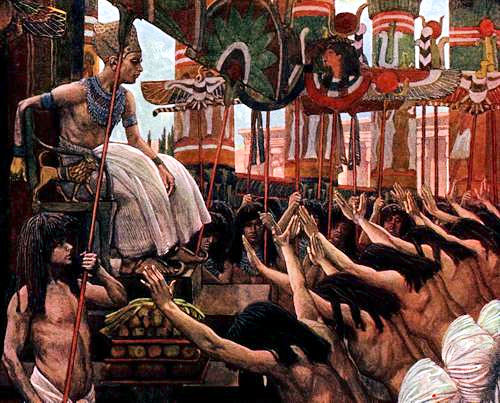
Then the chief cupbearer told his dream to Joseph. He said to him, “In my dream, there was a vine in front of me. On the vine were three branches. It had barely budded, when out came its blossoms and its clusters ripened into grapes. Pharaoh’s cup was in my hand, and I took the grapes, pressed them into Pharaoh’s cup, and placed the cup in Pharaoh’s hand.” Joseph said to him, “This is its interpretation: The three branches are three days. In three days Pharaoh will pardon you and restore you to your post; you will place Pharaoh’s cup in his hand, as was your custom formerly when you were his cupbearer. But think of me when all is well with you again, and do me the kindness of mentioning me to Pharaoh, so as to free me from this place. For in truth, I was kidnapped from the land of the Hebrews; nor have I done anything here that they should have put me in the dungeon.”

When the chief baker saw how favorably he had interpreted, he said to Joseph, “In my dream, similarly, there were three openwork baskets on my head. In the uppermost basket were all kinds of food for Pharaoh that a baker prepares; and the birds were eating it out of the basket above my head.” Joseph answered, “This is its interpretation: The three baskets are three days. In three days Pharaoh will lift off your head and impale’ you upon a pole; and the birds will pick off your flesh.”

On the third day — his birthday — Pharaoh made a banquet for officials, and he singled out his chief cupbearer and his chief baker among his officials. He restored the chief cupbearer to his cupbearing, and he placed the cup in Pharaoh’s hand; but the chief baker he paled-just as Joseph had interpreted to them.

Yet the chief cupbearer did not think of Joseph; he forgot him.Genesis 40:9-23 (JPS Tanakh)

This story certainly makes for high drama, but why were all these farfetched developments necessary? Why didn’t divine providence manifest itself in a simpler way? Couldn’t Joseph’s release and rise to power have been effected through more commonplace events?

The commentators explain that Joseph’s release from prison is meant to serve as a paradigm of the ultimate in human emancipation.

-Rabbi Naftali Reich
“Freeing the Spirit”
Commentary on Prashas Vayeishev
Torah.org

I have a hard time understanding God sometimes. I suppose that’s quite an understatement and I imagine most people reading this “morning meditation” share my confusion on occasion. Take yesterday’s Torah Portion for example. I know Joseph’s brothers hated him, but did they really think they could get away with murder? Didn’t it hurt anyone besides Judah to see their father reduced to a mere shell of a man out of his heartbreaking grief at the loss of his favored son? What about the parallels between the wife of Potiphar trying to seduce Joseph and Judah’s “relationship” with his daughter-in-law Tamar?

And why, when sold into slavery and with no hope of ever being reunited with his family again, did Joseph, who started out as a spoiled and selfish 17 year old brat at the beginning of this narrative, eventually rise not only in stature and power, but in spiritual strength and holiness to be a savior to his family and the world? It seems obvious that his tenure as slave and prisoner was to train him for the role of a man who would all but rule the vast empire of Egypt, much like Moses had to live both as prince and as shepherd to finally take on the mantle of Prophet and “King” of the nation of Israel.

The First Fruits of Zion (FFOZ) commentary on Vayeishev draws the obvious comparision between Joseph and the Messiah, but it does something else.

Yet the story of Joseph is not an allegory, written merely to serve as type, shadow, and symbol. Too often believers have diminished the Torah’s literal reading for the sake of messianic interpretations. It is a story in its own right and a great story at that. Joseph is a real character; his adventures and misadventures are his own. If we are able to look into the Joseph story and perceive the person of Messiah, that is only to be expected, because God is the author of salvation both then and now. Joseph’s story is simply an example of what it looks like when God saves His people.

Sometimes Jewish scholars complain about how some Christian pundits tend to interpret every possible occurence in the Torah of a mysterious or symbolic figure as “the pre-incarnate Jesus.” As the joke goes, they say such Christians don’t engage in Biblical exegesis but rather, Biblical “I see Jesus.” FFOZ is saying something along those lines but in a much more platable way. Much of the Christian world looks at Joseph as a “type and shadow” of the Jesus to come without crediting Joseph to a life and purpose of his own. We also have a tendency to discount what people like Joseph can show us about ourselves and the larger context of our own “Messianic” role in the world.

Tikkun Olam or “Repairing the World” is one of my favorite themes because it not only empowers us to help others but requires us to enter into (junior) partnership with God in fixing our broken world. There are just tons of ways to do this, from promoting environmental causes to volunteering at your local homeless shelter. Even people with modest incomes can donate one can of soup a week to their community foodbank. Joseph fed the population of the entire civilized world for seven years. We can at least feed one person one simple meal once a week. We just have to realize that we are not the most helpless and downtrodden person on earth and to rise up and act on the behalf of someone less fortunate than we are.

The Satmar Rav, zt”l, spent one summer Shabbos in Ardiov, a city where many great tzaddikim and talmedei chachamim spent time during the summer. He ate the Friday night meal at the tisch of Rav Moshe of Shinova, zt”l, an exceptional tzaddik who only thought about doing God’s will. Many other luminaries were present at the crowded tisch which had an uplifted yet comfortable feel to it.

After singing some inspiring melodies, the kugel was served. It was a very scrumptious kugel. So much so that some of those at the tisch whispered to one another that they hadn’t tasted such a delectable kugel in a long time. To the surprise of all, Rav Moshe immediately got up and went into the kitchen. After a short time he returned.

Everyone wondered what the rebbe had been doing in the kitchen. When Rav Moshe noticed their wonderment, he told them where he had been. His deep sensitivity for others revealed by his unabashed statement completely astounded the Satmar Rav. “I heard people saying that the kugel is exceptional. Since the cook is a poor orphan girl, I immediately went into the kitchen to tell her. How could I wait until later to gladden her broken heart?”

Daf Yomi Digest
Stories Off the Daf
“Gladdening an Orphan’s Heart”
Bechoros 32

This story teaches two important and hopefully obvious lessons. The first is that, no matter how exalted and learned you are, you have a responsibility to gladden the heart of someone less fortunate. The second lesson is that you should do it as soon as possible.

Like Joseph, we have been slaves and prisoners, but in our case it is the imprisonment of our own humanity. Joseph had to be reduced down to about as low as you can go as a human being so that he could find out that freedom isn’t the absence of chains, but the presence of mercy. This is the answer to the mystery of Joseph and it is the answer to our mystery as well. As disciples of Jesus and believers in the God of Joseph, we have it within us to not only be free of our chains but to free others as well. All we have to do to escape our jail cells is to realize that we are sitting on the keys.

The scroll of Yeshayah the Prophet was given to him, and he opened the scroll and found the place where it is written,

The spirit of HaShem is upon me in order to anoint me to bring good news to the humble. He has sent me to care for the brokenhearted, to proclaim freedom for the exiles, and for the blind an opening release … to send the oppressed away free … to proclaim a year of favor for HaShem.

When he rolled up the scroll, returned it to the chazzan, and sat, the eyes of all who were in the synagogue were focused on him. –Luke 4:17-20 (DHE Gospel)

We don’t have to be Jesus or even Joseph to save the world. We can partner with them and be a “savior” too, one heart at a time.

Vayeishev: If I Were a Rich Man

If I were rich, I’d have the time that I lack
To sit in the synagogue and pray,
And maybe have a seat by the Eastern wall,
And I’d discuss the learned books with the holy men Seven hours every day–
That would be the sweetest thing of all…
Oy!

from If I Were a Rich man
written by Sheldon Harnick and Jerry Bock
for the musical Fiddler on the Roof

Now Jacob was settled in the land where his father had sojourned, the land of Canaan.Genesis 37:1

Rabbi Eli Touger’s commentary on Torah Portion Vayeishev says in part, that Jacob desired to live in prosperity, as do all righteous men, but was unable to (according to Rashi) because of his distress over the disappearance and apparent death of his son Joseph. I’ve written previously about the fallacy of “prosperity theology” in the church, so can we conclude (assuming Rashi is correct) that Jacob’s desire to live in prosperity is a problem for me? Rabbi Touger quotes Rashi’s response to this question.

Yaakov desired to dwell in prosperity, but the distress of Yosef’s [disappearance] beset him. The righteous desire to dwell in prosperity, but the Holy One, blessed be He, says: “Is not what is prepared for them in the World to Come enough for the righteous? Must they also desire prosperity in this world?”

Rashi’s statement is problematic, for a casual reading gives the impression that G-d does not approve of the righteous wanting prosperity. On the other hand, the fact that “the righteous” follow this path of conduct indicates that the desire for prosperity is a positive trait and not a character flaw. (Rashi’s apparent source is Bereishis Rabbah 84:3)

This difficulty can be resolved by focusing on the fact that Rashi speaks about a desire for prosperity expressed by the righteous. Why only the righteous? Everyone wants to enjoy an abundance of good without strife, contention, or difficulty.

On the surface, this interpretation seems to support the prosperity theology position that the righteous “should” want to have wealth and comfort in the present world as well as rewards in the world to come. But it’s amazing to me that Rashi, a French medieval Talmudic sage, should agree with a modern Christian doctrine. Is God so simple that he rewards the righteous with material wealth and punishes the less worthy with poverty and hardship? The history of both righteous Christians and Jews would seem to deny this, since many faithful men and women have suffered great difficulties and even died penniless for the sake of God.

And what does “Fiddler on the Roof” have to do with anything?

When a person is beset… with sickness, war, and hunger, he cannot occupy himself neither with wisdom nor with mitzvos. For this reason, all Israel and [in particular,] their prophets and sages have desired the Era of the Mashiach. (Mishneh Torah, Hilchos Teshuvah 9:2)

The Sages and the prophets did not yearn for the Era of the Mashiach so that [the Jewish people] would rule the world… nor to eat, drink, and celebrate. Rather, their aspiration was to be free [to involve themselves] in the Torah and its wisdom, without anyone oppressing or disturbing them. (Ibid., Hilchos Melachim 12:4.)

That sounds like Tevye’s wish as well. But as noble as this wish appears, it has a serious flaw. The righteous receive their reward in the Kingdom of Heaven (Matthew 6:20) and not on Earth (at least not always) and in fact, the Master said that:

“So when you give to the needy, do not announce it with trumpets, as the hypocrites do in the synagogues and on the streets, to be honored by others. Truly I tell you, they have received their reward in full. But when you give to the needy, do not let your left hand know what your right hand is doing, so that your giving may be in secret. Then your Father, who sees what is done in secret, will reward you. –Matthew 6:2-4

The Master is saying a couple of things. The first is that if we have the means, we should use them to benefit the poor. Nowhere does he say that our primary duty is to be occupied in study but rather the mitzvot related to helping the needy. He also says that if we receive our reward here in the form of wealth and prestige (maybe wealth, if used in secret to help others and not just to make ourselves look good is OK), it is in full and there may be no additional reward (which isn’t the same as salvation) in Heaven. Interestingly enough, his point finds its parallel in Rabbi Touger’s teaching:

Nevertheless, a distinction must be made. The World to Come represents G-d’s reward to man just recompense for man’s Divine service. This is a departure from the pattern of our present existence, of which it is said, “Today to perform them (the mitzvos); tomorrow to receive their reward.”

So was Jacob’s desire, as interpreted by Rashi, in vain? I still think the answer is still in Tevye’s song.

The righteous, by contrast, are not concerned with reward. On the contrary, to refer to the passage cited above, they long to involve themselves in the Torah and its mitzvos. Their aspiration is only that they be freed from external difficulties. They want to grow in understanding and personal development. Why must they be confronted with challenges from the outside? Let all their efforts be devoted to the internal challenges of spiritual growth.

I can’t say if this truly speaks to Jacob’s desire, but what we see here is that a righteous person, when desiring prosperity, isn’t thinking of reward in the conventional sense. They are thinking probably what you and I have considered at one point or another. If we could be freed from the constraints of a “normal” life of work and problems, we could spend more time serving God and ministering to people, even devoting our great material possessions to the well being of those around us. I think that would work for a truly righteous person, such as Joseph, who used the exalted position given to him by Pharaoh, King of Egypt (and ultimately God), to save his family and the world. For the rest of us though, we would be enormously tempted to use our wealth and “free time” for less than noble pursuits.

My opinion is that the toil and hardship of day-to-day life, though it limits the amount of time and energy we have to pray, to perform mitzvot (acts of kindness and righteousness), and to honor God, also focuses those few hours we do have through a lens whereby we can see God and do His will more effectively, without the temptations material prosperity brings. I tend to think that the truly righteous can manage extreme poverty and extreme wealth with equal grace as Paul said he had learned to do (Philippians 4:12-13).

Please understand that I’m not making a simple statement that the very rich and the very poor are always righteous. We know that wealth and poverty visit the just and the unjust alike. We know that God grants us what He chooses to grant us and doesn’t owe us an explanation for how things work out in our lives. Our circumstances aren’t a particularly accurate barometer of our state of holiness and relationship with the Almighty. But it is one type of challenge we may face as part of His plan for our lives.

In addition to our material state of being, we can also experience spiritual prosperity or poverty. Since God’s gifts are endless in this arena, I have to believe that we have the majority of control in this area of our existence. This has nothing to do with dollar signs or a “feeling” of peace inside, and everything to do with a burning desire to draw closer to Him and to do His will. The pursuit of “spiritual reward” is also fraught with problems because we poor, dumb, human beings have a tendency to get our priorities and desires mixed up with His. I can’t count the number of times I’ve heard Christians report that they prayed about a certain decision they had to make and then “felt a peace” about the decision they wanted to make anyway. Was that drawing closer to God or using God as an excuse to fulfill their personal wants rather than God’s requirements?

When Christians say that Jesus freed them from the Leviticus 11 food laws, I sometimes want to ask them, if God came to them right now and really told them to give up their ham sandwiches, and they really, really knew it was from God, would they give up the pork, or find an excuse not to? I use this as an example and not to say that I think the Torah kosher laws necessarily apply to the Gentile, but it’s a good illustration. In keeping with my theme for the past week or so, I might ask Gentile Messianics if God told them to be forgiving and tolerant of Christians who put up Christmas trees instead of reviling them and “standing their ground” against paganism, would they be truly forgiving and tolerant, or would they argue with God that the Christmas tree people deserved to be condemned?

I have to say at this point, that I am somewhat heartened how some of the detractors of Christmas on Boaz Michael’s Facebook page seem to be softening their approach and being clear that they are not actually attacking Christians. I’m also thankful to Jacob Fronczak for posting the very well researched article The Syncretism Boogeyman on his blog, which provides excellent information on the history of cultic practices in ancient times, including during the time of Moses. I’m stepping off my soapbox now. Back to the topic at hand.

Wayward SonFrom my own personal experiences (humble though they may be), I’ve become convinced that when God actually speaks to me (rather than the voice of my own desires and ego in my head), He surprises me and frankly, asks me to say and do things that aren’t naturally easy for me. He asks me to take on duties I don’t feel comfortable with and requires that I surrender behaviors and even thoughts with which I am very at ease. That’s the nature of God, to push us forward, to urge us to move further on and in directions we would never consider on our own.

So be careful in the sorts of rewards you ask from God and in what role you seek to play in His service. He just may give you a type of reward and prosperity you don’t expect and require that you actually rise to the challenge. How many years was Joseph a slave and prisoner in Egypt before he became all but a king? How many years did Jacob live in grief and abject sorrow, though materially wealthy, before he was comforted by his son in Egypt?

Good Shabbos.

Something New

When Reuben returned to the pit and saw that Joseph was not in the pit, he rent his clothes. Returning to his brothers, he said, “The boy is gone! Now, what am I to do?” Then they took Joseph’s tunic, slaughtered a kid, and dipped the tunic in the blood. They had the ornamented tunic taken to their father, and they said, “We found this. Please examine it; is it your son’s tunic or not?” He recognized it, and said, “My son’s tunic! A savage beast devoured him! Joseph was torn by a beast!” Jacob rent his clothes, put sackcloth on his loins, and observed mourning for his son many days. ALL his sons and daughters sought to comfort him; but he refused to be comforted, saying, “No, I will go down mourning to, my son in Sheol.” Thus his father bewailed him. The Midianites, meanwhile, sold him in Egypt to Potiphar, a courtier of Pharaoh and his chief steward.Genesis 37:29-36 (JPS Tanakh)

Beginnings are hard. For good reason. If they were easy, we would prowl into each new venture like a snug fat cat.

When you begin pent up in an iron cage, a tiger comes out. A tiger that breaks through the door of its cage and pounces with a vengeance.

Bless those cages, those impossible brick walls, those rivers of fire that lie at the outset of each worthwhile journey. Without them we would be only as powerful as we appear.

-Rabbi Tzvi Freeman
“Release”
Based on letters and talks of the Rebbe
Rabbi M. M. Schneerson
Chabad.org

As we see in the example from this week’s Torah Portion Vayeishev, making a new beginning, even in something that will ultimately turn out to be very worthwhile, can be very hard. Of course, when Joseph was stripped and thrown into a pit by his brothers, then kidnapped and sold into slavery, he hardly thought this was a good “new beginning”. In fact, it was the lowest point of his life up until then. He had no idea of the grandeur he would eventually attain as Viceroy in Egypt and savior of the civilized world.

I can hardly compare myself to Joseph, but I know what it’s like to make a new beginning. We all do, really. Anyone who has gotten married, who has had a child, who has moved to a new city, who has taken a new job knows what it is like to make a new beginning. Even when what you are achieving is ultimately good and desirable, it can still be difficult and stressful. Change always is.

I also know what it’s like to make a new beginning spiritually. I’ve done this more than once. Of course there was the moment when I came to faith in Jesus. I like to “joke” that almost immediately afterward, my life fell apart. I went through some very difficult times after coming to faith which is the exact opposite of what I’d expected, but then, God had to step in and help me make some significant changes once I declared my faith and was baptized. He’s still doing that work and sometimes, it really hurts.

During the past couple of years, I put myself through another significant spiritual change. For a year, starting in the summer of 2010, I started challenging all of my long-held religious assumptions, began studying new materials, and ultimately, at the end of that year, took my religious worship life in a very different direction. It wasn’t easy. I had to leave a congregation where I had been a trusted leader and teacher and where I had many friends (they’re still my friends) because of the new convictions at which I had arrived. I started a journey that still has no definitive destination and where I encounter uncertainty often. I believe this is the right thing to do for me, but doing the right thing is often disturbing and disconcerting.

Sometimes, even when you know that a new beginning is required, you don’t know what to do first. In fact, right after I had come to faith, the first question I asked my Pastor was, “What do I do now?”

Today’s daf discusses teaching Torah. Rav Moshe Shapira, shlit”a, explains that today’s world of kiruv is a new chapter that needs to be understood in its own context. For example, although the Shulchan Aruch writes that a rebbe must instill fear in his students—for this purpose he may not eat with them or be overly familiar with them—today is very different. When dealing with young people who need to be drawn closer, following such halachos will only cause an unhealthy distance between student and rebbe.

Another example of a complex kiruv issue was faced by a certain maggid who would travel around Eretz Yisrael encouraging our estranged brothers to draw closer to God. He wondered what to do with those who are distant but could be persuaded to take on some new religious practice. Most would only be willing to take on a single mitzvah, and pushing for more would only serve to destroy any willingness to advance. The question was: which mitzvah comes first?

When he brought this question to Rav Yosef Shalom Eliyashev, shlit”a, he replied concisely. “It doesn’t matter too much what they start with. But try to find a d’oraisa mitzvah that you think will make the greatest impact on them. Speak and encourage them to take on this mitzvah.”

The heads of Hidabrut, the famous Belzer kiruv organization in Eretz Yisrael, also had a kiruv conundrum. When a person is at the point where he will either take on wearing a kippah or tzitzis, which is more important?

Rav Eliyashev’s response will surprise many. “It is better to convince him to begin wearing a kippah. Although tzitzis is obviously a Torah commandment, wearing a yarmulke is superior since a man who wears a yarmulke feels especially Jewish since he publicly associates himself with religious Jews.”

Daf Yomi Digest
Stories Off the Daf
“New Students”
Bechoros 29

Truth be told, one of the reasons why some Christians are attracted to the “Messianic” movement is that worship and faith is demonstrated in so many physical ways. The wearing of a yarmulke and tzitzit is very compelling and even a little addictive. I tend to believe that non-Jews in the movement go through a set of developmental steps, not all of them beneficial, but all of them seem to be necessary. One of the first steps is to become enamored with all the “Jewish stuff”. Sometimes the “stuff” is so seductive, that the non-Jewish participants never get past the “physicality” of their worship and dig into the spiritual context and meaning. They also get “sucked into” the idea that their “stuff”, because much of it can be found in Bible commandments, is better than the “Christian stuff” (and Christians don’t have nearly as much symbolic physical paraphernalia so they don’t seem as “cool”). Fortunately most people get past this stage. Some sadly, don’t.

However, if you’re immature in your faith, often the very first step onto a path of maturity is a material object, such as giving a child their very first Bible or cross necklace. The object takes on a transitional value, if seen and used properly, to escort the newly spiritual person into a faith that doesn’t require material objects to validate their relationship with God.

For an observant Jew, a siddur, talit gadol, kippah, and tefillin all are a part of daily prayer and worship and only under unusual circumstances will a Jew pray without obeying the mitzvot attached to these holy artifacts. But for a Christian and especially for the Gentiles in the Messianic movement, sometimes it’s helpful to put all of the “stuff” away, go off someplace where you can be alone, and just let it be you and God.

Try something uncomfortable and new. See how it works out. When Joseph did it (although it wasn’t his idea), it turned out pretty well. But it wasn’t easy and it wasn’t quick.

The Rabbi and the Flood

Although many prosperity churches hold seminars on financial responsibility, Catherine Bowler of the Duke Divinity School alleges that they often offer poor advice. Rosin argues that prosperity theology contributed to the housing bubble that caused the financial crisis of 2007–2010. She maintains that home ownership was heavily emphasized in prosperity churches and that reliance on divine intervention caused people to make unwise choices.

Prosperity Theology page at Wikipedia

Once, I asked Garay how you would know for certain if God had told you to buy a house, and he answered like a roulette dealer. “Ten Christians will say that God told them to buy a house. In nine of the cases, it will go bad. The 10th one is the real Christian.” And the other nine? “For them, there’s always another house.”

-Hanna Rosin
“Did Christianity Cause the Crash?”
the Atlantic

As our forefather Yaakov (Jacob) prepared to encounter his brother Esav again after 34 years, he did three things: sent presents, readied for war, and prayed. He balanced his prayers and trust in G-d with appropriate “worldly” efforts. He neither trusted in his own efforts, nor expected G-d to protect him with open miracles.

Not everyone knows how to strike this balance correctly. At one end of the spectrum are the people who believe that everything is up to them, who panic when they encounter a challenge or pat themselves on the back when things go well. At the other end of the spectrum, perhaps, is the rabbi of a town seated downstream from a dam that was about to break.

-Rabbi Yaakov Menken
“Balanced Trust”
Commentary on Torah Portion Vayishlah
Project Genesis

I suppose there are Christian Pastors who preach a balanced approach to a life of faith, but I more often find such a lesson taught by Rabbis. It seems like, in our current and rather dismal economy, that the poorly-considered Prosperity Theology promoted at some of the rather famous megachurches, is just power-surging through Christianity these days. This phenomena reminds me of how some Christians believe people get sick and even die, just because they don’t have enough faith. After all, if you have enough faith, God will heal you of any injury or disease, right? The mother who died of breast cancer or the father who perished from a sudden heart attack just weren’t “real Christians”, right? There have been “men of God” such as Jimmy Swaggart, Jim Bakker, Benny Hinn, and Joel Osteen who have, at one time or another, preached the basic message that God wants all Christians to be wealthy in this lifetime and if we have enough faith, money and prosperity will drop in our laps like proverbial “pennies from heaven.”

That’s hardly the reality of the Bible. A quick look at any of the Prophets in the Tanakh (Old Testament) and the lives of the Apostles, including Paul and Peter, shows us that often a life of extraordinary faith is also one of extraordinary hardship. No, I’m not saying that a life of faith always results in hardship, but it’s ridiculous to believe that being a “true Christian” means always being “filthy rich”. God has a wide variety of paths for each of us. Some people are “rewarded” (seemingly) in this life and some, by faith, live in financial difficulty and believe they have a reward in the world to come (Matthew 6:19-21). Rabbi Menken uses Jacob as an example of a man who, through a lot of hard work and faith, did well materially, though not without sacrifice. Jacob was a man who, in spite of success, continued to struggle with the world around him and with the Divine, but who was balanced sufficiently to make his own best effort, to pray, and then to trust God.

Most of us aren’t that well-organized and, as people of faith, we forget many of the lessons God has taught us.

People, despite their wealth, do not endure;
they are like the beasts that perish.

This is the fate of those who trust in themselves,
and of their followers, who approve their sayings.
They are like sheep and are destined to die;
death will be their shepherd
(but the upright will prevail over them in the morning).
Their forms will decay in the grave,
far from their princely mansions.
But God will redeem me from the realm of the dead;
he will surely take me to himself.
Do not be overawed when others grow rich,
when the splendor of their houses increases;
for they will take nothing with them when they die,
their splendor will not descend with them.
Though while they live they count themselves blessed—
and people praise you when you prosper—
they will join those who have gone before them,
who will never again see the light of life.

People who have wealth but lack understanding
are like the beasts that perish. –Psalm 49:12:20

We cannot rely only on our faith nor only on our own efforts; rather it is a combination of both that God expects of us (James 2:14-26). But sometimes we get lazy and jump at the sort of message that says God will “do it all” as long as we “bathe it in prayer” and have enough faith. Lack of prosperity, in this particular spiritual framework, means it’s our fault when we don’t prosper, and we haven’t prayed hard enough or prayed some sort of “magical” or “secret prayer” someone wrote a book about, as if God could be manipulated to give us our wishes like a genie in a lamp.

The flip side is when we have success and attribute it entirely to our own efforts, ignoring the graciousness of God. We look at our own magnificence and tell ourselves that people who are destitute are just lazy slackers who want the Government to give them everything rather than really working hard, like we did. The examples of people who are out of balance in one way or another are just endless. Here’s the end of Rabbi Menken’s story to illustrate my point (and I’m sure you’ve heard this joke before):

The sheriff found the rabbi sitting calmly on his front porch, studying. “Rabbi!” yelled the sheriff, “it’s a flood, we have to evacuate!”

“Don’t worry,” said the rabbi, “G-d will help me. I don’t need to go.”

Soon the water flooded the town, and firemen in motorboats were picking up the stragglers. One of them noticed the rabbi, and called him to come with them.

“Don’t worry,” said the rabbi, “G-d will help me. I don’t need to go.”

But the waters rose, and rose, and by the time a helicopter was sent to find the last residents, the rabbi was calmly sitting on his roof. Yet once again, the rabbi refused to go.

Once in Heaven, the rabbi demanded an explanation. “I followed Your ways, I learned Your Torah, I did Your will… why didn’t You help me?!”

“What do you mean?” came the response. “I sent a car. I sent a boat. I even sent you a helicopter, but you refused to be helped!”

The reason the joke is so well-known is because it tells something true about people of faith who only have faith. We look for supernatural miracles as the only answer to prayer, but often God sends us very real-world solutions to our dilemmas which require that we take some sort of definitive action. God opens the door, but we still have to get up off of our rear ends and walk through it.

Rabbi Label Lam at Torah.org quotes the pre-World War II treatise of Rabbi Elchonon Wasserman ztl, “The Epoch of the Moshiach” as an example of how many of the Jews in Europe trusted in the powers of the world around them for safety and prosperity and instead were led into the Holocaust.

“Before the redemption, the Jews will err after various forms of idol- worship… “Any matter which appears to man as a controlling factor independent of HASHEM’s will, and as capable of doing good or evil is included in the definition of idolatry. (Sanhedrin) …

He writes, “Let us now review all the “idols” which were worshipped in the last one hundred years. The Enlightenment of Berlin promised a great salvation. As soon as the breeze of liberalism began to blow, the Jews hastened to stand in the ranks of the foremost exponents. After Liberalism had made its exit, they turned to Democracy (worship of public opinion), Socialism, Communism, and to other “isms”… To these idols they made sacrifices of blood and money- and were betrayed by all of them. Not even one justified the faith that was pinned on it…”

Anything can become an idol if we depend on it beyond God’s will, even faith itself. Having faith in a “system” of Government or economic strategy can and has led to tragic consequences, but walking out in the middle of a busy street, standing directly in the path of a speeding truck, and expecting God to send His angels to rescue us from our own folly is also a kind of idolatry. Whether it’s some corrupt “holy man” telling us what we want to hear or we are telling ourselves the same foolish message, we are not so strong that we do not need God, nor can we neglect the responsibilities God has given us and not expect to collide with the consequences. Like Jacob, we must do the equivalent of “sending gifts, praying, and preparing for war” in every challenge we face. Only then are we fully equipped and worthy children of our Father.

Vayishlah: The Running Shliach

That same night he arose, and taking his two wives, his two maidservants, and his eleven children, he crossed the ford of the Jabbok. After taking them across the stream, he sent across all his possessions. Jacob was left alone. And a man wrestled with him until the break of dawn. When he saw that he had not prevailed against him, he wrenched Jacob’s hip at its socket, so that the socket of his hip was strained as he wrestled with him. Then he said, “Let me go, for dawn is breaking.” But he answered, “I will not let you go, unless you bless me.” Said the other, “What is your name?” He replied, “Jacob.” Said he, “Your name shall no longer be Jacob, but Israel, for you have striven with beings divine and human, and have prevailed.” Jacob asked, “Pray tell me your name.” But he said, “You must not ask my name!” And he took leave of him there. So Jacob named the place Peniel, meaning, “I have seen a divine being face to face, yet my life has been preserved.” The sun rose upon him as he passed Penuel, limping on his hip.Genesis 32:23-32 (JPS Tanakh)

As he prepared to face Esau, Jacob experienced a strange mystical encounter with God. He had sent his family, his servants and his possessions across a river ahead of him. He was about to follow when he was suddenly attacked by an assailant. Jacob wrestled the man through the night. The attacker turned out to be none other than the angel of the LORD.

“A Life-Changing Encounter”
First Fruits of Zion (FFOZ) commentary on
Torah Portion Vayishlah

I know. Everybody teaches and writes on Jacob wrestling with the angel. It gets a little cliche’ after awhile. Who was the angel? Was it Jesus? Was it God? Was it Jacob’s “evil inclination?” Was it the angel embodying the spirit of Esau? All of the above, some of the above, none of the above? Who knows?

And what does it have to do with us?

The FFOZ commentary goes on to say that the name change of Jacob to Israel, as a result of the patriarch’s encounter with the Divine, altered the course of his life, changing his nature from “trickery and deceit” to one who is “authorized to receive the blessing.” The commentary concludes with this:

A genuine encounter with God is life-changing. It is a sort of wrestling match. The apostles teach us that, through faith in Yeshua, we are born again as new creations. In Messiah we have a whole new identity. Paul speaks of our old identity as the “old self.” He declares that, for the believer, the “old self was crucified with [Messiah], in order that our body of sin might be done away with, so that we would no longer be slaves to sin” (Romans 6:6). “Therefore if anyone is in Messiah, he is a new creature; the old things passed away; behold, new things have come” (2 Corinthians 5:17).

The commentary assumes, like Abraham before him (Genesis 17:5), that Jacob’s name was changed immediately and permanently and that “Israel” would never be referred to as “Jacob” again.

So Israel set out with all that was his, and he came to Beer-sheba, where he offered sacrifices to the God of his father Isaac. God called to Israel in a vision by night: “Jacob! Jacob!” He answered, “Here.” And He said, “I am God, the God of your father. Fear not to go down to Egypt, for I will make you there into a great nation. I Myself will go down with you to Egypt, and I Myself will also bring you back; and Joseph’s hand shall close your eyes.”

So Jacob set out from Beer-sheba. The sons of Israel put their father Jacob and their children and their wives in the wagons that Pharaoh had sent to transport him; and they took along their livestock and the wealth that they had amassed in the land of Canaan. Thus Jacob and all his offspring with him came to Egypt: he brought with him to Egypt his sons and grandsons, his daughters and granddaughters — all his offspring.

These are the names of the Israelites, Jacob and his descendants, who came to Egypt. –Genesis 46:1-8

As you can see here, the names “Jacob” and “Israel” seem to be used interchangeably. Unlike Abraham who was never called “Abram” again after his name was changed, Jacob seemed to exist as both “Jacob” and “Israel” depending on the situation or the role he was playing. Someone once told me that the patriarch was called “Jacob” when he was being referred to as an ordinary person and “Israel” when he was fulfilling his prophetic and “national” role. I have no idea if this is correct or not, but it seems to fit what we read in the Torah.

But what does this have to do with us and encountering God as if we were meeting a stranger along our path? How are we changed by that meeting and what is the nature of the change?

From a personal point of view, I feel the “aftermath” of my personal encounter with God (coming to faith) is more like Jacob’s than Abraham’s. I feel like my “name change” isn’t quite permanent, and that I toggle back and forth between one nature and the other. I know you probably think that’s a terrible thing to say. After all, who can deny that once we come to faith in Jesus, that we are changed to a “new man” (2 Corinthians 5:17) and that we’ve left our old sin nature completely behind us. Of course, my struggle could be an indication that I’m “double-minded” (James 1:8) which is certainly not a good thing.

But do we abruptly change? Really?

Poof! All at once, you came to faith and transformed into a completely new human being that has absolutely no resemblance to the person you were ten seconds before? Really?

It didn’t happen that way for me. Not by a long shot.

After I came to faith and even after I was baptized in the Boise River, I didn’t suddenly feel like an emotional and spiritual stranger to my “former self”. In fact, I was disappointed to discover that I felt and thought in exactly the same way as I did the day before. What a let down. I was expecting this mystical transformative experience, but it didn’t happen that way.

In fact, over many, many years, my life has gone through various twists and turns, some of which were extremely unpleasant, and looking back, I can see that my way of looking at things and reacting to my surroundings and to people has very gradually begun to change. In fact, the process is still going on today, although at a pace that would make a glacier’s movement seem like the electric speed of “Lightning McQueen” in the Pixar film Cars (2006).

There are times when I experience my life as truly different than it was before I came to faith. Sadly, there are times when I still feel like that flawed and limited human being I was before I even considered the idea that there is a God. In fact, I don’t ever think I’ve felt “perfect” in anything (Matthew 5:48).

What happened?

I don’t think “perfection” is something we achieve and then rest on our laurels but rather, I think a life of faith and unity in God is a goal was always strive for. Some days are better than others. Some days can be just lousy. Occasionally, we are magnificent, but I think for most of us (especially me), those days are rare.

There are times when I just want to know it all and to be it all but it’s sort of like my goals at the gym. No matter how much I psych myself up for a workout, when I actually hit the machines, I can only lift so much weight so many times, and then I run out of gas. Sometimes I exceed my expectations, sometimes I fail miserably, and most of the time, I break even. Kind of disappointing to shoot for the stars and to land in the mud.

Tear off a piece of your bread before you eat. You cannot fit it all into your mouth.

Do the same with wisdom. For Truth does not begin with Mind.

-Rabbi Tzvi Freeman
“Wisdom and Bread”
Based on letters and talks of the Rebbe
Rabbi M. M. Schneerson
Chabad.org

Do you not know that those who run in a race all run, but only one receives the prize? Run in such a way that you may win. –1 Corinthians 9:24

I’ve always been such a terrible runner. I don’t know if that means I’m not really “in Christ” and thus I never transformed into that mystical, magical “new creature,” or if this is what most believers experience (or would admit to if it is their experience) most of the time. From where I sit in the mud, having fallen down in my race in the rain for the ten-thousandth time, a life of faith is lived one day at a time and the bread is eaten one chunk at a time. In the end, God will make the judgment about whether or not I’m good enough for what comes next. All I can do is drag my sweaty, out-of-shape body out of the mud hole one more time, and try to force my dead, lead-heavy legs to run for one more mile. As I rise to run the race again, I strain to see if the sages understand this puzzle.

As we apply ourselves to our mission, we also internalize it. Not only do we effect changes in the world, we ourselves change. Just as an agent must be identified with his principal, we must give ourselves over to G-d’s will and identify with it.

There are tzaddikim, righteous men, whose commitment to G-dliness dominates their personality; every aspect of their being is permeated with G-dliness. Their thoughts and even their will and their pleasure reflect G-d’s.

This, however, is a rung which most people cannot attain. But the second level in which each person remains an independent entity although his deeds are not his own is within the reach of more individuals. For the mitzvos we perform are not human acts; they are G-dly, so a person who performs them selflessly expresses their inner G-dly power.

There are individuals at an even lower level; they are not concerned with the G-dly nature of the mitzvos they perform. Nevertheless, they perform mitzvos for even “the sinners of Israel are filled with mitzvos as a pomegranate is filled with seeds” and the consequences of the deeds they perform represent an expression of G-d’s will. Thus they also contribute toward the transformation of the world.

Regardless of the differences between individuals, all mankind possesses a fundamental commonalty: we are all G-d’s agents, charged with various dimensions of a shared mission. The setting in which each individual functions, the task he is given, and the intent with which he performs it may differ, but the goal is the same.

This is the message of Parshas Vayishlach : that every one of us is a shliach, an agent of G-d.

-Rabbi Eli Touger
Commentary on Torah Portion Vayishlach
“Changing Ourselves as We Change the World”
Adapted from
Likkutei Sichos, Vol. IX, pgs. 323-324;
Sefer HaSichos 5748, p. 138ff;
Sichos Simchas Torah, 5748
Chabad.org

We are each an agent of God. We are sent. We run. We fall. We get up and run again.

Addendum: Rabbi Joshua posts a more conventional interpretation of this Torah reading at Yinon Blog.

Good Shabbos.

Dayenu

When Ephraim spoke piety, He was exalted in Israel; But he incurred guilt through Baal, And so he died. And now they go on sinning; They have made them molten images, Idols, by their skill, from their silver, Wholly the work of craftsmen. Yet for these they appoint men to sacrifice; They are wont to kiss calves!

Assuredly, They shall be like morning clouds, Like dew so early gone; Like chaff whirled away from the threshing floor. And like smoke from a lattice. Only I the Lord have been your God Ever since the land of Egypt; You have never known a [true] God but Me, You have never had a helper other than Me. I looked after you in the desert, In a thirsty land. When they grazed, they were sated; When they were sated, they grew haughty; And so they forgot Me. So I am become like a lion to them, Like a leopard I lurk on the way; Like a bear robbed of her young I attack them And rip open the casing of their hearts; I will devour them there like a lion, The beasts of the field shall mangle them.

You are undone, O Israel! You had no help but Me.Hosea 13:1-9 (JPS Tanakh)

I was reading the haftarah portion for Vayeitzei on Shabbat and realized something about the Jewish people and the rest of us. I think many Christians but particularly those who have attached themselves to some portions of the “Messianic” movement, feel a little bit envious of all the blessings God has bestowed upon Israel. I think this is one of the reasons why the early Church chose to apply a supersessionist theology, stating that Gentile Christianity has replaced the Jews in all of God’s covenant promises. We just can’t stand the idea that “salvation comes from the Jews” (John 4:22) so we must find a way to steal what the Jews have and pretend it belongs only to us.

I’ve probably always known this, but when reading the above-quoted passages from Hosea 13, it came into absolute clarity within me that as much as God has blessed the Jewish people, He has also designed ghastly curses for them in times of disobediance and rebellion, much more than we can see for people who are not Jewish, including Christians. I’m not saying that Christians haven’t been persecuted for their faith over the course of the past 2,000 years, but as we see in many of the exclamations of the ancient prophets, God is exceedingly determined to hold Israel accountable for any failure to the covenant they have with Him.

Christianity sometimes mistakes the level of accountability to which God holds the Jews as an eternal curse upon Israel, but even as God curses, so in the next moment, He blesses them abundantly.

Return, O Israel, to the Lord your God, For you have fallen because of your sin. Take words with you And return to the Lord. Say to Him: “Forgive all guilt And accept what is good; Instead of bulls we will pay [The offering of] our lips. Assyria shall not save us, No more will we ride on steeds; Nor ever again will we call Our handiwork our god, Since in You alone orphans find pity!”

I will heal their affliction, Generously will I take them back in love; For My anger has turned away from them. I will be to Israel like dew; He shall blossom like the lily, He shall strike root like a Lebanon tree. His boughs shall spread out far, His beauty shall be like the olive tree’s, His fragrance like that of Lebanon. They who sit in his shade shall be revived: They shall bring to life new grain, They shall blossom like the vine; His scent shall be like the wine of Lebanon. Ephraim [shall say]: “What more have I to do with idols? When I respond and look to Him, I become like a verdant cypress.” Your fruit is provided by Me. –Hosea 14:2-9 (JPS Tanakh)

Dancing with GodIsrael’s special place in the heart of God is undeniable, but our God is a jealous God. As much as He loves, He also chastises. As much as He has compassion, He also gives discipline. It is a terrible thing to fall into the hands of the living God (Hebrews 10:31).

I realized with great certainty when reading the words of the prophet Hosea that in many ways, we non-Jews are “blessed” that we don’t carry the responsibilities of our Jewish brothers. Some of us would be more than willing to bear the full burden of the mitzvot but many, many of us do not realize the dread consequences of that desire. This is one of the reasons that Judaism is reluctant to allow Gentiles to convert; out of the fear that once faced with everything it is to be a Jew, for good and for ill, that some of the converts would abandon the God of Abraham, Isaac, and Jacob as well as the people of the Book.

There isn’t always a consistent interpretation of the meaning of the “Jerusalem letter” issued by the Council of Apostles and Elders as recorded in Acts 15. Some say it limits the “Torah responsibility” of Gentile Christians to just those restrictions literally recorded, while others say it is merely a starting point for non-Jews who have come to the faith to begin learning the full ways of the Torah. Yet we see that upon receipt of the letter, the non-Jewish disciples were “strengthened in the faith, and were increasing in number daily” (Acts 16:5 – NASB), indicating that there was some expression of relief and even joy that the non-Jews would not be expected to take on the full yoke of Torah. Paul’s letter to the Galatians also makes it quite clear not only that the non-Jewish disciples weren’t expected to take on all of the Torah mitzvot unless they converted to Judaism, but that the duties expected of them if they converted would be far and above what was (and is) required of a Gentile follower of the Messiah.

While Christians and Jews continue to debate the exact blessings and responsibilities assigned by God to each covenant group, it is readily apparent that Christians are not simply “Jews without the Talmud”. We are attached to God by the Messianic covenant and not only are we not obligated to the Mosaic covenant, we probably should be glad we do not carry upon ourselves the Torah of Moses. For with all the special attention and devotion God lavishes upon the descendents of the Children of Israel, they also embrace a tremendous responsibility with consequences to freeze the blood. Like Peter when he swore to follow the Master, even unto death, we should not be so quick to make oaths that we are not be able to keep, and as the Master urges us, we should let our “yes” to him be just “yes” and our “no” to him (if such be the case) be just “no”. We have been given a extraordinarily special gift as the result of the death and subsequent life of the Messiah. This must be sufficient for us without coveting what belongs to our Jewish neighbors (Exodus 20:17). Is not the love of God through Jesus Christ enough for any of us? Do we tempt God and throw the blood of Christ back in the Master’s face by wanting more?

And He has said to me, “My grace is sufficient for you, for power is perfected in weakness.” Most gladly, therefore, I will rather boast about my weaknesses, so that the power of Christ may dwell in me. –2 Corinthians 12:9 (NASB)

One of my favorite Passover songs is Dayenu, which seems an appropriate title given the theme of this wee missive.

Dayenu is a song that is part of the Jewish holiday of Passover. The word “Dayenu” means approximately, “it would have been enough for us”, “it would have been sufficient”, or “it would have sufficed.” –Wikipedia

Of the various lyrics to this song, the following stands out as particularly relevant here.

If He had brought us before Mount Sinai, and had not given us the Torah – Dayenu, it would have sufficed us!

Adapted for we Christians, I think it should go more like this:

If He had given us His only begotten Son so that the world might be saved, and had not given us the Torah – Dayenu, it would have sufficed us!

It has sufficed us. By Christ, we are “more than conquerors” (Romans 8:37) of the sins in our hearts. We don’t need to be more than this. As Christians, we are sufficient in His love. We are good enough.