Tag Archives: Torah Portion

Nitzavim-Vayeilech: Standing Before God

Standing before GodNo moment in human history was as sad as the moment in which the Lord said to Moses, “and I will surely hide My face in that day on account of all the evil which they have done, because they have turned to other Gods (Deuteronomy 31:18)

-Abraham Joshua Heschel
God in Search of Man
Page 155

You have seen all that the Lord did before your very eyes in the land of Egypt, to Pharaoh and to all his courtiers and to his whole country: the wondrous feats that you saw with your own eyes, those prodigious signs and marvels. Yet to this day the Lord has not given you a mind to understand or eyes to see or ears to hear.Deuteronomy 29;1-3 (JPS Tanakh)

Faith is an act of the whole person, of mind, will, and heart. Faith is sensitivity, understanding, engagement, and attachment; not something achieved once and for all, but an attitude one may gain and lose. -Heschel, page 154

That’s a terrifying thought. As the month of Elul wanes and the High Holidays approach, we seek to remove the burden of our sins from us and re-establish our connection with God and with our fellow human beings. To do this, we must connect to our faith, not as mere belief in the existence of God, but in the total knowledge and dedication that God exists and that He is alive and involved in the matters of mankind and in the lives of each of us individually. However our faith and understanding must transcend our own biases and personalities, for it is so easy to confuse our will with His will.

The thoughtless believes every word, but the prudent looks where he is going –Proverbs 14:15

Now the Berean Jews were of more noble character than those in Thessalonica, for they received the message with great eagerness and examined the Scriptures every day to see if what Paul said was true. –Acts 17:11

And why dost Thou permit faith to blend so easily with bigotry, arrogance, cruelty, folly, and superstition? -Heschel, page 155

The prophet Isaiah even lays this last question at the feet of God.

O Lord, why dost Thou make us err from thy ways and harden our heart, so that we fear Thee not? –Isaiah 63:17

Even when we seek God earnestly and with great energy, we often make the hideous mistake of substituting our personality flaws for His justice, mercy, and will. This is the reason that secular people turn away from God and claim that “religion” is the root cause of all evil acts in the world. It is exactly because, in our worst moments, we people of “faith” really are guilty of all that we are accused, including intolerance, bigotry, hatred, and violence. And we claim that all of this error and sin is in the Name of our God and not sprouting from our own faulty human reasoning and emotions.

God saw the truth and spoke it to Moses in the hours before the great Prophet’s death, as recorded in Torah Portion Vayeilech:

The Lord said to Moses: You are soon to lie with your fathers. This people will thereupon go astray after the alien gods in their midst, in the land that they are about to enter; they will forsake Me and break My covenant that I made with them. Then My anger will flare up against them, and I will abandon them and hide My countenance from them. They shall be ready prey; and many evils and troubles shall befall them. And they shall say on that day, “Surely it is because our God is not in our midst that these evils have befallen us.” Yet I will keep My countenance hidden on that day, because of all the evil they have done in turning to other gods. –Deuteronomy 31:16-18 (JPS Tanakh)

What a bitter epitaph to the life of the Prophet Moses, who had dedicated everything he was to the preservation of the Children of Israel, in obedience and devotion to the God of his fathers. How can we go on in the face of such disappointment and failure?

This is the certainty which overwhelms us in such moments: man lives not only in time and space but also in the dimension of God’s attentiveness. God is concern, not only power. God is He to whom we are accountable. -Heschel, page 158

And yet:

Blessed by GodMore particularly, the word nitzavim the core of the blessing given by G-d does not mean merely “standing.” It implies standing with power and strength, as reflected in the phrase: nitzav melech (I Kings 22:48. See Or HaTorah, Nitzavim, p. 1202.), “the deputy serving as king,” i.e., G-d’s blessing is that our stature will reflect the strength and confidence possessed by a king’s deputy.

This blessing enables us to proceed through each new year with unflinching power; no challenges will budge us from our commitment to the Torah and its mitzvos. On the contrary, we will “proceed from strength to strength” in our endeavor to spread G-dly light throughout the world.

What is the source of this strength? Immutable permanence is a Divine quality. As the prophet proclaims: “I, G-d, have not changed,” (Malachi 3:6) and our Rabbis explain that one of the basic tenets of our faith is that the Creator is unchanging; (See Rambam, Guide to the Perplexed, Vol. I, ch. 68, et al.) nothing in our world can effect a transition on His part. Nevertheless, G-d has also granted the potential for His unchanging firmness to be reflected in the conduct of mortal beings, for the soul which is granted to every person is “an actual part of G-d.” (Tanya, ch. 2) This inner G-dly core endows every individual with insurmountable resources of strength to continue his Divine service.

-Rabbi Eli Touger
Commentary on Torah Portion Nitzvaim: Standing Before G-d
Adapted from Likkutei Sichos, Vol. II, p. 398ff; Vol. XIX, p. 173ff
Chabad.org

It is God’s blessing upon us that gives us the strength to respond to Him with unswerving faith and that “our stature will reflect the strength and confidence possessed by a king’s deputy.” We can only speculate who the “king’s deputy” is, although I have my own opinion on the matter. However, in our personal struggle to approach God and stand before the King, we must never forget that the battle does not belong to us only as individuals.

Only that which is good for all men is good for every man. No one is truly inspired for his own sake. He who is blessed, is a blessing for others.

There are many ways but only one goal. If there is one source of all, there must be one goal for all. The yearnings are our own, but the answer is His. -Heschel, page 162

And yet:

In moments of insight God addresses Himself to a single soul. -Heschel, page 163

We can only see the world from our own point of view, but God sees everything from everyone’s perspective. He knows our wants and needs as individuals and He also hears the cry of His united Creation. For a Jew, Heschel says that even “the individual who feels forsaken remembers Him as the God of his fathers.” But the rest of us who don’t share that history and lifeline, must also remember that “God created mankind in his own image, in the image of God he created them; male and female he created them.” (Genesis 1:27). He created mankind, men and women, all of us in His own image. We are all His and in that, we can all be said to be “one”.

May our standing before G-d “as one” on Rosh HaShanah lead to a year of blessing for all mankind, in material and spiritual matters, including the ultimate blessing, the coming of Mashiach. -Rabbi Touger

As we watch the approach of this year’s end and another year beginning to dawn, may we know before whom we stand and have faith and trust that the strength we need to appear before the King, He has already granted us through His blessing, to the Jew and the Gentile alike.

May the Messiah come soon and in our days.

Good Shabbos.

Failure to Escape

PrisonRabbeinu Yonah, zt”l, teaches a lesson of teshuvah from a statement on today’s daf. “One who repeats one sin ten times has transgressed ten sins. We learn this from a nazir. A nazir gets a separate spate of lashes for every time he drank wine if the witnesses warned him before each drink.

“Even for a person who keeps the entire Torah, there is often at least one sin that he violates without much inhibition. He acts as though this sin is no sin at all. Even if this lax attitude extended to only one sin that would be serious enough. But most people have many areas that they do not take seriously. Some say the Name of heaven in vain. Others are not careful that their hands or the place they are in be clean before they say God’s Name. Some turn a blind eye to the poor, or one’s weakness may be slander, baseless hatred or arrogance. Or it may that he gazes at the forbidden. And laxness in the hardest mitzvah to fulfill properly is all too common: Torah study which counts like the entire Torah.

“It is therefore proper for every ba’al teshuvah to write down his flaws and mistakes and read this book every day. In that manner he will surely repent.”

Rabbeinu Yonah provides a famous parable on the importance of teshuvah. “This is likened to people who were jailed and managed to dig a tunnel out of their cell. Everyone escaped except one man. When the jailor noticed the tunnel and that everyone had escaped he began beating the man. ‘You fool! Why didn’t you take the opportunity and escape like everyone else?’”

When the Chiddushei HaRim, zt”l, quoted this Rabbeinuu Yonah he taught a brilliant lesson. “We see that failing to do teshuvah is worse than sinning in the first place!”

Daf Yomi Digest
Stories off the Daf
“Get Out of Jail”
Chullin 82

How interesting. If sin is putting yourself in jail, then teshuvah, the process of turning from sin back to God, is escaping from jail. We don’t normally consider a jailbreak in a positive, moral light, but think about it. If you are put in jail as the consequence of committing a crime, you wait passively. There is little or nothing you can do to secure your release except to wait for time to pass and your sentence to be up. You do not participate in your redemption in any way.

On the other hand, a jailbreak is an active process. It requires planning, gathering the right tools and, in some cases, organizing the different roles required for the escape with other people. You aren’t simply going to be released just because you’re waiting around. You actually have to do something about it. So it is with the process of repentence. So it is with the activity of making teshuvah. It won’t happen unless you take an active part.

But as in Rabbeinu Yonah’s parable, there will always be those people who, for whatever reason, continue to allow themselves to be imprisoned when they could have escaped and become free again. Failure to make amends, to repent, to turn from sin, and return to God is worse than the sin that landed you in jail in the first place.

But there’s more.

Both Passover and bringing of the first fruits are times when we must recognize our blessings and their origin. They say “there are no atheists in foxholes,” but foxholes are a lousy place to get religion! The Torah wants us to develop a connection with happiness and love, rather than fear. The curses found in this week’s reading only come about “because you did not serve HaShem your G-d with joy and a good heart, from an abundance of all.” [Deuteronomy 28:47]

-Rabbi Yaakov Menkin
Director, Project Genesis
Torah.org

This isn’t the first time I’ve blogged about the mystery of “joy”. About six months ago, I wrote something called Failing Joy 101. By nature, I’m not a continuously happy or joyous person. I don’t walk around with a smile on my face all the time. I don’t always approach the day with boundless enthusiasm. I even sometimes find people who really are cheerful all the time as kind of annoying. And yet we have this. Not only are we to stage a jailbreak when we are incarcerated within sin, but essentially, we’re to do so with a song of joy in our hearts.

And if we don’t, it’s a sin. It’s sin that gets us in jail in the first place. It’s sin that keeps us in jail when we could escape. And it’s sin, even when we escape, if we don’t do so joyfully.

I think I’m getting a headache.

Joyous enthusiasm is the child of inspiration. It is the emotional elixir that galvanizes, energizes, electrifies our lives. It empowers us to move mountains and make impossible dreams come true. Without joy, we plod mechanically toward our goals, seeking relief rather than fulfillment, but with joy we soar toward glittering mountaintops.

Clearly then, joy is a critical factor in our service of the Creator. It infuses every observance, every prayer, every moment of study with a divine energy that brings us that much closer to our Father in Heaven. One of the Chassidic masters once said, “Joy is not a commandment, but no commandment can accomplish what joy can.”

But what if a person cannot achieve joy? What if a person is overwhelmed by the vicissitudes of life and is unable to free his spirit and let it soar? Surely, he does not deserve to be condemned and chastised for this failure. Surely, he should continue to serve the Creator to the best of his ability even if his efforts are less than inspired.

-Rabbi Naftali Reich
“The Little Voice”
Commentary on Parshas Ki Savo
Torah.org

DespairIt’s nice to know that I’m not the only one who thinks about these things. Rabbi Reich goes on to say, “Some commentators resolve this perplexing problem homiletically. They read the verse as follows, ‘Because you did not serve Hashem your Lord – with joy.’ It is not the absence of joy which is deserving of punishment but rather the presence of inappropriate joy.’

Let’s go back to the inmate who refused to escape from jail. Why wouldn’t he leave? Why stay in sin…unless he liked it there.

I don’t know if Rabbi Reich is reaching a little too far for a solution, but it is one that we could consider. As the Rabbi says, it’s “one thing to fall short in the service of Hashem, to fall victim to the weakness of the flesh. But it is quite another to revel in sinfulness, to delight in the saccharine juices of forbidden fruit.” So the absence of joy in our acts committed for the service of the Creator may not be desirable, that’s not where our sin lies.

A king was angry with his son for neglecting his princely duties. He decided to discipline him by banishing him incognito to a remote village.

When the prince arrived in the village of his banishment, he was mortified. The place was a collection of rude huts without the most basic comforts and refinements of polite society. There were no books or works of art for miles around. The people were vulgar and ignorant. The stench in the streets was overpowering.

A year passed, and the king began to reconsider his decree of banishment against the young prince. But first he sent spies to see how the prince was faring.

The spies arrived in the village, but it was a while before they located the prince sitting among a group of peasants in a barnyard. The once handsome and elegant young prince was filthy and dressed in vermin-infested rags. He was stuffing his face with half raw meat, the red juices running down his chin. Every few minutes, he would roar with laughter at one or another of the coarse peasant stories that were being bandied about. The spies immediately returned to the palace to report on what they had seen.

When the king heard their report, he wept. “If my son is happy among the peasants, he will never be a prince.”

The parable quoted from Rabbi Reich’s commentary tells the same story as Rabbeinu Yonah’s parable. Two men were sentenced to isolation from the world of faith and hope for a certain time. The intent was to teach them, in their misery, that they should desire to return to their former lives and learn appreciation for what was temporarily denied them. Instead, we find that the opposite happened. Both men learned to become accustomed to their life of depravity and sinfulness. I suspect both men lost hope because without hope, there can never be joy.

I know what it is to be in need, and I know what it is to have plenty. I have learned the secret of being content in any and every situation, whether well fed or hungry, whether living in plenty or in want. I can do all this through him who gives me strength. –Philippians 4:12-13

I suspect that Paul could write these words with sincerity because he had hope in Jesus. It was a hope that transcended circumstances and became interwoven with the very fabric of his being. It is a hope that only true trust and faith in God can create and nurture. Knowing God exists provides a certain amount of comfort. Having absolute trust in Him, regardless of your situation is where one discovers faith, hope, and finally, joy.

While we are expected to somehow just “have” these treasures, they don’t simply lie along the common path, like wildflowers growing out of the gravel. Digging an escape tunnel doesn’t just happen. It takes a lot of effort. So, for at least some of us, does the search for the fruits of the spirit.

If we have no joy in our hearts, we deny the love of God. We should not say, “Our heart is the dwelling place of lust, jealousy, anger; there is no hope for us.” Let us realize that we have another guest in us who desires to give us life and joy, notwithstanding our sin.

-Paul Philip Levertoff
Love and the Messianic Age

There’s another reason why the prisoner might choose not to escape; not due to any attraction to or love of sin, but because of the futility of hoping that any escape would be permanent or even long lived. Perhaps the son of David was right after all.

The road

The road is long and often, we travel in the dark.

The Death of the Tzaddik

Torah at SinaiRav Zalman Sorotzkin, zt”l, taught the extent of the oneness of the actions of all Jews from the prohibition of slaughtering a mother animal and her calf on the same day. “The verse states, ‘It and its progeny you shall not slaughter on the same day.’ The word for ‘slaughter’ is plural to teach that if one Jew slaughters the mother and a second Jew slaughters the child, this violates the prohibition. He explained, “We can learn a very important lesson from this.

We see that there is a very special connection between the actions of one Jew and the actions of his fellow. Our mission as a nation is to be a light unto the nations and we can only do this if we are united. Whether we know it or not, every Jew is part of one collective Jewish soul. This explains the unreasonable tendency of the non-Jewish nations to blame all Jews for heinous acts done by unworthy individuals. It is surely strange that they do not judge other nations this way. But when we consider that every Jew is part of a single whole, this begins to make a strange kind of sense, at least on a cosmic level…”

When Rav Chaim Vital, zt”l, noticed the Arizal saying a tearful heartfelt vidui during davening he wondered about this. “Why are you saying vidui? Surely you have never violated any of the heinous sins mentioned.”

The Arizal admitted that he had not violated the sins listed. He said, “Nevertheless, I must at least repent for all of them. Although I have never transgressed, what about my fellow Jews who have?

Daf Yomi Digest
Stories Off the Daf
“Parts of a Whole”
Chullin 81

I sometimes despair over the lack of unity in the body of Christ or in the larger collection of people of faith. We seem so fragmented and disorganized for a group of human beings who supposedly all worship the same God and who all long for the coming of the Messiah (for Christians that’s “second coming”). Despite the lesson we see off the Daf, it seems as if even the Jewish people are not unified in their approach to and understanding of God, the Torah, and even whether or not a Jew must believe in God to be a Jew.

Yet if we look at the Sinai event, the Torah wasn’t given to each Israelite individually but to Israel as a single body.

Moses went and repeated to the people all the commands of the Lord and all the rules; and all the people answered as one man with one heart, saying, “All the things that the Lord has commanded we will do!” –Exodus 24:3

Rashi comments that the Egyptians were pursuing the Jews “With one heart, like one person.” This comment is interesting because Rashi makes almost the same exact comment in next week’s parsha, when the Torah describes the Jewish people camping at the foot of Mt Sinai. There too, the Torah used the singular tense to describe the Jewish people, “and Israel encamped there opposite the mountain” (Exodus 19:2). On that verse, Rashi describes the powerful unity the Jews felt as they were about to receive the Torah, that they were “Like one person with one heart.”

-Rabbi Leiby Burnham
Parasha Perspectives
Torah Portion Beshalach – 5769
Partners in Torah

While modern Judaism may not function “like one person with one heart”, at least on the surface, we see that when the nation of Israel was formed and the Torah was given at Sinai, Israel accepted the Law of God “with one heart”. That was God’s intent and I believe that the Jewish people will return to complete unity under God in the days of the Messiah.

But what about Christians? We are sometimes called “the body of Christ”, implying that we are a unified group or collective, but is that really true and was it true from the beginning? Particularly in Western culture, the value of the individual is considered paramount and we tend not to respond well to being treated as a group under the authority of a Pastor, Rabbi, or other governing body. We each demand the right to determine what the Bible says for ourselves, which often results in the Bible saying many different things to many different people.

I won’t quote the various New Testament examples because there are far too many, but Paul’s mission to the Gentiles to preach the Good News of Christ was carried, by necessity, to individual Gentiles, families, or small groups. It would have been impossible to deliver the Gospel message to “the nations” as a unified whole, if only because the world is so big and Gentiles, even in the Second Temple era, were so numerous. There could be no “Sinai event” for us the way there was for the Children of Israel, and maybe that represents a fundamental difference between Jews and Christians.

Even though the various branches of religious Judaism (as well as secular Jews) don’t see eye to eye, when you take away the differences and distill the Jewish people down to their very essence, there is a very basic “Jewishness” that cannot be removed, erased, or diminished beyond a certain point. A Jew will always be a Jew. When push comes to shove, the Jews are a people as established by the will of God.

Not so a Christian.

We are not born, we are made. More accurately, we make a decision; becoming a Christian is a choice. Becoming not a Christian is also a choice. There really is no such thing as an “ex-Jew”. Even for Jews who convert to Christianity, the Jewishness is still there. That isn’t true for Gentile believers. There is a point where you can reduce the Jews down to a common denominator where they are all one (as God is One), but Christians are not “one”, we are many.

I wonder if that’s our problem?

Mount SinaiI can only imagine that, in the end, God will gather the faithful together and we will all be “one new man” (Ephesians 2:15) as, in theory, we are supposed to be right now, but we’re not there yet. In my own little corner of the world, exploring a path rarely traveled by any other Christian, I feel very much alone most of the time. That’s probably by choice as well, although I feel like there’s a bit of wiring and programming inside of me that will not let me seek a different road and will not let me blend in with the masses of the Messiah’s sheep in their Christian sheepfold.

I wonder if that’s my problem?

(Actually, I don’t feel that odd anymore. I just read an article about how Koreans, both in their native country and in the U.S., are fascinated with Talmud and its wisdom. Korean translations of Talmud and books about Talmud are common in Korean bookstores.)

Can we be one? Is Christian unity an illusion? How are we to gather together under the One God and be a unique body, set apart in holiness?

…so Christ also, having been offered once to bear the sins of many, will appear a second time for salvation without reference to sin, to those who eagerly await Him. –Hebrews 9:28

The murder of Rabbi Elazar Abuhatzeira, the “Baba Elazar,” on Thursday night saved the people of Israel from other tragedies, leading rabbis said Friday.

“Harsh punishments were decreed on the people of Israel, and he wanted to nullify them,” said the slain rabbi’s brother, Rabbi Baruch Abuhatzeira, also known as the Baba Baruch, speaking at Rabbi Abuhatzeira’s funeral.

by Maayana Miskin
“Rabbi Abuhatzeira Bore the Burden of Evil Decrees”
IsraelNationalNews.com

God is One and His Name is One. As Christians, we believe that the Son of Man came to die for the sins of many. Although Judaism traditionally does not believe that one person can die for the sins of another, the Kabbalistic perspective states otherwise:

The Bible is clear, and it is consistent. One person cannot die for the sins of another. This means that the guilt from the sins committed by one person cannot be wiped out by the punishment given to another person. First, in Exodus 32:30-35, Moses asks God to punish him for the sin of the Golden Calf, committed by the people. God tells Moses that the person who committed the sin is the person who must receive the punishment. Then, in Deuteronomy 24:16, God simply states this as a basic principle, “Every man shall be put to death for his own sins.” This concept is repeated in the Prophets, in Ezekiel 18 “The soul that sinneth, it shall die… the righteousness of the righteous shall be upon him, and the wickedness of the wicked shall be upon him.”

-Rabbi Stuart Federow
“Jews believe that one person cannot die for the sins of another person”
What Jews Believe

“… suffering and pain may be imposed on a tzaddik as an atonement for his entire generation. This tzaddik must then accept this suffering with love for the benefit of his generation, just as he accepts the suffering imposed upon him for his own sake. In doing so, he benefits his generation by atoning for it, and at the same time is himself elevated to a very great degree … In addition, there is a special, higher type of suffering that comes to a tzaddik who is even greater and more highly perfected than the ones discussed above. This suffering comes to provide the help necessary to bring about the chain of events leading to the ultimate perfection of mankind as a whole.”

Derech Hashem (The Way of God)
Rabbi Moshe Chaim Luzzatto
As translated and annotated by Aryeh Kaplan
Feldheim Publishers
Jerusalem, 1997, p. 122.
Quoted from Yashanet.com

It’s with a certain amount of irony that I find the only “reasonable” explanation for how a person, a tzaddik, can give his life to avert the “evil decrees” of an entire people (without admitting that God accepts human sacrifice), is within the confines of Jewish mysticism (you’ll find Judah Himango struggling with the issue of Leviticus 27 and human sacrifice at Kineti L’Tziyon).

If Christianity can be said to have a “Sinai event” it is the crucifixion (or can we also include the resurrection?). Not that we were all there. In fact, the vast majority of people who were in the general vicinity were Jews, who came from every corner of Israel and the diaspora for the festival of Passover.

On the other hand, every Jew, even today, is to consider himself or herself as having stood personally at the foot of Sinai to receive the Torah. Why not (and this is just my imagination speaking) consider every Christian and every disciple of the “great Rebbe of Nazaret”, the most righteous tzaddik of all generations; why not consider us all as having stood at the foot of his execution stake personally, each of us as a witness to his bloody, sacrificial death on our behalf?

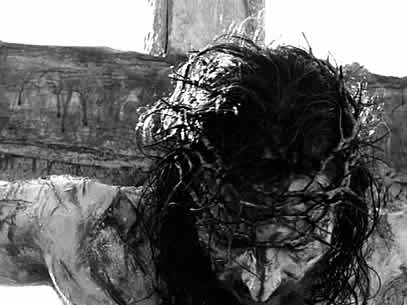
The Death of the MasterWe sometimes call Jesus our “living Torah” since he embodied the lifestyle of one who was fully human yet fully obedient to God and without sin. If the giving of the Torah at Sinai to the Jewish people unites them as one, does not the giving of the blood of the living Torah at Golgotha, the place of the skull, unite the disciples of Christ?

There’s a problem of two separate people groups under God and two separate events. Do the Jews have Moses and the Gentiles have Jesus? Are there two “Messiahs”? Not ultimately, for we all spring from a single root (Romans 11) and we are all branches on the same tree. More than that, Jesus came for the lost sheep of Israel and Paul went first to the Jew and then to the Gentile. The Jewish Moshiach came for the Jews and also came to unite all of humanity under God.

But every year, when they sound the shofar at Rosh HaShana it is revealed, a new revelation of infinite life is drawn to the world, beginning with the Land of Israel (see Tanya, pg. 239).

That is why the Torah says G-d’s eyes are on the Land of Israel from the beginning of the year to the end; it is referring to this new flow of life begun each Rosh HaShana.

And why will the Patriarchs be revived in Israel? Because as the ultimate Jews they will link and reveal the holiness of the people of Israel to the Land of Israel.

But this will only happen through our efforts to transform the entire world into holiness NOW — that is, to make Israel everywhere and prepare the world for Moshiach.

Because ONLY Moshiach will bring the Jews to Israel when the Great Shofar will be sounded by HaShem Himself.

We just have to do all we can in thought, speech, and action to bring . . .

Moshiach NOW!

-Rabbi Tuvia Bolton
Commentary on Parashat Eikev (5766)
Ohr Tmimim

Then the angel showed me the river of the water of life, as clear as crystal, flowing from the throne of God and of the Lamb down the middle of the great street of the city. On each side of the river stood the tree of life, bearing twelve crops of fruit, yielding its fruit every month. And the leaves of the tree are for the healing of the nations. No longer will there be any curse. The throne of God and of the Lamb will be in the city, and his servants will serve him. They will see his face, and his name will be on their foreheads. There will be no more night. They will not need the light of a lamp or the light of the sun, for the Lord God will give them light. And they will reign for ever and ever. –Revelation 22:1-5

Ki Tavo: Blessings of the Soul

BikkurimOne of the major thrusts in Judaism is hakaras hatov, appreciation of the good which G-d constantly bestows upon us. And as with appreciation of our fellow man, the emphasis is on appreciating not only the material dimension of G-d’s kindness, but also the love and care which He showers on every person.

In this vein, we can understand the sequence of our Torah reading, Parshas Ki Savo. The reading begins by describing the mitzvah of bikkurim (Deuteronomy 26:1-11), the first fruits which the Jews would bring to the Beis HaMikdash, and shortly afterwards speaks of a covenant concerning the entire Torah (Deuteronomy 26:16)

What is the connection between these subjects?

The mitzvah of bikkurim was instituted to show that our gratitude for the good G-d has granted us (Rashi, gloss to Deuteronomy 26:3), and to display our appreciation to Him for “granting us all the blessings of this world.” (Sefer HaChinuch, mitzvah 606) And this appreciation is not expressed merely by words of thanks, but through deed.

-Rabbi Eli Touger
Ki Savo commentary: “Entering Deeper and Deeper”
In the Garden of Torah
Chabad.org

There’s a tendency among people of faith to separate their lives into the holy and the mundane. It is holy to pray in the morning before work, and it is mundane to commute to work. It is holy to worship in church or synagogue, but it is mundane and ordinary to have a meeting at work, have dinner with your family, volunteer at the food bank, and to give to charity. Yet we see in the example set in this week’s Torah Portion Ki Tavo that in the process of the bikkurim, there is an intimate connection between appreciating the gifts of the physical world and the loving providence of God.

The bikkurim is an illustration of the Jewish expression of appreciation to God for the gift of the Land of Israel and its bounty, but how else can such appreciation be expressed and experienced?

Our Sages teach (Bava Basra 9b): “A person who gives a coin to a poor person is granted six blessings; one who gratifies him is blessed elevenfold.” Now, gratifying does not necessarily mean giving more money. It means giving a positive feeling, showing the recipient that you care about him, and that he means something to you. When one so invests himself in another person, putting enough of himself into the stranger that the person feels appreciated, he has given something far greater than money. And so he receives a more ample blessing from G-d.

Our own sage, the “Maggid of Nazaret” teaches a similar lesson:

Jesus sat down opposite the place where the offerings were put and watched the crowd putting their money into the temple treasury. Many rich people threw in large amounts. But a poor widow came and put in two very small copper coins, worth only a few cents.

Calling his disciples to him, Jesus said, “Truly I tell you, this poor widow has put more into the treasury than all the others. They all gave out of their wealth; but she, out of her poverty, put in everything—all she had to live on.” –Mark 12:41-44

What is “value” in the eyes of God and “worth” in the economy of Heaven? It isn’t our ability to pay or to provide for others or even to God, but our intent, willingness, and expression in helping the unfortunate. A poor widow can donate a a very small amount (although it is great to her since it is all she has to live on) and have it be worth more than all of the gifts of the wealthy, even though what they give can feed multitudes of the impoverished.

To continue quoting from Rabbi Touger:

This leads to a deeper concept: Appreciation stems from involvement; the deeper the relationship between people, the more one appreciates the uniqueness of the other. When a person appreciates a colleague, he is motivated to do whatever he can for that other person.

These concepts apply, not only to our relationships with our fellow man, but also to our relationship with G-d.

What we do for others relates directly back to how we express our appreciation for all God has done for us. In fact, there is probably a closer connection between acts of charity to others and our appreciation of God than we might imagine:

“Then the righteous will answer him, ‘Lord, when did we see you hungry and feed you, or thirsty and give you something to drink? When did we see you a stranger and invite you in, or needing clothes and clothe you? When did we see you sick or in prison and go to visit you?’

“The King will reply, ‘Truly I tell you, whatever you did for one of the least of these brothers and sisters of mine, you did for me.’ –Matthew 25:37-40

HomelessIn Judaism, the first blessing offered to God, the Modeh Ani, is given before the person even gets out of bed, but it is performed while the person is not quite awake. Later in the day, observant Jews recite the Modim blessing of the Shemoneh Esreh, and offer a more complete expression of thanks, yet this is only part of offering our hearts to God. The physical acts of kindness to others and the illustration of the bikkurim are both tangible and concrete, yet representative of traveling into the greater depths of spiritual dimensions where prayers and blessings alone cannot take us. So even in giving to others as an expression of appreciating the life God gives to us, we also get something back; the opportunity to serve the table of the King.

Once the Chasam Sofer, zt”l, was riding in the same carriage as his rebbe, Rav Nosson Adler, zt”l. It was a very cold day and the Eastern European roads were filled with snow and slush. One wrong turn could land a person into a sticky quagmire from which he would not easily get out. During the first leg of the trip, the wagon driver managed to extricate them each time
the horses got stuck. Eventually, however, the horses enter a muddy pit from which they could not budge. Although they tried, they lacked the physical strength to get that wagon out of the mud.

After coaxing the team for an extended time, the wagon driver understood that his efforts were futile and that he needed help. He unhitched one of the horses and rode to a nearby town. After some time the wagon driver returned with reinforcements to remove the wagon. When Rav Nosson Adler saw them coming he left the wagon. He rushed out so quickly that he didn’t even put on his boots. In his silk socks he jumped down from the wagon and then—to the surprise of the Chasam Sofer—he began to dance. His face shone with a holy fire and he was obviously overjoyed.

The Chasam Sofer wondered what it was that had made his rebbe so happy that he spontaneously began to dance. “You know I spend most of my day in the beis midrash. I do as many mitzvos as I can, but there are many mitzvos which are virtually impossible for me to fulfill. One of these unusual mitzvos is to avoid kil’ayim.

“But now don’t you see? The wagon driver brought a team of oxen to help pull his wagon out of the mud. As a non-Jew, this is his right, but we are forbidden from sitting in the wagon while it is being towed out by a mixed team. If we would have sat in the wagon we would have violated the prohibition of kil’ayim. Now that I have finally merited to fulfill this rare mitzvah I feel filled with joy and cannot stop myself from dancing!”

Daf Yomi Digest
Stories Off the Daf
“A Mixed Team”
Chullin 79

While this example of gratitude and appreciation may seem obscure and even nonsensical to someone without the benefit of a traditional Jewish religious education, if you take a moment to think about it, this is a story of a rare opportunity. Bringing the illustration back to the present, those opportunities that God gives us to serve others, even when they significantly interrupt our otherwise orderly and scheduled lives, are really opportunities for our benefit. Helping someone else not only benefits the other person, and it not only lets us bless God for all He has done for us, it is also the act of God blessing us by letting us be of further service to Him. In committing even the smallest act of repairing the world, God is giving us His loving compassion by repairing us, for there is no difference between helping another person, honoring God, and receiving God’s blessings on our soul.

In every person, there lie all souls that ever were and will be.

After all, humanShabbat candles consciousness began in a single being, with a single breath of G‑d within that being.

And so, just as every cell of the human being contains the blueprint of every other cell and of the entire person from the synapses of his brain to the swirls of his fingerprints, so every single person contains the entire humankind.

In this way, our Creator has rendered each of us the master of human destiny. In the liberation of any one of us lies the liberation of us all.

-Rabbi Tzvi Freeman
“Any Soul”
Based on letters and talks of the Rebbe
Rabbi M. M. Schneerson
Chabad.org

Good Shabbos.

Transforming Darkness with Light

Inner lightHusbands, love your wives, just as Christ loved the church and gave himself up for her to make her holy, cleansing her by the washing with water through the word, and to present her to himself as a radiant church, without stain or wrinkle or any other blemish, but holy and blameless. In this same way, husbands ought to love their wives as their own bodies. He who loves his wife loves himself. After all, no one ever hated their own body, but they feed and care for their body, just as Christ does the church – for we are members of his body. “For this reason a man will leave his father and mother and be united to his wife, and the two will become one flesh.” This is a profound mystery – but I am talking about Christ and the church. However, each one of you also must love his wife as he loves himself, and the wife must respect her husband.Ephesians 5:25-33 (NIV)

The relation of husband and wife is the way our world reflects the relationship of the Creator with His Creation. There is nothing more pivotal to the world’s ultimate fulfillment than this.

Therefore, as the world nears closer and closer to its fulfillment, the resistance grows stronger and stronger. By now, absolutely everything appears to be undermining the most crucial key of peace between man and woman.

-Rabbi Tzvi Freeman
“Peace at Home”
Based on letters and talks of the Rebbe
Rabbi M. M. Schneerson
Chabad.org

Anyone who’s ever been married knows that, even in the best of relationships, there can be strife and disagreement at times. It isn’t always easy to maintain peace in the home at every moment. The world around you may never know that you and your spouse aren’t getting along, but you know, your spouse knows…and God knows.

How much more does God know about the state of our relationship with Him, if we are on good terms or are feeling estranged. As Rabbi Freeman states, our relationship with our spouse is a reflection of our relationship with God. As the world progresses to a condition of ever greater darkness, it becomes increasingly difficult to maintain peace in the home and peace as we attempt to enter the Temple of Hashem.

In the presence of God and of Christ Jesus, who will judge the living and the dead, and in view of his appearing and his kingdom, I give you this charge: Preach the word; be prepared in season and out of season; correct, rebuke and encourage – with great patience and careful instruction. For the time will come when people will not put up with sound doctrine. Instead, to suit their own desires, they will gather around them a great number of teachers to say what their itching ears want to hear. They will turn their ears away from the truth and turn aside to myths. But you, keep your head in all situations, endure hardship, do the work of an evangelist, discharge all the duties of your ministry. –2 Timothy 4:1-5 (NIV)

Even in the community of faith, “peace is the home” is getting harder to secure. As Paul predicted, we are living in an age when “people will not put up with sound doctrine”, although it is ironic that some very shallow viewpoints on the Word of God are considered to have “deep meaning”. We also see values that once were great in the hearts of believers, visiting the sick, feeding the hungry, giving to the poor, are now considered passe’ and have been replaced by the latest fads in church “feel-good-about-yourself” programs. And yet, in any relationship, no matter the circumstances, we can still overcome the barriers as long as we keep our focus on the object of our love and faith:

Just as He clothes the naked, as it is written [in Genesis 3:21], “The LORD God made garments of skin for Adam and his wife, and clothed them,” so too should you also clothe the naked. The Holy One, blessed be He, visited the sick, as it is written [in Genesis 18:1], ‘Now the LORD appeared to him by the oaks of Mamre,’ [while he was still recovering from circumcision,] so too should you also visit the sick. The Holy One, blessed be He, comforted mourners, as it is written [in Genesis 25:11], “After the death of Abraham, that God blessed his son Isaac,” so too should you also comfort mourners. The Holy one, blessed be He, buried the dead, as it is written [in Deuteronomy 34:6], “And He buried [Moses] in the valley in the land of Moab,” so too should you also bury the dead. –b.Sotah 14a

Here we see God’s love for us and His example in how we should show love to others. We also see this in the life of the Master:

Yochanan heard in prison about the deeds of the Mashiach and sent two of his disciples. They said to him, “Are you the one who comes, or should we wait for another?” Yeshua answered and said to them,

“Go tell Yochanan what you have heard and what you have seen. The blind are seeing, the lame are walking, metzora’im are becoming pure, the deaf are hearing, the dead are rising, and the poor are receiving good news. And O, the gladness of th eman who does not stumble because of me!” –Matthew 11:2-6 (DHE Gospels)

Holding onto lightAs the time of darkness approaches, we can push it back and indeed, by our acts of trust and faithfulness to Jesus, we can actually transform the darkness into light, at least in part, and when he returns to us, he will  make everything complete and restore the world to light.

When light pushes away the darkness, eventually another darkness shall come. When the darkness itself is transformed into light, it is a light that no darkness can oppose.

-Rabbi Tzvi Freeman
“Transformation”
Based on letters and talks of the Rebbe
Rabbi M. M. Schneerson
Chabad.org

Is it any wonder we have this comparison?

Yeshua spoke to them once more saying, “I am the light of the world. Anyone who follows me will not walk in darkness, for he will have the light of life.” –John 8:12 (DHE Gospels)

You are the light of the world. A city that sits on the mountain will not be hidden, nor do people kindle a lamp just to put it under the bushel measure, but on the menorah, to illuminate all who are in the house. So also, shine your light before sons of men, so that they may see your good deeds and praise your father who is in heaven. –Matthew 5:14-16 (DHE Gospels)

Just as we see the light of our Master and strive to imitate him by also becoming light, our Master did nothing on his own:

Then Yeshua said to them, “At the time you lift up the son of man you will know that I am he and that I do not do anything of myself. But as my Father has taught me, so I speak. The one who sent me is with me; the Father has not abandoned me to be alone. For I always do what is good in his eyes.” –John 8:28-29 (DHE Gospels)

Just as he was sent in the Name of the Father, now we are sent in the name of the Son. So we should do all that is good in His eyes, that we might become one with our Father in Heaven, that there might be peace in our homes and in “the Home”, and that the darkness may be dispelled by our light, and His light.

Note: Quotes from the Gospels were taken from the Delitzsch Hebrew Gospels, Hebrew/English translation adapted and published by Vine of David from the original 1890 text, produced by Franz Delitzch and supervised of Gustav Dalman.

Quotes from Sotah 14a and John 8:28-29 were adapted from the First Fruits of Zion (FFOZ) commentary on Torah Portion Ki Tavo, Imitating God.

Dawn

Jesus, the Oral Law, and the Talmud

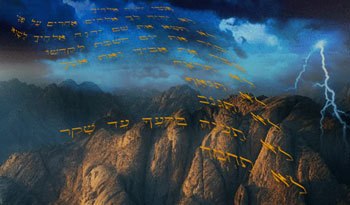
Moses at SinaiIf a man will have a wayward son, who does not hearken to the voice of his father and the voice of his mother, and they discipline him, but he does not hearken to them; then his father and mother shall grasp him and take him out to the elders of his city and the gates of his place. They shall say to the elders of his city, “This son of ours is wayward and rebellious; he does not hearken to our voice; he is a glutton and a drunkard.” All the men of his city shall pelt him with stones and he shall die; and you shall remove the evil from your midst; and all Israel shall hear and they shall fear.Deuteronomy 21:18-21 (The Stone Edition Chumash)

This commandment, from yesterday’s Torah Reading Ki Tetzei, is very difficult for us to understand. It’s one of the examples that Christians traditionally point to in explaining why God has removed the law and replaced it with grace. It’s one of the commandments the secular world uses to illustrate the “evil” religion represents and how much better humanistic and “progressive” atheism is in terms of compassion for others, including children and “wayward teens”.

This is also an example of how you can’t just read the Bible, any part of it, without employing some modifying information to help understand what is being taught. After all, even if your son is a total rebel, drunken, disobedient, even a criminal, what mother and father could simply hand him over to the court and, without a trial or any due process, watch him be stoned to death at the gates of their city?

But then, if the Torah as we have the document in our hands today doesn’t present the whole story, and if it didn’t fully explain commandments like this one when they were given in the day of Moses, how can we possibly understand the Bible? Let’s take another example.

He returned and began to teach by the seashore, and a great crowd of people was assembled to him. He went down and sat in a boat in the sea, and all the people stood on the seaside on dry land. He taught them many things with parables, and he said to them as he taught them:

Listen closely: The sower went out to sow seed. As he sowed, some of the seed fell by the road, and the birds of heaven came and ate it. There was some that fell on a rocky place where there was not much soil, and it sprouted quickly because it did not have deep soil. When the sun shone, it was scorched and dried up because it had no root. There was some that fell among thorns, and the thorns came up and crowded it out, and it did not bear fruit. There was some that fell on the good soil, and it bore fruit, coming up and growing. One made thirty times, another sixty, and another a hundred. –Mark 4:1-8 (DHE Gospels)

This is the entire text of the parable that Jesus taught to those listening to him at the lake. In verse 9, we read Jesus saying, “Whoever has ears to hear, let him hear.” If Mark had ended his narrative there and we had no other way to interpret the words of the Master, we might be just as puzzled as Christ’s audience. Even the Master’s closest inner circle of disciples had no idea what he was saying. Sure, you know what Jesus meant when he told the parable, but only because you’ve read his explanation as he related it to his most intimate of disciples:

When he was alone, the men that were with him approached with the twelve and they asked him about the parable. And he said to them:

To you it is given to know the secret of the kingdom of God, but to those outside, everything is in parables, so that they may look closely, but they will not know. They will listen well, but they will not understand, or else they may repent and be forgiven for their sins.

And he said to them:

Do you not know this parable? How will you understand any of the parables? The sower sows the word. Beside the road, these are those in whom the word is sown, but when they hear it, the satan immediately comes and picks up the word that is planted in their heart. Likewise, the ones sown on the rocky places are those who hear the word and they quickly receive it joyfully. But they have no root in them, and they only stand for an hour. After that, when trouble and persecution come on account of the word, they quickly stumble. And these are those sown among the thorns: They are those who hear the word, but the worries of this age and the guile of wealth and other cravings come and crowd out the word, and it does not have fruit. But these are those sown on the good soil: They are those who hear the word and receive it, and they produce fruit. One produced thirty times, another sixty, and another a hundred. –Mark 4:10-20 (DHE Gospels)

I want to emphasize my point here so I’ll quote verse 10 again: “the Twelve and the others around him asked him about the parables.” Even those who walked and talked with Jesus daily had no idea what he meant when he taught in parables. Only those closest to him were able to ask what he meant and hear his more straightforward explanation. We have the parable and the explanation together only because Mark and the other Gospel writers documented them together decades after these lessons were originally spoken. It would be many centuries before everything was put together as one “New Testament” and centuries more before the Bible was mass-produced and accessible to anyone who wanted to read it (Gutenberg didn’t invent the printing press until around 1440). We take reading the Bible as a unified document for granted today, but in times past, information like parables and their explanations weren’t always available in one book or scroll.

Now let’s get back to the example of the wayward son and his rather ghastly death sentence. If we, like the audience of Jesus, can’t get the full explanation from one place, where else can we go?

The Torah tells us that the Ben Sorer U’Moreh [Wayward and Rebellious Son] is brought to Beis Din [Jewish Court]. If the evidence is upheld, he is put to death, based on the principle “better he should die innocent now, than have to be executed as a guilty party somewhere down the road.”

The rules and circumstances for a Ben Sorer U’Moreh are so complex, specific and narrow that the Talmud in the eighth chapter of Sanhedrin says that there has never been and will never be a Ben Sorer U’Moreh. So then why, in fact, was the entire section written? The Talmud answers that the section was written in order that we might “expound it and receive reward”. In other words, this section was written for the sake of the lessons inherent in it.

The lessons that the Torah wants us to derive from this section are lessons about raising children. The Torah wants to teach us how we should and should not raise a child. It is likely that some grievous mistakes were made in the raising of the Wayward and Rebellious son. The Torah is providing us with clues of what to do and what not to do when raising our sons and daughters.

-Rabbi Yissocher Frand
“Rabbi Frand on Parshas Ki Seitzei”
Torah.org

This may make the Torah seem even more difficult to comprehend. Why would there be a commandment documented by the hand of Moses for the Children of Israel that they were never expected to obey?” Rabbi Frand tells us the commandment had a much deeper intent regarding parenting but where was this intent to be discovered?

He references the Talmud and particularly tractate Sanhedrin 8, but the Talmud didn’t exist in the time of Moses and wouldn’t be recorded in any written form until after the time of Jesus.

But is that exactly true?
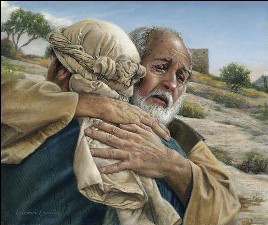
Wayward SonAccording to classic Jewish thought, when Moses was on Sinai with God for forty days and forty nights (Exodus 24:18), in addition to imparting the instructions for building the Mishkan (Tabernacle) and its various elements, God also gave Moses the Oral Law or the means by which to interpret the directives listed in the written document, such as the aforementioned commandment regarding wayward sons. However, no list of commandments, written or oral, could possibly cover all contingencies and circumstances as they would arise in the following years and centuries, so God also commanded that a group of Judges be assembled to hear the various cases and complaints as they arose (Numbers 11:24-30). Authority was given to this system of Judges, originally the Sanhedrin but in modern times, the rabbinic Beit Din, to make rulings and judgments regarding the practical application of the written and oral Torah we have with us today.

So in the case of the wayward son, for an ancient Israelite, it wasn’t enough to know the written Torah on how best to deal with the situation. You had to learn and understand its intent via the Oral Law given to Moses at Sinai and interpreted by the ancient Israeli judicial system which also was established by God. Add to this that, as you grew up and were taught the elements of Torah by your parents, teachers, and priests, you would learn that the commandment of wayward children was meant not as a harsh punishment to use against your son should he become a drunken thug, but a lesson in how to parent your children so that they would “hearken” to your voice.

All that is fine and well for the Israelites, but you’re probably asking yourself what all this has to do with Jesus and his parables. What if I were to tell you that Jesus did the same thing: took the Torah and interpreted it? Christians believe he did so, but only in the very limited scope of doing away with the Torah, but I believe that, like Moses, like the Sanhedrin, like the lesser courts there were appointed in the various towns in Israel, and like the individual judges, Jesus also gave oral rulings, laws, and interpretations by the authority given to him by God the Father, the great Ayn Sof, the infinite, unknowable, ultimate, and unique One God.

Now look at this. We have a written Bible, for Jews, the Tanakh, what Christians call the Old Testament. It isn’t sufficient as a guide to provide a means by which Jews can apply the will of God in every possible situation they may encounter in their lives (and by inference, it means Christians may not have all the information we need just by reading the Bible). There are many questions Jews encounter as to how a commandment may or may not fit something that happens to them, such as a son coming home late and drunk. In fact, since situations and interpretations change across the scope of time, the Torah couldn’t possibly tell a 21st century Jewish parent how to deal with this situation in a way that would also meet the needs of a 12th century Jewish parent under similar circumstances. Both the Talmudic rulings and probably the advice of a Rabbi or a Beit Din might be needed.

Jesus did the same thing in the New Testament. The most famous example of him doing so is in the “Sermon on the Mount” (see Matthew 5) but keep in mind, Jesus wasn’t undoing the Torah commandments or giving a radical and “unJewish” meaning to them. If he had done that, he would have completely lost his Jewish audience including all of his closest disciples. The reason anyone in ancient Roman Judea listened to Jesus and followed him; the reason even the Pharisees could not discredit anything he taught, was because everything he taught and interpreted was completely consistent with the Torah of Moses and the intent of God at Sinai.

There’s no way that we can simply toss the Oral tradition, the Talmud, and the rabbinic rulings out the window and proceed as if the Bible were a completely self-sufficient document. The Bible is the firm foundation of the Word of God and the Rock on which we all stand. But it is not like a latest best-selling novel that we can read and digest all by itself without studying and relying on authoritative interpretations. Jesus is the living expression of that Rock (“the Word became flesh”John 1:14). However, Jesus himself must have followed the halakhah or the traditional rulings of Torah observance as understood during the Second Temple period (if he didn’t, all of his followers, including Peter, would have walked away from him, branding him a heretic). Those places where we see him apparently disregarding halakhah, are those points where his authority is giving a better ruling; one more consistent with the original intent of God at Sinai.

Just as Moses, the Sanhedrin, the lesser courts, and the judges and priests of Israel were given authority on earth to interpret Torah and to make rulings and judgments for the people, Jesus was given that authority and more as the Son of God. If we understand Mark 12:28-44 correctly, none of his rulings, judgments, and interpretations contradicted the Torah in any way, although as I mentioned, some of his rulings weren’t entirely consistent with the understanding of the Pharisees and Sadducees. In Jesus, we have a living example of how there can be a written Torah and a set of oral interpretations. This supports the ancient and modern Jewish tradition of having a written Torah, an oral interpretation, as well as later rabbinic rulings which were recorded in the Talmud, and a rabbinic court to interpret Torah and Talmud in individual cases.

Given everything I’ve just said, I’m not supporting that Christians suddenly start trying to live their lives by Jewish standards. Most of what is written in the Torah and Talmud applies only to Jews, but if you’ve been reading this blog for any length of time, you know that I believe Christians can learn much about God, the teachings of Jesus, and the meaning of our lives as disciples of the Master by studying the Jewish texts. If Jesus, in a sense, taught like Moses, like a Judge, like a Priest, and like a Rabbi, then only by learning about and trying to understand the complete system of Jewish teachings and judgments can we even begin to understand the Savior and Messiah we follow and adore.

Talmud StudyLike the ancient Israelite and the commandment of the wayward son, we don’t have all the information we need just by reading a few paragraphs in the Bible. Like the inner disciples of Jesus, we don’t understand the parables of the Master given to the masses without his interpretation of them. As modern Christians, we can’t always know the underlying meaning of the teachings of Christ (even though we currently have a record of his parables and their explanations) without digging a little deeper into how Jesus taught like a Maggid.

Christian, I’m not saying that we must take on board the full yoke of Torah including Talmud and halakhah. Far from it. However, I am saying that while it is not required of us, we can still learn a great deal about Jesus by the study of Judaism, for it is from Judaism that our faith has emerged and it is within Judaism that the heart of the Messiah beats for his people, both those who are the natural branches and those of us who have been grafted in (Romans 11).

As believers, we have no right to judge the Jewish people for following the halakhah, from studying Talmud, from living by the rulings of the sages, and from obedience to the Torah of Moses as understood and interpreted by oral tradition and rabbinic judgments. These rules are not binding on us, but the Jewish people were given a more comprehensive yoke than what has been asked of the Gentile disciples (Acts 15). Yet, as implied by James and the Jerusalem Council, there is still value in learning the Torah among the Gentile disciples because it is that Torah, those Judges, those Prophets, those Disciples of the God of Israel that are the core of Christ’s message and the foundation of who we are as believers in Jesus.

You have heard it said, but there is more than that. A great deal more. Let’s continue to study together and to allow both Christian and Jew to take their specific paths to the gates of God’s Temple.

Note: Quotes from the Gospel of Mark were taken from the Delitzsch Hebrew Gospels, Hebrew/English translation adapted and published by Vine of David from the original 1890 text that was produced by Franz Delitzch and supervised of Gustav Dalman.