Tag Archives: Torah Portion

Ki Teitzei: The Bridegroom is Approaching

Ki TeitzeiThe vast majority of laws relating to Jewish marriage and divorce are derived from verses in the Torah portion Seitzei.

The relationship between husbands and wives is similar to the relationship between G-d and the Jewish people. It thus follows that marriage and divorce as experienced between mortal spouses derives from the “marriage” and the so-called “divorce” between G-d and the Jewish people.

The marriage of G-d and the Jewish people took place when He gave them the Torah, as the Mishnah states: ” ‘The day of His marriage’ — this refers to Mattan Torah. “

The Chassidic Dimension: Ki Seitzei
Based on the teachings of the Lubavitcher Rebbe
Rabbi Menachem M. Schneerson
from Likkutei Sichos Vol. IX, pp. 143-150.
Chabad.org

“At that time the kingdom of heaven will be like ten virgins who took their lamps and went out to meet the bridegroom. Five of them were foolish and five were wise. The foolish ones took their lamps but did not take any oil with them. The wise ones, however, took oil in jars along with their lamps. The bridegroom was a long time in coming, and they all became drowsy and fell asleep.

“At midnight the cry rang out: ‘Here’s the bridegroom! Come out to meet him!’

“Then all the virgins woke up and trimmed their lamps. The foolish ones said to the wise, ‘Give us some of your oil; our lamps are going out.’

“‘No,’ they replied, ‘there may not be enough for both us and you. Instead, go to those who sell oil and buy some for yourselves.’

“But while they were on their way to buy the oil, the bridegroom arrived. The virgins who were ready went in with him to the wedding banquet. And the door was shut.

“Later the others also came. ‘Lord, Lord,’ they said, ‘open the door for us!’

“But he replied, ‘Truly I tell you, I don’t know you.’

“Therefore keep watch, because you do not know the day or the hour.Matthew 25:1-13

I’m still trying to figure out how God can be married to the Jewish people as a whole while Christ is married to the church. The former is easier for me to comprehend since Judaism as a whole has a relationship with God more so than any individual Jew, based on the Sinai event. Even through there are religious Jews and secular Jews, because each are part of the Jewish whole, regardless of their personal beliefs, God must consider them His “bride”.

Jews are an ethnicity and a community, not just a religion. To be sure, that’s true of other religions, to some extent. Part of what it means to be an Italian, Polish or Irish American is being Catholic, and the Black church is at the core of the African-American community. So Jews are not alone in being partly an ethnic grouping, but community bonds play an unusually prominent role in our religion. I’m a Jew by choice—I converted 50 years ago, and I’m even more satisfied with that choice now than I was a half-century ago. That’s partly because being Jewish is mostly not about beliefs, but about connections with other people, sharing values and a collective destiny. Even for non-observant Jews, Jewish values are embodied in the Torah. Most Jews, unlike most Christians, don’t take the Torah literally, but it’s an exceptional account of the shared history and values of our people. Those values include respect for learning—we’re the “People of the Book”—respect for the individual, and pervasive concern about the fate of the community. It’s not an accident that Jews are among the most generous people in America philanthropically, and not just for Jewish causes; this trait embodies tikkun olam. Sociologically, Jews behave in a way that’s consistent with putting a high value on caring for other people, as well as on respect for learning. Even the atheists among us share those values.

Robert Putnam is the author of Bowling Alone: The Collapse and Revival of American Community and the Malkin Professor of Public Policy at Harvard University.
Quoted from Moment Magazine

Compared to Judaism, there really isn’t a “Christian people”. We refer to Christians collectively as “the church” but Christians don’t comprise a people group in the way that Jews do since Judaism transcends the definition of a “religion” and extends to a community, a people, an ethnicity (depending on how you look at it) and a culture. You can be a devoutly religious Jew or your can be a Jew who is an atheist, but you are always a Jew.

By contrast, a Christian is only a Christian because he or she has made a conscious faith decision. A person can decide to become a Christian and they can decide to surrender their faith and become an atheist. There’s no such thing as a secular Christian and once you leave the church, you have given up that identity.

When people describe themselves as Christian, they imply some element of belief. The beliefs may vary, but it would be hard for them to say, “I am a Christian,” if they don’t believe in God. In Judaism, there is a vibrant Jewish community separate from the theological underpinnings of the Torah. You don’t have to believe God made a covenant with our ancestors—where He gave us the land of Israel and commanded us to live by His teachings—to be Jewish.

Jason Rosenhouse is an associate professor of mathematics at James Madison University, writes EvolutionBlog for the Science Blogs network, and is the author of Among the Creationists: Dispatches from the Anti-Evolution Frontline, forthcoming from Oxford University Press.
Quoted from Moment Magazine

Christians are called “believers” because the essential element for being a Christian is belief; the acceptance of a certain set of propositions with an unerring certainty. It has nothing really to do with who you are, where you were born, who your parents are, or even anything that you do in life. You are a Christian because you believe in Christ. A Jew isn’t a Jew because of what he or she believes, a Jew is a Jew because of who they are. Even a religious Jew isn’t really religious because of a set of beliefs but instead is considered “yare Hashem”:

According to Heschel, “Awe rather than faith is the cardinal attitude of the religious Jew. In Biblical language, the religious man is not called ‘believer,’ as he is for example in Islam (mu’min) but yare hashem (one who stands in awe of God).”

Quoted from MyJewishLearning.com

RainbowI think we can argue that God is still “married” to any individual Jew because that Jew is always part of the Jewish whole. Not so a Christian since a Christian can accept or reject their faith at will and it is faith and belief, and nothing else, that defines the Christian. So it seems that a Jew remains part of the tribe regardless and thus is “married” in a way that they cannot be divorced, but not so the Christian.

I know what you’re thinking. God did “divorce” the Jewish people and we have scripture to prove it. We also have this:

“For a brief moment I abandoned you,
but with deep compassion I will bring you back.
In a surge of anger
I hid my face from you for a moment,
but with everlasting kindness
I will have compassion on you,”
says the LORD your Redeemer. –Isaiah 54:7-8

God continues to address Israel as a corporate entity rather than commenting on the behavior of any individual Jew. God briefly and temporarily divorced all of Israel and He has promised to gather all of Israel to Himself again.

Paul re-enforces this commitment here:

I do not want you to be ignorant of this mystery, brothers and sisters, so that you may not be conceited: Israel has experienced a hardening in part until the full number of the Gentiles has come in, and in this way all Israel will be saved. As it is written: “The deliverer will come from Zion; he will turn godlessness away from Jacob. –Romans 11:25-26

As much as I try to find one, I can’t discover the solution or reconciliation between the two marriage metaphors: the one involving God and Israel and the one depicting Christ and the church. As I read over what I’ve written, it’s almost as if I’m saying that all Jews merit a place in the world to come no matter what they’ve done by virtue of being Jews. However, there are conflicting points of view involved:

And do not think you can say to yourselves, ‘We have Abraham as our father.’ I tell you that out of these stones God can raise up children for Abraham. –Matthew 3:9

All Israel has a share in the World to Come, as is stated: “And your people are all righteous; they shall inherit the land forever. They are the shoot of My planting, the work of My hands, in which I take pride.” –Sanhedrin, 11:1

How can I put all of this together in a way that makes sense? How to I reconcile God’s relationship with the Jewish people vs. His relationship with Christianity? I know that what we do, Jew and Christian alike, matters to God and that there are consequences, both in the present and in the world to come, for our behavior, but how can that be applied to the identity of Jew vs. Christian in terms of being a “bride”?

(Yes, I know I could take the Christian “hard line” and say that God replaced Israel with the church, but if I ever believed in such supersessionist nonsense, I’ve long since given it up. There has to be another answer)

I don’t know the answer. I’m inviting comments from anyone who has an opinion to share. I do want to leave you with one more quote for this last morning mediation of the week.

Fire can be dangerous – but nothing is as dangerous as ice.

If a fire burns inside you, keep going, just turn the fire towards G-d.
But if your path is of cold, lifeless intellect, you must stop, turn around, and warm yourself with the fiery coals of the sages.

-Rabbi Tzvi Freeman
“Hot and Cold”
Based on the teachings of the Lubavitcher Rebbe
Rabbi Menachem M. Schneerson
Chabad.org

Being cold to our bridegroom is a dangerous thing for anyone as we learn here. But how is it different for a Jew than a Christian against the vista of eternity?

Good Shabbos.

Shoftim: A Sanctuary in Time and Space

MourningYou shall set up judges and law enforcement officials for yourself at all your city gates that the Lord, your God, is giving you, for your tribes, and they shall judge the people [with] righteous judgment.Deuteronomy 16:18

On the personal level, “your gates” refers to the seven sensory gates of the small city that is the human body, its seven points of contact with the outside world. A person should appoint mental “judges and law-enforcers” over his eyes, ears, nostrils and mouth, to judge, weigh and filter the desirable and constructive stimuli from the negative and destructive ones.

-Rabbi Shabtai Hakohen (the “Shach”)

In the Torah section of Shoftim (Deuteronomy 16:18–21:9) we read of the cities of refuge, to which a man who had killed accidentally could flee, finding sanctuary and atonement. The chassidic masters note that Shoftim is always read in the month of Elul—for Elul is, in time, what the cities of refuge were in space. It is a month of sanctuary and repentance, a protected time in which a person can turn from the shortcomings of his past and dedicate himself to a new and sanctified future.

-by Britain’s Chief Rabbi, Dr. Jonathan Sacks
From Torah Studies (Kehot 1986), an adaptation of the Lubavitcher Rebbe’s talks
“The Judge and the Refugee”
Chabad.org

What do the cities of refuge, described in this week’s Torah Portion and the month of Elul have in common? In a sense, as Rabbi Sacks describes, they are both sanctuaries. They provide us with a place to be safe from the consequences of our sins and an opportunity to reflect, experience true regret over our failures to obey God, and to repent by returning to Him and making amends.

Rabbi Sacks points out that although Judges and Officers were appointed to any place where Jews might live, only is the Land of Israel were there cities of refuge. If you inadvertently caused someone’s death in the diaspora, you would have a long trip to find refuge while avoiding the “avenger of the blood”.

Sifri interprets the opening verse of our Parshah, “You shall set judges and officers in all your gates,” to apply to “all your dwelling places,” even those outside Israel. It then continues: One might think that cities of refuge were also to exist outside the land of Israel. Therefore the Torah uses the restrictive expression “these are the cities of refuge” to indicate that they were to be provided only within Israel.

Nonetheless, Sifri says that someone who committed accidental homicide outside the land of Israel and fled to one of the cities of refuge would be granted sanctuary there. It was the cities themselves, not the people they protected, that were confined to the land of Israel.

This seems more than a little unfair for, according to Rabbi Sacks, a Jew living outside of the holiness of Israel was more prone to sin and therefore, in much greater need of access to a refuge. Nevertheless, this was the command of God. What meaning can we take from such an arrangement?

This is the deeper significance of the law that the city of refuge is found only in the land of Israel. For a man could not atone while clinging to the environment which led him to sin. He might feel remorse, but he would not have taken the decisive step away from his past. For this, he had to escape to the “land of Israel,” i.e., to holiness. There, on its sanctified earth, his commitment to a better future could have substance.

Setting aside the literal meaning of this Torah for a moment, we find that when we fall into sin, we cannot seek a solution in the environment that lead to and nurtured sin. It would be like an alcoholic seeking sobriety in a bar or a thief trying to repent while left alone in a bank vault full of loose cash. To truly make teshuvah, one must enter into a state of holiness; a personal “Land of Israel”.

Elul is called the month of preparation. To quote Rabbi Joshua Brumbach:

Elul…is the month preceding Tishrei – the month the High Holidays fall in. Traditionally it is known as a month of preparation. This preparation, called Cheshbon HaNefesh, is a time we begin to take an accounting of our soul. We recall our thoughts and actions over the past year and begin to seek t’shuvah (repentance) for those things, and with those we may have wronged.

One does not face the Throne of God lightly, particularly when He opens His books and dispenses judgments for your deeds. When preparing for an audience with the King, it is best to take as much time as you need to become ready to enter into His majestic and fearful presence. But how can any man become worthy to enter into the Courts of God?

…as it is written, “There is none righteous, not even one”. –Romans 3:10

How dare we even hope to enter into a state where we could possibly be forgiven by God? And yet we know that God does not desire that any should perish, “but for all to come to repentance” (2 Peter 3:9). Elul is a refuge provided by God whereby we can have the opportunity to prepare, to reflect, to make amends for our wrongdoing, and to cleanse ourselves.

For Christians, all of these preparations and the events of the High Holidays themselves aren’t thought to be particularly significant. After all, through the blood of Jesus, we have been cleansed of our sins once and for all. Why do we need to go through an annual cycle of repentance such as the Jews do? Our salvation is assured.

But wait!

ElulDoes that mean, once forgiven and saved, a Christian never, ever sins? Well…no. Oh. Then what do we do about it? The answer is probably to keep our “list of sins short”, and to approach God in trembling prayer and beg for His forgiveness through Jesus. I hope we all do that. But aren’t there those lingering sins, those habitual faults we tend to brush aside and (deliberately) overlook? Aren’t we all human? Don’t we sometimes leave things in our lives undone for months or even years at a time?

There’s no reason why we too can’t take advantage of an opportunity God offered to the Children of Israel thousands of years ago. We can enter into a sanctuary of the spirit, we can take the time to seriously explore our unrepented sins, our hidden and shameful faults, and prepare our souls for the act of total rejection of our errors and completely return to Him.

In Pirkei Avot (Ethics of the Fathers) 2:4, it states, “Do not judge your fellow until you have stood in his place. Fortunately, we have an intecessor and a High Priest who has stood in our place.

For we do not have a high priest who cannot sympathize with our weaknesses, but One who has been tempted in all things as we are, yet without sin. –Hebrews 4:15

That should wipe away all of our excuses. Like the previous example of the Jewish man in the diaspora, sin has called and we have answered. Now we are desperate to return to holiness and to God, but like the Jewish traveler, we must journey long, we must escape the place of our sin. We must strive to return to where we can be safe and secure in time and space to delve into the depths of who we are and explore the wine-dark abyss. It is only there that we can see the repulsiveness of our sins, be repelled by our acts of rebellion, cry out in mercy to God, and as a prodigal son, return to him expecting nothing, and yet receiving everything from our Father.

A refuge is a place to which one flees—that is, where one lays aside one’s past and makes a new home. Elul is the sublimation of the past for the sake of a better future. And it is the necessary preparation for the blessings of Rosh Hashanah, the promise of plenty and fulfillment in the year to come.

I’m taking a small break from writing “morning meditations” to do some traveling. I’m not sure what sort of Internet access I’ll have, but definitely I’ll be back online and writing sometime early next week (sooner if I can manage it).

Blessings.

Re’eh: When Did We Feed You?

Feeding Hungry Children“Then the righteous will answer him, ‘Lord, when did we see you hungry and feed you, or thirsty and give you something to drink? When did we see you a stranger and invite you in, or needing clothes and clothe you? When did we see you sick or in prison and go to visit you?’

“The King will reply, ‘Truly I tell you, whatever you did for one of the least of these brothers and sisters of mine, you did for me.’”Matthew 25:37-40

We are told in the Torah Portion Re’eh , “Follow G-d your L-rd, fear Him, observe His commandments, hearken to His voice, serve Him and cleave to Him.” On the words “cleave to Him,” Rashi explains: “Cleave to His ways, perform acts of loving kindness, bury the dead, visit the sick, just as G-d has done.”

The Chassidic Dimension: Re’eh
From the teachings of the Lubavitcher Rebbe
Rabbi Menachem M. Schneerson
Based on Likkutei Sichos Vol. XIV, pp. 53-63.

For last week’s Torah Portion Eikev, I wrote that cleaving to God is actually an effort to bring the Messiah:

Cleaving to a Rebbe, honoring him, and learning from him, and then passing what you’ve learned to others and particularly down to the next generation in response to the desire to cling to God. When we cling to our “Rebbe”, to Jesus, we are fulfilling God’s desire.

In quoting the Master’s words above, as recorded in Matthew, I mirrored the interpretation of the Torah portion as rendered by Rashi:

Rashi’s comment must be understood: Since, according to Rashi , the verse means to tell us that we should cleave to G-d’s ways and act as He does, why doesn’t the verse explicitly state “cleave to His ways” rather than “cleave to Him?”

Moreover, since the command to cleave to G-d’s ways is stated as “cleave to Him ,” it is understandable that the ultimate unity with G-d is accomplished specifically through following G-d’s example and performing acts of loving kindness.

One SoulThe word “to cleave” in Hebrew, gives the sense of adhering or “gluing” yourself to the object of adherence. It is the same word used in Genesis 2:24 when the Torah states, “a man leave his father and his mother, and shall cleave unto his wife”. It would be impossible for a human being to literally “cleave” to God as a man cleaves to his wife, and we see that to obey the will of God in this matter, we must attach ourselves to someone to typifies the characteristics of God (performing acts of loving kindness, burying the dead, visiting the sick, and so on), ultimately performing the behaviors we learn from them.

Jesus described his disciples, that is “us”, cleaving to God, as it were, by obeying the will of our Master and doing the same things he does; inviting the stranger into our home, clothing the unclothed, and visiting the sick and the prisoner. Sounds somewhat like knowing a tree by the fruit it bears (Matthew 7:20).

We might be tempted to force ourselves to do good deeds in order to “earn” favor in Heaven, but there’s something else to consider from this week’s Torah portion:

These concepts are relevant with regard to this week’s Torah reading, Parshas Re’eh, which begins: “See that I am placing before you today a blessing and a curse.” The portion continues to allude to free choice, reward and punishment: “The blessing [will come] if you obey the commandments. and the curse [will come] if you do not heed. and go astray from the path which I have commanded.”

Moshe is telling the people that their observance of G-d’s commandments will not be a spontaneous response. Instead, they will constantly be required to make conscious choices.

Why does G-d grant man choice?

-Rabbi Eli Touger
Commentary on Torah Portion Re’eh
“The Power of Sight”
Adapted from Likkutei Sichos, Vol. IV, p. 1339ff; Vol. XV, p. 44

Good question, and one that’s been asked many times throughout the sometimes turbulent relationship between man and God.

Rabbi Touger continues:

Were man’s choice between good and evil to come naturally, he would not have any sense of accomplishment. What would he have earned?

For this reason, man is confronted at every stage of his spiritual progress with challenges which he must overcome on his own. By nature, evil has no substance, and as darkness is repelled by light, evil would be instantly subdued by the power of holiness.

The themes of loving God, obeying Him, having a greater purpose in life, finding our mission, have been part of a series of blogs I wrote recently, based on the Rohr Jewish Learning Institute course Toward a Meaningful Life. We see in the commentaries for Torah Portion Re’eh, that we not only bring something of the Messiah into the world now by behaving as he does, loving God and loving other people, but that our actions today ripple into a time when God’s manifestation on Earth will be absolute:

The ultimate expression of the potential of sight will be in the Era of the Redemption, with the fulfillment of the prophecy: “The glory of G-d will be revealed and all flesh will see.” In contrast to the present era, when we can see only material entities and G-dliness is perceived as an external force, in that future time, we will see directly how G-dliness is the truth of all existence.

Nor is this merely a promise for the distant future. The Redemption is an imminent reality, so close that a foretaste of its revelations is possible today.

Feed My Starving Children logoWhat we do matters right now. What we do also matters in the Messianic age. It is inescapable. We have free will to act or to refrain from acting, to choose to cling to God or to withdraw from Him. Either way, there are tremendous consequences, not only for ourselves, but for people and events we effect, whether we realize it or not.

Lord, when did we see you hungry and feed you?

Who will your next act of kindness or indifference serve or fail to serve?

Good Shabbos.

Eikev: Blessing God

EikevIn this week’s reading (Eikev), the Torah warns us that after the people enter Israel, they may be prone to think only about their own accomplishments, and forget the source of all blessings: “and you become haughty, and forget HaShem your G-d who brought you out from Egypt, from the house of slavery… and you say in your heart, my own might and the strength of my hand have made me all of this wealth.” [Dev. 8:14, 17]

This is something that can affect all of us. Maimonides says that we should look for the middle ground, that even bad traits have their place (meaning, sometimes it is right to appear angry, for example), but that haughtiness is the exception. There is never a time to be “full of ourselves.”

This does not mean we should fail to appreciate our gifts. Moshe was the leader and teacher of the Jewish people, he spoke directly with G-d, and received the Torah and taught it to us. But the Torah also testifies that he was more humble than anyone — and the Torah doesn’t exaggerate!

Rabbi Yaakov Menken
Director, Project Genesis / Torah.org
Note from the Director
“Talent on Loan from G-d”
Project Genesis

It seems almost an impossibility to be able to lead millions of people on a journey across great distances for forty years and even be able to talk to God “face-to-face” and yet be considered “more humble than anyone else on the face of the earth” (Numbers 12:3). How is this possible, especially given some of our common dictionary definitions for this word?

  1. not proud or arrogant; modest: “to be humble although successful”.
  2. having a feeling of insignificance, inferiority, subservience, etc.: “In the presence of so many world-famous writers I felt very humble”.
  3. low in rank, importance, status, quality, etc.; “lowly: of humble origin; a humble home”.
  4. courteously respectful: “In my humble opinion you are wrong”.
  5. low in height, level, etc.; small in size: “a humble member of the galaxy”.

Yet, we don’t really think of Moses as arrogant, either. According to Rabbi Menken, he couldn’t have been:

Rav Shamshon Rephael Hirsch writes that arrogance is the first step towards forgetting G-d. Moshe never ignored his gifts, but he also recognized where they came from. What prevents us from becoming arrogant or haughty is the appreciation that everything we have is a gift.

How does that work for the rest of us, particularly when we’re not the leader of millions (most of us) and don’t talk to God the way Moses talked to God (I don’t know anyone who does that, although a few people claim to have this ability)? It seems like a lot of people either take no credit at all for what they do well or they take all the credit for everything that happens good in their lives and in the lives of others. Should we give total credit to God for everything at our expense or take credit for everything, leaving no room for God? Where is the balance? How does this “partnership” between people and God work?

We were all created in the image of God (Genesis 1:27). Think of this as meaning that God created us with a certain configuration of wiring and programming. We “naturally” have certain personality traits, talents, and characteristics that are unique to us. Some give us the ability to easily accomplish particular tasks, like a person who just “naturally” draws well, sings well, or is a gifted carpenter. Other characteristics we find we must master and bring under our control, such as a quick temper or a tendency to like alcohol too much.

HamazonWhen things go well, sometimes because of our talents, we tend to credit ourselves and feel that we’re really great. When things go badly, sometimes because of our “evil inclination” or the character traits that we need to control, we tend to either blame God for how He made us, or to suddenly remember God and beg for His forgiveness and help. We see this in Rabbi Menken’s commentary about how Moses warned the Children of Israel against haughtiness. Ironically, the answer is in a very simple but unusual (from a Christian point of view) commandment:

And you shall eat and be satisfied, and you shall thank the Lord your God for the good land which he has given you. –Deuteronomy 8:10

In Judaism, this is one of the 613 commandments that define a Jew’s obligations to God and to other people. This has resulted in the blessing of Birkat Hamazon or “Grace After Meals” being said after eating, as opposed to the Christian tradition of blessing God (sometimes at length) before a meal.

There’s a reason for this as stated by Rabbi Menken:

The Ohr Gedalyahu, Rabbi Gedalyah Schorr zt”l, tells us that the holy Kabbalistic work, the Zohar, says that the Torah frequently relates the positive and the negative. Our reading, he says, is one example of this concept. The Torah goes on to warn us that after we are sated, we can make a tragic mistake.

“Guard yourselves lest you forget HaShem your G-d… lest you eat and be satisfied, and build good houses and dwell therein… and you instill pride in your hearts and forget HaShem your G-d who took you out from Egypt, from the house of slavery… and you say in your hearts, ‘my strength and the might of my hand made me all of this great wealth!'” [8:11-17] Say a blessing recognizing that it all comes from G-d, to avoid the false claim that your own abilities brought you wealth.

It’s when we are successful and satisfied that we most need to connect to God. It’s not a sin to ask for His help when we are hurt or scared or desperate, but He must be a part of everything in our lives, to good and the bad alike, or we will forget Him. We might also forget ourselves and who He made us to be.

There is a portion of the morning prayers called Birkat HaShachar that observant Jews say every day where the person thanks God for various attributes and circumstances (the full text in English and Hebrew is found on this site as a PDF). This includes thanking God for giving us (in this context, “us” are the Jews reciting these blessings) discernment, for making us free, for making us in His Image, and so on. This, like the Birkat Hamazon, is also a good model for Christians to consider because it illustrates the partnership between people and God.

Yes, God made us and all things come from God, but He made us to possess certain “innate” talents and abilities. How we choose to use those abilities is up to us, but that they are there is both a testament to God’s mastery over Creation and the fact that we have control of what we possess as human attributes. We are not puppets on God’s string. We can take pride in our achievements and thank God for having made us the way He did at the same time.

I think that’s how Moses approached his own life and in whatever circumstances we may find ourselves, I think that’s how we can approach life, too. We can do what Moses did, by never forgetting the God who created us.

Whoever possesses the following three traits is of the disciples of our father Abraham; the disciples of our father Abraham have a good eye, a meek spirit and a humble soul. The disciples of our father Abraham benefit in this world and inherit the World To Come, and is stated, “To bequeath to those who love Me there is, and their treasures I shall fill.” –Pirkei Avot 5:19

Good Shabbos.

Eikev: Bringing the Moshiach

And I will put enmity between you and the woman, and between your offspring and hers; he will crush your head, and you will strike his heel.Genesis 3:15

Because (eikev) you listen to these laws and safeguard and keep them, G-d your L-rd will keep His covenant and kindness that He swore to your fathers.Deuteronomy 7:12

The Hebrew word eikev not only means “because,” but also “heel.” Thus Midrash Tanchuma explains that “these laws” refers to mitzvos that seemingly lack significance, so that people tend to “ignore them and cast them under their heels.”

-from “The Chassidic Dimension” series
Commentary on Torah Portion Eikev
“The Healing Effect of Heeling”
Based on the teachings of the Lubavitcher Rebbe
Rabbi Menachem M. Schneerson
Chabad.org

This play on words would completely bypass anyone who doesn’t understand Biblical Hebrew or anyone who doesn’t read traditional or Chassidic Torah commentaries. But now that you know about it, what does it matter?

As it turns out, it matters a lot. Here’s more from the “Chassidic Dimension”:

Eikev alludes to the time just before the coming of Moshiach — “On the heels of Moshiach.” The verse is thus telling us that close to Mashiach’s coming Jews will surely obey G-d’s commands. This is in keeping with the Torah’s assurance that prior to Mashiach’s coming the Jews will return to G-d. (Or HaTorah beginning of Eikev ; ibid. p. 491; ibid. p. 504.)

Recall the quote from Genesis that starts this blog post. This is the first Messianic prophesy in the Bible, and here we see a clear association with the enmity between man and God that only the Messiah can heal, and the words of Moses as he is about to send the Children of Israel on their ordained mission to fulfill God’s promises to Abraham, Isaac, and Jacob, and take possession of the Land.

Somehow, Christianity imagines that Jesus will return and then everyone will repent and turn their hearts, minds, and hands back to God, but this is exactly the opposite of what Judaism expects. In the last days, we will all turn to God and obey His commands and His desires and only then the Messiah will come.

This rather flies in the face of traditional Christian doctrine that says we are saved by grace and not by works, as if God’s grace and our behavior were mutually exclusive concepts. While it is true that we can’t work or buy our way into heaven, it is also true that once saved, we aren’t to sit idly by, read a magazine and wait for the bus to the clouds of glory.

We were given life for a reason. We’re supposed to be doing something with it and what we do or fail to do, will make a difference in the eyes of God.

I know I’ve talked about all this before, but since Moses brought it up, I felt I should go follow his lead, so to speak.

In Deuteronomy 10:20, Moses says, “You shall fear the Lord your God; you shall serve Him and cling to Him…” Here, according to the First Fruits of Zion (FFOZ) commentary for this Torah Portion. “to cling to”:

is actually the same Hebrew word which is used of Adam in the garden when it says, “a man shall leave his father and his mother, and shall cleave to his wife, and they shall become one flesh.” (Genesis 2:24)

But how can we cling to God in the sense that one person can cling to another person with whom they have an intimate bond? In Judaism, the traditional way of interpreting the fulfillment of this command is for a person to cling to a tzadik (Holy person) or Torah teacher. It’s the act of a disciple learning from and following in the footsteps of their Master or Rebbe. The FFOZ commentary continues:

Chasidic Judaism believes that through clinging to one’s rebbe (spiritual leader), one is brought into union with his rebbe. Because the rebbe is in union with God, the disciple is also elevated into union with God by virtue of that connection. In the same way, our Rebbe, Yeshua, taught us that in order to cling to God we must cling to him (John 15:1-7) and by clinging to him, we cling to God. “In that day you will know that I am in my Father, and you in me, and I in you.” (John 14:20)

Cleaving to a Rebbe, honoring him, and learning from him, and then passing what you’ve learned to others and particularly down to the next generation in response to the desire to cling to God. When we cling to our “Rebbe”, to Jesus, we are fulfilling God’s desire.

One of the most important parts of the Shema appears in this Torah Portion (Deut. 11:1): “Love, therefore, the Lord your God, and always keep His charge, His laws, His rules, and His commandments. Moses continues to comment on this theme thus:

Therefore impress these My words upon your very heart: bind them as a sign on your hand and let them serve as a symbol on your forehead, and teach them to your children — reciting them when you stay at home and when you are away, when you lie down and when you get up; and inscribe them on the doorposts of your house and on your gates — to the end that you and your children may endure, in the land that the Lord swore to your fathers to assign to them, as long as there is a heaven over the earth. –Deuteronomy 11:18-21

For the Children of Israel, the concepts of God’s favor and the obedience of the nation are inexorably intertwined along with clinging to God and the promise of the Messiah’s coming. The fulfilling of the promise to give the Holy Land to the Children of Israel and the promise of the coming of the Messiah to bring universal peace to the world go hand-in-hand for the Jewish people, and obedience and living in Israel is a form of joining with the Creator for the Jewish people.

ShemaWhy don’t we have such a clear picture in Christianity?

It’s as if we’ve been told that it doesn’t matter what we do. We’re covered by the grace of Jesus Christ. We’re already saved; we’re already “clinging” to Jesus, so now all we have to do is sit on our thumbs and wait for him to come back and everything will be hunky dory.

Where did we get such a disconnect between the Torah and the Gospels? Who says we just get to sit around? Who says that the minute we were saved that our obligations to God were completed? Certainly not James, the brother of the Master:

What good is it, my brothers and sisters, if someone claims to have faith but has no deeds? Can such faith save them? Suppose a brother or a sister is without clothes and daily food. If one of you says to them, “Go in peace; keep warm and well fed,” but does nothing about their physical needs, what good is it? In the same way, faith by itself, if it is not accompanied by action, is dead.

But someone will say, “You have faith; I have deeds.”

Show me your faith without deeds, and I will show you my faith by my deeds. You believe that there is one God. Good! Even the demons believe that—and shudder.

You foolish person, do you want evidence that faith without deeds is useless? Was not our father Abraham considered righteous for what he did when he offered his son Isaac on the altar? You see that his faith and his actions were working together, and his faith was made complete by what he did. And the scripture was fulfilled that says, “Abraham believed God, and it was credited to him as righteousness,” and he was called God’s friend. You see that a person is considered righteous by what they do and not by faith alone. –James 2:14-24

I know I quote a lot from this passage too, but it says something that we aren’t told very often. It says that Jesus agreed with Moses (and you don’t hear that said in church very much) that a passive faith means nothing. The Children of Israel would draw closer to God and cling to God and they would succeed on their mission to take the Holy Land as long as they obeyed God and taught their children to do the same. We Christians, you and I, have a mission, too. Not just to spread the good news of Jesus and to live lives conformed to our Master, but we have individual missions based on who we are, where we live, and the opportunities God provides for us.

We have a road to walk. God set us upon a path. He has provided us with a light (Psalm 119:105) so we can see the path. Many times He has admonished us to turn neither left nor right, but to keep our eyes on the goal, not only the ultimate goal of existence as believers, but the immediate goals of helping others, feeding the hungry, visiting the sick, and performing whatever special mission and purpose God assigned to us from before the Creation of the world.

We can choose to stand still. We can choose to take God’s words and His purpose for us, throw them under our heels and walk all over them. Or we can choose to start walking and then see where the path leads. Along the way, we’ll meet people and encounter circumstances. How we manage them matters to God and to the people we interact with.

In this week’s Torah portion, Moses is trying to prepare the Israelites for a journey of fresh challenges full of promise and perils. God is doing that with us every day starting when we wake up each morning. Because somewhere out there in what we do today, tomorrow, next week, and into the future, not only affects our lives and the lives of who knows how many others, but each step we take along the path brings the footsteps of the Messiah one step closer to us. To bring the Moshiach, we must cling to our Rebbe who is close to God.

“If you love me, you will keep my commandments. –John 14:15

“A Jew never gives up. We’re here to bring Mashiach, we will settle for nothing less.” -Harav Yitzchak Ginsburgh

Later this afternoon, I’ll be posting another commentary on this week’s Torah Portion called “Eikev: Blessing God”, probably a few hours before Shabbat begins.

Divergent Branches

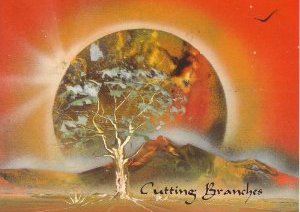
Cutting BranchesThe Jewish people have no monopoly on G-d and spirituality. In fact, Judaism’s core desire is that the world perceive G-d’s presence in their lives, and grow spiritually. What’s curious then is the wording of what is arguably Judaism’s most famous expression: “Shema Yisrael… Listen Israel, G-d is our Master, G-d is One (Deut 6:4).” If this eternal message relates to all mankind, why is it addressed only to Israel? Would not the One who created and sustains all mankind, by definition, be the Master of all?

-Rabbi Mordechai Dixler
“Note from the Director”
Torah Portion Vaeschanan
Director, Project Genesis
Torah.org

This is part of a brief commentary that Rabbi Dixler wrote for a newsletter to which I subscribe. Previously, I wrote a blog post called The Sons of Noah which asked how non-Jews can develop a relationship with God from a Jewish point of view. A day later, I answered that question from a Christian perspective with the blog article Children of God. Still, there’s more to the issue than I’ve chronicled so far. Although Judaism and Christianity have a common root, we have developed into religions that are light years apart.

For instance, when the Rebbe, Rabbi M.M. Schneerson characterizes the Noahide laws for the Gentiles, (as recorded in Rabbi Tzvi Freeman’s book, Bringing Heaven Down to Earth), he expresses the first Noahide commandment this way:

Acknowledge that there is only One G-d who is Infinite and Supreme above all things. Do not replace that Supreme Being with finite idols, be it yourself, or other beings. In this command is included such acts as prayer, study and meditation.

Look at the Rebbe’s wording. He warns not to replace the One Supreme God with “other beings” and applies it to acts of “prayer”. But in traditional Christianity, Jesus is God as much as God the Father is, and God the Holy Spirit. Also, how many Christians pray directly to Jesus as opposed to God the Father? It’s actually confusing who we should pray to:

And I will do whatever you ask in my name, so that the Father may be glorified in the Son. You may ask me for anything in my name, and I will do it. –John 14:13-14

The Rebbe (and Judaism in general) characterizes God as One, the Unique and completely self-contained One that cannot be subdivided into any smaller parts or units. God isn’t a molecule that is one thing made up of many smaller components, He is an indivisible, irreducible, complete wholeness. There’s no way to turn that into the concept of the Trinity from a Jew’s point of view.

I’m bringing all this up because there may be an assumption running around out there that Jews can accept Christians as “righteous Gentiles”; as Noahides…but the Christian imperative to view God as both one and as three makes that impossible. Rabbi Dixler ended his letter last week emphasizing this very point:

Rashi’s classic commentary solves the puzzle: G-d might appear to be the Master of only the Jewish people, those who received and accepted the Torah at Mt. Sinai. The nation of Israel got direct instructions on how to live from the Master Himself — “Israel, G-d is our Master.” However, “G-d is One” — we wish and hope for the day when every soul universally recognizes the Al-mighty’s intimate involvement with all, when the spirituality hidden beneath every surface becomes abundantly clear.

I didn’t feel like Rabbi Dixler or Rashi, as his commentary was presented here, really answered the question, so, since there was the option to ask the Rabbi questions on the Project Genesis site, I posed this one:

Thank you for your insightful message, but I must admit to not quite seeing how Rashi’s commentary, as presented in your letter, solves the puzzle. G-d did indeed give direct instructions to the nation of Israel on how to live, but I don’t see where the rest of humanity receives the information that G-d is One.

I’m aware of the Noahide Laws as recorded in Genesis 9, but they don’t resonate from Noah to the rest of the nations in the same sense as the unbroken chain of Torah does from Moses and Sinai to the Jews of today. There’s a unified link between G-d, Moses, and the Israelites who stood at Sinai that can be traced from 3500 years in the past all the way to the present-day Jewish people. When you say that “we wish and hope for the day when every soul universally recognizes the Al-mighty’s intimate involvement with all”, how do you believe this will happen? Will we only become aware of the “spirituality hidden beneath every surface” when the Messiah comes?

I received Rabbi Dixler’s prompt reply thus:

James, You make a great point. He did give instructions to the rest of the world, but not to the level He gave to the Jewish people. It would seem that the discrepancy would give the appearance of Him acting as Master over the Jews, while exhibiting less mastery over the non-Jews. The point of the message was to say that He has as much a desire to have that relationship with the non-Jews, if they reach the required level of recognition of Him. While Jews may not always act at that level of recognition, they are the descendants of the Patriarchs and Matriarchs which gives them an advantage.

The recognition of the non-Jews has been happening throughout history and it will certainly reach it’s zenith at the time of the Messiah. The spread of the belief in monotheism to most of the civilized world was likely the greatest manifestation of this that we’ve seen so far.

Rabbi Dixler stopped just short of referencing Christianity and Islam when he mentioned the “spread of the belief in monotheism”, but without those two non-Jewish religious traditions, there would be no awareness of ethical monotheism, as Jews understand the concept, among any non-Jewish people.

ForebodingThis leads me to my next question. If in the first century, non-Jews were brought to an awareness of Jewish monotheism through the life, death, and resurrection of the Jewish Jesus of Nazareth (and certainly most Jews would take exception to my wording here) and that word of this “Good News” was spread in the diaspora to the Greek and Roman speaking peoples of that time by the disciples of the Jewish Jesus, why didn’t the “Universal Message”, as Rabbi Dixler calls it in the title of his missive, start and continue right then and there? Why didn’t the Jewish and non-Jewish worshipers of the Jewish God (and remember that the original worshipers of Jesus were almost all Jews) remain united? Why did a journey that started out with so much promise and light enter into such darkness?

OK, I know what you’re thinking. Most people are aware of the history of the first three centuries of the church and how a variety of events resulted in an ever-widening gulf between the Jewish and Gentile worshipers of Jesus, until what was once a Jewish sect with Gentile members became two separate and fully independent religions. On his blog yesterday, Derek Leman commented about the change in perception of Christianity from the martyr Stephen in Acts 6, to the Justin Martyr, who actively rejected the law of Moses for anyone, Jew or Gentile, who was a disciple of Jesus (Justin Martyr, Dialogue With Trypho the Jew, ch. 11).

It has occurred to me more than once that for Gentiles to be able to experience a fully-realized relationship with God, we couldn’t do it as a part of Judaism. It’s probably the same reason why the landscape isn’t flooded with “synagogues” of mostly Gentile Noahides who fully embrace the Seven Laws as their core “Torah” and worship the God of Israel on that basis. Rabbi Dixler’s commentary seems to suggest that it should work this way, but he doesn’t operationalize it; that is, he doesn’t say how to make it work this way, particularly since Judaism has no mandate to “evangelize” to Gentiles. The only such mandate that I’m aware of was issued in Matthew 28:19-20 and the program it instituted, as least as administered by Jews, lived and died at the end of the first century. Gentile worshipers of the Jewish Jesus were only able to carve out their own identity as worshipers of the God of Abraham by separating themselves from Judaism altogether.

Today, Christians bristle at the thought that they could learn anything from the Jewish people (especially since Jews reject Jesus) and many still hold fast to supercessionism or the theological belief that the church has completely replaced the Jews in the covenant promises of God. The idea of Jews and Christians co-existing as God’s people, albeit at different levels of responsibility, is abhorrent to many Christians and Jews. Judaism has Moses as the lawgiver and Christianity has Jesus as the “law-taker-away”. As they exist in the minds of their followers, trying to make these two religions work and play well together is like trying to get the National Organization of Women to endorse Sarah Palin for President.

It’s not going to happen. In fact, here are three of the comments people made in response to Rabbi Dixler’s letter that punctuate my point:

I’m a Chab Jew and I have experienced the disdain of other Orthodox jews, some Chassidim. If we cannot be one how can we expect to have the goyim in the boat?

For your remarks. Perhaps no issue is so easily misunderstood as that of particularity or election. As a stranger come into the faith, I still, occasionally, wonder if I have crashed the party. during my morning prayers, for the longest time I changed one to “Thank you for making me a goi.” Even now, every time I recite the prayer, I think that God has remade me. This, however, does not stop the occasional flinch that perhaps I was dissatisfied with the state of my original creation and that I did God a disservice by converting to Judaism.

There is no way to get around the particularism of Judaism. We are “Am Segulah” the special precious possession of Hashem. We are meant to be a light unto the nations, but the nations themselves have no part in the Torah. Non-Jews who feel that they are spiritually close to the Jewish people must go the way of Yitro and Ruth and become part of Am Yisrael.

Without Christianity (and short of having all the Goyim convert to Judaism), there would have been no mechanism for non-Jews to come to faith and trust in the God of Abraham, Isaac, and Jacob. And yet, as a result of Christianity, an enormous wedge has been hammered between Jews and Christians.

Another thing. The Rebbe, when responding to a question about secular and religious Jews, said…

You categorize them as religious Jews and secular Jews! How dare you make such a distinction! There is no such thing as a secular Jew. All Jews are holy.

The Rebbe’s words seem almost an echo of Paul when he said “and so all Israel will be saved” (Romans 11:16). You may still choose to debate this conclusion, but there’s no way around the inexorable unity that joins all Jews, even those who passionately disagree with each other, together at an extremely fundamental, “DNA” level. The Rebbe put it this way:

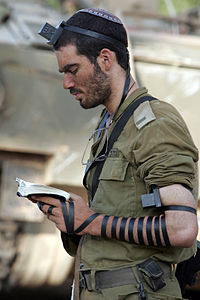
The Jewish people are one. A Jew putting on tefillin in America affects the safety of a Jewish soldier in Israel.

Soldier praying with TefillinI haven’t experienced this kind of unity within the church and doubt that even the most devout Christians can claim a bond with each other that is so complete as one Jew has for another. Is this what Sinai did? No one chooses to be a Jew unless you convert, but the vast majority of the world’s Jewish population were “born that way” (to quote a popular entertainer). No Christian is “born that way”, we all make the choice independently, even if we are born into Christian families.

Where did we go wrong? Why do we struggle between our two faiths when God is One? Rabbi Dixler tries to answer those commenting in his newsletter, and maybe even my own question, with these words:

An issue that has been raised by a few is that this message somehow dilutes the idea of the Chosen Nation and that the commandment to love is only towards others Jews. To be clear, the Jews were chosen by G-d to be the recipients of His Torah since they are the children of the the Patriarchs and Matriarchs – those who discovered G-d’s presence for themselves, devoted every ounce of their being to Him, and introduced the pagan world to what it means to have one G-d. At the same time, the mission of Jews that they’ve been chosen for is to spread the knowledge of G-d’s presence to all of humanity, by acting as a light to the nations. Built into this mission is the concern that all of humanity appreciate G-d and the spiritual relationship we have with Him.

Unfortunately, “all of humanity” appreciating God and the spiritual relationship the Jews have with Him has necessitated the separation of the Jews from those of us who were “first called Christians at Antioch” (Acts 11:26).

I had asked Rabbi Dixler if, in his opinion, the unity between the Jews and Gentiles under the One God would only happen when the Messiah comes (a second time, from the Christian viewpoint). He replied that while God has as much desire to have a relationship with non-Jews as he has with Jews, the recognition of God by non-Jews “will certainly reach it’s zenith at the time of the Messiah”. From Christianity’s vantage point, we already have that recognition through Jesus Christ. But it’s the Christian theology and dogma of 20 centuries that has been wrapped around the teachings of Christ and his early Jewish followers like a thick blanket that has both kept us warm in the love of God and isolated from the Jewishness of our Master.

Paul said in Romans 11 that Jewish branches were temporarily broken off the root to make room for Gentile branches but how long will it be until we can both be part of the root again? How long until the Jews and the Christians can share an awareness and a love for our common God and put aside 2,000 years of enmity?

How long?