Tag Archives: Torah

Devarim: At the Threshold of a Dream

Moshe recited the Book of Deuteronomy as the Jews stood on the banks on the Jordan, preparing to enter Eretz Yisrael. The crossing of the Jordan River was to be a spiritual as well as a geographic movement. During their journeys through the desert, the Jews depended on miraculous expressions of Divine favor: they ate manna, their water came from the Well of Miriam, and the Clouds of Glory preserved their garments. After entering Eretz Yisrael, however, the Jewish people were to live within the natural order, working the land and eating the fruits of their labor.

To make this transition possible, they required an approach to the Torah that would relate to man as he functions within his worldly environment. It was for this purpose that Moshe taught the Book of Deuteronomy.

Herein lies a connection to the present day, because we are also “on the banks of the Jordan” preparing to enter Eretz Yisrael together with Mashiach. It is through the approach emphasized by the Book of Deuteronomy fusing the word of G-d with mortal wisdom that we will merit the age when “the occupation of the entire world will be solely to know G-d,” the Era of the Redemption.

-Rabbi Eli Touger
“A Mortal Mouth Speaking G-d’s Word”
from the “In the Garden of the Torah” series
Commentary on Torah Portion Devarim

“I have to confess, I don’t really get it. If you believe in Jesus, you believe he is the King. The Lord. The Boss. Your Boss. There is no other option. It’s an integral part of his identity. The fact that some people have lost sight of that fact is evidence, to me, of how far we have come from a really Biblical idea of who Jesus is. We have forgotten that there is no such thing as a Jesus who is not our King, a Jesus we don’t have to obey.”

-Boaz Michael
Founder and President of First Fruits of Zion

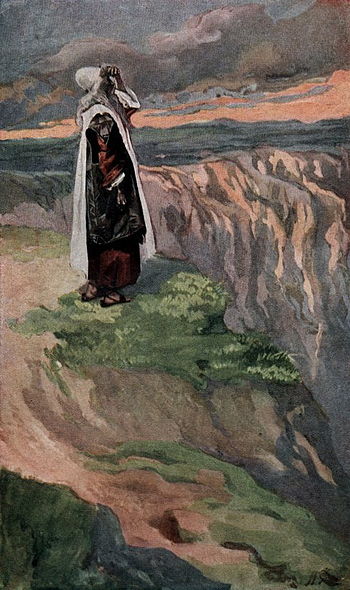
I sometimes wonder what it must have been like to stand there on the banks of the Jordan river, watching and listening to Moses, knowing that this was the last time he would speak to Israel, knowing that they were on the threshold of the fulfilled promises of God, knowing that Moses wouldn’t be part of that fulfillment.

It must have been an incredible thrill mixed with passionate anticipation and more than a tinge of bitter sorrow. How could Israel go into Canaan, take possession of The Land as God had ordained, and yet have God deny the man they had come to know as Prophet, tzaddik, and even father entrance with them? What would the realization of a dream mean if Moses wasn’t there in their midst?

From Moshe’s point of view, how difficult it must have been for him. For over forty years, he had guarded the Israelites. He had guarded them from hunger and thirst, from losing their way, both geographically and spiritually. He had guarded them from hostile kingdoms and armies and he had protected them from their own folly. He had watched the entire generation he brought out of Egypt die one by one in the desert, and he had watched their children grow up and become the people who replaced them; the people who would enter The Land.

But he wouldn’t be going with them. Who would protect them from their folly should they speak against God and God’s anger flare against them?
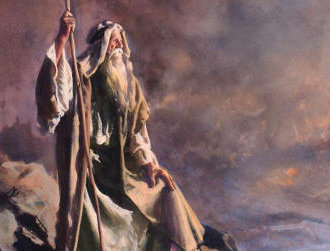
That’s what Deuteronomy is all about. Moshe’s last message to the Children of Israel before he was to die and they were to live and go forward. It was his last opportunity to speak out, to encourage them, to warn them, to beg them, to scream at them, “Don’t screw this up! I won’t be with you to save you anymore!”

The Chassidic sages have much to say about the last speech of Moses, trying to reconcile the words of God that came through the prophet in the first four books of Torah with the words of Moses that fill to the brim this last, fateful tome:

Our Sages note that the Book of Devarim differs from the first four Books of the Torah in that the latter are “from G-d’s mouth,” while Devarim is “from Moshe’s mouth.”

This does not — Heaven forfend — imply that the words in Mishneh Torah are not G-d’s. Rather, as Rashi explains: (Sanhedrin 56b.) “Moshe did not say Mishneh Torah to the Jews on his own, but as he would receive it from G-d he would repeat it to them.”

Since the words of Mishneh Torah too are not Moshe’s words but G-d’s, why are the first four Books of the Torah considered to be from “G-d’s mouth” while the Book of Devarim is considered to be from “Moshe’s mouth”; what difference is there between the first four Books and the fifth?

The inherent sanctity of Torah is such that it completely transcends this physical world; in order for it to descend within this world an intermediary is necessary — one who is both higher than this world yet within it. This intermediary bridges the gap between the sacred Torah and this corporeal world.

“Devarim”
from “The Chassidic Dimension” series
Commentary on Torah Portion Devarim
Based on Likkutei Sichos Vol. XIX, pp. 9-12
and on the teachings of the Lubavitcher Rebbe
Rabbi Menachem M. Schneerson
Chabad.org

I know. It’s difficult for me to comprehend as well. How can the first four books of Torah basically be from God as “dictated” to Moses and yet the fifth book be from Moshe’s own mouth and yet still be inspired by God?

I don’t know.

How can the letters of Paul be Paul’s own words, written in his “style,” expressing his own concerns, his own fears, his anger at the screw ups some of the churches were making, and still be the inspired word of God through the Holy Spirit?

It’s a mystery.

Can you have a rant and still have it be a “holy rant?”

I don’t know that either. But that’s what Deuteronomy is mostly about. The deep anguish and pain of a man who was about as close to God as any human being ever got expressed in his own words, through his own feelings and yet…

…and yet, God was still in all that somehow.

I don’t think I’m a prophet. Far from it. I’m just a guy with a blog. I sincerely doubt that there are any prophets in the world today that we could compare with Moses, Isaiah, and Jeremiah. Holy people, tzaddikim, sure, but no prophets. I don’t think there are “letter writers” (today, they’d all be emailers and bloggers) who have the special mission Paul had, to communicate to the churches in such a way that our words would become holy documents.

But we have our own words. As people of faith, we sometimes faintly hear the whispers of God. Most of the time, we have no idea what we’re hearing. It it our imagination? Is it just the wind? Is it only my feelings?

Paul wrote letters and, in all likelihood, he probably never had any idea that they’d become part of what we consider the Holy Scriptures. He was just doing his job, being the Messiah’s disciple, being the emissary to the Gentiles, trying to make it all work somehow, depending on the Spirit of God to get him through it all.

When Moses was standing there at the Jordan, did he realize that God would have him record everything he was saying later for the Torah? Did he think that it all ended with Numbers? After all, he knew he was to die soon. Maybe he thought the responsibility for recording God’s words was already past. How could he possibly imagine that God would have him record the moment of his own death and then what happened next?

I have no idea. I’m not theologian or historian. For all I know, Christian and Jewish scholars and authorities may have answered these questions ages ago.

Or not.

All I know…all I can tell for sure, is that both Moses and Paul were mere flesh and blood. Just like you and me. Moses had an unparalleled relationship with God. They spoke, for all intents and purposes, as if they were “face to face.” Paul saw a vision of the Master on the road to Damascus (Acts 9:1-6) and later was taken up into the third Heaven. His experience in the latter case goes something like this:

I know a man in Christ who fourteen years ago was caught up to the third heaven—whether in the body or out of the body I do not know, God knows. And I know that this man was caught up into paradise—whether in the body or out of the body I do not know, God knows – and he heard things that cannot be told, which man may not utter. –2 Corinthians 12:2-4 (ESV)

These were both men who led lives and had experiences probably none of us could even begin aspire to. And yet they were human beings, they got hungry and thirsty, they became angry and frustrated, they cried out to God.

Just like you and me.

So as Moses launched into his last, impassioned speech to the Israelites at the Jordan river, anticipating all that was to come and knowing that time was extremely short, God was somehow infused in this last book of Torah, and yet everything that was of Moses was there, too.

What does this teach us?

I can’t give you a definitive answer, I can only give you my answer.

I think it teaches us that a life of faith is a life of companionship. Some people think of time as a predator, stalking us all our lives, closing in on us as we get older and weaker, waiting for the moment to strike and make the kill. However, God shows us that time and a life spent in faith is a life of companionship. God goes with us on the journey and reminds us to cherish every moment, because it will never come again. What we leave behind is not as important as how we’ve lived. After all, we’re only mortal. (with apologies to Patrick Stewart and his alter ego Captain Picard as they appeared in Star Trek: Generations 1994)

Each morning when we wake up, we stand at the threshold of living out our dream. It’s not a dream of the house you’ve always wanted to live in, the clothes and the car you’ve always wanted to own, or the places you’ve always wanted to visit. It’s the dream of a day lived out with God as a companion. It’s the realization that we can be, and we indeed are, fully and completely ourselves, frail and mortal human beings, and yet we can still walk our path, step by step, with the lover of our souls. Moses walked this path until the day he died. So did Paul.

By the grace of God, so will we all. Like them, we will try to continually listen to His Voice and to obey His Words. But as we live out His Words, they will be expressed to the rest of the world through whatever we say and do. This is just like Moses in his farewell to Israel recorded in Deuteronomy. This is just like each of Paul’s letters to the various churches of the diaspora.

This is just like us every time we speak of our lives, our journey, our very existence at the side of our God. The words and the voice everyone hears are ours. But somehow, God is in them, too.

When the white eagle of the North is flying overhead
The browns, reds and golds of autumn lie in the gutter, dead.
Remember then, that summer birds with wings of fire flaying
Came to witness spring’s new hope, born of leaves decaying.
Just as new life will come from death, love will come at leisure.
Love of love, love of life and giving without measure
Gives in return a wondrous yearn of a promise almost seen.
Live hand-in-hand and together we’ll stand on the threshold of a dream.

-Graeme Edge
from the song “The Dream”
on the album On the Threshold of a Dream (1969)

Someday we will cross the threshold with our Master, our Messiah, and we will enter the final Shabbat rest in the Kingdom of Heaven. And the whole world will know God. The dream will become reality.

Good Shabbos.

Modesty

Ever wondered why the ark in your synagogue has two coverings – a door and a curtain?

The first mention of the concept of the curtain is found in the Talmud. Today this curtain is called the parochet (Heb. פרוכת).

The ark, known as the aron kodesh (Heb. ארון קודש), is considered one of the holiest components of the synagogue; the actual Torah scrolls which are kept inside the ark are the holiest.

In the Holy Temple in Jerusalem there was a curtain separating the “Holy” chamber and the “Holy of Holies” chamber. “And you shall place the table on the outer side of the dividing curtain…”

The curtain in the Temple was not used to separate the rooms; there was a stone wall for that. The curtain, explains Rabbi Shlomo Yitzchaki, known as Rashi, was a sign of modesty and respect for the Holy Ark which was kept in the Holy of Holies.

The same is true for the ark in the synagogue. The Torahs are wrapped in individual coverings, the ark has a door, and we add an extra curtain as a sign of modesty and respect for the holy scrolls.

-Rabbi Dovid Zaklikowski
“Why is There a Curtain Covering the Ark in my Synagogue?”
Chabad.org

What I quoted above might be just an interesting, educational tidbit except for the following:

And behold, the curtain of the temple was torn in two, from top to bottom. And the earth shook, and the rocks were split. The tombs also were opened. And many bodies of the saints who had fallen asleep were raised, and coming out of the tombs after his resurrection they went into the holy city and appeared to many. When the centurion and those who were with him, keeping watch over Jesus, saw the earthquake and what took place, they were filled with awe and said, “Truly this was the Son of God!” –Matthew 27:51-54 (ESV)

For he himself is our peace, who has made us both one and has broken down in his flesh the dividing wall of hostility by abolishing the law of commandments expressed in ordinances, that he might create in himself one new man in place of the two, so making peace, and might reconcile us both to God in one body through the cross, thereby killing the hostility. –Ephesians 2:14-16 (ESV)

I’m really not bright enough or at least not sufficiently educated in theological issues to really address this issue, but it came up while I was reading so I thought I’d blog about it anyway.

In truth, I doubt there’s a way to connect the small article by Rabbi Zaklikowski to the New Testament verses I’ve referenced, but if nothing else, I guess I can illustrate how differently Judaism and Christianity view the parochet. It’s also important to remember, before I proceed, that Rabbi Zaklikowski’s commentary is midrash rather than established fact, relative to the “modesty” of the Torah scrolls. With all that said, let’s continue.

From Christianity’s point of view, the parochet represents something of a problem. It is both what separates man from God and what separates Jew from Gentile (specifically Gentile Christian). It is commonly believed that when Jesus died, the splitting of the parochet, which separated the Holy place from the Holy of Holies, indicated that through Christ’s blood, there was no longer any separation between man and God. To put it in Christian vernacular, “man could now boldly approach the Throne of God” without the intermediary of the Levitical Priesthood.

The second symbolic representation of the parochet was the separation of Judaism, which for thousands of years was the sole keeper of ethical monotheism, the Torah, the Shabbat, and access to the God of Abraham, from the rest of humanity who were not inheritors of the covenant of Sinai. Through Jesus, the separation was torn down and now all men, not just the Jews, could approach God. There was no need to access God through Judaism and the Jewish priests. The distinctions between Jew and Gentile were torn away and everyone became “one new man” before God.

Well, that’s how the Christians see it.

But looking at the parochet from Rabbi Zaklikowski’s perspective, it isn’t an undesirable barrier at all but rather, a protector and a sign of significance and special Holiness. Putting a veil between man and the most Holy place indicates that it is indeed the most Holy place; something not to be treated casually or as something common or ordinary.

This provides, or rather confirms something for me (and remember, this is all symbolism and parable, not concrete fact or Biblical truth). It has often bothered me how Christianity seems to treat Holy things as common. Jesus is a “good buddy.” God Almighty, Creator of the Universe, vast, infinite, omnipresent, omnipotent God, is actually a cute, cuddly cosmic teddy bear and anyone can just crawl up onto His lap and squeeze Him, and hold onto His furry, little tummy. I’ve even heard some women say that they occasionally imagine falling asleep in bed while being held in Christ’s arms.

Wow, really?

I can understand being hurt and sad and broken and needing access to a comforter beyond what we have access to within humanity; someone who knows us, understands us, sympathizes with us, and yet, has access to the Throne of God and can intercede for us with the Almighty, asking for mercy, comfort, and grace.

Since then we have a great high priest who has passed through the heavens, Jesus, the Son of God, let us hold fast our confession. For we do not have a high priest who is unable to sympathize with our weaknesses, but one who in every respect has been tempted as we are, yet without sin. Let us then with confidence draw near to the throne of grace, that we may receive mercy and find grace to help in time of need. –Hebrews 4:14-16 (ESV)

On the other hand, in order to serve our own wants and needs, we have reduced the Jewish Messiah King and the One God of eternity, the great and awesome Ein Sof, down to mere shadows and objects of personal convenience.

We don’t want Jesus to be separated from us by anything so we make him our neighbor, our buddy, our “lover” (I say that in a non-sexual way), and our BFF.

That isn’t normally how a disciple treats his Master or how a subject considers her King.

Maybe it wouldn’t hurt to put the parochet back up at some point so we can preserve our sense of respect and honor of God as is His due, and to show glory and majesty to the King who came once and who will come again in power.

But what about the separation between Christian and Jew? How will putting parochet back up affect the “one new man?”

I’ve discussed that subject, from one point of view or another, for the past several years. What is the Christian responsibility to the Jew in terms of encouraging Jewish Torah observance, supporting the restoration of national Israel and her redemption, and thus summoning the great and terrible day of the Lord’s return?

In order to have a role in that, there must be some sort of distinction between Christian and Jew, especially if Gentile Torah observance isn’t what’s required to initiate Israel’s national redemption and everything that will follow. To tear down the parochet, removes the mechanism by which the Messiah will return. How can we do that?

Then what am I saying? Am I dismissing scripture? Am I discounting the Gospel of Matthew and the letter of Paul to the Ephesians? Not at all. I am saying that these events may not mean what we’ve been taught they mean. They are two, isolated text strings that have been used as part of a long pattern of the church’s supersessionist theology but which, on an actual lived and spiritual level, may represent something other than what we imagine.

After all, when the parochet in the Temple was torn, do we think that it was never repaired, and remained rent until the final destruction of the Temple and the razing of Jerusalem decades later? And was Paul’s metaphorical language meant to literally mean the Temple’s parochet, or was something else removed, the hostility, which may simply have been the attitudes between Jew and non-Jew which we see Peter overcoming in Acts 10?

I can’t say for sure. Perhaps New Testament scholars have their own theories. All I’m suggesting is that we might want to treat God with a tad bit more awe and reverence than what we are accustomed to, and we might want to consider that the Christian role in redeeming Israel may require removing the barriers of ethnic and religious “hostility,” without removing ethnic and religious distinctions, so that we can work in complementary fashion to perform Tikkun Olam, to repair our broken world, and to make it ready for what God has planned to happen next.

Just a few thoughts to ponder on today’s “morning meditation.”


Mattot-Massei: Free At Last

The Torah portion of Masei informs us of G-d’s directive that 48 cities be given to the Levites as dwellings places. Among these cities were three Cities of Refuge located on the other side of the Jordan River.

In the previous section of Matos, we read how Moshe was extremely displeased when the tribes of Gad and Reuven asked to receive their portion of the land on the other side of the Jordan. His displeasure stemmed from the fact that it was inappropriate to desire a permanent place of residence outside Eretz Yisrael proper. (Bamidbar 31:6-15.)

This being so, why did G-d command that the Levites be given the three Cities of Refuge on the other side of the Jordan? And while it’s true that it was vital that Cities of Refuge be established on both sides of the Jordan, (See Sifri, Bamidbar 35:14; Makkos 9b.) this in itself is not sufficient reason to make these “extra-territorial” cities permanent dwelling places for the Levites.

Yes, we could point out that the verse states: (Bamidbar 35:2.) “Command the Children of Israel that they give the Levites residential cities from their hereditary holdings.” Thus, these cities were not given as an inheritance from G-d, but because of an obligation placed upon the Jewish people to give a portion of their inheritance to the priestly tribe.

But this answer is not entirely satisfactory. Knowing as they did that the main dwelling place of the Jewish people was in Eretz Yisrael proper, why should any Levites want to live on the other side of the Jordan?

In the…Torah portion of Matos, we find that Moshe gave half the tribe of Menashe a portion on the other side of the Jordan. (Bamidbar 32:33.) Our Sages point out (Yerushalmi, Bikkurim.) that they did not ask for this land; Moshe presented it to them on his own.

“Levitical Cities”
Based on Likkutei Sichos Vol. XXVIII, pp. 213-218
and the teachings of the Lubavitcher Rebbe
Rabbi Menachem M. Schneerson
from the Chassidic Dimension series
Commentary on Torah Portion MattotMassei
Chabad.org

What I’m about to say isn’t going to be terribly popular with some people. Israel is never a very popular topic with some folks, especially those who hold to a particular social and political viewpoint. Of course, basing any opinion of current events upon what is written in the Bible is never acceptable to more “rational” human beings who believe that public opinion always trumps the will of (from their point of view) a non-existent God.

But look at what has been written and where we find it in this week’s double Torah portion. Not only did Moses agree to let the tribes of Gad, Reuben, and the half-tribe of Manasseh settle east of the Jordan, outside the boundaries of Canaan, but it was commanded that three of the Levitical cities would also be outside “the Land.”

But these events occurred in ancient times, so what possible impact could they have on the boundaries and borders of the modern state of Israel in the 21st century, especially if you believe the “original” boundaries were fictional or at best, part of an act fo conquest committed by the Israelites of old?

Maybe nothing. But then again, maybe everything. Continuing with the commentary:

He did so because the first entry of the Jewish people into Israel is connected to their final entry through Moshiach, and Moshe is considered “both the first and the final redeemer.” (See Shmos Rabbah 2:6; Devarim Rabbah conclusion of ch. 9; Zohar, Vol. I, p. 253a; Torah Or, Mishpatim, p. 75b.) This being so, his giving this portion to Menashe served to foreshadow the future redemption, at which time the boundaries of Eretz Yisrael will be broadened to include the other side of the Jordan as well.

We thus see that taking a portion on the other side of the Jordan can be an entirely positive act, since it hinted at the borders of Eretz Yisrael in times to come.

OK, this is midrash and mysticism thrown in with what we read in the Torah, but if it’s true; if all this occurs upon the Messiah’s return, then Israel, a very “problem nation” for much of the world, will be a great deal larger in Messianic days then it is right now (and most of the world would prefer it if Israel were a good deal smaller, even to the point of non-existence and extinction).

If you don’t believe in God, the Messiah, religious Judaism, and (arguably) Christianity, you have nothing to worry about. All this is just smoke and mirrors. Even many religious and secular Jews today argue about what the borders of modern Israel should be like or even if Israel should currently exist.

And yet, the world seems to be fighting extra hard against Israel, more than it fights against any other nation. Why?

The wounded victims of Wednesday’s suicide terrorist attack at a Bulgarian airport have arrived home in Israel, with 32 of the wounded victims touching down in an IAF Hercules military transport aircraft at Ben-Gurion International Airport. Among them was Israeli Nurit Harush, photographed by Reuters as she was pushed in a stretcher by medics after her arrival.

Three others who were critically injured have remained in a hospital in Sofia, but will later be flown to Israel.

-Chana Ya’ar
“Israeli Terror Victims Arrive Home from Bulgaria”
First published 7/19/2012 – 1:12 p.m.
IsraelNationalNews.com

The latest act of terrorism against Israel and against Jews.

This is hardly an isolated incident, but because it was so public and so dramatic, the non-Israeli news agencies have been giving it a great deal of space on their webpages and on their airwaves along with Israeli news sources.

One explanation for why Jews are regularly attacked, injured, and murdered, and why Israel as a nation is somehow blamed for this just because it exists in the world, is the historic enmity between the Arab and Jewish people, or between the Muslim and Jewish people. Popular public opinion cites the “fact” that Israel is an “apartheid state” (in spite of the fact that there are Arab Palestinian MKs in the Israeli Knesset) and is “occupying” lands that are “Palestinian” as the root to the actions of these oppressed “freedom fighters” as the reason for these acts of violence (and many of Israel’s critics refuse to call this “terrorism”). And don’t forget that historically, people all over the world have fought against and even murdered Jews just because they were Jews.

But imagine.

Imagine that God is real and the national redemption of Israel in an absolute physical sense is going to occur. It’s just a matter of time. Imagine you are a Jew and you live in Israel and this is what you believe. And it’s no secret that you believe this. It’s no secret that you know God will accomplish this when Moshiach comes.

If you don’t believe in God or at least, you don’t believe in the God of the Jews, that probably sounds pretty arrogant. Even if you think it’s total fantasy, you might be concerned that the Jewish nation will try to expand its borders to ultimately match what they think they should be according to God. That would eat up all of so-called “Palestine” and a significant chunk of the modern nation of Jordan (which modern Jewish Israel does not claim as far as I know).

If you have enough of a social, political, national, or racial interest in all of this, you might get pretty angry. So angry that you light up the Internet with your rage. And a few folks out there might be a good deal more angry.

Angry enough to blow themselves up and to take as many Jews with them as they can.

Even if you believe in the prophesies in the Jewish Bible, we could still argue all day long about whether or not Israel should pursue national expansion now or wait until the coming of the Messiah. It would be a useless argument because, like so many other debates on the web, it would go exactly nowhere. A lot of people would get worked up and nothing; absolutely nothing would be accomplished.

So where do we go from here? People are dying. I call it “terrorism.” I’m sure you’ll be glad to tell me what you call it.

I don’t believe it’s a coincidence that this act of terror happened during what is called Bein Hametzarim, the three weeks between the fast of the Seventeenth of Tammuz and the fast of Tishah B’Av, which commemorates the occurrence of many Jewish tragedies, not the least of which are the destruction of the first and second Temples in Holy Jerusalem.

Parshas Matos is always read during Bein HaMetzarim the three weeks between the fast of the Seventeenth of Tammuz and the fast of Tishah BeAv (the Ninth of Av), which are associated with the destruction of Jerusalem and the Beis HaMikdash. This recalls the negative qualities of a staff’s firmness, the severed connection to the source of vitality.

On the other hand, this period is also connected with our people’s hopes of Redemption. Indeed, Tishah BeAv, the anniversary of the destruction of the Beis HaMikdash is described as “the birthday of Mashiach” a day which generates a new impetus for the coming of the Redemption. Herein lies a connection to a staff’s positive quality of firmness, because: a) in the Era of the Redemption, our people will reap the fruit of their determined resolution to carry out G-d’s will despite the challenges of Exile; and b) it is in the Era of the Redemption that G-d’s essence, the ultimate source of strength, will become manifest in our world, His dwelling.

-Rabbi Eli Touger
“True Strength”
from the “In the Garden of Torah” series
Commentary on Torah Portion Mattot
Chabad.org

Perhaps even during this time of double mourning, there is a ray of hope.

In every hardship, search for the spark of good and cling to it. The greater the hardship, the more wondrous the good it bears.

If you cannot find that spark, rejoice that wonder beyond your comprehension has befallen you.

Once you have unveiled and liberated the spark of good, it will rise to overcome its guise of darkness. It may perhaps even transform the darkness fully to light.

-Rabbi Tzvi Freeman
“Unveiling the Spark”
Based on letters and talks of the Rebbe
Rabbi M. M. Schneerson
Chabad.org

I know that there’s a lot of sadness and anger going on and redeeming “hidden sparks” is probably far from most people’s minds at the moment. All they can do is live inside the pain and sorrow and grief. It’s not yet time to start looking for the sparks, gathering them, and sending them back to their source in Heaven.

But the day will come when the sparks will fly free. The day will come when he will come; Messiah, Son of David, and he will liberate his people Israel and place his nation as the head of nations. And his people will be safe. And grief will be only in the past at last…at long last.

…but they shall sit every man under his vine and under his fig tree,
and no one shall make them afraid,
for the mouth of the Lord of hosts has spoken.

Micah 4:4 (ESV)

He will wipe away every tear from their eyes, and death shall be no more, neither shall there be mourning, nor crying, nor pain anymore, for the former things have passed away.

Revelation 21:4 (ESV)

When we let freedom ring, when we let it ring from every tenement and every hamlet, from every state and every city, we will be able to speed up that day when all of God’s children, black men and white men, Jews and Gentiles, Protestants and Catholics, will be able to join hands and sing in the words of the old spiritual, “Free at last, free at last. Thank God Almighty, we are free at last.”

-Dr. Martin Luther King, Jr.
“I Have a Dream” speech, August 28, 1963

Good Shabbos.


Pinchas: Is It Too Much To Ask For Both?

The Torah portion of Pinchas begins with G-d saying to Moshe: (Bamidbar 25:11-12.) “Pinchas… has turned My wrath away from the Jewish people by displaying anger among them on My behalf.”

Pinchas’ conduct involved self-sacrifice, for his deed aroused the wrath of the tribe of Shimon, whose members sought to kill him. (See Sifri and Tanchuma, end of Parshas Balak; Sanhedrin 82b.)

After the Torah concludes the tale of Pinchas, it speaks about the division of Eretz Yisrael and the appointment of Yehoshua to lead the Jewish people into the Promised Land. The portion concludes with a section on offerings, a number of which could be brought only when the Jews were in Eretz Yisrael. (See Menachos 45b; Zevachim 111a.)

Since all the above is part of the portion titled Pinchas, it follows that the entrance to Eretz Yisrael and all related matters are somehow connected to the spiritual service of Pinchas.

What is the connection?

Our Rabbis tell us (Nedarim 22b. See also Shmos Rabbah, beginning of ch. 32.) that, were it not for the iniquities of the Jews, their first entry into Eretz Yisrael would have triggered the Redemption. Although this did not actually take place, in some respects the first entry resembled the future Redemption.

This similarity helps us understand the relationship between Pinchas and the entry into Eretz Yisrael, for our Sages state: (Targum Yonasan, Va’eira 6:18; Zohar, Vol. II, p. 190a; Pirkei d’Rebbe Eliezer, ch. 47; Yalkut Shimoni, beginning of Pinchas.) “Pinchas is Eliyahu,” and Eliyahu is the one who will bring the tidings of Redemption.

-Rabbi Sholom B. Wineberg
“Pinchas”
The Chassidic Dimension
Commentary on Torah Portion Pinchas
Based on the teachings of the Lubavitcher Rebbe
Rabbi Menachem M. Schneerson
Chabad.org

You can click the link I provided above to read the full “Chassidic Dimension” commentary (and remember, this is midrash, not concrete fact, so I make no claim as to how or if it can be applied to a specific understanding of the Biblical text), but what Rabbi Wineberg wrote reminded me of something else I recently read.

“If both Judaism and Christianity are correct in their definitions of redemption, then Jesus must do both what Judaism is expecting the Messiah to do, and what Christians expect him to do. This means that Jesus will do more than come back and save those who believe in him from sin and death. He will also re-gather his people Israel from exile and restore them to their land in a state of blessing and peace (Isaiah 35, 48:12-22, 52:1-12; Jeremiah 31).”

-Boaz Michael

I suspect that Boaz is sending out some “teasers” from First Fruits of Zion’s next project and if so, then it’s something I’ve been looking forward to since my last face-to-face conversation with him.

Both Rabbi Wineberg and Boaz talk about Israel’s redemption, but what does that mean? What is redemption within the Jewish religious context? We have a pretty good idea from Boaz’s statement above, but here’s a little bit more.

The mashiach will bring about the political and spiritual redemption of the Jewish people by bringing us back to Israel and restoring Jerusalem (Isaiah 11:11-12; Jeremiah 23:8; 30:3; Hosea 3:4-5). He will establish a government in Israel that will be the center of all world government, both for Jews and gentiles (Isaiah 2:2-4; 11:10; 42:1). He will rebuild the Temple and re-establish its worship (Jeremiah 33:18). He will restore the religious court system of Israel and establish Jewish law as the law of the land (Jeremiah 33:15).

Judaism 101

Wikipedia has a more condensed explanation:

In Judaism, (Hebrew ge’ulah), redemption refers to God redeeming the people of Israel from their various exiles. This includes the final redemption from the present exile. In Hasidic philosophy parallels are drawn between the redemption from exile and the personal redemption achieved when a person refines his character traits.

I’ll assume that most of my audience has a basic working knowledge of what Christians mean when they refer to redemption, but once again, I’ll invoke Wikipedia in order to offer a brief definition:

In Christian theology redemption is an element of salvation that broadly means the deliverance from sin. Leon Morris says that “Paul uses the concept of redemption primarily to speak of the saving significance of the death of Christ.” The English word redemption means ‘repurchase’ or ‘buy back’, and in the Old Testament referred to the ransom of slaves (Exodus 21:8). In the New Testament the redemption word group is used to refer both to deliverance from sin and freedom from captivity. Theologically, redemption is a metaphor for what is achieved through the Atonement. Therefore there is a metaphorical sense in which the death of Jesus pays the price of a ransom, releasing Christians from bondage to sin and death. Most evangelical theologians and Protestant denominations, however, reject the idea of Origen who held that redemption means that in the atonement God paid Satan with the death of Jesus.

Rabbi Wineberg is obviously addressing the Jewish and specifically the Chassidic viewpoint, while Boaz is saying that the Messiah will bring about both “redemptions” since they both are presupposed by the Biblical text. But how does this work or indeed, does it work at all?

One person commented critically about this on Facebook:

Sounds like Messianic theology to me please both groups so that every ome [sic] get to go! Makings all that Israel went though worth NOTHING. But this will please the people so tell them what makes them happy.

This isn’t the first time Boaz and FFOZ have been accused of playing both sides against the middle, but is that what they’re doing here? It would be impossible to tell based on a single quote, so let’s try another one from Boaz.

“I have to confess, I don’t really get it. If you believe in Jesus, you believe he is the King. The Lord. The Boss. Your Boss. There is no other option. It’s an integral part of his identity. The fact that some people have lost sight of that fact is evidence, to me, of how far we have come from a really Biblical idea of who Jesus is. We have forgotten that there is no such thing as a Jesus who is not our King, a Jesus we don’t have to obey.”

That one is also bound to draw some fire since the Messianic movement in all of its flavors has been rather “Torah-centric,” often at the expense of the Jewish Messiah. A lot of Christians who have been dissatisfied with the church have abandoned it in favor of the Torah and probably without meaning to, have fused the Torah and Jesus (Yeshua) into a single unit, as if they were interchangeable components; cosmic spark plugs, so to speak. Torah equals Messiah and Messiah equals Torah and pretty soon we forget that the Messiah was and is the living example of what a Torah lifestyle looks like (at least in the late second Temple period) and that he also has a life of his own, and a very critical life at that.

I actually started talking about this topic right after I returned home from the FFOZ 2012 Shavuot Conference. Blog posts “Redeeming the Heart of Israel,” Part 1 and Part 2 discuss the interactivity between Christianity and Judaism in bringing about national Jewish redemption.

Initially, I was very keen on this concept, since the mission of the church as presented in this paradigm, is to bring about Israel’s redemption by encouraging Jewish Torah observance, and this is something that is very dear to me on a personal level. But then, as I thought about it, I wondered where we could look in the Bible to support this viewpoint. Christianity is (and in this case, rightly so) a tad suspicious of Jewish religious pronouncements that seem to be disconnected from the Bible or which have a source largely based on Rabbinic midrash. If you can’t point to where in the Bible we can find Israel’s redemption linked to Torah obedience and to personal salvation all as the work of the Messiah, how real can it be? Can we successfully bridge Jewish and Christian conceptualizations of redemption so that we can envision all of this as what the Jewish King will accomplish upon his return?

I find this to be a compelling direction to investigate, but I suspect FFOZ has its work cut out for it, not just in performing the necessary scholarly research and constructing a book that is accessible to a mass audience made up of a broad spectrum of Jewish and Christian theologies, but in convincing that audience that the powers of the Messiah are indeed sufficiently vast as to encompass such a redemption.

I just finished a conversation on Facebook unrelated to this one, where the fellow and I were discussing the difficulties involved in truly seeing a situation from another person’s paradigm. We all almost exclusively tend to see the world from our own limited perspective. If you’re an evangelical Christian for example, your worldview is colored by that lived experience. The same is true if you are an Orthodox Jew, a Sunni Muslim, a Catholic priest, a liberal, progressive Democrat, or just about anybody else.

Although we like to believe so, Messianic Judaism doesn’t successfully meld Judaism and Christianity. Both are extremely different perspectives as we understand them currently and also historically. So saying something like, “If both Judaism and Christianity are correct in their definitions of redemption, then Jesus must do both what Judaism is expecting the Messiah to do, and what Christians expect him to do,” seems as if you are talking out of both sides of your mouth. Maybe both things can be true, but how can you see and understand the Messiah from the perspectives of both Christian and Jewish redemptive imperatives simultaneously?

It isn’t easy.

Rabbi Wineberg states:

The novel aspect of the future Redemption lies in the fact that at that time, G-dliness will be fully revealed. (Tanya ch. 37.) Nowadays, G-dliness is clothed in the material world, and manifest only in a contracted manner. In times to come, however, a greater level of Divine illumination will be found within this world — a level not subject to contraction or limitation.

On the Facebook thread discussing this topic, Pastor Bill Beyer replied:

Theology is not about making people happy. It’s about finding the truth. To say that Yeshua can only do one OR the other is limiting the power of the Messiah. Truth be told, scripture says he’s going to do even more than these two things.

The only limiting factor imposed on the Messiah is us. We place constraints on his power and what he will accomplish based on our viewpoints, doctrines, dogmas, and desires. Christians have been told that redemption means only personal redemption for believers. Jews have been told that redemption means only the national redemption of Israel and the ingathering of the exiles. To quote Tony Stark (played by Robert Downey, Jr.) from the first Iron Man (2008) film, “I say, is it too much to ask for both?”

I suspect the answer is right around the corner.

Good Shabbos.

Opting Out of Yiddishkeit?

On today’s daf we find halachos that apply to converts.

Converting is a huge sacrifice, which God values greatly—and so should we. But as is well known there is a halachah that a non-Jew who converted as a minor can recant his decision upon reaching majority. In that case, he reverts to being a non-Jew. How sad that he lost out on such a special distinction due to some passing whim!

There was a case where a family converted together; mother, father and children. When one son heard that he was allowed to opt out of Yiddishkeit, he honestly said that he wanted to let go of his conversion. “If I am obligated to be a Jew that is one thing, since God wants me to fulfill the mitzvos. But if I am able to be a non-Jew, why should I take on the obligation to do all the mitzvos? How can I know that I will fulfill them as I should? Isn’t it better for me to go the easier but more sure way?”

But when he expressed this wish, the dayan he spoke to wasn’t sure what to do. “I am not sure whether when an entire family converts one who was a minor at the time can opt out. This is a machlokes Rishonim and I am not certain how we rule.”

When this question reached the Chasam Sofer, zt”l, he ruled decisively. “We hold like the Rishonim who rule that a convert whose entire family converted with him cannot opt out of his Jewishness.”

Daf Yomi Digest
Stories Off the Daf
“The Convert’s Choice”
Niddah 49

I’ve been thinking a lot about religious observance recently. Actually, I’ve been thinking about it for a long time and wondering if I’d ever get up the nerve to actually blog about it.

So here goes.

It’s fairly common knowledge within the Messianic Jewish and Hebrew Roots communities that the status of non-Jews and their possible obligation to Jewish religious observance is a matter of some concern. Mark Kinzer’s book Postmissionary Messianic Judaism: Redefining Christian Engagement with the Jewish People is something of a blueprint of one end of the spectrum of Messianic Judaism that advocates for parallel but wholly separate conduits of Jews occupying Messianic Judaism and Gentiles occupying traditional Christianity. In theory, both groups relate to One God and to Jesus (Yeshua) as the Jewish Messiah, but their recommended approaches to religious practice are totally different, and the two groups rarely if ever, interact.

On the other side of the spectrum is the One Law group which states that there are no distinctions or differences between Jews and non-Jews in the Messianic movement. Except for a matter of DNA, Jews are no different from Gentiles in their obligation to the 613 commandments that define the modern understanding of the Torah. This brings up the uncomfortable reality that all Christians everywhere have the same obligation to the Torah, whether they realize it or not. The One Law position must come to the conclusion (though I’ve never heard them state it as such) that the vast majority of the Christian church is continually in sin because they don’t refrain from eating trief and work and play on Saturday.

The educational ministry First Fruits of Zion (FFOZ) has proposed a sort of “middle ground” in this arena with the idea of something called “divine invitation.” FFOZ has produced a number of books and other, similar materials presenting information from Jewish literary sources suggesting that historically, Gentiles were not always completely forbidden from certain Jewish observances. I won’t attempt to list the details here since they are too numerous, but the basic idea is that, while non-Jews are not obligated to fulfill the Torah mitzvot in the manner of Jews, they are, in many cases, permitted to do so.

This would no doubt fly in the face of more traditional Jewish viewpoints and certainly Orthodox Judaism would be in almost complete disagreement. Nevertheless, within the Messianic context, you will find many non-Jewish people voluntarily taking on board some of the Torah mitzvot as they feel led to do so, but with the understanding that refraining from any of the mitzvot does not constitute a sin on the part of a non-Jewish Christian.

Divine invitation is an opportunity for non-Jews in the movement who have become accustomed to keeping certain of the mitzvot to continue to do so without necessarily crossing the distinction barrier between Gentile and Jew and thus preserving Jewish distinction in Messianic Judaism.

But there’s a flip side to the coin. Divine invitation allows non-Jews in the movement or at least associated with the movement to not observe the mitzvot…at all…ever.

It’s been well over a month since I attended FFOZ’s Shavuot conference at Beth Immanuel Sabbath Fellowship in Hudson, Wisconsin. For several days, I was allowed to worship in what seemed to be the ideal Messianic Jewish religious environment. The Gentiles still outnumbered the Jews by quite a bit, but the model for worship was definitely that of the synagogue, though great accommodations were made for non-Hebrew speakers and readers.

There were a lot of non-Jews worshiping in the Jewish manner, though in that environment, they were not obligated to do so. We non-Jews were not obligated to eat the fine kosher food that was provided. We were not obligated to daven shacharit. We were not obligated to don tzitzit. And yet most of the non-Jewish worshipers did so and no one seemed to mind.

But what if we didn’t? I mean, if we’re not obligated and let’s say, we don’t feel led, so what if we didn’t worship in even a remotely Jewish manner? I suppose nothing bad would happen. But is there an expectation that even if we don’t have to keep the mitzvot, that we should, particularly if we are choosing to worship with Jews who are worshiping God as Jews in a (Messianic) Jewish synagogue?

It would be an interesting experiment in that environment to have a non-Jew observe absolutely none of the mitzvot, just to see what it would be like to decline a “divine invitation.” I suppose it would be like going to your high school senior prom and then continually refusing invitations to dance. What would be the point?

The point I suppose, is that the “prom” is where you feel you belong, where your friends and maybe your family are, and yet you feel you aren’t called to dance their dance because you believe you don’t really belong to that group of dancers.

OK, it’s a crummy metaphor, but you get the idea.

Of course, most of the time, I don’t worship with anybody. In fact, I don’t worship in a community at all. This avoids the whole problem of how I should worship, identity confusion, and the whole shooting match, but there’s a problem. I live with Jewish people. Do I do what they do?

Well, sort of.

Here’s the scary part.

The Jewish people I live with aren’t particularly observant.

There, I said it.

It’s true. At this point, my wife and daughter don’t even light the candles on Erev Shabbat. For a long time, I was the only one doing it, but it seemed absurd that I continue since I’m the only non-Jew in the house and a male and I’m the one lighting the candles. I kept asking my wife on Friday as sundown approached, “Do you want to light the Shabbos candles?” Her response was always something like, “You can if you want to.”

Like I said, it got kind of absurd. No one seemed to care if I lit the candles or not. So I stopped.

My wife hasn’t gone so far as to serve up pork chops for dinner and in fact, she’s rather studious about making sure we all continue to eat “kosher style” (see Leviticus 11), but our kitchen isn’t kosher and, strictly speaking, my wife doesn’t understand why I don’t choose to eat trief, since the kosher obligation doesn’t apply to me.

We also (gasp) work on the Shabbat. This part really bothers me, but there’s not a lot I can do about it. My daughter’s and my wife’s employers require that they work highly variable hours including the weekends, and they often work late Friday nights and on Saturday. The missus has made no bones about saying she would like me to keep my writing and editing schedules up on the weekends, though I’m able to refrain from household chores on Shabbos for the most part, deferring them to Sunday. I can’t remember the last time she went to shul, except perhaps to cook for some special occasions.

Yes, I do know that my Jewish family members are obligated to the Torah, though none of them are observant at the moment.

I suppose that makes me a bad husband and father for not compelling them to do so.

But I can’t really compel them to do anything. I have tried being supportive, but my children are all of adult age and my wife is of course, my wife, so she takes responsibility for her Jewishness and again, it seems rather absurd for a non-Jew and particularly a Christian to be telling her the business of being Jewish.

So having tried that and seeing that it didn’t work out so well, I stopped.

(I suppose at this point I should add that my wife subscribes to and reads the same (more or less) Chabad.org newsletters and tutorials that I do, which means her “morning meditations” are substantially similar to my own. I should also say that she anticipates leaving her current “slave job” at some point in the reasonably near but not clearly defined future, so what she does with her “free” Sabbaths after that is up in the air…but I can hope.)

The whole “divine invitation” and Christian identity thing means that I am not obligated to a Jewish lifestyle. I’m sure most Jews out there are relieved to hear that I’m not living like a Jew. But depending on your view of Jewishness and Jewish obligations to God, some of you may be distressed that my Jewish family members are not observant. Heck, there are members of the local Reform shul who are more observant than my family.

I can imagine that many Jews would blame me for all of this. After all, my wife and I are intermarried. Intermarriage is usually seen as the gateway for a Jew to leave Judaism and assimilate into Gentile secular culture or even into Christianity. While I can assure you that my wife has no attraction to Christianity on any level and I don’t believe she has become secularized, she doesn’t display a strong religious Jewish lifestyle.

More’s the pity.

(I’ll add here that my wife does keep up on events at the local synagogues and does have definite opinions about people at the Reform shul with a “questionable” Jewish background positioning themselves to lead services and teach [and that would never happen at the Chabad]. She’s “OK” with non-Jews and even Christians attending synagogue as long as they don’t talk about their faith, but she draws the line at “Messianics” or those who were formerly associated with the movement assuming any formal synagogue role.)

I have been trying to encourage my son David to return to the synagogue. His wife has recently rekindled her interest in attending church but I don’t think David would go with her on a regular basis. His basic internal template for religion is still Jewish and he remembers fondly some of his “debates” with the local Reform Rabbi. Actually, just last Sunday, my wife said she’d love it is David would visit the Chabad here in town, so she has her hopes as well.

The “religious identity” of my family continues to be in flux. I’m not even sure how much more my wife can tolerate my Christianity, so where I’ll end up in the months and years ahead is uncertain. I’d like my Jewish family to return to Judaism as an observant lifestyle. I hope they don’t see me as a barrier. I’m really anything but. In fact, in a recent conversation about conversion with my wife, (hence the quote at the beginning of this “meditation”) she said it would be ridiculous for a Gentile to try to convert to Judaism in Boise, (although a good friend of hers converted within the past year) since the convert wouldn’t have a strong Jewish community in which to live. So I don’t think my wife wants me to be “Torah observant” in any way, shape, or form. But what about her?

It would seem that for the sake of peace in the home, I must decline my “invitation,” and as a Christian, I would not only make a poor model of Jewish observance for my Jewish family, but I would actually be an annoyance if I tried. Thus, I cannot encourage them by my example since my example would be completely unwelcome.

I suppose if I were a Jewish husband and father, it might be different, but that’s not an option. Maybe the fears of Judaism are authentic fears and intermarriage is the path to slow death for the Jewish people. Even though it is not my intent, I certainly seem to be killing the Judaism in my home.

Across the long span of history, an untold number of Jews have suffered and died to preserve who they are as Jews. Given that realization, I wish I understood what was going on in my own home. But then, in this particular case, I don’t have a say. I only have to wait and pray that God, who has never abandoned His people Israel before, won’t abandon those who live in my household now.

My wife and children are Jewish. I want and even need them to live like Jews. May the God of mercy grant this for them and for the sake of Israel.

Balak: The Good, The Bad, and The Gay

In some years, Parshas Balak is read together with Parshas Chukas. For it is the selfless commitment implied by the name Chukas which makes possible the transformation of evil into good. When a person fans the spark of G-dliness in his soul and expresses it through unbounded devotion to the Torah, he influences his environment, negating undesirable influences and transforming them into good.

And as this pattern spreads throughout the world, we draw closer to the fulfillment of the prophecies mentioned in this week’s Torah reading: (Numbers 24:17, cited by Rashi, Rambam, and others as a reference to Mashiach.) “A star shall emerge from Yaakov, and a staff shall arise in Israel, crushing all of Moab’s princes, and dominating all of Seth’s descendants.”

-Rabbi Eli Touger
“Remembering What Should Be Forgotten”
In the Garden of the Torah series
Commentary on Torah Portion Balak
Chabad.org

Just to let you know, I’m probably going to break every rule that was ever made about writing a commentary on a Torah Portion. In fact, it will probably seem like I’m stretching credibility beyond all reasonable limits. So if you want to take exception for the content of today’s “morning meditation,” you’ll have to look elsewhere. Oh, and today’s “meditation” is really long. Sorry. Just worked out like that. Remember, you have been warned.

In reading Rabbi Touger’s statements which I quoted above, I was captured by phrase, “negating undesirable influences and transforming them into good.” On the surface, they sound a lot like something many Christians would be familiar with.

What Satan intended for evil, God intended for good.

This isn’t in the Bible exactly, and it’s actually adapted from something Joseph said to his brothers (the ones who tried to kill him) after Joseph revealed his true identity to them (along with the fact that he was still alive).

As for you, you meant evil against me, but God meant it for good, to bring it about that many people should be kept alive, as they are today. –Genesis 50:20 (ESV)

You can probably point to events in your life when something happened that looked like it was going to be trouble or something actually caused trouble, but it eventually worked out to be some sort of advantage or had a good outcome.

But that’s not what I’m talking about. I just wanted to get that particularly viewpoint out of the way.

The evil “wizard” Balaam was hired by Balak, a King, to use his abilities to curse the Children of Israel. If you have even a tenuous familiarity with this week’s Torah Portion, you know about this. You should also know that God told Balaam that he was forbidden to perform the curses and, as it turns out, every time Balaam tried to curse the Israelites at Balak’s behest, he uttered blessings instead.

What was intended to be evil actually turned out to be a good thing.

However, we could spin this idea in another direction. We could say that something that was once considered evil (or undesirable, or unacceptable, or intolerable) has turned out to be good.

Such as being gay and even gay sex.

I separate the two because being gay isn’t really an issue in the Bible since God doesn’t forbid a person from being attracted to the same-sex. He simply forbids the Israelite men from having sex with other men.

You shall not lie with a male as with a woman; it is an abomination. –Leviticus 18:22 (ESV)

In virtually the same breath, God also forbids an Israelite man from having sex with a woman during her menstrual period, having sex with his neighbor’s wife, and having sex with an animal. Most of these “thou shalt nots” make sense to Christians and they are all part of the list of unlawful sexual relations we find in Leviticus 18 (which a friend of mine calls, “the icky chapter” of Leviticus).

Progressive liberal thought has, for decades, supported the right of people to behave freely in accordance with their sexual orientation, be that straight, gay, bi, or transsexual, but in recent months, it’s almost become “popular” to be gay or to be straight and to support gay causes. We see this in everything from President Obama’s public statements supporting gay marriage to how gay relationships are being depicted in comic books.

Politics and children’s entertainment make strange bedfellows.

But it brings up the question that if mainstream politics, entertainment, social discourse, and even comic books are progressing beyond mere tolerance of the LGBT community into active support and promotion of what is being called “marriage equality,” then what impact will this have on the world of religion?

Greenberg-weddingAfter all, atheists and progressives have traditionally portrayed religious people in general and Christians in particular as being backward, superstitious, intolerant, and even bigoted. With the continued dynamic shift in attitudes toward supporting LGBT in the larger culture, what increased social pressure will be applied to people of faith who have long been considered (and in most cases, rightly so) anti-gay? Has acceptance or rejection of LGBT and specifically marriage equality become the litmus test of the progressive left as applied to religion?

It would seem so. But contrary to how Christianity has been painted with the same, broad brush by the media, how the church (I use that term in the most generic sense) responds to homosexuality including homosexual acts, is split along political lines (and Jesus is once again being dragged into the political arena, whether he wants to be or not).

It’s in these contentious times that I do what culturally-concerned Christians should do — turn to Will Ferrell for insight. And insight he brings us…

Yes, it’s the legendary “dear Lord Baby Jesus” scene (from the 2006 film Talladega Nights), where Ricky Bobby prays to the Jesus he likes best, which of course triggers an intensely thought-provoking discussion:

Kyle Naughton, Jr: “I like to picture Jesus in a tuxedo t-shirt because it says, like, I wanna be formal, but I’m here to party too. I like to party, so I like my Jesus to party.”

Walker (or is it Texas Ranger?): “I like to picture Jesus as a ninja, fighting off evil samurai.”

The whole scene is basically a three minute summary of much of what passes for contemporary Christian theology. We invent the Jesus we like best, name that version the God we serve (or partner with), and then find the church (or friend group) that aligns with our vision and — voila! — we’ve got our faith. To be clear, our version of Jesus typically corresponds with some of his attributes, but the picture is always so woefully incomplete.

Gay Rights Jesus is about sex, love, acceptance, and — above all — no judgment (except of course, you can judge someone else’s alleged intolerance). Gay Rights Jesus isn’t bound by your antiquated notions of sexual morality anymore than he’s bound by antiquated dietary rules that maybe involve shellfish . . . or something.

-from “Homosexuality, Morality, and Talladega Nights Theology”
Patheos.com

Irreverent though the quote may be, it tells a certain amount of truth about how we treat religion, adapting it (and Jesus) to fit the moral, ethical, and popular agendas of our society and ourselves.

But it prompts the nasty question of whether or not “commandments” can be adapted, or were intended to be adapted based on the needs of each generation? A blatant example from Judaism are things like cars and microwave ovens that didn’t exist when the Torah was given at Sinai, and they still didn’t exist during the time of Jesus or the later Talmudic period. Once they were invented, someone asked a Rabbi if they could be used on Shabbat, and Rabbinic authority had to consider the Torah and the relevant halakah and render a decision. The commandments regarding Shabbat had to be adapted to fit the needs of the current generation.

But homosexuality wasn’t “invented” recently since the Bible records the prohibition of an Israelite man having sex with another man back in the Torah.

If I were to stop with Judaism, I suppose I could say that the prohibition should remain intact unless some significant evidence is brought forth stating that the Leviticus 18 portion of the Torah was only intended for the ancient Israelites but not modern generations of Jews (but then you have to start asking questions about all of the other forbidden sexual relationships listed in Leviticus 18).

But how many of the Torah prohibitions regarding sex trickle down to Christianity?

In response, it is not enough to point out that Jesus never said anything explicitly about homosexuality or homosexuals. Since he was Jewish, silence cannot easily be filled with a viewpoint that was not common in Judaism in the first century – however much one might go on to insist that Jesus’ views did not always mirror what most people thought.

Jesus taught us to allow love for neighbor and concern for human beings to trump other concerns – even if it leads to healing on the Sabbath or eating sacred bread. Even if it means to breaking other laws, laws which according to the Bible were laid down by God himself.

Dr. James F. McGrath, June 29, 2012
“The Well-Thought-Out Christian Rationale Behind Christian Acceptance of Gays and Lesbians”
Patheos.com

ShabbatDr. McGrath makes the classic Christian assumption that Jesus broke (and therefore invalidated) the commandments regarding the Sabbath (which is highly debatable) and thus, Jesus could have and probably did break other commandments in Judaism including, in this case, those prohibiting homosexual behavior among the Jews.

If we follow Dr. McGrath’s line of thinking and assume it is all correct (and since he’s the Clarence L. Goodwin Chair in New Testament Language and Literature at Butler University in Indianapolis, he’s got a lot of “cred” behind him), then we might make a “quick and dirty” conclusion that Jesus not only didn’t have a thing against homosexual behavior among the Jews (and by extension, the later Christians), but he was all for it (Keep in mind that Rabbi David Hartman says, “The Sabbath, therefore, does not force us to choose between a theocentric focus on the world and the dignity and significance of human existence,” so healing on the Shabbat does not particularly constitute breaking the Shabbat).

Actually, I’m not sure I can take Dr. McGrath’s commentary that far (since he doesn’t), but he does say this:

Ancient Israel’s marriage laws reflected those of the time, and the workings of the marriage institution as an element of patriarchal society allowing men to treat women as property so as to ensure that their other property passed to their legitimate heirs. Times have changed, marriage has changed, and none of the conservative Christians I know who are married are involved in anything that mirrors “Biblical marriage” in all its features.

And so of course our thinking about marriage reflects the wider perspective of our time and place. Thinking about marriage among the people of God always has. And as with so many issues, such as women’s equality and slavery, we sometimes advocating the setting aside of practices that can be justified by careful exegesis of certain Biblical passages, on the basis of more fundamental Biblical principles. We pick and choose from both the Bible and our culture based on overarching principles and convictions about the centrality of love, the importance of justice, concern for the poor, and so on.

I’m fully willing to admit that there are a lot of things in Paul’s letters that I can accept as situational and that were intended to apply only to the specific group Paul was addressing in a certain place at a certain time. But how far can we “relativize” the Bible and the teachings of Jesus before we become guilty of the following?

Woe to those who call evil good
and good evil,
who put darkness for light
and light for darkness,
who put bitter for sweet
and sweet for bitter!
Woe to those who are wise in their own eyes,
and shrewd in their own sight! –Isaiah 5:20-21 (ESV)

How about this one?

For the time is coming when people will not endure sound teaching, but having itching ears they will accumulate for themselves teachers to suit their own passions, and will turn away from listening to the truth and wander off into myths. –2 Timothy 4:3-4 (ESV)

Even if I were to take a conservative Christian approach regarding homosexuality and homosexual acts, I’d have to admit that the commandments can only apply to religious Jews and to Christians. You have to be a member of the covenant before you come under the commandments (OK, Christians believe in a final judgment of all humanity by God, but that’s up to Him, not us). A conservative Christian is able to apply the Bible commandment prohibiting homosexual acts to someone performing such acts as a practicing Christian. However, he couldn’t do so regarding two men who are atheists, gay, and having sex anymore than he could against a man and woman who are atheists, living together as an unmarried couple and having sex (you don’t see a lot of Christian groups protesting against the latter these days).

As far as I can tell, the church has every right to police itself (and given the abuses in the church that occasionally come to light in the public media, perhaps they should) but they cannot apply their (our) own commandments and prohibitions onto the larger culture and attempt (and this is an extreme example) to legislate the Bible into local, state, or national law (even though significant portions of our laws are based on the Bible).

I know that’s what some Christians don’t want to hear.

Getting back to earlier portions of this blog post, are liberal Christians guilty of choosing “baby Jesus” or “Ninja Jesus” or “Gay Rights Jesus” over the closest approximation of “real Jesus” we can gather from the actual New Testament texts to satisfy modern cultural imperatives, or are, as Dr. McGrath suggests, we allowed to adapt the teachings of Jesus to be more appropriate with the needs of the current generations and even to override certain commandments for the sake of loving our neighbor unconditionally and without reservation under all circumstances, no matter what?

There’s no denying that there is an enormously complex set of variables in operation here. For many Christians, just policing their own backyard relative to homosexuality isn’t enough and they want to make the larger culture more “comfortable” for them/us. However, for the past 2,000 years, Jews have constantly lived as a subset of a larger culture that absolutely wasn’t comfortable to them and that existed in complete opposition to all of the commandments held more dear in religious Judaism.

And they managed to get by.

Why does Christianity expect anything different to happen to them?

Last November, I blogged on similar issues in a missive called At the Intersection of Intolerance and Humanity. I don’t believe that the church as the right to commit wholesale condemnation of all LGBT people everywhere as people because of the moral and religious commitments we’ve made as Christians. Perhaps we have the right to do so in our own churches, but this becomes problematic if your church accepts heterosexual couples living together as “OK” but not gay couples living together.

Whether you approve or disapprove of homosexual behavior based on your personal feelings and/or your understanding of the Bible doesn’t mean you have the right to disregard someone as a human being. Jesus expected us to, among other things, visit people in prison, meaning he wanted us to extend compassion to people who are convicted of crimes (and probably guilty of sins) and to treat them with respect. Why is being gay so much worse than being a bank robber, or someone who beat his wife, or even a murderer?

I’m not a big fan of having the larger, popular culture shove their values and ideals down my throat just because there are more of them than there are of me and they have the support of MSNBC and CNN. On the other hand, they do force the body of faith to confront moral issues that we’d just as soon avoid or even condemn, without actually examining what the Bible seems to be telling us, and especially without examining our own thoughts and feelings.

In this week’s Torah portion, Balak offered Balaam a small fortune if Balaam would consent to curse the Children of Israel, and given the fact that the evil Balaam could even speak with God, we have every reason to believe such a curse would have worked to the detriment of the Israelites. But what Balak intended for evil, God chose to make good. Are we to go so far as to say that what God considered evil in Leviticus, He chose to make good in the 21st century?

I don’t know if I can go that far. The popular media outlets are choosing to depict the LGBT community as “especially good” these days. We believers aren’t supposed to decide which people we love and which we hate. (Matthew 5:46). Although we are held to a higher moral standard (atheists and progressives would debate this) than the world around us, that isn’t a mandate to circle our wagons and to restrict love only to our own groups. If God so loved the world, the entire world, and everyone in it (John 3:16) while we were all still enemies of Christ (Romans 5:10), who are we to do any less?

Don’t turn good into evil and evil into good, but do good in order to overcome evil (Romans 12:21). I think rewriting the Bible to fit a modern moral agenda is going too far. But instead of overcoming what we believe is evil by force, we can do what Paul suggested in Romans 12:20 whilst quoting Proverbs 25:21-22

“If your enemy is hungry, feed him;
if he is thirsty, give him something to drink.
In doing this, you will heap burning coals on his head.”

Doing good doesn’t mean surrendering to evil. It means surrendering to God.

Good Shabbos.

Addendum: For more on loving your enemies, you might want to consider New Testament Scholar Larry Hurtado’s recent (and short) essay, Hermeneutics of ‘Agape’. Also, Dr. Stuart Dauermann presents a somewhat related blog post (not incredibly related but when you read it, you’ll see why I’m including it here) called Re-masculinizing the Church and Synagogue – Toward Addressing the Problem. Food for thought.