
Tag Archives: tzedakah

Chayei Sarah: Creating Eternity

stop-timeIn chronicling the life of Avraham, we are told in the portion Chayei Sarah that “Avraham was old, well advanced in days, and G-d blessed Avraham in all things.” Seemingly, “old” and “well advanced in days” are synonymous. Why does the verse repeat itself?

Our Sages interpret the qualities of “old” — zakein — and “well advanced in days” — ba bayamim — in the following manner: “Old” alludes to the acquisition of knowledge, while “well advanced in days” refers to the filling of each and every day with the performance of mitzvos.

Commentary on Chayei Sarah: “Aging Gracefully”
Based on Likkutei Sichos , Vol. III, pp. 773-778 and on
on the teachings of the Lubavitcher Rebbe
Rabbi Menachem M. Schneerson
Chabad.org

We all die. The goal isn’t to live forever, the goal is to create something that will. -Chuck Palahniuk

Time is finite. Our time is finite. Yet it is supposed to be possible to be a part of something that will last forever. I’m not taking about our “immortal souls” and an eternity in “the life of the world to come”, although for those of us who have faith, they are realities. I’m talking about what we build here and now that will last after our flesh and blood bodies have expired and decayed. In Torah Portion Chayei Sarah, we have the lives of Abraham and Sarah who though mortal, live on. Although this week’s Torah Portion is called “The Life of Sarah”, virtually the first event we read is that Sarah dies.

Sarah’s lifetime-the span of Sarah’s life-came to one hundred and twenty-seven years. Sarah died in Kiriath-arba-now Hebron-in the land of Canaan; and Abraham proceeded to mourn for Sarah and to bewail her. –Genesis 23:1-2

How are we to understand that the Torah portion called “the Life of Sarah begins with her death? Here’s one viewpoint.

The reading Chayei Sarah (“The life of Sarah”) begins by telling of Sarah’s death, which features in much of the subsequent narrative. This evokes an obvious question: Why is the reading entitled “The life of Sarah”?

This question can be resolved on the basis of our Sages’ statement: “Yaakov our Patriarch did not die.” Although he was mourned and buried, his descendants perpetuate his spiritual heritage. And so, Yaakov is still alive.

The same can be true for any individual. It is the spiritual content of our lives, and not our physical existence, which is fundamental. The boundaries of mortal existence cannot contain this spiritual dimension.

-Rabbi Eli Touger
“Ongoing Life: The Continuing Effects of Sarah’s Influence”
Adapted from Likkutei Sichos, Vol. V, p. 338ff; Vol. XV, p. 145ff
Chabad.org

We normally think of those things that will live on after us as our work, what we meant to others, and the values we taught people. We also tend to think that our children and grandchildren carry forward our legacy and this is all true. But here we see that there is a spiritual dimension to what we do in life that continues to live and make its presence known. There is an ineffable essence to the nature of what we do in the service of God that has a greater impact on this world than all the monuments, statues, and works of the great and the famous throughout time.

Yet, in considering our hope in the future, we also have these examples.

Jesus replied, “Are you not in error because you do not know the Scriptures or the power of God? When the dead rise, they will neither marry nor be given in marriage; they will be like the angels in heaven. Now about the dead rising—have you not read in the Book of Moses, in the account of the burning bush, how God said to him, ‘I am the God of Abraham, the God of Isaac, and the God of Jacob’? He is not the God of the dead, but of the living.” –Mark 12:24-27

About eight days after Jesus said this, he took Peter, John and James with him and went up onto a mountain to pray. As he was praying, the appearance of his face changed, and his clothes became as bright as a flash of lightning. Two men, Moses and Elijah, appeared in glorious splendor, talking with Jesus. They spoke about his departure, which he was about to bring to fulfillment at Jerusalem. Peter and his companions were very sleepy, but when they became fully awake, they saw his glory and the two men standing with him. As the men were leaving Jesus, Peter said to him, “Master, it is good for us to be here. Let us put up three shelters—one for you, one for Moses and one for Elijah.” –Luke 9:28-33

liveIf we look to our faith and the Author of that faith, we are assured that what we do here and now matters, not only in a physical sense but in the spiritual realm as well (though we don’t understand how it matters). We know that what we do lives on after us, both physically and spiritually. We in fact know that those who have passed away before us are not dead but live eternally and we have been promised that, like Abraham, Sarah, Moses, and Elijah, we will also live. It would be nice if we could accept this promise in absolute terms so that we would never be afraid of the shortness of breath, a pain across our chest, or a mark on our skin that begins to change. But we are only human.

I know that when we are scared, when we are in pain, when we are sick, we become aware of how frail our lives are and how easily they could be ended. In spite of the promises, our faith can be weak and as human beings we are afraid. As human beings, we can doubt the validity and significance of our lives and our actions. When we are under pressure and feeling stress, hope evaporates like water under the desert sun.

That’s when we need to be reminded.

Derek Leman recently said:

When a loved one is absent, especially is they are far away, we keep some pictures of them. It is an act of love, and something we need, to bring out the pictures and look at them regularly. So, when we study the words of scripture, we remember that God is real though hidden. I find that closely, slowly, repeatedly, thoughtfully lingering over the words and puzzling out their meaning and significance is what brings his Presence near.

Reading the scriptures and studying the Torah Portion are more than just exercises of learning and annual habits. They also serve as a reminder for the frightened and the desperate that there is a strength and a life beyond our own. It is a reminder that we are not alone in the world and that we matter, just as who are at this very moment. What we do matters, not only here and not only now, but in the infinite and timeless eternity were God sits on His Throne. Even our softest and most gentle whisper of kindness has power that resounds across the unseen folds of the universe and is experienced by the great prophets and kings of old and even among the angels.

Sarah and Abraham died but everything they did continues to echo in our world and in the world beyond. Sarah and Abraham died but they live forever. We can be like them if we pay attention to what we do and use our lives and our time as they did. We can fill our days with doing kindness to others and our nights with the study of God’s Word. When you doubt, do good, read, pray, and then remember. We long for God. He longs for us. God lives forever. So will we and in fact, in our acts of charity and righteousness, we already do.

Good Shabbos.
Being Heaven on Earth

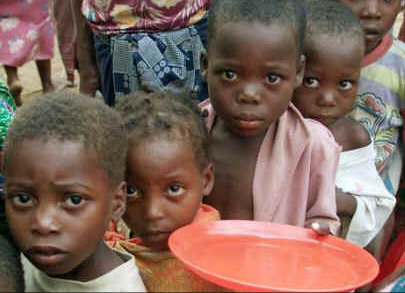
feeding“Then the King will say to those on his right, ‘Come, you who are blessed by my Father; take your inheritance, the kingdom prepared for you since the creation of the world.

For I was hungry and you gave me something to eat, I was thirsty and you gave me something to drink, I was a stranger and you invited me in, I needed clothes and you clothed me, I was sick and you looked after me, I was in prison and you came to visit me.’

“Then the righteous will answer him, ‘Lord, when did we see you hungry and feed you, or thirsty and give you something to drink? When did we see you a stranger and invite you in, or needing clothes and clothe you? When did we see you sick or in prison and go to visit you?’

“The King will reply, ‘Truly I tell you, whatever you did for one of the least of these brothers and sisters of mine, you did for me.’Matthew 25:34-40

Question:

Each year, we Jews spend so many millions of dollars, and devote so much time and energy, to building synagogues, Jewish schools, and a slew of other religious and academic institutions. Wouldn’t it be better if we applied all those resources to feeding the hungry, housing the homeless, and working to alleviate all the horrendous suffering that goes on in so many places in the world?

Answer:

Jewish education is the impetus for charity. Any charity. People with a proper Jewish education are most likely to give more charity to the hungry, to the sick, and to the helpless. And to future Jewish education.

Because when you invest in Jewish education and Jewish institutions you are investing in every form of charity.

-Rabbi Tzvi Shapiro
AskMoses.com

What separates Jews and Christians? It shouldn’t be the desire, the will, and the action of helping others, such as feeding the hungry, clothing the unclothed, and visiting the sick. This is a value that is inexorably woven into the fabric of both faiths and has been since the beginning. Tzedakah or “charity” is at the very heart of the Jewish service to God. It is considered more than just a good thing to do and is an actual obligation to Heaven, as described at the Judaism 101 website.

Giving to the poor is an obligation in Judaism, a duty that cannot be forsaken even by those who are themselves in need. Some sages have said that tzedakah is the highest of all commandments, equal to all of them combined, and that a person who does not perform tzedakah is equivalent to an idol worshipper. This is probably hyperbole, but it illustrates the importance of tzedakah in Jewish thought. Tzedakah is one of the three acts that gain us forgiveness from our sins. The High Holiday liturgy repeatedly states that G-d has inscribed a judgment against all who have sinned, but teshuvah (repentance), tefilah (prayer) and tzedakah can alleviate the decree.

Numerous positive and negative commandments are devoted to the needs of the poor and unfortunate based on verses from Exodus, Leviticus, and Deuteronomy. When Jesus commands his disciples to “Love your neighbor as yourself”, he is quoting Leviticus 19:18, so the core of both Judaism and Christianity is charity and love. Nevertheless, as I pointed out in yesterday’s morning meditation, there is a startling degree of separation between Judaism and Christianity. Although much in our culture, worship, and identity keeps us apart, we also find there should be much that makes us alike.

A few events inspired me to write today’s “extra meditation”. The first was a story I read yesterday at jweekly.com about a woman named Linda Cohen.

When Linda Cohen’s father died in 2007, the mother of two was reeling. Grief-stricken, she decided to take time off from her active life and health consulting job in Oregon for a “spiritual sabbatical.”

“I just wanted to be quiet. I wanted the time to be with that loss,” recalls Cohen, a Boston native.

But within a month, she had a new sense of direction. Inspired by her father’s wishes to have friends and relatives make donations to charities in lieu of sending flowers after his death, she decided to honor his memory by performing 1,000 mitzvahs.

LindaCohenThe story goes on to say that Linda’s husband encouraged her to chronicle her progress on a blog which became 1000mitzvahs.org. Four years later, Linda’s compassion and her story has become a book: 1,000 Mitzvahs: How Small Acts of Kindness Can Heal, Inspire and Change Your Life.

Linda Cohen is just one person who lost her father. A lot of people have lost a loved one and we all know that sooner or later, our parents are going to die. We all go through that grief at some point in our lives, but most of us don’t recognize it as anything except another stage in our existence. Linda turned her grief into not only a way to honor her father, but a way to help many others and to inspire the rest of us.

The second inspiration came in the form of a video I watched on Facebook earlier this morning about a fellow in India who was so moved by compassion for the people starving in his own village, that he quit his job just to feed them, to clothe them, to bathe them, and to remind them that we are all human beings.

The original story is from CNN. Here’s the link to the Facebook page for Achyut Sharma’s Video on this story. It’s less than three minutes long. Please watch it before continuing to read here.

It’s not like any of this is revolutionary news, or at least it shouldn’t be. I’ve talked about being the answer to someone’s prayer before. You don’t have to quit your job and make it your full time mission to help the starving in your community. You don’t have to abandon you life, goals, and dreams, but you can make doing even one small mitzvah a day part of those goals and dreams.

Debate about what counted as a mitzvah – Replacing a roll of toilet paper? Smiling at a stranger? – became the stuff of Cohen family’s dinner-table discussion. (Cohen’s children were 6 and 9 when the project started, and grew to see the recurring topic as perfectly normal, she says.) These questions also served as conversation-starters on Cohen’s blog, which steadily gained followers over the course of the 2 1/2-year mission.

“There’s nothing really too small,” she says. “The idea is that bringing even a bit of kindness into the world is a holy connection.”

Just imagine if you did one thing today as a good deed that you didn’t have to do. It doesn’t have to be a big thing. Maybe it’s just picking up one piece of trash off the ground and putting it in a garbage can. Maybe it’s smiling at someone you pass on the street. Maybe it’s buying one extra can of food at the store and then stopping by the local food bank and donating it. Nothing big.

Now imagine doing that one thing every day. That’s 365 mitzvot in a year. Now imagine inspiring one other person to do the same thing. Imagine that other person inspires one other person, and so on, and so on, and so on, and…

Tikkun Olam doesn’t begin with huge, heroic, “Superman-like” acts of courage and strength. It begins with one person who cares enough to pass along some small blessing to the next person. It can be one person feeding the poor, the starving, the old, and the mentally ill in his village, or it can be a person taking five minutes out of their day to help their next door neighbor move a sofa. It can be anything, but it must be something.

You don’t have to be religious to do something like this and, to the shame of people who profess faith and yet do nothing for others, many secular people perform frequent acts of kindness for the sake of doing good. If you are a person of faith, it is a duty to God to serve other human beings, not as a burden and a chore, but because it is passing along the grace we received from God to the next person, regardless of who they are, or regardless if your acts ever become known to others.

You may never put your deeds on a blog, write a book, or be filmed by CNN, but as the Master taught, “whatever you did for one of the least of these brothers and sisters of mine, you did for me.”

You can change the world. You can inspire others to change the world. You don’t need to make some herculean effort to accomplish this. You only have to do one extra deed a day and then do it every day. Anyone can complain about the terrible condition of our world. Anyone can carry signs, protest, and cry out for justice. But very few actually do something about it, even though anyone can. If you seek justice, act justly toward others. If you seek mercy, then be merciful. If you want to be forgiven, then forgive. If you value kindness, then be kind.

I learned so much throughout this process,” she says. “I moved out of a place of grief, into a place of feeling very inspired. If there’s something negative that happens, I feel like there’s a lesson I can glean from that. I really learned how to see the good in the world.” –Linda Cohen

your kingdom come,
your will be done,
on earth as it is in heaven.
Give us today our daily bread.
And forgive us our debts,
as we also have forgiven our debtors. –Matthew 6:10-12

Don’t wait for goodness to come into the world. It’s here now because you’re here now. All you have to do is perform it. Your faith means nothing until you do. Then your faith means everything.