All posts by James Pyles

James Pyles is a published Science Fiction, Fantasy, and Horror author as well as the Technical Writer for a large, diversified business in the Northwest. He currently has over 30 short stories published in various anthologies and periodicals and has just sold his first novella. He won the 2021 Helicon Short Story Award for his science fiction tale "The Three Billion Year Love" which appears in the Tuscany Bay Press Planetary Anthology "Mars."

As They Were Ministering To The Lord

prayingWhile they were worshiping the Lord and fasting, the Holy Spirit said, “Set apart for me Barnabas and Saul for the work to which I have called them.”

Acts 13:2 (NRSV)

Last Sunday, I was wondering how Pastor Randy was going to preach for an entire hour on just three verses from the Bible. He told me there was a lot packed in those three verses (Acts 13:1-3) and he was right. However, his explanation of the Greek word translated as “worshiping” in the above quoted verse was especially interesting.

According to TheFreeDictionary.com, the word “leitourgia” (which is rendered as “worshiping” above) is related to the English word “liturgy:”

  1. A prescribed form or set of forms for public religious worship.
  2. often Liturgy Christianity The sacrament of the Eucharist.

[Late Latin ltrgia, from Greek leitourgi, public service, from leitourgos, public servant, from earlier litourgos : liton, town hall (from los, dialectal variant of los, people) + ergon, work; see werg- in Indo-European roots.]

That’s a lot to pack into the word “worshiping” and reading that verse in English totally obscures the meaning of what’s being said. It might have made more sense to translate the word as “ministered” (which the King James Version actually does) in order to render the meaning more accurately.

According to Pastor Randy, the sense of the word can refer to the duty of the Levitical Priests in the Temple in Jerusalem and as the dictionary definition states above, addresses the discharge of a public office.

But what was that about liturgy again?

Pastor Randy didn’t touch on this, but what may also have been communicated by Luke when he used the word “leitourgia” was that the worshiping of God was being performed using liturgical prayer, or more specifically, a Jewish prayer service.

This isn’t beyond the realm of possibility if we consider that the “church” in Syrian Antioch was actually a synagogue servicing believing Jews and Gentiles. What other model for worship of the Jewish Messiah would they have?

The other day I wrote a blog post citing New Testament scholars Larry Hurtado and Paul Trebilco on the topic of “Early Christian Identity.” That source, along with many others I’ve quoted from over the many months I’ve been writing this blog, continued to confirm that the early Jewish believers in the Jewish Messiah unquestionably identified themselves as Jews worshiping (ministering, praying liturgically, providing a service to God) within a wholly Jewish context.

The Huffington Post recently published an article called The Apostle Paul Lived and Died as a Dedicated Jew written by psychologist, college professor, and journalist Bernard Starr, who expands greatly on this topic in his book Jesus Uncensored: Restoring the Authentic Jew

PaulMost Christians and Jews don’t have a problem with the idea that Jesus was a Jew and lived a completely Jewish lifestyle, but when Paul comes up in conversation, most folks aren’t really sure who he was or what he was up to. Actually, I’m being generous. Most Christians and Jews actually believe Paul took the Jewish teachings of Jesus and made up a new religion called “Christianity.”

In the article I mentioned above, Starr writes:

It’s widely acknowledged that Jesus was a thoroughly practicing Jew throughout his life. Anglican Priest Bruce Chilton expressed that conclusion explicitly and concisely in his book “Rabbi Jesus”: “It became clear to me that everything Jesus did was as a Jew, for Jews, and about Jews.”

But what about Paul, the Apostle to the Gentiles? It’s generally accepted that Paul was the true founder of a new religion called Christianity. Biblical scholar Gerd Ludemann, author of several books about Jesus and Paul including “Paul: Founder of Christianity,” affirms that “Without Paul there would be no church and no Christianity.” Ludemann adds, “He’s the most decisive person that shaped Christianity as it developed. Without Paul we would have had reformed Judaism … but no Christianity.”

Paul converted Jews and then Gentiles to Jewish Christianity, basing these conversions on his belief in the teachings, resurrection and divinity of Jesus. But powerful evidence within “Acts of the Apostles,” the book of the New Testament that chronicles Paul’s mission, reveals that Paul, like Jesus, remained a dedicated Jew until his execution. In fact, if Paul had simply stated that he was no longer a Jew but the leader of a new religion, he would not have been imprisoned or executed.

Actually, that last part is probably not true. It was a crime in the Roman empire to promote an illegal religion. If Paul was spreading the “good news” about a form of Judaism, as attorney and Bible scholar John Mauck asserts in his book Paul on Trial: The Book of Acts as a Defense of Christianity, then he was innocent of the charge of “atheism”. If, on the other hand, he really had “converted” from Judaism to Christianity and was promoting a brand new religion to Jews and Gentiles, he was guilty and would have deserved to be sentenced to a harsh punishment by the Roman court up to and including death, according to Roman law.

However, both Starr and Mauck emphasize the same thing: That Paul, as the Apostle to the Gentiles, lived a lifestyle completely consistent with that of an observant Jew and even died as a Jew. He didn’t “convert” in the sense that he left Judaism for a new religious form. He did “convert” in the sense that he recognized that Yeshua (Jesus) was indeed the prophesied Messiah, and from that Jewish platform and the mission given to him by Messiah in visions, he proceeded with unabashed courage to take the Gospel of Messiah “first to the Jews and also to the Gentiles,” in order to fulfill the command Jesus uttered in Matthew 28:19-20:

Go therefore and make disciples of all nations, baptizing them in the name of the Father and of the Son and of the Holy Spirit, and teaching them to obey everything that I have commanded you. And remember, I am with you always, to the end of the age.”

Paul didn’t create a new religion and he didn’t abandon being Jewish or “morph” the Jewish “Way” into something alien to the Jewish disciples.

According to Starr:

Still, Paul said nothing about a new religion. On the contrary, he presented himself to the Roman Jewish community as a loyal Jew who was being persecuted for his revisionist views. Since the Romans had no quarrel with him, as a Roman citizen, and with the Sanhedrin a continent away, there would be no viable case against Paul — if he had denounced his affiliation to Judaism and declared a new religion. At this point in his life, facing trial and execution for blasphemy against Judaism, didn’t Paul have every reason to sever his tie to Judaism? The Sanhedrin, representing traditional Judaism, sent a clear message by their action against Paul: “We will not accept your beliefs and teachings about Jesus.” Despite this definitive rejection, Paul didn’t choose the obvious way out of the clutches of the Sanhedrin: declaration of a new religion. This strategy never even showed up for discussion. Paul chose to go to his death as a Jew. Why?

Paul’s vision was to make his brand of Judaism — with the recognition of Jesus as the Jewish Messiah — a world religion easily accessible to everyone. He never surrendered that passion. But after his death the accelerating conversion of Gentiles to a movement that began as Jewish Christianity became increasingly distanced from Judaism — and a new religion was launched.
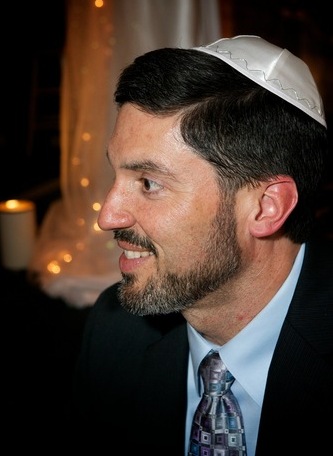
derek-lemanLast week, Derek Leman published a blog post called Jewish “Unbelief,” Romans 11, Isaiah in which he supported (rightly in my opinion) the position that “Jewish unbelief” in Jesus as Messiah was a temporary state and initiated by God for the sake of the Gentiles. God never intended to abandon His people Israel and in the end, “all of Israel will be saved.”

Derek is supporting the same points I am; that the Jewish believers remained Jewish and maintained normative Jewish religious practices as disciples of Messiah. He also soundly (again) refutes traditional replacement theology (supersessionism). The Gentile Christians did not replace the Jews in the covenant promises and God’s love for Israel and His devotion to them has never wavered.

I was so impressed with this particular blog post of Derek’s that I sent the link to Pastor Randy last Wednesday morning. During my Wednesday evening conversation with Pastor, I found that he had printed the blog post. He agreed with everything Derek wrote up until this point:

  • Unbelief in Torah and Yeshua.
  • Unbelief in Yeshua; belief in Torah.
  • Unbelief in Torah; belief in Yeshua.
  • Belief in both Torah and Yeshua.

The core of the disagreement is the word “Torah.” He and I still haven’t settled upon a mutual definition of the word (it’s not all that easy to define) and our conversations about Torah tend to get a little “slippery” in how we apply it in the days of Paul vs. modern times. Pastor isn’t convinced that Jesus ever intended for the Jewish disciples to conform to the Torah mitzvot much beyond the lifetime of Paul and certainly not after the New Testament canon was closed.

But what about the Torah in the days of Paul?

You see, brother, how many thousands of believers there are among the Jews, and they are all zealous for the law.

Acts 21:20 (NRSV)

I quote from this verse fairly often. Thousands of Jewish believers all zealous for the Torah. I think Pastor can accept this because, after all, it’s right there in scripture.

So Paul lived and died fully and completely as an observant Jew and, based on what I read in the New Testament record as well as what I’ve written, including my conclusions on Acts 15 taken from Mauck’s Paul on Trial book, Paul never taught the Jewish believers to set aside Torah, nor did he teach the Gentile believers they had to keep Torah in an identical manner to the Jews.

The part I emphasized is important to note (especially for my critics) since I don’t say that Torah doesn’t apply to Gentile believers at all. In fact, we see that Christians are often better at performing some of the weightier matters of the Torah than much of Messianic Judaism and (as far as I can tell since they don’t blog, write, or teach about this aspect of Torah), just about all of the Hebrew Roots movement.

praying_jewWhat can we say then? Paul was born, lived, and died a Jew. Even after his encounter with the Messiah and being commissioned as an Apostle to the Gentiles, he remained completely Jewish, taught other Jewish believers to maintain the Torah mitzvot, and defended himself by stating that he never committed the crimes against the Jewish people and against the Temple of which he was accused. He was a Pharisee of Pharisees.

And, to return to the beginning of this missive, just before he and Barnabas were sent out by the congregation at Syrian Antioch on what has been called “Paul’s first missionary journey,” he and the other Messianic Jews and Gentiles were “praying, prophesying, teaching, fasting, working, and ministering/worshiping/praying liturgically in the manner of the Jews” together.

At the end of his article, Starr tells us:

Nevertheless, an understanding of the deep connection to Judaism held by the founders of Christianity should highlight the common ground of Judaism and Christianity and pave the way to reconciliation between the two faiths.

I’m convinced that in the coming days of the Messiah, he will teach us that there is only one faith; faith in the God of Israel. Right now, two peoples are contained in two separate religious expressions: Judaism and Christianity. One day, Moshiach will reconcile us as two peoples, Israel and the people of the nations called by His Name, occupying a single body: the body of Messiah.

May he come soon and in our day.

The Tzemach Tzedek once told his son, my grandfather, an incident in his experience, and concluded: For helping someone in his livelihood, even to earn just 70 kopeks (a small, low-value Russian coin) on a calf, all the gates to the Heavenly Chambers are open for him.

Years later my grandfather told this to my father and added: One should really know the route to the Heavenly Chambers, but actually it is not crucial. You only need the main thing – to help another wholeheartedly, with sensitivity, to take pleasure in doing a kindness to another.

“Today’s Day”
Thursday, Sivan 28, 5708
Compiled by the Lubavitcher Rebbe; Translated by Yitschak Meir Kagan
Chabad.org

108 days.

Who is Righteous?

goodly-tents-of-jacobHow goodly are your tents, O Jacob, your dwelling places O Israel. As for me, through Your abundant kindness, I will enter Your House. I will prostrate myself toward Your Holy Sanctuary in awe of You. O HASHEM, I love the house where you dwell and the place where your glory resides. I will prostrate myself and bow, I will kneel before HASHEM my Maker. As for me, may my prayer to You HASHEM come at an opportune time; O God, in Your abundant kindness, answer me with the truth of Your salvation.

“Mah Tovu (How Good)”
-from the Siddur

This is the beginning of the Shacharit or morning prayers, said by Jewish people around the world at the beginning of each day.

I have a sad confession to make. I don’t pray in the morning very often. The first hour or so after I get up is dedicated to a cup of coffee, a glass of water, and slowly waking up in front of my computer. Oh sure, I recite the Modeh Ani upon awakening, but that takes only a few seconds and I’m still in bed when I make the blessing.

However, this morning my son wasn’t feeling well and frankly, neither was I, so we decided to skip the 5 a.m. visit to the gym. I could have noodled around on the web or even read a book, but I decided to pray.

I began with extemporaneous prayer and my mind scattered all over the place. I kept trying to focus it back, but that would last only a few seconds. I can certainly see the benefits of hitbodeut since it actually encourages “talking” to God as one talks passionately to a close companion, but for that, I’d need to be completely alone (I don’t want to wake my wife and daughter).

Then I remembered my siddur. I opened it up to the Shacharis/Morning Services section and began to read. And I began to pray.

I know that I previously expressed some hesitation and even trepidation at attending the recent First Fruits of Zion Shavuot Conference. I wondered if I really belonged in a “Jewish” worship context anymore (or if I ever did). I wondered why it didn’t feel like “home” anymore.

But praying, even somewhat briefly, with the siddur this morning did feel like home. I limited my prayers, trying to avoid those that overtly identified the person praying as Jewish, but I feel as if the pattern and rhythm of the siddur is almost calling to me.

After Mah Tovu, I prayed Adon Olam (all this is in English and I’m softly reciting, not singing), skipped the blessings of the Torah, and continued with the liturgy up to the Akeidah portion.

It’s not very long, actually.

But why don’t I do this every morning? I can’t say I don’t have the time, because I can find the time.

Then I was reminded of something else that happened at the conference.

I won’t go into too many details, but one person giving a presentation referenced another individual present and called him a tzadik. This was because the person being referenced is scrupulous in all the prayers, rituals, and traditions of observant Judaism. He refrains from all inappropriate forms of work on the Shabbat and festivals, observes each time of prayer, davening in Hebrew, and otherwise is diligently mindful of his duty to Hashem…

…even though he’s not Jewish.

That last part’s important because it brings up the question of whether or not observing Jewish religious practices makes a non-Jew more holy, more righteous, more “tzadik-like.” Particularly as a non-Jewish person involved in the Messianic Jewish movement, however tangentially, do the Jews and Gentiles in that movement consider me a failure for not following Jewish religious observances?

After a wave of guilt passed over me, I realized that some of the most righteous men I know are Christians who probably don’t pray one word in Hebrew. I’ve come to develop a great admiration particularly for a few of the men at the church I attend. I’ve learned some things about one specific individual that he’d never tell me himself, but that are completely consistent with how I experience him.

israel_prayingIf he were Jewish, I’d probably call him a tzadik. But what makes him such isn’t his “Jewish” observance, because as far as I know, he has none. What makes him such is that he is devoted to God in all of his ways, not only in prayer and worship, but in everything that he does.

How a life of righteousness looks, at least superficially, may be different depending on whether or not you’re a Christian or a Jew, but at the core, living a life that is pleasing to God should be the same regardless of who you are.

Jews pray and Christians pray. I remember my Pastor said that there were times in Israel when he was traveling with Jewish men. They would daven shacharit in a minyan and he would sit off to one side and silently pray, not intruding on them, but observing the holy time nonetheless. They all honored God and each other with their prayers and their devotion.

Jews give to charity and Christians give to charity. Jews visit the sick and Christians visit the sick. Jews feed the hungry and Christians feed the hungry. Jews gather together regularly to worship God and Christians gather together regularly to worship God.

Do you see what I’m getting at?

A “tzadik” isn’t just a Jewish righteous person, it’s any righteous person. Granted, the term itself is Jewish, but the concept behind it can be applied to any individual who seeks the will of God and then does the will of God.

I guess a Christian would use the word “saint” but I’m not quite sure it is an equivalent term exactly.

But the words used matter less than the life that’s lived. While in the example I cited above from the conference, one person acknowledged that another was a tzadik, but the recognition matters less than the life that’s lived, even if it is lived in obscurity so that no one knows.

But God knows.

God knows everything about the righteous and the unrighteous.

…as it is written:

“There is no one who is righteous, not even one; there is no one who has understanding, there is no one who seeks God.”

Romans 3:10-11 (NRSV)

There is no one who is righteous just because of who he is or what he does. Paul goes on in the same chapter to say that we are only righteous by faith. It is by faith that we seek God at all. It is by faith that we pray.

Rabbi Abraham J. Twerski writes an online “column” for Aish.com called Growing Each Day in which he begins with a quote from the Bible, Talmud, the Siddur, or some similar text. He then writes a brief commentary and finishes by applying the principle to his own life (and by inference, his readers are invited to apply it to their lives in order to “grow each day.”

Adapting his model to today’s “extra meditation:”

Today I shall…

…seek God each morning by turning to Him in prayer, so that my life will begin to conform to His will.

Good Shabbos.

110 days.

Korach: Learning How to Dance

korach-buried-aliveThere are two rebellions this week. First, Korach, a Levite, was passed over for the leadership of his tribe and then challenges Moshe over the position of High Priest. No good rebellion can be “sold” as a means for personal gain, so Korach convinces 250 men of renown that they must stand up for a matter of principle — that each and every one of them has the right to the office of High Priest (which Moshe had announced that God had already designated his brother, Aharon, to serve).

Fascinatingly, all 250 followers of Korach accept Moshe’s challenge to bring an offering of incense to see who God will choose to fill the one position. This meant that every man figured he would be the one out of 250 to not only be chosen, but to survive the ordeal. Moshe announces that if the earth splits and swallows up the rebels it is a sign that he (Moshe) is acting on God’s authority. And thus it happened!

The next day the entire Israelite community rises in a second rebellion and complains to Moshe, “You have killed God’s people!” The Almighty brings a plague which kills 14,700 people and only stops when Aharon offers an incense offering.

-Rabbi Kalman Packouz
“Shabbat Shalom Weekly”
Commentary on Torah Portion Korach
Aish.com

A fanatic is someone who redoubles his efforts while losing sight of his goal.

-George Santayana

You’d think after seeing the deaths of Korach and the 250 rebels that the rest of the Children of Israel would have been frightened enough to back away from speaking against Moses, Aaron, and ultimately God. Unfortunately, they seemed to have panicked and panic has no reason. Neither does fanaticism which is defined as “a belief or behavior involving uncritical zeal, particularly for a religious or political cause or with an obsessive enthusiasm…the fanatic displays very strict standards and little tolerance for contrary ideas or opinions.”

Since I blog in the world of religion, I suppose that someone could come along and accuse me of being a fanatic when I defend a particular point of view and don’t acquiesce to another’s contrary viewpoint. But then I hope there is a difference between steadfast determination and being a fanatic.

Korach and the 250 didn’t back down and neither did the Israelite community until after over 14,000 people died. What does it take for the rest of us to look at a situation, know when to press ahead with our point, and know when to back away?

In describing in his commentary how not to argue, Rabbi Packouz lists nine points. One of them is:

Turn the argument into a discussion. Don’t defend a position; set forth an idea or problem to be clarified. People of good will who reason together can come to a common conclusion. Listen with an open mind. Be a judge, not a lawyer!

calvinism-vs-arminianismIn the blogosphere, it’s difficult to keep a discussion into spilling over the threshold of civility into an argument. A lot of religious people take a “my way or the highway” stance with the theologies and doctrines to which they adhere. My exploration into Calvinism vs. Arminianism is a good example of such a dialog. So far, no one has come along on my blog to take me to task for my viewpoint in that debate, but if I found the right venue for the discussion, I’m sure a “passionate” exchange would occur. There have indeed been such debates in the comments section of my blog in the past.

So how do we know when we are defending a position for our faith and for the sake of God as opposed to our own ego and bullheadedness?

This week’s Torah portion tells the story of Korach’s dispute with Moshe. The mishna (a teaching) in Pirke Avot 5:20, states that “Any dispute that is for the sake of Heaven will be of lasting worth and one not for the sake of Heaven will not be of lasting worth. Which dispute was for the sake of Heaven? That of Hillel and Shamai. Which was not for the sake of Heaven? That of Korach and his company.”

That’s part of the Dvar Torah presented in Rabbi Packouz’s commentary. Here’s something similar.

When they heard this, they were enraged and wanted to kill them. But a Pharisee in the council named Gamaliel, a teacher of the law, respected by all the people, stood up and ordered the men to be put outside for a short time. Then he said to them, “Fellow Israelites, consider carefully what you propose to do to these men. For some time ago Theudas rose up, claiming to be somebody, and a number of men, about four hundred, joined him; but he was killed, and all who followed him were dispersed and disappeared. After him Judas the Galilean rose up at the time of the census and got people to follow him; he also perished, and all who followed him were scattered. So in the present case, I tell you, keep away from these men and let them alone; because if this plan or this undertaking is of human origin, it will fail; but if it is of God, you will not be able to overthrow them—in that case you may even be found fighting against God!”

Acts 5:33-39 (NRSV)

I suppose this isn’t the first time this passage from Luke’s Acts of the Apostles has been compared to the Korach rebellion. The trick is to know our own motivation, which is harder than you may think. A good many people have been utterly convinced that they were arguing and even fighting for what is good and right, only to ultimately discover that their motives were totally selfish. Human beings are very good at self-delusion, sometimes with disastrous results.

“Not everyone who says to me, ‘Lord, Lord,’ will enter the kingdom of heaven, but only the one who does the will of my Father in heaven. On that day many will say to me, ‘Lord, Lord, did we not prophesy in your name, and cast out demons in your name, and do many deeds of power in your name?’ Then I will declare to them, ‘I never knew you; go away from me, you evildoers.’”

Matthew 7:21-23 (NRSV)

Woman in the darkThat’s a terrifying thought. I don’t doubt that those of whom the Master speaks sincerely believed (some of them, anyway) that they were “fighting the good fight,” speaking prophesies in his name, casting out demons in his name, and doing many other powerful things in the name of Christ. What bitter disappointment will they suffer when they find they are completely rejected and in fact have been following the wrong path all along.

And how do I know for sure that the path I am following is the right one? How do I know if I will be among those accepted in the Kingdom or tossed out in the dark?

Remember, self-delusion is incredibly common with people.

The mishna should have said that the dispute not for the sake of Heaven was that of Korach and Moshe, not between Korach and his fellow conspirators! Why didn’t the mishna mention Moshe as the antagonist? Korach started the dispute for his own personal gain (not for the sake of Heaven) while Moshe was upholding the Almighty’s word and the Almighty’s honor (you can’t get more “for the sake of Heaven” than this!)

Why then does the mishna mention that a dispute not for the sake of Heaven is the one between “Korach and his company”? We might think that Korach and his company were united in their argument with Moshe. The mishna is telling us that each of the 250 was challenging Moshe for his own gain (remember, each one brought incense to see if he himself would be chosen as the Cohen Gadol, High Priest.) In truth, Korach and his congregation were in dispute amongst themselves as to who should be the High Priest.

The mishna points us in a direction, but the effort to maintain an understanding of our motives belongs to us. Every time we take a strong position, we must ask ourselves, “am I doing this for the Master’s glory or for my own?” When my opinion is challenged and I strongly defend my point of view, I must ask if it is for the sake of Heaven that I do this or only because I want to be “right?”

If confronted with the knowledge that I’m acting for my own interests, would I be willing to admit I am wrong? In such a discussion is it very wise to make such an admission. Rabbi Packouz comments.

No one is ever totally right. Find something to apologize for, to take responsibility for. The other person will feel better and may even own up to some mistakes of his/her own.

I spent nearly a year writing about my journey of discovery and ultimately had to admit I was wrong about my original “one law” assumptions that I had made years before and never questioned.

I don’t think that I made my assumptions solely out of self-interest or ego, but once my assumptions were confronted by others, my ego and the need to be “right” was definitely engaged. I can tell you that it is a difficult and painful thing to realize many of the attitudes and beliefs I held were incorrect, and letting them go was one of the hardest things I’ve ever done.

But if I didn’t let them go, especially in the face of overwhelming evidence and with the realization of the damage I was doing, especially in my home, the price to be paid would have been much, much more dear.

“When you are invited by someone to a wedding banquet, do not sit down at the place of honor, in case someone more distinguished than you has been invited by your host; and the host who invited both of you may come and say to you, ‘Give this person your place,’ and then in disgrace you would start to take the lowest place. But when you are invited, go and sit down at the lowest place, so that when your host comes, he may say to you, ‘Friend, move up higher’; then you will be honored in the presence of all who sit at the table with you. For all who exalt themselves will be humbled, and those who humble themselves will be exalted.”

Luke 14:8-11 (NRSV)

Waiting to danceThis is a good test for fanaticism, because a fanatic cannot be humble. It feels too “dangerous” to back down, too vulnerable to be silent about something that’s important. Rabbi Packouz suggests that being silent and, when talking, speaking with a soft voice are two ways to avoid arguing. If you can maintain your composure, agree with the points being made by the other person you feel are correct, and admit it when you know you are wrong (letting yourself even consider that you could be wrong is a step in the right direction), then it is very likely that you are not being fanatical about what you’re trying to communicate.

Then your mind and heart are most likely clear enough to determine when you are tempted to argue for the sake of your own ego or sense of vulnerability, and when you are standing up and being a voice for the sake of Heaven.

But you have to be sure to constantly be your own critic, questioning what you’re doing and why.

Leslie (Diana Muldaur – voice): “You seem quieter than usual tonight.”
Batman (Kevin Conroy – voice): “Every time I come here, I wonder if it should be the last time. . . Put the past behind me. . . Try to lead a normal life.”
Leslie: “Santayana says that ‘those who forget the past are condemned to repeat it’.”
Batman: “He also said ‘a fanatic is someone who redoubles his efforts while losing sight of his goal.'”

-from the episode “I Am the Night”
Batman: The Animated Series (1992)

“One who romanticizes over Judaism and loses focus of the kingdom of Heaven can be compared to a carpenter who is infatuated with the hammer, rather than the house it was meant to build.”

-Troy Mitchell

I often question why I write this blog at all. What good does it do? Am I doing it to help build the Kingdom of Heaven or just because I like to see my words posted on the web? Blind certitude is something I can’t afford. I don’t think it’s something any of us can afford. This isn’t a matter of fighting to see who wins and who loses, but the pursuit of interaction and cooperation so that we can mutually seek out an encounter with God.

Our work involves trying to dance when others only know how to wrestle.

-Rabbi Carl Kinbar

The lesson of Korach is that we need to learn not how to wrestle, but how to dance.

Good Shabbos.

110 days.

Acting for the Messiah

acts_isaac_maryThe Torah of Moses and the instructions of our Master Yeshua instruct us to open our hands to the poor and not hold back from providing for the needy. As disciples of the Master, it is our duty to fulfill these obligations to the best of our ability and to meet the need where it is greatest. Tororo, Uganda, like many other locations around the world, is subject to harsh poverty, low quality of life, and often a dangerous environment to live in, especially for the young.

-from the A.C.T.S. for Messiah website.

I know I said I wasn’t going to discuss the First Fruits of Zion Shavuot Conference anymore, but there is one important aspect I forgot to mention. During the conference, there were two meals not covered by the conference registration. They were fundraisers for a missionary effort called A.C.T.S. for Messiah, which according to their About page:

…is a non-profit organization dedicated to helping the orphaned, widows, poor and needy in Africa. This Messianic Jewish mission is based in the East African nation of Uganda where Emily Dwyer brings the Gospel of Yeshua to remote villages, teaches discipleship, feeds the hungry and cares for a group of orphaned children. Our ministry is based in the village of Tororo, Uganda.

One thing I know about the Christian church is that they’re very good at sending compassionate missions outside of their own walls, to destinations ranging from different cities in the U.S., to the towns, villages and refuge camps where ever they are found across far-flung corners of the Earth. Messianic Judaism and Hebrew Roots, not so much. Traditionally, Messianic Judaism and Hebrew Roots have focused their attention and resources on establishing their movements and the primacy of the Torah. But Messianic Judaism, thanks in part to the aforementioned Shavuot Conference, First Fruits of Zion (FFOZ) as an educational ministry, and other Messianic organizations, that viewpoint is becoming more balanced, resting upon (if I can “borrow” from the conference again) Torah, the Good News of Messiah, and the Holy Spirit.

I first encountered A.C.T.S. (the acronym means “Action, Compassion, Teaching and Service”) during last year’s conference. Fortunately this year, they accepted credit cards as well as cash, so I didn’t have to depend on the kindness of strangers (I don’t like traveling with cash) when I wanted to participate.

I’m incredibly pleased to see Messianic Judaism embrace this long-established function of the church in extending itself to uphold this principle of Torah and ancient Judaism. I think it means the movement is maturing beyond its “start-up” stage and is becoming a more holistically functioning expression of the Messiah’s love in the world.

And while you may think that such compassion is primarily Christian/Messianic, I just want to remind you that modern Judaism is an abundant source of love for others.

Dr. Rick Hodes concluded his May 19, 2013 commencement address at Brandeis University this way (the link above leads to the entire content of the article which includes many examples of Jewish compassion to the disadvantaged, the sick, and the dying):

You now start a lifelong link with a great name – Brandeis. What can we learn from Louis Brandeis? He was described as “the disturbing element in any gentleman’s club,” he owned a canoe, not a yacht, he angered clients by trying to be fair to both sides; the judge who succeeded him, called him “a militant crusader for social justice… dangerous because he was incorruptible.” Live up to his legacy.

Spread kindness. You are here because a lot of people helped you along the way. Maybe it was your 10th-grade math teacher who gave you a second chance, maybe it was someone who inspired you in a summer job.

This week, buy beautiful cards and send out four or five, to people who’ve helped you. Let them know you’ve just graduated from Brandeis and they were important to you. They’re going to feel great, and they’ll do it again for others.

Remember this: Run to do good. Create a momentum in the right direction. Get your hands dirty. Wear out your shoes. Don’t try to get too comfortable, please!

Now I imagine the start of a horse race and the bell rings. But you don’t need to race against each other. Whatever horse you choose, and whatever path you follow, I wish you great success and great happiness.

I wish you a lot more than luck, and may God bless you all.

syrian-refugeesThe Pastor of my church was raised by missionary parents and he became a missionary himself. The church I attend aggressively supports multiple missionary efforts around the globe. Many people who attend the church volunteer their time to travel to other countries to pray, encourage, support, build, teach, and do whatever else it takes to feed the hungry, heal the sick and injured, and show the love of Jesus Christ to whoever they may encounter.

A video news story was shown at the beginning of last Sunday’s worship service at my church (found online at CBN.com). It was a Skype interview of a missionary in Syria whose group is providing shelter, food, and support to anyone in need, Christian, Muslim, or anyone else. My words fail dismally to describe what this almost four-minute long video illustrates (I’ve posted the video from YouTube at the bottom of this blog post). The devastation of life is just ghastly, but one courageous group of Christians work to help just because God so loved the world, not just the Christian world, not just the white world, not just the American world, but every man, woman, and child who were created in the image of God.

In other words, everyone.

Part of why I’m writing this is to show that Messianic Judaism is indeed following the will of the Master and the teachings of the Torah, as is much of the traditional Christian church. Another part of why I’m writing this is to ask you to care. Yes, some of you really do care. Some of you give generously, work endlessly, pray fervently for those in need. But more of you…of us need to do the same. Love and worship is more than just showing up to the church on time for Sunday services and going to Sunday school afterwards, strolling through the Bible while drinking coffee and munching on muffins.

Love and caring means giving of whatever you have to give and sharing whatever God has given you to share.

Oh people, look around you
The signs are everywhere
You’ve left it for somebody other than you
To be the one to care
You’re lost inside your houses
There’s no time to find you now
Your walls are burning and your towers are turning
I’m going to leave you here and try to get down to the sea somehow

-Jackson Browne
Rock Me On The Water (1972)

Feed the hungry, take care of the widow and orphan, provide medical care for the sick, make a difference.

Act now.

111 days.

Jewish Identity in the Way

paul_trebilcoIn recent years a lot of scholarly effort has been given to questions about early Christian “identity,” how early and in what ways early believers in Jesus saw themselves and acted as distinct groups with their own identity. Major research projects continue to be devoted to this sort of question (e.g., the project on Prayer and Early Christian Identity, based in Oslo, with which I’m connected currently).

Paul Trebilco has now published an important study relevant to these questions: Self-designations and Group Identity in the New Testament (Cambridge: Cambridge University Press, 2012). His new book comprises a further significant contribution to the study of earliest Christianity. Drawing on observations about how groups develop their own “social dialects” (“in-group” terms and expressions), he focuses on the key terms evidenced in NT writings that appear to have been used to refer to early Jesus-believers, each term given a chapter-length analysis.

-Larry Hurtado
“Trebilco on Early Christian Self-designations”
Larry Hurtado’s Blog

This sounds like a fabulous book but even the Kindle version costs over $63.00, so it’s deffo out of my price range. Hurtado is of the belief that Jesus was worshipped as God very early historically so he’s going to likely come down on the side of an early distinctiveness of identity of Christians as apart from Judaism, probably very soon after the ascension of Christ.

This is an important topic for me since in my readings, I regularly find that the early “Jewish Christians” continued to self-identify as Jews and understood “the Way” as a Jewish branch among the other “Judaisms” of their day.

When they heard it, they praised God. Then they said to him, “You see, brother, how many thousands of believers there are among the Jews, and they are all zealous for the Torah (emph. mine).

Acts 21:20 (NRSV)

I deliberately rendered the world “law” as it appears in the NRSV as “Torah” to communicate more how James and the elders in the apostolic council in Jerusalem would have understood the vital concept. There were thousands of Jewish believers in Moshiach who were all zealous for the Torah.

Sounds pretty Jewish to me.

Going back to Hurtado’s blog post, he praises Trebilco, referring to him as “a proven scholar in the field” and citing his earlier, important works.

Hurtado continues:

These terms = “the brothers” (αδελφοι), “the believers”, “the saints” (οι αγιοι), ”the church” (η εκκλησια), “disciples” (μαθηται), “the way” (η οδος), and “Christian” (Χριστιανος). Among his conclusions, he contends that “εκκλησια” originated among “Jewish Christian Hellenists” (“most likely in Jerusalem,” p. 301), but he further argues that this does not mean that they no longer considered themselves also part of the larger Jewish community. He judges the term “Christian” to have originated among outsiders/observers of early Jesus-believers, thereafter appropriated by believers, especially in the later period of persecutions.

As to the larger question about when and how believers saw themselves as a distinct group, Trebilco contends (rightly in my view) that the use of these terms indicates that “they were creating and shaping their identity” already before the time of our earliest texts. This means easily within the first couple of decades after Jesus’ execution. (I’d say likely within the first few months.) Trebilco again: “…these designations also involve the claim of a distinctive identity . . .” (p. 308), “have clear boundary-marking roles,” and “distinguish this new group from other Jews and from Gentiles” (309).

ancient_beit_dinWhat can we make of this? First, that the Jewish disciples of the Jewish Messiah continued to consider themselves Jews participating in a normative Judaism in their day. However, as “Messianics,” they also understood that their identity was unique and that they were, in some sense, distinct from their Jewish brothers who adhered to other streams of Judaism, because ultimately salvation and the realization of Israel’s redemption and restoration only comes through Messiah.

I have great sorrow and unceasing anguish in my heart. For I could wish that I myself were accursed and cut off from Christ for the sake of my own people, my kindred according to the flesh.

Romans 9:2-3 (NRSV)

In stating this, Paul is saying that Jews outside the framework of “the Way” are also outside of salvation, and the anguish at this thought drives Paul to declare he would be willing to be accursed by God and cut off from Messiah if only it would save the Jewish people who do not know Messiah.

But it also continues to establish that the identity of a first century Jewish disciple of Messiah is as a Jew operating within a Jewish religious framework. This is opposed to Paul assuming a non-Jewish identity in a non-Jewish religious movement as many modern Christians currently believe. Being a “Messianic” (Christian) for a Jew was then both an exercise in normative Jewish religious worship and a unique Jewish identity because of adherence to Messiah, the living embodiment of Torah, Israel, and God’s gracious redemption.

The limits of Hurtado’s blog post allows for a minimal exploration of Gentile identity but that’s not my main point at the moment (though I do touch in it below). My primary point is to affirm for my Gentile Christian brothers and sisters, as well as any Jewish readers, that the historic worship of Jesus by Jews is not an aberration within Judaism or an abandonment of Judaism and the Torah. It was and is the highest expression of devotion to God both within the first century context and within what some have called modern “Bilateral Ecclesiology” Messianic Judaism.

It’s important to note though, that at least one Jewish scholar has a different idea as Hurtado points out:

I mean no criticism in saying that this all seems rather obvious to me, but in view of the nature of recent scholarly discussion (e.g., Boyarin’s claim that we don’t have “Christianity” as such before the fourth century CE), I’m very grateful to Trebilco for this fine evidence-based study, which will further confirm his status as a noteworthy figure in NT/Christian Origins.

Without reading “Boyarin’s claim” in full, I have no context upon which to comment, but I would have to guess that Boyarin may be stating that the “Jewishness” of Christianity extended much further forward into history than Hurtado or Trebilco believe. If, based on Trebilco’s book, Hurtado believes that the Christian identity replaced the Jewish identity of Jews in “the Way” in the first century forward, then I’m going to have to strenuously disagree. As long as Jews participated in the worship of Yeshua as Messiah, I can’t see them self-identifying as anything other than Jewish, and certainly I don’t believe they would ever abandon the Torah and a Jewish identity for the sake of Messiah. I say this because it is totally contrary to the Jewish Messiah himself to request that devotion to him should require abandoning the Torah and Israel.

I will split a hair and say that Jewish identity was not imposed on the Gentiles being admitted into the Jewish “Way” (see Acts 15:22-35, Acts 21:25), thus the Gentile “Christians” would have established an identity that, while initially contained within a Jewish religious framework, made them distinct not only from their Jewish mentors relative to Torah-observance, but also distinct from the pagan people and religions in their world.

In addition, we’ve already seen Hurtado quote Trebilco as saying:

“distinguish this new group from other Jews and from Gentiles” (emph. mine)

jewish-davening-by-waterI’m going to argue, based on the above-statement, that the distinctiveness of first century “Messianic Jews” was in relation to the Gentiles in “the Way.” By definition, all Jews were distinct from all Gentiles, so it would be redundant of Trebilco to say that it was “Christian Jewish” identity that distinguished them from pagan Gentiles. It makes more sense for him to make this statement if he is defining a distinctiveness of Jewish identity within “the Way” that identified the Jewish disciples uniquely both within the context of larger Judaism and as compared to believing Gentiles.

Of course, I’d have to read Trebilco’s book to actually confirm this, but what I can gather from Hurtado’s blog post certainly suggests it.

In summary, Gentile Christian identity distinctiveness as a religious stream wholly separate from paganism would have occurred very early, probably within Paul’s lifetime. Jewish discipleship in Messiah would have continued to be Jewish in every sense and yet, would still have distinguished Jewish members of “the Way” from other Jewish streams by virtue of Messianic redemption and the promise of national restoration upon Messiah’s return.

Here then, we see a template for the modern Messianic Jewish movement, a model for how Jews today can view adherence to Yeshua (Jesus) the Messiah as truly and completely Jewish, and unlike the vast majority of Christian history otherwise indicates, as a movement which does not require a Jew to abandon Jewish identity or the Torah in order to be a disciple of the Master.

112 days.

Taking the Fork in the Road: Discussing Arminianism and Calvinism, Part 2

tulipThis is the second part of a rather lengthy two-part blog post on the first two chapters of Dr. Manfred E. Kober’s article “Divine Election or Human Effort,” a paper based on a workshop given by Kober on October 25, 1971 in a faculty meeting at Faith Baptist Bible College, and provided to answer student questions about Arminianism and Calvinism. If you haven’t done so already, please read Part 1 of this post before proceeding here.

I want to talk a little bit about Calvinism and TULIP (Total Depravity, Unconditional Election, Limited Atonement, Irresistible Grace, Perseverance of the Saints) and to do so, I looked up TULIP on the Calvinist Corner website:

The doctrine of Total Depravity is derived from scriptures that reveal human character: Man’s heart is evil (Mark 7:21-23) and sick Jer. 17:9). Man is a slave of sin (Rom. 6:20). He does not seek for God (Rom. 3:10-12). He cannot understand spiritual things (1 Cor. 2:14). He is at enmity with God (Eph. 2:15). And, is by nature a child of wrath (Eph. 2:3). The Calvinist asks the question, “In light of the scriptures that declare man’s true nature as being utterly lost and incapable, how is it possible for anyone to choose or desire God?” The answer is, “He cannot. Therefore God must predestine.”

When talking about part of this with Pastor Randy, he’s the one who brought up man being created in the Image of God. That means, in some sense, that even though human beings are fallen, there is still something of us that carries a spark of the Divine. Jewish mysticism makes a great deal about these “sparks,” but I won’t open up that topic right now. I do want to say that I don’t believe the “T” in TULIP takes “the Image of God” in man into account. It’s what separates human beings from the rest of creation. Plants and animals behave the way they do because they are responding to their design. While we humans also respond to our design, part of that design is to seek God. Most of the time we fail but the drive to do it is inborn. It’s woven into the fabric of our being. It’s the image of God in man.

God does not base His election on anything He sees in the individual. He chooses the elect according to the kind intention of His will (Eph. 1:4-8; Rom. 9:11) without any consideration of merit within the individual. Nor does God look into the future to see who would pick Him. Also, as some are elected into salvation, others are not (Rom. 9:15, 21).

The “U” in TULIP seems to assume that we live in a “flat” universe where God and man operate on the same level or plane of existence (of course, God being infinitely powerful). It also assumes that God is subject to linear time (note the “look into the future” language above) as Kober states:

These acts are the result, not the cause of God’s choice. Election therefore was not determined by or conditioned upon any virtuous quality or act foreseen in man.

-Kober, “Chapter 2: The Decrees of God,” pg 7

Kober’s statements are just saturated with references to linear time and causality when I believe it is totally inappropriate to attribute those qualities to God or to believe God is subject to them.

Kober writes that the main point of Calvinism is that God saves sinners. I don’t deny that, but from Kober’s viewpoint, the statement would be better rendered God saved sinners since he did so from before the creation of the earth. There’s no active process, it’s just a “done deal” and was a done deal before we were ever born.

Yet, from a lived human experience here on the ground, people are unsaved, are in the process of approaching a decision for salvation, are saved by God’s grace through Jesus Christ. If Calvin was right, why bother preaching and teaching the word of God. Saved is saved and unsaved is unsaved. It’s already happened. The “decision” of the people involved isn’t even a formality since there’s nothing for them to decide.

It occurred to me that Calvinism also seems to contradict prophesy.

But this is the covenant that I will make with the house of Israel after those days, says the Lord: I will put my law within them, and I will write it on their hearts; and I will be their God, and they shall be my people. No longer shall they teach one another, or say to each other, “Know the Lord,” for they shall all know me, from the least of them to the greatest, says the Lord; for I will forgive their iniquity, and remember their sin no more.

Jeremiah 31:33-34 (NRSV)

Then afterward I will pour out my spirit on all flesh; your sons and your daughters shall prophesy, your old men shall dream dreams, and your young men shall see visions. Even on the male and female slaves, in those days, I will pour out my spirit.

Then everyone who calls on the name of the Lord shall be saved.

Joel 2:28-29, 32

Pouring waterOne day everyone will “know God” and the Spirit of the Lord will be poured out upon “all flesh.” Depending on your point of view, either that means all human beings everywhere or all human beings who have turned to God. Either way, these events have yet to occur and are signposts of the Messianic Age. But according to Calvinism, the “elect” already “know God” and those who were not chosen never will.

For that matter, referring back to Jeremiah, why would the prophet write something like “know the Lord” as if it really mattered; as if we really had a choice to know God or not know Him if Calvinism is true? “Knowing the Lord” is totally irrelevant to those who were specifically chosen by God not to know Him. And yet they are horribly and eternally punished for this “non-decision.”

In summarizing Arminianism (page 11), Kober states that the Arminianist position is that “Divine sovereignty is incompatible with free will and therefore God’s sovereignty is limited.” There’s another “either-or” statement. I disagree that God’s sovereignty and humanity’s free will are mutually exclusive states. They are from a human standpoint since we are limited in how we can conceptualize this “mystery,” but I don’t doubt that from God’s point of view, there is no dissonance and that He is both sovereign and people also experience choice.

On pages 12 through 14, Kober writes about “The Sequence of the Decrees.” I remember Pastor Randy mentioning that last Wednesday, and I remember objecting to imposing “sequencing” on God because it (again) makes God subject to linear time. It’s funny how all of the linear time and either-or arguments are a human effort at limiting God’s sovereignty over His own existence and experience while we discuss God’s sovereignty over man and salvation.

But as part of this section of his chapter, Kober cites Henry Clarence Thiessen, Lectures in Systematic Theology (Grand Rapids: Wm. B. Eerdman’s Publishing Co., 1949), pp. 343-344 in describing different variations on Calvinism including Supralapsarian view, Intralapsarian view, Sublapsarian view, and Modified Sublapsarian view. I won’t list all of the points of each perspective, but they illustrate that even within Calvinism, there is a variability about how the “mechanism” of Calvinistic salvation operates. Not all Calvinists everywhere agree on all the details. Does that mean it isn’t all that evident from scripture exactly how God saves?

Calvinists are wrestling with each other over how salvation works but perhaps they’d be better off wrestling with God and living with a particular amount of uncertainty, rather than trying to pin God down, so to speak, so that we can believe we have the last word on the Word of God. MacArthur said the Bible was sufficient, not that it contained literally all the information we desire. I believe God left some stuff out of the Bible. It may not be able to tell us certain things, at least down to the finest details.

But false prophets also arose among the people, just as there will be false teachers among you, who will secretly bring in destructive opinions. They will even deny the Master who bought them—bringing swift destruction on themselves.

2 Peter 2:1 (NRSV)

Kober quotes this verse on page 16 as he’s describing Biblical support for Modified Calvinism. This is a school of thought that supports all five of the TULIP points except for Limited Atonement, what is considered the weakest link in TULIP’s chain. Apparently, according to this perspective, Christ’s redemption is universal, and Kober says that some people “insist that even Calvin accepted the unlimited theory of the atonement later in life.”

Again, there’s a certain amount of “wiggle room” within the Calvinistic blanket.

I keep thinking about a couple of things.

I call heaven and earth to witness against you today that I have set before you life and death, blessings and curses. Choose life so that you and your descendants may live, loving the Lord your God, obeying him, and holding fast to him; for that means life to you and length of days, so that you may live in the land that the Lord swore to give to your ancestors, to Abraham, to Isaac, and to Jacob.

Deuteronomy 30:19-20 (NRSV)

If the choice were made for the Israelites, then why would God exhort them to “choose life” and to love and obey God and His commandments?

One day, while he was teaching, Pharisees and teachers of the law were sitting near by (they had come from every village of Galilee and Judea and from Jerusalem); and the power of the Lord was with him to heal. Just then some men came, carrying a paralyzed man on a bed. They were trying to bring him in and lay him before Jesus; but finding no way to bring him in because of the crowd, they went up on the roof and let him down with his bed through the tiles into the middle of the crowd in front of Jesus. When he saw their faith, he said, “Friend, your sins are forgiven you.” Then the scribes and the Pharisees began to question, “Who is this who is speaking blasphemies? Who can forgive sins but God alone?” When Jesus perceived their questionings, he answered them, “Why do you raise such questions in your hearts? Which is easier, to say, ‘Your sins are forgiven you,’ or to say, ‘Stand up and walk’? But so that you may know that the Son of Man has authority on earth to forgive sins”—he said to the one who was paralyzed—“I say to you, stand up and take your bed and go to your home.” Immediately he stood up before them, took what he had been lying on, and went to his home, glorifying God.

Luke 5:17-25 (NRSV)

welcome-to-faithJesus saw the faith of the men who brought the paralyzed man to him through the roof. He forgave the man of his sins and then healed him. Was the paralyzed man all part of “the plan,” already saved from before the creation of eternity, paralyzed for the glory of God so he could be forgiven and healed by the Son of Man?

What about this?

Jesus asked the father, “How long has this been happening to him?” And he said, “From childhood. It has often cast him into the fire and into the water, to destroy him; but if you are able to do anything, have pity on us and help us.” Jesus said to him, “If you are able!—All things can be done for the one who believes.” Immediately the father of the child cried out, “I believe; help my unbelief!”

Mark 9:21-24 (NRSV)

Did the boy’s father believe or not? Did he have faith or not? Did he progress from a state of unbelief to a state of belief and did Jesus help with that process?

Jesus was often critical of his disciples and others around him having “little faith” as if they had some sort of control of their faith. According to Calvinism, we have no control of our faith. It’s either present or not, like a light switch flipped to either on or off. Yes these passages seem to introduce a set of inconsistencies that question many Calvinistic assumptions.

Kober mentions that the beginning roots of Arminianism and Calvinism stretch all the way back to the fifth, fourth, and even the third centuries C.E. but both Arminius and Calvin lived during the time of the Reformation in the 16th century. James, Peter, Paul and the other apostles were dead for 1600 years by the time these doctrines had been constructed and both theories have experienced modifications and adjustments for the last 400 or so years.

I wonder what Paul would think if he could read the first sixteen pages of Dr. Kober’s article or for that matter, what would he think of the history of the Baptist church and the other denominations of modern Christianity? The theories of Arminius and Calvin are largely based on the Gospels and on Paul’s letters, so I imagine the ancient sage and emissary to the Gentiles might have an opinion or two on this matter.

I’ll continue to read Dr. Kober’s article. I’m sorry if it seems that I’ve been a little rough on him. It’s not my intent and I really don’t feel “hot under the collar” about all this. I just think that all of the arguments pitting Arminianism and Calvinism against each other are making a tragic mistake by assuming that God has to construct spiritual realities the way we write scholarly papers on theology and church doctrine.

The Bible is supposed to be a source of illumination, not a straight-jacket.

Whereas the Greek philosophical way includes defining things and relationships with precision, the Israelite way was to define things with story.

Derek Leman

113 days.