Category Archives: Torah Portion

Noah, Moses, and Peter: Lessons from Acts 2

Receiving the SpiritFor the disciples of the Master, Shavuot already carried extra significance as the fiftieth day since His resurrection. He was the first fruits of the resurrection. The disciples and followers of Yeshua were themselves the first fruits of His labor. On Shavuot, they added 3,000 souls to their number and the great harvest of men began.

The story of Acts 2 depicts the early disciples of Yeshua still engaged in the biblical calendar, keeping the LORD’s appointed times as prescribed by the Torah of Moses. Unlike later Christian tradition which discarded the biblical calendar with its weekly Sabbaths and holy days, the early disciples remained steadfastly Torah observant, even after the resurrection of our Master.

Torah Club, Volume 6: Chronicles of the Apostles
Torah Portion Noach (Noah) (pg 30)
Commentary on Acts 2:1-41

“Chronicles of the Apostles” takes students on a year-long study of the book of Acts with Messianic commentary and Jewish insights into the Epistles.

Follow the lives and adventures of the apostles beyond the book of Acts and into the lost chapter of church history. Study Jewish sources, Church fathers, and Christian history to reveal the untold story of the disciples into the second century.

Promotional description of
Torah Club, Volume 6: Chronicles of the Apostles
from First Fruits of Zion (FFOZ)

All of them were gathered with one heart.

Ma’asei HaShlichim 2:1

So begins my year-long study of the Apostolic writings from Acts and other sources, which runs in parallel with the annual Jewish Torah reading cycle. I say “parallel” rather than a more closely connected link because, although this study in Torah Club is to be read for the Torah Portion Noach (Noah), they have little, if anything to do with each other. Noach doesn’t speak of Shavuot or the giving of the Torah at all, which are events that occur much later in the Torah narrative. And yet perhaps this is a good thing.

In traditional Christian Bible studies, the New Testament is given overwhelming preference with maybe a slight nod to the Old Testament, but almost certainly not the Torah (the Five Books of Moses). In the Hebrew Roots movement, where I have spent most of my history as a believer worshiping God and studying the Word, the Torah is given the greater preference, even though we are followers and disciples of Jesus, the Jewish Messiah. I think it’s good to try to even the scales, so to speak, and give equal time to all of the different portions of the Bible.

A traditional Jewish Torah reading will present from the Torah and the Prophets. Few synagogues also offer the opportunity to read the Psalm for the week, but each Torah Portion has a corresponding Psalm (Psalm 29 in the case of Noah). First Fruits of Zion (FFOZ) has also created a schedule of Gospel readings that map to the readings of the Torah, but the later portions of the Apostolic scriptures are largely ignored, at least formally.

In my “previous life” as a teacher in my former “One Law” (part of Hebrew Roots) congregation, I created an alternating cycle where for one year, Matthew through Acts was read along with the Torah cycle, and the next year, Romans through Revelation was read. So in two years, the congregation would go through the Torah twice, through the traditional readings of the Prophets and the Psalms twice, and through the entire New Testament. Imagine how much you would absorb after a decade of repeatedly reading and hearing read the vast majority of the Bible.

But reading and hearing read is one thing (or two things) and studying is something else. Here, FFOZ and D. Thomas Lancaster offers the Torah Club student (or class, since this material is designed to be used in a small group study) the opportunity to “dig deeper” into the scriptures and to learn how familiar passages in Acts are married back to the Torah, as well as to the Prophets, other portions of the New Testament, and as the study progresses through the annual cycle, to extra-Biblical learned texts as well.

Today, I am learning about the Acts of the early Jewish Apostles, This lesson is about the 3,000 Jews, many probably from the diaspora, who were in Jerusalem for the festival of Shavuot (Pentecost), which is held in the late Spring, and who came to receive the Spirit of the Lord and to come to faith in Jesus (Yeshua), the Jewish Messiah, the Son of the God of Israel, the redeemer of Israel and the world.

The disciples were all “filled with the Holy Spirit.” The Torah uses the same terminology to describe the endowment of God’s Spirit on Joshua, Caleb, Bezalel, and Oholiab. In those examples, the Torah likens a human being to a vessel. God’s spirit can fill a human being like water can fill a jar.

from “Chronicles”
Torah Portion Noah (pg 32)

And what is this supposed to teach me? I’m reminded of something I said just recently:

I’m still not sure of what the process is where I’m supposed to be emptied now and filled later, but in trying to live out that process in writing and in person, I prefer to think of myself as taking “the higher road less traveled”

But in reading Lancaster’s study of Acts 2 and the giving of the Spirit, I’m also reminded of this:

But we have this treasure in jars of clay, to show that the surpassing power belongs to God and not to us. We are afflicted in every way, but not crushed; perplexed, but not driven to despair; persecuted, but not forsaken; struck down, but not destroyed; always carrying in the body the death of Jesus, so that the life of Jesus may also be manifested in our bodies. For we who live are always being given over to death for Jesus’ sake, so that the life of Jesus also may be manifested in our mortal flesh.

1 Corinthians 4:7-11 (ESV)

So aren’t we all fragile jars of clay containing an unimaginably valuable treasure of the Holy Spirit of God, through our Master and Messiah Jesus Christ?

Acts 2 describes the giving of the Spirit to thousands of new Jewish disciples of the Messiah on the day of Shavuot. Is it too soon to bring in the idea that we among the nations were also to receive the Spirit?

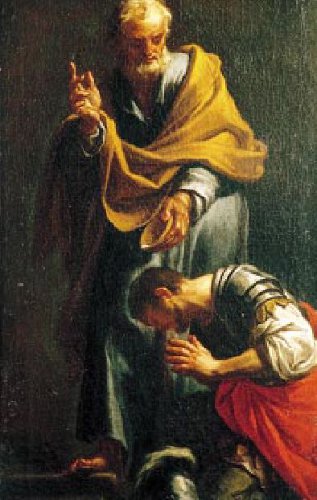
While Peter was still saying these things, the Holy Spirit fell on all who heard the word. And the believers from among the circumcised who had come with Peter were amazed, because the gift of the Holy Spirit was poured out even on the Gentiles. For they were hearing them speaking in tongues and extolling God. Then Peter declared, “Can anyone withhold water for baptizing these people, who have received the Holy Spirit just as we have?” And he commanded them to be baptized in the name of Jesus Christ. Then they asked him to remain for some days.

Acts 10:44-48 (ESV)

Perhaps I can also extend the lesson and the metaphor of “jars of clay” to include Gentile God-fearers like Cornelius and his transition into what was later known as Christianity through accepting discipleship under Jesus Christ…and also bring Noah into the lesson.

I establish my covenant with you, that never again shall all flesh be cut off by the waters of the flood, and never again shall there be a flood to destroy the earth.” And God said, “This is the sign of the covenant that I make between me and you and every living creature that is with you, for all future generations: I have set my bow in the cloud, and it shall be a sign of the covenant between me and the earth. When I bring clouds over the earth and the bow is seen in the clouds, I will remember my covenant that is between me and you and every living creature of all flesh. And the waters shall never again become a flood to destroy all flesh. When the bow is in the clouds, I will see it and remember the everlasting covenant between God and every living creature of all flesh that is on the earth.” God said to Noah, “This is the sign of the covenant that I have established between me and all flesh that is on the earth.”

Genesis 9:11-17 (ESV)

As we saw in Acts 10, Peter, the Jewish Apostle, was astonished to discover that the Spirit of God would also come upon the non-Jew who accepted Christ, just as it came upon the Jews during his experience of the events recorded in Acts 2. It had never occurred to him before that such a thing was even possible. What a wonderful God who can also save the children of the nations as well as the Children of Israel.

But earlier in the chapter, we learn some things about Cornelius as he was before becoming a disciple of Jesus:

At Caesarea there was a man named Cornelius, a centurion of what was known as the Italian Cohort, a devout man who feared God with all his household, gave alms generously to the people, and prayed continually to God.

“Cornelius, a centurion, an upright and God-fearing man, who is well spoken of by the whole Jewish nation, was directed by a holy angel to send for you to come to his house and to hear what you have to say.”

Acts 10:1-2, 22 (ESV)

The Roman Centurion Cornelius and his non-Jewish household were known as “God-fearers,” non-Jews who had come to the realization that the God of Israel was the God, the One and only, the Creator. In that realization, they came to faith, abandoned the pagan idols of Rome, and gave homage to God only. Often, non-Jewish God-fearers would worship in the synagogue on the Sabbath. Many took on some of the other Jewish religious practices of the day, including the daily prayers, and even, to a degree, a Kosher observance (for Peter to break bread in Cornelius’s house, this would have to be true in his case).

But would a Gentile simply walk into a Second Temple era synagogue on Shabbat and inform the Rabbi and other Jews that he intended to worship the Israelite God with them? How was this done and under what status would a Gentile appropriately do such a thing?

Recall Genesis 9 and the covenant God made with Noah and all of his descendents which, by definition, includes all of humanity.

The concept of the Noahide was not formalized, as we understand it today, until the Talmudic era, many centuries after Cornelius and Peter walked the earth. However, the covenant of Noah would have been well-known among the Jews and it’s not beyond reason to believe that a man as devoted to God as Cornelius would have learned or been taught that anyone from among the nations stands before God as subject to the covenant with Noah. Perhaps, though not called or even thought of as “Noahides,” many of the Gentiles who would later receive the Spirit and be baptized by water in Christ’s name, were nevertheless, viewed in such a manner, as God-fearing men and women who had heard the distant words of God to Noah at Ararat, and thus, believed.

To borrow more from Lancaster’s Torah Club lesson (pg 47), maybe we can understand the rite of baptism, especially as it related to the God-fearers, just a little better:

Based on this reading, Lichtenstein argues that the formula (see Acts 2:38) is not a baptismal confession but a statement of purpose. The disciples were to immerse people for the sake of declaring their faith in His messianic identity. Their immersion for His sake signified their entrance into His school of disciples and their allegiance to Him.

The apostles believed that the immersion in His name entailed a mystical union with Him, with His suffering, His death, and His resurrection. (see Romans 6:1-13 and 1 Corinthians 4:7-11)

This interpretation of the meaning of baptismal immersion signifies the crossing of a barrier for the non-Jewish adherents to the God of Israel, from God-fearers and possessors of the covenant of Noah, to disciples and people granted entrance to much greater covenant blessings under Messiah Yeshua.

In the events of Acts 2 and during the festival of Shavuot, every Jew present would be constantly reminded of the giving of the Torah at Sinai, of the awesome voice of God thundering from the smoke and fire, of the top of the mountain, smoldering in unspeakable tongues of flame. When the Spirit of God manifested as “tongues of fire” and rested upon the disciples of Moshiach at Solomon’s Portico, and they spoke in the many tongues of men and the languages of the nations, how much more significant was that Shavuot and all those that followed in their annual procession, to the older and newly made disciples? And when Peter saw that even the Hebrew FireGentiles could receive the Spirit, the greater mysteries of God’s work among all the world, linking Noah, to Moses, to Jesus, unfolded like an infinitely wide cloth, spilling amazing treasures across history, from Creation and into the future that even we now inhabit.

Admittedly, I’ve far exceeded the content of this part of volume 6 of the Torah Club in this “meditation,” (though I’ve included only a tiny fraction of what the over 20 pages of lesson notes – not to mention the accompanying audio CD – for this single teaching have to offer) but once I start learning, the connections to many other sparks of God’s wisdom were inevitable. If you continue to follow me in these studies or to embark on your own through the Torah Club, this will happen to you as well. Believe me, if you encounter the wealth of information in just this single study, it will illustrate to you that what you thought you knew about the events of Acts 2 only scratches the surface of what is actually there.

As humble and empty jars of clay, in seeking God and studying His Word, we desire to become filled with His Spirit and His Wisdom, every day, on each encounter with Him, and across all of our years.

…and that repentance and forgiveness of sins should be proclaimed in his name to all nations, beginning from Jerusalem.

Luke 24:47 (ESV)

Noah: Dreading Significance

The Maggid of Mezritch interpreted our Sages’ statement: (Avos 2:1) “Know what is above you,” as: “Know that everything ‘above’ all that transpires in the spiritual realms is ‘from you,’ dependent on your conduct. Each of us has the potential to influence even the most elevated spiritual realms.”

The Torah alludes to this potential in the opening verse of our reading: (Genesis 10:9) “These are the chronicles of Noach. Noach was a righteous man.”

The word noach refers to satisfaction and repose. By repeating the word, the Torah implies that Noach and by extension, every one of his descendants can sow these qualities in two different fields, both among his fellow men, and in the spiritual worlds above.

Every person affects his environment. Our thoughts, words and deeds can inspire peace and tranquillity in our fellow men, helping create meaningful pleasure. And by establishing such conditions in our world, we accentuate similar qualities in the worlds above. To highlight our obligation to spread these virtues, this week’s Torah portion is called Noach.

-Rabbi Eli Touger
“Genuine Satisfaction; Noach’s Legacy”
from the “In the Garden of the Torah” series
Adapted from
Likkutei Sichos, Vol. XX, p. 285ff;
Vol. XXV, p. 23ff
Commentary on Torah Portion Noah
Chabad.org

The higher something is, the lower it falls. So too, the loftiest revelations are to be found in the lowest places.

Therefore, if you find yourself in a place seemingly devoid of anything spiritual—don’t despair. The lower you are, the higher you can reach.

-Rabbi Tzvi Freeman
“Higher Lower”
Based on letters and talks of the Rebbe
Rabbi M. M. Schneerson
Chabad.org

In checking my commentary on this Torah Portion for last year, I noticed that I quoted the same content from Rabbi Touger then as I have just now. But it speaks to me from another direction one year later. I realize (I realized this a year ago, too) that whatever we do in the world has consequences that extend far beyond our world and into the spiritual realms. That means everything we do matters in some mysterious, cosmic sense. It also means that everyone of us matters in ways we can’t even begin to imagine.

That’s almost a shame in my case, because I’m at a point where I would much rather hide from significance than embrace it. I know most people strive all their lives to achieve significance. We want to be significant to our families, we want to be significant to our employers, to our friends, to the community. Some people want and need to be significant to large audiences, spanning the nation or even the globe, though I would imagine those types of people are somewhat rare.

But being significant means taking on responsibilities, and there’s a difference between being noteworthy and doing what it takes to support being noteworthy.

I am aware of the principle in both Christianity and Judaism that directs the member of the community to be in community with their fellows. For a Christian, that generally means going to church, and for most Christians, that’s not a problem. I have known some Christians who have gone to congregation without their spouses, sometimes taking the kids to services, because the spouse is a non-believer. Previously, I regularly attended a congregation of believers without my spouse (though she used to attend) because she stopped being a believer in Christ when she adopted a more traditional identity as a Jew.

I stopped going to that congregation for a lot of very valid reasons (though they are wonderful people and have done nothing wrong), not the least of which was that I abhorred worshiping without my wife at my side. If I couldn’t convince her to join my world, I was (and still am) willing to worship in her’s (though my faith in Jesus remains intact).

That was the plan nearly a year and a half ago and it didn’t happen. It will never happen. The question is, do I keep the peace by not attending any congregation, or do I follow the advice I’ve been receiving from a few people and “trust God” by attending a church?

Enter Noah and this week’s commentary on the Parashah. I’m still contemplating jumping and that first step looks like a doozy.

If I’m going to make a decision, it should be soon. Perhaps I can still become, in some sense, associated with a Christian community and still find an excuse to avoid the “Christmas rush” of programs, plays, and musicals that will occur in December. Waiting too much longer then that will put me into Easter season, and how would I avoid the invitations to the various “ham fests?”

Too cynical or just too nervous?

But like I said, enter this week’s commentary on Noah and the significance all human beings have in every decision we make or fail to make. Do I really dare to imagine that whether or not I go to church has cosmic ramifications? Is that ego or avoiding God?

But you can’t avoid God.

Where shall I go from your Spirit?
Or where shall I flee from your presence?
If I ascend to heaven, you are there!
If I make my bed in Sheol, you are there!
If I take the wings of the morning
and dwell in the uttermost parts of the sea,
even there your hand shall lead me,
and your right hand shall hold me.
If I say, “Surely the darkness shall cover me,
and the light about me be night,”
even the darkness is not dark to you;
the night is bright as the day,
for darkness is as light with you.

Psalm 139:7-12 (ESV)

I sometimes admire (even though I think some of them are misguided) people who state with such assuredness that God has told them “such-and-thus,” as if God were sitting with them at their kitchen table this morning, chatting with them over a cup of coffee or tea. I once had a blog discussion with a Christian fellow who styled himself a “prophet,” and he told me point-blank that was exactly how his conversations with Jesus occurred. I immediately stopped following his blog because, even though he seemed really nice and all, I thought only an ego the size of Montana could imagine the Son of God casually schmoozing with him in his kitchen, with each of them sipping a cuppa.

But who knows? Certainly not me.

I don’t have supernatural revelations telling me to go to the corner of 5th and Main and then await further instructions from the local Angel.

I know, cynical again, right?

Heck, Christians struggle with these questions all the time, right?

Recently I quoted Rabbi Abraham J. Twerski when he said:

The Hebrew word for ark, teivah, has two meanings: it can mean “an ark,” and it can also mean “a word.” In the above verse, the latter meaning tells us that God instructed Noah to “enter into the word.” Rabbi Moshe of Kobrin expounded on this theme, explaining that when we pray, we should “enter into the words,” i.e. totally immerse ourselves into each word of prayer, as though the word is encompassing us.

I can’t avoid God. I can’t avoid my conscience. I can’t avoid the idea that I might have a purpose and a reason beyond pressing a bunch of keys on a keyboard to produce blog posts day after day. I can only choose to attend to God and my conscience or ignore them.

Snakes. Why did it have to be snakes?

-Indiana Jones (Harrison Ford)
from the film Raiders of the Lost Ark (1981)

I know it’s a terrible thing to say, but that’s exactly how I feel. Oh well, maybe I’ll start by emailing the Pastor. Maybe he has some ideas. This is terrible. I’m not looking forward to this at all.

HAL-9000 (voice, Douglas Rain): What is going to happen?
Dave (Keir Dullea): Something wonderful.
HAL-9000: I’m afraid.
Dave: Don’t be. We’ll be together.
HAL-9000: Where will we be?
Dave: Where I am now.

from the film 2010 (1984)

Yeah, well…there’s always hope.

“A rare experience of a moment at daybreak, when something in nature seems to reveal all consciousness, cannot be explained at noon. Yet it is part of the day’s unity.”

–Charles Ives

Good Shabbos.

Sukkot and Simchat Torah: Abundant Life

Without Torah it is impossible for an individual to say that his life is full of things that cause him to offer G-d thanks; even if he enjoys mostly good times, he still cannot consider himself to be vitally alive, as most of a person’s time is occupied with food, drink and sleep, earning a living, etc.

A Jew, however, is inextricably bound to the “Torah of life,” and is therefore able to imbue all that he does with life; even while engaged in mundane affairs he cleaves to G-d by remembering that “All your actions should be for the sake of Heaven,” and “In all your ways shall you know Him.” (Mishlei 3:6; Tur and Shulchan Aruch , Orach Chayim 231.)

The result? “And you who cleave to the L-rd your G-d are entirely alive ,” (Devarim 4:4.) every moment of every day. Thus a person can and must thank G-d for granting him life and enabling him to reach this occasion.

“Shehecheyanu for Torah”
from “The Chassidic Dimension” series
Lesson for Berachah and Simchas Torah
Based on the teachings of the Lubavitcher Rebbe
Rabbi Menachem M. Schneerson
Chabad.org

I periodically encounter some Jewish teachings and commentaries that apparently elevate the Jewish people at the expense of everyone else in the world. That is, it seems as if, at least in some corners of Judaism, that Jews see themselves as more spiritually elevated than Gentiles, regardless of any particular Gentile’s religious tradition, including Christianity. At first blush, this seems to smack of elitism if not downright bigotry, but we should remember that through the vast majority of Jewish history, at one time or another, most of the non-Jewish nations have tried to evict, enslave, or exterminate the Jews, in part, because of their “choseness” by God as a people.

It is a fact that God did give the Torah to the Children of Israel and it has been passed down, generation by generation to their modern descendents, the Jewish people. Yes, there was a “mixed multitude” of Gentiles standing with the Israelites at Sinai who also agreed to the full conditions of the covenant, but within a few short generations, not one distinctly Gentile person remained among Israel according to the Biblical record. They had all been completely assimilated into larger Israel, and their descendants became indistinguishable from Israelites who were fully, genetically descended from Abraham, Isaac, and Jacob.

So if we choose to believe that without the Torah, the full yoke of the 613 mitzvot, (or those two hundred and some that can be performed today, especially outside the Land of Israel) that life cannot be lived to the fullest, then are the Jews saying that we Gentiles do not truly live our lives full of all good things?

Perhaps, at least according to the Chassidic Dimension reading I quoted above. But that’s not the end of the story, particularly for Christians.

In the beginning was the Word, and the Word was with God, and the Word was God. He was in the beginning with God. All things were made through him, and without him was not any thing made that was made. In him was life, and the life was the light of men. The light shines in the darkness, and the darkness has not overcome it.

And the Word became flesh and dwelt among us, and we have seen his glory, glory as of the only Son from the Father, full of grace and truth.

John 1:1-5, 14 (ESV)

Truly, truly, I say to you, whoever hears my word and believes him who sent me has eternal life. He does not come into judgment, but has passed from death to life.

“Truly, truly, I say to you, an hour is coming, and is now here, when the dead will hear the voice of the Son of God, and those who hear will live. For as the Father has life in himself, so he has granted the Son also to have life in himself. And he has given him authority to execute judgment, because he is the Son of Man. Do not marvel at this, for an hour is coming when all who are in the tombs will hear his voice and come out, those who have done good to the resurrection of life, and those who have done evil to the resurrection of judgment.

John 5:24-29 (ESV)

So Jesus again said to them, “Truly, truly, I say to you, I am the door of the sheep. All who came before me are thieves and robbers, but the sheep did not listen to them. I am the door. If anyone enters by me, he will be saved and will go in and out and find pasture. The thief comes only to steal and kill and destroy. I came that they may have life and have it abundantly.

John 10:7-10 (ESV)

It appears that the Gospel of John, the most “mystic” of the Gospels, at least according to Paul Philip Levertoff, has a lot to say about the life we have in Jesus Christ. And if indeed the Master is “the Word made flesh” who lived among his people, and he thus commanded his Jewish disciples to pass on that Word and make disciples of the nations of the world, then although we do not possess the Torah as the Jews do; as the set of conditions they must fulfill as part of the Sinai covenant, we possess the essence; the life of “Torah” in our faith and our salvation. We possess life to the fullest and have it abundantly.

Can we not also consider ourselves now “vitally alive” as the Jewish people do? Does that life not cause us to cry out in thanks and joy to God for all of His love, gifts, and provisions, even at those moments when we may be suffering?

Yahrtzeit of Rebbe Nachman of Breslov (1772-1810), founder of the Breslov chasidic movement. Rebbe Nachman lived in Poland and the Ukraine, where he inspired thousands of Jews to greater love of God. Though he suffered the loss of his son and wife, Rebbe Nachman said: “You may fall to the lowest depths, heaven forbid, but no matter how low you have fallen, it is still forbidden to give up hope.” A few of his most famous teachings are: “It’s a great mitzvah to always be happy,” and “All the world is a narrow bridge — but the main thing is not to be afraid” (now a popular Hebrew song, Kol Ha-Olam Kulo). Every year on Rosh Hashana, tens of thousands of Jews travel to Uman (Ukraine) to pray at the gravesite of Rebbe Nachman.

Day in Jewish History, Tishei 18
Aish.com

A chassid once traveled to one of the Chabad rebbes. He related to the rebbe that his deceased teacher had appeared to him in a dream with a frightening message: it had been decreed in heaven that one of this chassid’s children would pass away that year.

The rebbe heard his words, sighed, and remained silent. A reaction that certainly did not bode well.

As it was shortly before the holiday of Sukkot, the chassid remained till after the holiday. When it was time for him to return home, he approached the rebbe for his blessing. The rebbe happily assured him that his family would be well.

“Besides,” the rebbe asked, “what special deed did you do on Simchat Torah?”

The chassid recounted how during the hakafot he was standing on the side crying when he remembered that, after all, it was Simchat Torah! He washed his face and joined the dancing, ignoring his dread.

“You should know,” the rebbe said, “this is what caused the change in your situation.”

-Rabbi Yossy Gordon
“The Power of Joy”
Commentary on Sukkot and Simchat Torah
Chabad.org

He will wipe away every tear from their eyes, and death shall be no more, neither shall there be mourning, nor crying, nor pain anymore, for the former things have passed away.”

Revelation 21:4 (ESV)

But that the dead are raised, even Moses showed, in the passage about the bush, where he calls the Lord the God of Abraham and the God of Isaac and the God of Jacob. Now he is not God of the dead, but of the living, for all live to him.”

Luke 20:37-38 (ESV)

We are called not just to abundant life but to joy through our salvation in Christ. The Jewish Messiah allows us to partake in the blessings of such a completely full life that even in our tears, when we allow ourselves to be completely aware of God and His Presence among us, within pain and grief, there is still the light of joy. We are alive, and even those who have passed on to the “long sleep” remain alive in Him.

the-joy-of-torahIt’s difficult to communicate to most Christians the sheer happiness and celebration that is attached to Sukkot and Simchat Torah unless they’ve actually participated in those events and let themselves be immersed in such joy. And yet, even if we don’t “get” these or any of the other Jewish festivals, we should get why they are celebrating. The reason they’re celebrating is the same reason we should be celebrating. God is with us. How can we not feel completely, intensely alive?

Before we came to God through Christ, we were dead in our sins, completely separated from our Creator and so numb spiritually, that we lacked the ability to even be aware of God. (see Ephesians 2:1, Colossians 2:13) Now we are not only alive, but abundantly and exceedingly alive. We have life to the fullest. We have life that extends beyond the mere beating of our hearts. We are alive in God.

This is the day that the LORD has made; let us rejoice and be glad in it.

Psalm 118:24 (ESV)

Good Shabbos and Chag Sameach.

Vayeilech and Yom Kippur: Seeking the Hidden God

I shall hide my face from them…

Deuteronomy 31:17

Rabbi Avraham ‘the Angel’ was the only son of Rabbi DovBer, the Maggid of Mezeritch. When Rabbi Avraham was a young child, he once came weeping to his father: He had been playing hide and seek with a friend, sobbed the child, but the friend had lost interest and had run off to some new amusement, leaving little Avraham all alone in his hiding place, waiting in vain to be searched out.

Rabbi DovBer lifted his eyes to heaven and cried: “You, too, have hidden Your face from us only because You want us to seek You. But Your children have tired of the game and have run off…”

-Rabbi Yanki Tauber
“The Cop-Out”
from the “Once Upon a Chasid” series
Commentary on Torah Portion Vayeilech
Chabad.org

This may seem a little obscure compared to my usual Torah Portion “meditation,” but bear with me. As we are deeply immersed in the days of repentance between Rosh Hashanah and Yom Kippur, the struggle between man and God is especially acute. While it is normal for observant Jews to seek particular closeness with Hashem at this time, I can only imagine that there’s some frustration going on, too.

I used to hate Yom Kippur. Every year, as we blew the shofar and rushed home to eat, I would secretly breathe a huge sigh of relief. It was finally over – all the misery, the moroseness, the fear – until next year. And as Passover would pass, I would start counting down to the dreaded day which was hovering just beyond the horizon.

I hated Yom Kippur because it made me feel like a fraud. I would bang away at my chest all day, enumerating all my sins, promising I was repentant. But in my heart I knew that I would return to my mean self the moment the fast was over. I didn’t believe I could ever change, that I was really worthy of life and that I would ever be able to redeem myself. So I would go through the day anxious for it to be over, hating myself for being such a big, fat fraud.

-Elaina Cline
“Why I Hated Yom Kippur”
Aish.com

I know exactly how she feels. This isn’t something most people admit to, but there’s this horrible fear that when I repent of something, it will come back to haunt me in the not-so-near or even the near future. When repentance is linked to a specific date on the calendar and for a month or more, you’ve been building up to an august, awesome, humbling, and overwhelming encounter with God, there’s this little voice in the back of your head (OK, in the back of my head) that says, “The balloon is going to pop as soon as the Yom Kippur fast is over, and you’re going to go back to business as usual.”

Yuk. What a horrible thought. What a depressing feeling.

Although this wasn’t the same matter that Moses was facing at the end of his life as recorded in this week’s Torah reading, I can see how he’d be just as depressed and even frustrated with God.

When Moses had put down in writing the words of this Teaching to the very end, Moses charged the Levites who carried the Ark of the Covenant of the Lord, saying: Take this book of Teaching and place it beside the Ark of the Covenant of the Lord your God, and let it remain there as a witness against you. Well I know how defiant and stiffnecked you are: even now, while I am still alive in your midst, you have been defiant toward the Lord; how much more, then, when I am dead! Gather to me all the elders of your tribes and your officials, that I may speak all these words to them and that I may call heaven and earth to witness against them. For I know that, when I am dead, you will act wickedly and turn away from the path that I enjoined upon you, and that in time to come misfortune will befall you for having done evil in the sight of the Lord and vexed Him by your deeds. –Deuteronomy 31:24-29 (JPS Tanakh)

It wasn’t a matter of if the Children of Israel would sin and rebel against God, only when. After forty years of struggling with two generations of Israelites, of struggling with God, of struggling with his own humanity, Moses’ life ends on a down note.

Kind of like how we might end Yom Kippur on a down note. The balloon pops. The piousness wears off. We dig into the first yummy meal after the long fast, and do whatever we were doing before the High Holidays for this year entered our spiritual awareness.

Christians out there might say that they’re immune to this sort of spiritual let down because they can repent anytime they (we) want to, but frankly, so can any Jewish person. Imagine though, how you might experience yourself one way as you are preparing to “cleanse your soul” before Easter, and then what you might think, feel, and do the Monday after it’s all over. I think that’s the closest we non-Jewish Christians can come to the sort of Yom Kippur letdown Cline was talking about.

Rabbi Tauber talked about this same sort of frustration in his commentary. God withdraws from us so that we might look for Him, but when we look and look and do not find, like the child in the story, we abandon out “playmate” and seek other games. I’ve been tempted to do that on more than one occasion, particularly at the frustration of seeking but not finding my way to the New Covenant connection between Christians and God.

Cline continues her analysis of Yom Kippur and her self-analysis:

And I have seen my smallness, too. I have seen my propensity to be critical, cold and judgmental. I have seen my ability to be harsh and cruel. And I have seen the pain I have inflicted on others and myself in these states – the sadness, the depression, the hostility. I have seen my lethargy, my disconnection and my self-pity.

But this year, my darkness is juxtaposed with my light. I realize that change is actually possible. I am not doomed to isolation, meanness and small mindedness.

This Yom Kippur, I can feel the pain of not being in a state of connection and own the consequences of my choices. I can say to God, “This is not me,” and mean it. I feel repentant, not from fear – but from a genuine desire for connection, love and transcendence. Getting in touch with my higher self that yearns to be good has enabled me to sense the sadness of my past choices.

What is frustration and a sense of separation from God juxtaposed with? Not necessarily satisfaction and closeness, but the realization is that a life of faith is not as hopeless as it sometimes seems. Neither is a human life, which is fraught with mistakes, carelessness, thoughtlessness, stumbling, and disappointment. Where is the path of devotion I’m supposed to be walking on?

Remember us for life, O King Who desires life, and inscribe us in the book of life, for Your sake, O living God.

-Amidah, Ten Days of Penitence

What is the meaning of “for Your sake?” How can the extension of life to a person be for the sake of God?

We might read the verse a bit differently. “Inscribe us into the book of a life that is lived for Your sake.” In other words, we pray not only for life, but for a quality of life that is meaningful and purposeful, one that will be lived for the greater glory of God.

Some people find life boring, and it is little wonder that such people seek escape from its boredom. Some turn to intoxicating chemicals, and others to a quest for thrills and entertaining pastimes which, while not destructive, have no purpose except an escape.

But why should there be a need to escape? Why should life ever be boring? A person whose goal is to amass great wealth never tires of adding more to his already sizable fortune. If we have the kind of goal in life that allows us to add to it continually, we will never be bored.

Of course, we wish to be inscribed in the book of life, but it should be a life that we wish to be in rather than one that we seek to escape from.

Today I shall…

try to enrich my life by living it according to the Divine will, bringing greater glory to His Name – and therefore greater meaning to my life.

-Rabbi Abraham J. Twerski
“Growing Each DAy, Tishrei 4”
Aish.com

Getting sick and tired and frustrated with God and toddling off to play with other toys is the same as trying to escape from our own lives. Our lives are lived, whether we choose to be aware of it or not, for the sake of God. He created us. He fashioned us in the “hidden places” of our mothers’ wombs. He molded us to fit the purpose of our lives. We will truly never discover who we are and what we’re doing here until we live our lives for the sake of our Creator.

Standing before GodYom Kippur isn’t just about repenting of sin and being inscribed in the Book of Life for another year. It’s about living a life that is realized in the existence of God. The day when we permanently stop seeking God’s hidden face, we stop seeking ourselves and we completely lose our way. Our true purpose becomes an unattainable goal, and frustration and futility become our constant companions.

When Moses died, the bitterness of knowing that the Children of Israel would reject the God of Sinai was balanced by the very Presence of God in his life and after his life. If the Jewish people failed, they also succeeded and even today, are with us in the world, continuing to point us to the path of devotion, particularly though Israel’s “first-born son,” Jesus Christ.

In frustration and even despair, we still can choose to fly with broken wings. Even bearing the weight of the chains of a thousand sins, by continuing to seek God and His purpose for our lives, we can soar with eagles.

Giving glory to the Name of God gives us the power to overcome and to stay the course. He is the path and He is our companion. Walk with Him. Take flight with Him. Even laugh with God on Yom Kippur.

One of my favorite stories is of the house painter who deeply regretted stealing from his clients by diluting the paint, but charging full price. He poured out his heart on Yom Kippur hoping for Divine direction. A booming voice comes from Heaven and decrees, “Repaint, repaint … and thin no more!” Yom Kippur begins Tuesday evening, September 25th.

Rabbi Kalman Packouz

Good Shabbos.

Ki Tavo: Loving and Honoring God

BikkurimOur Sages teach: (Bava Basra 9b.) “A person who gives a coin to a poor person is granted six blessings; one who gratifies him is blessed elevenfold.” Now, gratifying does not necessarily mean giving more money. It means giving a positive feeling, showing the recipient that you care about him, and that he means something to you. When one so invests himself in another person, putting enough of himself into the stranger that the person feels appreciated, he has given something far greater than money. And so he receives a more ample blessing from G-d.

This leads to a deeper concept: Appreciation stems from involvement; the deeper the relationship between people, the more one appreciates the uniqueness of the other. When a person appreciates a colleague, he is motivated to do whatever he can for that other person.

These concepts apply, not only to our relationships with our fellow man, but also to our relationship with G-d.

-Rabbi Eli Touger
“Entering Deeper and Deeper”
Commentary on Torah Portion Ki Tavo
Chabad.org

“Teacher, which is the great commandment in the Law?” And he said to him, “You shall love the Lord your God with all your heart and with all your soul and with all your mind. This is the great and first commandment. And a second is like it: You shall love your neighbor as yourself. On these two commandments depend all the Law and the Prophets.”

Matthew 22:36-40 (ESV)

I’ve commented more than once that there is an inseparable relationship in the life of a believer between our relationship with other people and our relationship with God. We see here that not only does Jesus teach this lesson as the two most important commandments to learn and obey, but that both ancient and modern Judaism also cherishes this teaching. It resides at the heart of the Torah Portion for this week and should reside at the core who we are as people of God.

Rabbi Touger expands on his commentary and illuminates us further:

One of the major thrusts in Judaism is hakaras hatov, appreciation of the good which G-d constantly bestows upon us. And as with appreciation of our fellow man, the emphasis is on appreciating not only the material dimension of G-d’s kindness, but also the love and care which He showers on every person.

In this vein, we can understand the sequence of our Torah reading, Parshas Ki Savo. The reading begins by describing the mitzvah of bikkurim, (Deuteronomy 26:1-11.) the first fruits which the Jews would bring to the Beis HaMikdash, and shortly afterwards speaks of a covenant concerning the entire Torah. (Op. cit.: 16ff.)

What is the connection between these subjects?

The mitzvah of bikkurim was instituted to show that our gratitude for the good G-d has granted us, (Rashi, gloss to Deuteronomy 26:3.) and to display our appreciation to Him for “granting us all the blessings of this world.” (Sefer HaChinuch, mitzvah 606.) And this appreciation is not expressed merely by words of thanks, but through deed.

Rabbi Touger goes on to describe the deeds of ancient times, were to offer first fruits to God in deep appreciation for all that he bestowed upon the people of Israel, but that appreciation would be incomplete if we didn’t also offer gifts to our fellow human beings. I don’t mean just material goods, although these are important, but the gifts of compassion, mercy, kindness, and justice. From those gifts flow food for the hungry, comfort for the widow, provision for the bride, and spending time with the sick.

If we say we love God, how are we to express this today? Even a Jew cannot offer sacrifices without a Temple. As we approach the High Holidays, many Jews are giving abundantly to charity, offering impassioned prayers, and seeking to repair damaged relationships. In “offering” to God, we have no choice but to give to the people in need around us, for loving people is indeed loving God, just as He loves us.

If anyone truly intends to repent, either because of the approach of Rosh Hashanah and Yom Kippur or because of our imperative as Christians to continually repent before God through Jesus Christ, it would be foolish to imagine we didn’t have to repent and ask forgiveness of those we may have hurt with our careless words and actions.

But it goes beyond repentance and forgiveness and giving to charity. We have a perpetual responsibility to honor others as God honored Christ, for only in seeking the honor of our friend as if it were our own, can we truly become honorable before God and show the world that God deserves much great honor.

Let the honor of your friend be as dear to you as your own.

-Ethics of the Fathers 2:15

Pride, honor, and acclaim have an attraction all their own, but our Sages warn us that these may be destructive (Ethics of the Fathers 4:28). The frustration people may experience when they feel they did not receive due recognition may be extremely distressing.

People who crave honor may sometimes attempt to achieve it by deflating others, thinking that their own image is enhanced when others are disparaged. The truth, however, is just the reverse: when one deflates another, one’s own image is diminished.

Rabbi Nechunya’s students asked him, “By what merits did you achieve long life?” He answered, “I never accepted any honor that was at another person’s expense.” As an example the Talmud tells that when Rav Chana Bar Chanilai visited Rabbi Huna, he wanted to relieve the latter of carrying a shovel on his shoulder. Rabbi Huna objected, saying, “Since it is not your custom to be seen carrying a shovel, you should not do so now” (Megillah 28a). Rav Chana was willing to forgo his own honor for Rabbi Huna’s sake, but Rabbi Huna would not hear of it.

Why does such an attitude merit long life? A person who is not preoccupied with his image, and is not obsessed with receiving honor and public recognition, is free of the emotional stress and frustration that plague those whose cravings for acclaim are bottomless pits. These stresses can be psychologically and physically devastating, and dispensing with them can indeed prolong life.

Aptly did Rabbi Elazar HaKappar say that honor drives a man out of this world (Ethics of the Fathers 4:28). One who pursues honors in this world mortally harms his chance for happiness.

Today I shall…

concentrate on being respectful to others, and avoid pursuing recognition from others.

-Rabbi Abraham J. Twerski
“Growing Each Day, Elul 18”
Aish.com

Seek to show honor to God by honoring people in your midst, not just your friends or those who are like you, but the pauper, the outcast, the lonely, and misfit, for they are all Children of God, even as you are.

Good Shabbos.

Shoftim: Walk with Simplicity

Be wholesome (‘tamim’) with G-d

Deuteronomy 18:13

To be ‘tamim’ with G-d means: Walk with Him with simplicity and without guile. Do not seek to manipulate the future; rather, accept whatever He brings upon you wholeheartedly. Then, He will be with you and you will reap the rewards of His apportionment.

-Rashi’s commentary
as quoted from Chabad.org

Instead of complaining about someone’s behavior toward you, it is more constructive to work on your own behavior toward him.

Ignore another person’s grouchiness and anger, and speak cheerfully and with compassion. If you find this difficult, pretend that you are an actor on stage. Adopting this attitude can keep people from much needless quarreling and suffering. Do it consistently and you will see major improvements in their behavior toward you.

Be flexible. People differ greatly on what they evaluate as “positive,” and it is necessary to understand the unique needs of each person you’re dealing with. If one approach is unsuccessful, try other approaches. But keep trying.

-Rabbi Zelig Pliskin
Daily Lift #555
“Put On Your Best Act”
Aish.com

You may be wondering what all of the above has to do with this week’s Torah Portion Shoftim (Deuteronomy 16:18 – 21:9). We can see that Rashi has focused on a very small part of the reading and derived a very specific principle.

It’s also a principle that is very hard to live up to. As people of faith, we are tempted to “manipulate the future” all the time by asking, praying, and pleading to God for everything that we want and all that is important to us. That’s not a bad thing, but human beings can be very self-indulgent. We tend to want what we want when we want it and are rather disappointed with God when He doesn’t deliver the “goods” on time and in the way that we ordered them.

The same is true of our relationships with other people. As Rabbi Pliskin points out, when there is an “issue” between us and someone else, we almost invariably blame the other person for the problem. Most of the time, it never occurs to us to look in the mirror and see if the person staring back at us has anything to do with it…or everything to do with it.

If only we could stop ourselves and the events flowing around us and take a really good look at who we are and what’s going on. But then, isn’t that what the month of Elul is all about? OK, I understand that the practice of deep self-examination and taking a “spiritual inventory” during Elul is commonly associated with observant Jews as they approach Rosh Hashanah and Yom Kippur, but I’ve also said that it wouldn’t hurt for a few Christians to take up the practice as well. Perhaps we would all discover that the source of whatever pains and sorrows and hurts we experience isn’t located outside of us at all.

When we are in pain, are frustrated, or angry, we blame God or we blame other people, or we blame the cruelty of the “generic” universe. Everything’s so complicated. There are too many rules. There’s no clear-cut guideline to tell us how to live our lives and be satisfied with what we’ve got.

Or is there?

He has told you, O man, what is good; and what does the Lord require of you but to do justice, and to love kindness, and to walk humbly with your God. –Micah 6:8 (ESV)

A new commandment I give to you, that you love one another: just as I have loved you, you also are to love one another. –John 13:34 (ESV)

Ben Zoma would say…Who is rich? One who is satisfied with his lot. -from Pirkei Avot 4:1

HumbleGod is very clear in His intent. Jesus makes his meaning plain. At the core of what God wants and what He knows will satisfy us is not controversies and criticisms, not possessions or acquisitions, but rather to walk simply and humbly with our God and to do good to our fellow human beings. If your life is complicated and messy, it’s most likely not because of anyone else. Even if you’ve had a difficult life, if your family was abusive, if your school teachers were critical, if your church leaders were harsh, at some point as you become an adult, you must begin to cast off your chains or learn to be their victim forever.

Ironically, in order to remove the weight of our restraints and apply the principle of making our lives less of a burden, we have to do something we don’t always want to do. We have to work and work hard to take greater personal responsibility for who we are in our lives and in our faith:

If one wishes to add on more restrictions than the law requires, one may do so for oneself, but not [make such demands] of others. -Shulchan Aruch

Some people employ a double standard. One set of rules applies to themselves, and another to everyone else. The Shulchan Aruch, the standard authoritative compilation of Jewish law, accepts this policy – but on one condition: the more restrictive set of rules must apply to oneself, and the more lenient apply to other people.

Guidelines exist for many things, such as the percentage of income that one should give for tzedakah. Many tzaddikim, righteous people, retained only the barest minimum of their income for themselves, just enough to provide for their families, and gave everything else to the poor. However, they would never expect anyone else to follow their example, and some even forbade it.

Our minds are ingenious in concocting self-serving rationalizations. Sometimes we may have excellent reasons not to give more liberally to tzedakah, even if it is within the required amount. We may project into the future, worry about our economic security, and conclude that we should put more money away for a rainy day. Yet we often criticize people who we feel do not give enough to tzedakah.

We should be aware of such rationalizations and remember that the more demanding rules should apply to ourselves. If we are going to rationalize, let us rationalize in a way that gives the benefit of doubt to others.

Today I shall…

remember to be more demanding of myself than I am of others.

-Rabbi Abraham J. Twerski
“Growing Each Day, Elul 5”
Aish.com

There is no greater challenge than to seek God. But instead of looking to Heaven, or to your house of worship, or to the holy men, look within. See if you can discover the footsteps of your Master as you peer into your heart. If you can’t, perhaps it’s time to start a new journey and follow where Jesus is leading you.

Good Shabbos.