Category Archives: Uncategorized

Love, God, the World, and Everything

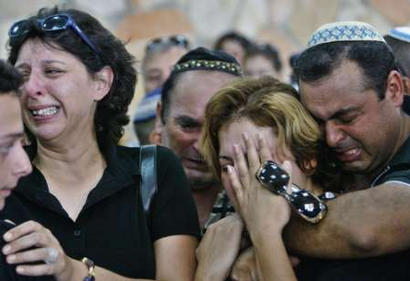
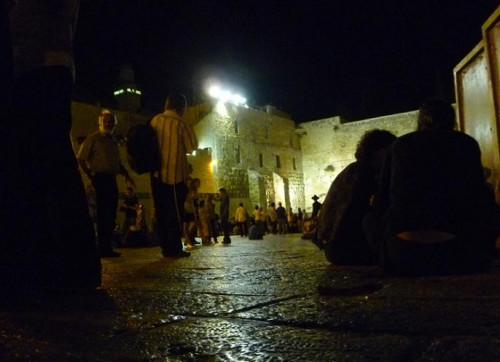
“Just as the bride circles around the groom as an expression of yearning and love, so do we circle Jerusalem’s gates as we express our yearning to see it rebuilt, our yearning for the days when we will all be able to go up to the Temple Mount and to the [rebuilt] Temple, and not just walk on the perimeter road that surrounds the walls”, said Nadia Matar.

The18th Annual Walk Around The Walls – Jerusalem
By Yehudit Katsover and Nadia Matar
As quoted from Magic City Morning Star

The Jerusalem Talmud makes an astounding statement: “The generation in which the Beit Hamikdash, the Temple, is not rebuilt is to be regarded as though the Beit Hamikdash was destroyed in that generation.” The explanation is simple. When we mourn for the Beit Hamikdash, we are not mourning for a building that was destroyed 2,000 years ago. Our mourning must be directed to the realization that each generation is obligated to rebuild the Beit Hamikdash and that our failure to do so has little to do with politics, the debate over who has control over the Temple Mount, or the threat of the Arab nations to go to war if we disturb the mosques that sit atop the Temple Mount. The Beit Hamikdash will be rebuilt when a sufficient number of Jews make a commitment to change their lives. When will the Messiah come? As the Torah says, “Today, if you hearken to My voice.”

-Rabbi Pinchas Stolper
“Why Do We Still Mourn”
Excerpted from Living Beyond Time: The Mystery and Meaning of the Jewish Festivals
quoted from Aish.com

I really thought I was done blogging about Tisha B’Av and the Temple and was planning on continuing to write about how we in the community of faith can love, but Rabbi Stolper’s article was recommended to me by a friend on Facebook (one who I’ve met in real life…thanks, Michele), so I thought I should read it.

And I couldn’t stop reading it, and thinking, and then writing.

When writing about Tisha B’Av, I naturally tend to focus on grief and loss. It never occurred to me to see the annual event of marching around Jerusalem as an act of love. In retrospect, it should have been obvious to me. Now it always will be.

But as I mentioned yesterday, how we love and even why we love can be terribly misunderstood. When a Christian says that he or she loves all people made in the image of God, including gay people, the LGBT community and the atheist world tends to doubt that Christian’s sincerity, at least unless the Christian follows up by saying they wholeheartedly support “marriage equality.” I mean, how can you love gay people if you don’t support their desire to marry? But then, how can you love God, love the teachings of Christ, believe his definition that marriage occurs exclusively between a man and a woman (see Matthew 19:4-6 as it references Genesis 1:27 and Genesis 2:24) and still be expected to love a gay person only by supporting “marriage equality?”

The answer is that Christians will express their love in many and varied forms as God defines love, but not as absolute agreement and approval of all progressive social and political expectations.

But when you love Jerusalem:

If I forget you, O Jerusalem,
let my right hand forget its skill!
Let my tongue stick to the roof of my mouth,
if I do not remember you,
if I do not set Jerusalem
above my highest joy! –Psalm 137:5-6 (ESV)

But there’s a problem here:

Palestinians accused U.S. Republican presidential candidate Mitt Romney on Monday of undermining peace prospects by calling Jerusalem “the capital of Israel”, ignoring their own claims to the city and most world opinion.

Romney used the term on Sunday to sustained applause from his Israeli audience in the Holy City, during a trip to present himself as Israel’s closest ally ahead of the November 6 election contest with President Barack Obama.

“We condemn his statements. Those who speak about the two-state solution should know that there can be no Palestinian state without East Jerusalem,” chief Palestinian negotiator Saeb Erekat told Reuters on Monday.

by Jihan Abdalla
for Reuters
as quoted from news.yahoo.com
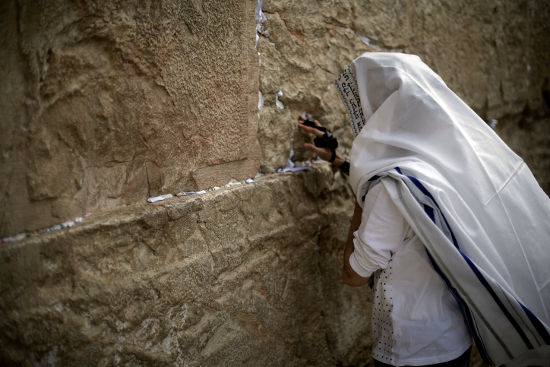
The Jewish people and Israel aren’t the only ones to have an interest in Jerusalem and the Temple Mount. Does loving Jerusalem, desiring that the Temple be rebuilt, and longing for the coming of the Messiah mean that the Jews fail at loving the Arab people? Do they even have an obligation to love and respect them? For that matter, since we Christians have a vested interest in seeing the Temple rebuilt (since prophecy states the Messiah; Jesus will be the one to rebuild the Temple in Jerusalem), do we have an obligation to love the Arab people who oppose this prophecy?

I can’t speak for the Jewish people, but as I said yesterday, as Christians we are obligated to love, even our “enemy.” Remember though, this isn’t “enemy” as in an enemy in war, but someone we encounter, someone in our environment, someone who needs God’s love as we can express it though acts of compassion and charity. Who’s to say who is our “enemy” or a “neighbor?”

Which doesn’t mean we have to agree with their politics or even their religion.

I can’t answer the question of how the Temple will be rebuilt and what happens to El Aqsa mosque, which is currently located on the Temple Mount. I leave that up to God. However, some Jewish people have a more definite solution as we see in Katsover’s and Matar’s news story:

Later in his (MK Prof. Aryeh Eldad, co-leader of the Erets Israel Knesset Lobby) speech he referred to the future of the El Aqsa mosque, located on the Temple Mount, as he sees it, and said that we can learn one thing from Beit El’s Ulpana Hill deal, and that is the idea of sawing. “There is one thing we can all learn from one of the most questionable deals we have made lately, and that is what happened at the Ulpana Hill, where they decided to dismantle and relocate the houses, rather than destroy them. At least, when the time comes to reconstruct the Temple, and that time is coming, we will dismantle and relocate the “house” that is currently there. We will cut it up and they can relocate it wherever they want, because that’s where the Third Temple belongs”, called out Eldad over the applause of the crowd.

I can’t imagine many Palestinian Arabs “feeling the love” for Prof. Eldad as he compares disassembling and moving the El Aqsa mosque to the way Jewish homes have been taken apart and removed from so-called “occupied” land, and reassembled in those parts of Israel the Palestinians formally recognize as Israel (at least for the time being). I can imagine that they’d experience Prof. Eldad’s words as about as loving as those of Mr. Romney when he declared that all of Jerusalem is the capital of Israel.

In other words, Palestinian Arabs would not hear any love at all.

It seems as if, at least from a Christian point of view, we have a conflict between our religious and theological priorities and the command to love other human beings. If we, for example, insist that “marriage equality” is in direct opposition to the definition of marriage that Jesus gave us, then we are perceived as not loving gay people. Or if we, using another example, believe that Jesus will return and construct a third, physical temple on the Temple Mount in Holy Jerusalem and re-establish Israel as not only a Jewish nation, but the head of all the nations of the earth, the Arab world will certainly not experience us as loving them, either.

So is this an either/or situation? Do we either stick to our theological guns, or toss the Bible, God, and faith out the window in order to blend in and disappear into the progressive social and political masses?

Or is it an either/or situation?

We are often told by atheists, progressives, and politically liberal religious people that Jesus loved unconditionally. But did he?

“Then the King will say to those on his right, ‘Come, you who are blessed by my Father, inherit the kingdom prepared for you from the foundation of the world. For I was hungry and you gave me food, I was thirsty and you gave me drink, I was a stranger and you welcomed me, I was naked and you clothed me, I was sick and you visited me, I was in prison and you came to me.’ Then the righteous will answer him, saying, ‘Lord, when did we see you hungry and feed you, or thirsty and give you drink? And when did we see you a stranger and welcome you, or naked and clothe you? And when did we see you sick or in prison and visit you?’ And the King will answer them, ‘Truly, I say to you, as you did it to one of the least of these my brothers, you did it to me.’

“Then he will say to those on his left, ‘Depart from me, you cursed, into the eternal fire prepared for the devil and his angels. For I was hungry and you gave me no food, I was thirsty and you gave me no drink, I was a stranger and you did not welcome me, naked and you did not clothe me, sick and in prison and you did not visit me.’ Then they also will answer, saying, ‘Lord, when did we see you hungry or thirsty or a stranger or naked or sick or in prison, and did not minister to you?’ Then he will answer them, saying, ‘Truly, I say to you, as you did not do it to one of the least of these, you did not do it to me.’ And these will go away into eternal punishment, but the righteous into eternal life.” – Matthew 25:34-46 (ESV)

I have to believe that Jesus loves unconditionally as God the Father loves humanity unconditionally, but that doesn’t mean we are all free to do as we please with no consequences, just because of that love. Apparently, Jesus has standards and expectations. Not everyone will be acceptable to him in the final judgment. There will be distinctions between people depending on how or if they expressed love in terms of feeding and clothing the needy and visiting the hospitalized and imprisoned, to take the examples presented in the verses above.

Jesus didn’t say that we had to love other people by agreeing with everyone’s social, political, religious, and national priorities. Loving others, as we see here, doesn’t obligate us to adopt everyone else’s behavioral and social desires, just as God’s unconditional love for us doesn’t absolve us from the consequences of our disobedience to Him.

I was recently reminded that the New Testament uses 1 Corinthians 13 as the “crystalization” of Christian love. Love is considered the greatest expression of faith and indeed, is greater than both faith and hope.

But love is not blind and it is not ignorant, nor should it be swayed by whatever issue is considered important or critical in this week’s mainstream news stories. But love is patient and love is kind and love perseveres, so when we struggle with the world around us, when we are condemned and called names because our love does not precisely match up with another person’s wants and desires, our response is not to attack those who are attacking us. To do so, makes our words nothing more than a “noisy gong or a clanging cymbal.”

We must remember that God has been infinitely patient with us. It’s not that he has approved of all of our foolishness, our mistakes, our willful disobedience. But we know that He is slow to anger and abundant in mercy and kindness. If we’ve learned anything at all as disciples of the Master, it’s that we need to be patient, too. We must have patience with our critics and patience with ourselves when we want to respond with anything less than grace.

And we must remember that the source of our love doesn’t flow from today’s headline story on MSNBC, or what happens to be trending on twitter or Facebook. The source of our love surges like waves directly from the heart of God.

Trust is the child of love, for where love showers down, trust will grow.

And since it is a child, the reciprocal is also true: As the child’s call awakens a parent from deep sleep, so trust awakens the love that gave birth to it.

Provide love, trust will be born from it.
Demonstrate your trust, and it will awaken love.

So it is with a child and a parent. So it is with two good friends. So it is with any marriage. Your love may hibernate in deep sleep, but you have trust that the other holds love inside, and in that trust, love awakens once more.

So it is with the love affair between your soul and her Beloved above. Trust that He is in love with you, and your love will awaken.

-Rabbi Tzvi Freeman
“Love and Trust”
Based on letters and talks of the Rebbe
Rabbi M. M. Schneerson
Chabad.org


How Can We Love The World?

How can we heal the world?

When a Jew, wherever she or he goes, carries every other Jew in his or her heart, then all of us are one.

And when we are one, all the peoples of the world can live in harmony as one.

And then the world is healed. For we are the heart of the world.

-Rabbi Tzvi Freeman
“We Can Heal the World”
Based on letters and talks of the Rebbe
Rabbi M. M. Schneerson
Chabad.org

A new commandment I give to you, that you love one another: just as I have loved you, you also are to love one another. By this all people will know that you are my disciples, if you have love for one another.”

John 13:34-35 (ESV)

It’s interesting that Rabbi Freeman suggests that Jews can heal the world by loving other Jews. Shouldn’t you heal the world by loving everybody indiscriminately? Isn’t that what Christians are supposed to do, to love everybody?

But what is Jesus saying in his new commandment? Is he telling his disciples (who at that point were all Jewish disciples) to love everybody? No. He’s telling them to love each other. In fact, he says that by every Jewish disciple of the Master loving each other, everyone else will know they are Christ’s disciples. It is a defining characteristic of being a disciple of the Jewish Messiah King both then, and in the present day world.

How odd.

Doesn’t that fly in the face of this parable?

And behold, a lawyer stood up to put him to the test, saying, “Teacher, what shall I do to inherit eternal life?” He said to him, “What is written in the Law? How do you read it?” And he answered, “You shall love the Lord your God with all your heart and with all your soul and with all your strength and with all your mind, and your neighbor as yourself.” And he said to him, “You have answered correctly; do this, and you will live.”

But he, desiring to justify himself, said to Jesus, “And who is my neighbor?” Jesus replied, “A man was going down from Jerusalem to Jericho, and he fell among robbers, who stripped him and beat him and departed, leaving him half dead. Now by chance a priest was going down that road, and when he saw him he passed by on the other side. So likewise a Levite, when he came to the place and saw him, passed by on the other side. But a Samaritan, as he journeyed, came to where he was, and when he saw him, he had compassion. He went to him and bound up his wounds, pouring on oil and wine. Then he set him on his own animal and brought him to an inn and took care of him. And the next day he took out two denarii and gave them to the innkeeper, saying, ‘Take care of him, and whatever more you spend, I will repay you when I come back.’ Which of these three, do you think, proved to be a neighbor to the man who fell among the robbers?” He said, “The one who showed him mercy.” And Jesus said to him, “You go, and do likewise.” –Luke 10:25-37 (ESV)

Jesus not only defined the two greatest commandments, which are the container for all of the mitzvot, but he “operationalized” them by giving us an illustration. It’s fairly well-known that Jews and Samaritans didn’t get along very well. They still don’t (yes, Samaritans still exist). Nevertheless, this Samaritan went out of his way to help the injured Jew proving, if we take Christ’s parable seriously, that he not only loved God with all of his resources, but that he did love his neighbor as himself.

So how are we to reconcile these two situations as Christians? Do we only love other Christians as Jesus himself defined our role, or are we also, as an expression of our love and devotion to God, to love other people, even people who aren’t like us, even people who don’t like us?

“You have heard that it was said, ‘You shall love your neighbor and hate your enemy.’ But I say to you, Love your enemies and pray for those who persecute you, so that you may be sons of your Father who is in heaven. For he makes his sun rise on the evil and on the good, and sends rain on the just and on the unjust. For if you love those who love you, what reward do you have? Do not even the tax collectors do the same? And if you greet only your brothers, what more are you doing than others? Do not even the Gentiles do the same? You therefore must be perfect, as your heavenly Father is perfect. –Matthew 5:43-48 (ESV)

In this case, loving your enemy doesn’t mean giving the soldier of the opposing army a kiss on the cheek during battle. Your “enemy,” in this example, is also your neighbor, your fellow citizen, a member of your community. They’re just someone you don’t like and who doesn’t like you. Well, it’s a little more than that. Your “enemy” can be someone you may have regular contact with but, on some fundamental level, they aren’t part of your “group.” Kind of like Jews and Samaritans or Atheists and Christians. But there’s more.

The New Testament is replete with examples of this type of love and the secular, atheist world (and politically liberal religious people who have adopted those liberal social imperatives) is watching us very closely to see if we are showing that kind of love. More to the point, they are watching us to see when we don’t show that kind of love, so they can call us hypocrites and many other names.

So we are responsible to God for how or if we love, we are responsible to the fellowship of believers who we are commanded to love, and we are responsible to humanity, who we are also to love as we love ourselves.

But what is love?

Generally, it’s not the warm and fuzzy feeling you get in relation to small children, cute kittens, or the really attractive person you’ve just started dating (if you’re single and dating). Love is what you do. The Torah is also replete with examples of how to love people you may not necessarily like. Here’s a brief example.

“You shall not see your brother’s ox or his sheep going astray and ignore them. You shall take them back to your brother. And if he does not live near you and you do not know who he is, you shall bring it home to your house, and it shall stay with you until your brother seeks it. Then you shall restore it to him. And you shall do the same with his donkey or with his garment, or with any lost thing of your brother’s, which he loses and you find; you may not ignore it. You shall not see your brother’s donkey or his ox fallen down by the way and ignore them. You shall help him to lift them up again. –Deuteronomy 22:1-4 (ESV)

The ancient Jewish mitzvot for how to love your Jewish neighbor became the cornerstone of the teachings of Jesus and not only affirmed these Torah commandments to his Jewish disciples, but established them as a way of life for all the non-Jewish disciples who came after them, hundreds and even thousands of years later.

But do we really love by doing? Do we go out of our way to help others?

Probably not as often as we should. The opportunities to fulfill the commandment to love are just endless. You probably come across such opportunities, great and small, everyday. Even holding the door open for someone fulfills this commandment. So does changing a person’s flat tire. So does smiling at someone who looks rather blue.

But while God may judge our love for others in this manner, most of the world doesn’t. Usually, Christian love is judged by how closely we approximate agreement with the various political and social priorities of the prevalent western, progressive society. Most recently, the most important social litmus test for whether or not a Christian truly loves is whether or not we wholeheartedly and unconditionally support “marriage equality” and all of the goals and priorities of the LGBT community.

I hate to bring politics into this, but this sort of thing has permeated the mainstream news media stories and it’s all over the numerous social networking venues. Reduced to its simplest form, for a progressive, a religious person is good if they completely agree with “marriage equality” and evil if they don’t.

Period.

But is that really love? Does being loving absolutely require total agreement with all popular social imperatives of the majority culture?

Do you always agree with those you love? Do you always agree with your spouse, your children, your parents, your closest friends? Do you always totally share every single social or political attitude and opinion with them as if they were your very own?

Probably not. I know I don’t. It doesn’t mean I don’t love them, it just means we have a difference of opinion or perspective on some matter. I love my three-year old grandson with all my heart, but I don’t always agree with him about what he wants to eat, how much television he wants to watch, and whether or not he should cross the street without holding my hand.

That’s not a great example for what I’m trying to say, but you get the idea. You can love someone a lot and still say, “No” to them or disagree with them, even on very important issues.

But what about the rest of the world? Do I love the stranger I walk past on the sidewalk in the way I love my wife? No, I don’t. So do I love the stranger at all? Yes, if they need my love. Unless I fail in the commandment, if they have a need that I can fulfill, I should fulfill it. Can I fulfill the needs of all strangers everywhere? No. I don’t have those kind of resources. So does that make me a failure at love as defined by God? I don’t think so. We should love as we have the ability to do so, not to the point of bankrupting ourselves or behaving irresponsibly.

If I say I love people including gay people, but I don’t wholeheartedly and absolutely support “marriage equality,” am I a failure at love?

I don’t think so, but opinions vary wildly on this point. Does loving someone mean agreeing with them on everything they say, want, feel, and do? If I don’t agree that gay marriage is the will of God because I cannot find it presupposed anywhere in the Bible, does that mean I don’t love a gay person or wouldn’t help him out with a meal, change his tire, open a door for him, smile at him, and otherwise express love toward him as God defines it?

I don’t think so.

But as you discovered at the beginning of this meditation, what love is and how it is expressed can be complicated. God is the source of our love. Before loving other people, we must love God, not just casually and not just abstractly, but with all of our mind, our emotions, our soul, and our resources. Only then are we equipped to love other people, starting with our own faith community but spreading out to the rest of humanity.

Children of GodThe “Good Samaritan” didn’t save all Jews who had been robbed and injured everywhere, he only saved the one he encountered. He may not have agreed with how the Jew defined religion, the various political and social causes he supported, or even the Jew’s attitudes about Samaritans (though those attitudes may have changed after this incident). All the Samaritan did, was take care of the injured man and made sure he was in a safe and secure place with his needs provided for. They didn’t have to be best friends and they didn’t have to share common social or personal opinions.

How can we love the world? We can start by carrying another person in our heart. We don’t have to always agree with each other. Loving other people doesn’t mean becoming a homogenous social mass without distinction. Ultimately, it will mean we all must love God, but obviously, that’s not going to happen anytime soon. However, for those of us who do love God, we can make a greater effort to love each other and to love others who are not like us. It doesn’t mean we have to surrender our moral imperatives as we understand them. It does mean that we must always be ready to change a tire, bind a wound, and take care of anyone who may need it and who we encounter.

Even if they don’t like us. Because in loving those people who say they’re our enemy, someday, we may heal them, and us, and everyone.

Tisha B’Av: Teaching Yourself to Care

Rav Chaim Kreiswirth, zt”l, said a similar thing based on a statement on today’s daf. “In Niddah 66 we find that when a woman went to Rav Yochanan requesting help about a problem that was particular to women he suggested that she ask other women to daven for her. On the surface, this seems strange. We know that our sages say that when one has a sick person in his home he should go to a chacham and request that he daven for the sufferer. Yet here we find an exception to the rule. Instead of the chacham alone davening, he sends her to other women to petition that they daven for her. Although the gemara cites that she is like a metzorah who should tell the many to daven for her, it seems odd that he said specifically to tell other women to daven for her.

“We learn an important principle from this story. That the only one who can really pray properly for a person suffering is the one who can truly empathize with the problem. We see that it is better for one who is ill with a certain sickness to request those who have suffered from it to daven for his recovery. Only those who have suffered from the disease truly empathize and their prayers will be more effective than those who have not.”

Daf Yomi Digest
Stories Off the Daf
“True Empathy”
Niddah 66

Is anyone among you suffering? Let him pray. Is anyone cheerful? Let him sing praise. Is anyone among you sick? Let him call for the elders of the church, and let them pray over him, anointing him with oil in the name of the Lord. And the prayer of faith will save the one who is sick, and the Lord will raise him up. And if he has committed sins, he will be forgiven. Therefore, confess your sins to one another and pray for one another, that you may be healed. The prayer of a righteous person has great power as it is working.

James 5:13-16 (ESV)

It seems in this case, that James, the brother of the Master, and the later Rabbinic sages agree with each other. We indeed should pray for each other and if ill or suffering, we are directed to request prayer from the righteous. For a religious Jew, that means seeking out a chacham or tzaddik, since the prayer of a holy person “has great power as it is working.”

But is it true that our prayers or more effective when “intoned wholeheartedly,” to quote another part of the “story off the daf?” I believe this is true. Haven’t there been times when you attempted to pray for another only out of duty and not because you really cared? Maybe a person asked you to pray for a situation that you didn’t believe was terribly serious. Maybe you even said you’d pray for them and then completely neglected the matter. How would such lackluster prayers or no prayers at all help anyone?

Yesterday was Tisha B’Av, a day of tremendous grief among the Jewish people; a day that marks many terrible tragedies for the Jews, including the failure of the generation of Israelites who left slavery in Egypt to enter into Eretz Yisrael and take possession of the Land. It is also the date on which the Holy Temple in Jerusalem was destroyed and the Jewish people were sent into exile for nearly 2,000 years.

Our Sages explain that the people, who lived at the time of the Temple’s destruction by the Romans learned Torah, did misvot and performed acts of kindness. Why was the Temple destroyed? Because of sin’ at hinam–baseless hatred. Jealousy and selfishness created differences in people. ”Why does he drive such a nice car and I pray that mine will start every time that I put the key in the ignition?”–”I work so hard and do everything with impeccable honesty, so how come his business is flying and mine can’t show a profit?” Questions like these are at the root of baseless hatred. They doubt the correctness of G-d’s “distribution system”. You might even go so far as to say that they reveal a lack of Faith!

-Rabbi Raymond Beyda
“You Gotta Believe”
Commentary on Torah Portion Devarim
Torah.org

It may surprise many Christians to realize that the destruction of the Temple and the exile of the Jews wasn’t due to a lack of piety or religious observance. The religious practice of the Jews in Israel in those days was above reproach.

But…

But, according to midrash, the sin of baseless hatred of one Jew for another was very great and indicated a lack of faith among the people. How can even impeccable acts of piety and holiness be truly effective if faith is diminished by hatred? How can prayers be effective and invoke a response from God if our trust in Him is small?

And when they came to the crowd, a man came up to him and, kneeling before him, said, “Lord, have mercy on my son, for he is an epileptic and he suffers terribly. For often he falls into the fire, and often into the water. And I brought him to your disciples, and they could not heal him.” And Jesus answered, “O faithless and twisted generation, how long am I to be with you? How long am I to bear with you? –Matthew 17:14-17 (ESV)

I don’t say all this to “bash” the ancient or modern Jewish people but to illustrate that we Christians can suffer from the same lack of faith, devotion, and intension as Jesus is describing. We can all suffer from a lack of empathy for our fellow human being.

But what about empathy and true intension in prayer? According to Rav Chaim Kreiswirth, the person who will offer up the most sincere prayers to God for our suffering is the one who has suffered similarly. A woman who labors under difficulties that are unique to women, according to this principle, should seek out other women to pray for her.

Let’s apply this to the Jews and Tisha B’Av. Although the many horrors that the Jews have suffered was technically observed yesterday, because yesterday was also the Shabbat, the fast was not observed. Today is when religious Jews all over the world will allow themselves to fast, to pray, to grieve over their long history of trials and anguish.

And so it has been for thousands of years –the mazal–luck– of the Jewish people has been bad on that night– the night of Tisha B’Ab. The first and the second Temple were destroyed by gentile armies –on Tisha B’Ab. The city of Bitar was raped and pillaged and hundreds of thousands of our gentle brethren were slaughtered on Tisha B’Ab. The Jews were expelled from Spain and England–on the night of Tisha B’Ab. The terrible history of the destruction of Judaism in Europe at the hands of the Nazis y”s, began with the political upheaval of World War I, which, not coincidentally, began on the night of Tisha B’Ab in 1914.

-Rabbi Beyda

Why do we mourn on Tisha B’av? Why not come to terms with the fact that the Holy Temple is gone, accept G-d’s judgment, and make the best of Jewish life without a Temple? Isn’t it an essential Jewish value that we should accept G-d’s decrees? Well, yes, that is true for all of G-d’s decrees — except the destruction of the Temple. For nearly 2000 years, Jews have sat on the floor, weeping through the stirring descriptions of Jerusalem’s destruction and the tragedies faced throughout their history in exile. Every day they have prayed for a rebuilt Jerusalem. These demonstrate an intense national longing to reunite with G-d’s Presence, in a way that could only be felt in the Temple in Jerusalem. When lovers are separated, their bond is shown in their yearning to return to each other. That thirst to reconnect with G-d is the true essence of Tisha B’av.

-Rabbi Modechai Dixler
“Shabbos Mourning”
ProjectGenesis.org

In my previous commentary on Tisha B’Av, I suggested that Christians should also mourn the loss of the Temple because in a way, it’s our loss, too. The Jews will see the Temple rebuilt only when the Messiah rebuilds it. For a Christian, that means the Temple will be rebuilt upon the return of Jesus Christ (I know many Christians believe what Jesus will build is a “spiritual” Temple and not the physical structure, but I have no problem believing that the Throne of the Messiah will one day exist upon the Temple Mount in Jerusalem).

But upon reflection, I wonder how can we mourn with empathy what we don’t understand? How can Christians or anyone but a Jew, actually “feel” the loss of the Temple, the loss of connection to God that the missing Temple represents? On Tisha B’Av, many, many Jews travel to the Kotel, what some call the “Wailing Wall” in Jerusalem, the last remnant of Herod’s Temple that Jews are allowed to access (since they are forbidden to ascend to the top of the Temple Mount and pray), and pour our their tears, their prayers, and their hearts to God, begging for the coming of the Moshiach and for God’s grace and mercy to rain upon His people Israel.

How can we Christians even begin to understand what Tisha B’Av means? How can we pray for the Jews? How can we mourn along side of them?

I don’t know.

I do know that some Christians do (though not as many as I’d wish). I know some believers have turned their hearts to God and to the Jewish people, they have turned to the east to face Jerusalem…and they have cried bitter tears as they see the grief of the Jews and they have allowed their hearts to melt and bleed.

Today is Sunday, and most Christians will be headed off to church this morning. They will pray in their sanctuaries and in their Bible classes. They will pray in their homes and with their families. I only ask that some of you reading this morning’s meditation allow a double meaning to your prayers and petitions to God as His Holy Spirit calls to you.

I would not have you weep any less for that charming, good and handsome Christian. I only ask this: that as the great cold surrounds my bones, you allow a double meaning for your mourning veil. And when you let fall your tears for him, some few will be… for me.

from the play Cyrano de Bergerac
by Edmond Rostand

The love of Cyrano’s life, the beautiful Roxane, was in love with another, the handsome cadet Christian de Neuvillette. Cyrano, although incredibly accomplished, felt no woman could ever love him because of his ugliness. Toward the end of the play, de Neuvillette has died and Roxane is in mourning. Cyrano asks not that she cease her tears for the “charming, good and handsome Christian,” but only that he might consider that, at his own death, some portion of her sorrow could also be for him.

The irony is at the play’s end, Roxane confesses her love for Cyrano as he is dying in her arms. How many of us, like Cyrano, deny ourselves our heart’s desires believing they are unattainable when in fact, they are at our very fingertips.

Perhaps our sincerity and devotion in prayer is like that. We have only but to look in the right direction, to open ourselves to God and to see the Jewish people with new eyes. Maybe we only need to exchange our heart of stone for one of flesh. And then, as Jews weep and fast and immerse themselves in pools of sorrow, some few of us can shed our tears with them.

Any human being can climb higher than this world. But it’s not a flash from above that will take you there.

Every day, from the time you open your eyes until the time you close them, teach your eyes to see the world as it is seen from above.

-Rabbi Tzvi Freeman
“Practice Makes Perfect”
Based on letters and talks of the Rebbe
Rabbi M. M. Schneerson
Chabad.org
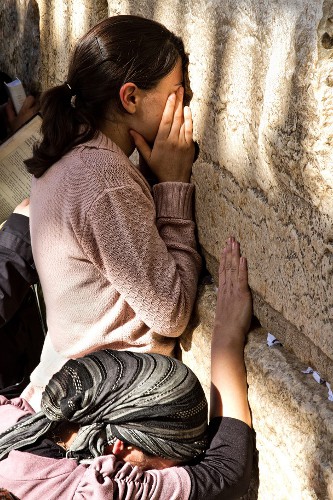
Tisha B’Av: Longing for Goodness and Righteousness

Jewish in Jerusalemlast night i decided to take a walk around 1am. on my way back a sweet old lady approached me asking if i knew where a certain hotel was. i must note that since leaving my house i was filled with this expansive sense of love and suddenly the situation struck me as very odd that an elderly woman was roaming the streets looking for a place to stay for the night. i told her i did not know where the hotel was but i knew of a hostel nearby. we walked there but there was no room. then we tried another hotel, long story, it turned out the rooms there were $200/night, more than the woman had. at this point the woman began looking at stairwells and considering just sitting somewhere for the remaining night hours. the situation was heartbraking. i even offered to let her stay in my room on a mattress, but she did not want to impose. at this point we were in the ultra-orthodox jewish neighborhood of jerusalem, and i thought, perhaps someone knows of somewhere she could rest for the night, perhaps in a syngagogue or house of study. without really thinking i told her to wait and ran after one of the ultra-orthodox men walking the streets. i explained the situation and asked if he knew of a place she could rest, he said no..no..i began to give up..then he said…

“Tzedakah miracle in Ir HaKodesh, week of Shabbos Chazon 5772”
Rucho Shel Mashiach blog

I actually posted a link to this blog article on Facebook a few days ago, but I really wanted to write about what it means to me (you can click the link above to read the whole story, but I’m going to finish the quote in just a little bit).

I was thinking about Christian perceptions of Jews and Judaism. At its worst, Christianity thinks of Judaism as a dead, works-based religion that has no spirit or soul, no connection to the living God, and that religious Jews only do good deeds because they’re “under the Law” and out of fear of breaking their commandments.

But then I realized that atheists think about Christianity in pretty much the same way.

I’ve been criticized several times over the past week or so by atheists who say that I need to have the “excuse” of God to do anything good for another person. They ask why I can’t just do good deeds because it’s the right thing to do? After all, that’s what (supposedly) all atheists and progressive humanists do.

My, my, my but how we judge each other. Hopefully the “Tzedakah miracle” story will help change some Christian minds about how Jews see helping other people. I’m not sure what to do about helping atheists see that we Christians can actually do good as well, and how we experience Jesus as a powerful motivator and example of what it is to be charitable.

I was also thinking about Tisha B’Av which begins on Saturday at sundown. It’s the solemn commemoration of the destruction of both Solomon’s and Herod’s Temples, as well as many other tragic events that have occurred in Jewish history. Jews typically fast on this occasion, which is the culmination of a three-week period of mourning, and refrain from various pleasurable activities.

Of course, for Christians and everyone else, it’s just another day.

I sometimes wonder why Christians don’t mourn the destruction of the Temple. I know, that probably sounds silly. Most Christians believe that the Temple was destroyed as a natural result of the coming of Jesus and that now, each individual Christian is a “temple” for the Holy Spirit. The physical becomes “spiritualized” a great deal in Christianity.

But among other things, the rebuilding of the Temple in Holy Jerusalem is part of what the Messiah is supposed to do (see Jeremiah 33:18). Here’s a little bit more about what the Messiah will do when he comes.

The mashiach will bring about the political and spiritual redemption of the Jewish people by bringing us back to Israel and restoring Jerusalem (Isaiah 11:11-12; Jeremiah 23:8; 30:3; Hosea 3:4-5). He will establish a government in Israel that will be the center of all world government, both for Jews and gentiles (Isaiah 2:2-4; 11:10; 42:1). He will rebuild the Temple and re-establish its worship (Jeremiah 33:18). He will restore the religious court system of Israel and establish Jewish law as the law of the land (Jeremiah 33:15).

“Mashiach: The Messiah”
Judaism 101

Although plainly depicted in prophecy, almost all of the information in the quote above isn’t generally known and accepted in the church.

But assuming it is true, then perhaps we Christians should mourn the Temple. Perhaps we should long to see it rebuilt because that would mean the Messiah, the Christ has returned.

But what does this have to do with charity? More than you might think.

Jews long for the coming of the Messiah so that their exile will end and that Israel will be restored to great glory and God will be revered by all of the earth (and just because the modern state of Israel exists today, doesn’t mean the exile has ended yet). Christians want Jesus to come back because he will rule and reign over the earth and everyone will honor Christ and Christianity and know God through him.

Similar goals but radically different applications.

Except for a few things like charity.

Both the Jewish and Christian requirements to do charity are rooted in the same source: the Law of Moses. The Torah of Moses and the Gospels of Jesus both go to great efforts to encourage and support a lifestyle of giving and generosity among their devotees. Although in Christianity, there is no direct connection between doing good and bringing back Jesus, in Judaism, every act of tikkun olam or “repairing the world” is thought, at least by some, to hasten the return of Messiah (the mechanics behind this concept are complex, so I won’t delve into them here).

I don’t know if it’s true or not that doing charity brings the Messiah closer to returning, but it couldn’t hurt.

And it couldn’t hurt to help someone out when they’re in need. Does there have to be a reason or does your reason or mine really matter? After all, regardless of motivation (interesting article, by the way), if you give a hungry person some food, they’ll still be fed.

Interestingly enough though, charity doesn’t always have a straightforward result, as we see in the conclusion of the “Tzedakah miracle” story (and as far as I can tell, this isn’t “just a story,” it’s real life):

without really thinking i told her to wait and ran after one of the ultra-orthodox men walking the streets. i explained the situation and asked if he knew of a place she could rest, he said no..no..i began to give up..then he said, that he has money, if that could help. as if to reject it i said no, the only room is $200, but thank you. he preceded as if i had said $5, pulled $150 out of his wallet and handed it to the woman while quoting from the talmud that the temple was destroyed because of a lack of love between people. together we giddily walked to the luxury hotel, only to find out that there were no rooms available! the man then said to the woman that it is not right to ask for charity back after it has been given, so the money is now hers. we considered several other hotels and the man walked off. as soon as he walked off the woman took my hand and we walked into an alleyway. she was beaming with excitement, she said, i will go to the local hospital and sit there for the night, now i have money for the whole week, i can stay somewhere nice while i find an apartment, maybe even save it for shabbos. in other words, hashem orchestrated a miracle..nothing could have turned out better. when i told a friend about this he said i had met the souls of abraham and sarah roaming the streets of jerusalem. now i know why i felt compelled to take a walk, sometimes we are but vehicles for the miracles that are scheduled to take place..

The old woman never found a very comfortable place to spend the night, but instead of spending all of her new-found “wealth” in a single evening, she now had enough money to live on for a week. True, her situation was not permanently solved, but just think of how many people all across our planet live extremely uncertain lives. Even if we give them charity, we can’t solve all of their problems forever. But then, giving them enough to eat even for one more day makes life better for them.

But what about the Temple? Is there a hidden blessing in its destruction and the long, long wait for the coming of the Jewish Messiah King? I don’t know except perhaps that it gives us time and something to shoot for. It reminds us that the Temple is no longer with us because of lack of love between people (at least according to the Talmud). The world needs a lot of fixing. No doubt about that. It’s probably the one thing we can all agree on, regardless of our politics, our religion (or lack thereof), our social standing, or anything else. The world’s a mess.

Tisha b'Av at the Kotel 2011There are a lot of missing bits and pieces to the world that need to be replaced and repaired. It’s like our existence is a half-built jigsaw puzzle and we’re the puzzle makers. We have to cooperate to make the picture whole. For those of us who believe, Jesus will come and his job will be to do the final “fixing.” For religious Jews, the Messiah will come and do pretty much the same thing. But you and I are here now. People are still hungry and homeless. We can’t solve their problems, but we can make their lives just a little bit better for an hour, or a day, maybe even for a week if God so wills it.

We can grieve and feel sorrow over our losses. We can complain about what’s wrong with the world and complain about the politics and religions of those people who are different from us. Or we can let events like Tisha B’Av remind us that we have lost but we also have something to look forward to. Tisha B’Av also reminds us that we can get over ourselves, get over being cranky, and try to be part of the solution instead of part of the problem.

I said this ago a few days ago, but it bears repeating. “Do good. Seek peace. Keep swimming.” Give life. I don’t care why you do it. Just do it.

May the inherent righteousness and goodness of all our souls be revealed in full and hasten our full redemption, and may we merit to see the third temple speedily in our days, as one people with one heart.

Rucho Shel Mashiach

Edit: I should note that Tisha B’Av actually starts tonight at sundown, but because it’s also Erev Shabbat, the fast doesn’t begin until after Shabbat has ended. I apologize for the error I made above.

I’m Younger Than That Now

When I was seventeen
It was a very good year
It was a very good year for small town girls
And soft summer nights
We’d hide from the lights
On the village green
When I was seventeen

“It Was a Very Good Year” (1961)
-composed by Ervin Drake

A self-ordained professor’s tongue, too serious to fool
Spouted out that liberty is just equality in school
Equality, I spoke the word as if a wedding vow
Ahh, but I was so much older then, I’m younger than that now

My Back Pages” (1964)
-composed by Bob Dylan

This is a counterpoint to this morning’s meditation, which had a distinctively forlorn tone and pessimistic outlook. Life can be like that for me sometimes. I suppose it can be like that for some of you on occasion. But something LeVar Burton said on twitter about 1968 made me think back. I actually “misremembered” the famous chorus to Dylan’s tune as, “I was so much younger then, I’m older than that now.”

When I looked up My Back Pages (and I’m probably remembering The Byrds’s cover of the song), I realized my mistake. Then the Drake song, made famous by Frank Sinatra, popped into my head.

That’s more like it. That’s what I was thinking. That’s what I was feeling. I was so much younger then, and it was a very good year.

But this is supposed to be optimistic, isn’t it?

I’m utterly convinced that the key to lifelong success is the regular exercise of a single emotional muscle: gratitude.

People who approach life with a sense of gratitude are constantly aware of what’s wonderful in their life. Because they enjoy the fruits of their successes, they seek out more success. And when things don’t go as planned, people who are grateful can put failure into perspective.

By contrast, people who lack gratitude are never truly happy. If they succeed at a task, they don’t enjoy it. For them, a string of successes is like trying to fill a bucket with a huge leak in the bottom. And failure invariably makes them bitter, angry, and discouraged.

Therefore, if you want to be successful, you need to feel more gratitude. Fortunately, gratitude, like most emotions, is like a muscle: The more you use it, the stronger and more resilient it becomes.

-Geoffrey James
“True Secret to Success (It’s Not What You Think)”
Inc.com

That reminds me of the very first meditation I wrote for this blog, exactly 14 months ago today.

“I gratefully thank You, living and existing King
for restoring my soul to me with compassion.
Abundant is your faithfulness.”

Blessing Upon Arising in the Morning

It’s the one Jewish blessing I still allow myself to recite and virtually the first coherent thought I have upon awakening each morning.

I’m grateful to wake up alive.

In his article, Geoffrey James calls gratitude the “secret to success.” He talks about making a list of everything that happened to you during the day that makes you grateful and writing it all down before going to bed. He says that the more you practice gratitude, the more it will become part of your “reprogramming.”

It’s funny, but I think the Jewish sages had that idea long before James wrote his wee article for Inc.com.

Of course, that’s how we learn just about anything, by practicing. I suppose that’s true of being grateful. I suppose that’s true about having a relationship with God. Like any relationship, it takes practice, patience, and lots of attention. You reap the rewards of whatever you put into it. If you practice too little, the rewards are very few.

Both “It Was a Very Good Year” and “My Back Pages” are retrospectives on life. The former song expands the person’s vision across an entire human lifespan while the latter is Dylan’s personal presentation of his disillusionment with the folk protest movement of the early 1960s.

I periodically become aware that there are more days behind me than there are ahead, but I take some comfort in my family, the next generation I see in my children, and the generation beyond that in my grandson.

And I take some comfort in God.

But it’s difficult not to look back and ponder all the youthful wonder and immature anguish, the carefree nights and days and the painful and terrible mistakes. Was I a better person then, or now? What have I learned. Was being seventeen really better? Am I younger or older than that now?

But however it’s all worked out, I haven’t forgotten to be grateful to God. I’m alive. I have a wife and three children. I have a grandson (and I can still hardly believe I’m a grandpa). I’m working. I live comfortably. I’m able to give something back to my community, which is a blessing. Life isn’t perfect, but God has been generous.

And I’m grateful. I should practice that more.

Yes, my guard stood hard when abstract threats
Too noble to neglect
Deceived me into thinking
I had something to protect
Good and bad, I define these terms
Quite clear, no doubt somehow
Ahh, but I was so much older then
I’m younger than that now

-Dylan

But now the days grow short
I’m in the autumn of the year
And now I think of my life as vintage wine
from fine old kegs
from the brim to the dregs
And it poured sweet and clear
It was a very good year

-Drake

How do I feel?

I feel older. But sometimes, when I’m grateful, I feel young.


Above All Else, God Needs To Feel Compassion

Fear is the opposite of genuine faith. Fear comes from a place of faithlessness. When we have real confidence in God, fear is driven out. For the person of faith, fear is actually irrational.

Thought for the Week
“Fear Not”
Commentary on Torah Portion Devarim
First Fruits of Zion (FFOZ)

There are times when moving forward is not enough. There are times when you can’t just change what you do, how you speak and how you think about things. Sometimes, you have to change who you are. You need to pick both feet off the ground and leap.

-Rabbi Tzvi Freeman
“The Quantum Leap”
Based on letters and talks of the Rebbe
Rabbi M. M. Schneerson
Chabad.org

And while the future’s there for anyone to change, still you know it’s seems it would be easier sometimes to change the past.

Jackson Browne
Fountain of Sorrow
from the album Late for the Sky (1974)

Uh-huh.

I keep thinking about the victims of the Aurora, Colorado theater shootings. I’m sure some of the people who were there, some of the wounded, some of those who died, were probably religious. Some of them probably had faith. Some of them probably loved God. Did those people have no fear in the dark, choking on whatever gas the shooter released into the air, hearing the gunshots, the screams of the victims, seeing the blood. Were they not afraid because they had faith?

People get hurt, we get sick, we’re afraid, we sometimes cry. Doesn’t God understand that? If the writer of the FFOZ commentary is right, then every time a person of God feels fear, they are experiencing faithlessness. They are experiencing a total, catastrophic failure in their faith, a failure as a disciple of the Master, a failure as a child of God, and a failure as a human being.

Nevermind that we’re wired to have all of these emotions that we experience, including the emotion of fear. If you take your small, sick child to the doctor and you are told your baby has leukemia, is it a sin to be afraid that your child will die? If you lose your job and realize that you have no way to support your family and will most likely end up putting your wife and children on the street because you failed, is it a sin to be afraid?

It would be wonderful to not feel fear. It would be wonderful to approach every difficult situation with ultimate confidence and self-assuredness. It would be wonderful to constantly experience the love, grace, and strength of God in all circumstances, no matter how dire, knowing that even if you should be hurt, suffer the most hideous and painful diseases, and even face the loss of everyone you have ever loved, that it would be OK because God is with you.

And you never ever felt afraid.

It would be wonderful, but how many people have ever pulled it off? How many people have that much faith, trust, and confidence in themselves let alone God, to never feel afraid?

I don’t know the answer, but I suspect that the number is extremely small.

And he came out and went, as was his custom, to the Mount of Olives, and the disciples followed him. And when he came to the place, he said to them, “Pray that you may not enter into temptation.” And he withdrew from them about a stone’s throw, and knelt down and prayed, saying, “Father, if you are willing, remove this cup from me. Nevertheless, not my will, but yours, be done.” And there appeared to him an angel from heaven, strengthening him. And being in an agony he prayed more earnestly; and his sweat became like great drops of blood falling down to the ground. –Luke 22:39-44 (ESV)

It’s impossible to really know what Jesus was feeling at that moment in time, but obviously he wasn’t facing his bloody, tortuous execution with calm, cool detachment. He accepted the cup set before him by the Father, but he still asked that it be taken away. He still was in agony, so much so, that “his sweat became like great drops of blood falling down to the ground.”

But the Bible says,

…fear not, for I am with you; be not dismayed, for I am your God; I will strengthen you, I will help you, I will uphold you with my righteous right hand. –Isaiah 41:10 (ESV)

PleadGod was addressing Israel through the prophet Isaiah. Did Israel feel no fear because God was with them? Did they feel no fear when faced with the barrier of the Reed Sea as the armies of Egypt descended upon them with murderous intent? Did they feel no fear as they faced giants and fortified cities when they first tried to cross over into Canaan? Did they feel no fear on the day when the Temple was destroyed, when Jerusalem was burned to the ground, when the Jewish people were sent into exile and scattered like loose change among the nations of the world for 2,000 years?

For you did not receive the spirit of slavery to fall back into fear, but you have received the Spirit of adoption as sons, by whom we cry, “Abba! Father!” –Romans 8:15 (ESV)

Yesterday, I wrote,

Maybe you’re thinking I’m being unreasonable. Maybe you’re thinking that I can’t be serious. Maybe you’re thinking that it would be too hard for you to help another person while facing a crisis of your own. And yet, God calls us to serve Him under all circumstances. Certainly we expect Him to serve us no matter what we’re going through and no matter what else is happening in the world.

You and I are only flesh and blood and bone. We’re weak. How can we stand up under the pressures of life and still be expected to help someone less fortunate than we are?

Some days the faith and trust is better and some days it’s worse. Some days I feel like I can take on whatever life and God dish out and some days I just want to hide in bed under the covers and have God make it all go away.

Someone recently commented on one of my blog posts, “I say, let the End come! Only He can fix this mess. We just keep messin’ it up!” I responded with encouragement. We can’t give up. We can’t just sit on our thumbs and do nothing and wait for Jesus to arrive on the bus from Heaven to repair our broken and dying world.

But discounting our weakness and criticizing the faithful for being faithless when we feel fear isn’t an answer I can accept. All flesh is grass (1 Peter 1:24). It is said that the spirit is willing but the body is weak (Matthew 26:41). I say that even the spirit is weak sometimes. For some people, it’s weak a lot of the time.

Some people say that fear is a liar and I suppose if a person allows fear to be the driving force in their life, then they will never really live. But many people have good reasons to feel afraid, either because they’re in a stressful or dangerous situation, or they’ve experienced enough of those situations that the future looks like a room full of tripwires and trapdoors.

But having said all that, the FFOZ commentary ends on this note:

It may not sound like one of the commandments of the Torah but it actually is a rule of life for the People of God. We are to live by faithful confidence in the strong hand of God. He who delivered Israel from Egypt and defeated the Amorites will also deliver the Canaanites into the hands of Israel. He who rescued our Master and Savior from the grave will also rescue us from every trouble and fear.

Yeshua says, “Are not two sparrows sold for a cent? And yet not one of them will fall to the ground apart from your Father. But the very hairs of your head are all numbered. So do not fear; you are more valuable than many sparrows.” (Matthew 10:29-31)

According to Rabbi Freeman, we have a Godly soul that strives to go higher each day and “she will transform that animal to yearn with a divine yearning.”

We have a Godly soul and a body of shredded and bleeding flesh. When you’re young, you have a certain amount of courage, even to the point of foolishness, because in most cases, nothing really bad has happened to you yet. After three or four decades, you know better. If you stick your hand in a fire, you’ll be burned. The chest pain you are feeling might not be “just indigestion.” The “near miss” on the freeway because an aggressive driver just had to pull in front of you came within an inch of a collision at 65 miles per hour.

I can’t give up. I can’t be safe. I cannot hide. God does not promise that I won’t ever suffer or die in pain. The Book of Job scares the heck out of me.

All I know is if God decides to slowly feed me into a running wood chipper feet first, an inch at a time, my only guarantee is that He will be with me. One translation of Job 13:15 says, “Though He slay me, I have no hope.” I suppose it’s more encouraging to rely on standard translations like, “yet I will wait for Him” or “yet will I hope in Him.”

I just wish some religious people wouldn’t be so hard on the rest of us (or is it only me?). Faith isn’t easy. Hope often fails. The commentary says,

When we feel frightened or worried, we must remember who our Father in Heaven is, and that He cares for us and watches over us.

Tell that to the people of Haiti who are still struggling. Tell that to the Christians in Japan post-tsunami. Tell that to every soldier, Marine, and sailor who has ever gone to war and still struggles with PTSD years and even decades later.

And tell that to the victims of the Aurora, Colorado movie theater massacre.

Are they just going to recover, bounce back, and feel all hunky-dory again as if nothing ever happened? Are those people weak when they hear a car backfire and run for cover? Do they all suffer from chronic faithlessness just because they get scared?

Don’t you have compassion? Haven’t you ever been afraid?