Category Archives: Uncategorized

Review of “The Gentile Believer’s Obligation to the Torah of Moses”

At the same time, believers sometimes assume that HaShem’s Torah applies only to Jews and not to Gentile disciples at all. Nothing could be further from the truth. Despite the fact that the apostles “loosed” the Gentiles from these sign commandments, for the most part they are bound to the rest of the Torah’s mitzvot. It should be emphasized that Gentiles in Messiah have a status in the people of God and a responsibility to the Torah that far exceeds that of the God-fearer of the ancient synagogue and that of the modern-day Noachide (Son of Noah). Through Yeshua, believing Gentiles are been (sic) grafted in to the people of God and become members of the commonwealth of Israel. While membership has its privileges, it also has its obligations.

-by Toby Janicki
“The Gentile Believer’s Obligation to the Torah of Moses”
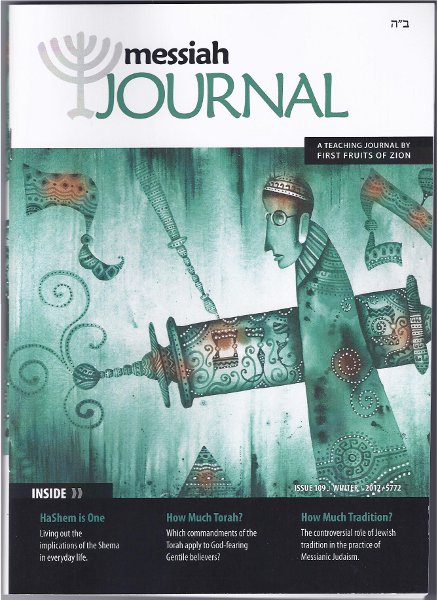
Messiah Journal
Issue 109/Winter 2012, pg 45
First Fruits of Zion (FFOZ)

Excuse me. What did you say?

A few days ago when I received the latest issue of Messiah Journal (MJ) in the mail, I commented that was looking forward to reading Toby’s article, but I wondered if what he was addressing was just a rehash of previous write ups on the same topic.

No, it’s not.

Toby does something I’ve never seen done before (not that somebody else couldn’t have written about this and I’m just not aware of it). He takes the four basic prohibitions outlined in the Acts 15 “Jerusalem Letter” and deconstructs them, expanding the specific details underlying the directives of James and the Council, and then tying them all back into the relevant portions of the traditional 613 commandments. Basically, Toby uses Acts 15 as the jumping off point to explain the nature and character of a non-Jewish disciple’s obligations (yes, I said “obligations”) to the Torah given at Sinai.

I did something similar over a year ago, but my jumping off point was Matthew 28:18-20, which is commonly referred to as “the Great Commission.”

To get the true flavor of what Toby is suggesting, let’s review the basics of “the letter:”

For it has seemed good to the Holy Spirit and to us to lay on you no greater burden than these requirements: that you abstain from what has been sacrificed to idols, and from blood, and from what has been strangled, and from sexual immorality. If you keep yourselves from these, you will do well. –Acts 15:28-29

As Toby points out, on the surface, it seems as if the Gentile disciples of Jesus had very few responsibilities to God, but this is deceiving. As he points out in the subsequent pages of his article, each of these prohibitions has an amazing depth all its own that isn’t apparent until you dig into it. This is, as Toby muses, probably why James also said “from ancient generations Moses has had in every city those who proclaim him, for he is read every Sabbath in the synagogues” (Acts 15:21). The Gentile disciples would need to attend the synagogues to learn and understand the many and subtle details involved in just complying with their responsibilities to these “simple” prohibitions.

I won’t go into those details because then, I’d have to recreate large portions of Toby’s article (and you’d be better off getting a copy of MJ 109 and reading the whole thing for yourself). However, Toby doesn’t limit himself to the “Jerusalem Letter.” He responds to some of the criticisms about Christians being limited to “the letter” by explaining some of the more obvious prohibitions against murder, theft, and coveting, which were not written down and were considered “Duh…obvious commandments” (quoting D. Thomas Lancaster from his book The Holy Epistle to the Galatians [pp 252-253]). These “Oh duh” commandments also include loving your neighbor, although I notice Toby did not cite the most apparent example found in the Master’s own teachings:

But when the Pharisees heard that he had silenced the Sadducees, they gathered together. And one of them, a lawyer, asked him a question to test him. “Teacher, which is the great commandment in the Law?” And he said to him, “You shall love the Lord your God with all your heart and with all your soul and with all your mind. This is the great and first commandment. And a second is like it: You shall love your neighbor as yourself. On these two commandments depend all the Law and the Prophets.” –Matthew 22:34-40

Beyond that, Toby digs further and presents some commandments that apply to the Gentile disciples that are not “Oh duh” and not found in Acts 15:

They can rather be derived from a careful reading of the Apostolic Writings in light of Jewish thought. One such set of mitzvot is the Gentile’s responsibility of honoring the Temple.

-Janicki, pg 53

What? The Temple? Most people don’t realize that during the Second Temple period, a non-Jew actually could bring an acceptable sacrifice to Herod’s Temple and expect that it would be received.

While Gentiles were not to bring certain offerings at certain times such as guilt..or sin..offerings, they were permitted and encouraged to bring burnt (olah) and peace (shelamin) offerings. The priest would attend to these offerings just as if an Israelite offered them up, and Gentiles were required to follow the same standard requirements for the sacrifices, e.g., their sacrifices were to be unblemished (Leviticus 22:21) and from an animal seven days or older (Leviticus 22:27).

-Janicki pg 54

Toby goes on to describe how the laws regarding ritual purity relate to the Gentile, as well as the application of set times for prayer (see my article The Prayer of Cornelius for additional details) and mealtime blessings.

Toby’s article does restrict certain of the mitzvot to the descendents of the Hebrews such as the mitzvah of circumcision (brit milah). I had a brief phone conversation with Boaz Michael (founder of FFOZ) yesterday, and he mentioned how the picture of circumcision in Paul’s letters seems like such an obvious demarcation line in terms of those who are fully under the Torah’s yoke, with Titus and Timothy cited as the clearest examples. Yet even in this, Toby said something very surprising:

Gentiles are specifically enjoined not to be circumcised for the ritual covenantal status. We can assume that, like Maimonidies, the apostles would have no problem with Gentiles voluntarily being circumcised for the sake of the mitzvah, but to do so complete with expectation of covenantal status as Jews would be to “seek circumcision” in the Pauline sense.

-Janicki pg 58

I must admit that a lot of this took me by surprise. As I mentioned earlier, I’ve never seen the prohibitions in the Acts 15 letter expanded in terms of their scope and tied back into the Torah. I have seen the Seven Noahide Laws expanded into between 80 or 90 different sub-commandments, but traditional Judaism doesn’t generally connect these sub-commandments to the Torah of Sinai (even though they have many thematic and operational similarities). I have seen traditional Judaism confirm that, at least in the time of the Third Temple, that sacrifices of the Gentiles would be accepted, so that part wasn’t a stretch for me.

Has FFOZ changed it’s stance regarding Gentiles and the Torah? I’m not sure (I didn’t specifically query Toby before writing this review). On the one hand, it isn’t quite the same position as the viewpoint FFOZ has previously referred to as “Divine Invitation”. Being “invited” to take on board additional mitzvot beyond a Gentile’s obligation is voluntary and pretty much a “take it or leave it” approach. On the other hand, this article states that a significant portion of what we refer to as “Torah commandments” are obligations the Gentile disciples (Christians) must perform and to fail to do so constitutes a sin against God. It seems (and this is just a guess) that FFOZ is doing what I’m doing: continuing to explore and investigate God, the Bible, and a life of faith and allowing their understanding of each of these to evolve progressively.

Wow!

There are a couple of obvious concerns.

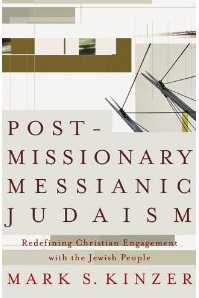
The first is that other Messianic Jewish organizations, such as the Union of Messianic Jewish Congregations (UMJC) may take exception to the idea that Gentiles have a greater Torah obligation than previously advertised. UMJC and similar “Jewish-oriented” groups, tend to take a more definitive stance on Gentile vs. Jewish distinctiveness in worship of the Messiah, with advocates such as Tsvi Sadan proposing a complete separation between Messianic Jewish and Christian/Gentile worship of the Jewish Messiah. The content of Mark Kinzer’s book Postmissionary Messianic Judaism: Redefining Christian Engagement with the Jewish People, which has gained a “foundational” status in the modern Messianic Jewish movement, likely operates in less then perfect accord to many of the points in Toby’s article as well.

The other concern is how all this applies to the church. It’s one thing to say that the Gentile Christian is “allowed but not commanded” to pray at fixed times (as Cornelius did), keep a “sort of” Shabbat,” and refrain from sexual relations with their wives during their menstrual periods, and another thing entirely to say these are all obligations. Once FFOZ states that there are aspects of the Acts 15 directives and other portions of the New Testament that actually obligate the Gentile believers to specific parts of Torah obedience, then we come to the realization that a very large part of the Christian world is (unknowingly) disobeying God.
OK, maybe I’m overstating the point, but Toby’s article seems to open up that can of worms and it also takes the One Law vs. Messianic Judaism debate to a whole new level. I’ve been actively participating in that debate (again) on this blog for the past several days (and I have the headaches to prove it) and I must admit, Toby’s article tosses some of the arguments presented into a cocked hat, so to speak.

As far as the debate regarding Gentile Christians, the Acts 15 letter, and the refactoring of Christian obligations to the Law are concerned (traditional Christians reading this blog cannot fail to be intrigued and maybe dismayed at this point), Toby Janicki’s article “The Gentile Believer’s Obligation to the Torah of Moses” may have put us into a whole new ballgame (please forgive the mixed metaphors). I highly recommend that you buy a copy of Messiah Journal, issue 109 for this article alone. Toby’s article is nothing less than landmark.

Cloaked in Light

Rav Levi Yitzchak of Berditchev, zt”l, offered a parable to understand why we do not say hallel on Rosh Hashanah and Yom Kippur. “This can be compared to a king who loves his children very much. Since they are close to the king they grasp his greatness and can sing his praises as is fitting.

After a while, these children left the king’s palace to a distant place. They went on a long and dark journey. Their expensive garments became soiled and torn. Any remnant of good they had taken from the king’s table was lost and they virtually forgot their noble lineage due to the difficult circumstances they were required to endure. After enduring much difficulty and pain, they returned to the gate of their father the king. Obviously they were filled with shame and at first they were certainly unable to praise the king as is fitting. How could they explain why they had left and strayed to such distant places? It was only after the king graciously forgave them and they were able to remove their soiled garments that they began to return to themselves. After spending some time in the presence of the king, partaking of the delicacies of the palace, they could once again praise the king as is fitting.”

Rav Levi Yitzchak explained, “Each year we are just like those princes. When Rosh Hashanah and Yom Kippur arrive, we feel so ashamed of our sins that we cannot possibly say hallel—fitting praise for the King. It is only after we are completely cleansed from all sins and have prepared for Sukkos that we can once again praise the King eight days as is fitting.”

Daf Yomi Digest
Stories Off the Daf
“The King’s Table
Arachin 10

Rema writes that one should attempt to begin reading about something good and finish reading about something good. Mishnah Berurah explains that Rema means that one should begin and end with something good about the Jewish People.

Mishna Berura Yomi Digest
Halacha Highlight
“Beginning and ending an aliyah with something good”
Rema Siman 138, Seif 1

The general custom during the traditional Torah readings on Shabbat, is to begin each Aliyah with something positive about the Jews and to end each aliyah in the same manner. It doesn’t always work out that way, but it is one of the reasons the portions of each aliyah are selected as they are. We can learn a general principle of life from this.

I once heard a high school teacher say that whenever he found it necessary to criticize a student, he would take the student to his office to avoid embarrassing him in front of the class, then he would begin the criticism by giving the student a compliment and, after delivering the “painful” portion of the rebuke, would end by delivering another compliment. In this manner, the student would not feel as if his relationship with the teacher was based solely on the child’s failure, and that there were other qualities of the student that the teacher recognized and admired.

In the Daf for Arachin 10, we see that the children of the King started life very well under his guidance but that life took a turn for the worse when they struck out on their own. Returning to their father, they were ashamed to the point of being unable even to praise the King as was his due. However, the King ended this period of failure in the lives of his children with the same goodness as it had begun, by removing the filth from upon them and returning them to a clean state. How like another parable that was told by the Master.

Our lives all begin in innocence at our birth but as is common with human beings, we turn to serve our own interests and to sin against other people and against God. Even people who are born in religious homes and who are raised by devout parents cannot maintain a life of pure innocence, and the “darkness” of our human natures begins to dampen the goodness of the image in which we were created.

BrillianceYet we have a King who is unwilling that we should begin but not end our lives in the same goodness, and like the parable of Rav Levi Yitzchak, all we need to do is return to our Father in humility and with a contrite heart, and He will remove that which is filth from upon our shoulders and clothe us in pure light.

Then he showed me Joshua the high priest standing before the angel of the LORD, and Satan standing at his right hand to accuse him. And the LORD said to Satan, “The LORD rebuke you, O Satan! The LORD who has chosen Jerusalem rebuke you! Is not this a brand plucked from the fire?” Now Joshua was standing before the angel, clothed with filthy garments. And the angel said to those who were standing before him, “Remove the filthy garments from him.” And to him he said, “Behold, I have taken your iniquity away from you, and I will clothe you with pure vestments.” And I said, “Let them put a clean turban on his head.” So they put a clean turban on his head and clothed him with garments. And the angel of the LORD was standing by.

And the angel of the LORD solemnly assured Joshua, “Thus says the LORD of hosts: If you will walk in my ways and keep my charge, then you shall rule my house and have charge of my courts, and I will give you the right of access among those who are standing here. –Zechariah 3:1-7

Bless the LORD, O my soul!
O LORD my God, you are very great!
You have donned majesty and splendor
cloaked in light as with a garment,
stretching out the heavens like a curtain. –Psalm 104:1-2

Review of “Halachic Authority in the Life of the Messianic Community”

This leads me to conclude that the Jewish religion has preserved the Jewish people in their long wanderings in the desert of the Gentiles. Some will say that it is not Judaism which has preserved the Jewish people, but God’s grace. They should rest assured. God has indeed preserved the Jewish people, and he has done so by securing them in this “ark” that is called the Jewish religion. The Jewish religion therefore constitutes a revelation of God’s grace towards the Jewish people. This religion, which arose from the smoky ruins of the Temple and which people so love to hate, is the primary instrument through which God has preserved the Jewish people. Because of it, there are Jews in the world today.

-Tsvi Sadan
“Halachic Authority in the Life of the Messianic Community”
Messiah Journal
Issue 109/Winter 2012, pp 16-17

When I saw the title, I thought the topic would be more related to the specific differences between halacha in traditional, Orthodox Judaism and a halacha that could be applied to Jewish, and perhaps in some sense, to non-Jewish disciples of the Master in a Messianic framework. However, Sadan’s excellent article, which was originally delivered as a lecture in Israel on September 5, 2008, addresses something else almost entirely: the religion of the Jews who follow the Messiah.

Let me explain.

There is an impression that the Jews, and especially the Jews who were born, raised, and educated within a traditional religious and cultural Jewish framework, who are part of Messianic Judaism and who are disciples of Yeshua (Jesus), “the Maggid of Nataret,” belong to a different sort of “Judaism” than their brothers in what we refer to as “Rabbinic Judaism.” In fact, many Jews and non-Jews in other branches of the “Messianic” movement, as well as those attached to Hebrew Roots groups, tend to view Rabbinic Judaism, what we consider the Reform, Conservative, and especially Orthodox branches of Judaism, to be separate, distinct, and “lesser” forms of “true” Judaism. They seem to believe that the only fully realized Judaism is represented by a Messianic Judaism that follows Jesus while removing any aspect of halacha and tradition that exceeds the “written Torah.” This form of Messianic Judaism, actually rejects Rabbinic Judaism in the vast majority of its content (except for using the model of the modern synagogue service and the use of tallitot, siddurim, and so forth) especially and including Mishnah, Talmud, and Gemara: the so called leaven of the Pharisees and the Sadducees” (see Matthew 16:6 and Mark 8:15).

According to Tsvi Sadan, they are dead wrong. Forgive me. What follows is necessarily lengthy.

To understand the meaning of this “leaven,” which scares the daylights out of some people here, I will take just one verse from an abundance of new Testament verses quoted in those inflammatory letters. In Matthew 16 (the word “hypocrites” does not appear in the standard Greek text used today), Yeshua twice calls his disciples to beware of the “leaven of the Pharisees and the Sadducees” (vv. 6, 11). These two admonitions follow the miracles and wonders which he had just performed in the sight of thousands of people. When the Pharisees and the Sadducees approach him to test him (v. 1), Yeshua correctly sees this as impudence of the highest order, and responds accordingly: “[Hypocrites,] do you know how to discern the appearance of the sky but cannot discern the sign of the times?” (v. 3). This means that Yeshua is labeling his opponents hypocrites because of their pretense to see one more sign while in fact all they wanted to do is accuse him.

-Sadan, pg 15

He goes on to say point blank that the “leaven of the Pharisees and the Sadducees” is hypocrisy, not the specifics of Second Temple era halacha and tradition. Sadan confirms that there is no dissonance between Messianic Judaism and Rabbinic Judaism or for that matter, the religious concept of Judaism in any form and Rabbinic Judaism. More plainly put, Rabbinic Judaism is the only Judaism, according to Sadan.

So where does that leave the non-Jews who, in some manner or fashion, are attached to the Messianic and Hebrew Roots worlds? Moreover, where does that leave Christians in relation to their Jewish brothers who also honor Yeshua as Messiah and Lord?

Finally, let me make one point with respect to the Christians living in our midst, because probably there is someone who will distort things and claim that the position I have proposed here leads to hated of the Gentiles. Let me say here that I warmly welcome every Christian – on the condition that he or she does not attempt to impose his or her religion on me. I regard very seriously the behavior of some Christians living in Israel who have the gall to malign the Jews living in the state of Israel merely because they refuse to be evangelicals, Lutherans, or Baptists. God-fearers from all nations are welcome to participate in the Jewish service of God as long as they do not speak against Israel, Torah, and Judaism. I do not agree with the attitude that says that in order to achieve unity with our Gentile brethren, we should remain Jews but reject Judaism. I consider this assertion as nothing less than complete and utter foolishness.

-Sadan pp. 24-25

Laying TefillinSadan continues to strongly make his point for another page and a half, and most assuredly all of it, as I imagine these brief quotes have done, will certainly bring forth the ire of many non-Jews and some Jews in the aforementioned “Messianic” and Hebrew Roots movements, who indeed believe that the Jews who worship the Messiah must abandon Judaism in order to be “completed Jews” (as if a Jew who worships in the manner of his fathers is somehow incomplete).

Sadan’s article does bring up one very interesting point: do Messianic Jews and Gentile Christians belong to two separate and unrelated religions? I have no idea what Sadan thinks, but as far as I can gather from his article, the response seems to be “yes and no.”

It’s “yes” in the sense that everything that Judaism is, including the 613 commandments of the Torah and the entire body of Talmudic judgments, rulings, and traditions, apply only to a Jewish population. Judaism’s ethnic and cultural aspects are completely intertwined with Judaism as a “religion,” so you cannot remove the traditions, without removing what it is that defines a Jew. I’ve said all this before and Sadan’s article does nothing to change my mind.

It’s “no” in the sense that, in spite of the differences in our covenant obligations to God, we share One God and One Messiah, and we are all His creations. We are different branches, but grafted into the same tree. We are Jew and Gentile, but we have equal access to God. We are co-citizens in the Kingdom of Heaven and we all inherit a life in the world to come. And we will all sit at the same table at the feast of Abraham, Isaac, and Jacob (Matthew 8:11).

I do want to take exception to one statement in the article where it appears Sadan refers to we Christians as “God-fearers”.

God-fearers from all nations are welcome to participate in the Jewish service of God as long as they do not speak against Israel, Torah, and Judaism.

I don’t believe that Christians who have accepted the Messianic covenant upon themselves (as it applies to the nations) are equivalent to the ancient God-fearers or the modern Noahides. God-fearers were non-Jews who came out of pagan worship to recognize the God of Abraham, Isaac, and Jacob as the One, true, and unique God of the Universe. They quietly worshiped among the Jews in their synagogues and I imagine the God-fearers humbly populating the Court of the Gentiles in Herod’s Temple, listening with awe to the songs of the Priests, and urgently desiring to bring their own sacrifices before the King.

But they had no covenant relationship with God at all. There was adoration and worship, but no access (unless they chose to convert to Judaism). Jesus, the Messiah, appeared in the world and changed all that. He allowed the nations to come close to God, to be adopted, and to be called sons and daughters of the Most High, through the blood of “the Lamb of God who takes away the sin of the world,” (John 1:29). I certainly hope that Sadan hasn’t chosen to “demote” those of us who come along side him as co-members of the Messianic covenant.

If you’re not familiar with some of the related concepts Mark Kinzer describes in his book Postmissionary Messianic Judaism: Redefining Christian Engagement with the Jewish People, you may find Sadan’s article shocking and even completely alien to how you’ve imagined Jews being attached to Jesus as their own Messiah. If you are familiar with Kinzer’s book, some of you may still be outraged at what Sadan writes and vehemently disagree with his propositions and his ardent passion in defending his own Judaism.

This issue of Messiah Journal couldn’t have come at a better time for me. Last night, I was having a conversation with Judah Gabriel Himango on his Facebook page about the Shabbat and what the coming of Jesus changed in the Jewish and non-Jewish worlds. Judah suggested that because of Jesus, Jews should abandon the traditional Jewish synagogue model of worship and adopt a Shabbat service more along the lines of what’s recorded in 1 Corinthians 14:26-40. Here are some of his comments:

Messiah’s arrival was of such great impact, such that the way we live our lives and the way our congregations are modeled must be in light of his coming. Lives and religious services modeled on the understanding that Messiah hasn’t come would be to live as if he never arrived in the first place. The Messianic movement, including the Messianic Judaism subset, should not merely be emulators of Judaism.

How about the stuff in Corinthians 14 for starters? Shouldn’t those things be in Messianic services?

And how about the Psalms, where music and instruments are used to praise the Lord? Shouldn’t those things be in services, both Jewish and Messianic?

I believe people — Jews and gentiles — should change their lives around to what Messiah commanded and what his disciples taught in the Scriptures.

If our lives and our services look exactly like those before Messiah, it’s as if his arrival never happened.

Needless to say, I disagreed.

The RabbiLet me make clear that I like Judah and I’m not angry or upset with him. I’m not picking on him or singling Judah out, but rather, I’m using his words to illustrate what many other disciples of Jesus believe and want to see actually occur. I must disagree with his desire to replace Jewish worship with how he interprets one small portion of the New Testament, as well as with the general suggestion among Christians, that Messianic Jews should remain (somehow) Jews but flush Judaism down the nearest toilet, tossing Rabbis and Talmud under a speeding bus. While I have questions about how Sadan sees Christians vs. God-fearers, I agree with him in most if not all of the rest of his points. I can’t see the Gentiles in the church and in “Messianism” and Hebrew Roots as having any right whatsoever to re-define Judaism in their own image. Of course, they say that it’s not they who are doing the re-defining, but Jesus instead, but I disagree. We’ve seen that there are an abundant number of paths one can take to interpret the New Testament, including doing away with the Law (and the Jews) and replacing it with the Grace of Christ (and the Gentile Christians), and I disagree with that as well (see my article in MJ 109 “Origins of Supersessionism in the Church” for more).

In previous blog posts and blog comments, I’ve tried to make arguments that present many of the same ideas as expressed in Tsvi Sadan’s “Halachic Authority in the Life of the Messianic Community,” but I lack his insights and perspectives as a Jew and frankly, his wonderful talent in writing. Whether you end up agreeing with him or not, I believe that reading this illuminating work will open your eyes to a new and different way of seeing the Jew in relationship to his Messiah within the time-honored and God-granted context of Judaism.

The Lord’s Sabbath

ShabbatQuestion: According to Jewish Law and tradition, is it acceptable, discouraged or totally unacceptable for a Gentile to keep the Sabbath according to the regulations spelled out in the Torah and the Talmud and expounded upon by the Rabbis?

Answer: A non Jew is not allowed to keep Shabbos. Those that are in the process of converting make sure to do at least one thing on Shabbos that would normally not be allowed. For example they might carry something in their pocket.

The quotes above are part of a discussion group thread at judaism.stackexchange.com (and thanks to Judah Himango of the Kineti L’Tziyon blogspot for posting the link on his Facebook page). As you can see if you follow the conversation, it is generally discouraged for a non-Jew, Christian or otherwise, to attempt to observe the Shabbat in the same manner (if at all) as a Jew. The observations are apparently from the perspective of Orthodox Judaism, so Conservative and Reform Jews may have a somewhat more lenient viewpoint, nevertheless, the Shabbat is generally reserved for the Jewish people.

This doesn’t really upset most Christians since the Saturday Sabbath, as with most other aspects of “the Law,” was deemed done away with. While Christians generally worship on Sunday, it’s not really considered a “Sabbath” in the church, based on Pauls’ statement in Romans 14:5-6:

One person considers one day more sacred than another; another considers every day alike. Each of them should be fully convinced in their own mind. Whoever regards one day as special does so to the Lord.

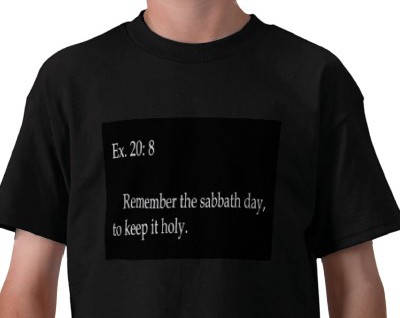
This effectively obliterates the fourth commandment to “Remember the Sabbath day by keeping it holy” for Ten Commandments believing Christians, but apparently, that can’t be helped. The result is that the vast majority of both Christians and Jews believe that Shabbat observance cannot and should not be applied to Gentiles and that is that.

Almost.

There is actually a lot of conversation going on in various circles about Gentles and the Shabbat, even as we’ve seen at judaism.stackexchange.com. In actuality, it doesn’t seem totally forbidden for a non-Jew to keep the Shabbat, they just can’t keep it in a way that is consistent with religious Judaism. AskNoah.org, a site created within an Orthdox Jewish context and dedicated to serving Noahides (righteous Gentiles), has this to say.

Question: I’ve been told that a Noahide must “mark” the Sabbath in some way. Could you give me examples of ways to mark Sabbath in the manner of a Noahide?

Answer: A Noahide is allowed to mark the seventh-day Sabbath in some types of ways. But there must not be a belief or conviction that he or she has – or is allowed to take on as a Gentile – any religious obligation to rest from all productive activity on the Seventh Day, or on any other day. (Although indeed, there must be an intellectual recognition that G-d assigns a special quality to the Seventh Day, since that is part of the Torah of Truth).

The answer continues by providing a number of suggestions for the Noahide as far as “marking” the Shabbat, but such marking must be done without making a vow of any kind in relation with the Shabbat, and with the understanding that “marking” the Shabbat is totally voluntary.

The world of Messianic Judaism, as seen from the point of view of Jews who accept discipleship under Jesus (Yeshua) as the Jewish Messiah, take a similar point of view. We can see one such illustration in a recent comment Derek Leman made in response to something I said on one of his blog posts at Messianic Jewish Musings:

So, I think a Divine Invitation exists for non-Jews. I don’t think (and the apostles didn’t think) it is a Divine Obligation.

My advice for non-Jews keeping Shabbat: learn the traditional prayers and songs. Make some modifications in parts where the wording is about God’s special relationship with Israel. Someone ought to make a Shabbat Seder (the Friday night prayers) for non-Jews which respects the wording of special relationship between God and Israel and pictures non-Jews coming into the sign between God and Israel as co-participants (not replacements, see Exod 31:13).

Shabbat candlesI’ve often said that I believe non-Jews who wish to honor God as sovereign Creator may do so based on Genesis 2:3, but AskNoah.org has a response for that as well:

Although it says in Genesis 2:1-3 that G-d designated the Seventh Day as holy and sanctified, don’t forget the basic principle that G-d did not limit Torah to always be a *chronological* account of events. In fact, G-d first dictated the book of Genesis to Moses shortly after the Israelites arrived at Mount Sinai. The first time there was any commandment about a special observance of a “Sabbath” was after the Israelites passed through the sea on dry land. When they ran out of the matzah they took out of Egypt, G-d provided them with mannah as food from Heaven. But no mannah fell on the Seventh Day. G-d instead provided a miraculous double portion on Friday afternoon, and He commanded the Israelites to remain in their camp on the Seventh Day. Moses explained to them that they were, from that time on, commanded to observe the Seventh Day as a day of rest and a holy Sabbath (Exodus 16:23). Thus, at the first mention of the Seventh Day in the text of Genesis, G-d told Moses to insert the information that He had blessed the Seventh Day (referring to the double portion of mannah that fell on Friday afternoon for the Israelites), and He made it holy (when He prohibited the Israelites from leaving their camp on that day).

It is true that in Judaism, the chronology of the writing and the order of events of and in the Torah aren’t considered to be strictly literal, so the authority answering the question about Genesis 2:1-3 may have a point. On the other hand, if we assume that there is a chronology to God’s creating the earth and that He actually “blessed the seventh day and made it holy,” relatively “soon” after He created the globe upon which we live, then the holiness of the Shabbat could precede the Sinai event by many hundreds or even thousands of years (or more).

Then we have another scripture which provides some illumination.

“And the foreigners who join themselves to the LORD,
to minister to him, to love the name of the LORD,
and to be his servants,
everyone who keeps the Sabbath and does not profane it,
and holds fast my covenant—
these I will bring to my holy mountain,
and make them joyful in my house of prayer;
their burnt offerings and their sacrifices
will be accepted on my altar;
for my house shall be called a house of prayer
for all peoples.”
The Lord GOD,
who gathers the outcasts of Israel, declares,
“I will gather yet others to him
besides those already gathered.” –Isaiah 56:6-8 (ESV)

This is very difficult to get around. While not a commandment, it certainly suggests that “foreigners” (non-Hebrews) not only may observe the Shabbat, but will derive some direct benefit for doing so, namely being brought to God’s “holy mountain”, which is probably the Holy Temple in Jerusalem, and having our offerings accepted by God in the Temple (and AskNoah.org does state that Gentiles will be able to worship at the Third Temple). Even the Master quotes the prophet Isaiah when he cries out that “‘My house will be called a house of prayer,’ but you are making it ‘a den of robbers” (Matthew 21:13).

I suppose Christians could say that the words of the prophet Isaiah were annulled when the Law was “nailed to the cross with Jesus”, but that hardly explains why Christ would quote prophetic words that would soon lose their power. Such a view also suggests that God’s Word is not eternal, so we have another puzzle when considering a traditionally Christian interpretation of scripture.

But if “Jewish” Shabbat observance is considered both by Christianity and by Judaism to be a dead issue for the Gentiles, why should the few of us who are not Jewish but who are drawn to the Shabbat care? Well, because we’re drawn and for whatever reason, God has written upon our hearts a desire to hold the seventh day as sacred.

As I’ve mentioned elsewhere, I don’t think Judaism has much to worry about as far as Christian or “Messianic Gentile” Shabbat observance goes. I’ve never met a person who was not Jewish who kept the Shabbat with anywhere near the level of sanctity and detail as an Orthodox Jew, so it can be truly said that we “mark” the Shabbat without ever actually “keeping it holy,” at least to the measure of accepted Jewish halachah.

But what does God think of the disciples of Jesus keeping the Shabbat? Even if we are not commanded, are we allowed and is our rest pleasing to Him? Or was that last question moot?

Then he said to them, “The Sabbath was made for man, not man for the Sabbath. So the Son of Man is Lord even of the Sabbath.” –Mark 2:27-28

If the Savior and Messiah is Lord of the Shabbat, what does that mean for we non-Jews who are his disciples?

Messiah Journal: Excerpt from “Origins of Supersessionism in the Church”

Yeshua not only defined himself as the gateway to salvation, but commanded his Jewish disciples to do something that had never been done before. Yeshua commanded his Jewish disciples to make non-Jewish people disciples in a Jewish sect that followed the Messiah and worshiped the God of Israel. Yeshua identifies his Jewish disciple Peter as the rock upon which he will build the Messianic community (Matthew 16:18). Acts 4 shows us that thousands of Jews came to faith in the Messiah well before the time when Paul began to actively seek non-Jewish disciples. We also see in Acts 15 that the Jewish Jerusalem council exercised authority over the Gentile assembly of the Messiah. With the foundation of the early Messianic community being so thoroughly Jewish, how did a concept like supersessionism even come into being? Actually, the seeds of this rather ugly plant began to sprout early.

Excerpt from the article
“Origins of Supersessionism in the Church”
by James Pyles
Messiah Journal
Issue 109/Winter 2012

I just received my advance copy of the latest edition of Messiah Journal (MJ) and of course, as it contains my first article published in religious literature, I’m more than thrilled. I showed my wife and she said that she will have to read it, which is even more intriguing (as surprising as it may sound, she doesn’t often read my material). I hate to admit this, but like many authors, I really enjoy seeing my work in print. I suppose it is the same feeling a painter has when he or she sees their work on display in an art gallery.

But I shouldn’t forget everything else this issue of MJ has to offer. I haven’t had the opportunity to read it yet (so I can’t review its contents), but I’ve looked through this issue and there are definitely some submissions I’m anxious to dig into.

There’s an article written by Tsvi Sadan called “Halachic Authority in the Life of the Messianic Community”. Apparently, it was delivered as a lecture to Messianic leaders in Israel in September of 2008 as the “final chord of a debate between those Messianic Jews who teach to live according to Jewish tradition and those who view this tradition as ‘the leaven of the Pharisees and Sadducees.'” This discussion has taken place in the Messianic blogosphere fairly recently, such as in Judah Himango’s blog post Kosher Jell-O, and whether Messiah’s disciples need our own ruling body, as well as on my own blog in the write up Tradition! (and as always, some of the most interesting parts are in the comments sections).

I must admit, I will probably dive into Sadan’s article first, but I also want to read Russ Resnik’s “Shema: Living the Great Commmandment” (Part 1). I’m also very interested in Toby Janicki’s article “The Gentile Believer’s Obligation to the Torah of Moses”, which is also a topic of great interest among non-Jews who are attracted to Jewish religious lifestyle and worship. I believe MJ has had similar articles in the past and want to find out if this is just a reworking of material with which I’m already familiar or something entirely new. I know I’ve been challenged on this topic by comments made on my own blog very recently, both in Defining Judaism: A Simple Commentary and The Focus and the Lens, so I’m hoping for some “re-enforcement” to augment my own knowledge in this area.

For tomorrow’s “morning meditation,” I’m posting a blog on Gentiles and the Shabbat, and Aaron Eby has an article in the current issue of MJ called “Fire by Night: Lighting the Shabbat Candles” which (you should pardon the pun) should prove illuminating. That’s not all of the contents of issue 109 of MJ but those are the highlights. Of course, if you find all of that tantalizing, don’t forget my own article on the origins of supersessionism in the church, how the seeds were first planted, who the major players were, and how the history points to modern times.

If you don’t already regularly receive issues of Messiah Journal, go to the First Fruits of Zion (FFOZ) website and order issue 109 today. I’m really looking forward to reading it myself.

The Embarrassing Murder

On today’s amud we find a decree was instituted to avoid publicly embarrassing a fellow Jew.

Many are unaware that Rav Chaim Kaplan, zt”l, was the son-in-law of the famous mashgiach, Rav Yeruchem Levovitz, zt”l. As can well be imagined, Rav Kaplan was a baal mussar in the full sense of the word.

One time, Rav Kaplan’s student, Rav Waxman, saw him crying his eyes out, obviously absolutely devastated. This was a very shocking sight since it was a regular day in the beis medrash and the young man had not heard that any tragedy had occurred. The student approached Rav Kaplan and asked him what was bothering him, but the latter was so heartbroken that it was a while before he could answer. When the student inquired a second time, the rav tearfully asked him to bring a gemara Bava Metzia.

When the young man brought it from the shelf, the rav opened to the sugya in Hazahav that discusses the seriousness of embarrassing a fellow Jew in public. He concluded with the statement on daf 59 that one should throw himself into fiery furnace instead of publicly embarrassing another, which we learn from Tamar.

“We see from here that embarrassing another is compared to murder,” Rav Kaplan said sadly. “Imagine you were here in this beis midrash in the middle of seder when one young man pulled out a gun in front of everyone and shot his fellow student in the heart. Surely, anyone with a drop of human feeling would be unable to hold back from crying bitter tears after witnessing such a tragedy! After I witness one young man approach a fellow student and publicly shame him, is it any wonder that I cry? It is a wonder how a person could fail to cry!?”

Mishna Berura Yomi Digest
Stories to Share
“A Tragedy in the Beis Medrash”
Siman 139, Seif 1-3

I periodically receive a little criticism for suggesting that the Talmud and various Rabbinic commentaries are appropriate lenses by which to view the teachings of Christ and my faith in Jesus. For example, we see above that for one Jew to embarrass another in public is compared with the act of murder. In this tale’s rather dramatic telling, Rav Kaplan is seen to be crying uncontrollably, as if he had witnessed a horrible act of violence, after seeing one student in the beis midrash publicly shame another. Whether this event actually took place or not, can we really say that embarrassing someone in public is the same as pulling out a gun and shooting them? Can we find anything that Jesus taught that can even approach this?

“If your brother sins against you, go and tell him his fault, between you and him alone. If he listens to you, you have gained your brother. But if he does not listen, take one or two others along with you, that every charge may be established by the evidence of two or three witnesses. If he refuses to listen to them, tell it to the congregation. And if he refuses to listen even to the congregation, let him be to you as a pagan and a tax collector. –Matthew 18:15-17

You’ve probably heard this before, but the reason you have to go through such a lengthy set of steps in confronting the brother who has sinned against you, is to avoid embarrassing him. You approach him alone first, so the nature of his sin and the confrontation is just between the two of you. If he repents, then no one else is the wiser and no one has to be embarrassed. If that’s not effective, then you next approach your brother with just two or three witnesses. Again, the information is contained and only a few people have to become aware of the incident. Only if the sinner doesn’t repent are you compelled to bring the matter before the entire congregation, thus causing your brother embarrassment which, at this point, is probably unavoidable.

While Jesus doesn’t say embarrassing your fellow is like killing him, he obviously felt that embarrassing someone was a serious matter and should not be taken lightly. Jesus also said this:

“You have heard that it was said, ‘You shall not commit adultery.’ But I say to you that everyone who looks at a woman with lustful intent has already committed adultery with her in his heart. –Matthew 5:27-29

Now is looking at a woman and having lustful thoughts about her really the exact same thing as actually having sexual relations with her? After all, the former is not a physical act, it’s just a thought and perhaps a feeling. Maybe you fantasize about what it would be like to have “relations”, but nothing actually happens. The latter requires that you arrange to enter into a relationship with her, at least enough of one to be able to get together with her alone and have actual, physical sex.

And yet Jesus said they were the same. So can’t publicly embarrassing someone be the same as actually killing the person, in the eyes of God?

I don’t have God’s point of view, so I can’t say that He equates embarrassment to death (although many human beings have felt so embarrassed that they wanted to crawl under a rock and die, euphemistically speaking), but if we take Christ’s teaching to heart and reflect back upon the tale of Rav Kaplan, perhaps we should act as if it’s that important a matter.

Could it hurt?