If That’s Not Love

An elderly woman and her little grandson, whose face was sprinkled with bright freckles, spent the day at the zoo. Lots of children were waiting in line to get their cheeks painted by a resident artist who was decorating them with tiger paws..

“You’ve got so many freckles, there’s no place to paint!” a girl in the line said to the little boy. Embarrassed, the little guy dropped his head. His grandmother knelt down next to him. “I love your freckles. When I was a little girl I always wanted freckles,” she said, while tracing her finger across the child’s cheek. “Freckles are beautiful!” The boy looked up, “Really?” “Of course,” said the grandmother. “Why just name me one thing that’s more beautiful than freckles.” The little boy thought for a moment, peered intensely into his grandmother’s face, and softly whispered…

“Wrinkles!”

-Rabbi Label Lam
“Wrinkles!”
Commentary on Torah Portion Balak
Torah.org

Elsewhere in Rabbi Lam’s commentary, he discusses the power of words. When we speak we have the power to heal or to harm, to educate or mislead, to raise one person to the highest achievements possible in his nation, and reduce another to abject defeat and despair. Even as I write this, two men are using the power of words to try to convince our nation which one of them should be our President and the leader of the free world for the next four years. Words have great power.

The writings of James, the brother of the Master, also tell us just how powerful words can be.

So also the tongue is a small member, yet it boasts of great things. How great a forest is set ablaze by such a small fire! And the tongue is a fire, a world of unrighteousness. The tongue is set among our members, staining the whole body, setting on fire the entire course of life, and set on fire by hell. For every kind of beast and bird, of reptile and sea creature, can be tamed and has been tamed by mankind, but no human being can tame the tongue. It is a restless evil, full of deadly poison. With it we bless our Lord and Father, and with it we curse people who are made in the likeness of God. From the same mouth come blessing and cursing. –James 3:5-10 (ESV)

Rabbi Lam tells us that the “entire world was created by G-d with words! We say every day in our liturgy, “Blessed is He Who spoke and the world came to be!” So it is said elsewhere:

In the beginning was the Word, and the Word was with God, and the Word was God. He was in the beginning with God. All things were made through him, and without him was not any thing made that was made. In him was life, and the life was the light of men. The light shines in the darkness, and the darkness has not overcome it.

And the Word became flesh and dwelt among us, and we have seen his glory, glory as of the only Son from the Father, full of grace and truth. –John 1:1-5, 14 (ESV)

We human beings wield a terrible power; we have the ability to speak. With that ability, we can create or destroy, much in the same manner that God creates or destroys with words. One misspoken word and we can destroy a child’s dreams or break a lover’s heart. We can crush a grandmother’s love or reduce a young girl’s spirit to ashes.

Not that we’d mean to, but mistakes happen. One slip of the tongue is all it takes. This is how we are not like God. We can make mistakes and He can’t…

…or can He?

We know that G‑d is the most perfect Being, and that everything exists solely because of Him. Furthermore, He knows everything through His knowledge of Himself, so of course He does not make mistakes.

At the same time, our rabbis shake it up and tell us that there are things which G‑d “regrets” having created, such as the evil inclination.

One way to reconcile these viewpoints is to understand that of course G‑d knew what He was doing when He created these negative things, but He knew that they were necessary in order for humanity to attain the greater good He had in mind. So, while He created these things, He does not “like” them, and we are supposed to view them as temporary.

-Rabbi Shmary Brownstein
“Does G-d Ever Make Mistakes?”
Chabad.org

We have a tendency to anthropomorphize God, to make Him seem human. We do this in order to relate to Him better because how can you imagine an infinite, unimaginable being?

You can’t.

So you make Him seem a little more like you in order to talk to Him. I think that’s why some Christians pray directly to Jesus instead of God the Father (even though Jesus said to direct prayers only to God). Because Jesus lived as a human being and walked among his people. He’s easier to relate to, to talk to, to express ourselves in words to.

And he’s supposed to understand mistakes.

For we do not have a high priest who is unable to sympathize with our weaknesses, but one who in every respect has been tempted as we are, yet without sin. –Hebrews 4:15 (ESV)

Well, yes he was tempted, but no he didn’t sin. So he never made a mistake. And God never makes a mistakes, though He has His “regrets.”

We have our regrets, too. We make mistakes. Lots of them. We hurt people. We use words carelessly. Then we don’t like to admit mistakes because we’re embarrassed. And we hurt people again. We’re irresponsible. We don’t say we’re sorry. We don’t apologize. We don’t ask for forgiveness. We don’t say, “I forgive you.”

God doesn’t make mistakes but we do. Jesus didn’t make mistakes but we do, all of the time.

So why are we here? It’s not like we’re going to get any better. Well, maybe we’ll get somewhat better, but perfection is beyond our capacity. The church tells us that if we just confess our sins to Jesus and ask for forgiveness, we are covered in Christ’s blood, so we appear as pure as the driven snow to God.

But that does nothing to get rid of remorse.

The progressive humanist society around us says that if we become atheists and surrender our archaic belief in God, then we’ll have nothing to feel guilty about. But does that mean surrendering accountability and a conscience? Isn’t that just replacing one system of laws and judgments for another, but with human fallibility being the final arbiter of right and wrong?

I suppose one of the reasons my faith is sustainable is that my pursuit of a Holy God gives me an ideal to shoot for that isn’t based on humanity’s foibles, errors, and selfishness. All men fail. All men make mistakes. There is no “Messiah” apart from God.

God gave us the ability to use words and shows us how to be perfectly creative with them, whereas mankind mixes up creativity and destruction. It’s the destruction where I find despair. But even in our imperfection, God finds hope.

We are the finishing tools for His handiwork.

He applies His breath, our souls, to the harsh earth , softening it to absorb the rains of blessing from heaven; to the coarse surfaces of human life to polish them, so they can receive light from above and shine.

That friction that wears us down, those sparks that fly—it is all a byproduct of His handiwork.

And if you should ask, how could it be that a mundane world presents resistance to the infinitely powerful breath of G‑d?

In truth, it cannot. But He condenses that breath into a soul, He tightly focuses her power, until the harshness of this world can seem real to her, and then she will struggle, and in that struggle she will make the world shine.

-Rabbi Tzvi Freeman
“Friction”
Based on letters and talks of the Rebbe
Rabbi M. M. Schneerson
Chabad.org

And struggle we do. An imperfect vessel vainly attempting to contain and utilize the power of a perfect soul. And yet we fail to use even a simple set of words such as “I love you” correctly.

King Solomon had acknowledged that “Life and death are in the hands of the tongue!” The famous British poet Rudyard Kipling expressed it this way, “Words are the most intoxicating drug known to man!” Isn’t it so!? Lives rise and fall on a single word! People get courage to carry on or so discouraged to end it all, based on the slight turn of a phrase. It makes a world of difference if the message says, “I love you!” or “I hate you!”

-Rabbi Lam

Even when you know inside that someone loves you, a single word spoken in anger or disdain can be ultimately annihilating. The apology comes too late. The memory of a thousand, thousand prior failures springs unbidden from the abyss. A lifetime of verbal slaps is re-experienced in a moment.

If we are to make mistakes, then we need to make a lot fewer of them. For every word of anger, we need to speak ten of love and compassion. It’s not as hard as we imagine. All we have to do is this.

His grandmother knelt down next to him. “I love your freckles. When I was a little girl I always wanted freckles,” she said, while tracing her finger across the child’s cheek. “Freckles are beautiful!” The boy looked up, “Really?” “Of course,” said the grandmother. “Why just name me one thing that’s more beautiful than freckles.” The little boy thought for a moment, peered intensely into his grandmother’s face, and softly whispered…

“Wrinkles!”

If that’s not love…

Try to speak words of love before it’s too late.

Balak: The Good, The Bad, and The Gay

In some years, Parshas Balak is read together with Parshas Chukas. For it is the selfless commitment implied by the name Chukas which makes possible the transformation of evil into good. When a person fans the spark of G-dliness in his soul and expresses it through unbounded devotion to the Torah, he influences his environment, negating undesirable influences and transforming them into good.

And as this pattern spreads throughout the world, we draw closer to the fulfillment of the prophecies mentioned in this week’s Torah reading: (Numbers 24:17, cited by Rashi, Rambam, and others as a reference to Mashiach.) “A star shall emerge from Yaakov, and a staff shall arise in Israel, crushing all of Moab’s princes, and dominating all of Seth’s descendants.”

-Rabbi Eli Touger
“Remembering What Should Be Forgotten”
In the Garden of the Torah series
Commentary on Torah Portion Balak
Chabad.org

Just to let you know, I’m probably going to break every rule that was ever made about writing a commentary on a Torah Portion. In fact, it will probably seem like I’m stretching credibility beyond all reasonable limits. So if you want to take exception for the content of today’s “morning meditation,” you’ll have to look elsewhere. Oh, and today’s “meditation” is really long. Sorry. Just worked out like that. Remember, you have been warned.

In reading Rabbi Touger’s statements which I quoted above, I was captured by phrase, “negating undesirable influences and transforming them into good.” On the surface, they sound a lot like something many Christians would be familiar with.

What Satan intended for evil, God intended for good.

This isn’t in the Bible exactly, and it’s actually adapted from something Joseph said to his brothers (the ones who tried to kill him) after Joseph revealed his true identity to them (along with the fact that he was still alive).

As for you, you meant evil against me, but God meant it for good, to bring it about that many people should be kept alive, as they are today. –Genesis 50:20 (ESV)

You can probably point to events in your life when something happened that looked like it was going to be trouble or something actually caused trouble, but it eventually worked out to be some sort of advantage or had a good outcome.

But that’s not what I’m talking about. I just wanted to get that particularly viewpoint out of the way.

The evil “wizard” Balaam was hired by Balak, a King, to use his abilities to curse the Children of Israel. If you have even a tenuous familiarity with this week’s Torah Portion, you know about this. You should also know that God told Balaam that he was forbidden to perform the curses and, as it turns out, every time Balaam tried to curse the Israelites at Balak’s behest, he uttered blessings instead.

What was intended to be evil actually turned out to be a good thing.

However, we could spin this idea in another direction. We could say that something that was once considered evil (or undesirable, or unacceptable, or intolerable) has turned out to be good.

Such as being gay and even gay sex.

I separate the two because being gay isn’t really an issue in the Bible since God doesn’t forbid a person from being attracted to the same-sex. He simply forbids the Israelite men from having sex with other men.

You shall not lie with a male as with a woman; it is an abomination. –Leviticus 18:22 (ESV)

In virtually the same breath, God also forbids an Israelite man from having sex with a woman during her menstrual period, having sex with his neighbor’s wife, and having sex with an animal. Most of these “thou shalt nots” make sense to Christians and they are all part of the list of unlawful sexual relations we find in Leviticus 18 (which a friend of mine calls, “the icky chapter” of Leviticus).

Progressive liberal thought has, for decades, supported the right of people to behave freely in accordance with their sexual orientation, be that straight, gay, bi, or transsexual, but in recent months, it’s almost become “popular” to be gay or to be straight and to support gay causes. We see this in everything from President Obama’s public statements supporting gay marriage to how gay relationships are being depicted in comic books.

Politics and children’s entertainment make strange bedfellows.

But it brings up the question that if mainstream politics, entertainment, social discourse, and even comic books are progressing beyond mere tolerance of the LGBT community into active support and promotion of what is being called “marriage equality,” then what impact will this have on the world of religion?
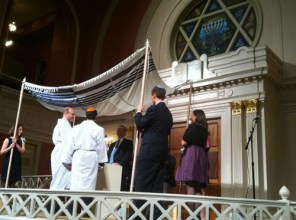
Greenberg-weddingAfter all, atheists and progressives have traditionally portrayed religious people in general and Christians in particular as being backward, superstitious, intolerant, and even bigoted. With the continued dynamic shift in attitudes toward supporting LGBT in the larger culture, what increased social pressure will be applied to people of faith who have long been considered (and in most cases, rightly so) anti-gay? Has acceptance or rejection of LGBT and specifically marriage equality become the litmus test of the progressive left as applied to religion?

It would seem so. But contrary to how Christianity has been painted with the same, broad brush by the media, how the church (I use that term in the most generic sense) responds to homosexuality including homosexual acts, is split along political lines (and Jesus is once again being dragged into the political arena, whether he wants to be or not).

It’s in these contentious times that I do what culturally-concerned Christians should do — turn to Will Ferrell for insight. And insight he brings us…

Yes, it’s the legendary “dear Lord Baby Jesus” scene (from the 2006 film Talladega Nights), where Ricky Bobby prays to the Jesus he likes best, which of course triggers an intensely thought-provoking discussion:

Kyle Naughton, Jr: “I like to picture Jesus in a tuxedo t-shirt because it says, like, I wanna be formal, but I’m here to party too. I like to party, so I like my Jesus to party.”

Walker (or is it Texas Ranger?): “I like to picture Jesus as a ninja, fighting off evil samurai.”

The whole scene is basically a three minute summary of much of what passes for contemporary Christian theology. We invent the Jesus we like best, name that version the God we serve (or partner with), and then find the church (or friend group) that aligns with our vision and — voila! — we’ve got our faith. To be clear, our version of Jesus typically corresponds with some of his attributes, but the picture is always so woefully incomplete.

Gay Rights Jesus is about sex, love, acceptance, and — above all — no judgment (except of course, you can judge someone else’s alleged intolerance). Gay Rights Jesus isn’t bound by your antiquated notions of sexual morality anymore than he’s bound by antiquated dietary rules that maybe involve shellfish . . . or something.

-from “Homosexuality, Morality, and Talladega Nights Theology”
Patheos.com

Irreverent though the quote may be, it tells a certain amount of truth about how we treat religion, adapting it (and Jesus) to fit the moral, ethical, and popular agendas of our society and ourselves.

But it prompts the nasty question of whether or not “commandments” can be adapted, or were intended to be adapted based on the needs of each generation? A blatant example from Judaism are things like cars and microwave ovens that didn’t exist when the Torah was given at Sinai, and they still didn’t exist during the time of Jesus or the later Talmudic period. Once they were invented, someone asked a Rabbi if they could be used on Shabbat, and Rabbinic authority had to consider the Torah and the relevant halakah and render a decision. The commandments regarding Shabbat had to be adapted to fit the needs of the current generation.

But homosexuality wasn’t “invented” recently since the Bible records the prohibition of an Israelite man having sex with another man back in the Torah.

If I were to stop with Judaism, I suppose I could say that the prohibition should remain intact unless some significant evidence is brought forth stating that the Leviticus 18 portion of the Torah was only intended for the ancient Israelites but not modern generations of Jews (but then you have to start asking questions about all of the other forbidden sexual relationships listed in Leviticus 18).

But how many of the Torah prohibitions regarding sex trickle down to Christianity?

In response, it is not enough to point out that Jesus never said anything explicitly about homosexuality or homosexuals. Since he was Jewish, silence cannot easily be filled with a viewpoint that was not common in Judaism in the first century – however much one might go on to insist that Jesus’ views did not always mirror what most people thought.

Jesus taught us to allow love for neighbor and concern for human beings to trump other concerns – even if it leads to healing on the Sabbath or eating sacred bread. Even if it means to breaking other laws, laws which according to the Bible were laid down by God himself.

–Dr. James F. McGrath, June 29, 2012
“The Well-Thought-Out Christian Rationale Behind Christian Acceptance of Gays and Lesbians”
Patheos.com

ShabbatDr. McGrath makes the classic Christian assumption that Jesus broke (and therefore invalidated) the commandments regarding the Sabbath (which is highly debatable) and thus, Jesus could have and probably did break other commandments in Judaism including, in this case, those prohibiting homosexual behavior among the Jews.

If we follow Dr. McGrath’s line of thinking and assume it is all correct (and since he’s the Clarence L. Goodwin Chair in New Testament Language and Literature at Butler University in Indianapolis, he’s got a lot of “cred” behind him), then we might make a “quick and dirty” conclusion that Jesus not only didn’t have a thing against homosexual behavior among the Jews (and by extension, the later Christians), but he was all for it (Keep in mind that Rabbi David Hartman says, “The Sabbath, therefore, does not force us to choose between a theocentric focus on the world and the dignity and significance of human existence,” so healing on the Shabbat does not particularly constitute breaking the Shabbat).

Actually, I’m not sure I can take Dr. McGrath’s commentary that far (since he doesn’t), but he does say this:

Ancient Israel’s marriage laws reflected those of the time, and the workings of the marriage institution as an element of patriarchal society allowing men to treat women as property so as to ensure that their other property passed to their legitimate heirs. Times have changed, marriage has changed, and none of the conservative Christians I know who are married are involved in anything that mirrors “Biblical marriage” in all its features.

And so of course our thinking about marriage reflects the wider perspective of our time and place. Thinking about marriage among the people of God always has. And as with so many issues, such as women’s equality and slavery, we sometimes advocating the setting aside of practices that can be justified by careful exegesis of certain Biblical passages, on the basis of more fundamental Biblical principles. We pick and choose from both the Bible and our culture based on overarching principles and convictions about the centrality of love, the importance of justice, concern for the poor, and so on.

I’m fully willing to admit that there are a lot of things in Paul’s letters that I can accept as situational and that were intended to apply only to the specific group Paul was addressing in a certain place at a certain time. But how far can we “relativize” the Bible and the teachings of Jesus before we become guilty of the following?

Woe to those who call evil good
and good evil,
who put darkness for light
and light for darkness,
who put bitter for sweet
and sweet for bitter!
Woe to those who are wise in their own eyes,
and shrewd in their own sight! –Isaiah 5:20-21 (ESV)

How about this one?

For the time is coming when people will not endure sound teaching, but having itching ears they will accumulate for themselves teachers to suit their own passions, and will turn away from listening to the truth and wander off into myths. –2 Timothy 4:3-4 (ESV)

Even if I were to take a conservative Christian approach regarding homosexuality and homosexual acts, I’d have to admit that the commandments can only apply to religious Jews and to Christians. You have to be a member of the covenant before you come under the commandments (OK, Christians believe in a final judgment of all humanity by God, but that’s up to Him, not us). A conservative Christian is able to apply the Bible commandment prohibiting homosexual acts to someone performing such acts as a practicing Christian. However, he couldn’t do so regarding two men who are atheists, gay, and having sex anymore than he could against a man and woman who are atheists, living together as an unmarried couple and having sex (you don’t see a lot of Christian groups protesting against the latter these days).

As far as I can tell, the church has every right to police itself (and given the abuses in the church that occasionally come to light in the public media, perhaps they should) but they cannot apply their (our) own commandments and prohibitions onto the larger culture and attempt (and this is an extreme example) to legislate the Bible into local, state, or national law (even though significant portions of our laws are based on the Bible).

I know that’s what some Christians don’t want to hear.

Getting back to earlier portions of this blog post, are liberal Christians guilty of choosing “baby Jesus” or “Ninja Jesus” or “Gay Rights Jesus” over the closest approximation of “real Jesus” we can gather from the actual New Testament texts to satisfy modern cultural imperatives, or are, as Dr. McGrath suggests, we allowed to adapt the teachings of Jesus to be more appropriate with the needs of the current generations and even to override certain commandments for the sake of loving our neighbor unconditionally and without reservation under all circumstances, no matter what?

There’s no denying that there is an enormously complex set of variables in operation here. For many Christians, just policing their own backyard relative to homosexuality isn’t enough and they want to make the larger culture more “comfortable” for them/us. However, for the past 2,000 years, Jews have constantly lived as a subset of a larger culture that absolutely wasn’t comfortable to them and that existed in complete opposition to all of the commandments held more dear in religious Judaism.

And they managed to get by.

Why does Christianity expect anything different to happen to them?

Last November, I blogged on similar issues in a missive called At the Intersection of Intolerance and Humanity. I don’t believe that the church as the right to commit wholesale condemnation of all LGBT people everywhere as people because of the moral and religious commitments we’ve made as Christians. Perhaps we have the right to do so in our own churches, but this becomes problematic if your church accepts heterosexual couples living together as “OK” but not gay couples living together.

Whether you approve or disapprove of homosexual behavior based on your personal feelings and/or your understanding of the Bible doesn’t mean you have the right to disregard someone as a human being. Jesus expected us to, among other things, visit people in prison, meaning he wanted us to extend compassion to people who are convicted of crimes (and probably guilty of sins) and to treat them with respect. Why is being gay so much worse than being a bank robber, or someone who beat his wife, or even a murderer?

I’m not a big fan of having the larger, popular culture shove their values and ideals down my throat just because there are more of them than there are of me and they have the support of MSNBC and CNN. On the other hand, they do force the body of faith to confront moral issues that we’d just as soon avoid or even condemn, without actually examining what the Bible seems to be telling us, and especially without examining our own thoughts and feelings.

In this week’s Torah portion, Balak offered Balaam a small fortune if Balaam would consent to curse the Children of Israel, and given the fact that the evil Balaam could even speak with God, we have every reason to believe such a curse would have worked to the detriment of the Israelites. But what Balak intended for evil, God chose to make good. Are we to go so far as to say that what God considered evil in Leviticus, He chose to make good in the 21st century?

I don’t know if I can go that far. The popular media outlets are choosing to depict the LGBT community as “especially good” these days. We believers aren’t supposed to decide which people we love and which we hate. (Matthew 5:46). Although we are held to a higher moral standard (atheists and progressives would debate this) than the world around us, that isn’t a mandate to circle our wagons and to restrict love only to our own groups. If God so loved the world, the entire world, and everyone in it (John 3:16) while we were all still enemies of Christ (Romans 5:10), who are we to do any less?

Don’t turn good into evil and evil into good, but do good in order to overcome evil (Romans 12:21). I think rewriting the Bible to fit a modern moral agenda is going too far. But instead of overcoming what we believe is evil by force, we can do what Paul suggested in Romans 12:20 whilst quoting Proverbs 25:21-22

“If your enemy is hungry, feed him;
if he is thirsty, give him something to drink.
In doing this, you will heap burning coals on his head.”

Doing good doesn’t mean surrendering to evil. It means surrendering to God.

Good Shabbos.

Addendum: For more on loving your enemies, you might want to consider New Testament Scholar Larry Hurtado’s recent (and short) essay, Hermeneutics of ‘Agape’. Also, Dr. Stuart Dauermann presents a somewhat related blog post (not incredibly related but when you read it, you’ll see why I’m including it here) called Re-masculinizing the Church and Synagogue – Toward Addressing the Problem. Food for thought.


A Christian Regarding Judaism

Such autonomy was made possible by God’s readiness to limit His say in human decision making and to grant the Jewish community the right to decide for itself how it should understand the commandments that it had received from Him in the Torah. Human reason, employed in clarifying and elaborating the halakhah, was seen as sufficient for that, without any need for divine intervention. Human responsibility for the conditions of life, moreover, was not confined to the religious sphere in the narrow sense, but included mastering the sciences and establishing institutional frameworks for alleviating disease, poverty, illiteracy, and other social evils.

-Rabbi David Hartman
Chapter 10, “Two Competing Covenantal Paradigms”
A Living Covenant: The Innovative Spirit in Traditional Judaism

This may not seem like a typical description of a religious framework if you’re an atheist or an agnostic. Most atheists I interact with seem to believe that religion and science are mutually exclusive terms. Some atheists also seem to think that religion and the moral responsibility to alleviate “disease, poverty, illiteracy, and other social evils” are also incompatible concepts and practices.

If you’re a Christian, you may also take some exception to Rabbi Hartman, since he appears to be advocating for the idea that God gave human beings the ability to decide just how to apply the Word and Will of the Creator in the world. I mean, wasn’t all this stuff made absolute and set in granite the second God caused Moses to create the Pentateuch (Torah) and the other authors to write the rest of the Bible?

I ask that last question ironically.

I can’t even say what Rabbi Hartman is proposing represents the entirety of Jewish thought since, as we’ll see, there are differing opinions in Judaism on just about everything. That, by the way, is the point for today’s mediation, but we’ll get to it all by the by.

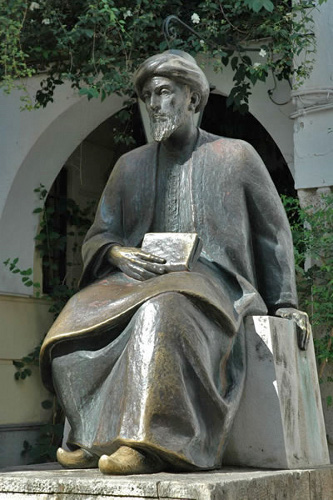
In this chapter of Rabbi Hartman’s book, he compares and contrasts the viewpoints of two of the great Jewish sages: Maimonides and Nahmanides. You can learn more about these two Jewish philosophical luminaries by clicking the links I’ve provided, but certainly studying the wisdom and writings of both of these gentlemen would not be a waste of your time or effort.

I won’t go into too many of the details Rabbi Hartman presents, but I do want to draw attention to one critical area of disagreement between Maimonides and Nahmanides that should resonate with some Christians:

Messianism in Maimonides is therefore simultaneously a heroic and a realistic principle of hope anchored in the eternal covenant of Sinai. It is important for him because it does not allow Judaism to become merely a private existential experience. Messianism counteracts the heresy of turning Judaism into a faith for isolated human individuals. It springs from the essential concern of Judaism with the sociopolitical drama of the community. It also expresses the dimension of Judaism that goes beyond the tribal and national framework, since it makes the Jewish community aware that Judaism’s fullest expression requires a changed world order if there is to be a reign of peace.

Nachmanides, on the other hand, uncompromisingly embraced the assumption that Maimonides resolutely sought to eliminate: in the messianic era human nature will be changed. It will be redeemed such that human freedom will no longer lead to sin…

Clearly for him, the messianic age will be characterized by a fundamental transformation of human nature. The problematics of human freedom will be overcome, as all will then yearn to live always in accordance with the will of God.

In reading this chapter from Rabbi Hartman’s book, I immediately found the perspective of Nahmanides very familiar because it seemed to echo the viewpoint of Christianity (and I’m sure Nahmanides never intended such a linkage). As least as I recall my own early days in the church, I was taught that in the Messianic Age, we would lose all desire to sin and would only long to please Jesus in a complete and perfect manner.

Maimonides, by comparison (at least as Rabbi Hartman presents him) believed that the Messianic era will be a time of social and political change. Israel will be the head of the nations and the Messiah will rule “with a rod of iron” such that the other nations of the world will obey his laws. Man will still have the ability to sin and perhaps even the desire, but the rule of King Messiah in Israel will be obeyed as God establishes His kingdom on Earth. Certainly Maimonides does not deny a supernatural reality, but understands that it works in concert with the natural mechanics of humanity and politics. For Nahmanides, the supernatural power of God simply overwhelms mankind and our very natures are changed such that it is His miraculous power alone that brings about His rule with no intervention by human institutions.

Why do I bring this up?

To throw a monkey wrench into the machine.

More accurately, to present the idea which may not occur to some Christians (or for that matter, atheists and everyone else), that there is more than one way Jews look at God, faith, Torah, halakhah, and the Messiah. Rabbi Hartman even confirms this:

To prevent misunderstandings, I must emphasize again that I am not claiming that Maimonides provides the only possible way whereby an observant Jew can participate in a return of the Jewish people to history such as has occurred in modern Israel.

Rabbi Hartman was talking specifically about the establishment of the modern state of Israel as part of the Messianic plan and the rather troublesome divide in Judaism as to whether Israel should even exist before his arrival (return) or not. I’m not competent to answer that question and, as I said before, my main point here is just to point out that Judaism isn’t a single, cohesive idea, concept, or religious movement. There are different focuses and perspectives in larger observant Judaism, many that contradict each other and occasionally seem wholly at war (sounds sort of like how different Christian denominations treat each other, don’t you think?).

Even though I am married to a Jewish wife, I am an outsider looking in. But if I can say that and live with a Jew every day, I can only imagine what it must be like for the traditional Christian with little knowledge of Judaism and Jews, beyond what is preached from the pulpit, to try to understand what it’s like on the other side of the fence. I think, as Christians, it’s important for us to make that attempt, though. We often “demonize” that which we don’t understand, and history has shown us that such “demonization” of the Jewish people has led to pogroms, exile, torture, and death.

I want to present this tiny slice of Judaism as an example that Jews are not a “type” or a “thing” or an object of any kind. They are a people. They are dynamic. Religious Judaism has many shades and colors and textures. It is even possible for Judaism to teach us a thing or two about our own Christianity. But in order for that to happen, we have to be willing to let ourselves become uncomfortable and to explore new territory.

I’m not talking about walking out of the church, far from it. I’m only suggesting that the next time you look at a Jewish person, try to see a person, a human being. If they are a religious Jewish person, try to see their faith, their relationship with God, their desire to serve Him, not just a collection of “dead” rules and regulations.

Judaism is alive. Jews are alive. It’s kind of cool, actually. It shows the rest of us that in spite of thousands of years of enmity between Jews and the rest of the world that ultimately led to the murder of six million Jewish souls, God kept His promise that the descendants of Jacob would always be a people before Him.

Jews will always be a people in the world and among us, the Gentile nations. If you love and laugh and hurt, so do they. Jesus commanded us to love our neighbors as ourselves (Matthew 22:39). Perhaps we should learn to do so with all of our neighbors, including our Jewish neighbors because of the ways of peace. If all people, religious and otherwise, could put that into practice as well, it would certainly be a plus.

Oh, I’m sure people who are more informed about the history of religious Judaism may point out my mistakes. But remember, I sometimes stick my neck out to try and make a point, and I don’t know everything (alas).

They Are All Our Children

In 1972 I was part of a group of young internationals who travelled to Israel to help defend our land and our people. Communication was rough; we were from South Africa, Britain, Australia, Poland, Argentina, America, France and Russia, and most of us could hardly speak or read Hebrew.

The IDF (Israeli Defense Force) designated me a Nahal soldier – a sort of part pioneer and part fighter farmer. Our base was located halfway between the yellow-bricked, fly-infested Egyptian town of El-Arish and the Suez Canal.

We tramped through sand and desert scrub, looking for any signs of landmines or intruders. I liked to be assigned to the watchtower. No one would bother me up there and I loved to look at the mountains and wonder which one was Mt. Sinai.

For the most part it was blessedly quiet. Our biggest excitement involved a Phantom jet roaring 100 feet above us heading to the Canal.

During basic training I obtained a small prayer shawl, tallit, and a prayer book in Hebrew and English. On Shabbat I would go off on my own to pray.

I wanted a set of tefillin, the black ritual boxes (containing the holy shema prayer) donned on weekdays…I wanted to feel the binding on my arm and the weight of the tefillin on my head. I wanted to be reminded that G‑d is above me. But at Nahal Yam there were no tefillin.

-Jerry Klinger
“Tefillin in the Sinai Desert?”
from the “First Person” series
Chabad.org

I suppose this could be just me quoting a random article because of my support of Israel and my attraction to Jewish religious and faith practices.

But it isn’t.

I recently read another story about the American Girl in the Bunker, a young Jewish woman from New York City to has volunteered to serve with the IDF among 85 combat soldiers on the border of Gaza and Sinai. She’s seen a little more “excitement” than Jerry Klinger did back in 1972:

Three days ago we were just minding our business when we heard a huge explosion that literally shook the ground. I know the floor moved because our coffee spilled.

I didn’t think it could be a rocket or bomb because the warning siren, the tzeva adom, had not sounded. We all ran out to see what the noise was all about, and in the distance, maybe 2 kilometers away, we could see the telltale plume of smoke.

Seconds later, the siren rang and we all ran to the nearest shelter. The shelter is windowless. The room is built to hold 30 people, but somehow we managed to squeeze 70 inside. Luckily there was air conditioning, but it leaked everywhere and no matter where we sat, our bodies were splattered. People were pushing themselves up against the bunker walls to make room for the latecomers. In this chaos, it was my job to get a head count of my whole unit and make sure everyone had made it.

After three hours, we were told by the head of the base’s intelligence that it was safe to leave. It wasn’t for long, though. BOOM! BOOM! BOOM! Three more rockets fell minutes later, this time even closer to us. The tzeva adom rang, but there was no time to find safety. Two seconds after the siren’s scream we felt the earth shake beneath our feet. We were totally vulnerable.

The nights are hell. I cannot sleep. I lie in bed, fully clothed, boots and helmet on, waiting to hear the alarm, waiting to dash out of the room to safety.

-Talia Lefkowitz, volunteer soldier with the Israeli Defense Force Paratroopers Brigade

My son David served in the Marine Corps for four years. On his deployment to Iraq, he was fired on by mortars on numerous occasions but wasn’t in a position to be able to fire back. I can’t imagine what the experience was like, but I can imagine what it’s like to have one of your children in that position, in harm’s way, in combat, at risk, where he could die.

And there was nothing I could do about it.

There was nothing I could do about it the day David told my wife and me that he was joining the Marines (though we tried very hard to talk him out of it). There was nothing we could do the day he left for boot camp. There was nothing we could do the day he graduated from boot camp, except be very proud of him. There was nothing we could do the day he left for Iraq, the day he left to go to war, the day I knew that I might never see him again.

Except pray that God would watch over him and bring our son safely home.

And He did.

Mostly.

Like a lot of veterans, David suffers from various injuries, not as a direct result of combat, but of the conditions he had to serve under. He has a body that seems much older than his almost 26 years (his birthday is just two days away as I write this). We work out together five days a week. I watch him as he tries to repair a damaged ankle, a damaged knee, a damaged back, the pain he can never escape.

He also struggles with numerous emotional issues as a result of what he’s seen and what he’s experienced. It’s not like his personality is different, but his personality is being forced to filter and manage what it was like when people were trying to kill him with mortars, when people trying were trying to kill him by hiding explosives under pieces of trash so he’d drive over it, making it (and him) blow up, when he had to watch people all the time to make sure they weren’t going to shoot him.

This isn’t movie combat like you see in films such as Saving Private Ryan or gaming combat like when you play Call of Duty. This is real life where real people are holding real guns, getting ready to shoot other real people, listening to explosions, feeling the real fear of what could happen to them, and waiting for the next “boom” and wondering if they will be hurt or killed.

But David came home. He came home more or less intact. He’s married to a loving, compassionate wife and has a wonderful, three-year old son. And he struggles everyday with the consequences of having served in combat zone as a United States Marine.

I talked to him recently about Israel and the IDF. He has a great admiration for the IDF and, as a Jew, he supports the nation of Israel. If things had been different, if he had been a little more mature in years gone by, a little more in tune with a plan, he probably would have done what Jerry Klinger did or what Talia Lefkowitz is doing.

Or what Shayna Detwiler is about to do.

I met Shayna at a conference I attended last May. In fact, she was the co-ordinator for the conference and the person who made sure that I had a room, transportation, and everything else I needed to make it possible for me to attend the conference.

And she’s only twenty years old.

I don’t know what to feel. I don’t really know her, but she seems like a nice person. She young, energetic, friendly, outgoing.

Did I mention that she’s young?

I’m not really old. Not like my father, who just turned 80 is old. But I’m older. I see younger people through the eyes of a father and grandfather. I sometimes look at younger people and try to remember what I was doing when I was their age.

But mostly, I look at people like Shayna and remember the day when David went off to war. I hoped for the best and planned for the worst. Thank God the worst never came, but war is war. You never walk away from it exactly the same person you were when you walked into it.

Jerry Klinger told us what he remembers about his experience with war and in many ways it is very uplifting (read the whole article to find out why). Talia Lefkowitz is the girl sandwiched into a bunker with 85 combat soldiers, listening to the explosions and wondering if the next one is for her. David Pyles is still telling me his stories, even though he’s been honorably discharged from the Marines for a few years now.

David is my son and I listen and I become retroactively scared when he tells me something I didn’t know before about what happened to him. I sometimes get scared when he tells me something that’s happening to him now, which might be a flashback to something that happened years ago, and yet it is also happening to him now.

Shayna has parents and grandparents who love her and are probably worrying about her right now. I can’t help them. I’d be worried, too. In fact, I am worried too, even though I barely know her.

But I don’t have to know her. I have a son who served in war but in the end, they are all our sons and daughters…our brothers, our sisters, our fathers, our mothers. When someone goes off to war, they are all our family, and they all belong to us.

And may God go with Shayna and with all of our young men and women. And may God bring them all home again so that we can continue loving them.

I am a New York City girl who came to Israel to defend the Jewish state. I am proud of my service and of all the remarkable young men I have met who risk their lives every day to keep this country safe. I am the girl in the bunker, and I can tell you that these rocket attacks are a big deal.

-Talia

They are all our children.

Randomly Covering Territory

Do you only believe when you can see with your eyes? When your prayers are answered and miracles carry you on their wings? Or do you also believe when circumstances fly in your face?

If it touches you to the core, if it is a belief you truly own, if it is as real to you as life itself, then it does not change.

And if it does not change, then you are bound up with the true essence of the One who does not change.

-Rabbi Tzvi Freeman
“Faith in the Dark”
Based on letters and talks of the Rebbe
Rabbi M. M. Schneerson
Chabad.org

I’ve said before that I don’t consider myself the “sharpest knife in the drawer.” In the world of faith, I think I have plenty of company, though. For instance, I don’t think most Christians consider the idea that there are two basic levels of knowledge in our religion (or probably most religions): the common worshiper’s view and the scholar’s view. For instance, New Testament scholar Larry Hurtado recently posted on his blog an article called An “Early High Christology”. I mean really. What in the world is high Christology and what’s the difference between high vs. low Christology?

I’ll let you click the links I provided since my discussion today isn’t focused on those topics. I’m just including them to illustrate that most people in the church don’t have the same view of God, Jesus, and the Bible as do theologians and Bible scholars. These people talk a different language than we do and conceptualize the Word of God in ways most of us can’t even imagine. I’m not even sure most of them could communicate their ideas and perspectives to a crowd of “regular Christians” at their local neighborhood church in any successful way.

Which is kind of a shame, because the information these people work with would almost assuredly challenge and perhaps even change the viewpoint and direction of most believers in most churches if we had access to it in a comprehensible way.

Well, they do publish popular books, some of them anyway, but most Christians don’t take advantage of that material (let alone anything more scholarly, such as a Ph.D Thesis). Most people who sit in the pew on Sunday are content to believe that they are being adequately “fed” by their local Pastor, who no doubt is doing a good job, but may feel constrained to offer only the “food” he or she believes the audience will comfortably tolerate.

I occasionally get “dinged” for including non-Biblical sources in my writings since they are, after all, non-Biblical and thus cannot carry the same weight of authority as the scriptures in the Bible. But I’m no Bible scholar and I do love a good metaphor, so I include things like Rabbinic midrash, Chassidic tales, and commentary about Kabbalah, largely for their cultural, metaphorical and symbolic meaning. I certainly can’t discuss them from the perspective of a Pastor, Rabbi, or someone else with an advanced education in Theology or Divinity.

That doesn’t keep me from being curious though, and curiosity often leads me down interesting if troublesome paths.

Here’s one such path:

Numbers 22-24: While the Numbers text itself is inconclusive, both rabbinic legend and the Apostolic Scriptures clearly paint Balaam as wicked through and through.

“The Error of Balaam”
Commentary on Torah Portion Balak
First Fruits of Zion

Um, what was that? The Torah was inconclusive about the nature and character of the “wizard” Balaam, but both the New Testament and midrashim agreed that he was evil? That seems like an odd combination. Of course, it’s not that the New Testament writers and the authors of midrash expected to agree with each other, but in this case, strangely enough, they did. Here’s the New Testament commentary on Balaam.

Forsaking the right way, they have gone astray. They have followed the way of Balaam, the son of Beor, who loved gain from wrongdoing, but was rebuked for his own transgression; a speechless donkey spoke with human voice and restrained the prophet’s madness. –2 Peter 2:15-16 (ESV)

But these people blaspheme all that they do not understand, and they are destroyed by all that they, like unreasoning animals, understand instinctively. Woe to them! For they walked in the way of Cain and abandoned themselves for the sake of gain to Balaam’s error and perished in Korah’s rebellion. –Jude 1:10-11 (ESV)

Admittedly, the opinions being rendered about Balaam in the New Testament text are rather brief. But what about the midrash?

Some say Balaam of Pethor (פתור) was called a money-changer (petor, פתור) because the kings of the nations rushed to him for counsel in the same way that people rush to a money-changer to change their currency. –Numbers Rabbah 20:7

This may not be the only Rabbinic commentary on Balaam, but it’s the only one I have access to due to my limited knowledge in this area.

Am I saying that we can compare the New Testament and Talmud, for example? Probably not, or at least, only very, very carefully, with lots of caveats attached (as a side note, can the New Testament and the later Rabbinic commentaries both be considered midrash?). On the other hand, there is just so much we don’t truly understand about the Bible, and there are so many other sources of information that we have access to that may provide additional perspective. We just need to be able to clearly delineate between the Bible and other information sources. We also need to remember that we don’t have to be so binary in our thinking that we always have to say, “Bible good! Everything else, bad!”

After pursuing my personal faith issues for the past few years, I’m slowly coming to the conclusion that the Bible doesn’t always tell us the “whole story.” Both Christian and Jewish scholars and sages have spent the past several thousand years trying to understand the mind of God by delving into the Word of God. They’ve produced an untold amount of commentary that their audiences judge to be of greater or lesser value in defining the faith. The fact that gentlemen like Larry Hurtado even exist as New Testament scholars tells us there is more to be learned about the New Testament than we already know or think we know. I’m sure the same is true for the rest of the Bible.

I’ve previously mentioned last Thursday’s conversation between me, my son, and two other believers that lead to quite an interesting theological discussion. One of the things I didn’t mention was that David asked me what the minimum amount of knowledge was that would still qualify a person as a believer in God and a disciple of the Master. I don’t recall the details of my answer, but I don’t doubt it’s a good deal less than what the scholars, sages, and experts possess.

I suppose we could limit ourselves to knowing just the basics.

And one of the scribes came up and heard them disputing with one another, and seeing that he answered them well, asked him, “Which commandment is the most important of all?” Jesus answered, “The most important is, ‘Hear, O Israel: The Lord our God, the Lord is one. And you shall love the Lord your God with all your heart and with all your soul and with all your mind and with all your strength.’ The second is this: ‘You shall love your neighbor as yourself.’ There is no other commandment greater than these.” –Mark 12:28-31 (ESV)

But people are curious creatures. We very rarely hold ourselves back to the basics, well, some of us, anyway. We want to know more and we push our limits. We push the limits of religious propriety, asking questions the church doesn’t want to answer. We push our intellectual limits, asking questions that have answers we may not have the ability to understand. We push the limits of what are considered viable information sources and methods of study and what are not, at least by those folks who are “in the know,” such as Hurtado or Timothy George.

But the alternative is to shut up, don’t ask questions, and do as we’re told. For some people, that’s the entire scope of their faith. For others, for people like me, that would be the end of my faith. It would die for lack of nourishment.

So I’ll probably keep asking questions, being rebuffed, offending people, entering areas that are “off limits” to mere mortals and those of us with a limited religious education (and IQ), and generally stubbing my toe every other step.

I feel like a person who is trapped in an endless, man-sized maze looking for the cheese. Problem is, the maze is completely blacked out. I can’t see a thing. So the only way to discover my path is to bump into a lot of walls as if I were a human Roomba. My path seems completely random. Hopefully, I’ll cover the necessary territory.

What else can I do?

You don’t need to move mountains.
You just need to know where to aim.
You can transform an entire family forever with one flickering Shabbat candle of one little girl.

-Rabbi Tzvi Freeman
“A Small Candle”
Based on letters and talks of the Rebbe
Rabbi M. M. Schneerson
Chabad.org

I recently read a very interesting blog post written by Jacob Fronczak called Every man is not a theologian which seems to give me a sort of “permission” not to pretend I know what a theologian knows. You might want to have a look and see what you think.

Speed

Our generation has changed an amazing amount from earlier generations. In earlier times the only people who ate quickly were bandits or people in an unusual rush for one reason or another. Nowadays, we are in the era of “fast” foods. Mealtime is not nearly as formal as it once was for the vast majority of people.

Not surprisingly, when someone first learns the halachos on today’s amud he gets a big surprise. “One who leaves one domain needs to recite a new blessing?” he wonders. “What if I have something in my mouth and as I am running I leave the first domain? Do I have to remove it from my mouth and make a new blessing?”

When someone asked a similar question to Rav Chaim Kanievsky, shlit”a, he ruled decisively. “Even a child who has a candy in his mouth and rushes out of the domain where he made the blessing must take it out of his mouth and make another.”

On a different occasion, Rav Chaim confided that such a case had actually happened to him. “When I was a child the Chazon Ish once noticed that I rushed out of the house with a candy in my mouth. When I came back in—with the candy still ensconced in my mouth—the Chazon Ish called me over to him. He explained the halachah of changing domain. ‘You need to take the candy out of your mouth and make a new berachah every time you leave a domain,’ the Chazon Ish explained.”

Mishna Berura Yomi Digest
Stories to Share
“Fast Foods”
Siman 178 Seif 1

First of all, I don’t do this. Secondly, I’m not telling you to do this. That’s not my point. My point is the speed at which time or rather, the events of our lives rush past us. It’s like standing on a commuter platform waiting for the train that will take you to work to stop, only to watch is pass by just inches from your nose at 70 miles per hour.

What the heck just happened?

Yes, we live in a streaming video, microwave dinner, high-speed Internet world where everything we want and need (or think we do) is delivered super-duper fast, and if it isn’t we want to know why.

I’ll try to keep this short since I’m sure this has all been said many times before and I’ll just sound like some old duffer longing for “the good ol’ days.”

Did God design us to run at such a high-speed? Are we supposed to rush around from this event to that from birth to death, never stopping to figure out what we’re supposed to be doing in-between?

I’m just like you. I wake up too early, hit the gym for an hour, wolf breakfast down my throat, speed off to work, often working through lunch, hit the road for the evening commute, grab dinner while reading the news on the web, write or edit something, pick up or drop off someone somewhere, maybe watch a little mindless entertainment, flop in bed, get too little sleep, start all over again.

The Digging with Darren blog just retweeted (on twitter) an older topic called Daily Disciples of a Disciple which in which the “tweet” contained the words, “Does your schedule make room for discipleship?”

What’s important to you? What will you slow down for so you can take your time, pay attention, and truly experience the moment?

I mean besides TV, video, gaming, or similar activities.

While the various Rabbinic rulings and judgments take a lot of harsh abuse in Christianity and sometimes in Messianic Judaism, in some cases, I can see the point of the Sages. It may seem rather tedious and unnecessary to recite a new blessing when you leave one domain for another, but even if you choose not to do so, it teaches a lesson. If you had to slow down between point A and point B, what would you pay attention to? Would slowing down for a few seconds carry its own value? Would you have a few moments to remember God and maybe even talk to Him?

"When you awake in the morning, learn something to inspire you and mediate upon it, then plunge forward full of light with which to illuminate the darkness." -Rabbi Tzvi Freeman