Unanticipated Atonement

Shofar as sunriseIt’s all up to you. Everything about Yom Kippur, coming up this Friday night, points to you: In times of old, one High Priest serving our one G-d in His one Temple on His one holiest day on behalf of His one people elicited G-d’s atonement for the entire world. Today, one person, with one turn of his or her personal page, doing one good deed, or making one good resolution – can also change the course of the entire world for the good.

-Rabbi Zalman Shmotkin
Director, Chabad.org

Wait! Can you back up a second? What was that?

In times of old, one High Priest serving our one G-d in His one Temple on His one holiest day on behalf of His one people elicited G-d’s atonement for the entire world.

Now that’s confusing, at least to me. My reading of Leviticus 16 makes it seem rather obvious that the Yom Kippur service specifically atones for the sins of Israel, and it says nothing about atoning for the sins of the entire world. How could such a thing be possible?

There’s a profound lack of resources on the web (as far as I can tell) regarding Rabbi Shmotkin’s comment. I really hate to use Wikipedia as a source, but they’re about the only site that corroborates the Rabbi’s statement:

The following summary of the Temple service is based on the traditional Jewish religious account described in Mishnah tractate Yoma, appearing in contemporary traditional Jewish prayerbooks for Yom Kippur, and studied as part of a traditional Jewish Yom Kippur worship service.

While the Temple in Jerusalem was standing (from Biblical times through 70 C.E.), the Kohen Gadol (High Priest) was mandated by the Torah to perform a complex set of special services and sacrifices for Yom Kippur to attain Divine atonement, the word “kippur” meaning “atone” in Hebrew. These services were considered to be the most important parts of Yom Kippur because through them the Kohen Gadol made atonement for all Jews and the world.

Just to be clear, the source Wikipedia is relying on for this information is:

Arnold Lustiger, Michael Taubes, Menachem Genack, and Hershel Schachter
Kasirer Edition Yom Kippur Machzor With Commentary
Adapted from the Teachings of Rabbi Joseph B. Soloveitchik.
New York: K’hal Publishing, 2006. pp. 588–589 (summary); 590–618.

This pretty much balances with what Rabbi Shmotkin said but then maybe the Rabbi didn’t mean literally the whole world, but just all of the Jews in the world. Then again, maybe not.

Proceeding on the assumption that we’re talking about the whole world of everyone (it won’t be my last assumption), the difficult thing for me to grasp is that Yom Kippur, from the best of my understanding, provides atonement for the people of Israel (as stated in the Wikipedia quote) in part because the people of Israel want atonement. That is, there is a deliberate, cooperative desire among the Israelites to have their sins atoned for as a nation and the sense of tremendous anticipation as the High Priest enters the Holy of Holies on their behalf. It’s not as if Yom Kippur atonement works by remote control, whether you’re aware of it or not.

But that’s exactly how it would have to work if Aaron had entered the Holy of Holies in the Mishkan in the desert and made atonement for Israel and the entire population of the world.

Let’s take a few examples that are more familiar to the Christian community.

For God so loved the world that he gave his one and only Son, that whoever believes in him shall not perish but have eternal life. –John 3:16

But if anybody does sin, we have an advocate with the Father—Jesus Christ, the Righteous One. He is the atoning sacrifice for our sins, and not only for ours but also for the sins of the whole world. –1 John 2:1-2

Standing before GodHere we see the atoning sacrifice of Jesus being depicted as applying to the whole world, yet it doesn’t literally work that way, at least not without the active agreement and volition of the individuals populating the world. In other words, you have to agree to a certain set of conditions in order for the sacrifice of Christ to atone for your sins. It isn’t applied globally to all human beings whether they want it, or are even aware of it, or not.

But when Christ came as high priest of the good things that are now already here, he went through the greater and more perfect tabernacle that is not made with human hands, that is to say, is not a part of this creation. He did not enter by means of the blood of goats and calves; but he entered the Most Holy Place once for all by his own blood, thus obtaining eternal redemption. The blood of goats and bulls and the ashes of a heifer sprinkled on those who are ceremonially unclean sanctify them so that they are outwardly clean. How much more, then, will the blood of Christ, who through the eternal Spirit offered himself unblemished to God, cleanse our consciences from acts that lead to death, so that we may serve the living God!

For this reason Christ is the mediator of a new covenant, that those who are called may receive the promised eternal inheritance—now that he has died as a ransom to set them free from the sins committed under the first covenant. –Hebrews 9:11-15

Here is our High Priest in the Heavenly Temple; the Heavenly Holy of Holies, applying his own blood in place of bulls and goats, making atonement for the whole world, but it’s a world populated by people who are cooperating with and agreeing to being atoned for. It’s possible for there to be people who are not atoned for by the act of Jesus as High Priest, because (I know I’m being redundant) they haven’t agreed to being atoned for and for many people, they do not want it because they do not want to comply with the conditions required for atonement (namely coming to faith and living a Holy life).

In one of my recent blog posts I used the analogy of God as a gardener and humanity as plants in the garden. I made it a point to illustrate that we are plants who must cooperate with the gardener unlike actual plants which are completely passive as they are watered, given fertilizer, weeded, and so forth.

I realize that God desires that none should perish (2 Peter 3:9), but unlike tomato plants, we have to do something about it. Atonement and forgiveness don’t just happen by the will of God, they happen by human willingness, too. Even being healed by Jesus requires an act of faith on the part of the person being healed:

And a woman was there who had been subject to bleeding for twelve years, but no one could heal her. She came up behind him and touched the edge of his cloak, and immediately her bleeding stopped.

“Who touched me?” Jesus asked.

When they all denied it, Peter said, “Master, the people are crowding and pressing against you.”

But Jesus said, “Someone touched me; I know that power has gone out from me.”

Then the woman, seeing that she could not go unnoticed, came trembling and fell at his feet. In the presence of all the people, she told why she had touched him and how she had been instantly healed. Then he said to her, “Daughter, your faith has healed you. Go in peace.” –Luke 8:43-48

If an act of faith is required for healing, how much more should an act of faith be required for atonement, forgiveness, and reconciliation with God?

I had meant to write something more solemn and dignified, with just a hint of joy, on this final Day of Awe, as Erev Yom Kippur is at hand and Jews all over the world prepare for Kol Nidre, but this is what happened instead.
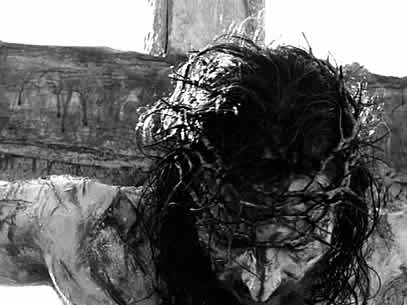
The Death of the MasterI know I lack the information and dimension to understand what Rabbi Shmotkin wrote and what it means. For all I know, I’ve gotten what he said completely wrong. But if indeed, the High Priest in the Holy Temple in Jerusalem did enter the Holy of Holies on Yom Kippur and atoned for the sins of the nation of Israel and every other nation on Earth while we did not have access to the Messiah and his covenant for humanity (I’m continuing to make assumptions here), then God is gracious in the extreme. That is an atonement in which we really did have to provide nothing and that was freely given by God to all people everywhere.

The world was atoned for every year by the Israelite High Priest, and yet the world was completely unaware. How much more should the world be aware that atonement is available now through the Jewish people in the body, blood, and spirit of Jesus Christ, who died once, so that we could live with God forever. What a wonderful and gracious Father.

Draw near to God and he will draw near to you. Cleanse your hands, you sinners, and purify your hearts, you men of double mind. Be wretched and mourn and weep. Let your laughter be turned to mourning and your joy to dejection. Humble yourselves before the Lord and he will exalt you. –James 4:8-10

Your child is not like everyone else; your child is you.

And yet, your child is not you; your child is his own person. A paradox.

Our souls are that paradox – on a greater scale: the nexus between G-d and His universe, where His own breath becomes His creation.

That is why we are called His children. And we call Him our Father.

-Rabbi Tzvi Freeman
“We Are the Child”
Based on letters and talks of the Rebbe
Rabbi M. M. Schneerson
Chabad.org

L’shanah tovah tikatev v’taihatem. May you be inscribed and sealed for a good year. May you also have an easy fast and may the blessings of the Messiah be upon you.

Backward On the Thread of Time

Backwards“It would be easier sometimes to change the past.”
-Jackson Browne
Fountain of Sorrow (1974)

“You can’t unring a bell.”
-Anonymous

Yes, we are physical beings; but there is something in us that transcends the physical. Man is an amalgam of matter and spirit, a marriage of body and soul. It is our spiritual self that persists in the belief that the past can be redeemed. It is our connection with the spiritual essence of our lives that grants us the capacity for teshuvah–the capacity to “return” and retroactively transform the significance of past actions and experiences.

What is this “spiritual essence” with which we seek connection? And how does it enable us to literally change the past?

-Rabbi Yanki Tauber
“How to Change the Past”
Based on letters and talks of the Rebbe
Rabbi M. M. Schneerson
Chabad.org

So, which is it? Can we change the past or not? Rabbi Tauber and musician Jackson Browne say “yes”, but our anonymous bell ringing philosopher says “no”. As we approach Yom Kippur, the holiest day in the Jewish religious calendar, we are reminded of the many mistakes we’ve made over the past year. While remembrance and regrets are part of what makes us human, we often want to forget and to undo those things that we have done. Is there a way? Here’s what Rabbi Tauber has to say:

Not just man, but every object, force and phenomenon has both a “body” and a “soul.” A thing’s body is its physical mass, its quantifiable dimensions, its “hard facts.” A thing’s soul is its deeper significance–the truths it expresses, the function it performs, the purpose it serves.

…man is a spiritual creature in that he imparts significance to his deeds and experiences. Things don’t just happen–they happen for a reason, they mean something, they further a certain objective. The same event can therefore mean different things to different people; by the same token, two very different events may serve the same purpose and elicit identical feelings, imbuing them with kindred souls despite the dissimilarity of their bodies.

The body of our lives is wholly subject to the tyranny of time–the “hard facts” cannot be undone. A missed flight cannot be unmissed; a harsh word uttered to a loved one cannot be unspoken. But the soul of these events can be changed. Here we can literally travel back in time to redefine the significance of what occurred.

So the answer is “yes” and “no”. We cannot physically travel back in time and change a single word uttered in anger or even one careless action, but we can change the soul of the event and we can change our soul, re-making the meaning not only of what we have said and done, but re-making the meaning of our lives. That’s what the Days of Awe are all about, not just saying you’re sorry, and not just asking for forgiveness for your misdeeds, but spiritually, metaphysically, mystically re-creating time and space so that they, and we, are brand new again.

We are also re-creating ourselves so that we are brand new again, clean and pure as we stand before the throne of God.

According to the writer of the book of Hebrews, Messiah has become our High Priest. He entered into the Holy of Holies in heaven—the actual throne room of God—and applied His own blood for atonement. He entered into the presence of God for us so that he might usher us in as well (Hebrews 9:11-12). Messiah is our High Priest, “a minister in the sanctuary and in the true tabernacle, which the LORD pitched, not man” (Hebrews 8:2). Therein he applied his atoning blood. Therefore, the ceremony of the Day of Atonement uniquely patterns the work of Messiah: His death, his sacrifice and the atonement of his blood. We boldly enter the presence of God because the blood of Messiah covers us. Today he stands interceding on our behalf before the throne of God, just like a high priest.

The Holiest Day of the Year
Commentary on Yom Kippur
FFOZ.org

Kol NidreIn the imagery from the Book of Hebrews, we can connect Judaism’s Yom Kippur with the atoning sacrifice of Christ. In Leviticus 16 God told Moses to tell Aaron, the High Priest of the Children of Israel, to enter the Holy of Holies only once a year to make atonement for the people. The FFOZ commentary illustrates how the Messiah, as our High Priest, has made that atonement once and for all on behalf of humanity, and in accordance with the Messianic covenant. He has opened the door and allowed the world to know God.

But Yeshua (Jesus) cried out again with a loud voice, and his spirit departed.

Then the curtain in the Sanctuary was torn from top to bottom into two pieces. The earth quaked, and the rocks were split. The tombs were opened, and many of the holy ones sleeping in the dusty ground were awakened. They came forth from the tombs after his resurrection and entered the Holy City, and they were seen by many.

And when the centurion and the men with him who were guarding Yeshua saw the earthquake and what had happened, they were very terrified, and they said, “Surely this was the son of God.” –Matthew 27:50-54 (DHE Gospels)

Yom Kippur is a solemn reminder of who Christ is and who we are in him and how, even though we cling to the fringes of his garment, we are still frail and prone to weakness.

An interpretation given to the Kol Nidre is that the congregation declares, by implication, at the beginning of Yom Kippur: “See, O Lord, what miserable sinners we are. We make promises to live better lives each year and yet always fall far short of keeping them. Therefore, help us, O Lord, and pardon us for our shortcomings.”

-Rabbi Dr. Louis Jacobs (1920-2006)
“Kol Nidrei: The evening service of Yom Kippur is named after this declaration”
As quoted from My Jewish Learning

As solemn as the Kol Nidre service is, held the evening of Yom Kippur, there is also a promise of the future, a door opens in the fabric of the universe allowing man access to God in humility, awe, and hope. For humanity, the key to the door is Jesus, and once he guides us into the presence of the Most High, we can turn back the clock on events, or perhaps even erase them altogether, through God’s lovingkindness.

On the material surface of our lives, time’s rule is absolute. But on its spiritual inside, the past is but another vista of life, open to exploration and development with the transformative power of teshuvah. -Rabbi Tauber

For as high as the heavens are above the earth,
so great is his steadfast love toward those who fear him;
as far as the east is from the west,
so far does he remove our transgressions from us.
As a father shows compassion to his children,
so the LORD shows compassion to those who fear him.
For he knows our frame;
he remembers that we are dust. –Psalm 103:11-14

Dancing on a stringMy friend Yahnatan on his blog Gathering Sparks posted the following quote from R.R. Reno’s First Things:

I am Christian and not Jewish. I have no real grasp of Hebrew and I only vaguely follow the prayers in my wife’s synagogue. Yet, in the final moments of Yom Kippur I have felt a terrible anguish, yearning to move, and yet immobile, wanting to rush to God’s side and yet nailed to my worldly life. I have shuddered as cantor cries out: “The doors are closing; the doors are closing.” For in those haunting words I hear Jesus saying: “Repent, for the Kingdom of God is at hand.”

I am also a Christian married to a Jewish wife but I don’t believe that applying Yom Kippur to a Christian faith is only for those few of us who are intermarried. God wants all of His people to live, not in the past and not in our sorrow and regrets, but in an active and joyful present life with Him. Heaven doesn’t have to wait. The Kingdom of God is as near as we want it to be. God is as close as the next beat of our hearts. Time is a river and we can swim in pursuit of God, moving upstream and down.

Sacred history may be described as an attempt to overcome the dividing line of past and present, as an attempt to see the past in the present tense (pp 211-12).

All generations of Israel, we are told, were present at Sinai…It was an act of transcending the present, history in reverse: thinking of the future in the present tense (pp 215-16)

Rabbi Abraham Joshua Heschel
God in Search of Man : A Philosophy of Judaism

When we break the fast of Yom Kippur, let us dance with God backward across the strand of time while looking forward to another year ahead in His Holy splendor.

Dancing with God on Yom Kippur

Dancing with GodThe Chazon Ish, zt”l, would say that one cannot learn how to learn Torah on his own. “You need to speak to those who know how to learn to get a feel for it.”

Rav Chaim Chaikel of Hamdurah, zt”l, expended great efforts to fix his soul before finally becoming a student of the Maggid of Mezritch, zt”l. He fasted many days, did various self-mortifications and even stayed up one thousand nights in a row learning Torah diligently. Nevertheless, he felt that his soul lacked completion until he met the Maggid.

Daf Yomi Digest
Stories Off the Daf
“Absorbing the Flavor”
Chullin 99

As a mother and the baby she holds in her arms, as a father and child, as two in courtship or in marriage, so we are with Him. One chases, the other runs away. One runs away, the other chases. One initiates, the other responds. The other initiates, the one responds. It is a dance, a game, a duet that plays as surely as the pulse of life.

Until one falls away and becomes estranged. Then the other looks and says, “This is not an other. We are one and the same.” And so, they return to each other’s arms once again.

It is a great mystery, but in estrangement, there is found the deepest bond.

Rabbi Tzvi Freeman
“Dance with the Other”
Yom Kippur Meditations
Based on letters and talks of the Rebbe
Rabbi M. M. Schneerson
Chabad.org

I’m about four months into my current “experiment”; my expressions and self-discoveries in my “morning meditations”. I have been attempting to explore my Christianity through the lens of Judaism and have recently hit something of a speed bump. In pursuing the Journey of the Ger Toshav (you’ll have to read all three blog posts to get the full picture), I came to the realization (with some help, of course), that Christianity and Judaism are fully incompatible. I mean that in the sense that Jews consider Christians to be idol worshipers and polytheists in that (from a Jewish perspective) worship a man as “god” and worship three “gods”. Christians, for their part, see Jews as lost in a “dead, works-based, religion”, who have been abandoned by God and replaced with the church.

That’s a mess.

For my part, I see great beauty in the practices and teachings of Judaism, but all of that isn’t brought into focus without keeping Jesus as Savior, Messiah, and Lord at the heart of faith and trust.

I have been on a journey to discover two things. The first is obvious; a deeper and continuing relationship with God. The second may not have been readily apparent and is a form of community and fellowship. I left my previous community for a variety of reasons, including the desire to worship and study with my wife within her own faith context. So far that hasn’t worked out. I am, or I thought I was, positioned to enter into her realm, but if being a Christian makes my presence unacceptable in the Jewish world, then my desire will never work out.

Fog alleyOf course, I’m only four months into this journey and I have promised myself to wait a full year (barring an encounter with a complete show-stopper) before pursuing a different course in my faith. Still, sometimes the journey is dark and the fog starts to hide the path.

The Days of Awe are just made for intense self-reflection and sometimes self-doubt, it seems. As Rabbi Freeman says above, there’s this “push-pull” engagement with God that is especially acute right now, but it spills over into human relationships, too. But if I have no union with a community, can I still seek a union with God?

The desire to return is innate, but it must be awakened. The soul must first realize she is distant. Return in all its strength and passion is found, therefore, in the soul who has wandered far from her true self and then awakened to recognize she is lost. We are like the child being pushed on a swing by her father — the further our souls are thrust away, the greater the force of our return.

Rabbi Freeman
“G-d’s Fishing Net”
Yom Kippur Meditations
Chabad.org

But is the effort to “swing back” to God a dance or a fight?

As we find on today’s daf, gid hanasheh was prohibited since the time of Yaakov Avinu. It is surely interesting that the angel chose to fight specifically with Yaakov. Why don’t we find that Avraham or Yitzchak had an altercation with a heavenly representative of evil?

The Vilna Gaon, zt”l, learns a very powerful lesson from this. “Avraham Avinu was especially involved in kindness. And Yitzchak was very focused on avodas Hashem, on prayer and meditation. The first two avos were not attacked by an angel since focusing on doing good deeds or praying is not so threatening to the yetzer hara. As our sages revealed, Hashem said, ‘I created the yetzer hara and I created the Torah to temper it.’ Yaakov focused on learning Torah. It is clear that this is why he was attacked. The yetzer hara can tolerate anything else. But when it comes to learning Torah he puts up a much greater fight since only Torah is an assault upon its very existence.”

Daf Yomi Digest
Stories Off the Daf
“Fighting Against the Angel”
Chillun 100

GiftThat’s midrash of course, but makes a point. Anything worth having is worth fighting for, especially a relationship with God. Our human natures and human beings around us will always resist devotion to God and walking in His ways, instead taking us down into the abyss. Yet the part of us made in God’s own image creates an irresistible need to rise from the depths. It’s like taking a beach ball and pushing it underwater in a swimming pool; the further under the surface you push it, the greater the ball’s push to return to the air.

There’s a well known idiom in Hebrew that says, “Yeridah Letzorech Aliyah” meaning “descent for the sake of ascent”. With the approach of Yom Kippur and at this moment in my life, the trail has taken a downward turn. The shadows are lengthening and the air contains a freezing fog. Yet, the path must eventually turn upward again toward the sun. Perhaps then, in my pursuit of holiness and community, I’ll find myself dancing with God on Yom Kippur.

In the end, hope is the only tool that works when all other tools fail, but even hope can be a slender thread.

Journey of the Ger Toshav: Failed Connection

Broken connectionThe Gemara rejects this suggestion, because it is Rav himself who said that establishing an omen is only prohibited when it is done as we find with Eliezer, the servant of Avraham. When Eliezer went to find a wife for Yitzchak, he announced that the woman who would offer him and his camels water would be the one who would be the wife for Yitzchak.

Tosafos answers that according to one opinion, Eliezer was a Noachide, who was not commanded to avoid this type of conduct. And, according to the view that he was commanded to abide by it, we must say that he actually asked Rivka about her
family before making any decisions.

Daf Yomi Digest
Distinctive Insight
“Relying on omens and signs which portend the future”
Chillun 95

The non-Jewish cook is called a “kefeilah.” Rashi explains that he is a baker, while the Aruch translates this word to refer to a cook. Toras Chaim explains that according to Rashi, the reason we trust the non-Jew is that we present the question to him innocently, in a general conversation, without his realizing that we are going to be relying on his word for halachic purposes. In this case, we do not think that the non-Jew will intentionally lie, as he is not aware that we are listening to his statement for any practical purpose.

Daf Yomi Digest
Distinctive Insight
“Asking a non-Jew to taste the questionable food”
Chullin 97

(Continuing from yesterday’s Part 2 of the series: The Ger Toshav at Worship)

I read these two Dafs last week while pondering the Ger Toshav question and the relationship between Jews and Gentiles and was struck by the contrasting examples of trusted and non-trusted Gentiles from the Jewish perspective. On the one hand, we have the example of Eliezer’s relationship with Abraham. While we cannot say that Abraham was a “Jew” in the modern sense nor an “Israelite” since Jacob was not yet born and had not fathered the 12 patriarchs, he is considered the Father of Judaism and the first ethical monotheist in the line of the Jewish people.

Eliezer, though not a member of Abraham’s family, was a servant who was so trusted, that Abraham sent him back to Haran, the land of Abraham’s ancestors, to find and bring a wife back for Abraham’s son Isaac (see Genesis 24).

On the other hand, as we see in the Daf for Chullin 97, a Jew may trust a Gentile to advise him on an important manner, in this case the taste of a food item that may or may not be forbidden to the Jew, only as long as the non-Jew does not know that he is helping to decide an issue of halachah. The implication is that if the non-Jew knew how important his opinion was to the Jew, he might deliberately lie to him in order to induce him (and other Jews) to eat something forbidden.

Given the long history of enmity between Jews and Gentiles, I guess I can’t blame the Rabbis for this ruling, but it still stings a little. I would like to think there is a way to bridge the gap between Christians and Jews (Messianic and otherwise), but I can see that a rather long and bloody history is standing in my way. Could this also be the problem between Jews and Gentiles in the Messianic Jewish (MJ) community or more specifically, between the One Law (OL) faction of MJ, which is largely Gentile/Christian directed, and the Bilateral Ecclesiology (BE) faction, which is largely directed by a Jewish leadership? Is it a matter of trust, at least in part?

That could very well be. I’ve previously said that OL’s efforts to establish Gentile equality with Jews relative to being obligated to the 613 commandments is interpreted by BE as an incursion into Jewish identity and an attempt (even unintentionally) to obliterate the identity distinctions between Gentile and Jew, effectively rendering Judaism non-existent.

That could be a trust issue (I say that as an understatement).

Frankly, my investigation isn’t taking an encouraging direction. I recently discovered that it is not possible to be a Noahide and a Christian from a traditionally Jewish point of view. I’ve exchanged private communications with a Jewish gentleman (and since they are private, I won’t publish any identifying details) who is well versed about Noahides and he assures me that for many reasons, including the “polytheistic” nature of Christianity and the Jewish belief that Jesus (or at least Paul) was a “false prophet”, anyone self-identifying as a Christian could not be considered as a “righteous Gentile”.

It seems my investigation is stalled. How can I take and adapt any elements or cues regarding the relationship between Gentiles and Jews in the Messianic world from the Noahide/Jew relationship in traditional Judaism when any status of “righteousness” as a Christian is cancelled by my Christianity? That means, from a traditional Jewish point of view, I am viewed as a pagan, polytheistic, idol worshiper. I was rather hoping for more.

SeparatedIf the BE contingent in MJ is drawing its identity largely from mainstream Judaism, then how much of that sentiment is carried over into Jewish/Gentile relationships? It can’t quite be the same because both Jews and Gentiles in MJ confess Jesus (Yeshua, within this context) as the Jewish Messiah and that salvation comes through the “living Word.” The question of monotheism is still a thorny one, but I won’t address it as part of this series. Since “righteousness” of all members of the Messianic world must come from the Messiah, then its Gentile members cannot be faulted for having the same faith in Jesus as the Jewish members.

Extending that into the world in which I live, those Jewish members of MJ/BE must also, at least at a very basic level, accept my faith since we both recognize Jesus as the Jewish Messiah and we both are brought before the throne of God through the sacrifice of Christ.

But saying that, I’m no closer to an answer to this puzzling set of queries now than I was when I first conceived this series. I’m also at a loss as to how to proceed and must admit that the series, barring any further developments, is closed.

With the days of teshuvah almost elapsed and the approach of Yom Kippur coming rapidly upon us, I can only throw myself before the mercy of God and let Him deal with His creations. How disappointed in us He must be.

I wonder when I’ll learn that the barriers are firmly in place, humanity in its different groups, including Jew and Gentile, are established as we are, and divided we will be until God unites us all again at the end of all things.

It’s not all bad. At least I learned that BS”D is the Aramaic phrase “B’Sayata Di’shamaya,” which means “With the help of Heaven.”

The Ger Toshav at Worship

Yom Kippur prayersHere’s a brief but significant addendum to my first blog post on the Journey of the Ger Toshav. I’ve been surfing the Ask Noah forums which are specifically for Noahides to ask questions regarding their status relative to Judaism. I found the following in the thread Rosh HaShanah and Yom Kippur as posted by one of the Rabbis moderating the forums:

As a Noahide, here are some guidelines for the Jewish Biblical festivals:

  1. In general, do not specifically intend to be observing any of the Jewish restrictions on activities during the festivals. You can continue your normal types of activities that would be forbidden for Jews (using electricity, driving, writing, etc.)
  2. Do not say a benediction of sanctifying the festival day (i.e. saying “kiddush” at a meal).
  3. Do not actively perform any of the special Jewish festival commandments with the intention that you are observing a Divine commandment (e.g. blowing a ram’s horn on Rosh HaShanah, fasting on Yom Kippur).
  4. In the synagogue, do not get called up to the Torah scroll during the public reading.
  5. A Gentile can’t be counted in the minimum of 10 Jewish men who are needed for a communal prayer-service quorum (a minyan).
  6. You can follow along in the Orthodox Jewish prayer book during the services, but don’t recite those parts that apply exclusively to Jews. Gentiles may bow down to the floor in prayer while the congregation does so during the Rosh HaShanah and Yom Kippur services.
  7. Don’t forget to turn off your cell phone or pager during the synagogue prayer services.
  8. If attending a synagogue service, a Gentile women should dress modestly. And for respect of the congregation, a man should wear a hat or a yarmulke (Jewish skull cap).

It makes perfect sense for a Noahide and a Christian attending a synagogue service to comply with all of these restrictions, but in the Messianic Jewish (MJ) world, it becomes a little confusing. As I mentioned in the previous blog post of this series, how One Law (OL) proponents in MJ and those that support Bilateral Ecclesiology (BE) see this issue is the difference between day and night. BE, of course, would be in complete agreement with the Ask Noah forums perspective, which is the traditional Jewish point of view, and OL would state that Gentile “Messianics” should have every right to participate in the same activities as the Jewish attendees in the synagogue.

Frankly, I can’t see myself as a Christian married to a Jewish wife trying to put on a tallit and expecting an Aliyah, nor would I attempt to join a minyan during the High Holidays or at any other time. In a traditional synagogue, a Gentile performing these behaviors would be considered deeply offensive.

The reason I’m bringing this up is that this series of blogs is an attempt to see if Christians can define their roles in relation to Jews (including Jews in the Messianic community) through how Jews view the status of Noahides. I know that a Noahide would be considered equivalent to the God-fearers in the day of Peter and Paul (see the example of Cornelius in Acts 10) and this group of Gentiles did not have a covenant status with God that allowed them equal access to the Most High. Confessing Jesus as Lord and Messiah and accepting the Messianic covenant does give Gentiles this access, but I still don’t see how it makes a Christian different from a Noahide (can you be a Noahide and a Christian from a traditional Jewish viewpoint?) as far as the eight points I quoted above are concerned.

Obviously, I’m aiming this blog post at the MJ community and all of its factions for a response. So far, my wee investigation does seem to indicate that Christians can learn from the Ger Toshav, at least a little.

Next and possibly last in this series: Failed Connection.

Journey of the Ger Toshav: First Step

JourneyTosafos discusses how to understand how Eliezer, the trusted and faithful servant of Avraham Avinu, conducted himself in a questionable manner by letting an omen determine such a critical matter. The Gemara seems to say that he was in violation of the Torah’s law not to rely upon omens (Vayikra 19:26). Tosafos answers that according to one opinion, Eliezer was a Noachide, who was not commanded to avoid this type of conduct. And, according to the view that he was commanded to abide by it, we must say that he actually asked Rivka about her family before making any decisions.

Daf Yomi Digest
Distinctive Insight
“Relying on omens and signs which portend the future”
Chullin 95

And the 126th prohibition is that we are forbidden from feed­ing meat from the Pesach offering to [any non-Jew, even] a ger toshav.

Translated by Rabbi Berel Bell
Sefer Hamitzvot
“A Gentile Eating of the Paschal Offering”
Negative Commandment 126
Chabad.org

I’ve been trying to understand the relationship between Jews and Gentiles and how we are connected to God (and perhaps even to each other). This has been a recurring theme in my blogs for well over a year and I suspect I’ll never come to a final conclusion, but something in me refuses to let it go.

Between Christianity and Judaism, we like to think we have our roles all figured out. The Jews have Moses and the Christians have Jesus. Everybody else, well…they’re everybody else. The Jews believe that any non-Jew who adheres to the Seven Laws of Noah (see Genesis 9 for the source) is a “righteous Gentile” or Ger Toshav and merits a place in the world to come. This may well be true of the Gentile, regardless of what other traditions or religious practices the Ger Toshav follows. Christianity believes that a person must become a Christian in order to be saved and that there are no other alternatives (John 14:6).

While the Jewish perspective does not discount a Christian being a righteous Gentile (although worship of Jesus as God may rule that out, since it amounts to idol worship and polytheism), a Christian will absolutely not believe that anyone can come to God the Father except by accepting the Lordship of Jesus Christ. Period.

What surprises me is that, if the Old Testament record clearly points to Jesus as the Messiah, why does Judaism just “miss it?” Israel was the keeper of the Holy Scriptures and the only nation on Earth to worship the One and Unique God thousands of years before the concept of Christianity came into being. While Moses and the Children of Israel were standing before God at Sinai and accepting Him as their God, the ancestors of every Christian on Earth were worshiping pagan idols of wood and stone, and some were passing their own children through the flames of their false gods in (supposed) exchange for a good harvest.

There’s another wrinkle.

While traditional Christianity and Judaism have a more or less clear idea of who they are and what their roles are in relation to God and the Bible, there is a third group, rather small by comparison, but growing, which is called Messianic Judaism (MJ). Even within this group, there are a number of factions which have different and sometimes contradictory beliefs. I won’t go into a lot of detail, but the two primary groups are (for lack of better terms) One Law (OL) and Bilateral Ecclesiology (BE).

(Please keep in mind that these aren’t particularly formal groups, but in order to understand the concepts and positions, I need to assign some sort of labels to said-positions).

One Law is a movement within MJ that is made up primarily of non-Jewish Christians and Jews who come from a Christian background. This group states that Jesus never did away with the Law and that, when Gentiles are grafted into the root of Israel (Romans 11), they too become obligated to the exact same 613 commandments (as opposed to the 7 Noahide Laws) as the Jewish people. A major caveat in OL, is that this “Jewish” lifestyle is minus any directives from the Talmud, which they see as without authority and merely the opinions of men.

Bilateral Ecclesiology, a term coined in Mark Kinzer’s book Postmissionary Messianic Judaism: Redefining Christian Engagement with the Jewish People, posits that there are clear boundaries between the obligations and responsibilities of Christian Gentiles and Jews, even those Jews who have come to faith in Jesus (“Yeshua” is used as the preferred Hebrew name of Christ by both groups). BE supporters consider that a non-Jew insisting upon being “obligated” to all of the Torah commandments is blurring if not disintegrating the line between Jews and Gentiles and making meaningless what it is to be a Jew. From their perspective. OL effectively makes Messianic Jews and Christians one indistinct “blob”, where you can’t tell where a Jew leaves off and where a Christian begins.

The debate between the two groups can get rather heated on occasion, as you can see in the comments at Judah Himango’s blog, for example (please note that I’m just using this as an example. I like Judah and this is not a criticism of him or his blog). Here’s a sample of one of the comment’s in question (I like the commenter, too and am quoting him just to illustrate the point, not to be critical):

Where Scriptures makes distinction between men and women, priests, etc. There is no mentions whatsoever for Jew and Gentile distinctions as far as keeping Torah is concerned. Even your beloved “scholars at FFOZ only come up with one, only one verse where they have to twist it in order to sustain their agenda, and you drink the kool-aid….

One Law bases its assumption upon the following:

The same law applies to the native-born and to the alien living among you. –Exodus 12:49

You are to have the same law for the alien and the native-born. I am the LORD your God. –Leviticus 24:22

One and the same law applies to everyone who sins unintentionally, whether he is a native-born Israelite or an alien. –Numbers 15:29

Mount SinaiMy opinion is that these scriptures are completely irrelevant to the One Law position since the “aliens” being referred to in these verses are non-Jews who attached themselves to the God of Israel, joined with the Israelites as a people, and eventually were absorbed into that population. They started out as Ger Toshav and their ancestors did not retain their non-Jewish identity but essentially “converted” to Judaism. It would be impossible to apply this set of examples to a group of non-Jewish “Messianic” believers today who want to be as equally obligated to the Torah as the Jewish people but all the while, retaining their Gentile identity and only living a partial Jewish lifestyle (one that disregards Talmudic interpretation of the written Torah).

Groups that hold to a “Bilateral Ecclesiology” framework (I don’t think Kinzer ever intended to make a theology out of BE), while maintaining a rather large Gentile Christian following, are led by a core group of Jewish Rabbis (Rabbi as defined within their own context) who support Messianic Judaism for Jews, including a completely Jewish religious lifestyle (Talmud included). They see the Acts 15 letter as the defining pronouncement by James and the Jerusalem Council, those Jews who held the mantle of authority over the “Messianic” movement after the ascension of Christ. The letter clearly defines limits upon the obligation of the Gentile believers in relation to the Torah of Moses. The letter doesn’t completely illustrate those limits, since Jesus taught outside their scope, but nothing in the teachings of Christ specifically commands that Gentiles become wholly absorbed into the Jewish nation.

Further, Paul, in the book of Galatians, goes to great efforts to discourage the Gentile Christians from converting to Judaism, for in converting, the Gentile Christian would then become fully obligated to obey all of the Torah (Galatians 5:3). That would be a crazy statement to make if the Gentile Christians were already fully obligated, as OL suggests. (D. Thomas Lancaster recently wrote The Holy Epistle to the Galatians, in which he illustrates how to understand Paul’s letter as teaching this distinction.)

To recap, traditional Judaism and Christianity both see their roles as very clear within their own groups and in relation to each other. Jews believe the Torah is only for the Jews and Gentiles, including Christians, are not obligated to it and are, in many cases, forbidden to adhere to its instructions. Non-Jews may only come before God when accepting the obligation of the Seven Noahide Laws and becoming Ger Toshav, and there is no need to convert to Judaism. Christians believe that the Law was wholly replaced by the Grace of Christ (for Jews and Gentiles) and that anyone, even a Jew, must convert to Christianity to have right standing before God. The Christian covenant completely replaces the Abrahamic and Mosaic covenants in their eyes.

In other words, Jews aren’t trying to co-opt Christians and Christians aren’t trying to co-opt Jews. They are separate communities with few if any bridges across the gap.

Messianic Judaism muddies the waters of that gap considerably and is still trying to define who they are and who Jews and Gentile Christians are in relation to each other, to the Torah, and to God.

But what about the Ger Toshav? I previously addressed the differences between the Noahide and the Christian in a pair of blog posts: The Sons of Noah and Children of God. Nevertheless, I believe that the clues to how Messianic Jews and Gentile Christians are supposed to relate to each other, to the Torah, and to God may be found in the more traditional understanding by Judaism of the Ger Toshav (and I’m deliberately sacrificing sure footing for the sake to my journey in pursuing the Ger Toshav).

What started this line of thinking for me was Rabbi Bell’s translated statement, “…is that we are forbidden from feeding meat from the Pesach offering to [any non-Jew, even] a ger toshav“. It never occurred to me that a Noahide would have had a special status in relation to Passover and the other festivals in the ancient community of Israel, but that was a logical outcome of the “one law for the native and the alien” statements during the forty years of wandering.

Going to GodIn Messianic Judaism, One Law accuses Bilateral Ecclesiology of denying Gentile Messianics (Christians) access to the same benefits of Torah living as the Jews and, by inference, treating Christians as if they/we were any other Gentile group. BE states that Gentile faith in the Jewish Messiah does make a difference, but that difference is largely in the areas of moral and spiritual behavior and does not include Jewish identity markers (wearing tzitzit, laying tefillin, keeping Kosher, observing the Shabbat). Traditional Judaism, while not recognizing a special status among Christian Gentiles relative to other non-Jews, does believe there is a difference in expectation between the general population of the world and those Gentiles who accept the mantle of Ger Toshav.

(Just to be clear, traditional Judaism sees all factions of Messianic Judaism as Christians; “Jews for Jesus”. Traditional Christianity sees Messianic Judaism as a group of Judaizers who are “under the law”. Like I said, the waters are muddy)

Eliezer was considered a Noahide, a righteous Gentile, a Ger Toshav and the most trusted of the household of Abraham. He was empowered to select a bride for Isaac, the son of the promise, who would father Jacob and continue a line that would lead to the patriarchs, the twelve tribes of Israel, and ultimately, the Messiah himself. Yet Maimonides considered even a Ger Toshav as forbidden from eating of the Passover sacrifice. Who is the Ger Toshav and can we take any understanding away from who he is and who we are in Christ, especially as we attempt to relate to our Messianic Jewish brothers?

What does it all mean and can any conclusions be drawn from this rather confused mess? That’s what I’m going to try to find out in my next blog.

For now, I remain a Christian at the gates of the Temple of God.

Part two of this series is The Ger Toshav at Worship.

"When you awake in the morning, learn something to inspire you and mediate upon it, then plunge forward full of light with which to illuminate the darkness." -Rabbi Tzvi Freeman