Choose Hope Today

At each moment of every day, you choose your thoughts, words, and actions. You even choose your feelings by choosing your thoughts, words, and actions. So say, “Just choose wisely now.”

The more frequently you choose wisely, the more this choice will become second nature. You probably know what happens to a person who keeps making wise choices of thoughts, feelings, words, and actions. They live their life much more wisely.

“But what if I don’t always recognize the wisest choice?” Just saying, “Just choose wisely now,” won’t guarantee that you will always choose the wisest choices. But it will still be much better than saying, “Choose the stupidest choice!”

(from Rabbi Zelig Pliskin’s book: “Conversations With Yourself”, p.139) [Artscroll.com])

-Rabbi Zelig Pliskin
Daily Lift #185: Just Choose Wisely Now
Aish.com

As I’ve mentioned before, the path of repentance, forgiveness, and redemption is not a straight line where one walks along each day making steady progress. I’ve used metaphors to describe this process such as birds and ladders but it can also be a lot like one step forward and two steps back, or maybe like running on a string of spaghetti all curled and twisted in a bowl…in the dark. Sometimes you can’t even make heads or tails of where you are or how you’re doing. You just know you’re running (and sometimes, running scared).

But every step you take whether straight and narrow or to the left or right requires a choice, even if it doesn’t seem that way. As Rabbi Pliskin writes in the above quoted set of paragraphs, you may have made bad choices in the past but you can make a wise choice now. That doesn’t erase the past, but nothing can do that. You can’t change what has happened but you can change the future by acting in the present.

But it’s not easy. It is said (supposedly by Samuel L.Clemens [Mark Twain]) that “the best predictor of future behavior is past behavior.” This is true up to a point but it doesn’t acknowledge the possibility of change. It’s easy to tell yourself that your future will be what your past has been. But if that’s the case, is there hope?

“In whatever way a person chooses, therein is he led” (Makkos 10b).

We tend to disown those thoughts, feelings, and actions that we dislike. Something we saw, read, or heard upset us, we like to think, and caused us to think, feel, or act in a certain way. We forget that we have considerable say in what we choose to see or hear.

Psychiatry and psychology have contributed to this abdication of responsibility. Their emphasis on the impact of early-life events on our emotions has been taken to mean that these factors determine our psyche, and that we are but helpless victims of our past.

We forget that if someone puts trash on our doorstep, we do not have to take it in; even if it was put into the house and filled it with an odor, we have the option to throw it out and clean up. Similarly, even if early-life experiences have an impact, the effects are not cast in stone; we can take steps to overcome them.

A man once complained to his rabbi that alien thoughts were interfering with his prayer and meditation. The rabbi shrugged his shoulders. “I don’t know why you refer to them as alien,” he said. “They are your own.”

If we stop disowning feelings and actions, we may be able to do something about them.

Today I shall…

…try to avoid exposing myself to those influences that are likely to stimulate feelings and behavior that I think are wrong.

-Rabbi Abraham J. Twersky
Growing Each Day for Kislev 13
Aish.com

I guess that means the first step in the journey is to own up to the thoughts, feelings, and actions that resulted in our current situation and need for repentance. We can’t very well take out the trash if we don’t admit that we created it in the first place. Well, I guess we could, but we’d always by “mystified” by the fact that no matter how often we take out “someone else’s” garbage, more shows up in our trash can.
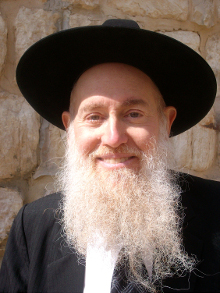
Rabbi Zelig Pliskin
Rabbi Zelig Pliskin

So connecting what Rabbi Twersky said to the statement made by Rabbi Pliskin, we need to make different choices, first by admitting that our prior choices are our own, and then changing the choices we make now, eliminating “those influences that are likely to stimulate feelings and behavior that” we think are wrong.

And if not now, then when? (Ethics of the Fathers 1:14).

Hillel’s famous statement is a bit enigmatic. The simple answer is, “Later.” Why can’t we take care of whatever it is some other time? Granted that procrastination is not a virtue, why does Hillel imply that if not now, then it will never be?

The Rabbi of Gur explained that if I do something later, it may indeed get done, but I will have missed the current “now.” The present “now” has but a momentary existence, and whether used or not, it will never return. Later will be a different “now.”

King Solomon dedicates seven famous verses of Ecclesiastes to his principle that everything has its specific time. His point comes across clearly: I can put off doing a good deed for someone until tomorrow, but will that deed, done exactly as I would have done it today, carry the same impact?

The wisdom that I learn at this moment belongs to this moment. The good deed that I do at this moment belongs to this moment. Of course I can do them later, but they will belong to the later moments. What I can do that belongs to this moment is only that which I do now.

Today I shall…

…try to value each moment. I must realize that my mission is not only to get something done, but to get things done in their proper time, and the proper time may be now.

-Rabbi Abraham J. Twersky
Growing Each Day for Kislev 14
Aish.com

You’ve probably heard the saying, “There’s no time like the present,” attributed to Georgia Byng and that seems to be what both of these esteemed Ravs are telling us. Once you’ve recognized that you are the one making decisions in your life, that they are bad decisions, and that they are causing harm, the next step is to determine what good decisions are and start making them right now.

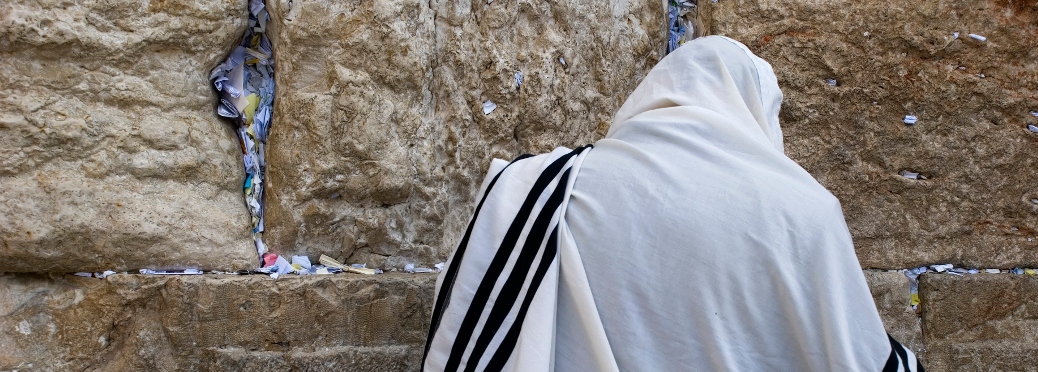
Jeff stood before the Wall, and made up an atheist’s prayer. He looked at the stones and said:

“God, I don’t believe in You. As far as I know, You don’t exist. But I do feel something. So if I’m making a mistake, I want You to know, God, I have no quarrel against You. It’s just that I don’t know that You exist. But God, just in case You’re really there and I’m making a mistake, get me an introduction.”

Jeff finished his prayer, and one of the yeshiva students who happened to be at the Wall, saw Jeff and thought, “Perhaps he’d be interested in learning some Torah.”

He tapped Jeff on the shoulder, startling him so much that he jumped three feet in the air. Jeff whirled around and shouted,

“What in the blankety-blank-dash-bang do you want?!”

“I’m sorry. I just want to know if you’d like to learn about God.”

That question hit Jeff like a 2-by-4 right between the eyes. He had just finished asking God for an introduction, and immediately someone was offering to introduce him to God.

“Prayer of an Atheist”
from the Ask the Rabbi column
Aish.com

I encourage you to click the link above to get the full context of the article, but I included this quote to illustrate just how powerful prayer, even one uttered by an atheist, can be to remediate a person’s life.

The young Jewish fellow in question studied Torah in Jerusalem for the next six weeks following his encounter at the Kotel, continued his studies and coming to faith after returning to his home in the United States, and eventually married a devout Jewish woman.

But up until he prayed that one prayer at the Kotel, his life was heading in a very different direction.

Of course Jeff’s decision to pray at that moment wasn’t random:

Jeff had been in Norway, visiting his Norwegian fiancée. And he decided it was now or never: either he is going to come to Israel or he’ll never make it.

So he headed for Jerusalem and the Western Wall. He figured he would stop by the Wall to see some old stones. Yet upon his arrival he was amazed. He felt something heavy. He was moved.

Jeff stood before the Wall, and made up an atheist’s prayer. He looked at the stones and said…
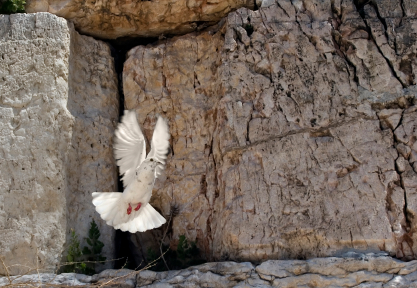
white-pigeon-kotelSomething about being a Jew in Jerusalem and at the Kotel got through to Jeff. More accurately put, God got through to Jeff using the holiness of Jerusalem as a catalyst.

God uses all manner of events and circumstances to motivate human beings, Jews and everyone else. Although I’ve been quoting from Jewish sources throughout this blog post, the advice is just as applicable to the rest of us. If the Jewish people are supposed to be a light to the nations, then this is one way they are accomplishing their mission.

Jesus (Yeshua) said that he was the light of the world (John 8:12), which I take to mean that he is the living embodiment of Israel’s mission to the nations, the best personal example of Israel shining a light on the path allowing the people of the nations to find God. But he also said to his disciples that they were the light of the world (Matthew 5:14-16) indicating that they were to assume his mission and continue to shine the light for the rest of us to follow. Eventually, we Gentiles become that light as well, but only once we have achieved a level of spiritual achievement and discipline to live a life worthy of that light.

It all comes down to the choices we make. It also means that even if we make bad choices, they don’t have to determine the course of the rest of our lives. We have free will. We can make different choices. We can choose differently now, today, this morning.

I always like the “I’ll be back” line because it is a great philosophy for life. Life isn’t all successes, it is also defeats. But you can always be back. No matter what, just like the Terminator. You’re not a loser when you fall. You’re only a loser if you don’t get up. Winners get up and come back.

–Arnold Schwarzenegger

Get this straight: The secret behind success is knowing how to fail. Failures are people who fail once. Successes are people who fail thousands of times—and pick themselves back up each time. Like little kids learning to walk. Like Babe Ruth, who held the world record for home runs—and also held the record for strike-outs.

–Rabbi Tzvi Freeman

For more on this topic, please read On Choosing God.

The Enemy Within Us

The truth is that the yetzer hara also uses both of these tactics, but it is more successful when it approaches as a friend. Chovos HaLevavos (Yichud HaMaaseh Ch. 5) describes at length the dangerous power the yetzer hara possesses: “A person must realize that his biggest enemy in this world is his yetzer hara, which is well-connected to his character and is mixed into his personality. It is a partner in all of a person’s spiritual and physical aspirations. It gives advice on all of one’s movements, the revealed ones and the concealed ones, and lies in ambush to persuade one to sin at all times. Even while sleeping, one is not safe: the yetzer hara is always wide awake, seeking to harm. A person may forget about it, but it never forgets. It masquerades as a friend and a close confidant; indeed, with its shrewdness it tries to be considered a most loyal and trusted friend. The yetzer hara is so convincing that a person might think that it is running to fulfill his every wish. But in truth, it is shooting dangerous, deadly arrows, to uproot the person from the World to Come.”

Mussar Thought for the Day
for Monday’s Commentary on Parashas Vayishlach, p.191
A Daily Dose of Torah

“If you do well, will not your countenance be lifted up? And if you do not do well, sin is crouching at the door; and its desire is for you, but you must master it.”

–Genesis 4:7 (NASB)

According to a midrash on the Torah portion for this coming Shabbat, when Jacob is contemplating his upcoming encounter with Esau after many years, he fears two things: being killed by Esau and being befriended by Esau. Rabbinic commentary likens this to how the yetzer hara (evil inclination) operates inside of a human being. Our most basic nature or what a Christian might call our “sin nature” seeks to disobey God and lead us into ruin and exile from the World to Come, the ultimate physical and spiritual harm. In that, it’s easy to see the temptation to sin and resistance to repent as our enemy and something we must actively battle.

But the flip side of the coin is the deceptiveness of our own human natures, and this I think (and the commentary quoted above agrees) is the greater danger. People have a tremendous capacity for self-delusion and often choose to see and hear only what fits into their own dynamic or world view, regardless of the objective facts. We define good and evil by our own human standards and justify any harm we might be doing to ourselves and others in any number of creative ways. This is the yetzer hara as our friend, leading us down the peaceful and attractive path to destruction.

Other commentaries on this Torah portion say these are the twin dangers of the nations toward the Jewish people. History is replete with terrible acts done by non-Jews upon Jews including inquisitions, pogroms, torture, and murder. But the other danger, and this seems strange at first glance, is for the nations (that is, Gentiles) to extend friendship toward the Jews. Why is this a problem? Because it often leads Jewish people away from Torah, away from performing the mitzvot, and away from God. It waters down Jewish distinctiveness and we have a clear record of how Jews have assimilated into secular culture or even converted to other religions including Christianity (this is complicated when you add Messianic Judaism to the mix, but that’s a conversation for another time).

I haven’t come to talk about Jewish distinctiveness, but of a more personal danger:

In working with alcoholics and addicts, I have come to realize that the most absolute slavery does not come from enslavement by another person, but from enslavement by one’s own drives. No slavemaster has ever dominated anyone the way alcohol, heroin, and cocaine dominate the addict, who must lie, steal, and even kill to obey the demands of the addiction.

Such domination is not unique to addiction. We may not realize that passion of any kind may totally control us and ruthlessly terrorize us. We may rationalize and justify behavior that we would otherwise have considered as totally alien to us, but when our passion demands it, we are helpless to resist.

-Rabbi Abraham J. Twersky
“Growing Each Day” for Kislev 11
Aish.com

Infinite darknessLittle by little, we are guided away from the light with small, even tiny deviations off our original course and by the time we realize it, we are as Rabbi Twersky describes: slaves. When we finally realize the yetzer hara is not our friend, we are totally engulfed by this nature.

But in speaking of the yetzer hara as it if were something separate from the whole person, I’m denying the truth that our nature is who we are or at least part of who we are. That’s why it is so difficult to detach our temptations and our giving in to them, that is, our sin, from the rest of our identity and being.

So when we have fallen and fallen far, what are we to do?

This concept helps us better understand the true power of prayer. We know that, on the one hand, the Gemara says: “one cannot rely on a miracle,” and must do whatever we can to protect himself naturally. On the other hand, the Gemara (Berachos 10a) tells us that even when a sharp sword is placed upon the neck of a person, he should not give up hope, but rather he should pray for mercy from Hashem. How do we reconcile these mixed messages?

A Closer Look at the Siddur
for Monday’s Commentary on Parashas Vayishlach, p.193
A Daily Dose of Torah

I mentioned this Gemara in a previous blog post and it is a critical one, for as I also mentioned, repentance, particularly if we look at it as a set of stages or steps, is hardly linear. We may start out on the path to repentance with high hopes and set a straight course, only to find ourselves being pulled back into the darkness as if we were tethered to it by a large rubber band. We get so far only to snap back into our old habits and patterns.

Many people think they are free, yet they are really pawns in the hands of their drives. Like the addict, they are not at all in control, and do not have the fundamental feature of humanity: freedom.

-R. Twersky, ibid

This first step is to realize that the yetzer hara is not a friend and that we are not free. However, we must realize that we are exercising free will in our behavior, which is confusing when you consider yourself a slave. Does a slave stay with the slave master voluntarily? In our case, the answer is often “yes”.

Our only defense is to become masters over our desires rather than their slaves. We must direct our minds to rule over the passions of our hearts.

R. Twersky offers this as the answer to our slavery, but he’s only got so much room to write and article, and he can’t say everything that may need to be said.

For that matter, all the reading and writing in the world wouldn’t say enough or do enough because once a person recognizes they are a slave, they can only become the master through effort.

But one of those efforts is prayer.

sword on neckAbove, it was suggested that we shouldn’t depend on miracles to get us out of these messes but on the other hand, we should pray to God to help us out of our troubles. Is this a contradiction? The Rabbinic sages don’t think so, and resolve the apparent conflict by stating the power of prayer was built into the nature of Creation when God made the universe. No, that’s not in the Bible, but what it may mean is that when God made a perfect universe and human disobedience broke it, something in the essential nature of our world included a way to fix the world and to fix ourselves by invoking our relationship with God.

While God’s nature is incompatible with sin and human despair, it’s not like God can’t see or hear us when we are in the darkest corners of our own souls.

If at first you don’t succeed,: Try, try, try again.

-attributed to William Edward Hickson (1803-1870)

Just as the yetzer hara can attack us in two ways, we can be defeated in two ways. The first is to simply give up, to say to ourselves that we are weak and worthless and there is no hope. The enemy has won. The second is to never realize that we’re fighting an enemy at all and to believe that nothing is our fault. The yetzer hara is our friend and he/she would never lie to us. If we have problems in life or with other people, someone else is responsible, not us.

Either way is no good, but at least in the first situation, we realize there is an enemy and there is a sharp sword resting on our neck poised to execute us. Then we know to pray and to hope in God. In the second situation, we may never realize our danger and may fail fatally unless we are shocked out of apathy and delusion by the consequences of our folly and by a loving God. But at that point, the fight is just beginning.

Birds and Ladders: A Continued Story of Repentance

The idea of prayer is to inwardly have a private dialogue with the Creator. Speak to Him just as you might speak with a friend who is paying attention and listening.

All around you may be noise, traffic, planes, telephones. Inwardly, too, may be a preoccupation with hassles, business dealings, quarrels, competition, desires.

But prayer brings you suddenly to… quiet. The inward silence creates a barrier to the flow of noise, and it is as if there is silence and calm all around. Tranquility is yours!

(see Rabbi S. Wolbe – “Shal’hevesya,” p.34)

Daily Lift #180: Pray One-on-One
Aish.com

Rabbi Mordechai Rottman relates in his article Four Steps to Change that making teshuvah or repentance, requires for basic steps:

  1. Regret
  2. Leaving negativity behind
  3. Verbalization or confession
  4. Resolution for the future

About Verbalization, he says:

Why is it important to say it?

There is a power to saying things as opposed to just thinking about them. Verbalizing a thought brings the idea to a new level of reality, awareness and understanding.

The verbalization that is done after committing a transgression makes one more fully aware of what was done. It therefore heightens the regret and strengthens the resolution not to commit the act again.

This verbalization is not to be done before anyone other than God. Not even your rabbi needs to know about what you have done. It’s just between you and your Creator.

Granted, you don’t come to this stage of repentance until you’re fully immersed in the first two, but coupling R. Rottman’s commentary with R. Wolpe’s, we see that in talking to God, we don’t have to stand on ceremony, as it were. We can speak from the heart, one-on-one, confessing only to Him our feelings of regret and remorse, expressing our sorrow and guilt, and pleading with Him to be our strength in the face of our trials; our rock in overcoming our challenges.

In one of his commentaries on Torah Portion Vayaitzai, Rabbi Zelig Pliskin stated:

The Chofetz Chayim cited the idea expressed by many commentators that the ladder Yaakov saw in his dream symbolizes the situation of every person in this world. There are two actions a person performs on the ladder. Either he goes up from the bottom to the top, or else he goes down from the top to the bottom. Each day in a person’s life he faces new challenges. If he has the willpower and self-discipline to overcome those challenges, he goes up in his spiritual level. If, however, a person fails to exercise the necessary self-control, he lowers himself. This is our daily task, to climb higher every day. (Toras Habayis, ch.10)

-Rabbi Zelig Pliskin
“Climb higher on the spiritual ladder each day by growing from life’s challenges,” p.72
Based on Genesis 28:12
Growth Through Torah

However, this sentiment causes me to re-evaluate a teaching of the Master:

For whoever has, to him more shall be given, and he will have an abundance…

–Matthew 13:12 (NASB)

weightliftingI know Yeshua (Jesus) was talking about blessings, but when a person finds the self-control, with God’s help, to overcome challenges, although we expect some sort of relief from strife, what most likely happens is another, stronger challenge appears. It’s like being an athlete who has exceeded a personal goal. Having done so, it’s not a matter of resting on his or her laurels, but finding the next goal, the next challenge, and tackling it. But on a moral and spiritual level, overcoming a personal challenge is often exhausting, and after a tough battle, all you want to do is rest.

Then the devil left Him; and behold, angels came and began to minister to Him.

–Matthew 4:11

Even after he successfully overcame his trials, Yeshua got to rest. When facing a spiritual challenge, we have two fears. The first is that we will fail (again). The second is that we will succeed only to immediately face a much more serious challenge.

Why not stay where we are? It may not be the best situation, but at least it’s a known quantity.

Two reasons. The first is that by continuing in a state of sin or disobedience to God, you are not only damaging your relationship with Him, but likely with others around you including friends and loved ones. In fact, it might be the realization of their pain that spurs you into action and seeking repentance in the first place.

The second reason, as Rabbi Pliskin relates, is that being on the ladder is like being in a boat on the river. If you stop rowing, you don’t stay in one spot, you go backward. It’s only through constant effort that you make progress. Although a real ladder doesn’t work this way, spiritually, that’s what happens.

In spite of R. Pliskin’s metaphor, few of us start climbing the ladder and successfully master a rung a day. Conversely, few of us start at the top and steadily, unerringly make our way to the bottom. For most people, we struggle up two and down one, or up one rung, then down two, often for quite some time as we seek to master some part of ourself. As much as we’d like it to be otherwise, progress, spiritual or in any other way, is rarely linear like climbing a flight of stairs.

A person whose main focus is self-improvement and a striving for perfection will always check over his behavior to see what needs correction. Keep asking yourself, “Have I made mistakes?” When you do find a mistake, feel positive for the opportunity to correct the mistake for the future.

-R. Pliskin
“Keep checking your behavior to find ways to improve,” pp.73-4

Oh, if only it were that easy. The Rav makes it seem like we may or may not find that we’ve made mistakes, and yet what I know of human nature in general and my nature in specific tells me that we make mistakes every day, big and small. Of course, the more often we check our moral compass and the path we are traveling, the greater the likelihood that our course corrections will be frequent but small. That assumes, of course, that we generally are on the right course and don’t find ourselves in uncharted and undesirable territory.

It’s much more difficult when you have fallen far, to start climbing the ladder again. The distance from the bottom to the top seems so long, so insurmountable, and overcoming inertia to begin working from the basement of your soul up to that first rung is an almost unimaginable effort.

A word of caution. While self-criticism is a prerequisite for character improvement, one must be careful to have a healthy balance. Excessive self-condemnation will be extremely detrimental to one’s well-being. You need to master an attitude of joy for doing good and then self-criticism will add to that joy. Every fault that is found and worked on will give you the pleasure of knowing that you are improving.

ibid, p.74

I blame myselfStep two on Rabbi Rottman’s list of the four steps of teshuvah is “leaving negativity behind.” He is speaking of changing your environment and the various influences in your life to minimize or eliminate those that contribute to your being tempted to return to sin. However, from my point of view, one of those influences is yourself and what you are saying about your circumstances.

If you look at the ladder from the bottom and say that it’s impossible for you to climb even in a small way, then you are right. It is impossible. Then there you sit in the dust and continue sinking to some sub-level of iniquity.

As much as we’d all like God to “zap” our lives so that we find spiritual and moral growth easy and effortless, such is not the case. Grace may be free but repentance is really hard work. Leaving negativity behind is largely a matter of the stories you tell yourself about yourself. If you tell yourself you are helpless and hopeless, then you’re right. If you tell yourself you are capable and with God’s help, you can begin to climb the ladder and improve, you are also right.

The ladder is either a barrier that holds you down or an opportunity to lift yourself up. You don’t have to achieve spiritual miracles and jump from the bottom to the top in a day, a week, or even a year. Truth be told, the ladder is as long as your life and the challenges never end. But the one you face today that seems so huge and so terrifying, might seem like a small kitten a year from now if you are diligent in your work.

If you look at some temptation facing you and resist it this morning, by tonight you can look back and say that you have accomplished something. Yes, the temptation may be there tomorrow, but that’s another rung on the ladder.

Similarly, Rabbi Yisroel Salanter used to say that a person is like a bird. A bird has the ability to fly very high. But it must continually move its wings. If a bird stops flapping its wings, it will fall. Every person is similar. (cited in Tnuas Hamussar, vol.1, p.300)

When you see birds flying, let that serve as a reminder to you to make the necessary movements to raise yourself spiritually.

-ibid, p.72

Therefore let him who thinks he stands take heed that he does not fall. No temptation has overtaken you but such as is common to man; and God is faithful, who will not allow you to be tempted beyond what you are able, but with the temptation will provide the way of escape also, so that you will be able to endure it.

–1 Corinthians 10:12-13

Five days a week, I wake up at 4 a.m. and make it to my local gym by five. It’s gotten easier to overcome sleepiness and to battle the drive in the dark to the gym to do this, and then to face the free weights, the workout machines, and the cardio exercise, fitting it all into an hour, but in the beginning it was very difficult.

Some days my workout is better than others. Some days, I skip a scheduled day, as I did last Friday, but pick it up the following day to make up for my lack of consistent effort.

It is the same when we face our challenges. We accept them upon ourselves for many reasons. We want to be a better person than the one we are today. We have many flaws which hurt our relationship with God and with our families and friends and we want to repair the damage. We are continually hurting ourselves, and need to become stronger and to heal.

soarChange can be terrifying but it can also be exciting. It’s like moving to a place you’ve never lived before. You have no connections or support, but you also have a brand new environment to explore and learn from.

The effort you make and the story you tell yourself about it will make the difference between falling and soaring. But you don’t have to make the effort alone. Talk to God. Ask for his help. With our eyes on our Master, we can learn to climb high and fly with eagles.

Repentance and Forgiveness in the Face of Tragedy

Even if a sharp sword rests upon a man’s neck he should not desist from prayer.

–Berachos 10a

In the history of the Jewish people there were many times that could be called “lost opportunities.” Such opportunities existed, for example, before the sin of the Golden Calf, before the Jewish people entered the land, as well as during the times of Kings Saul and Solomon. Yet, the opportunity faded or did not turn into what it could have been.

-by Berel Wein adapted by Yaakov Astor
from “Hezekiah: The Messiah Who Was Not”
JewishHistory.org

I think just about anyone can be put in a situation where they feel helpless and hopeless. Even the most faithful Christian, Jew, or other religious person can face a crisis that tests their faith and trust. Sometimes that situation is the consequence of sin. Other times, it is just a life occurrence.

I’m reminded of Brittany Maynard, the 29-year-old woman who was diagnosed with brain cancer and chose to commit assisted suicide. Her diagnosis was terminal and she was given a scant six months to live. There have been a lot of arguments for and against her decision, however, I’m not writing to debate the choice she made. Suicide, at least in the case of an intelligent, mentally and emotionally capable individual, is often an attempt to take control of an otherwise uncontrollable situation. Brittany was going to die a terrible death and there was absolutely nothing she or anyone else could do about it…

…except preempt the conclusion by dying sooner and by different and more merciful means.

The sword was at her neck. But unlike the aphorism from Talmud which I quoted above, she chose to desist from prayer, if she had prayed at all, and allowed the “sword” to fall, so to speak.

Is there ever a circumstance where we are justified in giving up?

Not according to Berachos 10a which is based on the following scripture verses:

So the Lord sent a pestilence upon Israel from the morning until the appointed time, and seventy thousand men of the people from Dan to Beersheba died. When the angel stretched out his hand toward Jerusalem to destroy it, the Lord relented from the calamity and said to the angel who destroyed the people, “It is enough! Now relax your hand!” And the angel of the Lord was by the threshing floor of Araunah the Jebusite. Then David spoke to the Lord when he saw the angel who was striking down the people, and said, “Behold, it is I who have sinned, and it is I who have done wrong; but these sheep, what have they done? Please let Your hand be against me and against my father’s house.”

–2 Samuel 24:15-17 (NASB)

Though He slay me, yet will I trust in Him.

–Job 13:15

Even total reliance on the grace and mercy of God does not guarantee a perfect life free from stress, harm, or tragedy. It certainly doesn’t guarantee that God will remove the consequences of our errors, mistakes, and sins. It also, sadly, doesn’t mean that bad things will never happen to good people, though as the Master said no one but God is good (Matthew 19:17, Mark 10:18, Luke 18:19).

What does it feel like when the sword is resting on the back of your neck and you know it can and probably will fall within the next few seconds? It must feel pretty desperate.

It must feel like how the Children of Israel felt when Moses discovered their sin with the Golden Calf. It must feel like how the Children of Israel felt after they refused to take the Land of Canaan and then, once God’s protection was removed, when they tried to enter Canaan only to be routed in humiliation (Numbers 14). It must have felt like how Hezekiah felt when he was told he was about to die from his illness (Isaiah 38:1-2).

deathMost rational people don’t blame a sick person for being sick. Oh, there are probably some exceptions, such as how we might feel when we hear a chronic cigarette smoker is diagnosed with lung cancer, or when we find out an alcoholic has liver disease. Even Hezekiah’s illness was a consequence of his behavior or the lack of it, at least according to Midrash (Sanhedrin 94a):

On the night of Passover, in the middle of the night, an angel smote the army of Assyria and 185,000 died from a plague (II Kings 19:35).

Imagine — the Jewish people were staring annihilation in the face. An overwhelming implacable foe completely surrounded their last stronghold. There was a constant propaganda barrage against them in their native tongue. They had doubters from within. They went to sleep Passover night with no realistic hope.

However, they woke up the morning of Passover and the threat was suddenly gone. Someone had smitten the outstretched arm of the enemy with the sword it had raised against them.

At that moment, the Talmud remarks, Hezekiah had the chance to become the Messiah. All he had to do was sing the praises of God. Moses and the people had done so after the Egyptians were drowned in the sea. Had Hezekiah done the same he would have been the Messiah and history as we know it would have proceeded differently.

However, he did not sing. That is why he was not worthy to be the Messiah. The opportunity was lost.

But although it seemed as if God’s mind were made up as far as the King’s fate was concerned, Hezekiah continued to plead:

Then Hezekiah turned his face to the wall and prayed to the Lord, and said, “Remember now, O Lord, I beseech You, how I have walked before You in truth and with a whole heart, and have done what is good in Your sight.” And Hezekiah wept bitterly.

Then the word of the Lord came to Isaiah, saying, “Go and say to Hezekiah, ‘Thus says the Lord, the God of your father David, “I have heard your prayer, I have seen your tears; behold, I will add fifteen years to your life. I will deliver you and this city from the hand of the king of Assyria; and I will defend this city.”’

–Isaiah 38:2-6

God listened and he relented, adding fifteen more years to Hezekiah’s life. He removed the sword from the King’s neck, so to speak, at least for another decade and a half.

Of course, Hezekiah had a “track record” of walking before God “in truth and with a whole heart.” If he had been sinful and disobedient as was Hezekiah’s father, it is unlikely that God would have spared his life.

So too it is with us.

defeatNo, not all of our woes involve terminal illness, but when we plead and beg God to take the pressure off, He is under no obligation whatsoever to do so, especially if we are still unrepentant of our sins. Keep in mind, even a perfectly repentant person, if there is such a thing, may still pray to God for mercy in relieving their illness or other problems and God may, for His own sovereign reasons, not provide the desired answer to prayer.

But how would you like to face tragedy and disaster in life, whether you deserve it or not…with a conscience right with God or still buried in your own iniquity?

I’m not preaching to you or being judgmental. I’m as human as anyone and I make plenty of mistakes. I’m writing this as much for me as for anyone else.

Be kind, for everyone you meet is fighting a hard battle.

That quote has been attributed to Plato, Philo of Alexandria, and Ian MacLaren among others, but the words are very true. Most of us don’t show any outward sign of the battles we fight every day and when we do, it usually means we’ve come to the end of our rope. I mentioned the other day about the importance of forgiveness and gratitude, and this is like it.

When you are tempted to “drop the hammer” or “lay down the law” on someone, even if they deserve it, stop for a moment and get in touch with your own “hard battle,” and then try to realize that the other person is also fighting as hard as they can. If you expect forgiveness from God for your own sins, then forgive the other person if it is at all possible.

But before all that, repent of your own sins and ask for forgiveness from your Heavenly Father. It requires being forgiven in order to forgive.

Be very, very humble.

-Ethics of the Fathers 4:4

Rabbi Raphael of Bershed complained bitterly to his teacher, Rabbi Pinchas of Koretz, that he was unable to eradicate feelings of vanity.

Rabbi Pinchas tried to help him by suggesting different methods, but Rabbi Raphael replied that he had already tried every one without success. He then pleaded with his mentor to do something to extirpate these egotistical feelings. Rabbi Pinchas then rebuked his disciple. “What is it with you, Raphael, that you expect instant perfection? Character development does not come overnight, regardless of how much effort you exert. Eradication of stubborn character traits takes time as well as effort. Today you achieve a little, and tomorrow you will achieve a bit more.

“You are frustrated and disappointed because you have not achieved character perfection as quickly as you had wished.

“Continue to work on yourself. Pray to God to help you with your character perfection. It will come in due time, but you must be patient.”

The Talmud states, “Be very, very humble,” to indicate that true self-betterment is a gradual process. We achieve a bit today, and a little more tomorrow.

Today I shall…

..try to be patient with myself. While I will do my utmost to rid myself of undesirable character traits, I will not become frustrated if I do not achieve instant perfection.

-Rabbi Abraham J. Twerski
from “Growing Each Day” for Kislev 7
Aish.com

praying aloneIf you aren’t patient with yourself and you don’t believe you can repent and be forgiven by God (and even if you know that although God may forgive you, some people never will), then you will cease to pray when you feel the sword rest on your neck or even when you see it coming. You won’t trust God that somehow, in some way, this too is for the good. Remember my previous quote of Rabbi Twersky who was quoting the Baal Shem Tov:

The Baal Shem Tov taught that God acts toward individuals accordingly as they act toward other people.

I think that includes how you act toward yourself. If you give up and won’t forgive yourself, how will God forgive you?

Why do parents love their children?
Because the lower world reflects the higher world. And above, there is a Parent and He loves His children.

Why do parents of an only child have such unbounded love for their child?
Because this is the truest reflection of the world above: Above, each one of us is an only child, and His love to us is unbounded.

-Rabbi Tzvi Freeman
“The Only Child”
Chabad.org

As We Have Forgiven Others

God is your shadow at your right hand.

–Psalms 121:5

The Baal Shem Tov taught that God acts toward individuals accordingly as they act toward other people. Thus, if people are willing to forgive those who have offended them, God will similarly overlook their misdeeds. If a person is very judgmental and reacts with anger to any offense, God will be equally strict. The meaning of, God is your shadow, is that a person’s shadow mimics his or her every action.

At a therapy session for family members of recovering alcoholics, one woman told the group that she had experienced frustration from many years of infertility and tremendous joy when she finally conceived. Her many expectations were shattered, however, when the child was born with Down’s syndrome.

“I came to love that child dearly,” she said, “but the greatest thing that child has done for me is to make me realize that if I can love him so in spite of his imperfections, then God can love me in spite of my many imperfections.”

If we wish to know how God will relate to us, the answer is simple: exactly in the same way we relate to others. If we demand perfection from others, He will demand it of us. If we can love others even though they do not measure up to our standards and expectations, then He will love us in spite of our shortcomings.

Today I shall…

…try to relate to people in the same manner I would wish God to relate to me.

-Rabbi Abraham J. Twersky
from “Growing Each Day” for Kislev 3
Aish.com

I thought it appropriate to pause from the strife and drama that often characterizes the religious blogosphere and social media in general and take on a different tone. It is, after all, the American holiday of Thanksgiving which should, in theory, mean something more than gorging on turkey, stuffing, and pumpkin pie.

Given recent events and on which side of the fence people find themselves, it might be very difficult for some of them (us) to experience any sense of thankfulness or gratitude. In fact, the primary emotion many folks seem to be experiencing is about as far from peace and being grateful as you can get. There’s a lot of virtual yelling on the web and much, much worse going on in the real world.

Derek Leman
Derek Leman

I think it’s important to take a step back from all this and realize that how we treat each other matters.

A few days ago, Derek Leman posted a summary of his second day at the Society of Biblical Literature (SBL) Convention in San Diego. I was pleasantly surprised by what Derek wrote. Here’s a revealing sample:

Confession time. If you’ve read my blog over the years, you’ve seen me in fight mode before. I can be combative, rude, unpleasant. I have engaged in labeling and ad hominem. It is one of my character deficiencies.

So one theme of SBL this year has been running into people I have “done combat” with and making reconciliation. Seth Postell is a brilliant scholar and he and I see eye to eye on many things (but legitimately disagree on others). I did not remember that in an angry exchange I once (this is embarrassing) said he was anti-Semitic. He reminded me, not in anger, but graciously, when I asked him, “Have we ever actually met before.”

“Oh, yes, Derek, we’ve met,” he chuckled. “Don’t you remember?” And then he kindly let me know he had no hard feelings and that we could move forward as friends. It’s great to have people like that in the world.

The next person I made peace with might surprise you, if you’ve followed me for long. Tim Hegg. He’s always here working with Accordance Bible Software. I am an Accordance user and needed some help learning how to do more in-depth Hebrew searches. I approached Tim who simply smiled and received me as a friend.

If these names don’t mean anything to you, don’t worry. The point is that Derek encountered other theologians at the conference with whom he has “sparred” in the past and who nevertheless, were gracious and approachable.

I’m convinced that in times of strife, we all need to learn to get past our emotions and see the people with whom we are arguing, not as opponents or enemies, but as other people who are just like us, people who are also children of God and made in His Holy Image. Would we dare treat a holy person with disrespect? Would we have the audacity to spit in the face of the Holy Image?

Lakanta (Tom Jackson): What do you think is sacred to us here?

Wesley Crusher (Wil Wheaton): Maybe the necklace you’re wearing? The designs on the walls?

Lakanta: Everything is sacred to us – the buildings, the food, the sky, the dirt beneath your feet – and you. Whether you believe in your spirit or not, we believe in it. You are a sacred person here, Wesley.

Wesley Crusher: I think that’s the first time anyone’s used that particular word to describe me.

Lakanta: You must treat yourself with respect. To do otherwise is to desecrate something that is holy.

Wesley Crusher: Is that what you think I’ve been doing?

Lakanta: Only you can decide that.

-from “Journey’s End,” March 26, 1994
Star Trek: The Next Generation

While the focus in this scene is directed at how Wesley has been treating himself with disrespect and thereby desecrating a holy person, if we look through the opposite side of the lens, we can see how often we treat others with disrespect, especially in our online transactions…

tom jackson
Tom Jackson

…and thus desecrating many holy people.

I’m as guilty of this as anyone else, and so I must accept my share of responsibility for my failures. That means I am repenting of the harsh words and attitudes I’ve expressed toward some of you and am asking for forgiveness from each of you. I also forgive anyone who has offended me. May no one be punished because of me.

But this is a lot more serious than just being rude, and even a lot more dire than committing acts of desecration. Keep my quote of Rabbi Twersky in mind as you read the following:

“Pray, then, in this way:

‘Our Father who is in heaven,
Hallowed be Your name.
‘Your kingdom come.
Your will be done,
On earth as it is in heaven.
‘Give us this day our daily bread.
‘And forgive us our debts, as we also have forgiven our debtors.
‘And do not lead us into temptation, but deliver us from evil. For Yours is the kingdom and the power and the glory forever. Amen.’]

For if you forgive others for their transgressions, your heavenly Father will also forgive you. But if you do not forgive others, then your Father will not forgive your transgressions.”

–Matthew 6:9-15 (NASB)

The Baal Shem Tov probably didn’t use Yeshua as his source material but they both seemed to think along the same lines.

When we treat others with disrespect, not only are we committing desecration against a holy person but we are inviting God to treat us with disrespect. Conversely, when we act respectfully toward another person, particularly someone with whom we previously have had “problems,” what does that say about how God will treat us, “problems” and all? When we forgive someone who has contended with us, will God not then forgive us of our contentious natures?

Here’s another example:

“For this reason the kingdom of heaven may be compared to a king who wished to settle accounts with his slaves. When he had begun to settle them, one who owed him ten thousand talents was brought to him. But since he did not have the means to repay, his lord commanded him to be sold, along with his wife and children and all that he had, and repayment to be made. So the slave fell to the ground and prostrated himself before him, saying, ‘Have patience with me and I will repay you everything.’ And the lord of that slave felt compassion and released him and forgave him the debt. But that slave went out and found one of his fellow slaves who owed him a hundred denarii; and he seized him and began to choke him, saying, ‘Pay back what you owe.’ So his fellow slave fell to the ground and began to plead with him, saying, ‘Have patience with me and I will repay you.’ But he was unwilling and went and threw him in prison until he should pay back what was owed. So when his fellow slaves saw what had happened, they were deeply grieved and came and reported to their lord all that had happened. Then summoning him, his lord said to him, ‘You wicked slave, I forgave you all that debt because you pleaded with me. Should you not also have had mercy on your fellow slave, in the same way that I had mercy on you?’ And his lord, moved with anger, handed him over to the torturers until he should repay all that was owed him. My heavenly Father will also do the same to you, if each of you does not forgive his brother from your heart.”

–Matthew 18:23-35

ForgivenessI hope the interpretation of the above-quoted scripture is abundantly obvious. If we expect to be forgiven our debts or offenses to God, we must forgive the debts of others and how they may have offended us. The Master’s parable about forgiveness starkly outlines the consequences for failure.

Derek presents us with a positive example of forgiveness and I encourage you to click the link to his blog I provided above and read the full content.

Once relieved of the burden of grudges, bad attitudes, and an unforgiving spirit, I suspect that you and I will be able to find many things to be grateful for today and for the days that follow.

The Lord is your keeper;
The Lord is your shade on your right hand.
The sun will not smite you by day,
Nor the moon by night.
The Lord will protect you from all evil;
He will keep your soul.
The Lord will guard your going out and your coming in
From this time forth and forever.

–Psalm 121:5-8

Amen.

Sermon Review of the Holy Epistle to the Hebrews: Sacrifice of Praise

How can we worship God without the sacrifices?” The epistle of the Hebrews points us to the text of Hosea 14:2 to answer this question, employing the same proof text and arriving at nearly the same conclusion that the sages of Yavneh offered after the destruction of the Temple. That prescient message anticipated the coming exile and offered Israel a survival guide for the long years ahead without sacrifice, without priest, and without temple.

-D. Thomas Lancaster
Sermon Forty-six: Sacrifice of Praise
Originally presented on March 22, 2014
from the Holy Epistle to the Hebrews sermon series

Lancaster started his final sermon in his “Hebrews” series in what I thought was an odd place:

Now Peter and John were going up to the temple at the ninth hour, the hour of prayer.

–Acts 3:1 (NASB)

You may or may not know about the Tamid or the continual burnt offering which was presented on the altar twice daily, once in the morning for the Shacharit service and once in the afternoon, at the ninth hour, for the Maariv service.

Lancaster takes his audience on a short trip through the Apostolic Scriptures to demonstrate that Yeshua (Jesus) and his Jewish disciples were devoted to worshiping in the Temple in Jerusalem “continually” (Luke 24:53), “every day” (Acts 5:42), being devoted to “the prayers” (Acts 2:42). And the set times of the prayers were at Shacharit and Maariv when a fresh lamb would be placed on the altar to burn from morning to afternoon, and then from afternoon and throughout the night, a sacrifice continually before the Lord.

For I could wish that I myself were accursed, separated from Christ for the sake of my brethren, my kinsmen according to the flesh, who are Israelites, to whom belongs the adoption as sons, and the glory and the covenants and the giving of the Law and the temple service and the promises…

–Romans 9:3-5 (emph. mine)

As we see, even when the Temple stood, the prayer services and the sacrifices were inexorably linked. There was no one or the other in Jewish thought. The singing and the prayers were always part of the sacrificial system that God gave to the Jewish people. This is how God said He wanted His people Israel to worship Him.

But on the 17th day of Tammuz in the year 70 C.E., all that ended. The siege of Jerusalem began and the supply of lambs was cut off. Except for the time of the Maccabees, the Tamid sacrifice had been offered day after day for five hundred years, and before the Babylonian exile, an additional 400 years. For almost a thousand years, morning and afternoon, the priests placed a lamb on the altar to burn continually before God.

And now it was all over, and the Tamid cannot be offered to this very day.

How could the Jewish people imagine worshiping God without the Temple and the sacrifices? This was how God said He was to be worshiped and now it is impossible. The grief, sorrow, and separation from God must have been almost unimaginable.

But even before the Temple was destroyed and years if not decades before the Roman siege on Jerusalem began, the Greek-speaking Jewish disciples of Messiah, the readers of this epistle we’ve been discussing for the past year, were asking themselves the same question.

And here’s the answer:

Return, O Israel, to the Lord your God,
For you have stumbled because of your iniquity.
Take words with you and return to the Lord.
Say to Him, “Take away all iniquity
And receive us graciously,
That we may present the fruit of our lips.

–Hosea 14:1-2

In verse two, the phrase “fruit of our lips” isn’t quite correct. The Hebrew literally says “bulls of our lips,” but that sounded strange to those who later translated the Jewish texts into Greek, so those translators changed the Hebrew word slightly to say “fruit”.

The Sacrifice - detailBut Hosea knew what he was trying to say to his audience, the Hebrews who were offering sacrifices, not in the Temple in Jerusalem which is the only place on Earth God has said it was His will that the sacrifices be made, but to Golden Calves, one in Dan and the other in Bethel.

What did the prophet call for them to do? Return and repent…to offer “words” which are words of repentance and prayer.

Lancaster quoted from Exodus Rabbah to illustrate that after the Temple was destroyed, the sages used these verses from Hosea to salvage Judaism, to design the synagogue system with its daily times of prayers that correspond to the times of the Tamid sacrifices at the Temple, and in which each prayer maps to a specific sacrifice.

Now we get to the end of the Book of Hebrews.

Through Him then, let us continually offer up a sacrifice of praise to God, that is, the fruit of lips that give thanks to His name.

–Hebrews 13:15 (emph. mine)

When a Christian sees this verse and thinks about continually offering prayer, they think “prayer without ceasing,” but that’s not how this passage is meant to be read within the context of first century Judaism. “Continually” summons the ritual of the Tamid sacrifices and the daily set times of prayer, and we see “fruit of lips” being rendered in the Greek but which refers to the original meaning of “bulls”.

So, long before the Rabbinic sages determined that the only way to continue to obey God and to worship Him was to substitute the prayers for the sacrifices in the Temple, it was already being addressed by the Prophet Hosea and much later, by the writer of the Hebrews letter.

But for the readers of the epistle and for all of their Jewish brothers and sisters, it was well-known that one does not offer a sacrifice without a priest. So if prayers are to substitute for sacrifices, then they are offered through the High Priest in the Heavenly Temple, through Yeshua.

But that’s not all of the answer, just most of it.

Through Him then, let us continually offer up a sacrifice of praise to God, that is, the fruit (bulls) of lips that give thanks to His name. And do not neglect doing good and sharing, for with such sacrifices God is pleased.

–Hebrews 13:15-16

The whole answer of how a Jewish person was to worship God without the Temple was through:

  • The set times of prayer
  • Doing good
  • Sharing with others

And on this answer was built the entire Jewish liturgical prayer service we see in the synagogue today. What served as a word of exhortation for the Yeshua-believing Jews cut off from the Temple service by the Sadducees while the Temple was still standing, became the answer for untold generations of Jews who have lived and died since the destruction of Jerusalem nearly two-thousand years ago.

Lancaster (and he delivered this sermon about eight months ago) said he had just read Aaron Eby’s book, which I have recently mentioned, First Steps in Messianic Jewish Prayer. He quoted from Aaron’s book saying that if one only used liturgical prayer in worshiping God and only prayed with a minyan, then that person would be missing out on something, for the prayer service can be “tragically impersonal”.

Judaism makes a distinction between corporate and personal prayer, and man was meant to engage in both. Participation in the Jewish prayer services, at least in some small manner, is as if you have participated in the Temple services, which as Lancaster mentioned, is quite a privilege for a Messianic Gentile. It also summons the prophesy that God’s Temple will be a house of prayer for all nations (Isaiah 56:7, Matthew 21:13).

What Did I Learn?

I was struck with Lancaster’s presentation of how Judaism was salvaged by the sages on the strength of Hosea 14:1-2. I know many Christians who love the Jewish people and the nation of Israel. However, they just don’t love Judaism. They expect those Jews who enter the Messianic Age to come will convert to Christianity and leave Judaism behind. They can’t imagine that the salvation of the practice of Judaism is a good thing or in any sense, could be pleasing to God. They think Judaism is a man-made religion of vain works, manufactured in order to replace the Biblical commandments God issued to Israel telling them how He wants to be worshiped.

synagogueBut Lancaster makes a good case for the synagogue service being a continuation of Biblical instruction and a direct response to the commandments to make teshuvah and return to God through the prayers (avoda), through good deeds (the mitzvot), and charity (tzedakah).

This is how the very first non-Jewish disciples of Messiah would have worshiped alongside their Jewish teachers and mentors. This is how the disciples Paul made in Antioch would have served God, through the set times of prayer, doing good deeds, and through acts of charity. It must have looked very Jewish.

Now there was a man at Caesarea named Cornelius, a centurion of what was called the Italian cohort, a devout man and one who feared God with all his household, and gave many alms to the Jewish people and prayed to God continually.

–Acts 10:1-2 (emph. mine)

Cornelius didn’t pray without ever stopping, he prayed at the set times of the Tamid offerings. I knew this based on other verses in this chapter, but Lancaster’s example is just one more support for this belief.

In all good conscience, I don’t think we Gentile Christians have much of a leg to stand on if we oppose Messianic Jews practicing (Messianic) Judaism and speak against the synagogue service. If we can accept, even to the smallest degree, that the sages had (and have) a right and responsibility to shepherd the Jewish people in the continuation of devotion to God after the destruction of Jerusalem, then who is to say that their interpretation and application of Hosea 14:1-2 is wrong? Who is to say that Messianic Jews continuing the practice of Judaism as it was established at the beginning of the modern era, and as it has been developed by the Rabbinic sages over the long centuries is wrong?

Maybe it really is a privilege for Messianic Gentiles like me to be able to participate in the synagogue service in anticipation of entering the Temple and praying in God’s House in the days of Messiah.

Conclusion

This has been a long study but an enjoyable one. I was speaking with a friend the other day about some of Lancaster’s points on this epistle, and I could tell by his facial expression and his deliberate silence that he didn’t agree with everything I was saying. That’s OK. It’s possible that Lancaster isn’t 100% correct in each and every little detail, but which Biblical teacher or scholar is? I am still reasonably convinced that Lancaster’s interpretation is viable and sustainable, and it has the advantage of agreeing with the rest of the Bible, especially the Torah and the Prophets, rather than contradicting it and rather than contradicting what I believe to be the will of God for the Jewish people, for the nation of Israel, for the Jewish practice of Judaism, and for the future Messianic Age.

This epistle has been a royal pain in my neck for a long time. It just seemed to say many things that directly went against what I read in the rest of the Bible, including the other portions of the Apostolic Scriptures. This “proof” that Jesus and the spiritual world replaced the Temple, the Torah, the Priests, and everything God said in the first two-thirds of the Bible has never set well with me but it’s in the Bible so what was I to do? Yes, I heard of one guy who made a big deal in certain circles of saying that the Book of Hebrews was either mistakenly canonized or was admitted into canon by Gentile believers in an attempt (apparently a successful one) to remove all vestiges of Judaism from Gentile Christian practice and theology.

As it turns out, such a rejection of scripture isn’t necessary. What is necessary is to engage the text on its own terms and within its own context, not through the lens of almost twenty centuries of Christian interpretive tradition, reinventing the wheel, and revisionist history.

Rolling the Torah ScrollLike my friend, you may choose not to agree with how Lancaster interprets Hebrews but I think his sermons and this study shows that the problem may not be with the Bible but with the traditions we use to read it. Lancaster chooses to use Jewish traditions which renders the meaning of the epistle in a very different and, in my opinion, refreshing way.

I don’t know if I’m ready to jump into another commitment to a recorded series on the heels of ending this one. I could use a break. Besides, I have plenty of other things I can write about.

I hope you enjoyed these reviews as much as I enjoyed listening to Lancaster’s sermons on the Holy Epistle to the Hebrews.

"When you awake in the morning, learn something to inspire you and mediate upon it, then plunge forward full of light with which to illuminate the darkness." -Rabbi Tzvi Freeman