The Lie Being Told about Ferguson and Israel

This is one of those rare occasions when The Mike Report is speechless. These photos were taken in downtown Seattle earlier this evening in the wake of the Ferguson grand jury verdict. Upset with the verdict in Missouri? Then boycotting Israel makes perfect sense.

The banner was carried by members of the Palestine Solidarity Committee. The same group was associated with protests this Summer in downtown Seattle which featured swastikas and comparisons of Israel to Nazi Germany.

-from “And Now they Blame Ferguson on the Jews”
The Mike Report

“When in doubt, blame the Jews.”

-commenter on Twitter

I feel just a tiny bit guilty about posting this one because a “morning meditation” (or “extra meditation” as the case may be) should be about something encouraging that inspires us to launch into our day with renewed energy and purpose. This one feels like it’s either a downer or something to make you mad.

It made me mad. It made me even more mad when I posted a link to the article on Facebook and was chastised by a lone “moral” warrior who wanted to argue that it wasn’t really about blaming the Jews, and then he just wanted to argue and argue for the sake of being a nudnik.

Or so it seems.

Anyway, I’m not going to comment about Ferguson. I didn’t follow it closely on the news so I’m not exquisitely familiar with all of the intimate details of the case. I only know some rough outline of the facts surrounding the shooting and the verdict coming from the grand jury.

And the riots and looting.

However, I am concerned about two things.

The first is the blatant and totally erroneous comparison between whatever happened in Ferguson and its consequences and the perception that the nation of Israel and the Jewish people are doing some sort of injustice to the “Palestinians.” What does one have to do with the other? The other is the associated fallout on Jews and Jewish institutions (synagogues, Jewish schools, the JCC) in America. Any attempt to associate Ferguson and Israel is a desperate ploy by the Seattle protesters to “blame the Jews” for just about everything, riding the coat tails of a current crisis in America to mobilize the emotions of those people angry at the verdict and redirect that anger against Israel. What crimes will be committed against innocent Jewish people as a result?

And some people are going to fall for it. Some otherwise well meaning, compassionate, and caring people are going to “knee-jerk” a reaction and say that the Jewish people and the nation of Israel can be compared to Ferguson (and remember, that situation has been manipulated by the media, too). We don’t have to be bad people to do wrong, we just have to be sheep.

I’d love to write a scathing rebuttal, but someone who is smarter than I am and a better writer than I am did it almost four months ago. I won’t quote the entire article here, but let me get you started:

By supporting Hamas, you are supporting the use of Palestinians as human shields, the use of Palestinian children to dig terror tunnels in which 160 have died, and the summary execution of Palestinians by Hamas thugs whenever they open their mouths to protest the use of their homes, school, mosques, or hospitals as weapons caches and missile launching sites.

I’m not sure the people who need to hear this will ever hear it, but I want my conscience to be clear that I said it to them.

Dear Human Rights Activist, Leftist Liberal, Crying-for-the-poor-children, Israel-hating, Hamas-forgiving, marcher, celebrity, news anchor, journalist, writer, media star, politician, head of state. We have seen you marching along the streets of Europe, America, and the Middle East with your signs and kafias and Palestinian flags. We have heard you screaming to whoever will listen that Jews and Israelis are murderers, war criminals, and baby killers.

You think you are telling us who we are. But actually, you are telling us who you are.

-Naomi Ragen
“This Is What You Are Really Telling Us,” August 1, 2014
NaomiRagen.com

Please click on the link and read the entire article. It’s not very long. Especially if you’ve disagreed with everything I’ve written in this blog post, please, please click the link and read. You really need to see what Ragen has to say. I (vainly) hope it opens your eyes.

Justice isn’t what NBC or CNN tells you it is. It isn’t what you view on television. It isn’t at your favorite online news venues. It’s in the real world. You’ll have to work to find it.

If you accept what the mass media tells the masses without question, then you are telling the rest of us something about you and frankly, that scares me half to death.

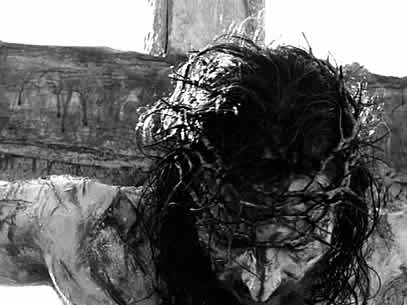
For more about the media and Israel, read If CNN Had Reported The Crucifixion at the Rosh Pina Project.

Making Sense of the Messiah as the Keystone of Creation

Therefore do not be ashamed of the testimony of our Lord or of me His prisoner, but join with me in suffering for the gospel according to the power of God, who has saved us and called us with a holy calling, not according to our works, but according to His own purpose and grace which was granted us in Christ Jesus from all eternity, but now has been revealed by the appearing of our Savior Christ Jesus, who abolished death and brought life and immortality to light through the gospel, for which I was appointed a preacher and an apostle and a teacher.

–2 Timothy 1:8-11 (NASB)

Whoever confesses that Jesus is the Son of God, God abides in him, and he in God. We have come to know and have believed the love which God has for us. God is love, and the one who abides in love abides in God, and God abides in him. By this, love is perfected with us, so that we may have confidence in the day of judgment; because as He is, so also are we in this world. There is no fear in love; but perfect love casts out fear, because fear involves punishment, and the one who fears is not perfected in love.

–1 John 4:15-18

I had an interesting conversation with a friend of mine last Sunday afternoon. Toward the end of our time together, he haltingly asked me something he obviously thought would offend me. I can’t recall his exact words, but he was wondering if I realized the centrality of Jesus as the Lord and Savior of my life. I guess he thought I was getting a little too lost in Judaism or in attempting to engage my faith through a sort of “Jewish lens”.

This lead to a rather lengthy and repetitive monologue on my part and I hope I made some sort of sense. In order to organize my thoughts better, I decided to write them out and share them in a more public venue.

One of the Jewish arguments against Jesus being the Messiah, especially as conceptualized by organized Christianity and as recorded (apparently) in the New Testament, is that Jesus appears to be a tremendous departure from anything that God had done before. I don’t mean that God did something new, but that He did something incredibly different, as if he switched from “plan A” to “plan B”.

There’s no real mention of a Messiah in the Tanakh (Old Testament) particularly as Christianity understands the role, and let’s face it: Jesus doesn’t even make an appearance until the last third of the Biblical narrative. If he’s so important, why didn’t he show up sooner?

Actually, some people think he did:

And Melchizedek king of Salem brought out bread and wine; now he was a priest of God Most High. He blessed him and said,

“Blessed be Abram of God Most High,
Possessor of heaven and earth;
And blessed be God Most High,
Who has delivered your enemies into your hand.”

He gave him a tenth of all.

–Genesis 14:18-20

Given the mention of Melchizedek in Hebrews 7, most Christians and many in Hebrew Roots and Messianic Judaism think that Melchizedek is the “pre-incarnate Jesus”. There are a number of other places where Christians exchange their “exegesis” of the Old Testament to “I see Jesus” in the Tanakh, in part to solve the “problem” of why Jesus didn’t put in an appearance before the end of Matthew 1.

D. Thomas Lancaster in his sermon on Melchizedek for the Holy Epistle to the Hebrews sermon series which I reviewed, does a good job at refuting the idea that Melchizedek was literally Yeshua (Jesus), but there are plenty of other occasions where some people believe Jesus “beamed” into early Biblical history like some sort of “Star Trek” character.

Gateway to EdenAfter all, who walked in the garden with Adam (Genesis 3:8), wrestled with Jacob (Genesis 32:22-31, and who was the angel God sent ahead of the Children of Israel (Exodus 23:20)?

Frankly, I think attempting to force scripture to have Jesus show up bodily before he’s actually born actually cheapens the miracle and significance of Messiah’s birth by woman and all that he accomplished in his physical, human experience.

But we have this problem of when Jesus appears. If he’s the cornerstone, how can you build the first two-thirds of the Bible without him? Or are we missing the point?

One of our biggest problems with understanding the Bible and the centrality of the Messiah is time. By definition, we are beings who live in linear time. We are born, we live, we die. We have yesterday, today, and tomorrow. That’s how we think. It’s difficult to imagine a universe without time, and we forget that when God created everything, He created time, too.

When I was a little kid, I tried to imagine what God’s “environment” must have been like before He created everything. I pictured an old man with a big white beard and long, shaggy white hair, dressed in a robe and sitting on a golden throne floating in infinite blackness. I thought of the universe as just stars and galaxies not imagining that it’s also space and time.

It’s difficult if not impossible for a human being to even perceive a sliver of God’s point of view. What does God see when He looks at the universe? Who knows? How can God exist outside of time? If time doesn’t pass for God at all, what is that like?

In my conversation on Sunday, I used a metaphor. I said that from God’s viewpoint, all of creation must be like a painting hung on a wall. In the painting is every event that has ever occurred and will ever would occur in our universe from start to finish. It’s like everything that has happened, is happening, and will happen across the entire line of history is all occurring inside that painting simultaneously. God can take in time, the universe, and everything at a glance.

Now imagine that in the very center of the painting is a stone archway. Now imagine that all of the other stones in the stone archway are balanced against a single, critical keystone. If this keystone were removed, the entire arch would collapse into rubble. When the keystone is in place, the other stones and the archway itself are completely immovable.

Guess who the keystone is?

So then you are no longer strangers and aliens, but you are fellow citizens with the saints, and are of God’s household, having been built on the foundation of the apostles and prophets, Christ Jesus Himself being the corner stone, in whom the whole building, being fitted together, is growing into a holy temple in the Lord, in whom you also are being built together into a dwelling of God in the Spirit.

–Ephesians 2:19-22 (emph. mine)

Granted, Paul is using the cornerstone metaphor in terms of the structure of the ekklesia or assembly of Messiah, but I think it still works (see also Psalm 118:22, Matthew 21:42, and Acts 4:11). I always wondered how you could build anything else in the redemptive plan of God across human history without first laying the cornerstone, or in the case of the previous metaphor I used, the keystone. Now I think I know, but the explanation is a little metaphysical.

Messiah is central to the plan of God because he’s always been central. He’s just not apparently central when we consider the appearance and work of Yeshua in linear time. This is also why Jewish objections to a first and second coming of Messiah and why Yeshua didn’t finish the work he started in the first advent don’t really matter. It’s because linear time doesn’t determine how and why Messiah is the lynchpin of God’s redemptive plan for humanity.

If it’s possible to use the word “before” in terms of a timeless God, then even before God created the universe, He knew the consequences of creating human beings with free will would result in the universe turning out the way it did. That is, God knew that giving human beings free will would lead to our disobeying Him with the result of changing the very nature of the universe from perfect to damaged.

CreationSo when God created the universe, He also created a plan for restoring it which means the very nature and character of the Messiah is built into creation, that everything rests on Messiah’s shoulders, so to speak, and that without the Messiah (for whatever reason) the universe can never be redeemed.

I know that’s dicey language to use in relation to God since nothing is impossible for Him, but God’s “solution” to the problem of human free will and its consequences is Messiah. It’s as if God created not just all of the universe all at once (well, in six “days”), but all of human history from beginning to end, and then placed that history upon the cornerstone, which is Messiah.

No, I can’t prove any of this from scripture beyond what I’ve already quoted, but it’s the only way I can make sense of God, the role of Messiah, and the narrative of the Bible including God’s plan for redeeming His creation.

Let me know if this makes sense to you.

Sermon Review of the Holy Epistle to the Hebrews: Outside the Camp

Our religion involves a lot of ritual foods, including the ceremony that Christians refer to as the Eucharist, but the writer of the book of Hebrews warns his readers to steer away from sacramental interpretations of ceremonial foods. This discussion of Hebrews 13:9-14 brings the central conflict behind the epistle into sharp focus.

-D. Thomas Lancaster
Sermon Forty-five: Outside the Camp
Originally presented on March 8, 2014
from the Holy Epistle to the Hebrews sermon series

Do not be carried away by varied and strange teachings; for it is good for the heart to be strengthened by grace, not by foods, through which those who were so occupied were not benefited. We have an altar from which those who serve the tabernacle have no right to eat. For the bodies of those animals whose blood is brought into the holy place by the high priest as an offering for sin, are burned outside the camp. Therefore Jesus also, that He might sanctify the people through His own blood, suffered outside the gate. So, let us go out to Him outside the camp, bearing His reproach. For here we do not have a lasting city, but we are seeking the city which is to come.

–Hebrews 13:9-14 (NASB)

I have no idea what happened to sermon forty-four. It’s not in the list at the Beth Immanuel website. We seem to be missing the previous week’s sermon which probably covered Hebrews 13:1-8. I guess we’ll have to live without it.

But Lancaster says something compelling about today’s sermon. He says that the whole summation of the entire epistle can be found in these verses. Really?

However, we have to be willing to accept some speculation on his part about the meaning of the “varied and strange teachings”. There’s no way to know for sure what they really were, but Lancaster has a theory. The thinks that these strange teachings were some odd, mystical interpretation about the meaning of the sacrifices, particularly the peace and sin offerings, which are the only ones that were eaten.

Lancaster guesses that some teachings were being circulated, probably by the Sadducees who were in control of the Temple, stating that unless the priest actually eats of the sacrificial portion in the presence of the person making the offering, the offering was ineffective. Or unless the sin offering were completely burned, the sins were not forgiven.

Again, this is pure guesswork on Lancaster’s part, but I thought it sounded sort of like the following:

“Woe to you, blind guides, who say, ‘Whoever swears by the temple, that is nothing; but whoever swears by the gold of the temple is obligated.’ You fools and blind men! Which is more important, the gold or the temple that sanctified the gold? And, ‘Whoever swears by the altar, that is nothing, but whoever swears by the offering on it, he is obligated.’ You blind men, which is more important, the offering, or the altar that sanctifies the offering? Therefore, whoever swears by the altar, swears both by the altar and by everything on it. And whoever swears by the temple, swears both by the temple and by Him who dwells within it. And whoever swears by heaven, swears both by the throne of God and by Him who sits upon it.”

–Matthew 23:16-22

PriestsSwearing by the Temple vs. swearing by the gold in the Temple; yeah, that sounds like a strange and diverse teaching, too. Lancaster believes the writer of the Hebrews letter was saying that the priesthood was circulating strange teachings about the animal sacrifices indicating they meant far more than they actually did. This was an attempt to pile on more pressure, since the readers of the letter, the Greek-speaking believing Jews, had been exiled from the Temple, the priesthood, and the sacrifices. If these Jews thought that not offering sacrifices meant, on some mystic level, that they were exiled from God, they might actually abandon faith in Messiah for the sake of offering korban.

Do not be carried away by varied and strange teachings; for it is good for the heart to be strengthened by grace, not by foods, through which those who were so occupied were not benefited.

–Hebrews 13:9

But God’s grace and favor doesn’t come from “mystic food”, it comes from faith.

Lancaster offered the example of the Catholic Church from the Middle Ages to the present. Even in the present-day Catholic Church, the Church can refuse to offer the sacrament of the eucharist, Holy Communion, to a Catholic who has gone against church teaching, perhaps by supporting abortion rights for example. It is a terrible shame to be excommunicated and many Catholics are successfully manipulated by the pressure to at least publicly change their beliefs so they can regain access to Communion.

This is sort of how Lancaster sees what the Jewish letter readers were going through.

Except, like the eucharist, the sacrifices are not “magic food”. Simply offering and eating doesn’t impart or remove God’s grace and blessing apart from the believer’s faith and devotion to God. Verse 9 says the heart is strengthened by grace, not food. It also says that if eating the “magic food” was so effective, how come the corrupt priesthood of Sadducees was still so wicked?

We have an altar from which those who serve the tabernacle have no right to eat.

–Hebrews 13:10

This verse could be one of the proof texts used by the early Catholic Church to justify the Lord’s Supper or Holy Communion as a sacrament that replaced the Temple sacrifices (and no doubt more than a few Protestants also believe this). The people who have no right to eat of the sacrament, in this scenario, are the Jews, unless they convert to Christianity.

The Death of the MasterLancaster’s take is different from the traditional Christian interpretation, and follows along with what he’s taught about the rest of the epistle. He’s saying that the earthly Temple is a reflection of the Heavenly Temple, and that the Heavenly altar has “food” that those who serve in the tabernacle, that is, the earthly priesthood, have no right to eat, not because they’re priests or Jews, but because of their wicked hearts and actions.

The next several verses metaphorically compare the national sin offering to the Messiah’s death.

For the bodies of those animals whose blood is brought into the holy place by the high priest as an offering for sin, are burned outside the camp. herefore Jesus also, that He might sanctify the people through His own blood, suffered outside the gate. So, let us go out to Him outside the camp, bearing His reproach.

–Hebrews 13:11-13

The blood of the sin offering was to be taken outside the camp which in those days was outside the walls of Jerusalem. This is where the Master was executed, outside the city walls. The letter writer says that we too should be willing to share in the Master’s reproach, for just like he was, they also have been rejected from the larger community, like lepers, ostracized, seemingly abandoned. But if they are worthy of the Messiah, then they would be willing to suffer, even to the death, for the sake of their faith and the promise of the Messianic Age to come.

What Did I Learn?

I would have missed most of those details, but by now, I’ve stopped reading the parts of Hebrews not covered by the sermons I’ve heard and I’ve been willing to listen to Lancaster’s explanation first. That’s probably a fault of mine, and in retrospect, I should have read ahead to see if what I’ve learned so far could help me in anticipating what comes next.

Be that as it may, I wouldn’t have gotten the comparison of “magic” sacrificial food to the eucharist and the artificial manufacture of a sacramental system created to replace the Temple practices. The sacrament of Holy Communion also requires a priesthood, so you can see how the earliest foundations of the Church were predicated on replacement theology or supersessionism. And even though the Protestant church doesn’t emphasize the necessity of frequent taking of the eucharist, they haven’t done away with it either, accepting the fundamental underpinning the Catholics established, that the wine and the wafer mean something, and that a Christian cannot be complete without accepting Communion.

Lancaster made another point, a big one, that really spoke to me. He compared Messianic Jews and Messianic Gentiles to those put “outside the camp”. He compared us to the readers of the Hebrews epistle. Those of us who identify with the Messianic Movement are largely to completely rejected by both mainstream religious Judaism and mainstream Christianity in all its denominations.

Judaism not only rejects those Jews who accept the revelation of Yeshua as Messiah, but absolutely rejects the Gentiles who have come alongside Israel through faith in Messiah. Of course this is also true of the Church. I know what it’s like to maintain a Messianic theological and doctrinal framework within a local church environment. Everyone was nice and friendly and accepting of me but not of most of what I had to say. And for the Messianic Jew, the Church has no problems with that person as long as they convert to Christianity and surrender any form of Jewish practice beyond a token Passover seder or maybe building the occasional sukkah.

Lancaster states that Messianic Judaism is based on a completely different set of theological assumptions than Christianity. But it’s a set of foundations that he believes are correct, and in fact, represent a major “course correction” in the deviated trajectory Christianity has charted over the past nearly two-thousand years.

If the foundation of Christianity is “out of whack,” the only recourse is to tear down the structure and rebuild it from the ground up. That’s pretty radical talk, and I can’t imagine too many Christians who would quietly accept such words.

Lancaster was quick to point out that he feels brotherhood with all Christians as fellow disciples of Messiah, but on an institutional level, he has little in common with them.

So if we are reviled and rejected by Jews or Christians for our beliefs, perhaps we are partaking in the Master’s suffering in some small way, and bearing his reproach.

For here we do not have a lasting city, but we are seeking the city which is to come.

–Hebrews 13:14

TempleThis is why we’re willing to suffer. Our hope isn’t in this world or the present institutional state of the Church. We are waiting for the city to come, “New Jerusalem,” if you will, the Messianic Age.

I should note that Lancaster believes the Hebrews letter writer didn’t know that Jerusalem would be leveled a few short years in the future, but the Holy Spirit knew, so portions of this letter, including the above-quoted verse, are prophetic. Once there was no Temple, the believing Jews could only turn to the Heavenly Temple and the Heavenly High Priest, Yeshua.

This is where our faith lies, not in Heaven but in the future Messianic Kingdom come to earth. The price we pay is to share in the trials, the reproach, and the rejection of the world around us including many or most religious institutions. But in that rejection, we must not give up our faith in our Master, lest we lose our reward in the world to come. Too many Messianic Gentiles have lost their faith in the Master and converted to Judaism as their “true love.”

Like Abraham, God sent us out from the accepted and the familiar into an unknown territory and requires that we accept a promise of what we can’t see or touch or hear (see Genesis 12:1-4). We endure difficulties today for the sake of the fulfillment of the future. It’s as if we are approaching the end of a Passover seder and we say symbolically, “Next Year in (Messianic) Jerusalem.”

I must say that listening to this particular sermon brought up some of the same issues I discussed in yesterday’s morning meditation. It’s difficult to discuss the theological and doctrinal differences between traditional Christians, Messianic Judaism, and Hebrew Roots without at least potentially stepping on someone’s toes. How do you say that you love your fellow brothers and sisters in the faith and yet also acknowledge some of the extreme differences in viewpoint?

Next week, I’ll write my review of the final sermon in Lancaster’s Holy Epistle to the Hebrews” series.

Christians, Hebrew Roots, and Messianic Gentiles: Commentary on Caleb Hegg’s Blog

I’m not going to lie. It was difficult for me to transition from the church to the synagogue. While my father worked out his theology concerning the Torah, it struck me that perhaps the Christian church was wrong. To be honest, I felt a little lied to. I felt like the church was wrong, and had been feeding me a string of lies my entire life. I felt like they were leading people astray, and it made me mad! By the time I left for Israel in 1999 (I was eighteen), I wanted nothing to do with the church. I had gone to the other end of the spectrum, wearing mostly black and white, growing out peyot, and desperately longing to study Torah at a hasidic yeshiva (at that time I was unaware of how off base the hasidic faith is). Needless to say, the church had left a bad taste in my mouth, and I openly and abrasively stood in opposition to it.

-Caleb Hegg
“I don’t hold to ‘Christian’ doctrine, I’m a ‘Messianic’!”
calebhegg.blogspot.com

If you know any of the names I’m about to mention, then you’ll realize that Caleb Hegg and I, along with his father Tim Hegg, don’t have a lot in common theologically, at least on certain specific matters. However, when I saw a mutual friend had posted this to Facebook, I decided to give it a read. I must admit, Caleb says some interesting things (Note that I’ve copied the text from Hegg’s blog “as is,” so any spelling, capitalization, or other errors are his…just sayin’).

I suppose I should mention that once upon a time, I met Tim Hegg. In fact, I met him more than once when he was still associated with First Fruits of Zion (FFOZ). Some years ago, when I was still with my former Hebrew Roots congregation, a number of us visited his group in Tacoma, Washington, and I even spent Erev Shabbat in the Hegg home. As I recall, I was treated very well and the Hegg family was gracious and charming.

So there’s nothing personal in any disagreement or differences of opinion that are between the Heggs and me, it’s just that we’ve taken different paths.

But speaking of path’s, Caleb’s description of his path in the above-quoted paragraph seemed so familiar to me. Not that I exactly felt like he did, but I can’t think of hardly anyone I met when I was involved in Hebrew Roots that didn’t have those same feelings of being betrayed by the Church and becoming somewhat to excessively enamored with all things Jewish.

I think it’s a developmental stage most non-Jews go through when they become involved in either the Hebrew Roots (including One Law/One Torah and Two-House) or the Messianic Jewish movements. They/we become convinced that the Bible has been at least somewhat erroneously interpreted by the Gentile Church, starting with the early Church fathers, as an attempt to separate from their Jewish teachers and mentors, and we come to believe that only a “Judaic” or “Hebraic” interpretation yields the true message of the Bible.

That’s not entirely a wrong idea, but as Hegg points out, what is wrong is any effort on our part to “demonize” Christians and Christianity, portraying them as bad, wrong, apostate, “Babylon,” and anti-Bible (or at least anti-Torah).

Has the Messianic faith come to an enlightened understanding of theology that the Christian church has missed for two thousand years? To be blunt, absolutely not! Is it true that those who uphold the Torah in the life of all believers are reading the Scriptures as they are written, and that those pushing against Torah are holding to church doctrine that goes back to the second century? Yes. But what I see happening is Messianics believing that since “the church” is wrong on SOME laws of Torah, they must be wrong on everything else too. I say SOME laws of Torah, because quite often we as Messianics tend to forget that our Christian brothers and sisters keep a whole lot of Torah, even if they don’t like calling it that. While kosher laws, festivals and the Sabbath are a important part of the Torah, other things such as loving your neighbor as yourself, taking care of widows and orphans, not gossiping and other such torah commands are practiced every day by Christians.

ChurchI think Hegg is including any congregation to which he is affiliated and his personal theological identification as “Messianic Judaism” or “Messianic” and it gets kind of “messy,” actually.

I tend to separate Hebrew Roots from Messianic Judaism since, in my opinion, they actually describe two different group identities. I realize that many/most/all Hebrew Roots groups call themselves “Messianic Judaism,” but while the “Messianic” part is more or less correct, I can’t say that they are a “Judaism” if for no other reason than few if any actual Jewish people are involved. Beyond that, although the ritual practices resemble a “Judaism,” the underlying collective history and group identity does not.

A little over three months ago, I wrote a two-part blog post called Acting Jewishly but not Jewish (the link goes to part one) based on a paper by Mark D. Nanos called ‘Paul’s Non-Jews Do Not Become “Jews,” But Do They Become “Jewish”?: Reading Romans 2:25-29 Within Judaism, Alongside Josephus’ (free PDF download) which drew a bit of attention centered around Judaism and Jewish identity in the Messianic realm. It becomes somewhat ambiguous as to who or what one encounters when you enter a prayer service and the majority of people davening with siddurim, wearing kippot and tallitot (the men, anyway) are not Jewish. Is that a “Judaism” or Gentile believers in the Jewish Messiah acting “Jewishly”?

I’m not writing all this to start another online argument. Frankly, I’d like to avoid it. I know how they go and they never end well. But I do want to point out something I think Hegg was saying. We non-Jews in Hebrew Roots and Messianic Judaism sometimes lose our focus. In this sense, I think traditional Christians may have the upper hand. They know who the center of their faith is and that center is not a “movement”. It’s not putting on a kippah before prayer, and it’s not saying prayers in Hebrew, and it’s not even wearing tzitzit. It’s Jesus, that is Yeshua HaMashiach.

In that, Hegg sounded more like a Christian than a Hebrew Roots follower and that’s not necessarily a bad thing, although he also admitted that at one point in his history, he even denied being a Christian, though he didn’t mean to deny his faith in Christ.

We are used to defining ourselves in terms of being different or distinct from other people and groups and unfortunately, we can easily slide into an “us vs. them” mindset. It’s one of the reasons I was hesitant to even write this blog post, because even if Caleb Hegg or his father don’t take offense (and I hope they don’t because none is intended), probably someone who follows their teachings will.

The one thing that Hegg’s pro-Church commentary reminded me of was the tone expressed in Boaz Michael’s book Tent of David: Healing the Vision of the Messianic Gentile.

Now I know I just offended one-hundred percent of my regular readers by making that comparison, and probably “ticked off” almost everyone else involved in any part of Hebrew Roots or Messianic Judaism. However, hear me out.

Boaz also made a very pro-Church statement in his book and focused at different points on the commonalities between the traditional Christian and the “Messianic Gentile”. He even mentioned, as did Hegg, that Christians observe many of the Torah mitzvot, even though they don’t call it “Torah”. Much righteous and holy behavior can be learned in Church.

Granted, there still are distinctions of course, and I don’t doubt that there are differences between how Caleb Hegg sees himself and how he sees most mainstream Christians. That isn’t a bad thing, but if the differences are all we see, then we don’t allow ourselves any common ground with our Christian brothers and sisters.

For two years, I participated in a self-assigned “project” or “experiment” in attending a local Baptist church. I hadn’t regularly attended a church in years and frankly, the prospect was intimidating.

But I learned a great many things, was befriended by the head Pastor, and met a number of very devout, kind, knowledgable, and generous people. If things had worked out differently, I’d probably still be going there. Unfortunately, the dynamic tension between the Pastor’s views and mine came to a head and I had to make a hard decision about whether I was an asset or a nuisance, and sadly it turned out to be the latter.

multicultural-celebrationI can’t pretend there aren’t differences, important ones, that separate me from the viewpoint of most Christians, but that shouldn’t lead to enmity of any kind. There are differences within the Messianic Jewish movement and I don’t agree with everything all of the sub-groups believe or teach. The same goes for the different branches of mainstream Judaism. None of that means I experience any hostility toward them. We don’t have to personalize disagreements and turn them into conflicts.

Hegg’s blog post focused on differences between how some Messianic (or Hebrew Roots) groups see the Divinity of Messiah vs. more traditional Christian doctrine, but I’m not going to speak to that. If you want a Messianic Jewish opinion on the subject, it can be found on Derek Leman’s blog, and it’s possible that Hegg and Leman have more in common, at least on that particular topic, than either of them realize.

That’s the point of reading each other’s stuff. Yeah, we disagree and if we want to, we can get into some sort of spitting contest over it. On the other hand, we all have experiences in common, we’re all human beings, we are all disciples of the Master, and we are all children of God. Let’s start with that.

The Shabbat That Was

O Lord of Legions, God of Israel, you created the world by your word, and you separated the Sabbath as a memorial; for on it you ceased from your work in order to meditate on the words of your Torah. For the Sabbath is a rest from creation, a completion of the world, a seeking of words of Torah, an expression of praise to God, to thank him for what he has given to mankind. Blessed are you O Lord, who sanctifies the Sabbath.

Kiddush for Shabbat, p.17
from The Sabbath Table Prayer Book

If you’re familiar with the kiddush blessings, then you probably noticed this is a deviation from what is normally said. This particular blessing is the alternate wording recommended for Messianic Gentiles in the First Fruits of Zion (FFOZ) Shabbat siddur and was part of my Erev Shabbat devotions last Friday evening.

But as the hours of my preparations finally reached fruition and I lit the Shabbos candles and offered the traditional blessings and praises to Hashem and welcomed the Shabbat Queen into my home, I was also undergoing an educational and hopefully a transformational experience.

But why would a Gentile believer observe the Shabbat and in fact, why should a Gentile believer observe Shabbos? After all, it’s the sign of the covenant God made with Israel at Sinai. What does that have to do with us, the rest of humanity, when the covenant specifically set Israel apart as Holy from all the other nations of the world?

And the Lord said to Moses: Speak to the Israelite people and say: Nevertheless, you must keep My sabbaths, for this is a sign between Me and you throughout the ages, that you may know that I the Lord have consecrated you. You shall keep the sabbath, for it is holy for you. He who profanes it shall be put to death: whoever does work on it, that person shall be cut off from among his kin. Six days may work be done, but on the seventh day there shall be a sabbath of complete rest, holy to the Lord; whoever does work on the sabbath day shall be put to death. The Israelite people shall keep the sabbath, observing the sabbath throughout the ages as a covenant for all time: it shall be a sign for all time between Me and the people of Israel. For in six days the Lord made heaven and earth, and on the seventh day He ceased from work and was refreshed.

–Exodus 31:12-17 (JPS Tanakh)

As the sign of the Sinai covenant, it would seem that only Israel, that is the Jewish people, should partake in observing the Shabbat, but there’s also acknowledgement of God as Creator in a seventh day rest. Even Hashem, Master of Creation, rested on the Sabbath day, according to midrash to contemplate His Torah. Since all of Creation, every living thing, was produced by the Word of God, and since all mankind was and is created in the Image of God, then there is sufficient precedence, in my opinion, to at least allow if not obligate “all flesh” to cease in our labors and on the seventh day, to bring honor, majesty, and glory to our Creator.

But there’s more. According to Kabbalistic tradition (see Zohar, Vayera 119a), each of the seven days of the week maps to the seven days of creation and they map to the seven millennia of creation. The Shabbat day then, corresponds to the seventh millennium which is thought of as the universal age of rest, the Messianic Era.

This was also mentioned in two of D. Thomas Lancaster’s sermons in his Holy Epistle to the Hebrews series: Enter My Rest and A Sabbath Rest Remains.

As part of my review of the latter sermon, I said:

The Sages liken the Shabbat to the Kingdom of Heaven and the World to Come. It’s as if the days of the week and Shabbat represent the different ages of creation with the seventh day, the end of time, being a grand, millennial Shabbat, an age of great rest, and our weekly Sabbaths are merely a periodic reminder, down payment, or foretaste of that ultimate rest in Moshiach.

This seems to resolve Lancaster’s mystery or cliffhanger, but in fact, he states that it was a trick question. Since the Messianic Age is future oriented, then Hebrews 3 and 4 are not only a rendition of history but prophetic. It may surprise you to realize that all of the prophesies in the Bible have to do with Israel and Jerusalem and for all prophesies to be fulfilled, there must be an Israel and Jerusalem. No Israel, no fulfillment of prophesy.

So a literal Sabbath, a literal Land of Israel, and the Messianic Age to Come all figure into God’s rest and the object of Lancaster’s sermon for the past couple of weeks.

Tree of LifeSo not only in Jewish mystical tradition but from the Epistle to the Hebrews in the Apostolic Scriptures, we see that there is direct linkage between the seventh day Shabbat and the prophesy of the Messianic Kingdom to come, a Kingdom upon which we all put our hope.

So we Gentiles in Messiah have two reasons for looking to Shabbat as also something we can participate in: to acknowledge God as Creator and as a foretaste of the Messianic Era to come, when our King Messiah, Yeshua our Master, will usher in an age of unparalleled peace, justice, and mercy, the age of the resurrection, and a bringing to completion of the New Covenant promises when we will all know God!

But the era of Messiah is yet to come although he has already opened the door a crack, so to speak.

It was a lonely Erev Shabbat. I skipped over the blessings for the children and the Woman of Valor for obvious reasons. It seemed like an interminable wait until 5:01 p.m. (candle lighting for my little corner of the world) on Friday, but once it arrived, everything went much too quickly. Even after the blessings and the meal, I think there was still some last moments of light in the sky. If this had been a meal in community or among family, there’d have been a lot more activity and sharing, but in the end, there was only me and God. But it was sufficient.

On Saturday, I did what I always do, well, sort of. I studied from A Daily Dose of Torah for Shabbos, read the Torah portion, Haftarah, and the associated readings from the Psalms and the Gospels. Then I studied the commentary for the Torah portion from Rabbi Zelig Pliskin’s book Growth Through Torah.

And I learned why Gentiles benefit from observing a Shabbat rest and from Torah study.

The quality of one’s life is not dependent on external situations. There are people whose lives seem to run quite smoothly. Nevertheless, they tend to evaluate minor frustrations as tragedies and therefore view their lives in negative terms. The Torah ideal is to be aware that the purpose of your life is to perfect your character and every life situation is an opportunity for growth.

This lesson is most important for us to internalize. See the growth possible in every life event. In each difficult situation ask yourself, “How can I become a better person because of what happened?”

-R. Pliskin
Commentary for Chayai Sarah
“See the good in every life situation,” p.52-3

I periodically encounter people (mostly online these days) who believe that only they obey God’s Torah perfectly as they completely reject the so-called “traditions of men,” or the Rabbinic commentary on and interpretation of the mitzvot. Unfortunately, this reduces the commandments of God to a lengthy but simple list of “do this” and “don’t do that” with no colors, nuances, or wonder. It’s like a child doing what his or her father commands, let’s say not running into the street, not because the child comprehends the intrinsic danger involved and perceives the value of life, but simply because they were told to.

The study of Torah is an exploration into the self, a journey of discovery and wonder as we investigate what it is, as an individual human being, to be a creation of God and indeed, to be made in His unique and marvelous Image. The Torah tells a story that involves each one of us, but not in identical ways. What I discover about myself in the light of Torah will be different from what another person discovers. What a Gentile finds revealed in his or her soul by Torah study and the Shabbat rest will be different from what a Jew unveils about his or her character.

Like it or not, God created each of us as individual and unique persons. No two of us are alike but that hardly means that, as individuals, we are excluded from community. Even though we are individuals and are distinct from one another, we also have commonality and based on that, we form groups and collective associations; assemblies, if you will.

For a non-Jewish disciple of the Jewish Messiah to observe the Shabbat in some fashion, and to study the Torah of Moses, the Writings, the Prophets, and the Apostolic Scriptures, unites us with our Jewish counterparts in the ekklesia of our Master, Messiah Yeshua. It doesn’t make us “cookie-cutter clones” of one another, but lacking absolute uniformity doesn’t automatically lead to division and isolation, anymore than my being a man and my wife being a woman means we have nothing in common and cannot be a family together.

In my own case, the fact that I’m a non-Jewish man married to a Jewish woman and the father of three Jewish children adds a dimension in Torah study and the Shabbat that only increases my understanding of both the commonality and distinctiveness between Gentile and Jew. The irony here is, in terms of the Shabbat, I could only make that discovery while spending a week apart from my Jewish family.
PrayingBut though I lacked, I also gained in abundance.

I said the Shacharit for Shabbat for the first time in a long time, and even donned my old kippah for the occasion, davening from my aging Artscroll Sefard Siddur (making some minor wording adjustments as necessary). I was reminded of the beauty of the prayers, particularly on Shabbat, including the blessings recited just before the Shema:

Our Father, merciful Father, Who acts mercifully, have mercy upon us, instill understanding in our hearts to understand and elucidate, to listen, learn, teach, safeguard, perform, and fulfill all the words of your Torah’s teaching with love. Enlighten our eyes in Your Torah, attach our hearts to Your commandments, and unify our hearts to love and revere Your Name, so that we may not feel inner shame nor be humiliated, nor stumble for all eternity. Because we have trusted in Your great, mighty and awesome Holy Name, may we exult and rejoice in Your salvation.

I believe those words can apply equally well when said by a Gentile as by a Jew with the understanding that what we are to understand, what we are to hear, to learn, to teach, to safeguard, to perform, to fulfill, is what has been set before each of us as our portion.

When a Gentile observes the Shabbat, when a Gentile studies Torah, it’s not a matter of rote imitation of Jewish tradition and ritual or worse, it’s not with the idea that Gentiles can “do it better” than Jews because only we know how to obey scripture without the “interference” of the Jewish sages and their “man-made laws,” arrogantly setting ourselves up as having superior knowledge of Torah and the commandments.

The Shabbat and the Torah provides a fourfold blessing for everyone but particularly for the Gentile believer. In these practices, we join with God in praising Him as our Creator. We also experience a foretaste of the future Age of Messiah in which we will have blessings and peace in abundance, as if every day was a Shabbat. Even studying alone or observing Shabbat individually, in praising God and saying the blessings, we are joined in Spirit with all those Jews and Gentiles who also adore Hashem and cleave to the hope of Messiah. Finally, the Shabbat and Torah reveals who we are as individuals, our unique identity that God assigned each and every one of us, and our individual and special role as servants of Messiah, may he come soon and in our day.

Lessons in Spirituality and Righteousness

This week I wish to share with you some thoughts about Spirituality. Spirituality is feeling the presence of the Almighty. Feeling this connection to the Almighty is the greatest pleasure a person can know. It is the pleasure we feel when seeing a magnificent sunset, looking from a mountaintop over the beauty of the Almighty’s creation — or seeing your newborn baby for the first time.

-Rabbi Kalman Packouz
from Shabbat Shalom Weekly for
Torah Portion Chayei Sarah
Aish.com

These words were spoken by a well-known contemporary of Jesus, Rabbi Hillel, into which Jesus often engaged in discussion or controversy. However, on this particular subject, I am assuming that there would have been none. The statement is found in Chapter 2, Mishnah 5 when he said that an ignoramus or an uneducated person cannot be righteous. Nor can the bashful person learn (he is too shy to ask questions). Nor can the hot-tempered man teach. Nor can one who occupies himself over much in business grow wise (as he would have no time to study). And, in a place where there are no competent men strive to be a competent person.

A boor cannot be sin-fearing, an ignoramus cannot be pious, a bashful one cannot learn, a short-tempered person cannot teach, nor does anyone who does much business grow wise. In a place where there are no men, strive to be a man.

So why would Hillel, some two thousand years ago, declare that an uneducated person cannot be a righteous person?

-Roy B. Blizzard
from Passages in Translation: Pirkei Avot Chapter 2, Mishnah 5
BibleScholars.org

Two seemingly random quotes from distant sources speaking of spirituality and righteousness. Taking them in isolation, it would seem that anyone capable of feeling awe at the works of the Almighty can experience spirituality, but only an educated person can be righteous. Hardly seems fair, does it?

Maybe Rabbi Packouz makes the connection:

How does one develop spirituality? First, learn Torah. How many times have you heard people say, “I just love John Grisham … or Hemingway … or Dickens? But they never met those authors! However, they read their books and intuitively love the author for his writings. Ergo … read the Torah and love the Almighty!

The doorway to spirituality and righteousness is knowing God by studying Torah, and in this instance, I’m going to include the entire Bible as “Torah”.

But apparently, we have a problem as Dr. Blizzard notes:

The answer is that Hillel did not mean that the uneducated lack the desire to do good. It’s just that right actions require knowledge and people lacking knowledge will often not know the proper way to behave.

The point is that study is the key. And, basically, it has been and is being neglected in Christendom. The great Jewish scholar Maimonides taught in the Mishneh Torah written in the 12th century, until what period in life ought one to study Torah? His answer was “until the day of one’s death.”

God’s people should never use the feeble excuse, “well, we just don’t have time”. If God is the most important thing in your life and the Bible is His Word, one can only conclude that you need to make time!

He also cites this:

Be diligent to present yourself approved to God as a workman who does not need to be ashamed, accurately handling the word of truth.

–2 Timothy 2:15 (NASB)

While study is thoroughly ingrained in religious Judaism, it’s something of a chore in many churches. I was fortunate to attend a local Baptist church for two years where regular Bible reading and study was encouraged. It is true that I brought a different perspective to their ranks and one they ultimately could not absorb, but thankfully they continue to study and draw nearer to our God.

Christian CoffeeBut that’s not the case in many modern churches as Dr. Blizzard stated in the above-quoted paragraph. I study because I’m “built” to study. I completely enjoy reading and studying the Bible, so I don’t experience it as difficult or something to be avoided (which isn’t to say I don’t find study challenging). That means I can hardly take credit for my efforts as if I had overcome some personal obstacle or barrier with the goal of bettering myself.

But for a lot of other folks, it seems like there are so many other priorities that get in the way, or at least those people organize their priorities differently (and notice that as I write, I am not also vacuuming the living room carpet or cleaning the master bathroom).

Rabbi Packouz expands on this initial set of statements about the benefits of Torah study, including learning how to perform the mitzvot, which pleases Hashem and allows us to connect to Him in ways that otherwise would be unavailable to us.

Of course, R. Packouz is writing to a Jewish audience, so in order for Gentile Christians to make use of his commentary, we need to adjust it to our identity and our unique role in the redemptive plan of God.

With the permission of the heavenly assembly and with the permission of the earthly assembly, I hereby prepare my mouth to thank, praise, laud, petition, and serve my creator in the words of his people Israel. I cannot declare that Abraham fathered me, nor can I claim to be his offspring according to the flesh. For I am a branch from the stem of the children of Shem, Ham, and Japheth, like a wild olive branch grafted into a cultivated olive tree, in order to sprout forth and produce fruit in the name of all Israel.

-Aaron Eby
“Declaration of Intent for Messianic Gentiles,” p.134
First Steps in Messianic Jewish Prayer

I quoted part of the “declaration” from Aaron’s book to illustrate what I said above, that Gentiles are unique and have a special role to play within the Messianic assembly and among all of the disciples of the Messiah.

Having said that, there are many ways in which Jewish and Gentile roles and practices overlap in the Master’s ekklesia:

  1. Have a constant awareness of our Father, our King, Creator and Sustainer of the universe. As soon you think of the Creator, you immediately connect with Him. Think of Him often.
  2. Feel a sense of awe for the Creator by frequently contemplating the size and complexity of the universe.
  3. Realize that you are created in the image of the Creator and you are His child. When looking in a mirror, say to yourself, “I am a child of the Creator.”
  4. Everything you have in life, you have because it is a gift from the Creator. Be constantly grateful. This gratitude creates love.
  5. The Almighty loves us more than we love ourselves. Frequently say to yourself, “The Almighty loves me even more than I love myself.”
  6. Realize that everything that the Almighty causes to happen in your life, He causes to happen for a positive purpose. Some you will recognize, some you won’t. Frequently repeat, “This, too, is for the good.”
  7. Respect each human being because each human being is created in the Almighty’s image.
  8. When you do an act of kindness, you are emulating the Almighty. Do so frequently.
  9. Every prayer you say, whether formal or in your own words, is an expression of connecting with the Creator.
  10. Make a blessing to thank the Creator before and after eating. This adds a spiritual dimension to the food you eat.

That’s the first ten of the twenty ways R. Packouz lists to connect with the Almighty. Notice that none of them are specific to either Jews or Gentiles (the same goes for the other ten). In fact, you could take that list of twenty ways of connecting with God into any church and I can’t see why any Christian Pastor or layperson would object to them at all, except they might want to substitute “Jesus” for “the Almighty”.

Path of TorahSpirituality and righteousness all center around developing an awareness of God through the wonders in the world around us and specifically by studying the Torah. By studying the Torah however, we can go beyond “mere” awareness of God and begin to grasp who He created us to be and what we are expected to do with the lives we’ve been granted. While we Gentiles are grafted into Israel as a wild branch is grafted into a cultivated tree, that doesn’t make Gentile believers Israel. However, that also doesn’t mean we’re nothing either or that we are separated from God’s unique and chosen nation.

I am the vine, you are the branches; he who abides in Me and I in him, he bears much fruit, for apart from Me you can do nothing.

–John 15:5

Truly, truly, I say to you, a slave is not greater than his master, nor is one who is sent greater than the one who sent him.

–John 13:16

We see here that disciples of the Master are “grafted in” to him as a branch is grafted into a vine. That however doesn’t make any one of us Yeshua (Jesus), because he also teaches that we “sent ones” are not greater than the one who sent us. We are servants of the Master and slaves to the Most High.

But if we are grafted into the vine of Messiah and are not Messiah, to extend the metaphor, we are also grafted into Israel and are not Israel. In fact, without the benefit of the covenant promises God made with national Israel and the Jewish people, we Gentiles would have no status or relationship to God at all. We are grafted in only by God’s abundant mercy to mankind, and by our faith in the accomplished works of our Master, the mediator of the New Covenant.

The rest of the “declaration of intent for Messianic Gentiles” goes thus:

Father in Heaven, I will rejoice in you alone, for you have sanctified me and drawn me near to you, and you have made me a son of Abraham through your King Messiah. For the sake of our Master Yeshua, in his merit and virtues, may the sayings of my mouth and the meditation of my heart be joined to the prayers of all Israel, and may they be favorable before you, O Lord, my rock and my redeemer.

Although you are reading this on Sunday morning or later, I’m writing it near lunch time on Friday. My personal Shabbos Project will begin in a few hours and I hope to improve upon last week’s experience (and I no doubt will be writing about “Shabbat Observance 2.0” subsequently).

We all discover ourselves by the light of Torah, but what is illuminated is different for each of us. This is sometimes the difference between being a Jewish or Gentile disciple of the Master, but there are also many other distinctions.

Although by necessity, I’ll be observing Shabbat alone, I know that it is designed to be celebrated in community. But there are ways in which we seek God that sometimes require that only the person and the Almighty be present. The Master sought to be alone often to pray, and yet he was also part of the larger community of Israel. When Paul became the Master’s emissary to the Gentiles, he was faced with the challenge of integrating Gentiles into Jewish communal and religious space, and that challenge remained before him for the rest of his life.

Shabbat candlesWhile I agree that community is a vital part of a life of faith, it is only half of that life. The Master indeed said we were to love our neighbors as ourselves but the prerequisite for doing so was to love the Almighty with all of our heart, spirit, and resources. Holiness, spirituality, and righteous living begin with one person studying the Torah, praying, and developing a growing awareness of God in the world around that person. Sometimes those experiences can be shared, but in the case of we “Messianic Gentiles,” often they cannot be, except “remotely” via the Internet.

But there’s nothing remote about God or the Torah. His inspired Word and His Created world are before each of us. Today they are before me and tonight, as I write this, so will the Shabbat. May the blessings of my mouth and the meditations of my heart always be pleasing before Hashem, my rock and my redeemer, and may I always be a faithful servant to my Master, Messiah Yeshua.

"When you awake in the morning, learn something to inspire you and mediate upon it, then plunge forward full of light with which to illuminate the darkness." -Rabbi Tzvi Freeman