Tag Archives: boaz michael

Standing on the Jewish Foundation of the Bible

ShabbatIt shall be that at every New Moon and on every Sabbath all mankind will come to prostrate themselves before Me, says Hashem.

Isaiah 66:23 (Stone Edition Tanakh)

Therefore no one is to act as your judge in regard to food or drink or in respect to a festival or a new moon or a Sabbath day—things which are a mere shadow of what is to come; but the substance belongs to Christ.

Colossians 2:16-17 (NASB)

On the surface, these two passages of scripture seem to contradict each other, at least according to traditional Christian interpretation. I pulled them from yesterday’s review of The Promise of what is to Come series episode What Day is the Sabbath, produced by First Fruits of Zion. I published my review a day early (usually, my reviews of the show appear every Wednesday morning) because I wanted to build on a specific point and attempt to arrive at a personal conclusion.

For some time now, I’ve been trying to explore what I consider inconsistencies between the ancient Jewish scriptures, also known as the Tanakh or the Old Testament, and the later scriptural writings, also refered to commonly as the New Testament. If we’re supposed to have one, unified Bible that is all “God breathed” (2 Timothy 3:16), that is, if everything we read from the first chapter of Genesis to the last words in Revelation all originate from the same source, from God, then everything in the Bible must be internally consistent and provide a single, cohesive revelation from God to humanity.

Human beings artificially divided the Bible into “Old” and “New Testaments,” not God, and we’ve applied many more divisions, filters, interpretations, and traditions to how these texts are now understood in “the Church.” But I have to remind myself that, like Judaism, Christianity isn’t a single, monolithic entity. There are many “Christianities,” just as there are many “Judaisms,” each with its own theology, set of doctrines, and sacred interpretations. Sure, there’s significant overlap. The fundamentals of the Christian faith should be shared by all valid Christianities, in spite of other differences, but the multiple ways different Christian streams understand what the Bible is saying are dizzying.

However, the problem I’m confronting now is more basic than just different denominational biases. I am attempting to resolve a more fundamental (sorry for employing that word so much) problem. Using the above-quoted scriptures, how are we to reconcile the apparent contradiction between the prophet Isaiah, who tells us that in the Messianic Age, all human beings will worship God on every Sabbath and every New Moon, and the apostle Paul, who says (apparently) that Sabbaths and New Moons are mere shadows of what is to come (presumably in the Messianic Age), and the substance (or meaning or fulfillment) is in Christ? It seems as if Paul is undoing what Isaiah prophesied.

We have some options:

  1. Both scriptures are correct but traditional Christian interpretation of Paul is flawed, leading the Church to come to a false conclusion. A new paradigm is required to understand Paul and Isaiah (and the entire Bible) within the same Judaic context.
  2. The Christian doctrine of progressive revelation allows for Paul to provide additional meaning to Isaiah’s prophesy, expanding upon our understanding of the earlier text.
  3. In Christ, the function of the Law was fulfilled at the cross, and thus later prophesies and holy scriptures replace or supersede earlier texts, with the later texts (on the right side of the cross) always “winning” in any apparent contradiction.
  4. The Tanakh or the Jewish holy scriptures were the only revelation of God given to man through the Jewish prophets. The later apostolic writings, and especially Paul, were a distortion of the teachings of Jesus and created a new, non-Jewish religion that was ultimately called Christianity.
  5. The Bible is broken and unreliable.

Let’s handle the easy items first and then proceed to the more challenging points.

tallit-prayerItem 5 is what atheists would say. The Bible is a series of ancient tribal writings and can no more be considered as originating from a Divine supernatural being than any other “holy book” ever written in human history. Christianity and Judaism are fantasies and superstitions that have no place in the modern age.

Item 4 is what traditional observant Jews would say, including groups such as Jews for Judaism. A Jewish man named “Yeshua” or “Yeshu” may have lived in the late second Temple period and taught along with many other itinerant Rabbis, but if he thought he was the Messiah, his death proved he was not. The Tanakh is the extent of God’s revelation to mankind. The New Testament is a radical distortion of the teachings of Jesus, and Paul, in writing letters directly contradicting the Torah and the Prophets, was a liar, hypocrite, and a traitor to the Jewish people, to the Torah, and to God.

Item 3 is the most traditional, historical Christian interpretation. Jesus fulfilled the Law at the cross, and when he died, the Law died with him, along with any prophesies that contradict the later Gospels and Epistles. This is called supersessionism or replacement theology and it has been the bedrock for Christian interpretation of the Bible for nearly 2,000 years. Although the Christian Reformation may have changed a good many things, this foundational conceptualization and interpretation of scripture remained intact. Later events, and especially the Holocaust, have resulted in “the Church” softening its perception of Jews and Judaism to a much less anti-Semitic position, and many Christian denominations are now pro-Israel, but the fundamental Christian doctrine that the Law is dead continues unchanged.

Item 2 is something of a variation of item 3 but it has to be handled delicately. The idea is that, over the vast span of Biblical history, God continually revealed more and more about Himself and His plan to human beings. Abraham only knew so much about the plan of God. God revealed more to Moses. God revealed more to Isaiah. And God provided His ultimate revelation in the person of Jesus Christ, the Son of God and the second part of the Trinity. Paul, as Christ’s special emissary to the Gentiles, was able to reveal, through the Spirit, even more than the previous prophets, thus adding much more meaning and dimension to the Biblical narrative of God’s plan as a whole. In this interpretation, the scripture from Isaiah 66:23 is incomplete and Paul added more to our understanding than Isaiah ever had access to.

That would work out fine except for one thing. Christianity still understands Paul as contradicting (apparently) Isaiah. No matter how you spin it, sooner or later, progressive revelation must believe that later revelations not only add meaning and dimension, but in cases where a later revelation seems to contradict an earlier one, the later revelation is always correct. In other words, the later revelation supersedes or replaces the earlier revelation, thus making items 2 and 3 close cousins if not sibling interpretive methods.

high-trail-hiking1And that brings us to item 1.

Periodically, I have been accused of being wishy-washy. I’ve always seen a life of faith as a journey of discovery. God places us on a path and sends us in a direction. We have a “map” of the territory ahead, but we all know that the map isn’t literally the territory. What we find on the trail should always provide unique details and experiences that make the journey necessary, otherwise, we could all just sit in the comfort of our homes, read the map, and know everything there is to know. There would be no need to study, pray, worship, or “wrestle” with God. The Bible would be a simple narrative, like reading a novel or even a children’s story. One or two passes through the book, and we know everything there is to know. God is reduced to a finite number of words on the printed page.

But that obviously isn’t true, otherwise we’d all agree about what the Bible says and there would be only one interpretation of the Word of God possessed by all human beings of faith.

In traveling the road of faith as I have, I occasionally manage to annoy some people or to frustrate them. Most other “religious bloggers” or “religious” people in general don’t think that a life of asking questions is sufficient. They want definite, concrete answers, and they want to hold onto them unswervingly, not exploring, not journeying, but always possessing the destination in the palm of their hands. They always want to be “right.”

And they want me to do all that, too.

Alright. If I’m to be pushed into a corner and you want a definite answer from me, here it is.

I believe in item 1. I believe the Bible is a single, unified document that represents God’s revelation to mankind, primarily through the Jewish prophets and apostles. I believe where ever we experience a fundamental contradiction in the Bible, such a contradiction does not actually exist. Using the television episode What Day is the Sabbath as my example, I believe that Biblical contradictions between how Christians and Jews understand the Sabbath are a result of incorrect interpretation based on anti-Semitic and anti-Jewish doctrine that was originally developed in the first several centuries of Church history and that hasn’t changed very much in almost two-thousand years. Such traditions have been so ingrained in Christian thinking among nearly all streams of the Christian faith, that it never even occurs to most kind, compassionate, intelligent, well-read, devoted believers, including many Pastors and New Testament scholars, to question those extremely ancient and I believe faulty assumptions.

They can’t possibly imagine that their interpretative traditions are wrong.

I’m not trying to sound like the old T.V. show The X-Files, but I believe the truth is out there. I believe that later Christian viewpoints such as The New Perspective on Paul have merit and are enabling believers to view the apostle in a different light, one where we can read him as not contradicting the earlier prophets or abandoning Judaism.

Movements such as Hebrew Roots among Christians and Messianic Judaism among Jewish believers, are embracing this paradigm shift and taking a fresh look at the Bible, especially the apostolic scriptures, peeling away hundreds of years of stale doctrine, and learning to see Paul as a Jew, as a Pharisee, and as a zealot for Torah, the Temple, the Messiah, and the God of Israel.

People want me to make a stand, so I announce my platform. I suppose it shouldn’t come as a total shock, but I’m tired of being considered noncommittal. You don’t have to like it and you don’t have to agree with me, but I believe a pro-Jewish view of Paul and a Judaic interpretive lens is the correct way to read the later, apostolic writings and to heal the divisions we have historically carved in our Bibles, especially “between the Testaments.”

Yesterday, I partly quoted Boaz Michael when I said:

He also said, and this is very important to me, that studying the Bible, all of it, from a Jewish cultural, national, historical, ethnic, and traditional perspective “makes our Bibles consistent and upholds the Biblical truth that God doesn’t change.”
Torah at SinaiGod doesn’t change His mind. When He said the Sabbath was an eternal sign of His covenant with Israel, He wasn’t lying, and this wasn’t some sort of cosmic “bait and switch.” Refactoring our understanding of the Bible to accommodate a Judaic and pro-Jewish perspective on scripture is the only way to view the Bible as a single, unified revelation of God. There is no need to throw out “Biblical sufficiency.” The languages of the Bible still say what they say, and the Bible remains a record of God’s interaction with man and a guide to holy living. The only thing we must change is our tradition about how we interpret the Bible.

I choose not to adhere to a tradition of Biblical interpretation that, by definition and having long been established historically, must rewrite the Old Testament to fit the New Testament as understood by the Church. Christianity has found it necessary to invent man-made ways to retrofit the prophets to map to a Jesus who denies Judaism and an anti-Torah Paul. God’s “eternal covenant” can’t be “eternal” if the Church must interpret Paul as saying it’s temporary. The Church’s fundamental matrix for understanding the Bible is flawed because it denies the unchangability of God and even under the most benign and apparently pro-Israel perspective, must replace or at least significantly “spin” portions of the Messianic prophesies of the Tanakh in order to make sense of a non-Jewish Messiah who is not part of Judaism and does not uphold the primacy of his people Israel.

Nothing else makes sense. Christians can pepper me with this individual verse and that individual verse from New Testament writings, but in the end, the Bible isn’t just a list of verses we can “cherry pick” to fit an outmoded doctrine, it’s a single thing or unit made up of all of its elements, an “Echad.” If all the elements aren’t unified, then the Echad must disintegrate and collapse in upon itself. I don’t believe the Bible does that, so the problem lies elsewhere…with human beings.

It’s time to do this better before the bridegroom comes and finds our lamps are without oil.

Who am I? I’m a Gentile Christian who studies Messianic Judaism. I also go to church, and I’m trying to build bridges between the different members of the body of Messiah.

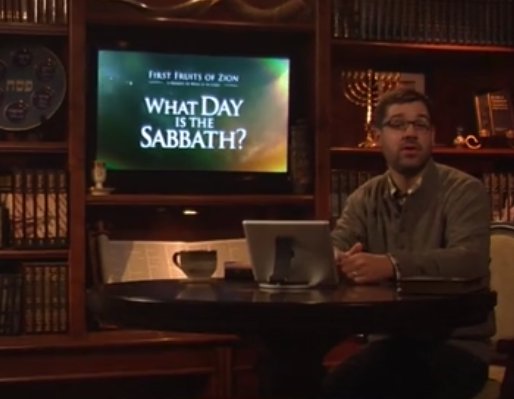
FFOZ TV Review: What Day is the Sabbath?

FFOZ TV episode 20Episode 20: It is often thought that somewhere in the New Testament the Sabbath was changed from Saturday to Sunday. But did the unchangeable God really change the day of rest? In episode twenty viewers will learn that not only has the Sabbath day not changed but Jesus himself was faithful to keep it and taught about it. The Sabbath is an eternal covenantal sign between Israel and God. Thus, while Gentiles are not required to keep it, they are welcomed to do so throughout the Scriptures.

-from the Introduction to FFOZ TV: The Promise of What is to Come
Episode 20: What Day is the Sabbath? (click this link to watch video, not the image above)

The Lesson: The Mystery of the Sabbath

I thought this episode would just be a “rehash” of material I already knew about the Sabbath. To some degree it was, but First Fruits of Zion (FFOZ) teachers Toby Janicki and Aaron Eby managed to flesh out the meaning of the Shabbat for the nation of Israel and to some degree, Christianity as well. Since this show primarily is addressed to traditional Gentile believers, no doubt some of the material came as a bit of a surprise.

Toby starts out relating his Sunday school experience as a child when he was required to memorize the Ten Commandments. This, of course, includes the fourth commandment to observe the Sabbath. Many Christians believe that the Ten Commandments are still in effect for the Church, but either disregard the Sabbath entirely, or believe it was changed from Saturday to Sunday, and that all of the Torah restrictions involving work on the (Sunday) Sabbath were eliminated by Jesus.

Toby asks the questions, “Why don’t Christians keep the Sabbath,” “Was the Sabbath changed from Saturday to Sunday,” and “Is the Sabbath even valid anymore?”

And he said to them, “Shabbat was given for the sake of man, and not man for the sake of the Shabbat. Therefore, the son of man is master even of the Shabbat.”

Mark 2:27-28 (DHE Gospels)

According to Toby, Christians typically use these verses to support the position that Jesus teaches man no longer has to keep the Sabbath since “Shabbat was given for the sake of man.” But Jesus also said that he didn’t come to abolish the Torah, which by definition, would have to include the Torah commandments related to the Sabbath:

Do not imagine that I have come to violate the Torah or the words of the prophets. I have not come to violate but to fulfill. For, amen, I say to you, until heaven and earth pass away, not one yod or one thorn will pass away from the Torah until all has been established.

Matthew 5:17-18 (DHE Gospels)

If you haven’t done so already, or you just don’t believe Jesus didn’t cancel the Torah, please view the FFOZ TV episode The Torah is Not Canceled, which I reviewed several weeks ago. It provides necessary background for what Toby and Aaron are teaching in the current episode of this series.

To understand how Jesus approached the Sabbath, we have to understand the larger context of what he means by “the Shabbat being made for man rather than man for the Shabbat.”

And it happened that He was passing through the grainfields on the Sabbath, and His disciples began to make their way along while picking the heads of grain. The Pharisees were saying to Him, “Look, why are they doing what is not lawful on the Sabbath?” And He said to them, “Have you never read what David did when he was in need and he and his companions became hungry; how he entered the house of God in the time of Abiathar the high priest, and ate the consecrated bread, which is not lawful for anyone to eat except the priests, and he also gave it to those who were with him?” Jesus said to them, “The Sabbath was made for man, and not man for the Sabbath. So the Son of Man is Lord even of the Sabbath.”

Mark 2:23-28 (NASB)

Toby JanickiToby brings up an important point that Jesus is debating with the Pharisees about what is and is not permitted to do on the Sabbath, not whether or not the Sabbath remains valid. Neither side in this argument is invalidating the Sabbath, merely dialoguing about what constitutes “work” on this holy day. Rabbis have been having similar debates for hundreds and even thousands of years. The Talmud is replete with Rabbinic discussions and disagreements over what is permitted to do on Shabbat and a wide variety of other matters related to the Torah mitzvot. The discussion recorded in Mark 2:23-28 is no different, and yet Christianity, not seeing this transaction from a Jewish perspective, universally fails to comprehend its meaning.

In the specific example above, Jesus is citing a portion of the Bible when David and his men ate bread permitted only to the Levitical priests. They did so because they were starving and had no where else to turn for food. Jesus is saying that the Shabbat is a gift, not a straitjacket, and the specifics of performing a type of work that is normally forbidden on Shabbat must not overrule the higher principle of preserving human life, well-being, and dignity.

Jesus had a number of similar debates with the Pharisees on this topic, including whether it was permitted to heal a non-life threatening disability on Shabbat (Matthew 12:9-14).

For more context on the debates Jesus had with the Pharisees on the Shabbat, see my review of D. Thomas Lancaster’s book The Sabbath Breaker: Jesus of Nazareth and The Gospels’ Sabbath Conflicts, also published by First Fruits of Zion.

At this point in his presentation, Toby said something I didn’t expect. We generally consider the phrase “Son of Man” as Jesus used it, to refer to himself, the Messiah, however, Toby applied it differently in the context of Mark 2:23-28. He suggested that “Son of Man” is an equivalent term for all humankind. Thus, he presents the words of Jesus as saying that the Sabbath was created as a gift for all people and that all people everywhere are “Lord of the Sabbath.”

For me, this creates certain problems, since, as I said before, the “Son of Man” is generally considered as a title for Messiah, and Toby’s interpretation seems to create a separate meaning for only this situation. It also may contradict what he establishes later in this episode, since if the Sabbath is created for everyone, Jew and non-Jew, and we are all “lords” of the Sabbath, what does that mean for Gentile Shabbat observance today?

More on that in a bit.

Toby drew a parallel between the Master’s words above and an ancient Jewish commentary on the book of Exodus called Mechilta, and quotes part of it which states:

Shabbat is delivered to you, not you to the Shabbat.

This echos the meaning of the Master that man is not to surrender himself to the Shabbat but quite the opposite. If the laws of the Sabbath were entirely rigid and immutable, they might require that observant people be subject to hardship and even death in obedience of such laws. Even the most stringent Jewish interpretation of the laws of Shabbat allow for lifesaving efforts to be expended on Shabbat, but what about people who are suffering but who will live for another day? What if the dilemma isn’t life and death, but life and dignity?

I’ve come the long way around to the first clue in solving our mystery, but it has finally arrived:

Clue 1: Jesus argued about what things were permissible to do on the Sabbath.

And this, as I previously pointed out, is a debate that has been taking place in Judaism for a very long time.

The scene shifts to Aaron Eby in Israel for a word study on the Hebrew word “Shabbat.”

Aaron starts by quoting Exodus 20:8-9, 11 which I render from the Stone Edition of the Tanakh:

Remember the Sabbath day to sanctify it. Six days shall you work and accomplish all your work…for in six days Hashem made the earth, the sea and all that is in them, and He rested on the seventh day. Therefore, Hashem blessed the Sabbath day and sanctified it.

Aaron EbyAaron points out that the Sabbath has a universal application and far pre-dates the giving of the commandments of the Sabbath at Sinai.

The literal meaning of the word “Shabbat” is “resting” and “stopping” and implies an “active” form of “resting” and “refraining,” not just kicking back and relaxing. To me, this speaks of a specificity of types of activity and inactivity, a mindfulness that Shabbat is not just relaxing in front of the T.V., but directing mind, spirit, and heart away from our immediate human activities and toward God.

Aaron cites something I consider very important in the following:

The Children of Israel shall observe the Sabbath, to make the Sabbath an eternal covenant for their generations. Between Me and the Children of Israel it is a sign forever that in a six-day period Hashem made heaven and earth, and on the seventh day He rested and was refreshed. (emph. mine)

Exodus 31:16-17 (Stone Edition Tanakh)

There are two exceptionally important points to get from this. When Israel or any individual Jewish person keeps the Shabbat, they:

  1. Testify to the eternal covenant between God and all Jewish people, the nation of Israel.
  2. Testify to God’s sovereignty as Creator of the Universe.

In the quote from Exodus 31:16-17, I emphasized words that testify to the eternal nature of the Shabbat as a covenant sign between God and the Jewish people. This also, by implication, testifies to the eternal nature of the Mosaic covenant with the Jewish people, and the Torah as the conditions of that covenant. When Christians say that the Shabbat no longer applies to the Jewish people (or anyone else) and especially that the Torah is now irrelevant to the Jewish people, I want to scream, “What part of eternal don’t you understand?”

But I digress.

Formally, in Judaism, a “day” lasts from sundown to sundown, not from sunrise to sunrise or midnight to midnight. That means that the seventh day Shabbat begins at sundown on Friday and ends at sundown on Saturday (in Rabbinic custom, the Shabbat actually begins slightly before sundown on Friday and ends about 45 minutes after sundown on Saturday as a “hedge,” to avoid “cutting it too close,” so to speak, in beginning and ending Shabbat observance).

Aaron also pointed out that generally, Jewish (and Christian) authorities all agree on which day is the “seventh day,” and that Biblically, it can’t be just any day at all.

I wish Aaron or Toby had addressed the following, though:

One person regards one day above another, another regards every day alike. Each person must be fully convinced in his own mind. He who observes the day, observes it for the Lord…

Romans 14:5-6 (NASB)

Therefore no one is to act as your judge in regard to food or drink or in respect to a festival or a new moon or a Sabbath day—things which are a mere shadow of what is to come; but the substance belongs to Christ. Let no one keep defrauding you of your prize by delighting in self-abasement and the worship of the angels, taking his stand on visions he has seen, inflated without cause by his fleshly mind, and not holding fast to the head, from whom the entire body, being supplied and held together by the joints and ligaments, grows with a growth which is from God.

Colossians 2:16-19 (NASB)

Mark NanosIn Paul’s letter to the Romans addressing “the weak and the strong” (which I’m about to get to in the Mark Nanos book The Mystery of Romans), most people take from these words to mean that one day is as good as another as far as observing a “Sabbath” is concerned, and that believers need not be concerned about strictly observing a Saturday Shabbat. The scripture from Colossians tells a similar tale in the eyes of the Church, and yet both of these interpretations directly contradict earlier scriptures. Since as believers, we cannot understand that the Bible is internally contradictory, we must conclude then that our interpretations are flawed. How can Jewish Shabbat observance be eternal and yet Paul say that it simply doesn’t matter because of Jesus? Jesus himself affirmed the Shabbat, not eliminated it.

Aaron’s segment of this program has him also affirming the current requirement for Israel to observe the Shabbat, but he also asks the question, “What does the Shabbat mean to Gentile believers?”

Back in the studio with Toby, we find our second clue:

Clue 2: Sabbath is from sunset Friday until sunset Saturday.

Two or three clues really don’t do it for the mystery of Shabbat in my opinion. This particular television episode brought up a dense set of meanings for me.

While earlier portions of the episode spoke of the “universality” of the Shabbat as a testimony of all mankind that God is the sovereign Creator, Toby shifts into the specifics of Shabbat and Judaism. While we see the sanctity of the Shabbat being set in place in Genesis 2, Toby points out that the specific commandments of Shabbat observance were not given in any recorded fashion to Adam and his sons or to Noah and his sons. It is only after God redeems the Children of Israel from Egypt and they are standing “as one man” at Sinai before Hashem their God, that Shabbat is formally established and its observance defined in Torah. It is also given as a specific sign of the Mosaic covenant between God and Israel, only Israel, forever. No other people group or nation has ever received this sign obligation to God.

Hashem said to Moses, saying: “Now you speak to the Children of Israel, saying: ‘However, you must observe my Sabbaths, for it is a sign between Me and you for your generations, to know that I am Hashem, Who makes you holy.'”

Exodus 31:12-13 (Stone Edition Tanakh)

Toby doesn’t mention this, but the above verses establish that not only is the Saturday Sabbath considered an eternal sign of the covenant between God and Israel, but so are all of the “Sabbaths,” that is, all of the moadim, God’s appointed times, the festivals identified and defined in Torah, such as Passover, Shavuot, Sukkot, Rosh Hashanah, and Yom Kippur. Each and every one of these Sabbaths must be observed by all of Israel for all time; for after all, that’s what “eternal” means.

I’ve heard it said in the Church that Jews should observe the moadim as “national holidays” the way Americans “observe” the Fourth of July or Thanksgiving. I consider that not only misleading and Biblically inaccurate, but potentially demeaning. It reduces the eternal covenant signs between God and Israel to how Americans “observe” barbecues, fireworks, eating turkey, and watching football. The very best you can say about American national holidays is that they represent who we are and how we relate to our history as Americans, a relationship between citizens and our country. The moadim, the weekly Sabbath, Passover, Shavuot, Sukkot, and the other special Sabbaths are far, far more than that, and indeed, define the relationship between Israel and her citizens, the Jewish people, and the God of Everything!

That’s somewhat more significant than mere American “national holidays,” wouldn’t you say?

This is another long way around to reaching the third and final clue in solving today’s mystery:

Clue 3: The Bible requires only the Jewish people to keep the Sabbath.

That’s going to make some people I know, non-Jewish people, very unhappy, but hold on there. Toby goes on to say that there’s nothing stopping any non-Jewish believer from also observing the Shabbat in some manner. We may not be commanded to do so, but we might as well “get used to it,” for someday, all of humanity will indeed observe the seventh day Shabbat.

And the foreigners who join themselves to Hashem to serve Him and to love the Name of Hashem to become servants unto Him, all who guard the Sabbath against desecration, and grasp My covenant tightly — I will bring them to My holy mountain, and I will gladden them in My house of prayer; their elevation-offerings and their feast-offerings will find favor on My Altar, for my House will be called a house of prayer for all peoples.

Isaiah 56:6-7 (Stone Edition Tanakh)

It shall be that at every New Moon and on every Sabbath all mankind will come to prostrate themselves before Me, says Hashem.

Isaiah 66:23 (Stone Edition Tanakh)

Boaz MichaelIf I’m reading this right (and I think I am), then not only will everyone observe a weekly Sabbath, the seventh day Sabbath, in the Messianic Age, but we will observe the New Moons and all of the Sabbaths and Festivals of God, all of the moadim listed in the Torah.

I don’t know how any later or subsequent revelation in the Apostolic scriptures (New Testament) can alter or undo the meaning of this text.

What Did I Learn?

I learned some things about the Sabbath, but I learned more about myself. I learned that I want to scream when I hear good, intelligent, and passionate Christians, men and women who I deeply respect, saying things about the Bible that seem completely contrary to the Bible. To my way of thinking, Toby and Aaron provided their audience with an air-tight case that Sabbath keeping is completely Jewish and remains an obligation for the Jewish people as a response to their covenant obligations to God. To deny this is (forgive me) to deny the evidence of the Bible. Toby and Aaron “quoted chapter and verse,” so to speak, illustrating the path from Genesis, to Sinai, to the present age, and into the Messianic Era, that the seventh day Sabbath is an eternal sign of the (eternal) covenant between God and Israel.

I also learned to “tighten up” the scriptures defining when all of humanity, in addition to Israel, will be obligated to observe the Shabbat, which is in the Messianic Era. There is no current obligation for Christians, or anyone else who isn’t Jewish, to observe Shabbat, but there will be in the future age when Messiah returns and establishes his Kingdom of peace over all the Earth. While Gentiles don’t have to observe Shabbat now, we can choose to, in some fashion, to honor God as Creator and to summon for ourselves a taste of the future Messianic Kingdom.

I found myself thinking of my Jewish wife and children. None of them observe the Shabbat in any real sense. For awhile, when our daughter was in Israel, my wife was lighting the Shabbos candles, but she stopped soon after our daughter returned. It breaks my heart, but I have to remind myself that some traditional Jews believe that in the age right before the coming of Messiah…

There is a tradition that people will begin to despise the values of their religion in the generations preceding the coming of the Messiah. Since in a period of such accelerated change, parents and children will grow up in literally different worlds, and traditions handed down from father to son will be among the major casualties.

Our sages thus teach us that neither parents nor the aged will be respected, the old will have to seek favors from the young, and a man’s household will be become his enemies. Insolence will increase, people will no longer have respect, and none will offer correction. Religious studies will be despised and used by non-believers to strengthen their own claims; the government will become godless, academies places of immorality, and the pious denigrated…

Perhaps it is darkest before the dawn.

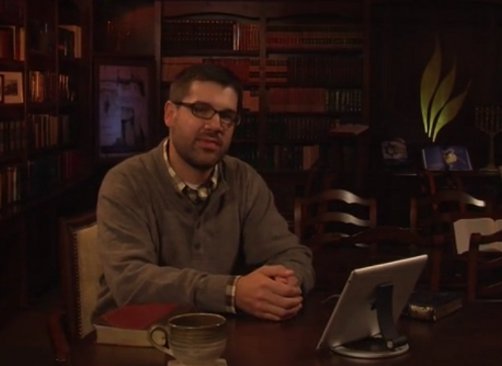
At the very end of the episode, as always, FFOZ Founder and President Boaz Michael appeared on camera to summarize this episode and to mention that next week’s show will continue to discuss the Shabbat. He also said, and this is very important to me, that studying the Bible, all of it, from a Jewish cultural, national, historical, ethnic, and traditional perspective “makes our Bibles consistent and upholds the Biblical truth that God doesn’t change.”

At the beginning of some of these shows, Toby refers to himself as “a Gentile who studies Messianic Judaism.” I’m a Gentile Christian who studies Messianic Judaism but who also attends a Christian church and, as part of that experience, studies Christianity from a fundamentalist and Reformed theology perspective.

So far, after a year of being back in church, the Messianic learning framework still makes a great deal more sense to me as a Biblical guide to Biblical truth than the platform used by fundamentalists. And this should be strange, since being a fundamentalist Christian simply means adhering to the core fundamentals of faith in Jesus Christ.

ShabbatBut maybe that’s the problem. Those fundamentals are based on (please pardon me again) a “fundamental” set of assumptions and traditional interpretations of what the Bible is saying. While those fundamentals attempt to take into account, not only the meaning of the Bible in its original languages, but the cultural and historic context of the Biblical authors and their audiences, they just do not escape the filter of two-thousand years of Christian interpretive history as well as Christian/Jewish enmity, all of which, after Christianity broke from its Jewish origins, must by definition, deny the Torah and deny continuing Jewish obligation to the Torah, including the seventh day Sabbath, as an eternal sign of the covenant between Jewish Israel and God.

How long will I be able to straddle the line with each foot planted on opposite sides of the street? You’ll find out in tomorrow’s “morning meditation.”

A Sketch of Christian Fundamentalism

How Christian Fundamentalists are seenChristian fundamentalists, who belong in the center field of Biblical theology, find themselves grouped by the media in the same category as militant political extremists, fascists, snake handlers, and Islamic fundamentalists. It’s about time somebody called foul!

The term “fundamentalism,” as Bible-believing Christians use it, identifies a system of beliefs that are foundational, or fundamental, to the Christian faith. Coined at the turn of the twentieth century, in an era of emerging, aggressive theological error, the term still stands as a watershed between truth and apostasy.

-from the pamphlet
“Fundamentally Sound: Understanding Our Faith”
Regular Baptist Press: Building Lives by the Book

(Note: I just want to point out that when you do a Google image search on “Christian fundamentalism” or “Christian fundamentalists,” the results are never pretty).

A Challies Chronicles Interlude

I’ve been trying not to mention my Pastor and my church to any extent in my blog posts to avoid even the hint that I am being critical of either, but there’s no other way to write this “meditation.” Pastor brought to my attention that I might not quite understand the term “fundamentalism” and have even been using it in a pejorative manner. He also explained some differences relative to how Reformed theology is understood.

In an effort to be fair, and to cement this in my memory, I decided to construct a little summary of “what is Christian fundamentalism.” I won’t go into the history (though I took copious notes of Pastor’s discussion), however, after a series of annual conferences held by leading Christian thinkers from America and Canada starting in 1890 and extending to 1930, the “Fundamentals of the Faith” were established, recorded, and published. The first five were fully agreed upon and the sixth was debated and later added. Here’s the list as we have it today:

  1. The Inspiration and Authority of Scripture: God authored the entire Bible — every word of it and every part of it (2 Tim. 3:16). The Bible is God’s Truth (John 17:17). It is without error!
  2. The Deity of Jesus Christ: He is fully God as well as fully man. He has always existed as God, and He always will be God (John 1:1; 20:31; 1 Tim. 3:16).
  3. Christ’s Virgin Birth and Miracles: Jesus was born of the virgin Mary (Isa. 7:14; Matt. 1:18-25) and was sinless (Hebrews 4:15; 1 Peter 2:22). He performed miracles to authenticate His credentials as Israel’s Messiah (John 20:30, 31).
  4. Christ’s Blood Atonement for Sin: Jesus shed His blood as the payment for our sins. Without the shedding of His blood, there would be no remission of sin (Romans 3:24-26; Col. 1:13, 14; Heb. 9:14-28; Rev. 1:5).
  5. Christ’s Bodily Resurrection: Jesus arose bodily from the grave, triumphing over death and assuring believers of their future resurrection (Luke 24:1-12, 34-38; 1 Cor.15:1-20).
  6. Christ’s Personal Return: Jesus assured His disciples that He will come again (John 14:1-3). Angels announced His return (Acts 1:1), and the apostles taught that He will return (1 Thess. 4:13-17; Titus 2:13; 2 Peter 3:1-10; 1 John 3:2).

This describes the core beliefs of fundamentalist Christianity and as far as I can tell, these six points are generally accepted by most if not all Christians. In fact, if you dispute any one of these points, according to a fundamentalist point of view, you can’t really be called a Christian.

It’s funny how much the topic of apostasy has come up in the Christian, Hebrew Roots, and Messianic Jewish areas of the blogosphere lately.

I don’t doubt that many of you out there will have something to say about this list. I copied it word for word from the aforementioned pamphlet, so as far as it goes, I’m just transmitting information, not engaging in editorial commentary (that comes later).

christian-fundamentals-101It all sounds so simple on the surface, but even accepting those six points, there’s still room for a huge amount of variability beneath the overall Christian “umbrella.” As I mentioned to my Pastor last Wednesday, everyone who claims Yeshua-faith as well as religious Jews who deny Yeshua (Jesus) was/is the Messiah all state that scripture supports their positions. Even when considering the rules of Biblical interpretation, there is always the filter of interpretive tradition each religious stream in Christianity and Judaism utilizes to color understanding and meaning. No one has pure, unbiased access to the Bible.

We are all on a journey attempting to discover truth, attempting to achieve ever higher fidelity to the original, that is, the truth of God, and yet we all fall short. This isn’t to say we should all give up, and it isn’t to say that we can’t come closer to truth as we continue our efforts, but achieving the mind of God is like traveling at the speed of light. To do so would require the expenditure of infinite energy and would result in us laboring under infinite mass.

In other words, no matter how hard we try, and what technologies we use, pushing an object in space faster and faster and faster will get us (marginally) closer and closer to the light speed limit, but we will not only fail to ever achieve it, we will probably fall significantly short of our target.

But that doesn’t mean we will ever stop trying, and in fact, NASA continues to look into developing warp drive.

People of faith continue to strive to break the bonds of our humanity in an effort to touch the Divine. The moral equivalent of developing “warp drive.”

My Pastor suggested that it might be helpful for me to listen to some sermons and to gain some actual experience and perspective on Christian thought and Christian leaders. We discussed John MacArthur, R.C. Sproul, Steven J. Cole, and Chuck Swindoll.

I didn’t tell Pastor this (but since he reads my blog posts, he’s about to find out), but I gave up listening to sermons on Christian radio well over a decade ago. Even as a “young Christian,” I found some of the sermons too elementary, some too confusing, and most too critical of Judaism and Israel to be of much help. Sooner or later, the speaker would say something that would make my blood boil, and my commute home from work would be shot as would my mood when I got home.

I listen to the 1960s “oldies” station now and am much happier on my drives.

I’m a guy sitting on a fence. I go to a Christian church, but I think like a “Messianic” (however you want to define the term). More to the point, I think and enjoy Biblical lessons that focus on understanding scripture from the Judaic thought process, linguistic, social, ethnic, and yes, Rabbinic context of the times when those scriptures were authored, and from the viewpoint of the intended Jewish (in most cases) audience.

Hillel and ShammaiKnowing the original languages isn’t enough, because how we interpret what was actually being said has been stripped of most of its contextual meaning. From a Messianic viewpoint, you can’t read the teachings of Jesus without, in some cases, summoning up Hillel and Shammai, who taught a generation before Christ. They were Jewish teachers, Jesus was a Jewish teacher. In many ways, Jesus had a lot more in common with Hillel and Shammai than he has with MacArthur, Sproul, Cole, and Swindoll. I’m not trying to be mean or insulting. It’s a statement of fact. Jesus wouldn’t call himself a “Christian.” He wouldn’t say that the Law was “nailed to the cross.” He wouldn’t disdain the Shabbat, New Moons, or other Biblical festivals.

To understand Jesus, or Paul, or Peter, or James, it makes more sense to seek out sources closer to them, not only historically and linguistically, but culturally, ethnically, ethically, as well as in terms of what Jewish traditions and interpretative methods were in play in that place at that time.

I’m not sure how men like MacArthur or even the very user-friendly Chuck Swindoll would approach such a context. I don’t want to be unfair, but I do want to be realistic.

This all goes back to Boaz Michael’s book Tent of David and my recent review of who I am and what I mean within the cultural and theological context of Christianity as an institution.

So far, I see one of three outcomes of my “church experience:”

  1. I stay at church and “assimilate,” becoming a “regular Christian” and abandoning any mental, emotional, theological linkage with Messianic Judaism, Hebrew Roots, and any “Judaic” viewpoint on the Bible.
  2. I stay at church but maintain my current perspective, even expanding it though self-study and contact (real or virtual) with others who share my basic viewpoint, generally being a curiosity, a pain in the neck, or ideally, a refreshing conveyer of the Messianic perspective within the church environment.
  3. I give up on Christianity as an institution entirely, leave church, and pursue a life of faith as an independent “free-agent.”

As the end of my first year in church approaches (or has it arrived by now?), I feel like I’m crossing some sort of milestone or threshold. A year in church as resulted in me learning more about the history and institution of Christianity, but it hasn’t diminished the perspective I possessed when I went back to church a year ago. If anything, having to debate my perspective has driven me to do even more reading and studying, strengthening my belief in a Jewish Yeshua and the continuance of Jewish Torah observance for all Jews of faith, including Jews in the body of Messiah.

Every time I enter into such a brain bending set of debates and discussions, I have to get away for a while afterward and be alone with God. God may not be entirely knowable, but He isn’t confusing, either. He is a listener. He doesn’t have much to say most of the time when I pray, but it’s good to be able to tell Him how crazy religion makes me sometimes.

praying-aloneI’m glad He’s there. I’m glad I can remember that regardless of all the religious preachers and pastors and rabbis and sages rolling around human history and the current theological landscape, there is an eternal God who is the point of everything everyone is trying to do. In the end, it doesn’t matter who wins the arguments. In the end, God reigns supreme. In the end, God will stop listening and start talking. Then, if we are wise even to the slightest degree, we will stop talking and listen.

It’s in moments like these that I continue to pursue God, moments when it is dark and quiet, and the only sound is the passage of my voice to the Heavens. God listens. Being with Him is very peaceful and comforting. The chaos of human religion seems miles away.

I’ll return to my review of the Strange Fire conference soon.

In the meantime, tomorrow’s latest review of an episode of First Fruits of Zion’s television series and Wednesday’s follow up on that content continues the discussion of who I am as a believer. I said above that I was sitting on a fence. Wednesday, you will see me hopping off and I will show you on which side of the fence I land.

Fidelity: Commentary on Haim and Dauermann in Messiah Journal 114

mj114Some years ago Dr. Mark S. Kinzer coined a term for the new and revolutionary approach that many Jewish followers of Yeshua have adopted in regard to their relationship with Judaism. The term “post missionary Messianic Judaism” (PMJ) initially caused ripples that have grown into waves and that we are bringing about a paradigm shift among Messianic Jews. The PMJ paradigm sets a new trajectory for the community of Jewish followers of Yeshua, establishing its role within Judaism and its partnership with the faithful among the nations. In this article, I will attempt to convey my understanding of PMJ, its crucial role, and its ramifications or the Messianic movement.

-Haim Ben Haim
“Postmissionary Messianic Judaism in Practice,” pg 42
Messiah Journal Issue 114/Fall 2013

The Jewish people are “us,” not “them.”

-Dr. Stuart Dauermann
“The Jewish People are Us — not Them,” pg 55
Messiah Journal Issue 114/Fall 2013

Both Haim and Dauermann have written long and densely packed articles on interlocking topics for First Fruits of Zion’s (FFOZ) current issue of their landmark periodical, Messiah Journal. I have to admit that with my busy work, writing, and reading schedule this past week, I’ve only had the opportunity to scan their write ups. I’m looking forward to giving them the attention they deserve and perhaps even composing a more detailed review.

However, I noted that Haim provided something that may be useful in my weekly meetings with My Pastor. Pastor has repeatedly asked what the current function and use of the Torah is in the lives of the Jewish people, particularly Messianic Jews. It is his opinion that the Torah, however it may be defined, has limited to no use in the current age thanks to the classic Christian interpretation of key passages in the letters of Paul.

Not being Jewish and certainly not being a Torah observant Messianic Jew, it’s difficult for me to articulate the lived experience between the Jewish people and the mitzvot. Pastor lived in Israel for fifteen years, so if either one of us should have the experience of observing the relationship between the Torah and the descendants of the children of Israel, it should be him. However, Orthodox Judaism and the myriad complexities of modern Torah observance, have become a major stumbling block. It’s time to make things a little more manageable.

The implementation of PMJ involves all parts of Jewish life. By way of example, we will briefly consider a few of those institutions that comprise the life of a healthy, vibrant Jewish community: Shabbat observance, festivals, kashrut, traditional prayer, the Torah service, gemilut chasidim, tikkun olam, solidarity within modern Israel, the bar/bat mitzvah ceremony, outreach, and Jewish education.

-Haim, ibid pg 48

In a nutshell, this list is a very good place to start in explaining the role of Torah in the life of a Messianic Jew who is facing his faith in Messiah as a Judaism rather than a Christianity.

jewish-christian-intermarriageI won’t attempt to replicate all of the details regarding each of these institutions and elements of Jewish life and community and encourage you to get a hold of a copy of Messiah Journal and pour over these intricacies yourself. Two-thousand years of Gentile Christianity in all of its forms have cemented the idea that the worship of the God of Israel and having faith in the Jewish Messiah King are completely non-Jewish for both Gentiles and the Jewish people, thus any Jewish disciple of the Jewish Messiah must, by (Christian) definition, renounce all of Judaism and being Jewish (with perhaps some lip service relative to being a “Hebrew Christian”) and emulate the Goyim.

This is not the way it was prior to the destruction of Herod’s Temple and it is my firm belief it will not be that way when Messiah returns. Christians will have much to repent of on the day Moshiach ascends the throne of David in Jerusalem.

To put a different slant on the topic, Dr. Dauermann (pp 55-6) offers seven core values designed to shape a mature Messianic Judaism:

  1. Messianic Judaism is a Judaism and not a cosmetically altered “Jewish-style” version of what is extant in the wider Christian community.
  2. God’s particular relationship with Israel is expressed in the Torah, God’s unique covenant with the Jewish people.
  3. Yeshua is the fullness of Torah.
  4. The Jewish people are “us,” not “them.”
  5. The richness of the rabbinic tradition is a valuable part of our heritage as Jewish people.
  6. Because all people are created in the image of God, how we treat them is a reflection of our respect and love for him. Therefore, true piety cannot exist apart from human decency.
  7. Maturation requires a humble openness to new ideas within the context of firmly held convictions.

Although Dr. Dauermann’s article focuses on the fourth principle in his list, I want to touch briefly on the third element: Yeshua (Jesus) is the fullness of Torah.

When My Pastor hears that Jesus fulfilled the Torah, he understands that to mean once Jesus arrived, the Torah was no longer necessary and thus was rendered inert, at least until such time as Ezekiel’s Temple is rebuilt and the numerous prophecies in the Tanakh require all of Israel to resume the Temple service and most if not all of the other mitzvot.

I’ve tried in different ways (unsuccessfully) to reframe “fulfilled” in this context, but the other night, unable to sleep, inspiration seized me.

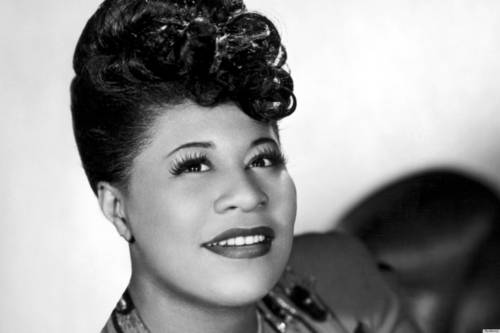
You may not be old enough to remember a television commercial for Memorex tape cassettes featuring the wonderful Ella Fitzgerald. The commercial played part of a song recorded by Ms. Fitzgerald and then the artist herself singing the same notes (I’m writing this from decades old memory and only later did I insert the link below to the actual video), apparently shuttering a glass in the process. The idea was to show that the fidelity of the recording was so near the original (Ms. Fitzgerald’s actual voice) that it too could shatter glass. The tagline for the commercial was, Is it live or is it Memorex (link to YouTube video).

If the recording of Ms. Fitzgerald singing is high fidelity, it is still not her. It is as if the recording “points” to her, the perfect original. In singing live, you might say Ms. Fitzgerald “fulfills” the recording, since she is the perfect and absolute embodiment of what was recorded on tape.

ella_fitzgeraldThis doesn’t render the recording useless and inert. After all, how many of us could simply accompany Ms. Fitzgerald around all of the time in the hopes she would burst into song? However, we can carry around a recording of her music so that we can access and enjoy her singing at will.

Like Ms. Fitzgerald (in a sense), Yeshua is the original, the perfect observer of Torah, the absolute firstborn Son of Israel, the goal all other Jewish believers aim toward in their lives, their righteousness, and their observance of the mitzvot. Like Memorex, no Jewish person is quite like the original, but the goal is to achieve as high a fidelity to that original as possible.

I like to compare our work at First Fruits of Zion and Vine of David to that of carpenters building a home. After all, we are disciples of a carpenter.

Our work can be compared to a building contractor who builds a “Spec” home. A “Spec” home is built on “speculation.” In other words, a builder builds a home with the features he believes will eventually appeal to buyers, but he has no guarantee of a sale. Years ago, on a conference call, my colleague D.T. Lancaster encouraged our staff to take a high view of Messianic Judaism. It is easy to get discouraged with the circus of mayhem and competing religious ideologies that calls itself Messianic Judaism. My colleague said, “When we speak of Messianic Judaism we always speak of the ideal — the way it should be. When we create our resources we create materials for a community that does not yet exist — but the materials will help to bring it into existence.”

-Boaz Michael from the Director’s Letter
“Unless the LORD Builds the House”
Messiah Journal 114, pg 8

When I speak in glowing terms of Messianic Judaism, either online or in person, I am sometimes accused of speaking to a fantasy rather than the lived reality we currently experience. This is not quite true however. I take some solace in Boaz’s words that in my attempting to uplift both the principles and practice of Messianic Judaism for Jewish believers, I am in some manner, summoning the future while living in the present. I am addressing the ideal as it will be when Messiah returns, rather than the imperfection we see in the world today.

But I have to start somewhere.

You’re on the right path. Dividing a mitzvah into small steps makes the goal much more attainable. Taking things slowly also adds the important element of stability to your journey towards living a Torah lifestyle.

But don’t look at it as a compromise. Here’s why:

Suppose an adult wishes to learn a new language. Would he be compromising his mission by beginning with basic simple words? What about a child beginning the study of math. Is he compromising by starting with simple arithmetic?

Of course not. It is quite clear that neither “c‑a‑t spells cat” nor 2 + 2 = 4 is the ultimate goal. But they are necessary steps in the right direction.

Mitzvahs are no different.

Regarding mitzvahs, there’s an additional component: Torah is not all or nothing. Each mitzvah is a full-blown relationship with the One Above. Each time we eat kosher, each time we put on tefillin, each time we observe Shabbat, something extraordinary occurs.

-Rabbi Yisroel Cotlar
“Can I Go Kosher at My Own Pace?”
Chabad.org

going_kosherI can only imagine that it may be rather daunting for a Jewish person attempting to improve his or her observance of the mitzvot. If you didn’t grow up in an observant home but you want to live a lifestyle more consistent with the Torah, how do you approach it? If you want to start keeping kosher, do you have to rush out and buy all new pots, pans, and dishes, learn the procedure for kashering your kitchen, and make an immediate and 100% transition between one day and the next?

Rabbi Cotlar’s advice is plain and comforting and it speaks of a Jewish believer’s approach to Messianic Judaism. You have to start somewhere. You don’t have to have perfect or even high fidelity to the original right away.

While Haim, Dauerman, and Boaz (and Rabbi Cotlar) are speaking to a primarily Jewish audience, I want to speak to the Christians (including those in the various branches of the Hebrew Roots movement) who have been critical of Messianic Judaism in general and the PMJ approach in particular. That Jewish people in the Messianic movement aren’t “perfect” in their observance is no grounds for throwing the baby out with the bath water, so to speak.

The Torah isn’t all or nothing (and I know someone is going to erroneously reference James 2:10 which only applies if you are attempting to justify yourself before God by your Torah observance, not if you are observing the mitzvot already “saved by faith”). Children growing up in a Jewish home are not expected to master all of the mitzvot by the time they’re toilet trained. Any learning is a slow, developmental progression.

And yet Christianity criticizes and judges Messianic Judaism for an imperfect Jewish lifestyle and thus deems the Torah obsolete, as if we have the right to make such a decision.

Twenty centuries ago, the Jewish religious stream of “the Way,” at the direction of Messiah and by approval of the Holy Spirit, commanded the Jewish disciples to do something that had never been done before. For the first time in history, Gentiles were allowed entry into a Jewish religious stream without having to convert to Judaism and accept the same Torah obligations as the Jewish disciples. Christianity wasn’t “Christianity,” it was one among many Jewish religious streams operating in Israel and the diaspora.

The Jewish disciples of the Master were Jewish and part of Israel. They related to other Jews as “us” not as “them.” The real challenge was to figure out how to bring the Gentiles, the “them” in the community, into salvation alongside the Jewish members of the body of Messiah. Ultimately, the fabric within the community of “the Way” frayed and unraveled, separating into the Christian “us” and the Jewish “them.” The Gentiles rewrote the rules in their (our) own image, only allowing Jews back into the worship of Messiah if they stopped being Jewish.

And here we are today.

up_to_jerusalem

But this is not the ideal, as Boaz points out. This is not where we’ll be tomorrow. Tomorrow, Messiah, Son of David, will take his place on the Throne in Jerusalem. He will redeem his people, the Jewish people. He will redeem his nation, the Jewish nation of Israel. And once again, our positions will be defined as they were before. Gentiles will be allowed to join the Jewish religious stream of the body of Messiah without having to convert to Judaism.

The Body of Messiah is the quintessential Israel, the original, the highest fidelity to the original: Messiah. Prophesy tells us that many Jews and many people from the nations will stream to Jerusalem and to the Mountain of the Lord to learn of Jacob’s ways and to walk his paths. In that day, the ideal being presented by Haim, Dauermann, and Boaz will be reality, and we will worship our fulfillment in the Holy City, and every knee shall bow to the King of the Jews.

Returning to the Tent of David: The Clay Jar

eph-2-10-potter-clayDo you wrestle with dreams?
Do you contend with shadows?
Do you move in a kind of sleep?
Time has slipped away.
Your life is stolen.
You tarried with trifles
Victim of your folly.

Dirge for Jamis on the Funeral Plain, from “Songs of the Muad’Dib” by the Princess Irulan
quoted from pg 126 of Frank Herbert’s novel
Dune

This book outlines a vast mission and vision. At first it can seem overwhelming both in the scope it entails and in the sacrifice it requires.

-Boaz Michael
“Strategic Mission,” pg 164
Tent of David: Healing the Vision of the Messianic Gentile

Part of the Returning to the Tent of David series

Ever since I’ve been writing about my “re-review” of Boaz’s TOD book and the re-evaluation of my “mission” in my local church, I’ve received a certain amount of pushback in various online venues, speaking of “coming out” of the church, as if the church was some kind of prison or trap. Some people talk about being “unequally yoked,” as if the “Messianic Gentile” and the church-going Christian are not the same and are even diametrically opposed spiritual beings.

The quote from Boaz’s book I posted above reminds me of the difference between the first day of class and mid-terms. I remember in any class I took, no matter how difficult the subject, the first day was always a breeze because there were no expectations of me yet. By the time mid-terms rolled around though, I always knew if I was going to be OK, or if I was in way over my head.

I took a lot of notes as I was going over TOD again, but I decided I wasn’t going to use most of them. I don’t want to re-analyze every page of what Boaz wrote. I want to analyze how I am now against who I was a year ago when I was anticipating a return to church. I struggled greatly against my own inhibitions. It finally took the mocking of someone I disagree with a great deal to push me forward. He too “went back to church,” even as he complained about it (and the irony is not lost on me as I type these words).

True imitation of our Master was practiced by no one better than Paul, who left Jerusalem, the Temple, and the apostolic community behind to go through the Diaspora and spread the message of the kingdom.

-Michael, TOD
“Becoming a Shaliach,” pg 94

If I look at my TOD experience in church as a “diaspora” experience, I’ll forever be alienated from church and only be a perpetual visitor. On the other hand, the model of Boaz’s TOD book is focused on the “Messianic Gentile” as a messenger, an emissary, a “sent out one.” Paul founded many Gentile churches, but though he was united with the non-Jewish disciples in Messiah, he was never a part of them in many other ways. He was a Jew, a Pharisee of Pharisees, a Benjaminite, circumcised on the eighth day, obedient to the mitzvot, bound to the Torah of Moses and the Temple, even as he was bound to Messiah.

But the flip side of the coin is that the “Messianic Gentile” isn’t in church to illustrate how different he or she is from Christians but that it is the Jewish Messiah King who unites them…who unites all of us.

I have a Jewish friend who has been very kindly encouraging me to realize that Jesus is a false Messiah and that I should join the ranks of the Noahides; become a “righteous Gentile.” He sees Christianity, no matter how well intended, as ultimately anti-semitic, just as my wife sees the Church. If he’s right, then my efforts in emulating the Master and his emissaries are doomed to failure. If Boaz is right, then imitating my Master makes me stronger than anyone could possibly imagine.

I can do all things through Him who strengthens me.

Philippians 4:13 (NASB)

But such strength must be in God’s service.

These are all vitally important concepts, but cannot compare to the work of God in reconciling humanity to himself and consummating his entire creation through Yeshua the Messiah.

-ibid, pg 102

jewish-handsLater in the same chapter, Boaz speaks of the Chabad chasidim who are sent out into the world and who believe their efforts are watched over by the Rebbe. How much more should disciples of Messiah feel the watchful eye and empowerment of our Master in our endeavors?

Boaz also speaks of setting priorities, not losing the vision, and being silent rather than talking as the situation demands. As I went through his book again, I found I could argue against a lot of his optimism, but if that’s true, then maybe I’m the wrong man for the job…or I just want to be.

I can make excuses or I can persevere. If I am doing the will of my Master, then I will continue. If I’m not, then whatever I do will fade.

For some time ago Theudas rose up, claiming to be somebody, and a group of about four hundred men joined up with him. But he was killed, and all who followed him were dispersed and came to nothing. After this man, Judas of Galilee rose up in the days of the census and drew away some people after him; he too perished, and all those who followed him were scattered. So in the present case, I say to you, stay away from these men and let them alone, for if this plan or action is of men, it will be overthrown; but if it is of God, you will not be able to overthrow them; or else you may even be found fighting against God.”

Acts 5:36-39 (NASB)

No, I am not comparing myself to the apostles in any sense. I am not worthy to wash the dust from their feet. And yet, the principle is sound. I do nothing on my own, but only what I do when I’m in my Master.

I am the vine, you are the branches; he who abides in Me and I in him, he bears much fruit, for apart from Me you can do nothing.

John 15:5 (NASB)

Even in pleading with critics of this “mission” to not see the “Messianic Gentile” and “Christians” as separate things, I’ve been making the distinction myself. Even considering myself on a “mission” in church makes the distinction. That’s intolerable because in making such a distinction, I’m implying that I’m somehow “better” or “higher” than the people I worship with every week. But I’ve forgotten something.

In fact, I’ve forgotten the most important thing of all: to seek God where ever I happen to be. If I’m in a church, my purpose is to seek an encounter with God. If I’m in a synagogue, that it is also my purpose. It’s the same if I’m praying alone at home, if I’m in Sunday school, if I’m meeting a few Christian men for coffee, if I’m meeting my Pastor in his office.

If that “mission” is forgotten, the overwhelming priority to meet with God and serve God in every situation and circumstance, then everything that follows is a mere shadow by comparison or in fact, nothing at all.

But if I believe I am serving God, encountering God, encouraging others to encounter God by envisioning Jesus Christ as the Jewish Messiah King, the Moshiach, the Holy One of Yisrael, then I must be in the Church and of the Church without having my convictions and my vision dissolved.

Another step to blessing the church is to maintain your distinctiveness as a Messianic Gentile. Be different; exemplify the change you wish to see in mainstream Christianity.

-ibid, “Restoring the Tent of David,” pg 148

You must be the change you wish to see in the world.

-Mahatma Gandhi

I must be who I am and who I am learning to be, because it is God who made me. No matter where I am and what I’m doing I must be that person. To me, this is the only way to be in church and to live out what I’m seeing in the TOD book. To see it any other way, is to be disingenuous in my Christian worship and to possess ulterior motives in every conversation I have with other believers.

sparksThe interface, the transactions, the meetings, the worship, the study, everything I do in church and with Christians (or anywhere else) is the crucible in which we burn away the differences and the inconsistencies and finally arrive at the true Jesus, the Messiah, the King, the High Priest in the Heavenly Mishkan (Tabernacle).

It’s not being the change I wish to see, but being the person God wants me to be. Then, if God choses, that person people see will be one of His agents of change. If what I have to say and the life I’m living is worthy, then Messiah will be visible through me as who he really is, the King of Israel, the final inheritor of the Throne of David ben Yishai.

As I was reading the last pages of Boaz’s book, I was feeling the weight of his words. After all I’ve just written, I am, in the end, just flesh and blood. How could so much ride on someone like me?

Arrakis teaches the attitude of the knife — chopping off what’s incomplete and saying: “Now, it’s complete because it’s ended here.”

-from “Collected Sayings of Muad’Dib”
by the Princess Irulan
quoted from pg 137 of Frank Herbert’s novel
Dune

If I am indeed the branch in the vine, then I will not be cut off. If I’m not, nothing can keep me from being “complete” in the manner of the quote above. I must have faith that God did not give me life for a vain purpose.

The day is short, the task is abundant, the laborers are lazy, the wage is great, and the Master of the house is insistent.

-Pirkei Avot 2:20

He is indeed. And I must listen more carefully to his voice, tarry on each command, ponder his meaning, savor his teachings, sit at his feet as does the faithful servant, and in letting him show me how to become myself, the man God made me to be, the clay jar in the potter’s hand, I will be the shaliach, the lamp, and the light that goes forth into the world, not for my sake, but for God’s.

This is the end of my Tent of David review. I only ask one thing. If there are other TOD shaliach online, perhaps we could dialog with each other. Is anybody out there?

FFOZ TV Review: Seek First the Kingdom

ffoz_14mainEpisode 14: For Christians, nothing should be more important than seeking first the kingdom. Episode fourteen will take a deeper look at what it means to “Seek first the kingdom of God” from a Jewish perspective. Viewers will learn that the kingdom of God is the Messianic Era. To seek first the kingdom is to obey the teachings of Jesus and do the will of God while always leaning on God’s grace. The Sermon on the Mount is the long answer to what it means to seek to enter his kingdom.

-from the Introduction to FFOZ TV: The Promise of What is to Come
Episode 14: Seek First the Kingdom

The Lesson: The Mystery of Seeking First the Kingdom of God

What is it to seek first the Kingdom of God? We’ve learned from previous episodes of this program, that the Kingdom of God is actually the Messianic Era, not “going to Heaven.” It’s the Kingdom that Jesus will establish upon his second advent into our world, where he will rule and reign over Israel as her King, and as King of all the nations of the Earth.

But let’s take a closer look at an important saying of the Master from Matthew 6:31-34 using the Delitzsch Hebrew Gospels translation to begin to address this mystery:

Therefore, do not worry, saying, “What will we eat?” or “What will we drink?” or “What will we wear?” For the Gentiles request all of these. Does your Father who is in heaven not know that you need all these? But seek first the kingdom of God and his tzedakah, and all these things will be added to you. Therefore do not worry about tomorrow, because tomorrow will worry for itself. It is sufficient for trouble to come at its time.

As always, First Fruits of Zion (FFOZ) teacher and author Toby Janicki tells his audience that we may be led into error if we do not look at these scriptures from the original linguistic, historical, and cultural context, the context of the audience for whom Matthew wrote his gospel, the context of the audience of Jesus and his Sermon on the Mount. This is the lynchpin that holds together FFOZ’s interpretation of the New Testament and folds it into the overall Jewish context of the entire Bible.

Toby says that Jesus is telling us we are not to focus on our immediate, material needs, but rather to seek first the Kingdom of God and His righteousness. Toby summarizes the Kingdom using material presented in previous episodes:

  • The Kingdom of God is Messiah’s rule over the earth upon his second coming.
  • The exiles of Israel, the Jewish people, will be regathered to their nation.
  • God will defeat all of Israel’s enemies.
  • Messiah establishes a rule of peace over all the Earth.
  • The Torah will go forth from Zion.
  • Everyone will be filled with the Knowledge of God through the Holy Spirit.

I immediately thought of my conversation with my Pastor last week. Part of our discussion included a quick summary of the Book of Revelation, and I noticed that Toby didn’t touch on the “rapture of the Church” to Heaven with Jesus for the seven years of tribulation. I suppose that will be a topic for another time, although previously, Toby mentioned that “the Church” would be raptured with Jesus to Jerusalem. I suppose that means “the Church” won’t be “off planet” for the seven years of woe and judgment, but that’s a topic for another time.

Toby said that the Sermon of the Mount is the overall context for today’s lesson and that Matthew 5:20 is the key to understanding the Sermon. It functions like a thesis statement, and not correctly understanding this single verse will lead to misunderstanding the entire sermon.

I found this terrifically compelling, because Pastor and I got “hung up” on this very verse last week. I was presenting my understanding of the terms “abolish” and “fulfill” we encounter in Matthew 5:17-19 based on the previous episode of the show: The Torah is Not Canceled (see my review of that episode for more details).

However, verse 20, as I mentioned, was a problem:

For I say to you that unless your righteousness surpasses that of the scribes and Pharisees, you will not enter the kingdom of heaven.

ffoz_tv14tobyThe context of verses 17-19 discuss the Torah and how Messiah did not come to disobey (abolish) the Torah, but to obey (fulfill) it. Pastor says that “fulfill” can’t possibly mean “obey” in context because of verse 20. No amount of obedience of the mitzvot can lead to saving righteousness. The only answer I had to give was that Jesus was contrasting Torah obedience with faith, essentially saying that the scribes and Pharisees were depending on what they did to save them, and, as important as obedience is relative to Jews and the Torah, it’s only faith that saves. I was trying to pull a rabbit out of my hat, so to speak, thinking “theologically” on the fly.

So I was hoping that Toby was going to offer a link from verse 20 back to verses 17-19 and give me a more “fleshed out” explanation. What ultimately happened was unexpected.

Toby forged a direct connection between Matthew 5:20 and Matthew 6:33

For I say to you that unless your righteousness surpasses that of the scribes and Pharisees, you will not enter the kingdom of heaven.

Matthew 5:20

But seek first His kingdom and His righteousness, and all these things will be added to you.

Matthew 6:33

As I’ve said in the past, it would be helpful to know the source for making such connections in the Bible. A bibliography for each episode would enhance my ability to understand. But we have arrived at our first clue:

Clue 1: Make it your top priority to enter the Messianic Era.

But there’s another part to all of this. While we can grasp the meaning of the Kingdom of Heaven, what does “righteousness” mean in these contexts? Seek first the Kingdom of Heaven and his righteousness. You might think you know what “righteousness” is, but remember, this show is all about presenting familiar parts of the Bible as seen through the historical, cultural, and linguistic lens of first century Judaism. What does “righteousness” look like when you put those glasses on?

To learn the answer, the scene shifts to FFOZ teacher and translator Aaron Eby in Israel. Aaron teaches us (and I apologize for the poor spelling of the transliterations) that “righteousness” can be mapped back to two Hebrew words: “Tzeddik” and “Tzadakah”. “Tzeddik” gives us the sense of “justice,” “correctness,” “equitability,” and “uprightness.” It’s an abstract concept and is more about being righteous. “Tzadakah,” on the other hand, is a more “hands on” term, according to Aaron. It’s more about doing right things, doing the correct thing, and doing righteousness rather than being righteous.

It will be righteousness for us if we are careful to observe all this commandment before the Lord our God, just as He commanded us. (emph. mine)

Deuteronomy 6:25 (NASB)

Aaron explains that the word “righteousness” or “tzedakah” used in this verse speaks of doing the correct thing, which here is performing particular Torah mitzvot. The concept of righteousness and doing right are completely fused. One cannot be righteous without doing righteousness. This should remind most Christians of the following:

But someone may well say, “You have faith and I have works; show me your faith without the works, and I will show you my faith by my works.” You believe that God is one. You do well; the demons also believe, and shudder. But are you willing to recognize, you foolish fellow, that faith without works is useless? Was not Abraham our father justified by works when he offered up Isaac his son on the altar? You see that faith was working with his works, and as a result of the works, faith was perfected; and the Scripture was fulfilled which says, “And Abraham believed God, and it was reckoned to him as righteousness,” and he was called the friend of God. You see that a man is justified by works and not by faith alone.

James 2:18-24 (NASB)

ffoz_tv14aaronOver time, the meaning of the word “tzedakah” has changed. It is commonly thought of today as specifically giving to charity, but Aaron says that it did not lose its previous meaning in taking on a more modern way of being understood. The underlying concept of the word is doing kindness to others, kind treatment of others. When God shows us His righteousness, he is being kind to us. When we show others righteousness, we are doing good things for them. Although Aaron and Toby didn’t say this specifically, I think we can link tzedakah back to being a tzeddik (a righteous one). You cannot be righteous without doing righteousness. Let’s look at Matthew 5:20 again.

For I say to you that unless your righteousness surpasses that of the scribes and Pharisees, you will not enter the kingdom of heaven. (emph. mine)

So, given all that we’ve learned up to this point, are Aaron and Toby telling us that entering the Messianic Era, the Kingdom of God, is dependent on how much kindness we do for other human beings? But how can we be more “righteous” than the scribes and the Pharisees, who set the bar pretty high?

Woe to you, scribes and Pharisees, hypocrites! For you tithe mint and dill and cummin, and have neglected the weightier provisions of the law: justice and mercy and faithfulness; but these are the things you should have done without neglecting the others.

Matthew 23:23 (NASB)

While the scribes and the Pharisees were all about doing “righteousness,” that is, acts of kindness and justice (the two can’t be separated in our understanding of tzedakah) toward others, still, they had problems, and these were problems Jesus brought to light. They were hypocritical (or some of them were). They taught righteousness but didn’t do righteousness. This is why Jesus told his disciples to do what the Pharisees taught but not to emulate their actual behavior (Matthew 23:1-3). There was nothing wrong with the teaching of righteousness of the Pharisees, but in many cases, they didn’t “walk the walk”. Jesus seems to be telling his disciples (and us) that our righteous deeds must exceed those of the Pharisees if we are to enter into the Kingdom of God.

Let’s refactor the two scriptures that Toby says are key to our understanding of today’s mystery:

For I say to you that unless your good deeds surpass that of the scribes and Pharisees, you will not enter the kingdom of heaven.

Matthew 5:20 (NASB)

But seek first His kingdom and His good deeds, and all these things will be added to you.

Matthew 6:33 (NASB)

Returning to Toby in the studio, we have arrived at our second clue:

Clue 2: Righteousness = Acts of the Law; Good Deeds of God’s Torah.

Toby says that if Jesus has to give this instruction, it begs the question of whether or not some disciples of the Master will not enter the Messianic Era. He offers the following as an answer:

“Not everyone who says to Me, ‘Lord, Lord,’ will enter the kingdom of heaven, but he who does the will of My Father who is in heaven will enter. Many will say to Me on that day, ‘Lord, Lord, did we not prophesy in Your name, and in Your name cast out demons, and in Your name perform many miracles?’ And then I will declare to them, ‘I never knew you; depart from Me, you who practice lawlessness.’

Matthew 7:21-23 (NASB)

charity-tzedakahToby’s coming really close to saying that all disciples of Jesus who do not practice the Torah mitzvot, or at least those that command acts of kindness and charity to others, will not enter into the Messianic Era. In other words, they “practice lawlessness.” However, Toby was quick to point out that this isn’t a matter of salvation. Even if you do no acts of kindness, you can still be saved by the grace of Jesus Christ through faith (though if you have faith, then why aren’t you performing tzadakah?). But this brings up a critical question. How can you be saved but not enter the Messianic Age? Where will you be if you’re not there?

Oh, and this is the third and final clue:

Clue 3: Not everyone will enter the Messianic Era.

Toby again tells us that not entering the Kingdom and not performing acts of kindness and charity to others does not negate the free gift of grace through Christ. But the Messianic Era is a span of historical time in which all those resurrected and all those who are born in it are in that Era. How can you not enter a span of history unless you’re dead…but if you’re saved, you’re not dead?

What Did I Learn?

Linking last week’s review to today’s, let’s have another look at a key passage of scripture:

“Do not think that I came to abolish the Law or the Prophets; I did not come to abolish but to fulfill. For truly I say to you, until heaven and earth pass away, not the smallest letter or stroke shall pass from the Law until all is accomplished. Whoever then annuls one of the least of these commandments, and teaches others to do the same, shall be called least in the kingdom of heaven; but whoever keeps and teaches them, he shall be called great in the kingdom of heaven.

“For I say to you that unless your righteousness surpasses that of the scribes and Pharisees, you will not enter the kingdom of heaven.

Matthew 5:17-20 (NASB)

Here I see that, at least from FFOZ’s point of view, my response on verse 20 was wrong. Putting all this in one basket, the FFOZ perspective is that Jesus, having been criticized and accused of not living out and teaching the Torah correctly by the scribes and Pharisees, uses this opportunity to clarify his position. He has not come to abolish (disobey) the Torah, but rather to fulfill (obey) the Torah. Any Jew (his intended audience in this context was Jewish) who annuls even the least of the mitzvot (in contrast to Jesus who says he doesn’t) will be called least in the Kingdom of Heaven (the Messianic Age). Anyone who keeps and teaches the Torah mitzvot will be called great in the Kingdom (and since Jesus was the only person who kept the mitzvot perfectly, this implies that he will be the very greatest in the Kingdom).

(I should note at this point, that Aaron chose to interpret the term “righteousness” we see in Matthew 5 and 6 as “tzedakah” rather than “tzeddik.” If it could be either/or, it would be helpful to understand on what basis “tzedakah” was selected over “tzeddik” … on the other hand, as I mentioned above, can we really separate these two words … can one be a tzeddik without performing tzedakah?)

Continuing to address his audience and building on what he’s just said, Jesus instructs that unless their good deeds according to the performance of the Torah mitzvot, exceed those of the scribes and Pharisees (who later Jesus accuses of teaching well but not performing well), then they will not merit entering the Kingdom of Heaven (the Messianic Age).

On the one hand, a person who annuls the least of the mitzvot and teaches others to annul them will be in the Kingdom of Heaven but will be least there, and on the other hand, unless a person’s performance of the mitzvot related to good deeds does not exceed the hypocritical scribes and Pharisees, they will not enter the Kingdom at all, not even as the least.

I think this needs some clarification. I know my Pastor would not likely be convinced by this argument. For him, righteousness is a state of being (being a tzeddik, which no one achieves without faith in Christ) that no person can earn regardless of what they do. He would call this “salvation by works,” even though Toby is saying that it’s actually admission into the Messianic Kingdom for the already saved. Salvation isn’t earned but admission to the Messianic Kingdom apparently is.

waiting-for-mannaI will admit to being confused by this one for the reasons I’ve already stated. However, like other episodes of this program, complete ideas are expressed not in one episode, but in connecting many episodes together to form the total message. Hopefully, that’s what’s happening here.

FFOZ President and Founder Boaz Michael, as always, came on camera at the very end of the episode to announce that next week’s show would address “the Lord’s Prayer.” Maybe the part that says, thy Kingdom come, they will be done, on Earth as it is in Heaven” will be used to help clarify today’s commentary on the Mystery of Seeking First the Kingdom of God.

I will review another episode next week.