Tag Archives: book review

The Mystery of Romans: A Review of Chapter One

The Mystery of RomansMoreover, Paul does not seem to be confronting an inflated view of the Torah in Rome among the Christian gentiles (“judaizing”) as is often assumed. Instead, he confronts the failure of the Christian gentiles in Rome to respect the role of Torah in the life of Israel as God’s special gift; in fact, he emphatically elevates the status of the Torah. Note, for example, the great advantage of the Jewish people is “that they were entrusted with the oracles of God” (3:2), and elsewhere in the litany of Jewish privileges he includes “the giving of the Law” (9:4); that the “Law is spiritual” (7:14) and again, “the Law is holy, and the commandment is holy and righteous and good” (7:12); and further that “the gifts [which clearly included as central the Law; cf. 9:4] and the calling [Israel’s election] of God are irrevocable” (11:29). Paul refers to the “Law of faith (3:27) and asserts that he is not teaching that faith nullifies the Law: “Christ is the end [goal] of the Law” (10:4). In fact, he even regards the “love” he is calling for among his Christian gentile readers “the fulfillment of the law” (13:8-10; cf. 8:4), not a demonstration of its failure but the embodiment of its true aims.

-Mark D. Nanos
“Chapter 1: To the Jew First and Also to the Greek,” pg 22
The Mystery of Romans: The Jewish Context of Paul’s Letter

No, I haven’t given up on my serial review of the articles in First Fruits of Zion’s (FFOZ) periodical Messiah Journal issue 114, but I’m also reading the Nanos “Romans” book (his book on Galatians is waiting in the wings) and I want to discuss my impressions so far (just gotten through Chapter 1 at this point).

As I read, I usually keep some post-it notes and a pen handy to take notes and stick on the appropriate pages for later reference (beats marking up the inside of the book with my poor handwriting). All I’m going to do here is review my notes and do a “data dump” into this blog post, along with a few of my thoughts on the matters brought up. To start off, I can certainly see why Nanos is considered “Messianic Judaism-friendly”.

For instance, in footnote 5 on page 23:

I don’t mean to suggest the doing of the Law was an “entrance requirement” for salvation, but rather the application of the Law and Jewish customs to the lifestyle of those believing in Jesus as the Christ; for the Jew believing in Christ Jesus would continue to be a Jew and thus obey the Law, and the gentile believing in Christ Jesus would continue to be a gentile and thus not under the Law, however, the gentile would now through Christ Jesus have a new relationship with Israel that made it necessary to respect the “rules of behavior” that had been developed in Judaism to define the minimal requirements of Law and custom for the “God-fearing” gentile wishing to associate with God and his people. Thus the phrase “Law-respectful gospel” is offered here to contrast with the “Law-free gospel” usually assumed to represent Paul and Pauline Christianity, incorrectly in my opinion.

A lot is packed into that one short paragraph regarding Nanos and his opinions on the relationship Jews and Gentiles in Messiah have with Torah, the Gospel, and each other. He is definite that the “Messianic Jew” remains a Jew and thus fully bound to the Torah of Moses, while the Gentile is bound, not to Torah as such, but to the essentials of the Acts 15 legal ruling that authoritatively established the halachah for Gentile admission into “the Way.”

Nanos, in my opinion, is also correct in saying that much of Christianity believes that Paul established a “law-free gospel” for both Gentiles and Jews in Christ and that the Church’s viewpoint has largely ignored what Paul was really saying. The quote from page 22 of the Nanos book above shows multiple examples of how Paul had a high view of Torah for the Jewish people in Messiah (and all of Israel). We also see from the “footnote 5” quote that Gentiles were admitted into the community of Messiah but with a different legal status than the Jews, one that did not make them “Israel” but that affirmed the Jewish people as “Israel” and “God’s people”. Gentiles are “associating” with God and Israel within the Messianic body.

That’s disturbing language for some Christians and Hebrew Roots adherents as it appears to develop “classes” within the body of Messiah, with the Jews in the ascendant position and the Gentiles being subordinate to them. My Pastor is an example of a Christian who believes Jews and Gentiles are totally uniform in identity and status based on the absence of the Law, while many in Hebrew Roots believe in the same uniformity, but based on an identical binding of Jew and Gentile to Torah.

Nanos also associates “Law-respecting lifestyle” for the Gentile with the concept of halachah, which literally means “walking” and denotes rules of behavior, usually as legally defined within a Rabbinic Jewish court system. As Nanos says, “it denotes rules of behavior…and is a frequent idiom in the Bible as well for discussing proper behavior” (pg 22, footnote 6). This again harkens back to the Acts 15 decision for Gentile disciples, which Paul appears to be upholding in his letter to the Romans (chapters 5-16, according to Nanos, and particularly chapter 14).

Upon his arrival he would execute his customary two-step pattern to ensure the restoration of the dispersed of Israel in the synagogues of Rome first, thereafter bringing the good news to the gentiles also, which was, surprisingly, a necessary part of the process of Israel’s restoration, a “mystery” in which those addressed shared an extremely significant role.

-Nanos, pg 26

everlastingI’ve been writing about the “extremely significant role” of gentile Christians as “a necessary part of the process of Israel’s restoration” ever since I attended my first FFOZ Shavuot conference in May of 2012. I often include a link to my blog post Provoking Zealousness as an illustration of this principle. I originally wondered where Boaz Michael came up with such a concept, and I can see now that in part, it must have come from the research and writing of Mark Nanos.

In May 2012, this whole idea of the Gentiles exalted role in relation to Israel was as clear as “Mississippi mud” to me, but I chose to struggle with it rather than discarding it out of hand. I’m glad I did. Things are much clearer for me now.

Paul’s concerns are those of a Jewish missionary, and his message and framework of thinking are those of one who considers himself working within the historical expectations of Israel — the Savior of Israel has come to Zion to rebuild the tabernacle of David and to bring light to all the nations — for the One God of Israel is the One God of the whole world.

-ibid, pp 26-7

I don’t know if Boaz Michael was thinking of Nanos when he conceived of and authored his book Tent of David: Healing the Vision of the Messianic Gentile, but the connection seems very apparent, and dovetails well with Boaz’s message to the “Messianic Gentile” audience of the book in how we have a critical role in restoring Israel that must be communicated to our traditionally Christian brothers and sisters in the Church.

Notwithstanding the many historical concerns associated with harmonizing the Paul of Romans with the Paul of Luke-Acts (note the conclusion of Beker, “Luke’s Paul as the Legacy of Paul,” p. 511: “The history of research has made it abundantly clear that the attempt to harmonize the historical Paul with the Paul of Luke-Acts has come to a radical end”), features of Luke’s presentation of Paul’s view of Law-respectful behavior and his two-step missionary pattern are to be noted in the Paul we meet in the text of Romans (see particularly chapters 4 and 5 herein). Note the challenge of Jervell, “Retrospect and Prospect in Luke-Acts Interpretation,” on p. 403: “What made the Lucan Paul possible? We have at least three different Pauls: The Paul of the Pauline letters, the Paul of Acts, and the Paul of the deuteropauline letters and Pastorals…”

-ibid, pg 28, footnote 13

I include this note here to illustrate that the confusing image I get of Paul in different parts of the New Testament isn’t some failing on my part. New Testament scholars experience Paul this way too, and struggle to make sense of how one man can present himself or be presented in such contradictory ways. Just who the heck is Paul, anyway? If we are to accept that the New Testament is the inspired Word of God and therefore “profitable for teaching, for reproof, for correction, for training in righteousness,” (2 Timothy 3:16) then we must believe that all that we read of Paul and about Paul is correct and consistent with a single man, who himself was consistent in regard to his faith in Messiah and his approach to the Jewish people, the Torah, and God.

So if the fault in understanding Paul isn’t to be found in an inconsistent and flawed New Testament record, it must be found in ourselves and how we are reading that inspired record. Where is the Holy Spirit when we need Him the most?

These observations challenge the prevailing views of Paul’s purpose for writing to Rome and, necessarily, the hermeneutical assumptions that lie behind the interpretation of Romans. Was Paul opposed to the practice of the Law and Jewish customs in the church in Rome? Did he believe that the church needed to sever ties with Judaic notions of righteous behavior? Was legalism his central concern, that is, faith versus works or grace versus the law? Was the church a completely separate institution from the synagogue that must seek to assert a Law-free interpretation of salvation and Christian behavior over against Judaism?

-ibid, pp 28-9

My Pastor would probably say “yes” to answer all those questions and then move on as if nothing were wrong, but I can’t do that. Nanos can’t either.

This reading of Romans suggests that the traditional answers to these questions are inadequate and that the historical situation addressed in Romans should be approached in a vastly different light than it has been in the past. For example, the message derived from Paul’s letter to Galatia should not be allowed, as it has so often in the past, to dictate the probable interpretation of Paul’s intentions toward Rome. The implied audience and the circumstances are quite different, including the important fact that Paul had an instrumental role in the development of the community he wrote to in Galatia while he had never been to Rome. Galatians was written to confront Christian gentiles attempting to “judaize,” and thus, in the opinion of Paul, to compromise the universal application of the promised salvation to all people equally through faith in Jesus Christ, whether Jew or gentile, for Paul emphatically argued that the One God of Israel was also the One God of the nations equally accessible to gentiles through faith in Jesus Christ.

ibid, pg 29

Mark NanosTraditional answers are inadequate and we cannot apply the situation and circumstances that inspired Galatians to what we see in Romans. We cannot ignore the context of each letter, the period of time in which each one was written (in all likelihood, Galatians was written before the Acts 15 decision and Romans afterward), Paul’s intent, his state of mind, the identity of his audience, and how they likely would receive and comprehend Paul’s words within their historic, cultural, linguistic, educational, and national context…a context which we either largely lack or ignore in favor of our historical, cultural, and traditional interpretation of Paul within the Christian Protestant church.

Nanos goes on to give a smart summary of why Paul wrote Galatians and how his motivation was different in writing Romans based on different circumstances. The Gentiles in the Galatian churches were somehow led to believe that only by converting to Judaism and observing all of the Torah mitzvot in the manner of the Jews could they be justified before God. This may have been driven by Jewish ethnocentrism or the belief that the Jews and only the Jews had the inside track with God, the Messianic Gospel notwithstanding.

In Romans, the problem seemed to be the opposite among the Gentiles. They believed that the grace of Jesus Christ diminished if not extinguished the binding of the Jewish believers and non-believers to Torah and even watered down any Gentile sensibilities required for Gentile/Jewish fellowship within the synagogue. There seems to have been a dynamic play between the Gentile position and the Jewish “pushback”, with each population asserting that they had the upper hand, the Gentiles because of grace and the Jews because of the Law. Paul was trying to “balance both sides of the equation,” so to speak. No easy task as anyone from the modern Messianic Jewish movement has discovered in speaking with our more traditional Christian brothers in the Church.

These traces have survived in the texts of Romans and the Apostolic Fathers in spite of Roman Christianity’s later disregard for these Jewish roots as it developed into the thoroughly gentile organization (the “gentilization” of the church).

-ibid, pp 32-3

It wasn’t that long ago that I had my own gentilization experience in my Sunday school class, and I can tell you it was disturbing. According to Nanos, we see the first, encroaching shadows of this behavior among the Gentile disciples in the synagogue in Rome, and it has been “snowballing” ever since.

Nanos repeatedly declares in this chapter of his book that Paul’s letter to the Romans was a reminder to the church in Rome, a large group of Gentiles associating with Jews under the authority of the synagogue, “of the importance of their ‘obedience of faith’…to clarify just how important the halakhah that had been developed in the synagogues of the Diaspora to define the behavior incumbant upon righteous gentiles really was now for redefining the Christian gentiles…” (ibid, pg 34).

In modern Judaism, there is also the concept of righteous Gentiles usually associated with those non-Jews who served some role in rescuing Jewish victims of the Nazi Holocaust, but a Gentile can be considered righteous as a Noahide as well. I find it rather illuminating to classify the status of the early Gentile believers in Jesus the Messiah as “righteous Gentiles” seeing that no one, Jewish or Gentile, has any righteous standing before God apart from faith in Messiah.

On page 37, Nanos states that the Gentile believers were “equal coparticipants in the blessings of God through faith without the need to become Jews.” He goes on to say that the Gentile “coparticipants” possessed an “explicit obligation…to serve non-Christian Jews in love by subordinating themselves to the authority of the synagogue…” inserting the idea that the problem with the Jewish/Gentile relationship in the synagogue did not only involve believing Jews. Was this the first recorded occasion of (Gentile) Christians playing the “grace” and “salvation” card in a game with the Jewish people, asserting superiority over the ancient people of God? Many Christians have historically played that card and many Churches today continue to do so, much to their shame.

However, Romans includes the unmistakable caveat that while Israel’s historical place is preeminent it is not exclusive, and while Christian gentiles must practice the intentions of the apostolic decree they must not misunderstand this and assume, as some were being tempted to assume in Galatia, that they are thereby in need of placing themselves fully under the Law…in order to be equal coparticipants in the blessings God promised to Abraham and revealed in Jesus Christ for all who believe in Him.

-ibid, pp 38-9

returning-the-torahI know I continue to repeat myself, but how like the current difficulties we experience in the Messianic movement were the struggles of Paul and the “church” in Rome. Paul could see clearly their dilemma and ours, but in the final chapter of his life, he was helpless to stop the rift between Gentiles and Jews from forming and ultimately dividing them and us. The question is, can we succeed where Paul (apparently) failed? Paul knew the answers we struggle so hard to acquire and yet he still couldn’t stop destiny’s cruel hand. On the last page of this chapter (40), Nanos reiterates what he said before about the true role of the Gentile in the Jewish community of “the Way”:

…Paul’s intended trip to Rome to bring about in Rome the beginning of the “fulness of the Gentiles.” This procedure would mark, paradoxically, the end of the suffering of the part of Israel presently hardened as it triggered the saving jealousy of “some of them,” resulting in the eschatological restoration of “all” of Israel — for of at least one mystery Paul was certain: “all Israel will be saved.”

The only hope Christianity and the Messianic Jewish movement has of coming to terms and then to unity is in the realization of Paul’s goal for the Romans, the proper orientation of the Gentile believers, not only to Messianic Jews, but to Israel as a whole, and that by provoking Jewish “zealousness” to repentance and Torah, we will not only help in sealing that ancient and bleeding wound, but summon the coming of Messiah, Son of David, may he come soon and in our day.

If this is what only one chapter of the Nanos “Romans” book holds, I’m looking forward to reading (and reviewing) the rest of it.
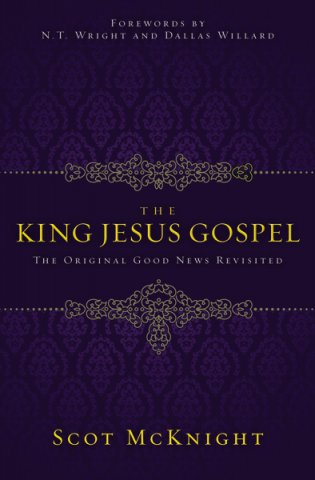
Book Review: The King Jesus Gospel

kjgospelContemporary evangelicals have built a ‘salvation culture’ but not a ‘gospel culture.’ Evangelicals have reduced the gospel to the message of personal salvation. This book makes a plea for us to recover the old gospel as that which is still new and still fresh. The book stands on four arguments: that the gospel is defined by the apostles in 1 Corinthians 15 as the completion of the Story of Israel in the saving Story of Jesus; that the gospel is found in the Four Gospels; that the gospel was preached by Jesus; and that the sermons in the Book of Acts are the best example of gospeling in the New Testament. The King Jesus Gospel ends with practical suggestions about evangelism and about building a gospel culture.

from the description of Scot McKnight’s book
The King Jesus Gospel: The Original Good News Revisited
at Amazon.com

Several months ago, D. Thomas Lancaster suggested this book to me and I was able to insert it into my reading list. I can see why Lancaster made the recommendation and while I generally agree with the core message McKnight is presenting, it seems like he could have made a few improvements (in my humble opinion).

But first things first.

The part I liked about McKnight’s book is that he was recasting the gospel message from one that only contains the message of personal salvation to one that is expanded to include the story of Israel.

In his Foreward to the book, N.T. Wright says:

…according to Scot, and I am convinced he’s right: “the gospel” is the story of Jesus of Nazareth told as the climax of the long story of Israel, which in turn is the story of how the one true God is rescuing the world.

Well, that’s true as far as it goes, but this statement illustrates what I see as one of the unfortunate limits of McKnight’s book. While he is correct in stating that the actual gospel message includes the return of Jesus as King of Israel and redeemer of the world (rather than just saving individuals one person at a time), he seems to end the story of Israel after the resurrection of Christ. The end. Israel’s story shifts to the story of a homogenized Kingdom of God in the Messianic Age.

I hope I’m wrong. I hope that McKnight’s vision of a future Israel just got lost between the lines, so to speak. Part of his main point, which he emphasized over and over again (the book was kind of repetitive) was:

Most evangelism today is obsessed with getting someone to make a decision; the apostles, however, were obsessed with making disciples.

I couldn’t agree more. But again, the story of the good news of Messiah goes much further than making disciples. It’s the story of Jesus as the Messiah, the King, the one who will establish his rule of peace on the Earth. This is part of McKnight’s message as well and again, I totally agree.

McKnight also addressed the question of whether or not Jesus and Paul preached the same gospel and (to me), amazingly, whether or not Jesus preached the gospel at all. I was astonished (I don’t know a great deal about the specific theological mechanics of organized Christianity in its various denominations) to discover some Pastors think it was impossible for Jesus to have preached his own good news about himself.

I replied, “A book about the meaning of gospel.”

“That’s easy,” he said, “justification by faith.” After hearing that quick-and-easy answer, I decided to push further, so I asked him Piper’s question: “Did Jesus preach the gospel?”

His answer made me gulp. “Nope,” he said, “Jesus couldn’t have. No one understood the gospel until Paul. No one could understand the gospel until after the cross and resurrection and Pentecost.” “Not even Jesus?” I asked.

“Nope. Not possible,” he affirmed. I wanted to add an old cheeky line I’ve often used: “Poor Jesus, born on the wrong side of the cross, didn’t get to preach the gospel.”

The above transaction gave me a cold chill. It’s terrifying to imagine that hundreds of thousands (or more) of Christians are attending church services, attending Sunday school, attending mid-week Bible classes, and being taught that Jesus could not possibly have understood the good news about himself. Doesn’t anyone read the Bible anymore?

And He came to Nazareth, where He had been brought up; and as was His custom, He entered the synagogue on the Sabbath, and stood up to read. And the book of the prophet Isaiah was handed to Him. And He opened the book and found the place where it was written,

“The Spirit of the Lord is upon Me,
Because He anointed Me to preach the gospel to the poor.
He has sent Me to proclaim release to the captives,
And recovery of sight to the blind,
To set free those who are oppressed,
To proclaim the favorable year of the Lord.”

And He closed the book, gave it back to the attendant and sat down; and the eyes of all in the synagogue were fixed on Him. And He began to say to them, “Today this Scripture has been fulfilled in your hearing.”

Luke 4:16-21 (NASB)

scot-mcknight1That’s pretty much Jesus preaching the good news of the Messiah in a nutshell. It was apparently missed by the above-mentioned Pastor because the gospel message to him is only “justification by faith.” It has nothing to do with Israel, King Messiah, or the national redemption of Israel at all.

I want to make clear at this point that I do believe Jesus does provide the Gentile and the Jewish person salvation from sins on a personal level, but like McKnight, I believe it goes so much further. The gospel message isn’t just about the plan of salvation. It’s the good news that Israel is to be liberated, the exiled Jewish people will be restored to their Land, and national Israel will be elevated to the head of the nations in the physical Kingdom of God.

But you don’t get this in most churches.

…the gospel has lost its edge and its meaning. Nothing proves this more than the near total ignorance of many Christians today of the Old Testament Story.

This is true. It’s impossible to comprehend the full meaning of the Apostolic Writings without a very good grasp of the Torah, Prophets and Writings (Old Testament).

McKnight spends a lot of time saying that to understand the gospel message, you have to start in 1 Corinthians 15. Frankly, that would never have occurred to me as a natural starting point, but then again, I’m not a Bible scholar or a theologian. In fact, to get a good summary of the meaning of the gospel, all you have to do is watch television for about thirty minutes.

Oh not just any show.

I wrote a review of the First Fruits of Zion TV series episode The Good News not too long ago. Here’s a description of the episode from the FFOZ TV web site:

Most Christians believe that the gospel message of Jesus is that he died for our sins and if we have faith in him we will be given the gift of eternal life. While certainly this is a major component of the gospel, it is not the whole story. In episode one viewers will learn that the concept of the gospel wasn’t invented by Jesus or the disciples, but rather was prophesied in the Hebrew Scriptures. The “Good News” was the promise of the coming messiah and that he would bring redemption to the children of Israel.

This sounds very similar to some of McKnight’s writing and I suppose it’s possible this book could have been available (it was published in 2011) to the writers of this television episode, but the content between the two isn’t identical.

Two of the problems I had with McKnight’s definition of the gospel message was that the story of Israel seemed to end with the coming of Messiah (which is a common theme in Christianity) and that he seemed to miss the ascendancy of the Nation of Israel as the core of the Kingdom Messiah is to establish on Earth upon his return. He didn’t say why the Messiah’s gospel message was good news to Jewish people. I summarized this good news for Jewish people in my review:

Toby Janicki, Aaron Eby, and the rest of the FFOZ ministry have “solved” the mystery of the gospel and clued us in on the rest of the message: Jesus came to die for our sins and to deliver the promise of everlasting life for all who believe. But, and this is extremely important, as Messiah King, he came to deliver the promise of good news to all of Israel that when he returns, he will release the captives in exile, restore sight to the temporarily blinded, free the oppressed Jewish people, and proclaim freedom for Israel, the year of favor from the Lord.

This is why I think that Luke 4:16-21 is a better summary of the gospel message of Messiah and proof that Messiah knew what the gospel message was and indeed preached it to Israel. Because the good news of Messiah is first and foremost aimed at Israel nationally and at the Jewish people. After all, Jesus said he came for “the lost sheep of Israel” not the “lost sheep of planet Earth.” Also, Paul always went “first to the Jews and also to the Gentiles.” Why? Because the gospel message is most focused on the Jewish people and made the most sense to the Jewish people.

If McKnight had gone that far, I’d have enjoyed his book a lot better. As it was, I think he made a very important point, but he stopped too soon. He also spent too much time going over and over his central point. I get that he wanted to be thorough and I get that often, an important message needs to be repeated so the reader “gets it,” but I “get it.” I just wanted to get more.

But maybe this is why I didn’t get more.

It is sometimes forgotten that “Christ” is the Greek translation of the Hebrew word Messiah. The word Messiah means “anointed King…”

ffoz-teaching-teamI wasn’t surprised when I saw something so elemental in McKnight’s book. I’d gotten past my surprise after writing my review of the FFOZ TV episode Messiah. Exactly the same point was made during this 30-minute episode: the fact that “Christ” is a word that contains a lot more information and meaning than just the “last name” of Jesus.

Like the FFOZ TV show, McKnight is likely writing to the widest possible Christian audience, attempting to tell the largest number of believers that they have been taught a common misconception about the gospel message. After all, if at least some Pastors have adopted a limited vision of the gospel, how can the people who sit in the pews every Sunday be held accountable for not knowing the wider meaning?

Again, I disagree that Jesus has completed Israel’s story at this juncture. Israel still has a story and it will continue to be central to the good news throughout the Messianic Age and beyond. Israel will be the head of the nations and the people of many nations will stream to the Temple in Jerusalem (Isaiah 2:2, Micah 4:1) in the days of Messiah.

McKnight’s book is readable and educational as far as it goes and I’d recommend it if you want to get out of the traditional rut of gospel equals plan of salvation, period, end of story. But I still wish he’d have taken the story further into the future and presented the Messiah as Israel’s King and his rule on the Throne of David in Jerusalem, his gathering of the exiled Jewish people to himself, and the total redemption of national Israel as well as the people of the nations who are called by his name.

Oh, and this is my 900th blog post on “morning meditations.”

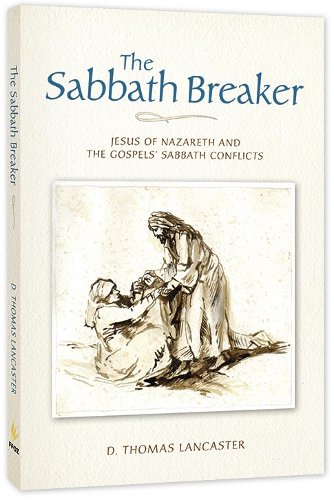
The Sabbath Breaker: A Book Review

Teaching of the TzadikimOnce it happened that the Master and his disciples walked in the holy city of Jerusalem on the Sabbath day when they encountered a man blind from birth. Our Master spat on the ground, made clay of the spittle, and applied the clay to the man’s eyes. Then he told the man, “Go, wash in the pool of Siloam.” The man went and immersed, and miraculously, he could see.

To heal the man, Jesus spat on the ground and made clay of the spittle. Mixing two substances to form a third is a form of work that Jewish law prohibits on the Sabbath day. Jesus smeared the mud on the man’s eyes. Applying a salve or medicine by means of smearing is also considered a form of work prohibited on the Sabbath day. It is a violation of the Sabbath. He sent the man to immerse himself. At least by conventional definition in traditional, Jewish interpretation, immersions are not done on the Sabbath. This single healing incident from the Gospels potentially involves three Sabbath violations.

The Pharisees claimed, “This man is not from God, for he does not keep the Sabbath” (John 9:16). Vocal critics of the Master insisted, “He is a Sabbath breaker.”

Do we appreciate the gravity of this allegation?

-D. Thomas Lancaster
from “Introduction: This Man Breaks the Sabbath” (pg 7)
The Sabbath Breaker: Jesus of Nazareth and The Gospels’ Sabbath Conflicts

This is Lancaster’s latest book published by First Fruits of Zion (FFOZ) and, like a number of Lancaster’s books, leverages material previously published in volumes of the Torah Club and issues of Messiah Journal. A great deal of valuable information on topics of intense interest to Christians both in the church and within the Messianic community, is “buried” within much larger documents. In order to make this information more readily accessible, FFOZ is taking material on specific subjects from these “tomes” and refactoring it into several smaller, self-contained books. Lancaster’s The Sabbath Breaker is one such book.

The focus of Lancaster’s book is rather narrow, so don’t imagine it will answer questions such as “Was Sabbath changed from Saturday to Sunday,” “Should Gentile Christians keep the ‘Jewish’ Sabbath and if so, how,” or “Should Messianic Jews keep the Sabbath in the same way as non-Messianic Jews.” The book’s entire focus is to address whether or not Jesus broke the Sabbath and if he didn’t, then how can we explain why he was criticized by the Jewish religious authorities for healing on Shabbat, gleaning with his disciples on Shabbat, and telling other people who were not his disciples to carry and to immerse on Shabbat?

Christianity tends to believe that Jesus did break the Shabbat in order to show us that he had cancelled all of the Shabbat restrictions and Shabbat itself, as part of his “nailing the Law to the cross,” setting us free from the Law and putting us under the Law of Grace.

As you might imagine, Lancaster dismisses the traditional Christian interpretation out of hand and frankly, so do I. But then how can this be explained? Was Jesus “cancelling” the halachah of the Pharisees? Was it indeed permissible Biblically to glean on Shabbat, to heal on Shabbat, to carry on Shabbat, and to immerse on Shabbat? Were the Pharisees adding unreasonable man-made burdens and was Jesus correcting them and rebuking the Pharisees? Or was it more a matter that the Pharisees thought they were upholding the Biblical way to keep Shabbat (and after all, they wanted to kill Jesus for healing on Shabbat, so they were obviously sincere), and Jesus was just interpreting the Bible better?

How about none of the above:

For many Bible readers, this distinction may be too obscure, but if missed, the reader also misses the message of all the Sabbath stories in the Gospels. The essential message is not that Jesus has cancelled the Sabbath or that the rabbinic interpretation of Sabbath is illegitimate. The Sabbath-conflict stories instead communicate that acts of compassion and mercy performed to alleviate human suffering take precedence over the ritual taboo. The miraculous power by which Jesus performs the healings only serves to add God’s endorsement to Jesus’ halachic, legal rationale.

Did Jesus’ disciples break the Sabbath in the grain fields? Yes. But they were justified in doing so because their need took precedence over the Temple service, and the Temple service took precedence over the Sabbath. Therefore Jesus declared them guiltless and told the Pharisees, “If you had known what this means, ‘I desire mercy, and not sacrifice,’ you would not have condemned the guiltless” (Matthew 12:7).

Did the Master break the Sabbath when he healed on the Sabbath day? Yes. Would fixing a car break the Sabbath? Of course it would, and by the same standard so does fixing a human body. Nevertheless, the Master justified doing so because compassion for his fellow man took precedence over the Sabbath.

-Lancaster, pg 61
“Chapter Seven: At Dinner with the Sages”

blind2That’s a more or less “in a nutshell” explanation of how Jesus did break the Sabbath, but at the same time, each event of Sabbath breaking was justified because of a higher halachic standard.

That’s not the full description of course, and you’ll have to read Lancaster’s book to get all the answers. Not including the footnotes, the book is about 135 pages long, so you should be able to get through it pretty quickly.

The book is divided into three sections:

  1. Sabbath Conflicts in the Synoptic Gospels
  2. Sabbath Conflicts in the Gospel of John
  3. The Thirty-Nine Prohibited Forms of Work

The first two sections focus on different explanations (or the lack thereof in the case of John’s Gospel) for Jesus’s apparent “Sabbath breaking” activities. The quote from Lancaster above is a nice summary of the first section. The second one presents some problems, which Lancaster readily admits, such as Jesus telling the man he healed in John 5 to “take up your bed and walk.” (John 5:8). While the content of the book up to this point (pg 65) confirms that Jesus did break the Sabbath by healing but that chesed (lovingkindness or compassion) takes precedence over Shabbat (it’s more involved than that, but you’ll have to read the book to get all the details), carrying is considered a form of Melachah, or a type of work that involves creation and mastery over our environment (a concept that has to be understood to grasp Lancaster’s major points in his book), and this is forbidden on Shabbat, at least in modern times in Orthodox Judaism.

That brings up the issue of whether or not the Thirty-Nine Prohibited Forms of Work can reasonably be applied to First-Century normative forms of Judaism, and that’s a big if. Lancaster addresses this question in his book and seems convinced that an earlier, less formalized version of this halachah was in existence in the day of Jesus’s ministry on earth. The reader will have to decide if this is credible from their own understanding, but capable arguments can be made either way.

Part two which reviews the healings of Jesus in the Gospel of John departs from the legal and even mechanical explanation of his Sabbath breaking activities and the fact that he told a man to do something that also breaks the Sabbath remains a mystery. It is interesting though that after initially criticizing the man for carrying on Shabbat, once they find out that a healing was done on Shabbat also, the Pharisees lose all interest in the man carrying and seek out the healer instead.

Part three is Lancaster’s description, in some detail, of the thirty-nine melachot or types of work that are forbidden on Shabbat. This may be the part of the book most readers will blow past as irrelevant, even if they are Messianic Jews or non-Jews who observe some form of Shabbat, but I think that would be a mistake.

Protestant Christianity does not consider Sabbath a concept worth consideration or if they do, they simply believe that going to church on Sunday fulfills the fourth commandment out of the ten. Grace makes all things permitted on the “Sabbath” so no one has to struggle to confine their behavior, separating the mundane from the sacred on one day of the week.

Christians who are Sabbatarians including those who are involved in the Hebrew Roots or Messianic Jewish movements, for the most part, tend to create their own “halachah” or methods of Shabbat observance, either as individuals or as individual congregations. I would be willing to wager that there are few if any standards for Sabbath observance that encompass large collections of congregations, unless those groups adhere to a set of halachot established by an umbrella group that has adopted Shabbat observance behaviors from another, normative form of Judaism.

sabbath-breaker-lancasterWe all want to believe that Jesus can be our guide to correct Shabbat observance (assuming we value Shabbat observance) and that God has an objective set of standards for how Shabbat is to be kept (and like Lancaster, I’m not going to get into who should keep Shabbat). However the Melachot were derived from Torah (Lancaster’s book provides those specifics as well) so they weren’t just dreamed up out of someone’s imagination. If you believe in an objectively established Sabbath and (again, assuming you believe you are either required to keep the Sabbath or voluntarily choose to do so out of personal conviction or for other reasons) that there are objective standards for keeping Sabbath, then the third part of Lancaster’s book, if you can believe it is reasonably connected back to the first two parts, may actually be your roadmap for how a Jesus-following Sabbath keeper should keep Sabbath.

In The Sabbath Breaker, Lancaster takes a decidedly different approach to looking at Jesus and his “sabbath breaking” behaviors, acknowledging that he did break the Sabbath, not to cancel it, but to uphold it and to illustrate that there are circumstances wherein it is permissible to break the Sabbath for a higher purpose. Jesus himself, according to Lancaster, is not the higher purpose: human beings are. After all, “Sabbath was made for man, not man for the Sabbath” (Mark 2:27).

146 days.

Zondervan Academic Update: My “Introduction to Messianic Judaism” Reviews

Greetings from Zondervan Academic! This month, we’re also posting a roundup of reviews and book mentions around the Internet. Enjoy!

Introduction to Messianic Judaism, edited by David Rudolph and Joel Willitts. This new post series explores several of the book’s chapters. View the posts.

zondervan_update

I know this probably comes under the heading of “shameless self promotion,” but someone sent me an email showing that my collection of reviews on the different chapters in Rudolph’s and Willitts’ book Introduction to Messianic Judaism: Its Ecclesial Context and Biblical Foundations is being promoted in the Zondervan Academic Update email for April (click the link I provided above the image to see summaries and links to all eleven reviews in one place).

I have to say that I’m absolutely thrilled that my little missives have received this bit of attention and I’d like to thank Zondervan Academic (should they happen to read this blog post) and the person who let me know about it (who I agreed shall remain nameless) for this sort of promotion of my weblog.

But what I think is actually important is that the message of Messianic Judaism and what it means is being noticed outside our own little corner of the world. I’m creating this “extra meditation” to communicate just how important this message is and to show who else is paying attention. I have a rather diverse audience (my awareness of who reads my blog is based on not only the comments people make publicly, but on the emails I receive that are not viewable to anyone else besides me), and I’d like all of my readers to know that what I’ve been writing about (and what Rudolph, Willitts, and the other contributors to their book have written about) isn’t just some “niche doctrine,” but rather, a topic of wide interest in scholarly and popular interest realms.

The relationship between Jewish and Gentile believers in Messiah and at the intersection of the two worlds to which we belong, is not only important but is vital, and will become critical as we progress forward seeking an encounter with God and anticipating the arrival of Messiah.

“We’re here to bring Mashiach, we will settle for nothing less.”

Rabbi Yitzchak Ginsburgh

Blessings and thank you.

148 days.

Addendum: May 9, 2013: Jacob Fronczak just wrote a very good review for the First Fruits of Zion (FFOZ) blog. I highly recommend reading it to get further insight into the book with an “in-a-nutshell” presentation.

The Divine Arsonist: A Book Review

divine-a“Thank God for David and for the creek. They said the cold water probably saved your life. David called in a Lifeflight helicopter and covered you with a blanket. He stayed with you the whole time. They got you down here to St. Luke’s but you were in a coma by then. That was four months ago. Four months. The doctors are shocked that you made it at all. You were a mess. The whole left side of your body was shattered, ribs, arm, pelvis. The burns were bad but they were more worried about the skull fracture. They kept testing you for brain wave activity and every time they were amazed by the results. Even though you were deep in a coma, they said it was like you were living a parallel life somewhere else.”

-Jacob Nordby from the Epilogue of his book
The Divine Arsonist: A Tale of Awakening

This isn’t the sort of book I normally read but somehow Jacob Nordby ended up being my “friend” on Facebook, and his book “Divine Arsonist” keeps coming up in my Facebook updates. I don’t really know how we got to be “friends” on Facebook (I’ve never met him) except that we both live near Boise and we’re both published authors.

I’m generally skeptical of self-help books or texts that purport to show some sort of inner truth or secret meaning to life, but in the back of my brain, every time “Divine Arsonist” appeared in my web browser, I couldn’t shake a twinge of curiosity. Also, I remember part of a transaction I had with Nordby on Facebook. I don’t remember the conversation specifically, but I do remember him gently chiding me about the “path” I’m on, referring to my faith. So I was curious about his particular path.

And I review books.

I normally receive complementary copies of the books I review from the publisher but this time I purchased a kindle edition, which was very inexpensive. I thought I’d shoot through the text rather effortlessly, but I had to really make myself read his book, and I found myself fighting the temptation to abandon it about halfway through.

I don’t want to be unfair. If this book is the result of Nordby being the victim of a hit-and-run car accident in which he was terribly hurt, and if he has suffered all of the misfortunes the Epilogue of his book records, then I have nothing but compassion for him and his family, and I do not want to make light of his experiences. And yet, so much of his book of spiritual allegory is presented as part of his lived experience, I don’t know where his actual life stops and all the fiction begins.

So what did I think of his book?

The Divine Arsonist is the story of a businessman who worked hard to climb the ladder of success only to have something whisper to him that perhaps there was something more to discover. This is his journey of discovery told in a blend of the personal story and fiction. It immediately spoke to me of the question: When do we start dreaming a new dream for ourselves and our world? The old ways are burning us out. That’s where Jacob is at the beginning of his journey. There are so many elements of a shamanic journey, vision quest or hero’s journey from old mythology: meeting spiritual guides, being challenged to endure rites of passage, time in the wilderness, facing the shadow and opening to all the levels of reality beyond our day-to-day “get it done” consciousness. The writing is luscious, descriptive and an easy read. I could have easily read it in one sitting but I forced myself to turn off the light at night and savor it over the course of several bedtime reading sessions. There are beautiful teachings that you want to grab the highlighter to remember.

Jacob’s journey toward finding his light is an invitation or challenge to go on your own journey, to claim your own light. It is a tale that reminds us that life is short and that we are choosing the world we live in right now with each thought and each action we take. It is a story that reminds us that sometimes we have to let go of everything that we think we know to become the person we came to earth to be. Even though I’ve had my own awakening moments, Jacob’s writing made me want to commit to living them on an even deeper level. Isn’t that what we want a spiritual book to do?

Amazon review by Carol Woodliff

I don’t normally look at the other reviews of a book I intend on reviewing, but after finishing Nordby’s book, I thought I must be missing something. Woodliff’s review is typical of the overwhelming amount of praise “Divine Arsonist” has received, at least on Amazon. So why aren’t I “wowed” too?

“So, back to your book. Emerson said ‘make your own Bible. Select and collect all the words and sentences that in all your reading have been to you like the blast of triumph out of Shakespeare, Seneca, Moses, John and Paul.'”

-Nordby, Chapter Ten

Those few sentences really tell you everything you need to know about the philosophy that Nordby relates in “Divine Arsonist.” The essence is to not rely on any single truth such as, for example, Christianity or Taoism, but to derive truths from whatever seems to touch you as a truth. While Nordby’s story relies on external “guides” such as Lucius and Jack to assist the author on his spiritual journey, the truths that seem to come out in the end are truths that matter most to Nordby…or presumably anyone on a similar path. It’s what you would expect of a person taking different elements from a wide variety of world religions and philosophies and weaving them into what looks, sounds, and feels right to that individual…a completely, subjectively constructed set of truths.

CASTANEDA_kraftensgjerningerAlthough Nordby only mentions the works of Carlos Castaneda in passing, the experiences he relates reminds me of how Castaneda’s “Don Juan” series has been described to me (I’ve been meaning to read Castaneda for years but never got around to it). I guess that’s what impresses me the most, or fails to impress me, about “Divine Arsonist.” It seems all too derivative, all too “borrowed” from other religions to be truly insightful, let alone remarkable.

I swam through a field of unconditional love to explore the Great All-Nothing. Without effort, I was there, face to face with what could only be the Mystery of Mysteries, Yahweh, Baha, Wakan, Tanakh, Allah, Krishna, God the Father-Mother, Rah.

I have to assume that some parts of the book accurately describe Nordby’s past, and if so, then Christianity, or the part he experienced, was extremely…extreme, and restrictive, and joyless. Nordby did manage to salvage some portions of the Christian writings, but a much larger part of his philosophy is founded on nature-based religions such as different Native American beliefs. There was also a fair amount of mysticism involved and I’ve spent enough time reading Kabbalah and Chassidic Tales to recognize some symbols from those sources (I should say that I doubt Nordby has actually read from Jewish mystic texts, but many mystic themes seem to travel across different disciplines).

Here’s a short sample:

Masters and ancient ones have appeared to bring the light. In earlier days men were more simple, natural. They lived with the Earth and were guided by the Great Mother’s voice.

A dual male/female god isn’t unusual, even in Judaism. In mystic thought, the Ein Sof is the powerful, creative, male force God while the Divine Presence, which descended upon the Tabernacle in the desert (see the end of the Book of Exodus) is considered feminine and nurturing.

There also seemed to be some of the eastern philosophies influencing Nordby, “surrendering the ego” and such, and though I doubt it was intentional, I caught a few references that could have been from The Matrix (1999) and even the cave scene from The Empire Strikes Back (1980), though the connections were only superficial.

“Divine Arsonist” seems to be the sort of book that would appeal to someone who is on a spiritual journey (and aren’t we all) but who doesn’t want to choose one of the pre-conceived paths. Well, not exactly, anyway. If a person isn’t attracted to a pre-existing religion or philosophical discipline, then “Divine Arsonist” offers the alternative of borrowing as much or as little from any or all of the traditions human beings have created for themselves over time. It’s actually quite appealing when seen from that light.

I don’t want to minimize the impact of all this, particular in Nordby’s life, since it is obviously quite significant.

However, as you know if you’ve been reading this blog for any length of time, I travel a somewhat different path, and while it isn’t entirely traditional, it is truthful to say that I rely on what I consider to be an objective and external God, the God of Abraham, Isaac, and Jacob, and a book or repository of truth and wisdom that has existed in one form or another for thousands of years. The difference for me in writing my own Bible vs. exploring the one I believe was given to us by God, is that in the former, I’m investigating merely myself and my own symbols in relation to my environment and how I perceive it, even in the spiritual realms. In the latter, I’m delving into not only my relationship with my environment but my relationship with the One, Radical, Creative, Unified, God and how He desires to relate to me.

seeking_the_sunTruth isn’t just what I decide it will be, even below the conscious level (although most humans sometimes attempt to manipulate “truth” to their own advantage), but it’s what God has decided it will be. My task is to search for truth where ever it may be found, uncover it, and let the sparks fly upward back to their source (and you’ll forgive me if I momentarily borrow from the imagery of Chassidic mysticism).

God has created a trail for each of us and in partnership with Him, we walk the trail together, not because God needs us as a companion, but because God wants unity with human beings and He desires to teach us about a relationship with Him. The problem with internally generated symbolism and meaning is that ultimately, you can never surprise yourself or learn something new. Oh I don’t doubt that it can be very beneficial in many ways.

But it’s not God.

However, Nordby did remind me that I always did intend to read Carlos Castaneda, so after I finish the next book in my pipeline, I’ll finally get to The Teachings of Don Juan.

After everything I just said about Nordby’s book, why would I read another book (or book series) that promises to reveal yet another “alternative” spirituality? Curiosity? Yes. But I also want to pursue the history and the mythos that Castaneda’s work contains. After all, Castaneda’s books are considered classics in their genre and not derivatives of previous works (as far as I know).

There is value in unfolding another’s symbolism and following the thread woven into their tapestry…just as long as you remain grounded upon a firmer foundation.

Following the Galatian Letter

paul-editedPaul, an apostle—not from men nor through man, but through Jesus Christ and God the Father, who raised him from the dead—and all the brothers who are with me,

To the churches of Galatia:

Grace to you and peace from God our Father and the Lord Jesus Christ, who gave himself for our sins to deliver us from the present evil age, according to the will of our God and Father, to whom be the glory forever and ever. Amen.

Galatians 1:1-5 (ESV)

In the Holy Epistle to the Galatians, the Apostle Paul argues against Gentile believers in Yeshua (Jesus) of Nazareth undergoing conversion to become Jewish. Paul maintained that Gentile believers attained salvation and inherited the blessings promised to Abraham through faith, not conversion.

The Apostle Peter said that the writings of “our beloved brother Paul” contain “some things hard to understand.” If that was true in Peter’s day, how much more so today. Paul was a prodigy educated in the most elite schools in Pharisaism. He wrote and thought from that Jewish background. Unfortunately, that makes several key passages of his work almost incomprehensible to readers unfamiliar with rabbinic literature. I invite Christians to use this book as an opportunity to study Paul’s epistle to the Galatians from a Jewish perspective.

-D. Thomas Lancaster
from the Introduction (pg 1) of his book
The Holy Epistle to the Galatians: Sermons on a Messianic Jewish Approach

I reviewed Lancaster’s book the better part of two years ago, but I never thought my write-up did the book justice. Normally, Lancaster writes in an easy to follow manner, making complex theology accessible to laypeople and non-scholars such as me, but Galatians was probably a bit of a stretch to try to get to fit into a comfortable mold. I’m sure I missed a lot along the way, although when I pulled the book out of my closet (my wife allows me exactly one closet for all of my books…she’s trying to train me not to be a “pack rat”), I saw that I have voluminous notes scribbled all over a mass of bits and scraps of paper like so much ticker tape parade confetti. I was obviously trying to “get it.”

And count the patience of our Lord as salvation, just as our beloved brother Paul also wrote to you according to the wisdom given him, as he does in all his letters when he speaks in them of these matters. There are some things in them that are hard to understand, which the ignorant and unstable twist to their own destruction, as they do the other Scriptures.

2 Peter 3:15-16 (ESV)

That’s Peter’s description of and probably experience with the writings of Paul, as Lancaster quoted from in his introduction, and we can see from the full quote that not only can Paul’s meaning be misunderstood, but it can be deliberately “twisted” with the potential result of “destruction” by people Peter refers to as “ignorant and unstable.”

I don’t think you have to be “unstable” to misunderstand Paul and especially his letter to the churches in Galatia, but a lot of us are ignorant (I don’t mean that in a pejorative manner) of what it was to think, write, and live as a highly educated Pharisaic Jew in the middle of the first century, a mere decade or two before the destruction of the Holy Temple in Jerusalem. It may be ignorance, at least in part, that makes Paul’s Galatians letter so difficult to grasp. I’m sure it’s my ignorance that resulted in me not fully comprehending Lancaster’s book back in the summer of 2011.

But that’s about to change.

This coming Wednesday evening, my weekly conversations with Pastor Randy at my church are taking a left turn at Albuquerque, so to speak, and following Paul’s classic letter into Galatia. This time, Pastor Randy and I will be pursuing Paul’s letter together. Frankly, I can’t wait.

study-in-the-darkI wish Pastor would put his bio on the church’s website (which needs serious help, but I’m working on it) so I could access more than just my failing middle-aged memory to describe him. He’s not only been a missionary and a Pastor, but he also has a history as an educator in a scholarly setting. I’ve seen what he studies and reviews just to get ready for a single sermon, and it usually involves anywhere between twelve and twenty books. In our discussions we may not always agree on everything, but my respect for his knowledge and insight continues to grow geometically with each encounter. Admittedly, it’s an honor to just sit in the same room with him for ninety minutes or so once a week and be able to access his thoughts and experiences, especially since his education and background are a great deal of what I lack.

Lancaster repurposed twenty-six sermons on Galatians, which he delivered to his congregation, Beth Immanuel Sabbath Fellowship in Hudson, Wisconsin in 2008, to create this book I’m about to revisit. That’s twenty-six weeks and twenty-six opportunities for me to not just re-read Lancaster’s book, but to study it and to learn from two fine scholars and devoted believers in Christ.

Along the way, I’m hoping not only to learn a lot more about Paul’s letter, but more about the nature of how Paul saw non-Jewish God-fearing believers within a Jewish worship and faith context, who they were in the Jewish Messiah King, and how he saw their role, and our role, in the Kingdom of Heaven. I’m hoping to learn a little something more about myself as a Christian, too.

I was able to talk with Pastor Randy briefly just before services began this morning (as you can imagine, Sunday is his especially “busy” day) and confirmed our meeting for this coming Wednesday and the plan to cover Sermon 1: Letter to the God-Fearers (Galatians 1:1-5). I’m planning on taking notes as I read through the book and during my discussions with Pastor Randy so that I can collect the results of this experience, not just for my own edification, but hopefully for yours.

I invite you to come along with Pastor Randy and me on this weekly adventure as we return to the churches of Galatia by way of Lancaster’s The Holy Epistle to the Galatians. May we all learn the wisdom and message of our Master together through the voice of his Apostle to the Gentiles, Paul, and through this, may we all draw ever closer to God.