Tag Archives: book review

Kosher Jesus, A Book Review

In my neighborhood, we did not even mention his name. We said “Yoshke,” a Hebrew play on his name, or some children learned to say “cheese and crust” in place of “Jesus Christ.” In a synagogue sermon, rabbis might refer to Jesus – exceedingly rarely – by saying “the founder of Christianity.”

Fundamentally, we understood Jesus as a foreign deity, a man worshipped by people. The Torah instructs us never to mention the names of other gods, as no other god exists except God. We also understood Jesus to be as anti-Jewish as his followers. Was he not the Jew who had rebelled against his people? Was he not the one who instructed his followers to hate the Jews as he did, instigating countless cruelties against those with whom God had established an everlasting covenant? Was he not also the man who had abrogated the Law and said that the Torah is now mostly abolished?

So begins Rabbi Shmuley Boteach’s narrative in the Preface to his latest (and perhaps most controversial) book Kosher Jesus. Rabbi Boteach paints for us, a typical picture of how an Orthodox Jewish boy growing up in an Orthodox Jewish neighborhood understands the Christian Jesus.

The picture isn’t very flattering to Christians.

You might be wondering why Rabbi Boteach would choose to write a book about Jesus. After all, most Jewish people are, at best, neutral about the existence of the itinerant Jewish rabbi who wandered the through the countryside and towns of Roman occupied Judea in the First Century of the Common Era. Why would an Orthodox Jewish rabbi draw attention to Jesus in anyway? If you’ve been reading the media stories about the sort of attention this book has been receiving, you already know it’s been less than complimentary, both from Christian sources and the Orthodox Jewish community. This book seems to please no one.

So why did Rabbi Boteach write it?

Kosher Jesus sets the stage for Jews and Christians to bridge their differences and come together for the first time through the personality of Jesus himself – the hero, martyr, and teacher that they both share.

This paragraph, taken from the cover flap of the book, provides an “in a nutshell” summary of Boteach’s reasons for creating this much-talked-about work, and it provides us with his goal: to create a connection between Judaism and Christianity across the back of the Jewish Jesus.

Was he successful in achieving his goal?

Not as far as I can tell today, at least on the surface. Of course, it may take months, or even years, to determine the larger impact on the Jewish and Christians communities. One immediate effect we can see is that just about every one with a vested interest in the “reputation” of Jesus is talking about this book. A number of Orthodox Rabbis have outright forbidden their communities to even read the Boteach book (and nothing makes a book more irresistible than when it has been censored) and I can only imagine what (if anything) Christian Pastors are telling their flocks about “Kosher Jesus” from the pulpit.

If Rabbi Boteach had the goal of drawing attention to his book and himself, he has certainly succeeded. He has been known as “the media Rabbi” and has attracted criticism more than once in the past for his statements and associations (particularly with the late Michael Jackson). If his goal was to start a great deal of dialog (polite and otherwise) around the subject of his book, the Jewish Jesus Christ, he has succeeded in this as well, at least in the short term. But is he going to be able to inspire Jewish and Christian audiences to find something in common by “sharing” Jesus?

As I’ve been reading this book, I’ve shared a few of my own insights in various blog posts. I focused on how the Christian community might see the book in my prior write up, Kosher Jesus: The Undivine Savior. In order to emphasize the “Jewishness” of Jesus and make him even somewhat attractive to other Jews, Boteach had to completely deconstruct traditional Christian theology about the “Lord and Savior,” transforming him from the Son of God and prophesied Messiah, to a man born of two Jewish parents, a carpenter turned Rabbi, who fancied himself a would-be Messiah (in Judaism, the Messiah is not expected to be supernatural and particularly not expected to be divine), and ultimately, a man who died as a noble but failed political dissident.

Not exactly the typical Christian view of Jesus.

Scholars who have reviewed this book (and I’m no scholar) have criticized Boteach for his heavy usage of material created by Hyam Maccoby regarding Jesus. In fact, Maccoby’s own views on Jesus have been characterized: Maccoby’s thesis as “perverse misreading” and concluded “Thus I must conclude that Maccoby’s book is not good history, not even history at all.” (Steven T. Katz The Holocaust in Historical Context: The holocaust and mass death before the modern age 1994 “Maccoby’s last work has been devastatingly reviewed, and quite properly so, by John Gager, “Maccoby’s The Mythmaker,” JQR 79.2-3 [October–January 1989], 248-250; to which Maccoby replied, “Paul and Circumcision: A Rejoinder,” JQR). So to use the vernacular, Boteach may have “shot himself in the foot” when he decided to base his depiction of Jesus almost completely on Maccoby’s work.

Since I can’t speak from a Jewish point of view, I must wonder from a Christian perspective, how Rabbi Boteach expects to unite Jews and Christians around their “commonality” in a Jesus Christ who is so unlike the Jesus most Christians find in church? Also, in answering the Christian question, “Why the Jews Cannot Accept Jesus” (Part IV of the book), Boteach creates a Jesus who absolutely must be rejected by Judaism as Messiah, and he describes any person or group who worships a man as if he is a god as idolatrous. Christianity’s insistence on a “three-in-one” God adds polytheism to the mix, and both idolatry and polytheism are anathema to the staunchly monotheistic Jewish people. Rabbi Boteach depicts a church that has to be hopelessly confused to believe Jesus is God, yet Boteach also says this:

I say this not to offend Christian believers, nor to dissuade adherents from living a Christian life. (pg 149)

But if, by definition, Christians are deluded by a terrible misunderstanding of the New Testament text, heavily biased editing of the original teachings of Jesus, and the traitorous actions of the Apostle Paul, to believe that a young Jewish rabbi and revolutionary is actually God incarnate, how can Rabbi Boteach not dissuade believers “from living a Christian life?” He’s just spent the first two-thirds of his book explaining why Christianity has everything completely wrong about who Jesus was, what he saw as his purpose in life, and especially the fact that he has no power to forgive sins and save souls. If anything, Boteach seems to have pounded home the final wedge that will forever separate Christians and Jews.

God is the one great truth. Judaism, Christianity, and Islam are paths that bring us to Him. One finds God through personal discovery usually directed by the faith in which one is reared, practiced by one’s ancestors. The merit of any religion is established not by a test of its theological claims but by the goodness of its followers. Therefore, any religion that leads to a good and Godly life has authenticity and truth, even if we cannot embrace all of its theological claims. (pp 149-50)

That probably seems like an insane statement to most Christians. We are taught that no one comes to the Father except through Jesus (John 14:6), so either you’re in or out. We are taught that the only way to God is to “Believe in the Lord Jesus, and you will be saved.” (Acts 16:31). There are no other options, according to traditional Christianity. There is only one doorway to salvation and it’s not through anything we can do. Our only participation in our own salvation is belief and faith in Jesus Christ.

But in Judaism, it isn’t what you believe, it’s what you do that matters. If, in the name of your religion, you feed the hungry, visit the sick, build an orphanage for homeless and abandoned children, or act as a peacemaker between a feuding husband and wife, then that is how you will be judged. You could be a Jew or a Christian or a Muslim and it’s all the same. That seems to be what Rabbi Boteach is saying, and that is the basis on which he expects his readers to build the bridge between Judaism and Christianity, using the Jesus we see in his book.

In real life, it doesn’t work out that way. Judaism, unlike Christianity, doesn’t believe there is a single path to God, but it does believe there are specific paths. If you’re a Jew, your path is the Torah, living a life of righteous acts, prayer, and ritual worship. If you are any other people group or religion, your path is in obedience to the Seven Noahide Laws. If you are compliant to these seven basic requirements, (these laws are deceptively simple, since they can be subdivided into almost a hundred “sub-laws”) you merit a place in the world to come and are considered by the Jews as a righteous Gentile.

But by definition, a typical Christian cannot be considered a righteous Gentile because, in believing Jesus is God, the believer violates the prohibition against Idolatry. There have been exceptions, such as those Christians who, during the Holocaust, made great efforts to protect the Jews from the Nazis and who rescued Jewish people from being sent to the death camps, but those exceptions are few and far between. It is also true that the Talmud has much to say about Jews maintaining good relations with everyone, including idol worshipers, for the ways of peace:

“They said of Rabbi Yochanan ben Zakai that no man ever greeted him first, even idol worshippers in the market” [i.e., Rabbi Yochanan ben Zakai was the first to greet every person, even idol worshippers] (Berachot 17). At the same location the sage Abaye advocated soft speech and words of peace to everyone, especially including idol worshippers.

“[it is proper to] support the idol worshippers during the sabbatical year… and to inquire after their welfare [commentators: even on the days of the holidays of their idols, even if they do not keep the seven Noahide commandments] because of the ways of peace.” (Shevi’it 4,3)

The rabbis taught: ‘We support poor Gentiles with the poor people of Israel, and we visit sick Gentiles as well as the sick of Israel and we bury the dead of the Gentiles as well as the dead of Israel, because of the ways of peace.” (Gitin 61a)

Nevertheless, the Tanya, an early work of Hasidic philosophy used heavily in Kabbalah, has less complementary things to say about all non-Jews:

The souls of the nations of the world, however, emanate from the other, unclean kelipot which contain no good whatever, as is written in Etz Chayim, Portal 49, ch. 3, that all the good that the nations do, is done out of selfish motives. So the Gemara comments on the verse, “The kindness of the nations is sin” — that all the charity and kindness done by the nations of the world is only for their self-glorification…

as quoted from
“Lessons in Tanya”
Chabad.org

I know I’m throwing a huge monkey wrench into the machine, but it’s important to define the barriers to Rabbi Boteach’s stated goals, both from the Christian and Jewish perspectives. All I’m saying is that nearly 2,000 years of strife between Christians and Jews will not be repaired for the sake of a single book which depicts the historical Jesus in a manner that most Christians and Jews will not be able to accept.

So what’s good about this book? More than you might think, given everything I’ve just written. Actually, I think Christians can benefit from quite a few things Boteach has to say about Jesus, not in terms of historical accuracy, but in introducing the believer to the Jewish Jesus. There is no doubt that Jesus was (and is) a Jewish man and rabbi who taught lessons that were completely consistent with the Law of Moses, who did not break the Shabbat or any of the other mitzvot as Christianity imagines, and who did not expect even the tiniest portions of the Torah to be extinguished until Heaven and Earth themselves were extinguished (Matthew 5:18).

Christian supersessionism is responsible for the legacy of crimes against the Jewish people which the church suffers from even today. It is also the source of a terrible misconception about who Christ was and is, both in relation to the descendents of Jacob and to the non-Jewish disciples of Jesus. If we can absorb some sort of understanding of the Jewish identity of Jesus into the theology and doctrine of the modern church, perhaps we can be instrumental in building a better bridge between us and the Jewish people. We might also (and this is probably an unintended effect by Rabbi Boteach, but it fits so well) find a way, as Christians, to understand those Jews who have faith in Jesus as the Jewish Messiah and who also continue to live a completely Jewish ethnic, cultural, and religious life.

Rabbi Shmuley Boteach’s book Kosher Jesus is both deeply flawed and irresistibly compelling. For many, it will be “the book you love to hate” but it is also a window, albeit a shaded and distorted one, into the Jewish perspective on the Jewish Jesus. If you are a Christian who cannot tolerate any portrait of your Savior besides the one you encounter in the pew of your church on Sunday morning, then this book will seem horrifying. However, if you are a little adventurous and want to seek out the portions of wheat this book offers among the chaff, then Kosher Jesus may be worth your while. I don’t agree with a great deal that Rabbi Boteach had to say about Jesus, but I also learned a few things. I don’t regret reading his book.

Kosher Jesus: The Undivine Savior

It’s important to acknowledge the obvious. I have called into question the veracity of much that is contained in the holy Gospels. I’ve cast doubt on some of the essential elements of the story of Jesus as they have been handed down by generations of Christians. Obviously, my Christian readers are going to feel somewhat confused or, worse still, offended – which is, of course, not my intention.

-Rabbi Shmuley Boteach
Chapter 19: Jesus, Lover of Israel (pp 136-7)
Part III: What Christians Have to Learn from the Jewish Jesus
Kosher Jesus

That’s an understatement. OK, to be fair, I’m hardly surprised or dismayed at Rabbi Boteach’s illustration of Jesus, Paul, the early church, and Christianity in general. And while I will be writing a full review of this book right after I finish it, I wanted to address this particular aspect of the Rabbi’s writing right now, since it’s been pretty much what I’ve been thinking about for the last 150 pages or so.

I’ve been thinking about what would happen if a Christian actually took everything in this book at face value. I’ve been thinking about what would happen if a Christian reading Kosher Jesus were to get to this point and say to himself, “Oh wow, he’s right.” If Rabbi Boteach wants Christians to “learn from the Jewish Jesus,” what exactly does he expect them (us) to learn?

Paul’s claims about who Jesus was and what he preached are made more tenuous by the sheer scope of his deviations from the lessons of Jesus’ own followers. The leaders of the Jerusalem Church, Peter and James, insisted that Jesus’ message was for the Jews and was dedicated to preserving Jewish law and observance. Paul transformed that message completely.

Paul claimed to know better what Jesus intended than the disciples whom Jesus taught directly – even though Paul never even met Jesus. He said that Jesus meant to abolish Jewish law, that faith is more important than works, and that the sole criteria for salvation is faith in Christ. Not only that, Paul added that Jesus was not mortal, and his claim to be the messiah meant that he was the divine son of God. Finally, Paul, a self-declared Roman citizen, shifts the developing faith of Jesus, Christianity, to be pro-Roman and anti-Jewish. Paul attacks Judaism as antiquated and obsolete, and to cap it all off, he accuses the Jews of killing Jesus, also claiming they attacked him personally on many occasions.

-Boteach, pg 121

Interestingly enough, most Christians reading the paragraph I just quoted, would probably nod their heads in agreement to all of those statements saying that indeed, Jesus really did all of those things…except Rabbi Boteach says they are all patently false. He says that while Jesus may have honestly believed he was the Messiah and desired to free his people from Roman tyranny, he could not have believed he was also God or intended for anyone to worship him, least of all Gentiles. While Boteach paints a picture of Peter as a coward and a hypocrite, the real “villain” of his piece is Paul, who may not even have been a born Jew, and who took the teachings of an innocent Rabbi and would-be revolutionary Messiah, and turned them into the basis for a Gentile religion that was bent on placating idolatrous Rome while “demonizing” Judaism and the Jewish people.

In order to make his points regarding the Jewish identity of Jesus credible, Rabbi Boteach has to deconstruct every single major tenet of the Christian church. Jesus was a man and not God incarnate. He thought he was the Messiah (which is not a crime in Judaism) but obviously he wasn’t since he died rather than successfully establishing Israel’s self-rule. He was not born of a virgin, he did not speak against the Law, he lead a lifestyle that was completely Jewish and totally consistent with the Law of the Jews, and he didn’t want to have anything to do with the non-Jewish peoples. He hated Rome and he loved his people and wanted to free them from their cruel oppressors. Period.

While I agree there is much to learn by rediscovering the Jewish Jesus, I’m not sure what Rabbi Boteach wants his Christian readers to do about it. If a Christian were to read all of this and take every word at face value, questioning nothing, he’d have to conclude that his Christian faith is a sham. He’d have to conclude that everything he had been taught by the church about Jesus and faith and salvation was at best, an elaborate fantasy, and at worst, the most heinous of lies.

I really don’t think most Christians will be taking this part of the book to such extremes. Yes, they may be confused. Yes, they may certainly feel offended. But since Rabbi Boteach says it is not his intent to confuse or offend his Christian readers, how does he expect them to reconcile their faith with his book short of tossing it into the trash can?

In reading this book, I ask my Christian readers not to discard but to expand their existing ideas about who Jesus really was. But what is the impact in doing so? Does this mean we can’t trust the New Testament? Does this mean we’re tinkering with a divine document? Again the answer is no. The writers of the New Testament indeed may have drawn from divine inspiration.

-Boteach, pg 144

If Rabbi Boteach really believes that it’s possible the content of the New Testament was divinely inspired, I can understand why a good many Orthodox Jewish Rabbis are upset with him right now. Also, if he really believes that statement, how can he use the New Testament content to acknowledge his viewpoint of Jesus the Rabbi and political dissident while denying Jesus the Messiah, Prophet, and Savior from God? He can’t have it both ways, or can he?

I believe the Lucan editors made their changes for the reasons enumerated and to hide the subversive details of the revolutionary nature of Jesus. But the changes they made were not total. They didn’t erase the entire original meanings; messages may actually have been intentionally encoded into the Gospels…

This isn’t without precedent. There are plenty of examples of this phenomenon in the Hebrew Bible. In order to comprehend God’s true meaning, we sort through four levels of interpretation…peshat, remez, drush, and sod: peshat being the simple, straightforward meaning; remez, the alluded to meaning of the text; drush, the homiletic meaning of the text; and finally sod, the esoteric meaning of the text.

Beyond the simplest reading of the New Testament, just as in the Hebrew Bible, there remain layers and layers hidden from view.

-Boteach, pg 145

broken-crossIt sounds like, in order to encourage his Christian readers to not “discard but to expand their existing ideas about who Jesus really was,” Rabbi Boteach is encouraging them (us) to still consider the New Testament text as divinely inspired and containing hidden messages, just as the Tanakh (Old Testament; Hebrew Bible) does, from a Jewish point of view.

In making this statement (and I have to be really careful here), Rabbi Boteach does not sound unlike some of those Jews who really do believe Jesus was the Messiah King and who accept that the New Testament has as much validity as a holy book of the Jews as does the Tanakh.

No, I don’t think Rabbi Boteach is some sort of “crypto-Messianic Jew,” but some of what he writes intersects with what the ethnically, culturally, and religiously Jewish people who have faith in Jesus as Messiah and Savior believe.

Rabbi Boteach walks a very fine line here. He must communicate that he, as a Jew, does not believe for a split second that Jesus was of divine origin or any of the supernatural claims about him that are typically made in Christianity, but at the same time, he must convince his Christian readers that he does not think they are a bunch of fools or lunatics for believing everything the church believes about Christ.

I don’t think that’s possible or at least, I don’t think that Rabbi Boteach actually pulled it off. Either Jesus is the Christ as the church says he is, divine in origin, having a place of extremely high merit in the Heavenly court, and is much more than just one of the myriad tzadikim in Jewish history…or he was a great Rabbi, a passionate leader of his people, a revolutionary who desired to free Israel from Rome…and he was a man who died fighting for a worthy cause. It may be possible to overlap those roles and to distill out of them, a portrait of the Jewish Jesus who was Messiah, Prophet, miracle worker; who died and was resurrected but never ever abandoned his people or taught against the Law, but you can’t delete so much of the Christian faith from the Jewish Jesus and have him remain the resurrected King who will return on the clouds to free not only Israel, but the world.

Either Christians, mistaken though they may be in not recognizing the true Jewishness of Jesus, can have faith in their Savior or they can’t. Rabbi Boteach may intrigue his Christian readers, and he may get some of them to consider a somewhat more Jewish perspective on the heretofore Gentile Jesus, but he will never sell the Christians that Jesus had no power to save their souls, and never even wanted to. Any Christian who would choose to completely embrace Rabbi Boteach’s reconstruction of Jesus would be a person completely broken in their faith; crushed under the burden of a salvation lost and a King who never cared about all the Gentiles in need of a Savior.

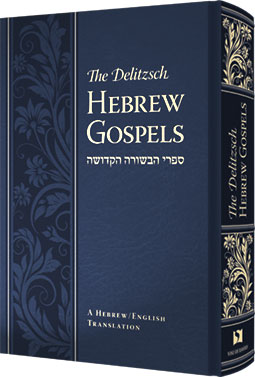
The Delitzsch Hebrew Gospels: A Review

DHEIn 1873 the British and Foreign Bible Society commissioned Franz Delitzsch to prepare a translation of the New Testament into Hebrew. Delitzsch agreed and set to work utilizing his extensive knowledge of mishnaic Hebrew and first century Judaism to create a translation and reconstruction of the Greek text back into an original Hebrew voice. His reconstructing translation was completed in 1877. After the first edition, it went through extensive review and revision for the next 13 years. The final edition was published in 1890 under the care and supervision of Gustav Dalman. Sixty thousand copies were distributed for free throughout Europe resulting in tens of thousands of Jewish people coming to know Yeshua as the Messiah of Israel.

Those Jewish believers and their influences are the very embers that have ignited this modern-day hope and revival.

This is the introduction on the Vine of David website to the Levy Hirsch Memorial Edition of the Delitzsch Hebrew Gospels. Over a century has passed since the last edition of this critical and faithful publication has been produced and Vine of David, the ministry arm of First Fruits of Zion (FFOZ) that specializes in early Messianic Judaism and the development of Messianic liturgical resources, has taken up the mission of publishing this Gospel and distributing it for free to any Jewish person, allowing Jews to explore the teachings of the Master, both in Hebrew and in English.

The Delitzsch Gospels is an elegant Bible and holding it, is like holding a bridge between Jewish believers in Yeshua (Jesus) from the 19th century to those carrying the Messianic banner today. While there are other New Testaments written in Hebrew and other Semitic languages, Delitzsch’s translation uses sources and interpretations that are the most well-known.

Although the Delitzsch Hebrew Gospels are specifically reaching out to the Jewish people, as a non-Jewish Christian, I find the resources this publication offers to be compelling. From the Translator’s Preface and Introduction to the abundance of reference materials, including maps and charts, this version of the Gospels provides history and context, not only of the Franz Delitzsch and the 19th century believing Jews, but a hint of the true Jewish origins of the Gospels and of the 1st century Gospel writers.

The heart of the Delitzsch Gospels are the Gospels themselves. Reading them reminds me  of the experience of reading the Chumash or the Tanach. Opening the Gospel to Mattei (Matthew) 1:1, the genealogy of Jesus is presented in English on the left page and in Hebrew on the right. Even with Hebrew skills far less than fluent, I can still imagine going through the opening words of the first Gospel alongside both Christian and Jewish believers, and perhaps get a small sense of what the author was thinking in his own language as he began recording his understanding of the life of the Master.

Beyond the value the Delitzsch Gospels present to Jewish believers, this modern edition also offers a unique gift to Gentile Christians who have little or no understanding of the “Jewish Jesus”. It presents those in the church with a taste of “original” Jesus, the Jewish Rabbi who walked the streets of 1st century Jerusalem and who taught his disciples in the hills of Galilee. In reading and studying from the Delitzsch Hebrew Gospels, we all can attain a clearer vision of who Jesus was and is among his people, the Jews, and his mission to save the lost sheep of Israel.

Who is Jesus of Nazareth, Son of the living God, called the Christ and the Moshiach? You may think you know. But the images invoked by reading his words and his life from the pages of Vine of David’s Delitzsch Hebrew Gospels may well introduce you to the Jewish Messiah and the Israelite Carpenter, Teacher, and King of Kings for the very first time.

To learn more, please visit the Vine of David. The blessings will be yours.

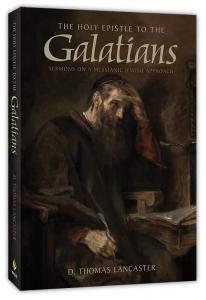
Book Review: The Holy Epistle to the Galatians

Galatians by D.T. LancasterThe passage contrasts two types of proselytes: the legal proselyte and the spiritual proselyte. The one becomes part of Abraham’s family by conventional conversion, the other through faith in Messiah, the promised seed of Abraham, in whom all nations find blessing. The passage does not contrast the Old Testament against the New Testament or the Old Covenant with the New Covenant. It does not equate Judaism and Torah with slavery, nor does it pit Christians against Jews.

It means that if you are a Jewish believer , you should be proud of being Jewish because you are a child of Abraham, legally, physically, and spiritually. It means that if you are a Gentile believer, you, too, are part of the people, a spiritual son of Abraham, and that is remarkable – miraculous even. You are a child of the promise that God made to Abraham so long ago.

-D. Thomas Lancaster
The Holy Epistle to the Galatians
“Sermon Twenty-Two: Sarah, Hagar, Isaac, and Ishmael (Galatians 4:21-31)”
pp 227-8

This is just a sample of how Lancaster’s view of Paul’s epistle to the Galatians presents a fresh and startlingly different understanding of the apostle’s message to the Gentile believers. This book takes Paul’s letter, virtually line-by-line, and re-interprets it from what most Christians would see as a radically different perspective. The book’s subtitle, “Sermons on a Messianic Jewish Approach” reveals the specific lens by which Lancaster views the letter and the stance from which he presents his argument: that Paul was supporting the unique covenant identity for the Jewish believer and at the same time, was instructing the non-Jewish disciples that they could have the same access to God, though the Messiah, without converting to Judaism.

But let me back up a minute.

Lancaster’s book is based on a series of 26 lectures or sermons he delivered in 2008 to Beth Immanuel, his community of faith, in Hudson, Wisconsin. It’s not unusual for Lancaster, a long-time contributor of books and other educational text to First Fruits of Zion (FFOZ), to “mine” his previous works for the sake of a new publication (for instance, Toby Janicki’s book Tefillin used some of Lancaster’s previous writing as a basis). Since each chapter represents one sermon in a series, I got an “episodic” feel as I moved from chapter to chapter, particularly in the first part of the book. I was also pleased that Lancaster’s ability to create the illusion that the reader is in the situation being described, was present in his current book. As I read through the chapters, I felt as if I were listening to Paul in one of the churches of Galatia, struggling with the issues he was trying to communicate, and experiencing the conflict between his teaching and the “influencers”.

As I mentioned before, this isn’t your typical Christian commentary on the Book of Galatians. Lancaster, using his knowledge of the Greek language, history, and accessing authoritative scholarly sources, “refactors” Paul’s letter into an almost completely different form, reflecting the Messianic Jewish viewpoint on Paul in general as well as FFOZ’s perspective in particular. There were a number of times when Lancaster would present the traditional Christian interpretation of a set of verses and then say something like, “this interpretation isn’t acceptable in Messianic Judaism”. I kind of wish he didn’t say it that way.

Sure, the focus of this book is to illustrate how Messianic Judaism views Paul’s letter in a dramatically different way, through its own “looking glass”, in order to understand his message in a way that makes more sense to both Jewish and non-Jewish disciples of the Jewish Messiah, but unfortunately, it could also be seen by a Christian reader as Lancaster just making the text say what he wants it to say to match his theology. The real value that I find in this book, (and many of FFOZ’s other materials) is in how it peels away almost twenty centuries of unchanging, set-in-stone, Christian theology and lets the reader see credible (and even very likely) alternatives to what Paul could have been saying. Questioning assumptions and courageously challenging dogma is not a property exclusively possessed by Messianic Judaism, Christianity, or any other religious movement. These qualities should be used by all people of honesty and faith when reading and studying our holy writings. These qualities should transcend denomination, movement, and sect, and be embraced by anyone who truly is a disciple of the Master and who seeks the truth of God and human existence.

The revelations Lancaster presents are too numerous to mention in this simple review (and I don’t want to give away too many “surprises”), but in reading this book, you will be introduced to a Paul and a Galatians letter that are completely new to you. This book offers a way of looking at Galatians, not as Paul’s anti-Jewish, anti-Torah rant, but as his answer to a complex dilemma facing the non-Jewish believers in the various churches in Galatia: does a “goy” have to convert to Judaism in order to be “saved”? The 21st century church would say emphatically “no” and in fact, would present the counter-argument that a Jewish believer would have to abandon Judaism and convert to Gentile Christianity in order to be a disciple of the Jewish Messiah. Conversely, Paul, at least as Lancaster understands him, would be appalled to hear that his letter had been so misappropriated by the modern church.

The book isn’t perfect. In general (and I agree with him), Lancaster uses various portions of Galatians to support his argument that Jewish believers (and non-Messianic Jews for that matter) were expected to obey the commands of God that He gave to the Children of Israel through Moses at Sinai, while at the same time, saying that the standard of non-Jewish “Torah” obedience to God was different…not non-existent, just different (see Galatians 5:13-26 for Paul’s interpretation of Gentile “Torah”). Unfortunately, there are any number of points in the book that, taken out of context, could be used to support the “One Law” argument (the position that states when a Gentile is “grafted in” to the Jewish root, they take on obligations to God absolutely identical to Jewish obligations). Other parts of the book make Lancaster’s position clearer, but I tended to stumble a few times when I encountered these ambiguous paragraphs.

Laying TefillinTo be fair, Lancaster is providing a detailed, in-depth analysis to a very difficult and wholly misunderstood piece of writing. Paul wasn’t easy to understand and trying to get into his head and into the culture and language in which he lived in the 1st century of the common era, let alone write an entire book about it, is a major undertaking. While I think the book succeeds overall, the reader is going to have to exercise a certain amount of patience and not jump to conclusions. Getting the entire message of Galatians means reading all of Lancaster’s book (I had to take copious notes) before coming to any sort of conclusion. Bringing an open mind as well as a notepad is also essential.

I don’t doubt that many of the people who read this book will either try to ignore it or start an argument about what it says. Lancaster completely disassembles the traditional Christian understanding of the letter and rebuilds it an atom at a time. That doesn’t make for comfortable reading if you’ve been taught for most of your life that the Torah is slavery for the Jews and grace is freedom for the Christians. For the One Law supporters in MJ, the book will also challenge many of their assumptions and at a few points, Lancaster even directly confronts the OL assumptions. Lancaster makes it clear in many of his comments that Paul never intended for the Gentile disciples to take on the entire “yoke of Torah” and that the “Torah” for the Gentiles was the “Torah of the Messiah”.

If you consider all that “the bad news”, I’ve also got “the good news”. The good news is that, if you set aside your preconceptions of what you think Galatians says, and by inference, many of the assumptions you have about what it means to be a Christian or to be “Messianic”, you’ll be able to read Lancaster’s book as an adventure in learning and an exploration of what it must have been like to be among the first Gentiles, having recently come out of pagan idolatry, entering a world and a relationship with God that had only previously been accessible to the Jewish people.

Who is Paul? Where did he get his “gospel”? Who did he see as his Master, Jesus or the Jerusalem Council? Who were the “influencers” who were disturbing the Gentile believers in Galatia? How did Paul see his fellow Jews and Jewish converts? What was Paul’s unique solution to the puzzle of integrating the people of the nations into the community of faith in the God of Israel?

The answers to those questions can be found in D. Thomas Lancaster’s new book, The Holy Epistle to the Galatians. Click the link to find out more. You may not believe it now, but there are answers in this book that you need to hear.

Besides the review you’ve just read, I’ve commented on different portions of Lancaster’s book in other recent blogs. They include Building Fellowship, Knowing, Intermediaries, and The Tefillin and the Shoemaker. These blog posts include mentions of Lancaster’s book within the context of other topics and resources, but taken together, I think this material provides a rich understanding of not only what the book says, but how it applies to a life of faith and to the wider contexts of Christianity and Judaism.

Enjoy.

The Tefillin and the Shoemaker

Praying with TefillinAnd they (Korach and his following) converged upon Moses and Aaron and said to them: “Enough! Every one of the congregation is holy, and G-d is amongst them. Why do you raise yourself above the congregation of G-d?”Numbers 16:3

There are those who maintain that they have no need of a mentor to guide them through life. They claim, as did Korach, that each and every individual can forge his relationship with G-d unaided. They argue that since the Jewish faith rejects the concept of an intermediary between man and G-d, they have no use for a rebbe or master.

They fail to understand that the entire Jewish people are a single entity, that every individual soul is, in truth, but a limb or organ of the soul of Israel. Just as each limb and organ of the human body has its function at which it excels, so, too, every soul has its role and mission, as well as its limitations. The ‘loftiest’ of souls is dependent upon the ‘lowliest’ for the attainment of the single, unified goal. And were any limb to strike out on its own, detaching itself from the ‘head’ which provides the entire body with vitality and direction – the results are self-understood.

Said Rabbi Yosef Yitzchok of Lubavitch: “When an individual adapts the attitude that he can do it all on his own, he reminds me of the story told about the peasant and the tefillin. Once, a Jew noticed a pair of tefillin in the house of a gentile peasant. Upon seeing a holy object in such a place he began to inquire about the tefillin, wishing to purchase them from the goy. The peasant, who had looted the tefillin in a recent pogrom, grew agitated and defensive. “What do you mean, where did I get them?” he blurted out. “Why, I made them myself! I myself am a shoemaker!”

-Rabbi Yanki Tauber
Once Upon a Chasid
“Jack of all Trades”
Chabad.org commentary on Torah Portion Korach

Paul explained that he received the gospel through a revelation of Yeshua the Messiah (Jesus Christ). He claimed that the gospel message he preached to the Galatians was not man’s gospel. It was not the normal gospel message. He received a different gospel. This is an important point – a critical point – for understanding Paul. The message of the gospel that Paul proclaimed was not precisely the same message of the gospel that the rest of the apostolic community proclaimed. In other places, Paul specifically refers to this unique gospel as “my gospel” (see Romans 2:15-16, Romans 16:25, and 2 Timothy 2:8-9).

-D. Thomas Lancaster
The Holy Epistle to the Galatians
“Sermon Three: Paul’s Gospel (Galatians 1:11-24)”
pp 35-6

But even if we, or an angel from heaven, should preach to you a gospel contrary to what we have preached to you, he is to be accursed!Galatians 1:8 (NASB)

Reading Rabbi Tauber’s commentary on the previous week’s Torah Portion Korach, I saw an inevitable collision with the above-quoted portion of Lancaster’s “Galatians” book. Although Korach and his co-conspirators claimed authority because all of Israel was holy to God, while Paul claimed authority based on his personal revelation from Jesus (see Acts 9:1-19 and Acts 26:15-18), they both set themselves (apparently) in opposition to the established authority representing God, Moses in the case of Korach, and the Jerusalem Council, in the case of Paul.

We know that Korach, Dathan, Abiram, and the 250 who were with them came to a bad end (Numbers 16:28-35) and their story is sometimes told in congregations as a cautionary tale not to go against the established leadership, but what about Paul? Does Paul’s receiving a personal revelation and mission from Jesus exempt him from respecting and obeying properly established authority? Lancaster says, “no”:

Despite the dismissive air, Paul submitted to their authority. He had already conceded that, if they had rejected his gospel of Gentile inclusion, he would have been running his race in vain. They had the power to utterly discredit the gospel message he had been presenting. Therefore, he certainly did respect their authority. But he seems less than reverently respectful in Galatians 2:5.

-D. Thomas Lancaster
The Holy Epistle to the Galatians
“Sermon Seven: Remember the Pour (Galatians 2:6-10)”
pg 71

While Paul could be opinionated and “outspoken”, he nevertheless realized that he was a man under not only the Master’s authority, but under the authorities established by God in Jerusalem, which included James, Peter, and John. But he had to approach these “pillars”, present his position based on the Master’s revelation to him, and hope they’d see things his way. Fortunately for Paul (and the Gentiles), they did. Otherwise Christianity, as we understand it, probably wouldn’t exist today. In that case, any person not born a Jew who wanted to enter into a full covenant relationship with God would have to convert to Judaism (for the sake of this blog, I will define Gentile Noahides -in contrast to Christians – as meriting a place in the world to come but not enjoying a full covenant relationship with God on par with the Jews).

The example of Paul presents a problem, though. His experience was entirely subjective. No one else saw or heard the details of his visions and so no one could verify independently, that he was telling the truth. In theory, he could have made the whole thing up in order to further some personal agenda he had in relation to Gentiles becoming “Messianic” disciples. If we accept the Biblical record on faith as well as reason, we accept that his visions were real and his authority was real.

But what about “authorities” today?

Most mainstream churches and synagogues are lead by a Pastor or Rabbi (respectively) who has received the education required to be ordained by their branch of faith and they have been appointed to a specific congregation upon the approval of that congregation’s board of directors. The board, and its various committees, have the authority to set the specific duties of the clergy, approve and renew their contractual relationship, and even fire the clergyperson if necessary. While the Pastor or Rabbi is the “face” and “voice” of the congregation in many ways, he or she can hardly act with total autonomy or impunity and are held accountable to the standards and authority of the congregation and their overseeing denomination or sect.

Sadly, not all religious groups and leaders operate on this principle. Paul’s “example” of receiving a personal revelation can be and has been terribly misused and misappropriated by many so-called “leaders” and “prophets” to set themselves up as the sole and individual authority over their congregations. If anyone complains about the “leader” and his or her lack of accountability to others, Paul’s example is cited and then the dissenters are accused of being like Korach and his band (implying that the dissenters will suffer a similar fate if they don’t withdraw their objections).

I know such a ploy may sound improbable and even silly to some of you reading this blog post, but the power of cult leaders over large groups of “believers” can be formidable to those who have made a commitment and who believe their “leader” is the “real meal deal”; the one and only person anointed by God to spread a special “message” to the “remnant” of the faithful.

I’m sure you are thinking about some of the infamous and extreme examples of what I’m describing, such as Jim Jones, David Koresh, and Marshall Applewhite, but there are probably thousands of other religious groups out there that operate below our radar, so to speak. Certainly a number of groups loosely affiliated with the Messianic Jewish (MJ) movement, function under the sole authority of the “Rabbi” in charge, acknowledging only his (in the vast majority of these cases, the leader is male) “right” to make decisions and pronouncements for the congregation, based on the leader’s self-described “anointing” from God.

(I want to make it clear at this point, that there are many MJ congregations that do operate on a board of directors model and that do receive authority from a central, overseeing organization which does provide a series of checks and balances for congregational leadership – I’m not painting “Messianic Judaism” as such with a single, broad brush – however, because “the movement” is largely unregulated, some people -usually not Jewish- just put on a kippah and a tallit, declare themselves a “Messianic Rabbi”, and proceed to gather a “flock”. Then they go about sharpening whatever theological ax they have to grind, which much of the time, has only a faint resemblance to anything Jewish).

Everything I’ve said up to this point certainly could make you doubtful or concerned if you find yourself in a “one-man show” type of congregation or even one where you might suspect (correctly or not) that the the congregation’s board is pretty much “rubber-stamping” the clergy’s decisions. On the other hand, we are taught to respect authority:

Rabbi Ishmael would say: Be yielding to a leader, affable to the black-haired, and receive every man with joy. -Pirkei Avot 3:12

It’s confusing. However, anyone, leader or otherwise, should recall this:

Rabbi Akavia the son of Mahalalel would say: Reflect upon three things and you will not come to the hands of transgression. Know from where you came, where you are going, and before whom you are destined to give a judgment and accounting. -Pirkei Avot 3:1

There is a Heavenly authority who holds us all accountable for what we say and do. Examples like Paul’s vision are extremely rare. They were extremely rare in Paul’s day and perhaps they may not even occur in the common era. Judaism has a long tradition of centralized authority but generally, that authority is not held by a single individual. The great sages often disagreed and it was through those debates and dialogues that justice and mercy was distilled throughout the centuries and applied to the devout in response to the unique needs of their communities and the time in which they lived.

Some respond to religious leadership concerns by refusing to affiliate with any faith group, but we all come under some sort of authority, including our employers, and local and national governments. Meeting with our congregations is how we prevent ourselves from entering into individual error (though I’m hardly one to talk at this point):

Rabbi Shimon would say: Three who eat at one table and do not speak words of Torah, it is as if they have eaten from the slaughter of the dead, as is stated, “Indeed, all tables are filled with vomit and filth, devoid of the Omnipresent.” But three who eat at one table and speak words of Torah, it is as if they have eaten at G-d’s table, as is stated, “And he said to me: `This is the table that is before G-d.’ ”

Rabbi Chanina the son of Chachina’i would say: One who stays awake at night, or travels alone on the road, and turns his heart to idleness, has forfeited his life. -Pirkei Avot 3:3-4

We are charged to test the validity of a leader as the Bereans tested the validity of Paul’s teachings (see Acts 17:10-12). We also know that valid and righteous leaders are established by God for the good of the world:

It was for this reason that actual peace in the world was brought about through Aharon, who descended to all creatures and elevated them to Torah.

-From the teachings of the Lubavitcher Rebbe, Rabbi Menachem M. Schneerson
Based on Likkutei Sichos, Vol. VIII, pp. 103-107

The LORD gives strength to his people; the LORD blesses his people with peace. –Psalm 29:11

Faith and history have established the relative authority of Korach and Paul and God’s justice and mercy was enacted in both lives in accordance with the actions of these men. Our lives are the same. We serve the same God. We all benefit from His providence. We are all accountable to His justice and we all rely on His mercy. We should not take the Name of God or His authority lightly. In the end, God prevails:

If you play for your own glory and not God’s you have no place here. -a Maggid

Rabbi Akivah would say: Beloved is man, for he was created in the image [of G-d]; it is a sign of even greater love that it has been made known to him that he was created in the image, as it is says, `”For in the image of G-d, He made man.” -Pirkei Avot 3:14

A man’s soul is the light of God. –Proverbs 20:27

Knowing

ReachingNo longer will they teach their neighbor, or say to one another, ‘Know the LORD,’
because they will all know me, from the least of them to the greatest,”
declares the LORD. “For I will forgive their wickedness and will remember their sins no more.” –Jeremiah 31:34

If you really know me, you will know my Father as well. From now on, you do know him and have seen him.” –John 14:7

Just as wisdom is not something you can touch with your hands,
so G-dliness is not something you can grasp with your mind.
The mind cannot experience G-d.
G-d is not an idea.
G-d is real.
G-d is better found in inspired deeds than in inspiring thoughts.

Rabbi Tzvi Freeman
“Mental Limits”
Chabad.org

How do we “know” God? A Christian might answer that we know the Father through the revelation of His Son, and Jesus said this about himself. Yet, there’s a danger in “anthropomorphizing” the infinite, ever-present, all-powerful, ultimately creative God of the Cosmos, and reducing Him to an old man with long white hair, a bushy beard, and a comfortable lap. It’s like taking God and turning Him into your kindly grandfather who used to give you little treats when you were a child and let you stay up past your bedtime.

This isn’t to say I dispute the words of the Master, I only understand them as illustrating both what we can know about God from Jesus when he walked among men, and what we can’t know. We can’t know the infinite, but we can know how our lives intersect with the Holy through the teachings and example of the Master. Our duty then, is to spend the rest of our lives living out that understanding with “inspired deeds”, as Rabbi Freeman says, as our understanding grows and as it sometimes twists, bends, and warps.

Excuse me, what did I just say?

Isn’t God eternal? Isn’t God’s truth unchangeable? Well, “yes” and “no”.

OK, in an absolute sense, yes, God is God and God is unchangeable. Nothing we can do can alter the nature, character, and qualities of the Creator of the Universe (not that we can perceive the vast, vast majority of those qualities). But while God may be unchanging, human beings change all the time. What we understand changes all the time. If not, if we couldn’t go beyond the Sun circling the Earth and the Moon being made of green cheese, then modern Astronomy would be a lost cause.

I know, it’s not a surprise to understand that as children grow and as people age, they learn new information to replace old data, but it’s also true (at least potentially) of humanity over time. Believe it or not, at one point in history, things like microwave ovens, DVDs, iPads, and the Internet didn’t exist. Even bound books haven’t been available forever (never mind eBooks on Kindle). Gutenberg didn’t invent the printing press until around 1440 and the vacuum tube, which was used in early 20th century technologies such as radios, the first generation commercial computers, and televisions, first saw the light of day in 1904.

Why am I telling you all this? Because what we understand about a concept or a technology may be one thing at a certain point in time but later on, we may amend or change what we believe to accommodate new information, discoveries, and inventions.

This is also true of the Bible and thus what we know about God.

I’m currently reading the book The Holy Epistle to the Galatians by D. Thomas Lancaster. This isn’t another typical Christian commentary on what most believers consider Paul’s “anti-Torah”, “anti-Judaism” rant. Rather, it’s a fresh perspective on how to understand Paul as a Jewish man, declared the “Apostle to the Gentiles” by Jesus in a vision, and who through that incredible and unprecedented role, had to make some hard decisions about how to bring non-Jewish God-fearers and former pagans into the community of faith. One principle decision was the controversial choice of not demanding Gentile believers convert to Judaism in order to become disciples of the Jewish Messiah.

Much of what Lancaster states in his book (and I haven’t finished reading it yet) won’t be universally accepted by the church and perhaps just a decade or two ago, such a book might not have been published. However, it’s important to understand there’s a difference between God’s eternal, unchangeable knowledge and how human beings acquire new data and adjust our understanding based on that information.

About a month ago, I reviewed a scholarly article called Isaiah’s Exalted Servant in the Great Isaiah Scroll written by Steven P. Lancaster (D. T. Lancaster’s brother) and James M. Monson. Based on new information acquired through a study of the Dead Sea Scrolls, how we understand the prophet Isaiah’s description of the Messiah has been significantly changed (and please feel free to read that review by clicking on the link I just provided…it’s fascinating stuff). The information Lancaster and Monson provide in their conclusions almost literally re-writes the “suffering servant” Messiah to “the appointed one”. Who could have known about this, even five years ago?

AnointingI’m not trying to undo the ties of Christian faith and the scriptures upon which that faith is based, but I would like to suggest that those ties can be untangled. We labor, without realizing it, under the yoke of centuries-old assumptions, bad translations, and misinformation founded on prejudice. Some of that misinformation, as recently presented by Derek Leman on his blog, is how the church declares rather boldly, that a Jewish person who has come to faith in the Jewish Messiah, must surrender their entire Jewish identity. Galatians, and other sections of the New Testament, seem to give this impression, but we can also be courageous enough to go back to our time-honored texts and read them with a fresh eye, consider them in the original Greek language and “refactor” them in the Jewish/Hebraic mindset of the people who wrote them. We can challenge what we think we know and see if our knowledge stands up to the test.

I’ll leave you with a tangible example of how knowledge changing over time affects not only our day-to-day life, but how we comprehend God, our duties to Him, and our obligations to each other:

The Chazon Ish, zt”l, explains, “Rashi records when he is unsure, to teach that admission of uncertainty is also Torah. One should always be clear of what he knows and what he does not know.”

Rav Yosef Yitzchak Lerner, shlita, contacted Rav Shlomo Zalman Auerbach, zt”l, regarding a correction the latter had added to the “Lev Avraham.” In this work, Professor Avraham Avraham, shlita, brought the opinion of Rav Avraham ben HaRambam, zt”l, and Rav Sherirah Gaon, zt”l, as conclusive. Both luminaries hold that Chazal’s teachings regarding medicine are not Torah; they merely reflect medicine as understood in their time. If contemporary science disagrees the halacha follows the medical experts. Rav Shlomo Zalman maintained that since other authorities disagree, this opinion should be prefixed with “some say.”

Daf Yomi Digest
Stories off the Daf
“Admitted Ignorance”
Menachos 105

Some of the rulings of the honored sages were based on the best medical knowledge available to them in their day, but as we see, modern medicine has rendered many of their judgments out-of-date. Being open to new information about the Bible and how to read it, can help us understand that some traditional Christian interpretations of the Bible need to be updated as well. I read and review articles like Isaiah’s Exalted Servant in the Great Isaiah Scroll and books such as Lancaster’s Galatians for exactly that reason. Knowledge and faith is a garden which yields only the fruits of our labors. Like prayer, meeting God and understanding more about Him requires our time, effort, and an unquenchable need to learn.

Rabbi Chalafta the son of Dosa of the village of Chanania would say: Ten who sit together and occupy themselves with Torah, the Divine Presence rests amongst them –Pirkei Avot 3:6

“Again, truly I tell you that if two of you on earth agree about anything they ask for, it will be done for them by my Father in heaven. For where two or three gather in my name, there am I with them.” –Matthew 18:19-20