Tag Archives: calvinism

Taking the Fork in the Road: Discussing Arminianism and Calvinism, Part 4

pass-failThe Arminian, whether strict, or moderate like Thiessen, will say that man is elect because he believes. The Calvinist asserts that man believes because he is elect. As long as Acts 13:48 and John 10:26 are part of the Bible, the Arminian definition of election which bases that election upon God’s foreknowledge of faith can never be maintained.

-Manfred E. Kober, Th.D.
“Chapter 4: The Demarcation of Modified Calvinism and Historic Baptist Beliefs,” pg 44
Divine Election or Human Effort?

Since they are both short, I blew through the last two chapters of Dr. Kober’s paper just to see how it was going to all get wrapped up. Not only does it come out as “Calvinists are right, Arminians are wrong,” but what’s more, Baptists are at the top of the heap.

OK, I may be exaggerating just a little, but it seems like what we’re really looking at is the continual disagreement between the two Protestant theories on the nature of election and salvation, created four-hundred years ago (sixteen-hundred years or more from the New Testament writers), and tinkered with ever since. Really, are these two perspectives the only way to read and interpret the Bible on this topic? Have we given up actually trying to understand how Paul might have really understood his own letters?

According to Kober and his supporting documentation, both Jesus and Paul were “Calvinists,” but like the doctrine of the rapture, we have to ask ourselves if the original apostolic authors understood the scriptures in an identical manner as latter-day Christian scholars? Remember, many latter-day Christian scholars also support supersessionism and predict that Jewish people have no place in the world to come unless they give up all Jewish practices and convert into Gentile Christians. Somewhere along the line, some Christians have missed a step or two.

I don’t have the theological chops to totally refute Calvinism (really, the whole Calvinism/Arminianism constructed framework), but hopefully, I’ve managed to punch a few holes in it and generated even a little bit of reasonable doubt.

On pages 46 and 47, Kober marries the Calvinist perspective with the “Creeds of the Baptists.” This is one reason why I’ll most likely never join a Christian denomination. I’ll spend the rest of my life trying to study and understand the Bible in all its colors and moods. How could I possibly accept the partitioned cardboard box into which any denomination forces the Bible and God?

So much for Chapter 4.

This paper opened with the duty of the theologian and it closes with an exhortation to the expositor of God’s Word. What is the expositor’s task in light of this awesome doctrine?

-Kober, “Chapter 5: The Demand Upon the Expositor”, pg 49

“Awesome doctrine?” Sure, if you’re a die-hard Calvinist and “winner of the game,” you can say it’s “awesome,” but some of us might call it something else. Take the following quote from Henry Thiessen, Lectures in Systematic Theology (Grand Rapids: Wm. B. Eerdmans Publishing Co., 1949), p. 345:

In the minds of some people, election is a choice that God makes for which we can see no reason and which we can hardly harmonize with His justice…We are asked to accept the theory…which does (not) commend itself to our sense of justice.

Kober goes on to say that Thiessen self-admittedly creates his doctrine as much out of his emotions as any form of Bible study and scholarship, but he ignores the words of Thiessen he quoted. The argument, as presented in the quote, isn’t Election vs. man’s compassion, but Election vs. Justice.

I said in a prior blog post that man very much does have a stake in holding God to His own standard of justice:

So the men turned from there, and went toward Sodom, while Abraham remained standing before the Lord. Then Abraham came near and said, “Will you indeed sweep away the righteous with the wicked? Suppose there are fifty righteous within the city; will you then sweep away the place and not forgive it for the fifty righteous who are in it? Far be it from you to do such a thing, to slay the righteous with the wicked, so that the righteous fare as the wicked! Far be that from you! Shall not the Judge of all the earth do what is just?” And the Lord said, “If I find at Sodom fifty righteous in the city, I will forgive the whole place for their sake.” Abraham answered, “Let me take it upon myself to speak to the Lord, I who am but dust and ashes. Suppose five of the fifty righteous are lacking? Will you destroy the whole city for lack of five?” And he said, “I will not destroy it if I find forty-five there.” Again he spoke to him, “Suppose forty are found there.” He answered, “For the sake of forty I will not do it.” Then he said, “Oh do not let the Lord be angry if I speak. Suppose thirty are found there.” He answered, “I will not do it, if I find thirty there.” He said, “Let me take it upon myself to speak to the Lord. Suppose twenty are found there.” He answered, “For the sake of twenty I will not destroy it.” Then he said, “Oh do not let the Lord be angry if I speak just once more. Suppose ten are found there.” He answered, “For the sake of ten I will not destroy it.” And the Lord went his way, when he had finished speaking to Abraham; and Abraham returned to his place.

Genesis 18:22-33 (NRSV)

plead1Abraham may have been “buttering his own bread” by pleading for Sodom since he knew that his nephew Lot and Lot’s family lived there, but on the other hand, he may really have been begging God to exercise His own standard of justice in not executing the good with the bad. God relented (or appeared to) when He said that He would spare Sodom if ten righteous men were to be found in the city. God was willing to be just for the sake of ten human beings.

Continuing to support his position, Kober quotes Romans 11:33:

O the depth of the riches and wisdom and knowledge of God! How unsearchable are his judgments and how inscrutable his ways!

However, taken out of context, this verse could be applied both ways. Can either Arminianist or Calvinist search the inscrutable judgments of God? What, besides a series of short quotes from different bits and pieces of the Bible and then strung together as if on a piece of fishing line, makes the Calvinist so sure that God must agree with their analysis of how election and salvation works in the Bible? Are you really sure?

Did Kober forget that in the same chapter of Romans, Paul also said, “all of Israel will be saved?” This is based on the idea that all Israel is elected by God, but even Paul laments that Jews who are lost for not knowing Christ, so how does that work?

On page 50, Kober says something curious.

It is never right to misrepresent an opposing view in order that a person’s position may be enhanced. The God of the Calvinist is not an arbitrary God but one who in His infinite wisdom plans every detail of the universe. Neither is the God of the Calvinist a hard God. The Calvinist is quite convinced that a merciful God will redeem as many sinners as is possible without violating His justice and righteousness.

Now who is limiting God’s power, sovereignty, mercy, and justice? As many sinners as possible? I thought all things were possible with God (Matthew 19:26). Kober seems to be saying that there are some things that are not possible with God and that, in order to make them possible, He has to violate His own principles. It is that, or is the concern that if God did make it possible (has made it possible), it would violate Calvinist theory?

I don’t say that God is hard (although He is hard to understand sometimes), but I don’t accept that the Calvinist has one God and the Arminianist has another. God is God. If something has gone haywire, we can’t blame God but we can blame human reasoning and understanding (or the lack thereof).

On page 51, Kober quotes from the preface of Perry Fitzwater’s book, Christian Theology (Grand Rapids: Wm. B. Eerdmans Publishing Co., 1948), p. 7.

There is no mediating position between Calvinism and Arminianism. We shall not vacillate but oscillate between them. Sometimes the viewpoint will be that of a high Calvinist and sometimes that of a low Arminian.

I’ve said before, “Is it too much to ask for both?”

Actually, in my recent blog posts where I look at the Bible from rather different and difficult perspectives, I’m trying to introduce the idea that we can look at the Calvinism-Arminianism debate from a meta point of view, rising above and outside the context of the argument itself so we can observe, not one side or the other as opposing perspectives, but as a unified dynamic that exists as a single entity.

(Speaking of meta, if I attempt to take on Calvinism or Arminianism on their own home grounds, I’d probably “lose” so I choose to meet them outside their usual context. I know that sounds like cheating, but it’s also the only way David beat Goliath. If David and put on armor and carried a sword and shield into battle against the giant, he’d have lost and Israel’s greatest King – this side of Messiah – would never have ascended the throne. David stepped outside the entire context and framework of military battle and, treating Goliath like an invading lion trying to devour his sheep, the young shepherd won the day.)

Within the traditional context which Kober presents, one doesn’t talk of Calvinism without speaking or Arminianism and vice versa. As I’ve also said before, I don’t accept the “either-or-ness” of the argument because both sides are trying to contain God within their own construct rather than letting God be God as sovereign.

I know the Calvinists think they’re letting God be sovereign but only on their own terms. Different Christian denominations do more or less the same thing, defining God in relation to their own theology and doctrine, not imagining that God exists in a way that cannot be “boxed up”.

This last part on page 52 was a real capper for me.

Unfortunately, many pastors shy away from the doctrine of election, so that most Christians have never been clearly instructed in this precious truth.

Precious truth? It may be precious to Kober who no doubt believes he’s among the elect and doesn’t appear to generate a great deal of concern for those who are not. I’ve read all the defenses of Calvinism but here’s what it comes down to if preached from the pulpit (this is just my imagination):

Some of you are saved and others will burn in hell and there’s nothing you can do about it one way or the other.

unworthyKober ends his paper saying there’s no harmful effects to Calvinism but I can tell you that it hasn’t done me a world of good.

There are too many times when Abraham, Moses, or some other prophet or holy person has begged God to uphold justice and mercy and not exterminate people, even when they deserve it. In the majority of cases, God has agreed even though it’s within His rights to wipe everyone out whenever He pleases and start all over again (He did that once by flooding as you may recall). God seems to be OK with humans begging Him to show compassion to other humans and I think it’s something He’s encouraging in us.

Calvinists can come up with many Biblical justifications for their theory and why their opponents are bad Biblical scholars, but I will not let Calvinists and Arminians force me into a choice that flies in the face of thousands of years of God’s interactions with humanity where He has been merciful as well as just, forgiving and relenting as well as sovereign over all.

I’ve talked before about Talmud and Quantum Physics which is a very strange way to approach the Bible, but its one in which people can engage God, talk to God, even struggle with God on difficult moral and ethical issues. God is sovereign. I fully believe that. To believe otherwise is to deny that God is God and that He has the power to be Creator and compassionate savior. But somewhere in the space between the Heavenly Court and the dust of a lowly humanity, God allows us to encounter Him in a place we can’t quite understand and that may not always follow the simple “A, B, C, D” sequencing of a Calvinist. It’s a space where God is absolute and sovereign and where human beings have the opportunity to bring our case before the King and the Judge…and where we know He will listen because He is also a loving Father and supportive Teacher.

In the same way the Spirit also helps our weakness; for we do not know how to pray as we should, but the Spirit Himself intercedes for us with groanings too deep for words…

Romans 8:26

Since, then, we have a great high priest who has passed through the heavens, Jesus, the Son of God, let us hold fast to our confession. For we do not have a high priest who is unable to sympathize with our weaknesses, but we have one who in every respect has been tested as we are, yet without sin. Let us therefore approach the throne of grace with boldness, so that we may receive mercy and find grace to help in time of need.

Hebrews 4:14-16

At the end of my days, God will judge me and He will mete out whatever consequences, for good or for ill, that it is His pleasure to deliver. I pray for a favorable outcome, but as I look at myself, there’s no guarantee. What man knows if His name is written in the Lamb’s Book of Life until it is read aloud by the Lamb himself?

If the Calvinists are right about God, then I may have been conceived and born in hopelessness and everything I’ve said or done is in vain. But if God allows His mercy to even slightly outweigh His justice, then it may still be possible for man to relent, to turn from sin, beg forgiveness, and step into the light.

I pray that can be true for me. I pray that can be true for all of us.

Taking the Fork in the Road: Discussing Arminianism and Calvinism, Part 3

jewish-repentanceI’m continuing to read Dr. Manfred E. Kober’s article “Divine Election or Human Effort?”. I’ve just finished “Chapter 3: The Doctrine of Election.” I’m no more convinced of Calvinism now than I was when I read the previous two chapters (see Taking the Fork in the Road: Discussion Arminianism and Calvinism, Part 1 and Part 2 for context before proceeding here).

The simplest way for me to write this is in a linear fashion, which is how I took my notes as I was reading through the chapter. It’s the longest chapter in Kober’s paper, and it inspires a rather lengthy response from me in my blog.

Chapter 3, on pages 18 and 19, presented a list of “elections” and where they can be found in the Bible. One very important election is the election of Israel, point two on the list:

For the sake of my servant Jacob, and Israel my chosen, I call you by your name, I surname you, though you do not know me.

Isaiah 45:4 (NRSV)

Notice the wording in this verse. God chose Israel and has named Israel before Israel ever knew God. That leaves the selection of Israel totally up to God. Israel has nothing to do with it. That’s a key point in Calvinism and one in this blog post as you’ll see in a bit.

Foreknowledge: An active word to indicate a loving relationship, based on the deliberate judgment of God in the eternal plan, which God sustains with certain individuals which results in His choice of them for salvation. Foreknowledge is only used of persons, not events.

-Kober, pg 20

Well, not exactly individual persons.

The Hebrew verb “know” (yadah), has likewise a much deeper meaning than the English word. In Amos 3:2, God speaks to Israel, saying: “You only have I known of all the families of the earth; therefore I will punish you for all your iniquities.” The Lord certainly knew about all the families of the earth, but He knew Israel in a special way. His knowledge is one of a special loving relationship. This is disclosed explicitly to Israel through the prophet Jeremiah. Yahweh speaks: “Yea, I have loved thee with an everlasting love: therefore with loving-kindness have I drawn thee” (Jer. 31:3).

ibid, pg 21

This “foreknowledge” is applied to all of Israel as far as I can tell from this reading, not just from one individual Israelite person to the next. From a Calvinist point of view, it certainly lends legs to the following:

And so all Israel will be saved; as it is written:

“Out of Zion will come the Deliverer; he will banish ungodliness from Jacob. And this is my covenant with them, when I take away their sins.”

Romans 11:26-27

All of Israel will be saved because all of Israel was chosen by God from before the establishment of the foundations of the earth. That seems pretty much a given relative to “foreknowledge” in Calvinism.

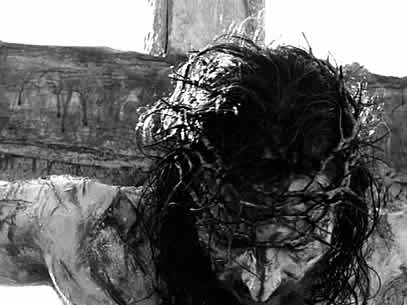
The Death of the MasterAccording to Kober, “foreknowledge” isn’t just God knowing ahead of time, it’s causative. God Knows Israel and out of that knowledge comes their salvation. According to Kober’s quote of Kenneth S. Wuest, The Practical Use of the Greek New Testament, (Chicago: Moody Press, 1946) pp. 22-24, Acts 2:23 refers to God’s knowledge of the specific purpose for which Jesus would be handed over to be executed. Basically, Jesus was “chosen” before Creation for the purpose of saving at least some of the human race through this execution and resurrection.

He also states that Romans 8:29 refers to God’s foreknowing who would be conformed to the image of His Son. God’s foreknowledge isn’t seeing events happening in the future, but His “will” in loving relationship with certain individuals and (apparently) all of Israel for salvation.

On page 36 of his paper, Kober says:

Even the Apostle Paul expected opposition to such a doctrine from men who were deceived by the impulses of their depraved minds.

No kidding. If I heard Paul say that all Israel was to be saved but only some of the Gentiles from the nations, I might have a few objections as well.

Oh wait!

As it is written, “I have loved Jacob, but I have hated Esau.”

Romans 9:13

I can imagine how many of Paul’s Gentile disciples, if they interpreted his words the way a Calvinist does, would object quite a bit to all Jews being saved, but only some of the Gentiles who were part of Paul’s listening and letter-reading audience. It’s good news for Israel, but only so-so news for the nations. I’m feeling pretty “Esau” right now.

Kober quotes Kittel’s Theological Dictionary of the New Testament, saying:

Thus knowledge [in the Old Testament] has an element of acknowledgment…Finally, the element of will [yadah] emerges with particular emphasis when it is used of God, whose knowing established the significance of what is known. In this connection, [yadah] can only mean “to elect,” i.e., to make an object of concern and acknowledgement. Gen:18:19; Ex. 33:12; Amos 3:2; Hosea 13:5; Jer. 1:5.

Quoting Charles H. Spurgeon, Election (Philadelphia: Great Commission Publications, 1964), pg 13, Kober writes:

In like manner, to say that God elected men because He foresaw they would have faith, which is salvation in the germ, would be too absurd for us to listen to for a moment. Faith is a gift of God. Every virtue comes from Him. Therefore it cannot have caused Him to elect men, because it is His gift.

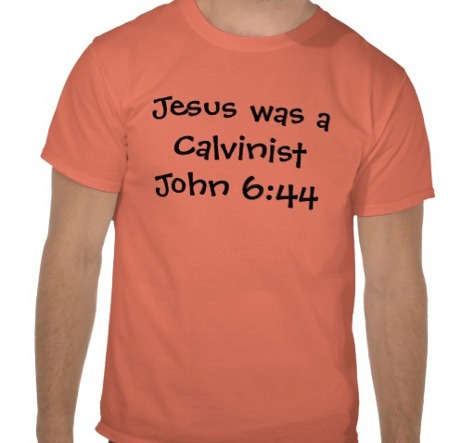
jesus_was_a_calvinistIt occurred to me as I got to this point in the chapter that Calvinists must feel pretty secure because, to hold such a belief, you would certainly have to believe you’re among the elect of God. No one who had doubts about their election could possibly be a Calvinist because you’d never feel comfortable in your own skin. You’d have to worry about whether or not you’re saved. If God elected you, that’s great. If not, well…too bad.

Also, if you had even the slightest compassion for the rest of humanity, what would it be like to be a Calvinist? Sure, you could comfort yourself saying it’s God’s decision and not yours, but if you have even a minimal moral conscience, you’d still have to stop and wonder about so many people condemned to eternal suffering just because they (we) were born.

In the section of the chapter called “The Defense of Modified Calvinism,” (pg 27) Kober quoted John Calvin, Concerning the Eternal Predestination of God (London: Camelot Press Ltd., 1961), pg 11:

The point at issue between Calvin and his opponents is thus simple, but it is of course fundamental. Substantially what they do is to wrest the ground of salvation out of God’s own hand where alone, Calvin holds, it rightly belongs, and to deposit it within the contingent realm of human volition and freewill.

Actually, based on my thoughts in the previous two parts of this commentary, both Calvinists and Arminians attempt to wrest the secret of God’s salvation from Him, bringing it down into the realm of men so each theoretical camp can put their stamp of ownership on it.

But if Calvinism is right, then I probably only think I’m saved and I have no real assurance that I am short of dying and finding out what happens next. Yeah, God has the right to put me (and the rest of humanity) in such a precarious position, but is He really that capricious?

And what’s the point of Abraham debating God about the fate of Sodom if its fate was already sealed?

So the men turned from there, and went toward Sodom, while Abraham remained standing before the Lord. Then Abraham came near and said, “Will you indeed sweep away the righteous with the wicked? Suppose there are fifty righteous within the city; will you then sweep away the place and not forgive it for the fifty righteous who are in it? Far be it from you to do such a thing, to slay the righteous with the wicked, so that the righteous fare as the wicked! Far be that from you! Shall not the Judge of all the earth do what is just?” And the Lord said, “If I find at Sodom fifty righteous in the city, I will forgive the whole place for their sake.” Abraham answered, “Let me take it upon myself to speak to the Lord, I who am but dust and ashes. Suppose five of the fifty righteous are lacking? Will you destroy the whole city for lack of five?” And he said, “I will not destroy it if I find forty-five there.” Again he spoke to him, “Suppose forty are found there.” He answered, “For the sake of forty I will not do it.” Then he said, “Oh do not let the Lord be angry if I speak. Suppose thirty are found there.” He answered, “I will not do it, if I find thirty there.” He said, “Let me take it upon myself to speak to the Lord. Suppose twenty are found there.” He answered, “For the sake of twenty I will not destroy it.” Then he said, “Oh do not let the Lord be angry if I speak just once more. Suppose ten are found there.” He answered, “For the sake of ten I will not destroy it.” And the Lord went his way, when he had finished speaking to Abraham; and Abraham returned to his place.

Genesis 18:22-33

And what was the point of this conversation?

Then someone came to him and said, “Teacher, what good deed must I do to have eternal life?” And he said to him, “Why do you ask me about what is good? There is only one who is good. If you wish to enter into life, keep the commandments.” He said to him, “Which ones?” And Jesus said, “You shall not murder; You shall not commit adultery; You shall not steal; You shall not bear false witness; Honor your father and mother; also, You shall love your neighbor as yourself.” The young man said to him, “I have kept all these; what do I still lack?” Jesus said to him, “If you wish to be perfect, go, sell your possessions, and give the money to the poor, and you will have treasure in heaven; then come, follow me.” When the young man heard this word, he went away grieving, for he had many possessions.

Matthew 19:16-22

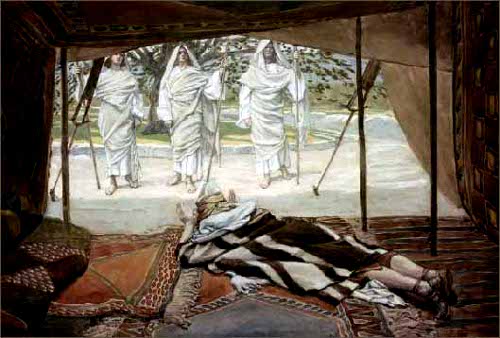
abrahams visitorsIn either case, the transactions were pointless if Calvinism is right. The fate of Sodom and of the rich young man were both sealed before any living creature drew its first breath on earth. Why didn’t Jesus just answer the fellow that either he had eternal life or he didn’t? Certainly Jesus knew if he was among the elect. God already made the decision. The rich young guy had nothing to do with it. However, since he was most likely Jewish, it doesn’t seem to matter if we can take Calvinism’s word for the election of Israel. By definition, all Israel is elected.

But individual Gentiles only have faith and thus are saved because it is God’s gift to those people that they have faith. They don’t really have faith in anything that resembles their own volition. God gave them the gift of faith so they have it. God didn’t give others faith and so they don’t have it thus they aren’t saved.

Kober quotes Spurgeon at length on page 32 to try to explain election and choice in a way we can understand.

But let me give you a better illustration. You see a mother with a babe in arms. You put a knife into her hand, and tell her to stab that babe in the heart. She replies, and very truthfully, “I can not.” Now, as far as her bodily power is concerned, she can, if she pleases; there is the knife, and there is the child. The child can not resist, and she has quite sufficient strength in her hand immediately to stab it into its heart. But she is quite correct when she says she can not do it. As a mere act of the mind, it is quite possible she might think of such a thing as killing the child, and yet she says she can not think of such a thing; and she does not say falsely, for her nature as a mother forbids her doing a thing from which her soul revolts. Simply because she is that child’s parent she feels she can not kill it.

It is even so with a sinner. Coming to Christ is so obnoxious to human nature that, although, so far as physical and mental forces are concerned (and there have but a very narrow sphere in salvation) men could come if the would: it is strictly correct to say that they can not and will not unless the Father who hath sent Christ doth draw them.

-Spurgeon, Spurgeon’s Sermons on Sovereignty (Ashland, Ky.: Baptist Examiner Book Shop, 1959), pp 123, 124

So what Spurgeon is saying is that if we believe we are saved then we are because no one would even consider accepting the “free gift” of salvation unless they were among the elect. Otherwise, it would seem a totally obnoxious idea to the person.

Nah. Not buying it.

“Not everyone who says to me, ‘Lord, Lord,’ will enter the kingdom of heaven, but only the one who does the will of my Father in heaven. On that day many will say to me, ‘Lord, Lord, did we not prophesy in your name, and cast out demons in your name, and do many deeds of power in your name?’ Then I will declare to them, ‘I never knew you; go away from me, you evildoers.’

Matthew 7:21-23

If Spurgeon is correct, then the people described by the Master couldn’t exist. If they were “evil doers,” they’d never have accepted the gift of faith and salvation because as sinners, it would be too odious a thought to even consider.

Mahatma-GandhiOn page 33, Kober tries to distinguish free will vs. free agency to explain why even though people have zero control over whether or not they are elected, those who aren’t are still totally responsible for their lack of salvation. It’s their sins that condemn them, not lack of being elected.

So let me get this straight. If we’re saved, it’s totally up to God. We have nothing to do with. But if we’re not saved, it’s totally our fault and God has nothing to do with it.

Uh huh.

I can see why Gandhi rejected Christianity:

“Mr. Gandhi, though you quote the words of Christ often, why is that you appear to so adamantly reject becoming his follower?”

Gandhi replied, “Oh, I don’t reject your Christ. I love your Christ. It’s just that so many of you Christians are so unlike your Christ.”

-Jones, E. Stanley, (1925). The Christ of the Indian Road. Abingdon Press, 72-73.

From a Calvinist’s point of view, we are only saved by the will of God. God doesn’t use any particular characteristic of the humans he elects as a method of making His selections. He chooses who He chooses for His own purposes and glory. If that’s all true, what about this?

The Lord is not slow about his promise, as some think of slowness, but is patient with you, not wanting any to perish, but all to come to repentance.

2 Peter 3:9

If God doesn’t want any to perish but all to be saved and if it’s entirely up to God who gets saved and who doesn’t, then why doesn’t God save everybody?

We don’t know.

However, near the end of the chapter, Kober does tip his hand about the timing of the Messiah’s return. Haven’t you ever wondered why he hasn’t come yet? According to Kober’s paper on Calvinism, there are a specific number of names written in the Lamb’s Book of Life. When all of the people who have their names in that book are born and “saved,” then Jesus will return. The simple fact is that there are names in that book who haven’t been born yet.

I’m glad Calvinists don’t run the universe and that John Calvin isn’t God. It may not be “Biblical,” but I have to believe that God can’t be put in a box and neither can the mystery of “election” and salvation. One thing I am glad about is that, if Calvin is right, then God really is taking care of His people Israel and since they are elected, they are saved.

But if I am somehow forced to accept Calvin as “the truth” about God, then what hope do I have? Even if by some miracle, God did elect me (I can’t see why, I’m hardly a perfect person…I’m no saint or tzaddik), then what about my wife? What about my children? How am I supposed to feel if I’m saved but they’re not (but since they’re Jewish, who knows)?

But it’s not just Calvin I object to but the whole Calvinism/Arminianism debate. Each side thinks that they can distill the Bible down into some formula of verses that equate an “answer” to salvation. Both groups and the people they contain, think they can reduce God into a system that they can then control.

I am compelled to maintain a steadfast faith in God and not the Calvin/Arminius dynamic surrounding salvation, because if I had to see the Bible only through Calvin/Arminius-colored glasses, like Gandhi, I’d love Jesus and hate Christianity, and I’d drop the church like a hot rock.

Taking the Fork in the Road: Discussing Arminianism and Calvinism, Part 2

tulipThis is the second part of a rather lengthy two-part blog post on the first two chapters of Dr. Manfred E. Kober’s article “Divine Election or Human Effort,” a paper based on a workshop given by Kober on October 25, 1971 in a faculty meeting at Faith Baptist Bible College, and provided to answer student questions about Arminianism and Calvinism. If you haven’t done so already, please read Part 1 of this post before proceeding here.

I want to talk a little bit about Calvinism and TULIP (Total Depravity, Unconditional Election, Limited Atonement, Irresistible Grace, Perseverance of the Saints) and to do so, I looked up TULIP on the Calvinist Corner website:

The doctrine of Total Depravity is derived from scriptures that reveal human character: Man’s heart is evil (Mark 7:21-23) and sick Jer. 17:9). Man is a slave of sin (Rom. 6:20). He does not seek for God (Rom. 3:10-12). He cannot understand spiritual things (1 Cor. 2:14). He is at enmity with God (Eph. 2:15). And, is by nature a child of wrath (Eph. 2:3). The Calvinist asks the question, “In light of the scriptures that declare man’s true nature as being utterly lost and incapable, how is it possible for anyone to choose or desire God?” The answer is, “He cannot. Therefore God must predestine.”

When talking about part of this with Pastor Randy, he’s the one who brought up man being created in the Image of God. That means, in some sense, that even though human beings are fallen, there is still something of us that carries a spark of the Divine. Jewish mysticism makes a great deal about these “sparks,” but I won’t open up that topic right now. I do want to say that I don’t believe the “T” in TULIP takes “the Image of God” in man into account. It’s what separates human beings from the rest of creation. Plants and animals behave the way they do because they are responding to their design. While we humans also respond to our design, part of that design is to seek God. Most of the time we fail but the drive to do it is inborn. It’s woven into the fabric of our being. It’s the image of God in man.

God does not base His election on anything He sees in the individual. He chooses the elect according to the kind intention of His will (Eph. 1:4-8; Rom. 9:11) without any consideration of merit within the individual. Nor does God look into the future to see who would pick Him. Also, as some are elected into salvation, others are not (Rom. 9:15, 21).

The “U” in TULIP seems to assume that we live in a “flat” universe where God and man operate on the same level or plane of existence (of course, God being infinitely powerful). It also assumes that God is subject to linear time (note the “look into the future” language above) as Kober states:

These acts are the result, not the cause of God’s choice. Election therefore was not determined by or conditioned upon any virtuous quality or act foreseen in man.

-Kober, “Chapter 2: The Decrees of God,” pg 7

Kober’s statements are just saturated with references to linear time and causality when I believe it is totally inappropriate to attribute those qualities to God or to believe God is subject to them.

Kober writes that the main point of Calvinism is that God saves sinners. I don’t deny that, but from Kober’s viewpoint, the statement would be better rendered God saved sinners since he did so from before the creation of the earth. There’s no active process, it’s just a “done deal” and was a done deal before we were ever born.

Yet, from a lived human experience here on the ground, people are unsaved, are in the process of approaching a decision for salvation, are saved by God’s grace through Jesus Christ. If Calvin was right, why bother preaching and teaching the word of God. Saved is saved and unsaved is unsaved. It’s already happened. The “decision” of the people involved isn’t even a formality since there’s nothing for them to decide.

It occurred to me that Calvinism also seems to contradict prophesy.

But this is the covenant that I will make with the house of Israel after those days, says the Lord: I will put my law within them, and I will write it on their hearts; and I will be their God, and they shall be my people. No longer shall they teach one another, or say to each other, “Know the Lord,” for they shall all know me, from the least of them to the greatest, says the Lord; for I will forgive their iniquity, and remember their sin no more.

Jeremiah 31:33-34 (NRSV)

Then afterward I will pour out my spirit on all flesh; your sons and your daughters shall prophesy, your old men shall dream dreams, and your young men shall see visions. Even on the male and female slaves, in those days, I will pour out my spirit.

Then everyone who calls on the name of the Lord shall be saved.

Joel 2:28-29, 32

Pouring waterOne day everyone will “know God” and the Spirit of the Lord will be poured out upon “all flesh.” Depending on your point of view, either that means all human beings everywhere or all human beings who have turned to God. Either way, these events have yet to occur and are signposts of the Messianic Age. But according to Calvinism, the “elect” already “know God” and those who were not chosen never will.

For that matter, referring back to Jeremiah, why would the prophet write something like “know the Lord” as if it really mattered; as if we really had a choice to know God or not know Him if Calvinism is true? “Knowing the Lord” is totally irrelevant to those who were specifically chosen by God not to know Him. And yet they are horribly and eternally punished for this “non-decision.”

In summarizing Arminianism (page 11), Kober states that the Arminianist position is that “Divine sovereignty is incompatible with free will and therefore God’s sovereignty is limited.” There’s another “either-or” statement. I disagree that God’s sovereignty and humanity’s free will are mutually exclusive states. They are from a human standpoint since we are limited in how we can conceptualize this “mystery,” but I don’t doubt that from God’s point of view, there is no dissonance and that He is both sovereign and people also experience choice.

On pages 12 through 14, Kober writes about “The Sequence of the Decrees.” I remember Pastor Randy mentioning that last Wednesday, and I remember objecting to imposing “sequencing” on God because it (again) makes God subject to linear time. It’s funny how all of the linear time and either-or arguments are a human effort at limiting God’s sovereignty over His own existence and experience while we discuss God’s sovereignty over man and salvation.

But as part of this section of his chapter, Kober cites Henry Clarence Thiessen, Lectures in Systematic Theology (Grand Rapids: Wm. B. Eerdman’s Publishing Co., 1949), pp. 343-344 in describing different variations on Calvinism including Supralapsarian view, Intralapsarian view, Sublapsarian view, and Modified Sublapsarian view. I won’t list all of the points of each perspective, but they illustrate that even within Calvinism, there is a variability about how the “mechanism” of Calvinistic salvation operates. Not all Calvinists everywhere agree on all the details. Does that mean it isn’t all that evident from scripture exactly how God saves?

Calvinists are wrestling with each other over how salvation works but perhaps they’d be better off wrestling with God and living with a particular amount of uncertainty, rather than trying to pin God down, so to speak, so that we can believe we have the last word on the Word of God. MacArthur said the Bible was sufficient, not that it contained literally all the information we desire. I believe God left some stuff out of the Bible. It may not be able to tell us certain things, at least down to the finest details.

But false prophets also arose among the people, just as there will be false teachers among you, who will secretly bring in destructive opinions. They will even deny the Master who bought them—bringing swift destruction on themselves.

2 Peter 2:1 (NRSV)

Kober quotes this verse on page 16 as he’s describing Biblical support for Modified Calvinism. This is a school of thought that supports all five of the TULIP points except for Limited Atonement, what is considered the weakest link in TULIP’s chain. Apparently, according to this perspective, Christ’s redemption is universal, and Kober says that some people “insist that even Calvin accepted the unlimited theory of the atonement later in life.”

Again, there’s a certain amount of “wiggle room” within the Calvinistic blanket.

I keep thinking about a couple of things.

I call heaven and earth to witness against you today that I have set before you life and death, blessings and curses. Choose life so that you and your descendants may live, loving the Lord your God, obeying him, and holding fast to him; for that means life to you and length of days, so that you may live in the land that the Lord swore to give to your ancestors, to Abraham, to Isaac, and to Jacob.

Deuteronomy 30:19-20 (NRSV)

If the choice were made for the Israelites, then why would God exhort them to “choose life” and to love and obey God and His commandments?

One day, while he was teaching, Pharisees and teachers of the law were sitting near by (they had come from every village of Galilee and Judea and from Jerusalem); and the power of the Lord was with him to heal. Just then some men came, carrying a paralyzed man on a bed. They were trying to bring him in and lay him before Jesus; but finding no way to bring him in because of the crowd, they went up on the roof and let him down with his bed through the tiles into the middle of the crowd in front of Jesus. When he saw their faith, he said, “Friend, your sins are forgiven you.” Then the scribes and the Pharisees began to question, “Who is this who is speaking blasphemies? Who can forgive sins but God alone?” When Jesus perceived their questionings, he answered them, “Why do you raise such questions in your hearts? Which is easier, to say, ‘Your sins are forgiven you,’ or to say, ‘Stand up and walk’? But so that you may know that the Son of Man has authority on earth to forgive sins”—he said to the one who was paralyzed—“I say to you, stand up and take your bed and go to your home.” Immediately he stood up before them, took what he had been lying on, and went to his home, glorifying God.

Luke 5:17-25 (NRSV)

welcome-to-faithJesus saw the faith of the men who brought the paralyzed man to him through the roof. He forgave the man of his sins and then healed him. Was the paralyzed man all part of “the plan,” already saved from before the creation of eternity, paralyzed for the glory of God so he could be forgiven and healed by the Son of Man?

What about this?

Jesus asked the father, “How long has this been happening to him?” And he said, “From childhood. It has often cast him into the fire and into the water, to destroy him; but if you are able to do anything, have pity on us and help us.” Jesus said to him, “If you are able!—All things can be done for the one who believes.” Immediately the father of the child cried out, “I believe; help my unbelief!”

Mark 9:21-24 (NRSV)

Did the boy’s father believe or not? Did he have faith or not? Did he progress from a state of unbelief to a state of belief and did Jesus help with that process?

Jesus was often critical of his disciples and others around him having “little faith” as if they had some sort of control of their faith. According to Calvinism, we have no control of our faith. It’s either present or not, like a light switch flipped to either on or off. Yes these passages seem to introduce a set of inconsistencies that question many Calvinistic assumptions.

Kober mentions that the beginning roots of Arminianism and Calvinism stretch all the way back to the fifth, fourth, and even the third centuries C.E. but both Arminius and Calvin lived during the time of the Reformation in the 16th century. James, Peter, Paul and the other apostles were dead for 1600 years by the time these doctrines had been constructed and both theories have experienced modifications and adjustments for the last 400 or so years.

I wonder what Paul would think if he could read the first sixteen pages of Dr. Kober’s article or for that matter, what would he think of the history of the Baptist church and the other denominations of modern Christianity? The theories of Arminius and Calvin are largely based on the Gospels and on Paul’s letters, so I imagine the ancient sage and emissary to the Gentiles might have an opinion or two on this matter.

I’ll continue to read Dr. Kober’s article. I’m sorry if it seems that I’ve been a little rough on him. It’s not my intent and I really don’t feel “hot under the collar” about all this. I just think that all of the arguments pitting Arminianism and Calvinism against each other are making a tragic mistake by assuming that God has to construct spiritual realities the way we write scholarly papers on theology and church doctrine.

The Bible is supposed to be a source of illumination, not a straight-jacket.

Whereas the Greek philosophical way includes defining things and relationships with precision, the Israelite way was to define things with story.

Derek Leman

113 days.

Taking the Fork in the Road: Discussing Arminianism and Calvinism, Part 1

arminianism-calvinism-debateThe following paper is based on a faculty workshop given by the writer on October 25, 1971, in a faculty meeting at Faith Baptist Bible College. Frequent questions by students in the area of the sovereignty of God have prompted the writer to put his notes into a more permanent form. Although recognizing the differences that exist among evangelicals, the author believes that the position stated herein approximates most closely the Biblical and historical Baptistic view. This paper must not be construed a the official position of the school. However, it is sent forth with the prayer that it might generate more light than heat and be found profitable by the ever inquiring students…

-Manfred E. Kober, Th.D.
“Divine Election or Human Effort?”

Pastor Randy gave me a copy of this paper during our Wednesday night talk last week and I’m just now getting into it. I’ve read the first two chapters (17 pages) and can’t restrain my response any longer. I’ll write more as I progress through the 50+ pages of Dr. Kober’s paper and hopefully I too will generate “more light than heat.”

Before proceeding, a few things. First of all, I told Pastor Randy that I tend to think of myself as a “generic Christian with a Jewish twist” rather than align with a particular denomination, Baptist or otherwise. I also believe it’s quite possible to be a perfectly well-functioning Christian without declaring to be an Arminianist or a Calvinist. After all, these are systems constructed by theologians and honed by other theologians over the course of many centuries. Sure, they’re both based on scripture, but they are derived from scripture; interpreted from scripture. That doesn’t mean that either system is presupposed by scripture, let alone God. I could wad up both Arminianism and Calvinism in all their variations like so much waste paper and toss them into the trash can, then move on to other matters. My existence as a disciple of the Jewish Messiah does not hinge on making such a decision. Theologians, teachers, and preachers in a formal Christian sense must come up on one side or another but as a plain old “vanilla” Christian, I don’t.

Now on with the show.

The primary task for a theologian is to interpret God’s Word for man. But interpretation is both an art and a science. This means that any exposition of the Bible is guided by specific rules and checks which guard against personal whims and prejudices of the interpreter. The application of these rules demands the greatest care in judgment that the godly and dedicated interpreter can bring to bear upon the text. In that sense interpretation is an art.

-Kober
“Chapter 1: The Duty of the Theologian,” pg 1

I can grasp the science of Biblical translation and interpretation but we must admit that it is the “art” that makes things elusive and ambiguous on occasion. If theology was an “exact science,” we wouldn’t have so many different ideas about what the Bible means. Or would we? After all, even a hard science such as astronomy contains many varying points of view on phenomena we can observe through the electromagnetic spectrum, and sometimes what we see can surprise us and challenge our long-held positions.

Kober has already somewhat contradicted himself (I’m sure he doesn’t see it quite that way and I am stretching my interpretation of “contradicted” a bit) by saying in the introduction that he’s presenting his material from the “historical Baptistic view” and in Chapter 1, he says that the science of Biblical interpretation follows rules and checks “which guard against personal whims and prejudices.” Maybe those rules and checks guard against the interpreter’s personal bias, but what about the bias built into the “historical Baptist view?”

Which aspect of salvation does God the Holy Spirit accent? Is it God’s sovereignty in salvation or the effort of man?

-Kober, pg 2

I’m crying “foul” here. Kober makes it sound like the question at hand is “Does God save or do people save themselves?” Not being a Calvinist, I can still agree that God and only God saves, but the question is, do human beings have any ownership of the process at all. It is God’s “effort” that saves, all a human being has to do is to effectively surrender to God. Is surrender an “effort?” Why do we have to be so “either-or?”

This is something of a side note, but I couldn’t resist finding the following statement somewhat ironic.

Frequently, one encounters a strangely resigned attitude on the part of believers toward certain areas of God’s truth, especially that of election, such as “Oh, well, we will know it all by and by!” This is true of course. But the point is that God has revealed more about His majestic plan of redemption than Christians sometimes realize.

-Kober, pp 2-3

beth-immanuelGiven the multitude of blog posts I’ve just written giving my own interpretation of how Messianic Judaism understands God’s revelation of His “majestic plan of redemption,” I wonder what Dr. Kober would say to the suggestion that he, like the Christians he references, may be unconscious of certain viewpoints on the redemption and salvation of Israel as well as the people of the nations called by God’s Name as presented from outside his own framework?

But back to the main focus on this “meditation.”

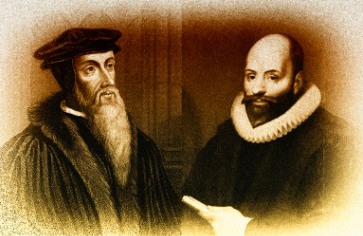
There are two basic ways of approaching the doctrine of salvation. One way is to stress the importance of man and his free will to choose for or against christ; this school of interpretation is called Arminianism, named after James Arminus. The other way of approaching salvation is to stress the importance of God and His sovereign will in bringing men to Himself through Christ; this school of Interpretation is called Calvinism, named for John Calvin. It is unfortunate that one must call himself an Arminian or Calvinist but for theological purposes every Christian is either one or the other.

-Kober
“Chapter 2: The Decrees of God,” pg 4

Is it better to be feared or respected? — I say, is it too much to ask for both?

-Tony Stark (Robert Downey Jr)
Iron Man (2008)

When you come to a fork in the road, take it.

Yogi Berra

That’s kind of my resolution to the problem in a nutshell, and it’s way too early to tip my hand, but I’m doing it anyway. I know people reading this blog post will probably classify me as an Arminian because I’m not a huge fan of God running roughshod over humanity, approving this one for salvation and tossing that one into the fires of the damned for all eternity without so much as a by your leave.

On page 4 of the paper, Kober quotes J.I. Packer saying:

The difference between them is not primarily one of emphasis but one of content. Once proclaims a God who saves; the other speaks of a God who enables man to save himself.

Again, I cry foul because Packer, like Kober, is looking at the picture as an “either-or” equation. Either God is supremely sovereign and saves who He wills and condemns who He wills, all outside the awareness let alone the consent of the people involved (you are saved or “unsaved” before you are ever conceived and born and draw your first breath of life according to a Calvinist) or God has handed some sort of authority over to the human who then does the job of saving himself. It’s not that concrete a choice.

I suppose I’ll be busted because I can’t point to a part of the Bible that says “it can be both” but is that entirely true? I’m going to try to find out and then show you some examples but let me introduce something first.

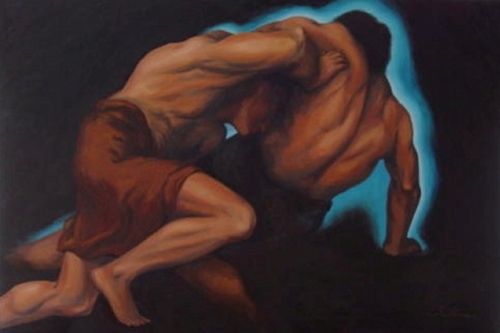
Jacob was left alone; and a man wrestled with him until daybreak. When the man saw that he did not prevail against Jacob, he struck him on the hip socket; and Jacob’s hip was put out of joint as he wrestled with him. Then he said, “Let me go, for the day is breaking.” But Jacob said, “I will not let you go, unless you bless me.” So he said to him, “What is your name?” And he said, “Jacob.” Then the man said, “You shall no longer be called Jacob, but Israel, for you have striven with God and with humans, and have prevailed.” Then Jacob asked him, “Please tell me your name.” But he said, “Why is it that you ask my name?” And there he blessed him. So Jacob called the place Peniel, saying, “For I have seen God face to face, and yet my life is preserved.”

Genesis 32:24-30 (NRSV)

The name “Israel” can be interpreted a number of ways, but one common meaning is one who struggles with God and prevails (wins). If Jacob struggled with a personified God or an angel of God, logic tells us that a flesh and blood mortal cannot hold his own let alone defeat a supernatural being, particularly if that being is literally the Creator of the Universe or some incarnation of Him.

In some areas of Judaism, it is thought that Jacob’s struggle with God is a picture of how the Jewish people struggle with the difficulties of understanding God’s perfection in an imperfect world. I’ve sat in a local synagogue and listened to the Rabbi disagree with another person’s understanding of God’s sovereignty and say something like “I’m willing to struggle with God on this one.” (not an exact quote)

What if the difficulties we have with the doctrine of salvation are built into the text of the Bible and built into our lives as believers so we can “struggle with God” over them and our relationship with Him? I’m not saying it has to be that way, but it seems like Christians always want definite “either-or” answers to all of the difficult sayings in the Bible, while many religious Jews are willing to live in a state of uncertainty on certain matters, “wrestling with God” over them.

Six million Jews were slaughtered in Hitler’s Holocaust. Many of the Jewish survivors lost their faith and turned their backs on God, and from a human point of view, this is understandable. But many other Jewish survivors found a stronger faith in God as they moved forward with their lives, ultimately raising children and grandchildren with that same abiding faith. How were they able to “wrestle with God” over a seemingly enormous injustice committed or at least allowed by God against His treasured, splendorous people?

Because Arminius was not the systematic theologian that John Calvin was, he did not clearly define his thinking on salvation. As a result, the followers of Arminius distorted his system with views Arminius simply did not hold.

-Kober, pg 5

While this can be taken as a statement of fact regarding the relative backgrounds of Arminius and Calvin, it also reveals (again) the writer’s bias. He is predisposed to select Calvinism over Arminianism, so you could say the paper I’m reading is hardly a balanced and objective examination of the two viewpoints. Nevertheless, I choose to believe that Kober is an honest person who is just trying to “clear the air” about this debate. It doesn’t mean I have to accept the either-or premise of his argument, though.

As I’ve already mentioned, I have a problem with “either-or” and believe that, on some level, the answer can be “both.” While most people may not think of it this way, by “forcing” a decision about God’s thoughts and actions, even based on scripture, we assume that we can know God’s process and intentions to an absolute or at least reasonably knowable and concrete degree, then drag it down from Heaven, so to speak, and into the realm of human understanding at ground level.

It’s almost arrogant to say that the “mechanism” of salvation cannot be mysterious on any level and that we can wholly know all of the little nuts and bolts about how God “does it.” Actually, even the author must admit that we are rather “slippery” on just how many screws God used to put salvation together, and what type of battery he powers the thing with (I’m speaking metaphorically, of course). I’ll get to that tomorrow.

On page six, in describing the “five points of Arminianism,” Kober says, “The faith which God foresaw and…” This wouldn’t be the last time Kober would say or intimate that from the point of creation or before (if “before,” “during,” and “after” have any meaning to God), God looked into the future and saw what was going to happen, like some cheap fortune-teller wielding a crystal ball and some Tarot cards.

New WorldI wrote a response to this idea in relation to Calvinism about a month ago and suggested that God exists outside of time and thus is not subject to its passing as we are. Unlike human beings, God isn’t “trapped” in a little pocket of linear time being carried forward one day at a time whether He wants to be or not. I can’t prove this, but it makes sense (to me anyway) for God to “experience” all of “timespace” as a single instantaneous event, as if everything from the creation of the earth, to Moses parting the Reed sea, to the giving of the Torah at Sinai, to David seeing Bathsheba bathing on a rooftop, to the first birth cries of Mary (Miriam) as Jesus is about to leave her womb, to Jesus breathing his last on the cross, to the first crusade, to the first inquisition, to the first ship to sail to the new world, to the first footstep of man on the moon, as if all those events, and everything else, were happening simultaneously.

God doesn’t “foresee” anything. He just knows because all of Creation from alpha to omega is before Him always. It’s only from our point of view that, when God chooses to touch a specific moment within Creation, we human beings experience God within the context of linear timespace.

Which may be part of the “solution” to the “either-or” problem of God’s Sovereignty vs. Man’s free will. Remember, as Kober writes his paper, he’s the observer. His readers are the observers. We are all the observers of God and it’s our point of view we depend upon. We experience choice and free will because that’s what it looks like from down here. We’re powerless to glean even a hint of God’s perspective and who knows what all this looks like as He sits enthroned in the Heavenly Court?

I have no problem with God being ultimately sovereign and at the same time with humanity experiencing a sense of “partnership” with God in the affairs of the world and in the workings of our lives.

This blog post took on a life of its own and I had to split it into two parts. I continue my discussion of Chapter 2 of Dr. Kober’s article in tomorrow’s morning meditation.

114 days.

John MacArthur and Struggling with Biblical Sufficiency, Part 1

think_biblicallyA truly Christian worldview begins with the conviction that God Himself has spoken in Scripture. As Christians, we are committed to the Bible as the inerrant and authoritative Word of God. We believe it is reliable and true from cover to cover, in every jot and tittle (cf. Matt 5:18). Scripture, therefore, is the standard by which we must test all other truth-claims. Unless that axiom dominates our perspective on all of life, we cannot legitimately claim to have embraced a Christian worldview.

John MacArthur
“Chapter 1: Embracing the Authority and Sufficiency of Scripture” (pg 21)
from Think Biblically: Recovering a Christian Worldview (ed. John MacArthur)

NOTE: I had a conversation with Pastor Randy last night (Monday) which amended a few things I understand about him and about MacArthur. This blog post and Part 2 which will be published tomorrow morning, were written before that encounter. I’ll post an update after the publication of Part 2.

I remember when I “discovered” the Bible contained internal inconsistencies that could not be “smoothed out” in any reasonable fashion. I remember when I realized that the different Gospel accounts of the timing of the death of Jesus didn’t match up. I remember hitting a wall, going into a tail spin, and experiencing a classic “crisis of faith.” It wasn’t pretty.

I eventually came out of it and retained my faith, but my view of the Bible has never been quite the same since. Yes, I believe it is the Word of God, His chronicle of the interactions between man and God, but I no longer believe that God literally spoke each word of the Bible in the ear of each of the Bible’s contributors as if He had dictated a series of letters to a series of secretaries (I guess I should say “administrative assistants” in this day and age). I believe that in some supernatural sense, God and the contributors became “partners” in the endeavor of composing what we have in our Bibles. It’s inspired by a Holy God but it contains the lived personalities and experiences of each person who did the actual writing.

Pastor Randy gave me the photocopied pages of this chapter written by MacArthur during last week’s Wednesday night meeting. I made the time last Friday to read the pages and found myself scribbling notes furiously in the margins and highlighting numerous sentences and paragraphs. Needless to say, I have some responses to MacArthur’s viewpoint about the Bible.

It might help before you continue, if you click the link of MacArthur’s name that I inserted above. It leads to his Wikipedia page and you can get a brief sketch of who he is, what he’s done, and what he believes about the Bible, Christianity and so on. That will provide the background for understanding his chapter and what I’m going to say about it.

Since we’re going to talk about the Bible being inerrant and sufficient, I suppose a few definitions are in order, via a bit of linkage: Biblical inerrancy and sufficiency of scripture (PDF).

First, something I agree with.

Christian bookstores are full of books offering advice drawn from sources other than the Bible on almost every conceivable subject — parenting, Christian manhood and womanhood, success and self-esteem, relationships, church growth, church leadership, ministry, philosophy, and so on. Various self-appointed experts who claim to have discovered some deep truth not revealed in Scripture have now become familiar fixtures on the evangelical landscape.

-MacArthur, pp 22-23

I almost never go into Christian bookstores anymore for exactly this reason. The products and marketing of said-products in Christian bookstores is little different from their secular counterparts. Oh, they are “dressed up” with “Christianese” terms and phrases to make them sound more “Biblical,” but the methods and techniques used to transmit information and often the information itself is strictly “Madison Avenue meets the Church.”

Also, many years ago, I attended a church that was all about selling itself. Dissatisfied with its image and how the church was growing, the board fired its Pastor and hired one who actually had a graduate degree in “Church Growth.” Interesting educational emphasis. The new Pastor came in with graphs and charts and statistics showing us how we needed to move locations, build a much larger facility with multi-purpose capacities, target an area of our valley that contained a specific demography of the population, and use other modern marketing techniques to attract a large influx of people “for the Lord.”

I couldn’t get out fast enough and I’ve never been back.

Oh, on top of all that, what MacArthur says about “various self-appointed experts who claim to have discovered some deep truth not revealed in Scripture” is spot on. For the better part of a decade, in one way or another, I was involved in the Hebrew Roots (One Law) movement. While most of the people I had regular fellowship with were good, well-grounded, honest, devoted disciples of Christ, the Hebrew Roots movement is totally unregulated and unrestricted, so just about anyone can pop up, put on a kippah and tallit, and call themselves a “Messianic Rabbi.” Then they get to sell their wares to whatever audience they can attract, based on the particular theological ax they’re grinding, and claim to have received some sort of “special anointment from the Lord” or “revelation of the end times.”

I’ve learned to beware of congregations that are run by “one-man shows” rather than being governed by a board based on a distributed leadership model.

If you can’t back up what you’re teaching with Scripture, then there’s a problem. But even then, lots and lots of stuff is taught that is supposedly based on Scripture, proving you can make the Bible say almost anything if you spin it fast enough.

Which brings me to MacArthur’s quoting from the Westminster Confession of Faith (1647 CE):

“The whole counsel of God, concerning all things necessary for his own glory, man’s salvation, faith, and life, is either expressly set down in Scripture, or by good and necessary consequence may be deduced from Scripture: unto which nothing at any time is to be added, whether by new revelations of the Spirit, or traditions of men.” (emph. mine)

-ibid, pg 22

It’s that “may be deduced from Scripture” part that makes things a little hazy. What MacArthur calls “deduced” could, in theory, be just about anything depending, again, on how hard and fast you spin the Bible. I know MacArthur probably had Judaism in mind when he mentioned “traditions of men”, leveraging the classic Christian view of all Pharisees making stuff up out of whole cloth and that the Rabbis being the direct inheritors of traditions and hypocrisy.

BiblicallyBut to be fair to the Rabbinic sages, they believe that they are actually “deducing” stuff from the Torah (Bible) in order to make the contents applicable to different generations and different circumstances (apparently) not anticipated by the literal text (using microwave ovens and driving cars on Shabbat comes to mind). According to MacArthur, this would be against the rules and that the Bible does anticipate all contingencies, circumstances, and technological advances. The Bible is sufficient. End of story.

Let’s drill down into a specific example using an issue that MacArthur definitely has strong feelings about.

Scripture reveals the deepest thoughts and intentions of the human heart, so that “all are naked and exposed to the eyes of him to whom we must give account” (Hebrews 4:13). Thus, the Bible can do what psychoanalysis can never do. It is sufficient to penetrate and lay bare the deepest part of a person’s soul. (emph. mine)

-ibid pg 27

Never mind that psychoanalysis, a therapeutic model based on the theories of Sigmund Freud that, to the best of my knowledge, is no longer practiced due to the amount of time it takes (years), the sheer expense of the treatment, and the fact that insurance companies don’t cover the costs involved. I think MacArthur probably means psychotherapy, but let’s continue.

He is also an advocate of Nouthetic Counseling, which stresses the Bible as a sufficient tool for counseling people with mental illnesses such as depression and anxiety. MacArthur rejects psychological theories and techniques, considering psychology and psychiatry as contrary to the Bible…MacArthur criticises “so-called Christian psychologists and psychiatrists who testified that the Bible alone does not contain sufficient help to meet people’s deepest personal and emotional needs,” and he claims “Such a thing as a ‘psychological problem’ unrelated to spiritual or physical causes is nonexistent.” Concerning people who consult secular mental health professionals, MacArthur believes “Scripture hasn’t failed them—they’ve failed Scripture.”

MacArthur has argued that “True psychology (i.e. “the study of the soul”) can be done only by Christians, since only Christians have the resources for understanding and transforming the soul. The secular discipline of psychology is based on godless assumptions and evolutionary foundations and is capable of dealing with people only superficially and only on the temporal level… Psychology is no more a science than the atheistic evolutionary theory upon which it is based. Like theistic evolution, Christian psychology is an attempt to harmonize two inherently contradictory systems of thought. Modern psychology and the Bible cannot be blended without serious compromise to or utter abandonment of the principle of Scripture’s sufficiency…. ”

His stance has caused several controversies, the most notable of which was the first time an employee of an evangelical church had ever been sued for malpractice. The case failed to come to trial because a judge ruled the case as having insufficient evidence.

Wikipedia: MacArthur on Psychology

Wikipedia doesn’t give a clear picture of MacArthur’s education, but I’m pretty sure it doesn’t include psychology, psychiatry, social work, or similar disciplines. I have an undergraduate degree in Psychology and a Master’s in Counseling with fifteen years of post-graduate clinical experience (before switching careers) and I have a little bit of an understanding of mental illness and its treatment. I can tell you that it is quite possible to provide successful treatment of a variety of disorders without consulting the Bible. This isn’t to say that I find the Bible useless in addressing our emotional and spiritual woes (and the Bible is uniquely able to address our spiritual hurts), but I know that I and many, many other mental health practitioners have successfully alleviated the painful struggles of countless men, women, and children who were suffering from depression and anxiety related symptoms.

Phobias are a perfect example and they can be treated with rationally based desensitization techniques that gradually enable the person who can’t even think about driving, getting in an elevator, or whatever without breaking out in a cold sweat, to do the very thing that formerly caused them to experience fear and dread.

john-macarthurGranted, it’s not a perfect tool, but even medicine “isn’t an exact science” (I remember the first time I heard a doctor tell me that, and it came as quite a shock). Nothing works perfectly all the time, but to do nothing at all would not only be immoral and unethical, but terribly cruel. Although MacArthur doesn’t speak about psychopharmacology, I suspect he’s against it, and that is even worse. Depression, for example, is very treatable using various medications and many depressions have a clear physiological basis. And let’s not get started on psychotic disorders which cannot be addressed without medication therapy. You can’t “talk” a person out of hallucinations.

I could spend all day on this one disagreement, but there are other issues to discuss, which I’ll get to in Part 2 of this article in tomorrow’s “morning meditation.”

140 days.

Squiggle

squiggly-lineAnd the Lord said to Job: “Shall a faultfinder contend with the Almighty? He who argues with God, let him answer it.”

Then Job answered the Lord and said: “Behold, I am of small account; what shall I answer you? I lay my hand on my mouth. I have spoken once, and I will not answer; twice, but I will proceed no further.”

Job 40:1-5

As it is written, “Jacob I loved, but Esau I hated.”

What shall we say then? Is there injustice on God’s part? By no means! For he says to Moses, “I will have mercy on whom I have mercy, and I will have compassion on whom I have compassion.” So then it depends not on human will or exertion, but on God, who has mercy. For the Scripture says to Pharaoh, “For this very purpose I have raised you up, that I might show my power in you, and that my name might be proclaimed in all the earth.” So then he has mercy on whomever he wills, and he hardens whomever he wills.

You will say to me then, “Why does he still find fault? For who can resist his will?” But who are you, O man, to answer back to God? Will what is molded say to its molder, “Why have you made me like this?” Has the potter no right over the clay, to make out of the same lump one vessel for honorable use and another for dishonorable use? What if God, desiring to show his wrath and to make known his power, has endured with much patience vessels of wrath prepared for destruction, in order to make known the riches of his glory for vessels of mercy, which he has prepared beforehand for glory—even us whom he has called, not from the Jews only but also from the Gentiles?

Romans 9:13-24

Pastor Randy is back!

It’s only temporary as he’s leading a group on a two-week trip to Israel in the middle of this month (and alas, I won’t be going with them), but we renewed our conversation last Wednesday evening. We spent very little time in Lancaster’s Galatians book, but we did revisit Calvin and his five points, otherwise known as “TULIP:”

  • Total Depravity (also known as Total Inability and Original Sin)
  • Unconditional Election
  • Limited Atonement (also known as Particular Atonement)
  • Irresistible Grace
  • Perseverance of the Saints (also known as Once Saved Always Saved)

Oy.

I have to admit, Romans 9:13-24 is a devastating argument and one that I can’t ignore. The last time this came up in our conversations, I blogged about it and came to the uneasy peace that God’s mercy outweighs His justice and He desires that none should die, but all live in Christ.

And even Jesus said that “For God so loved the world, that he gave his only Son, that whoever believes in him should not perish but have eternal life” (John 3:16), which does not seem to mean for God so loved the elect… He loved…loves the world.

But what do I do with all this? I happen to agree that “He who makes the universe makes the rules” and that God is sovereign over all, even when we don’t like how He expresses His ultimate sovereignty over our existence.

If God “pre-chose” who would be saved and who wouldn’t be, who am I to argue?

But one of the things I really like about Judaism is that it’s OK to wrestle with God about the “hard stuff” and not be afraid (though I expect to get banged up in the process).

One theory of “election” is that God already knew before He created the universe who would accept Him in faith and who would not, so the “elect” are simply those who would have chosen God anyway and the “non-elect” are those who, no matter what, would never have accepted God.

eph-2-10-potter-clayBut that’s not how Romans 9:13-24 reads. It reads like God made His decision and, as his creations, as clay jars from the potter’s hands, we have nothing to say about how we are formed, if we are formed “saved” or “doomed.”

On the other hand (I actually argued this last Wednesday), we are all formed in God’s image, which means that everyone has something of the Divine in them/us. We are all searching for God, granted some in pretty malformed ways, but that’s why the very concept of “spirituality” exists in our world.

Pastor Randy didn’t buy it.

But I do remember reading a Rabbinic commentary (I can’t remember where anymore) that said part of being made in God’s image has to do with having a built-in desire to do good as God does good, which may account for both religious people and atheists trying to help our fellow human beings. Even the person who denies the existence of God still is made up of the essence of God, the Divine spark within man.

And free will is one of the effects of being made in God’s image according to the Aish.com Rabbis. But if we are “pre-chosen” since before the creation of the universe and we absolutely cannot lose our salvation as a “pre-chosen” group of people, then free will is an illusion.

Or is it?

I won’t give the details, but Pastor Randy did tell me a story that undercut his own argument. Apparently, he knew a man who was an exceptionally fine Pastor and Christian, a man who served God and man unswervingly for decades, a man who no one doubted was is in God’s hand and that doing the will of God was his only waking thought.

Then he suffered a terrible tragedy, but not one any more difficult than many other Christians. The effect through, was astounding. Again, I won’t paint you the full picture, but this man of God, who even Pastor Randy was convinced was a trustworthy servant of the Most High, did a terrible thing and sinned against not just a few, but ultimately against anyone who had ever believed in him.

Most of the time, if we take a Calvinist point of view, we can look at a “Christian” and realize that they are not really committed to Messiah as shown by their behaviors, their “fruits,” so to speak. Yes, even the best of us struggle with sin, but there’s a difference between that, and remaining captured by the ways of the present world and only paying lip service to God.

The falling of Pastor Randy’s friend was almost literally something that came out of left field, a totally unanticipated event. How could it have possibly happened? Even Pastor Randy is baffled. Either this guy was a world-class actor, or there is something wrong with Calvin’s theory. It could mean that God has allowed some small part of us to be completely outside of His control.

Free will.

fallingBut if God’s plan is absolute, cannot be defeated, and if God Himself can’t be surprised, what do we do with free will and what do we do with election?

We talked about another interesting thing that relates to all of the above: sequencing.

As human beings living in linear time, we understand the world in terms of sequencing. That is, something happens first, then second, then third, and so on.

But as far as I’m concerned, God isn’t subject to linear time. He doesn’t “see into the future” or “look into the past.” He exists outside of creation (although He can intersect it) and is not subject to the rules of our reality. For God, there is no before, during, and after…there is just is.

OK, this is all speculation, but what the heck, I can’t lose anything by giving it a shot.

God decides to create the universe but saying that, it really means that God has already created the universe, God is in the process of creating the universe, and God is about to create the universe, all at once. It also means some interesting things. God gives man free will to choose or not to choose Him but that happens at the same time (everything happens at the same time from God’s point of view) as us making all of the decisions we’re ever going to make from birth to death. Literally, the act of God creating the universe means that He is not just starting the universe and then letting it progress, He’s creating the universe from Big Bang to the last gasp of entropy and everything that occurs in-between in a single, unified act.

Try to get the implications of all this.

It doesn’t mean that God created the universe, and then the earth, and then the garden, and then Adam, and then Eve, and then all the animals, and then watched Adam and Eve sin, and then the fall happened, and then sin entered the world, and then….

It means that God created the universe, sun, moon, stars, earth, garden, humans (all of us), and at the same time, all we humans committed every single event every single living being would ever, ever commit from zero to infinity, all as the same creative act.

Yes, I can’t prove any of it so don’t ask me to try. This is just my imagination shooting off sparks and hoping that some illumination will occur.

But what if it’s true? What would it mean? It would mean that at the instant of creation, predetermination and free will, even seemingly minor and random actions (how dust motes float through the air), all happened in a single instant and as a single action.

It’s only from a human being’s point of view from inside the bubble of creation that concepts like election and free will have any “legs” so to speak. It’s not like God decided who was saved and who wasn’t before they were born, exactly. And it’s not like we have free will to defy God and His plan, exactly. Our decisions from birth to death were all part of the creation process. Yes, we will make, are making, and have made those decisions of our own “free will,” but since our entire lifetimes go “squiggling” across the nearly infinite panorama of cosmic history, we’re all part of the single creative act by God wherein He “created” that history.

It’s terrifically metaphysical and impossible to truly communicate in human language, since we (including me) are all designed to communicate accurately only about the environment contained in God’s creation. “Metacommunication” is practically a “mystic art” since it requires describing the indescribable.

creationThat’s the closest thing I can come up with to explain why God isn’t heartless and cruel (though, as Job 40 and Romans 9 seem to say, I don’t have the right to question…but as Genesis 32 seems to say, I do) and at the same time, feebly try to explain the co-existence of man’s free will and God’s total sovereignty. I know my theory’s got more holes than a golf course, but as I said, it’s the best I can do.

I think God created the universe exercising just slightly more mercy than He did justice, so we’d even have a fighting chance, but given that, at the moment of creation, our lives flashed across history like a hyper-energized photon, so even if creation took any time at all from God’s perspective, within that unimaginably fleeting instant, we made all of the free will decisions we would ever make, and when God declared creation a done deal, so were all our decisions…a lifetime’s worth.

It just seems as if we have future decisions to make from inside linear time.

So God has mercy on whomever He wills and hardens whomever He wills. Because His will was, is, and will be the will of Creation and we human beings willed (are willing, are about to will) inside of that creative act.

A lousy theory, I admit. If you’ve got a better one that explains all the facts and still accounts for God’s sovereign will and man’s free will, I’m all ears.

Oh, and if the hard and fast rule of Divine Election turns out to be true, what do we do about Luke 14:15-24?

142 days.