Tag Archives: Christianity

Shavuot Fellowship in Wisconsin

Twenty-years ago the spirit of the Lord kindled something new, and the ministry of first fruits of Zion was born. With the teachings of First Fruits of Zion, Christians and Messianic Jews began to rediscover the Torah.

Two decades later, First Fruits of Zion and the Messianic Jewish movement still lives, breathes, and is ready to thrive. At Shavuot 2012, First Fruits of Zion breaks new ground as we present our game plan for the future of Messianic Judaism, for Jewish believers in Yeshua, and for Messianic Gentiles from all nations. Come and hear the vision, become a solid member for change—be inspired to kick-start a fresh revolution by learning practical ways to facilitate study groups, Torah studies, and other outreach efforts.

from the Shavuot Conference 2012 webpage
First Fruits of Zion (FFOZ)

I have to admit to being a little nervous about attending this conference. Oh, I’m also really excited. I’ll get to see some old friends that I don’t get “face time” with very often, and actually meet people I’ve only communicated with over the web. But like some “fine wines” (yeah, that’s a joke), I don’t really travel well, I like to get to bed early, and I don’t enjoy large crowds. I don’t really thrive in a large conference environment.

But more to the point, I haven’t been to anything like this for a number of years and as an “unaffiliated Christian” in a world of Messianic Jews, Messianic Gentiles, and others who don’t traditionally identify with the mainstream church, I’m not sure what to expect or how I’ll be viewed by everyone (not that I should care, I suppose).

For one thing, the tallit and tefillin are staying at home (I’ll still bring a kippah). When I backed away from the One Law position (the basic Idea that all of the 613 commandments or mitzvot that observant Jews believe apply to them also applies to all non-Jewish Christians by virtue of being “grafted in”), I backed away from just about everything that had an outward Jewish religious practice. I started to imagine (not that she’d say anything) what my (non-Messianic) Jewish wife might be thinking every time I put on a tallit and laid phylacteries to pray. For me, it was easier to come to peace with the direct interfaith part of our marriage if I didn’t try to “walk her side of the street” so to speak. I put most of the religious items I used in “Messianic worship” in a box and there they’ll stay until I have a good reason to bring them out again.

So I don’t consider myself “Messianic” in the sense that most (probably) of the attendees at the Shavuot conference consider themselves Messianic (the non-Jews, that is).
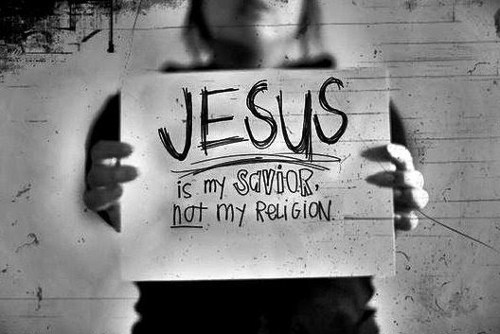
There’s another issue here though. This whole classification of Christian vs. Messianic among non-Jews is just a little crazy. I know that it’s meant to differentiate between traditional Sunday Christians and those who have become more aware of the Hebraic origins of our faith, but it’s gotten to the point where we’re almost acting like we have two different religions.

I’m not OK with this. If Jesus was and is King of the Jews for Messianics, then he was and is King of the Jews for more traditional Christians. Recognizing the Jewishness of Jesus and then encasing that fact with a Messianic “bubble” only isolates that information and the truths it contains from all other Christians everywhere. Rather than focusing on the differences between how many non-Jews in the Messianic movement see things and how most other Christians see things, maybe we need to spend more time paying attention to how we’re alike.

I know a number of non-Jews who self-identify as “Messianic” visit and read my blog posts. If that’s you, I want you to practice something in the privacy of your own homes when you’re all alone. I want you to say out loud, “I’m a Christian.” Repeat it a few times. C’mon, don’t whisper. Really belt it out. “I’m a Christian.”

“I’m a Christian.”

Was that awkward? For some of you, it probably was. No, I’m not making fun of you or trying to be mean. My point is that whether you consider yourself a “Messianic Gentile” and pray wearing tzitzit and tefillin or you think of yourself as a Christian and feel no need to adopt any Jewish customs or commandments in your prayer and worship life, God is One. He’s the same God. Jesus is Jesus. He’s the Messiah, the Lord, the Savior, the Christ.

He’s the same guy for Messianics and Christians. We just picture him differently.

But how does he picture himself?

We don’t really know, but it wouldn’t hurt to stretch ourselves a little and try to see Jesus from a Jewish point of view and within a functional Jewish context. That’s probably a picture closer to his reality than many in the mainstream church see him.

However, you may be very comfortable with the division between Messianics and Christians. You may be asking yourself why you’d want to go through all that trouble and mess up your comfort. Because he is the Christ and we are Christians. He is the Master and we are his disciples. Jesus didn’t ask us to stand apart from each other, he asked us to be a united body and to work together like the different parts in your body.

I’m not a typical Christian. I don’t go to church. I have particular standards regarding food items that most Christians don’t observe. I have certain other convictions and perspectives that you won’t find in most churches. But I’m still going to be a really different “breed of cat” than most of the other conference attendees when I get there in a few weeks. In some ways, I’ll be just as nervous attending the conference as I would be if I decided to visit a church next Sunday morning.

But the point is, I shouldn’t have to feel that way. I probably wouldn’t if I got my wish (and my prayer). My wish and my prayer is that all believers come together in unity and truth, regardless of how different we are, and recognize our mutual fellowship and discipleship as followers of the Messiah King, who came once for the salvation of souls and who will come again to repair the world.

My wish and my prayer is that we who are grafted in realize that we are all Christians.

When you think of yourself and what you believe and then think of other believers and how different they are from you, try to consider how much you have in common with each other. That’s what I’m going to be doing on May 24th at Beth Immanuel.

And if you happen to be planning on attending FFOZ’s Shavuot Conference 2012, post a comment and let me know. I’d love to meet you when we’re together in Hudson, Wisconsin…and meeting in spirit and in truth.

Blessings.

Immersion

A chassid once approached his rebbe, Rav Yizchak of Vorke, in a very broken-hearted manner. He had a physical ailment that contact with water severely exacerbated. When he had been ill the doctor had declared with certainty that his illness was the result of contact with water. Not surprisingly, they absolutely forbade him from going to the mikveh even after he recovered. Chassidim are generally very careful to go the mikveh every day. Interestingly, many pre-chassidic sources mention that observing this takanah is essential for true spiritual development. Rav Chaim Kanievsky, shlit”a, brings a list of some of these luminaries, including the Arizal, the Beis Yosef’s Maggid, and the Reishis Chochmah.

With all these sources it is no wonder that the young man felt frustrated by his inability to maintain this practice. The Vorkever Rebbe turned to his young follower and said, “In Bava Kama 28 we find: ‘—The Merciful One absolves those constrained by mitigating circumstances.’ This seems superfluous. Why not just say that one who is constrained by mitigating circumstances is absolved? In addition, who cares if he is since he didn’t fulfill the mitzvah? The Rebbe answered his own question: “Hashem sees into a man’s heart. If a person yearns to do a mitzvah but truly cannot, it is as though the Torah itself fulfills the mitzvah for him!”

The chassid lingered in his rebbe’s presence, obviously unsatisfied with this response. He clearly was hoping to receive a blessing that he would, in fact, be able to immerse in the mikveh. The rebbe admonished him, “Why are you still standing here? Who will do the mitzvah better—you, or the Torah?”

Mishna Berura Yomi Digest
Stories to Share
“The Merciful One Absolves Him”
Shulchan Aruch Siman 161 Seif 1

All of this is probably hard for most Christians to understand. About the closest we might get to the idea of a mikvah is the concept of baptism, but that happens only once in a lifetime. We also might have a tough time with understanding how someone could suffer because they can’t perform a specific action that they believe God requires of them (namely, a daily immersion in a mikvah). For many Christians, the one time event of “being saved” pretty much sums up all of our requirements. If, for some reason, we were unable to physically perform some act of righteousness because of a medical condition, we would more or less assume God would be understanding.

However, observant Jews conceptualize their relationship with God in a fundamentally different way than Christians (and I’ve said this before). For a Christian, it’s all about what you believe. For a Jew, it’s all about what you do. And yet, whether or not the poor fellow in our “story to share” is able to enter a mikveh, does not particularly determine if he will merit a place in the world to come. Also, and this is important, the chassid’s merit in the world to come may not be the primary focus of his life.

Shocking, I know. For a Christian, “getting into Heaven” is pretty much what it’s all about. We are a very future-minded group of religious people. For a Jew, the main focus of a relationship with God isn’t what he’s going to do for us in the future, but what Jews can do for God right now through performing the mitzvot. The inability to obey God and to perform deeds of righteous and charity for the sake of Heaven is very painful for religious Jews. I don’t think we have this concept in the church, but maybe it wouldn’t be such a bad idea to cultivate it a little bit.

No, I’m not talking about turning Christians into Jews, having us wear tzitzit, immersing ourselves daily in a mikvah, and kashering our kitchens, but imagine what life as a Christian would be like if our overarching purpose in serving God were to actually serve God right here and right now.

I’m being unfair of course, because many Christians are extremely mindful of their duties to God and to human beings, and Christianity throughout the ages has carried the Torah out of Zion and the Word of God from Jerusalem (Micah 4:2):

Christianity has brought billions of people to Jesus, the Jewish Messiah and King of the Jews. This is a non-trivial accomplishment. Even some Jewish scholars have recognized the significance of this fact. In Hilkhot Melakhim 11:10-12, Maimonides credits Christianity with preparing the Gentile world for the arrival of King Messiah by spreading knowledge of the Bible far and wide. If even those who do not claim Jesus as Messiah can affirm the good that has come from Christianity, certainly believers should be able to as well.

-from an unpublished manuscript of a super-secret book I can’t talk about right now

But as James, the brother of the Messiah noted, “faith without works is dead” (James 2:17).

Christianity has helped uncountable numbers of poor, hungry, destitute, abandoned people. Myriads of counselees—drug abusers and alcoholics, victims of abuse, troubled spouses—have benefited from a pastor’s Biblical advice. From Carey and Wilberforce’s campaigns against satī in India to the modern phenomenon of “adopting” starving African children, Christians everywhere have expended their resources to help those less fortunate. Today, Christian orphanages in India take in abandoned children with nowhere else to turn, just as devout Christian George Müller did over a century ago in England.

-from the same super-secret book I still can’t talk about

As difficult as it may be to actually experience the concept, Christianity is an offshoot of ancient Judaism. We share the same foundation. We share the same God. The writers of the New Testament were almost assuredly all devout Jewish men and as such, they would have understood God, the Prophets, the Messiah, and the entire tapestry of the Creator’s continual interaction with humanity from a uniquely Jewish framework.

The Holy Scriptures the church has today were inspired by God and written by Jews. We Christians have done a good bit of “sanitizing” of these works over the past couple of thousand years, but if we choose to, we can try to recapture the good of both Christianity and Judaism as authored and willed by God.

Maybe someday, we in the church will understand why a young chassid would be so anguished to be forbidden to enter a mikvah. Maybe we’ll understand also how the unfulfilled desire to do so can be counted as if completed by the Torah. And maybe, just maybe, we’ll reclaim the ancient tradition and commandment to obey God in this world as our real reason for being here. The world to come will take care if itself.

Jesus fed the hungry, healed the sick, and comforted the mourning the very day all these events were happening. He didn’t wait for his death or resurrection and he didn’t wait for his second coming to start performing tikkun olam (though that won’t be completed until a future time). We don’t have to wait either.

It’s time to immerse ourselves not only in the Word and the Spirit, but into the action of obeying God and living like our Master.

Who is Worthy of God’s Word?

To some, G-d is great because He makes the wind blow.

For others, because He projects space and time out of the void.

The men of thought laugh and say He is far beyond any of this, for His Oneness remains unaltered even by the event of Creation.

We Jews, this is what we have always said:

G-d is so great, He stoops to listen to the prayer of a small child;

He paints the petals of each wildflower and awaits us there to catch Him doing so;

He plays with the rules of the world He has made to comfort the oppressed and support those who champion justice.

He transcends the bounds of higher and lower.

He transcends all bounds.

-Rabbi Tzvi Freeman
“Greatness Unlimited”
Based on letters and talks of the Rebbe
Rabbi M. M. Schneerson
Chabad.org

Indeed, the prayer of the community was born the very instant the prophetic community expired and, when it did come into the spiritual world of the Jew of old, it did not supersede the prophetic community but rather perpetuated it. Prayer is the continuation of prophecy, and the fellowship of prayerful men is ipso facto the fellowship of prophets.

-Rabbi Joseph B. Soloveitchik
from Chapter VII of his book
The Lonely Man of Faith

Rabbi Soloveitchik says a very interesting thing. He links the age of the prophets to the post-Second Temple world of Rabbinic Judaism. This may seem strange to most Christians, since we are taught a good many things passed away with the ascendency of Christ and the demise of the Holy Temple in Jerusalem. In fact, Christianity tends to discount the early Rabbinic period forward in the history of Judaism and “replace” it with the grace of Jesus Christ.

Of course Rabbi Soloveitchik as an Orthodox Jew, would not offer any sort of acknowledgement of Christ, but I think we can take his words, and those of Rabbi Freeman’s and try to apply them to the world of prayer among all men. While the prophets of old were unique and (as far as I can tell) no man has the “gift of prophesy” today as did Jewish men such as Isaiah, Jeremiah, or Ezekiel, we all have the capacity to engage God in the realm of prayer. This makes no man a prophet in the manner of those I have just mentioned, but the ability of humanity to connect, through faith, with God was not ended when the Second Temple was destroyed. Nor did it end with the life, death, life, and ascendency of Jesus. As Rabbi Freeman tells us, God is so great that “He stoops to listen to the prayer of a small child.”

And yet, from a Jewish point of view, prayer is not the exclusive property of the individual as Rabbi Soloveitchik notes:

No man, however great and noble, is worthy of God’s word if he fancies that the word is his private property not to be shared by others.

Judaism sees its relationship with God as largely corporate as indeed, is the Sinai covenant between God and the Israelites. Yet each Jew living today is also to consider himself as having stood personally at the foot of Mount Sinai as God gave the Torah through Moses. By comparison, Christianity, though the “body of Christ,” exists conceptually as a large collection of individuals, and each believer interacts as a unique personality, almost exclusively independent of the community of the church.

We see this most often in how we, as Christians, pray. It’s an almost irresistible temptation to pray about me, myself, and I, and Jesus did not prohibit this. And yet, he also told us to pray for others, even our enemies, and to petition God for the welfare of our leaders, our neighbors, and our oppressors. Rabbi Soloveitchik echos this when he writes “Man should avoid praying for himself alone…When disaster strikes, one must not be immersed completely in his own passional destiny, thinking exclusively for himself, being concerned only with himself, and petitioning God merely for himself.” To do so would be to imagine that God is little more than Aladdin’s genie and we alone are the one holding onto the lamp.

PrayingBut what is prayer and how is it somehow connected to perpetuating the continuation of prophecy?

Who is qualified to engage God in the prayer colloquy? Clearly, the person who is ready to cleanse himself of imperfection and evil. Any kind of injustice, corruption, cruelty, or the like desecrates the very essence of the prayer adventure, since it encases man in an ugly little world into which God is unwilling to enter. If man craves to meet God in prayer, then he must purge himself of all that separates him from God.

God hearkens to prayer if it rises from a contrite heart over a muddled and faulty life and from a resolute mind ready to redeem this life, In short, only the committed person is qualified to pray and to meet God. Prayer is always the harbinger of moral reformation.

So who can pray? On the one hand, it seems as if prayer is reserved for the person who is passionately dedicated to removing all sin and evil from his being and who longs to engage God in a realm of purity. On the other hand, what man, no matter what his condition, is completely clean and pure except that God has made him so?

Even an unbeliever can pray and be heard by God, otherwise no one could ever come to faith and be accepted by God. No one would ever be able to come to faith in God through Jesus Christ and be cleansed, healed, and reconciled with his Creator unless God was willing to hear the prayers of people covered in filth. It’s the desire to have the mantle of sin be removed from our shoulders, not the success of that removal whereby God is willing to hear us. In that sense, we do possess a “specialness” that was experienced by the prophets of old in that they too were willing, though still mortal and imperfect men.

And the foundations of the thresholds shook at the voice of him who called, and the house was filled with smoke. And I said: “Woe is me! For I am lost; for I am a man of unclean lips, and I dwell in the midst of a people of unclean lips; for my eyes have seen the King, the Lord of hosts!” –Isaiah 6:4-5 (ESV)

As I mentioned before, the prophets didn’t consider God’s revelations to them to be their exclusive property but rather, they shared God’s word with all, even as they were commanded to do. Should we, in our own human need, keep prayer just for us and not share it with all of God’s creations?

But since we are all imperfect and perhaps never, even for a moment, attain a purity that allows a true connection to God, how does God hear? What of the person so damaged and injured in his spirit, that he only knows to cry out but is unable to shed his “skin of evil?”

Likewise, we encourage the sinner to pray even though he is not ready yet for repentance and moral regeneration, because any mitzvah performance, be it prayer, be it another moral act, has a cleansing effect upon the doer and may influence his life and bring about a complete change in his personality.

It seems as if I’m wandering further and further away from the prophets or rather, Rabbi Soloveitchik did when he penned these words. On the other hand, the Rav seems to be saying what he did before; that prayer isn’t the exclusive property of the pious and the holy and the righteous. Even sinners can and absolutely need to connect to God. Jesus was criticized for eating with sinners, prostitutes, and tax collectors, yet he said this:

“Those who are well have no need of a physician, but those who are sick. I have not come to call the righteous but sinners to repentance.” –Luke 5:31-32 (ESV)

Thus access to the heart of God is available to all, not just to the perfect and those who sit in clean suits and dresses in pews on Sunday morning.

But going back to the very beginning of today’s “meditation,” we as Christians see that God is accessible not just to us and not just to “sinners,” but to all Jews everywhere, whether they are in the Messiah or not (and I am not lumping the Jewish people in with “sinners”).

I know it’s strange. Do I speak blasphemy? Do I ignore John 14:6? I suppose it looks that way. But I’m not willing to throw post-Jesus Jews under a bus because Christianity (and many in the Hebrew Roots movement) think “Rabbinic Judaism” is a dirty word.

I’ve sat in synagogues on Shabbat and during the Shema, have felt God enter as a tangible presence. I’ve sat in churches during prayer and singing and felt as if the room were completely empty. This is not to say that all synagogues possess God’s presence and all churches contain only God’s absence. Far from it. I am only saying that the 21st century church is not the only receptacle for the spirit of God. God is present where all men who desire Him are gathered, and resides in the heart of each individual, no matter who he is, who longs for the lover of his soul.

Who is qualified to engage God in the prayer colloquy? The person who is ready to cleanse himself certainly, but more than that, even the person who is at present unable or unwilling to be clean may still cry out. The very act of calling God’s Name may not “command” God to listen, but it may require the person praying to change his heart in acknowledgement of Him.

Thousands of years before the coming of Christ, while most of our non-Jewish ancestors (I’m speaking to Christians right now) were dancing around the pagan fires and worshiping “gods” of stone and wood, the Jewish people were turning their hearts to the One God. True, they also turned away many times, but God called them back and they returned. Otherwise, there would be no Christians today, for there would have been no Judaism by which the Messiah entered the world (and will enter it again).

Whoever you are reading this, know that God is not your exclusive property. God is a God to all or He is a God to none. While He has a special and unique relationship with the Jewish people which is perpetual and unable to be broken, He sent His only begotten Son for the rest of us, too. The rest of us just need to make sure that we don’t try to “take over” and restrict God to only ourselves.

Passing Judgment

Said Rabbi Israel Baal Shem Tov:

When a person comes before the supernal court to account for sojourn on earth, he is first asked to voice his opinion on another life. “What do you think,” he is asked, “about one who has done so and so?” After he offers his verdict, it is demonstrated to him how these deeds and circumstances parallel those of his own life. Ultimately, it is the person himself who passes judgment on his own failings and achievements.

This explains the peculiar wording of the above passage of the Ethics, “before whom you are destined to give a judgment and accounting.” Is not the verdict handed down after the cross-examination of the defendant? So should not the “judgment” follow the “accounting”? And why are you destined to “give judgment” as opposed to being judged? But no judgment is ever passed on a person from above. Only after he has himself ruled on any given deed does the heavenly court make him account for a matching episode in his own life.

The same idea is also implicit in another passage in our chapter of the Ethics: “Retribution is extracted from a person, with his knowledge and without his knowledge.” As a person knowingly expresses his opinion on a certain matter, he is unwittingly passing judgment on himself.

Commentary on Ethics of Our Fathers
Chapter 3
“Subjective Judge”
Iyar 10, 5772 * May 2, 2012
Chabad.org

“When the Son of Man comes in his glory, and all the angels with him, then he will sit on his glorious throne. Before him will be gathered all the nations, and he will separate people one from another as a shepherd separates the sheep from the goats. And he will place the sheep on his right, but the goats on the left.”

Matthew 25:31-33 (ESV)

I don’t think many Christians believe they’ll be given the opportunity to judge themselves in Messianic days, but then most Christians think they won’t be judged at all. Only sinners (i.e. non-Christians) will be judged. Christians are saved and exempt from all this sort of stuff.

Whew! What a relief.

But wait a minute. What else did Jesus say?

Then the King will say to those on his right, ‘Come, you who are blessed by my Father, inherit the kingdom prepared for you from the foundation of the world. For I was hungry and you gave me food, I was thirsty and you gave me drink, I was a stranger and you welcomed me, I was naked and you clothed me, I was sick and you visited me, I was in prison and you came to me.’ Then the righteous will answer him, saying, ‘Lord, when did we see you hungry and feed you, or thirsty and give you drink? And when did we see you a stranger and welcome you, or naked and clothe you? And when did we see you sick or in prison and visit you?’ And the King will answer them, ‘Truly, I say to you, as you did it to one of the least of these my brothers, you did it to me.’

“Then he will say to those on his left, ‘Depart from me, you cursed, into the eternal fire prepared for the devil and his angels. For I was hungry and you gave me no food, I was thirsty and you gave me no drink, I was a stranger and you did not welcome me, naked and you did not clothe me, sick and in prison and you did not visit me.’ Then they also will answer, saying, ‘Lord, when did we see you hungry or thirsty or a stranger or naked or sick or in prison, and did not minister to you?’ Then he will answer them, saying, ‘Truly, I say to you, as you did not do it to one of the least of these, you did not do it to me.’ And these will go away into eternal punishment, but the righteous into eternal life.” –Matthew 25:34-46 (ESV)

Now that’s odd. It sounds like we aren’t judged based on what we believe in our hearts but on what we actually do with that belief. The Master’s own brother said, “So also faith by itself, if it does not have works, is dead.” If faith without works is dead, then if we are without works, regardless of what we feel or believe inside, are we dead, too?

I’m not really going to try to evaluate the mechanics of how salvation works or who does or doesn’t merit a place in the world to come (i.e. “Heaven” as Christianity understands it). I do want to talk about the times when you judge other people.

C’mon. Admit it. You do judge other people, dear Christian friends. So do I, though I’m not saying that out of any sense of pride. Think of the guy or gal who cut you off in traffic yesterday when you were driving to work. Didn’t you, even in the privacy of your own thoughts and emotions, momentarily “judge” that person and their relative driving skills? Any time you become angry at another person, don’t you judge them in terms of their worthiness or some other attribute they possess or lack? If you’re a football fan, when your favorite quarterback fumbles what should have been your team’s winning play, don’t you judge that knucklehea…uh, player for his failure to lead his team to victory?

Do you want to be judged by the same standards you use to judge others?

and forgive us our debts,
as we also have forgiven our debtors. –Matthew 6:12 (ESV)

I’ve mentioned this particularly telling part of the Lord’s Prayer before. It certainly seems like Jesus is saying that we will be forgiven in direct relation to how we forgive others.

Oh certainly, Jesus couldn’t have meant anything like that! Oh yeah?

“Therefore the kingdom of heaven may be compared to a king who wished to settle accounts with his servants. When he began to settle, one was brought to him who owed him ten thousand talents. And since he could not pay, his master ordered him to be sold, with his wife and children and all that he had, and payment to be made. So the servant fell on his knees, imploring him, ‘Have patience with me, and I will pay you everything.’ And out of pity for him, the master of that servant released him and forgave him the debt. But when that same servant went out, he found one of his fellow servants who owed him a hundred denarii, and seizing him, he began to choke him, saying, ‘Pay what you owe.’ So his fellow servant fell down and pleaded with him, ‘Have patience with me, and I will pay you.’ He refused and went and put him in prison until he should pay the debt. When his fellow servants saw what had taken place, they were greatly distressed, and they went and reported to their master all that had taken place. Then his master summoned him and said to him, ‘You wicked servant! I forgave you all that debt because you pleaded with me. And should not you have had mercy on your fellow servant, as I had mercy on you?’ And in anger his master delivered him to the jailers, until he should pay all his debt. So also my heavenly Father will do to every one of you, if you do not forgive your brother from your heart.” –Matthew 18:23-35 (ESV)

Oh wow! Apparently, he did.

Now look back at the commentary for chapter 3 of Ethics of the Fathers. Imagine that’s how you’ll actually be judged; by how you judge others. Now imagine that if you show mercy to others to such and thus degree, God will show you the same mercy. But if you show such and thus judgement toward others, God will judge you to the same degree. When you judge, you’re looking in a mirror.

Imagine you have control over how your life will be judged. Imagine you can determine how harsh or how merciful God will treat you at the end of your days. Imagine how you forgive or condemn one human being today will affect how God judges you tomorrow. Imagine.

A gentile once came to Shammai, and wanted to convert to Judaism. But he insisted on learning the whole Torah while standing on one foot. Shammai rejected him, so he went to Hillel, who taught him: “What you dislike, do not do to your friend. That is the basis of the Torah. The rest is commentary; go and learn!”

-Rabbi Hillel

Acharei-Kedoshim: Impossible Love and Holiness

Following the deaths of Nadav and Avihu, G‑d warns against unauthorized entry “into the holy.” Only one person, the kohen gadol (“high priest”), may, but once a year, on Yom Kippur, enter the innermost chamber in the Sanctuary to offer the sacred ketoret to G‑d.

Another feature of the Day of Atonement service is the casting of lots over two goats, to determine which should be offered to G‑d and which should be dispatched to carry off the sins of Israel to the wilderness.

The Parshah of Acharei also warns against bringing korbanot (animal or meal offerings) anywhere but in the Holy Temple, forbids the consumption of blood, and details the laws prohibiting incest and other deviant sexual relations.

The Parshah of Kedoshim begins with the statement: “You shall be holy, for I, the L‑rd your G‑d, am holy.” This is followed by dozens of mitzvot (divine commandments) through which the Jew sanctifies him- or herself and relates to the holiness of G‑d.

These include: the prohibition against idolatry, the mitzvah of charity, the principle of equality before the law, Shabbat, sexual morality, honesty in business, honor and awe of one’s parents, and the sacredness of life.

Also in Kedoshim is the dictum which the great sage Rabbi Akiva called a cardinal principle of Torah, and of which Hillel said, “This is the entire Torah, the rest is commentary”—“Love your fellow as yourself.”

Parshah in a Nutshell
Commentary on AchareiKedoshim
Leviticus 16:1–20:27
Chabad.org

Okay, here’s the problem: I’m supposed to love my fellow man. Which means that I should accept my fellow human beings as they are. (That’s what love means, right?) But can I—indeed, should I—accept my fellow human beings as they are?

Should I accept a malnourished child as she is? Should I accept a drug-addicted teenager, a suicidal spouse or a bigoted friend as he is? If a person I love suffers from a lack of something—whether that something is food, money, knowledge, health, moral integrity or peace of mind—and whether that person wants to be helped or not, should I not do everything in my power to fill that lack?

-Rabbi Yanki Tauber
“Love Yourself”
Commentary on AchareiKedoshim
Leviticus 16:1–20:27
Chabad.org

Love your fellow as yourself: I am the Lord.

Leviticus 19:10 (JPS Tanakh)

I know what you’re thinking. You’re thinking I’m beating a dead horse as far as this “love” stuff in the Bible is concerned. I’ve been writing about love, or our woeful lack of it, all this week now and I can’t even stop long enough to write a commentary on this week’s Torah Portion. And yet the Bible speaks to both the Jews and the Christians (and everyone else) about the need; the absolute requirement for love.

It also speaks about the absolute need for holiness and perfection, but I’ll get to that in a minute.

Christians should be very familiar with the commandment to love our neighbor as ourselves.

And the second is like it: You shall love your neighbor as yourself. –Matthew 22:39 (ESV)

That’s the second of the two greatest commandments issued by the Master and as I’m sure you can tell, this week’s Torah Portion was Christ’s “source material.”

But what does it mean to love someone else as you love yourself? Rabbi Tauber’s commentary is very eye opening.

Love is an oxymoron. To truly love someone, I have to do two contradictory things: I have to respect him, and I have to care for him. If I do not accept him as he is, that means that I do not respect him. It means that I don’t really love him—I love only what I wish to make of him. But to love someone also means that I care for him and desire the best for him. And since very, very few people are the best that they can be, caring for someone means not accepting him as he is, but believing in his potential to be better, and doing everything I can to reveal that potential.

I can respect someone. I can care for someone. I can accept a person as she is. I can not accept a person as he is. But I can’t do both at the same time. Love sounds great in principle. In practice, it’s impossible.

But I love myself. I’m not unaware of my deficiencies; indeed, in a certain sense, I am more aware of them than anyone else. I want to improve myself, but I don’t think less of myself because I haven’t yet done so. I respect myself and I care for myself; I accept myself as I am, while incessantly striving to make myself better than I am. I love myself—truly, fully, in every sense of the word.

Two and OneOften, husbands complain that their wives are always trying to change them, and usually in ways the husband doesn’t want to change. Here we see a little bit about why wives are motivated in this direction. If a wife loves her husband “as herself,” then she sees the faults in him and wants to help him be a better person. But what about the part of love that requires respecting the other? Is it respectful to try and change a person when they don’t want to be changed? Is it possible for a wife to love her husband enough to help him realize his greater potential and still respect him for who he is today?

If a person were trying to kill himself and you could stop him, would you stop him or respect his wish to die?

That’s a tough one, since some people feel that they should, under certain circumstances, respect another individual’s “right to die.” But what about an alcoholic drinking herself to death? What about a drug addict shooting chemicals into her arm while ignoring her baby crying in his crib? If you love someone and they are on a path toward self-destruction in any way, shape or form, could you stand idly by and allow it to happen? Won’t that self-destruction hurt or even destroy others around the person you love? Is allowing a person to “crash and burn” loving and respectful?

I don’t think there’s an easy answer to that one, but I do think that’s why both the Torah of Moses and the commandment of Christ specifically teaches us to love our neighbor as ourselves. Love isn’t easy.

But how does holiness figure into all of this?

Indeed, a Jew’s sanctity can be so lofty that it bears some comparison with G-d’s, as the verse states: “You shall… be holy, for I… am holy.”

But how is it possible for corporeal man to reach such heights? The verse addresses itself to this question when it states “for I, the L-rd your G-d, am holy.” Since G-d is holy, each and every Jew can and must be holy as well, for all Jews “are truly part of G-d above.”

The measure of sanctity which each and every Jew is capable of achieving may best be appreciated when one realizes that the sanctity we are told to aspire to in Kedoshim follows that previously achieved in Acharei. In that portion, the passing of Nadav and Avihu is described as the result of their souls’ extreme longing for G-d. So great was their love that their bodies could no longer contain their souls, which literally expired.

The portion of Kedoshim informs every Jew that he is capable of even greater heights. For the pursuit of holiness is never-ending, one level always following another, the reason being that holiness emanates from G-d, who is truly infinite — “for I am holy.”

-from the Chassidic Dimension
“Holy and Holier”
Chabad.org

Now recall the first of the two greatest commandments given by Jesus as quoted from the Torah:

And he said to him, “You shall love the Lord your God with all your heart and with all your soul and with all your mind. This is the great and first commandment.” –Matthew 22:37-38 (ESV)

Marry all of that to what the Torah says about being holy and what the Master said about being perfect.

You therefore must be perfect, as your heavenly Father is perfect. –Matthew 5:48 (ESV)

The idea mixed in all of that is we can somehow be holy and perfect as God is, or at least shoot for that as a life-long goal; a series of levels that we’re continually climbing toward. But if that also has to do with how we love, then we are being commanded to continually love just like God loves.

How does God love? Unconditionally?

I’m tempted to say He loves us as He loves Himself, but trying to understand how God conceptualizes His own Being is beyond my limited human ability to imagine. But I do know that He loves us enough to have our welfare and what’s best for us at heart.

OK, I know what some of you are thinking. You’re thinking, “Good grief! How can you say that!” If God really loved us and had our best interests at heart, how come children are beaten, women are raped, people are maimed and killed in wars, car accidents, and plane crashes, and how come so many people suffer lingering and horrible deaths from cancer and other miserable diseases?

I don’t know.

I only know that, even in the midst of hideous, nightmarish suffering such as was found in the camps of Dachau, Treblinka, and Auschwitz-Birkenau, God was there. He’s there when your doctor diagnoses you with cancer. He’s there when you have been assaulted by thugs and left for dead. He’s there when your spouse tells you he want a divorce. He’s there when you feel you haven’t the strength to go on and suicide seems the only way out.

He’s there when someone else needs His love and you are the only conduit available to provide that love. That’s the connection between love, holiness, and perfection. God’s love isn’t just some supernatural event or experience. If you are a Jew or a Christian and someone around you is suffering, you are God’s opportunity to love that person. When you are suffering, God has made it possible for someone near you to love you and comfort you in a way that is only possible for God.

Loving someone enough to perceive their faults and loving them enough to respect their wishes seems like trying to travel both east and west at the same time. It’s impossible. But that’s what God asks of us: the impossible. It’s impossible for us to be perfect like God is perfect. It’s impossible for us to be holy like God is holy. It’s impossible for us to love people like God loves people; to love our neighbor just as we love ourselves.

And yet, that’s what God requires of you and me with each waking moment of each passing day of our lives.

To love someone just as they are and still want to help them be the best they can be is to be holy and perfect. Love, holiness, and perfection are not destinations, they’re part of the journey we travel as we walk with God. When Jesus said to the righteous, ‘Truly, I say to you, as you did it to one of the least of these my brothers, you did it to me,’ as found in Matthew 25:40, he was talking about this kind of love.

When we feed a hungry person, visit someone in the hospital, or comfort a recent widow in her grief, we aren’t just giving them our love, we are giving them God’s love. It’s what makes it possible for us to be perfect and holy. It’s what makes it possible for a weak and frail human being mired in the abyss of despair to experience God’s infinite love and strength on earth. It’s what makes it possible for us to do the impossible; to rise above the pain and suffering of life and to experience the glorious, majestic holiness of God.

Be holy. Be perfect. Give love.

Good Shabbos.

How Have We Failed?

Teresa MacBain has a secret, one she’s terrified to reveal.

“I’m currently an active pastor and I’m also an atheist,” she says. “I live a double life. I feel pretty good on Monday, but by Thursday — when Sunday’s right around the corner — I start having stomachaches, headaches, just knowing that I got to stand up and say things that I no longer believe in and portray myself in a way that’s totally false.”

“On my way to church again. Another Sunday. Man, this is getting worse,” she tells her phone in one recording. “How did I get myself in this mess? Sometimes, I think to myself, if I could just go back a few years and not ask the questions and just be one of those sheep and blindly follow and not know the truth, it would be so much easier. I’d just keep my job. But I can’t do that. I know it’s a lie. I know it’s false.”

-by Barbara Bradley Hagerty
“From Minister to Atheist: A Story of Losing Faith”
NPR.org

Our teacher the Baal Shem Tov said: Every single thing one sees or hears is an instruction for his conduct in the service of G-d. This is the idea of avoda, service, to comprehend and discern in all things a way in which to serve G-d.

Hayom Yom: Iyar 9, 24th day of the omer
Compiled and arranged by the Lubavitcher Rebbe
Rabbi Menachem Mendel Schneerson, of righteous memory, in 5703 (1943)
from the talks and letters of the sixth Chabad Rebbe
Rabbi Yosef Yitzchak Schneersohn, of righteous memory

Yesterday I wrote When We’re Left Behind to describe my initial reactions to reading the news story I quoted above. After some thoughts and reflection, it hasn’t gotten much better. I still don’t like being called a “sheep,” “blind,” and thought of as not knowing the “truth.” MacBain’s story is supposed to be the first in a series of news articles on losing faith. I wonder if NPR would consider writing a series on the other side of the coin about people who have struggled, endured, and persevered over their crisis of faith.

Call me cynical, but I seriously doubt it.

The Baal Shem Tov considers everything we see and hear and probably every experience we have as a lesson in how we are to behave in the service of God. I guess that’s what I was trying to convey yesterday when I said we should love and not condemn people like Teresa MacBain. I admire her husband, who has managed to retain his faith in the face of his wife’s atheism. The NPR article spent almost no time exploring how all of this affects him. And I kind of know how he feels.

No, my wife isn’t an atheist, but she isn’t a Christian either. She’s Jewish, and I very much support her in her pursuit of her faith and her identity. But as time has passed, I have come to realize that we represent two different worlds. I used to think there was significant overlap between those two realms, but now I’m not so sure.

No, I’m sure. There’s not much overlap at all.

That brings up an interesting question, both for the MacBains and for me. How do you live with someone who is utterly different from you at the very foundation of your being?

OK, men and women are different, I get that. Every person who’s been married for more than a week or so realizes that living together as a married couple is a challenge. Every couple who has been together for five, ten, twenty, thirty years or more (our 30th wedding anniversary was just last month) knows just how much of a struggle it is at times to make the sorts of adjustments required between two people as they develop and (hopefully) grow.

One of the things I’ve noticed about most of the people of faith I associate with is that, if they’re married, their spouses have the same fundamental understanding of God and religion as they do. That is, if the husband’s a Christian, chances are, so is the wife, and vice versa. Teresa and Ray MacBain have just entered the dubious club of intermarried couples.

Welcome.

So what does Ray MacBain do now? Does he go to church and leave his wife at home every Sunday? Does he go to the same church were his wife was a minister? If so, how does he deal with the inevitable gossip and tongue-wagging over his Teresa’s decision to leave the faith and her “coming out” as an atheist?

I haven’t listened to the audio interview (like most people, I can read a great deal faster than people can talk). I have briefly scanned some of the comments under the NPR story and saw the typical war of words between self-righteous atheists and self-righteous Christians. Does bashing each other really help? If an atheist wants the freedom of choice, why can’t I have that same right as a person of faith?

Here’s one of the more illuminating comments I read:

It bothers me to no end to see the intolerance and arrogance of my atheist friends who look down upon the faithful as if they’re second class muggles… just as it bothers me to watch the intolerance of the “faithful” Christian towards other beliefs or non-beliefs.

What I see are the human flaws of conceit and arrogance – people who think they know what’s “right” or what’s “best” for others, and have no room in their worldview for people with different viewpoints.

I sympathize with Teresa’s plight – I struggle with my faith. It saddens me that people seem more concerned with sticking it to their fellow human being than trying to find the best path to walk for themselves.

Alas, “intolerance and arrogance” are very human traits and not limited just to the religious or the irreligious.

As annoying as it is to be called a “sheep,” I guess it shouldn’t really surprise me. There’s nothing about being an atheist or an agnostic that should cause me to expect them to be good, bad, or indifferent. There’s not inherit moral code to not believing in God, so when someone says they’re an atheist, there’s no way I can know what exactly they’re going to say or do.

However,  I do have some sort of idea of what to expect from someone who says they are a disciple of Jesus. We are expected to take the higher moral road just because of who we are. That’s why it’s especially disappointing to see Christians making snarky comments to atheists (and I’m not immune) in an NPR online news story. If your life is supposed to be an example of how you have been changed by God, how is acting like a regular, “run-of-the-mill” human being accomplishing that?

Is that “God thing” working for you yet?

That’s what I see coming out of this news story, out of the comments, and out of the buzz about Christians vs. Atheists on the web. It’s not my faith in God I’m worried about, it’s my faith in people. On somewhat rare occasion, I meet a Christian who really deserves to be called by the name of the Master. I meet a person who is truly helpful, compassionate, charitable, kind, and loving to everyone they meet, not just the people they know and like. What really scares me is that the sort of person I’m describing is rare in religious circles. It’s even more scary that they might be more common among the atheists.

I know Christians reading what I just wrote are saying, “It doesn’t matter if an atheist is nicer than a Christian. The atheists are still going to hell.” Oh. It doesn’t matter?

“When the Son of Man comes in his glory, and all the angels with him, then he will sit on his glorious throne. Before him will be gathered all the nations, and he will separate people one from another as a shepherd separates the sheep from the goats. And he will place the sheep on his right, but the goats on the left. Then the King will say to those on his right, ‘Come, you who are blessed by my Father, inherit the kingdom prepared for you from the foundation of the world. For I was hungry and you gave me food, I was thirsty and you gave me drink, I was a stranger and you welcomed me, I was naked and you clothed me, I was sick and you visited me, I was in prison and you came to me.’ Then the righteous will answer him, saying, ‘Lord, when did we see you hungry and feed you, or thirsty and give you drink? And when did we see you a stranger and welcome you, or naked and clothe you? And when did we see you sick or in prison and visit you?’ And the King will answer them, ‘Truly, I say to you, as you did it to one of the least of these my brothers, you did it to me.’

“Then he will say to those on his left, ‘Depart from me, you cursed, into the eternal fire prepared for the devil and his angels. For I was hungry and you gave me no food, I was thirsty and you gave me no drink, I was a stranger and you did not welcome me, naked and you did not clothe me, sick and in prison and you did not visit me.’ Then they also will answer, saying, ‘Lord, when did we see you hungry or thirsty or a stranger or naked or sick or in prison, and did not minister to you?’ Then he will answer them, saying, ‘Truly, I say to you, as you did not do it to one of the least of these, you did not do it to me.’ And these will go away into eternal punishment, but the righteous into eternal life.” –Matthew 25:31-46 (ESV)

Sure looks like it matters to me. More importantly, it sure looks like it matters to God.

I’m going to stop short of blaming “the church” for failing Teresa MacBain. We each negotiate our own relationship with God, so Teresa is just as responsible for her’s as I am for mine. However, if she had any lingering doubts about her decision, the various “bad attitude comments” from Christians in response to her “outing” herself probably sealed the deal.

Christians, Jews, Muslims, and most other religious people tend to be pretty judgmental, relative to the world around us. On the one hand, we do have a specific set or standards we feel we’re upholding, as opposed to an “anything goes” sort of world view. On the other hand, we tend to substitute judgment for compassion and “legalism” (yes, even Christians) for grace. Jesus was hammered verbally for hanging out with the low-lives of his day: prostitutes and tax-collectors (collaborators with the occupying Roman army). We’re kind of like the folks who judged Jesus. We judge and accuse and complain when a Christian hangs out with and is accepting of “low lives” such as gays, for example (a really big sin in the eyes of most Christians…much bigger than wife beating, bank robbery, and surfing porn on the web). We demand that Christians only hang out with other Christians and the split second someone tells us they have doubts about their faith, they are dead to us.

Man, do I make Christians sound bad. Almost like the way some atheists talk about us.

But if all of us were really practicing grace, and I think we can do this without compromising our principles and blending in to the moral structure of the secular world around us, I doubt if too many people would have a lot to complain about when Christianity was mentioned.

The church hasn’t failed Teresa MacBain, but a Christian fails every time he or she doesn’t show compassion for someone in pain, including someone who has struggled and even lost their faith. It is said the church is the only army that shoots its own wounded. I believe that. Teresa MacBain may never come back to faith in God and discipleship in Jesus, but if she wants to, and if she came to you about it, would you extend your hand in welcome or show her back out the door, not wanting to be tainted by a “low life?”

What are you supposed to learn from this experience about your conduct in the service of God today?