Tag Archives: Christianity

Red Stew in Context

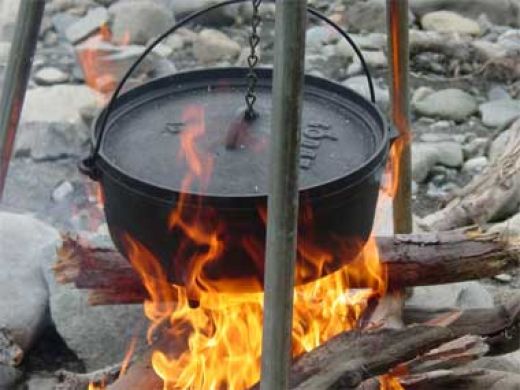
campfire-stewOnce when Jacob was cooking a stew, Esau came in from the open, famished. And Esau said to Jacob, “Give me some of that red stuff to gulp down, for I am famished”-which is why he was named Edom. Jacob said, “First sell me your birthright.” And Esau said, “I am at the point of death, so of what use is my birthright to me?” But Jacob said, “Swear to me first.” So he swore to him, and sold his birthright to Jacob. Jacob then gave Esau bread and lentil stew; he ate and drank, and he rose and went away. Thus did Esau spurn the birthright.Genesis 25:29-34 (JPS Tanakh)

Let there be no immoral or godless person like Esau, who sold his own birthright for a single meal. For you know that even afterwards, when he desired to inherit the blessing, he was rejected, for he found no place for repentance, though he sought for it with tears.Hebrews 12:16-17

We usually think of right and wrong as based on some set of formal or informal standards. For religious people, there tends to be a formal code against which actions are judged morally. It’s a little more fuzzy if you are a secular person, but that amorphous entity known as political correctness seems to be the final arbiter of proper actions (I tend to think of it as the doctrine of “Thou shalt not offend anybody”) in humanistic philosophy or atheism.

The example I’ve presented, from this week’s Torah Portion Toldot may seem to be difficult to understand in terms of how right and wrong are defined. Just what did Esau do that was so wrong? If it was his birthright, why shouldn’t he sell it for a bowl of red stew or anything else?

We don’t have a concept of the “rights of the first born” in modern, western society, so the question of Esau’s “sin” is mysterious to us. It cannot be understood outside of it’s literary and religious context and it is that context that provides the actions of Esau and Jacob with meaning. The First Fruits of Zion commentary on Toldot offers some illumination.

Whenever we allow our appetites to rule us, we are following in the footsteps of Esau. How often our desire for “red, red stuff” dictates our decisions! Opportunities to honor or despise our birthright pass before us on a daily basis. We are constantly placed in positions where we must decide between what we crave and what is right. A man who lets his appetites control him is a godless man. For many men, sexual temptation is the “red, red stuff” for which they are willing to compromise their birthright. For others it may be the desire for power or control. For others it may be desire for possessions. For still others, it may lie in the realm of physical addictions. All of these are signs of Esau. They are the “red, red stuff”.

Esau accepted Jacob’s offer. The Torah artfully describes Esau’s cavalier exit with a succinct series of one-word verbs: “He ate, he drank, he rose, he left and he despised his birthright.”

In some ways, the exchange between Esau and Jacob becomes a metaphor for how people confuse their priorities and their values, choosing something quick and satisfying at the expense of what is precious and enduring. The transaction becomes a lesson and a cautionary tale for people of faith to stay the course and to cling to our principles rather than giving in to momentary stressors, challenges, and temptations.

Now let’s take one giant step backward.

Right and wrong are defined within a contextual framework. Without such a framework, morals, ethics, and values either do not exist or become highly subjective (something is good because it is good for me or I like it, regardless of its impact on you). As I previously mentioned, religion isn’t the only framework that defines right and wrong. The secular world has a set of standards and morals that guide people in “right living”, but those standards often contradict what religious people think of as proper behavior. To be fair, between different religions and even within different sects of the same religion, the standards for right and wrong vary…sometimes by quite a bit.

vandalism-in-JerusalemThe recent Sydney Morning Herald news story When women and girls are the enemy illustrates how members of the Ultra-Orthodox Jewish community are seemingly “at war” with women, or at least with their appearance in photos and advertisements, which they believe is immodest and sexually “tempting”. But from an outsider’s viewpoint, it’s one thing to object to an image on moral grounds and something else entirely to commit acts of vandalism to enforce those morals. This example is uncomfortably close to a proposal in Saudi Arabia that may require women, who are normally completely covered from head to toe except for their eyes (and they have to see somehow), to cover even their eyes if these women have tempting eyes.

I suppose the philosophy behind both sets of behaviors is that these Jewish and Muslim men are incredibly concerned that they’ll be inspired to some sort of sexual attraction by women and are making the women (or the photo ads of women) responsible for the men’s feelings. I’m sure I’ll receive some sort of rebuttal about what I just said and I admit that I lack the context by which to completely understand what these Jewish and Muslim men are thinking and feeling, but like I said, right and wrong are defined contextually. For instance, seeing a little, red-headed girl as the official icon for the Wendy’s Hamburger restaurant chain is no big deal to me, but it might seem offensive to a conservative Jewish or Muslim man.

OK, to be fair, just about every guy has to deal with the struggle of objectifying women in terms of appearance, and if you are a Christian and seriously consider what Jesus taught in Matthew 5:28, then this really is a problem that men must address. In Christianity and in most forms of Judaism however, the responsibility is given to the men and not to the women since it is our eyes, and our brain, and our emotions that are at the root of obedience or disobedience, not the fact that women exist physically and visually.

I mentioned taking one giant step backward before. Let’s take another one.

Is God an Objective being? That is, does God exist independently of whatever religion and creed we happen to follow? Most of us should say “yes”. God doesn’t need us to be a Lutheran or a Catholic or a Reform Jew or an Orthodox Jew simply to exist as God. Moses said:

Before the mountains were born
or you brought forth the whole world,
from everlasting to everlasting you are God. –Psalm 90:2

And David said:

The LORD sits enthroned over the flood;
the LORD is enthroned as King forever. –Psalm 29:10

If God existed before Creation and He will continue after all things have passed away, then God’s standard of morality, correctness, and justice are certainly independent of our religious orientation or lack thereof. Sure, it’s probably not as simple as that, but I have to start somewhere. The Talmud considers morality to be somewhat mutable and changeable with the needs of each generation, but there is a limit beyond which Jewish people (and Christians and Muslims) say, “this is always wrong.” God must have that limit too, only in His case, His is the ultimate limit. God is His own context. He is, in reality (however you want to define that term), is the final arbiter of right and wrong.

God didn’t really invent “religion”. A religious framework is the interface by which people define and live out the actions they believe to be the will of God. However, religion is a man-made construct designed to interpret the Divine and as something man-made, it is not perfect…probably far from perfect, as a method of interpretation and definition.

How do people choose a religion, assuming they are religious? If you are born into a religious Jewish or Christian family, there is a possibility you will continue the religion of your parents because it is what you have learned and it is a continuation of your family and culture. But that’s not an absolute assurance. Some Jews have chosen to convert to other religions, to reject the religious aspect of their Judaism, or in extreme cases, to reject being Jewish in any lived manner. Someone born into a Christian home isn’t guaranteed to grow up a Christian and many kids leave the church the minute they are old enough to effectively tell their parents, “No.”

Why do secular people choose one religion or another? I don’t want to take up time and space by describing my own experience of becoming a believer in detail, but let’s just say a series of very unlikely events occurred that resulted in me accepting Jesus as Lord and Savior and starting to attend a specific church in my community. My Jewish wife introduced me to the local Messianic Jewish (One Law) congregation and I shifted my religious orientation. Within the past year, I’ve shifted again based on my assessment of the validity of the One Law proposition, while my wife, over the past several years, transitioned into a more traditional (non-Messianic) Jewish faith.

But is my religious orientation (admittedly in a state of flux at the moment) any more or less valid than any other Christian in or out of any other church (or synagogue) or any religious Jew or any Muslim or any other spiritual or faith group?

Tough question.

My personal opinion about why we have so many different religious and spiritual traditions in the world is that we, as human beings, are wired by God to seek Him. On the other hand, as human beings, we want what we want and we want it our way. If how we perceive God’s requirements in one system doesn’t meet our personal requirements for a faith community (whatever those requirements may be), then we go shopping for another faith community until we find one that fits the bill.

I know, that’s kind of cynical, but that’s what we do as human beings. We simply tell ourselves that the religious tradition we have selected is the “true” religion and all of the others are wannabes and posers.
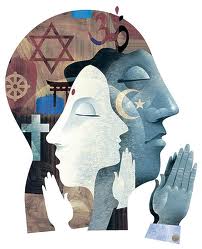
interfaithBut how do you know you are right in your choice? How can you be so sure? Remember, your entire understanding of what is right and what is wrong is based on the religious, spiritual, or moral context you have selected for yourself (and even secular humanism and atheism is a “moral context”). How you think of others and how you treat them is based on that context. How you think of yourself and your place in the universe is based on that context. You chose it. You live with it. If you don’t like it, you can change it. Many people have.

It’s a tough question. What makes you right and everyone else wrong? Or, turning the question around, what makes me right and everyone else wrong? How can I be so sure? What if I made a mistake. If God exists, if God cares for human beings, if God has an objective set of moral standards He wants people to understand and live by, how can we know them and how can we be sure; how can I be sure, that the values I’m living by right now are the ones He has for me?

Or for you?

If Rabbi Freeman is right, that set of standards and context is extremely important.

There is no such thing as a mitzvah done alone.

In a mitzvah, space, time and consciousness converge. You nod your consent, and a flood of generations flows through you to do the rest.

Together with you, every soul of our people, wherever they may be, are swept along in the current.

That works for Rabbi Freeman within his conceptual framework but what about the rest of us? In Judaism, the metaphor can be extended to include performing every mitzvah as a partner with God. Is God waiting to perform the mitzvot with us? Are we are living a life of enduring substance or just noshing on a pot of yummy red stew?

Longing for the Dawn

Moses at SinaiA song of ascents. From the depths I called You, Hashem. O Lord, hear my voice, may Your ears be attentive to the sound of my pleas. If Your preserve iniquities, O God, O Lord, who could survive? For with You is forgiveness, that You may be feared. I put confidence in Hashem, my soul put confidence, and I hoped for His word, My soul [yearns] for the Lord, among those longing for the dawn, those longing for the dawn. Let Israel hope for Hashem, for with Hashem is kindness, and with Him is abundant redemption. And He shall redeem Israel from all its iniquities.Psalm 130 (Stone Edition Tanakh)

It’s been almost six months since I started this experiment. I feel as if I’m no closer to what I’ve been looking for than when I made this life transition last May. I’m not getting any younger, God.

On the other hand, how long did Abraham and Sarah wait before the birth of Isaac? How long did Isaac wait before the coming of Rebecca, his bride? How long did Jacob wait before he could marry Rachel? How long has every Jew who ever lived waited for the coming of the Messiah? Christians continue to wait for the return of Jesus. How long, O Lord, how long must we wait?

Maybe it’s my fault. Maybe it’s just how life works.

We’ve all been so busy lately. My wife returned to work and she is hardly at home these days. I can’t remember the last time she was able to help out in the library at the Reform shul or with an event at Chabad, let alone the last time she or my daughter went to worship at synagogue. It seems like we’re all running around to this place or that, doing one thing or another. To confess, even Shabbat barely seems like any sort of break in activity compared to the rest of the week (I know you must all think I’m terrible).

The NIV Bible translates Psalm 130:6 as:

I wait for the Lord
more than watchmen wait for the morning,
more than watchmen wait for the morning.

lost-in-the-mistAs strange as it may sound to most of you reading these words, my journey of faith has been mostly in darkness or at best, in a half-light. I seem to see what I’m looking for, but I can only picture it dimly (1 Corinthians 13:12), as if I’m straining to see the light of a lamp sitting on the window sill of a home away in the distance. The fog has rolled in and night is upon me. I am chilled to the bone and walk the trail in the darkness alone, with miles before me until my goal, and only the strange ebony sky and unfamiliar territory are my companions.

But more than the watchman at the walls of a besieged city, surrounded by foes and death, do I wait for the morning. “My soul yearns for the Lord, among those longing for the dawn.”

It’s only been six months. Abraham waited for decades for his “miracle” and even after Isaac was born, there were many challenges such as the Akedah and the death of his beloved Sarah. Finally, “Abraham breathed his last, dying at a good ripe age, old and contented; and he was gathered to his kin” (Genesis 25:8 JPS Tanakh) and another generation picked up the banner, and then another, and another, and…

But I am here now and I am waiting like a watchman in the night. I’m not even sure what I’m waiting for or what it will look like when it arrives (assuming it will ever arrive). I suppose I could say, like any other Christian, that I’m waiting for Jesus to return, but I’m waiting for something else before that. What it is, I cannot say, but I do know that it has not come yet and the longing is still here. Is it belonging? Is it illumination? Is it clarity of purpose? I don’t know.

Maybe I’m just waiting for God to tell me what I’m waiting for. Whatever comes out of this will probably end up being very different from what I’d planned. But then it is His will and not my will that must prevail.

Until I reach whatever God has sent to find me, like a soldier preparing for battle or a watchman at the walls of his city at night, I stare into the darkness and pray for even the faintest sign that there will come the dawn.

nightsky1

Abraham’s Servant

abrahams-servantMany see the value of spirituality, and perhaps its necessity. They seek to infuse their lives with spirituality and nurture their relationship the Al-mighty. How does one begin to live such a life?

Abraham sends his servant Eliezer to find a wife for his son Isaac. The Torah, known for its brevity in the general narrative and in outlining the commandments, describes Eliezer’s search in uncharacteristic detail. Our Sages are lead to conclude that “G-d finds more beauty in the regular conversation of our Forefather’s servants than in the children’s Torah” (Rashi, Gen. 24:42 based on Midrash). How could anything be more beautiful than Torah, His Mitzvos (commandments) that guide us how to live life to its fullest?

Let’s observe Eliezer in action (Gen. 24): He arrived at the well where he’d meet Isaac’s bride Rebecca, and he took a moment to pray to G-d for help. As matters unfolded, Eliezer stood back and recognized G-d’s hand in the success of the mission. He began to see success, he then bowed to G-d and said a prayer of thanks. He recounted the events to Rebecca’s family and pointed to G-d’s hand throughout. The family agreed to the marriage and Eliezer bowed in thanks to G-d.

What’s the ultimate beauty of G-d’s Torah? It brings us to recognize and build our relationship with the Al-mighty. That’s spirituality in a nutshell, and there’s no greater joy. Abraham’s servant, amidst all that occurs, maintains that relationship; he lives with the constant awareness of G-d’s presence in his personal life. G-d Himself finds that most beautiful!

-Rabbi Mordechai Dixler
Program Director, Torah.org – Project Genesis

And he said, “O Lord, God of my master Abraham, grant me good fortune this day, and deal graciously with my master Abraham: Here I stand by the spring as the daughters of the townsmen come out to draw water; let the maiden to whom I say, ‘Please, lower your jar that I may drink,’ and who replies, ‘Drink, and I will also water your camels’-let her be the one whom You have decreed for Your servant Isaac. Thereby shall I know that You have dealt graciously with my master.”Genesis 24:12-14

I receive the Project Genesis Lifeline email on Friday morning, which is usually too late to use as a source for my Torah Portion “morning meditation”, since I write each blog post a day ahead. This is why I tend to comment on a given Torah portion right before and right after Shabbat. This commentary from Rabbi Dixler surprised me a little, not in what he said, but in the fact that he posted a photo of Denver Bronco’s Quarterback Tim Tebow praying before a game. Why use Tebow as an example when Rabbi Dixler could have as easily used a photo of a Jew davening? I looked up Tebow (I’m not a football fan) on Wikipedia and found this:

Tebow was born in Makati City in the Philippines, the son of Pamela Pemberton Tebow, daughter of a U.S. Army colonel, and Robert Ramsey Tebow, a pastor, who were serving as Christian Baptist missionaries at the time.

All of the Tebow children were homeschooled by their mother, who worked to instill the family’s Christian beliefs along the way.

I’m probably reading more into this than is really there, but as I recall, the servant of Abraham was not a Hebrew (some Rabbis consider him a Ger Toshav) and yet he gives us our first example of a personal prayer in the Torah. It’s also interesting that the servant refers to God as, “O Lord, God of my master Abraham” rather than as “my God” or just “God”.

It’s often thought that one of Abraham’s virtues was that he taught all of his household, including his family and servants, ethical monotheism or the nature and character of the One God. We know from later in the scriptures that Israel was and is to be a “light to the nations” (Isaiah 49:6) and moreover, that the nations would be blessed through Abraham (Genesis 12:3) and his seed (Genesis 22:18, 26:4, Acts 3:25).

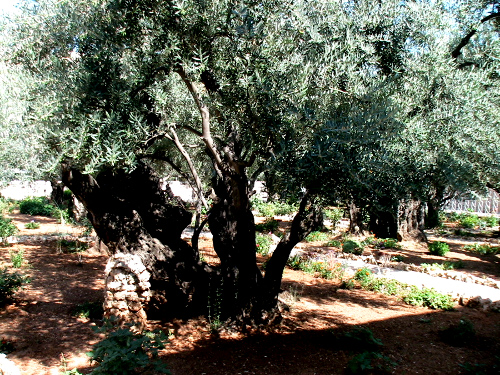
ancient_olive_treeWe see from this two things: that the Gentiles connect to God through the Jewish people, and that once this connection is established, we may access God directly. To extend this metaphor, just as the servant of Abraham connected to God through his Jewish intermediary Abraham, we who are Christians connect to God through our Jewish intermediary, His Son, Jesus, the Messiah and Savior. In that sense, there is a duality to our nature as Christians. On the one hand, our unshakable foundation is the Rock and the cornerstone that was rejected, and we can trace his lineage all the way back in time from Jesus to Abraham (Matthew 1:1-17). On the other hand, standing on that rock, we continually reach up to the Heavens seeking the Author of our faith and the King of Majesty and Glory for all the Universe.

Rabbi Tzvi Freeman, though addressing the legacy of the Jews, speaks of this in his article “Life’s Roots” at Chabad.org.

We are trees, living two lives at once. One life breaking through the soil into this world. Where, with all our might, we struggle to rise above it, grapple for its sun and its dew, desperate not to be torn away by the fury of its storms or consumed by its fires.

Then there are our roots, deep under the ground, unmoving and serene. They are our ancient mothers and fathers, Abraham, Sarah, Isaac, Rivkah, Yaacov, Leah and Rachel. They lie deep within us, at our very core. For them, there is no storm, no struggle. There is only the One, the Infinite, for Whom all the cosmos with all its challenges are nothing more than a fantasy renewed every moment from the void.

Our strength is from our bond with them, and with their nurture we will conquer the storm. We will bring beauty to the world we were planted within.

While Judaism sees Noah as the “father” of the Gentiles and believes we should look to him for the seven laws by which we should govern our lives, Paul teaches us that we can call Abraham our father (Romans 4) because like him, we are “justified by faith” and it was from Abraham that the hope of the Messiah comes. We stand on the rock and reach up to the heavens.

nightsky1

Chayei Sarah: Creating Eternity

stop-timeIn chronicling the life of Avraham, we are told in the portion Chayei Sarah that “Avraham was old, well advanced in days, and G-d blessed Avraham in all things.” Seemingly, “old” and “well advanced in days” are synonymous. Why does the verse repeat itself?

Our Sages interpret the qualities of “old” — zakein — and “well advanced in days” — ba bayamim — in the following manner: “Old” alludes to the acquisition of knowledge, while “well advanced in days” refers to the filling of each and every day with the performance of mitzvos.

Commentary on Chayei Sarah: “Aging Gracefully”
Based on Likkutei Sichos , Vol. III, pp. 773-778 and on
on the teachings of the Lubavitcher Rebbe
Rabbi Menachem M. Schneerson
Chabad.org

We all die. The goal isn’t to live forever, the goal is to create something that will. -Chuck Palahniuk

Time is finite. Our time is finite. Yet it is supposed to be possible to be a part of something that will last forever. I’m not taking about our “immortal souls” and an eternity in “the life of the world to come”, although for those of us who have faith, they are realities. I’m talking about what we build here and now that will last after our flesh and blood bodies have expired and decayed. In Torah Portion Chayei Sarah, we have the lives of Abraham and Sarah who though mortal, live on. Although this week’s Torah Portion is called “The Life of Sarah”, virtually the first event we read is that Sarah dies.

Sarah’s lifetime-the span of Sarah’s life-came to one hundred and twenty-seven years. Sarah died in Kiriath-arba-now Hebron-in the land of Canaan; and Abraham proceeded to mourn for Sarah and to bewail her. –Genesis 23:1-2

How are we to understand that the Torah portion called “the Life of Sarah begins with her death? Here’s one viewpoint.

The reading Chayei Sarah (“The life of Sarah”) begins by telling of Sarah’s death, which features in much of the subsequent narrative. This evokes an obvious question: Why is the reading entitled “The life of Sarah”?

This question can be resolved on the basis of our Sages’ statement: “Yaakov our Patriarch did not die.” Although he was mourned and buried, his descendants perpetuate his spiritual heritage. And so, Yaakov is still alive.

The same can be true for any individual. It is the spiritual content of our lives, and not our physical existence, which is fundamental. The boundaries of mortal existence cannot contain this spiritual dimension.

-Rabbi Eli Touger
“Ongoing Life: The Continuing Effects of Sarah’s Influence”
Adapted from Likkutei Sichos, Vol. V, p. 338ff; Vol. XV, p. 145ff
Chabad.org

We normally think of those things that will live on after us as our work, what we meant to others, and the values we taught people. We also tend to think that our children and grandchildren carry forward our legacy and this is all true. But here we see that there is a spiritual dimension to what we do in life that continues to live and make its presence known. There is an ineffable essence to the nature of what we do in the service of God that has a greater impact on this world than all the monuments, statues, and works of the great and the famous throughout time.

Yet, in considering our hope in the future, we also have these examples.

Jesus replied, “Are you not in error because you do not know the Scriptures or the power of God? When the dead rise, they will neither marry nor be given in marriage; they will be like the angels in heaven. Now about the dead rising—have you not read in the Book of Moses, in the account of the burning bush, how God said to him, ‘I am the God of Abraham, the God of Isaac, and the God of Jacob’? He is not the God of the dead, but of the living.” –Mark 12:24-27

About eight days after Jesus said this, he took Peter, John and James with him and went up onto a mountain to pray. As he was praying, the appearance of his face changed, and his clothes became as bright as a flash of lightning. Two men, Moses and Elijah, appeared in glorious splendor, talking with Jesus. They spoke about his departure, which he was about to bring to fulfillment at Jerusalem. Peter and his companions were very sleepy, but when they became fully awake, they saw his glory and the two men standing with him. As the men were leaving Jesus, Peter said to him, “Master, it is good for us to be here. Let us put up three shelters—one for you, one for Moses and one for Elijah.” –Luke 9:28-33

liveIf we look to our faith and the Author of that faith, we are assured that what we do here and now matters, not only in a physical sense but in the spiritual realm as well (though we don’t understand how it matters). We know that what we do lives on after us, both physically and spiritually. We in fact know that those who have passed away before us are not dead but live eternally and we have been promised that, like Abraham, Sarah, Moses, and Elijah, we will also live. It would be nice if we could accept this promise in absolute terms so that we would never be afraid of the shortness of breath, a pain across our chest, or a mark on our skin that begins to change. But we are only human.

I know that when we are scared, when we are in pain, when we are sick, we become aware of how frail our lives are and how easily they could be ended. In spite of the promises, our faith can be weak and as human beings we are afraid. As human beings, we can doubt the validity and significance of our lives and our actions. When we are under pressure and feeling stress, hope evaporates like water under the desert sun.

That’s when we need to be reminded.

Derek Leman recently said:

When a loved one is absent, especially is they are far away, we keep some pictures of them. It is an act of love, and something we need, to bring out the pictures and look at them regularly. So, when we study the words of scripture, we remember that God is real though hidden. I find that closely, slowly, repeatedly, thoughtfully lingering over the words and puzzling out their meaning and significance is what brings his Presence near.

Reading the scriptures and studying the Torah Portion are more than just exercises of learning and annual habits. They also serve as a reminder for the frightened and the desperate that there is a strength and a life beyond our own. It is a reminder that we are not alone in the world and that we matter, just as who are at this very moment. What we do matters, not only here and not only now, but in the infinite and timeless eternity were God sits on His Throne. Even our softest and most gentle whisper of kindness has power that resounds across the unseen folds of the universe and is experienced by the great prophets and kings of old and even among the angels.

Sarah and Abraham died but everything they did continues to echo in our world and in the world beyond. Sarah and Abraham died but they live forever. We can be like them if we pay attention to what we do and use our lives and our time as they did. We can fill our days with doing kindness to others and our nights with the study of God’s Word. When you doubt, do good, read, pray, and then remember. We long for God. He longs for us. God lives forever. So will we and in fact, in our acts of charity and righteousness, we already do.

Good Shabbos.

Encountering Differences

differencesThe Talmud says, “Precious is the human being who was created in the image of G-d. And an even greater sign of this preciousness is that man was informed that he was created in G-d’s image.”

-Rabbi Shimon Apisdorf
“Freedom and Self Awareness”
Torah.org.

Don’t be afraid of the other person because he is different from you. There is far more in common between any two human beings than there are differences.

As for the differences, think of them as the hooks that hold us together.
Differences are that which we have most in common.

(The Rebbe was talking to children and discussing relationships between Jews and non-Jews).

-Rabbi Tzvi Freeman
“Differences”
Based on letters and talks of the Rebbe
Rabbi M. M. Schneerson
Chabad.org

I was wondering how I’d start off writing about what was on my mind today and Rabbi Freeman handed me the answer in my email inbox. This theme of “differences” has been coming up a lot lately. As most of you who read my blog regularly know, my post on an openly gay Orthodox Rabbi performing a same-sex wedding ceremony has attracted a lot of attention and many comments. What’s really interesting is that the conversation shifted from the primary topic to Orthodox Judaism in general. Add to the mix Derek Leman’s Torah Fundamentals blog series which compares Christian (or Gentile Messianic depending on your perspective) and Jewish differences in how the Torah is read and understood, and a whole “can of worms” is opened up and spewed all over the place. The “Messianic” movement is the intersection where Christianity and Judaism tries to meet and integrate, which is sort of like taking the contents of the can and packaging it together again in a new way. However,  like intermarriage (something I’m familiar with), differences don’t always enter the mixing bowl very smoothly and sometimes there are significant bumps, lumps, and bruises involved in the process (and I apologize for mixing my metaphors along with Christians and Jews).

When Rabbi Freeman quoted the Rebbe in his conversation to children about relationships with non-Jews, he offered some hope that there can be a conduit of communication between Judaism and Christianity. I wish I could have heard the entire conversation. I’m sure it would have been inspiring.

I think the Messianic movement, at least for the Gentiles in it and perhaps for some of the Jewish members, believes the “keys” to the “Judaism” in “Messianic Judaism” are held, in part, by the Orthodox. This may or may not be true in any sense, but because the Orthodox live in a manner so distinctive in its Judaism and tradition, many Gentiles see them as “the real Jews” (some Jewish people think that Christians = Catholics and believe that all Christians follow the Pope and consider the Vatican as our “holy city”). In following the comments on last week’s blog post, it became apparent that what most Christians don’t know about Judaism in general and the Orthodox in particular, would fill volumes. That includes those non-Jews in the Messianic community, but Messianic non-Jews can make their lack of knowledge exceedingly apparent because many are trying to live a “Jewish” lifestyle without knowing that much about Jewish lifestyles.

I suppose it’s one of the reasons I don’t currently worship with Messianics on a regular basis and prefer to self-identify as a Christian. I can probably “do” Christianity a little better than I can “Judaism” at this point (though I’m sure I’d stick out like a sore thumb in any church once I started opening my mouth) and as far as me being a Goy is concerned, it’s a little more honest, too.

While Rabbi Freeman’s previous message is very encouraging, he also wrote a message about guiding each person to their own path:

Just as it is a mitzvah to direct someone onto the path where he belongs, so too it is a crime to direct someone onto a path that does not belong to him.

Each person is born with a path particular to his or her soul, generally according to the culture into which he or she was born.

There are universal truths, the inheritance of all of us since Adam and Noah. In them we are all united. But we are not meant to all be the same.

Our differences are as valuable to our Creator as our similarities.

interfaithFor people who are traditionally Christian or people who are traditionally Jewish in their religious and cultural expression, the path that belongs to them may be quite apparent, but for those of us who straddle the line between two worlds (since I’m intermarried) the path where we belong isn’t always very clear. I know in this, Rabbi Freeman would be the first to say that my path should lead me to a church or perhaps back to Noah, but if combined with the idea of making differences live together, and believing that Jesus was and is a Jew, I can’t allow my focus to become that narrow.

I mentioned yesterday that sometimes I have to take time out from this mess, close the books, get away from the computer, and pray. At the point of prayer (and forgive me for saying this), it doesn’t matter if you’re Jewish or Christian or anything else. The moment you move the rest of the world to one side and you authentically engage with God in prayer, it is just you and God. It can be like Jacob wrestling with the angel in that we struggle with God to understand who we are, who God is (we may even ask His Name), and what we are supposed to be doing. We cling to God and in that embrace demand, “I will not let you go, unless you bless me.” (Genesis 32:27). The mechanics of how we pray and the manner in which we conceptualize God may differ depending on whether we are Christian or Jewish, but the need to connect with God and even to contend with Him is universal.

I have been questioning lately where to find wisdom and insight into God in relation to the traditional Jewish texts but here too, there is an answer and a truth, as expressed by Rabbi Freeman, that we can all consume.

Truth can come from anywhere—there is nothing that does not have its truth. Because, without a spark of truth, nothing can exist. Not even falseness.

Therefore, the wise man is he who knows how to learn truth from every person and discover the truth of each thing.

Different religious traditions and different people groups understand themselves and God in varied ways. Sometimes one group will watch the ways of another and respond by being puzzled, confused, or even appalled. Each group thinks they have the corner market on the best way to pray, do good deeds, worship, and even eat and dress. Yet we were all created in the image of God and despite our obvious differences, that image is the universal link between man and man and between man and God.

The Insurmountable Wall

freestyle1All the elaborate proofs, all the philosophical machinations, none of that will never stand you firmly on your feet. There’s only one thing that can give you that, and that’s your own inherent conviction.

For even as your own mind flounders, you yourself know that this is so, and know that you believe it to be so. It is a conviction all the winds of the earth cannot uproot, that has carried us to this point in time, that has rendered us indestructible and timeless.

For it comes from within and from the heritage of your ancestors who believed as well, back to the invincible conviction of our father, Abraham, a man who took on the entire world.

The doubts, the hesitations, the vacillations, all these come to you from the outside. Your challenge is but to allow your inner knowledge to shine through and be your guide.

Inside is boundless power.

-Rabbi Tzvi Freeman
“Conviction”
Based on letters and talks of the Rebbe
Rabbi M. M. Schneerson
Chabad.org

“Any intelligent fool can make things bigger, more complex, and more violent. It takes a touch of genius — and a lot of courage — to move in the opposite direction.”

Albert Einstein

It’s no small feat to try to understand God. In truth, we never will. Religion and theology is the interface by which we try to make some sense out of a God that exists in the realm beyond reason and comprehension. Even the systems we develop that allow us to build a religious interface can be exceedingly complex and practically impossible to navigate. For instance, take my situation. I’m trying to shift my focus from a traditional Gentile Christian perspective to one that includes at least some elements from Jewish wisdom and learning.

It’s not easy. Here’s what I mean.

As we will see shortly, not all rabbinic sources share the view that the Oral Torah was received as a discrete and finite set of traditions. Later controversies between the Rabbanites (early medieval inheritors of rabbinic tradition) and the Karaites (those who rejected the authority of the rabbinic tradition) made this view of Oral Torah particularly appealing to those who accepted the authority of rabbinic tradition.

-Elizabeth Shanks Alexander
“The Orality of Rabbinic Writing” (p. 42)
As published in The Cambridge Companion to the Talmud and Rabbinic Literature
Edited by Charlotte E. Fonrobert and Martin S. Jaffee

Here’s another example from the same source.

In contrast with the Talmud, the Mishnah itself nowhere advances the theory of the Oral Torah and, aside from the opening paragraphs of Avot, seldom calls itself “Torah” or associates itself with either Moses or Mount Sinai.

-Shane J.D. Cohen
“Judaean Legal Tradition and Halakhah of the Mishnah” (p. 122)

Not easy material for the non-Jew to wrap his brain around. Catherine Hezser, in her article for the same publication “Roman Law and Rabbinic Legal Composition” (pp 144-5) agrees.

Rabbinic texts are not easily accessible to modern readers with little exposure to classical rabbinic educations. Even a cursory glance will reveal the imposing compositional nature of these texts.

alone-desert
After three days, I had hoped to leave this topic and move on, but the concept of being an “intelligent fool” is something that I continue to dwell upon. And yet (if I dare to contradict Einstein), I don’t see how to make the vast body of Jewish religious and intellectual law, interpretation, and commentary into anything less than a dizzying conundrum. However, I take some comfort in Rabbi Freeman’s words since he not only describes the “doubts, the hesitations, the vacillations” of my mind in trying to grasp what is beyond me, but says that it’s conviction, not comprehension, that allows “inner knowledge to shine through and be your guide.”

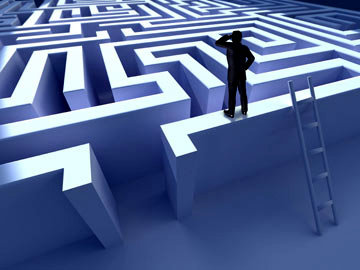
Periodically in my journey of faith, I become lost in the maze of information and details, not just because of its vastness but because of its alien nature. God is alien to humanity and Jewish wisdom is alien to the Gentile (and yet tantalizingly familiar, somehow). I know somewhere there is a bit of cheese waiting for me at the end of the maze if I’m able to correctly trace my route, but I can’t quite figure out which turn to make next.

Yesterday, I quoted from the lyrics of the Jackson Browne song, “Looking into You” (1972) which include:

The great song traveler passed through here
And he opened my eyes to the view
And I was among those who called him a prophet
And I asked him what was true
Until the distance had shown how the road remains alone
Now I’m looking in my life for a truth that is my own

Compare what Browne is saying to Rabbi Freeman:

The doubts, the hesitations, the vacillations, all these come to you from the outside. Your challenge is but to allow your inner knowledge to shine through and be your guide.

I know. I tend to get in trouble when I compare information from vastly different sources, but both men seem to be saying that depending solely on outside information to define reality and meaning isn’t going to work. Yes, study is important, knowledgeable and insightful teachers are important, but while God does speak to us from those sources, He also speaks to us.

I said earlier that religion and theology is the interface by which we interact with God. That’s true. Without them, we could never be able to operationalize a life of faith. We wouldn’t have a starting point or any idea of what actions we should take to enact holiness. But we also need to own our end of the relationship. It has to be part of us and probably it has to be the core of us. Not understanding the complexities of Mishnah, Talmud, and Gemara isn’t a death sentence and particularly for the Gentile, there is nothing specific that commands us to adopt such comprehension and to define our relationship with God by its tenets. I pursue that path of learning because I feel driven to do so, but I also must stop and realize that, with or without that learning, God is here.

There is something of God in each of us, with or without the Bible, with or without the church and synagogue, with or without the wisdom of the sages and the writings of the church fathers. They provide vital context, but they are not God, nor are they the actual relationship, the conduit between man and Divine. It’s that relationship and what we can take from man-on-a-mazeit that is “the truth that is our own” and the “inner knowledge that shines and guides” us to God.

It’s at times like these, when I open my eyes and really see the immense vastness of what I am trying to understand, encounter it with awe, feel overwhelmed, and realize that I have no idea what I’m doing, that I have to close the books for a few minutes, find some quiet place where I won’t be interrupted, and begin, “Our Father who is in heaven.”