Tag Archives: Christianity

David’s Fallen Tent in the Wilderness

The Torah states:

“And the Almighty spoke to Moshe in the wilderness of Sinai” (Numbers 1:1).

Why does the Torah specify “the wilderness” of the Sinai desert? It would have been sufficient to say “in the Sinai desert”; everyone knows that deserts are wildernesses.

The Midrash Bamidbar Rabbah comments on this verse, “Whoever does not make himself open and free like a wilderness will not be able to acquire wisdom and Torah”. This refers to having the trait of humility which allows a person to learn from everyone and to teach everyone.

An arrogant person will only be willing to learn from someone he feels is befitting his honor. A humble person is only concerned with gaining Torah knowledge and will be grateful to learn new ideas even from one who has less overall knowledge than himself.

The Midrash teaches that the Torah was given on Mt. Sinai because Mt. Sinai was the lowest of all the mountains. This symbolizes that if a person wants to receive wisdom he must be humble. If he is full of himself there is little room for anything else.

-Rabbi Kalman Packouz
Commentary on Torah Portion Bamidbar
Based on Rabbi Zelig Pliskin’s book
Growth Through Torah
Aish.com

Wow, speaking of arrogance and humility. Rabbi Pliskin’s message as presented by Rabbi Packouz came along at the right time.

As I mentioned a few days ago, I’ve been pondering my wife’s accusation of my being arrogant in my approach to attending church and presenting my particular (and from their point of view, unique) perspective on the Bible, the Messiah, Jewish people, and Judaism. How dare I walk into someone else’s house and tell them they should redecorate, what color to paint the walls, and that their taste in art is hideous?

Well, hopefully, I wasn’t that bad, but sometimes it feels like it.

As Ben Zoma said:

Who is one that is wise? One who learns from every person.

Pirkei Avot 4:1

I am inexorably drawn toward learning from Jewish sources, and yet when I try to enthusiastically share what I’ve learned with my fellow Christians, I feel like I’m the only guy in the room speaking Martian.
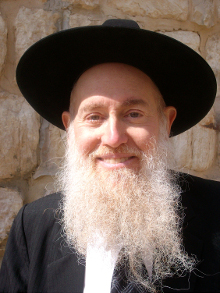
Rabbi Zelig Pliskin
Rabbi Zelig Pliskin

Interestingly enough, I have learned a lot by going to church. Not so much in the areas of theology or doctrine, although it’s been illuminating to capture the Evangelical perception of theology and doctrine, but in the areas of history, both Church history and the more generic kind, church social dynamics, and…brace yourself…kindness.

No matter how much of a pest I make of myself, people are still smiling at me, reaching out to me, offering to listen to my woes (should I ever share them in person), and to pray for me.

Who is wise? One who learns from every person, including every person at church. Yes, there is much to learn. I have to remember that church isn’t just theology and doctrine, it’s action. It’s the perpetual food drive I donate to every time I go to church, dedicated to feeding the hungry in our local community. It’s the missionary effort around the world, serving people who have never heard of the compassion of Christ, it’s visiting the sick, offering comfort to the grieving, providing care and education for little children.

“What we think, or what we know, or what we believe is, in the end, of little consequence. The only consequence is what we do.”

-John Ruskin

Ironically, most Christians are so “works-phobic” that they don’t count their own good deeds (mitzvot) as really meaning anything in the cosmic economy of God, more’s the pity, because it’s what the Church does best.

I don’t have as much to complain about as I think:

“A child, for example, cuts his finger and screams the house down. An adult cuts his finger and gets on with life. Children live in the here and now, so a child has no context for his pain. There is no meaningful future to look forward to, just the immediacy of the pain. An adult realizes that the pain will pass and life will be good again in spite it. He doesn’t suffer. And, by the way, why is it that when you hug and kiss a child the pain seems to go? It’s not the pain that goes, it’s the suffering. You have given the child a meaningful context for the pain – the context of a parent’s love. The child still feels the pain, but with a newfound context for it, he no longer suffers.

“An adult must find his own meaning in his pain. Sometimes it is obvious, as in the case of a woman in labor. Sometimes it is a little harder. But when he or she can look at the pain as a means to grow, a means to develop deeper self-understanding, then the pain remains, but the suffering will be forgotten.

“Everyone goes through pain in life. But not one of us has to suffer if we do not want to.

“Again, the choice is ours.”

-Rabbi Packouz

Rebbe
Rabbi M.M Schneerson, the Rebbe

R. Packouz is referring to tremendous human suffering and agonizing pain, not simply being frustrated when people around me don’t take my point of view seriously. What I am experiencing isn’t as painful as even a child’s cut finger. But I still gave in to the temptation to say, “ouch.”

I’ve started reading Sue Fishkoff’s book The Rebbe’s Army, and in the first chapter, she relates (pg 17):

The Besht’s (the Baal Shem Tov or Rabbi Israel ben Eliezer) message was revolutionary. His followers broke with certain Jewish norms, adopting specific dress and customs and making ritual modifications, all of which horrified the Jewish establishment.

I don’t know if I’ve “horrified” anyone, but I’m certainly shaking up the establishment here and there. Fishkoff also writes of the Besht:

“I have come into this world to show man how to live by three precepts,” he said. “Love of God, love of Israel, and love of the Torah.”

If I can have a similar purpose within my own context, then it wouldn’t be just me wielding my opinion like a sword, but the will of God to teach how to love and how to focus love.

Not that my fellow Christians are ignorant about love. Many, as I’ve said above, love greatly and demonstrate that love abundantly, particularly to the Jewish people. I just want to help illustrate that there is no dissonance between loving the Jewish people, loving Israel, loving the Torah, and loving God. There is no dissonance between loving Jewish people and realizing that means accepting and approving Jewish people loving the Torah, loving Israel, and loving God, including Messianic Jewish people.

Since I frequently read material published online by Aish.com, I often come across quotes of Rabbi Pliskin’s work, such as the one I cited above. I decided it was long past due to actually purchase one of his books, so after I finish Fishkoff’s book, I’ll be consulting (since it’s a Torah commentary) Growth Through Torah.

From what I can tell about R. Pliskin from his writing, he seems to stress compassion and kindness toward others. He seems like the sort of person who desires peace in the world and peace between people, rather than always banging heads over this theological point or that.

Chuck Jones
Chuck Jones

In many ways, we are at war in the world, battling against ignorance, hostility, brutality, and indifference, but if all we do…I do is fight, then I’ve simply redoubled my efforts after forgetting my purpose (a lesson I learned from Chuck Jones when he was describing his philosophy behind creating Wile E. Coyote to a film class I once attended).

I still don’t want to be too quick in deciding what I’m going to do next, so I’m not going to hastily pursue a conclusion.

On the other hand, there is this…

Giving up is a final solution to a temporary problem.

-anonymous holocaust survivor

And this…

While most Hasidim restrict their personal dealings to Jews, and some even to Jews within their own ultra-Orthodox communities, Lubavitchers have never been insular. Their first interest is in kindling the sparks within Jewish souls, but since the early 1980s they have widened their appeal to include non-Jews, whom they urge to remain within their own religions while obeying the seven laws God gave to Noah … This is crucial because only when all God’s divine sparks are released and reunited with the Divine Oneness will God’s purpose be achieved. “Our job is to make a dwelling place for God in the lower world,” says Rabbi Sholtiel Lebovic … “We try to make the world a more and more godly place, until the coming of Moshiach [the Messiah].”

-Fishkoff, pg 22

Although many Orthodox Jews, including Chabadniks, look down their noses at Gentiles and particularly Christians, here we see a perspective that acknowledges all human beings are “sparks” thrown off by the Divine Oneness, and only by all of those sparks being united with their Source can the world be prepared for the coming (return) of the King.

I’m one of those small sparks. But so is each and every individual soul at the church I attend, and each and every individual soul in all of the churches in the world. They’re just waiting for someone to discover them, reveal them, and free them, so they can fly…so they can soar.

I should take a fresh look at the blueprints for that tent again and see if God really wants me to help build it.


Sermon Review of the Holy Epistle to the Hebrews: Repentance from Dead Works, Part 1

What are the basic teachings of Messiah mentioned in Hebrews 6:1-3? Discover the meaning of “repentance from dead works” in this eighteenth installment of sermons on the epistle to the Hebrews.

-D. Thomas Lancaster
Sermon Eighteen: Repentance from Dead Works, Part 1
Originally presented on June 1, 2013
from the Holy Epistle to the Hebrews sermon series

Therefore let us leave the elementary doctrine of Christ and go on to maturity, not laying again a foundation of repentance from dead works and of faith toward God, and of instruction about washings, the laying on of hands, the resurrection of the dead, and eternal judgment. And this we will do if God permits.

Hebrews 6:1-3

I recently finished reading Lancaster’s book Elementary Principles: Six Foundational Principles of Ancient Jewish Christianity (It’s also available free through a special offer through June 3rd), so I’m getting this material both in the audio recordings from last year’s sermon series and in writing. In fact, yesterday, I read all of the material in the book that I listened to this morning (as I write this), so it’s all been reenforced.

But maybe you haven’t heard the audio or read the book, so I’ll be glad to review this for you.

Jesus spoke to them again in parables, saying, “The kingdom of heaven may be compared to a king who gave a wedding feast for his son. And he sent out his slaves to call those who had been invited to the wedding feast, and they were unwilling to come. Again he sent out other slaves saying, ‘Tell those who have been invited, “Behold, I have prepared my dinner; my oxen and my fattened livestock are all butchered and everything is ready; come to the wedding feast.”’ But they paid no attention and went their way, one to his own farm, another to his business, and the rest seized his slaves and mistreated them and killed them. But the king was enraged, and he sent his armies and destroyed those murderers and set their city on fire. Then he said to his slaves, ‘The wedding is ready, but those who were invited were not worthy. Go therefore to the main highways, and as many as you find there, invite to the wedding feast.’ Those slaves went out into the streets and gathered together all they found, both evil and good; and the wedding hall was filled with dinner guests.

“But when the king came in to look over the dinner guests, he saw a man there who was not dressed in wedding clothes, and he said to him, ‘Friend, how did you come in here without wedding clothes?’ And the man was speechless. Then the king said to the servants, ‘Bind him hand and foot, and throw him into the outer darkness; in that place there will be weeping and gnashing of teeth.’ For many are called, but few are chosen.”

Matthew 22:1-14 (NASB)

I’ve never understood what the wedding clothes this fellow lacked had to do with anything, so I was glad yesterday (more than a week ago as you read this) when Lancaster answered that for me.

But first things first.

Lancaster says this parable of the Master is pretty easy to understand (except for the clothes part). A father is holding a wedding feast for his son and invites many guests from all walks of life. In the parable, the father is God and the son is Messiah. The banquet is the Kingdom of God, the Messianic Age. But the wedding clothes?

We’ll get to that.

Lancaster paused to do a brief summary of last week’s sermon about the rather anemic gospel preached by much of the Evangelical church and how what Lancaster preached last week would require a major paradigm shift for most Christians (Lancaster referred to himself as a “recovering Evangelical”).

Although the Church typically preaches salvation through grace, often they miss the very first elementary principle in the Gospel: repent!

The first elementary principle cited in Hebrews 6 is to repent from “dead works.” What are “dead works?”

From an Evangelical point of view, that’s easy. Dead works are works of the Torah. Easy answer and dead wrong, based on a two-thousand year old mistake made by the ancient “Church Fathers” which, according to New Testament scholar Magnus Zetterholm, may not have been a mistake at all but a set of deliberate acts designed to separate Gentile Jesus-belief from its Jewish counterpart and create a wholly new and separate religion called “Christianity.”

TorahSo it stands to reason if the basic foundation upon which our Christian theology and doctrine rests is an effort to make a faith stripped of its Jewish origins and original meaning, then we’ve probably got it all wrong.

So what is Messianic Judaism’s answer for “dead works?” After all, the Jewish writer of the Hebrews epistle addressing Hellenistic Jews in and around Jerusalem who were in danger of apostasy and falling away from faith in the Jewish Messiah could hardly be expected to increase their faith by being told to repent of observing the mitzvot of God, could they? Would that have made any sense at all? Did Jesus replace the Torah of Moses with a truncated gospel of “believe in me and when you die, you’ll go to Heaven?”

So if dead works aren’t works of the Law, what are they?

Sin.

For the wages of sin is death…

Romans 6:23 (NASB)

Repent, not from works of Torah, but from works of sin because they lead to death. It was the Master’s central message.

From that time Jesus began to preach and say, “Repent, for the kingdom of heaven is at hand.”

Matthew 4:17 (NASB)

In Christianity, we are taught that we will die, not because of our own sins, but because of Adam’s. If we do nothing at all and never come to faith in Christ, we will die, be condemned by Jesus at the final judgment, and go to Hell forever.

Lancaster says in Judaism, there is a close association between human mortality and sin as well, but not Adam’s sin.

“Fathers shall not be put to death for their sons, nor shall sons be put to death for their fathers; everyone shall be put to death for his own sin.”

Deuteronomy 24:16 (NASB)

Lancaster also uses Numbers 27:3, Ezekiel 18:20, Romans 5:12, and Romans 6:16 to expand on this point. We are all, each and every one of us, responsible for our sins, and the Law of sin is death. The only thing this has to do with the Torah is how we define sin.

Everyone who practices sin also practices lawlessness; and sin is lawlessness.

1 John 3:4 (NASB)

So according to John, the law (Torah) isn’t bad at all, and in fact, those who disobey the Torah practice lawlessness, which is the same thing as sin. Violation of Torah or lawlessness equals sin. Conversely, observance of the Torah mitzvot, as they apply to us (and they apply differently for Jews and Gentiles in Messiah), equals obedience to God.

How the Torah does and doesn’t apply to different groups is beyond the scope of this discussion, but know, as I’ve just said, that lawlessness or disobedience to God’s covenant conditions is equal to sin and we are required to repent from lawlessness (sin) as the absolute first step in responding to the true Gospel message. “Repenting” from the Torah, that is, forsaking observance of the commandments (as Evangelical Christians believe Hebrews 6:1 should be interpreted), for a Jew, believer or otherwise, constituted sin in the days of the apostles, just as it constitutes sin for Jewish people today.

I found it interesting, in mentioning his childhood and being raised in an Evangelical Christian home, that some of the “sins” Lancaster was taught to avoid were smoking cigarettes, drinking alcohol, dancing (presumably with girls), and going to the movies.

You can’t find any of those actions prohibited in the Bible.

But…

D. Thomas Lancaster
D. Thomas Lancaster

…but Lancaster, though he made fun of these prohibitions as a teen, sees them now as “fences.” Christians often criticize Rabbinic Judaism for putting “fences around the Torah,” which means taking the basic prohibitions we find in the Bible and adding more prohibitions around them. For instance, Biblically, Shabbat begins at sundown on Friday night, but Rabbinically, it begins a certain number of minutes before sundown. Why? Because if people are taught it starts sooner, they won’t be tempted to “push the limit,” so to speak, trying to get one more thing done before the sun goes down, and thus avoid accidentally continuing to work when Shabbat actually arrives.

So smoking, drinking, dancing, and movies aren’t inherently sinful, but Lancaster can see, especially for young people, how each of these activities could potentially lead to actual sins. It’s an interesting principle to me, mainly because we see Christianity of a generation ago behaving just like Judaism.

Today, we often see almost no difference between the behavior of a Christian and a secular person. We go to the same movies, engage in the same recreation, do the same things pretty much, and except for going to Church on Sunday and maybe a Bible study on Wednesday, most Christians are exactly the same as most other people.

But aren’t we saved by grace? Who cares what we do? We aren’t saved by what we do, only by what we believe. Is that what the Bible says?

Now the deeds of the flesh are evident, which are: immorality, impurity, sensuality, idolatry, sorcery, enmities, strife, jealousy, outbursts of anger, disputes, dissensions, factions, envying, drunkenness, carousing, and things like these, of which I forewarn you, just as I have forewarned you, that those who practice such things will not inherit the kingdom of God. But the fruit of the Spirit is love, joy, peace, patience, kindness, goodness, faithfulness, gentleness, self-control; against such things there is no law. Now those who belong to Christ Jesus have crucified the flesh with its passions and desires.

Galatians 5:19-24 (NASB)

But immorality or any impurity or greed must not even be named among you, as is proper among saints; and there must be no filthiness and silly talk, or coarse jesting, which are not fitting, but rather giving of thanks. For this you know with certainty, that no immoral or impure person or covetous man, who is an idolater, has an inheritance in the kingdom of Christ and God.

Ephesians 5:3-5 (NASB)

Don’t worry. Lancaster isn’t saying that we save ourselves by what we do, but look at this. Paul isn’t saying “just believe and you’ll be righteousness.” Oh no. He’s saying if you do these things you’ll be considered righteousness. If you don’t, you have no inheritance in the Kingdom of God.

It all sounds so legalistic. But that’s what Jesus taught.

So what must we do to be saved? Repent. Without repentance, we have no part of Jesus or the Messianic Kingdom.

No one who abides in Him sins; no one who sins has seen Him or knows Him.

1 John 3:6 (NASB)

Derek Leman
Derek Leman

Our righteousness isn’t “filthy rags” at least the way we have typically been taught. You might want to read Derek Leman’s commentary on the matter.

OK, repentance isn’t exactly an unknown process for many Christians and I bet a lot of believers repented of their sins when they came to faith. But for some people, that was a long time ago. If you repented once in 1976 or in 1998, what does that mean? Have you sinned lately? For some people, they repent only once a year, on Easter or Yom Kippur. Have you sinned recently?

And He was saying to them all, “If anyone wishes to come after Me, he must deny himself, and take up his cross daily and follow Me. (emph. mine)

Luke 9:23 (NASB)

Lancaster mentioned the example of Rabbi Levi Yitzchak in his audio sermon, but I’m going to take the quote from the Elementary Principles book to make sure I don’t leave out anything:

The famous Rabbi Levi Yitzchak of Berditchev used to repent every night before saying his evening prayers (Maariv). Every evening, the rabbi of Berditchev examined his heart, what he had done on that day, and repented over every flaw he discovered. For each sin that he discovered, he said, “Levi Yitzchak will not do this again.” Then he chided himself, “Levi Yitzchak said exactly the same thing yesterday!” And he added, “Ah, but yesterday, Levi Yitzchak did not speak the truth. Today, he does speak the truth.”

-Lancaster, pg 41

Many Christians have been taught a false gospel, one that says they only have to believe and they will be saved. Evangelical Christianity is good about teaching us what to believe but not what to do. The Church has experienced a significant and even (eternal) life-threatening mission drift, failing to make the much-needed course corrections for the past twenty centuries since we were first set upon this journey as the body of Messiah by the Jewish apostles and disciples of our Master.

I’ve written a great deal about repentance lately, and I don’t think enough can be said on this. Neither does Lancaster, even though repentance should be a pretty elementary teaching of the Church. It was in the Messianic synagogue in the mid-first century, but much of that Jewish doctrine has been lost.

The path of repentance leads to joy. “I tell you, there will be more joy in heaven over one sinner who repents than over ninety-nine righteous persons who need no repentance” (Luke 15:7). The rabbis said, “Better is one hour of repentance and good deeds in this world than the whole life of the world to come.” In his book Love and the Messianic Age, Messianic Jewish pioneer Paul Levertoff says, “The sinner, in whose soul the light of the divine fire has been quenched, is greater, when he repents, than the righteous who have no need for repentance.” The place of the penitent sinner is even greater than that of the righteous person who does not need to repent, because the sinner throws himself entirely into the arms of God.

-ibid, pg 45

Now what about those wedding clothes?

“Let us rejoice and be glad and give the glory to Him, for the marriage of the Lamb has come and His bride has made herself ready.” It was given to her to clothe herself in fine linen, bright and clean; for the fine linen is the righteous acts of the saints. Then he said to me, “Write, ‘Blessed are those who are invited to the marriage supper of the Lamb.’”

Revelation 19:7-9 (NASB)

The brideThe wedding clothes are the righteous deeds of the saints, the tzadikim. One who enters the banquet without wedding clothes can be compared to one who attempts to enter the Kingdom of God without repenting of sin, turning to God, and doing good in his life.

“Not everyone who says to Me, ‘Lord, Lord,’ will enter the kingdom of heaven, but he who does the will of My Father who is in heaven will enter. Many will say to Me on that day, ‘Lord, Lord, did we not prophesy in Your name, and in Your name cast out demons, and in Your name perform many miracles?’ And then I will declare to them, ‘I never knew you; depart from Me, you who practice lawlessness.’”

Matthew 7:21-23 (NASB)

The words of the Master recorded by Matthew make so much more sense when put in their proper context, don’t you think?

Repentance and salvation cannot be separated. One does not receive salvation unless they repent and repent often.

Some think life is all about doing good and keeping away from evil.

To them, struggle has no purpose of its own—to have struggled is to have failed. Success, they imagine, is a sweet candy with no trace of bitterness.

They are wrong, tragically wrong. Struggle is an opportunity to reach the ultimate, when darkness itself becomes light. In the midst of struggle, an inner light is awakened. Light profound enough to overwhelm the darkness, encasing it and winning it over.

But if darkness never fights back, how will it ever be conquered?

-Rabbi Tzvi Freeman

Although this is the end of the chapter in Lancaster’s book, in the sermon series, Lancaster isn’t finished with the topic of “repenting from dead works.” He presents the second part next week…and so will I.

What Did I Learn?

I learned about wedding clothes and the close connection between sin, repentance, forgiveness, a life dedicated to God, and the joy, not only of someday entering the Kingdom, but of (in some ways) entering the Kingdom right now.

It’s easy to forget to repent. I know that sounds strange. Maybe that admission on my part makes me sound like a terrible person. Maybe all of you reading this, like Rabbi Levi Yitzchak, repent daily and on a regular evening schedule. Frankly, by the time I’m ready to end the day, my brain and attention span isn’t worth much. Some nights, I can barely recite the last few paragraphs of the Bedtime Shema.

But as you know if you’ve been reading this blog regularly, repentance is something I’ve been focusing on a great deal, not only in my writing but in my life. I can’t say that I’m really good at it. For some things, even approaching the idea of repenting feels threatening and scary. I don’t know what I’m afraid of exactly. Who’d be afraid of getting closer to God? But we’re all afraid of change, even if the change is beneficial.

What I learned, though, is that I won’t get into the banquet without dressing for the occasion, none of us will. That’s more than just saying “I’m sorry” to God. That’s more than just changing my mind about something. Repentance is a dedicated and detailed process that like any skill (yes, I think it’s a learned skill), takes practice, practice, practice.

hopeBut then, so does establishing and maintaining any relationship, especially as a bride to the groom, especially in the intimacy of a child to a Father.

I fall down and go ker-splat dozens of times a day. Thank God at the end of each day (or several times a day), I can turn back to my Father and turn my heart inside out, spilling all the regret, anguish, pain, and sorrow at His feet and in my own way say, “James will not do this again,” but “James said exactly the same thing yesterday! Ah, but yesterday, James did not speak the truth. Today, he does speak the truth.”

Today, let me repent and let me speak the truth, and let me continue to speak the truth as the day ends and the shadows gather. For in repentance, the shadows are swept away and in joy, there is light.


Collapsing the Tent of David

Then the LORD God said, “It is not good for the man to be alone; I will make him a helper suitable for him.”

Genesis 2:18 (NASB)

Then Paul took the men, and the next day, purifying himself along with them, went into the temple giving notice of the completion of the days of purification, until the sacrifice was offered for each one of them.

Acts 21:26 (NASB)

One person regards one day above another, another regards every day alike. Each person must be fully convinced in his own mind. He who observes the day, observes it for the Lord, and he who eats, does so for the Lord, for he gives thanks to God; and he who eats not, for the Lord he does not eat, and gives thanks to God.

Romans 14:5-6 (NASB)

You’re probably wondering what those different portions of scripture have in common. Actually, relative to my experiences last Sunday, quite a lot.

The topic of both the sermon and the Sunday school class at church was Acts 21:15-26. It was a source of a great deal of frustration for me, but I have to be thankful to Pastor Randy for cluing me in about something first.

He reminded his audience of the great accomplishments of the Jewish people and Israel across the centuries, and made sure that we all got the idea that God didn’t do away with the Old Testament (Tanakh), the nation of Israel, and the Jewish people.

He also let us know that, in the debate over whether or not Paul did the right thing by paying the expenses of the four men under a vow at the Temple and offering sacrifices, over half of those historic and modern scholars upon whom Pastor depends for his research strongly believe that not only did Paul make a mistake, but that he sinned by participating in the Temple rites.

Fortunately, Pastor doesn’t agree with that opinion (and neither do I) and in listening to various people conversing after the sermon, I was relieved to hear that most (but not all) of the people around me have the same opinion as Pastor.

But Pastor kept repeating that offering sacrifices doesn’t atone for sins, it never did. This reminded me of time after time during our previous private discussions, when talking about the continuation of Torah observance for the Jewish people including Jewish believers, he kept stressing the same point.

However, while listening to the sermon, I had something of a minor revelation similar to the one that resulted in me writing The Two-Thousand Year Old Christian Mistake.

You see, I agree with Pastor that the sacrifices in and of themselves have no power to atone for sins and to save a human being from the consequences of God’s justice. We are only saved through faith and out of that faith, we obey God. That’s what Paul and every other Jew who sincerely participated in the Temple rituals was doing. Obeying God out of faith.

So why beat up the Torah by saying it doesn’t save when I fully agree that simple, mechanical performance of the mitzvot with no intent or faith behind it is just going through the motions?

Some men came down from Judea and began teaching the brethren, “Unless you are circumcised according to the custom of Moses, you cannot be saved.”

Acts 15:1 (NASB)

This has alway puzzled me because circumcision (that is, the physical act of being circumcised and then observing the Torah commandments) isn’t what saves a person, and these gentlemen from Judea should have known that. Of course, they should have known that.

But that’s not what they meant.

When an Evangelical Christian reads that verse he or she thinks the Jews involved are saying that performing the mitzvot including the sacrifices in the Temple is what saves. But they were never meant to save. They are the conditions of the covenant relationship with God and that relationship in covenant, through faith, is what saves.

Oh duh.

Why didn’t I see this before?

Irony of GalatiansThe big hang up Christians have with the Torah is because of a misunderstanding of what the folks they call “Judaizers” were saying (Nanos more aptly refers to them as “influencers” since New Testament scholars can’t seem to agree on exactly who these people were. See The Irony of Galatians).

The “influencers” Paul refers to in his epistle to the Galatians and the Jews we hear from in Acts 15:1 weren’t saying that obeying the mitzvot and making the various sacrifices at the Temple would save the Gentile. They were saying that the Gentiles needed to be in a covenant relationship with God in order to be saved.

Especially for non-Jesus-believing Jews, the New Covenant times weren’t even on the horizon. How could they be? From their perspective, Messiah had not yet come. Thus, the Gentiles had no standing before God unless they became proselytes and entered into the Sinai covenant with God as converts to Judaism. Being a God-fearing Gentile might have been a step in the right direction, but it wasn’t a covenant relationship.

But Paul and many of the disciples of Yeshua (Jesus) knew that the New Covenant had been inaugurated with the death and resurrection of the Master, so through faith in Messiah, the Gentiles could be grafted in and benefit from the blessings of that covenant, which had begun to enter the world but had not yet completely arrived.

If you miss the distinction, that it’s being in a covenant relationship with God through faith that saves rather than just the literal behaviors of the conditions of a covenant, you completely misunderstand the Jews advocating for Gentile conversion.

These “Judaizers” or “Influencers” weren’t bad, awful, evil people. They may have had genuine concern for the Gentiles who had attached themselves to the Jewish religious movement of “the Way”. These Jews, some of whom could have been Jesus-believers with an incomplete understanding of the New Covenant blessings upon the Gentiles, may have been authentically puzzled why Paul was treating the Gentiles as if they were equal co-participants, both socially and in covenant, in Jewish religious life. They may have felt that the Gentiles couldn’t participate in covenant blessings without conversion, because they didn’t see any other way to reconcile the Gentiles to God.

Paul understood, but his viewpoint wasn’t always terribly popular with Jewish populations who didn’t apprehend his vision (figuratively and literally).

Once you figure it out, you realize the issue was never that the mitzvot saved, it was Covenant relationship. It always has been and it’s still the issue we struggle to comprehend today. Jews are the focus of almost all of the covenants we see in the Bible including the Sinai and New Covenants. Gentiles are included under a single provision of the Abrahamic covenant and by faith in Jesus, in the blessings of the New Covenant.

And that’s what I got out of last Sunday’s sermon, not that Pastor explained it that way, but by his preaching, I finally made the connection.

Things didn’t go so well in Sunday school. I was determined to make only one statement in class. I could have talked all day long about the Christian traditions that were being imposed on the text resulting in quite a few (in my opinion) erroneous assumptions being made by most of my classmates. One fellow pointblank told me Paul did sin because when Jesus was crucified, the sacrifices ended. I disagreed of course, and gave him a mini-explanation of what the Epistle to the Hebrews was really about, but I knew it was for nothing.

My Sunday school teacher heavily favors the sermons of John MacArthur and it is MacArthur’s opinion that the practice of Judaism by Jesus-believing Jews as we see it in the Book of Acts, was a transitional period between Jewish practice being within the will of God, and it being replaced by the grace of Jesus Christ, effectively extinguishing the “ceremonial laws” in the Torah.

MacArthur
John MacArthur

Teacher said it was MacArthur’s opinion that God was being patient and tolerant of the Jesus-believing Jews, including Paul, who continued in devotion to Hashem by davening at the set times of prayer, offering sacrifices in accordance to the commandments, observing Shabbos, keeping kosher, and all of the other portions of the Law that had been “nailed to the cross with Jesus.”

But there’s an apparent contradiction. In Acts, Luke depicts Paul as very pro-Torah, pro-Temple, pro-Jewish people, and pro-Judaism. However, a number of Paul’s letters, principally Galatians, seem to cast Paul in the role of being anti-Torah. That was the foundation for my comment in class when the issue of Romans 14 and the identity of the “weak” and “strong” (basing my opinion on Nanos in The Mystery of Romans) came up.

It was like I was talking in a language no one in the room understood. I saw quite a few blank stares, like no one could figure out what the heck I was talking about. One fellow, who is quite intelligent and well-read (and who holds a highly traditional Evangelical Christian view on the Bible) referenced Romans 14:5-6 to explain that it was (at that time) OK to either observe the Law or not observe the Law as long as it was for the sake of the Lord.

In other words, no one even understood my question and so they had no idea they had completely missed my point.

I let it go rather than continue to be a source of confusion and aggravation and after all, teacher said this was a lesson about unity.

Unity. That totally baffled me until I realized he meant Paul agreed to undergo the Temple ritual and humble himself to James and the Elders in Jerusalem as kind of “going along to get along.” They saw Paul as compromising in order to keep the peace, rather than standing his ground about the lack of validity in Jewish tradition, custom, and observance.

There was no way anyone in the classroom could have possibly imagined that Paul might have wanted to offer sacrifices and looked forward to participating in the Temple ritual, especially during the Holy Festival of Shavuot (although they all acknowledged why Paul should have totally been jazzed about Pentecost…the Acts 2 Pentecost, not the Greek word for the Jewish moed).

I spent the rest of the class time in a forced silence, so I was in a “terrific” mood when I left church and made the ten or fifteen minute drive back home.

When I walked in the kitchen trolling for lunch, my wife made the mistake of asking me how church went, and I made the mistake of telling her.

Then she reminded me of her role according to God:

And the Lord God said, “It is not good that man is alone; I shall make him a helpmate opposite him.”

Beresheet (Genesis) 2:18

IntermarriageThe translation I found at Chabad.org is a bit different than you’ll find in most Christian Bibles, and as I understand it, implies that God created woman to oppose her husband under certain circumstances.

Women can often cut through the fog that surrounds a man’s mind and get to the core of a matter, whether we like it or not.

My wife told me I was being arrogant if I thought I was going to change anyone’s mind, especially if that was any part of the reason I was going to church.

I got mad at first, but spending some time in the backyard pulling weeds gave me time to think.

I have been arrogant. I’ve walked into someone else’s religious and social space with the assumption that I had anything to offer them; that I had anything they wanted at all.

As it turns out, I have nothing to offer and certainly nothing anyone at church wants to hear or learn. I may think what I’m learning and how I understand the Bible is worthwhile and illuminating, but obviously I’m in a world of people who don’t see things like I do.

I kind of thought that was the point, but I’m realizing I’ve been wrong. I have no right to impose my point of view or to disagree with the people who are running the show at church. It’s their church. I’m just a glorified guest. I’m not a member and I couldn’t become a member with my current perspectives and attitudes.

My Sunday school teacher’s emphasis on unity is really the Church’s (big “C”) attitude about community. People must agree with each other for the sake of peace and unity because Christians believe certain things.

Whenever I make some sort of theological statement that conflicts with how my wife sees her convictions, she tells me “what Jews believe,” which largely comes from the local Chabad Rabbi. He tells her what Jews believe and helps orient her to a Jewish religious perspective (not that she in any way is Orthodox). So I should have realized there are certain things Christians believe too, and making some sort of theological statement that conflicts with how people in Sunday school see their convictions elicits the same response from them as I get from my spouse.

I have been arrogant, and naive, and just plain stupid.

I feel like an idiot and I feel ashamed.

I also have to question why I’m going to church, any church. In his book Tent of David, Boaz Michael emphasized that the “Messianic Gentile” must have the right attitude, one of humility and fellowship, when returning to (or staying in) church and being a sort of “light to the nations…uh, Christians.”

I blame myselfBut there’s a light you shine to help people see the path, and then there’s the really bright, annoying light you shine in people’s faces until they yell at you to turn the darn thing off.

If the “Tent of David” were inflatable, then I’d be guilty of letting at least some of the air out. I certainly feel deflated.

The Internet went out at my home on Sunday afternoon (long story) so I wasn’t able to write this blog post when my emotions were running high. That’s a good thing. I’ve had a day or so to mull things over and to cool off.

I know I disagree with most (or all) of the people at church about many things, and I have good reasons (whether anyone agrees with those reasons or not) why I believe what I do, but the people around me every Sunday morning are under no obligation whatsoever to care what I think and feel, particularly when it flies in the face of their Biblical and world view.

So I’ve got one of three options as I see it: Do what I’m doing now and continue to be an irritant not to mention desecrating the name of God, continue to go to church while keeping my big mouth shut and not participating in discussions, or leaving church and let bygones be bygones.

Frankly, in the eighteen months or so I’ve been going, I may have contributed a few positive things in church, but for the most part, no one knows what to do with me, or if they’ve made up their minds (and some have), they know they want nothing to do with me.

I’ve ruined more relationships, both face-to-face and online, by spewing my opinions and putting people off.

I’ve been letting the air out of David’s Tent or maybe I’ve been taking tools of mass destruction to it. I was supposed to be inflating it, constructing it, building it up, but now the thing is beginning to collapse around my ears. Maybe it should collapse around my mouth.

No, it’s not my mouth, it’s my attitude. I just got so caught up in what I know, that I forgot about what’s most important.

Any dispute which is for the sake of Heaven will ultimately endure, and one which is not for the sake of Heaven will not ultimately endure.

-Pirkei Avot 5:20

Hitler’s Final Solution, the Oral Torah, and its Meaning to Christianity

These are the statutes and the judgments and the teachings (Toros- plural of Torah) that HASHEM gave between Himself and the Children of Israel at Sinai through the hand of Moshe.

Vayikra (Leviticus) 26:46

Toros: One (Torah) Written and one (Torah) Oral. This informs that both were given to Moshe at Sinai.

-Rashi

This is a critical and oft underappreciated nugget of information. Not one Mitzvah in the entire Torah is capable of being carried into action given only the parameters provided in the text. There are almost 30,000 details that comprise phylacteries and 5,000 in the ubiquitous mezuzah with little information to guide to their uniform completion. What’s called “killing”? When does life begin? When does it end? What one person calls “family planning” another may legitimately define as “murder!”

The Torah cries out for explanation. There must, by definition, have been a concomitant corpus of information that accompanied the giving of the laws and that is what we call the “Oral Torah”. Rabbi Samson Raphael Hirsch uses the analogy that the Written Torah is like the notes to a scientific lecture. Every jot and squiggle has significance. If properly understood it can awaken the actual lecture. The notes remain useless to someone who has not heard the lecture from the Master. Therefore in the Oral Torah is the sum of the lecture while the Written Torah is merely a shorthand record. Without an Oral Torah that book the whole world holds in such high esteem, the Bible is rendered in-actionable. It becomes a frozen document that cannot be lived. Unfortunately, so many over the ages have become lost due to a failure to appreciate this single point and its significance for our very survival as a people.

When my wife and I were engaged, at the party there was a cousin of hers that has written voluminously about the holocaust. He himself survived, somehow, seven concentration camps. One of the Rabbis encouraged him to speak. He claimed to be unprepared and not a good English speaker. He spoke amazingly well.

-Rabbi Label Lam
“Understand it Very Well” (2007)
Torah.org

Rabbi Lam got my attention when he wrote, ”Not one Mitzvah in the entire Torah is capable of being carried into action given only the parameters provided in the text.” Most of what I hear about the Oral Torah from Evangelical Christians is that it’s all a bunch of made up rules and cannot be considered the valid Word of God. Many in the Christian Hebrew Roots world say the same thing, believing it is possible to observe the mitzvot based on the Written Torah alone.

And yet Rabbi Lam says this is impossible.

Moses received the Torah from [G-d at] Sinai and gave it over to Joshua. Joshua gave it over to the Elders, the Elders to the Prophets, and the Prophets gave it over to the Men of the Great Assembly. They [the Men of the Great Assembly] would always say these three things: Be cautious in judgment. Establish many pupils. And make a safety fence around the Torah.

-Pirkei Avot 1:1

Talmudic RabbisOrthodox Judaism generally believes that the Oral Torah was handed down in an unbroken chain as described above. Given the history of Israel’s exiles, that seems difficult to believe.

Even the written Torah was lost for a great deal of time and when it was found (2 Kings 22:8-13), King Josiah ”tore his clothes” because ”great is the wrath of the Lord that burns against us, because our fathers have not listened to the words of this book, to do according to all that is written concerning us.” If the words of the Torah had been lost even though written, how much more so can it be true that the original Oral Torah given to Moses could have been forgotten?

But that doesn’t mean Oral history didn’t accompany the written Torah in some matter or fashion across the many centuries. The Oral tradition just might not have survived intact from its earliest inception. That is, what Judaism understands to be Oral Torah now may not be entirely traceable back over three-thousand years.

I’ve repeatedly suggested that the “Jerusalem letter” we saw crafted in Acts 15 as a set of instructions for new Gentile disciples of Jesus, had to have been accompanied by oral instructions because the “four essentials” of the letter are so barren. It’s quite possible that the Didache is the documentation of the original oral instructions for the Gentile disciples, so oral information being transmitted across time to explain written instruction isn’t foreign to early Christian tradition.

Just recently, I said I thought later Christian commentary was a refactoring of the original Jewish understanding of the scriptures, and my statements were inspired by comments made by New Testament scholar Larry Hurtado on his blog, including this paragraph:

But I suspect that if Paul were asked whether Jesus was the “second person of the Trinity,” he would likely have responded with a quizzical look, and asked for some explanation of what it meant! Were the patristic texts and creedal statements saying something beyond or distinguishable from what the NT texts say? Certainly. Does that invalidate those later creedal discussions and formulations? Well, if you recognize the necessity of the continuing theological task (of intelligently attempting to articulate Christian faith meaningfully in terms appropriate and understandable in particular times and cultures), then probably you’ll see the classic creedal statements as an appropriate such effort. (emph. mine)

-Hurtado, Jesus, “Pre-existence,” etc: Responding to Questions

Rabbi Label Lam
Rabbi Label Lam

Put all together, we can paint a picture of an Oral set of instructions accompanying the written Torah, perhaps changing over time to respond to the differing demands and requirements of ”particular times and cultures.” If Judaism is guilty of this process, so indeed is Christianity. We just don’t talk about it.

I’m including the rest of the quote from Rabbi Lam’s article because it includes important points from history, and we ignore history at our own peril.

First he looked out at a room filled with newly observant Jews and wondered aloud, “Where do you people come from?” He then quoted the Talmudic principle, “Torah returns to those who have hosted it.” He explained, “If you are sitting here today then it’s probably because you have some great ancestors who were willing to and did give blood to keep this Torah alive.” He went on to talk about my wife’s and his illustrious family tree.

Then he said that had he known he was going to speak he would have brought with him a document he held in his hands that morning that answered a question that had been nagging him for almost four decades. “We all know Hitler’s “final solution” for European Jewry. What was his global scheme? Where was his plan to eliminate the rest of world Jewry?” He then paraphrased what he had learned from that document. Here is a printed transcript with a partial English translation:

“This document transmits a memorandum dispatched by I.A Eckhardt from the chief of the German Occupation Power. It is an order dated October 25, 1940 from das Reichssicherheitshauptamt-the central office of the German Security Forces to the Nazi district governors in occupied Poland, instructing them not to grant exit visas to Ostjuden- Jews from Eastern Europe. The reason behind this order is clearly spelled out: the fear that because of their “Othodoxen einstellung” their orthodoxy, these Ostjuden would provide “die Rabbiner und Talmudleher” – the Rabbis and the teachers of the Talmud, who would create “die geistige Erneuerung” the spiritual regeneration of the Jews in America and throughout the world.”

The Oral Torah is essential for our existence as a people. It is our most vital organ and instrument for survival. Without it we are immediately lost. It makes sense that those who plan our demise understand it very well!

Even the reprehensible Nazis understood the power of the Talmud and Rabbinic rulings and traditions to save the Jewish people, particularly in the face of certain disaster. We see here that beyond the extermination of the six million Jewish victims of the Third Reich, the Nazis had plans to prevent the rest of world Jewry from learning of the so-called “final solution,” for fear that the Jews in America wouldn’t be easy targets if prepared (assuming the Reich was victorious in conquering the world, which, Baruch Hashem, they were not).

Holocaust survivor David Faber

Oral Torah, which was eventually recorded in writing and then adapted repeatedly as circumstances required, was responsible for Jewish survival during a two-thousand year history where the world was continually trying to destroy them. For this reason alone, we should be thankful for the Jewish adherence to Talmud, but as I’ve already stated, in many ways, Christianity in its various forms including Protestantism, has a parallel set of “oral law” upon which it relies to define Biblical application across the changing historical and cultural landscape.

I only ask that the Evangelical Church “come clean” and admit that we have our own oral traditions that were eventually written down and upon which we continue to depend to define our faith. Just don’t let our traditions diminish the Jewish people and national Israel in any sense, or we might find ourselves “on the wrong side of God.”

If You Had to Choose Between Jesus and Your Spouse…

If someone comes to me and does not hate his father and his mother and his wife and his children and his brothers and his sisters and even his own life, he is not worthy to be my disciple.

Luke 14:26 (DHE Gospels)

I know I’m quoting this verse out of context, but I find it hard to reconcile with the following.

Have you not read that from the beginning the Maker “created them male and female,” and it says, “Therefore a man shall leave his father and mother and cling to his wife, and the two will become one flesh”? If so, they are not two any longer, but one flesh. Thus, what God has joined, man must not divide.

Matthew 19:6 (DHE Gospels)

On the one hand, Jesus seems to value marriage quite highly (what God has joined) but on the other hand, we are to reject (hate) our family including our wives, presumably if our family opposes our becoming disciples of Jesus.

As an intermarried husband, this is particularly difficult for me, especially when I see my marriage through this scripture:

But to the rest I say, not the Lord, that if any brother has a wife who is an unbeliever, and she consents to live with him, he must not divorce her. And a woman who has an unbelieving husband, and he consents to live with her, she must not send her husband away. For the unbelieving husband is sanctified through his wife, and the unbelieving wife is sanctified through [h]her believing husband; for otherwise your children are unclean, but now they are holy. Yet if the unbelieving one leaves, let him leave; the brother or the sister is not under bondage in such cases, but God has called us to peace. For how do you know, O wife, whether you will save your husband? Or how do you know, O husband, whether you will save your wife?

1 Corinthians 7:12-16 (NASB)

Also, Ephesians 5:22-33 says many fine things about marriage and how a husband and wife are to love one another. How can God join us together, tell us how to love, say that it is acceptable for a believing spouse to be joined with an unbelieving spouse if both are willing, and then tell the husband he is not worthy of being a disciple is he does not hate his wife?

intermarriageThis is one of those “difficult sayings of Jesus” that isn’t easy to answer.

Messianic or “Jewish-friendly” Christian commentaries on such specific topics aren’t always readily available, but I did find a conventional Christian response by Pastor Mark Driscoll. I know nothing about him, but he did write something detailed on this particular verse.

Jesus’ call to discipleship can be difficult. Contrary to common practice today, Jesus was not in the business of getting anyone and everyone he could in the door of his discipleship program. Instead, he took painstaking measures to clarify the costs of following him. Those who heard him often abandoned their pursuit after hearing his messages (John 6:52–71). In keeping with this truth, Jesus’ requirements for discipleship set out in Luke 14:26 are hard for us to hear.

Thankfully, there is another sense for the word “hate,” as it pertains to this passage. When it’s used in the Old Testament, particularly in the Wisdom Literature, the word loses its psychological force (Michel, “μισεω,” in TDNT, 4:687.). Instead, it carries a sense of intensified choice. For instance, in Proverbs, the writer often instructs the reader to choose righteousness over evil, often worded in terms of love and hate. The call is to reject (= hate) evil and to embrace (= love) righteousness. In Jesus’ statement here in Luke 14:26, the same principle is at play.

-Driscoll, “Tough Text Tuesday – Luke 14:26”
pastormark.tv

That helps a little but not as much as you might think. Still, the suggestion of a choice between two paths reminded me somewhat of a Kal va-chomer or “lighter to heavier” argument. If I reword the passage from Luke 14, I could say, “If you love your wife whom God has joined with you, how much more should you love Messiah, who God brought for the sake of the world?”

I suppose that could be worded better, but you get the idea. No, I’m not rewriting the Bible, far be it from me to do so. But I am suggesting in my own wee commentary (call it a small midrash, for what it’s worth) that, even if my wife is an unbeliever, I don’t have to hate her so I can love Jesus. I can love my wife, and I can also apprehend the great requirement to love and be devoted to Messiah, Son of David, who is the living embodiment of God’s promises for atonement, redemption, salvation, and the resurrection. He is the hope, not just for me, but for everyone. He is the hope that someday my wife will be saved, so in a way, by choosing him, I am also choosing her, for if I should choose her by rejecting Jesus, then how do I know I’m not dooming us both? Loving Jesus then, is also loving my wife.

Did Paul Know Jesus was the Second Person in the Trinity?

First, a quote: “The Church cannot indefinitely continue to believe about Jesus what he did not know to be true about himself,” J. W. Bowman, The Intention of Jesus (London: SCM, 1945), p. 108.

This is not really a historical claim but a theological one, and it reflects a common assumption: The assumption that the theological/religious validity of claims about Jesus rest upon what Jesus believed and taught about himself. In my book, Lord Jesus Christ (pp. 5-9), I’ve noted the irony of how this assumption has been shared by critics and advocates of Christian faith, and also how it has worked mischief in the historical investigation of Christian origins.

-Dr. Larry Hurtado
“Questioning a Common Assumption,” May 13, 2014
Larry Hurtado’s Blog

Dr. Larry Hurtado has been prolifically writing on something rather compelling over the past few days. Did Jesus know he was Divine during his “earthly ministry?” Did Jesus know he was to be an object of worship?

I think most Evangelicals would assume the answer to those questions is a resounding “yes,” but here we have one of the most preeminent New Testament scholars in the world drawing that assumption into question. I think Hurtado’s comments deserve further scrutiny.

(NOTE: I should mention here that I have no intention of matching my meager brain power and limited knowledge of New Testament scholarship with Dr. Hurtado’s. I merely want to bring this issue to my readership in order to explore what he presents on his own blog and to see what responses his viewpoints elicit here.)

Looking at the evidence in the New Testament, Hurtado concludes that the “high” view of Jesus as Divine Messiah didn’t emerge until what he calls “post-Easter.”

But I’d like to make two observations. First, the earliest extant Christian texts themselves make it perfectly clear that the “high” notions about Jesus sharing in divine glory, exalted to heavenly status, worthy of worship, etc., all erupted after Jesus’ ministry, not during it, and that the crucial impetus for these notions was what earliest believers saw as God’s actions, particularly their belief that God had raised Jesus from death to heavenly glory. (See, e.g., Philippians 2:9-11; Acts 2:36).

To underscore the point, the remarkable escalation in the status/significance of Jesus to the “right hand” of God, to sharing the divine name and glory, and to the central and programmatic place he held in earliest Christian devotional practice all rested on the fundamental conviction that God has exalted him and now required that Jesus’ exalted status be recognized, and that he should be reverenced accordingly.

My second observation is this: Why should this be taken as some kind of threat to the theological legitimacy of traditional Christian faith?

-Hurtado, ibid

Larry Hurtado
Larry Hurtado

This sounds like it was only after the resurrection that it was known to anyone else including Jesus that he was indeed the Divine Son of God the Father.

I think a lot of people would find that startling, but as Hurtado says above, why should that be a threat? And yet on the aforementioned blog post and two others, many, many comments were generated, some of them rather “impassioned.”

Indeed, more explicitly than any of the other Gospels, GJohn makes it clear that the author saw and accepted a distinction between what he regarded as the level of understanding of Jesus among his followers during his earthly life and the subsequently enhanced level of understanding in the “post-Easter” period.

But my point here is that even GJohn doesn’t make the high Christological claims affirmed by the author rest simply (or even particularly) on demands and teaching of the earthly Jesus. Instead, the text fully affirms that the realization of Jesus’ glorified/glorious status came subsequently, through the revelations of the Spirit.

-Hurtado, Jesus and Christology: The Gospel of John as a Case Study, May 14, 2014

Hurtado wrote this as a follow-up to his prior missive, which continued to inspire passionate discourse, and based on those comments, he wrote a third blog post, Jesus, “Pre-existence,” etc: Responding to Questions on May 15th.

He breaks his response down into four points to which he comments on his blog at length:

  1. His response to his emphasis that the NT makes God’s actions (esp. in raising Jesus from death and giving him glory) the basis for the “high” Christological claims and the remarkable devotional practice in which Jesus was included with God.
  2. His position about texts such as John 1:1-2, where, of the “Logos” (here, the “pre-incarnate” identity/form of the incarnate Jesus), we read: “he was with God and he was God”.
  3. What we are supposed to make of statements ascribing “pre-existence” to Jesus (to use the typical theological buzzword). If you entertain these, how could Jesus not have known this and spoken of it?
  4. What about subsequent creedal controversies and formulations? E.g., the three “persons” (or “hypostases”) that comprise the “Trinity,” etc.?

I don’t want to re-create the full content from Hurtado’s blog and reader comments, but I do want to draw attention to one particular paragraph (for full context, please use the links I provided and read all three of Hurtado’s posts):

But I suspect that if Paul were asked whether Jesus was the “second person of the Trinity,” he would likely have responded with a quizzical look, and asked for some explanation of what it meant! Were the patristic texts and creedal statements saying something beyond or distinguishable from what the NT texts say? Certainly. Does that invalidate those later creedal discussions and formulations? Well, if you recognize the necessity of the continuing theological task (of intelligently attempting to articulate Christian faith meaningfully in terms appropriate and understandable in particular times and cultures), then probably you’ll see the classic creedal statements as an appropriate such effort. But that’s a historical judgement about that later period, and/or a theological judgement. And my emphasis is on the historical question of what the NT texts say and how to understand them in their own historical context.

-Hurtado, Jesus, “Pre-existence,” etc: Responding to Questions

This goes not only to what Jesus thought of himself prior to his crucifixion and resurrection, but what Paul and the Jesus-believing Jews (and Gentiles) believed about the nature of Christ relative to God during the Biblical period.

The Jewish PaulDid Paul believe in the Trinity? Again, an Evangelical wouldn’t miss a beat in saying, “Yes, of course,” but again, we have Hurtado, who we have every reason to believe is presenting a credible case from current NT research, saying that Paul wouldn’t have a clue about the Trinity.

I should mention that Derek Leman at Messianic Jewish Musings has been writing a great deal about the Divinity of Jesus lately, and a lot of his perspectives are based on Hurtado. His own research and conclusions will be presented in his forthcoming book Divine Messiah, which should be available for digital download from Amazon as early as May 23rd, so maybe Leman’s text will offer some insights.

In addition to my recent commentary on Zetterholm and the implications of his research on our view of the Church, I’ve recently read an article at Bible History Daily called The Origin of Christianity by Noah Wiener, which is a review of Geza Vermes’ work, From Jewish to Gentile: How the Jesus Movement Became Christianity (November/December 2012 issue of Biblical Archaeology Review).

By contrast, the early second century Epistle of Barnabas shows a distinctly gentile Christianity in its presentation of the Hebrew Bible as allegory instead of covenantal fact. The clearly divinized Jesus in this document is distanced from the Jewish Christians and the divide between the Christian communities continued to widen over time. Geza Vermes writes that after Hadrian’s suppression of the Second Jewish Revolt, the Jewish Christians quickly became a minority group in the newly established church. At this point we can see the origin of Christianity as a distinctly non-Jewish religion; late in the second century, the Jewish Christians either rejoined their Jewish peers or become part of the newly gentile Christian church.

-Wiener

The implication here, as I’m reading it, is that many of the Biblical truths we hold onto as Christians were conceptualized and codified after the Gentiles formed the Christian Church and left Jesus-worship within the Jewish context. In other words, the Jewish apostles and disciples wouldn’t have imagined many of the theologies developed later by the Gentiles in relation to their own understanding of scripture (the Tanakh/Old Testament) and of the teachings of Messiah. In fact, Jesus himself, even “post-Easter,” may not have seen/see himself as “the second person of the Trinity,” at least not using that particular language.

This isn’t to deny the Divine nature of Messiah, the profound mystery of him being “the visible image of the invisible God,” (Colossians 1:15) or his sitting at the right hand of the Father in all exalted honor and glory, but exactly how we see the nature of Jesus may be based more on Evangelical assumptions and long-cherished traditions than how the original authors of the Gospels and Epistles actually understood the nature and character of Messiah.

It seems clear then, that the origin and development of Christianity as a completely separate entity from the ekklesia we see recorded in the Bible, departed from the original theological and doctrinal template taught by the apostles, and I imagine Paul, witnessing the Evangelical Church of the twenty-first century CE, would find little if anything to relate to or even recognize as devotion to Messiah, Son of David.

Any thoughts?