Tag Archives: compassion

Don’t Give Me Flowers

Dear Rabbi,

I am going to visit my grandmother’s grave and was planning to buy a bunch of her favorite flowers. But I have noticed that Jewish graves are usually flowerless. Is there anything wrong with placing a nice bouquet on her grave?

Answer:

While flowers are a beautiful gift to the living, they mean nothing to the dead. In death, the body which is ephemeral and temporary is gone, and all that remains is that eternal part of the person, their soul. The body, like a flower, blossoms and then fades away, but the soul, like a solid stone, lives on forever.

In the world of truth, the place we all go to after life on earth, what counts is the lasting impact we had on the world. It is the achievements of the soul, not of the body, that remain beyond the grave. The money we make, the holidays we go on, the food we eat and the games we play – these are all flowers that die along with us. But the good deeds we do, the love we show to others, the light we bring into the world, these are eternal.

If you want to honor your grandmother, take the money you would have spent on flowers and give it to charity in her memory. Then take a modest stone that costs you nothing and place it on her grave, to tell her that though she is gone, the impact she had on you is everlasting.

-Rabbi Aron Moss
“Why No Flowers on Jewish Graves?”
Chabad.org

I’m tempted to just leave it at that. I mean, how can I possibly add to such a beautiful sentiment? Rabbi Moss has given us such a perfect answer and pointed us in a direction that honors our deceased loved ones and continues to help the living who are in need.

I’ve said before that the religious blogosphere is replete with debates and discussions where two or more groups “jockey for position” and attempt to establish the “rightness” of their arguments relative to the “wrongness” of someone else’s. I don’t deny that it’s important to dynamically exchange ideas in order to seek truth and establish clarity among the worshipers of God, but that’s not really defines us.

As least I hope not.

We know that what is supposed to define the disciples of Jesus Christ is our love for one another, as he expressed it in his new commandment recorded in John 13:34. As far as I know, I may be one of the few people in the religious blogging space who spends so much time “invoking” this new commandment of the Master’s as both lesson and plea to the body of believers (am I beating a dead horse?).

Last week, on Judah Himango’s blog, I suggested that we both (and anyone else who was game) spend the next week blogging only on uplifting and inspirational topics and leave the “debates and discussions” for another time. I subsequently announced my intent on my own blog and for the past week, I’ve made every effort to avoid writing about controversy and to truly create messages that illustrate the beauty of God and the hearts of those who love Him. I hope I was successful, but that’s for my audience to judge.

It’s not like I’ll never post another uplifting and inspirational “meditation” again, but at the end of this coming Shabbat, the week will be over and I’ll open up the content of my blog to a wider range of topics. This week has taught me a few things. For one thing, two of my “followers” dropped off, so I guess blog posts about God, love, and compassion toward others aren’t for everyone. Activity levels have also dropped off somewhat, so I suppose this sort of theme doesn’t inspire a lot of discussion.
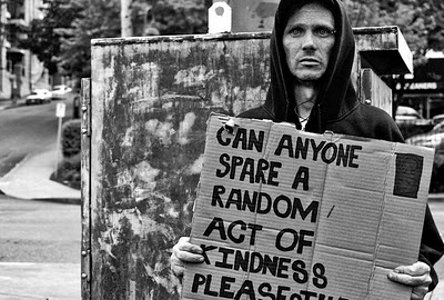
However, I also learned that it’s more difficult to be “dark and moody” when I am focused on crafting a message that must be supportive and uplifting toward anyone who reads it. No debating theological puzzles. No anguishing over personal issues. No staring into the dark abyss of my soul. No controversies. No disputes. No debates. No “us vs. them.” Just following the path created by a God who wants us to love Him by loving other human beings…and by loving ourselves as He loves us.

I thought that dedicating my daily blog posts to a limited theme would be restrictive and in one sense, it was. On the other hand, it was also very liberating. I could put down the weight of defining my theological and spiritual message in terms of what I opposed and was free to rise up out of the mud and seek out a higher purpose. There is no higher purpose than to serve God and to help other people.

It did require though, that I keep my mind more fluid and open to seeing the good in other people, other circumstances, and in everything I encountered.

There is nothing new under the sun. –Ecclesiastes 1:9

America was always there, long before Columbus discovered it. Penicillin killed bacteria long before Fleming discovered it. We could go on to list numerous discoveries which could have benefited mankind long before they came to our attention.

It has been said that when the student is ready, the teacher appears. We can say the same thing about discoveries: they become evident to us when we are ready for them.

Just what constitutes this state of readiness is still a mystery. While technological advances are usually contingent upon earlier progress, many other discoveries were right before our eyes, but we did not see them.

This concept is as true of ideas and concepts in our lives as it is true of scientific discoveries. The truth is out there, but we may fail to see it.

In psychotherapy, a therapist often points out something to a patient numerous times to no avail, until one day, “Eureka!” – a breakthrough. The patient may then complain, “Doctor, I have been coming to you for almost two years. Why did you never point this out to me before?” At this point, many therapists want to tear out their hair.

Just as patients have resistances to insights in psychotherapy, we may also resist awareness of important ideas and concepts in our lives. If we could sweep out these resistances, we could see ourselves with much more clarity. We must try to keep our minds open, particularly to those ideas we may not be too fond of.

Today I shall…

try to keep an open mind so that I may discover ideas that can be advantageous to myself and others.

-Rabbi Abraham J. Twerski
“Growing Each Day, Av 29”
Aish.com

We can think of leaving flowers on the grave of a loved one as something we do more for ourselves than for someone else. After all, Rabbi Moss is right in saying that the flowers mean nothing to the dead. The flowers look beautiful for a day and then fade, wilt, and finally die. Then someone has to come along, pick them up, and toss them in the trash.

In a hundred years, will all the debates and discussions on our “vital issues” in our blogs become dead flowers that have to be thrown in the trash?

But what of our good deeds, our acts of compassion, our expressions of love? Aren’t these the crowns that will last forever?

Everyone who competes in the games goes into strict training. They do it to get a crown that will not last, but we do it to get a crown that will last forever. –1 Corinthians 9:25 (NIV)

Like I said before, it’s not that we shouldn’t discuss, debate, and seek out the truth by placing it in a sort of “blogosphere crucible.” We should just keep our perspective and realize what is really important to people, to our world, and to God. Whoever “wins” a blogosphere debate may get a “crown” but it will not last. Whoever feeds a hungry person, visits a sick friend in the hospital, or comforts a widow in her grief will gain a crown that is eternal.

Grateful Footsteps

Here is a tool for greatness: Watch a truly righteous person very carefully and observe what he does in order to emulate him.

Today, think of three great people that you know, heard of, or have read about. What can you learn from each one?

-see Vilna Gaon – Proverbs 12:26;
-Rabbi Zelig Pliskin
from the “Today’s Daily Lift” series
“Study and Emulate Great People”
Aish.com

G‑d is not understandable. But G‑d ponders Himself. And this mode of pondering Himself He gave to us, dressed in many stories and rituals and ways of life.

Dressed in those clothes we become G‑d, pondering Himself.

-Rabbi Tzvi Freeman
“Dressed in G-d’s Clothes”
Based on letters and talks of the Rebbe
Rabbi M. M. Schneerson
Chabad.org

It’s one thing to attempt to gain some wisdom by studying the teachings of the wise and righteous and another thing entirely to “become God pondering Himself.”

Or is there?

I do not write these things to make you ashamed, but to admonish you as my beloved children. For though you have countless guides in Christ, you do not have many fathers. For I became your father in Christ Jesus through the gospel. I urge you, then, be imitators of me. That is why I sent you Timothy, my beloved and faithful child in the Lord, to remind you of my ways in Christ, as I teach them everywhere in every church. –1 Corinthians 4:14-17 (ESV)

You may think it was odd that Paul said to “be imitators of me” rather than to be imitators of Christ. I’d have to guess at his motivations, but if he understood the discipleship model, then he understood that the teachings of a great Master or Rebbe are passed down from teacher to student multi-generationally. Paul never directly studied under Jesus, but in some manner we don’t fully comprehend, Jesus was indeed his teacher and Paul became the teacher to the Gentiles, passing on the wisdom of the Messiah. In some way, through Paul and the Bible, we have become students of our Master as well.

But there could be many other reasons why Paul phrased his comment to the Corinthians the way he did. It may have to do with how Jesus almost exclusively taught Jewish disciples and how Paul, knowing he was to teach primarily the Gentiles, may have adapted what he taught relative to the requirements of the Goyim, God, and the Torah. But I’m not going to get into that today. I’m not going to get into the mechanics of what God does or doesn’t want us to do in the specific details of our worship and religious practice.

I want to talk about living.

Then, when she was 38, she married Bruce, the man of her dreams. Bruce shared custody of his three daughters from his first marriage, so Julie happily found herself the dedicated mother of a close-knit family. Bruce was a successful professional. They lived comfortably in a big house in an upscale suburb. For ten years, Julie was living her dream.

On a wintery morning in 2009, the dream abruptly ended. Bruce, 48 years old, fell down stairs and hit his head. He died almost immediately.

The shock of her husband’s death was followed by another shock. Of his three life insurance policies, he had let two of them lapse. This included the largest policy, which would have supported his three daughters. Bruce had also neglected to write a will, and to change the beneficiary of his retirement accounts after his first wife divorced him.

By law, half of the large house and Bruce’s other assets should have gone to his first wife, but she and her daughters sued Julie and managed to get 100%, leaving Julie with nothing. Even worse, she turned Bruce’s daughters against Julie. Almost overnight, Julie lost her husband, her close-knit family, her house, and her financial security.

Naturally, Julie felt angry and resentful. “Throughout the entire two and a half years of litigation,” she recalls, “I knew I needed to plug the anger and resentment. At the same time I didn’t want to. I wanted to wallow in my misery. I wanted to make others miserable along with me.

-Sara Yoheved Rigler
“The Power of Gratitude”
Aish.com

I probably wouldn’t have written today’s mediation this way if Rachelle Dawson hadn’t made the following comment on yesterday’s morning meditation:

Making a list of all the sins and faults I’ve been forgiven helps me to put things back in perspective. If I have been forgiven so much, it shouldn’t be such a big thing to show compassion and mercy to others. Anything I give pales in comparison to the compassion I’ve received.

Sara Rigler’s full article is too long to quote here in its entirety, so I encourage you to click the link I provided above and read all of its content. However, what I’m suggesting is that, in emulating great people, we might not always choose people who hold a lofty position in academia or in the clergy. We might instead, find our inspiration in a middle-aged, deaf Jewish woman who has been divorced, widowed, who has lost her home and her job, her once-loving step-children, and who has struggled to find anything at all to be grateful for.

Julie realized that she was standing at a crossroads. She could spend the rest of her life in anger and bitterness or she could choose to grateful and happy. “I decided that I needed to find a way back to my former, positive self, “ she explains. “So I started to practice gratitude as an antidote to my anger.”

We learn from Rigler’s article that the 19th century Rabbi Natan of Breslov taught that complaining about a problem seems to perpetuate your suffering while thanking God for everything, including the problem from which you’re suffering, seems to make the problem vanish.

Rejoice always, pray without ceasing, give thanks in all circumstances; for this is the will of God in Christ Jesus for you. –1 Thessalonians 5:16-18 (ESV)

Who is rich? One who is satisfied with his lot. –Pirkei Avot 4:1

While naturally, we should seek to be like those wise and righteous people who came before us; like Paul, Peter, and most of all, like our Master and Teacher Jesus, we may find, if we’re paying attention, that wise, thoughtful, and compassionate people are all around us. Often, they’re the ones who have suffered the most and yet continually thank God for many things.

Do not seek to follow in the footsteps of the wise. Seek what they sought. -Matsuo Basho

Seek gratitude.

Visions of Inner Pain and Beauty

When dealing with a person you find difficult, keep in mind that this person’s way of behaving and thinking might be causing him to suffer even more than he is causing you to suffer. See life from his point of view – and be compassionate.

“Understanding Difficult People”
-for more essays on this topic
see Rabbi Pliskin’s “Gateway to Self Knowledge,” p.203
quoted from Aish.com

Last week I wrote on this topic in my “meditation” Blessing the Nudnik. But since the term nudnik has negative connotations, and since I have dedicated all of my meditations this week to topics and themes that are positive and uplifting, I thought I’d take advantage of a few quotes from Aish.com to come at this concept from a different angle.

First of all, I’m willing to believe that the vast, vast majority of people I consider to be “difficult” don’t see themselves that way at all. In fact, in any disagreement between them and me, I don’t doubt for a second that they see themselves as “in the right” and view me as the difficult person.

And I probably am a difficult person to deal with, at least sometimes (see my wife for a full and unedited list of my faults…I say that somewhat tongue-in-cheek).

I’m not a perfect person. No, not even close. I can be wrong. And I have been wrong.

So, as I said yesterday, an awareness that we can be difficult people, that we can have shortcomings, that we can feel hurt and disappointment, and that we can be unfair and unkind, should allow us to feel empathy for those people who are like us and sometimes act in a “difficult” manner.

But of course, that requires a great deal of painful personal honesty and the ability to publicly make use of that awareness, thus becoming vulnerable to others who may take advantage of our self-exposure.

But then again…

There is no person on earth so righteous, who does only good and does not sin. –Ecclesiastes 7:20

Reading the suggestions for ridding oneself of character defects, someone might say, “These are all very helpful for someone who has character defects, but I do not see anything about myself that is defective.”

In the above-cited verse, Solomon states what we should all know: no one is perfect. People who cannot easily find imperfections within themselves must have a perception so grossly distorted that they may not even be aware of major defects. By analogy, if a person cannot hear anything, it is not that the whole world has become absolutely silent, but that he or she has lost all sense of hearing and may thus not be able to hear even the loudest thunder.

In his monumental work, Duties of the Heart, Rabbeinu Bachaye quotes a wise man who told his disciples, “If you do not find defects within yourself, I am afraid you have the greatest defect of all: vanity.” In other words, people who see everything from an “I am great/right” perspective will of course believe that they do no wrong.

When people can see no faults in themselves, it is generally because they feel so inadequate that the awareness of any personal defects would be devastating. Ironically, vanity is a defense against low self-esteem. If we accept ourselves as fallible human beings and also have a sense of self-worth, we can become even better than we are.

Today I shall…

be aware that if I do not find things within myself to correct, it may be because I am threatened by such discoveries.

-Rabbi Abraham J. Twerski
“Growing Each Day, Av 25”
Aish.com

Paul’s commentary on Solomon goes like this:

What shall we conclude then? Do we have any advantage? Not at all! For we have already made the charge that Jews and Gentiles alike are all under the power of sin. As it is written:

“There is no one righteous, not even one; there is no one who understands; there is no one who seeks God. All have turned away, they have together become worthless; there is no one who does good, not even one.” –Romans 3:9-12 (ESV)

Given the opinions of these two sage authorities, I think we can conclude that no matter how self-assured, or perhaps even self-righteous, we may feel, even the best of us (and I’m hardly that) has some sort of flaw, especially when in contrast to a perfectly Holy God.

A long time ago, I used to think that people who were (at least in public) perfectly self-confident were either really good people who had it all together or total egomaniacs who thought they were “all that and a bag of chips,” as the saying goes. Only later on did I begin to realize that many of these “self-confident” individuals were really very vulnerable and injured people desperately defending themselves against being hurt again. They say the best defense is a good offense, but a lot of these folks defend by being terribly offensive.

And remember what I said before that even the most difficult of these people almost universally sees themselves as “good” and sees their opponents (which can sometimes include pretty much the rest of the world) as “bad” or as “a threat.” As much as their reaction to the world can cause other people pain and hardship, imagine how difficult it must be for them to feel as if they are about to be hurt and tortured by everyone they encounter.

On some level, we’re all injured. We all have our vulnerabilities; those areas of our lives where we experience fear or shame or humiliation; those domains of our inner being we are terrified people will discover and drag into the light, exposing our deepest darkness and weakness.

However, human beings have different means of coping with vulnerabilities. I don’t believe that we are all injured to the same extent and so we each have different levels of pain and inner opposition to manage and overcome. On top of that, some folks have tremendous coping skills and can manage enormous obstacles and difficulties with seeming ease, while others may struggle mightily all of their lives to barely stay afloat above troubles that don’t seem that tough to the rest of us.

But who am I to judge?

This isn’t about judgment of the frailties of others, it’s about recognizing where we ourselves are lacking and letting that “weakness” function as a strength. Seeing another person who we think of as “difficult,” we should examine ourselves to see how we are like that person and what pain may result from our own “difficult” behavior. For some people who may have reconciled with their “inner demons” so well that they don’t actively perceive themselves as having defects, it might take an extra effort to overcome the barriers that separate them from what they may be afraid of seeing in themselves.

As it turns out, the way to best help another person who is hurt inside but defending that hurt by pushing against others, is not to “come on strong” but to approach with compassion and even a little vulnerability.

That isn’t easy.

When someone pushes us, we want to push back. If we think someone is aggressive and even hostile, the last thing we want to do is “expose our throat” to them. But mercy, grace, compassion, and even “turning the other cheek” (Matthew 5:39) is exactly what the Master requires of us in dealing with injured and imperfect people. Your “olive branch” may not always be accepted and reconciliation may not always be possible, but you at least have to try…we all must make our best efforts, even knowing they won’t be successful all of the time.

We were created to overcome the difficulties in other people with the best and most decent qualities in ourselves (Romans 12:21). Overcome evil with good, not only in “difficult people” but first, within yourself.

“Do not be too quick to assume that your enemy is an enemy of God just because he is your enemy. Perhaps he is your enemy precisely because he can find nothing in you that gives glory to God. Perhaps he fears you because he can find nothing in you of God’s love and God’s kindness and God’s patience and mercy and understanding of the weaknesses of men. Do not be too quick to condemn the man who no longer believes in God, for perhaps it is your own coldness and avarice, your mediocrity and materialism, your sensuality and selfishness that have killed his faith.”

-Thomas Merton

As Rabbi Twerski says, “Today I shall be aware that if I do not find things within myself to correct, it may be because I am threatened by such discoveries.”

It is only by learning to be at peace with the greatest pain within you, that you learn to be at peace with others and with God.

May the Prince of Peace come soon and in our days, and may his peace heal us all.

Why Do We Fall Down?

FallingFor after I fell, I have arisen… –Michah 7:8

The Midrash comments: “Had I not fallen, I would not have arisen,” and so indicates that some heights are not attainable without an antecedent fall.

Obviously, no one designs a fall in the hope that it may lead to a greater elevation. Michah’s message, however, is that if a person should suffer a reversal, he or she should not despair, because it may be a necessary prelude to achieving a higher level than would have been possible otherwise.

We can find many analogies to this concept. When we swing a pickaxe, we first lower it behind ourselves in order to deliver a blow with maximum force. Runners often back up behind the starting line to get a “running start.” In many things, starting from a “minus” position provides a momentum that would otherwise not be attainable.

When things are going well, most people let well enough alone. The result? Mediocrity has become acceptable. Changing might involve some risk, and even if we could achieve greater things, we might not wish to take a chance when things are proceeding quite satisfactorily. However, when we are in an intolerable situation, we are compelled to do something, and this impetus may bring about creativity and progress.

We even see this concept in the account of creation in Genesis. First there was darkness, then came light.

Today I shall…

realize that a reversal may be the seed of future growth, and I must never despair.

-Rabbi Abraham J. Twerski
“Growing Each Day, Av 24”
Aish.com

If you’re a movie goer, this piece of advice may sound very close to another slice of “conventional wisdom.” uttered by actor Michael Caine:

Why do we fall sir? So we might learn to pick ourselves up.

Batman Begins (2005)

In yesterday’s meditation, I talked about the value of prayer as a conversation with a very special “traveling companion.” Our relationship with God, once we become aware that there is a God and that He wants us to relate to him, is no simple matter. But then, what do you expect from having daily interactions with the infinite, unknowable, radical One God?

But relationships with other people and even with ourselves aren’t particularly easy, either. A life of faith can be a struggle. We take on board beliefs and a trust in our Creator that not only does the world fail to comprehend, but that we ourselves often puzzle over.

It can be very disheartening, hence the need to continually relate to God.

But like I said, it’s not just about “me and Jesus.” It’s much more than that.

Spend time thinking about the virtues of other people. Not merely as a passing thought – but try to feel pleasure in thinking of their virtues.

-Rabbi Reuven Dov Dessler
Tnuas Hamussar, vol.5, p.180;
see Rabbi Pliskin’s “Gateway to Happiness,” p.103
Aish.com

What does considering and celebrating the virtues of others have to do with learning to get up again once we’ve fallen down?

Plenty.

A tradition handed down from Rebbe to Rebbe: During the well-known conflict (between chassidim and their opponents) the chassidim told the Alter Rebbe about the terrible abuse they suffered from the plain misnagdic folk. The Rebbe said: Grandfather (as he called the Baal Shem Tov) deeply loved simple folk. In my first days in Mezritch, the Rebbe, (the Maggid) said: “It was a frequent customary remark of the Rebbe (Baal Shem Tov) that love of Israel is love of G-d. “You are children of Hashem your G-d”; when one loves the father one loves the children.

“Today’s Day”
Wednesday, Menachem Av 24, 5703
Compiled by the Lubavitcher Rebbe
Translated by Yitschak Meir Kagan
Chabad.org

I’ve said before that not only is it impossible to truly love God without loving people, but that loving God, loving others, and taking care of yourself are all wrapped up into one big package. It comes full circle in helping us to realize that God intensely, completely loves us…all of us. Our deep responsibility to help others is only a reflection of God’s desire to care for and to love us.

Whenever we fall, whether due to disease, injury, or most commonly, emotional and spiritual discouragement, we depend on God to help lift us up again. Often, that help comes in the form of another human being. So it stands to reason that when we see someone else who has fallen, we should unreservedly strive to help that person stand back up again.

You may believe that God doesn’t answer your prayers when you need Him to the most. On the other hand, maybe God’s “agent” for that answer simply hasn’t arrived yet. The other side of the coin is that when you have the opportunity to help someone out, please be timely, because God sent you to be the answer to their prayers.

Why do other people fall down? So that we can do God’s will in helping them back up.

Above All Else, God Needs To Feel Compassion

Fear is the opposite of genuine faith. Fear comes from a place of faithlessness. When we have real confidence in God, fear is driven out. For the person of faith, fear is actually irrational.

Thought for the Week
“Fear Not”
Commentary on Torah Portion Devarim
First Fruits of Zion (FFOZ)

There are times when moving forward is not enough. There are times when you can’t just change what you do, how you speak and how you think about things. Sometimes, you have to change who you are. You need to pick both feet off the ground and leap.

-Rabbi Tzvi Freeman
“The Quantum Leap”
Based on letters and talks of the Rebbe
Rabbi M. M. Schneerson
Chabad.org

And while the future’s there for anyone to change, still you know it’s seems it would be easier sometimes to change the past.

Jackson Browne
Fountain of Sorrow
from the album Late for the Sky (1974)

Uh-huh.

I keep thinking about the victims of the Aurora, Colorado theater shootings. I’m sure some of the people who were there, some of the wounded, some of those who died, were probably religious. Some of them probably had faith. Some of them probably loved God. Did those people have no fear in the dark, choking on whatever gas the shooter released into the air, hearing the gunshots, the screams of the victims, seeing the blood. Were they not afraid because they had faith?

People get hurt, we get sick, we’re afraid, we sometimes cry. Doesn’t God understand that? If the writer of the FFOZ commentary is right, then every time a person of God feels fear, they are experiencing faithlessness. They are experiencing a total, catastrophic failure in their faith, a failure as a disciple of the Master, a failure as a child of God, and a failure as a human being.

Nevermind that we’re wired to have all of these emotions that we experience, including the emotion of fear. If you take your small, sick child to the doctor and you are told your baby has leukemia, is it a sin to be afraid that your child will die? If you lose your job and realize that you have no way to support your family and will most likely end up putting your wife and children on the street because you failed, is it a sin to be afraid?

It would be wonderful to not feel fear. It would be wonderful to approach every difficult situation with ultimate confidence and self-assuredness. It would be wonderful to constantly experience the love, grace, and strength of God in all circumstances, no matter how dire, knowing that even if you should be hurt, suffer the most hideous and painful diseases, and even face the loss of everyone you have ever loved, that it would be OK because God is with you.

And you never ever felt afraid.

It would be wonderful, but how many people have ever pulled it off? How many people have that much faith, trust, and confidence in themselves let alone God, to never feel afraid?

I don’t know the answer, but I suspect that the number is extremely small.

And he came out and went, as was his custom, to the Mount of Olives, and the disciples followed him. And when he came to the place, he said to them, “Pray that you may not enter into temptation.” And he withdrew from them about a stone’s throw, and knelt down and prayed, saying, “Father, if you are willing, remove this cup from me. Nevertheless, not my will, but yours, be done.” And there appeared to him an angel from heaven, strengthening him. And being in an agony he prayed more earnestly; and his sweat became like great drops of blood falling down to the ground. –Luke 22:39-44 (ESV)

It’s impossible to really know what Jesus was feeling at that moment in time, but obviously he wasn’t facing his bloody, tortuous execution with calm, cool detachment. He accepted the cup set before him by the Father, but he still asked that it be taken away. He still was in agony, so much so, that “his sweat became like great drops of blood falling down to the ground.”

But the Bible says,

…fear not, for I am with you; be not dismayed, for I am your God; I will strengthen you, I will help you, I will uphold you with my righteous right hand. –Isaiah 41:10 (ESV)

PleadGod was addressing Israel through the prophet Isaiah. Did Israel feel no fear because God was with them? Did they feel no fear when faced with the barrier of the Reed Sea as the armies of Egypt descended upon them with murderous intent? Did they feel no fear as they faced giants and fortified cities when they first tried to cross over into Canaan? Did they feel no fear on the day when the Temple was destroyed, when Jerusalem was burned to the ground, when the Jewish people were sent into exile and scattered like loose change among the nations of the world for 2,000 years?

For you did not receive the spirit of slavery to fall back into fear, but you have received the Spirit of adoption as sons, by whom we cry, “Abba! Father!” –Romans 8:15 (ESV)

Yesterday, I wrote,

Maybe you’re thinking I’m being unreasonable. Maybe you’re thinking that I can’t be serious. Maybe you’re thinking that it would be too hard for you to help another person while facing a crisis of your own. And yet, God calls us to serve Him under all circumstances. Certainly we expect Him to serve us no matter what we’re going through and no matter what else is happening in the world.

You and I are only flesh and blood and bone. We’re weak. How can we stand up under the pressures of life and still be expected to help someone less fortunate than we are?

Some days the faith and trust is better and some days it’s worse. Some days I feel like I can take on whatever life and God dish out and some days I just want to hide in bed under the covers and have God make it all go away.

Someone recently commented on one of my blog posts, “I say, let the End come! Only He can fix this mess. We just keep messin’ it up!” I responded with encouragement. We can’t give up. We can’t just sit on our thumbs and do nothing and wait for Jesus to arrive on the bus from Heaven to repair our broken and dying world.

But discounting our weakness and criticizing the faithful for being faithless when we feel fear isn’t an answer I can accept. All flesh is grass (1 Peter 1:24). It is said that the spirit is willing but the body is weak (Matthew 26:41). I say that even the spirit is weak sometimes. For some people, it’s weak a lot of the time.

Some people say that fear is a liar and I suppose if a person allows fear to be the driving force in their life, then they will never really live. But many people have good reasons to feel afraid, either because they’re in a stressful or dangerous situation, or they’ve experienced enough of those situations that the future looks like a room full of tripwires and trapdoors.

But having said all that, the FFOZ commentary ends on this note:

It may not sound like one of the commandments of the Torah but it actually is a rule of life for the People of God. We are to live by faithful confidence in the strong hand of God. He who delivered Israel from Egypt and defeated the Amorites will also deliver the Canaanites into the hands of Israel. He who rescued our Master and Savior from the grave will also rescue us from every trouble and fear.

Yeshua says, “Are not two sparrows sold for a cent? And yet not one of them will fall to the ground apart from your Father. But the very hairs of your head are all numbered. So do not fear; you are more valuable than many sparrows.” (Matthew 10:29-31)

According to Rabbi Freeman, we have a Godly soul that strives to go higher each day and “she will transform that animal to yearn with a divine yearning.”

We have a Godly soul and a body of shredded and bleeding flesh. When you’re young, you have a certain amount of courage, even to the point of foolishness, because in most cases, nothing really bad has happened to you yet. After three or four decades, you know better. If you stick your hand in a fire, you’ll be burned. The chest pain you are feeling might not be “just indigestion.” The “near miss” on the freeway because an aggressive driver just had to pull in front of you came within an inch of a collision at 65 miles per hour.

I can’t give up. I can’t be safe. I cannot hide. God does not promise that I won’t ever suffer or die in pain. The Book of Job scares the heck out of me.

All I know is if God decides to slowly feed me into a running wood chipper feet first, an inch at a time, my only guarantee is that He will be with me. One translation of Job 13:15 says, “Though He slay me, I have no hope.” I suppose it’s more encouraging to rely on standard translations like, “yet I will wait for Him” or “yet will I hope in Him.”

I just wish some religious people wouldn’t be so hard on the rest of us (or is it only me?). Faith isn’t easy. Hope often fails. The commentary says,

When we feel frightened or worried, we must remember who our Father in Heaven is, and that He cares for us and watches over us.

Tell that to the people of Haiti who are still struggling. Tell that to the Christians in Japan post-tsunami. Tell that to every soldier, Marine, and sailor who has ever gone to war and still struggles with PTSD years and even decades later.

And tell that to the victims of the Aurora, Colorado movie theater massacre.

Are they just going to recover, bounce back, and feel all hunky-dory again as if nothing ever happened? Are those people weak when they hear a car backfire and run for cover? Do they all suffer from chronic faithlessness just because they get scared?

Don’t you have compassion? Haven’t you ever been afraid?

The Best Within Us

If I speak in the tongues of men and of angels, but have not love, I am a noisy gong or a clanging cymbal. And if I have prophetic powers, and understand all mysteries and all knowledge, and if I have all faith, so as to remove mountains, but have not love, I am nothing. If I give away all I have, and if I deliver up my body to be burned, but have not love, I gain nothing.

Love is patient and kind; love does not envy or boast; it is not arrogant or rude. It does not insist on its own way; it is not irritable or resentful; it does not rejoice at wrongdoing, but rejoices with the truth. Love bears all things, believes all things, hopes all things, endures all things.

Love never ends. As for prophecies, they will pass away; as for tongues, they will cease; as for knowledge, it will pass away. For we know in part and we prophesy in part, but when the perfect comes, the partial will pass away. When I was a child, I spoke like a child, I thought like a child, I reasoned like a child. When I became a man, I gave up childish ways. For now we see in a mirror dimly, but then face to face. Now I know in part; then I shall know fully, even as I have been fully known.

So now faith, hope, and love abide, these three; but the greatest of these is love.

1 Corinthians 13:1-13 (ESV)

In spite of the fact that this passage from Paul’s letter to the Corinthian church has often been read as part of the vows at innumerable weddings, it has nothing to do with romantic love. It is Paul’s message about a much greater love and, in my opinion, a love that it much more difficult to express consistently in a life of faith. In fact, I think the kind of love Paul is describing has a lot more to do with what he had to say to the church in Rome.

Bless those who persecute you; bless and do not curse them. Rejoice with those who rejoice, weep with those who weep. Live in harmony with one another. Do not be haughty, but associate with the lowly.Never be wise in your own sight. Repay no one evil for evil, but give thought to do what is honorable in the sight of all. If possible, so far as it depends on you, live peaceably with all. Beloved, never avenge yourselves, but leave itto the wrath of God, for it is written, “Vengeance is mine, I will repay, says the Lord.” To the contrary, “if your enemy is hungry, feed him; if he is thirsty, give him something to drink; for by so doing you will heap burning coals on his head.” Do not be overcome by evil, but overcome evil with good. –Romans 12:14-21 (ESV)

Interestingly enough, the Talmud seems to echo the same lessons that Paul teaches:

“They said of Rabbi Yochanan ben Zakai that no man ever greeted him first, even idol worshippers in the market” [i.e., Rabbi Yochanan ben Zakai was the first to greet every person, even idol worshippers] (Berachot 17). At the same location the sage Abaye advocated soft speech and words of peace to everyone, especially including idol worshippers.

“[it is proper to] support the idol worshippers during the sabbatical year… and to inquire after their welfare [commentators: even on the days of the holidays of their idols, even if they do not keep the seven Noahide commandments] because of the ways of peace.” (Shevi’it 4,3)

The rabbis taught: ‘We support poor Gentiles with the poor people of Israel, and we visit sick Gentiles as well as the sick of Israel and we bury the dead of the Gentiles as well as the dead of Israel, because of the ways of peace.” (Gitin 61a)

I suppose I’m belaboring the point I was trying to make last Friday afternoon, but this blog isn’t about presenting topicial commentary or clever scholastic mysteries, it’s about me writing what’s on my mind, my heart, and my spirit as I approach each new day. The sorry state of love among the human race, including those who claim faith in God is still consuming me. What makes it worse is the lack of love among people of faith seems not to bother them (us) at all. And I have to share the name “Christian” with some of these folks. No wonder the atheists accuse us of hypocracy.

I just recently saw the film The Avengers (2012) for the first time. I know that’s a strange statement for me to make given the context of today’s “meditation,” but I do have a point. As well as being a top notch action film and a lot of fun to watch, there were a few good lessons to be found about love, honor, and sacrifice. Ironically, it took a completely secular film to talk about the qualities we Christians are supposed to possess by definition.

Of all the characters in the film, Captain America (played by Chris Evans) is the epitome of those qualities I just named. He is what we think of, in old fashioned terms, as “the greatest American hero.” He’s the ideal of what we used to believe were the finest qualities about our nation and our citizens. National cynicism has since destroyed those ideals but maybe not completely. The film has more than a few reminders for us that not only does the character Captain America have a much needed place in our world today, but the ideals Captain America represents are what we most long for in our lives.

Cap is sometimes juxtaposed in the film against the character of Tony Stark/Iron Man, a person who at once has everything and nothing. A man who has wealth, position, power, and glamour, but at the expense of the finer qualities of Captain America, such as love of humanity, purpose, conviction, honor, and the ability to sacrifice even his own life if it will save others. Stark is always looking for the loophole. Steve Rogers, Captain America’s other identity, always faces his challenges head on.

Toward the climax of the film (and I’m sorry if I’m giving too much away), the only way for Stark to save New York City from nuclear destruction is to carry a nuclear missile through a dimensional rift out of our world, in order to destroy the attacking army. This is supposed to be a one-way trip, but there are no other options and no loopholes. Captain America’s example throughout the movie finally made an impression on Iron Man so that what began beating in his chest was not the electronic perfection of the machine keeping him alive, but a real human heart of compassion, even for millions of people who he’ll never know.

As in most fantasies, Stark is saved at the last minute and rewarded for his willingness to sacrifice his life by survival and the opportunity to appear in more movies, but what about the reality of this lesson? What can we learn about love and even about “heaping burning coals on the head of those who hate us?”

Remember, this lesson comes to us courtesy of a secular and atheist entertainment industry. It is however, an industry that does, within the context of the film, allow Captain American to utter one single line of dialog confirming his faith in God, which I found just amazing. This lesson in love, honor, and sacrifice (as opposed to raw vengence and self-satisfaction) comes to us from people who, in all likelihood, have never met the God of the Bible and perhaps never will this side of the Messiah.

Where is our lesson? Where is the lesson of the church?

I don’t doubt that many Christians do live up to the ideals of our Master. Many believers do not just speak, but live out the example of Jesus Christ. Many extend themselves to feeding the hungry, providing clothing to those who need it, welcoming strangers into their homes, visiting the sick in the hospital, and even extending a smile and a hand of friendship to those who revile them, even if they are other Christians.

The sad and sorry part of our faith is that there are those among us who use Christ as a blunt instrument with which to beat their perceived enemies about the head and shoulders until they’re bloody and bruised. And then these Christians congratulate themselves for aptly employing Jesus as an object of vengence and an example of “tough love” which is neither particularly “tough” in the sense of true strength and honor, or at all loving in the way Paul described love to the Corinthians.

More’s the pity.

What is the defining quality of Christianity, judgment or love? They both exist within our theology. We know a time of judgment is coming and most Christians feel immune to it, imagining that only their enemies the atheists will face such a terrifying fate. And yet the Master tells us this is absolutely not true. Just who do you think Jesus is talking to in Matthew 25:34-46? Why would athests be expected to give water to the thirsty and clothe the naked in Christ’s name? And why would the Master say this?

“Not everyone who says to me, ‘Lord, Lord,’ will enter the kingdom of heaven, but the one who does the will of my Father who is in heaven. On that day many will say to me, ‘Lord, Lord, did we not prophesy in your name, and cast out demons in your name, and do many mighty works in your name?’ And then will I declare to them, ‘I never knew you; depart from me, you workers of lawlessness.’ –Matthew 7:21-23 (ESV)

In Romans 12:19, Paul quoted Leviticus 19:18 to remind us that vengence belongs to God, not men. The Master gave us all a new commandment to love each other as a way of showing the world around us that we belong to him (John 13:34-35). If I have to err in the expression of my faith, I prefer to err on the side of love and to leave (to the best of my limited abilities) the vengence to God. God’s vengence, when He chooses to express it, does not contain our human faults, hositilities, and insecurities, but only His justice, which is neither ours to take or to give.

If secular films such as The Avengers can be an inspiration for us to be better people, to be “heroic” in the love we can show others, why doesn’t the church show the world that Christ brings out the best within each of us? If you want to carry the Gospel message to a desperate and unbelieving world and show other Christians “how it’s done,” I can think of no better way to do it than to show love especially toward your “enemies” because of the ways of peace.

“The whole problem with the world is that fools and fanatics are always so certain of themselves, and wiser people so full of doubts.”

-Bertrand Russell