Tag Archives: conversion

Introduction to Messianic Judaism: Waiting for Salvation

phariseesMartin Goodman, professor of Jewish Studies at Oxford University, has argued that the proselytizing mission we observe in early Christianity, and in Paul in particular, was “a shocking novelty in the ancient world.” In his important book Mission and Conversion he strongly denied that Jews before AD 100 had any interest in seeking converts. A similar conclusion has been reached by Christian scholars Scot McKnight and Eckhard Schnabel; Schnabel concludes, “There was no missionary activity by Jews in the centuries before and in the first centuries after Jesus’ and his followers ministry.”

-John Dickson
“Chapter 24: Mission-Commitment in Second Temple Judaism and the New Testament” (pg 255)
Introduction to Messianic Judaism: Its Ecclesial Context and Biblical Foundations

Dickson’s chapter is meant to redefine our understanding of Jewish efforts to convert Gentiles to Judaism during and prior to Jesus, and citing author and researcher Michael L. Bird, Dickson states that some Jews did engage in some proselytizing of non-Jews,” but that’s not what captured me about the chapter. I found myself reading Dickson’s points for Jewish efforts to convert Gentiles to Judaism as something else.

It is also found in numerous postbiblical Jewish texts, including the pre-Maccabean Tobit, in which we read, “A bright light will shine to all the ends of the earth; many nations will come to you from far away, the inhabitants of the remotest parts of the earth to your holy name, bearing gifts in their hands for the King of heaven” (Tob 13:11).

-Dickson, pp 256-7

Of course, we don’t have to stray outside the pages of the Bible to find a similar portrait of the Messianic future.

…and many nations shall come, and say: “Come, let us go up to the mountain of the LORD, to the house of the God of Jacob, that he may teach us his ways and that we may walk in his paths.” For out of Zion shall go forth the law, and the word of the LORD from Jerusalem.

Micah 4:2

There are numerous other prophesies that echo such a sentiment, but relative to Dickson’s chapter, do they presuppose Gentile conversion to Judaism? That is likely how some ancient (or even some modern) Jews read these texts, although in much of today’s Jewish world, the role of the Noahide would fulfill these words of scripture.

According to the unknown author of this text (T. Levi 14:1-4), Jewish disobedience threatens one of other purposes of the Law: to bring light to “every man,” which in context must include Gentiles.

-ibid pg 257

It has long been known that the Gentile nations would come to God through Israel and the Jewish people, even in the days of Solomon if not before.

…hear in heaven your dwelling place and do according to all for which the foreigner calls to you, in order that all the peoples of the earth may know your name and fear you, as do your people Israel, and that they may know that this house that I have built is called by your name.

1 Kings 8:43

Declare his glory among the nations, his marvelous works among all the peoples!
For great is the Lord, and greatly to be praised; he is to be feared above all gods.
For all the gods of the peoples are worthless idols, but the Lord made the heavens.
Splendor and majesty are before him; strength and beauty are in his sanctuary.
Ascribe to the Lord, O families of the peoples, ascribe to the Lord glory and strength!
Ascribe to the Lord the glory due his name; bring an offering, and come into his courts!

Psalm 96:3-8

But something was missing that would make all the difference in the world…some light.

Again Jesus spoke to them, saying, “I am the light of the world. Whoever follows me will not walk in darkness, but will have the light of life.”

John 8:12

“You are the light of the world. A city set on a hill cannot be hidden. Nor do people light a lamp and put it under a basket, but on a stand, and it gives light to all in the house. In the same way, let your light shine before others, so that they may see your good works and give glory to your Father who is in heaven.

Matthew 5:14-16

up_to_jerusalemIt’s easy to imagine that Israel, as the light to the nations, traditionally saw Gentile conversion to Judaism as the way to bring Gentiles to knowledge of the God of the Jews, and the influx of Gentile God-fearers during and after the time of Jesus on earth, to some degree, must have seemed to confirm this. How else could such a thing be accomplished? But as I said, something was missing. The light of the world had not yet arrived. As the “first son of Israel,” Jesus was uniquely the embodiment of the nation and the people and his purpose was not only to save the lost sheep of Israel, but to pass on his light to his Jewish disciples so that they could “Let their light shine upon others,” the Gentiles, bringing them to God through Messiah.

In reading Dickson, I quite forgot about the matter of conversion of Gentiles to Judaism and was caught up in the vision of streams and streams of Gentiles flowing to Israel, seeking out the Jewish people and their King, seeking Messiah, seeking God. No one was worried about converting to Judaism and perhaps the Torah never even occurred to them as a formal set of mitzvot, since for most Gentiles, it would be a barrier standing between them and worshiping at the House of God.

As a good friend of mine has wisely taught me, “do not seek Christianity and do not seek Judaism, seek an encounter with God.”

At the founding of the temple King Solomon beseeches the Lord: “that all peoples of the earth may know your name and fear you, as do your own people Israel (1 Kgs 8:43). The words “as do your own people Israel” suggest that the “knowing” and “fearing” of these foreigners refers not to enforced submission but to covenant relationship.

-ibid, pp 258-9

I have to disagree with Dickson on one point. Without faith in Jesus, we Gentiles could not be saved and come close to Israel and be grafted in to the Kingdom of Heaven. We could not be considered the (adopted) sons and daughters of the Most High God. Everything hinges on an active, caring, faithful, obedient Messiah. Converting to Judaism in order to become Israel and be justified as members of the covenants God made with Israel undoes the faith of Abraham and our faith in his seed (singular) Messiah. The words of Solomon for me summon the vision of the people from the nations to come to know and fear God “as do your own people Israel.” We do not have to convert and in order to be blessed by Messiah and Israel as people from the nations called by God’s Name.

This is who we are. Not Israel, but knowing and fearing God as does Israel, coming to them, being blessed by them, taking the fringes of their garments (Zechariah 8:23), seeking God and His ways, and desiring to follow Messiah in his paths.

light_from_withinThis isn’t a picture of mass conversions of Gentiles to Judaism or some form of “Jewish-like” life that closely mirrors Israel as if conversion happened in all but name (and a snip of flesh). As the people of the nations we aren’t waiting to be converted to Judaism, we’re waiting for the light of the world, Messiah, so that we can bow our knees to him, so we can acknowledge the King of Israel also as the King of the nations.

“Before God we are all equally wise and equally foolish.”

-Albert Einstein

Israel waits for her Messiah and we among the nations who are called by God’s Holy Name await the lamp of His Salvation.

For the conductor with the neginos, a psalm, a song. May God favor us and bless us, may He illuminate His countenance with us, Selah. To make known Your way on earth, among all the nations Your Salvation. The peoples will acknowledge You, O God; the peoples will acknowledge You — all of them. Regimes will be glad and sing for joy, because You will judge the peoples fairly and guide with fairness the regimes on earth, Selah. The peoples will acknowledge You, O God; the peoples will acknowledge You — all of them. The earth will then have yielded its produce; may God, our God bless us. May God bless us, and may all the ends of the earth fear Him.

Psalm 67 (Stone Edition Tanakh)

To get along with other people, it is essential to be able to see things from their point of view — even if you disagree with them.

Realize that no two people view things exactly the same way. For example, Rabbi Yisrael Salanter said that taking away a broken box from a child is equivalent to sinking the boat of an adult.

Being aware of how someone else perceives a matter will decrease the chances of a quarrel — even though you might disagree.

Rabbi Zelig Pliskin

150 days.

Tales of the Early Church and Judaism

early_judaismWhile the apostles in Jerusalem debated about whether or not to receive Cornelius the God-fearer and his household into the Way, the message was already spreading to Gentiles in other places. Gentiles in the faraway kingdoms of Adiabene and Osroene were learning about the God of the Jews and His Messiah.

The Syriac-speaking kingdom of Adiabene, with its capital at Arbela (modern Arbil, Iraq), straddled the highlands of what is today the Kurdish areas of Iraq, Armenia, and northern Iran. Adiabene was part of the Assyrian province of the Parthian Empire.

Torah Club, Volume 6: Chronicles of the Apostles from First Fruits of Zion (FFOZ)
Torah Portion Miketz (“From the end”) (pg 259)
Commentary on Acts 11:19-20
Additional Reading: Josephus, Antiquities 20:17-96/ii-iv; Eusebius, Ecclesiastical History 1.13

One of the objections I read about Volume 6 of Torah Club recently was its use of non-Biblical information sources. Apparently, this is a big deal for some people who previously found the Torah Club material very illuminating. I guess author D. Thomas Lancaster isn’t supposed to consider other historical documentation when writing about the late Second Temple period and the events surrounding the early church.

That’s pretty strange, since all competent historians and historical theologians review a wide variety of documents and artifacts when studying a specific topic and those documents are frequently referenced by such scholars when they publish their findings. All you have to do is read blogs by theologians such as the one maintained by New Testament scholar Larry Hurtado to see this process in operation. (Additionally, there are many scholars and students who caution us regarding taking everything we read in the Bible as literal fact)

King Abennerig welcomed the young prince into his court and the capital city of Charax Spasinu. Izates quickly won the affection of his host who gave him his daughter Samachos (Sumaqa, Aramaic for “Red”) in marriage and appointed him governor of one of his provinces.

Izates soon learned that Samachos had fallen under the influence of a Jewish teacher. She introduced him to a Jew named Ananias (Chananyah) and the religion of Judaism.

-Lancaster, pg 250

The conversion of Izates to Judaism is a rather well-known story , and it occurred more or less at the same time the Jewish apostle Paul was spreading the Gospel among the Jews and Gentiles in the diaspora. We know that Izates became a God-fearer and student of Judaism and eventually became circumcised and converted to Judaism, however, according to Lancaster, there is some speculation as to whether or not Ananias might have been a disciple of Jesus and a member of the Way. Some have even thought that Ananias might have been the same person we find here.

Now there was a disciple at Damascus named Ananias. The Lord said to him in a vision, “Ananias.” And he said, “Here I am, Lord.” And the Lord said to him, “Rise and go to the street called Straight, and at the house of Judas look for a man of Tarsus named Saul, for behold, he is praying, and he has seen in a vision a man named Ananias come in and lay his hands on him so that he might regain his sight.”

Acts 9:10-12 (ESV)

But unless there’s something more compelling than these two individuals having the same name, I’m not inclined to automatically believe they are the same person. Lancaster seems to take the reader down a particular road, not presenting it as fact, but rather as interesting speculation.

Readers of Josephus have often wondered if Ananias might not have been a believer. His type of active and aggressive proselytism seems more consistent with the disciples of Yeshua than it does with the rest of first-century Judaism. Like the Pauline school of thought, Ananias did not encourage Izates or any of his converts to undergo a formal conversion to become Jewish. He counseled Izates against doing so and encouraged him to remain uncircumcised.

Robert Eisenman speculates that Ananias the merchant is the same as Ananias of Damascus whom Paul encountered. Eisenman also mentions Armenian Christian sources that claim Izates and his mother converted to Christianity – not Judaism. At that early time, “Christianity” was still a sect of Judaism, not an independent religion that could have been defined outside of Judaism. Josephus would not have made the distinction.

Even if Ananias was not a believer or one of the apostles, he taught a type of Judaism for Gentiles similar to the teaching of the apostles.

Like Paul’s converts, Izates became an adherent of Judaism but not Jewish – not a proselyte either. He became a God-fearer.

-Lancaster, pg 250

ancient-rabbi-teachingThis certainly throws a monkey-wrench into the machine. Was Ananias a follower of the Way or not? Even if he wasn’t, he (apparently) was not converting Gentiles to Judaism but instead, going out of his way to make God-fearers and to teach them Judaism.

Again, and I can’t stress this strongly enough, all this is speculation and should be taken with more than a grain of salt. But then again, we have a lack of information regarding the “early church” and the spread of the various Judaisms of that day through their “apostles,” so when operating in a vacuum, we tend to fill the gap with our imagination, stringing the bits of scattered facts together with the thread of our personalities.

Izates ultimately ascended to the throne and his mother also became a student of Judaism (actually, before Izates did and without his knowledge). But while Ananias was content and even insistent that the King and his household not convert to Judaism, other Jews were not.

Sometime later, however, a certain Galilean Jew named Eleazar arrived in Adiabene. He was a sage and Torah scholar. King Izates heard about the arrival of the sage and invited him to visit the royal court. When Eleazar entered the palace, he found Izates seated, reading the Torah of Moses. Like Paul’s theological opponents, Eleazar of Galilee dismissed the God-fearer status as illegitimate. He had some sharp words for the uncircumcised king:

Have you never considered, O King, that you unjustly violate the rule of those laws you are studying, and you are an insult to God himself by omitting to be circumcised. For you should not merely study the commandments; more importantly, you should do what they tell you to do. How long will you continue to be uncircumcised? But if you have not yet read the law about circumcision, and if you are unaware of how great an impiety you are guilty of by neglecting it, read it now.

The king sent immediately for a surgeon. Izates completed his formal conversion to Judaism at Eleazar’s behest and under his supervision. His mother did so as well.

-Lancaster, pg 251

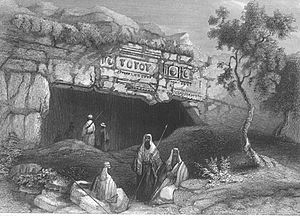
According to Lancaster’s sources, Izates and his mother Helena built palaces for themselves in Jerusalem as well as preparing tombs for themselves so after their eventual demise, they could be interned in the holy city. In fact, some part of this has been substantiated, as the “Tomb of the Kings” in East Jerusalem, north of the Old City walls, has been identified as the tomb of Queen Helena and her sons.

In reading this Torah Club commentary…

Helena submitted herself completely to the authority of the sages. Izates and Helena contributed vast sums toward the Temple…(Queen Helena) also had a golden tablet made and inscribed with the words of the vow of the bitter water for the woman suspected of adultery.

-Lancaster, pg 252

All of this is interesting to be sure, but what does it have to do with us? Even if we choose to buy the speculation that Izates and Helena were followers of the Way and converted to that particular sect of Judaism, since that time, Christianity and Judaism have diverged into radically different trajectories so that one has little to do with the other.

Tomb_of_the_KingsIn the Hebrew/Jewish Roots movement and its variants, there is a particular interest in just how non-Jews were integrated into that sect of Judaism that eventually became known as “Christianity.” I mentioned in Part 1 and Part 2 of my previous commentary on the Torah Club that the “conversion” of Cornelius and his household omitted any actual conversion to Judaism. Like Izates, Cornelius was taught Judaism but not circumcised. There’s no evidence that Peter deliberately discouraged Cornelius from a full conversion, but we don’t know what sort of decision making process occurred among the apostles between Peter’s encounter with Cornelius and Ananias’ encounter with Izates (and we have no real reason to assume that Ananias was also an apostle of the Way).

What we do know is that Izates did keep significant portions of Torah, adhering to Jewish customs and practices which we assume could have included keeping kosher, observing Shabbat, and performing the daily prayers. We certainly have evidence that Izates and Helena, before and after formal conversion, were generous to the Jews and donated to the Temple. This includes Helena purchasing vast quantities of grain and paying for it to be transported on ships to feed the hungry among Israel when she discovered a famine in Jerusalem and Judea (I can’t help but recall Joseph in Egypt in this instance).

Cornelius was also a devout man who observed the set times of prayer, donated funds for the benefit of the Jews, and that these acts were considered by God as a memorial (sacrifice) before him (see Acts 10:1-4). Given that Peter and the other Jews in his party spent several days in the home of Cornelius and likely ate with him and his household, Cornelius probably had kosher food available and maybe even kept a form of kosher himself.

In all this we can construct a model of what it was like (though facts are sparse) to be an early Gentile participant in the sects of Judaism including the Way. We have examples of Gentiles studying Torah and observing some of the mitzvot and either being discouraged when they expressed a desire to convert (Izates) or the option of conversion simply never arising (Cornelius). As we saw above, even Josephus was unlikely to have considered “the Way” as anything separate from the other Jewish sects of the late first century in which some Gentiles were partaking. It is on this basis that many 21st century Gentile believers are adopting some of the modern expressions of the mitzvot, including forms of observing Shabbat, keeping kosher, and davening at the set times of prayer.

Although 2,000 years have passed, there seems to be a hunger among some believers to try to recapture the flavor of the early Gentile disciples of the Way in order to access something they believe is more authentic about their faith. But while observing some of the mitzvot made perfect sense in a religious practice that was completely Jewish in the days of Peter and Paul, does it make any sort of sense now?

I don’t know. Theologically, I don’t think we can really say “no,” since we have precedent in the Bible and other sources, but on the other hand, the Bible and these other sources do not give us a clear picture of Gentiles who had not undergone full conversion observing the mitzvot in the same manner as the born-Jew. In fact, we see in the example of Izates and Eleazar, a definite Jewish objection to an uncircumcised Gentile studying the Torah without actually obeying it by converting to Judaism. This certainly suggests that some sects of Judaism required a Gentile to undergo full conversion prior to observance of the mitzvot, which apparently included even studying the Torah of Moses.

But as I’ve said repeatedly, information is sketchy. We’re not that certain of our facts. Which is a very, very good reason for people who believe they are certain that modern Christians must observe the full Torah mitzvot like a born-Jew or Jewish convert to re-examine their material and their assumptions. I believe Lancaster in this Torah Club commentary took liberties with his information and made certain assumptions to stimulate the imagination of his audience and to get us thinking “outside of the box.” But that’s a long way from saying that his assumptions are facts and that we must treat them as such, altering our faith and our observance accordingly.

pathIt’s interesting and even fun to take what little information we have available to us about the early church and to play a game of “what if.” It’s erroneous and even dangerous to forget that we’re just imagining and to believe the stories we’re building for ourselves. A life of faith is a life of exploration and discovery, but determining the difference between a bit of iron pyrite and a gold nugget is quite a bit harder than we might think.

A final word. If you are a Christian who feels drawn to certain of the mitzvot, if you are inspired by davening with a siddur, by observing the set times of prayer, by lighting the Shabbos candles, by giving tzedakah to the poor among Israel, I can see no reason to object to this. It is what Cornelius would have done. It is what Izates and Helena would have done. But unless you undergo formal conversion through a recognized Jewish authority (which includes circumcision if you are male), it does not make you Jewish nor does it obligate you to keep all of the Torah mitzvot.

While history records that King Izates and his mother fully converted to Judaism and accepted a life of Torah upon themselves, we have no knowledge that Cornelius or any of his household also did so. While Cornelius and his household observed certain of the mitzvot, we have no information that he considered this observance an “obligation” or a “right” but simply a matter of drawing nearer to the God of the Jews, who he came to know as the One God. If we choose to look at our own religious practice as a “drawing nearer” so that we may know God rather than something that is “owed” to us, then perhaps God will hear our prayers and bring us into His Presence in peace.

The Uncircumcised Convert, Part 2

mikveh-project“Can anyone withhold water for baptizing these people, who have received the Holy Spirit just as we have?” And he commanded them to be baptized in the name of Jesus Christ. Then they asked him to remain for some days.

Acts 10:47-48 (ESV)

When Simon Peter heard the Gentiles speaking in the languages and saw that they had received the Spirit just as he and the other Jewish believers had, he could no longer theologically exclude them from participation in the kingdom or discipleship. (see Acts 10:47-48) They had not gone through a legal conversion to become Jewish, nor had they been circumcised. They were still Gentiles, yet they had experienced the Spirit of God, just as the Jewish believers had.

Simon Peter explained to the six men that had accompanied him from Joppa, “Surely no one can refuse the water for these to be baptized who have received the Holy Spirit just as we did, can he?” By skipping circumcision and going directly to immersion, Simon Peter inverted the process by which a Gentile might ordinarily become a disciple of Yeshua. Prior to that occasion, he and the other disciples required a Gentile to first submit to conversion/circumcision. Immersion could follow later.

Torah Club, Volume 6: Chronicles of the Apostles
from First Fruits of Zion (FFOZ)
Torah Portion Vayeshev (“And he dwelt”) (pg 235)
Commentary on Acts 9:32-11:18

If you haven’t done so already, please read Part 1 of this commentary before continuing here.

This is the second time in his commentary on Acts 10 that Lancaster suggests Peter or the other Jewish apostles may have previously converted Gentiles to Judaism by first having them circumcised and then entering them into Jesus discipleship. As I mentioned in Part 1, I can’t think of any record in the Bible that points in this direction. I do note however, that Philip also did not require the Ethiopian eunuch to be circumcised prior to immersion. However, that more than likely means the eunuch was Jewish (and did not need to convert) since Luke makes no point of the eunuch being a Gentile as he does of Cornelius (although as previously mentioned, there are a number of assumptions in play).

What Lancaster says regarding circumcision and conversion of Gentiles does fit nicely into Shaye J.D. Cohen’s opinion (see his book, From the Maccabees to the Mishnah, Second Edition) of how Gentiles were made into Jewish disciples as I mentioned in another commentary.

However, as the history of Israel progressed, the concept of conversation to Judaism for the Gentile began to become more formalized. Cohen cites three essential elements of conversion to Judaism: belief in God, circumcision, and joining the house of Israel. Again, this is a definition of a convert to Judaism, not conditions required for the Gentile to join “the Way” as disciples of Christ. Cohen even references the difference:

For Paul, circumcision represents subjugation to the demands of the Torah (Gal. 3-5).

In other words, while Paul did not see circumcision and thus full obedience to the mitzvot as a requirement for the Gentile Christians, he did see it as a necessary step for full conversion to Judaism. The natural conclusion then is that a Gentile becoming a disciple of the Jewish Messiah in the time of Paul was not the same as a Gentile converting to Judaism.

Another indication that Gentiles entering into Jesus discipleship were not converting to Judaism is found in the aftermath of Peter’s experience with Cornelius.

Now the apostles and the brothers who were throughout Judea heard that the Gentiles also had received the word of God. So when Peter went up to Jerusalem, the circumcision party criticized him, saying, “You went to uncircumcised men and ate with them.”

Acts 11:1-3 (ESV)

This wasn’t exactly a friendly inquiry on the part of Peter’s fellow Jewish apostles.

Rumors of his (Peter’s) activities among the Gentiles preceded him. It did not take long for word of Simon’s Peter’s theological leap and halachic faux pas to reach the rest of the Judean apostolic community. The inclusion of the Samaritans had been controversial enough. Simon’s fraternization with Gentiles raised astonishment and disbelief.

No one objected to Gentiles joining the assembly of Yeshua so long as they first went through a proper conversion, but according to the rumor, that had not happened. People were even saying that Simon Peter had entered the home of the Roman soldier, eaten with him, and invited him to immerse for the name of Yeshua.

Such an association of Gentiles with Jews, and the Gentiles being allowed into discipleship within a Jewish sect without first converting to Judaism, must have seemed outrageous to the Jewish apostolic community in Jerusalem. Luke points out in verse 2 that “circumcision party criticized him,” meaning the people present were Jews, either people born Jewish or converts to Judaism. A Jew eating with a Gentile was a violation of halachah. Lichtenstein in “Commentary on the New Testament” on Acts 11:3 considers this matter further.

“You went to uncircumcized men and ate with them” (Acts 11:3). This does not present a difficulty, for Cornelius was a God-fearer and certainly had kosher food. And the objection of the circumcised men is only about [Peter’s] approaching uncircumcised men and eating with them, for Jews were forbidden to approach a foreigner.

-Lancaster, pg 236

Cohen might not entirely agree with Lichtenstein, since he believes God-fearers were still polytheists, integrating the God of Israel into a panthenon of other “gods.” However, it is quite likely that Peter and the six Jews in his company would not have eaten with Cornelius unless the food was kosher and there’s nothing to say, Cohen aside, that Cornelius must have been polytheistic.

ancient-rabbi-teachingIn his defense, Peter and the other Jews who accompanied him recounted the events that occurred prior to entering the Roman’s home and what happened once Peter engaged Cornelius, including the giving of the Spirit to the Gentiles. (see Acts 11:4-17) Fortunately, upon hearing the explanation, the other apostles understood the graciousness of God, even to the Gentiles.

When they heard these things they fell silent. And they glorified God, saying, “Then to the Gentiles also God has granted repentance that leads to life.”

Acts 11:18 (ESV)

Lancaster presents his final interpretation of the “Cornelius event,” raising another interesting question.

The apostolic leadership accepted Simon Peter’s testimony and the corroboration offered by the six men from Joppa. The were forced to concede that Sinon had acted properly in setting aside the halachah about the uncleanness of Gentiles. More than that, they realized that God accepted the Gentiles into the kingdom. They did not determine whether or not the new Gentile believers should be encouraged to remain God-fearers or go on to full conversion. They only determined that they should receive Gentile brethern without objection as fellow disciples and heirs of the kingdom.

Uncertain of what else to make of the situation, they blessed God.

-Lancaster, pg 237

As we can see, both from the text in Acts and in Lancaster’s interpretation, the early Jewish apostles struggled to understand how to integrate the Gentile disciples into the Jewish Messianic community. The realization that Gentiles may not have to convert to Judaism (and according to Lancaster, at this point the jury was still out on this matter) in order to become disciples was revolutionary. All other sects of Judaism who were actively pursuing Gentiles as disciples required that the Gentiles convert to Judaism as a matter of course. In other words, it was a “no brainer.” Only in the Jesus sect was the method of entering Gentiles into a Jewish sect still something of a question mark. God didn’t just flip some sort of “spiritual switch” and suddenly, all of the apostles “just knew” what to do with the Gentiles and what it all meant.

But if the Gentiles didn’t have to convert; if they didn’t have to accept circumcision, then how was Torah and halachah to be applied to them? As we saw above, Paul and Cohen’s commentary on Paul understand that conversion to Judaism and circumcision meant the Gentiles would be fully obligated to the Torah mitzvot. As of the events in Acts 11 that question hadn’t even been brought up let alone answered. The apostles had no idea what was coming next. Neither did Cornelius and his household or any other Gentiles who subsequently became disciples.

It will be weeks before Lancaster’s Torah Club commentary addresses the events in Acts 15 which presumably will answer these questions. I hope you are looking forward to the future revelations of Volume 6 of the Torah Club as much as I am.

The Uncircumcised Convert, Part 1

corneliusAnd he said to them, “You yourselves know how unlawful it is for a Jew to associate with or to visit anyone of another nation, but God has shown me that I should not call any person common or unclean. So when I was sent for, I came without objection. I ask then why you sent for me.”

Acts 10:28-29 (ESV)

Simon Peter still had no idea why he had been called to Caesarea. The notion of Gentile inclusion in the kingdom had not occurred to him. Though the Master had told the apostles to “make disciples of all the nations” and to witness on His behalf “even to the remotest part of the earth,” He had never implied that this might mean accepting Gentiles as Gentiles (see Matthew 28:19; Acts 1:8). Simon naturally assumed that any Gentiles entering the kingdom and taking on the yoke of discipleship would necessarily convert to become Jewish first.

Torah Club, Volume 6: Chronicles of the Apostles
from First Fruits of Zion (FFOZ)
Torah Portion Vayeshev (“And he dwelt”) (pp 231-2)
Commentary on Acts 9:32-11:18

I don’t know where D. Thomas Lancaster discovered that bit of information about Peter in his commentary on Acts 10 or even if it’s simply an interesting opinion, but if true, then it begs the question, did Peter or any of the other apostles actually convert a Gentile to Judaism as part of the process of making disciples of Yeshua (Jesus) from the nations? As far as I’m aware, there’s no record in the New Testament prior to Acts 10 of the apostles converting a Gentile to Judaism, or allowing a Gentile to enter into the kingdom without conversion in the context of Jesus discipleship. The thousands we see coming to faith in the Jewish Messiah in Acts 2 and later are almost certainly all Jews. For that matter, what do we know of the Ethiopian eunuch encountered by the apostle Philip prior to Peter being summoned by Cornelius?

And he rose and went. And there was an Ethiopian, a eunuch, a court official of Candace, queen of the Ethiopians, who was in charge of all her treasure. He had come to Jerusalem to worship and was returning, seated in his chariot, and he was reading the prophet Isaiah.

Acts 8:27-28 (ESV)

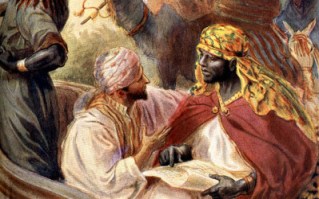
The Ethiopian eunuch is sometimes considered the first Gentile convert (E.g., Eusebius, Ecclesiastical History 2.1.13). That seems unlikely. Luke makes no issue about his non-Jewish status as he does regarding Cornelius in Acts 10. Ethiopia was home to a continuous Jewish presence from the days of Solomon up until the modern era. Beta Israel Jews, also known as Ethiopian Jews, claim Jewish ancestry reaching back to the Solomonic Era. One may safely assume that an Ethiopian who went to the trouble of making a pilgrimage to Jerusalem to worship the LORD in His Temple was Jewish. Luke says, “He had come to Jerusalem to worship” (Acts 8:27). The eunuch had traveled a great distance to reach Jerusalem, more than a month’s travel time. He had probably come to attend one of the pilgrimage festivals. While in Jerusalem, he purchased several Greek versions of the scrolls of the prophets – reading material for the trip home.

Torah Club, Volume 6: Chronicles of the Apostles
from First Fruits of Zion (FFOZ)
Torah Portion Vayetze (“And he went out”) (pp 176-7)
Commentary on Acts 8:1-40

I think we have to accept that Lancaster is making some assumptions here, as he says, but they are certainly compelling assumptions. Luke indeed makes “no big deal” of the Ethiopian eunuch’s conversion to the “Jesus sect” but draws a tremendous amount of attention to Cornelius and his household of Gentiles when they receive the Holy Spirit.

While Peter was still saying these things, the Holy Spirit fell on all who heard the word. And the believers from among the circumcised who had come with Peter were amazed, because the gift of the Holy Spirit was poured out even on the Gentiles.

Acts 10:44-45 (ESV)

Peter and his Jewish companions were astonished that the Gentiles could also receive the Holy Spirit while Philip…but wait. Did the Ethiopian eunuch receive the Spirit during his encounter with Philip?

And the eunuch said to Philip, “About whom, I ask you, does the prophet say this, about himself or about someone else?” Then Philip opened his mouth, and beginning with this Scripture he told him the good news about Jesus. And as they were going along the road they came to some water, and the eunuch said, “See, here is water! What prevents me from being baptized?” And he commanded the chariot to stop, and they both went down into the water, Philip and the eunuch, and he baptized him. And when they came up out of the water, the Spirit of the Lord carried Philip away, and the eunuch saw him no more, and went on his way rejoicing.

Acts 8:34-39 (ESV)

Immediately after rising from the water, Philip is taken away by the Spirit, but there is no mention at all of the Ethiopian eunuch receiving the Spirit as did Cornelius and his household in Acts 10 or the apostles in Acts 2. Of course in Acts 10 the Gentiles received the Spirit (verse 44) and then were baptized in water (verse 48). Did the Ethiopian eunuch receive the Spirit prior to immersion and the event was simply not mentioned by Luke?

Now when they heard this they were cut to the heart, and said to Peter and the rest of the apostles, “Brothers, what shall we do?” And Peter said to them, “Repent and be baptized every one of you in the name of Jesus Christ for the forgiveness of your sins, and you will receive the gift of the Holy Spirit. For the promise is for you and for your children and for all who are far off, everyone whom the Lord our God calls to himself.” And with many other words he bore witness and continued to exhort them, saying, “Save yourselves from this crooked generation.” So those who received his word were baptized, and there were added that day about three thousand souls.

Acts 2:37-41 (ESV)

philip_and_the_ethiopianNotice that Peter tells his Jewish audience that to receive forgiveness of sins, they will receive the gift of the Holy Spirit, but when Luke describes the results in verse 41, he only says, “So those who received his word were baptized, and there were added that day about three thousand souls.” He doesn’t say that after they received his (Peter’s) word, they received the Spirit and then were baptized. It’s possible, given that these were Jews being discussed, Luke assumed his readership would know that they received the Spirit based on verses 1-4. That same thought process might have been in use when Luke describes the baptism of the Ethiopian eunuch in Acts 8. However this is just guess-work on my part.

But while the Jews who received the good news of the Moshiach in Acts 2 came to faith in Jesus but did not have to convert to Judaism (and arguably, neither did the Ethiopian eunuch), what about Cornelius and his household in Acts 10? If Lancaster’s assumption is correct, Peter should have expected Gentiles to convert to Judaism as a part of becoming disciples of the Jewish Messiah.

I mentioned in a previous meditation that Shaye J.D. Cohen in his book, From the Maccabees to the Mishnah, Second Edition said it was not uncommon for those from the various sects of late Second Temple era Judaism to make converts from the Gentiles including the God-fearers. If Peter expected, as did the other Judaisms of his day, that Gentiles would have to convert to Judaism in order to enter into discipleship, then he should have had Cornelius and the other male God-fearers present circumcised as part of the conversion process.

When Simon Peter heard the Gentiles speaking in the languages and saw that they had received the Spirit just as he and the other Jewish believers had, he could no longer theologically exclude them from participation in the kingdom or discipleship. (see Acts 10:47-48) They had not gone through a legal conversion to become Jewish, nor had they been circumcised. They were still Gentiles, yet they had experienced the Spirit of God, just as the Jewish believers had.

Simon Peter explained to the six men that had accompanied him from Joppa, “Surely no one can refuse the water for these to be baptized who have received the Holy Spirit just as we did, can he?” By skipping circumcision and going directly to immersion, Simon Peter inverted the process by which a Gentile might ordinarily become a disciple of Yeshua. Prior to that occasion, he and the other disciples required a Gentile to first submit to conversion/circumcision. Immersion could follow later.

-Lancaster, pg 235

This presentation on Lancaster’s Torah Club commentary went longer than I originally planned, so I’m splitting it into two parts. Please join me tomorrow for the second and final part in Monday’s “morning meditation.”

The Early Christian According to Cohen

In order to maintain their distinctiveness and identity, most Jews of the ancient world sought to separate themselves from their gentile neighbors. In the cities of the East, they formed their own autonomous ethnic communities, each with its own officers, institutions, and regulations. Some cities, notably Alexandria and Rome, had neighborhoods inhabited mostly by Jews. (These were not “ghettos” but “ethnic neighborhoods.”) Following the lead of Ezra, the Jews of the Second Temple period grew more and more intolerant of marriages with foreigners.

Shaye J.D. Cohen
Chapter 2: Jews and Gentiles
Social: Jews and Gentiles, pg 37
from the book
From the Maccabees to the Mishnah, 2nd Ed

I quoted this portion of Cohen’s book in a recent extra meditation and I want to continue discussing the theme of early Jewish and Christian (and Gentile) identity as we can apply it to today’s community of Jewish and Gentile believers. As I also mentioned in my previous missive, there is a group within Hebrew Roots that is invested in believing that for a time, both the Jewish disciples of the Messiah and the non-Jewish disciples brought into the faith, primarily by Paul, were completely of one accord and shared a completely uniform identity as “Messianics,” being “neither Jew nor Greek” (Galatians 3:28), but rather “one new man” (Ephesians 2:15) in Christ, with all distinctions of cultural, ethnic, national, and covenant identity as established by God, completely obliterated.

In traditional (supersessionist) Christianity, this takes on the form of Jews no longer being Jews but rather, “converting” to Christianity. Anyone who has read this blog for any length of time knows that I reject this suggestion and I do not believe it can be sustained from even a casual reading of the Bible. The chronicles of the Jewish disciples recorded in the early chapters of the book of Acts clearly shows them continuing to live lifestyles completely consistent with the other Judaisms of their day. There is nothing to say that Peter, James, or Paul ever surrendered being Jewish and while the Temple stood, ever forsake the festivals or the sacrifices.

However, the aforementioned movement within Hebrew Roots, sometimes referred to as “One Law” takes the same approach from the opposite end of the spectrum. Instead of demanding that Jews stop being Jews, they demand that Gentiles have the right and obligation to be “Jews” in all but name (sometimes referring to themselves as “Israel” or “Spiritual Judaism”). They cite a number of passages in the Bible to support their claim, primarily the “one law for the Jew and the Stranger” in various parts of the Torah (for example, see Leviticus 24:22, Numbers 15:16, and Numbers 15:29) as well as Acts 15:21 to establish the suggestion that God and the Jerusalem Council required the Gentile disciples to more or less “convert” to a form of Judaism without actually converting to Judaism. Further, assuming these suppositions are correct, they state that this practice must be carried forward and established among Gentile Christians today, using the modern synagogue worship model as the template for Gentile practice of what they refer to as “Messianic Judaism.”

In reading Cohen, I’ve become more convinced than ever that the foundation upon which One Law is built is a soggy sandcastle rather than a rock. One Law, by definition, must require the ancient Israelite to share national and tribal identity with the (non-Israelite) “ger” (stranger, alien, sometimes convert) among them and also, that the Second Temple era Jews must surrender their halakhic, ethnic, cultural, national, and covenant identity to the Gentile disciple due to their grafted in (see Romans 11) status. In both cases, the unique people group established by God must become “un-unique.” For this to be true, it must mean that God lied to the Jewish people when He established them as His splendorous treasured people (Exodus 19:5) among all the nations of the earth.

I know there’s a danger is relying on a single source of information (Cohen) for doing any sort of research, so I’ll say right now that my conclusions can’t be considered definitive. On the other hand, I think Cohen’s work does indicate that a number of historical factors related to the ancient Israelites and the Second Temple era Jews have been ignored by One Law proponents and I’d like to briefly bring some of those factors into the forefront.

Let’s take ancient Israel and the status of the “ger” first. According to One Law supporters, the various “one law for the native, etc…” passages indicate that God originally intended for Israelites and non-Israelites (who have attached themselves to the God of Abraham) to operate identically in terms of covenant and identity.

When discussing Conversation to Judaism in Chapter 2 of his book, Cohen states:

In preexilic times, conversion to Judaism did not yet exist because birth is immutable. An Ammonite or an Aramean could no more become an Israelite in preexilic times than an American can become a citizen of Liechtenstein in our own. Mere residency in the land does not confer citizenship, and a social system that defines a citizen solely as a child of a citizen has no legal mechanism by which to assimilate a foreigner.

This seems to support the general supposition of One Law, that Gentiles did not “convert” to Judaism in preexilic times (before the Babylonian exile), and if taken out of context, may be construed as meaning that Gentiles who lived in the land would be under the same law (Torah) and have the same legal status as the native of the land…even though they didn’t have citizenship. But does that make sense?

Biblical law frequently refers to the “resident alien” (ger in Hebrew) who is grouped with the widow, the orphan, and the Levite. All of these are landless and powerless, and all are the potential victims of abuse. (An American analogy to the ger is the Chicano (specifically, undocumented alien) farmworker; a European analogy is the Turkish laborer in Germany.) The Bible nowhere states how a ger might ameliorate his status and become equal to the native born, because there was no legal institution by which a foreigner could be absorbed by a tribal society living on its ancestral land. Resident aliens in the cities of pre-Hellenistic Greece fared no better.

Cohen soundly torpedoes the suggestion that “one law” gerim were equal to the native Israelites in the Land in all aspects of Torah and other covenant status. There was no legal avenue that would allow a non-member of an Israelite tribe to enter into a tribal society that was established by heredity and covenant. There was no way for the ger to become equal to the Israelite in terms of the Mosaic covenant, at least according to Cohen. Any legal requirement for the ger to become circumcised or to not eat from an animal killed by a wild creature was not an indication that the ger was in anyway equal to the native of the land in covenant status, anymore than an undocumented immigrant in the U.S. shares equal status to  U.S citizens.

After the exile of 587 BCE, the Israelite tribal structure was eliminated and the Jews who returned to Judea from Babylon were organized as clans, according to Cohen, not tribes. The ritual organization was specifically “Priest,” “Levite,” and “Israelite.” Further, it became possible to consider the idea that foreigners could somehow be “joined” to Israel and to God. Cohen continues:

But these centuries saw the creation of an institutionalized method for the admixture of gentiles. Ezra was still unfamiliar with the notion of “conversion,” but some of his contemporaries were discussing the idea. One prophet assured the “foreigners who join themselves to the LORD, to minister to him, to love the name of the LORD, and to be his servants” that they would not be excluded from the rebuilt temple but would be gathered to God’s people (Isa. 56:6-8). Several prophets predicted that in the end of days foreigners would join in the worship of the true God in Jerusalem, either as servants of the Israelites or as independent worshipers.”

The mechanism by which all this would occur was not spelled out as far as Cohen is concerned, but Christians believe that it is through our being brought into the New Covenant through faith in the Messiah, Jesus Christ, that we are joined to the God of Israel. Of course, that still doesn’t mean we become identical to the Jewish people in every conceivable detail, particularly if, as we’ve already seen, Gentile residents of ancient, tribal Israel were not included equally in citizenship or covenant, but rather, relegated to the status of alien residents with few, if any rights.

However, as the history of Israel progressed, the concept of conversation to Judaism for the Gentile began to become more formalized. Cohen cites three essential elements of conversion to Judaism: belief in God, circumcision, and joining the house of Israel. Again, this is a definition of a convert to Judaism, not conditions required for the Gentile to join “the Way” as disciples of Christ. Cohen even references the difference:

For Paul, circumcision represents subjugation to the demands of the Torah (Gal. 3-5).

In other words, while Paul did not see circumcision and thus full obedience to the mitzvot as a requirement for the Gentile Christians, he did see it as a necessary step for full conversion to Judaism. The natural conclusion then is that a Gentile becoming a disciple of the Jewish Messiah in the time of Paul was not the same as a Gentile converting to Judaism.

If we take the message of the Book of Galatians as a unit, then we must conclude that Paul is arguing for the sufficiency of faith in Christ for the Gentile. The non-Jew does not have to convert to Judaism in order to be justified before God.

We tend to take the concept of God-fearers as they existed in the late Second Temple era as a sort of stepping stone between Gentile paganism and Christianity, but according to Cohen, these Gentiles were just as likely to be attracted to another form of Judaism (one without the involvement of the Messiah) and perhaps to even convert to one of the many Judaisms of the day.

Even more numerous, however, were those gentiles who accepted certain aspects of Judaism but did not convert to it. In polytheistic fashion, they added the God of Israel to their pantheon and did not deny the pagan gods…In the city of Rome, many gentiles observed the Sabbath, the fasts, and the food laws; in Asia Minor, many gentiles attended synagogue on the Sabbath. Although these gentiles observed any number of Jewish practices and venerated in one form or another the God of the Jews, they did not see themselves as Jews and were not seen by others as Jews.

Cohen does not specifically state that any of these God-fearers were associated with “the Way” nor do we have any indication that the Gentile God-fearers saw themselves as obligated to the Torah or having “rights” of observance. Just as they would have observed any number of other religious practices associated with other “gods,” these God-fearers also observed a number of religious practices associated with the God of Israel. Cohen goes on:

They resemble the polytheists of the preexilic period who feared the Lord but who never changed their identity.

For One Law proponents, the good news is that there is a record of early first century C.E. gentiles observing some of the mitzvot. The bad news is that they were polytheists who did not truly “convert” to any form of Judaism (or necessarily what we now think of as “early Christianity”) nor did they forsake polytheism, which is in direct opposition to fiercely monotheistic Judaism.

Cohen does reference the New Testament (specifically sections of Acts) in further describing these God-fearers.

The book of Acts calls these people “those who fear” (phoboumenoi) or “those who venerate” (sebomenoi) the Lord (Acts 13:16, 26; 16:14; 17:4, 17; 18:7). Modern scholars call them “sympathizers” or “semi-proselytes,” but these terms lack ancient attestation…After all, how can a gentile become a “little bit Jewish?” And why would he want to?

The explanation goes back to Cohen’s description of God-fearers as polytheists who considered the God of Israel as “just another god.” But there may have been other reasons.

Rather than look upon God-fearers as gentiles interested in Judaism, perhaps we should see in the phenomenon the contribution of Judaism to the cultural mix we call Hellenistic. Greco-Roman culture provides various analogies to Jewish ideas and practices.
In other words, gentile interest in Judaism was not for Judaism’s sake per se, but for the sake of multi-culturalism within Greek society, the way that many different religious and cultural practices are integrated into modern Japanese life. My daughter lived in Japan for almost a year with a Japanese family. At one point, she attended the wedding of a Japanese couple who practiced Buddhism but who were married by a Swedish Catholic Priest. When my daughter tried to find out the reason for such an interesting mix, about the best answer she could get was, “In Japan, it’s all good.” Maybe that was also true in some corners of Greek society.

Continuing to read Cohen, I began to wonder if, from the Gentile point of view, converting to Christianity was viewed in the same light as how Gentiles were converting to other forms of Judaism.

Josephus insists that Judaism has no mysteries, no secrets that it keeps hidden from curious observers. This claim may not be entirely true (note, for example, how secretive Jesus is according to the Gospel of Mark), but it is essentially correct. Some Jews even engaged in missionary work. The Pharisees travel about land and the sea in order to make even one proselyte (the Greek word for convert to Judaism; Matt. 23:15). Josephus narrates that in the middle of the first century CE, the royal house of the kingdom of Adiabene became Jewish under the tutelage of itinerant Jewish merchants…

Some scholars have suggested that much of the Jewish literature written in Greek had as its goal the propagation of Judaism among the gentiles, since the literature often emphasizes those elements of Judaism that would make it attractive to outsiders.

Seen from this perspective, Paul and his mission to convert the Gentiles to faith in the Jewish Messiah may have well been just one Jew among many who were attempting to mine the same population of Gentiles and convert them to one of the various forms of Judaism that existed in that era. So it wouldn’t be unusual at all for “Christian” Gentiles to practice various Jewish religious and cultural behaviors in the same manner as other “converts” to Judaism, although as I previously stated, a Gentile converting to Christianity was not converting to Judaism. But at that point in history, the “Judaism” we consider “early Christianity” was considered a Judaism and it had not yet adopted a trajectory that caused it to deviate from Jewish practice and finally to not be considered a Judaism at all.

Apparently that took some time.

Many Christians, generally called “Judaizers” by modern scholarship, were drawn to Jewish practices. For some of these Christians, Judaism was attractive because of Christianity. Through Christianity they learned the Jewish scriptures and became familiar with Jewish observances. Many Christian groups, for example, insisted that Easter must coincide with the Jewish Passover and that it be celebrated with rites similar to those of the Jewish Passover.

It’s interesting that Cohen, although acknowledging a close Christian association with Judaism, continues to differentiate between the Gentile Christians and the Jewish people, presumably even those Jews who followed Jesus as Messiah. Note that early on, the concept of Easter was born and was to be treated in a similar manner to the Passover, but not as if they were the exact same festival or celebration. Nevertheless, according to Cohen, the Jewish-Christian connection endured for a number of centuries, even through the schism began most likely within the lifetime of Paul and John.

In Antioch in the late fourth century, John Chrysostom was shocked that many Christians were doing what pagan God-fearers had been doing in other parts of the empire three centuries previously: they were attending synagogues and observing the Jewish festivals.

It seems as though Christianity and Judaism maintained a “mix” for hundreds of years after the fall of Jerusalem but were never quite “in synch,” making Christianity a unique experience for the Gentile disciples, since they never adopted an actual Jewish identity the way that other proselytes did when they completed an actual conversion to one of the other Judaisms. This seems to indicate a bond between Gentile and Jewish disciples of the Master but not a fused cultural, national, or ethnic identity.

What may have driven a further wedge between Gentile Christianity and the Jewish “Messiah” movement was this:

What did change after 70 CE was that Jews, or at least the rabbis, were no longer as eager to sell their spiritual wares to the gentiles.

There is also some indication that post-Second Temple, Gentile Christianity began to gain some traction independent of the other Judaisms, possibly including the Judaism of “the Way.”

Perhaps (and this is the common explanation) the rabbis saw the growing power of Christianity and decided not to try to compete with it. Outside of rabbinic circles, perhaps some Jews still actively attempted to interest gentiles, especially Christians, in Judaism, but the evidence for this activity is minimal.

The picture Cohen paints of Gentiles in relation to the Judaism most of us call “Christianity” is incomplete, but we can draw some conclusions. First, the historical figure of the “ger” in ancient, preexilic times, is not a model for modern One Law Christians in adopting equality with Messianic (or any other sort of) Jews. The ger’s observance of Torah was for the purpose of having them obey “the law of the land” the way that even an undocumented alien worker would obey some or most of the laws in the U.S., but it didn’t make them citizens of a tribal nation nor did it confer anything even approaching equality between the gerim and the native-born Israelite. There were laws to protect the gerim in the manner of widows or orphans, but they were most definitely “second-class inhabitants” in Israel. The final blow to the “gerim” argument of One Law is that in post-exilic times, the status of the ger ceased to exist because Israel had shifted from a tribal-driven to a clan-driven society.

We see that in the time of Jesus and following, God-fearers were in evidence and they did practice synagogue worship and a number of the other mitzvot but primarily in the manner of polytheists who practiced the religions of multiple Gods. They did not forsake all other gods for the sake of the One God or become equal to the Jewish people in any covenant sense. As far as a Gentile converting to “Christianity” goes, they were not actually converts to Judaism in that they did not enjoy the full covenant benefits of converts to the other Judaisms and full obligation to Torah (which required circumcision as a covenant sign). It is acknowledged that the Gentile disciples of the Way did practice many of the Jewish religious customs including Shabbat and the festivals, even into the fourth century C.E., but the Roman authority never recognized these “Christians” as having legitimate legal rights to these observances the way that the Jews did and Cohen indicates that Gentile observance, particularly of Easter, was similar to but not identical with Passover.

And as the centuries passed, the trajectories of Christianity and Judaism continued to diverge until any “quasi-Jewish” observance by Gentile Christians simply ceased to exist.

Today, Christianity can be said to have its origins in Judaism but it has not been even remotely associated with Judaism for nearly 2,000 years.

I am not saying that there are not Christians today who maintain an attraction to Jewish practices, theology, and philosophy, but there is nothing that we can pull forward across from the time of Paul, and absolutely nothing we can draw forth from the time of Moses, that would suggest that a Gentile Christian today has any right or obligation whatsoever to observance of any aspect of the Jewish Torah mitzvot, except perhaps those that are common with kindness, compassion, and decency toward other human beings (feeding the hungry, and so forth).

While Cohen cannot be considered the final word in the history of Gentiles in the early movement of “the Way,” he certainly gives us a perspective we must pay attention to, and he helps us to realize that whatever the early Christians were in the days of Peter, Paul, and John, we are not the same as they were. They never were Jewish and neither are we.

Why Don’t the Jews Convert to Christianity?

In my neighborhood, we did not even mention his name. We said “Yoshke,” a Hebrew play on his name, or some children learned to say “cheese and crust” in place of “Jesus Christ.” In a synagogue sermon, rabbis might refer to Jesus – exceedingly rarely – by saying “the founder of Christianity.”

Fundamentally, we understood Jesus as a foreign deity, a man worshiped by people. The Torah instructs us never to mention the names of other gods, as no other god exists except God. We also understood Jesus to be as anti-Jewish as his followers. Was he not the Jew who had rebelled against his people? Was he not the one who instructed his followers to hate the Jews as he did, instigating countless cruelties against those with whom God had established an everlasting covenant? Was he not also the man who had abrogated the Law and said that the Torah was now mostly abolished?

-Rabbi Shmuley Boteach
from the Preface (pg ix) of his new book
Kosher Jesus

I’m just beginning Rabbi Boteach’s latest and most controversial book and will write a full review when I’m finished. However, in reading the Preface and Introduction sections of the book, I find myself thinking that much of what I’ve consumed so far would be good material for every Christian to read and absorb. Look at what Rabbi Boteach is saying about how he understanding Jesus when Boteach was a young Jewish boy growing up in an Orthodox Jewish neighborhood. A Jew’s understanding of Jesus from earliest childhood is as a person who hated his own Jewish people, who taught his Jewish (and later, Gentile) followers to also hate Jews, and who founded a religion based on the idea that Jews must be eradicated.

And Christians wonder why Jews aren’t standing in line waiting to convert to that form of Christianity. Gee whiz!

But there’s more:

Until the deeply anti-Semitic Augustine of Hippo (354-430 CE) directly addressed the subject centuries later, early Church leaders held that Judaism would never survive. Even the powerful Roman Empire couldn’t resist the Christian juggernaut – eventually capitulating and adopting Christianity as state religion. It wasn’t a stretch for Christians to surmise that all remaining Jews would eventually convert, wiping out the ancient religion. But against all odds, Judaism survived and flourished.

-Boteach
Introduction, pp xiii-xiv

That last sentence reminds me so much of this:

Then Joseph died, and all his brothers and all that generation. But the people of Israel were fruitful and increased greatly; they multiplied and grew exceedingly strong, so that the land was filled with them. –Exodus 1:6-7 (ESV)

Even as Pharaoh, King of Egypt enslaved the Israelites and the Egyptians treated the Hebrews with terrible cruelty, under the harshest conditions, the Children of Jacob survived, multiplied, and flourished. Of course, Pharaoh had no intention of exterminating his population of slaves. They were much too valuable to him alive, so their continued survival was no mystery to him. However, for the early church, according to Boteach, the continuation of Jews and Judaism was inexplicable.

This makes me ask a few questions.

I wonder if the continuation of the Jews and Judaism today is what frustrates some Christians? It would explain something my brother-in-law said to me many years ago. He’s my wife’s younger brother and a born-again Christian. He denies that his mother was Jewish (even though we have ample evidence that she, her siblings, and cousins, and parents, and grandparents are all buried in Jewish cemeteries). I can’t remember how we got on the topic, but at one point, in a fit of emotion, he exclaimed, “Why can’t the Jews just accept Jesus?”

Maybe I should send him a copy of Rabbi Boteach’s book.

I think that the survival and flourishing of Judaism in the modern age is frustrating to some Christians. Rabbi Boteach goes on in the Introduction of his book, to illustrate how there has been much restoration of the relationship between Judaism and both Catholicism and Evangelical Christianity, so I can’t paint a terribly grim portrait of the Jewish/Christian interaction today. But there are still plenty of Gentile believers who seem to wish that Judaism would just plain “go away” and who are at a total loss as to why God would allow the Jewish people to continue as a distinct group on the face of the Earth.

My other question has to do with “Rabbinic” or “Talmudic” Judaism. In any real sense, this is the only valid form of Judaism in the post-Second Temple world (and I’m including significant portions of Messianic Judaism in this group), since without a Temple, functioning priesthood, and functioning Sanhedrin, much of the Judaism of the Torah cannot be observed, even in Israel. I’ve said before in a few blog posts that the Talmud and the traditions of the Sages are a major reason why Judaism survived in a hostile post-Temple world and across the long centuries after 70 CE and after the majority (but not all) of the Jews were exiled from Israel by the Roman conquerors.

Throughout the history that followed the last Jewish exile, on many occasions, Christian religious authorities tried to destroy the Jews by burning their synagogues, their Torah scrolls, their siddurim (prayer books), and their Talmud. Sadly, Martin Luther, near the end of his life, reversed any good he did to bring Christ closer to the Christians by advocating the destruction of the Jews:

…set fire to their synagogues or schools and to bury and cover with dirt whatever will not burn, so that no man will ever again see a stone or cinder of them. This is to be done in honor of our Lord and of Christendom, so that God might see that we are Christians, and do not condone or knowingly tolerate such public lying, cursing, and blaspheming of his Son and of his Christians. For whatever we tolerated in the past unknowingly ­ and I myself was unaware of it ­ will be pardoned by God. But if we, now that we are informed, were to protect and shield such a house for the Jews, existing right before our very nose, in which they lie about, blaspheme, curse, vilify, and defame Christ and us (as was heard above), it would be the same as if we were doing all this and even worse ourselves, as we very well know.

…I advise that all their prayer books and Talmudic writings, in which such idolatry, lies, cursing and blasphemy are taught, be taken from them….

From “Martin Luther: The Jews and Their Lies” (1543)
as quoted by Jewish Virtual Library

If some Christians, both historically and currently, experience frustration at the continued existence of Judaism, they might also experience frustration at and hostility toward the mechanisms by which the Jews have survived: Jewish prayer, synagogue worship, Torah readings, and particularly Talmudic study. If you destroy a people’s lifestyle and culture, you destroy the people, perhaps not in body, but in spirit and identity. As an example, allow me to present the Native American peoples who were all but wiped out by European expansion across this continent over the past several centuries. There are tribes who no longer know their own written and spoken languages, who have lost many of their traditional ceremonies and history, and who are hanging on to any remaining shred of their identity as a people by their fingernails.

This is what could have happened to the Jewish people and to Judaism if the Talmud had successfully been destroyed. But is this why some Christian and Hebrew Roots groups oppose the study and authority of Talmud among Jews today? Does it somehow diminish those who say they follow the cause of Christ if the Jews continue to adhere to that which has allowed them to survive and to flourish as Jews?

I suppose you could say I’m being a little hard on Christianity and some parts of Hebrew Roots for their opposition to the Talmud of Judaism, but frankly, even if their intentions are “benign” from their own point of view, if they had gotten their way, there would be no Jews walking around today or at best, the “Jews” we’d recognize would be a shell rather than a thriving Jewish culture. Their identity would be shattered, and all that would be left of the people established by God Himself at Sinai through the Torah, would be the tiny sparks and shattered fragments that somehow survived in the whitewashed and “Gentilized” teachings of the modern, refactored “Jesus Christ,” who started out well as Jewish Rabbi and Messiah, but who was turned into a non-Jewish icon symbolizing the extinction of his own people.

Having read my wee missive now, if you’re a Christian, if you’re a Pastor, if you’re a Bible teacher, if you’re a Church Choir Leader, if you’re involved in the church in any capacity whatsoever, take a moment and look at yourself in the mirror. Now ask yourself, why don’t the Jews convert to Christianity. You may not understand it yet, but I think you have the answer.