
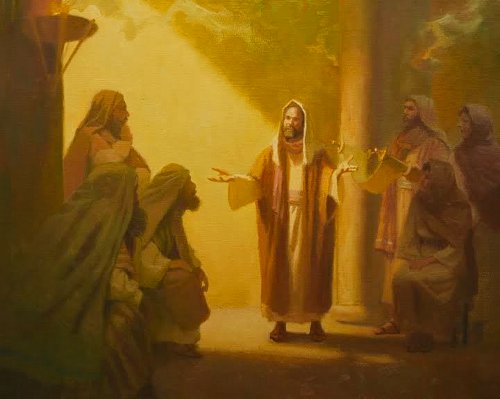
 The Apostle Peter said that the writings of “our beloved brother Paul” contain “some things hard to understand.” If that was true in Peter’s day, how much more so today. Paul was a prodigy educated in the most elite schools in Pharisaism. He wrote and thought from that Jewish background.
-D. Thomas Lancaster
from the Introduction (pg 1) of his book
The Holy Epistle to the Galatians: Sermons on a Messianic Jewish Approach
I know I’m going to regret this, but if I wait until tomorrow or later in the week to write this, I’m going to forget something about my conversation with Pastor Randy. I have to get up at an insanely early hour tomorrow, but I need to make a record of what we discussed tonight.
As I write this it’s Wednesday night. I left Pastor’s office just about fifteen or twenty minutes ago after discussing the Introduction and first chapter of Lancaster’s Galatians book with him. You’ll recall I mentioned a few days ago our intention to make a study of Lancaster’s Galatians chapter-by-chapter, week-by-week as the subject of our Wednesday night discussions. I wasn’t sure what to expect when I agreed to focus our weekly talks on this book, but I never thought I’d be involved in such a densely packed conversation. Actually, I was afraid that we would run out of material, since Chapter One (really, Sermon One) is very introductory. However, we barely made it out of the Introduction section and into the first chapter before time ran out.
I finally confessed to Pastor Randy tonight that I’m more than a little in awe that we’re having these conversations. Debating theological topics with him, given his intellect, education, and his fluency in languages, makes me feel like a five-year old trying to discuss the Grand Unified Theory with Albert Einstein. OK, maybe it’s not quite that extreme, but I’m definitely out of my depth. To his credit, Pastor Randy said the benefit he receives is that I am well versed in the New Testament from a Messianic Jewish point of view.
I’m sure there are a few people out there who would disagree with that assessment or me, but such is life.
Did Paul convert to Christianity? That question came up rather abruptly.
No, not from my point of view and Pastor Randy agreed but he believes that Paul changed direction 180 degrees from his former life as a Pharisee, not just in turning from persecuting believing Jews to supporting them and evangelizing the Gentiles, but in his entire conceptualization and attitude about Judaism (as opposed to “Jewishness” which is the quality of a person being a Jew without the religious and halalaic implications) and the Torah.
Acts 15 came into the conversation very quickly and I realized that Pastor Randy believes that not only did James and the Council absolve the Gentiles from having to observe Torah, but the Jewish believers as well. As I’ve said before when addressing Acts 15, I don’t believe James made a decision that extended beyond the Gentile disciples of Messiah.
This all goes back to our previous conversations about the purpose of the Torah, which we’ve been having for many weeks. While Pastor Randy doesn’t believe Jews and their “Jewishness” ended with Jesus, ultimately, he believes the Torah pointed to Jesus as a sort of culmination and that it’s not Judaism but the message of the Gospel that saves. He believes that if Jews had continued in the “Messianic faith” (i.e. Christianity) beyond the first century or two after the ascension, the observance of Torah would have largely fallen away. Certainly the vast majority of what we think of as Rabbinic Judaism wouldn’t have gained traction and evolved and expanded to what we see today, particularly in Orthodox Judaism.
I know more than a few Jews reading my blog post probably just winced or gasped a bit. when reading the last few sentences.
On the other hand, looking at the opposite end of history, we both agree that the Jewish Messiah King will return and sit on the Throne of David in Jerusalem. There will be a Third Temple. The festivals will be reinstated. Gentiles as well as Jews will observe the festivals but, according to Pastor Randy, the Messiah will be the focus, not simply observance for its own sake.
But will “Judaism” disappear? Should “Judaism” (as opposed to “Jews” and “Jewishness”) disappear?
I didn’t hear Pastor say that Jews should disappear, quite the opposite, but we did discuss, and discuss, and discuss what is a Jew, what is Jewishness, and what is Judaism. My argument is that, whether you agree with everything that the Rabbis said, did, and wrote over the past twenty centuries, for right or for wrong, it was the necessary element and organizational structure for the preservation of Jews as a people and without that ethnic, traditional, legal, corporate structure, with only a string of DNA identifying the Jewish people as Jewish , they would ceased to exist as an identifiable people group in the world a very long time ago.
Both Pastor Randy and I agree that God will not allow the Jewish people to perish.
But what then are the distinctions between Jewish believers and Gentile believers in Messiah, both in ancient times and now? That was a hotly debated discussion. No, we didn’t get “hot under the collar,” but we did go around and around the point, orbiting it like two comets chasing each other’s dust trails.
 If the Torah is to be observed in Messianic Days during the time of the Third Temple and if God meant for the Torah to be obeyed by the Jewish people prior to the first coming of Messiah and even during his lifetime, what was supposed to happen to it between the ascension and the return? Granted, we have no Temple today, but does that mean the entire Torah is in cold storage awaiting a spring thaw? And what about the sages? Are none of their interpretations, rulings, and judgments valid? Even in Yeshua’s day, he agreed with some of the halachah of the Jewish authorities (PDF) and indeed, he agreed they had authority to make such rulings.
At one point in the conversation, Pastor Randy said that he believes both Jews and Gentiles in Messiah in today’s world should look and behave in substantially similar ways, if not identically based on his understanding of the New Testament. His issue is that Torah was always impossible to keep and was put in place primarily to point to that impossibility and why we all need the Messiah. My point is that such an act looks like God just set the Jews up to try to obey an impossible set of rules for the sake of eventually pointing to Jesus. Those hundreds of generations of Jews who lived and died struggling to obey Torah would have led lost lives if the only reason for Torah’s existence was to make a point. What saved those ancient, devout Israelites?
“Grace,” says Pastor Randy.
My point exactly. Torah never, ever was intended to save. It was always faith and grace.
I think he can agree with the value of the Jewish traditions if they’re viewed as traditions and not behaviors one must do in order to please God. “But what about feeding the hungry and visiting the prisoner,” says I? The Torah didn’t stop, particularly the parts that clearly are a responsibility for Christians and Jews today. And if “Rabbinic Judaism” was God’s mechanism for preserving the Jewish people as a people since the fall of Jerusalem in 70 C.E., then who is to say that it’s wrong? After all, what systems have been put into place to implement and sustain Christianity over the long course of history?
One of the big stumbling blocks in the discussion was “Rabbinic Judaism” which could be defined as relying on a “system” instead of what the Bible says. I countered that a Christian denomination is a system and that Pastor Randy operates within one. He countered that he can and has existed outside a denomination before and that what the Bible says is ultimately more important than a denomination or any other system of religious practice.
But do we have unfiltered access to the Bible and to God? Don’t we use “systems” as the means by which we implement what the Bible tells us to do in our daily lives? Yes, if we take all of the incredible detail involved in living life as an Orthodox Jew, for example, those “implementations” are vast, multi-layered, and frankly, there are many that seem to go too far (I know I’m going to catch heck for that), but it’s still fits my definition of what humans do to “operationalize” a life of faith. Christian denominations do this to a lesser or greater degree, but without the same level of formalization (after all, what is Christmas, what is Easter, and what is Lent?).
Can we live a life of just the Bible without a system (be careful how you answer that)? Are there portions of both the modern Christian and the modern Jewish “systems” that are valid interpretations of a Biblical life, even if Messiah would (and will) have “issues” with other portions?
Jesus made distinctions between halachah he supported and did not support (is it lawful to heal on the Shabbat?) when he was first here and I suspect that he’ll “straighten out” both Jews and Gentiles when he returns. Some Jewish authorities write that one of the things Messiah will do when he comes (returns) is teach Torah properly and I believe it, too.
 Pastor Randy says he believes that Gentiles should and will observe Pesach, Shavuot, and Sukkot along with the Jews but you can’t do that without the Torah not only being intact, but valid, and able to be applied in our world.
You can see why we almost didn’t make it out of page 1, let alone the Introduction of the book, and this is where we spent most of our discussion time. Sermon One runs from page 9 to page 19. It’s where we’ll have to pick up next week, but we did encounter an interesting question in the Sermon One material, and one I thought I knew the answer to. To whom did Paul write the Galatians letter? Yes, the churches in Galatia, but who in those churches? On page 19, Lancaster says it’s to the “God-fearing Gentile believers in Galatia” specifically.
But get this:
For I would have you know, brothers, that the gospel that was preached by me is not man’s gospel.
–Galatians 1:11 (ESV)
Would Paul have called Gentles “brothers?” Wouldn’t it have made more sense for him to call his fellow Jews by that name?
We ourselves are Jews by birth…
–Galatians 2:15 (ESV)
Paul is obviously talking to Jewish people at this point.
To give a human example, brothers…
–Galatians 3:15 (ESV)
Brothers, I entreat you…
–Galatians 4:12 (ESV)
I could go on. There’s 4:28, 4:31, 5:11, 5:13, and 6:1 to consider, but according to these references, there’s every reason to believe that Paul was addressing both a Jewish and a Gentile audience in this letter. That being the case, Pastor Randy suggests that Paul is explaining to both Jewish and Gentile believers that obedience to the Law is not necessary if one is in Christ. Is obedience to the Law unnecessary for either the Jew or the Gentile if Messiah is your Master?
Salvation is through Jesus but does that obliterate the Sinai covenant for the Jews? Pastor Randy and I agree that it is through Abraham and the New Covenant that we Gentiles are “grafted in.” We know that the Hebrew for the word “New” in “New Covenant” really means “new” and not “renewed,” even though the wording of the New Covenant (see Jeremiah 31 and Ezekiel 36) largely confirms and expands all of the covenants that God previously made with Israel.
Something I didn’t remember to bring up during my conversation with Pastor Randy is the question of whether or not the New Covenant is already completely written on our hearts or if God is in the process of doing the writing? If the latter, then God may be rather slowly (from a human perspective) doing away with the old (yes, the Torah will go away when heaven and earth go away) and replacing it with the new, but that such a thing has not been accomplished yet (Hebrews 8:13). As I alluded to a moment ago, Jesus also said that “until heaven and earth pass away, not an iota, not a dot, will pass from the Law until all is accomplished,” (Matthew 5:18) and I don’t think that “all is accomplished” yet. After all, the Messiah hasn’t returned, we don’t have universal peace on earth, the Temple hasn’t been rebuilt, and Israel is not yet the head of the nations.
You can see why I didn’t want to wait until later to get this all down. I’m tired but energized at the same time. I’m fighting well out of my weight class, so to speak, but I have to keep going. I agreed to have these conversations in order to learn and I know that Pastor Randy is both teaching and learning as well.
There’s nothing better to show you what you truly know and believe than to have your belief’s challenged and be asked to give a “ready defense.”
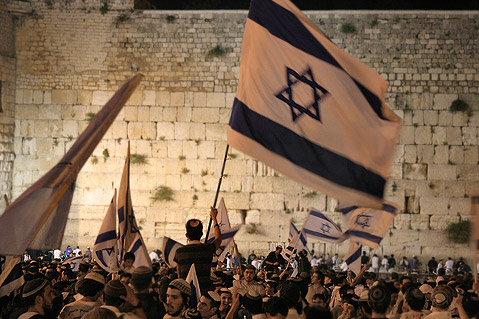 The funny thing is, after the conversation was over and Pastor Randy was walking me to the door of the church (by the time we’re done talking, just about everyone is gone and he wants to make sure all the doors are securely locked for the night), he continued to share with me his love for the Jewish people and his fascination with Judaism. Listening to him talk about his life in Israel and his relationship with his Jewish friends, it is abundantly apparent that he adores the texture, fabric, and essence of living among Jews. But at that moment, his words and emotions seemed so inconsistent with his beliefs on the Law and Judaism relative to our conversation. And yet in every other way, he confirms my own belief in the exceptional “specialness” of what it is to be Jewish and to live a fully realized Jewish life. The Jewish Jerusalem is where we feel the beat of God’s heart.
If ten thousand religious Jewish people came to faith in Yeshua as Messiah tomorrow, should we really ask them to give up everything in their lives that defines them as Jewish and that allows them to worship God as Jews? It sure didn’t sound like Pastor Randy was saying that in those last seconds we had together before I walked out into the night. I know he agrees that we Christians haven’t gotten it all right and we’ve built up our “systems” that help us understand how to obey God. Someday, Messiah will show us what we did right and what we didn’t do right, what we should have included, and what we should have let go.
In examining the vast body of Jewish practice, particularly the complexities of Orthodox Judaism, can we say that much of it is right and necessary now but that when Messiah returns, he will also say what is proper and what is not? Will there be a distinction in Torah for Jews that will be Jewish and will be a Judaism but will not look quite the same as Judaism looks right now?
Incredibly tough questions. I don’t have the answers. Messiah does but he’s not here yet.
This series of conversations and my blogs about them are controversial by design and I don’t expect all of my readers to accept everything I’m documenting here. I have no idea what kind or how much “blowback” I’m going to receive, but I expect there will be some.
Please be patient and exercise kindness and even some restraint in your responses, should you choose to respond. This is a journey of exploration into what for me is an undiscovered country. If you know the territory and would like to share some details about the road ahead, you are welcome to participate.
The journey continues next week.
Addendum, March 15: After reading all of the comments and continuing to struggle with the conversation and the issues involved, I have produced another reflection of my thoughts in an “extra meditation,” Broad Strokes.
 Morning Meditations