Tag Archives: FFOZ

Review of “The Gentile Believer’s Obligation to the Torah of Moses”

At the same time, believers sometimes assume that HaShem’s Torah applies only to Jews and not to Gentile disciples at all. Nothing could be further from the truth. Despite the fact that the apostles “loosed” the Gentiles from these sign commandments, for the most part they are bound to the rest of the Torah’s mitzvot. It should be emphasized that Gentiles in Messiah have a status in the people of God and a responsibility to the Torah that far exceeds that of the God-fearer of the ancient synagogue and that of the modern-day Noachide (Son of Noah). Through Yeshua, believing Gentiles are been (sic) grafted in to the people of God and become members of the commonwealth of Israel. While membership has its privileges, it also has its obligations.

-by Toby Janicki
“The Gentile Believer’s Obligation to the Torah of Moses”
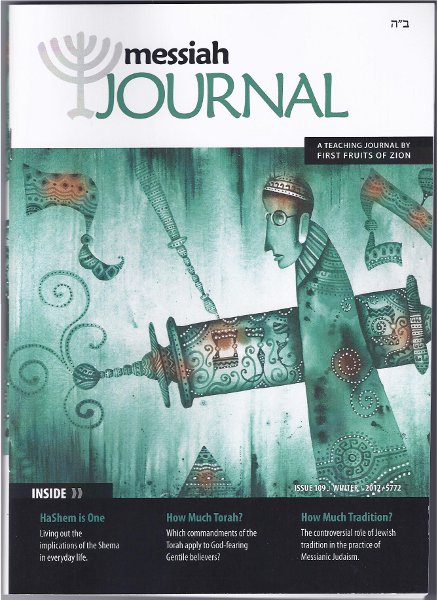
Messiah Journal
Issue 109/Winter 2012, pg 45
First Fruits of Zion (FFOZ)

Excuse me. What did you say?

A few days ago when I received the latest issue of Messiah Journal (MJ) in the mail, I commented that was looking forward to reading Toby’s article, but I wondered if what he was addressing was just a rehash of previous write ups on the same topic.

No, it’s not.

Toby does something I’ve never seen done before (not that somebody else couldn’t have written about this and I’m just not aware of it). He takes the four basic prohibitions outlined in the Acts 15 “Jerusalem Letter” and deconstructs them, expanding the specific details underlying the directives of James and the Council, and then tying them all back into the relevant portions of the traditional 613 commandments. Basically, Toby uses Acts 15 as the jumping off point to explain the nature and character of a non-Jewish disciple’s obligations (yes, I said “obligations”) to the Torah given at Sinai.

I did something similar over a year ago, but my jumping off point was Matthew 28:18-20, which is commonly referred to as “the Great Commission.”

To get the true flavor of what Toby is suggesting, let’s review the basics of “the letter:”

For it has seemed good to the Holy Spirit and to us to lay on you no greater burden than these requirements: that you abstain from what has been sacrificed to idols, and from blood, and from what has been strangled, and from sexual immorality. If you keep yourselves from these, you will do well. –Acts 15:28-29

As Toby points out, on the surface, it seems as if the Gentile disciples of Jesus had very few responsibilities to God, but this is deceiving. As he points out in the subsequent pages of his article, each of these prohibitions has an amazing depth all its own that isn’t apparent until you dig into it. This is, as Toby muses, probably why James also said “from ancient generations Moses has had in every city those who proclaim him, for he is read every Sabbath in the synagogues” (Acts 15:21). The Gentile disciples would need to attend the synagogues to learn and understand the many and subtle details involved in just complying with their responsibilities to these “simple” prohibitions.

I won’t go into those details because then, I’d have to recreate large portions of Toby’s article (and you’d be better off getting a copy of MJ 109 and reading the whole thing for yourself). However, Toby doesn’t limit himself to the “Jerusalem Letter.” He responds to some of the criticisms about Christians being limited to “the letter” by explaining some of the more obvious prohibitions against murder, theft, and coveting, which were not written down and were considered “Duh…obvious commandments” (quoting D. Thomas Lancaster from his book The Holy Epistle to the Galatians [pp 252-253]). These “Oh duh” commandments also include loving your neighbor, although I notice Toby did not cite the most apparent example found in the Master’s own teachings:

But when the Pharisees heard that he had silenced the Sadducees, they gathered together. And one of them, a lawyer, asked him a question to test him. “Teacher, which is the great commandment in the Law?” And he said to him, “You shall love the Lord your God with all your heart and with all your soul and with all your mind. This is the great and first commandment. And a second is like it: You shall love your neighbor as yourself. On these two commandments depend all the Law and the Prophets.” –Matthew 22:34-40

Beyond that, Toby digs further and presents some commandments that apply to the Gentile disciples that are not “Oh duh” and not found in Acts 15:

They can rather be derived from a careful reading of the Apostolic Writings in light of Jewish thought. One such set of mitzvot is the Gentile’s responsibility of honoring the Temple.

-Janicki, pg 53

What? The Temple? Most people don’t realize that during the Second Temple period, a non-Jew actually could bring an acceptable sacrifice to Herod’s Temple and expect that it would be received.

While Gentiles were not to bring certain offerings at certain times such as guilt..or sin..offerings, they were permitted and encouraged to bring burnt (olah) and peace (shelamin) offerings. The priest would attend to these offerings just as if an Israelite offered them up, and Gentiles were required to follow the same standard requirements for the sacrifices, e.g., their sacrifices were to be unblemished (Leviticus 22:21) and from an animal seven days or older (Leviticus 22:27).

-Janicki pg 54

Toby goes on to describe how the laws regarding ritual purity relate to the Gentile, as well as the application of set times for prayer (see my article The Prayer of Cornelius for additional details) and mealtime blessings.

Toby’s article does restrict certain of the mitzvot to the descendents of the Hebrews such as the mitzvah of circumcision (brit milah). I had a brief phone conversation with Boaz Michael (founder of FFOZ) yesterday, and he mentioned how the picture of circumcision in Paul’s letters seems like such an obvious demarcation line in terms of those who are fully under the Torah’s yoke, with Titus and Timothy cited as the clearest examples. Yet even in this, Toby said something very surprising:

Gentiles are specifically enjoined not to be circumcised for the ritual covenantal status. We can assume that, like Maimonidies, the apostles would have no problem with Gentiles voluntarily being circumcised for the sake of the mitzvah, but to do so complete with expectation of covenantal status as Jews would be to “seek circumcision” in the Pauline sense.

-Janicki pg 58

I must admit that a lot of this took me by surprise. As I mentioned earlier, I’ve never seen the prohibitions in the Acts 15 letter expanded in terms of their scope and tied back into the Torah. I have seen the Seven Noahide Laws expanded into between 80 or 90 different sub-commandments, but traditional Judaism doesn’t generally connect these sub-commandments to the Torah of Sinai (even though they have many thematic and operational similarities). I have seen traditional Judaism confirm that, at least in the time of the Third Temple, that sacrifices of the Gentiles would be accepted, so that part wasn’t a stretch for me.

Has FFOZ changed it’s stance regarding Gentiles and the Torah? I’m not sure (I didn’t specifically query Toby before writing this review). On the one hand, it isn’t quite the same position as the viewpoint FFOZ has previously referred to as “Divine Invitation”. Being “invited” to take on board additional mitzvot beyond a Gentile’s obligation is voluntary and pretty much a “take it or leave it” approach. On the other hand, this article states that a significant portion of what we refer to as “Torah commandments” are obligations the Gentile disciples (Christians) must perform and to fail to do so constitutes a sin against God. It seems (and this is just a guess) that FFOZ is doing what I’m doing: continuing to explore and investigate God, the Bible, and a life of faith and allowing their understanding of each of these to evolve progressively.

Wow!

There are a couple of obvious concerns.

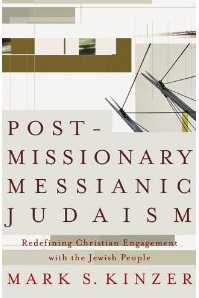
The first is that other Messianic Jewish organizations, such as the Union of Messianic Jewish Congregations (UMJC) may take exception to the idea that Gentiles have a greater Torah obligation than previously advertised. UMJC and similar “Jewish-oriented” groups, tend to take a more definitive stance on Gentile vs. Jewish distinctiveness in worship of the Messiah, with advocates such as Tsvi Sadan proposing a complete separation between Messianic Jewish and Christian/Gentile worship of the Jewish Messiah. The content of Mark Kinzer’s book Postmissionary Messianic Judaism: Redefining Christian Engagement with the Jewish People, which has gained a “foundational” status in the modern Messianic Jewish movement, likely operates in less then perfect accord to many of the points in Toby’s article as well.

The other concern is how all this applies to the church. It’s one thing to say that the Gentile Christian is “allowed but not commanded” to pray at fixed times (as Cornelius did), keep a “sort of” Shabbat,” and refrain from sexual relations with their wives during their menstrual periods, and another thing entirely to say these are all obligations. Once FFOZ states that there are aspects of the Acts 15 directives and other portions of the New Testament that actually obligate the Gentile believers to specific parts of Torah obedience, then we come to the realization that a very large part of the Christian world is (unknowingly) disobeying God.
OK, maybe I’m overstating the point, but Toby’s article seems to open up that can of worms and it also takes the One Law vs. Messianic Judaism debate to a whole new level. I’ve been actively participating in that debate (again) on this blog for the past several days (and I have the headaches to prove it) and I must admit, Toby’s article tosses some of the arguments presented into a cocked hat, so to speak.

As far as the debate regarding Gentile Christians, the Acts 15 letter, and the refactoring of Christian obligations to the Law are concerned (traditional Christians reading this blog cannot fail to be intrigued and maybe dismayed at this point), Toby Janicki’s article “The Gentile Believer’s Obligation to the Torah of Moses” may have put us into a whole new ballgame (please forgive the mixed metaphors). I highly recommend that you buy a copy of Messiah Journal, issue 109 for this article alone. Toby’s article is nothing less than landmark.

Review of “Halachic Authority in the Life of the Messianic Community”

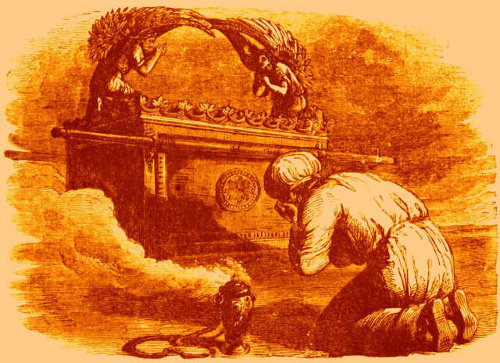
This leads me to conclude that the Jewish religion has preserved the Jewish people in their long wanderings in the desert of the Gentiles. Some will say that it is not Judaism which has preserved the Jewish people, but God’s grace. They should rest assured. God has indeed preserved the Jewish people, and he has done so by securing them in this “ark” that is called the Jewish religion. The Jewish religion therefore constitutes a revelation of God’s grace towards the Jewish people. This religion, which arose from the smoky ruins of the Temple and which people so love to hate, is the primary instrument through which God has preserved the Jewish people. Because of it, there are Jews in the world today.

-Tsvi Sadan
“Halachic Authority in the Life of the Messianic Community”
Messiah Journal
Issue 109/Winter 2012, pp 16-17

When I saw the title, I thought the topic would be more related to the specific differences between halacha in traditional, Orthodox Judaism and a halacha that could be applied to Jewish, and perhaps in some sense, to non-Jewish disciples of the Master in a Messianic framework. However, Sadan’s excellent article, which was originally delivered as a lecture in Israel on September 5, 2008, addresses something else almost entirely: the religion of the Jews who follow the Messiah.

Let me explain.

There is an impression that the Jews, and especially the Jews who were born, raised, and educated within a traditional religious and cultural Jewish framework, who are part of Messianic Judaism and who are disciples of Yeshua (Jesus), “the Maggid of Nataret,” belong to a different sort of “Judaism” than their brothers in what we refer to as “Rabbinic Judaism.” In fact, many Jews and non-Jews in other branches of the “Messianic” movement, as well as those attached to Hebrew Roots groups, tend to view Rabbinic Judaism, what we consider the Reform, Conservative, and especially Orthodox branches of Judaism, to be separate, distinct, and “lesser” forms of “true” Judaism. They seem to believe that the only fully realized Judaism is represented by a Messianic Judaism that follows Jesus while removing any aspect of halacha and tradition that exceeds the “written Torah.” This form of Messianic Judaism, actually rejects Rabbinic Judaism in the vast majority of its content (except for using the model of the modern synagogue service and the use of tallitot, siddurim, and so forth) especially and including Mishnah, Talmud, and Gemara: the so called leaven of the Pharisees and the Sadducees” (see Matthew 16:6 and Mark 8:15).

According to Tsvi Sadan, they are dead wrong. Forgive me. What follows is necessarily lengthy.

To understand the meaning of this “leaven,” which scares the daylights out of some people here, I will take just one verse from an abundance of new Testament verses quoted in those inflammatory letters. In Matthew 16 (the word “hypocrites” does not appear in the standard Greek text used today), Yeshua twice calls his disciples to beware of the “leaven of the Pharisees and the Sadducees” (vv. 6, 11). These two admonitions follow the miracles and wonders which he had just performed in the sight of thousands of people. When the Pharisees and the Sadducees approach him to test him (v. 1), Yeshua correctly sees this as impudence of the highest order, and responds accordingly: “[Hypocrites,] do you know how to discern the appearance of the sky but cannot discern the sign of the times?” (v. 3). This means that Yeshua is labeling his opponents hypocrites because of their pretense to see one more sign while in fact all they wanted to do is accuse him.

-Sadan, pg 15

He goes on to say point blank that the “leaven of the Pharisees and the Sadducees” is hypocrisy, not the specifics of Second Temple era halacha and tradition. Sadan confirms that there is no dissonance between Messianic Judaism and Rabbinic Judaism or for that matter, the religious concept of Judaism in any form and Rabbinic Judaism. More plainly put, Rabbinic Judaism is the only Judaism, according to Sadan.

So where does that leave the non-Jews who, in some manner or fashion, are attached to the Messianic and Hebrew Roots worlds? Moreover, where does that leave Christians in relation to their Jewish brothers who also honor Yeshua as Messiah and Lord?

Finally, let me make one point with respect to the Christians living in our midst, because probably there is someone who will distort things and claim that the position I have proposed here leads to hated of the Gentiles. Let me say here that I warmly welcome every Christian – on the condition that he or she does not attempt to impose his or her religion on me. I regard very seriously the behavior of some Christians living in Israel who have the gall to malign the Jews living in the state of Israel merely because they refuse to be evangelicals, Lutherans, or Baptists. God-fearers from all nations are welcome to participate in the Jewish service of God as long as they do not speak against Israel, Torah, and Judaism. I do not agree with the attitude that says that in order to achieve unity with our Gentile brethren, we should remain Jews but reject Judaism. I consider this assertion as nothing less than complete and utter foolishness.

-Sadan pp. 24-25

Laying TefillinSadan continues to strongly make his point for another page and a half, and most assuredly all of it, as I imagine these brief quotes have done, will certainly bring forth the ire of many non-Jews and some Jews in the aforementioned “Messianic” and Hebrew Roots movements, who indeed believe that the Jews who worship the Messiah must abandon Judaism in order to be “completed Jews” (as if a Jew who worships in the manner of his fathers is somehow incomplete).

Sadan’s article does bring up one very interesting point: do Messianic Jews and Gentile Christians belong to two separate and unrelated religions? I have no idea what Sadan thinks, but as far as I can gather from his article, the response seems to be “yes and no.”

It’s “yes” in the sense that everything that Judaism is, including the 613 commandments of the Torah and the entire body of Talmudic judgments, rulings, and traditions, apply only to a Jewish population. Judaism’s ethnic and cultural aspects are completely intertwined with Judaism as a “religion,” so you cannot remove the traditions, without removing what it is that defines a Jew. I’ve said all this before and Sadan’s article does nothing to change my mind.

It’s “no” in the sense that, in spite of the differences in our covenant obligations to God, we share One God and One Messiah, and we are all His creations. We are different branches, but grafted into the same tree. We are Jew and Gentile, but we have equal access to God. We are co-citizens in the Kingdom of Heaven and we all inherit a life in the world to come. And we will all sit at the same table at the feast of Abraham, Isaac, and Jacob (Matthew 8:11).

I do want to take exception to one statement in the article where it appears Sadan refers to we Christians as “God-fearers”.

God-fearers from all nations are welcome to participate in the Jewish service of God as long as they do not speak against Israel, Torah, and Judaism.

I don’t believe that Christians who have accepted the Messianic covenant upon themselves (as it applies to the nations) are equivalent to the ancient God-fearers or the modern Noahides. God-fearers were non-Jews who came out of pagan worship to recognize the God of Abraham, Isaac, and Jacob as the One, true, and unique God of the Universe. They quietly worshiped among the Jews in their synagogues and I imagine the God-fearers humbly populating the Court of the Gentiles in Herod’s Temple, listening with awe to the songs of the Priests, and urgently desiring to bring their own sacrifices before the King.

But they had no covenant relationship with God at all. There was adoration and worship, but no access (unless they chose to convert to Judaism). Jesus, the Messiah, appeared in the world and changed all that. He allowed the nations to come close to God, to be adopted, and to be called sons and daughters of the Most High, through the blood of “the Lamb of God who takes away the sin of the world,” (John 1:29). I certainly hope that Sadan hasn’t chosen to “demote” those of us who come along side him as co-members of the Messianic covenant.

If you’re not familiar with some of the related concepts Mark Kinzer describes in his book Postmissionary Messianic Judaism: Redefining Christian Engagement with the Jewish People, you may find Sadan’s article shocking and even completely alien to how you’ve imagined Jews being attached to Jesus as their own Messiah. If you are familiar with Kinzer’s book, some of you may still be outraged at what Sadan writes and vehemently disagree with his propositions and his ardent passion in defending his own Judaism.

This issue of Messiah Journal couldn’t have come at a better time for me. Last night, I was having a conversation with Judah Gabriel Himango on his Facebook page about the Shabbat and what the coming of Jesus changed in the Jewish and non-Jewish worlds. Judah suggested that because of Jesus, Jews should abandon the traditional Jewish synagogue model of worship and adopt a Shabbat service more along the lines of what’s recorded in 1 Corinthians 14:26-40. Here are some of his comments:

Messiah’s arrival was of such great impact, such that the way we live our lives and the way our congregations are modeled must be in light of his coming. Lives and religious services modeled on the understanding that Messiah hasn’t come would be to live as if he never arrived in the first place. The Messianic movement, including the Messianic Judaism subset, should not merely be emulators of Judaism.

How about the stuff in Corinthians 14 for starters? Shouldn’t those things be in Messianic services?

And how about the Psalms, where music and instruments are used to praise the Lord? Shouldn’t those things be in services, both Jewish and Messianic?

I believe people — Jews and gentiles — should change their lives around to what Messiah commanded and what his disciples taught in the Scriptures.

If our lives and our services look exactly like those before Messiah, it’s as if his arrival never happened.

Needless to say, I disagreed.

The RabbiLet me make clear that I like Judah and I’m not angry or upset with him. I’m not picking on him or singling Judah out, but rather, I’m using his words to illustrate what many other disciples of Jesus believe and want to see actually occur. I must disagree with his desire to replace Jewish worship with how he interprets one small portion of the New Testament, as well as with the general suggestion among Christians, that Messianic Jews should remain (somehow) Jews but flush Judaism down the nearest toilet, tossing Rabbis and Talmud under a speeding bus. While I have questions about how Sadan sees Christians vs. God-fearers, I agree with him in most if not all of the rest of his points. I can’t see the Gentiles in the church and in “Messianism” and Hebrew Roots as having any right whatsoever to re-define Judaism in their own image. Of course, they say that it’s not they who are doing the re-defining, but Jesus instead, but I disagree. We’ve seen that there are an abundant number of paths one can take to interpret the New Testament, including doing away with the Law (and the Jews) and replacing it with the Grace of Christ (and the Gentile Christians), and I disagree with that as well (see my article in MJ 109 “Origins of Supersessionism in the Church” for more).

In previous blog posts and blog comments, I’ve tried to make arguments that present many of the same ideas as expressed in Tsvi Sadan’s “Halachic Authority in the Life of the Messianic Community,” but I lack his insights and perspectives as a Jew and frankly, his wonderful talent in writing. Whether you end up agreeing with him or not, I believe that reading this illuminating work will open your eyes to a new and different way of seeing the Jew in relationship to his Messiah within the time-honored and God-granted context of Judaism.

Messiah Journal: Excerpt from “Origins of Supersessionism in the Church”

Yeshua not only defined himself as the gateway to salvation, but commanded his Jewish disciples to do something that had never been done before. Yeshua commanded his Jewish disciples to make non-Jewish people disciples in a Jewish sect that followed the Messiah and worshiped the God of Israel. Yeshua identifies his Jewish disciple Peter as the rock upon which he will build the Messianic community (Matthew 16:18). Acts 4 shows us that thousands of Jews came to faith in the Messiah well before the time when Paul began to actively seek non-Jewish disciples. We also see in Acts 15 that the Jewish Jerusalem council exercised authority over the Gentile assembly of the Messiah. With the foundation of the early Messianic community being so thoroughly Jewish, how did a concept like supersessionism even come into being? Actually, the seeds of this rather ugly plant began to sprout early.

Excerpt from the article
“Origins of Supersessionism in the Church”
by James Pyles
Messiah Journal
Issue 109/Winter 2012

I just received my advance copy of the latest edition of Messiah Journal (MJ) and of course, as it contains my first article published in religious literature, I’m more than thrilled. I showed my wife and she said that she will have to read it, which is even more intriguing (as surprising as it may sound, she doesn’t often read my material). I hate to admit this, but like many authors, I really enjoy seeing my work in print. I suppose it is the same feeling a painter has when he or she sees their work on display in an art gallery.

But I shouldn’t forget everything else this issue of MJ has to offer. I haven’t had the opportunity to read it yet (so I can’t review its contents), but I’ve looked through this issue and there are definitely some submissions I’m anxious to dig into.

There’s an article written by Tsvi Sadan called “Halachic Authority in the Life of the Messianic Community”. Apparently, it was delivered as a lecture to Messianic leaders in Israel in September of 2008 as the “final chord of a debate between those Messianic Jews who teach to live according to Jewish tradition and those who view this tradition as ‘the leaven of the Pharisees and Sadducees.'” This discussion has taken place in the Messianic blogosphere fairly recently, such as in Judah Himango’s blog post Kosher Jell-O, and whether Messiah’s disciples need our own ruling body, as well as on my own blog in the write up Tradition! (and as always, some of the most interesting parts are in the comments sections).

I must admit, I will probably dive into Sadan’s article first, but I also want to read Russ Resnik’s “Shema: Living the Great Commmandment” (Part 1). I’m also very interested in Toby Janicki’s article “The Gentile Believer’s Obligation to the Torah of Moses”, which is also a topic of great interest among non-Jews who are attracted to Jewish religious lifestyle and worship. I believe MJ has had similar articles in the past and want to find out if this is just a reworking of material with which I’m already familiar or something entirely new. I know I’ve been challenged on this topic by comments made on my own blog very recently, both in Defining Judaism: A Simple Commentary and The Focus and the Lens, so I’m hoping for some “re-enforcement” to augment my own knowledge in this area.

For tomorrow’s “morning meditation,” I’m posting a blog on Gentiles and the Shabbat, and Aaron Eby has an article in the current issue of MJ called “Fire by Night: Lighting the Shabbat Candles” which (you should pardon the pun) should prove illuminating. That’s not all of the contents of issue 109 of MJ but those are the highlights. Of course, if you find all of that tantalizing, don’t forget my own article on the origins of supersessionism in the church, how the seeds were first planted, who the major players were, and how the history points to modern times.

If you don’t already regularly receive issues of Messiah Journal, go to the First Fruits of Zion (FFOZ) website and order issue 109 today. I’m really looking forward to reading it myself.

Origins of Supersessionism: My Upcoming Article for Messiah Journal

Occasionally I receive a few complements from folks who think well of my blog and who suggest that I should do more formal kinds of writing in religious publications. While it’s very flattering to receive such attention, since I don’t have a formal education in theology, I thought such a contribution to be beyond my current skill sets. However, that has changed.

Several months ago, Boaz Michael, the Founder and President of First Fruits of Zion (FFOZ), asked me to write a four-part series on Replacement Theology or Supersessionism for their quarterly publication Messiah Journal (MJ). The series will touch upon the historic origins of Supersessionism, its placement in Christian doctrines, how Supersessionism affects the Church and Jewish people today, and how the Church can leave Supersessionism behind. One article in the series will be published in each of 2012’s quarterly releases of MJ. According to Toby Janicki at FFOZ, the issue of Messiah Journal containing my article should be available by the end of January. Look for “Origins of Supersessionism in the Church” in the January 2012 (#109) issue of Messiah Journal.

I want to take this opportunity to say that I am deeply honored Boaz and the fine folks at FFOZ considered me for this project and am gratified that I can offer my small talents in the service of their ministry and in service to God.

Blessings.

In Search of the Jewish Voice of Jesus

Kohen GadolThe Maharal, zt”l, explains the mechanics of idolatry. “Our sages teach that a Jew who gives charity on condition that his son recover from illness is a complete tzaddik. Conversely, charity given by a non-Jew on condition is meaningless. The gemara explains that even if the child does not recover, the Jew will not want his money back, but the non-Jew will want a refund. To understand why, we must delve into the reason why people worshiped idolatry. They desired to excel in something, be it war, love, or the like. Idolatry meant only acting in a way that they held strengthened their goal. It is no wonder that an average idolater who gave money on this condition would demand a refund if the child did not recover. He only gave charity as a fee in the hopes that his son will heal. If this didn’t provide excellent results, it was a waste of money from his perspective.”

Daf Yomi Digest
Stories Off the Daf
“The Dust of the Remains”
Chullin 125

By God’s divine providence, I “accidentally” took in my hand a New Testament, which for many long years I had left unnoticed in a hidden corner – a book which I had, in vexation, taken from a Jewish teacher thirty-three years before, in order that he might not read it.

I began to turn over its leaves and to read.

-Rabbi Ignatz (Isaac) Lichtenstein (1824-1909)
District Rabbi of Tapioszele, Hungry
As quoted in Messiah Journal, Issue 108/Fall 2011
“A Christian’s Guide to the DHE”

Let’s say you are a Christian who has an interest in Judaism, as it is the source of your faith. Strange, I know, but let’s pretend. Let’s say that, out of your interest and curiosity, you have taken to reading the traditional weekly Torah Portions which are recited each Shabbat in every Jewish synagogue in the world. You may even read some of the Jewish commentaries on these readings and, as time passes, you may discover yourself picking up on the rhythm of Jewish thinking and start seeing the “Old Testament” through new and illuminated eyes.

Then you return to reading the New Testament. By now, you are very familiar with the teachings of Jesus and the letters of Paul. Strangely, they seem a little stale to you. This is not because Christ is stale and not even because your faith is beginning to become a little tired, but because you cannot detect what most assuredly was a Jewish voice coming from the “Son of Man”, the offspring of Miriam (Mary), a late Second Temple period Jewish virgin who had an extraordinary encounter with an angel one day (Luke 1:26-38). When you read the Gospels and the Epistles, you hear the voice of your Gentile Christian Sunday school teacher and your Gentile Christian church Pastor. These are very good and kind men and you value their service to the faith very much.

But something is missing.

In the sixth month, God sent the angel Gavri’el to the Galil, to a certain town named Netzeret, to a virgin who was betrothed to a man named Yosef from the house of David. The virgin’s name was Miryam. The angel entered the room and said to her, ‘Shalom to you, gracious woman! HaShem is with you! {You are blessed among women.}” {When she saw him,} she was alarmed by his statement and said in her heart, “What is this brachah?” The angel said,

Do not fear, Miryam, because you have found favor before God. You will conceive and give birth to a son, and you shall name him Yeshua. He will be great, and he will be called the son of the Highest. HaShem, God, will give him the throne of his father David. He will reign over the house of Ya’akov forever. There will be no end to his kingdom.

Miryam said to the angel, “How can this be? I have not known a man.” The angel answered and said to her,

The Holy Spirit will come upon you, and the power of the Highest will overshadow you. Therefore, the one that is born will be called holy – the son of God. Look! Your relative Elisheva, whom people have called barren, is also pregnant and will bear a son in her old age. This is her sixth month. For nothing is perplexing to God.

Miryam said, “I am the maidservant of HaShem. Let it be for me according to your word.” And the angel left her. –Luke 1:26-38 (DHE Gospels)

Is that more like it? No, it’s not an English Bible with a couple of “Hebrewisms” thrown in to make it sound “Jewish”. It’s much more than that.

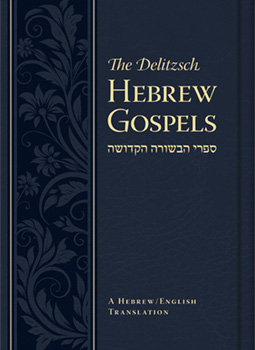
In 1873 the British and Foreign Bible Society commissioned Franz Delitzsch to prepare a translation of the New Testament into Hebrew. Delitzsch agreed and set to work utilizing his extensive knowledge of mishnaic Hebrew and first century Judaism to create a translation and reconstruction of the Greek text back into an original Hebrew voice. His reconstructing translation was completed in 1877. After the first edition, it went through extensive review and revision for the next 13 years. The final edition was published in 1890 under the care and supervision of Gustav Dalman. Sixty thousand copies were distributed for free throughout Europe resulting in tens of thousands of Jewish people coming to know Yeshua as the Messiah of Israel.

Those Jewish believers and their influences are the very embers that have ignited this modern day hope and revival.

Since that time the Delitzsch NT has continued its good work through a series of reprints by various missions to the Jews. It is our honor to work alongside this great man of God and bring all of his wisdom, scholarship and vision to today’s people of God in a fresh and relevant way. We pray that it will allow even more Jewish people to engage in the life giving words of Yeshua.

From the introduction to the Delitzsch Hebrew Gospels
by Vine of David

This Bible, which has been faithfully reproduced by Vine of David and enhanced with many new features isn’t meant to be the perfect English translation of the Gospels. Originally, it was the testamony of the writers of the Gospels, reconstructed back into its original Hebrew “voice” so that the words of Jesus (Yeshua) could be more clearly perceived by 19th (and now 21st) century Jews. This isn’t an easy task because, as you read in the prior quote from Daf Yomi Digest, matters related to non-Jewish worship are not considered to operate on the same level as observant Jewish piety. On the other hand, you also read words from the heart of a 19th century Rabbi who, accessing no special edition of the New Testament, nevertheless found the Jewish Messiah. To continue reading from Rabbi Lichtenstein:

An accomplished lady who was conversing with me exclaimed, when her arguments had all been met, “He is everything great, everything noble, if only he were not called Jesus Christ.”

Ironically, the name revered by Christians across 2,000 years is, for good reason, feared and reviled throughout Judaism and it is that name, not who he is or what he teaches, that separates the great “Maggid of Netzeret” from the vast majority of his people, the Jews, in today’s modern world. Rabbi Lichtenstein describes his own perceptions in this area:

As impressions of early life take a deep hold, and as in my riper years I still had no cause to modify these impressions, it is no wonder that I came to think that Christ himself was the plague and curse of the Jews, the origin and promoter of our sorrows and persecutions. In this conviction, I grew to years of manhood, and still cherishing it, I became old. I knew no difference between true and merely nominal Christianity. Of the fountainhead of Christianity itself, I knew nothing.

Most Jews come to know Christianity not from Christ but from his followers, both those in the here and now, and those who have cursed, harrassed, persecuted, and killed the Jewish people for hundreds upon hundreds of years. It is a miracle of God that even a single Jew in all that time, and to this very day, has ever come to faith in Jesus and called himself a disciple of the Master. Certainly Rabbi Ignatz Lichtenstein was the beneficiary of one such miracle in 1884 when he become enthralled with the New Testament and devoted his life to being a disciple of Yeshua.

But what about you, “hypothetical” Christian, who longs to also hear the Jewish voice of Jesus? If now there exists an edition of the Gospels that will allow you to hear Jesus as less evangelical Christian and more Jewish Rabbi, why should you desire to hear words that were written for a Jew? The article “A Christian’s Guide to the DHE” in Messiah Journal addresses your concerns.

Reading the DHE is important for Christians because it places the Gospels back in their proper context. The Messiah came as a Jewish man to the Jewish people in the land of Israel. This was no accident. Rather, this was the setting that the Father specifically chose to reveal his truth and his plan of salvation.

The implication is rather startling. If God chose to provide His plan for the salvation of the non-Jewish people of the earth in the form of a First Century itinerent Jewish Rabbi, born of working-class parents in a small rural town in a Roman occupied nation, are you going to be able to completely understand the message of that plan and hear the entire intent of God by reading a traditional English translation of the Bible? Yes, you can buy a Chumash and a Tanakh to immerse yourself in the pool of Jewish learning in the Torah, Prophets, and the Writings, but you are missing an important, some might even say “crucial” element in reconstructing the ancient Jewish presence of the Word of God.

The Death of the MasterJewish men like Rabbi Lichtenstein and Paul Philip Levertoff encountered Jesus at great risk and yet accepted that risk, which included being rejected by family, friends, and the entire Jewish community, in order to connect to the tzadik God made most great in all the world, who is revealed not only a Rabbi and Prophet, but as “the Prophet” and the Moshiach. You, as a Christian, may end up taking a bit of criticism from your Sunday school teacher, your Pastor, even your parents and spouse, because you are called to hear a voice few of them will ever perceive. But having once heard that voice, how can you ignore it? No, you can’t. He’s calling to you.

You are not alone. You are not without directions in which to turn. There are others who walk the same path as you. The DHE Gospels can let you hear the Jewish voice of Jesus. Messiah Journal is a publication written for the Christian and the Jew who desires to meet the Jewish Messiah. You can go beyond where you are now in understanding the author of the faith in your heart. The subtle nuances and the “hidden” message in the words of Jesus and the Gospel writers do not have to go unnoticed. You can find them. Hopefully this review has helped you know where to look.

Where to Find Jesus

Hasid AlleywayIt is important that before we dig into the Gospel texts themselves we understand some of the cultural background regarding ritual purity in the late Second Temple period. The Tosefta tells us that during this time “purity broke out among Israel.” Archeological evidence verifies that in the decades preceding the fall of the Temple in 70 CE ritual purity had become a major concern even among the common people throughout the land of Israel.

-Toby Janicki
“The Master and Netilat Yadayim”
Messiah Journal
Issue 108 – Fall – 2011/5772 p. 27

This isn’t the first time I’ve discussed netilat yadayim or the ritual handwashing, but I’m not making it my main focus this time. Rather, I want to address how Janicki supports his argument for Jesus advocating, or at least not dismissing this portion of First Century Jewish halacha. The clue is right in the quote that is just above. Not relying on the Bible alone to interpret the Bible.

That’s probably going to raise a few eyebrows among some people reading this. I’ve heard it said often enough that we should “let scripture interpret scripture”, which I take to mean using one part of the Bible to interpret another part. I wonder if that’s always possible or if we shouldn’t also take into consideration other information, such as the “archeological evidence” Janicki mentions. Of course, that’s not the only supporting data he cites.

While the washing of hands before eating bread is not specifically commanded in the Torah, the sages of the Talmud attempted to find a scriptural basis for it in various biblical passages. For example in Leviticus 15:11 there is the injunction, “Anyone whom the one with the discharge touches without having raised his hands in water.” They felt that the Torah made allusions to the entire scope of this practice in a roundabout way (citing Chullin 106a). -Janicki p. 27

I know that Mark 7 seems to be very clear that Christ disapproved of the hand washing ritual, but can we rely just on the text as translated into English without any contextual frame of reference to tell us the entire story? I know that Christians (and many “Messianics”) are rather squeamish when it comes to the Talmudic wisdom, especially since it was documented decades to centuries later than the events in Mark 7, but halachah did exist in Christ’s day, he was (and is) a Jew, and despite what supersessionist church teachings may say to the contrary, Jesus did not play fast and loose with his being a Jew.

I’m saying all this (and it’s not the first time) to illustrate that we cannot simply pick up a Bible, read a passage, and immediately know all of the details and subtle nuances that are being communicated. In fact, we don’t know what is being said and often, we don’t bother to try and find out. We, meaning Christians, tend to rely on the traditional church interpretation of the passage and believe that Jesus was talking about how all meats were clean and ham sandwiches were forevermore a really cool snack. However, a close reading of even the English text (minus Christian perspective) will reveal that he wasn’t talking about food at all.

Interestingly enough, from the Jewish point of view, scripture is interpreted by tradition as well, although the tradition points to the sages and the Mishnah. This is something completely foreign to Christians and many “Messianics” who say they embrace the “Jewish Jesus.” But from our early 21st century perspective, do we really know just how foreign Jesus would be to us if we could go back and meet him on the streets of his home village or in the courts of the holy Temple in First Century Jerusalem?

Connecting to the Master and thus to the God of our faith means entering worlds where we are considered strangers. We have to cross the barriers of time, culture, and education. We have to set aside our western preconceptions and look at the person Jesus as an ancient near-eastern man living in an occupied nation; a former carpenter turned itinerant Rabbi. This isn’t the Jesus you learned about in Sunday school or the European-looking actor you’ve seen portray him in half a dozen films.

To learn about the true “Maggid of Nazaret”, you’ll need to do what Toby Janicki did in researching the Master and the Netilat Yadayim. You’ll need to look for him in all of the ancient Jewish places, in all the traditional Hebrew texts. You won’t find him any place else.