Tag Archives: First Fruits of Zion

Remembrance and Repentance: A Book Review

shoahBone wet
I watch
as Council members
under rifle
dig obediently
and the earth opens up
to swallow my rabbi
and his sons.

Mach schnell! I hear in my nightmare…

and as I turn to leave,
I notice that the earth still moves
where they buried my heart.

-Lois E. Olena from her poem “Behind the Monastery”
quoted from The New Anti-Semitism

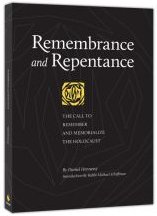
Daniel Hennessy’s new book Remembrance and Repentance: The Call to Remember and Memorialize the Holocaust is generously sprinkled with such “Holocaust poetry.” This one particularly spoke to me as I imagined the love of the Rabbi and his sons buried and still moving within Olena’s heart as their dead bodies were roughly interned in a shallow grave.

Hennessy’s book is written to speak to all of our hearts, especially the Christian heart. His book begins by juxtaposing the betrayal and murder of Jesus with Christian indifference to and even tacit approval of the death of millions of Jews at Nazi hands.

In the Gospel account, we hear the good news of redemption that Jesus rose according to the Scriptures. In the book of Acts, we see Peter — who at the moment of his betrayal was no doubt one of the most miserable human beings on earth — eventually lifted up out of the grip of despair, rising to become an apostle and dynamic leader, a fisher of men used powerfully by God at the very onset of the Messianic movement.

As for the indifferent Christian European world that stood outside the circle of doom, eyes to the ground, during the Holocaust era, it is as if Jesus alive and seated at the right hand of the Father, is looking straight into our eyes today, grieved by the ongoing Silence and indifference associated with the twentieth-century betrayal of his people. Unlike Peter, we as Christians have not yet been restored to fullest spiritual character.

-Hennessy, pp 16-17

That’s a most scathing indictment of today’s Christian church and Hennessy doesn’t let up on the comparison between the ancient betrayal of Jesus and the modern betrayal of his people Israel by Gentile Christianity. According to Hennessy, Peter stood outside the “circle of light” (pg 17) of the fire he warmed himself by as he wept bitterly, and so do we in the church who are beginning to forget the Holocaust and our part in it. As the last aging Jewish victims of the Nazi Holocaust fade and die, so does our own remembrance and even our own conscience.

Perhaps the circle is light, the light in our hearts, is what is diminishing in our world and when it finally grows dark and cold, what horrors will spring forth from the blackest night?

There’s hope, but only if we choose to remember and act righteously in the cause of justice.

This year, Yom HaShoah or Holocaust Memorial Day was on Sunday, April 7th, so you may be wondering why I’m reviewing this book now. On a practical level, it was because I didn’t receive this book until last week. On a more important level, perhaps the most important level, it is because we do not dare to reserve our remembrance to a single day. When we limit our memory and our caring to just one twenty-four hour period, once it’s over, we can safely tuck away our guilt and our desire to see justice done back in its dusty, cardboard box, and shove it back on the top shelf of some forgotten closet or on a rack in our garage until next year, just like our Christmas ornaments.

But if we choose to read, to experience, to remember Shoah each and every day, then each and every day, we can allow the fire of righteous indignation to burn within us, we can ignite the flames of justice, and burn on the pyre of our own responsibility, lest we ever let ourselves and especially our children, forget.

R-and-RDan does an excellent job in this short book (less than 100 pages) of reminding Christianity that it was not just the Nazis who were guilty of atrocities. They were only the outgrowth of anti-Jewish history. It was our own nearly two-thousand years of church supersessionism that formed the massive foundation upon which rested Hitler, his camps, his ovens, and his bloody legacy.

And if there are Christians who do not feel responsible for the past and perhaps the future persecution, torture, and execution of Jewish people and of Israel, lest we forget, we have a High Priest in the Heavenly Court, a King sitting at the right hand of the Father, who watches and waits and who will judge and the Earth. He will also judge us for what have done and what we failed to do.

And the Lord turned and looked at Peter. And Peter remembered the saying of the Lord, how he had said to him, “Before the rooster crows today, you will deny me three times.” And he went out and wept bitterly.

Luke 22:61-62

Jesus watches still. He looks into our eyes. And at his gaze, we also should remember the Lord, and remember his people, and remember Israel, and we should weep for the dead and their children and grandchildren. We in the church can either say “Never again” and cradle the children, the descendents of those who were once herded into cattle cars and driven into ovens, or we can use our own hands to do the herding and the pushing of these Jewish children into some future Shoah.

That is, until Messiah returns to judge us for who we are and what good or horrible things we have done.

I believe with complete faith in the coming of the Messiah, and even though he may delay, every day I eagerly anticipate that he will come.

-The twelfth of Rambam’s Thirteen Principles of Faith

Moshiach is coming. Let him move in your heart.

148 days.

Introduction to Messianic Judaism: Interdependence or Collapse

communityPaul’s letter to the Romans offers us a vision and model for Jewish-Gentile reconciliation. This is because Paul deals with the division between Jesus-believing Jews and Gentiles in his own day. Though Gentile believers were probably a majority in the church in Rome, they were theologically marginalized. For most of history that situation has been reversed, yet part of Romans addresses in advance even that problem.

-Craig Keener
“Chapter 17: Interdependence and Mutual Blessing in the Church” (pg 187)
Introduction to Messianic Judaism: Its Ecclesial Context and Biblical Foundations

In some ways, the problem briefly defined by Dr. Keener is one that hovers around the fringes of the Christian Hebrew Roots movement today. For the better part of two weeks, I’ve been writing a series of “mini-reviews” on the different chapters of Rudolph’s and Willitts’ book which address interrelated themes within larger Messianic Judaism. They have been received positively and even enthusiastically by most of my vocal readers but a few have perceived the information in a negative light. Accusations of inequality and even racism between Jews and Gentiles have been raised periodically, and I believe part of the underlying problem is a covert or even unconscious fear among these Gentile disciples of Jesus that Messianic Judaism seeks to “theologically marginalize” non-Jewish participants in the Messianic Jewish movement, which spills over into Hebrew Roots, since many of those who are involved also identify themselves as “Messianic Judaism.”

Is the Messianic Jewish movement seeking to marginalize and even to eliminate the Gentile Christian (Hebrew Roots) believers from their ranks and from coveted access to the Torah mitzvot? A casual observer (or one with a specific bias) might say “yes,” but let’s consider what we can learn from different analyses of Paul’s letter to the Romans.

In addition to Keener, Dr. William Campbell and Dr. Scott Hafemann also present their viewpoints on Romans to support the concept of interdependence between believing Jews and Gentiles. The ekklesia doesn’t function correctly and perhaps doesn’t even exist at all without the co-inhabitance and cooperation of both Jews and Gentiles in the body of Messiah. Perhaps that’s why, over the past two-thousand years or so, we haven’t been doing so well in certain areas, because Christianity historically has marginalized Jews theologically (and in just about every other way). It’s time to restore the balance.

Campbell, in “Chapter 18: The Relationship between Israel and the Church”, believes that Paul addressed his Roman letter only to the Gentiles and was speaking about Jews but not to Jews, which seems to be a minority opinion. Keener, on the other hand, presents the main focus of Paul’s letter as being on both Jews and Gentiles:

Although scholars have offered other reasonable proposals, the most widely accepted background for Paul’s letter to believers in Rome involves disagreement between Jesus-believing Jews and Gentiles regarding Jewish customs.

-Keener, pg 187

Apparently, when the Jewish population in the Messianic community in Rome began to dwindle, thanks to the emperor Claudius expelling some or most of the Jews (Acts 18:2), Gentiles began neglecting some or all of the Jewish religious customs they had been taught in relation to the worship of the God of Israel. This rather begs the question of just how much Torah did the Gentiles keep in those days, but does confirm that, for the most part, Gentiles weren’t very driven to Torah observance in the manner of their Jewish mentors (Acts 15:30-31).

For Keener, the primary message of Paul to the Jews and Gentiles in Rome was unity:

Unity was a frequent topic of exhortation in antiquity, and it is central to Paul’s plea for Jewish-Gentile reconciliation in Romans. This is clear and not least because he climaxes his larger argument by inviting unity (Romans 15:5-6) and inviting believers to welcome each other (Romans 15:7). He underscores this point by showing from Scripture that God’s plan includes faithful Gentiles (Romans 15:8-12). The letter’s final exhortation includes a warning against those who sow division (Romans 16:17).

-ibid, pg 188

PaulPaul issues warnings specifically to the Gentiles against fomenting division between them and the Jews and expresses his dismay that the Gentiles have neglected his warnings.

Relative to interdependence, Keener stresses that the Gentiles have a special role to play in relation to Israel to “provoke jealousy” because of the temporary state of Israel’s non-acceptance of the Gospels.

In Romans 11, however, we learn another divine strategy in Paul’s mission to the Gentiles. Gentiles received mercy through Israel’s failure to embrace the gospel; now Gentiles would become a divine vehicle of bringing Jewish people to Christ. What did this reversal involve? Scripture promised that God would restore and exalt his people in the time of their ultimate repentance (e.g., Amos 9:7-15; Hosea 14:4-7).

They (Gentiles) would in turn help the Jewish people by provoking repentance.

-ibid, pp 190-1

Keener also emphasizes what he is not saying:

I am also not urging all Gentile Christians to join Messianic Jewish congregations. First, they would numerically overwhelm those congregations and their cultural identity. Second, Paul is clear that while Gentile believers in Jesus are spiritual proselytes to Judaism, they are responsible only for the moral heart of the law and not for Israel-distinctive elements.

-ibid, pg 191

(It should be noted that, at least in the United States, all of the Messianic Jewish congregations of which I’m aware, do have a majority membership of Gentiles, but are still designed and administrated as a Jewish religious and community space)

There’s a sort of balancing act involved in Gentiles pursuing their (our) mission of provoking Jewish people to repentance and not overly involving ourselves in Jewish communities to the point of overwriting Jewish identity. Also, Keener says that by over-emphasizing Gentile presence within the Messianic Jewish community for the sake of Jewish repentance, we would likely inhibit part of the Messianic Jewish mission, which is to act as a bridge into the larger Jewish world community.

Messianic Jews, in Keener’s view, depend on their Gentile counterparts to provide resources for the support of the Messianic Jewish community. This isn’t always by sending donations, as Paul did by taking up a collection among the Gentiles to carry to Jerusalem (although it can be), but to, in a larger sense, continue to acknowledge our kinship to our Jewish brothers in Messiah, and even humble ourselves by remembering that salvation comes from the Jews (John 4:22) and that “the people whose heritage we share and from whom our faith springs (Romans 9:4-5), may help us surmount the past barriers of Gentile Christian anti-Semitism.” (idid, pg 193)

But while Keener addressed primarily how the Jews depend on the Gentile believers, Campbell, in Chapter 18, takes a different approach.

Their gentile arrogance is based on mistaken assumptions, and Paul gives no allowance to such misunderstandings of God’s purpose according to election (Romans 9:11). It is no accident that in Romans Paul stresses the order of priority, “to the Jew first, and also to the Gentile” (Romans 2:10 KJV; cf. 1:16). This points to the identity of gentile Christ-followers not as an independent entity, but as interdependent on the call and identity of Israel, to whom as Ephesians 2:13 asserts they “have been brought near.” As Ian Rock asserts, “to affirm the lordship of Christ is to simultaneously recognize the preference of Israel. But to recognize the primacy of Israel is also to accept the importance of the Jews.

Campbell, pp 202-3

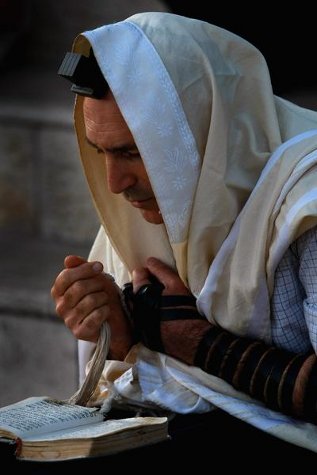
jewish-prayer_daveningThe flow of dependence is reversed. In addition to Jews depending on Gentiles to support their repentance and uphold their identity, it is the Gentiles who, without the Jews, are also without the promises, and thus have no independent connection to salvation or covenant with God. The covenants are through Israel and we Gentiles are able to enjoy the blessings only because of Israel.

They (Gentiles) could not really share if they had taken over Israel’s inheritance, as they would then be the sole inheritors. So Paul reminds the gentile Christ-followers, “Do not boast over the branches…remember it is not you that support the root, but the root that supports you” (Romans 11:18 RSV).

-ibid, pg 203

Campbell concludes his chapter with an illuminating chronological construction of Romans 15:9b-13 which seems to say it all.

Because David’s past vindication establishes God’s promise to David’s seed (v.9b), therefore the Gentiles should not give up hope, but learn from the experience of disobedient Israel to rejoice in God alone (in the midst of the false security that comes from the nations’ current reign in the world) (v. 10);

specifically, the Gentiles should not give up hope, but learn from the experience of the faithful remnant to praise God for his truthfulness and mercy (in the midst of the adversity that comes from being part of God’s elect in the world) (v. 11),

because the future vindication of David’s seed in fulfillment of God’s promise is the hope of the nations (v. 12).

-ibid, pg 212

In “Chapter 19: The Redemption of Israel for the Sake of the Gentiles,” Dr. Hafemann returns to the Gentile’s dependence on Jewish Israel.

As Paul argues in Romans 15:7-13, God’s commitment to Israel for the sake of the nations forms the bedrock of the Church’s hope. Viewed from this perspective, Messianic Judaism reminds us not only of God’s faithfulness, demonstrated in Israel’s history, and of his grace, now magnified in the Messiah, but also of his promises for the future of his people, to be fulfilled in the final redemption of Jews and Gentiles.

-Hafemann, pg 206

So we see that God has been historically faithful to Israel for her own sake, but also for the sake of the Gentiles who will be saved through His promises to Israel. Again, we see that without Israel, the Gentile believers have no leg to stand on, so to speak, and that any covenant connection we have with God through Messiah vanishes like a morning mist under the summer sun if we dispense with Israel and the Jewish people. Not only must Israel continue but it must continue as the head of the nations as a wholly Jewish nation, unique and distinct from the people of the nations, we Gentiles, who need them for our hope in salvation.

The linkage is through Abraham, as I’m sure you realize by now:

Since God is the God of both Jews and Gentiles, both the “circumcised” and the “uncircumcised” will be justified “through [the] same faith” (3:29-30), the faith of Abraham, for “he is the father of us all” (4:16).

-ibid

By Gentiles desiring to supersede the Jews in the promises or to fuse our identity with theirs, creating a single Israel and eliminating our identity as the people of the nations called by God’s Name, we are disconnecting ourselves from the very salvation that we desire to claim only for ourselves. There is a wonderful eschatological promise for the Christian church, but only if there is a wonderful eschatological promise for the future of Israel as well.

Hafemann continues:

Paul’s chain of Scripture will therefore focus on the purpose of Israel’s redemptive history with regard to the Gentiles, rather than referring merely in a general sense to the inclusion of Jews and Gentiles within the church. The Gentiles are to glorify God for what he has promised to do for Israel (Romans 15:9a) since the future redemption of the nations, including the resurrection from the dead and redemption of the world (cf. Romans 5:17; 8:19-22, 31-39), is tied to the rescue of Israel (Romans 5:18; cf. 11:15). The current experience of Jews and Gentiles as distinct but equal identities within the Church therefore takes on significance precisely because it is a foretaste of the consummation yet to come for both Israel and the nations.

-ibid, pp 207-8

destruction_of_the_templeThis is something that Boaz Michael of First Fruits of Zion (FFOZ) was trying to say during last year’s Sukkot conference. I wrote about it in a series of blog posts, including Redeeming the Heart of Israel, Part 1 and Part 2, but I was never clear on how this interdependence was rooted in scripture until this time. I see now, more clearly than ever, that any form of supersessionism damages not only Israel, but the hope of the nations for salvation and redemption, since our hope only comes from the Jews.

When the Church tries to replace Israel in the covenant promises or mistakenly chooses to believe they (we) are Israel, it is like a man who decides to cut off his legs in order to stand taller and straighter. Instead, he only causes great pain and permanently cripples himself.

It is said that in ancient days during Sukkot, Israel offered sacrifices at the Temple for the sake of the nations to atone for their (our) sins. When the Romans destroyed the Temple in 70 CE, they also stopped those sacrifices and thus the atonement Israel provided for the nations of the world. Basically, the Romans cut off their own legs when they destroyed the Temple, ravaged Jerusalem, and scattered the vast majority of the Jewish people to the four corners of the earth.

As Christians, when we dismiss Israel from the covenants and in one way or another, try to take their place, we are doing exactly the same thing. As it takes two healthy legs to support the body of a man, so the ekklesia requires the one “leg” of Messianic Judaism and the other “leg” of Gentile Christians. If we cut off the Jewish leg or if we try to fuse the Gentile leg and the Jewish leg into a single mutilated limb, the best the body can do is to hop around impotently. More likely, the ekklesia will just fall down and break apart.

We depend on each other, but we can only support the body of Christ by being two limbs of the body standing side by side, walking together.

154 days.

Introduction to Messianic Judaism: Fulfilling the Prophesy of Amos, Part 1

conference2The most momentous decision the early Christian movement had to make was on the status of Gentiles who wished to join it. That Gentiles should join the movement was not in itself problematic, since there was a widespread Jewish expectation, based on biblical prophecies, that in the last days the restoration of God’s own people Israel would be accompanied by the conversion of the other nations to the worship of the God of Israel. Since the early Christians believed that the messianic restoration of Israel was now under way in the form of their own community, it would not have been difficult for them to recognize that the time for the conversion of the nations was also arriving. What was much less clear, however, was whether Gentiles who came to faith in Jesus the Messiah should become Jews, getting circumcised (in the case of men) and adopting the full yoke of Torah, or whether they could remain Gentiles while enjoying the same blessings of eschatological salvation that Jewish believers in Jesus did.

-Richard Bauckham
“Chapter 16: James and the Jerusalem Council Decision” (pg 178)
Introduction to Messianic Judaism: Its Ecclesial Context and Biblical Foundations

This should be a familiar theme to those of you who regularly read my blog. I spent a considerable amount of time and effort reviewing Luke’s Acts, thanks largely to D. Thomas Lancaster’s Torah Club series Chronicles of the Apostles, published by First Fruits of Zion (FFOZ). I was pleased to find that several of the articles in Rudolph’s and Willitts’ book addressed the same issues. But let’s back up a step.

Darrell Bock, in “Chapter 15: The Restoration of Israel in Luke-Acts” sets the stage for the drama of Gentile inclusion into a branch of normative Judaism by deconstructing the traditional Christian view of these books of scripture.

Burge argues for a landless and nationless theology in which the equality of Jew and Gentile in Christ is the key ecclesiological reality. In this view, Jesus as Temple or as forming a new universal Temple community becomes the locus for holy space. Israel is absorbed into the church and hope in the land is spiritualized to refer to a restored earth.

This chapter seeks to redress the balance. When I speak of Israel in this essay it is the Jewish people I have in mind as opposed to new Israel.

-Bock, pg 168

It is true that Luke-Acts is really all about the Gentiles. According to Bock…

Luke-Acts was written between CE 60 and 80 in part to legitimate the inclusion of Gentiles in an originally Jewish movement according to God’s plan. Theopolis (Luke 1:3; Acts 1:1) is a Jesus-believing Gentile who needs assurance. Luke-Acts presents Jesus as God’s exalted and vindicated bearer of kingdom promise, forgiveness, and life for all who believe, Jew and Gentile. The bestowal of God’s Spirit marks the new era’s arrival…This message completes the promises made to Abraham and Israel centuries ago.

-ibid, pp 168-9

The Messiah movement was a wholly owned and operated franchise of Judaism (if you’ll forgive the slight levity here). It’s only natural to imagine that Gentiles hearing that they too could join might have been skeptical about the reality of this promise and the status that they would (or wouldn’t) be granted. Luke means to reassure them that they will be equal sharers in the blessings made to Israel, but make no mistake, there is another side to Luke’s narrative.

Luke argues that the church roots its message in ancient promises, a story in continuity with Israel’s promised hope found in God’s covenantal promises to her. The entire saga involves Israel’s restoration. For all that Gentile inclusion and equality in the new community brings, we never lose sight of the fact that it is Israel’s story and Israel’s hope that brings blessing to the world, just as Genesis 12:3 promised.

-ibid

Nothing Luke, let alone Bock, writes allows Gentile inclusion to delegitimize the Jewish people as God’s people and nation Israel. Messiah is depicted as “the light to the Gentiles and the glory of Israel” (pg 171). We among the nations receive blessings because of Israel, not because we become Israel. Bock also states:

Thus, redemption involves both political and spiritual elements, nationalistic themes (Luke 1:71, 74) and the offer of forgiveness (1:77-78).

-ibid, pg 171

Redemption for Israel is not just spiritual, it’s national and physical. If Israel is obedient to God, Messiah will place Israel at the head of the nations and take up his Throne in Jerusalem. However, there is a problem. Bock does not cast the Gentiles as the primary roadblock to God’s restoration of Israel, but instead declares:

The warning to the nation is that if she rejects God’s message, then blessing may not come to her but may go to the Gentiles. Israel’s story has an obstacle, her own rejecting heart. The question is whether that obstacle is permanent or not.

-ibid, pg 172, citing Luke 4:16-30

the-prophetTraditional Christian supersessionism would say that the obstacle was permanent and the blessings forever left Israel and were transferred to the (Gentile) church. However, since the blessings promised to Abraham only come to the nations by way of Israel, if Israel were permanently eliminated what would happen to us? By definition, any roadblock confronting Israel can only be temporary, just as the Old Testament (Tanakh) record presents how God only turned away from his people Israel “momentarily,” turning immediately back when they humbled their hearts and turned to their God.

Luke 21:24 pictures a turnaround in Israel’s fate. Near the end of the eschatological discourse, Luke describes Jerusalem being trodden down for a time and refers to this period as “the times of the Gentiles.” It refers to a period of Gentile domination, while alluding to a subsequent hope for Israel.

…this view of Israel’s judgment now but vindication later suggests what Paul also contents in Romans 11:25-26: Israel has a future, grafted back in when the fullness of the Gentiles leads her to respond. These chapters certainly have ethnic Israel in view, not any concept of a spiritual Israel. Romans 9-11 develops the temporary period of judgment noted in Luke 13:34-35.

-ibid, pg 173

I should say at this point that Bock extensively cites scripture to support his statements. To restrict the length of this blog post (and I’ve already had to split it into two parts), I am editing out most of his references, so I encourage you to read his chapter in full to get all of the corroborating details.

In covering Acts, Bock deliberately omits Acts 15 and presents several other key areas. Using Acts 1:4-7, Bock establishes the “promise of the Father” which leads the disciples of Jesus to anticipate that the kingdom of Heaven is at hand and that Messiah, prior to (or instead of) the ascension, will restore Israel nationally and spiritually. He does no such thing, but not because the desire is inappropriate. It simply isn’t time yet. However in Acts 3:18-21, Bock shows us that Peter is completely aware that the “times of refreshing” refer to future “refreshment”, which promises the messianic age of salvation as foretold by the Prophets.

But what’s important for we Gentiles to note, is his treatment of Acts 10-11:

In the two passages involving Cornelius in Acts 10-11, the Spirit’s coming shows that Gentiles are equal to Jews in blessing, so that circumcision is not required of Gentiles. The Spirit occupying uncircumcised Gentiles shows they are already cleansed and sacred. The new era’s sign comes to Gentiles as Gentiles. There is no need for them to become Jews. Israel’s story has finally come to bless the nations.

-ibid, pp 175-6

Notice that the nations (Gentiles) did not have to actually become Israel, either by replacing them or joining them as Jews (or pseudo-Jews). We are blessed within one ekklesia made up of Israel (Jews) and the nations (Gentile believers).

As I mentioned before, Bock omits the most critical part of Acts for Gentile inclusion. Bauckham picks that theme up in the following chapter, which you’ll read, along with how we Gentile Christians fulfill the words of the Prophet Amos, in Part 2 of this meditation.

156 days

Paul the Christian Pharisee

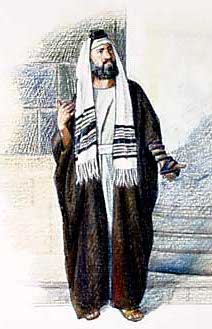
paul-the-phariseeNow when Paul perceived that one part were Sadducees and the other Pharisees, he cried out in the council, “Brothers, I am a Pharisee, a son of Pharisees.

Acts 23:6

Paul used the present tense, “I am a Pharisee,” not “I was a Pharisee.” Christian commentaries are uncomfortable with the statement, and they usually try to dodge the implications by explaining that he used to be a Pharisee prior to becoming a Christian.

Did Paul perjure himself before the Sanhedrin (a grave sin) by saying, “I am a Pharisee” instead of saying, “I was a Pharisee”? If so, none of his accusers had the wherewithal to challenge him on it. If he was no longer a Pharisee at the time of the trial, his testimony would be easy enough to discredit.

-D. Thomas Lancaster
Torah Club, Volume 6: Chronicles of the Apostles
from First Fruits of Zion (FFOZ)
Torah Portion Tazria (pg 711), Commentary on Acts 23:1-24:27

I suppose you could say this is a continuation of my previous “meditation,” Paul the Apostle, Liar, and Hypocrite and earlier commentaries. As I continue to read through Lancaster’s “Chronicles of the Apostles” Torah Club study, I continue to follow Paul through his various “legal problems” and his journey that will eventually lead to Rome, Caesar, and death. I also continue to watch as Paul repeatedly defends himself against the charges brought against him by the Jewish authorities of the Sanhedrin. From Paul’s point of view, he did nothing wrong to the Jewish people, to the Torah, to the Temple, or even to Rome.

Paul argued in his defense, “Neither against the law of the Jews, nor against the temple, nor against Caesar have I committed any offense.”

Acts 25:8

In verse 7 of the same chapter, Luke records that “…the Jews who had come down from Jerusalem stood around him, bringing many serious charges against him that they could not prove.”

As we’ve seen in earlier chapters of Acts and in my earlier commentaries on those chapters (thanks to Lancaster and the Torah Club), there simply was no evidence to support the wild accusations that had been made against Paul. He should have been set free, and except for various political reasons, finally including Paul’s appeal to Caesar and Rome, he never was.

Not only do I want to pursue the scriptures and commentaries that support Paul’s innocence, but I want to continue to illustrate how Paul never imagined that being an apostle of Jesus required in any sense, surrendering observance of the Torah mitzvot and the lifestyle of a Jewish Pharisee, nor did he expect this of other believing Jews.

All believers could claim to adhere to Pharisaic doctrine, but not all of them could claim to actually be Pharisees. Paul concluded his testimony with the declaration, “Brethren, I am a Pharisee, a son of Pharisees; I am on trial for the hope and resurrection of the dead!” (Acts 23:6).

-Lancaster, ibid

That statement might come as a shock to you if you’ve been taught that all Pharisees were horrible, legalistic monsters and hypocrites. After all, Jesus had some pretty rough things to say to the Pharisees.

“Woe to you, scribes and Pharisees, hypocrites! For you are like whitewashed tombs, which outwardly appear beautiful, but within are full of dead people’s bones and all uncleanness. So you also outwardly appear righteous to others, but within you are full of hypocrisy and lawlessness.

Matthew 23:27-28

On the other hand, Jesus also said this:

The scribes and the Pharisees sit on Moses’ seat, so do and observe whatever they tell you, but not the works they do.

Matthew 23:2-3

Do what they say but not what they do. What do they say?

And when he had said this, a dissension arose between the Pharisees and the Sadducees, and the assembly was divided. For the Sadducees say that there is no resurrection, nor angel, nor spirit, but the Pharisees acknowledge them all.

Acts 23:7-8

For Paul, the Pharisaic belief in the resurrection of the dead and a life in the world to come was lived out by his faith in Yeshua (Jesus) as the risen Messiah King.

That is why his faith was “counted to him as righteousness.” But the words “it was counted to him” were not written for his sake alone, but for ours also. It will be counted to us who believe in him who raised from the dead Jesus our Lord, who was delivered up for our trespasses and raised for our justification.

Romans 4:22-25

The doctrine of “the Way” was generally Pharisaic and in believing in the resurrection, so is modern Christianity.

I know, that’s probably a stretch for most of you, but if you follow the logic of Paul’s defense as recorded by Luke, it is very compelling. Lancaster comments further on this point.

The teaching and beliefs of Yeshua, Paul, and all the apostles echo the theology of the Pharisees. A Pharisee could become a disciple of Yeshua and still be a Pharisee…

-Lancaster, pg 713

Not so the Sadducees or any other branch of Judaism that did not believe in resurrection.

Even though the Master sometimes disagreed with the specific priorities of the oral law, He and the apostles practiced and transmitted Pharisaic, rabbinic tradition and interpretation. Their teachings and methods of biblical exegesis mirror those of the Pharisees. The Sadducees, on the other hand, were the first-century equivalents of Karaite Jews and sola-scriptura Protestants. They rejected most Jewish tradition, oral law, and rabbinic exegesis.

-ibid

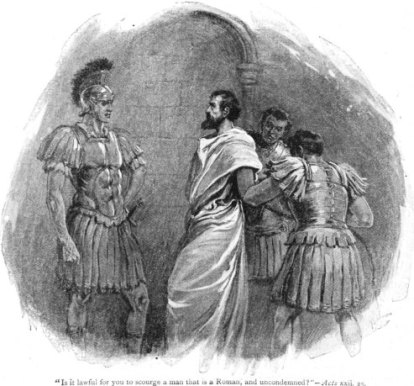
paul-in-chainsFrom a modern Christian’s point of view, we almost want to make the Sadducees the heroes of the story because they rejected Jewish oral law and traditions, and Jesus heavily criticized the Pharisees for some of their traditions. But while many of the Pharisees far exceeded the Torah’s intent by creating enormous burdens from their rulings that weighed heavily on the Jewish people, Jesus did not criticize their core teachings. Being a Pharisee wasn’t the problem. Being a hypocrite and a liar was. Paul was the former but never the latter.

But Paul had a “confession” to make.

But this I confess to you, that according to the Way, which they call a sect, I worship the God of our fathers, believing everything laid down by the Law and written in the Prophets, having a hope in God, which these men themselves accept, that there will be a resurrection of both the just and the unjust. So I always take pains to have a clear conscience toward both God and man.

Acts 24:14-16

Paul admitted to the charge of belonging “to the sect of the Nazarenes,” but he rejected any implication that the teachings of the Way deviated from normative Jewish expression. To Paul, faith in Yeshua was not simply one more sect of Judaism, it was “the Way of the LORD,” a spiritual restoration and redemption of all Israel that transcended sectarian divides. He admitted to “believing everything that is in accordance with the Torah and that is written in the Prophets.” He declared his hope in God, a hope which his accusers also cherished.

-Lancaster, pg 723

There’s one sentence in my last quote from Lancaster that I hope you caught. Here is is again:

To Paul, faith in Yeshua was not simply one more sect of Judaism, it was “the Way of the LORD,” a spiritual restoration and redemption of all Israel that transcended sectarian divides.

This is as true today as it was the moment Paul said it. Faith in Yeshua the Messianic King is not just a way for the world to be saved (which, of course, is no small thing) but it is the way to spiritual restoration and redemption of all Israel. That is the critical piece of knowledge both Jews and Christians must understand. Jesus doesn’t stand in opposition to the Jewish people, he stands for their redemption as a people and their restoration as a nation.

The good news of forgiveness from sins, salvation, and a life in the world to come is what we focus on as Christians, but most of the time, we miss why Jesus is uniquely special to the Jewish people. He doesn’t just save the individual Jewish soul as he does the individual Gentile soul, he saves Israel, he restores their nation to the head of all nations, he gathers his people back to him and to their Land, and he is their King, the King of the Jews, even as he is also the King of the World.

Paul, the “Christian” Pharisee knew all that, and the evidence of his innocence is also a shining lamp for every Jew and Gentile who turns away from darkness and to the light. To turn toward the light, we Gentiles must surrender a life of disobedience and learn to love, listen, and obey God. For a Jew to turn toward the light of the world in Messiah, they also must learn to obey, but Torah observance for the Jew is part of that obedience. We in the church are obedient, not only when we refrain from sin, but when we act to encourage our Jewish brothers and sisters in the faith to continue to live wholly Jewish lives in accordance with the commandments.

Paul lived his life enthusiastically as a disciple of Jesus Christ…and as a Pharisee.

162 days.

Reviewing FFOZ.TV: A Promise of What is to Come

ffoz-tvThe First Fruits of Zion television program delivers a high-energy, professional presentation of the prophetic aspects of the Gospel message from a Messianic Jewish perspective. Every episode opens new insights into the teaching of Jesus of Nazareth with end-times implications. Kingdom-focused and Jesus-centered, this is Messianic Jewish teaching at its best. It will encourage Christians to go deeper in their personal relationship with the Jewish Messiah.

The program tagline, “A Promise of What is to Come,” acknowledges that there is something greater taking place than just learning and understanding the bible in a new way.

We are part of a restoration and a return predicted by Moses, the prophets, Yeshua (Jesus) and the apostles. The modern state of Israel and the messianic Jewish revival we see today is only the first blossoming of the great, final redemption, which will usher in the kingdom of messiah.

-from “Welcome to FFOZ TV”
tv.ffoz.org

Messianic Jewish educational ministry First Fruits of Zion (FFOZ) launched its own television series earlier this year with an eye on reaching Christian television networks and reaching Christians. Boaz Michael and Toby Janicki were recently interviewed by God’s Learning Channel (GLC) about FFOZ.tv, and GLC is the first Christian TV network to begin broadcasting the FFOZ TV series. My understanding is that FFOZ.tv is currently targeting other Christian television venues for their program in order to “spread the word.”

But what about their program?

Boaz Michael, Founder and President of FFOZ asked me to review the program on my blog. I’ve been aware of FFOZ.tv for about a year now, having viewed an early version of the first episode at last year’s FFOZ Shavuot conference. I’ve seen a few clips of the show since then, but I’m not a big television watcher, so I didn’t go out of my way to take a look at the finished product.

Overview

For my review, I chose to sample two episodes: episode 4, Jewish Prophesies, originally aired on March 17, and episode 5, Son of David, originally aired on March 24 (the full episode list is available for those shows that have already aired and they can be viewed freely online).

Structure and Format

Each show is approximately thirty minutes long and follows a standard format. Toby Janicki is the primary host of the program, presenting the issue to be examined during the broadcast, taking the audience through the scriptures to examine the topic, say Messianic prophesies, and then breaking the information down into three major “talking points.” Mid-show, the scene shifts to FFOZ teacher Aaron Eby speaking from Israel and explaining aspects of Judaism and the Hebrew language as they apply to the subject being discussed. The scene then shifts back to Toby in the studio, where he brings the program and the topic to a conclusion. At the very end, Boaz Michael makes a brief appearance, wrapping up the broadcast and introducing the topic for next time.

Content

The show is written for a Christian audience that knows little or nothing about Messianic Judaism and Judaism in general. For those of us who are familiar with the subjects involved, the content seems elementary most of the time, though therewere “tidbits” of information I found new or at least that were clarified for me. The show is definitely designed to be “Messianic Judaism 101” and its most obvious purpose is to gently bring mainstream Christians into a beginning familiarity with the Jewishness of Jesus, the continued meaning of the Jewish people and the nation of Israel in the present world and the Kingdom of God, and how the future of Christianity must always look to Jewish redemption for the people and nation of Israel as the goal.

ffoz-teaching-teamThere are twenty-six episodes “in the can” for the first season of the FFOZ.tv series. Each episode builds upon one another, so while each individual broadcast is a self-contained show, the audience won’t gain access to the complete Gospel message being presented from a Messianic Jewish perspective unless they view all of the episodes. Presumably, if the series is successful, the first twenty-six episodes will only be the beginning.

In the two shows I viewed, Toby regularly introduces himself as a Gentile who “practices Messianic Judaism.” This appears to be included to re-enforce Toby’s connection with his Gentile Christian audience but also connect him back to Messianic Judaism as a practitioner and teacher. Aaron’s portion, by contrast, is set in Israel, with his interviews being done “on the streets” to give a definite “Jewishness” to his content.

Look and Feel

Production values for the show are high and are at or near the levels of commercial television programs. The primary studio presents a “den” or “office” setting in rich earth tones, low lighting, and with numerous Jewish artifacts in the background to communicate warmth, approachability, and of course, Judaism. The music seems a little dramatic at times and for a couple of moments (during the HaYesod ad I think…I’m getting to that), I felt like I was getting ready to blast off into space. However, I noticed the tendency toward dramatic music and imagery on GLC when I watched the introduction to the Michael/Janicki interview, so maybe it’s an expected element of Christian television.

As I mentioned, Aaron’s part of the program is always filmed “on the streets of Israel” (presumably Jerusalem) so that the background views are universally recognizable as Jewish and Israeli. Aaron’s portions seem to create a bridge between the audience and Israel, supporting the overarching message of FFOZ.tv that Christianity is Jewish and irrevocably tied to Israel and Judaism.

Marketing

FFOZ is a non-profit organization and their primary “product” is the educational materials they produce. The purpose of FFOZ is to create and disseminate specific data to both Christian and Jewish audiences (see Vine of David for a list of materials specifically designed for Jewish people). The real “product” of FFOZ then is information which is packaged in a variety of forms including books, magazines, programs such as HaYesod and Torah Club, and of course, television.

However, in order to inform potential audiences of the material that is available, you have to market it. That’s another component of FFOZ.tv. The very first scripture that Toby reads in any program (of the two I viewed, anyway), is from the Delitzsch Hebrew Gospels. The rest of the time, he uses the ESV Bible. As Toby is reading from the Delitzsch version, a phone number and website URL appear at the bottom of the screen telling the audience how to purchase a copy.

About half to three-quarters of the way through the broadcast, the program content breaks for an ad about HaYesod, featuring mostly the FFOZ teaching staff presenting information on this learning program (which seems to have evolved quite a bit since I sat in a HaYesod class a decade or so ago).

Near the end of the broadcast, another commercial came on, this time describing the FFOZ Friends program, which allows people who subscribe to donate monthly to the ministry and describes, depending on which tier they choose, which products and services they’ll receive.

On the one hand, this all seemed a little distracting to me, but on the other hand, since at my “day job,” I directly report to the Vice President of Marketing, I have a deep understanding of the necessity and purpose of marketing any product that is for public consumption. You can’t buy and learn from something if you don’t know it exists.

Conclusion

resources-studyFFOZ.tv is made to introduce Christian audiences to Messianic Judaism, Judaism, and Israel. Although the Christian faith has its origins in first century Judaism and the Jewish Messiah, we have diverged from them significantly in the past twenty centuries, until the “Jewishness of Jesus” and the Hebraic beginnings of our faith are only a dim memory. FFOZ.tv is attempting to gently guide its Christian audience in a friendly and approachable atmosphere, back to some of the key concepts that define Messianic Judaism in order to realign Christian thoughts and feelings back toward our “Jewish roots.” The television program is also a “jumping off” platform for the audience to use in acquiring and exploring other FFOZ products, which will then (ideally) re-enforce and deepen the information base of Christians on Messianic Judaism, the absolute requirement of Israel’s national redemption in the Kingdom of God, and the vital role of the church in bringing about Jewish primacy and restoring Israel to its former glory, all in anticipation of the return of King Messiah.

If one picture is worth a thousand words, then what is television? In this case, television is entrance for any believer who watches Christian television or who is most likely to accept information in a video format, to the message of the Gospels from the perspective of Messianic Judaism. It provides and easy to access and easy to absorb doorway for the Christian to begin to encounter the Jewish Messiah King and the promise of what is to come.

Please visit First Fruits of Zion: A Promise of What is to Come and view any or all of the episodes available (seven as I write this but more are coming). Watching a single episode will only take thirty minutes of your time and you can judge for yourself whether or not if FFOZ.tv has a message that is speaking to you.

Paul the Apostle, Liar, and Hypocrite

Apostle-Paul-PreachesFor though I am free from all, I have made myself a servant to all, that I might win more of them. To the Jews I became as a Jew, in order to win Jews. To those under the law I became as one under the law (though not being myself under the law) that I might win those under the law. To those outside the law I became as one outside the law (not being outside the law of God but under the law of Christ) that I might win those outside the law. To the weak I became weak, that I might win the weak. I have become all things to all people, that by all means I might save some. I do it all for the sake of the gospel, that I may share with them in its blessings.

1 Corinthians 9:19-23

What then is to be done? They will certainly hear that you have come. Do therefore what we tell you. We have four men who are under a vow; take these men and purify yourself along with them and pay their expenses, so that they may shave their heads. Thus all will know that there is nothing in what they have been told about you, but that you yourself also live in observance of the law.

Acts 21:22-24

In one of the conversations I’ve had with Pastor Randy at my church, we discussed the activities of Paul as recorded by Luke in Acts 21. Included in some of the questions Pastor brought up was whether or not Paul was being disingenuous by offering to pay the vow price for four men at the Temple to avoid criticism from other Jews (see the quote from Acts 21 above) and that Paul had replaced this devotion for the Torah and for the Temple with faith in Jesus Christ. Interestingly enough, according to D. Thomas Lancaster in his commentary on Acts 21:15-22:30 (see First Fruits of Zion’s Torah Club Volume 6 Chronicles of the Apostles reading for Torah Portion Shemini [“Eighth”] for details), this is exactly what most Christian commentators believe.

Paul’s participation in the sacrificial services proved to the Jerusalem believers that he was not an apostate. Ironically, many Christian interpreters would consider participation in the Temple sacrifice as apostasy from Christ. They excuse Paul’s backsliding into Judaism on the basis that he was pressured into the ceremony by James and the elders. Moreover, Paul himself said, “I have become all things to all men so that I may by all means save some” (1 Corinthians 9:22).

-Lancaster, pg 684

The quote above from 1 Corinthians 9 seems particularly damning, but I want to mention something else first. In order to believe the traditional Christian interpretation of Paul’s participation in the Temple sacrifice, we have to believe that Paul is a terrible liar and hypocrite and we have to believe that James and the Council of Apostles of Christ not only condoned his dishonesty, but actively encouraged him in it.

If these are the sorts of people responsible for writing much of our New Testament, what does that say about the foundations of the Christian faith? Did God really entrust the establishment and dissemination of the Gospel of Jesus to not only flawed human beings (and all the writers of the Bible were imperfect), but deliberately dishonest, hypocritical liars? Do the ends justify the means? Should we emulate the apostles by also lying in order to win a few souls for Christ?

Assuming he’s not also lying in the following quotes, Paul defends himself before his Jewish accusers and the Romans:

Paul argued in his defense, “Neither against the law of the Jews, nor against the temple, nor against Caesar have I committed any offense.”

Acts 25:8

After three days he called together the local leaders of the Jews, and when they had gathered, he said to them, “Brothers, though I had done nothing against our people or the customs of our fathers, yet I was delivered as a prisoner from Jerusalem into the hands of the Romans.

Acts 28:17

But then what are we to make of Paul’s own words to the church in Corinth in his first letter to them? What is Paul saying?

whispererAccording to Lancaster’s commentary (pp 684-6), Paul was saying that he was merely crafting his message for different audiences, not that he was changing his overall behavior, especially in relation to Torah observance. When Paul said “to the Jews I became as a Jew,” it could hardly mean he “became a Jew” since he was already Jewish by birth (although some modern Jews believe Paul was born a Gentile and converted to Judaism). Lancaster states that in Paul saying this, he “only means that, when among Jewish people, he employed that common ground to his advantage” since he “shared with them a common cultural and historical heritage.”

I don’t have a problem believing this. My wife sometimes tells me that Jews today have a particular way of thinking and conceptualizing their world and that communication between Jews takes on a different “flavor” than between a Jew and a Gentile. It is likely that Paul would have presented his language and message within a heavily Jewish ethnic, cultural, national, and religious framework when sharing the good news of Messiah to an exclusively Jewish audience.

But what about when Paul said, “To those under the law I became as one under the law (though not being myself under the law) that I might win those under the law”? First of all, he already said he “became a Jew” so why add the redundancy (supposedly) of saying that he “became as one under the law?” Isn’t he saying the same thing twice and worse, isn’t he saying that he acted like someone under the law but actually wasn’t under the law? Isn’t that clearly being a hypocrite?

Lancaster answers those questions by saying that those “under the law” were not born-Jews but Gentile converts to Judaism or proselytes. That answers the question of why he wasn’t “under the law” if it means he’s not a convert to Judaism (a Gentile proselyte who chose place himself under Torah observance by converting). That seems a little weak, even to me, and I wish Lancaster had cited some sources to back up his claim. Apparently, this is his personal opinion but it does tend to solve why Paul engaged in “redundant language.”

On the other hand, he could have been referring to God-fearing Gentiles who were not proselytes (or who were considering conversion but had not yet made a commitment) but who voluntarily chose Torah observance. We see an example of such a person in Izates bar Monobaz who was a disciple of a Jewish merchant named Ananias and who, because of his royal position, was discouraged by Ananias from converting to Judaism. Izates vowed to observe all of the Torah mitzvot as the Jews do and later on, converted to Judaism, as did his mother Helena of Adiabene.

I also have to wonder about Cornelius, the Roman Centurion, who Peter encountered in Acts 10. In verses 3 and 30, Cornelius is seen or relates that he was praying at the ninth hour, or about 3 p.m. which is the set time for the mincha prayers in Judaism. Although the text doesn’t make it explicit, Peter and his Jewish companions stayed a number of days in the Roman’s household (see verse 48) and so they all must have eaten meals together. Unless you believe (and I don’t) that Peter’s vision (see verses 9-33) convinced him and his Jewish companions to permanently forego kosher foods, then, since there was a synagogue and thus a Jewish population in the largely Gentile community of Caesarea, it is likely that kosher food was available.

Just how many of the laws of Torah did Cornelius adhere to in his life as a God-fearer? We can’t possibly know, but it’s at least compelling to consider the idea that he may have kept a good many of them, as his position in the Roman military allowed.

under-law-torahI’m not saying any of my suggestions are fact, but it’s another way to look at Paul’s statement about “those under the law.”

Returning to Paul’s “those under the law” statement, Paul says he is not like them “under the law” but becomes like them. If Lancaster is right and they are converts, then of course, Paul doesn’t become a convert to Judaism and thus his statement is accurate. He can communicate to them in a way that they would understand in crafting his message specifically for converts (or Torah keeping God-fearers), though.

And what of “those outside the law” (1 Corinthians 9:21)? Lancaster defines them as Gentile God-fearers who do not live by the standards of Torah. If Paul becomes like them though, doesn’t that mean he puts away his Torah observance and eats ham sandwiches and shrimp scampi right alongside them at the lunch counter? Again, Lancaster refutes this and says that, “is not to say he ate forbidden foods or unclean meats, but wherever he had room to budge, he did so.” Lancaster goes on to say (pg 685):

Paul explained that he himself is not “outside of the law,” that is to say that he was not a Gentile God-fearer. Instead, he was under the “Torah of Messiah.” He remained legally Jewish in Messiah, but he bent where he could bend and flexed what he could flex in order to win those who were not Jewish.

Again, that seems a little thin, and again, Lancaster appears to be relying on his own interpretation and does not cite other authorities to back up his claim.

Traditional Christianity would probably jump all over these verses to illustrate that Paul was a behavioral chameleon and that Torah observance meant absolutely nothing to him unless he was talking to fellow Jews. Otherwise, he was under the “law of Christ,” which is to say “grace,” rather than the “Torah of Moses” or the traditional observances of the non-believing Jews.

Is there any other way to understand all this, particularly Paul’s behavior with Gentiles?

The only other way I can think of, and I’m no expert, is to say that Paul, like any good communicator, was able to craft the same message differently for different audiences. I’m a professional writer and that’s exactly what I do when constructing technical information about a software product for technical vs. lay audiences. The Gospels are largely thought to relate more or less the same information to different audiences, with Matthew written to Jews and Luke written to Greeks.

Even in ancient days, Jewish and Greek thought and conceptualization of ideas and actions was fundamentally different, and information about the same events and thoughts had to be constructed in different ways.

That’s how I would read Paul’s “chameleon” statements.

But that’s just me.

However, I also know this about Paul:

But I have made no use of any of these rights, nor am I writing these things to secure any such provision. For I would rather die than have anyone deprive me of my ground for boasting. For if I preach the gospel, that gives me no ground for boasting. For necessity is laid upon me. Woe to me if I do not preach the gospel!

1 Corinthians 9:15-16

I believe Paul. I believe he’d rather die than compromise his principles. I believe that he was devoted to the Messiah and to the truth of the Gospel. In fact, Paul ultimately did die for his faith, as did Peter, and the other apostles except arguably John. Like the other apostles, Jesus hand-picked Paul for his task and added to that, he did so as a supernatural event, well after Christ’s ascension to glory at the right hand of the Father. If God knows all things, it would be unlikely that such a man as Paul would have been selected if it was known that he was going to fail spectacularly as a liar and a hypocrite.

AbrahamYes, all men of God have failed. Abraham failed. Jacob failed. Moses failed. David failed. But not one of them failed in their mission for God. They failed in many human ways, but each successfully carried out the work that God gave them to do. Abraham failed when he lied about calling Sarah is sister (although arguably as his cousin, she could be called his “sister”), but he succeeded in having overwhelming faith in God and in the binding of Isaac. Jacob failed in his many acts of deceit, but he succeeded in fathering and raising the beginnings of the twelve tribes. Moses failed by desecrating God in front of the people when he struck the rock twice, which cost him his entry into Israel, but he succeeded in leading the Jewish nation in the wilderness for forty years as a shepherd leads and protects his flock. David failed with Bathsheba, but succeeded in conquering the Land and vanquishing Israel’s foes as her King.

Paul no doubt failed in many human ways too, but he succeeded in integrity, honesty, and courage, even in the face of death, many times defying opponents for the sake of his gospel and promoting Gentile inclusion in the Way of the Messiah.

If Paul was a liar and a hypocrite, then he only claimed to be serving Jesus. He couldn’t have been a real apostle and disciple. No one behaves so badly and yet serves a God of truth and justice.

“Not everyone who says to me, ‘Lord, Lord,’ will enter the kingdom of heaven, but the one who does the will of my Father who is in heaven. On that day many will say to me, ‘Lord, Lord, did we not prophesy in your name, and cast out demons in your name, and do many mighty works in your name?’ And then will I declare to them, ‘I never knew you; depart from me, you workers of lawlessness.’

Matthew 7:21-23

If Paul is the man who most Christian commentators (and most Jewish ones as well) believe him to be, then he was a “worker of lawlessness” literally, and a liar, and a hypocrite. If he was all of those things, then his epistles are a sham and we cannot trust them or their writer. If we can’t trust Paul, then most of the New Testament is unreliable. If that’s true, we Christians are in a horrible bind and we have to believe the modern Jews in saying that Paul took the basic teachings of Jesus and perverted them into an anti-Judaic religion, preaching hate of Jews, of the Temple, of the Torah, and of Israel.

That’s not the Paul I know. I’m sorry if you believe otherwise.