Tag Archives: forgiveness

Forgiving the Victim

Personally, I am a big fan of forgiveness. I believe that there is no such thing as a transgression so great that it cannot be forgiven. In fact, it’s Elul, the month in the Hebrew calendar not only known to lovers of crossword puzzles, but the month leading up to both Rosh Hashanah — the Jewish New Year — and Yom Kippur — a day which promises that whatever we have done, forgiveness and atonement are always possible.

That same tradition, however, also teaches that while anything can be forgiven, we don’t always equate forgiveness with forgetfulness, recognizing that forgiveness is not always the same as atonement. The former reflects a letting go of the hurt and anger caused by a bad act, while the latter implies a reunified or reconciled relationship as seen in the word: at-one-ment.

-Brad Hirschfield
“Forgiving Todd Akin”
The Washington Post

Everyone’s terrified. No one knows what they want to work on. Everyone has something that they find hard. Because this stuff IS really hard. If they aren’t anxious or nervous, they are compensating, and pretending. Never walk into a room and expect that you are the smartest person in it, because you probably aren’t. Don’t let that scare you, let it feed you.

-Joe Hanson
“Impostor Syndrome Grad School”
It’s OK To Be Smart

The month of Elul is all about repentance and forgiveness. I recently read a statement on Facebook made by a Jewish gentlemen who said, “If I have hurt anyone, or said anything that was offensive to any of my friends, I ask your forgiveness before Yom Kippur just as I forgive all who have offended me.” That pretty much captures the heart of Elul and the hearts of anyone who desires to forgive and be forgiven.

But it’s not that easy. I read the article about Todd Akin a day or so ago and am presenting it as an example of how difficult it can be to forgive someone, even if you believe they are sincere in their repentance.

Just in case you don’t know who Todd Akin is or why he is asking for forgiveness, here’s another portion of Mr. Hirschfield’s opinion piece:

Missouri Rep. Todd Akin has vowed to stay in his race for the Senate despite calls from leaders in every wing of his party that he abandon the campaign, and despite comments from presidential candidate Mitt Romney, who found Akin’s ideas about “legitimate rape” and the “fact” that “forcibly raped” women are biologically protected from getting pregnant, to be indefensible.

Mr. Akin has inspired more than a little outrage from people in general and women in specific. The idea that a woman can be raped and if it is “really” rape, that her body will shut down certain processes so she cannot become pregnant is just plain crazy. It’s a deep insult to any rape victim and particularly any rape victim who has become pregnant by her assailant. I can’t even begin to imagine what Mr. Akin was thinking when he made that astonishing statement.

I don’t know if this is true in Mr. Akin’s case, but I have encountered more than a few people who behaved in an abrasive, hostile, bullying, condescending, or otherwise unpleasant manner, not because they ever wanted to victimize other people, but because they felt they were defending themselves.

Let me explain.

At some point or another, we’ve all been hurt. Almost invariably, we’ve experienced hurt in childhood. It’s almost impossible for a child to avoid pain all of the time. They’re so dependent on the adults around them; their parents, other close relatives, their teachers, and if raised in a religious home, their clergy. Any one of these adults, in a thoughtless or careless moment, could scare or otherwise traumatize a small child.

Of course, if it is a single, random event and otherwise, you are a child being raised in a supportive, protective home, having one uncle or teacher yell at you isn’t’ going to scar you for life. But if the trauma is repeated or chronic, and if the child is raised in an insecure environment, it’s not so easy to overcome. There are also acute traumatic events like a severe illness or injury that can result in a child feeling insecure and victimized, even if no one is at fault. A child may perceive a long hospital stay with many invasive medical procedures as punishing, even when it’s absolutely necessary. The child can blame his parents for leaving him there, forcing him to be “hurt” by needles, being alone in the dark in a strange place.

There are a lot of things that can feel hurtful to a child.

Children have no power in their lives. They depend almost entirely on the adults around them for protection. However, as those children become adults, it becomes different. The parents have less and less of a role in protecting the child and helping him to cope, and the person who is now an adult must take personal responsibility for how they react and manage their victimization (which can be a real or a perceived betrayal).

Many people find ways to adapt and overcome a childhood trauma or victimization. I’m not saying it’s easy and I’m certainly not minimizing the pain and anguish people have gone through. I am saying there is hope, but each of us must realize that we can’t place all the responsibility to overcome on our environment or even on the people and events that have hurt us. We must take charge of the process ourselves; we must make ourselves responsible for our own thoughts, feelings, and behavior.

But what happens when someone is still struggling with their sense of victimization? What happens when your first impression of a person is their hostility, their abrasive attitude, how they bully other people? You probably don’t think they’re a victim. You’re more likely to think they’re an aggressor or even a perpetrator who victimizes others.

It’s one thing when someone approaches us in a humble and sorrowful way, explains to us why they behaved in a hurtful manner, resolves to correct their error, and asks for our forgiveness. It becomes very easy and compelling to forgive them. We want to forgive them. All their barriers are down. They’re vulnerable. If we have a shred of pity within us, we’ll forgive them without hesitation.

It’s another thing entirely to know a person is probably a victim but they do not accept any responsibility for their abusive behaviors and they definitely don’t ask for forgiveness. It’s very hard to get past their barriers when they continue to blame others, not just those who really victimized them, but entire people groups or institutions for how they feel. It would be like blaming all Christians everywhere and calling the church evil because one Christian person or even one rather sketchy Christian church hurt you, even if they hurt you very badly.

If you’re a Christian and you’re continually being blamed by a person who was hurt by “religion” or “Christianity” and you know their aggressive actions are just the mask they use to conceal a very hurt and vulnerable person, can you still forgive them?

Remember, when you tell them you forgive them, they will likely say they’ve done nothing requiring forgiveness and blame you for the whole thing.

Forgiveness is one thing. Reconciliation is something else. But then, Mr. Hirschfield has more to say on the subject.

The desire to be forgiven is only the beginning of the lengthy process of atonement, and it takes much more than an ad campaign, however sincere it may be, to get there.

I am all for forgiving those who genuinely seek forgiveness, but part of that search must include a clear understanding by the wrongdoer of the nature of the misdeed.

I don’t believe that anybody should be judged by their worst deeds or dumbest words alone. Who among us could pass that test? And I do believe in second chances, even hundreds of them…

Confusing forgiveness with forgetfulness and trying to short circuit the process of genuine atonement demeans a sacred concept. So by all means, people should open themselves to forgiving Todd Akin, but that has little or nothing to do with supporting his candidacy for the Senate.

We can and should learn to forgive people who have insulted, hurt, and victimized us, but that doesn’t mean continuing to allow them to hurt us because it’s what they think they need to do to make their own pain feel better. A battered wife may learn to forgive her abusive husband in time, but that doesn’t mean she still shouldn’t divorce him and gain sole custody of their children for her protection and her children’s. You can forgive and still protect yourself from further abuse. You can realize that your abuser is a victim too, but it may never be safe to attempt any form of reconciliation with them, to allow yourself to be around them, to even talk, email, text, or communicate with them in any way.

Once the victim becomes the victimizer in any form whatsoever, while we can forgive them, it will still be difficult or impossible to be around them. Unless they seek help and accept personal responsibility for their actions and for repairing the damage within them, even though they never caused the pain in the first place, how can we say that our forgiving them means we should let them keep hurting us, even in very “minor” ways like name-calling or blaming?

Also, as Mr. Hirschfield said, forgiveness and atonement are a long process. Sometimes it can take years. Just saying, “I forgive you” doesn’t mean you really did. You may have to learn to see past the hurt he did to you before you’re ready to accept that your abuser is a victim, too.

ForgivenessJoe Hanson essentially said that you can let your insecurities control you or you can learn to control them. He wasn’t talking about being a victim, but I think his advice is sound and applies here. Part of what’s supposed to go on during Elul is that we’re supposed to examine our behavior and see where it’s fallen short of God’s standards. This must include our “righteous” behavior when we felt we were “confronting evil” or “protecting ourselves by being proactive.” Were we being unfair? Were we blaming people who never hurt us? Are we projecting our own pain, anger, and suppressed rage onto others?

Are we perpetuating our own victimization and feeling self-righteous by continuing to attack and blame people who had nothing to do with the original cause of our pain?

What if our so-called “righteousness” is just a disguise and we’ve really become the monster we are still afraid of in the dark?

We can never go back in time and prevent the damage that was done to us. We can however, take responsibility for who we are today, seek God, seek help through various therapeutic means, and rise up out of the ashes of our yesterday to become a better, more truly righteous, and forgiving person tomorrow.

Forgive.

If I have hurt anyone, or said anything that was offensive to anyone, I ask your forgiveness before Yom Kippur just as I forgive all who have offended me.

Getting Ready

TeshuvahRav used to say, “There is no eating or drinking in the World-to-Come…tzaddilkim sit with crowns on their heads and enjoy the glow of the Shechina.” -17a

Rabbi Yosef Leib Bloch illustrated the lesson of this Gemara with the following parable. A man planned to move to America. In those days, the only way to go from Israel to America was by boat. The trip was too long for one excursion, so the boat first stopped in France for two weeks, as the crew prepared the ship for the longer leg of the journey across the Atlantic. The traveler did not know English nor French, and he wanted to prepare himself for the journey, so he began by teaching himself French. When he arrived in France for the two week stay, he began to enjoy conversing with the natives. After the two weeks elapsed, he once again joined the other passengers and crew for the rest of the trip. When the finally arrived in America, the man tried to use his new skill of speaking French, but no one understood him, and he also did not understand the English speakers. Upon observing this, one of the French travelers who was with him on the boat smirked and commented, “It seems quite foolish for you to have spent your time learning French, which you knew you would only use for a total of two weeks, instead of learning English which you knew you would need for the rest of your life!”

This pearl of wisdom in our Gemara which Rav was used to say taught this lesson. A person is in this world for seventy or so years. His permanent abode will be in the eternal world to come. There, the language spoken does not include mundane matters such as jealousy and hatred. Nor is the topic discussed involve eating or drinking. Yet, what do people spend their time doing in this world? They busy themselves becoming inundated with concerns which are of this world, which is only temporary. The language spoken in the World-to-Come is simply where “the tzaddikim sit with their crowns upon their heads, and they radiate in the glow of the Shechina.” When a person comes to the עולם האמת , he will have to explain the language he studied, and whether he is prepared to communicate as is done in the World-to-Come.

Daf Yomi Digest
Stories Off the Daf
“Preparing for the World-to-Come”
Berachos 17

Even though I may not comment or otherwise indicate my presence, I visit a fair number of “religious” blogs on a daily basis and sample their content. A significant number of them indulge in various controversies (think Titus 3:9) and debates that are almost always swept into virtual “black holes;” like immense gravity wells in space that swallow all light and life but return nothing.

It’s like the Jewish gentleman in the above-quoted parable who learned a “language” that would serve him for only two weeks and ignored the greater requirement of learning the “language” he would need for a lifetime. Now imagine learning that the debates and discussions we deem so important in the here and now aren’t what’s really important to God and to our fellow human beings in the long run.

Today is 1 Elul on the Jewish religious calendar. It is, as I previously mentioned, a month in which observant Jews (and perhaps the occasional Christian) all over the world prepare themselves for their most important annual encounter with God.

You can think of the month of Elul in terms of the life you lead. Jews use this entire month to prepare for Rosh Hashanah and Yom Kippur, but our lives, from birth to death, are also a time of preparation.

During Elul, Jews take a frank spiritual assessment of themselves, dedicate themselves to turning away from willful sin, give generously to charity, make increased efforts at Torah study, perform more frequent acts of lovingkindness, and diligently repair relationships that have been damaged. Imagine if all of us did that all of the time? Imagine if doing so was our highest priority?

If you return, O Israel … you shall return unto Me. –Jeremiah 4:1

Today is the first day of Elul, a period of time which is particularly propitious for teshuvah, for it precedes Rosh Hashanah, the Day of Judgment.

Elul and ShofarThe Sages say that the Hebrew letters of the word Elul, form an acrostic for the verse in Song of Songs: I am devoted to my Lover and He is devoted to me (6:3). Song of Songs utilizes the relationship between a bridegroom and his betrothed to depict the relationship between God and Israel. Any separation between the two causes an intense longing for one another, an actual “lovesickness” (ibid. 2:5).

The love between God and Israel is unconditional. Even when Israel behaves in a manner that results in estrangement, that love is not diminished. Israel does not have to restore God’s love, because it is eternal, and His longing for Israel to return to Him is so intense that at the first sign that Israel is ready to abandon its errant ways that led to the estrangement, God will promptly embrace it.

Song of Songs depicts the suffering of Israel sustained at the hands of its enemies, and we can conclude that the Divine distress at this suffering of His beloved Israel is great. Teshuvah is a long process, but all that is needed for the restoration of the ultimate relationship is a beginning: a sincere regret for having deviated from His will, and a resolve to return.

Today I shall…

seek to restore my personal relationship with God by dedicating myself to teshuvah.

-Rabbi Abraham J. Twerski
“Growing Each Day, Elul 1”
Aish.com

Imagine taking the time during the month of Elul, but ultimately with the rest of your life, to restore your relationship with God and with all of the people around you. Now take that imagination and put it into action, turning thoughts and wishes into a tangible reality.

Blessing the Nudnik

:‫גדולה שמושה של תורה יותר מלמודה – ז‬
The service of Torah is greater than its study. – 7b

After R’ Reuven Grozovsky, Rosh Yeshiva of Beis Medrash Elyon, had a stroke he was left paralyzed on the right side of his body. The bochrim in the Yeshiva had a rotation to help the Rosh Yeshiva wash negel vasser, hold his siddur and wrap the Rosh Yeshiva’s tefilin around his arm and head. To make the task an even greater challenge, the Rosh Yeshiva’s left hand would occasionally shake uncontrollably.

On one particular occasion, a new bachur was assigned the task of helping R’ Reuven, and the bochur was very nervous. He had never really spoken with the Rosh Yeshiva before. When he heard R’ Reuven wake up, the nervous young man quickly walked over to help the Rosh Yeshiva wash negel vasser. Unfortunately, R’ Reuven’s hand suddenly shook and the water missed the Rosh Yeshiva’s hand entirely. The embarrassed bochur tried a second time, but this time he was so nervous that he ended up pouring the water all over the Rosh Yeshiva’s bed and clothing. The bochur now wanted to run, but R’ Reuven was relying upon him. The third time he carefully poured the water over R Grozovsky’s hands, held the siddur while R’ Reuven said birchos hashachar and helped put tefilin on the Rosh Yeshiva. As the bochur was ready to leave, R’ Reuven called him over and chatted with him for a few moments. The bochur left a few minutes later much calmer than before after this pleasant conversation with the Rosh Yeshiva.

When the bochur retold the story to his friends in the Beis Midrash they couldn’t believe it. As far as anyone knew no one could ever remember the Rosh Yeshiva speaking while he was wearing tefilin. It became clear to everyone that R’ Reuven had made an exception to the rule in order to be able to put the mind of this young bochur at ease.

Daf Yomi Digest
Stories Off the Daf
“Lessons learned when attending to Gedolim”
Berachos 7

This may be a little difficult to understand, but imagine that the esteemed Rosh Yeshiva, a man who had suffered a stroke and who struggled to perform his daily prayers, who never spoke with another person while wearing tefilin, actually took the time to make an exception for this extremely anxiety-ridden young person. Usually, we think of performing acts of kindness for the sick and the infirm, but here, the infirm R’ Reuven Grozovsky extended himself to perform an act of kindness for this new bachur.

Reading this, I couldn’t help but think that this is the center of what it is to be a person of faith. We simply must put forth our efforts to help others in any way that we can when we see a need.

It certainly would have been within the Rosh Yeshiva’s rights to complain and to chastise the bochur for his numerous blunders. He didn’t have to speak to him at all and he could have told others afterwards what a blockhead this young fellow was. He could have shredded this person’s already (obviously) fragile ego and everyone in that community would have probably supported R’ Grozovsky in doing so.

But the Rosh Yeshiva was a true tzaddik and for such a man, performing a cruelty would have been unthinkable.

How do we treat people?

I know, we shouldn’t treat others with disrespect and insult them since, as people who are disciples of our Master, we have been taught to “turn the other cheek” when maligned and mistreated. But what about if the other person deserves a good (metaphorically speaking) slap in the face?

“You have heard that it was said, ‘An eye for an eye and a tooth for a tooth.’ But I say to you, Do not resist the one who is evil. But if anyone slaps you on the right cheek, turn to him the other also. And if anyone would sue you and take your tunic, let him have your cloak as well. And if anyone forces you to go one mile, go with him two miles. Give to the one who begs from you, and do not refuse the one who would borrow from you.

“You have heard that it was said, ‘You shall love your neighbor and hate your enemy.’ But I say to you, Love your enemies and pray for those who persecute you, so that you may be sons of your Father who is in heaven. For he makes his sun rise on the evil and on the good, and sends rain on the just and on the unjust. For if you love those who love you, what reward do you have? Do not even the tax collectors do the same? And if you greet only your brothers, what more are you doing than others? Do not even the Gentiles do the same? You therefore must be perfect, as your heavenly Father is perfect. –Matthew 5:38-48 (ESV)

Jesus isn’t directing us to be doormats or to let someone beat us to a pulp, but if we’re to err, it seems as if we should err on the side of compassion and humility, even if there’s a chance we could be cheated or misused in some other way. Loving your enemy isn’t giving a flower to the guy who’s trying to shoot you. It’s showing kindness to someone who is a nudnik (pest) or other annoying or unreliable person for their own sake and for God’s.

Hard as it is for us to imagine sometimes, God loves the person who annoys us the most just as much as He loves us.

Given that I’m a blogger and that I comment on the blogs of others, I occasionally run into such individuals and the temptation is to tell them what I really think of them and feel perfectly justified in doing so.

But as you can see, that would be wrong. Sometimes it’s important to forgive others, even if reconciliation isn’t going to work out between the two of you. No, forgiving doesn’t always mean it’s wise or practical to continue a relationship, particularly if the other person is unrepentant and unlikely to stop being abusive, verbally or otherwise. But God still loves that person a great deal. How can we return hostility for hostility knowing this?

The blessing of an ordinary man should not be considered lightly in your eyes.- 7a

Tur Shulchan Aruch rules (‫ )הל‘ נשיאת כפים‬that every Kohen has a mitzvah to participate in the blessing of the people. We do not discourage a person who is known to be a rasha from joining, for this would be causing him to add evil to his already tarnished reputation. Rather, we allow him to bless the people with the other Kohanim, and we look upon his involvement no less than “the blessings of a simpleton”, which we are not to treat lightly. Tur then adds: “The blessings are not dependent upon the Kohanim, but they are rather in the hands of God.”

This final comment of the Tur needs to be understood. He already justified including the Kohen rasha in the mitzvah, for even the blessing of a simpleton is important. What additional factor is provided by concluding that everything is in the hands of God? Tur apparently understood the Gemara as did the Rashba. A ‫ הדיוט‬is not referring to an evil person. Rather, it refers to someone who is at a lesser level or stature than the one being blessed. Even Dovid HaMelech was a ‫ הדיוט‬vis-à-vis the service which the Kohanim performed in the Beis HaMikdash, and all Kohanim were ‫ הדיוטות‬vis-à-vis the Kohen Gadol.

Gemara Gem
“The blessing of a ‫הדיוט‬”
Berachos 7

A rasha is considered someone who is wicked and even criminal. Nevertheless, there are provisions for a “rasha” Kohen to say the blessings so that they do not make their evil deeds even worse.

I’m not going to try to suggest that we make ourselves or our communities completely open to people who are prone to physical, sexual, or psychological violence, but within the confines of practicality and common sense, we can at least avoid verbally bashing and slandering people we don’t like, even if they’ve mistreated us and seem unable to realize their own faults and misbehaviors in how they treat others.

It’s called “taking the moral high road.”

Yes, it was an encounter with such a person (hardly a rasha but certainly a nudnik) that has inspired this “extra meditation” today, but it was also a “backchannel” discussion about how God loves even nudniks that sealed my decision to write it. Once the sting of having my “tail stepped on” dulled, I realized it’s the right thing to do because it’s what God does for us. Even though in God’s eyes, I’m sure we are often “nudniks,” too.

Yes, I think it’s possible to love someone you don’t always like. It’s even possible to love someone you know you may never be able to speak to again. God doesn’t need to be protected from our bad moods, attitudes, and unkind words and so, if we are willing, He not only forgives us but provides for reconciliation between us. On the human level, it isn’t so easy because we are vulnerable to harmful people and even to people who have not a clue that they are a toxic element in every conversation in which they participate.

But we must remember this:

Bless those who persecute you; bless and do not curse them. Rejoice with those who rejoice, weep with those who weep. Live in harmony with one another. Do not be haughty, but associate with the lowly. Never be wise in your own sight. Repay no one evil for evil, but give thought to do what is honorable in the sight of all. If possible, so far as it depends on you, live peaceably with all. Beloved, never avenge yourselves, but leave it to the wrath of God, for it is written, “Vengeance is mine, I will repay, says the Lord.” To the contrary, “if your enemy is hungry, feed him; if he is thirsty, give him something to drink; for by so doing you will heap burning coals on his head.” Do not be overcome by evil, but overcome evil with good. –Romans 12:14-21 (ESV)

If God can allow a rasha Kohen to participate in the blessings, then we can try to remember to bless the occasional nudnik who crosses our path. May we be blessed even as we bless others.

Hate, it has caused a lot of problems in the world, but has not solved one yet.

-Maya Angelou

Where Is Your Heart?

A guest who had traveled from afar once visited the saintly Chofetz Chaim, Rabbi Yisrael Meir Kagan zt”l, and was taken aback by the Rabbi’s simple living conditions. The home was lacking the most basic furnishings! When he relayed his surprise, the Chofetz Chaim asked him, “And where is your furniture? Why didn’t you bring it?” The guest replied with the obvious, “I’m just passing through here. I live quite a distance from here, and there I have many furnishings to decorate my home.” “I’m following the same practice,” responded the Chofetz Chaim. “In this world I’m just passing through. My real home is in the next world, and with the eternal treasures produced from my service of the Al-mighty I am furnishing that future home.”

-Rabbi Mordechai Dixler
“Those People Are In Tents!”
Commentary on Torah Portion Balak
ProjectGenesis.org

“Do not lay up for yourselves treasures on earth, where moth and rust destroy and where thieves break in and steal, but lay up for yourselves treasures in heaven, where neither moth nor rust destroys and where thieves do not break in and steal. For where your treasure is, there your heart will be also.

Matthew 6:19-21 (ESV)

I know. This is pretty elementary. Most relatively new Christians are taught that what we have in the here and now is transitory while our true home and treasure lies with God.

Rabbi Dixler uses this principle in his commentary on last week’s Torah Portion, but adds that it’s not just living here temporarily that’s important, but our attitude about it.

Bilaam was hired to curse the Jewish nation, but was denied the ability to do so. In fact, he eventually formulated a number of blessings and praises, including “How goodly are your tents, Jacob, your dwelling places, Israel!” (Numbers 24:5) The Jews were indeed dwelling in tents at the time, but the message was that they not only dwelt in tents, but their attitude was in tents. All the wealth and possessions they had, whatever “stuff” they collected, was understood for what it was — temporary, like a tent. What they really valued and focused on was their everlasting spiritual acquisitions in their service of the Al-mighty. (Sefer Taam V’Daas)

Of course, this is midrash and not necessarily absolute fact as far as the Children of Israel are concerned, but it is also long-established Jewish tradition and this tradition teaches a lesson.

But maybe not the lesson you are thinking about.

Let the faith of God be in you. For amen, I say to you, anyone who says to this mountain, “Be lifted up and moved into the middle of the sea,” and does not doubt in his heart, but rather believes that what he says will be done, so it will be for him as he has said. Therefore I say to you, all that you ask in your prayer, believe that you have received it, and it will be so for you. And when you stand to pray, pardon everyone for what is in your heart against them, so that your Father who is in heaven will also forgive your transgressions. But as for you, if you do not pardon, neither will your Father who is in heaven forgive your transgressions.

Mark 11:22-26 (DHE Gospels)

This verse is used to fuel the “name it and claim it” theology, which seems to be a subset of the prosperity theology; a gross distortion of the intent of Jesus when he’s describing faith. Faith isn’t about greed and it isn’t about “magic tricks.” We see by the words of the Master in the latter portion of the quote, it’s about mercy, grace, and compassion.

It’s also about conditional forgiveness.

Huh?

I thought God’s forgiveness through the sacrifice of Jesus and the grace of Christ our Lord was unconditional. I thought we couldn’t merit salvation or buy our way into Heaven. I thought it was a free gift. All I have to do is believe.

Sure. Except that’s not exactly what Jesus said, is it?

There seems to be a bit of craziness involved in some of the beliefs of the church (or at least some churches). If our treasures are stored in Heaven rather than on earth, and we are told everything here is temporary, then why are we so concerned with praying for “stuff” so we can get “stuff?” I don’t get it.

What’s more, we seem to see that while material “stuff” isn’t supposed to be such a big deal, people are. In fact, people are such a big deal to God that Jesus tells us we are only forgiven to the degree that we forgive others.

I’m sure I’ve written about this before, but it needs to be repeated from time to time.

According to midrash, the Israelites lived in tents realizing that their true hope was with God and not their physical possessions. When Jesus tells us to “love your neighbor as yourself” in Matthew 5:43 and Mark 12:31, he’s quoting what God said to the Israelites in Leviticus 19:18, so the lessons of Jesus are not disconnected from the understanding and faith of the ancient Israelites.

If you claim to have faith, what is your faith in? How far does that faith go? Is it dependent on what God gives you, or could your faith endure living in a tent as a homeless person or a homeless family? Does your love of other people only extend to how much stuff God gives you (so you have tangible proof of God’s love) or could you love your neighbor, even if you were destitute?

We tend to feel more forgiving when we believe God has forgiven us, but turn the equation completely around. Forgive others first. Grant people mercy, compassion, grace, and hope. Value human beings more than the crap you collect in your living room and your garage.

Then turn to God and ask Him to forgive you.

God so loved the world that He gave His only Son. How does God show love today? By giving us stuff? No. By how much you give your love to others because you love Him.

If you want to receive love and forgiveness, give them away first.

Forgive

“If your brother sins against you, go and tell him his fault, between you and him alone. If he listens to you, you have gained your brother. But if he does not listen, take one or two others along with you, that every charge may be established by the evidence of two or three witnesses. If he refuses to listen to them, tell it to the church. And if he refuses to listen even to the church, let him be to you as a Gentile and a tax collector. Truly, I say to you, whatever you bind on earth shall be bound in heaven, and whatever you loose on earth shall be loosed in heaven. Again I say to you, if two of you agree on earth about anything they ask, it will be done for them by my Father in heaven. For where two or three are gathered in my name, there am I among them.”

Then Peter came up and said to him, “Lord, how often will my brother sin against me, and I forgive him? As many as seven times?” Jesus said to him, “I do not say to you seven times, but seventy-seven times.

Matthew 18:15-22 (ESV)

This is a unprecidented third “meditation” in one day, but I saw the accompanying photo on Facebook and it just fit. It’s been a tough week in the Messianic blogosphere and I’ve got the (virtual) bruises to prove it (It’s been a tough week anyway, but that’s beside the point). Most people who give me a hard time for my specific beliefs and their accompanying statements are actually really nice people who love God and want to do good to others. The vast majority of them, I consider my friends and for those who I’ve never met before, I’d love to get together over coffee or a beer and get to know you better. Most of them actually do perform deeds of lovingkindness and have extremely generous hearts.

Just a tiny few however, seem to have a tough time “letting go,” as if what I’m saying is a direct challenge to the doctrine of salvation and the grace of Jesus Christ. I’m not making any such challenge, but for some believers, any suggestion of change or deviation from the norm, particularly in the arena of supersessionism and anti-Jewish rhetoric, is to be feared and even shunned. I admit that there are moments when I want to snap back (more than I already do) but I don’t because I know it wouldn’t be the right thing. How can I exemplify the teachings of my Master if I allow myself to get caught up in the rapid volley, tennis match exchange of angry and upset comments?

Sometimes, along with everyone else, I get caught up in arguing all of the little minutia of religion; all of the arcane details that would make most Rabbis and Pastors go nuts and want to toss in the towel on the human race, but really, God is very simple.

At the end of the day, when you look back at who you are, who you claim to be, what you’ve done with your time, and how you’ve treated other people, you have to say to yourself, “Stop being a jerk and just forgive.” As someone commented on another of my blogs (this isn’t an exact quote), “it’s more important to do right than to be right.”

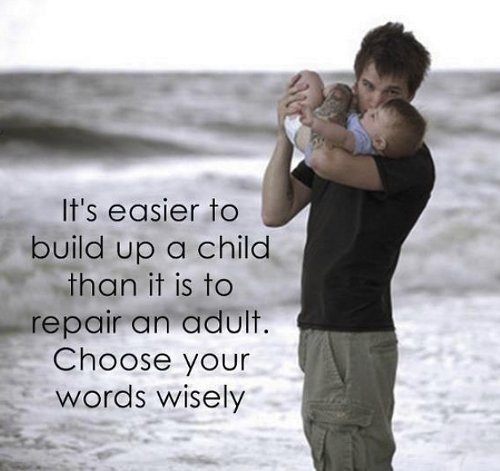
How can we enter a Shabbat’s rest with anger and frustration tying our hearts and souls into something that looks like a design by M.C. Escher? Let go. Tell the people who you love, “I love you.” Cup a small child’s face in the palm of your hand. Forget all the words and actions that have caused you pain. Remember what’s important.

Forgive.

If you’ve hurt me, I forgive you.

May God go with us all on our journey of faith.

nightsky1

Publishing Mistakes

That doesn’t matter. What’s important is that you recognize the value in researching, teaching, collaborating, and correcting mistakes. That’s why the Move The Web Forward folks went on to encourage writers to “keep your posts updated.”

And that’s why Rebecca Murphey, when discussing how to get better at writing JavaScript, said:

“The number one thing that will make you better at writing JavaScript is writing JavaScript. It’s OK if you cringe at it six months from now. It’s OK if you know it could be better if you only understood X, Y, or Z a little bit better. Cultivate dissatisfaction, and fear the day when you aren’t disappointed with the code you wrote last month.”

In this case, Rebecca was talking about actually writing code, not writing about code. But the same principle applies: you will get better when you make mistakes and correct them.

-Louis Lazaris
“Publish What You Learn”
Smashing Magazine

Some sat in darkness and in the shadow of death,
prisoners in affliction and in irons,
for they had rebelled against the words of God,
and spurned the counsel of the Most High.
So he bowed their hearts down with hard labor;
they fell down, with none to help.
Then they cried to the Lord in their trouble,
and he delivered them from their distress.
He brought them out of darkness and the shadow of death,
and burst their bonds apart.
Let them thank the Lord for his steadfast love,
for his wondrous works to the children of man!
For he shatters the doors of bronze
and cuts in two the bars of iron.

Psalm 107:10-16 (ESV)

No, I’m not a programmer, but a great deal of what these “meditations” represent are writing about what I have learned and being open about my mistakes (which is rare in just about any kind of blogging…particularly religious blogging, in spite of what Lazaris just said).

The Psalm writer encourages us (OK, he was writing to a Jewish audience, but I think I can stretch the interpretation to include all of those who were created in the image of God) to acknowledge God and to thank Him for redeeming us, especially when we have been redeemed from our own stupidity and ignorance.

Publicly admitting your mistakes and even thanking God for getting you out of the mess you created is easier said than done. Even after God has redeemed you and relieved you from the consequences (or some of them) of your actions and the punishment for willful sin, there’s still the guilt and shame to deal with. Thanking God for being redeemed is still a lot like saying that you’re a screw up and you did something immeasurably stupid. Blogging about the same “immeasurably stupid” stuff is making the same admission, except it’s to people and not to God.

And yet, there’s supposed to be some sort of benefit to doing both, even though it makes you (and me) feel like crawling under the nearest slime-covered rock and hiding there for the next 70 or 80 years.

The 73rd mitzvah is that we are commanded to verbally acknowledge the sins we have committed before G-d (exalted be He), when we come to do teshuvah (to repent). This is vidui (verbal confession), the idea of which is to say, ” ‘O G-d, I have sinned, I have committed iniquity, I have transgressed and done …” One should elaborate verbally and ask for atonement on this transgression with all the eloquence at his command.

-Translated by Rabbi Berel Bell
From “Sefer Hamitzvot in English”
Confessing Sins
Positive Commandment 73
Chabad.org

So if you are offering your gift at the altar and there remember that your brother has something against you, leave your gift there before the altar and go. First be reconciled to your brother, and then come and offer your gift. –Matthew 23-24 (ESV)

It is said that if we have sinned against God, we must seek forgiveness from God, but if we’ve sinned against man, we must seek forgiveness from that man before God will forgive us. If we do not ask the man for forgiveness, God will not forgive us, either.

And if we do seek forgiveness from man and it is not given, will God then forgive us in the man’s stead?

I don’t know. Logic says that God will forgive you if you’ve made your best effort to seek forgiveness from one you’ve sinned against, but I’m not sure. I only know we are supposed to do our best to live at peace with others, regardless of what they’ve done to us…even if they hate us.

“You have heard that it was said, ‘You shall love your neighbor and hate your enemy.’ But I say to you, Love your enemies and pray for those who persecute you, so that you may be sons of your Father who is in heaven. For he makes his sun rise on the evil and on the good, and sends rain on the just and on the unjust. For if you love those who love you, what reward do you have? Do not even the tax collectors do the same? And if you greet only your brothers, what more are you doing than others? Do not even the Gentiles do the same? You therefore must be perfect, as your heavenly Father is perfect. –Matthew 5:43-48 (ESV)

Bless those who persecute you; bless and do not curse them. Rejoice with those who rejoice, weep with those who weep. Live in harmony with one another. Do not be haughty, but associate with the lowly. Never be wise in your own sight. Repay no one evil for evil, but give thought to do what is honorable in the sight of all. If possible, so far as it depends on you, live peaceably with all. Beloved, never avenge yourselves, but leave it to the wrath of God, for it is written, “Vengeance is mine, I will repay, says the Lord.” To the contrary, “if your enemy is hungry, feed him; if he is thirsty, give him something to drink; for by so doing you will heap burning coals on his head.” Do not be overcome by evil, but overcome evil with good. –Romans 12:14-21 (ESV)

The Bible talks about forgiving others and seeking forgiveness from others and seeking forgiveness from God, but it never talks about forgiving yourself. It seems as if the last person you must forgive is yourself. Otherwise, you live with guilt, shame, and condemnation for the rest of your life, paying for a crime that has already been atoned for in Heaven (or so we hope).

There is a common misconception that life is about being in the right place at the right time. In truth, how you experience life has more to do with what is happening inside you as with what is happening outside.

Like riding a roller coaster without being prepared, if you are not well-tuned to the channel of life, a symphony of miracles could come across as cacophony from the boiler room.

This is what the sages call z’chut –sometimes translated as merit. It means a refinement of the soul, so that it will be precisely on the right frequency and static-clean.

-Rabbi Tzvi Freeman
“Z’chut”
Based on letters and talks of the Rebbe
Rabbi M. M. Schneerson
Chabad.org

People can be very cruel and spiteful, sometimes even to themselves. Do I need to have my frequency fine tuned?

Yeah, I know. I sound more like Yom Kippur is coming up rather than Passover.