I don’t doubt that author Richard Reeves is sincere in everything he’s written and that he actually is deeply concerned about the future of boys and men in our world. I just think he’s looking at the topic through a rather narrow lens.
I know when you read a book that has an extensive bibliography, it’s hard to impossible to say that the author was biased or misinformed. On the other hand, it really depends on which sources you mine and how you interpret them.
Reeves did state that both Progressives and Conservatives have, to one degree or another, not fully understood the issues involved in how males have become lost and without identity and purpose:
A Man praying holding a Holy Bible. DUNCAN ANDISON/ADOBE STOCK
So far in this series, I’ve been addressing how to define a man, his purpose (from part four) and the struggles of men from mostly a secular viewpoint. I’ve also been leaning heavily on feminism because, in spite of what fourth stage feminism and general progressivism says, it’s very hard to bring one group up without tearing another group down.
Certainly, there has been a great need in some areas to support women but as I’ve previously said, any effort to “dismantle the patriarchy” ends up dismantling men as individuals and a group as well. One example is changing the Boy Scouts of America from a boys/men only group aimed at building and nurturing the next generation of men to an equity for all poster child, including girls/women because anything “all male” is always deemed “non-inclusive,” “patriarchy,” and “misogynistic.”
In other words, many of the goals of feminism are resulting in creating the toxic masculinity they are trying to exterminate.
This is the actual time of the “footsteps of Mashiach.” (the final age prior to Mashiach’s advent) It is therefore imperative for every Jew to seek his fellow’s welfare – whether old or young – to inspire the other to teshuva (return), so that he will not fall out – G-d forbid – of the community of Israel who will shortly be privileged, with G-d’s help, to experience complete redemption.
“Today’s Day”
Monday – Sivan 18 – 5703
Compiled by the Lubavitcher Rebbe; Translated by Yitschak Meir Kagan Chabad.org
Previously, I wrote about how privileged Gentiles associated with the Messianic Jewish movement (and in theory, all Gentile Christians) are to be able to support and encourage increased Torah observance among the Jewish people united in Messiah, in order to bring nearer the coming (return) of the King. Although the small commentary above states that it is important for every Jew to seek his fellow’s welfare, I believe we can extend that sentiment to all of mankind.
There are two interrelated principles here. The first is for all disciples of Jesus to seek the welfare of any other person, as it is written, “love your neighbor as yourself” (Lev. 19:18, Mark 12:31). The second is like it in that we non-Jews should seek out the welfare of the Jewish people and the nation of Israel, as it is written, “And I will bless those who bless you, And the one who curses you I will curse. And in you all the families of the earth will be blessed” (Genesis 12:3).
As I also said, within the unity of the body of Messiah, we are all one and yet we are all distinct. Just as men and women are distinct, so are Jew and Gentile, for Paul in his various epistles, never stopped distinguishing between the Jew and the Greek (Gentile). Therefore, we have no excuse to fail to make such distinctions as well.
And yet, both within the larger body of the Christian Church and certain subsets of what is called Hebrew Roots, it is considered unfashionable and even offensive to continue to make such distinctions. However, if we fail to do so, either by eliminating the primacy of national Israel and replacing it with the Church, or forcibly inserting Gentiles into the nation of Israel, we violate God’s unique calling to the Jewish people to remain a set apart people before Him forever.
Thus says the Lord,
Who gives the sun for light by day
And the fixed order of the moon and the stars for light by night,
Who stirs up the sea so that its waves roar;
The Lord of hosts is His name:
“If this fixed order departs
From before Me,” declares the Lord,
“Then the offspring of Israel also will cease
From being a nation before Me forever.”
–Jeremiah 31:35-36 (NASB)
For the New Covenant was made with the house of Judah and the house of Israel, not the people of the nations, and it is only by coming alongside Israel rather than replacing her or co-opting her unique relationship with God, that we can enjoy blessings of the covenants God made with the Jewish people.
To deny this on any level is to bring a curse upon yourself, but to bless and uphold the nation of Israel and the distinct nature and character of the Jewish people is to bring blessings upon yourself from God, who selected Israel for His own.
The early sages, who were like angels (may their merit protect us) have already determined that the healing of the soul is like the healing of the body:
The crucial first step is to identify the location of the illness, whether it is caused by the crassness, grossness and corruption of his physical body or by a failing in his soul-powers, the person being inclined to undersirable traits like arrogance or falsehood and the like. Or, the source of the malady may be habit – inadequate rearing or unwholesome environment having brought on bad habits.
“Today’s Day”
Shabbat – Sivan 16 – 5703
Compiled by the Lubavitcher Rebbe; Translated by Yitschak Meir Kagan Chabad.org
This relates to another quote I cited before:
A person who worries about how others view him will have no rest. Regardless of what he does or does not do he will always be anxious about receiving the approval of others. Such a person makes his self-esteem dependent on the whims of others. It is a mistake to give others so much control over you. Keep your focus on doing what is right and proper.
-Rabbi Zelig Pliskin
Rabbi Zelig Pliskin
Given the current context, applying R. Pliskin’s words to me, I see that those who disagree with my words are not in control of who I am. Those who disagree with the uniqueness, sanctity, and distinctiveness of the Jewish people; the nation of Israel before God, cannot affect the nature and character of the chosen people, even as they either seek to eliminate Israel in God’s plan or dilute Israel by inserting masses of Gentiles into her midst without continuing to uphold her distinction.
But R. Pliskin’s words can also be applied to those who oppose Israel in that these people and groups may see their self-esteem and self-assigned identity as being worthwhile only if Israel is diminished either by elimination from God’s plan, or by needing to be included and even fused with Israel, not allowing Israel to exist apart from Gentile inclusion.
To the Christians, including some groups within Hebrew Roots, it is important and even vital to realize that our distinctiveness apart from Israel does not diminish us. Quite the opposite. Our vital role in supporting Israel and heralding the return of Israel depends on our distinctiveness.
If a Gentile “keeps the Torah” in some manner or fashion, that may benefit the individual involved but it does nothing to summon the Messiah’s return. If, on the other hand, the Gentile were to support and encourage Jews in Messiah, including those in the Church referred to as “Hebrew Christians” in observing the mitzvot, then we are fulfilling our purpose and passion and performing a mitzvah “only Gentile disciples of Messiah may accomplish”.
As a young boy, Rabbi Yosef Yitzchak (the sixth Lubavitcher Rebbe) would go with his father on walks through the woods. One time, as they talked, the boy absent-mindedly plucked a leaf off a tree and began to shred it between his fingers. His father saw what his son was doing, but he went on talking. He spoke about the Baal Shem Tov, who taught how every leaf that blows in the wind—moving to the right and then to the left, how and when it falls and where it falls to—every motion for the duration of its existence is under the detailed supervision of the Almighty.
That concern the Creator has for each thing, his father explained, is the divine spark that sustains its existence. Everything is with Divine purpose, everything is of concern to the ultimate goal of the entire cosmos.
”Now,” the father gently chided, “look how you mistreated so absent-mindedly the Almighty’s creation.”
”He formed it with purpose and gave it a Divine spark! It has its own self and its own life! Now tell me, how is the ‘I am’ of the leaf any less than your own ‘I am’?”
-Rabbi Tzvi Freeman
“Purpose of a Leaf”
Based on the letters and talks of the Rebbe, Rabbi M.M. Schneerson Chabad.org
Everything was created by God with a unique purpose, even a humble leaf, and must be treated with respect. How is the Jewish ‘I am’ any less than the Gentile (Christian) ‘I am’?
Exodus 20 commands Israel not to covet the things that belong to a neighbor such as his house, his wife, his servants, or his animals. Far be it from me to add to or subtract from the Bible, but my personal “midrash” on coveting includes the “commandment” not to covet thy neighbor’s mitzvot. Just as Korach and his followers coveted the position and mitzvot associated with Moses, the Prophet of God, and Aaron, the High Priest and was judged in error by God, so we too will be judged as in error by coveting positions, roles, and mitzvot we do not merit because we are not Jewish.
And He began speaking a parable to the invited guests when He noticed how they had been picking out the places of honor at the table, saying to them, “When you are invited by someone to a wedding feast, do not take the place of honor, for someone more distinguished than you may have been invited by him, and he who invited you both will come and say to you, ‘Give your place to this man,’ and then in disgrace you proceed to occupy the last place. But when you are invited, go and recline at the last place, so that when the one who has invited you comes, he may say to you, ‘Friend, move up higher’; then you will have honor in the sight of all who are at the table with you. For everyone who exalts himself will be humbled, and he who humbles himself will be exalted.”
–Luke 14:7-11 (NASB)
It is not shameful or diminishing to seek humility in the presence of God and in our daily lives. In fact, as we see from scripture, it is ultimately honoring, though we should not seek honor for ourselves, for in taking our proper place furthest away from the head of the table, how might the host of the banquet choose to honor us by placing us in a much better seat. But that selection of a better seat is not for us to make, it is for him, for Messiah, Son of David. For even he, though he deserves great honor and glory, chose to be humbled.
“For even the Son of Man did not come to be served, but to serve, and to give His life a ransom for many.”
–Mark 10:45 (NASB)
The Master said that all those who choose to glorify themselves in this world already have their reward, but those who choose to humble themselves now will have great reward in the coming Kingdom:
“Beware of practicing your righteousness before men to be noticed by them; otherwise you have no reward with your Father who is in heaven.
“So when you give to the poor, do not sound a trumpet before you, as the hypocrites do in the synagogues and in the streets, so that they may be honored by men. Truly I say to you, they have their reward in full. But when you give to the poor, do not let your left hand know what your right hand is doing, so that your giving will be in secret; and your Father who sees what is done in secret will reward you.
“When you pray, you are not to be like the hypocrites; for they love to stand and pray in the synagogues and on the street corners so that they may be seen by men. Truly I say to you, they have their reward in full. But you, when you pray, go into your inner room, close your door and pray to your Father who is in secret, and your Father who sees what is done in secret will reward you.
–Matthew 6:1-6 (NASB)
Serve God in all humility, placing the needs of others before your own. Realize that Paul always went to the Jew first, for the Good News of Messiah is the Gospel of Israel and only afterward the good news also to the nations.
If you seek to take what is not yours, when Messiah comes, will he not seek justice and remove from you that which you have usurped? Better to pursue nothing for yourself, and when Messiah comes, let him gift each of us with whatever we may merit according to his grace, kindness, and wisdom. Consider the parable of the talents (Matthew 25:14-30):
For to everyone who has, more shall be given, and he will have an abundance; but from the one who does not have, even what he does have shall be taken away.
–Matthew 25:29 (NASB)
Also, the Master taught:
So do not worry about tomorrow; for tomorrow will care for itself. Each day has enough trouble of its own.
–Matthew 6:34 (NASB)
To God be great honor and glory, and to Moshiach our King, let him be raised high above us. Let us walk in the dust of his feet (Nahum 1:3) and be satisfied with our lot.
Ben Zoma would say: Who is wise? One who learns from every man. As is stated (Psalms 119:99): “From all my teachers I have grown wise, for Your testimonials are my meditation.”
Who is strong? One who overpowers his inclinations. As is stated (Proverbs 16:32), “Better one who is slow to anger than one with might, one who rules his spirit than the captor of a city.”
Who is rich? One who is satisfied with his lot. As is stated (Psalms 128:2): “If you eat of toil of your hands, fortunate are you, and good is to you”; “fortunate are you” in this world, “and good is to you” in the World to Come.
Who is honorable? One who honors his fellows. As is stated (I Samuel 2:30): “For to those who honor me, I accord honor; those who scorn me shall be demeaned.”
-Pirkei Avot 4:1
May we make teshuvah and repent of our failings before God, then pursue the path of Messiah as he and he alone has set it before each of us. Amen and Amen.
Addendum: Sadly, this blog post did nothing to resolve conflicts and in fact seems to have added fuel to the fire. Thus, I’m forced to write a “part three” to this series. Please see Briefly Revisiting Gentiles and the New Covenant for details.
I know this is something of a departure from my usual “meditation,” but on this three-day weekend that most people think of as the unofficial start of summer and a great weekend for a barbecue, I wanted to take a moment to suggest we turn our thoughts and our hearts to those who gave their lives in the service of our nation. I found a disturbing statistic that says only one percent of the American population has served in the U.S. armed forces. And yet most of us don’t have to work tomorrow and many of us have gone camping or visiting family or taken some other trip or vacation to “celebrate.”
My father and my son are both veterans and thankfully, both of them are alive today. But how many who have served never returned home from the fields of war, and how many widows and orphans did they leave behind. We can never say enough to honor those who died for our country, but we can take a moment to thank a veteran or an active duty military person for protecting our freedom. We can thank a police officer and firefighter as well, because they also risk their lives for the rest of us. We can pray for the survivors of those who have lost their lives. We can be silent for a time in remembrance of those non-military people who died as a result of terrorism, here, in Israel, and around the world.
These are our honored dead. These are our heroes in a world that does not value heroes but instead fawns over celebrities and “progressive” causes.
We wouldn’t enjoy the freedoms we have today, including the freedom to not remember the cost of our freedom, without that brave one percent of the American people who have put on a uniform, learned the arts and weapons of war, and died for what we all should believe in so that the other ninety-nine percent should live.
How can we say “Happy” Memorial Day when the purpose of this national holiday is not a happy one at all for those who were left behind.
Remember them. Please remember them. And in their name, thank a vet for his or her service, do something kind for the surviving widow of a soldier, and the next time you see an American flag flying in the breeze, remember that the red in those stripes represents the blood of the fallen.
A rabbi was sitting next to an atheist on an airplane. Every few minutes one of the rabbi’s children or grandchildren would inquire if they could bring him something to eat or drink or if there was anything they could do for him. The atheist commented, “It’s wonderful the respect your children and grandchildren show you; mine don’t show me that respect.” The rabbi responded, “Think about it. To my children and to my grandchildren, I am one step closer in a chain of tradition to the time when God spoke to the whole Jewish people on Mt. Sinai. To your children and grandchildren — unfortunately, you are considered to be one step closer to being an ape.”
Are children more inclined to respect their parents if they think they are one step closer to being an ape or if they believe that their parents are one step closer to being created by the Almighty who heard God speak?
No, I’m not taking a cheap shot at atheists but I would like to wake up a few religious people about the commandment to honor parents and what it all means. According to Rabbi Packouz, the original commandment regarding parents and the related scriptures (see Exodus 20:12, Deuteronomy 5:16, and Leviticus 19:13) actually describe two separate commandments:
We see from these verses that there are two mitzvot (commandments): 1) To honor your parents and 2) To revere your parents. Love motivates one to do positive things; fear keeps one from transgressing the negative.
We are to love and fear (revere) our parents. This may seem more apparent when one is a child. As an adult, we may still love our parents, but we typically don’t fear them anymore. After all, can an eighty year old father or mother send their fifty-eight year old son to “time out?”
But then again, we may be missing something about the full implications of this commandment.
And he said to him, “You shall love the Lord your God with all your heart and with all your soul and with all your mind. This is the great and first commandment. And a second is like it: You shall love your neighbor as yourself. On these two commandments depend all the Law and the Prophets.”
–Matthew 22:37-40 (ESV)
We have a Father in Heaven who we are also commanded to love. In fact, in some ways, it’s by having a Father on earth that we can even begin to conceptualize the Father in Heaven. Of course, the analogy is far from perfect. A human Father can be flawed, selfish, distracted, drunk, abusive, overbearing, hostile, wishy-washy, the list goes on. God is perfect and therefore, all of His actions toward us are perfect.
In quoting Rabbi Packouz above, I immediately thought that the Rabbi’s children would only see their Father as closer to God if he acted in a manner consistent with that impression. It’s not like all kids of all Rabbis, Pastors, and other clergy people offer their Dad’s equal reverence. Sometimes it has little to do with the sort of job the Dad has or what the family’s religious tradition is, but children very much are affected by what their father’s actually do, and mold their opinions about him and about Dads in general based whether or not he acts consistently with his stated principles and ideals.
And sometimes how we relate to our earthly Father is how we relate to our Father in Heaven. If we haven’t learned to respect, love, revere, and honor our own Father and Mother, what sort of model do we have for respecting, loving, revering, and honoring our Father in Heaven?
But then, it can work in the opposite way, too. I’ve heard stories of people who have had horrible and abusive Dads, Dads who have sexually molested their children, brutalized them, neglected them, abandoned them. And yet some of those kids have learned to trust their Father who is perfect in Heaven in spite of the cruelty they had to endure from their Father on earth.
I don’t think the Rabbi and the other airplane passenger had different relationships with their children because the children of the former saw him as one step closer to God while the children of the latter saw him as one step closer to the apes. I think the difference is who each person was as a Father and a man and how each one of them treated his children and most likely his wife, the children’s mother. Children are more likely to respond by what they see their parents doing rather than what their parents say or who their parents even are (a Rabbi vs. an Atheist). It’s a little scary to think that how we relate to our kids may strongly affect how they relate to God.
But how we behave as a parent and as a human being depends on who we are, what we believe, and then how we choose to act out of all of that.
Gather together and I will tell you what will befall you at the end of days.
–Genesis 49:1
Prior to his death, the Patriarch Jacob wished to disclose to his children the future of the Jewish nation. We know only too well what those prophecies were, and Jacob knew that revealing the enormous suffering that the Jews were destined to experience would be devastating to his children. The only way they could hear these things was if they “gathered together” and, by virtue of their unity, could share their strengths.
What was true for our ancestors holds true for us. Our strength and our ability to withstand the repeated onslaughts that mark our history lie in our joining together.
Jacob knew this lesson well. The Torah tells us that “Jacob remained alone, and a man wrestled with him” (Genesis 32:25). Jacob discovered that he was vulnerable only when he remained alone.
Some people feel that they must be completely independent. They see reliance on someone else, be it others or God, as an indication of weakness. This destructive pride emanates from an unhealthy ego. [There is sometimes an] apparent paradox that a humble person is one who is actually aware of his strengths, and that feelings of inadequacy give rise to egocentricity and false pride.
Not only are we all mutually interdependent, the Torah further states that when we join together, our strengths are not only additive, but increase exponentially (Rashi, Leviticus 26:8). Together, we can overcome formidable challenges.
Today I shall…
…try to join with others in strengthening Judaism and in resisting those forces that threaten spirituality.
-Rabbi Abraham J. Twerski
“Growing Each Day, Adar 9” Aish.com
Part of the Rabbi’s “success” as a father in the original quote was his perception of himself as a Rabbi and as a Jewish man. Without his sense of spirituality and his identity as a Jew who is connected to all other Jews, both in the present, and back across history, how he would behave as a Father and how his children would respond to him might be very different. It might also be very different how his children would choose (or if they would choose) to respond to God.
If you’re a parent, teaching your children about the commandments related to honoring and revering you as parents (which extends also to how they should respond to their grandparents) is a very good thing, but you may be having a much greater impact on your kids than you might imagine. In forging a relationship with your children, teaching them what God expects of parents and children, you are also teaching them what they should expect from God and how to respond to Him as a Father.
As a Christian and a parent, you have a specific identity and source to draw from to define yourself and to define the relationship you have with your children based on what you know of God from His Spirit and from the Bible. While the Rabbi’s children were born Jewish (assuming they had a Jewish mother, and I think this is likely), a Christian’s children aren’t “born Christian.” A Christian doesn’t inherit his or her relationship with God the way a Jew does. Although Jewish children can, Heaven forbid, choose to reject their relationship with God and with Judaism, children born of Christian parents are one more step removed because every Christian must choose their path in life, including a path of faith. It’s even more important for us as parents and grandparents to behave in accordance with our stated beliefs and our faith because unless our children actually see that, we have no hope of transmitting Christian faith to the next generation. Even Jewish parents have a tough time transmitting Jewish faith and values to the next generation, so you can imagine what challenges there are for Christian parents.
That’s why we must make sure that God is continually with us so that our children can see that holiness is our constant companion.
When someone walks the street and thinks words of Mishna or Tanya, or sits in his store with a Chumash or Tehillim – that is more valued today than it was when the streets were bright with the light of Torah. We must not go about in the street with a vacant heart. We must have some Torah memorized, to take with us into the street.
“Today’s Day”
Sunday, 9 Adar I, 5703
Compiled by the Lubavitcher Rebbe
Translated by Yitschak Meir Kagan Chabad.org
For a Christian, that means living, eating, reading, and breathing our faith, spending time in the Bible, associating with friends who are believers, and behaving in every aspect of our lives in complete consistency with what we know we should be doing as a Christian. This is also why it is vitally important for Jewish parents to perform the mitzvot, regularly daven, recite the Shema, and keep kosher.
No pressure, eh?
But what choice do we have? After all, our children are watching.
Our Sages teach: (Bava Basra 9b.) “A person who gives a coin to a poor person is granted six blessings; one who gratifies him is blessed elevenfold.” Now, gratifying does not necessarily mean giving more money. It means giving a positive feeling, showing the recipient that you care about him, and that he means something to you. When one so invests himself in another person, putting enough of himself into the stranger that the person feels appreciated, he has given something far greater than money. And so he receives a more ample blessing from G-d.
This leads to a deeper concept: Appreciation stems from involvement; the deeper the relationship between people, the more one appreciates the uniqueness of the other. When a person appreciates a colleague, he is motivated to do whatever he can for that other person.
These concepts apply, not only to our relationships with our fellow man, but also to our relationship with G-d.
“Teacher, which is the great commandment in the Law?” And he said to him, “You shall love the Lord your God with all your heart and with all your soul and with all your mind. This is the great and first commandment. And a second is like it: You shall love your neighbor as yourself. On these two commandments depend all the Law and the Prophets.”
–Matthew 22:36-40 (ESV)
I’ve commented more than once that there is an inseparable relationship in the life of a believer between our relationship with other people and our relationship with God. We see here that not only does Jesus teach this lesson as the two most important commandments to learn and obey, but that both ancient and modern Judaism also cherishes this teaching. It resides at the heart of the Torah Portion for this week and should reside at the core who we are as people of God.
Rabbi Touger expands on his commentary and illuminates us further:
One of the major thrusts in Judaism is hakaras hatov, appreciation of the good which G-d constantly bestows upon us. And as with appreciation of our fellow man, the emphasis is on appreciating not only the material dimension of G-d’s kindness, but also the love and care which He showers on every person.
In this vein, we can understand the sequence of our Torah reading, Parshas Ki Savo. The reading begins by describing the mitzvah of bikkurim, (Deuteronomy 26:1-11.) the first fruits which the Jews would bring to the Beis HaMikdash, and shortly afterwards speaks of a covenant concerning the entire Torah. (Op. cit.: 16ff.)
What is the connection between these subjects?
The mitzvah of bikkurim was instituted to show that our gratitude for the good G-d has granted us, (Rashi, gloss to Deuteronomy 26:3.) and to display our appreciation to Him for “granting us all the blessings of this world.” (Sefer HaChinuch, mitzvah 606.) And this appreciation is not expressed merely by words of thanks, but through deed.
Rabbi Touger goes on to describe the deeds of ancient times, were to offer first fruits to God in deep appreciation for all that he bestowed upon the people of Israel, but that appreciation would be incomplete if we didn’t also offer gifts to our fellow human beings. I don’t mean just material goods, although these are important, but the gifts of compassion, mercy, kindness, and justice. From those gifts flow food for the hungry, comfort for the widow, provision for the bride, and spending time with the sick.
If we say we love God, how are we to express this today? Even a Jew cannot offer sacrifices without a Temple. As we approach the High Holidays, many Jews are giving abundantly to charity, offering impassioned prayers, and seeking to repair damaged relationships. In “offering” to God, we have no choice but to give to the people in need around us, for loving people is indeed loving God, just as He loves us.
If anyone truly intends to repent, either because of the approach of Rosh Hashanah and Yom Kippur or because of our imperative as Christians to continually repent before God through Jesus Christ, it would be foolish to imagine we didn’t have to repent and ask forgiveness of those we may have hurt with our careless words and actions.
But it goes beyond repentance and forgiveness and giving to charity. We have a perpetual responsibility to honor others as God honored Christ, for only in seeking the honor of our friend as if it were our own, can we truly become honorable before God and show the world that God deserves much great honor.
Let the honor of your friend be as dear to you as your own.
-Ethics of the Fathers 2:15
Pride, honor, and acclaim have an attraction all their own, but our Sages warn us that these may be destructive (Ethics of the Fathers 4:28). The frustration people may experience when they feel they did not receive due recognition may be extremely distressing.
People who crave honor may sometimes attempt to achieve it by deflating others, thinking that their own image is enhanced when others are disparaged. The truth, however, is just the reverse: when one deflates another, one’s own image is diminished.
Rabbi Nechunya’s students asked him, “By what merits did you achieve long life?” He answered, “I never accepted any honor that was at another person’s expense.” As an example the Talmud tells that when Rav Chana Bar Chanilai visited Rabbi Huna, he wanted to relieve the latter of carrying a shovel on his shoulder. Rabbi Huna objected, saying, “Since it is not your custom to be seen carrying a shovel, you should not do so now” (Megillah 28a). Rav Chana was willing to forgo his own honor for Rabbi Huna’s sake, but Rabbi Huna would not hear of it.
Why does such an attitude merit long life? A person who is not preoccupied with his image, and is not obsessed with receiving honor and public recognition, is free of the emotional stress and frustration that plague those whose cravings for acclaim are bottomless pits. These stresses can be psychologically and physically devastating, and dispensing with them can indeed prolong life.
Aptly did Rabbi Elazar HaKappar say that honor drives a man out of this world (Ethics of the Fathers 4:28). One who pursues honors in this world mortally harms his chance for happiness.
Today I shall…
concentrate on being respectful to others, and avoid pursuing recognition from others.
-Rabbi Abraham J. Twerski
“Growing Each Day, Elul 18” Aish.com
Seek to show honor to God by honoring people in your midst, not just your friends or those who are like you, but the pauper, the outcast, the lonely, and misfit, for they are all Children of God, even as you are.
Good Shabbos.
"When you awake in the morning, learn something to inspire you and mediate upon it, then plunge forward full of light with which to illuminate the darkness." -Rabbi Tzvi Freeman

 I just finished reading Of Boys and Men: Why the Modern Male Is Struggling, Why It Matters, and What to Do about It (2022) by Richard Reeves. I was inspired by what I had learned when writing my Defining Men series on this blog. I thought I might gain some further insights.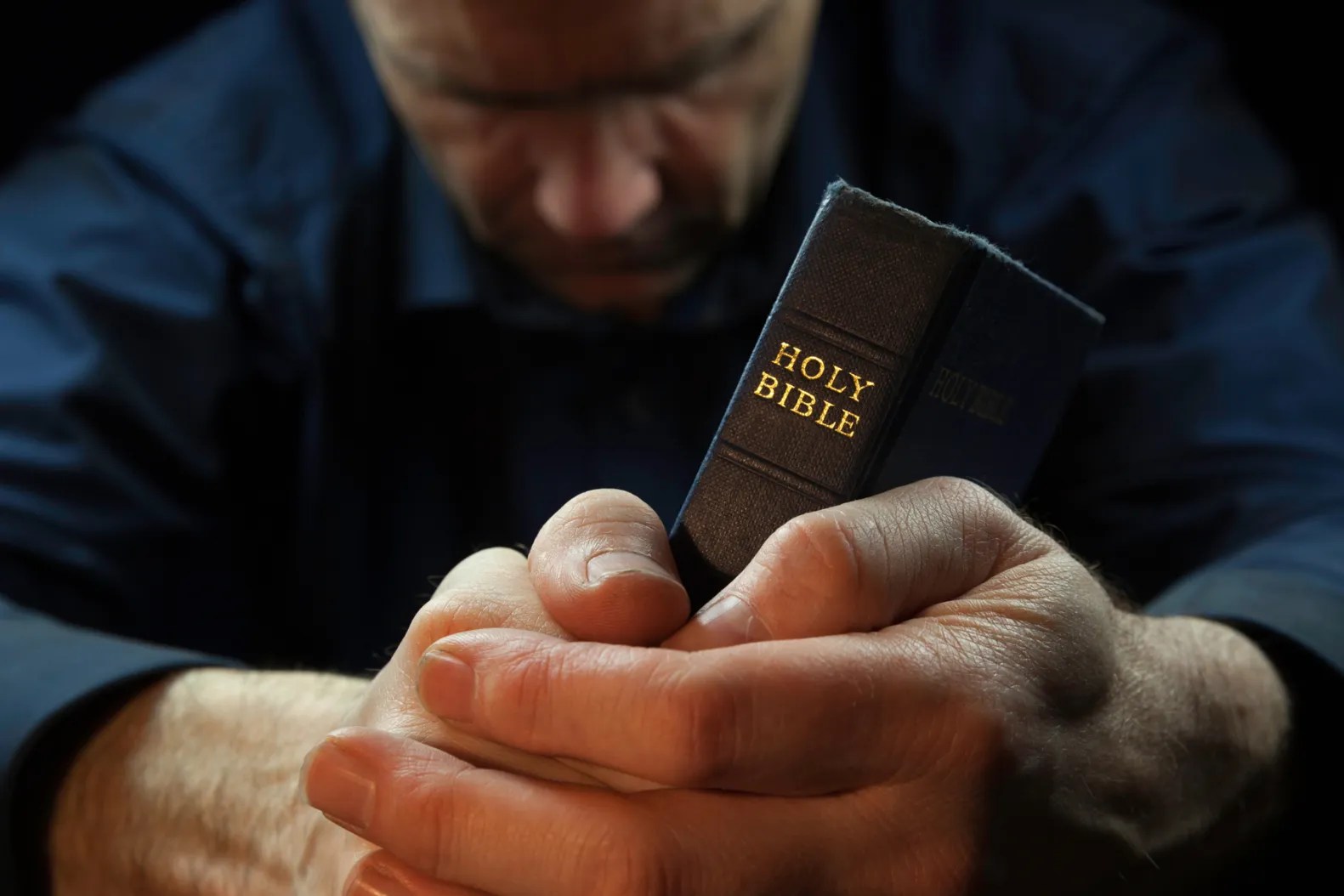








 Morning Meditations