Tag Archives: interfaith

Learning Acceptance

Yeshua’s sacrifice is continually before the Father. He is the lamb continually on the altar before the throne. He is the “the Lamb of God” whose atoning sacrifice for sin is continually before the Father. Thus the writer of Hebrews states: “Nor was it that He would offer Himself often. … Otherwise, He would have needed to suffer often since the foundation of the world; but now once at the consummation of the ages He has been manifested to put away sin by the sacrifice of Himself.” (Hebrews 9:25-26)

“The Daily Continual Burnt Offering”
from the Commentary on Torah Portion Tetzaveh
First Fruits of Zion

For Christ has entered, not into holy places made with hands, which are copies of the true things, but into heaven itself, now to appear in the presence of God on our behalf.  Nor was it to offer himself repeatedly, as the high priest enters the holy places every year with blood not his own, for then he would have had to suffer repeatedly since the foundation of the world.Hebrews 9:24-26 (ESV)

I must confess that I’m not entirely sure how to compare the continual burnt offering we see described in Exodus 29:38-42 with this passage from Hebrews 9. It is, in some sense, almost comforting to think of Jesus has my continue “sacrifice” for my continually struggling life of faith, with all its rises and declines, but the writer of Hebrews is clear that Jesus was only sacrificed once, not continually. But then, it wouldn’t be the first time I’ve missed something in the Bible that seems incredibly obvious to others.

I mentioned yesterday that I feel as if I’m waiting in a minefield for God’s next move, since I’m afraid to make that move on my own. OK, I’m being overly dramatic, but this blog is about how I am processing my own faith experience on a day-by-day basis, so what you read is what I’m going through more or less continually, like a sacrifice on the fire. I’m waiting with God and waiting for God but sometimes I just get tired of waiting. God’s timing is long and even infinite, but certainly he knows we short-lived mortals tend to live by the clock and not by a millennium-long calendar. So I’m waiting and waiting, but I’m also thinking and processing and experiencing.

I’m reminded of how nothing is perfect and that I’m shifting from Plan A to Plan B. It occurs to me as I recall my conversation with my wife, that I’ve been holding her responsible for something that has nothing to do with her: my faith. At least in Christianity, each person negotiates their own relationship with God. I suspect the same is true in Judaism but I can only speak from my own point of view. I’ve also been blaming synagogues, and churches, and congregations for not being what I want or need them to be, but that’s not their responsibility, either. God doesn’t become different from who He is because of me, so why should the world of religion. I can see I’ve been unreasonable.

So now that I’ve taken these failed assumptions apart, I need to put the pieces of my puzzle back together in order to see if it makes any sort of map by which I can navigate my course. I think there’s a map in here somewhere, but I’m not very encouraged as to where the trail seems to be leading.

It would be too difficult to pull together all of the different conversations I’ve had on my blog, on other people’s blogs, in various emails, and elsewhere on the web, that make up the pieces of the map, but as it stands now…right now, I need to be who I am all by myself as a person of faith and let that be the primary focus. Who my wife is, or my children, or who anyone else is in their faith and their identity cannot be the lens that colors my perception of who I’m supposed to be. I’m an intermarried Christian man, but my faith has to stand alone or it doesn’t stand at all.

So if I re-enter a Christian religious context, it won’t be a Christian man expressing his faith in relation to a Jewish woman expressing her faith elsewhere, it will be as a religious Christian man in relation to God and God alone. But what does that mean in a practical, “one step at a time” sense?

Barring some unforeseen event, I am probably going to keep exploring who and what I am becoming in my life of faith. Would going back to a church at this point make sense? I don’t know. If my wife doesn’t understand why I would want to be a Christian, or even if she doesn’t understand why I would want a spiritual life at all, I’m not sure the church would understand very much about me, either. As each day, week, and month progresses, as far as our “identities” go, we continue to spiral away from each other, spinning in wildly different directions. I suppose I have to face that and not let it drive me from searching for the person who God wants me to be.

So what if? So what if I just did this alone? I mean, I’m continually reducing my choices down from many to few, and being alone in a life of faith is one choice that has always been in front of me. It doesn’t make sense in terms of the Christian and Jewish templates which both describe social and corporate gatherings and worship, but maybe this is the equivalent of being stranded on a deserted island with nothing but a Bible to read. Just me, the book, and God.

I’ve been criticized before about my incessant complaining regarding lack of fellowship, so maybe it’s time to stop complaining and just to accept the facts about my existence. I’m not dying or in chronic pain. I haven’t stepped on one of those metaphorical landmines I wrote about yesterday and blown a leg off. According to the classic five stages of grief, the final stage, after denial, anger, bargaining, and depression, is acceptance. I don’t know if what I’ve been experiencing can rightly be called “grief” or if I’ve experienced some sort of loss in order to justify a sense of grief, but what if I just skip ahead to “acceptance” and be done with it?

Supposedly, in the world of grieving, “acceptance” isn’t the same thing as being “OK” with the loss. It’s just accepting the reality of the situation. I hate waiting and I’d much rather “cut to the chase,” so to speak. None of the worlds I’ve been exploring are really “home.” I’m not Jewish so I don’t actually belong to a Jewish world. Although I call myself a Christian, I really don’t belong in church singing “Onward Christian Soldier” or jumping up and down in response to the “worship team’s” pep rally presentation as if I were a hyperactive jack rabbit (I was in a church that did that on exactly one occasion and couldn’t get out of there fast enough).

I’m not saying that I’m walling myself off, and when or if God decides to offer me an opportunity to share who I am with others, I will go ahead and jump in, but in the meantime, I can’t wait on pins and needles. I’ve been kvetching about this far too long, and I’m sure you’re getting just as tired of it as I am.

Dr. Michael Schiffman recently said on his blog:

People who are always upset, will always be upset. It’s just a matter of time before they are upset over the next “issue.” We are supposed to live our lives in tranquility, not in a state of constant crisis. Sha’ul wrote in Romans 12:18, “If it is possible, as much as depends on you, live peaceably with all men.” If we are always looking for an argument, always wearing our emotions on our sleeves, we are not living peaceably. It’s an issue of maturity.

Anyone who’s been reading my “meditations” for more than a few days knows that I don’t exist in some otherworldly sense tranquility, and I’ve said more than once that I wear my heart on my sleeve here on this blog. I guess I always will as long as I continue to need to write and allow a venue such as this one to exist. But that doesn’t mean I have to exist suspended between one decision and the next or between one heartbeat and the next. I need to remove myself from suspension and begin to move.

So, until “my ship comes in,” if it ever comes in, I’ll be the guy on the deserted island with a Bible reading and praying and walking with God. Jesus will be the offering continually being burned before the throne of God for me, and for who knows how many others like me. Or, his offering of himself is over and done with as far as me and everyone else like me is concerned. But I’m also done. I’m done scanning the horizon with my telescope every hour on the hour for some sign of “rescue.” A “ship” may come today, tomorrow, or never, but I can’t get on with my life as long as I think something is still on hold. I’m done waiting. I can’t make anything change and in fact, those things that continue to change around me, I have no control over. I might as well face the fact that things are as they are and proceed as best I can by letting go of some of the things that drive me.

The sound of the wind through the trees is my companion and the rising and setting of the Sun mark the passing of my days. I’ll read, and study, and pray, and live, and time will pass. Whatever comes will come. But I’m not going to try and make it turn into something anymore.

There are no plans. There are only nights and days. Let God do as He will.

Shopping for a Christian Church

Likewise, Gentile Christians are in brotherhood with Jewish Christians, reckoned as spiritually circumcised in heart (Rom 2:26) and thus joined to Abraham through faith (Gal 3:29). Here then is racial diversity within spiritual unity, in the same way as a Christian man and wife are diverse in their spiritual unity (Gal 3:28). This same diversity in unity is strongly intimated in Rom 15:8-9 since “Christ has become a servant of the circumcised on behalf of the truth of God, to confirm the promises to the fathers, and so that Gentiles may glorify God for His mercy” because of their inclusion as Gentiles with the fathers.

-Pastor Barry E. Horner
“Chapter 10: Israel and a Romans 11 Synthesis” (pg 278)
Future Israel: Why Christian Anti-Judaism Must Be Challenged

Hoch also quoted A.T. Hanson on this issue. While explaining that the prevailing interpretation of Phil 3:3 identifies the “we” as all true Christians, Hanson nevertheless declared that this understanding…

…seems quite foreign to Paul’s thought and means actually reading into Philippians ideas which seem to have originated at the time of the Reformation…The Philippians, being Gentiles, would have no reason to boast in the flesh anyway. Paul goes on to describe what he means by this phrase in the ensuing verses: it is plain that he means boasting of the national and spiritual privileges peculiar to the Jews. This the Philippians could not do…It is simpler to take “we” here as “we believing Jews”, or even “we, Paul and Timothy”, in whose name the letter is written. We know that Timothy was circumcised. So there is no good reason for maintaining that the use of “the circumcision” here suggests that Paul could apply the name Israel to Gentiles.

-A.T. Hanson, The Pioneer Ministry (London: SCM, 1961), 35
as quoted in Horner, pg 277

There’s really a lot going on in this chapter of Horner’s book, but space won’t allow me to insert all of the relevant quotes. If I tried, I might as well just copy and paste the chapter in verbatim. Actually, I’m not just writing another anti-supersessionism rant. I have a different, but related purpose for this “extra meditation” today.

I don’t agree with everything each of these gentlemen says in their respective books, but they are still refreshing to me. I tend to read mostly Jewish commentaries, but I’ve been reading Horner as part of my research into superessionism relative to my ongoing series on that topic in FFOZ’s Messiah Journal. What’s really exciting is that I’m reading the works of Christian authors and Pastors who actually agree that the church has not replaced the Jews in the covenant promises. I know they’re out there somewhere. Now if only I could find them.

Let me explain.

Not long ago, I discovered that “plan A” wasn’t going to work. Plan A was my separating from active participation in Messianic Jewish worship (One Law, anyway) for the purpose (well, it’s one of the reasons) of joining my wife in classes and services at our local Reform and Chabad synagogues. It took awhile, but I eventually discovered that it wasn’t just my former association with Messianic Judaism that made my wife hesitant to include me in that part of her life. It is my active and continuing faith as a Christian.

That’s not something I’m going to walk away from, even for the slim chance that my wife would feel more comfortable including me in her Jewish communities (and I don’t think it would do any good anyway). So plan A is shot to heck. Now I can either exist in isolation as a person of faith, or I can attempt to find some sort of community in which to participate as a Christian. But that presents a problem.

I previously wrote at length regarding all the roadblocks that stand in the way of my attending a church. On the other hand, there must be some churches that aren’t dripping with supersessionist rhetoric, aren’t there? I decided to look for one by querying a Christian Discussion Group several days ago. As the saying goes, except for one person trying to convince me that the church has replaced the Jews, the silence has been deafening (a second, more helpful person, responded while I was composing this blog).

But then, you have these Christian authors that make such encouraging statements. I mean, do these guys worship in heavily anti-Jewish churches and just keep their mouths shut, or are there actual havens of sanity and brotherhood under the sign of the cross? You couldn’t prove the latter by me, but since I’m facing a move to “plan B” now, I need to start somewhere.

I haven’t the faintest idea how to “shop” for a church.

I’ve occasionally talked to people who have been around churches for decades and can go into a church and assess its theology and how it operates almost immediately. They tell me what they see and hear that convinces them that the church is this and that, but I haven’t the faintest idea what they’re talking about. I went to a Lutheran church as a kid and then, decades later, I “came to the Lord” (I hate to say it, but “Christianese” still makes me crazy) in a Nazarene church (which ultimately turned out to be a bad experience, with a few bright spots mixed in), but that’s it. I don’t know from larger “organized Christianity”. The church, as in “all churches everywhere,” is a mystery to me. Actually, given my general outlook, the idea of “church shopping” makes me nervous.

But I’m getting a little tired of only being able to talk about what I think, feel, and believe in a virtual environment. It would be nice to occasionally address human beings face to face. However, I don’t want to get into a verbal “knock down-drag out” in a church because I don’t comfortably blend in to the homogenous Christian scenery, relative to Judaism. If I encounter a supersessionist attitude or worse, an anti-Semitic one, I’m liable to take it personally since my wife and kids are Jewish.

Does anyone have any ideas as to how to proceed? I’m not necessarily in a rush, and in fact, I’d like to plot, plan, and scheme, so to speak, about my next move. I have to admit, the thought of walking into a church again is intimidating. I call myself a Christian but socially, (which is a lot of what going to church is about) I’m anything but.

If you aren’t a regular visitor on this blog, you’ll need to get some idea of who I am and where I’m coming from. Since I more or less wear my heart on my sleeve when I write, just read four or five of my blog posts (the most recent, or pick some at random), and you’ll get a pretty good idea about how I see things.

Oh, I live near Boise, Idaho if that helps any.

Thanks.

Fragmentation Dilemma

At first all existed as a single whole in a single thought. Then it fell below, shattering into tiny fragments and fragments of fragments. Now Man picks up the pieces and says, “This seems to belong to this, and this relates to that,” until he reaches back to the whole as it was in primal thought.

It is not the cause and why of things that we find. Things are the way they are because that is how their Maker decided they should be. That is beyond the domain of intelligence. The beauty of intelligence is that it finds the harmony and elegance of the whole as it was originally conceived.

-Rabbi Tzvi Freeman
“Re-piecing”
Based on letters and talks of the Rebbe
Rabbi M. M. Schneerson
Chabad.org

I really thought I’d write just one blog post about Christmas and the anxiety it produces in the Christian, Jewish, and Messianic communities, and then I’d be done and move on. Wrong. The giant panic attack over “Christmasphobia” seems to be (you should pardon the expression) snowballing in the religious blogosphere and social media space, and I can’t leave it alone. There are so many “teachers” and “experts” who keep hammering on the points of “I’m right and you’re wrong” and “Christmas is evil!” that it makes me wonder if the community of faith is about serving God and other people or about establishing the “rightness” of various individuals and sub-groups in our little corner of the religious world.

I suppose I’m not immune since I still feel the need to blog about all this, and I hope I’m communicating, not the need to be “right”, but the message of tolerance and understanding. I know that there is an absolute God who has absolute standards in the Heavenly realm, but if you’ve been a human being and religious for more than just a few days, you should know that trying to distill an absolute right and wrong in every single matter of living existence is no easy task. In fact, it’s probably not even possible.

Look at what Rabbi Freeman might be saying. Here’s my picture.

It’s as if we all woke up one morning to find ourselves in a fog-enshrouded field. We aren’t quite sure who we are, who all these other people are around us, and what we’re doing here. We notice tons and tons of very small fragments of “something” lying all over the field and we realize that we can figure out who we are and learn to understand each other if we just start to pick up the pieces and put them back together again. This is an enormous effort and requires that everybody work together. As our pieces begin to take some sort of form, we start arguing over how the pieces are supposed to fit and what shape they’re supposed to build. Depending on the person or group of people doing the building, the pieces all fit together differently and take on many different shapes. There are pieces and shapes that are impossible to make, which defines “wrong”, but we are all surprised that there is more than one way to make a “right”.

Derek Leman recently wrote A Sermon on Belief and Intelligence which illustrates as much as anything how faith and human intelligence must go hand-in-hand. To quote from the blog post, “Unexamined faith is cowardness” and “intelligence alone can’t explain the mystery.” Since human faith and human intelligence are not the same universally across all people groups or across all individual human beings, we end up with a high degree of variability in how we use faith and intelligence to “understand” God and “understand” the Bible (and I’m not even including any other faith groups outside of Christianity, Judaism, and their variants). Given all that, it is the height of arrogance to say that any one tradition is the one right tradition (I know, I keep hammering on this point in blog after blog, but it’s important and almost nobody “gets it”).

Within you as an individual and within your particular religious group (and I suppose even secular humanism qualifies as a “religious group”), you settle on standards and principles and things you “know” are right and wrong, but try to realize that other groups have their standards and principles, too. Even when we depend upon the same Bible or, to return to my metaphor, we are working with the same pieces, we use our traditions to fit the pieces together differently and to create a shape that’s different from the shapes of other groups, even when we’re using almost exactly the same pieces (i.e. Bible).

I like one of Julie Wiener’s quotes from her In the Mix article on Christmas especially well and as far as I’m concerned, she has more credentials as a Jewish woman in an interfaith marriage to make such a commentary than most of the “pundits” in the religious blogosphere who are using their points to stick it to their brothers and sisters in faith.

A few years ago, the sight of my offspring engaging in tree trimming might have made me squeamish, but this year, while we don’t (and won’t) have our own tree, I’m on a bit of a crusade, so to speak, against Christmasphobia. By which I mean the attitude many Jews (even some intermarried ones) have that Christmas and all its trappings must be avoided at all costs lest we assimilate into nothingness — and that we must be offended when clueless but well intentioned Christians wish us a merry Christmas or offer us gifts wrapped in red and green.
Like intermarriage itself, the presence or absence of a Christmas tree in one’s home is often used as a shorthand pulse check of Jewish identity — and both are rather flawed, simplistic measurement devices.
The fact is that many interfaith families, and in-married families with Christian relatives, do live full Jewish lives yet also partake in Christmas celebrations.

Although Judaism obviously struggles with the “Christmas dilemma”, that struggle doesn’t come in the form of a vicious attack on those people who put together the pieces of their puzzle into the shape of a Christmas tree. We universally fail to work together as people to put the pieces together into their original, single, unified shape. As human beings, this seems to be an insurmountable goal. But while we work in our own groups to build our own shapes and see how the pieces fit together for us, let us also fail to criticize, attack, revile, and humiliate the other groups simply because they use their own tradition to put their pieces together differently than we do.

He has told you, O man, what is good; And what does the LORD require of you But to do justice, to love kindness, And to walk humbly with your God? –Micah 6:8 (NASB)

Only God can put together the pieces back into the original, perfect whole. The Messiah will come again to show us that pattern. For now, we are here and we have been given the job to do justice as we understand it, to love kindness as we have been shown it, and to walk with God along the path we see before us. How we do this will be different, depending on the path we walk. Why is that so hard to understand?

Kabbalah Christmas

Hessed is the emotion of giving and sharing. When we reach out to a person in need, we are drawing on our Hessed flow. It is the basic cosmic flow with which creation is imbued. Indeed, we can say that the Sefira of Hessed is at the heart of humanity’s desire to make a meaning contribution to the world.

-Rabbi Laibl Wolf
“Hessed: Unlocking the Flow of Love” (pg. 120)
Practical Kabbalah: A Guide to Jewish Wisdom for Everyday Life

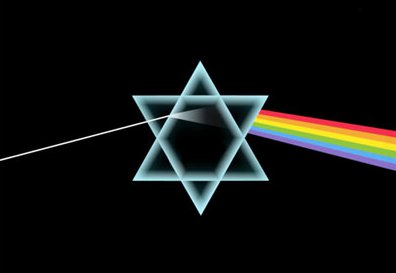
Does a kosher Christmas tree really exist? Well, not exactly but a new trend is taking place across the globe of topping off Christmas trees with a Magen David (“star of David”). As oxymoronic as that sounds, thousands have been sold in the US, Canada, the UK, Austria, Ireland, Australia and Mexico.

Not surprisingly, the holiday season can be a difficult time for interfaith families made up of Jews and Christians. The excessive commercial marketing of Christmas often makes Jews feel left out. Enter Morri Chowaki. He is a Jewish man who is married to a woman whose mother is Jewish and father is Greek Orthodox.

-Tobi Janicki
“A Kosher Christmas Tree?”
First Fruits of Zion blog.

No, I haven’t lost my mind (at least I don’t think I have). I know there’s no such thing as a “Kabbalah Christmas,” but I thought it would be a great title for this morning’s meditation, hopefully the title will attract a little attention and maybe even inspire a few folks to stick around and read today’s missive (please feel free to comment, too).

I never thought I’d write about Christmas. My family hasn’t celebrated this holiday in a religious or even a secular manner for well over a decade. But in reading about Hessed and Gevurah (more on that in a minute) in Rabbi Wolf’s book and then reading Toby’s write-up about Christmas at the FFOZ blog, inspiration took hold of me. After all, when we think of Hessed (sometimes spelled, “Chesed”), we think of acts of kindness and charity, which are certainly consistent with the highest ideals of Christmas. But there’s an important flip side.

Strength takes on many forms. Some of us are physically strong, or our strength may lie in our willpower. We may be strong-minded, or we may allow our feelings to flow strongly. Perhaps we have strong convictions. Our faith may be unshakable. The Kabbalah tells us that each of these forms of strength is connected by a common flow – the flow of Gevurah. (pg 132)

Our natural tendency is to be Hessed oriented, but sometimes it is necessary to be highly focused, single-minded, and self-contained to achieve a specific goal. At such times, the balance must weigh heavily in favor of Gevurah rather than Hessed. (pg 135)

Rabbi Wolf speaks of Hessed and Gevurah as being in balance for a spiritually healthy person, with each of these natures coming to the forefront as the circumstances require. Hessed allows us to give to others in need without being overly concerned with our own desires while Gevurah keeps us from giving our rent money to charity. Each, as an apparent opposite of the other, has its place, but neither one should exist without the other. If they are out of balance, we could ignore the needs of our family to give to the poor or horde our very last dollar without considering the starving widow and orphan in the slightest. There are blessings involved in meeting our personal and family responsibilities and in acts of loving kindness to the stranger. Life is a study of duality and balance.

Toby’s article speaks in part about intermarried couples and how Jewish and Christian spouses might try to “manage” Christmas between them. In my household, that isn’t one of our “dualities”, but for many couples it certainly is. Even for someone like me there is a sort of “dual-mindedness” about this time of year. My family and I originally gave up Christmas because of its “pagan” origins. I’ve long since left that particular “boogey man” behind, but I left Christmas behind, too. I don’t find the Messiah and Savior “living” anywhere near December 25th and I see him much more clearly through the “lens” of Sukkot and Pesach (Passover). Yet I self-identify as a Christian, which drives other Christians nuts.

Christian blogger Antwuan Malone asked me:

So, you mentioned “the thought of facing the requirement of celebrating Christmas within church context”. What do you mean?

I’m curious why you don’t celebrate Christmas in any form.

You can click the link I provided above to read my answer, but the wording of his question tells me that even when Christians struggle with managing Christmas in their lives, they still can’t understand why another Christian would choose not to celebrate Christmas in any way at all.

I suppose it’s because I have no emotional ties to Christmas. Although I enjoyed Christmas for the loot I raked in as a child, I don’t recall any warm, fond memories of Christmas time that overcome me with nostalgic bliss. As an adult, I wasn’t a traditional Christian long enough to form any meaningful emotional and spiritual connections before I turned onto the Messianic path. Now that I’m a Christian again (sounds strange, I know), I have nothing to “fall back on” in terms of a nostalgia for Christmas. It just doesn’t “feel” like the birth of Christ or any other high point on my religious calendar. I suppose, put in “Kabbalah” terms, my Hessed is coming up rather dry and my Gevurah is restricting my response.

It’s my Gevurah that also looks at the power surge of emotions and expectations of Christians at this time of year and wonders why I must feel joyful and cheerful and happy. Even the secular world thinks of Christmas as “the most wonderful time of the year.” If I have anything “against” Christmas at all anymore, it’s that expectation that I should feel something and that I must be channeling Ebenezer Scrooge if I don’t.

I’d be a lot more comfortable enjoying my freedom from holiday stress and shopping anxiety if there wasn’t this latent desire in the world around me to drag me into a set of emotions I just can’t relate to.

Usually around this time of year, I’ll hear of some news story where a person loads up the parking meters downtown with quarters so no one will get a parking ticket, or someone will take $500.00 and pay for gas for customers at their local gas station while the money lasts (both of these stories are true, by the way). I can’t complain about Christmas spirit like this except to say I wish Christians would behave with such Hessed the year round.

I’m looking forward to having a few days off toward the end of this month, eating Chinese food (a tradition in my house on December 25th), warming myself in front of the fireplace, sipping a glass of wine, and reading a good book (on Kabbalah, perhaps). The few strings of Christmas that are still tenuously attached to my life will tug at me and I’ll notice the slight pull, but I’ll continue to balance the wants and needs of this time of year in the secular and Christian world, against the feeling of lightness I’ve come to enjoy at not being a enthralled to the heavy demands of the yuletide season.

For many, December 25th is the day when the King of King and the Lord of Lords was born, and that peace on Earth and good will towards others can be celebrated in anticipation of the return of Christ and the peace he will bring. I can’t deny that specialness to those who feel it nor would I ever attempt to speak against the kindness others express toward their fellows during this holiday. I only ask that you don’t expect me to feel what you might be feeling. I do not disdain Christmas for being pagan nor enrapture myself with Carols and Nativity scenes. I look forward only to a quiet sort of peace which is not Christmas for me, but rather the ability to let Christmas pass by me like a momentary breeze on its way to January.

Addendum: For more on this topic, go to Christmas Trees and Panic Attacks and The New Testament is Not in Heaven.

What God Has Joined Together

MarryToday’s “extra” meditation.

Tens of thousands of Jews have married non-Jews with similar worthy intentions, only to realize when it is already too late that raising a Jewish family with a non-Jewish partner is a near impossibility.

You are my sister. I want to dance at your wedding. I want my daughters to be your flower girls. I want to cry tears of happiness at your chuppah.

I love you. I admire and am very fond of Mike. But if you marry Mike, as difficult as it will be for me as well as for you, I will not be able to attend your wedding. I could not attend your wedding because, as Jews, what would happen on your wedding day would not be a happy event. It would be a tragedy of historic proportions.

I wish that this was not a letter that I had to write. I wish that I could just keep on smiling and acting as though everything is all right, like everybody else in our family. But I feel that, as painful as this is, because I care about you as much as I do, I must tell you the truth.

from “Dear Rebecca: A Letter on Intermarriage”
found at Chabad of Mineola

This is part of a very poignant letter from one Jewish sister to another on the announcement that the other sister “Rebecca” is marrying a non-Jew. As you can see, this is no small thing for many Jews and, in this circumstance, the sister writing the letter feels so strongly that, if her sister “Rebecca” insists on marrying “Mike”, the letter-writer won’t be attending the ceremony.

I know this sounds cruel and heartless. After all, if this woman has found her “soulmate” and that man happens not to be Jewish, is it really so bad?

Let’s go back a step.

The 52nd prohibition is that we are forbidden from marrying heretics.

The source of this commandment is G-d’s statement, “do not intermarry with them,” which then explains what kind of intermarriage is referred to – “do not give your daughters to their sons, and do not take their daughters for your sons.”

Tractate Avodah Zarah states clearly, “the Torah prohibition applies where there is marriage.”

-from Chabad.org

Do not intermarry with them. Do not give your daughters to their sons or take their daughters for your sons, for they will turn your children away from following me to serve other gods, and the LORD’s anger will burn against you and will quickly destroy you. –Deuteronomy 7:3-4

This is the Biblical and Talmudic basis for prohibiting intermarriage between a Jew and a non-Jew. We also see a dramatic example of what happens when Jews are tempted to intermarry in Genesis 34. However, you might say that Christianity also has a similar “commandment”:

Do not be yoked together with unbelievers. For what do righteousness and wickedness have in common? Or what fellowship can light have with darkness? What harmony is there between Christ and Belial? Or what does a believer have in common with an unbeliever? What agreement is there between the temple of God and idols? For we are the temple of the living God… –2 Corinthians 6:14-16

However, for a Christian, Paul provided a “loophole”:

To the rest I say this (I, not the Lord): If any brother has a wife who is not a believer and she is willing to live with him, he must not divorce her. And if a woman has a husband who is not a believer and he is willing to live with her, she must not divorce him. For the unbelieving husband has been sanctified through his wife, and the unbelieving wife has been sanctified through her believing husband. Otherwise your children would be unclean, but as it is, they are holy. –1 Corinthians 7:12-14

Traffic ConesI have a personal stake in this matter because I’m intermarried to a Jewish woman but with a twist; neither of us was religious when we first married. My wife wasn’t raised in a religious home and her own parents were also intermarried (her mother was Jewish). Only one of my wife’s Jewish relatives (a cousin) was at our wedding, but the matter of intermarriage never came up.

Since then, my wife and I have both come to faith, albeit different faiths, and I’ve been actively exploring what all this is supposed to mean. I’ve read a lot of books, including Rabbi Kerry Olitzky’s Making a Successful Jewish Interfaith Marriage, but the materials available on the market always address people who are already religious or observant and who are about to be married. I’m not 25 anymore and just starting out, and in fact, my wife and I have been married for almost 30 years. It’s only in the past five years or so that “intermarriage” has become a factor in our relationship. As our paths continue to diverge in our individual journeys with God, what will that mean?

Dr. David Rudolph published a paper on intermarriage statistics which states that Jewish-non-Jewish intermarriages are pretty much going through the roof. It’s considered an “epidemic” by more conservative sects of Judaism and a threat to Jewish survival. Not only is there a tangible fear that if a Jew marries a non-Jew, that the Jew will be drawn away from their faith, but that the children will have no definitive Jewish identity, thus effectively eliminating a large population of Jews from the next generation.

There’s also the threat of divorce to contend with:

In a paper published in 1993, Evelyn Lehrer, a professor of economics at the University of Illinois at Chicago, found that if members of two mainline Christian denominations marry, they have a one in five chance of being divorced in five years. A Catholic and a member of an evangelical denomination have a one in three chance. And a Jew and a Christian who marry have a greater than 40 percent chance of being divorced in five years.

-Naomi Schaefer Riley, Interfaith Marriages Are Rising Fast, But They’re Failing Fast Too, Washington Post, 6 June 2010

The Chabad of Mineola website also published a response by Rabbi Tzvi Freeman to a Jewish woman asking if she should marry her Muslim boyfriend. Here is part of Rabbi Freeman’s response:

I don’t know where this man stands, whether he is a secular Muslim, a literalist or a mystic, or has beaten his own path. But it is not possible that there will not be conflict over these issues. On the one hand, as his wife, you will need to defend him before family members and other Jews. Yet it’s not possible that in all issues you will agree. After all, if you did, where would the “other” be? The conflict could be deeply painful, destructive of family ties and friendships for both of you. Rather than leading to self-discovery, it may lead instead to a sacrifice of your own identity to save the marriage.

In the end, if you truly love this man, direct him on the right path. Let him realize that for him, a happy marriage will be union with a mate to his own soul, and raising children within his own community, without confusion, with a clear message, “This is who we are and this is what is expected of you.” There he can find happiness, and so too the family he will raise.

May you too find a soulmate of your people and build a family within your people. That is the Jewish concept of the messianic world: not a mush of blended egos, but a magnificent panorama of colors and textures, each individual, family and people playing its part, each contributing its own part in the symphony that is humankind.

Rabbi Freeman gives a measured, compassionate, and kind reply to this woman but it is also a firm reply. A Jewish soul should marry another Jewish soul.

That however, doesn’t address the vast army of married couples who are “unequally yoked”, who have been married for years or decades, and who are well into raising children or have even raised children into adulthood. What of them? What of us?

Since part of this blog has to do with exploring the world of Jewish-Christian intermarriage, I thought it was high time I blogged about it. While there isn’t significant friction between my wife and I on our different religious viewpoints, there isn’t a great deal of agreement either. I suppose it isn’t an issue most of the time because we don’t discuss it most of the time. I let pass the occasional disparaging remarks about “what Christians believe” that come from my wife or daughter, but it’s at those moments when I am acutely aware of the barrier that exists between me and them. I choose to remain silent about it for the sake of peace in the home. I’m not here to “convert” them, nor would I ever try, and the Christians reading my words are free to criticize me for this.

Yet, God made us “one flesh” (Genesis 2:24; Mark 10:8) and one flesh we remain. We have “forsaken all others” and are united as man and woman before God.

In spite my previous quotes from Rabbi Freeman, he also published a different kind of commentary on love and marriage:

Even if all your complaints about your spouse are well-founded and valid – show her your love, nevertheless. Show her unconditional love.

It is said that all our exile is due to the sin of unmitigated hatred.
When each one of us will start with unmitigated love in our own domain, from there it will spread to all else that we do, and from there to the entire world, speedily in our days, Amen.

Yes, he’s probably addressing Jewish married couples or married couples who are both alike in faith, but is an interfaith marriage an exception to “unconditional love”? If, as the Rabbi says, we start with “unmitigated love in our own domain”, and it spreads out from there, can’t that love expand between a spouse of one faith to the spouse of another?

What now, God?