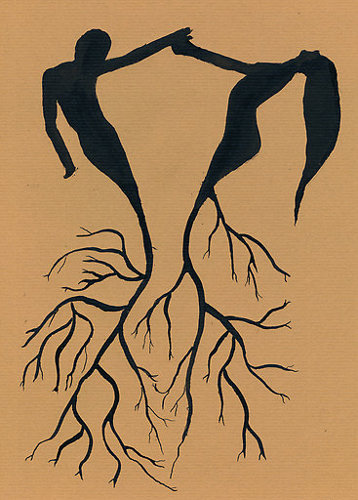
Tag Archives: intermarriage

Hadassah and the King

The Queen Esther daughter of Abihail wrote, along with Mordechai the Jew, with full authority to ratify this second letter of Purim. Dispatches were sent to all the Jews, to the hundred and twenty-seven provinces of the kingdom of Ahashuerus – [with] words of peace and truth – to establish these days of Purim on their [proper] dates just as Mordechai the Jew and Queen Esther had enjoined them, and as they had confirmed upon themselves and their posterity the matter of the fasts and their lamentations. Esther’s ordinance confirmed these regulations for Purim; and it was recorded in the book.Esther 9:29-32

I love a happy ending, don’t you? With Purim only a few days away, Jews all over the world are getting ready to celebrate one of the most joyous occasions on their annual calendar. As with many Jewish celebrations, there will be plenty of good and sweet things to eat, lots of laughter and happiness and, on this particular occasion, practical jokes, dressing up in costumes, and generally acting silly. What better way to announce to the world your happiness at not being exterminated as a people?

However, there’s another aspect to Purim that isn’t generally mentioned, although it should be obvious to anyone familiar with the story of Queen Esther, or rather Hadassah, and King Ahashuerus. This wonderful victory was accomplished because they were an intermarried couple, a Jew married to a Gentile.

In today’s world there are still plenty of Hamans. Iran is threatening Israel with nuclear attack and Islamic Jihad sends suicide bombers. Skinheads still tattoo themselves with swastikas and synagogues around the world are defaced. Jews are still killed because they are Jews.

Perhaps we now have a glimmer of hope coming from an unlikely place. Intermarriages, which until now have been so troubling, now offer us opportunities and new realities.

Perhaps in all the intermarriages that are happening today, we are acquiring allies for the Jewish people. Perhaps we now have hundreds of thousands of non-Jews who are also committed to the survival of the Jewish people, its customs and teachings, and to raising Jewish children. Perhaps we have fellow travelers who appreciate the richness of our heritage and will step forward to help us combat the hatred that exists. Perhaps we will find it safer to live as Jews.

-Rabbi Geela Rayzel Raphael
“Purim and Intermarriage”
Originally published March 14, 2006 and reprinted February 27, 2012
InterfaithFamily.com

In Judaism, intermarriages are usually thought to contribute to the destruction of the Jewish people, largely through secularization and assimilation, if not downright conversion of the Jewish partner to Christianity. The non-Jewish partner, if not seen as “the enemy” when accompanying his or her Jewish spouse to the synagogue, is often considered with suspicion or maybe just a little anxiety, particularly if the non-Jew is actively Christian. Today, many Evangelical Christian congregations have completely embraced the right of Israel to exist and are strongly attempting to influence American politics in supporting Israel, but that doesn’t mean intermarriage would be welcomed by most Jews because of this.
intermarriageHowever, as Rabbi Raphael pointed out, the Gentile member of an intermarriage can also be seen as an especially close ally because he or she is married to a Jew. To the Gentile spouse, the Jew is no longer an “other” or “outsider.” Jews are family. Up until a few days ago, as an intermarried husband, I hadn’t really considered celebrating Purim in any way except as a remembrance of the victory of the Jews over a moral enemy and against total annihilation. But now there’s something new to commemorate as well. Purim, for me, has become the time of year when it’s OK to celebrate the victories that can be attained through Jewish/Gentile intermarriage, even if this aspect of Purim is never mentioned in the synagogue.

Perhaps the rabbis are afraid that such an admission would amount to implied acquiescence with those who choose to intermarry today — as if an ancient historical precedent affects the decisions individuals make about love, life, and Jewish continuity in today’s secular society.

The Purim story is timeless. That is its strength.

But this timelessness is not a result of a lachrymose approach to Jewish history, in which we see enemies rise up against us time and again, regardless of where we live.

Rather, it is Esther’s relationship to Ahashuerus that catapults the story through the portals of Jewish history.

Esther and Mordechai were heroes, but so was Ahashuerus. The Purim story shows that in the face of Jewish destruction — whether it comes from the outside, as in ancient Persia, or from inside the American Jewish community — intermarriage has the potential to help us rather than destroy us, if we are willing to bring the intermarried into our Jewish family and invite them to cast their lot with our own.

-Rabbi Kerry M. Olitzky
“Purim – story of intermarriage gone right?
Jewish Outreach Institute

This isn’t to say that intermarriage has gained any greater approval in Jewish society lately or that there aren’t about a million trap doors that intermarried/interfaith families can’t fall through, but I’d also like to encourage Jews and Judaism to stop thinking of intermarriage as a road that automatically leads to disaster for the Jewish people. I’d also like to encourage Christians and the church to stop seeing intermarriage as a means of converting the Jewish spouse and children to Christianity and eliminating their Jewish identity, which can be a danger as great as any represented by Haman, may his name be blotted out. Purim is the victory of the successful joining of a Jewish wife and a Gentile husband against the forces that would eliminate all Jews from the face of the earth, a destruction I believe God would never allow.

Hadassah called herself “Esther,” hiding her Jewish heritage for a time, but when it was important, she revealed herself to her husband, the King, risking everything to save all Jews everywhere. By the time of our happy ending, Hadassah didn’t have to stop being a Jew because her husband wasn’t, and her uncle Mordechai the Jew, was elevated to the position of viceroy to King Ahashuerus. For that time in that place, Jews and Gentiles lived together in peace.

May there be peace in all the intermarried families and peace between all of God’s children, Jews and Gentiles. And may the Messiah come soon and in our days.

Purim Sameach.
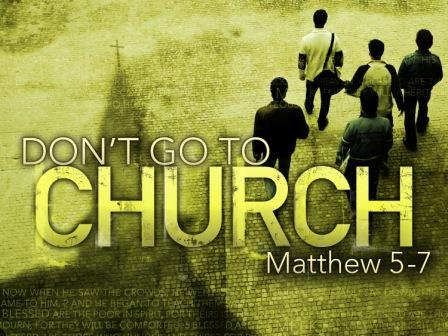
Why I Don’t Go To Church

This dialogue can happen over the Internet. God forbid that I should disparage the Internet as a means of communication; the irony would be a bit sickening. But realistically, all the activity out here is nothing – nothing! – compared to what is going on in real churches, with real people talking face to face. Real, honest dialogue with other people who bear God’s image and are trying just as hard as we are to understand and interpret the Bible.

I have seen so much good come out of the church I am in. Depending on how far you want to stretch the idiom, I have seen “the blind see, the lame walk, the lepers are cured, the deaf hear, the dead are raised to life, and the Good News is being preached to the poor.”

Have people left? Yes. Have people gotten hurt? Yes. Welcome to communal life…

-Jacob Fronczak
“Why I Go to Church”
Hope Abbey blog

For God did not appoint us to suffer wrath but to receive salvation through our Lord Jesus Christ. He died for us so that, whether we are awake or asleep, we may live together with him. Therefore encourage one another and build each other up, just as in fact you are doing.1 Thessalonians 5:9-11 (ESV)

I read Jacob’s latest blog post this morning before I went to work and responded to him that I’d probably have to write a “counter-point” blog from my perspective. I don’t write this to disagree with or to oppose Jacob. In fact, I have the greatest admiration for his writing and the message he has created for today. He’s one of the few people who blog, especially about religion, who consistently presents an attitude that is sane and calm. I always hope that I present myself as sane when I blog, but anyone who has followed my “morning meditations” for any length of time knows that I am not always calm.

Jacob makes some very good points about why a person who is aligned with the “Hebrew Roots” movement can still attend and even thrive in a traditional church setting. I’ve said this in the past and I have also said that a great deal of good is done by the church in pursuing the commandments of Jesus to feed the hungry, visit the sick, and to provide comfort to the widow. In fact, I experience that sort of lovingkindness more from the church and the traditional Jewish synagogue than I do from many of those groups who call themselves “Hebrew Roots” or “Messianic,” usually because those groups are more focused on establishing and maintaining their “rightness” than in actually doing “rightness” to others in the Messiah’s name.

On the other hand, I have reasons for not attending church. None of this is new and I’ve spread “my story” over many different blog posts and various comments in the blagonet, but after reading Jacob’s message this morning, I felt I should collect all of that here today. This also, by coincidence (if I can even believe in coincidence in a created universe), dovetails nicely into today’s morning meditation where I spend several paragraphs summarizing my “witness” or my history in the world of faith.

Up until last May, I was regularly attending and teaching at what you would call a “One Law/Messianic” congregation. I left after much prayer, study, and investigation of the assumptions that had originally attracted me to that movement because of two basic reasons: I no longer felt the One Law proposition, which states that both Jews and non-Jewish Christians are obligated to the full 613 commandment in the Torah (minus Jewish halacha and Talmudic judgments and rulings) was Biblically valid. Also, I didn’t want to worship in a religious venue in which my wife, by her very nature as a (non-Messianic) Jew, would be unable to attend, and which would prevent me, due to my “reputation” as “Messianic,” from fellowship with her communities in Reform and Chabad Judaism.

So for the past nine months, I have been unaffiliated with any specific house of worship or formal denomination or sect, and for nine months, I have not engaged in any form of communal prayer or worship.

I kind of miss it.

The idea was to join with my wife at some point, in her communal religious life, but she doesn’t really have one at this point. She very occasionally attends shul, usually for a bar or bat mitzvah, or to help in some event held at one synagogue or the other, but not for Shabbat services and not to go to any of the classes being offered. I’ve suggested that perhaps we could do something together at one of the synagogues, and after a number of conversations on the matter, she said, “we’ll see.”

So why don’t I attend a church in the meantime? One of the reasons I left “One Law” is that the Rabbis at both synagogues in town are generally “OK” with Christians visiting for worship and classes, but they have an extremely difficult time even tolerating the presence of “Messianics”. Certainly, if I attended a church, even regularly, I would be no more or less offensive to them than any other Christian who walked through their doors, and certainly there are other intermarried couples who attend both synagogues, so how out of place could I be? Church attendance shouldn’t be a barrier to synagogue worship as such.

Traffic ConesThe other reason I left “One Law” was because I didn’t want to worship alone. I don’t mean without fellowship, which I had in abundance, but without my wife. She would no more step one foot inside a church than she would inside a “Messianic” congregation and for pretty much the same reasons. I would be just as “isolated” from my wife in a church service as I ever was in a “Messianic” service. I might eventually gain fellowship with other Christians, but it would still be completely hollow without my wife.

I know what some Christians out there are probably thinking right now.

“Do not think that I have come to bring peace to the earth. I have not come to bring peace, but a sword. For I have come to set a man against his father, and a daughter against her mother, and a daughter-in-law against her mother-in-law. And a person’s enemies will be those of his own household. Whoever loves father or mother more than me is not worthy of me, and whoever loves son or daughter more than me is not worthy of me. And whoever does not take his cross and follow me is not worthy of me. Whoever finds his life will lose it, and whoever loses his life for my sake will find it. –Matthew 10:34-39 (ESV)

You could reduce that down to, “the heck with your family, Jesus is more important” or words to that effect. You could even attach my desire to attend synagogue services with my wife to what the Master said in Matthew 10:33 (ESV): but whoever denies me before men, I also will deny before my Father who is in heaven. So much for loving my wife, eh guys? But what about this?

…and said, ‘Therefore a man shall leave his father and his mother and hold fast to his wife, and the two shall become one flesh’? So they are no longer two but one flesh. What therefore God has joined together, let not man separate.” –Matthew 19:5-6 (ESV)

It’s not so easy now to simply dispense with my “other half,” even for the sake of my faith in Jesus, unless you can come up with some handy way to reconcile the dissonance created by juxtaposing those two teachings of the Master (and I’m aware that theology has come up with some rather creative ways of making discordant verses “fit” for the sake of “smoothing over” theology when rationally, they otherwise shouldn’t reconcile).

And then there’s supersessionism in the church.

I recently wrote an article for Messiah Journal called Origins of Supersessionism in the Church, which is the first of a four-part series on this topic. While I generally oppose this theology, my writing and research has made me particularly sensitive to the extraordinary harm this teaching of the church (not teaching of Jesus and Paul) has done to the Jewish people and to the worship of the Messiah within the framework of Judaism over the past 2,000 years or so. I admit to living with a certain amount of apprehension that if I ever started attending a church again, someone, a Pastor or Bible Teacher or just one of the parishioners, would spout off something about the church replacing Jews. Then I’d feel my blood pressure rise along with my temper, and I’d either just walk out, or I tell that person what I thought of their ill-considered “theology” (and then walk out or be thrown out).

Not that it would really be their fault. After all, the church has been teaching supersessionism as Biblical “fact” ever since the days of the early Gentile “church fathers.” That still doesn’t make it right nor does it mean I have to tolerate a way of understanding the New Testament that requires Judaism and every living, breathing Jew (including my wife and three children) to be deleted from religious, spiritual, and historical significance, not to mention permanently removing them from God’s love and, in at least a historical sense, removing the Jews from their very lives.

I told you I was sensitive to this stuff just now.

So that’s why I don’t go to church.

I understand what Jacob is saying and he’s right. Internet relationships are something of an illusion. I have managed to turn one or two into “real” friendships, but it always involves meeting in real life and doing stuff together. Pretty difficult for most web connections, particularly when those contacts span the globe.

Jacob ended his blog post with an invitation to those of us who are disaffected in relation to the Christian church:

If you believe in Jesus, you’re a Christian. We’re all brothers. We can be distinctive without being destructive. We can worship together. We can live together. We have to.

And maybe, just maybe, you could drop in at church sometime. We’d love to have you.

Thanks, Jacob (where ever you live…which according to his About page, is thousands of miles away from me). I’m not sure how that would ever work out, but I guess we’ll see what God has in mind.

Fragmentation Dilemma

At first all existed as a single whole in a single thought. Then it fell below, shattering into tiny fragments and fragments of fragments. Now Man picks up the pieces and says, “This seems to belong to this, and this relates to that,” until he reaches back to the whole as it was in primal thought.

It is not the cause and why of things that we find. Things are the way they are because that is how their Maker decided they should be. That is beyond the domain of intelligence. The beauty of intelligence is that it finds the harmony and elegance of the whole as it was originally conceived.

-Rabbi Tzvi Freeman
“Re-piecing”
Based on letters and talks of the Rebbe
Rabbi M. M. Schneerson
Chabad.org

I really thought I’d write just one blog post about Christmas and the anxiety it produces in the Christian, Jewish, and Messianic communities, and then I’d be done and move on. Wrong. The giant panic attack over “Christmasphobia” seems to be (you should pardon the expression) snowballing in the religious blogosphere and social media space, and I can’t leave it alone. There are so many “teachers” and “experts” who keep hammering on the points of “I’m right and you’re wrong” and “Christmas is evil!” that it makes me wonder if the community of faith is about serving God and other people or about establishing the “rightness” of various individuals and sub-groups in our little corner of the religious world.

I suppose I’m not immune since I still feel the need to blog about all this, and I hope I’m communicating, not the need to be “right”, but the message of tolerance and understanding. I know that there is an absolute God who has absolute standards in the Heavenly realm, but if you’ve been a human being and religious for more than just a few days, you should know that trying to distill an absolute right and wrong in every single matter of living existence is no easy task. In fact, it’s probably not even possible.

Look at what Rabbi Freeman might be saying. Here’s my picture.

It’s as if we all woke up one morning to find ourselves in a fog-enshrouded field. We aren’t quite sure who we are, who all these other people are around us, and what we’re doing here. We notice tons and tons of very small fragments of “something” lying all over the field and we realize that we can figure out who we are and learn to understand each other if we just start to pick up the pieces and put them back together again. This is an enormous effort and requires that everybody work together. As our pieces begin to take some sort of form, we start arguing over how the pieces are supposed to fit and what shape they’re supposed to build. Depending on the person or group of people doing the building, the pieces all fit together differently and take on many different shapes. There are pieces and shapes that are impossible to make, which defines “wrong”, but we are all surprised that there is more than one way to make a “right”.

Derek Leman recently wrote A Sermon on Belief and Intelligence which illustrates as much as anything how faith and human intelligence must go hand-in-hand. To quote from the blog post, “Unexamined faith is cowardness” and “intelligence alone can’t explain the mystery.” Since human faith and human intelligence are not the same universally across all people groups or across all individual human beings, we end up with a high degree of variability in how we use faith and intelligence to “understand” God and “understand” the Bible (and I’m not even including any other faith groups outside of Christianity, Judaism, and their variants). Given all that, it is the height of arrogance to say that any one tradition is the one right tradition (I know, I keep hammering on this point in blog after blog, but it’s important and almost nobody “gets it”).

Within you as an individual and within your particular religious group (and I suppose even secular humanism qualifies as a “religious group”), you settle on standards and principles and things you “know” are right and wrong, but try to realize that other groups have their standards and principles, too. Even when we depend upon the same Bible or, to return to my metaphor, we are working with the same pieces, we use our traditions to fit the pieces together differently and to create a shape that’s different from the shapes of other groups, even when we’re using almost exactly the same pieces (i.e. Bible).

I like one of Julie Wiener’s quotes from her In the Mix article on Christmas especially well and as far as I’m concerned, she has more credentials as a Jewish woman in an interfaith marriage to make such a commentary than most of the “pundits” in the religious blogosphere who are using their points to stick it to their brothers and sisters in faith.

A few years ago, the sight of my offspring engaging in tree trimming might have made me squeamish, but this year, while we don’t (and won’t) have our own tree, I’m on a bit of a crusade, so to speak, against Christmasphobia. By which I mean the attitude many Jews (even some intermarried ones) have that Christmas and all its trappings must be avoided at all costs lest we assimilate into nothingness — and that we must be offended when clueless but well intentioned Christians wish us a merry Christmas or offer us gifts wrapped in red and green.
Like intermarriage itself, the presence or absence of a Christmas tree in one’s home is often used as a shorthand pulse check of Jewish identity — and both are rather flawed, simplistic measurement devices.
The fact is that many interfaith families, and in-married families with Christian relatives, do live full Jewish lives yet also partake in Christmas celebrations.

Although Judaism obviously struggles with the “Christmas dilemma”, that struggle doesn’t come in the form of a vicious attack on those people who put together the pieces of their puzzle into the shape of a Christmas tree. We universally fail to work together as people to put the pieces together into their original, single, unified shape. As human beings, this seems to be an insurmountable goal. But while we work in our own groups to build our own shapes and see how the pieces fit together for us, let us also fail to criticize, attack, revile, and humiliate the other groups simply because they use their own tradition to put their pieces together differently than we do.

He has told you, O man, what is good; And what does the LORD require of you But to do justice, to love kindness, And to walk humbly with your God? –Micah 6:8 (NASB)

Only God can put together the pieces back into the original, perfect whole. The Messiah will come again to show us that pattern. For now, we are here and we have been given the job to do justice as we understand it, to love kindness as we have been shown it, and to walk with God along the path we see before us. How we do this will be different, depending on the path we walk. Why is that so hard to understand?

Kabbalah Christmas

Hessed is the emotion of giving and sharing. When we reach out to a person in need, we are drawing on our Hessed flow. It is the basic cosmic flow with which creation is imbued. Indeed, we can say that the Sefira of Hessed is at the heart of humanity’s desire to make a meaning contribution to the world.

-Rabbi Laibl Wolf
“Hessed: Unlocking the Flow of Love” (pg. 120)
Practical Kabbalah: A Guide to Jewish Wisdom for Everyday Life

Does a kosher Christmas tree really exist? Well, not exactly but a new trend is taking place across the globe of topping off Christmas trees with a Magen David (“star of David”). As oxymoronic as that sounds, thousands have been sold in the US, Canada, the UK, Austria, Ireland, Australia and Mexico.

Not surprisingly, the holiday season can be a difficult time for interfaith families made up of Jews and Christians. The excessive commercial marketing of Christmas often makes Jews feel left out. Enter Morri Chowaki. He is a Jewish man who is married to a woman whose mother is Jewish and father is Greek Orthodox.

-Tobi Janicki
“A Kosher Christmas Tree?”
First Fruits of Zion blog.

No, I haven’t lost my mind (at least I don’t think I have). I know there’s no such thing as a “Kabbalah Christmas,” but I thought it would be a great title for this morning’s meditation, hopefully the title will attract a little attention and maybe even inspire a few folks to stick around and read today’s missive (please feel free to comment, too).

I never thought I’d write about Christmas. My family hasn’t celebrated this holiday in a religious or even a secular manner for well over a decade. But in reading about Hessed and Gevurah (more on that in a minute) in Rabbi Wolf’s book and then reading Toby’s write-up about Christmas at the FFOZ blog, inspiration took hold of me. After all, when we think of Hessed (sometimes spelled, “Chesed”), we think of acts of kindness and charity, which are certainly consistent with the highest ideals of Christmas. But there’s an important flip side.

Strength takes on many forms. Some of us are physically strong, or our strength may lie in our willpower. We may be strong-minded, or we may allow our feelings to flow strongly. Perhaps we have strong convictions. Our faith may be unshakable. The Kabbalah tells us that each of these forms of strength is connected by a common flow – the flow of Gevurah. (pg 132)

Our natural tendency is to be Hessed oriented, but sometimes it is necessary to be highly focused, single-minded, and self-contained to achieve a specific goal. At such times, the balance must weigh heavily in favor of Gevurah rather than Hessed. (pg 135)

Rabbi Wolf speaks of Hessed and Gevurah as being in balance for a spiritually healthy person, with each of these natures coming to the forefront as the circumstances require. Hessed allows us to give to others in need without being overly concerned with our own desires while Gevurah keeps us from giving our rent money to charity. Each, as an apparent opposite of the other, has its place, but neither one should exist without the other. If they are out of balance, we could ignore the needs of our family to give to the poor or horde our very last dollar without considering the starving widow and orphan in the slightest. There are blessings involved in meeting our personal and family responsibilities and in acts of loving kindness to the stranger. Life is a study of duality and balance.

Toby’s article speaks in part about intermarried couples and how Jewish and Christian spouses might try to “manage” Christmas between them. In my household, that isn’t one of our “dualities”, but for many couples it certainly is. Even for someone like me there is a sort of “dual-mindedness” about this time of year. My family and I originally gave up Christmas because of its “pagan” origins. I’ve long since left that particular “boogey man” behind, but I left Christmas behind, too. I don’t find the Messiah and Savior “living” anywhere near December 25th and I see him much more clearly through the “lens” of Sukkot and Pesach (Passover). Yet I self-identify as a Christian, which drives other Christians nuts.

Christian blogger Antwuan Malone asked me:

So, you mentioned “the thought of facing the requirement of celebrating Christmas within church context”. What do you mean?

I’m curious why you don’t celebrate Christmas in any form.

You can click the link I provided above to read my answer, but the wording of his question tells me that even when Christians struggle with managing Christmas in their lives, they still can’t understand why another Christian would choose not to celebrate Christmas in any way at all.

I suppose it’s because I have no emotional ties to Christmas. Although I enjoyed Christmas for the loot I raked in as a child, I don’t recall any warm, fond memories of Christmas time that overcome me with nostalgic bliss. As an adult, I wasn’t a traditional Christian long enough to form any meaningful emotional and spiritual connections before I turned onto the Messianic path. Now that I’m a Christian again (sounds strange, I know), I have nothing to “fall back on” in terms of a nostalgia for Christmas. It just doesn’t “feel” like the birth of Christ or any other high point on my religious calendar. I suppose, put in “Kabbalah” terms, my Hessed is coming up rather dry and my Gevurah is restricting my response.

It’s my Gevurah that also looks at the power surge of emotions and expectations of Christians at this time of year and wonders why I must feel joyful and cheerful and happy. Even the secular world thinks of Christmas as “the most wonderful time of the year.” If I have anything “against” Christmas at all anymore, it’s that expectation that I should feel something and that I must be channeling Ebenezer Scrooge if I don’t.

I’d be a lot more comfortable enjoying my freedom from holiday stress and shopping anxiety if there wasn’t this latent desire in the world around me to drag me into a set of emotions I just can’t relate to.

Usually around this time of year, I’ll hear of some news story where a person loads up the parking meters downtown with quarters so no one will get a parking ticket, or someone will take $500.00 and pay for gas for customers at their local gas station while the money lasts (both of these stories are true, by the way). I can’t complain about Christmas spirit like this except to say I wish Christians would behave with such Hessed the year round.

I’m looking forward to having a few days off toward the end of this month, eating Chinese food (a tradition in my house on December 25th), warming myself in front of the fireplace, sipping a glass of wine, and reading a good book (on Kabbalah, perhaps). The few strings of Christmas that are still tenuously attached to my life will tug at me and I’ll notice the slight pull, but I’ll continue to balance the wants and needs of this time of year in the secular and Christian world, against the feeling of lightness I’ve come to enjoy at not being a enthralled to the heavy demands of the yuletide season.

For many, December 25th is the day when the King of King and the Lord of Lords was born, and that peace on Earth and good will towards others can be celebrated in anticipation of the return of Christ and the peace he will bring. I can’t deny that specialness to those who feel it nor would I ever attempt to speak against the kindness others express toward their fellows during this holiday. I only ask that you don’t expect me to feel what you might be feeling. I do not disdain Christmas for being pagan nor enrapture myself with Carols and Nativity scenes. I look forward only to a quiet sort of peace which is not Christmas for me, but rather the ability to let Christmas pass by me like a momentary breeze on its way to January.

Addendum: For more on this topic, go to Christmas Trees and Panic Attacks and The New Testament is Not in Heaven.

The Long Dark Road

intermarriage“Marrying gentiles is like playing into the hands of the Nazis,” Yad Vashem Council Chairman and former Chief Rabbi Yisrael Meir Lau has been quoted as saying to students from Ramat Gan’s Ohel Shem High School.

According to the students, the rabbi made the remark during a lecture on the Holocaust and on his personal memories as a survivor of the Buchenwald concentration camp which he delivered to teenagers who had returned from a trip to Poland.

-Udi Avni
“Intermarriage plays into Nazis’ hands”
YNETNews.com

Now, on my suggestion, Benjamin is trying some churches (and looking to get re-involved in a mainstream synagogue, perhaps, since he can’t get Jewish prayer in a Messianic congregation there). His experience in Church-Land so far has been dreadful. I didn’t think it could be worse than in the so-called Messianic congregations, but at least in a bad Messianic group people are usually sympathetic to Jewish concerns on some level. Yes, you guessed it: Benjamin has already been told that it is wrong to be Jewish!

-Derek Leman
“Jewish Adventures in Church-Land”
Messianic Jewish Musings

I have to admire some of the high school students listening to Rabbi Lau since, according to the news article, “Lau’s remark and the nature of his lecture caused several 12th graders to walk out of the auditorium.” The person leading a small group study at the church Benjamin attended wasn’t quite so principled:

The person leading this week’s small group time was “uncomfortable with my keeping the law,” says Benjamin. He “asked me to go home, pray for the Holy Spirit to give me discernment as to what Scripture says, and read Romans and Hebrews.”

Part of the “mission” of my blog is to explore the issues and ramifications of being intermarried and how sometimes Christianity and Judaism can have “uncomfortable encounters”. I don’t experience these sorts of issues in my home life, but I have no doubt I would elicit such responses from at least a few folks in both the church and the synagogue. It’s not that either venue is populated by bad people, but we all have biases and opinions based on our experiences, and we can all act out those experiences on people around us.

I don’t really blame Rabbi Lau for making statements against intermarriage and assimilation. As a Holocaust survivor, he has experienced the extraordinary pain and suffering of the Jewish people and is responding in a way that he believes will repair the damage. He sees intermarriage as just another form of Holocaust (and he’s not alone in this) and is reacting to assimilation of Jews as the same sort of danger (and he’s probably not entirely wrong). Still, according to one 12th grader:

“He said the Jewish people must not assimilate and that we must maintain the Jewish identity. In addition, he presented delusional statistics, claiming that had there been no assimilation the United States would now have 30 million Jews, and showing contempt for those who assimilated – as if they are inferior to others.”

My wife has neither assimilated nor is she inferior. With respect to Rabbi Lau, I will not accept his judgment on intermarried Jews and particularly not on my wife.

On the other hand, I can’t exactly give “props” to the church for making a Jew feel inferior because he has faith in Jesus and also continues to live as a Jew. This shows a complete lack of understanding of who Jesus is, what he taught, and everything he brought into the world in order to allow the nations to have a covenant relationship with God. If the church would try to understand Jesus in his actual context (and I tried to explain this yesterday), perhaps the small group leader at Benjamin’s church wouldn’t have (metaphorically) kicked him in the teeth for being Jewish.

The introduction to The Cambridge Companion to the Talmud and Rabbinic Literature adds dimension to the historical roots of this dynamic, which has targeted what is often seen as the essence of what it is to be Jewish.

Christian theologians and historians have on occasion viewed the Talmud, much more than the Hebrew Bible itself, as encapsulating the spiritual and intellectual core of Judaism. This interest has not always had benign results; it has, at times turned the Talmud into a target of polemics and even violence. Repeated burnings of the Talmud and its associated writings by Christian authorities in medieval Europe were meant to destroy the intellectual sustenance of Judaism.

We don’t seem to have advanced very far from those times, at least in some churches, have we?

More than once recently, I have despaired God’s creating the universe. More than once I wondered why He did it and, if He could do it all over again, would He? Of course, in a sense, He creates the universe anew every year. He reaffirms His faith in humanity annually by punching the cosmic reset button and recreating the world and our souls as brand new, bright and shining.

And then, I start reading Genesis and the daily news and look at what happens. The place is a mess again. Life is a mess again. Sometimes, I get pretty angry at the injustice and the suffering. Then I realize that I’m also angry at my own imperfection and my own impatience with God.

Anger at your faults is arrogance, and of a very self-destructive form. Every failure becomes pain, every pain becomes a gruesome punishment.

An objective person is able to look at his faults and what needs to change and say, “This is what G-d gave me to work with.” He accepts stormy weather as part of the course and slowly and patiently steers his ship to port.

-Rabbi Tzvi Freeman
“Arrogance”
Based on letters and talks of the Rebbe
Rabbi M. M. Schneerson
Chabad.org

What man does with his religions isn’t always what God intended. Probably what man does with his religions isn’t what God intended the vast majority of the time. I think we’ll all be very surprised when the Messiah finally comes and he straightens out all of our messed up thinking and crazy ideas about what God wants, how we are supposed to worship Him, and how we are supposed to treat each other.

The faults that God gave me, and gave all of us to work with reminds me of what God said to Paul once.

Three times I pleaded with the Lord to take it away from me. But he said to me, “My grace is sufficient for you, for my power is made perfect in weakness.” –2 Corinthians 12:8-9

This is the world God gave us to work with. It’s a broken world populated by broken people. Even the best of us is a mess compared to God’s expectations. We focus our attention on the wrong things a lot of the time (and I’m probably a very good example of this). For instance, in Benjamin’s experience in the small group study:

This week, Benjamin spoke during small group, since the small group leader asked for people to share stories of things that had “brought them closer to Jesus this week.”

That seems an innocent enough question, but statements like this always make me wonder where Christians think God took off to. I don’t think of the things that bring me closer to Jesus when I pray but rather, I think and ponder upon the way Jesus brings me closer to God. If man has one, pure, transparent interface between himself and God, it is the Messiah. It’s the reason He came. It’s the reason He died and was raised. So that the rest of us could enter into covenant and be reconciled to the God of Israel. Nevertheless, Israel and the Gentile disciples continue to collide with each other, perpetuating a conflict that has lasted for millennia.

This isn’t the world God originally created but it’s the world we have to work with. Only faith can convince us that it can be repaired. Only faith can inspire us into action and allow us to work with God in tikkun olam. Only God can show us that we will succeed, with His help and grace.

I see we have a long way to go.

Addendum: I just finished reading a couple of blog posts written by Julie Wiener for the JewishWeek.com series “In the Mix”, a blog series about Jewish/Gentile intermarriage. Today’s entry, Intermarriage And The Holocaust: Part II mentions Rabbi Lau comparing intermarriage to the Holocaust, but you’ll also want to read Part I to get the whole picture.

The road

Shattered Fragments

Descending SoulsWhen G-d sends the souls forth into the world, they include a male and female joined together…When they descend to the world…they are separated from each other. Sometimes one soul precedes the other in descending and entering a body of a human being. When their time to be married arrives, G-d, Who knows these souls, joins them as they were before [they descended to this world]…When they are joined together, they become one body and one soul.Zohar 1:91b

Some Pharisees came to him to test him. They asked, “Is it lawful for a man to divorce his wife for any and every reason?” “Haven’t you read,” he replied, “that at the beginning the Creator ‘made them male and female,’ and said, ‘For this reason a man will leave his father and mother and be united to his wife, and the two will become one flesh’? So they are no longer two, but one flesh. Therefore what God has joined together, let no one separate.”Matthew 19:4-6

This is a continuation of my commentary on the JLI course Toward the Meaning of Life. See The Prophet and the Shade Plant for the previous commentary and links to earlier lessons.

As Christians, we are generally taught that we have no pre-existence prior to conception and birth. Somehow, our individual souls are all part of that process and we exist in isolation within the womb, physically and spiritually. We do not realize the joining of two souls as one until marriage so that we become “one flesh” (Genesis 2:24), but Kabbalah suggests another interpretation. We also see this viewpoint in the Chasidic writings as related by Rabbi Tzvi Freeman’s rendition of the Rebbe’s teaching on man and woman:

It is a mistake to consider man and woman two separate beings. They are no more than two halves of a single form, two converse hemispheres that fit tightly together to make a perfect whole. They are heaven and earth encapsulated in flesh and blood.

It is only that on its way to enter this world, this sphere was shattered apart. What was once the infinity of a perfect globe became two finite surfaces. What was once a duet of sublime harmony became two bizarre solos of unfinished motions, of unresolved discord.

So much so, that each one hears in itself only half a melody, and so too it hears in the other. Each sees the other and says, “That is broken.” Feigning wholeness, the two halves wander aimlessly in space alone.

Until each fragment allows itself to surrender, to admit that it too is broken. Only then can it search for the warmth it is missing. For the depth of its own self that was ripped away. For the harmony that will make sense of its song.

And in perfect union, two finite beings find in one another infinite beauty.

While there is a beauty in this interpretation; a poetic and romantic image that calls to anyone who has found their “soulmate” in their spouse or who is ernestly seeking their bashert, couldn’t all this just be considered some non-Biblical fantasy? After all, Adam, a man, was created first and then Eve was created from his rib. This is how we understand it in Christianity. They are two separate beings who were joined together by God spiritually. The only “unity” they shared originally is that Eve was made out of one of Adam’s body parts.

But is that how it really was? Genesis 2:18 says, “And the Lord God said, it is not good for the man (ha-adam) to be alone; I will make a fitting helper for him.” Let’s have closer look at some of the Hebrew words and concepts. Rabbi Pinchas Stolper in his article, “The Man-Woman Dynamic of Ha-Adam: A Jewish Paradigm of Marriage provides some important insights into Genesis that we miss when we read the English text:

Who is ha-adam? It is neither man (ish) nor the first man (adam). To identify ha-adam, we turn to Genesis 1:27. “And God created ha-adam in His image, in the image of God He created him (oto); make and female, He created them (otam).” The first part of the verse clearly indicates that ha-adam is a single being. The second half indicates that this single being, at the conclusion of the creation process, becomes “otam (them),” two individuals.

The key to decoding this mystery is to be found in Rashi, the Biblical commentator par excellence, who generally anchors the Biblical text in its plain meaning. Rashi explains: “They were created shenai partzufim [of two faces, androgynous] in the original creation; and only later did God divide them.” In other words, ha-adam, the first human being is a unique creation; both male and female simultaneously (see Ketuvot 8a).

This is an amazing revelation of the first human beings and has startling implications on what it is to be created in the “image of God” (since God is without gender) and on Paul’s teaching, “neither male nor female” (Galatians 3:28), but can we accept the interpretation of a 12th century Jewish sage over the actual Biblical text? If ha-adam was not the actual first “man” in Creation, where did the separate entities of Adam and Eve come from? Rabbi Stolper provides an answer:

Later, the Torah records that “the Lord God put ha-adam into a tardema (deep sleep) and took one of his tzela’ot.” Rashi indicates that “tzela’otav” does not mean “one of his ribs” but, “one of his sides,” as it is taught, “the side of the Tabernacle.” This follows the meaning of the Talmud “that they were created with two faces.” Ha-adam was originally a unified individual with two “sides,” two faces, two aspects, two sexes, subsequently divided into two.

A footnote on this commentary states:

Rabbi Samson Raphael Hirsch, notes (Genesis 2:21) that “tzela does not occur elsewhere in the Tanakh (OT) as a ‘rib’, but always as a ‘side,’ which is also why tzalua means to be inclined towards one side, to limp.”

One SoulBased on the actual Hebrew of the Genesis creation story, the common interpretation of Eve being “Adam’s rib” doesn’t hold an ounce of water. Man and woman were originally united as a single, unified entity that God deliberately separated into different and equal parts designed to perform different functions in the created world. However, like any single thing that is put into two parts, neither one is complete until they are joined back together. In fact, the Hebrew for “cling to” that we find in Genesis 2:24 is the Hebrew word “vedavak” which carries the sense that a man must “leave his father and his mother, and shall glue himself to his wife: and they shall be one flesh.”

But why didn’t God just let ha-adam stay as a single entity? I’m sure most married couples, who have had their fair share of marital disagreements must be asking the same question. You’d think that having an “unsplit” ha-adam would have avoided thousands of years of stormy marital discord and the proverbial “battle of the sexes”.

Interestingly enough, in Genesis 2:18, when God says, “It is not good (lo tov) for man to be alone (levado)”, the implication of the Hebrew is that “it is not yet good”. The ultimate “good” could not be achieved unless their were two of them. Animals were already created “male and female” without going through the “splitting” process described for ha-adam and thus only human beings are able to be joined together as a spiritual “one”. No other living beings in creation are capable of this level of total unity of essense, and it requires that the two must specifically be “male” and “female”, man and woman.

But that doesn’t answer the question.

Rabbi Stolper’s article quotes Rabbi Shlomo Wolbe and Rabbi Yeruchem Lovivitz on the matter and the answer in part states:

“It is clearly demonstrated to you that the Lord alone, levado, is God; there is none beside Him.” God is on the level of levado (citing Deut. 4:35).

Only God is One, a unique and radical unity (Deuteronomy 6:4) and there is no other “oneness” like God. In the Garden, part of the serpent’s temptation of Eve was that “when you eat of it, your eyes will be opened, and you will be like God…” (Genesis 3:5). This was the only sin possible for Adam and Eve to commit in Eden; to attempt to be like God. We are meant to be much more than the other creatures of Creation, but we were created to be “a little lower than the angels” (Psalm 8:5; Hebrews 2:7). Only God is One, levado; alone. Humans are unique in creation but we are still meant to be two, man and woman, and to become “one flesh”.

There’s an obvious problem with the Chasidic interpretation of God always joining the “split souls” of man and woman together again in marriage when you consider Jewish/Gentile intermarried couples such as me and my wife. When asked “Can a Jewish woman’s berheret (soul-mate) be a non-Jew”, Rabbi Shraga Simmons
replies in part:

The Talmud says that 40 days before the formation of a fetus, it is decreed in heaven which boy will marry which girl. Since God has forbidden a Jew from marrying a non- Jew (Deut. 7:3), it is obvious that the beshert is a Jew. There is of course the possibility that one’s beshert will be a convert, though this again would only apply to someone who converted in accordance with God’s laws.

Yet here we are, man and woman, married to each other, presumably by God’s decree and (though Rabbi Simmons wouldn’t consider this a factor) commanded by Jesus that “what God has joined together, let no one separate.”

I don’t know how it works or how it’s supposed to work. I only know that things are what they are and that God is here with us, helping us to try to do our best, just the way He made us, to repair our little bit of the broken world and prepare for the coming of the Moshiach. Our two halves don’t always make an agreeable whole and like any married person, I sometimes wonder why. The only answer I can find is in how Rabbi Freeman interprets the Rebbe on the topic of getting along:

When we can’t get along with someone, we like to blame it on that person’s faults: stupidity, incompetence, outrageous actions, aggression or some other evil.

The real reason is none of these. It is that the world is broken, and we are the shattered fragments.

And all that stops us from coming back together is that we each imagine ourselves to be whole.

We are shattered fragments trying to become whole again. We contain Divine sparks within us that are constantly striving to break free and return to the One Source of all things. We are prisoners, imaging ourselves as individuals sitting isolated in a jail cell of our own making, but we’re sitting on the keys.

The next part of this series, and a continuation of the discussion about marriage, is in the “morning meditation” Who Are We to God?.