Tag Archives: intermarried

Man On A String

interfaithFortunately, sociologist Steven M. Cohen has awakened me from my bloggy slumber with a post on Rosner’s Domain, a blog on L.A.’s Jewish Journal. Journalist/blogger Shmuel Rosner (who updates his blog just a wee bit more than I do) asks sociologist Steven M. Cohen, “Are you biased against intermarried Jews?” In essence, Cohen’s reply is that he has no problem with intermarried Jews, just with intermarriage.

-Julie Wiener
“Some Of My Best Friends Are Inmarried”
from the In the Mix series
The Jewish Week

I’ve missed Julie’s blogs. As an intermarried Christian husband to a Jewish wife, I have a sort of affinity with her favorite topic. On the other hand, even for an intermarried couple, my wife and I are very strange. We don’t fit anyone’s idea of intermarried, mainly because my wife’s parents were intermarried (her mother was Jewish) and she wasn’t raised in a Jewish household.

In a blog post called Being Married to the Girl with the Jewish Soul, I’ve mentioned how I feel about my wife, about her being Jewish, and about my absolute need for her to embrace her Judaism. If you haven’t read it yet, please do so before continuing here. It’ll provide a lot of context and dimension for what I’m going to say next.

Being intermarried is not bed of roses but it’s not exactly a bed of thorns, either. It does define a demarcation point between my wife and I on certain topics, but for the most part, our marriage is just like a lot of other marriages in the U.S. We’ve been married thirty years as of last April. We have three adult children. One of my sons is married and has a three-year old son of his own (my grandson, playmate, and fellow Spider-Man fan).

Another thing that makes our particular intermarriage unusual is my background in the Messianic Jewish/Hebrew Roots movement. As a blogger, I’m remain actively involved in that realm, but only because I tend to write on Jewish and Christian themes. My wife intermittently attends shul and I don’t attend a church or congregation of any kind (long story). We both have our faiths but except for brief moments of passionate interaction on some point, they have lives of their own and rarely show up in the same room. I started this blog fifteen months ago, in part to chronicle what I imagined would be my introduction into her religious world.

When that didn’t happen, I kept on writing because that’s just what I do. I write.

Back to why I’m writing this though. As I was reading Julie’s latest blog, I started thinking about my marriage and how it seems to mirror the larger dynamic between Christians and Jews in the world. More specifically, there is a significant parallel between how I live every day of my married life and the sort of relationship, call it a vision, I would wish upon the Christians and Jews to attempt to connect and interact within the Messianic space.

There’s a sort of debate going on in certain corners of the blogosphere about the exact interaction between Jews who believe that Jesus is the Messiah and those Christians who are drawn to a more Jewish (or Hebraic) lifestyle and worship template. For years, there’s been a kind of “jockeying for position” among the various groups that reside beneath the Messianic Jewish/Hebrew Roots umbrella regarding whether or not it was Christ’s original intent for non-Jewish disciples to perfectly emulate their Jewish mentors in all things, including a form of “Jewish” identity.

I used to believe that such an emulation should take place and now I don’t. Some people didn’t (and still don’t) appreciate that I changed my mind, let alone my lifestyle.

But here’s the interesting part.

Sometimes, the motives for my change in perspective have been attributed by others to the influence of various individuals and groups in the Messianic Jewish world who advocate for a Jewish/Gentile distinction within Messianism. It was as if I was accused of being a type of Pinocchio to a Messianic Jewish Geppetto; a marionette dancing at the end of someone else’s strings.

I certainly won’t deny that I have been influenced by various folks in the online and real world Messianic community, but that alone probably wouldn’t have been enough to start me investigating the scholarly and Biblical evidence for Jewish and Christian covenant distinction and relationship. After all, organizational position statements and blogosphere commentaries have never changed anyone’s mind about anything.

But I’m married to the girl with the Jewish soul and that made all the difference in the world.

I know I’ve probably explained this before, but I don’t think people understand how important this is to me. I doubt that even my wife understands any of this. Remember in my previous blog post I stressed how vital it is for me to support my wife being Jewish. Obviously, I can’t direct her observance or her lifestyle, but I know how to avoid standing in her way.

In addition to traveling on my own journey of faith, I’ve been watching my wife’s journey. As the months and years passed, I saw just how critical it was and is for her to be part of the Jewish community, to be thought of and treated as a Jew. Every time I picked up a siddur or she “caught” me praying with a tallit and tefillin, I started to feel as if I were stealing from her. It was as if she walked into the room while my hand was in her purse. It was embarrassing and I felt it was pushing us apart rather than bringing us together.
intermarriageNot that she said anything, of course. She always supported me in whatever expression of my faith I chose to observe (though there were times when she was vocal about not understanding it) but I could sense a growing wedge between us. She tried to discourage me from leaving my One Law congregation and I know she didn’t want to influence any of my decisions about what I believed and how I acted upon those beliefs.

Fat chance. How can a husband not let himself be influenced by his wife if he cares about her?

Setting all of those people, those congregations, those organizations aside who have some sort of stake in Messianic worship between Jews and Christians, I’m still a Christian husband married to a Jewish wife. I’m not the perfect husband of course (and my wife reminds me of that periodically), but that doesn’t mean I don’t love my wife and that what’s important to her doesn’t matter to me.

Being Jewish is important to her. Forging a Jewish identity and Jewish relationships for the first time as she’s well into middle-age wasn’t easy for her. She worked very hard to establish her place in the community of Jews. Being married to a non-Jew isn’t a disaster for a Jew, but my being a Christian does throw a monkey wrench into her machine (she’d deny this). My being “Messianic” and performing traditional Jewish acts of worship absolutely threw a pipe bomb into her machine (she’d deny this, too).

My wife is more important to me than whether or not someone on a blog somewhere thinks I should wear a tallit when praying, devote myself to a day of complete rest on Saturday, and try talking to God in a bad approximation of Hebrew (I know some of you are thinking about Matthew 10:34-39, but I don’t think that applies here). That’s why I do what I do and don’t do a bunch other things that other people do.

This next part is important, so pay close attention here! While I agree that Jews continue to have a special covenant relationship with God and unique covenant responsibilities that are not shared by the rest of the world, (including the world of Christians) what really sent me “over the edge” was filtering all that information through the lens of watching my Jewish wife be Jewish. If you’re not a Christian husband married to a Jewish wife, you don’t have my perspective and you are absolutely not going to get the lived experience of my point of view.

But there’s hope. I think I know how to show you what I’m feeling. I’m getting to that part.

Being married to a Jewish wife has allowed me to see Judaism from a singular perspective. I can see how important it is for a Jewish person to be uniquely Jewish and how some Jews struggle when they see others trying to co-opt that uniqueness for their own use. Part of that uniqueness is the way Jews talk, and pray, and worship, and interact, and what they wear sometimes, and lots and lots of other “identity” stuff.

And I don’t want to put my hand in my wife’s “purse” because I love her and I don’t want to take stuff from her.
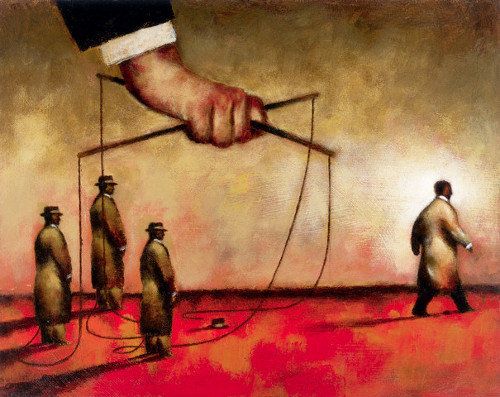
Please understand that I’m not dancing at the end of some puppeteer’s strings. I’m just a husband who is looking out for his wife. I suppose my methods of doing so seem strange or unusual, but even for an intermarried couple, we can be strange and unusual. She’s not a stereotypical Jew (if there is such a thing) and I certainly am a very odd Christian.

But that’s who I am and who I choose to be and why I’ve made the choices I’ve made. I don’t think these are bad choices and in fact, I think there is a lot to be gained by we Christians coming alongside the Jewish people, even as I am “alongside” my wife, and being co-heirs with Israel, just as my wife and I share our lives together.

I was discussing some of this with my friend Gene on his blog Daily Minyan, and at one point, I made this observation in response to one of his comments:

When I was at the FFOZ Shavuot conference last spring, I met a young Jewish woman named Jordan. She is a gifted scholar and during one of her presentations at the conference, she referred to the Gentiles who supported the spiritual and national redemption of Israel as the crown jewels of the nations. Your comment reminded me of that and the fact that we Gentile disciples of the Master do have a wonderful gift from God, and He has planned out a terrific future for us.

Jordan’s teaching meant a lot to me, not just because it presented such a wonderfully unified vision of a Christian/Jewish “partnership” in the Kingdom of God, but because it so amazingly resonated with how I see my marriage. If I could give everyone reading this blog a gift, it would be to see the relationship between Christianity (that is, all non-Jews who are disciples of Jesus, regardless of denominational or congregational affilation) and Israel the way I see myself and my wife together. If we Jewish and Christian disciples of Jesus could achieve that level of affection and intimacy toward each other, we would be fulfilling the words of the Master.

A new commandment I give to you, that you love one another: just as I have loved you, you also are to love one another. By this all people will know that you are my disciples, if you have love for one another.” –John 13:34-35 (ESV)

Love and peace.

Chukat: The Chutzpah of Entering Fire

This is the Torah (law): A man who dies in a tent…

Numbers 19:14

The Torah is only acquired by those who kill themselves for it in the tents of study.

-The Zohar

It happened in the winter of 1798 or 1799, when Rabbi Menachem Mendel of Lubavitch was a child of eight or nine. Every Friday night Rabbi Schneur Zalman of Liadi would deliver a discourse of chassidic teaching to a select group of disciples. Little Mendel begged to be allowed in, but his grandfather refused.

The dwelling of Rabbi Schneur Zalman consisted of two two-room buildings, joined by a connecting passageway. In one of the wings, a large wood-burning stove, used for heating and occasionally to bake bread, was set in the wall between the two rooms. The stove opened into the outer room, and also protruded into the inner room which served as Rabbi Schneur Zalman’s study.

One Friday night, the Rebbe was delivering his weekly discourse in his study. It was an exceptionally cold night, so a gentile was summoned to heat the oven. For some reason, he found it difficult to push the logs all the way in to the oven, so he built the fire near the opening of the stove. As a result, the outer room soon began to fill with smoke. Once again, he tried to push the burning logs further in, but they wouldn’t budge. The poor man had to start all over again. He put out the fire, pulled out the logs, and peered into the stove to see what was preventing the logs from going in.

His shouts and shrieks summoned the entire household. The session in Rabbi Schneur Zalman’s room was disrupted; those in the second building also came running. Inside the stove lay a young boy.

-Rabbi Yanki Tauber
“The Path of Fire”
Commentary on Torah Portion Chukat
Once Upon a Chasid series
Chabad.org

Chassidic tales are very compelling but it’s impossible to know how much some of them represent actual events. I’ve come to look at these tales as stories that have been crafted to communicate important moral and religious thoughts to a specific audience. Since I’m obviously not part of that audience, it’s rather puzzling that I should be drawn to them at all. Certainly most of my fellow Christians are at best, indifferent to the stories of the Chassidim and prefer moral commentaries from the ancient or current Christian scholars and commentators.

So what’s wrong with me?

I don’t know.

According to Rabbi Eli Touger’s commentary on this Torah Portion:

The term Chukim refers to those mitzvos whose rationale cannot be grasped by human intellect.

I find my own “rationale” for pursuing the writing of a blog focused on not only Jewish, but specifically Chassidic teachings, to be just as difficult to grasp by my intellect. As I’ve said in the past, the content that I discover in Chabad sources talks to me with my metaphors, but it doesn’t make sense that it should. This is not only because I’m not Jewish (and certainly not Orthodox), but that I am not particularly learned either. I should be just as put off by what I’m reading as most people in the church. I have no explanation for why I return to this particular pool daily to drink and seek refreshment.

But then not all of my meditations are particularly refreshing.

I mentioned just the other day that we are all seeking out a greater imagination, particularly when our own well becomes dry. I’ve also said that there are times when I feel as if I’m in a wilderness waiting for God to do something, but in truth, it is God who waits in the desert for me. Like a dunce in the corner of the classroom, I may have asked God too many stupid questions but I just can’t figure out how else to talk to Him.

But it’s not just me and God. If it were, I suppose life wouldn’t seem so complicated. Being married to the girl with the Jewish soul has taught me that Judaism isn’t really accessible to me, but then Christianity isn’t exactly an open door, either. I call myself a Christian as a matter of intellectual honesty, but I’m the weirdest Christian I know. If I ever entered a church and actually said what I really think, feel, and believe in a completely unfiltered manner, I’d most likely get thrown out on my ear.

I’ve talked about “not fitting in” before and I suppose this missive is just the latest incarnation of that personal state. Judaism is, by definition, community and in theory, so is Christianity (though “salvation” is personal and not corporate) but I’ve gotten just too “strange” to fit into anybody’s community, at least for more than a tiny march of days. Not only that, but I have to consider how my joining any particular community would affect my family. My being married to a Jewish woman, and being dedicated to ensuring the safety of her being a Jew takes an obvious toll on my being a Christian. She can tolerate my meeting with a couple of guys once a week, but church would be pushing the envelope a little too hard…for the both of us.

So I have a mystery and no answers. While I share my perspectives with the Internet, it’s a wholly impersonal environment. People respond to me, but it’s “virtual” and only on rare and brief occasions does the virtual transcend into reality.

I know what I’m writing has virtually no connection to Chukat, but this is who I am and where I am right now. How about we finish the story as told by Rabbi Tauber and see what turns up.

A small lamp was the only source of light in the smoke-filled room, so it took some time until the child was identified as the Rebbe’s grandson, little Menachem Mendel.

For some weeks now, the child had discovered that he could hear his grandfather’s words through the thin wall of the stove. Every Friday night he would clamber deep into the large stove, and listen to the profound and lofty words of the Rebbe’s teachings. And now, because of the bitter cold, his listening post had been discovered.

Rabbi Schneur Zalman’s daughter-in-law, Rebbetzin Sheina, who was present at the time, related:

“When they pulled the child out of the stove, he was paralyzed with fright. My mother-in-law, Rebbetzin Sterna, cried to my father-in-law, the Rebbe: ‘See what could of happened! A tragedy! Strangers you allow to enter, but when your own child begged you, you wouldn’t let him in!’ Father-in-law replied: ‘Sha, sha. Moses reached Mount Sinai only by beholding fire – only then did he merit that the Torah be given through him. Torah is acquired only through self-sacrifice.’ “

One way to deal with not fitting in is to have the chutzpah to fit in anyway. In little Menachem Mendel’s case, he fit himself into a stove, but unfortunately, he didn’t anticipate that on a cold night, he could end up being part of the fuel used to warm the room. Rabbi Tauber relates a childish error in judgment to the willingness to die for the sake of Torah learning, but clearly in the real world, the little boy wasn’t willing to burn nor were his elders willing to incinerate him for the Torah’s sake. The real lesson (at least according to the Rebbetzin, since the Rebbe disagreed) is that if someone wants in badly enough and they show a willingness to make sacrifices, you should let them in.

That doesn’t really work in my case since I’ll never be Jewish enough (or rather, I’ll never be a Jew at all) to learn as a Jew and I’ll never be Christian enough to fit into the church culture. I don’t know what I’d have to be to fit in with my wife religiously. I don’t think there is an answer to that one except, as I said before, to be a “low profile Christian at home.”

But what about God? I guess I can be a Christian at home in terms of behaviorally displaying my morals and ethics without being overtly “Christian” (openly praying or invoking Christ’s name, for example). In this case, chutzpah won’t get me anywhere except in hot water, so I’ve nowhere else to go except into the privacy of my own thoughts, which gets turned into very public blog posts…and to turn to God.

I’m seeking out a greater imagination, but I’m putting some pretty harsh limits on it.

Solomon couldn’t comprehend the mitzvah of the Red Heifer and I can’t comprehend my own existence. If God didn’t require that Solomon understand, I guess I don’t have to, either. I can only continue living and to see what happens next.

The irony is that I don’t know what to do, and yet I feel as if God is waiting for me to make the next move. I guess that’s what faith is…acknowledging God and proceeding forward, even when it doesn’t make sense, for what alternative do we have?

Today, if you hear his voice,
do not harden your hearts, as at Meribah,
as on the day at Massah in the wilderness,
when your fathers put me to the test
and put me to the proof, though they had seen my work.
For forty years I loathed that generation
and said, “They are a people who go astray in their heart,
and they have not known my ways.”
Therefore I swore in my wrath,
“They shall not enter my rest.” –Psalm 95:7-11 (ESV)

Good Shabbos.


Being Married to the Girl with the Jewish Soul

“To get to the point, our daughter has informed us that she has fallen in love with a non-Jew, and that they intend to marry. We have tried everything to dissuade her, but our arguments, appeals, threats and tears have all been to no avail. She now refuses to discuss the matter with us at all, and has moved out of our home. Rabbi! You are our only hope! Perhaps you can reach her; perhaps you can impress upon her the gravity of the betrayal against her people, her parents and her own identity in what she intends to do!”

“Would she agree to meet with me?” I asked.

“If she knew that we had spoken to you, she’d refuse.”

“Then I’ll go speak to her on my own.”

I took her address from her parents, and rang her bell that very evening. She was visibly annoyed to learn of my mission, but too well-mannered not to invite me in. We ended up speaking for several hours. She listened politely, and promised to consider everything I said, but I came away with the feeling that I had had little effect on her decision.

For several days I pondered the matter, trying to think of what might possibly be done to prevent the loss of a Jewish soul.

-Aaron Dov Halprin
“A Jew in Brooklyn”
from “The Life and Teachings of Rabbi Menachem M. Schneerson”
Translated from the Hebrew by Yanki Tauber
Chabad.org

The loss of a Jewish soul.

Derek Leman recently posted a link to a discussion “between Messianic Jew David Brickner and John Piper” concerning “supersessionism.” From a supersessionist Christian point of view, the only way for a Jewish person to become reconciled to God and the Jewish Messiah is to forfeit his or her Jewish soul.

The loss of a Jewish soul.

Is that really what the God of Abraham, Isaac, and Jacob would want?

I know Christians who would answer “yes” so fast that it would make my head spin. But then you see, I have a Jewish wife. She is a Jewish soul.

I’m not going to go into the whole “is she saved or not” argument, which is probably way over my head (though I frequently wade into waters that are way over my head). Of course, it would gladden my heart if she would come to know, or at least be re-acquainted with (as she was in years past) the Jewish Messiah, but in her view of Judaism, which is not unlike that of the Chabad, a Jew does not believe the “Messiah of the goyim” is the Jewish Moshiach.

The local Rabbi consults the Rebbe and he presents a solution. The solution to the problem of the Jewish girl who intended to marry a non-Jew was to tell her that there was a Jew in Brooklyn who was deeply troubled and could not sleep at night because of her intentions. The Jew (whether this story is true or not, I have no idea) was named “Rabbi Menachem Mendel Schneerson, known as the Lubavitcher Rebbe.” Although the girl lived in Brazil and had never met the Rebbe or even seen a picture of him, when the local Rabbi showed her a photo of the Rebbe, she exclaimed, “this man has been appearing in my dreams and imploring me not to abandon my people.”

The story ends without telling us what the girl does, but presumably, she breaks off her engagement to the non-Jewish fellow and returns to her family. Not very much like the story between me and my wife, but then we were married for many years before she became determined to enter into the Jewish community and decided that a Jew would never believe that Jesus was the Messiah.

I’ve been pondering this story for several days but only read the following tale just a few minutes ago (as I write this):

Rabbi Zalman Serebryanski, a senior chassid from Russia and dean of the Lubavitch Rabbinical College in Melbourne, Australia, once brought a girl to Rabbi Chaim Gutnick. “Please, help this girl convert,” he asked.

Rabbi Gutnick listened to the girl’s story. She lived in Balaclava, and from her youth had felt a strong attraction to Judaism. Whenever she heard stories of the Holocaust, she was deeply touched. She had been reading and studying about Judaism for a long time, and now wanted to convert.

Rabbi Gutnick was moved by her sincerity. Nevertheless, he did not want to perform the conversion. The girl was still living at home with her non-Jewish parents. Would she be able to practice Judaism in her parents’ home? Would her interest continue as she matured into adulthood? Since he could not answer these questions, he decided to let time take its course. If the girl was still interested when she was older, she could convert then.

Rabbi Gutnick’s refusal plunged the girl into deep depression, to the extent that she had to be confined to a hospital. The elder Reb Zalman, stirred by the depth of her feelings, continued to visit her from time to time.

After several weeks, he called Rabbi Gutnick, telling him of the girl’s condition and asking him whether perhaps he would change his mind because of the strength of her feelings.

-Eli and Malka Touger
“The Girl Who Had To Be Jewish”
from “The Life and Teachings of Rabbi Menachem M. Schneerson”
Chabad.org

This appears to be the opposite of the previous story. Here, a non-Jewish girl is pursuing Judaism to the point that she becomes severely depressed when the option is denied her. On the surface, it seemed conversion was impossible because her family was Anglican, but appearances can be deceiving. In this case, the Rebbe is once again consulted and the results are surprising.

Rabbi Gutnick did not receive an immediate reply to his letter. But at a later date, at the end of a reply to another issue, the Rebbe added: “What’s happening with the Jewish girl from Balaclava?”

Rabbi Gutnick was surprised. The girl and Reb Zalman had both made it clear that her family was Anglican!

He and Reb Zalman went to confront the girl’s mother. At first, she continued to insist that she was Anglican, but as the sincerity of the two rabbis impressed her, she broke down and told her story. She had been raised in an Orthodox Jewish home in England. As a young girl, she had rebelled against her parents and abandoned Jewish life entirely, marrying a gentile and moving to Australia. She had not given Judaism a thought since. She loved her daughter, however, and would not oppose her if she wished to live a Jewish life.

Once the girl’s Jewishness was established, Rabbis Serebryanski and Gutnick helped her feel at home in Melbourne’s Lubavitch community. She continued to make progress in her Jewish commitment, and today is a teacher in a Lubavitch school.

But Rabbi Gutnick still had a question: How did the Rebbe know she was Jewish? At his next yechidut (audience with the Rebbe) he mustered the chutzpah to ask.

The Rebbe replied that, at Reb Zalman’s urging, the girl had also written him a letter. “Such a letter,” the Rebbe declared, “could only have been written by a Jewish girl.”

Again, I have no idea if this story is true, but it is compelling, especially to me.

My wife’s mother was Jewish and her father was a non-Jew (both of my in-laws passed away many years ago). My wife’s mother, as a young woman, rejected her family in Boston and her Judaism and walked away from both, about seventy years ago. My mother-in-law met my father-in-law on a blind date and they subsequently married and had five children. At no time did the fact that my mother-in-law was Jewish ever come up in the family.

True, my wife as a child, knew that her maternal aunt and cousin, who lived in Southern California where she grew up, were Jewish, but she never made the connection that her mother was Jewish (and thus, her children) until my wife was a young woman herself.

Of her two sisters and two brothers, only my wife was driven to self-identify as a Jew and decades later, to pursue a life as a Jewish woman.

The girl who had to be Jewish.

These two stories collide because the girl who had to be Jewish married the guy who ended up being Christian.

The thirty years of our marriage haven’t always been easy for one reason or another. I think any couple who has been married for decades will say that there have been trials in their relationship from time to time. It’s not all romance and flowers. But typically, at a foundational level, the couple is united in terms of their basic worldview. If the husband is a Christian, usually so is the wife. If the wife is an atheist, usually so is the husband. You get the idea.

Jewish/non-Jewish interfaith marriages are at an all-time high as far as I understand the statistics, and this is a crisis in the world of Judaism. Particularly Orthodox Jews see the marriage of a Jew to a non-Jew (and especially a Christian) as the loss of a Jewish soul.

There are plenty of books, guides, and advice blogs that address interfaith marriages, but usually the couples being targeted arrive at their wedding day as fully realized Jews and Christians. As far as I know, all interfaith couples at my local Reform/Conservative and Chabad synagogues are Jew/Goy (non-Christian). Some of the non-Jews who have married Jews convert to Judaism. The issues are complex and troublesome but not insurmountable.

A few weeks ago, I was talking to my wife about some of the things that had happened at the First Fruits of Zion (FFOZ) Shavuot conference in Hudson, Wisconsin. One of the issues was having Christians who are already in a church or who would be willing to return to a church, be sort of “messengers” and advocates for a positive relationship with Jewish people within the Christian community.

My wife’s response was something like, “Are you thinking of going back to church?” I wish I could remember her exact words. They could have been, You aren’t thinking of going back to a church, are you?” But I’m not sure. I’m also not sure if the tone of her voice registered any distress or not. It’s hard to tell with her sometimes. She plays her cards “close to the vest,” so to speak.

If we had entered our marriage with her as a fully realized Jew and me as a fully realized Christians (we were agnostics/atheists on our wedding day and for many years afterwards) and if we agreed to still get married, we probably wouldn’t be experiencing what we are today with each other. I’ve asked her about this aspect of our relationship point-blank, but she remains elusive.

As nearly as I can understand my options, the best thing for me to do is to let her be “the girl who has to be Jewish” and for me to be a low profile Christian at home. I don’t think we have a “typical” interfaith marriage, if there is such a thing. I don’t know if she sees my faith as somehow threatening to her, but it isn’t something that she’s comfortable discussing.

PrayingBut I don’t want the world to lose another Jewish soul. Supersessionist Christianity wouldn’t care, and would walk all over her Jewish soul without feeling the slightest pang of guilt or remorse. However, that Jewish soul is my wife. She gave birth to three other Jewish souls who are my children. Like any husband and father, when confronted with a threat to the family, I become defensive and protective. I cannot let their Judaism be extinguished for the sake of someone else’s theology…not even my own.

For I could wish that I myself were accursed and cut off from Christ for the sake of my brothers, my kinsmen according to the flesh. They are Israelites, and to them belong the adoption, the glory, the covenants, the giving of the law, the worship, and the promises. –Romans 9:3-4 (ESV)

Paul was in anguish over his Jewish brothers and sisters who did not understand the blessings of Jesus the Messiah and who would be temporarily “cut off.” He was sincerely willing to become accursed and cut off from his own salvation for the sake of other Jews. It meant that much to him; his Jewish brothers and sisters meant that much to him.

Although I am not a Jew, how much more should my Jewish wife and children mean to me?

Hadassah and the King

The Queen Esther daughter of Abihail wrote, along with Mordechai the Jew, with full authority to ratify this second letter of Purim. Dispatches were sent to all the Jews, to the hundred and twenty-seven provinces of the kingdom of Ahashuerus – [with] words of peace and truth – to establish these days of Purim on their [proper] dates just as Mordechai the Jew and Queen Esther had enjoined them, and as they had confirmed upon themselves and their posterity the matter of the fasts and their lamentations. Esther’s ordinance confirmed these regulations for Purim; and it was recorded in the book.Esther 9:29-32

I love a happy ending, don’t you? With Purim only a few days away, Jews all over the world are getting ready to celebrate one of the most joyous occasions on their annual calendar. As with many Jewish celebrations, there will be plenty of good and sweet things to eat, lots of laughter and happiness and, on this particular occasion, practical jokes, dressing up in costumes, and generally acting silly. What better way to announce to the world your happiness at not being exterminated as a people?

However, there’s another aspect to Purim that isn’t generally mentioned, although it should be obvious to anyone familiar with the story of Queen Esther, or rather Hadassah, and King Ahashuerus. This wonderful victory was accomplished because they were an intermarried couple, a Jew married to a Gentile.

In today’s world there are still plenty of Hamans. Iran is threatening Israel with nuclear attack and Islamic Jihad sends suicide bombers. Skinheads still tattoo themselves with swastikas and synagogues around the world are defaced. Jews are still killed because they are Jews.

Perhaps we now have a glimmer of hope coming from an unlikely place. Intermarriages, which until now have been so troubling, now offer us opportunities and new realities.

Perhaps in all the intermarriages that are happening today, we are acquiring allies for the Jewish people. Perhaps we now have hundreds of thousands of non-Jews who are also committed to the survival of the Jewish people, its customs and teachings, and to raising Jewish children. Perhaps we have fellow travelers who appreciate the richness of our heritage and will step forward to help us combat the hatred that exists. Perhaps we will find it safer to live as Jews.

-Rabbi Geela Rayzel Raphael
“Purim and Intermarriage”
Originally published March 14, 2006 and reprinted February 27, 2012
InterfaithFamily.com

In Judaism, intermarriages are usually thought to contribute to the destruction of the Jewish people, largely through secularization and assimilation, if not downright conversion of the Jewish partner to Christianity. The non-Jewish partner, if not seen as “the enemy” when accompanying his or her Jewish spouse to the synagogue, is often considered with suspicion or maybe just a little anxiety, particularly if the non-Jew is actively Christian. Today, many Evangelical Christian congregations have completely embraced the right of Israel to exist and are strongly attempting to influence American politics in supporting Israel, but that doesn’t mean intermarriage would be welcomed by most Jews because of this.

intermarriageHowever, as Rabbi Raphael pointed out, the Gentile member of an intermarriage can also be seen as an especially close ally because he or she is married to a Jew. To the Gentile spouse, the Jew is no longer an “other” or “outsider.” Jews are family. Up until a few days ago, as an intermarried husband, I hadn’t really considered celebrating Purim in any way except as a remembrance of the victory of the Jews over a moral enemy and against total annihilation. But now there’s something new to commemorate as well. Purim, for me, has become the time of year when it’s OK to celebrate the victories that can be attained through Jewish/Gentile intermarriage, even if this aspect of Purim is never mentioned in the synagogue.

Perhaps the rabbis are afraid that such an admission would amount to implied acquiescence with those who choose to intermarry today — as if an ancient historical precedent affects the decisions individuals make about love, life, and Jewish continuity in today’s secular society.

The Purim story is timeless. That is its strength.

But this timelessness is not a result of a lachrymose approach to Jewish history, in which we see enemies rise up against us time and again, regardless of where we live.

Rather, it is Esther’s relationship to Ahashuerus that catapults the story through the portals of Jewish history.

Esther and Mordechai were heroes, but so was Ahashuerus. The Purim story shows that in the face of Jewish destruction — whether it comes from the outside, as in ancient Persia, or from inside the American Jewish community — intermarriage has the potential to help us rather than destroy us, if we are willing to bring the intermarried into our Jewish family and invite them to cast their lot with our own.

-Rabbi Kerry M. Olitzky
“Purim – story of intermarriage gone right?
Jewish Outreach Institute

This isn’t to say that intermarriage has gained any greater approval in Jewish society lately or that there aren’t about a million trap doors that intermarried/interfaith families can’t fall through, but I’d also like to encourage Jews and Judaism to stop thinking of intermarriage as a road that automatically leads to disaster for the Jewish people. I’d also like to encourage Christians and the church to stop seeing intermarriage as a means of converting the Jewish spouse and children to Christianity and eliminating their Jewish identity, which can be a danger as great as any represented by Haman, may his name be blotted out. Purim is the victory of the successful joining of a Jewish wife and a Gentile husband against the forces that would eliminate all Jews from the face of the earth, a destruction I believe God would never allow.

Hadassah called herself “Esther,” hiding her Jewish heritage for a time, but when it was important, she revealed herself to her husband, the King, risking everything to save all Jews everywhere. By the time of our happy ending, Hadassah didn’t have to stop being a Jew because her husband wasn’t, and her uncle Mordechai the Jew, was elevated to the position of viceroy to King Ahashuerus. For that time in that place, Jews and Gentiles lived together in peace.

May there be peace in all the intermarried families and peace between all of God’s children, Jews and Gentiles. And may the Messiah come soon and in our days.

Purim Sameach.

Saving Israel

Several reasons are given why it is prohibited to record the oral Torah in written form.

Ritva (Gittin 60a) and Ra”n (14a) explain that once something is put into writing, it is subject to being interpreted or misinterpreted according to the viewpoint of the reader. Putting such developed ideas into written form necessarily restricts the concepts into rigid sentences, which is too limiting for their true meaning. When, however, concepts are transmitted orally from rebbe to talmid, they are able to be articulated and explained with emotion and clarity.

The give and take which follows allows a student to ask and pursue that which needs further elucidation. This is essential for the transmission of the mesorah, and this is why the Torah prohibits us to record the oral law in written form.

P’risha (O.C. 49:1) also notes that the written word limits the ideas it represents by the usage of particular phrases and expressions. This leads to subjective interpretation and understanding based upon the author’s choice of words, which may or may not convey the accurate intent of the writer to the reader.

Daf Yomi Digest
Distinctive Insight
“The oral law may not be written down”
Termurah 14

I have to admit, I’ve never comprehended this. It’s always been my understanding that information transmitted orally from one generation from the next was subject to distortion over time. We see this demonstrated in the children’s game where kids sit in a circle and one child whispers a short story to the next. The story is transmitted around the circle, and by the time it gets to the person who told the original story, it (in all likelihood) has significantly changed. Even an individual’s memory of a single even tends to change over time, making eyewitness testimony in court unreliable, although legally, it is still considered one of the more reliable forms of evidence.

Add to all that the fact that during different periods of exile in Jewish history, there were “breaks” in the transmission process when it is very likely that the Oral Law was not transmitted at all. Once such a break occurs, how could this information be recaptured if it has not been preserved in some documented form? Once the last of the old generation dies, if they haven’t passed on the oral law to the next generation, the oral law dies with them.

That’s why we have written information. That’s why we have books, magazines, newspapers, and other physical and virtual documents. So that information can be preserved over time, unaffected by a distortion of transmission or a distortion of memory.

And yet, the above commentary is right in that, once information is nailed down in written form, it becomes accessible to everyone’s individual and subjective interpretation. We see this commonly in Bible interpretation, particularly within the church, where any individual can tell themselves that a scripture means “such and thus” to them, even if it doesn’t carry that meaning for anyone else.

(I say “particularly within the church” because Judaism tends to interpret the Bible based on established tradition rather than an individual’s “feelings.” To be fair though, it is true that Christianity also has traditions that are applied to Bible interpretation, but the “freedom” the average Christian has seems to include the freedom to ignore scholarship, at least on occasion)

Don’t look to me for an answer to this conundrum, because I have none to give you. We know that the Oral Law was finally redacted around 200 CE because of the fear that it would be lost due to the Jewish exile from Israel, and so we have a rich body of interpretation and commentary on Jewish Law that is with us to this day.

But in studying this topic in today’s Daf and the original reasons that documenting the Oral Law was forbidden, I did come across this.

Yefei To’ar (to Shemos Rabba 47:1) explains, based upon the Midrash, that if the oral law would be written there would be a risk that the gentiles would take our law and copy it for themselves. They would implement many of the aspects of our system of life, and the clear and obvious differences between the Jews and the non-Jews would be less apparent, causing many Jews to blend into the non- Jewish society.

Most Christians reading this quote will find it rather a strange concern for the Jewish sages to have, since one of the foundations upon which Christian faith is built is on the destruction of Jewish Law and it being wholly replaced by the grace of Christ. In fact, in the long history of the Christian church, most church theologians, scholars, and clergy have gone out of their way to avoid any type of practice of anything that looks like Judaism in worship or belief. Christians are not only completely uninterested in copying Jewish law, they actively disdain it.

(OK, this is overly simplistic and there are a number of parallelisms historically between Christianity and Judaism, but for the sake of this “mediation,” let’s assume that the schism between Jewish and Christian thought, faith, and practice is absolute)

But in the here and now, we have a glaring exception. Messianic Judaism.

To be more accurate, there’s a branch of Messianic Judaism called “One Law” that states Gentiles who are “grafted in” to the root of Israel are also grafted in to the full “yoke of Torah” such that, there is no distinction between Jewish and “Christian” practice of the Law. In essence, the dire worry of the sages has come to past. The Gentiles have taken the Law and copied it for themselves. Let’s read part of the quote again that predicts the result:

They would implement many of the aspects of our system of life, and the clear and obvious differences between the Jews and the non-Jews would be less apparent, causing many Jews to blend into the non- Jewish society.

This is precisely the concern many ethnic, cultural, and religious Jews in the Messianic movement have, and it seems the concerns of the sages are well justified.

But wait.

It’s not the Oral Law that is being copied by the Gentiles, it’s the written Torah. The Gentiles in “the movement” have about as much interest in the Oral Law as their traditional Christian counterparts. So it seems that documenting the oral traditions really hasn’t yielded the feared result.

But the core of the concern remains. Gentiles are copying Jews and the distinction between Jews and Christians is eroding. Some Jews who have only a tenuous understanding of what Judaism actually is, are gravitating to One Law congregations rather than pursuing more significantly Jewish communities (Again, to be fair, many One Law Jews have been raised in Jewish homes and have a very strong Jewish identity). Many Gentiles who have become disillusioned with the church are flocking to One Law congregations in droves, believing they are embracing their “lost” Jewish roots and in practice, becoming “pseudo-Jews.” It doesn’t matter then, whether the Oral Law was written down or not, since the written portion of Torah was sufficient to produce a collection of Gentiles who, for all intents, believe they are “spiritual Jews,” and who have adopted many of the Jewish religious practices and traditions.

Praying with tefillin(It should be noted here that many non-Jewish One Law practitioners actually do adhere to some of the Oral Law without realizing it, since the traditions involving how to put on a tallit gadol, lay tefillin, perform a blessing before a meal, conduct a Torah service, and many other worship activities, are rooted in the Oral Law rather than in written Torah. Some of the prayers in the siddur originate in the Zohar, thus even small portions of Kabbalah are unknowingly included in One Law practice)

The irony is that, in utilizing the written but not Oral Law of the Jews, One Law Gentiles fulfill the concern of the sages which has lead to…

…a subjective interpretation and understanding based upon the author’s choice of words, which may or may not convey the accurate intent of the writer to the reader.

Modern Judaism believes that the written Torah, and the intent of the author’s choice of words, cannot be accurately understood unless seen through the lens of the oral Torah. In disregarding the oral traditions and rulings, the Jews and Gentiles in One Law may be falling into the trap that so concerned the ancient sages. Of course, there are branches of Judaism that historically have rejected the Oral Law, such as the Sadducees and Essenes, but unlike the Pharisaic tradition, they did not survive into modern times. The Kararites have survived and currently exist, but they are the only Jewish sect I’m aware of, that does not, in some manner or fashion, recognize the Oral Law.

(It is true that between Reform, Conservative, and Orthodox Judaism, there are differing levels of adherence to Oral Law, but none of these branches does away with the it altogether).

Usually, in discussions like this one, the primary concern presented is Gentile “misuse” or “misapplication” of Jewish Law, which I’ve certainly addressed, but the Story Off the Daf for Temurah 14 illustrates another problem.

It is tragic that so many Jews have fallen away from Torah observance in the modern period. Immigration to America—the “Goldeneh Medinah” —played a large role in a historic shift away from tradition. The vast majority of those who arrived here from “der alter heim,” the “old country,” fell away from observance. At a superficial glance, this seems a bit hard to fathom. Throughout our long past, the Jewish People faced so many obstacles, a multitude of decrees forbidding Torah, which did not deter us at all. What was it about America, and the rest of the free world, that had such a detrimental effect on Torah and mitzvos?

Perhaps we can understand the solution to this puzzle in light of how the Chofetz Chaim, zt”l, explains a statement on today’s daf. “In Temurah 14 we find that it is better for the Torah to be disrupted then forgotten. When various parties rise up and block us from learning Torah, the situation is not so spiritually dangerous as one might have thought. When they chase after people who learn, usually we find a solution. Jews learn in caves, attics and cellars, and Torah is preserved.

“A far worse situation is when Jews forget the Torah—when it is abandoned and considered unimportant. Then, learning Torah is something that Jews simply do not aspire to at all. In such circumstances, there is a vast spiritual danger.

“To understand the true state of a Jew without Torah let us consider a person who is completely paralyzed. Just as such a person is sadly unaware of what the senses of a normal person would perceive—since he is completely unfeeling—the same is true of those who have no feel for the value of Torah.”

My wife was raised in an intermarried family. Her mother was Jewish and her father, raised as a Christian Scientist, had left the faith and was non-religious. Her mother also had left religious, and for the most part, cultural Judaism to such a degree that my wife didn’t even realize that she was Jewish until early adulthood.

After my wife and I converted to Christianity some fifteen years ago or so, her first sustained exposure to “Judaism” was via the One Law congregation we started to attend. If she had stayed there, she more than likely would have continued her faith in Jesus. However, she wouldn’t actually have understood what it is to be a Jew, since the congregational leader and most of the board of elders were not Jewish. Even those Jews who participated in the congregation back then, had not been raised in cultural and religious Jewish homes.

But the drive in her to understand what it is to be a Jew would not let go, and she eventually gravitated to first the Reform, and then the Chabad synagogues. There, she established herself among other Jews and enjoyed the full measure of participation in a completely realized ethnic, cultural, and religious Jewish community.

But the cost was her faith in Jesus.

What would have made a difference? I’m not sure anything would have. I’m not some sort of dictator in the home, and I cannot simply tell my wife where to go, how to feel, and believe. I’m not going to tell her she must embrace Jesus as the Messiah. I believe each human being negotiates his or her own relationship with God and no one can act as a go-between. If, perhaps, we had a congregation available that offered a fully Jewish community and true Jewish worship of the Jewish Messiah, maybe…maybe it would have made a difference. Maybe my wife could have securely explored her Judaism while preserving her faith in Jesus. But we don’t live in a world of “what ifs”. We live in a world of completed actions and what is done, is done.

I know that my friends in the One Law movement (who will no doubt be upset at today’s “meditation”) will tell me that if she had stayed in One Law, she could have lived a completely Jewish lifestyle and a continued to be believer, but I know that congregation well. I love the people who attend and who lead, and they are sincere in their faith and wonderful disciples of the Master…but it’s not a Jewish congregation. The men may wear kippot and don tallitot in prayer, they may use siddurim, and call the Master, “Yeshua,” but the vast, vast majority of them are Gentiles, and most of the Jews weren’t raised within Judaism.

tallit-prayerSo should I raise Judaism above the Messiah? As Paul might put it, “heaven forbid.” But I can’t separate a Jew from the Jewish worship of the Jewish Messiah, either. I cannot demand that a Jew, in order to maintain faith in the Moshiach, water down or delete their Jewish identity in any aspect. 2,000 years of history have created the illusion that there must be a separation between Judaism and Jesus and sadly, that separation is being maintained, not only by traditional Judaism and traditional Christianity, but by (hold on to your hats) the One Law expression of the Messianic movement. For in removing the Oral Law and traditions, which I’ve said before have been the only things that preserved Jewish cultural and religious existence in post-Second Temple times, they have removed almost everything that comprises historic and modern Judaism, and that tells a Jew what it is to be a Jew.

(I’m not making this up. For an excellent illustration of the meaning of Oral Law, tradition, and Talmud to the Jewish lifestyle, read Rabbi Daniel Gordis’ book God Was Not in the Fire)

I know I’m going to be criticized for yet another one of my opinions, but like the proverbial baseball umpire, “I calls ’em as I sees ’em.” I continue to be grieved that my wife no longer recognizes Jesus Christ as the “hidden” Messiah who will one day be revealed to Israel, but I cannot behave toward her as have countless generations of Christians across the long march of history, and demand that she stop being Jewish, even in the smallest detail, for the sake of worshiping a Messiah most of Judaism disregards. I do however, continue to pray that this is not the end of her story or the final destination of her path, and that there is a milepost up ahead, or an unseen bend in the trail, where she will one day be reunited with the “Maggid of Natzaret.”

Lest you be wise in your own sight, I do not want you to be unaware of this mystery, brothers: a partial hardening has come upon Israel, until the fullness of the Gentiles has come in. And in this way all Israel will be saved, as it is written, “The Deliverer will come from Zion,he will banish ungodliness from Jacob”; “and this will be my covenant with them when I take away their sins.” –Romans 11:25-27 (ESV)

Learning Acceptance

Yeshua’s sacrifice is continually before the Father. He is the lamb continually on the altar before the throne. He is the “the Lamb of God” whose atoning sacrifice for sin is continually before the Father. Thus the writer of Hebrews states: “Nor was it that He would offer Himself often. … Otherwise, He would have needed to suffer often since the foundation of the world; but now once at the consummation of the ages He has been manifested to put away sin by the sacrifice of Himself.” (Hebrews 9:25-26)

“The Daily Continual Burnt Offering”
from the Commentary on Torah Portion Tetzaveh
First Fruits of Zion

For Christ has entered, not into holy places made with hands, which are copies of the true things, but into heaven itself, now to appear in the presence of God on our behalf.  Nor was it to offer himself repeatedly, as the high priest enters the holy places every year with blood not his own, for then he would have had to suffer repeatedly since the foundation of the world.Hebrews 9:24-26 (ESV)

I must confess that I’m not entirely sure how to compare the continual burnt offering we see described in Exodus 29:38-42 with this passage from Hebrews 9. It is, in some sense, almost comforting to think of Jesus has my continue “sacrifice” for my continually struggling life of faith, with all its rises and declines, but the writer of Hebrews is clear that Jesus was only sacrificed once, not continually. But then, it wouldn’t be the first time I’ve missed something in the Bible that seems incredibly obvious to others.

I mentioned yesterday that I feel as if I’m waiting in a minefield for God’s next move, since I’m afraid to make that move on my own. OK, I’m being overly dramatic, but this blog is about how I am processing my own faith experience on a day-by-day basis, so what you read is what I’m going through more or less continually, like a sacrifice on the fire. I’m waiting with God and waiting for God but sometimes I just get tired of waiting. God’s timing is long and even infinite, but certainly he knows we short-lived mortals tend to live by the clock and not by a millennium-long calendar. So I’m waiting and waiting, but I’m also thinking and processing and experiencing.

I’m reminded of how nothing is perfect and that I’m shifting from Plan A to Plan B. It occurs to me as I recall my conversation with my wife, that I’ve been holding her responsible for something that has nothing to do with her: my faith. At least in Christianity, each person negotiates their own relationship with God. I suspect the same is true in Judaism but I can only speak from my own point of view. I’ve also been blaming synagogues, and churches, and congregations for not being what I want or need them to be, but that’s not their responsibility, either. God doesn’t become different from who He is because of me, so why should the world of religion. I can see I’ve been unreasonable.

So now that I’ve taken these failed assumptions apart, I need to put the pieces of my puzzle back together in order to see if it makes any sort of map by which I can navigate my course. I think there’s a map in here somewhere, but I’m not very encouraged as to where the trail seems to be leading.

It would be too difficult to pull together all of the different conversations I’ve had on my blog, on other people’s blogs, in various emails, and elsewhere on the web, that make up the pieces of the map, but as it stands now…right now, I need to be who I am all by myself as a person of faith and let that be the primary focus. Who my wife is, or my children, or who anyone else is in their faith and their identity cannot be the lens that colors my perception of who I’m supposed to be. I’m an intermarried Christian man, but my faith has to stand alone or it doesn’t stand at all.

So if I re-enter a Christian religious context, it won’t be a Christian man expressing his faith in relation to a Jewish woman expressing her faith elsewhere, it will be as a religious Christian man in relation to God and God alone. But what does that mean in a practical, “one step at a time” sense?

Barring some unforeseen event, I am probably going to keep exploring who and what I am becoming in my life of faith. Would going back to a church at this point make sense? I don’t know. If my wife doesn’t understand why I would want to be a Christian, or even if she doesn’t understand why I would want a spiritual life at all, I’m not sure the church would understand very much about me, either. As each day, week, and month progresses, as far as our “identities” go, we continue to spiral away from each other, spinning in wildly different directions. I suppose I have to face that and not let it drive me from searching for the person who God wants me to be.

So what if? So what if I just did this alone? I mean, I’m continually reducing my choices down from many to few, and being alone in a life of faith is one choice that has always been in front of me. It doesn’t make sense in terms of the Christian and Jewish templates which both describe social and corporate gatherings and worship, but maybe this is the equivalent of being stranded on a deserted island with nothing but a Bible to read. Just me, the book, and God.

I’ve been criticized before about my incessant complaining regarding lack of fellowship, so maybe it’s time to stop complaining and just to accept the facts about my existence. I’m not dying or in chronic pain. I haven’t stepped on one of those metaphorical landmines I wrote about yesterday and blown a leg off. According to the classic five stages of grief, the final stage, after denial, anger, bargaining, and depression, is acceptance. I don’t know if what I’ve been experiencing can rightly be called “grief” or if I’ve experienced some sort of loss in order to justify a sense of grief, but what if I just skip ahead to “acceptance” and be done with it?

Supposedly, in the world of grieving, “acceptance” isn’t the same thing as being “OK” with the loss. It’s just accepting the reality of the situation. I hate waiting and I’d much rather “cut to the chase,” so to speak. None of the worlds I’ve been exploring are really “home.” I’m not Jewish so I don’t actually belong to a Jewish world. Although I call myself a Christian, I really don’t belong in church singing “Onward Christian Soldier” or jumping up and down in response to the “worship team’s” pep rally presentation as if I were a hyperactive jack rabbit (I was in a church that did that on exactly one occasion and couldn’t get out of there fast enough).

I’m not saying that I’m walling myself off, and when or if God decides to offer me an opportunity to share who I am with others, I will go ahead and jump in, but in the meantime, I can’t wait on pins and needles. I’ve been kvetching about this far too long, and I’m sure you’re getting just as tired of it as I am.

Dr. Michael Schiffman recently said on his blog:

People who are always upset, will always be upset. It’s just a matter of time before they are upset over the next “issue.” We are supposed to live our lives in tranquility, not in a state of constant crisis. Sha’ul wrote in Romans 12:18, “If it is possible, as much as depends on you, live peaceably with all men.” If we are always looking for an argument, always wearing our emotions on our sleeves, we are not living peaceably. It’s an issue of maturity.

Anyone who’s been reading my “meditations” for more than a few days knows that I don’t exist in some otherworldly sense tranquility, and I’ve said more than once that I wear my heart on my sleeve here on this blog. I guess I always will as long as I continue to need to write and allow a venue such as this one to exist. But that doesn’t mean I have to exist suspended between one decision and the next or between one heartbeat and the next. I need to remove myself from suspension and begin to move.

So, until “my ship comes in,” if it ever comes in, I’ll be the guy on the deserted island with a Bible reading and praying and walking with God. Jesus will be the offering continually being burned before the throne of God for me, and for who knows how many others like me. Or, his offering of himself is over and done with as far as me and everyone else like me is concerned. But I’m also done. I’m done scanning the horizon with my telescope every hour on the hour for some sign of “rescue.” A “ship” may come today, tomorrow, or never, but I can’t get on with my life as long as I think something is still on hold. I’m done waiting. I can’t make anything change and in fact, those things that continue to change around me, I have no control over. I might as well face the fact that things are as they are and proceed as best I can by letting go of some of the things that drive me.

The sound of the wind through the trees is my companion and the rising and setting of the Sun mark the passing of my days. I’ll read, and study, and pray, and live, and time will pass. Whatever comes will come. But I’m not going to try and make it turn into something anymore.

There are no plans. There are only nights and days. Let God do as He will.