Tag Archives: Israel

Gratitude

gratitudeAs an exercise, make a list of the ideas you regularly espouse, along with the original sources you heard them from. Think of people who gave you wisdom for living. Did a friend set you straight on something? Your brother saved you from doing some stupid things? An employer gave you good career advice?

Acknowledge that you received the gift. If someone took the blinders off your eyes, it’s fantastic, it’s a different life. Say to yourself: “I am now aware of something very important that I wasn’t paying attention to.” Say it out loud. That alone will make you feel genuine appreciation.

-Rabbi Noah Weinberg
“Way #50: Rewards of Gratitude”
Aish.com

If you ask a Christian who they are grateful to more than anyone, you’ll probably hear “Jesus” nine times out of ten, and rightfully so. Without the grace of the Jewish Messiah and our faith in God through him, we people among the nations would have no connection to the Almighty and His mercy. But Jesus doesn’t exist in isolation. He’s the Jewish Messiah, which Christians sometimes miss. Even when we know that intellectually, we don’t always fully appreciate what it means that he is the Jewish Messiah, the promised Savior of Israel.

I’ve probably said all this before, but in reading Rabbi Weinberg’s commentary, the topic resurfaced for me. Some truths are best restated periodically just to make sure they stay fresh in everyone’s mind.

Make a list of society’s treasures – monotheism, justice for all, universal education, dignity of the individual, preciousness of life. These core values of the civilized world are all from the Torah.

Before the Torah was given, people built their lives on a subjective concept of right and wrong. Then at Mount Sinai, human history underwent a dynamic shift. People understood that there is one God who has moral expectations. You can’t just live as you please; there is a higher authority you are accountable to.

Despite the fact that Jews were never more than a tiny fraction of the world’s population, these ideas became the basis for the civilized world. For example, do you know the source of the idea “Love your neighbor as yourself”?

It’s in the Five Books of Moses – Leviticus 19:18.

The Jewish people are an eminent firm, 3,500 years old. We are no fly-by-night. The world uses our products under different brand names and takes it for granted. Consider what humanity owes to the Jewish people.

If you are living with Jewish wisdom, know it, quote it, and give credit.

There is nothing in the teachings of Jesus that isn’t “Jewish wisdom.” All of Christ’s “source material” was the Torah, the Prophets, and the Writings. It’s what he quoted from. It’s what he taught from. It resonated with his Jewish audience because they had been raised on that “source material” all their lives.

Paul taught from that source material too, when teaching Messiah to Jewish and Gentile God-fearing audiences. Acts 13:13-43 is a perfect example of Paul using Jewish history to explain why Yeshua (Jesus) of Nazareth was the promised Messiah and the Jewish people in the synagogue understood and agreed, at least to the point of inviting Paul and Barnabas back to their synagogue in Pisidian Antioch on the following Shabbat to speak more.

Apostle-PaulEven the Gentiles among the Jews understood because they had been exposed each Shabbat to the teachings from the Torah and so had the basic background that allowed them to follow Paul’s arguments. They understood so well in fact, that they invited practically the whole town (of Gentiles) to hear Paul the following week (which caused problems of their own, but that’s another story).

The only time when “Jewish wisdom” broke down was when Paul and Barnabas addressed a wholly pagan Gentile audience who had absolutely no clue about Judaism and Jewish history. In that case (Acts 14:8-18), Paul had to give the crowd a crash course in Judaism 101 just to keep them from worshiping him and Barnabas as Zeus and Hermes respectively.

I say all this as a reminder (in case anyone’s forgotten) that we would have no understanding of Jesus at all unless we at least minimally understood something about “Jewish wisdom” (and we reject this line of education at our own peril).

More than all, give credit to the Almighty. He gave us a brain to understand and appreciate wisdom. Other teachers enlighten us, but the original teacher is God. He implanted within us the intuition to discover all there is to know about living.

God is showering us with gifts all the time. Food, air, eyes, teeth. Life itself. He programmed us with an antenna for wisdom. Nothing is possible without God.

This should be a no brainer, but it’s more common in Jewish prayer to praise God than in Christian prayer. It’s just my opinion, but I think there’s a definite advantage to praying with a Siddur since the blessings within greatly praise God and thank Him for His mercy and bountifulness. It takes us just a little more concentration to praise God without a prayer book, since the human tendency is to ask for what we want and need (which isn’t bad, except if that’s all we do when we pray).

The problem is that we don’t want to be indebted to Him, so we deny the gifts. We refuse to believe that He loves us.

I know I’ll probably get some static for this, but in a nutshell, I think the Rabbi has given us the reason why many people don’t come to faith. We don’t want to be indebted to Him. We’re afraid of what that means for us, what we’ll have to change about us, how we won’t fit in to the culture, that we’ll realize we aren’t perfect as self-contained human beings.

It’s probably why even a lot of religious people don’t want to thank God, at least not anywhere near as much as He deserves (and face it, He deserves infinite thanks). That may also be why Christians don’t want to thank the Jewish people and Judaism for what we have. We’re afraid of what it will mean. We’re afraid that Jewish people are still part of God’s plan, that He still loves them, maybe more than the Gentile believers. We’re afraid that Israel will be placed at the head of the nations instead of America or Canada or whatever.

raining1We want to be special because we’re Christians, including our particular denomination, branch, or sect. If Jewish Israel was chosen first, they might still be first or at least very special in God’s eyes. What does that do to we Gentiles who are called by His Name (does that make us jealous and covetous of Jews)?

God loving Israel probably does nothing to us except make us just as loved by God as the Jewish people, but also different from them, like two brothers of a King, both loved but both different.

And God loves even those who reject Him and do not want to be called “sons.”

…your Father who is in heaven; for He causes His sun to rise on the evil and the good, and sends rain on the righteous and the unrighteous.

Matthew 5:45 (NASB)

There is no way for the unjust and the unrighteous to acknowledge God and thank Him, but we who are disciples of the Jewish Messiah have no such excuse.

In order to connect with God, you have to learn to appreciate all the good He has done for you. That means giving up the illusion that you alone are responsible for your achievements. It’s all a gift from God. Just as every stroke of Picasso’s brush has his signature on it, everything in this world has God’s signature on it. We have to learn to appreciate it.

Everything in this world has God’s signature on it. Even those people who do not believe, since all human beings have been created in God’s image. We believers know God’s signature is on us. We agreed to that when we acknowledged Messiah and came to faith through the Jewish King.

They asked Rabbi Schneur Zalman:
“Which is greater: love of G‑d,
or love of your fellow man?”

“Love of your fellow man,” he replied.
“For then you are loving the one that your Beloved loves.”

-Rabbi Tzvi Freeman
“Which is Greater”
Based on letters and talks of the Rebbe, Rabbi M. M. Schneerson
Chabad.org

Rabbi Weinberg’s point is that we should publicly give credit to the source of our blessings. Christians usually have no trouble thanking Jesus for our blessings but as I mentioned, Jesus doesn’t exist apart from his connection to Israel. Messiah descended from Heaven for the lost sheep of Israel. When he returns, he will redeem all Israel and restore her at the head of the nations.

We should also give credit to Israel, to the Torah, to the Prophets, to all the instruments God blessed the Jewish people with, because without Abraham, Isaac, and Jacob, without the twelve sons of Israel, without their descendants, without the Davidic Kings, without the Davidic King, Messiah, we would have nothing and be nothing.

Thank you.
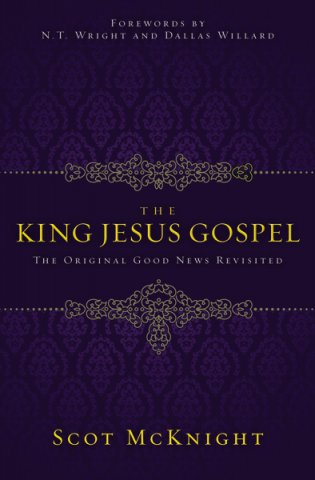
Book Review: The King Jesus Gospel

kjgospelContemporary evangelicals have built a ‘salvation culture’ but not a ‘gospel culture.’ Evangelicals have reduced the gospel to the message of personal salvation. This book makes a plea for us to recover the old gospel as that which is still new and still fresh. The book stands on four arguments: that the gospel is defined by the apostles in 1 Corinthians 15 as the completion of the Story of Israel in the saving Story of Jesus; that the gospel is found in the Four Gospels; that the gospel was preached by Jesus; and that the sermons in the Book of Acts are the best example of gospeling in the New Testament. The King Jesus Gospel ends with practical suggestions about evangelism and about building a gospel culture.

from the description of Scot McKnight’s book
The King Jesus Gospel: The Original Good News Revisited
at Amazon.com

Several months ago, D. Thomas Lancaster suggested this book to me and I was able to insert it into my reading list. I can see why Lancaster made the recommendation and while I generally agree with the core message McKnight is presenting, it seems like he could have made a few improvements (in my humble opinion).

But first things first.

The part I liked about McKnight’s book is that he was recasting the gospel message from one that only contains the message of personal salvation to one that is expanded to include the story of Israel.

In his Foreward to the book, N.T. Wright says:

…according to Scot, and I am convinced he’s right: “the gospel” is the story of Jesus of Nazareth told as the climax of the long story of Israel, which in turn is the story of how the one true God is rescuing the world.

Well, that’s true as far as it goes, but this statement illustrates what I see as one of the unfortunate limits of McKnight’s book. While he is correct in stating that the actual gospel message includes the return of Jesus as King of Israel and redeemer of the world (rather than just saving individuals one person at a time), he seems to end the story of Israel after the resurrection of Christ. The end. Israel’s story shifts to the story of a homogenized Kingdom of God in the Messianic Age.

I hope I’m wrong. I hope that McKnight’s vision of a future Israel just got lost between the lines, so to speak. Part of his main point, which he emphasized over and over again (the book was kind of repetitive) was:

Most evangelism today is obsessed with getting someone to make a decision; the apostles, however, were obsessed with making disciples.

I couldn’t agree more. But again, the story of the good news of Messiah goes much further than making disciples. It’s the story of Jesus as the Messiah, the King, the one who will establish his rule of peace on the Earth. This is part of McKnight’s message as well and again, I totally agree.

McKnight also addressed the question of whether or not Jesus and Paul preached the same gospel and (to me), amazingly, whether or not Jesus preached the gospel at all. I was astonished (I don’t know a great deal about the specific theological mechanics of organized Christianity in its various denominations) to discover some Pastors think it was impossible for Jesus to have preached his own good news about himself.

I replied, “A book about the meaning of gospel.”

“That’s easy,” he said, “justification by faith.” After hearing that quick-and-easy answer, I decided to push further, so I asked him Piper’s question: “Did Jesus preach the gospel?”

His answer made me gulp. “Nope,” he said, “Jesus couldn’t have. No one understood the gospel until Paul. No one could understand the gospel until after the cross and resurrection and Pentecost.” “Not even Jesus?” I asked.

“Nope. Not possible,” he affirmed. I wanted to add an old cheeky line I’ve often used: “Poor Jesus, born on the wrong side of the cross, didn’t get to preach the gospel.”

The above transaction gave me a cold chill. It’s terrifying to imagine that hundreds of thousands (or more) of Christians are attending church services, attending Sunday school, attending mid-week Bible classes, and being taught that Jesus could not possibly have understood the good news about himself. Doesn’t anyone read the Bible anymore?

And He came to Nazareth, where He had been brought up; and as was His custom, He entered the synagogue on the Sabbath, and stood up to read. And the book of the prophet Isaiah was handed to Him. And He opened the book and found the place where it was written,

“The Spirit of the Lord is upon Me,
Because He anointed Me to preach the gospel to the poor.
He has sent Me to proclaim release to the captives,
And recovery of sight to the blind,
To set free those who are oppressed,
To proclaim the favorable year of the Lord.”

And He closed the book, gave it back to the attendant and sat down; and the eyes of all in the synagogue were fixed on Him. And He began to say to them, “Today this Scripture has been fulfilled in your hearing.”

Luke 4:16-21 (NASB)

scot-mcknight1That’s pretty much Jesus preaching the good news of the Messiah in a nutshell. It was apparently missed by the above-mentioned Pastor because the gospel message to him is only “justification by faith.” It has nothing to do with Israel, King Messiah, or the national redemption of Israel at all.

I want to make clear at this point that I do believe Jesus does provide the Gentile and the Jewish person salvation from sins on a personal level, but like McKnight, I believe it goes so much further. The gospel message isn’t just about the plan of salvation. It’s the good news that Israel is to be liberated, the exiled Jewish people will be restored to their Land, and national Israel will be elevated to the head of the nations in the physical Kingdom of God.

But you don’t get this in most churches.

…the gospel has lost its edge and its meaning. Nothing proves this more than the near total ignorance of many Christians today of the Old Testament Story.

This is true. It’s impossible to comprehend the full meaning of the Apostolic Writings without a very good grasp of the Torah, Prophets and Writings (Old Testament).

McKnight spends a lot of time saying that to understand the gospel message, you have to start in 1 Corinthians 15. Frankly, that would never have occurred to me as a natural starting point, but then again, I’m not a Bible scholar or a theologian. In fact, to get a good summary of the meaning of the gospel, all you have to do is watch television for about thirty minutes.

Oh not just any show.

I wrote a review of the First Fruits of Zion TV series episode The Good News not too long ago. Here’s a description of the episode from the FFOZ TV web site:

Most Christians believe that the gospel message of Jesus is that he died for our sins and if we have faith in him we will be given the gift of eternal life. While certainly this is a major component of the gospel, it is not the whole story. In episode one viewers will learn that the concept of the gospel wasn’t invented by Jesus or the disciples, but rather was prophesied in the Hebrew Scriptures. The “Good News” was the promise of the coming messiah and that he would bring redemption to the children of Israel.

This sounds very similar to some of McKnight’s writing and I suppose it’s possible this book could have been available (it was published in 2011) to the writers of this television episode, but the content between the two isn’t identical.

Two of the problems I had with McKnight’s definition of the gospel message was that the story of Israel seemed to end with the coming of Messiah (which is a common theme in Christianity) and that he seemed to miss the ascendancy of the Nation of Israel as the core of the Kingdom Messiah is to establish on Earth upon his return. He didn’t say why the Messiah’s gospel message was good news to Jewish people. I summarized this good news for Jewish people in my review:

Toby Janicki, Aaron Eby, and the rest of the FFOZ ministry have “solved” the mystery of the gospel and clued us in on the rest of the message: Jesus came to die for our sins and to deliver the promise of everlasting life for all who believe. But, and this is extremely important, as Messiah King, he came to deliver the promise of good news to all of Israel that when he returns, he will release the captives in exile, restore sight to the temporarily blinded, free the oppressed Jewish people, and proclaim freedom for Israel, the year of favor from the Lord.

This is why I think that Luke 4:16-21 is a better summary of the gospel message of Messiah and proof that Messiah knew what the gospel message was and indeed preached it to Israel. Because the good news of Messiah is first and foremost aimed at Israel nationally and at the Jewish people. After all, Jesus said he came for “the lost sheep of Israel” not the “lost sheep of planet Earth.” Also, Paul always went “first to the Jews and also to the Gentiles.” Why? Because the gospel message is most focused on the Jewish people and made the most sense to the Jewish people.

If McKnight had gone that far, I’d have enjoyed his book a lot better. As it was, I think he made a very important point, but he stopped too soon. He also spent too much time going over and over his central point. I get that he wanted to be thorough and I get that often, an important message needs to be repeated so the reader “gets it,” but I “get it.” I just wanted to get more.

But maybe this is why I didn’t get more.

It is sometimes forgotten that “Christ” is the Greek translation of the Hebrew word Messiah. The word Messiah means “anointed King…”

ffoz-teaching-teamI wasn’t surprised when I saw something so elemental in McKnight’s book. I’d gotten past my surprise after writing my review of the FFOZ TV episode Messiah. Exactly the same point was made during this 30-minute episode: the fact that “Christ” is a word that contains a lot more information and meaning than just the “last name” of Jesus.

Like the FFOZ TV show, McKnight is likely writing to the widest possible Christian audience, attempting to tell the largest number of believers that they have been taught a common misconception about the gospel message. After all, if at least some Pastors have adopted a limited vision of the gospel, how can the people who sit in the pews every Sunday be held accountable for not knowing the wider meaning?

Again, I disagree that Jesus has completed Israel’s story at this juncture. Israel still has a story and it will continue to be central to the good news throughout the Messianic Age and beyond. Israel will be the head of the nations and the people of many nations will stream to the Temple in Jerusalem (Isaiah 2:2, Micah 4:1) in the days of Messiah.

McKnight’s book is readable and educational as far as it goes and I’d recommend it if you want to get out of the traditional rut of gospel equals plan of salvation, period, end of story. But I still wish he’d have taken the story further into the future and presented the Messiah as Israel’s King and his rule on the Throne of David in Jerusalem, his gathering of the exiled Jewish people to himself, and the total redemption of national Israel as well as the people of the nations who are called by his name.

Oh, and this is my 900th blog post on “morning meditations.”

Beyond Tisha B’Av

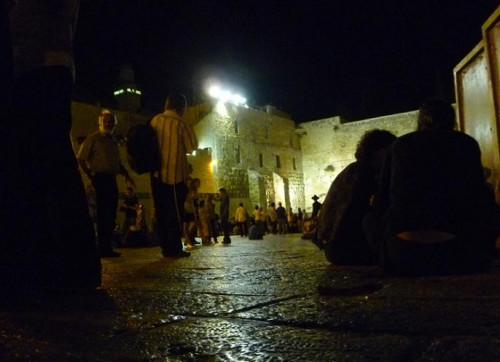
Tisha b'Av at the Kotel 2007In the fourth year of Jehoiakim the son of Josiah, king of Judah, this word came to Jeremiah from the Lord, saying, “Take a scroll and write on it all the words which I have spoken to you concerning Israel and concerning Judah, and concerning all the nations, from the day I first spoke to you, from the days of Josiah, even to this day. Perhaps the house of Judah will hear all the calamity which I plan to bring on them, in order that every man will turn from his evil way; then I will forgive their iniquity and their sin.”

Now in the fifth year of Jehoiakim the son of Josiah, king of Judah, in the ninth month, all the people in Jerusalem and all the people who came from the cities of Judah to Jerusalem proclaimed a fast before the Lord. Then Baruch read from the book the words of Jeremiah in the house of the Lord in the chamber of Gemariah the son of Shaphan the scribe, in the upper court, at the entry of the New Gate of the Lord’s house, to all the people.

Jeremiah 36:1-3, 9-10 (NASB)

For this our heart has become faint, for these things our eyes have grown dim. For Mount Zion, which has become desolate; foxes prowl over it. But You, O G‑d, remain forever; Your throne endures throughout the generations. Why do You forget us forever, forsake us so long? Restore us to You, O G‑d, that we may be restored! Renew our days as of old.

Lamentations 5:17-21 (Tanakh)

This year, the 9th of Av or Tisha B’Av begins at sundown on Monday, July 15th and ends on sundown on Tuesday the 16th. There is no more tragic day in the history of the Jewish people than Tisha B’Av. You can click the link I provided above to read the chronicles of this day of mourning for Israel, but I wanted to provide an additional perspective.

“But when you see Jerusalem surrounded by armies, then recognize that her desolation is near. Then those who are in Judea must flee to the mountains, and those who are in the midst of the city must leave, and those who are in the country must not enter the city; because these are days of vengeance, so that all things which are written will be fulfilled. Woe to those who are pregnant and to those who are nursing babies in those days; for there will be great distress upon the land and wrath to this people; and they will fall by the edge of the sword, and will be led captive into all the nations; and Jerusalem will be trampled under foot by the Gentiles until the times of the Gentiles are fulfilled.

Luke 21:20-24 (NASB)

When the Romans laid siege upon Jerusalem, when they breached her walls, when they utterly destroyed the Holy Temple, how many remembered these words Jesus spoke some forty years before? How many bewailed the tremendous loss, even as Jews all over the world have mourned for their losses since that time? What does the Kotel mean for millions of Jews today? And of the disciples of the Master who lived in the days of destruction, what happened next?

At its height, the Jerusalem community of disciples numbered around ten thousand. Several thousand of these spent the war years in Pella. Their migration back to Jerusalem probably did not happen all at once…

-D. Thomas Lancaster
from Torah Club Volume 6, Chronicles of the Apostles, pg 1135
read with Torah Portion Devarim
published by First Fruits of Zion

There is a three-week period of preparation for commemorating Tisha B’Av but what happens after the fast is over? Go on with regular life? Prepare for the coming week’s Torah reading? Anticipate the Days of Awe and the return of autumn?

After each tragedy, there is a long period of mourning and slow recovery. In the case of the vast majority of Jews after the destruction of Herod’s Temple, they must have struggled to understand how life could go on? How could they make the sacrifices commanded according to Torah? How could they worship God?

As Jewish history continued to unravel forward in time, almost all of the Jewish people were exiled from their land. Holy Jerusalem was renamed by the Romans “Aeilia Capitolina” as yet another insult to the Jews. Only a tiny remnant of Jewish people clung to life within the borders of Israel. According to Lancaster’s commentary, this included Jewish disciples of the Master.

Jewish disciples of our Master continued to live in Pella and the surrounding area at least into the fourth century. In his fourth-century treatise against heresies, Epiphanius complains about the Nazarene “heresy” which he describes as Jewish believers in Yeshua “who remain wholly Jewish and nothing else.”

-ibid

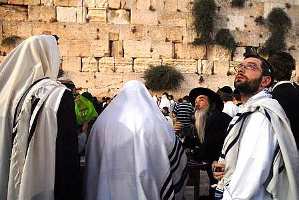
Tisha b'Av at the Kotel 2011Tragedy. Loss. Mourning. Adjustment. Hope.

But much past the fourth century, we must concede that the number of Jewish disciples of Jesus dwindled to few and then none. Like the Temple, Jerusalem, Israel and the Jewish people, Jewish faith in Yeshua of Nazareth as the Messiah went into a long exile and seemed completely lost forever.

But God is gracious. Nearly two years ago, on his blog, Rabbi Joshua Brumbach published a history of Jewish Rabbis who lived during the past several centuries who were also believers, and “who remained wholly Jewish and nothing else.” Both the first and second parts of Rabbis Who Thought For Themselves provide the beginning flickers of illumination after great darkness. Gentile Christianity has flourished in the centuries between the Temple’s destruction and the modern era and Judaism, though suffering greatly, continues to survive and even to thrive in various areas of our world.

But there has always been an enormous disconnect between the two.

That wound is very slowly healing.

In a very real way, Christians and devout Jews are all waiting for the same thing: the coming (or return) of the Jewish Messiah King. Our “visions” of just who is coming (or coming back) and what he will do are quite different, but the Messiah exists as an objective fact, regardless of our beliefs and dreams.

The world herself has been grieving for nearly two-thousand years awaiting the return of the Prince of Peace and the King of Righteousness to stop the bleeding, cease the wars, feed the hungry, and to bring repair and shalom to this broken planet…

…and to her broken people.

Thus said Cyrus king of Persia: Hashem, God of Heaven, has given to me all the kingdoms of the earth, and He has commanded me to build Him a Temple in Jerusalem, which is in Judah. Whoever there is among you of His entire people — may Hashem his God be with him, and let him go up!

2 Chronicles 36:23 (Stone Edition Tanakh)

He who testifies to these things says, “Yes, I am coming quickly.” Amen. Come, Lord Jesus. The grace of the Lord Jesus be with all.

Revelation 22:20-21 (NASB)

May Messiah come soon and in our day, and may he heal the broken and the broken-hearted.

Amen.

What Else Could We Possibly Need?

the-teacher2The unique quality of Mashiach is that he will be humble. Though he will be the ultimate in greatness, for he will teach Torah to the Patriarchs and to Moshe Rabeinu (alav hashalom), still he will be the ultimate in humility and self-nullification, for he will also teach simple folk.

“Today’s Day”
Monday, Menachem Av 1, Rosh Chodesh, 5703
Compiled by the Lubavitcher Rebbe; Translated by Yitschak Meir Kagan
Chabad.org

I agree that through the Abrahamic Covenant we are to understand that the New Covenant is also a way of understanding God’s relations with Gentiles in the coming age. Though not stated directly, when Israel is living the New Covenant promises the nations will be part of expanded Israel (Ephesians 2 language) and the parts of Torah that are for everyone will be the ways the nations follow.

from Derek Leman’s comment to me in his blog post
The New Testament is Not the New Covenant (Updated)

This is about the closest I’ve ever gotten to reblogging someone else’s blog post. I generally prefer to be inspired by the work of others and to add my own commentary, but I couldn’t think of anything to add to what Derek already wrote. He’s offered his audience a nice, neat, concise description of the role the New Testament writings play in the lives of believers and why the written Apostolic Scriptures are not equivalent to the New Covenant as mentioned in Jeremiah 31 (please click the link I’ve provided above to read Derek’s excellent article, including the comments section where Derek responds to Scot McKnight and 2 Corinthians 3:14-18).

This has important implications for Christianity and particularly churches that still cling to the old, outmoded doctrine of supersessionism, which is also sometimes known as replacement theology or fulfillment theology. If Christianity is supposed to replace Judaism in the covenant promises, we need something with which to replace the Law…and it’s not in the NT documentation.

I know what you’re going to say. Grace replaced the Law. Except that isn’t true. Grace is all over the Tanakh (Old Testament) starting with Adam and Eve in Eden and beyond. It was faith and grace that brought Abraham near to God. It was grace that followed Jacob and his children on their journeys and down into Egypt. It was grace that brought Moses close to God and grace that sent Moses down into Egypt to bring up the Children of Israel.

And in spite of all of their failures, it was grace that constantly brought Israel back to God when she strayed after other “lovers” like an unfaithful mate.

It was grace that brought the Messiah down to us from Heaven, the Divine in the form of flesh and blood, to announce the good news of redemption and salvation for Israel and through Israel, even for the people of the nations.

So grace didn’t “replace” the Law. In terms of its function in the life of humanity, it likely preceded the Law, at least in the form of a document, but at Sinai grace and Torah co-existed; two sides to the same coin. In fact, I’ll make a case that the Torah was one of God’s greatest gifts of grace to Israel rather than a puzzle that was always too hard for the Israelites to solve.

The law of the Lord is perfect, restoring the soul;
The testimony of the Lord is sure, making wise the simple.
The precepts of the Lord are right, rejoicing the heart;
The commandment of the Lord is pure, enlightening the eyes.
The fear of the Lord is clean, enduring forever;
The judgments of the Lord are true; they are righteous altogether.
They are more desirable than gold, yes, than much fine gold;
Sweeter also than honey and the drippings of the honeycomb.
Moreover, by them Your servant is warned;
In keeping them there is great reward.

Psalm 19:7-11 (NASB)

Many Christians think God only gave the Law to illustrate how tough it was to keep and to show, by comparison, how easy the yoke of Messiah was to uphold.

But again, that implies replacement, and we don’t see the Messiah bringing a different and better gift. Everything he taught and the entire way he lived was all built on what happened at Sinai. However, if Messiah is the culmination of the promises, what Torah always points to as the model of Holiness for Israel before the Father, then where do the Gentiles come in?

lifting-torahI’ve already answered that question. If you put that together with Derek’s commentary on the Old and New Covenants, you get a fairly complete picture of the history of how God works with human beings and the nature of salvation and redemption. You need only make the Jewish Gospel (part 1) and (part 2) more explicit, and you pretty much have the whole enchilada, so to speak.

How Christians have been taught to read and understand the Bible has missed some very important points and as a result, the church has felt well justified in walking all over Judaism and the Jewish people for many centuries. We are just now coming out of a very dark period and beginning to learn to take seriously the words of Messiah when he said “salvation comes from the Jews” (John 4:22). Gentile believers have not replaced the Jews in the covenant promises nor have we taken them over so that we too must look and act “Jewish” thereby eliminating the Jewish people as distinct and chosen.

It is human nature to want what you don’t have. We always want to acquire more.

A person is both wise and wealthy when you master the art of appreciating what you already have. View all that you have as a personal gift to you from our Father, our King, Creator and Sustainer of the universe. The outcome of mastering this is that you will live a joyous life. (Guaranteed!)

-Rabbi Zelig Pliskin
“Daily Lift #874”
Aish.com

We who were once far away have been brought near by grace through faith, just as Abraham was brought close. As Paul shows us (Galatians 3:16), it is through his “seed,” that is, Messiah, that we non-Jewish disciples of Christ are brought into a relationship with God alongside the Jewish people, the inheritors of Sinai. It is through Israel’s Messiah that we Gentiles are also gathered by God, all of us who believe and are willing.

With such good and gracious gifts of God being given to mankind, what else could we ask for? What else could we possibly need? If we think we’re missing something, as the Chabad commentary about Mashiach states at the beginning of today’s “meditation,” a wise and humble Messiah will teach us all Torah as it applies to our roles and our lives, and the finger of God will complete the job of writing that Torah upon our hearts.

FFOZ TV Review: The Good News

ffoz_tv1Episode 01: Most Christians believe that the gospel message of Jesus is that he died for our sins and if we have faith in him we will be given the gift of eternal life. While certainly this is a major component of the gospel, it is not the whole story. In episode one viewers will learn that the concept of the gospel wasn’t invented by Jesus or the disciples, but rather was prophesied in the Hebrew Scriptures. The “Good News” was the promise of the coming messiah and that he would bring redemption to the children of Israel.

At the First Fruits of Zion (FFOZ) Shavuot conference last spring, I told FFOZ President Boaz Michael that I’d like to spread the “good news” of their television ministry through my blog by reviewing one episode of their TV show per week. Obviously, I’ve fallen down on the job. My life has been busy and there have been so many things I’ve wanted to write about. A few months ago, I did write a review about the FFOZ TV series as a whole, and watched a few episodes to get a “flavor” of how the show is organized. But that doesn’t impart the nature of the message each show offers its audience.

Today (as I write this), I’ve revisited my promise and watched the first episode, The Good News. This is actually about the “mystery” of the good news or gospel, since what Christians believe about the gospel message is only part of the story.

The Lesson: What is the Good News?

Toby Janicki is the main speaker and teacher for this and every episode and he asks the question, “what is the gospel message?” Christians think we know the answer. The gospels are the books of Matthew, Mark, Luke, and John and the gospel message is that Jesus died for our sins and was resurrected. Through his atoning work, anyone who believes in Christ will have their sins forgiven, receive eternal life, and go to heaven when they die.

Toby doesn’t deny any of that for a second but tells us that it is only part of the message of the gospel or “good news.”

This episode, like the entire TV series itself, encourages the viewer to look at the New Testament from its original First Century CE Jewish context. What would the Jewish people in the time of the apostles have heard and understood when Jesus spoke? How the church presents the gospel today does not carry forward that context and what we hear preached every Sunday is only a portion of the message. That’s the value of this television series to its defined audience, traditional Christian believers. Know Christ better by learning to understand the Jewish Jesus.

Jesus and the apostles were teaching the gospel or good news message long before the crucifixion and it wasn’t “Jesus will die for your sins.” In fact, Jesus spoke the good news in the very beginning:

The Spirit of Hashem is upon me in order to anoint me to bring good news to the humble. He has sent me to care for the brokenhearted, to proclaim freedom for the exiles, and for the blind an opening release … to send the oppressed free … to proclaim a year of favor for Hashem.

Luke 4:18-19 (DHE Gospels)

I used the Delitzch Hebrew Gospels translation for these verses, which Toby also reads from on the show when he quotes from the gospels. It imparts a greater sense of the Hebrew message by “retro-translating” the Greek text into Hebrew and is very helpful in drawing the mind of the Christian reader into the Jewish world of the Messiah.

You may also know that, in the above-quoted verses, Jesus was reading Isaiah 61:1-2 in the synagogue and he was speaking about himself. That scripture, along with several others from Isaiah, will provide valuable source information later in the show that is used to define “good news”.

So who are exiles, the blind, and the oppressed and what do they have to do with the gospel message?

The fact that the apostles didn’t seem to understand that Jesus had to die, and when he did, the shock, disappointment, and fear they experienced before his resurrection, as well as the surprise they felt after he was, tells us that they did not realize the good news had anything to do with the death and resurrection of the Messiah. What then did they think they were preaching to Israel and what was this “good news?”

Then Yeshua traveled around in all the Galil. He taught in their synagogues, he proclaimed the good news of the kingdom, and he healed every sickness and every disease among the people.

Matthew 4:23 (DHE Gospels)

It’s interesting that Toby notes Jesus never defines what the good news is to either the apostles or to anyone he preaches to. He assumes they already know what the gospel message is. But if even the apostles didn’t realize it meant that Jesus was to die, what were they supposed to know?

In this and the other FFOZ TV episodes, Toby presents information and then summaries it as clues, in this case three clues. The first is that the gospel or good news is actually the “good news of the Kingdom” as stated in the above-quoted passage from Matthew. This was a message specifically meant for the Jewish people in Israel and it was good news they were wanting to hear, a message of something they had been waiting for.

To understand what the gospel message is, the scene switches from Toby in the studio to FFOZ teacher and translator Aaron Eby in Israel. He provides the Hebrew language background for each lesson including this one.

ffoz-teaching-teamAaron takes us through a series of passages from the book of Isaiah including Isaiah 40:9, 52:7, 60:6, and of course, 61:1. In each case the good news is the message of the Messianic mission, the redemption of Israel, that is, physical, national Israel, as well as the entire world, when the Messiah comes to reign as King. The Hebrew word for “good news” is related to the Greek word and its variants that we translate into English as “evangelism” and “gospel”. It’s easy to see how the church has historically understood the message in one sense, but missed its larger meaning.

The scene shifts back to Toby who gives us the second clue: there is a gospel message in the Old Testament. That also takes us to clue 3: the gospel in the Old Testament is the promise of the coming of Messiah and the redemption of Israel, the Jewish people.

We can clearly see that the apostles expected this after the resurrection:

So when they had come together, they were asking Him, saying, “Lord, is it at this time You are restoring the kingdom to Israel?” He said to them, “It is not for you to know times or epochs which the Father has fixed by His own authority; but you will receive power when the Holy Spirit has come upon you; and you shall be My witnesses both in Jerusalem, and in all Judea and Samaria, and even to the remotest part of the earth.”

Acts 1:6-8 (NASB)

Notice that Jesus doesn’t rebuke the apostles for desiring national redemption and self-rule, he just says they don’t have the right to know when it will occur. He does say that before his return and the establishment of the Messianic Kingdom, they will receive power from the Holy Spirit to be Messianic witnesses “in Jerusalem, and in all Judea and Samaria, and even to the remotest part of the earth,” which is exactly what we see in the rest of the book of Acts and the New Testament.

Toby then takes the audience through a more detailed examination of each of the previously identified passages in Isaiah, closely drawing the meaning of the good news out and illustrating for us repeatedly how the Jewish audience in the time of the apostles would have understood the good news of Jesus as the coming of the Messiah and the redemption and restoration of Israel, and a reign of peace throughout the entire world.

Who are the exiles? Who are the blind? Who are the persecuted? Exiled and persecuted Israel, temporarily blinded to the Messiah for the sake of the Gentiles:

For I would not, brethren, that ye should be ignorant of this mystery, lest ye should be wise in your own conceits; that blindness in part is happened to Israel, until the fulness of the Gentiles be come in.

Romans 11:25 (KJV)

The Greek word most Bibles translate as “hardening” or some variant, is sometimes rendered as “blindness,” such as the King James Bible does. Read in a Jewish context and heard through a Jewish consciousness, when Jesus recited the words of the Prophet Isaiah in Luke 4:18-19, he was saying that he was the Messiah who had come to bring the good news to Israel and to one day redeem and restore her as a physical Kingdom on Earth.

Toby said something interesting about one of the Isaiah prophesies I want to share:

An abundance of camels will envelop you, camel colts of Midian and Ephah, and all of them will come from Sheba; gold and frankincense will they bear, and they praises of Hashem will they proclaim.

Isaiah 60:6 (Stone Edition Tanakh)

Toby relates that according to the Jewish sages, this describes the Gentile nations coming to Jerusalem to pay tribute to King Messiah. However, we have already seen something similar in the Magi of the East coming with gifts to pay tribute to the newborn Jesus. Of course, it is quite possible that Isaiah’s prophesy may have more than a single application. And it’s important to know the relationship between Gentile Christianity, the redeemed Israel, and the Jewish Messiah King.

The other interesting thing that Toby brought up (and I never realized this before) is that Jesus is actually speaking in Isaiah 61:1. Notice the text says (as translated in the Stone Edition Tanakh) that “the spirit of my Lord, Hashem/Elohim, is upon me, because Hashem has anointed me to bring tidings to the humbled; He has sent me to bind up the brokenhearted…

The emphasis is obviously mine and I include it to illustrate that it is the Messiah who is directly speaking in these verses, the voice of Yeshua bringing hope to Israel in the pages of the Old Testament.

When Christians read about the redemption of Israel in Isaiah, they often interpret the prophesy to mean “spiritual Israel” or “the church.” And yet, the Jewish hearers of Jesus and the Jewish readers of the gospels of the apostles would have understood the message much differently. They would have understood that the good news of Jesus is the promise of the coming Messiah and the redemption and restoration of national, physical Israel as a Kingdom on Earth.

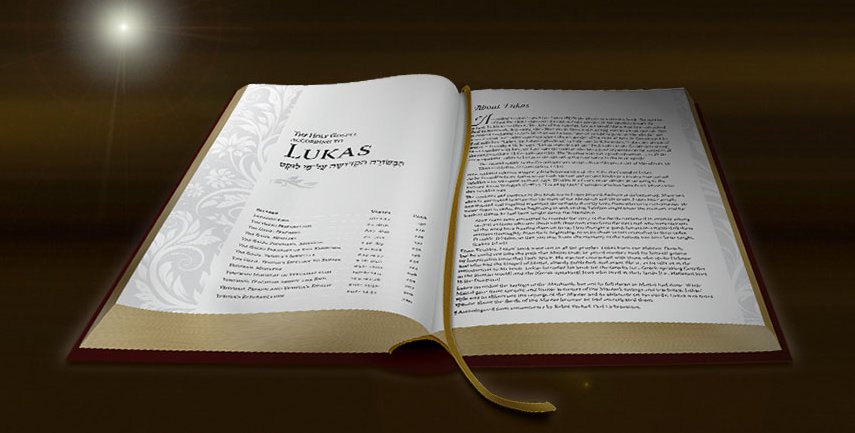
dhe_lukas

This does not unwrite or replace the fact that Jesus died for our sins and that in his resurrection, we have forgiveness and an eternal place in the world to come if we believe. However, we Gentiles are grafted in to the commonwealth of Israel, as Toby teaches. We don’t replace Israel, we come alongside her and partakers of the promises, and as subjects and servants of the Jewish Messiah King.
What Did I Learn?

I’ve consumed a great deal of this material at FFOZ conferences or from their audio CD lectures as well as reading it in their printed material, but this television episode titled “The Good News” helped me organize that information into something that is easier for me to remember and transmit to others, a message to my Christian reading audience (and I am a Christian among them) that we have only been taught part of the story of the good news.

Toby Janicki, Aaron Eby, and the rest of the FFOZ ministry have “solved” the mystery of the gospel and clued us in on the rest of the message: Jesus came to die for our sins and to deliver the promise of everlasting life for all who believe. But, and this is extremely important, as Messiah King, he came to deliver the promise of good news to all of Israel that when he returns, he will release the captives in exile, restore sight to the temporarily blinded, free the oppressed Jewish people, and proclaim freedom for Israel, the year of favor from the Lord.

If you found this message of the true good news of Jesus Christ interesting and illuminating, I highly encourage you to watch the complete episode The Good News, which is the first in the series, at tv.ffoz.org. It is First Fruits of Zion: A promise of what is to come.

I hope to review the next episode very soon.

Healing the Gaps in the Wall

destruction_of_the_templeThe next Sabbath nearly the whole city assembled to hear the word of the Lord. But when the Jews saw the crowds, they were filled with jealousy and began contradicting the things spoken by Paul, and were blaspheming. Paul and Barnabas spoke out boldly and said, “It was necessary that the word of God be spoken to you first; since you repudiate it and judge yourselves unworthy of eternal life, behold, we are turning to the Gentiles.

But the Jews incited the devout women of prominence and the leading men of the city, and instigated a persecution against Paul and Barnabas, and drove them out of their district. But they shook off the dust of their feet in protest against them and went to Iconium.

Acts 13:44-46, 50-51

Are believers who live under the law generally joyful people?

Instead of God’s truth, with what did Satan fill the hearts of those who believed that justification before God could only come through keeping the law of Moses? Do you think that they were sensing a loss of influence and control?

-Questions in the Bible Study Class notes from last Sunday

Last Sunday at church, Pastor Randy preached from Acts 13:42-52. I was impressed that Pastor was able to give a sermon on such a potentially inflammatory set of verses in a way that expressed great sensitivity for the Jewish people, and correctly identified (in my opinion) the source of the “irritation” expressed by some of the Jewish leadership in the Pisidian Antioch synagogue upon witnessing vast crowds of pagan, idol-worshiping Gentiles flood into shul to hear Paul speak.

My Sunday School class discusses Pastor’s sermon after services (the church offers multiple classes on Sunday on a variety of subjects, but I chose this one since for me, the highlight of going to church is the sermon), and in going over my study notes the day before, I knew there could potentially be some problems. I wasn’t looking forward to class and once it started, I didn’t know exactly what I was going to say.

Fortunately, although the notes could have been worded a bit better, the attitudes expressed didn’t reflect any negative attitudes toward “the Jews” …

… exactly

No, no one spoke against the Jewish people, but the language of Christians talking about “the Jews” has been crafted over many centuries and there seemed to be an echo of that language in my study notes. If I hadn’t known better, I probably would have been concerned a time or two in class.

Actually, I did become concerned, since the teacher inserted the assumption that part of the reason “the Jews” in Antioch became upset, was because Paul was teaching that the grace of Christ replaces a life “under the Law” for Jewish believers.

As the time to go to class approached, I was still uncertain how or if I was going to respond to this assumption, but when the moment arrived and I heard “the Law” being (apparently) dissed, I asked to read from Psalm 19. I had the ESV Bible with me, but below, I’m quoting from the Stone Edition Tanakh (note that the verse numbers are slightly different between the Christian and the Jewish Bible):

The Torah of Hashem is perfect, restoring the soul; the testimony of Hashem is trustworthy, making the simple one wise, the orders of Hashem are upright, gladdening the heart; the command of Hashem is clear, enlightening the eyes.

Psalm 19:8-9 (Stone Edition Tanakh)

Does that sound like the Psalmist thought the Torah was a burden? That’s the question I asked the class. Pastor, in his sermon, bent over backwards to illustrate that saying “the Jews” in this context, would be highly insulting and would not accurately reflect what was happening in the Antioch synagogue. Not literally every Jewish person turned against Paul and Barnabas and no, Paul did not permanently turn away from bringing the good news of Messiah to Jewish people and take it only to the Gentiles from that moment on. And there’s nothing in the text of Acts 13 that tells us Paul spoke against the Torah.

It’s sections of scripture like this one that have been used by the church to berate, denigrate, harass, and persecute the Jewish people for centuries. Although I didn’t get any push back at all in class as I made my points, I had to be sure that the people I’ve been studying with for over half a year weren’t misunderstanding this portion of Acts 13 based on long-standing Christian tradition (yes, Christians can interpret scripture based on tradition, too).

I don’t believe they were, but it was one of those moments in church that helps me realize we have a long way to go in healing the rift between traditional Christianity and the Jewish people.

I probably wouldn’t have written about this at all except when I got home from church, I went online and read the following:

We are now entering the Three Weeks, the time between the 17th of Tamuz (observed Tuesday, June 25th) and the 9th of Av (starting Monday day night, July 15th). This is a period when many tragedies happened to the Jewish people. Why do we mourn the loss of the Temple after so many years? What did and does it mean to us?

The 17th of Tamuz is a fast day. The fast begins approximately an hour before sunrise and continuing until about an hour after sunset. The purpose of the fast is to awaken our hearts to repentance through recalling our forefathers’ misdeeds which led to tragedies and our repetition of those mistakes. The fasting is a preparation for repentance — to break the body’s dominance over a person’s spiritual side. One should engage in self-examination and undertake to correct mistakes in his relationship with God, his fellow man and with himself.

-Rabbi Kalman Packouz
“Shabbat Shalom Weekly”
Commentary for Torah Portion Pinchas (Numbers 25:10-30:1)
Aish.com

yom-kippur-kotelYou might think I’m being overly sensitive about all this. I suppose some of the people in Sunday School class might think that of me. I couldn’t see all the faces around the room as I was speaking, so I can’t gauge how each person was responding. I can only tell you that no one disagreed with me out loud, and in fact, a few people spoke up in support of my statements.

Rabbi Packouz, while reminding me of the terrible tragedies and losses that have befallen the Jewish people and how Israel is once again entering a time of national mourning, also helped me realize that for every descent, there is an ascent, and every wound offers an opportunity for healing.

The story is told of Napoleon walking through the streets of Paris one Tisha B’av (the 9th day of the Hebrew month of Av, a day of fasting and mourning for the destruction of the two Temples). As his entourage passed a synagogue he heard wailing and crying coming from within; he sent an aide to inquire as to what had happened. The aide returned and told Napoleon that the Jews were in mourning over the loss of their Temple. Napoleon was indignant! “Why wasn’t I informed? When did this happen? Which Temple?” The aide responded, “They lost their Temple in Jerusalem on this date 1700 years ago.” Napoleon stood in silence and then said, “Certainly a people which has mourned the loss of their Temple for so long will survive to see it rebuilt!”

If we know our history and understand it, then we can put our life in perspective. We can understand ourselves, our people, our goals, our values. We will know the direction of our lives, what we want to accomplish with our lives and what we are willing to bear in order to fulfill our destiny. Friedrich Nietzsche put it well, “If you have a ‘why’ to live for, you can bear with any ‘how’.”

Sara Debbie Gutfreund also wrote about the 17th of Tammuz but from a much more personal perspective.

A few years ago my grandfather passed away right before the 17th of Tammuz. On the fast day I was helping my mother as she sat shiva and an old family friend offered me a drink.

“No thanks, I’m fasting.” I said.

“What are you fasting for?” he asked. So I explained that it was the 17th of Tammuz, and we were mourning the day that the walls of Jerusalem were breached before the Second Temple was destroyed.

“I never heard of this fast day. But you know what’s even sadder? Last year my wife and I visited Israel for the first time. We went on a tour of the Old City and the tour guide points out the Temple Mount. And all we could see was this huge mosque and then the tour guide points out the Western Wall. And I couldn’t believe it. That’s it? That’s all that’s left of the Temple? One wall? So I think I know why there’s a fast. There’s so little we have left.”

-from “Filling the Crevices of the Wall”
Aish.com

So where is the uplifting part of the story. I promise you that there is one.

Last night, my son, who is named after my grandfather, was standing with me on the deck.

“Why is the world so big?” he asked me as we gazed up at the towering trees and the endless stretch of star-studded sky.

“I don’t know,” I answered. “Maybe because we need room to grow.”

And as the fireflies began to light up the dark corners of the yard, I thought that it must be true. The darkness is here for us to create light. The brokenness is here for us to learn how to make ourselves whole. And the Western Wall – all that’s left – is so much more than just a remnant of our past. It’s there to remind us to rebuild. It’s there to hold our crumpled notes and dreams. It’s a gift. Like the gap between the waves that pulled me in and brought me back to shore. Like the saltwater that poured down my face and the sand that blurred my eyes. Like the silence that gives us a chance to find our own words. Like the hugeness of the world that makes room for us to grow. Like the man who put down his drink and said. “I think I know why there’s a fast.” There’s a gap. In our hearts. In the crevices of the Wall.

But the gap is the gift. And all that’s left is the extraordinary opportunity to fill it.

I amazes me that a people and a nation who have suffered so much can continue to bounce back and not only to survive, but to live, and grow, and embrace the God of Jacob wholeheartedly. As Napoleon was supposed to have said, “Certainly a people which has mourned the loss of their Temple for so long will survive to see it rebuilt!” Nietzsche’s statement “If you have a ‘why’ to live for, you can bear with any ‘how'” is well and appropriately applied to the history of the Jewish people. The Kotel or what some people refer to as “the Wailing Wall,” is all that there is left of the Temple at present and in the crevices, people insert written prayers to God. The Jewish people fill the gaps in their existence with their faith that one day, God will answer their prayers and send His Messiah to restore them as a people in their Land, to redeem Israel, to raise her up, to give her a King who will bring peace to all the world.

temple-prayersThe gap between Christianity and Judaism gives me the opportunity to help fill it with who I am as a believer and what the Jewish Messiah King means to me. I can fill the gap as a Christian man who has been married to a Jewish wife for over three decades, who has raised three Jewish children, and who is sensitive to what Christians have traditionally said and believed about the Jewish people based on some misunderstood portions of the scriptures.

Not something to dread, but an opportunity to help educate and to introduce a balance (though it probably wasn’t needed much in this case).

But like many Jewish people are doing right now, part of me grieves the losses, even as I know there are gains. It’s going to get worse for our world before it gets better. There will be battles. There will be heartache. There will be a need for courage.

We will need to fill the gaps that God has left us because that is helping to repair the world, tikkun olam. That is part of bringing the return of the Messiah. Part of the gospel message is the promise of personal salvation for anyone who believes. But the especially good news for the Jewish people is that when Messiah returns, he will redeem and restore national Israel, rebuild the walls of David’s fallen sukkah, and bring peace between the Jewish people and the people of the nations who are called by his name.

And beyond what Rabbi Packouz and Ms. Gutfreund reminded me of, I remembered Boaz Michael’s message in his book Tent of David. It is true that, as my friend Tom once said, I’m ultimately seeking not Christianity or Judaism, but an encounter with God by returning to church, but I am also seeking the vision of Boaz Michael in healing the “crevices in the wall” between what Christianity has largely become, and what Messiah truly wants us to be.