Tag Archives: Israel

A Review of the Sinai Ethic: The Ethic of Election

In the third month after the sons of Israel had gone out of the land of Egypt, on that very day they came into the wilderness of Sinai. When they set out from Rephidim, they came to the wilderness of Sinai and camped in the wilderness; and there Israel camped in front of the mountain. Moses went up to God, and the Lord called to him from the mountain, saying, “Thus you shall say to the house of Jacob and tell the sons of Israel: ‘You yourselves have seen what I did to the Egyptians, and how I bore you on eagles’ wings, and brought you to Myself. Now then, if you will indeed obey My voice and keep My covenant, then you shall be My own possession among all the peoples, for all the earth is Mine; and you shall be to Me a kingdom of priests and a holy nation.’ These are the words that you shall speak to the sons of Israel.”

Exodus 19:1-6 (NASB)

The Sinai Ethic was originally presented by Rabbi Russ Resnik, executive director of the Union of Messianic Jewish Congregations (UMJC), during the annual First Fruits of Zion (FFOZ) Shavu’ot Conference at Beth Immanuel Sabbath Fellowship in Hudson, Wisconsin. Shavu’ot, the anniversary of the giving of the Torah and the pouring out of the Spirit, is a holy and deeply spiritual time that provides a reverent connection with the people of God who heard the words of the LORD spoken from the fire at Mount Sinai. These teachings, given in three sessions during the festival, focus on the moral and ethical mandates that the giving of the Torah established for the Jewish people and all nations.

-from the back cover of the CD for the audio teaching, “The Sinai Ethic”

Session Two: The Ethic of Election

It’s been over three weeks since I reviewed Part One of Rabbi Resnik’s three-part series. I haven’t had much time to sit down and listen to the audio CD graciously provided by FFOZ but admittedly, I’ve been kind of dreading continuing with the series. Part One was difficult for me to get a handle on, and when I did, I found I didn’t always agree with what R. Resnik said.

Part Two was a pleasant departure from that experience, and I found The Ethic of Election to be straightforward, easy to follow, and to be what I expected it to be. It also provided me with some new perspectives on crucial parts of the Torah record and the story of Israel.

Resnik began his lecture with sort of a joke, kind of like a story about different siblings get together and find out they all thought that Mom loved them the best, as if each one of them were especially “chosen” or “elect” in relation to their Mom (“But I thought Mom loved me best”).

It gets uncomfortable when you think you’re the favorite in the family only to discover that all of your other family members think they’re the favorite, too. But more so, and especially in our egalitarian culture, where in order to avoid any losers having their feelings hurt, we’ve created a society where “everyone’s a winner,” Resnik says it’s a “scandalous idea” that any one person or group could be chosen, because it means other people and groups are not. It’s even worse when God made a choice and that choice of a people was an ethnic group. We don’t like any one ethnic group to be considered more, better, or special than any other group.

I quoted Exodus 19:1-6 above since Resnik read it to his audience, but he also read the following:

But you are a chosen race, a royal priesthood, a holy nation, a people for his own possession, that you may proclaim the excellencies of him who called you out of darkness into his marvelous light.

1 Peter 2:9

Landron Paule_Histoire Sainte_Première Alliance_Droguet Ardant_Limoges 1991This came up in a previous blog post some weeks ago when I naively thought Peter must have been addressing a non-Jewish audience using the “chosen” language of Exodus 19, but it was pointed out to me that the apostle could have been as easily addressing Jewish disciples of the Master.

That said, Resnik acts as if Peter were addressing Gentiles and he (Rabbi Resnik) was using the verse to highlight the dynamic tension between all Israel being chosen by God and a remnant of the people of the nations also being chosen by God, and their being no contradiction between these two choices.

Resnik referenced his previous lecture, particularly the part about conditional and unconditional covenant elements, to highlight that the nature of Israel being chosen is unconditional. Exodus 19:5 makes Israel’s being chosen seem conditional on whether or not they obey the Torah, which is how most Christians read it, but verse 4 tells us that Israel being chosen is totally unconditional. What’s conditional is the role Israel plays and whether or not they will live out that role in a completely realized way, which they can only do if they obey God by observing the conditions of the covenant, the Torah mitzvot.

So God doesn’t “unchoose” Israel when they stumble, they just lose key elements in their role, such as living in the Land of Israel, being free vs. being slaves, and so on.

Resnik compares God as impartial judge to God as father. We all think we want God to be an impartial judge because that eliminates any preference of a particular population over all the people on earth. But while that may sound like a good idea, it also eliminates a father’s love for his children. Yes, all fathers love all of their children, but truth be told, any father will admit when pressed, that he usually relates better to one of his children than to the others.

Do you see where this is going? Relating better to one child does not remove the father’s love from any of the other kids, but because he’s human (this is a metaphor so don’t get too literal on me), he’s naturally going to connect to one kid’s personality more than the others for some reason.

This is God the Father in relation to Israel, His chosen one.

Christianity, and particularly what we call “Hebrew Roots,” regularly struggles with Israel’s chosen and special status because they think it means “God loves the Jewish people best” and to the exclusion of the Gentiles, but that’s not what Resnik is getting at here.

Now then, if you will indeed obey My voice and keep My covenant, then you shall be My own possession among all the peoples, for all the earth is Mine… (emph. mine)

Exodus 19:5

What a strange statement to stick in that sentence: “for all the earth is Mine.” What does it mean? According to Resnik, it could have one of two possible interpretations:

  1. It could mean “all the earth is mine anyway, so I’ve got every right to choose you (Israel) among all the nations.”
  2. It could also mean “all the earth is mine, and so I’m choosing you (Israel) on behalf of all the nations.”

Resnik prefers the second interpretation. It’s not a matter of Israel being chosen and the rest of the nations are out of luck, Israel is chosen for a unique role of service to the rest of the world and to God. It’s one way to understand the two most important commandments, loving God with all your (Israel’s) resources by loving your neighbor (the rest of the world) as yourself.

You ever wonder why the story of Joseph takes up so much of the book of Genesis? I never did until Resnik brought it up.

Now Jacob lived in the land where his father had sojourned, in the land of Canaan. These are the records of the generations of Jacob.

Joseph, when seventeen years of age, was pasturing the flock with his brothers while he was still a youth, along with the sons of Bilhah and the sons of Zilpah, his father’s wives. And Joseph brought back a bad report about them to their father. Now Israel loved Joseph more than all his sons, because he was the son of his old age; and he made him a varicolored tunic. His brothers saw that their father loved him more than all his brothers; and so they hated him and could not speak to him on friendly terms.

Genesis 37:1-4

joseph-the-slaveThe “varicolored tunic” or “coat of many colors” doesn’t have a direct translation from Hebrew into English, but Resnik thinks of it as a “princely robe,” a sign of status, a sign of Joseph’s “election” by his father Jacob. It wasn’t that Jacob didn’t have a right to have a favorite among his sons. I mention above that this is kind of normal for human fathers (and for God). But his mistake, and Joseph’s, was rubbing the noses of the other brothers in it. While the brothers were supposed to support and endorse the election of Joseph, they never accepted it, so much so that when they got a chance, they tried to kill Joseph.

But first, they stripped off the sign of his election, ripped it to shreds, dipped it in blood, and threw it at their father’s feet as if to say, “This is what we think of your election of Joseph.” That’s not how it literally played out, but the symbolism is enough to give one pause, especially if we expand the metaphor into the history of the Jewish people in exile and how they have been mistreated and even murdered for the sake of our Gentile/Christian resentment of Israel’s election.

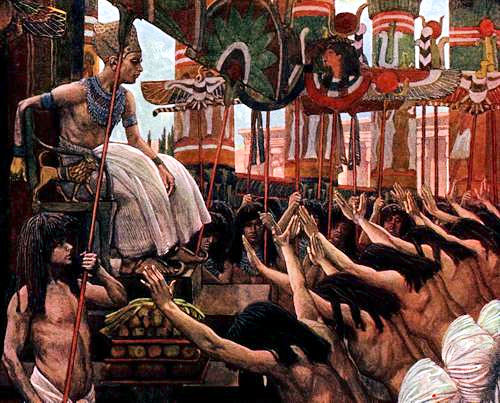
They say “the clothes make the man” and Joseph’s life seems to mirror that because his role changes as often as he changes clothes. He’s transformed from a slave into a prisoner when Potipher’s wife grabs his robe after her failed attempt to seduce him, and he is transformed from a prisoner to a prince when Pharaoh, King of Egypt, puts a signet ring on Joseph’s hand, clothes him in garments of fine linen, and puts a gold necklace around his neck (Genesis 41:42).

I never thought of Joseph subsequently testing his brothers as a test of whether or not they’d accept Jacob’s election of Benjamin as the favored son. After Joseph’s (perceived) death, all Jacob had left of Rachel was Benjamin. That’s why Jacob didn’t send Benjamin down to Egypt for food with the other brothers and why, when the brothers tell him what Joseph (as the Egyptian prince) did to them in demanding Benjamin’s presence, he resisted sending Benjamin to Egypt for months.

In the end, when given gifts of clothing and food by Joseph in Egypt, Benjamin always got bigger and better portions, and Judah passed the test on behalf of his brothers by guaranteeing his safety.

There’s an obvious comparison between Joseph and Yeshua (Jesus) in revealing the “mystery of election.” I said before that the clothes make the man, but it’s not just the clothes. Joseph didn’t really come into his own until he was stripped, not once but twice, and when he stopped being arrogant and learned to be a servant, only then were the robes of a King restored to him.

Jesus too was stripped and given the robes of a King and a crown (of thorns) but only to mock him. The Romans played at bowing to him, but it was to humiliate him. As a teenage boy, Joseph dreamed his brothers and father would bow to him and they resented it, but decades later it became the literal truth. We also know the literal truth that someday, every knee will bow to our King (Romans 14:11, Philippians 2:10).

Both Joseph and Jesus were chosen by their fathers, rejected by their brothers, handed over to Gentiles, went down into a pit (of literal death in Jesus’ case), were dressed as Kings (as a form of mocking in Jesus’ case). Yet we know that one day Messiah will come back and assume the throne as our King, as ruler, and as servant.

And that’s the secret, that’s the missing ingredient, that’s what it took Joseph many years to learn, and that’s the secret of Israel’s election as well.

While Jacob may have chosen Joseph as his elect and dressed him up for the role, the seventeen year old kid had a lot to learn. He thought of the robe as a status symbol and as long as he did, he failed. Only when he learned to be a servant to people and to God did he realize the “princely robe” is really a servant’s apron. Only when his life was transformed was he worthy of election. Our Master taught us the same thing:

“For even the Son of Man did not come to be served, but to serve, and to give His life a ransom for many.”

Mark 10:45

Joseph of EgyptWhen the chosen Israel is obedient to God and of service to the world, she prospers in her “servant’s apron,” chosen of God on behalf of the nations of the earth. She is special and she wears the robes indicating their status, not as rulers but as especially responsible to God and to the world. When she’s disobedient, she is not “unchosen,” but like Joseph, she experiences “reversals” such as being slaves or prisoners, and Israel’s history is replete with such experiences. When she sees the robes of her election as a status symbol, they become twisted around her, trapping her.

When she understands their true nature, she is free, free to serve God and to realize her role in the world.

What Do I Think?

R. Resnik didn’t take it this far, though I suspect he might in his third and final lecture, but let’s see if I can anticipate him a little. As we saw in Joseph’s example, simply dressing up in a “princely robe” doesn’t make you a prince. If you’re a spoiled brat before putting on the robe, you’ll be a spoiled brat after you put it on, too. If you think you are deserving, special, and it’s your right to have that robe, then you risk having it stripped from you and worse.

And He began speaking a parable to the invited guests when He noticed how they had been picking out the places of honor at the table, saying to them, “When you are invited by someone to a wedding feast, do not take the place of honor, for someone more distinguished than you may have been invited by him, and he who invited you both will come and say to you, ‘Give your place to this man,’ and then in disgrace you proceed to occupy the last place. But when you are invited, go and recline at the last place, so that when the one who has invited you comes, he may say to you, ‘Friend, move up higher’; then you will have honor in the sight of all who are at the table with you. For everyone who exalts himself will be humbled, and he who humbles himself will be exalted.”

Luke 14:7-11

I quote these verses with some regularity and with good reason. There are plenty of well-meaning non-Jewish believers who are authentically convinced that they are equally chosen along with all Israel and that they deserve to wear the princely robe along with them. Problem is, they see it as a status symbol, sort of like the BMW of robes, rather than the clothing of servants who are expected to “go the extra mile,” so to speak, in the service of the world and of service to God.

It was God who gave, among the other Torah mitzvot, the commandment of the tzitzit to Israel. One might think of a tallit as Joseph’s “princely robe,” but then again, the Shabbat, which is the actual sign of the Sinai covenant, kosher, the festivals, they all could be considered as those robes of servanthood.

Joseph eventually revealed his true identity to his brothers and his father and they were all brought down to Egypt and given land on which to live. Pharaoh was excited to hear that Joseph had brothers. If one Joseph could save Egypt and the rest of the civilized world from famine, think what a dozen “Josephs” could do.

But they never did. None of Joseph’s brothers were elevated to a position anywhere near what Joseph had achieved. None of them became “princes in Egypt” or anywhere else. Joseph was Jacob’s elect and he served and ruled until his dying day. His brothers were pale shadows by comparison. Yes, Jacob loved all his sons, but he rightly recognized that Joseph was special and chose him accordingly as was his right.

God chose Israel as is His right, not because of any quality Israel possessed, but simply because it was God’s desire to do so. He doesn’t have to have a reason, at least one we understand.

Joseph was chosen on a larger scale to save his family (Israel) and the rest of the world from famine and he did it. Jesus was also chosen by his Father to save Israel and the rest of the world, and in one sense, it was accomplished on the cross. But in a larger sense, the process is still ongoing and won’t be complete until he returns. Israel, national Israel and all the Jewish people, are chosen to prepare the world for the redemption of their nation and through them, the entire world.

tallit-prayerIf we, like Joseph’s brothers, choose to reject that election, and metaphorically speaking, rip up Israel’s robes (or Messiah’s), dip them in blood, and throw the gory mess at the feet of God (and how often has that already happened?), we will also suffer as the brothers did. We’ll still be part of the family, but we will forfeit much of our special role in the service of God. You cannot say you love God if you hate Israel and the Jewish people and covet their princely robe.

You also can’t simply crawl under the robe with Joseph like a small child of yesteryear would crawl under his mother’s skirts.

I don’t know if this is anywhere near where Resnik is going, but it’s what came to mind as I was listening to the lecture.

I didn’t want to go here but it seems to be the inevitable destination of “The Ethic of Election.”

Addendum: I know my review and commentary is likely to inspire some pushback from “the usual suspects” (if you’ll pardon my rather tongue-in-check expression), but I read something written by NT scholar Larry Hurtado, just a brief sentence fragment, that I thought relevant:

“Scholars really can’t be expected to agree all the time, and he and I have disagreed occasionally on this or that… (but) I also have enormous respect for Bagnall’s work overall…”

If Bible scholars can’t be expected to agree all the time about the message of the Bible, at least in the details, how much more so can we expect some disagreement between different groups of believers in relation to observing mitzvoth and the distinctive differences between Jewish and Gentile disciples of the Master?
Israel and the Nations in the House of God

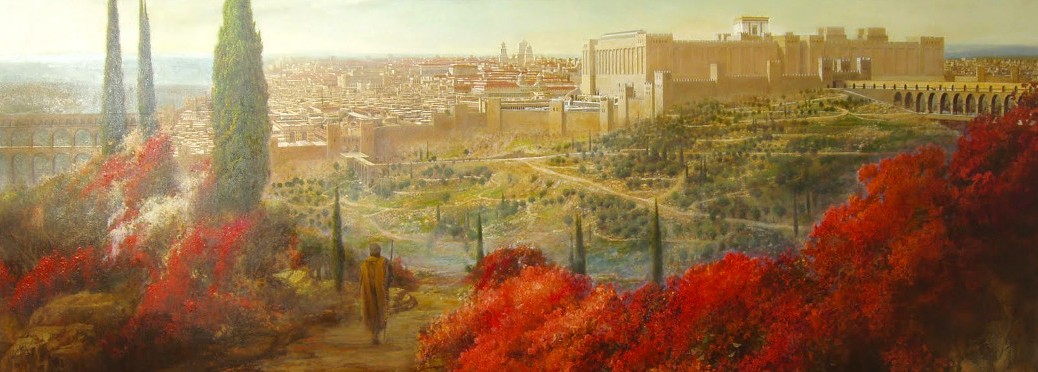
True, that particular parcel of land was later named Eretz Yisrael, but even then we saw not a small piece of land, but a polished mirror, reflecting the entire world. In this land will rise up the mount of the Lord “and to it shall flow all to the nations.” On this mount will stand the House of the Lord, “it shall be called a house of prayer for all the nations.”

-Rabbi Moshe Avigdor Amiel
Commentary on Lekh Lekha
Chapter 1: Abraham Recognized His Creator, p.135
Translated by Kadish Goldberg
Jews, Judaism, & Genesis: Living in His Image According to the Torah

As Christians (or “Messianic Gentiles” if you prefer), we have our own ideas of how God’s covenant promises to Abraham, Isaac, and Jacob somehow play in to attaching the non-Jewish people groups of the world to the God of Israel. It’s true that we disagree on many of the specifics of the New Covenant and how faith in the accomplished work of Messiah grafts us into the root, and we argue about those opinions day and night, typically by blogging.

Every so often, we employ the classic Jewish writings, not those found in the Bible, but those written afterward, sometimes many centuries afterward, to somehow prove our point. We conveniently forget that these Jewish sages and teachers would not have said or done anything they thought might give credence to the idea that the “founder of the Christian religion,” that is to say “Jesus” (Yeshua) could possibly be the Messiah, let alone of a Divine nature.

However, I believe that only by viewing the Bible through a “Jewish lens” and reading the sacred writings in as close an approximation as possible to how the original audience would have understood them, will we ever come close to capturing the true intent of not only the human writers, but of the Holy Spirit that inspired them. Thus, when I read Rabbi Amiel’s commentaries, which include his insights as to just how the rest of the world was supposed to be attracted to the God of Israel, I become interested.

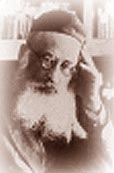
amiel
Rabbi Moshe Avigdor Amiel

One caveat, though. We can’t read too much into these commentaries for, as I said above, R. Amiel and the sources he quotes would not be considering Jesus in any favorable light, given the long history of enmity that existed between our two faith groups. Nevertheless,I think by examining the Jewish perception of drawing the Gentiles near, we might gain some insights into how we Gentiles might better approach Hashem, God of the Hebrews.

“The Holy One, blessed be He, exiled Israel among the nations so that they would attract converts, as it is said, ‘and I shall plant her in the land’ — does one sow a se’ah unless he expects to reap several koor?” (Tractate Pesachim 87b.)

So it was with the first Jew, our father Abraham. His history, as described in the portion of Lekh Lekha, began in Galut, outside the Land of Israel. He, too, was exiled from his land and birthplace only in order to increase proselytes, as is written ‘and all the families on earth will be blessed through you.’

-Amiel
Chapter 2: Our Father Abraham’s Mission, p.141

Of course in Abraham’s day, Judaism, as such, did not exist. Abraham is noteworthy for coming to faith in the One God of all and acknowledging Him as his personal God. We do know from the Bible and midrash, that Abraham did “make souls” or taught his servants and others the ways of God, but would these people have “converted” to anything and if so, what?

His “converts” were not formally converted. Among the seventy souls who went down to Egypt, no mention is made of any converts. They were converted ideologically. They were influenced by Abraham’s noble spirit…

…Thus, the converts whom we are to attract through our exile among the nations are not formal converts — for “converts are as troublesome for Israel as is a skin affliction.” The converts referred to by the Rabbis are persons who are influenced in varying degrees by our sublime fragrance.

-ibid, pp.141-2

With the caveat I mentioned above in mind, how can we compare this to the actual result of the people of the nations being drawn to the God of Israel in the days of Messiah and afterward?

Go therefore and make disciples of all the nations, baptizing them in the name of the Father and the Son and the Holy Spirit, teaching them to observe all that I commanded you; and lo, I am with you always, even to the end of the age.”

Matthew 28:19-20 (NASB)

“You see, brother, how many thousands there are among the Jews of those who have believed, and they are all zealous for the Law…

…But concerning the Gentiles who have believed, we wrote, having decided that they should abstain from meat sacrificed to idols and from blood and from what is strangled and from fornication.”

Acts 21:20, 25

AbrahamSeemingly, there is a parallel between R. Amiel’s interpretation of the “mission of Abraham” to the nations and the mission to the Gentiles initiated by Yeshua and acted upon by Paul, James, and the Apostles. There’s a conversion without a conversion happening. Gentiles are added to the ranks of the ekklesia of Messiah without any formal conversion such as was typical of the proselyte rite in the late Second Temple period.

But how does R. Amiel and the Judaism he represents imagine this was to be done? Certainly not in the matter that the Christian believes.

“‘And I will make you into a great nation’ — therefore we say ‘God of Abraham.’ ‘And I will bless you’ — therefore we say ‘God of Isaac.’ ‘And I will make your name famous’ — therefore we say ‘God of Jacob.’ Are we then to conclude [the first blessing of the Amidah prayer] with all three? The verse specifies, ‘And you will be a blessing’ — we conclude with ‘you’ (singular), not with all three.

-Tractate Pesachim

Not only do the world’s three major faiths, our holy faith and those of the Christians and the Moslems, base themselves theologically upon our Holy Torah. Not only do they draw life-giving waters from our fountainhead, they also relate to us genealogically.

-Amiel
Chapter 3: God of Abraham, Isaac and Jacob, p.145

You may be aware that Abraham fathered both Ishmael, who became the father of the Arabs and is claimed by Islam, and Isaac, who, through his son Jacob, became the scion of the twelve tribes and finally the Jewish people. But how do Christians derive a genealogical connection to Abraham?

Esau, as you may have read, is Edom, a people who are thought to be the distant ancestors of the Romans, these are the Gentile nations from R. Amiel’s point of view, and thus the Christians, since Christians, by definition, are not Jewish (if that statement makes you uncomfortable when you think of “Hebrew Christians,” remember the Rav’s perspective on the matter is thoroughly Jewish and not easily adapted to Christianity’s framework of conceptualization).

But wait a minute. If both Islam and Christianity can be considered in some manner as physical descendants of Abraham, do we Christians then inherit all of the promises God made to Abraham including possession of the Land of Israel?

Hold your horses and remember your Bible. Even if the Gentile Christians are both “spiritual” and physical descendants of Abraham, there is this:

But God said to Abraham, “Do not be distressed because of the lad and your maid; whatever Sarah tells you, listen to her, for through Isaac your descendants shall be named.”

Genesis 21:12

Now Abraham gave all that he had to Isaac; but to the sons of his concubines, Abraham gave gifts while he was still living, and sent them away from his son Isaac eastward, to the land of the east.

Genesis 25:5-6

interfaithIt is only through Isaac that the promises of God are carried on to the next generation and beyond, not through Ishmael or any of Abraham’s other children. Furthermore, of Isaac’s sons, only Jacob inherits both the birthright and the blessing of the first-born.

As it is written, God spoke to Jacob:

And behold, the Lord stood above it and said, “I am the Lord, the God of your father Abraham and the God of Isaac; the land on which you lie, I will give it to you and to your descendants. Your descendants will also be like the dust of the earth, and you will spread out to the west and to the east and to the north and to the south; and in you and in your descendants shall all the families of the earth be blessed. Behold, I am with you and will keep you wherever you go, and will bring you back to this land; for I will not leave you until I have done what I have promised you.”

Genesis 28:13-15

Thus as we see in Tractate Pesachim, it is only through Abraham and through Isaac, and through Jacob that all of God’s promises are carried out. It is true that based on the commentary, we can consider Abraham the father to other nations, physically the Arab people, and midrashically the Christians, but that makes neither people or religion Jewish.

Expanding on his point, R. Amiel writes:

‘And all the families of the earth will be blessed through you.’ Of the End of Days, when ‘the Temple Mount shall be the highest of all, towering above the hills,’ it is written that ‘many nations will come streaming to it.’ This is to say that even though ‘the Lord shall be one and His name shall be One,’ all the nations of the world will not fuse into one nation. There will remain diverse peoples. National differentiation actually contributes significantly to human development, bringing not curses but blessings. But ‘many nations will come streaming to it,’ — all will flow to one central point, to the Mountain of the Lord which ‘shall be the highest of all, towering above the hills.’ Or, as the Torah says, ‘through you will be blessed all the families [plural!] of the earth.’ (emph. mine)

-Amiel, p.147

Up to JerusalemAs I said, the Rav isn’t going to take any Christian innovations regarding Biblical interpretation into account, so it would be easy to discount his comment above based on that. On the other hand, I think there’s some merit to the idea that, by viewing the Bible a bit more “Judaically,” we can get a more accurate picture not only of how Judaism sees the final resolution of the Gentiles to God, but perhaps how the original Jewish writers of the Bible saw this conclusion of human history.

For me, this does re-enforce my currently held belief that the peoples of all the nations remain distinct national groups differentiated from Israel and from each other, and yet all drawn to One God and One place, the Temple, to worship Him in the “House of Prayer for all peoples”.

I’ve said before that it is at least plausible to consider that when the Master issued his Matthew 28:19-20 directive, the Apostles likely believed they would comply by employing the traditional proselyte rite, bringing the Gentiles into discipleship by converting them to Judaism. This, though, violates prophesy as R. Amiel has pointed out. It is clear that the Gentiles were to be drawn near to God as Gentiles.

The Apostle Paul was the one to see this most clearly, but how does Judaism see it standing on the outside of the Apostolic Scriptures and looking in, so to speak?

What prevented their mass conversion was the law of brit milah, ritual circumcision, for they found that particular commandment to be the most difficult of all. The founder of the faith of the “New Testament” exploited this fear of circumcision and prevented the fulfillment of the promise ‘and I will make you a great nation.” Thus Israel is ‘the smallest of nations.”

-ibid, p.148

This is the Rav’s explanation for how Christianity “morphed” into its own, separate religious expression. Like the ancient Apostles, he believes the proper way to fulfill the prophesies is to convert Gentiles into Judaism, making Abraham’s descendants as numerous than the stars (Genesis 15:5). But this contradicts his view that the people of the nations will draw near to God as people of the nations and not as proselytes. R. Amiel’s only apparent option within his contextual framework, is to have the Gentiles “convert” in the sense of becoming Noahides, righteous Gentiles, which would satisfy the requirement of them retaining their national identity while still honoring the One God of Israel.

R. Amiel acknowledges that Abraham is the father of many nations and that the people of the nations are blessed through him, but the “nations inherited the legacy only partially; we (Jews) inherited it in its entirety.” (p.149)

My respectful response to the esteemed Rav is “yes and no.” I agree that we Gentile believers are not Israel and yet, we are not to be compared to the generic nations of the earth. Even if those nations comply with the Noahide Laws, that doesn’t provide those of us who are grafted in to the root through our faith in Messiah access to the New Covenant blessings. This is something that Rabbi Amiel could not anticipate, but we can. We can take what is valuable from the esteemed and honored sages, and in this case, look at it through a New Covenant lens in order to glean what is of value there.

Restoration
Photo: First Fruits of Zion

I mean no disrespect to Rabbi Amiel, those other Rabbis who contributed to the publication of his book, or the long history of the Sages in Judaism, but even as they were inspired and even as they possess authority from God to make halachah for their generations, they were also men, and as men, given the struggles of the last twenty centuries, there were places they just could not see and knowledge they couldn’t assimilate. No one comes to God without the involvement of the Holy Spirit. To everyone else, the good news of the Messiah doesn’t make a lot of sense:

For indeed Jews ask for signs and Greeks search for wisdom; but we preach Christ crucified, to Jews a stumbling block and to Gentiles foolishness, but to those who are the called, both Jews and Greeks, Christ the power of God and the wisdom of God. Because the foolishness of God is wiser than men, and the weakness of God is stronger than men.

1 Corinthians 1:22-25

All people, Jewish and non-Jewish, come with blind spots that can only be clarified through the Spirit of God. I suppose God could just re-write our programming and the entire world could wake up one morning all declaring faith in Christ and him crucified, but that’s not God’s plan. It would be easier if it were, but God left human free will intact. We have to be willing to hear the messages of the Gospel, and having heard them, we have to be willing to believe and then act on that belief.

The call of the Master is like hearing a knock on your front door. Is it a thief or a benefactor? We won’t know until we open the door, but if we’re wrong, then it’s too late to save ourselves of any threat that might enter. But if we take the risk and open the door, he will come in and with him…freedom.

May we all meet together one day on the Mountain of God, and may we join in prayer in His House.

‘And the souls which they had made in Charan.’

Reish Lakish said, “Whoever teaches his friend’s son Torah is considered by Scripture as though he himself had made [created] him, for it is said, ‘And the souls which they had made…'”

-Amiel
Chapter 4: Flesh and Soul, p.151

A Review of the Sinai Ethic: On the Way to Sinai

All her ways are ways of pleasantness. And her paths are peace. She is a tree to those who lay hold of her: Those who hold her fast are called blessed.

Proverbs 3:16-18

The Sinai Ethic was originally presented by Rabbi Russ Resnik, executive director of the Union of Messianic Jewish Congregations (UMJC), during the annual First Fruits of Zion (FFOZ) Shavu’ot Conference at Beth Immanuel Sabbath Fellowship in Hudson, Wisconsin. Shavu’ot, the anniversary of the giving of the Torah and the pouring out of the Spirit, is a holy and deeply spiritual time that provides a reverent connection with the people of God who heard the words of the LORD spoken from the fire at Mount Sinai. These teachings, given in three sessions during the festival, focus on the moral and ethical mandates that the giving of the Torah established for the Jewish people and all nations.

-from the back cover of the CD for the audio teaching, “The Sinai Ethic”

Session One: On the Way to Sinai

I received this packet of two audio CDs containing the three sessions that make up Rabbi Resnik’s “The Sinai Ethic” presentation some time ago, but until now, I haven’t had the opportunity to listen to any of them, let alone write a review. So on a warm and pleasant Sunday afternoon, having completed the construction of my humble sukkah on my back patio, I set about to listen to the first of the three lectures.

I don’t know what I expected, but whatever it was, this wasn’t it.

Actually, it took me awhile to figure out what R. Resnik was getting to, that is, the actual topic and point of his presentation. I suppose it would have helped if I paid attention to the overall theme of this year’s FFOZ Shavuot conference, but since I didn’t attend, it really wasn’t on the forefront of my thoughts.

Rabbi Resnik started out with a familiar topic, the Shabbat. In Exodus 20, he states the commandment is to “remember the Shabbat”, but in Deuteronomy’s repeat of the Ten Commandments, it shifts to “observe the Shabbat”. Of course one must remember in order to keep and observe, or perhaps it’s the other way around. The point is that “remembering” isn’t a matter of holding an idea in your thoughts, but in re-enacting an event. It’s what Shavuot does when Jews are called up to the bema to read the Torah portions, just as the ancient Israelites went up to Mount Sinai to hear the Torah and receive it.

I want to make sure I insert this next part because it’s the cornerstone of Resnik’s talk. He quotes a Rabbi who lived sometime around 400 CE and who said (I’m paraphrasing):

All that is written in the Torah is for the sake of peace.

That’s a nice sentiment, but there is plenty recorded in the Torah that doesn’t sound very peaceful. The taking of the Land of Canaan, for example, was anything but peaceful. In fact, it was war.

Speaking of re-enacting…

Say, therefore, to the sons of Israel, ‘I am the Lord, and I will bring you out from under the burdens of the Egyptians, and I will deliver you from their bondage. I will also redeem you with an outstretched arm and with great judgments. Then I will take you for My people, and I will be your God; and you shall know that I am the Lord your God, who brought you out from under the burdens of the Egyptians.’

Exodus 6:6-7 (NASB)

Rabbi Russ Resnik
Rabbi Russ Resnik

There are four promises in these verses that are re-enacted during the Passover seder with the four cups. God’s promises to take the children of Israel out of Egypt, free them from bondage, redeem Israel, and take them for His people as their God.

But there’s a fifth promise spoken of in verse eight:

I will bring you to the land which I swore to give to Abraham, Isaac, and Jacob, and I will give it to you for a possession; I am the Lord.’”

God will fulfill the promise He made to Abraham, Isaac, and Jacob, the promise of the Land of Canaan, and give the Israelites possession of it.

There are two important things to remember here about the Israelites and the Land:

  1. The Promise of the Land
  2. Possession of the Land

In Genesis 12:1-3 and again in Genesis 15:1-16, we see God making this promise to Abraham and acting out its confirmation. This promise is totally without condition. Abraham and his descendants through Isaac and Jacob don’t have to do anything at all for this promise to be given to them, the promise that their descendants will one day possess the Land. Nothing can take this promise away.

But here’s where the “Sinai Ethic” comes in:

Then in the fourth generation they will return here, for the iniquity of the Amorite is not yet complete.

Genesis 15:16

The promise is unconditional, but taking possession isn’t. The Israelites couldn’t take possession on a whim. Certainly Abraham couldn’t possess any part of the Land, even though technically, he held the deed. In fact, after Sarah dies, he must buy the cave of Machpelah and the surrounding field for a hefty price in order to bury his wife.

Abraham and his descendants received the promise of the Land, but they couldn’t take possession until the iniquity of the inhabitants in current possession reached a certain threshold that triggered God’s judgment upon them.

But that’s not the only condition. In fact, the entire giving of the Torah at Sinai was not only the list of conditions the Children of Israel had to obey to hold up their end of the covenant, it was the conditions for taking possession of the Land. And while the promise isn’t conditional, taking and keeping possession is.

What I am saying is this: the Law, which came four hundred and thirty years later, does not invalidate a covenant previously ratified by God, so as to nullify the promise.

Galatians 3:17

sinai
Sinai

Resnik says the context of this verse has to do with the giving of the Holy Spirit to the Gentiles, but the underlying principle has to do with promises and possession. The fact that God made the Sinai Covenant with Israel in no way made void or invalidated the promise He made with Abraham. A subsequent covenant or event never nullifies a previous covenant or a promise of God.

Period.

(As an aside, going back to the context of the above-quoted verse, I could interpret this, based on the principle, to mean that the giving of the gift of the Holy Spirit to the Gentiles in no way undermines or reverses God’s covenant promises to Israel, either the Sinai or the New Covenant, but that’s not what Resnik was driving at, so I digress)

Resnik applied this principle to our day-to-day lives as individual believers. The world doesn’t like committed religious believers and Resnik says some of that is our fault. We have become arrogant. We say we have the promises, and forgiveness of sins, and the resurrection, and at least some of us talk and walk around like we’re “too cool for school” (my words, not Resnik’s). The technical term in religious circles is “Triumphalism.”

Yes, the promises we have received as believers are true and they are real, but we haven’t taken possession of them yet. The resurrection has yet to come, just as Abraham had the promises but did not have possession. Like him, we need to learn to walk humbly before God and man, living out our faith day by day in obedience.

“Then it shall come about when the Lord your God brings you into the land which He swore to your fathers, Abraham, Isaac and Jacob, to give you, great and splendid cities which you did not build, and houses full of all good things which you did not fill, and hewn cisterns which you did not dig, vineyards and olive trees which you did not plant, and you eat and are satisfied, then watch yourself, that you do not forget the Lord who brought you from the land of Egypt, out of the house of slavery. You shall fear only the Lord your God; and you shall worship Him and swear by His name.”

Deuteronomy 6:10-13

Taking and then keeping possession of the Land required obedience to God’s commandments. When the Israelites obeyed God, they lived well in the Land. When they didn’t, the promise of the Land was still intact, but typically the Israelites went into exile and (temporarily) lost possession of the Land. In some ways, the exile isn’t really over today because Messiah hasn’t returned, many Jews still live outside Israel, and national Israel has enmity with her neighbors (and probably the rest of the world).

sukkot jerusalem
Sukkot in Jerusalem

Which brings us back to that Rabbinic quote about peace, the Torah, and the Sinai Ethic.

Resnik quoted a modern Orthodox Jewish scholar (I tried looking up what I thought his name was on Google but got nothing). As near as I was able to write it down, in part, this Orthodox scholar said he preaches “love of the Land with a high degree of non-violence.”

The gist of this scholar’s statement and Resnik’s agreement to it is that we shouldn’t be too caught up with political and military power for holding onto the modern state of Israel, particularly when it violates peace in the region and around the world. The Jewish people should be prepared to once again lose possession of the Land for the sake of upholding peace, because we know, as the Orthodox Jewish scholar knows, that when Messiah comes (returns), the Jewish people will get back possession of the Land based on the promises anyway.

That was a lot for me to swallow, but let me continue.

It’s not through politics or armies that the promises are fulfilled, but through returning to God in deep teshuvah and being obedient in all His ways. Resnik was careful to point out that we do indeed have a part to play in all this. He’s not advocating total pacifism and immediate surrender to Israel’s enemies, he apparently just wants to put everything in its proper context in that God is the one who will ultimately cause His promises to come to pass.

Remember, Messiah is called Sar Shalom, the Prince of Peace.

Blessed are the peacemakers, for they shall be called sons of God.

Matthew 5:9

“You have heard that it was said, ‘You shall love your neighbor and hate your enemy.’ But I say to you, love your enemies and pray for those who persecute you, so that you may be sons of your Father who is in heaven…

Matthew 5:43-45

To be “sons of God” in this case is to reflect the nature of God. Resnik explained to his listeners that Yeshua wasn’t preaching some pie-in-the-sky ideal, but how to live out practical life in that place and time. Israel was occupied by the brutal Roman empire, and yet the Master preached not only loving your neighbors, your fellow Jews, but even the harsh persecutors, those who pursue you, all for the sake of peace. Jesus wasn’t leading a revolution, even if his disciples and the common people who believed he was the Messiah wanted him to.

At the end of his first of three lectures, this is where Rabbi Resnik left us with the Sinai Ethic.

What Do I Think?

Like I said above, this was totally unexpected. I thought there would be some other focus (though I didn’t imagine what it would be) than the juxtaposition of possession of the Land of Israel by the Jewish people, and the potential for losing possession, all for the sake of the higher value of peace.

One thing I do know is that Messiah will return as a conquering King in the spirit of David, not a “meek and mild lamb”. During his first appearance as the “Word made flesh,” he didn’t put up a fight, even for his own life, but indeed, was led to the slaughter, so to speak, all for the sake of bringing atonement, not only to the Jewish people, but to the world.

That’s not how he’s going to come back.

Of course, since he’s not here yet, Resnik may have a point, but Israel has been through too many wars and won most of them against all odds (and I believe through the providence of God) for me to believe that current Jewish possession of the Land is entirely by human effort. I believe God is already playing a part, a big one, in Jewish people living in Israel today.

I’m not Jewish and I’ve never even been to Israel, but something just sticks in my throat when I even think about the Jews, under any circumstances, rolling over and giving the Land to Abbas and his cronies. “Peace” in the Arab world is something of an illusion. When the Arabs don’t have Jews to fight, they fight each other. I know that probably sounds racist, but that’s the history of the Arab peoples across the long centuries. In fact, Dennis Prager late last month, published an article which highlights my point called What the Arab World Produces.

abandoned_israelBut since “The Sinai Ethic” is made up of all three sessions, with this being just the first one, I could be jumping to a hasty conclusion. Ecclesiastes 3:8 says there’s a time for war and a time for peace. God has commanded war for the sake of His people Israel on numerous occasions. The ancient Israelites took the Land originally by force of arms at the command of Hashem, Master of Heaven’s Armies, so it’s not like the Torah only teaches peace and self-sacrifice. Yes, it does teach those things, but as a former instructor of mine once said, “Once in action, watch the timing.”

I’ll listen to and review the second of the three sessions by the by which should add some dimension to what “the Sinai Ethic” means.

Torah and the Christian: An “In-a-Nutshell” Explanation

A few days ago, my friend and One Law proponent Pete Rambo posted a blog titled The ‘ger’ was expected to do what??. In his write-up, he summarizes the apparent obligations of the Ger or “resident alien” (sometimes translated and “convert” or “proselyte”) who was dwelling among the ancient Israelite people as we see chronicled in the Torah (Pentateuch or the first five books of the Bible). These passages are used in part to support the belief among One Law Gentiles that all believers in Jesus are obligated to observe the same set of commandments in the Torah that were assigned to the Israelites.

This is by no means the entire rationale or set of evidence supporting this idea, but it is a critical one. Pete and I have been engaged in an ongoing online dialogue between his blog and mine arguing the pros and cons of this position, with Pete obviously taking the “pro” position.

I think it would help before proceeding to expand a little bit on the status of the “Gerim” (plural of Ger), the resident aliens among the ancient Israelites as we see them in the Torah:

In contrast with the foreigner, the ger (גֵּר), the resident alien, lived more or less permanently in his adopted community. Like the Arabic jār, he was “the protected stranger,” who was totally dependent on his patrons for his well-being. As W.R. Smith noted, his status was an extension of that of the guest, whose person was inviolable, though he could not enjoy all the privileges of the native. He, in turn, was expected to be loyal to his protectors (Gen. 21:23) and to be bound by their laws (Num. 15:15–16).

Since all of the landed property belonged to Israelites (cf. Lev. 25:23–24), the gerim were largely day laborers and artisans (Deut. 24: 14–15; cf. 29:10). Both the Book of the Covenant which classed them among those who were dependent (Ex. 23:12) and the Decalogue which referred to them as “your stranger” (gerkha; Ex. 20:10; cf. Deut. 5:14) attest their inferior position in Israelite society. While a few acquired wealth (cf. Lev. 25:47), most of them were poor and were treated as the impoverished natives. Thus, they were permitted to share in the fallen fruit in the vineyard (Lev. 19:10), the edges of the field, and the gleanings of the harvest (Lev. 23:22; see also Poor, Provisions *for). Like the other poor folk they were also granted a share in the tithe of the third year (Deut. 14:29) and the produce of the Sabbatical Year (Lev. 25:6).

With the passage of time, the gerim were assimilated culturally and religiously. Doeg the Edomite, for instance, was a worshiper of YHWH by the time of Saul (I Sam. 21:8), as was Uriah the Hittite in the reign of David (II Sam. 11:11). Hence, the ger, in contrast to the nokhri, was required in many cases to conform to the ritual practices of the native Israelite. Thus, gerim were subject to laws dealing with ritual purification (Num. 19:2–10), incest (Lev. 18:26) and some of the food taboos (Lev. 17:10–16; but cf. Deut. 14:21). They were expected to observe the Sabbath (Ex. 20:10; Deut. 5:14), participate in the religious festivals (Deut. 16:11, 14), and fast on the Day of Atonement (Lev. 16:29). They were permitted to offer up burnt offerings (Lev. 17:8; 22:18; Num. 15:14ff.) and, if circumcised, even to sacrifice the paschal lamb (Ex. 12:48–49; Num. 9:14). Indeed, they, no less than the Israelites, were expected to be loyal to YHWH (Lev. 20:2; cf. Ezek. 14:5–8).

However, social differences did remain, and some gerim were better received than others. While third generation offspring of Edomites and Egyptians might “be admitted into the congregation of the Lord” (Deut. 23:8–9), Ammonites and Moabites were not to be admitted “even in the tenth generation” (23:4). Furthermore, even while the Holiness Code admonished Israelites not to subject their fellows to slavery (Lev. 25:39), they were specifically permitted to do so to the children of resident aliens (25:45–46). A Hebrew slave belonging to a ger could be redeemed immediately, and if not redeemed served until the Jubilee Year (25:47ff.), but one belonging to an Israelite served until the *Jubilee (25:39ff.). Correspondingly, a Hebrew could serve as a hired or bound laborer (25:40) of an Israelite, but only as a hired laborer of an alien (25:50). Indeed, the humble position of the ger generally was emphasized by the usage of the term in the Holiness Code: e.g., “The land is Mine; you are but strangers resident with Me” (25:23; cf. 25:35, but see *Proselyte).

-from “Strangers and Gentiles”
Jewish Virtual Library

Sorry for the long block of quoted text, but I wanted to present a cohesive thought. Click on the link I provided above to read all of the article and get a complete picture of how the “Ger” was thought of and functioned in ancient Israelite society.

Apostle Paul preachingGetting back to Pete’s blog, after my first reading of his article, I posted an initial response to each of his points. Later that day, one of my long-time “debating partners” Zion replied to me with his own set of ideas. That started me thinking and reading and today, I responded to him. This blog post is an expansion on that response since I hopefully have crafted an “in-a-nutshell” (more or less) description of why neither the historical Ger nor the Acts 15 apostolic decree supports One Law. In fact, I believe this is a tidy explanation of how the example of the Ger and the apostolic decree create a halachic (legal) precedent stating that Gentile believers in the Jewish Messiah (Jesus Christ) were (and are) expected to observe only a subset of what we might think of as Torah commands in the present age and then only if considered to be “residing among Israel.”

The following is my actual response to Zion on Pete’s blog:

Interestingly enough, D. Thomas Lancaster in his Torah Club commentary on Acts 15 actually presents the legal decision made by James and the Council of Apostles and Elders as granting Gentiles “resident alien” status among the nation of Israel based on his understanding of Leviticus 17 and 18.

I reviewed his work about 18 months ago and based in part on Markus Bockmuehl’s book, “Jewish Law in Gentile Churches: Halakhah and the Beginning of Christian Public Ethics,” he believes that non-Jews are saved as non-Jews and, referencing the aforementioned chapters in Leviticus:

In those chapters, the Torah describes the sins of the Canaanites, warns the people of Israel against imitating their ways, and prescribes four prohibitions which both the Israelite and the stranger who dwells among the nation much keep. “These correspond to the four prohibitions of the apostolic decree, in the order in which they occur in the apostolic letter.” [Richard Bauckham, “James and the Jerusalem Church,” in “The Book of Acts In Its Palestinian Setting, (Grand Rapids, MI: Wm. Eerdmans Publishing Co., 1995), 459]

In his article “The Gentile Believer’s Obligation to the Torah of Moses” for FFOZ publication Messiah Journal (issue 109/Winter 2012), which I reviewed when it first came out and then again last year, Toby Janicki says about the Acts 15 decree:

At first glance it appears that the Gentiles have very few commandments to deal with, but upon closer examination each of these four prohibitions becomes, in a sense, an overarching category which contains many sub-category commandments. This may be one of the reasons the Apostle James adds the phrase about Moses being read in the Synagogue every Sabbath. The new Gentile believer would need to attend the local synagogue to learn how each of these four prohibitions plays out practically in everyday life.

Referring back to Pete’s list of those things the Ger was either required or encouraged to perform while living among the ancient Israelites (including my initial response to his list), we see this is a subset of the overall commandments issued to the Children of Israel by God through Moses. Based on this subset, we cannot reasonably infer that somehow the Gentile Gerim were obligated to the entire set of mitzvot as were the Israelites, but only those mitzvot where they are specifically mentioned.

Putting this all together, I think the best we can come up with for those of us who identify as “Messianic Gentiles” is that we have some overlap in terms of obligation with Messianic Jews but we do not possess an identical obligation to God with Israel, that is, the Jewish people. By legal precedent, both in specified portions of the Torah and in Acts 15, the Gentiles who are attached to Israel in the present (Old Covenant) age, have been given a lighter “yoke” to bear so that, in Peter’s words (Acts 15:10-11), “why do you put God to the test by placing upon the neck of the disciples a yoke which neither our fathers nor we have been able to bear? But we believe that we are saved through the grace of the Lord Jesus, in the same way as they also are.”

Peter wasn’t kidding when he called the Torah “a yoke which neither our fathers nor we have been able to bear.” The history of Israel in the Tanakh is a litany of her failures in obedience and in straying away from God and the Torah and into idolatry. The reason for the establishment of the New Covenant (Jeremiah 31:31-40, Ezekiel 36:22-30) is to make it possible for the Jewish people to perfectly obey God’s Torah by writing it on their hearts rather than on external objects, and to give them a new Spirit so each and every Jewish person would have a perfect apprehension of God greater than the prophets of old.

AbrahamThanks to the “seed of Abraham,” that is Messiah or Christ, and God’s promise to Abraham that he would be a “father to many nations” and a “blessing to the nations,” we people of the nations, that is Gentiles, are able to share in the blessings of the New Covenant by also having our sins forgiven and there being no partiality between Gentile and Jew in access to the Holy Spirit and the promise of the resurrection and life in the Messianic Era of peace and tranquility.

But that equality is specific to those blessings, and based on what we know of the Gerim and Acts 15, we do not also share in identical obligations. Blessings yes, obligations, no. There are some duties that will always be exclusive to the Jewish people, just like serving in the Temple is a duty that is specific to the Levitical Priests.

I suppose all this is flying in the face of this morning’s Elul blog post:

Frankly, my plate is full just in keeping up with all I need to learn on my journey of spiritual growth. I don’t have a lot of time to worry about what other Christians or what Jews are or aren’t doing.

If I’m to borrow anything useful from Elul, let me adopt a discipline of repentance, increased prayer, introspection, and seeking to draw nearer to God.

On the other hand, it is a further exploration of who I am and I continually re-examine what I believe and why I study the Bible and worship God as I do. Am I going in the right direction? What can I do to be a better person? Only by asking myself some hard questions (sometimes that means asking others those questions as well) will I find the answers.

“May you be inscribed and sealed for a good year.”

Good Shabbos.

Sermon Review of the Holy Epistle to the Hebrews: Better Promises

The Messiah “has obtained a more excellent priesthood” than the Aaronic priesthood because he is “the mediator of a better covenant, which has been enacted on better promises” (Hebrews 8:6). What are the better promises? How well do you really know the “new covenant”? This discourse takes a closer look at the “better promises” of the new covenant as described in the prophecies of Jeremiah.

-D. Thomas Lancaster
Sermon Thirty-Two: Better Promises
Originally presented on November 23, 2013
from the Holy Epistle to the Hebrews sermon series

I covered the vast majority of the material from today’s sermon in my previous review of D. Thomas Lancaster’s lecture “Better Promises” from his What About the New Covenant audio CDs.

In comparing my notes from today’s sermon with my prior review, I found that they were almost identical, so I suppose you could just click the link I provided above, read that review, and then call it good.

But, I think I’ll go over some of that material again. It can always use repeating.

But now He has obtained a more excellent ministry, by as much as He is also the mediator of a better covenant, which has been enacted on better promises.

Hebrews 8:6 (NASB)

Better promises. Jesus (Yeshua) is supposed to be a High Priest in Heaven with a superior priesthood to the Levites, and a mediator of a superior covenant than the Old Covenant based on better promises. What are these better promises?

night-and-dayTo find out, we have to go to Jeremiah 31 since the New Covenant isn’t in the Apostolic Scriptures (New Testament), it’s in the Tanakh (Old Testament):

“Behold, days are coming,” declares the Lord, “when I will make a new covenant with the house of Israel and with the house of Judah, not like the covenant which I made with their fathers in the day I took them by the hand to bring them out of the land of Egypt, My covenant which they broke, although I was a husband to them,” declares the Lord. “But this is the covenant which I will make with the house of Israel after those days,” declares the Lord, “I will put My law within them and on their heart I will write it; and I will be their God, and they shall be My people. They will not teach again, each man his neighbor and each man his brother, saying, ‘Know the Lord,’ for they will all know Me, from the least of them to the greatest of them,” declares the Lord, “for I will forgive their iniquity, and their sin I will remember no more.”

Thus says the Lord,
Who gives the sun for light by day
And the fixed order of the moon and the stars for light by night,
Who stirs up the sea so that its waves roar;
The Lord of hosts is His name:
“If this fixed order departs
From before Me,” declares the Lord,
“Then the offspring of Israel also will cease
From being a nation before Me forever.”
Thus says the Lord,

“If the heavens above can be measured
And the foundations of the earth searched out below,
Then I will also cast off all the offspring of Israel
For all that they have done,” declares the Lord.

“Behold, days are coming,” declares the Lord, “when the city will be rebuilt for the Lord from the Tower of Hananel to the Corner Gate. The measuring line will go out farther straight ahead to the hill Gareb; then it will turn to Goah. And the whole valley of the dead bodies and of the ashes, and all the fields as far as the brook Kidron, to the corner of the Horse Gate toward the east, shall be holy to the Lord; it will not be plucked up or overthrown anymore forever.”

Jeremiah 31:31-40 (NASB)

I broke out the different better promises step-by-step in my previous review but now I’ll just give them as numbered and bulleted lists. But first a few introductory points.

  • This is a prophesy about the end of times, the Messianic future, the final redemption.
  • It is a prophesy that the New Covenant will be like the Old (Sinai) Covenant in that it will also be made exclusively with the House of Judah and the House of Israel, that is, with the Jewish people. The Gentile nations are not mentioned, just as they are not mentioned in the Sinai Covenant.
  • It’s not like the Old (Sinai) Covenant in that it’s based on better promises.

And now, just what are those better promises?

  1. The Torah will be written on every Jew’s heart so that every Jew will intuitively, naturally obey God’s commandments.
  2. God will be Israel’s God and they will be His people. This is the promise of redemption and is actually marital language based on a marriage declaration a man made to a woman in the ancient near east.
  3. Every Jew will have an intimate and inclusive knowledge of God, a personal knowledge of God rather than knowing about God.
  4. God will completely and permanently forgive Israel of all of her sins (see Romans 11:25-27).
  5. Israel will always be a nation before God, that is, the Jewish people will always be a separate and unique national, physical entity called Israel in God’s sight, just as long as there is such a thing seasons, the sun, the moon, and the stars.
  6. Jerusalem, the Holy City, the center of King Messiah’s government, will be rebuilt

Those are great promises but there’s still more. If you read Jeremiah 32:36-42, a number of promises are present including:

  • The ingathering of the Jews.
  • The redemption of the Jews.
  • The betrothal.
  • The Torah written on Jewish hearts.
  • The New Covenant will be everlasting.
  • The New Creation.

Cutting BranchesBut that’s not all (I feel like some cheesy salesman selling vegetable choppers on the shopping channel *jk*). Jeremiah 33:14-26 speaks of God’s promise to raise up a “righteous branch” from the House of David, which is King Messiah, as well as rebuild the Temple, restore the Levitical priesthood, and reinstitute the sacrifices. And these promises can only be broken if day and night should cease to exist.

The latter verses speak of how the nations say that Israel is not a nation before God and that God has rejected Israel (which historically the Church has done). God is telling foolish ones who say such things that if day and night cease only then would God reject Israel. This is rhetorical language meaning that God will never reject His people Israel, the Jewish people. Never.

These are all terrific promises and there are still more that are written in the books of the prophets Amos, Ezekiel, Joel, Micah, and others.

Yes, they’re all great promises…if you’re Jewish.

But what about the Gentiles? What about us?

I also covered the answer to this question in my previous review but I think Lancaster worded part of his answer differently here.

What Did I Learn?

What did I learn new about how Gentiles are included in the New Covenant when we aren’t explicitly included in the New Covenant? Lancaster mentioned Abraham but didn’t explicitly describe how a portion of the Abrahamic Covenant is connected to Gentile inclusion in New Covenant blessings. You can read about that in a detailed summary I wrote.

Lancaster did say that as a result of the Acts 15 legal decision made by the Council of Apostles and Elders, Gentiles were given an honorary status within the commonwealth of Israel, an affiliation with the Jewish people by being grafted in as adopted sons and daughters of Abraham. By sharing Abraham’s faith, we are the fulfillment of the promise God made to Abraham that “all the families of the earth will be blessed” through him.

Lancaster said that Gentiles have a share in the New Covenant but (and it’s a big but) only by virtue of their/our association with Israel, that is, the nation of the Jews, through our faith in Messiah, for as the Master said to the Samaritan woman, “Salvation is from the Jews” (John 4:22).

But how?

According to Lancaster (and this is where you may think that things are getting a little bit fuzzy), King Messiah conquers the world, that is, he defeats all of the armies that go up against Israel in the final war. And since he conquers every nation on Earth, he annexes them and their people. And under that annexation, God extends the New Covenant blessings to include the people of those annexed nations, effectively granting them (us) citizenship under the Messiah’s government; citizenship in the Kingdom.

This could be a problem because some people have told me that even in Messianic Days, there will be nations not sworn to acknowledge the King of Israel as their King and people who remain disobedient. That means, if correct, that Messiah does not conquer literally all of the nations and some remain outside his authority.

However, according to Lancaster, for those Gentiles in the present age who have sworn an oath of fealty to the King, we are already annexed, so to speak, and thus gain access as vassel servants to the King, achieving citizenship in the Kingdom of God now, even though it has not yet arrived.

This goes back to the themes I’ve addressed in a number of my blog posts over the last week or two about the actual status of Gentiles as disciples of the Master in relation to the Jewish people, the nation of Israel, and obedience to the Torah mitzvot.

sefer-torahLancaster tossed around terms like “Torah written on Gentile hearts,” “commonwealth of Israel,” and “citizenship” without so much as a “by-your-leave,” but I don’t think he was implying anything you could call “One Law”.

He seems to be saying that when the New Covenant’s better promises are delivered in full to the Jewish people and they are made into a strong and mighty nation, a nation that is at the head of all the nations, those of us who are among the Gentile nations who have been loyal to the Messiah King and who have served him will also be blessed with the fruits of those same promises. Indeed, we are already being blessed as we serve him and cleave to him (which may not necessarily require wearing a kippah and tallit if you aren’t Jewish).

For the Son of God, Christ Jesus, who was preached among you by us—by me and Silvanus and Timothy—was not yes and no, but is yes in Him. For as many as are the promises of God, in Him they are yes; therefore also through Him is our Amen to the glory of God through us.

2 Corinthians 1:19-20 (NASB)

God’s promises find their “yes” in Messiah. All the many promises I listed above and so much more have their “yes” in Jesus Christ for those who believe and who faithfully serve the King and the Kingdom until it comes and then beyond.

“May you be inscribed and sealed for a good year.”

Another Letter from the Outside

I have heard a lot of anti-Israel sentiment from my friends who support the Palestinians. A good client of mine questions the validity of Israel’s existence, saying: “How do you justify inhabiting an already populated land through force? How can you contemplate the horrors of the Holocaust and then inflict such suffering on the Arabs?” Some of these people say they respect Judaism, but question why it is acceptable to “steal” land from a people and keep it yourself.

I am not attacking Israel, just trying to investigate the issue. Do the Jews have a valid claim on Israel? From the times of Abraham and Moses, how many years was the land ours? I could also use some info on the history of U.N. declarations, etc. Thank you.

-A question from the “Ask the Rabbi” column at
Aish.com

I know I said I didn’t want to make this debate the center of my life, but reading the various articles at Aish this morning made a few things line up. I still don’t have the time to read large blocks of Ezekiel, Jeremiah, and the other prophets to continue to search for substantiation (or lack thereof as some people are trying to convince me) that God gave Israel exclusively to the Jewish people, but I don’t think it would hurt to take a look at how Jewish people see their own connection to the Land.

The question framed above apparently comes from a Jewish person who is having doubts about the Biblical and historical right of Jews to claim Israel as their own nation.

The Aish Rabbi started his reply with:

The Jewish people are not stealing anything. They were granted the Land of Israel by God, as is stated in Genesis 15:7 and 21:12.

In fact, the very first thing that God said to Abraham was: “Go from your land of your birth… to the land that I will show you, and I will make you into a great nation” (Genesis 12:1). When Abraham and Sarah got to Israel, God promised them, “To your descendants have I given this land from the river of Egypt to the Euphrates River.” In God’s eyes the deal was considered set in stone, which is why He said “I have given this land” in the past tense, as if the thing were already done and impossible to undo. (Genesis 15:18, Rashi)

Of course all this is from the point of view of the “Old Testament” and so Christians often write off Jewish exclusivity to possession of Israel based on later, New Testament scriptures.

For this reason I, Paul, the prisoner of Christ Jesus for the sake of you Gentiles—if indeed you have heard of the stewardship of God’s grace which was given to me for you; that by revelation there was made known to me the mystery, as I wrote before in brief. By referring to this, when you read you can understand my insight into the mystery of Christ, which in other generations was not made known to the sons of men, as it has now been revealed to His holy apostles and prophets in the Spirit; to be specific, that the Gentiles are fellow heirs and fellow members of the body, and fellow partakers of the promise in Christ Jesus through the gospel…

Ephesians 3:1-6 (NASB)

lightSpecifically the portions of verses 4 and 5 which say “mystery of Christ, which in other generations was not made known to the sons of men,” are used to derive the “fact” that Gentile inclusion into Israeli citizenship was not revealed to the prophets of the Tanakh but only to Paul and the “holy apostles and prophets in the Spirit,” thus, by definition, most Christians believe that there was never supposed to be evidence of Gentile inclusion into Israel in the Old Testament.

But continuing with Ephesians 3, let’s see what else Paul has to say:

…to be specific, that the Gentiles are fellow heirs and fellow members of the body, and fellow partakers of the promise in Christ Jesus through the gospel, of which I was made a minister, according to the gift of God’s grace which was given to me according to the working of His power. To me, the very least of all saints, this grace was given, to preach to the Gentiles the unfathomable riches of Christ, and to bring to light what is the administration of the mystery which for ages has been hidden in God who created all things; so that the manifold wisdom of God might now be made known through the ekklesia to the rulers and the authorities in the heavenly places. This was in accordance with the eternal purpose which He carried out in Christ Jesus our Lord, in whom we have boldness and confident access through faith in Him. Therefore I ask you not to lose heart at my tribulations on your behalf, for they are your glory. (emph. mine)

Ephesians 3:6-13 (NASB)

I took the liberty of emphasizing certain words and phrases in the above-quoted scripture (I also changed “Church” to “ekklesia” for clarity) to illustrate what Paul says that our faith in Jesus (Yeshua) makes us “fellow heirs” to. To Israel? It doesn’t say so. It says to the body. The body of what?

…so we, who are many, are one body in Christ, and individually members one of another.

Romans 12:5

As it is, there are many parts, but one body.

1 Corinthians 12:20

Now you are the body of Christ, and each one of you is a part of it.

1 Corinthians 12:27

So we are fellow heirs and fellow members of the Body of Messiah, fellow partakers of the promise in Messiah Yeshua.

What did he promise, that everyone who believed in him would become citizens of national Israel?

Believe on the Lord Jesus, and you will be saved…

Acts 16:31

And because of his glory and excellence, he has given us great and precious promises. These are the promises that enable you to share his divine nature and escape the world’s corruption caused by human desires.

2 Peter 1:4

And this same God who takes care of me will supply all your needs from his glorious riches, which have been given to us in Christ Jesus.

Philippians 4:19

“I am leaving you with a gift—peace of mind and heart. And the peace I give is a gift the world cannot give. So don’t be troubled or afraid.

John 14:27

This is the promise which He Himself made to us: eternal life.

1 John 2:25

everybodyThat’s only a partial list but it seems as if we were promised salvation from our sins, to be able to share in his divine nature and escape the world’s corruption, to have all of our needs satisfied, to have peace of mind and heart, and of course, eternal life in the resurrection.

In a comment I read recently, someone rendered part of Ephesians 2:11 as “You who were formerly Gentiles…” as if faith in Jesus changed us from being Gentiles to being, if not Jewish, then citizens of Israel or somehow “naturalized Israelites”. But the New American Standard Bible translates that same verse as:

Therefore remember that formerly you, the Gentiles in the flesh…

Biblical Greek comes without punctuation, so depending on the translator, the text can be made to read “you former Gentiles” or “remember that formally you, the Gentiles of the flesh…were at that time separate from Christ.”

In other words, “You Gentiles were formerly separated from Christ but through faith, have been brought near.”

…excluded from the commonwealth of Israel…But now in Christ Jesus you who formerly were far off have been brought near by the blood of Christ.

Ephesians 2:12-13

I truncated these verses to emphasize the point of what is being said. Formerly, the pagan Gentiles were excluded from the commonwealth of Israel but in Messiah, we who were formerly far off, have been brought near. Near to what? The commonwealth of Israel and Jesus Christ.

I still have a lot of homework to do, but based on this and my recent reviews (see Part 1 and Part 2) of one of J.K McKee’s books, I’m still not seeing God using Paul to rewrite or negate the older portions of scripture that promise the Land of Israel in perpetuity to the Jewish people. Nor do I think that being “brought near” to the “commonwealth of Israel” equates “being brought into national Israel”.

Our “co-heirness,” so to speak, is in the resurrection and the other New Covenant promises of the forgiveness of sins, having our hearts changed from stone to flesh, having God’s Word written on our hearts so we will not sin, having eternal life in the Messianic Kingdom of peace.

I don’t have a single problem with any of those promises.

Another part of the Aish Rabbi’s response is:

Although Abraham knew that God had given him the land, he nevertheless chose peaceful measures and paid exorbitant amounts for a field in Hebron (Genesis 23:4, Rashi). This became the Jewish holy site, the Tomb of the patriarchs, 4,000 years ago. Similarly, Jacob purchased Shechem (Genesis 33:19), and King David bought Jerusalem (2-Samuel 24:24). Note that Jerusalem has been the Jewish capital for more than twice as many centuries as Islam has even existed!

puzzleAs I’ve said, I still have a lot of reading to do, but as I also said, I’m not going to be able to drop everything and pursue this. It’s just that stuff turns up in my field of view and it helps complete part of the puzzle, so I share those puzzle pieces here.

I try to be an honest researcher and yes I do have a bias. Everyone has biases. As stuff comes up, I’ll write more.

In the meantime, if you’ve ever wondered why Israel is considered so special from a Jewish point of view, try reading The Centrality of the Land of Israel.

Also, I’ve explored some of this before in Sampling Ephesians and Stealing a Conversation About Ephesians, Jesus, and Being a Christian.