Tag Archives: Jesus

Sailing Toward the World’s Edge

worlds-edgeSometimes the sages tell us, “This wisdom is out of bounds. This contains truth for which you are not yet ready.”

If the soul is intact, it will thirst all the more to attain that wisdom. In truth, that is the inner reason we are told such things.

-Rabbi Tzvi Freeman
“Forbidden Water”
Based on letters and talks of the Rebbe
Rabbi M. M. Schneerson
Chabad.org

When someone asked the Korban Nesanel, zt”l, whether he should make a brochah when doing shiluach hakein, he replied that he should not. “The reason why is obvious: maybe the egg or eggs are inedible. As we find in Chullin 140 there is no mitzvah to do shiluach hakein on such an egg. It follows that we cannot make a brochah on this mitzvah.”

Daf Yomi Digest
Stories off the Daf
“Blessing the Mitzvah”
Chullin 140

Generally in this blog, but especially in the last two blog posts, I’ve been trying to filter Jewish Rabbinic learning through a Gentile Christian understanding. Most of the time, I believe that Christians must struggle with Judaism in some manner or fashion in order to gain a better insight into our faith and our Savior. I believe there is a dimension to be explored that, if we dare enter, will provide a form of illumination into who we are as disciples of the Master that otherwise would completely escape us.

Of course there is the other side of the coin. As Rabbi Freeman suggests, perhaps there is a “wisdom…out of bounds” for us, a boundary that we should not cross, a road that we should not travel, even though it cruelly beckons us.

I don’t know.

Part of my frustration is that I lack the essential educational and cultural foundation to truly do justice to the path I’ve selected. As has become abundantly clear, there is so much I do not know, not only at the level of education, but of experience and identity. Although I seriously doubt I see the world the way most other Christians see it, I also am incapable of seeing the world the way most Jews see it. I deliberately inserted a small paragraph from the Daf on Chullin 140 to illustrate this point.

But if the story of religious Judaism as transmitted in the Bible cannot be comprehended by Gentile Christians, then what the heck are we doing here and why are we reading it? Most churches and Christianity as a whole have refactored the Bible to make it transmit a wholly non-Jewish message and that message, for the most part, is extremely comfortable to most Gentile believers. It speaks our language which is certainly not Hebrew or Aramaic and it offers us a picture we can conveniently wrap our brains and feelings around with little or no effort.

Once you start deconstructing the story of the Bible back to its original language, context, and people, that message becomes increasingly alien to us. We blink our eyes a few times and discover once familiar terrain has become unrecognizable, incomprehensible, and even frightening. A 21st century Gentile Christian suddenly caught on the other side of the Bible, hundreds or thousands of years in the past, among a foreign people, trying to cope with strange customs, and a virtually encrypted language is totally removed from understanding the people of the Bible and hasn’t the vaguest idea how to approach God. Even the safe and loving Jesus Christ becomes Yeshua ben Yosef, whose face, voice, and demeanor are completely at odds with our “meek and mild” Savior. Just how strange would he appear to us and, to the degree that he rarely spoke with non-Jews, if we could understand him, what would he say to us, if anything at all?

So what are we doing here, why do we read the Bible, and especially, why do we attempt to understand where it came from and who the people inhabiting its pages really were as flesh and blood human beings? Should we attempt to know them? Can we really know them?

Isaac then brought her into the tent of his mother Sarah, and he took Rebekah as his wife. Isaac loved her, and thus found comfort after his mother’s death. –Genesis 24:67 (JPS Tanakh)

Isaac took his bride into his mother’s tent. All this time Sarah’s tent had been empty and forlorn, symbolizing the absence of the eishet chayil (virtuous wife). The Torah portion began the story of Rebekah by telling us of the death of Sarah. Since his mother’s death, Isaac had been in mourning. He keenly felt her absence. Isaac taking his bride into Sarah’s tent symbolizes Rebekah stepping into Sarah’s role as matriarch over the house of Abraham. In the language of the rabbis, Rebekah became the house of Isaac.

“Love and Marriage”
Commentary on Parasha Chayei Sarah
FFOZ.org

here-there-be-dragonsThis is where a Christian can intersect with the ancient Jewish universe, understand what is going on, and learn what it is for a person to interact with God. Who couldn’t understand grief at the loss of a mother, loneliness, and the need to be comforted? How many of us who depend on God have come to realize that we also need to hold onto a living, breathing human being when we are troubled or in distress? In this, is it so hard to understand Isaac and what he was going through at that moment?

But there is that rather mysterious and puzzling question about “whether a person should make a brochah when doing shiluach hakein.” Attempting to force some of the very human lessons of the Bible into a framework made up of Mishnah, Talmud, and Gemara may be a case, at least for me, of my reach exceeding my grasp. I may long to understand the “Jewish condition” and believe that it can be applied to the much larger context of human beings and our desire to encounter God, but longing for a thing does not make it occur nor does that longing even make it possible.

I’ve mentioned this before, but my wife has told me on several occasions that there is a perspective and thought process shared by people who were born and raised in a Jewish cultural, religious, and ethnic context that is fundamentally different from how people operate who come from other contexts. In that sense, it’s amazing any Jew and Christian can talk to each other at all, even though we may have the English language in common. I suppose I’m overstating my point, but with good reason. While I still think that shared knowledge is good and that there is a wisdom Christians can glean from Jewish education on some level, I’m starting to wonder where the limit of that journey lies. In ancient times, people believed that there was an edge to the world and mariners who sailed too far away from safe and familiar shores risked being lost forever as they fell endlessly down into the mists of the unknown. While we now know this “danger” is completely untrue, in a past centuries gone, those otherwise brave and daring men would experience fear and horror while contemplating that part of the map that declared, “Here there be dragons!”

I’m sure there are Jewish people in the world who, from their perspective, rightfully desire to limit Gentile access to Jewish learning. Should a Ger Toshav study the laws pertaining to the Kohen Gadol? Is it proper for a Christian who worships oto ha’ish as God and man to sit in at a “Talmud 101” class taught by a Rabbi at the local Chabad? From my point of view, if there is a line I should not cross or a barrier I should respect and not transverse, I don’t know where it is. In the violent mists and roar of the waters pouring over the vastness of the world’s edge, I cannot see it or hear it. One can only find “world’s end” by sailing across it and then, when it’s finally too late, declaring, “I’ve gone too far.”

Or we can simply turn our tiny wooden vessel around and head for safe harbor.

I’m not inclined to do that right now, but the day may come when I will have to revisit that option. Until then, I’m letting the wind take me to places not on my map and trying to draw a chart of currents, islands, and shoals I don’t always recognize. Even imagining they seem familiar, I am sometimes told by those who live there that I have my map upside down and my picture is askew.

Each pull at the oars takes me someplace I’ve never been before and each gust of wind pushes me into mysterious territory. What will I find and will I even understand what I’m looking at when I arrive? I don’t know, yet I’m driven to continue the journey, dangerous though it may be, until I either finally understand this strange book I hold in my hands or admit that it was written by and for men who are from a different world and always will be. Then I’ll either return to more familiar environs, where ever they may be found, or let myself sail over the edge of the world and discover if I will fly or drown.

On Considering Christian Halachah

birds“If, along the road, you chance upon a bird’s nest, in any tree or on the ground, with fledglings or eggs and the mother sitting over the fledglings or on the eggs, do not take the mother together with her young.”Deuteronomy 22:6 (JPS Tanakh)

Rural areas have both advantages and disadvantages, even in terms of observing mitzvos. One of the advantages is bonafide opportunities to fulfill the mitzvah of shiluach hakein, sending away the mother bird to take the eggs or chicks discussed in the last chapter of Chullin, which begins with today’s daf. One of the strange things about fulfilling rare mitzvos is that that one has no experience of exactly how to fulfill the mitzvah or various details relevant to it.

Daf Yomi Digest
Stories off the Daf
“A New Mitzvah Opportunity”
Chullin 138

The Beraisa teaches that there is no requirement to search for
a nest in order to fulfill the mitzvah of sending away the mother
bird from its nest. This mitzvah is only incumbent upon a person
if he happens to come across a nest.

Is there an obligation to pursue other mitzvos, or are we expected
to fulfill mitzvos only when they come our way?

Daf Yomi Digest
Distinctive Insight
“Is one required to pursue finding a nest, or does it apply only when one comes across a nest?”
Chillun 139

I often include quotes in my blog posts that no doubt seem strange, mysterious, or perhaps even ridiculous to a Christian. Comprehending Jewish Rabbinic teachings, opinions, and rulings is something that is generally disregarded in the church and considered the “wisdom of men” working in opposition to the Word of God. While I don’t want to debate such a broad topic in today’s “morning meditation”, I do want to see if we Christians can take away anything from some of these teachings (and I wouldn’t be writing about this unless I thought it was possible).

Christians believe that we should do good, as we were taught by Jesus. That we should give people who are hungry and thirsty food and drink, visit the sick and the prisoner, and clothe those without adequate clothing is clearly illustrated in teachings such as the one we find in Matthew 25:31-46. In fact, Jesus states that seeing a person in need and failing to help them will result in our being sent to “eternal punishment”, so just “believing in Jesus” in our minds and hearts is hardly enough to “save” us.

However, are we only to perform such acts of kindness if the opportunity comes our way, or are we, as Christians, to actively seek out situations where we can do what we have been commanded to do? Let me give you another example.

Therefore go and make disciples of all nations, baptizing them in the name of the Father and of the Son and of the Holy Spirit, and teaching them to obey everything I have commanded you. –Matthew 28:19-20

This directive of Jesus to his Jewish disciples is commonly referred to as “the Great Commission”. Entire churches and religious organizations are dedicated to fulfilling this commandment by evangelizing to not only people in our lives, but entire nations and people groups. There are specific missions devoted to evangelizing the Jewish people (much to the consternation of many Jews). Churches regularly send representatives to third-world countries to teach the Gospel of love and salvation to the people living there.

In other words, as far as “the Great Commission” is concerned, a significant percentage of the body of Christ deliberately and actively seeks to fulfill the commandment, rather than waiting for some opportunity to arise where we can perform evangelism.

While Christianity doesn’t provide an organized list of our duties, Judaism very specifically codifies the responsibilities of each Jewish person as 613 commandments. A few days ago, I quoted Rabbi Shmuley Boteach as saying:

There are 613 commandments in the Torah. One is to refrain from gay sex. Another is for men and women to marry and have children. So when Jewish gay couples tell me they have never been attracted to members of the opposite sex and are desperately alone, I tell them, “You have 611 commandments left. That should keep you busy.”

He seemed to be saying that, even if you cannot obey all of the commandments, there is much merit in obeying some or even most of them. This defies the common Christian criticism of “the Law” in that Torah obedience is supposed to be an all or nothing affair. Christians believe that no human being can always keep the Law and that no one, except Jesus, ever perfectly obeyed the mitzvot. It also appears to indicate that the various commandments stand alone or are contained in distinct “silos” of activity so that a Jew can be doing good by obeying some of the mitzvot while not obeying others. Additionally, there’s the idea that each mitzvah is unique and has some sort of individual value not carried by the others. Sort of like obeying the mitzvah of visiting the sick carrying a wholly different merit than the mitzvah of (for a Jew) praying with tefillin.

There is an excellent example of this in the Preface to The Concise Book of Mitzvoth: The Commnandments Which Can Be Observed Today as authored by Israel Meir Kagan and translated Charles Wengrov. Preface writer Ben Zion Sobel discusses the commandment to compensate a hired worker within a specific time frame:

Now, one who is not an employer might think that he has no opportunity to fulfill this commandment and be rewarded for it. But if he were to examine his everyday activities, he would realize that in fact, this mitzvah comes his way more often than he imagined.

For example, whenever one hires a painter to paint his house, or a handyman to build or repair something, or a plumber to fix a leak, he is required to pay the hired worker on time. Moreover, whenever one rides in a coach (or in our times, in a taxi), he has actually “hired” the driver to transport him to his destination, and he is thus responsible for seeing to it that the driver’s wages are paid promptly. Before paying, he is to take a momemt to say to himself, “I am about to perform the commandment of my Creator, Who instructed us to pay a worker on time.” Then he would deserve the full reward for having fulfilled a mitzvah of the Torah.

Pouring waterAs I mentioned before, this is a very different way for a Christian to think about performing acts of charity and righteousness, especially the “reward” part. And yet being rewarded for obeying God and doing good deeds is not alien to Christianity.

For I am already being poured out like a drink offering, and the time for my departure is near. I have fought the good fight, I have finished the race, I have kept the faith. Now there is in store for me the crown of righteousness, which the Lord, the righteous Judge, will award to me on that day—and not only to me, but also to all who have longed for his appearing. –2 Timothy 4:6-8

Paul was a Jew and he conceptualized the world around him, including God, the Messiah, and the mitzvot, as a first century Jew. It’s no mystery that what he wrote actually fits into how later, Talmudic period Jews conceptualized their role in relation to the Torah. As 21st century Gentile Christians, do we allow this “intersection” of the New Testament, the Torah, and The Concise Book of Mitzvoth to get in our way or to provide a lens of clarity? Was Paul’s statement in 2 Timothy 4 “too Jewish” for us to understand and thus do we ignore it, deferring only to NT writings that are more palitable to the non-Jew, or do we start to realize that there is something in Judaism that provides context, understanding, and focus to our lives as disciples of the Master?

Returning to the mitzvah of shiluach hakein, there are apparent contradictions in the interpretations regarding this particular commandment and on the whole, Christians would rather not be bothered with having to puzzle through our responsibilities to God and our duties to Jesus. When we think of ourselves as “free from the Law”, we imagine we are free from having to put much time and effort into understanding who we are and what our God desires from us.

However, maybe God has, in some way, built complexity into His desires for us on purpose. Maybe we are supposed to actually think and not just feel about a life of faith, compassion, and holiness. If we engage more of who we are and more of our internal and external resources into living a life conforming to God’s will, more of who we are is involved in that holiness. We are forced to consider even the most trivial of actions in relation to what God wants us to do and how He wants us to do them.

I’m not saying that Christians should emulate Jews in every small detail. Far from it. But I am saying that we can take the “light” that Judaism shines on God and His Word and use that light to see how we can be better disciples and servants of both our Creator and his beloved creations.

Vayeira: Healing by the Trees of Mamre

terebintheThe Lord appeared to him by the terebinths of Mamre; he was sitting at the entrance of the tent as the day grew hot.Genesis 18:1 (JPS Tanakh)

When Rabbi Sholem Dov Ber, the fifth of the Lubavitcher Rebbeim, was a young child, he was taken to his grandfather the Tzemach Tzedek for a birthday blessing. When he entered his grandfather’s room, he began to cry.

After calming him, his grandfather asked him the reason for his tears. The child replied: “In cheder, we learned that G-d revealed Himself to Avraham. Why doesn’t He reveal Himself to me?”

The Tzemach Tzedek replied: “When a Jew who is 99 years old recognizes that he must circumcise himself, he deserves that G-d reveal Himself to him.”

-Rabbi Eli Touger
“Seeing Truth: The Nature of the Revelation to Avraham”
Adapted from Likkutei Sic hos, Vol. X, p. 49ff;
Sichos Shabbos Parshas Vayeira 5749, 5750, 5751, 5752
Chabad.org

We have a tremendous need to hear from God. On Facebook, my friends Joe and Heidi Hendricks often express their love of God, their enormous faith, and their need to hear from God, as they describe the battle with cancer they must both endure. Recently Joe wrote:

Cancer crazy thinking..

Maybe if I make the coffee a little stronger, Heidi’s white blood cell counts will be better today at SCCA. Maybe if I get her to laugh harder the scan won’t show any new tumors. Maybe if I workout a little longer I can force her cancer away.

Then I think.. No, that’s crazy thinking – we’re doing OK, we’re doing the best we can, shut up and let God & the medical team handle it.

Peace.

In the face of the battles we wage in the world round us and sometimes within our own bodies, we don’t just want to hear from God, we need to hear from God. As a child, Rabbi Sholem Dov Ber needed to hear from God. At some point, we all do. Rabbi Touger continues to comment on this.

The desire for a direct bond with G-d is a fundamental element of every person’s makeup. When the Rebbe Rashab came to his grandfather for a birthday blessing, he merely expressed this longing.

The moral of the story is universal. Within every one of us there is a simple, childlike dimension that yearns to cleave to G-d. Without ceasing to function as mature individuals, each of us can share an all-encompassing relationship with G-d.

The above is particularly relevant in the present age, brief moments before Mashiach’s coming. For the essence of the Era of the Redemption will be the direct revelation of G-d; “Your Master will conceal Himself no longer, and your eyes will perceive your Master.” As we stand on the threshold of this era, the inner thirst can be felt more powerfully.

Moreover, the potential exists to experience a foretaste of the Redemption in the present age. We can develop an awareness of G-d and recognize Him as an actual force pervading every aspect of our lives.

teaching-childrenAlthough Rabbi Touger doesn’t say so explicitly, there seems to be some sort of connection between our need to have a connection with God as a childlike quality and the nearness of the Messiah as redeemer. Certainly, the Master expressed the same thing “in a nutshell”.

But Jesus said, “Let the children alone, and do not hinder them from coming to Me; for the kingdom of heaven belongs to such as these.” –Matthew 19:14 (NASB)

Rabbi Touger quotes Amos 8:11 when he says:

“Days are coming…, [when people will be] hungry, but not for bread; thirsty, but not for water, but to hear the word of G-d.” Only at times, as in the story of the Rebbe Rashab, is this thirst consciously expressed. In most instances, a person will be unaware of his own thirst. Nevertheless, when we emulate Avraham’s example and extend ourselves to others, we will discover an eager readiness to respond that reflects their inner need.

We are all hungry for the “bread” of God.

Jesus answered, “It is written: ‘Man does not live on bread alone, but on every word that comes from the mouth of God.'” –Matthew 4:4

Blessed are those who hunger and thirst for righteousness, for they will be filled. –Matthew 5:6

According to the midrash for Torah Portion Vayeira, when Abraham was “sitting at the entrance of the tent” in the heat of the day, he was waiting for something. He probably didn’t know the three “travelers” were going to appear when they did, but Rabbinic commentary says he was waiting to perform deeds of kindness to bring others closer to God. In response, God showed Abraham kindness, fed him with “the bread of life” (John 6:35), and drew nearer to Abraham than He had before. It is also believed that God, in appearing to Abraham three days after the prophet’s circumcision, lived out the commandment to visit the sick and that He healed Abraham.

May God draw nearer to all of us, may He feed us, and may He heal us.

But he was pierced for our transgressions,
he was crushed for our iniquities;
the punishment that brought us peace was on him,
and by his wounds we are healed. –Isaiah 53:5

As we learned before, “Your Master will conceal Himself no longer, and your eyes will perceive your Master.” We also have a lesson for this.

The throne of God and of the Lamb will be in the city, and his servants will serve him.  They will see his face, and his name will be on their foreheads. –Revelation 22:3-4

Good Shabbos.

oto ha’ish

tallit-prayerHowever, in the last few generations, changes took place among some Christian groups. There are those among them who no longer believe they must humiliate the Jews, and some even believe that Israel remains the Chosen People, whose purpose is to bring the Redemption.

However, they still embrace a form of idolatry, believing that ‘oto ha’ish’ [Jesus] is son of a deity and the messiah who will be resurrected to redeem the world. At the same time, they point out that he is Jewish.

The question arises: Should this position cause a complete rift between us? Every time we meet Christian supporters of Israel, must we denounce their belief in ‘oto ha’ish’?

-Rabbi Eliezer Melamed
“Judaism: The Relation of Jews to non-Jews”
Arutz Sheva News Agency

The Jerusalem Talmud may provide us with a solution. The Jerusalem Talmud’s version of the Four Sons adjusts the text to read “if that man were here, he would not be redeemed.” “oto haish,” literally “that man” is often used in the Talmud to refer to the founder of Christianity.The Wicked Son believes that redemption is to be found in Oso Ha’ish. The Talmud is completely rejecting this tenet of early Christianity, and pulling the rug out from under the Wicked Son telling him he is relying on the future redemption of someone who himself would not have been redeemed.

-Josh Waxman
“Does Oto Haish in the Haggadah (according to Yerushalmi) refer to Jesus?”
parasha.blogspot.com

While Josh Waxman asks this question at or around Passover in 2009, Rabbi Melamed answers it in the Fall of 2011 by referring to Jesus as “that man”. Doesn’t sound like much of a compliment, does it? This isn’t the first time I’ve heard a Jewish Rabbi refer to Jesus using the circumlocution to avoid having to say or write out his name.

Both Rabbi Melamed and Mr. Waxman (and I apologize to Mr. Waxman if he is a Rabbi or has some other title, but I can’t determine this from the content on his blog) are going through some effort to avoid denigrating the followers of Jesus but they aren’t entirely successful. Waxman continues in his blog post saying:

We don’t really care about Jesus that much. He is tangential to Jewish history, even as he is central to another religion. There is no reason to bring him in here. While it may be true that “”The yerushalmi was redacted in 425 CE and witnessed the Roman Empire’s adoption of Christianity and the widespread proselytization to Christianity,” which would make them care more, that does not mean we should read it into every source. And anyway, this particular source in Yerushalmi is Rabbi Chiyya, redactor of braytot, who passed away in 230 CE, much earlier than the Roman Empire’s adoption of Christianity.

For his part, Rabbi Melamed states:

Rabbi Kook also wrote a letter of congratulation (Igrot, Part 2, pg.198) to a Torah scholar who compiled a booklet called ‘Israel’s Faith’ in order to explain the Jewish religion in Japanese, however, he pointed out that the author had erred by expressing disrespect for ‘oto ha’ish’ and Mohammed. “It is impossible to offer supreme, religious content to this nation with insulting expressions concerning the founders of [other] religions, whoever they are. We must only speak about the holy and supreme advantage of God’s Torah, and negation will come by itself.”

Of course there is a certain amount of “negation” of the believers in Jesus, even as there is the suggestion that disrespect for the author of Christian faith is unacceptable. It’s important for Christianity to try to put these statements within a certain perspective. For Rabbi Melamed, the perspective is this.

In the past, except for a small minority of righteous Gentiles, the attitude of Christians towards Jews was negative. They based their beliefs on the humiliation of the Jews, which they believed proved that the Christians were intended to replace Israel as the Chosen People.

replacement-theologyPastor Barry Horner wrote his book Future Israel: Why Christian Anti-Judaism Must Be Challenged chronicling how Christian supersessionism has been extremely damaging to the Jewish people over the last 1,900 years of church history and why it continues to be a destructive theology in the world today. Both Mr. Waxman and Rabbi Melamed are living examples of the results of Christian replacement theology and antisemitism, not only historically, but as a matter of “current affairs”. Last Thursday at the G20 summit at Cannes, French President Nicolas Sarkozy had this to say to U.S. President Obama as reported at Haaretz.com:

The French president, unaware last Thursday that a mike in the meeting room at the G20 summit at Cannes was on, was heard calling Netanyahu “a liar” in what he thought was a private exchange with U.S. President Barack Obama. “I cannot bear Netanyahu, he’s a liar,” Sarkozy told Obama, who was also unaware that the mike had been turned on and was being monitored by reporters via the headsets used for simultaneous translations.

Obama didn’t exactly defend Netanyahu, either.

“You’re fed up with him, but I have to deal with him even more often than you,” Obama replied, according to wire service reports.

While Sarkozy’s and Obama’s comments can’t be directly attributed to Christian supersessionism, they are certainly prime examples of how even national European and American leaders view Israel and speak of the Jewish nation (or at least its Prime Minister) when they think no one can hear.

How are we, as Christians, to receive all this? It’s not easy. There’s a tendency to get a little defensive when someone holds the Savior in such disdain that they must refer to him as “that man”, but on the other hand, how many Jews have been persecuted, tortured, and murdered in the name of Jesus? True, modern Christians aren’t directly responsible for those events, but in continuing to support any form of replacement theology, we support an environment that is latently or overtly hostile to Jews and one that supports the French and American presidents speaking poorly of the Israeli Prime Minister, essentially behind his back and behind the backs of their citizens.

If the leaders of the world and the body of Christ fail to amend their behavior and learn to truly support the Jewish nation and her people, what does democracy, liberty, and Christianity mean at this point? How can we show that, for the sake of “that man”, we love Israel if we continue to marginalize the Jewish people?

It does sting hearing Jesus referred to as “oto ha’ish”. As much as I want to be persevering and “noble” about it, I find it difficult to have others disregard my faith, my King, and me personally in absolute terms, as if I as an individual am responsible for the persecution of the Jewish people. It makes me wonder what Jews who know I’m a Christian may think of me or say about me when I’m not listening. I wonder if I’m judged as lesser or unworthy or unrighteous, not because of anything I’ve done, but simply because of who I am. But then again, Christians have been treating Jews in exactly that way for almost 2,000 years. Maybe it’s time we Christians discovered how it feels.

First Steps on a Somewhat Familiar Path

How do we maintain a balance between the values of centralized authority and personal autonomy in halachik decision making, particularly for status issues that relate to the global Jewish community such as conversion policies and standards? How do we provide and promote a ‘big tent’ philosophy welcoming Rabbis who share different approaches and philosophies while at the same time maintain boundaries of acceptable halachik and hashkafic (ideological) ideas and behavior? How should the agenda of the Jewish community be set and how should we leverage our limited resources? How can we collaborate and create synergy with leadership of the greater Jewish community without compromising or diluting authentic and authoritative Torah positions and messages?

-Rabbi Efrem Goldberg
04 November 2011
“Let’s be like Avraham and Sarah and change the world one person at a time”
brsonline.org

Interesting questions and probably, in some sense, not limited to the world of Modern Orthodox Judaism. When I was reading Rabbi Goldberg’s article, I couldn’t help but think of those congregations of Jews who are asking similar questions within the context and fellowship of worshiping Jesus or Yeshua, recognizing him as the Messiah who has come and will come again. While mainstream Judaism has definite beliefs regarding Jews who acknowledge Jesus in this light, the questions regarding identity and the desire to “collaborate and create synergy with leadership of the greater Jewish community without compromising or diluting authentic and authoritative Torah positions and messages” is very much the same.

These questions are frequently debated in the blogosphere at places such as Yinon Blog, Messianic Jewish Musings, Kineti L’Tziyon, and Daily Minyan, just to name a few. These can be questions that are very difficult for Christians to understand. This is not to say that individual Christian churches and denominations do not struggle with matters of theology and identity in relation to the larger Body of Christ, but that the nature and substance of that struggle is markedly different.

Both mainstream Judaism and mainstream Christianity have a difficult time looking at Jews who accept Jesus as the Messiah as truly Jewish. I know. It’s strange. But as I’ve pointed out in some of my previous blog posts such as The Tannaitic Rabbi, not only does Jesus definitely fit the model of a late Second Temple period itinerant Rabbi, but he is virtually impossible to understand when removed from his ancient Jewish context. In that, those Jews who see him from that perspective, recognize him as Rabbi, Prophet, and Messiah. This would not be very likely (or even possible), should these Jewish believers follow the pattern desired by the church of coming to faith in Jesus, converting to Christianity, and leaving all traces of their Jewish lifestyle, heritage, and identity behind. I could even argue that a Jew must continue being Jewish as a believer in the Jewish Messiah if they are to be true to their faith. In other words, Jews who are “Messianic” must be “Messianic Jews”, and continue to live an ethnically and religiously authentic Jewish lifestyles if they are to be able to grasp the Messiah as the Messiah and not “the Christ”.

In his blog post, Rabbi Goldberg continues:

As we dialogued and debated questions like these and others, I couldn’t help but think about an important statistic that weighs heavily on me. In a world of billions of people, there are only 15 million Jews. Of them, only a small fraction are Orthodox and within Orthodoxy, only a small fraction define themselves as Modern Orthodox.

tallit-prayerIf advancing the goals of Modern Orthodox Judaism in light of its modest Jewish population seems a challenging task to Rabbi Goldberg, how much more of a challenge is establishing and advancing Messianic Judaism, particularly with limited understanding and support from both larger Judaism and larger Christianity? As Rabbi Joshua Brumbach, Senior Rabbi at Ahavat Zion Messianic Synagogue in Beverly Hills, CA recently wrote, there is a rich history of Jews within the last 150 years, particularly noteworthy Rabbis, who all came to faith in the “Tannaitic Rabbi of Nateret” and who continued to live Jewish lives, worship in Jewish synagogues, and in many cases, continued to serve as Rabbis, within their Jewish communities. The Messianic community strives to progress and expand the work of these courageous pioneers in the 21st century. Interestingly enough, Rabbi Goldberg in his encouraging statement regarding Modern Orthodox Judaism, also can be said to map out the territory for the Messianic community of Jews.

If this goal seems unachievable and out of reach, I encourage you to look no further than this week’s parsha and our great patriarch Avraham Avinu and his partner Sarah. They lived in a world saturated with paganism, corruption and selfishness and yet had the courage to articulate and spread the revolutionary message of ethical monotheism. They lived in a world with no mass media, email, social networking, youtube videos, microphones, billboards or newspapers and yet, look at the result of their efforts. Billions of people across the globe believe in one God and the Jewish values of justice, charity and ethical living. Avraham and Sarah likely never dreamt they would earn international fame and acclaim for their efforts. They simply believed they had a magnificent treasure and wanted to share it with others one at a time.

Let’s be like Avraham and Sarah and change the world one person at a time beginning with inspiring ourselves, our family members and those around us.

How are we to understand worshiping Jesus as the ancient Jewish expression of Rabbi and Messiah within the context of modern Jewish worship and halacha? How can the first century Jewish Messiah be seen through the lens of Torah, Talmud, and perhaps even Kabbalah? The answers to these questions are struggling to be born and to take their first breath in the world. They take their first steps, even on a somewhat familiar path, as all new things do, one at a time. The rest of us may not understand, but we can still be there to support and encourage and to hope.

The Hungry Gentile

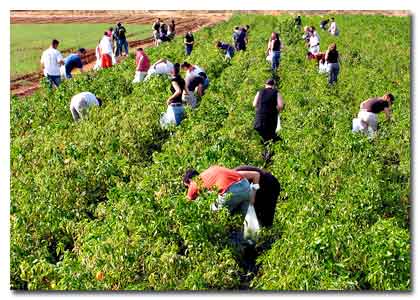
leket-projectThe Gemara relates that Levi had planted grain and there were no poor people to come and collect the leket. He consulted with R’ Sheishes as to what should be done and R’ Sheishes told him that if there are no poor people who will come to collect the leket he may keep it for himself. Rambam rules in accordance with this position and writes that if there are no poor people he may take the grain for himself and is not obligated to give the monetary value of the leket to the poor. Tur writes that if there are no poor people who live in the vicinity one is not obligated to leave leket in his field. Nowadays, the custom is that people do not leave the gifts for the poor in their fields since the majority of the poor people are gentile and if the gifts were left in the fields gentiles would came and take them.

Daf Yomi Digest
Halacha Highlight
“Gifts to the poor”
Chullin 134

“Then the righteous will answer him, ‘Lord, when did we see you hungry and feed you, or thirsty and give you something to drink? When did we see you a stranger and invite you in, or needing clothes and clothe you? When did we see you sick or in prison and go to visit you?’

“The King will reply, ‘Truly I tell you, whatever you did for one of the least of these brothers and sisters of mine, you did for me.’-Matthew 25:37-40

What a minute. We read in the commentary on the daf that the commandment for a Jewish farmer to leave an unreaped corner of his field for the poor (based on Leviticus 19:9) seems only to apply to the Jewish poor. If there are no poor Jews in the area but only poor Gentiles, the farmer is under no obligation to provide for them. Can that be right? It seems a little harsh. Are we to infer that when Jesus teaches his Jewish disciples about feeding the poor in Matthew 25 that he only means Jewish poor? That’s not the way most Christians would interpret the message and that’s not how Christian charities work in general.

I have great admiration and respect for the Jewish sages and do my best, within my limited skill set, to study their teachings, but this one is a little hard to swallow, assuming I’m reading it right. The Talmud doesn’t universally have such an uncaring attitude toward non-Jews, and quite some time ago, I recorded some of the portions of the Talmud that relate to Gentiles in the blog post, What the Talmud Says About Gentiles, Revisited. Here are a couple of comments regarding how Jews are to treat the poor among the Gentiles:

“[it is proper to] support the idol worshippers during the sabbatical year… and to inquire after their welfare [commentators: even on the days of the holidays of their idols, even if they do not keep the seven Noahide commandments] because of the ways of peace.” (Shevi’it 4,3)

The rabbis taught: ‘We support poor Gentiles with the poor people of Israel, and we visit sick Gentiles as well as the sick of Israel and we bury the dead of the Gentiles as well as the dead of Israel, because of the ways of peace.” (Gitin 61a)

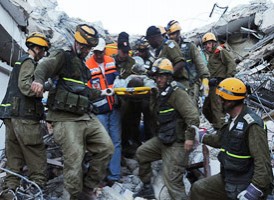
earthquake-aid-assistanceIn recent years, Muslim Turkey, once an ally of Israel, has become increasingly hostile toward the Jewish nation, supposedly over how Israel is “mistreating” the people in Gaza. However, after the most recent earthquake in Turkey, Israel unreservedly offered aid to Turkey and after initial refusals, Turkey accepted.

We know from the Lord’s Prayer (Matthew 6:9-13) that Jesus directed his disciples to pray, “And forgive us our debts as we also have forgiven our debtors”, which seems to say that how we treat others is the way God will treat us. This also reflects a modern Jewish teaching.

How you treat others is how G-d treats you. How you forgive them is how He forgives you. How you see them is how He sees you.

When you show empathy for the plight of another human being, G-d takes empathy in your plight.

When others slight you and you ignore the call to vengeance that burns inside, G-d erases all memory of your failures toward Him. When you see the image of G-d in another human being, then the image of G-d becomes revealed within you.

-Rabbi Tzvi Freeman
“The Image”
Based on letters and talks of the Rebbe
Rabbi M. M. Schneerson
Chabad.org

I suppose I’m in no position to disagree with the rulings of the sages, but I’m going to disagree with this one anyway. If the farmer would have left unharvested corners in his field for the poor, they are the poor, regardless if they are the Jews of his community or Gentiles living nearby. I can see that the commandment is meant to apply to the Jews primarily so that if there are Jewish poor, the remains in the field should be for them. However, even if we can’t extend the obligation to feeding poor Gentiles, assuming no Jewish poor are around, I think compassion should tell the farmer that a hungry Gentile was also created in the image of God.