Tag Archives: Jewish

Community Snapshot: Lessons from Acts 2:42-4:31

Now Peter and John were going up to the temple at the hour of prayer, the ninth hour.

Acts 3:1 (ESV)

At Caesarea there was a man named Cornelius, a centurion of what was known as the Italian Cohort, a devout man who feared God with all his household, gave alms generously to the people, and prayed continually to God. About the ninth hour of the day he saw clearly in a vision an angel of God come in and say to him, “Cornelius.”

Acts 10:1-3 (ESV)

The disciples devoted themselves to “the prayers.” “Luke’s reference to ‘prayers’ rather than to prayer per se here may indicate observance of regular prayer times in the Temple – as well as the community’s own prayers.” (see Le Cornu and Shulam, “A Commentary on the Jewish Roots of Acts: Acts 1-15, 147.”) Most English versions obscure the meaning by not transmitting the definite article. The Greek says that they devoted themselves to “the prayers (tais proseuchais).”

“The prayers” should be understood in keeping with the common liturgical, daily prayers of Judaism, the synagogue, and the Temple. Six verses later, Luke depicts Simon Peter and John “going up to the temple at the ninth hour, the hour of prayer” (Acts 3:1).

This does not mean that early believers prayed out of a Siddur. Prayer books did not yet exist. It only implies that they prayed in concert with other Jewish people, following the same forms, conventions, modes, and times of prayer as the rest of the Jewish world. Their faith in Yeshua (Jesus) did not change their mode of worship. Their faith made their worship more intense and ardent.

Torah Club, Volume 6: Chronicles of the Apostles
from First Fruits of Zion (FFOZ)
Torah Portion Lech Lecha (“Go forth”) (pg 63)
Commentary on Acts 2:42-4:31

In my previous meditation about the Torah Club commentary on Acts, I tried to explain a couple of things. Based on Acts 2, I illustrated that those who were at the Shavuot (Pentecost) festival, and the 3,000 who received the Holy Spirit in Christ’s name, were all Jewish. Coupling what we read in Acts 2 with this week’s study of Acts 2:42-4:31, we can see that the very early days of “Christianity” with Peter and John in Jerusalem involved a completely Jewish religious community. In fact, this portion of Acts is devoted to the description of the early Jewish disciples of the Jewish Messiah in the weeks and months after his ascension.

I’m choosing to focus on that aspect of Jewish community involving “the prayers” for a couple of reasons. One is the obvious point that nothing about the practice of the Jewish disciples changed in the slightest because they were disciples of the Jewish Jesus. They still observed “the prayers” at the set times for prayer. They prayed together with other Jews, both disciples of the Master and any others who had gathered together, seemingly in the part of the Jerusalem Temple known as Solomon’s Portico.

However, you will notice that I again insert something from Acts 10 about the Roman Centurion Cornelius, the God-fearer, who at the beginning of that chapter, had not yet received the Christ; the Messiah, as Lord and Savior. And yet, he was praying at the ninth hour which was “the hour of prayer,” just as the Jews did, including Peter and John.

I also said in my previous missive that the non-Jewish God-fearers and later, the non-Jewish disciples of Jesus indeed took on some (or many) of the Jewish religious practices in order to imitate their mentors and in fact, at that point in history, the “Jewish model” for worshiping God was the only model available. This didn’t make Cornelius or any of the Gentile disciples suddenly Jewish or automatically obligated to a full Jewish lifestyle (otherwise, Paul wouldn’t have thrown such a “temper tantrum” in Galatians 5:1-5). However, it does mean that “Christian” worship looked a lot more Jewish, even after the first non-Jews began to be admitted as disciples, than we could ever imagine it being today.
I suppose that I’ll have a lot more material on Cornelius and the first non-Jewish “Christians” when I actually arrive at the Torah Club’s commentary on Acts 10 (which won’t happen for another six weeks or so) but I want to point out, for those of you reading this who may not already know, the discipleship under Jesus Christ for the early Jewish and Gentile believers did not entail some abrupt demarcation from what otherwise was considered “normal” Jewish religious practice. As D. Thomas Lancaster points out in this week’s study (pp. 61-62):

Notice that each of the four devotions (The Apostles’ Teaching, Fellowship, Breaking of Bread, and the Prayers) are hallmarks of Jewish practice. The new community that formed around the disciples of Yeshua did not adopt new customs or innovations that could be considered particularly Christian and distinct from Judaism. Instead, they devoted themselves to the same pursuits that might characterize any Jewish faith community. Today’s churches and communities of faith would look more like messianic synagogues if we committed ourselves to the four devotions of study, community, hospitality, and liturgy.

That recalls a question I asked not too long ago. Do Christians Practice Judaism? As we understand the concepts today, the answer must be “no.” However, as the “Messianic faith” began as a wholly Jewish expression of discipleship under the Master, what were the very first Gentiles doing when they were brought into discipleship with the Jews? For that matter, what did Cornelius think he was doing when he, as a God-fearer, prayed at the ninth hour and (presumably, though we can’t know for sure) gathered with the Jews in synagogue on Shabbat? Practicing Judaism?

Well, probably not, anymore than a modern-day Noahide could be said to be practicing Judaism by davening with Jews in a synagogue on Shabbat. But is the relationship between a Noahide and a Jew in the 21st century the same as that of a “Messianic” Jew and non-Jew in the mid-1st century? Noahides generally see themselves as bound by the covenant of Noah (see Genesis 9), while Jews claim the Abrahamic, Mosaic, and New Covenants, so strictly speaking, they are unlike members of God’s community, attached to God by different covenants.

I’ve said before that I believe we Christians have a relationship with God due to certain blessings included in the Abrahamic and New Covenants but that we are not attached to all of the same conditions within those covenants. Further, it is my belief (because there’s no evidence directly involving non-Jews) that we are not recipients of any blessings from the Mosaic covenant, which more than any of the other covenants, specifically identifies the Jewish people as a unique covenant people, even within the Messianic community of the 1st century and of the budding Messianic Jewish community of the 21st century.

But let’s wind back to the very early chapters of Acts again and take a look at the community as it existed after that first fateful Shavuot when the Spirit was given.

And they devoted themselves to the apostles’ teaching and the fellowship, to the breaking of bread and the prayers. And awe came upon every soul, and many wonders and signs were being done through the apostles. And all who believed were together and had all things in common. And they were selling their possessions and belongings and distributing the proceeds to all, as any had need. And day by day, attending the temple together and breaking bread in their homes, they received their food with glad and generous hearts, praising God and having favor with all the people. And the Lord added to their number day by day those who were being saved.

Acts 2:42-47 (ESV)

Here we see some of what Lancaster called “the devotions,” namely teaching/studying and fellowship through breaking of bread (which is just as it sounds, eating together, rather than some special sacrament). This passage is also sometimes referred to as “Christian Communism,” since everyone “re-distributed wealth” so that everyone shared everything. This brings up a point I want to make, not only about this passage but about the larger issue of community.

There are some who would isolate this part of the second chapter of Acts and say it’s the only way a Christian community should be run, and if any other Christians are “hoarding” material wealth for themselves through private ownership of a car, house, and so on, they are in violation of their Christian faith.

But we’re only talking about five verses in a single chapter of the Bible. Who develops an entire theology and Christian lifestyle based on a tiny handful of verses taken out of context?

Actually, quite a lot of people. I tend to think of Christians and Christian groups who insist on cherry picking verses to fit some arcane theology as “on the fringe” and I hope they are indeed in the minority, because it’s a dangerous practice. Focusing on just little bits and pieces of the Bible in an attempt to justify a “pet theology” and then to “sell” it to a wider audience as some form of “scholarship” is not only dishonest but potentially misleading to people who may actually believe it for lack of any better insights on their part.

Let’s take another example from Lancaster’s commentary. He defines the early Jewish Messianic community in terms of the larger context of 1st century Judaism in Jerusalem and Roman occupied Palestine. Let’s keep in mind that there was no one, monolithic Judaism then, anymore than there is one now (that goes for Christianity too, by the way). There were differing sects of Judaism and the sect that became known as “the Way” was what we see as the early Jewish disciples of Jesus in the beginning chapters of Acts. They were Jewish. They behaved in a way that was considered acceptable relative to Jewish religious and lifestyle practices. Except for their insistence that the man from Nazareth named Yeshua was indeed the Messiah, and that he was unjustly executed and three days later, rose from the dead, their Jewish lives and teachings wouldn’t have raised an eyebrow from any other Jew in the Holy Land.

Can we take a “snapshot” of their lives as we see them lived out in Acts 2 and 3 and say that’s how we Christians should live today? Is it any more valid to say that than to say that we must live a Christian lifestyle that exactly mirrors Acts 2:42-47? Probably not. It fails to take a great deal into consideration.

If the 1st century Jewish disciples of Jesus lived a lifestyle that was completely consistent with their Jewish peers and their surrounding Jewish culture, does that translate into a bunch of non-Jewish Christians in the 21st century doing the same thing? Remember, for the most part, Peter, John, and the rest of the disciples didn’t appear particularly unusual as they prayed at the ninth our in Solomon’s Portico. They didn’t appear particularly unusual as they met together to study the teachings of their Master. They didn’t appear particularly unusual when they met together for communal meals. Lots and lots of different groups of Jewish disciples of one Rabbi or another behaved in very similar ways.

But that wouldn’t necessarily translate to Christians twenty centuries later any more than it would translate to modern Jews. Our situations have changed drastically and on top of that, we don’t have a complete picture of what the early Messianic Jewish communities looked like. We can extrapolate based on whatever knowledge we possess of wider Jewish practices in the late Second Temple era, but we have even less knowledge of “normal” Christian practices among the newly minted Gentile disciples post-Acts 10. How could we ever figure out, assuming our goal was to imitate some portion of 1st century worship behaviors, how to replicate what that community (or those communities if we assume that once early non-Jewish churches were founded, their practices began to vary from those of the Jewish disciples in the synagogues) did way back in the first weeks, months, and years after the ascension of Jesus?

We can’t, at least not to a high degree of reliability and detail. What we can do is take what we understand of some of the general principles we see lived out and match them up with some of Christ’s teachings within a larger Biblical context and figure out some foundational points with which to connect.

Meeting together? Don’t we do that now? Don’t we have churches? Don’t we have home Bible studies? Don’t we serve food and eat together? Don’t we study together? Don’t we pray together?

Didn’t I just cover Lancaster’s four devotions in the previous paragraph?

Nothing in what we’ve seen in the first chapters of Acts necessarily tells us that the Gentile disciples (who didn’t exist during that time frame) where to behave exactly like their Jewish counterparts. It does tell us that the early Jewish disciples behaved very consistently with the Jewish religious and cultural practices in which they lived. Those Jews believed Jesus Christ was the Messiah and yet there was nothing at all to say that they ever stopped being Jews, stopped making sacrifices at the Temple, stopped celebrating the traditional festivals, stopped keeping kosher, stopped observing the Shabbat, stopped…you know what I’m getting at.

In the days when the Second Temple still stood and after the ascension of Christ, there was nothing to show us that the so-called “Jewish Christians” stopped being Jewish and started being “Christian” as we understand the term today.

But while I’m content to table what the later (from an Acts 3 point of view) Gentile disciples were supposed to do within what appears to be a wholly Jewish religious arena (I know I just left this question hanging, but I’ll pick it up again in subsequent studies of Acts via Torah Club), can we say that if the ancient Jewish disciples of the Master lived completely Jewish lifestyles and those lifestyles were totally consistent with their discipleship under Jesus Christ, could the same be true for the modern Jewish disciples of the Jewish Messiah?

Most of my regular readers (the ones who typically comment, anyway), already know that answer. But some of you, especially if you’re just surfing in here, may be a bit surprised. Food for thought.

Genesis: Learning Beginnings

And G-d said: “Let there be a firmament…”

Genesis 1:6

It is written: “Forever, O G-d, Your word stands firm in the heavens.” (It is written: “Forever, O G-d, Your word stands firm in the heavens.” (Psalm 119:89) Rabbi Israel Baal Shem Tov, of blessed memory, explained the verse thus: “Your word” which you uttered, “Let there be a firmament…,” these very words and letters stand firmly forever within the firmament of heaven and are forever clothed within the heavens to give them life and existence. As it is also written, “The word of our G-d shall stand firm forever” (Isaiah 40:8) and “His words live and stand firm forever.” (From the morning prayers) For if these letters were to depart even for an instant, G-d forbid, and return to their source, all the heavens would become nought and absolute nothingness, and it would be as if they had never existed at all, exactly as before the utterance, “Let there be a firmament.”

And so it is with all created things, down to the most corporeal and inanimate of substances. If the letters of the “ten utterances” by which the earth was created during the six days of creation were to depart from it for but an instant, G-d forbid, it would revert to absolute nothingness.

This same thought was expressed by the Ari (Famed kabbalist Rabbi Isaac Luria, 1534-1572), of blessed memory, when he said that even in completely inanimate matter, such as earth and stones and water, there is a soul and spiritual life-force – that is, the letters of Divine “speech” clothed within it which continually grant it life and existence.

-Rabbi Schneur Zalman of Liadi

One year, following the Rosh Hashanah prayers, Rabbi Schneur Zalman of Liadi asked his son, Rabbi DovBer: “What did you think of during your prayers?”

Rabbi DovBer replied that he had contemplated the meaning of the passage, “and every stature shall bow before You” (From the “Nishmas” prayer received on Shabbos) – how the most lofty supernal worlds and spiritual creations negate themselves before the infinite majesty of G-d. “And you, father,” Rabbi DovBer then asked, “with what thought did you pray?”

Replied Rabbi Schneur Zalman: “I contemplated the table at which I stood.”

-Rabbi Yanki Tauber
“Wooden Thoughts”
from the “Once Upon a Chasid” series
Commentary on Torah Portion B’reisheet

“I contemplated the table at which I stood” seems an odd way to begin a commentary on Genesis and the beginning of a new Torah cycle, but it tells us something about how Jews see life and, to some degree, the differences in generations. Maybe it also teaches us something about different levels of learning. Rabbi Zalman’s son, who was undoubtedly at a relatively early stage of his education, was focused on “the most lofty supernal worlds and spiritual creations negate themselves before the infinite majesty of G-d,” which is not such a bad thing to contemplate during prayers. But why then, would his father contemplate the table at which he stood?

What was God creating at the beginning of all things?

“Firmament” has also been translated as “expanse” (JPS Tanakh, NIV Bible, ESV Bible) or “space” (New Living Translation Bible) and can also be rendered as “canopy.” Although we may think of this as “sky” or “heaven,” there is an apparent “physicality” and “permanency” to God’s creating of everything. And why should God have to create the physical and permanent? For us.

Neither Rabbi Zalman nor his son was wrong about what they were contemplating during their prayers, but this also tells us something about the nature of God, man, and this week’s Torah Portion. Heaven and Earth aren’t necessarily the separate things we consider them in Christian thought. Everything, the physical and the spiritual, are from God, so we should consider them equally as eternal (or at least extremely long lasting) gifts from our Creator.

But I mentioned before about the differences between generations and the different levels of learning. The younger learner strives to reach up to God and the spiritual realm, and the older, more experienced Rabbi, has learned to see Him, even in a wooden table. I guess that tells us to relax a little when we think we can’t see God. He’s all around us anyway and in many ways. Even in the humble wooden table we’re standing next to when we pray. However, this isn’t always the traditional experience parents, Jewish or otherwise, have when trying to pass their traditions and culture from one generation to the next.

I also am not scoring high on the Jewish parent scale these days: my older daughter, who turned 9 in August, recently decided she hates all worship services and doesn’t want to go to Hebrew school. Even though she likes her teachers. My response, for now at least, is that she doesn’t have a choice about Hebrew school, so she might as well try to enjoy it. (Yes, I know, that sounds like the horrifically insensitive comment some clueless people make about rape.)

From toddler-hood until now was like a Jewish identity honeymoon; Ellie loved Hebrew school and her only complaint about services — they are a regular part of Hebrew school each week — was that she didn’t always get called up to the bima to read.

In fact, the first year we belonged to the temple it was my younger one — then 4 — who put up a fuss about Hebrew school, wanting instead to hang out with me on Sunday mornings. But after a few months of conflict, Sophie decided she adored her teacher and the teenage assistant teachers. Two years later, she has nary an objection (although I fear I’ll jinx that now), but Ellie complains constantly.

-Julie Wiener
“Tweens and Torahs”
from her “In the Mix” series
TheJewishWeek.com

Wiener’s experience is probably more “normal” in terms of religious parents trying to make sure their children receive a “proper education.” I imagine Christian parents have similar struggles getting their “tweens” to go to Sunday school or some Wednesday night Christian kids meeting.

Last year, for this Torah portion, I talked about rerolling the Torah scroll as, in part, a way to reset the clock and turn everything back to the beginning. In the beginning, we not only find the familiar, but we look at it in new and different ways. That’s why I can write a commentary on Genesis from one year to the next and have them be quite different from one another.

But that’s a mature attitude. For a child, it might be, “Not Genesis again,” as if they were having meatloaf for dinner the third time this week. At a certain age, when children are in-between independence and childhood, they navigate a difficult course between parental priorities and their own.

For Jews, the additional layers aren’t just the religious but the cultural. While Julie Weiner is a Jewish agnostic and thus does not transmit a strong religious tradition down to her two daughters, the fact that she is Jewish means she must transmit a strong Jewish cultural identity to her two daughters. The fact that she’s also intermarried adds another wrinkle to the fabric, but that’s what her blog is all about.

It’s also what my blog is all about. It is sometimes incredibly interesting to be intermarried. There was a time when I attended Shabbat services at the local Reform-Conservative synagogue with my wife and kids (who are all Jewish). I felt pretty out of place at the time, but in my heart, I was worshiping the God of Abraham, Isaac, and Jacob. If I had it to do over again, I would have become much more involved in the synagogue community, but I wasn’t in the right place mentally and spiritually back then.

I had no intention of evangelizing or making a nudnik (pest) out of myself. I tried to fit in as best I could but it wasn’t my culture or my identity. I followed the service and spoke to God, but none of that made me a Jew and really, I wasn’t practicing Judaism. I was worshiping alongside the Jews in the congregation (and since it was Reform, I wasn’t the only non-Jew present). I was “in the mix” to borrow from Weiner’s blog, in a group fraught with “mixes,” but I still was and am a Christian.

Rolling the Torah ScrollI mentioned quite recently that I see the mission of Christianity, and particularly those Christians who have an affinity for Judaism, is to support, promote, and encourage a return to the Torah for the Jewish people in our midst. An extension of that mission is to communicate to other Christians what our mission means and how we see it fitting in to the expansive plans of God.

Julie Weiner is trying to pass down Jewish identity from her generation to her children’s. That presupposes Weiner, as a Jew, having ownership over her Jewish identity. That would seem like a no-brainer for the vast majority of people including the vast majority of Christians and Jews, but as I said before, there are some Christians out there who seem just a little confused about who is Jewish and who isn’t. That question extends outward into the larger, “What is Judaism?” which includes What is Messianic Judaism?

The answers aren’t easy, but we can start at a basic foundation. We can see that being Jewish isn’t just a “religious” thing. Wiener (remember, she’s agnostic) can take her two daughters to Simchat Torah with encouraging results.

For Simchat Torah, I dragged the whole family to services, because I remembered how much fun it had been two years earlier (we had to miss it last year), and both girls love dancing. When I was invited to carry one of the Torah scrolls around the sanctuary, I asked Ellie if she wanted to join me, assuming she’d roll her eyes and say absolutely not. To my surprise, she not only came along (eagerly trailed, of course, by Sophie) but then, when offered a small Torah scroll of her own to carry, proudly took it. To her delight, someone took a picture of her marching around the temple with the Torah. (Yes, it’s a Reform temple, we take pictures on Jewish holidays. Go ahead and judge, judgmental reader.) And she danced with gusto for the rest of the night.

There are a lot of Jews in my area who attend Erev Shabbat services at our local Reform-Conservative shul largely for social, cultural, and community reasons as opposed to “being religious” (the Saturday service is thought as “too religious” by many of the Friday night folks).

Those of us who find Jewish cultural and religious practices attractive for whatever reasons, must strive to remember that attraction does not equal ownership. Julie Wiener and her daughters own their Jewish identity, religious and otherwise, because they’re Jewish. Chances are, most of you reading this blog are not. Chances are, most of you reading this blog have no problem with not being Jewish and thus not claiming Jewish identity, either conceptually or by behavior.

We are at a beginning point in the Torah reading cycle. Jewish children are at a beginning point in understanding and establishing a Jewish identity at the levels of religion, culture, ethnicity, and spirituality. It can be very hard to grant someone something that you don’t understand. How can we give the Torah and Jewish identity back to Jews and Judaism? We may think the Bible has told us all we need to know to comprehend what it is to be a Jew, but unless we grew up in a Jewish home and were raised by Jewish parents, in a lived, experiential sense, we don’t have a clue. We just have a little knowledge and a lot of imagination.

In Genesis, God creates the world and its various components and life forms and He creates man and woman. In Abraham, He created the first Hebrew by covenant relationship. At Sinai, by covenant relationship, He created the people and the nation of Israel, who were separated in perpetuity from the rest of the nations; the rest of humanity, in order to serve God in a very, very specific way.

While we Christians were also “created” in covenant relationship to God through the blood and death and life of Jesus Christ, and we are equal in God’s heart and God’s love to the Jewish people, we are not the same as the Jewish people. How all that will work out after the Messiah comes and after all things that are supposed to come to pass, have long since come to pass, I don’t know. I just know that right now, I’m a Christian. People like Julie Wiener and my wife are Jewish. Being Jewish means a whole lot of things and maybe not exactly the same things to all Jews. On the other hand, when you’re not Jewish, it’s pretty obvious, or it should be. For kids in intermarried families, it can be confusing, but the world has done away with enough Jews over the last 3,500 years or so and we need to stop. We need to make it easier for Jewish kids with intermarried parents to recognize what it is for them to be Jewish and not “muddy the waters” for them, so to speak.

Let the Jewish children have their beginning and discover who they are. We Christians should be busy discovering who we are and then teaching that to our children. May the Jewish and Christian children one day find out who they are in relationship to each other, and may all of our generations on that day, stand before the Throne of God and worship the One.

Being Strong

Question: I am a lay leader at my temple. Since our rabbi is away, I will be leading this week’s Shabbat service. I have beginner-intermediate skills for chanting Torah. Your pasha page was very helpful. Could you define the words “Chazak Chazak Venis-chazeik,” so that I can explain it to the congregation?

The Aish Rabbi Replies: Upon completing a public reading of one of the Five Books of Moses, everybody stands up and shouts “Chazak! Chazak! Venis-chazeik!” which translate as “Be strong! Be strong! And may we be strengthened!”

Rabbi Hayim Halevy Donin (in To Pray as a Jew) explains that this is a cry of encouragement to continue with the reading of the next book, and to return to this one again in due course. The triple use of the word “Chazak” may symbolize past, present and future.

Be strong and may you be strengthened!

“Completing a Book of Torah”
from the “Ask the Rabbi” series
Aish.com

Simchat Torah is the occasion in religious Judaism on which the very last portion of the Torah is read before immediately proceeding back to the beginning and starting another annual cycle. As was explained in the quote above, at the end of the reading of each book of Torah, it is customary to say, “Chazak, chazak, venitchazek” which translates as “Be strong, be strong, and may you be strengthened.”

But be strengthened for what?

Synagogues throughout the world will reverberate this Shabbat with the communal outcry of “Chazak, chazak, venitchazek” as the final words of Chumash Shemot are read.

This rallying cry to strengthen ourselves as we move from one Chumash to another is especially relevant to Jews living in Israel. Faced by the relentless terror from our enemies and the complacence of a world towards those who wish to destroy the Jewish State, there is truly an urgent need to remain strong in spirit as well as in defensive capability.

But this strength must have its source in our Torah, which gives us an undeniable right to our Land. The more that Jews see that there is a direct relationship between loyalty to Torah and security there will be a strengthening of our ability to enjoy Israel forever.

-Rabbi Mendel Weinbach
“Chazak, Chazek, Venitchazek”
Ohr Somayach

We see that this cry of encouragement isn’t just to gather strength to continue with the reading of the next book of Torah. For Jews, this is summoning the strength to continue to face adversity, crisis, and the seemingly perpetual efforts of the nations of the world to exterminate the Jewish people and their state.

I recently read an article about Cyber attackers targeting Iranian oil platforms. My attention was drawn to a particular quote in the article, which was originally published by the British news agency Reuters.

Mohammad Reza Golshani, head of information technology for the Iranian Offshore Oil Company, told Iran’s Mehr news agency that a cyber attack had targeted the offshore platforms’ information networks.

“This attack was planned by the regime occupying Jerusalem (Israel)…

So now the Jews are the regime occupying Jerusalem.” Even this quote from a seemingly innocuous news story takes pot shots at the legitimacy of the Jewish state and the right of the Jewish people to the Land of Israel. Yes, it takes a great deal of strength to be Jewish and particularly to be Jewish in the Middle East.

But what about the rest of us? More specifically, what about we Christians? Is there any relevancy for us in “Chazak, Chazek, Venitchazek?”

I suppose not specifically, since the traditional reading of the Torah cycle is foreign to most churches. Still, if we widen our focus, I think we can consider the principle behind the statement of encouragement to have some meaning for us.

A life of faith is not an easy one. While unlike the Jews, the rest of the world isn’t actively seeking to destroy Christians and Christianity (although there are some parts of the world where Christians are directly persecuted), we aren’t exactly well-loved, either. That’s to be expected, even of the best of us, since holding to a moral standard isn’t exactly a popular sentiment in a world that worships relativity in its morals and ethics.

But then again, what we are most often criticized for is our faults, not our virtues. We are criticized for our hypocrisy, our hostility, our judgmentalism, our bigotry, our sexism, and so on. Much of the time, our critics are right about us. When we compare our actual behavior to our stated values, we come up short. How often are we “caught” feeding the hungry, visiting the sick, providing water to the thirsty, showing respect for the aged and infirm, comforting the grieving, and so on?

Oh, it’s not that we don’t perform the deeds taught to us by our Master. It’s that we don’t make them central to our lives. It’s embarrassing when we see atheists who outshine us at actually behaving with “Christian values.” Where is our strength under these circumstances?

For me though, the need for strength is in trying to sort out my own unique role and place in the world around me and in the Kingdom of Heaven. To employ a well-known aphorism, I’m “neither fish nor fowl.” My self-declared identity is as a Christian, but if I actually showed up in a church, ten seconds after I opened my mouth, I’d fit in about as well as a square peg in a room full of round holes. The same would go for me attending a synagogue, since I’m only marginally familiar with the actual Hebrew prayers and customs and in any event, my presence would make the missus far more uncomfortable than it would me.

I keep toying with the idea of going back to a church. I’ve got one picked out as a likely candidate, but then, given how embarrassed my wife is at the mere fact that I’m a Christian, my actually attending a church would likely add insult to injury. There are a variety of barriers involved which I won’t go into, but if my wife feels uncomfortable in inviting Jewish friends to our home, how would she feel if I joined a church and then invited a few Christians over?

I frankly don’t see a way around all of this and hence the need for personal encouragement. Be strong, be strong, and may we (or rather I) be strengthened. For that matter, may my wife be strengthened so that she can return to the Jewish community and participate in worshiping God among her people.

If the encouragement is generally for a Jew to continue from one book of Torah to the next, then I’ll interpret it for myself (an arrogant conceit, I must admit) as the encouragement to continue as an individual person of faith from one day to the next. I’ll consider it the strength to continue writing meditations from one day to the next.

Joshua was encouraged by God to be strong and courageous, and he had both God and the Children of Israel to support him in taking the Land of Israel for the Jews as was promised by the God of Abraham. Most married couples who are religious are religious in the same direction, attending the same house of worship, and adhering to the same basic expression of faith, whether that is Christian, Jewish, or anything else. Even many intermarried couples will attend both his house or worship and hers, at least on occasion.

Like I said, I’m neither fish nor fowl. This is a season of beginnings for religious Jews. For me, it’s another day, another morning. How many more should I anticipate? How many more should I plan for? Where is the end of the trail and upon reaching it, will God and I part company or is there a future for both of us together?

Some people mistakenly think they have a natural need for approval and there is nothing they can do to overcome it. The truth is that the adult need for approval is based on demand. If a person decides he needs only his own approval and not that of others, he is able to focus on the question, “What is the proper thing for me to do now?” He does not ask himself, “How will other people look at me?”

This change in focus can be difficult, but once you accept it is possible, you will be able to change your attitude.

-Rabbi Zelig Pliskin
“Focus On What’s Right, Daily Lift #602”
Aish.com

Good question, Rabbi. “What is the proper thing for me to do now?”

What is Messianic Judaism?

Every society has that which bonds it: A common ancestry and a system of patriarchal lineage. Or a common language or common borders or governing body. Usually, it is a combination of several factors that mold a mass of people into a single whole.

The Jewish people are unique in that they have only a single nucleus—and it is none of the above.

All that bonds us is Torah. Nothing else has proven capable of holding us together for more than a generation or two. Nothing else, other than the same Torah that first forged us as a nation.

-Rabbi Tzvi Freeman
“Jewish Nucleus”
Based on letters and talks of the Rebbe
Rabbi M. M. Schneerson
Chabad.org

When I became a follower of Yeshua, it was not a rejection of the God of Israel, but, on the contrary, a belief that Yeshua was a fulfillment of God’s promise to Israel. I did not stop being a Jew, and did not stop living as a Jew. On the contrary, believing Yeshua to be the Messiah made me want to be more observant of the Torah than before. Believing in Yeshua enhanced my Jewishness rather than lessen it.

Whatever my experience is, it is not a conversion to Christianity. I do not criticize Christian practice, but simply state the fact, that their practices are not my practices, their form of worship is not mine. Whenever I have visited a church, I have felt out of place, like I was in someone else’s living room. Their culture was not my culture, their practices were not my practices. Their understanding of Scripture is not mine. The only conclusion is that their religion is not my religion.

I feel at home in the synagogue, any synagogue. Their practices and beliefs are familiar to me. Their understanding of God and of His love for our people resonate with mine. While traditional synagogues don’t acknowledge Yeshua, nevertheless, He is there. For me, He is the Messiah of Israel.

-Rabbi Dr. Michael Schiffman
“Messianic Judaism and Christianity: Two Religions With The Same Messiah”
Drschiffman’s Blog

What is Messianic Judaism? Who is a Messianic Jew? These are questions I’m probably not qualified to ask let alone answer, but I have a special interest in the topic for a number of reasons. One important reason is that I’m a Christian husband married to a Jewish wife, so I am keenly aware of the intersection between our two outlooks on faith, the Messiah, and God as it expresses itself in our family life (I also have three Jewish children to add to the mix).

On top of that, most of my “Christian” religious life has been spent worshiping within the context of a One Law congregation (which isn’t really “Messianic Judaism” but I’ll explain that by the by). Within that venue, I gained an appreciation of (if not an actual proficiency in) Jewish religious thought and practice. I find not only many of the mitzvot quite beautiful and meaningful, but the symbolism and conceptualization behind the mitzvot, as the Rabbinic sages have expressed it, to be illuminating of God and oddly enough, my own Christianity.

Additionally, I have enough friends and acquaintances who are Jewish and Messianic and I desire to understand them and their unique experience better. That understanding I believe, will be critical for the Christian church as a whole (if the church can be said to represent a whole) to grasp as the days of the Messiah draw near and he calls His people Israel to return to him along with the nations of the world (“first to the Jew,” however). Without a firm foundation in the “Jewishness of Jesus” and how our world will one day be ruled by a Jewish King descended from the Throne of David, the traditional Christian will become lost and unable to connect to who and what Jesus truly is and what it actually means to be a Gentile disciple of the Messiah.

In addition to the Rabbis I’ve quoted from above, this “meditation” was inspired by a series my friend Judah Gabriel Himango has just started on his own blog called The State of the Messianic Movement. He intends to examine the three overarching groups that exist under the “Messianic” umbrella: Jewish Christianity, Messianic Judaism, and Hebrew Roots. This should require a definition of each of these terms and what (and who) they represent.

For myself, I’ve found that my understanding of what “Messianic Judaism” is has morphed over time. I used to think the term was a big “bucket” that contained what I thought of as Messianic Judaism proper, or groups of primarily Jewish people who worship Jesus as Messiah, One Law, which are groups of primarily non-Jews who believe that the Sinai covenant and its conditional statements, the Torah, are applied with perfect equality between Gentile and Jewish believers, and Two-House, which is made up of groups of primarily non-Jews who believe that their attraction to Torah and Judaism means they are “hidden” Jews who are descended from the “Lost Tribes of Israel.” (By necessity, these definitions are brief and do not contain all of the details and nuances to completely describe each group)

It would take too long to explain how and why I changed my paradigm for understanding Messianism, but a large part of the process was watching my wife rediscover her own Jewish identity during the last several years, moving from atheism, to traditional Christianity, to One Law, and then entering the community of Jews locally, first in our combined Reform-Conservative shul, and then finally becoming involved with the Chabad. I can say all that in a single sentence, but the reality of the experience is extremely complex and involved and having lived through my wife’s journey as her Christian husband (often observing but not significantly able to participate), it has been a remarkable and life-changing progression.

The missus and I were sitting at the kitchen table taking about subjects related to this and we landed on the “hot topic” of whether or not she thought Messianic Jews were Jews. Her answer surprised me just a little. She said that non-Jews who converted to Judaism but who did not renounce other religions (including or perhaps especially Christianity) were not Jews. During the last part of the conversion process, the almost-convert is asked if they voluntarily surrender any and all affiliations to any other religions or faith traditions. If they expect to complete the conversion and enter the mikvah, they always answer “yes”. If they answered “yes” but retained a faith in Yeshua (Jesus), then they lied and their conversion is null, as far as she’s concerned. If, for some reason (and I’ve heard unsubstantiated rumors of this occurring occasionally), the officiating Rabbi fails to ask the question and the convert continues to silently harbor a faith in Yeshua, then again, as far as my wife is concerned, the conversion isn’t valid. A non-valid conversion means the person entered and exited the mikvah as a Christian. End of story.

On the other hand, if a halalaic Jew in any way shape or form, came to faith in Jesus and worshiped him as Messiah, as mistaken as my wife thinks that person is, they are still a Jew. It would be like a Jew who practiced Buddhism or some other religious tradition. They’d still be Jewish. Her brother, for instance, is a born-again Christian and as far as I know, he continues to deny that his mother (and my wife’s mother) was Jewish (my mother-in-law passed away many years ago). To look at him, his wife, and his children, they are the perfect picture of a traditional Christian family. The idea of being Jewish just doesn’t compute within him and I’m sure he doesn’t understand why my wife and children consider themselves Jews. Nevertheless, if he should walk into our local Chabad synagogue on any given morning, and the Rabbi was aware of his status, he could still join the minyan for Shacharit prayers.

I’ve said everything above by way of introducing my humble definition of Messianic Judaism.

First of all, as Dr. Schiffman said on his blog, Messianic Judaism isn’t Christianity. Oh, it shares a number of common elements, not the least of which is the same Messiah. Jesus the Christ is the same guy (forgive me if that seems irreverent) as Yeshua HaMashiach. He is the Lord, the Savior, the Jewish Messiah King, who came once to redeem the world and who will come again, in power to redeem and restore Israel and to rule all of humanity.

However, who we are as disciples of the Messiah makes a huge difference. Regardless of how the movement of “Jesus worshipers” was started, first among the Jews and then among the Gentiles, 2,000 years later, Jews and Christians represent two wildly differing cultures and practices. As Dr. Schiffman said, he doesn’t feel comfortable in a church. He doesn’t belong there. His “spiritual home,” if you will, is the synagogue, any synagogue, Messianic or otherwise. I know of at least one other Jewish person who is Messianic and yet attends an Orthodox synagogue. I suspect there are others who quietly worship in their Jewish communities and yet who nurture a deep faith in Yeshua.

What is Messianic Judaism given all of this? In my opinion, it is a Judaism in the same manner as Orthodox Judaism, Conservative Judaism, Reform Judaism, and so on. It is an expression of religious and halalaic faith and devotion of Jewish people as they relate to the Torah and God. It is the lifestyle, cultural, ethnic, religious, and halalaic context within which each Jew is Jewish. Most, if not all of the other modern Judaisms will certainly disagree with my opinion as will most Christians and the vast majority of non-Jews who are attached to the Hebrew Roots movement in some manner or fashion. So they’ll disagree.

My definition of a Messianic Jew is a person who is halachically Jewish and who practices a form of religious Judaism which includes acknowledging the person of Jesus (Yeshua) as the Jewish Messiah King, and who acknowledges the legitimacy of the Gospels, the Letters, and the Apocrypha in what most people call “the New Testament” as valid for “teaching, for reproof, for correction, and for training in righteousness, that the man of God may be complete, equipped for every good work.” (2 Timothy 3:16-17 ESV) This person’s ethnic, cultural, religious, and lifestyle practice should be virtually indistinguishable from any other religious Jew (it would be interesting to find out if various Messianic Jews pattern their halakhah after different sects, such as Orthodox or Reform, but I lack information here). As Dr. Schiffman said, a Messianic Jew practicing Messianic Judaism (sorry if this sounds redundant, but it’s important to be clear on this point) should look and act the same as any other religious Jew from the viewpoint of an outside observer.

The twist is that there aren’t (probably) that many Messianic Jews practicing Messianic Judaism as I’ve just defined those terms. Even in synagogues that are strictly Messianic Jewish, that is, shuls that are governed by a halachically, ethnically, religiously, and culturally Jewish board, Rabbi, Cantor, and so on, the majority of attendees will still be non-Jewish. The type of synagogue practice should again, be indistinguishable from any other synagogue apart from portions of prayers and services that acknowledge Yeshua as the Messiah and the heir to the Davidic throne. Synagogues like this are most likely very rare in the western world. I’ve only attended one in over ten years of being aware of Messianic Judaism, and I only visited there last spring.

So, while it’s understood, from my perspective, that Messianic Jews practice Messianic Judaism, do the non-Jewish attendees also practice Messianic Judaism alongside the attending Jews? The answer to that question is probably the same as asking if I practiced Judaism when (this was years ago) I attended our local Reform-Conservative synagogue with my Jewish wife and our children.

In other words, “no”. I certainly worshiped the God of Abraham, Isaac, and Jacob, and privately in my own heart, acknowledged my Lord and the King of the Jews during the prayers, but I was a Gentile among Jews in a completely Jewish context. From their point of view, the best they probably thought of me was as a righteous Gentile, and it’s not unusual for Noahides to worship alongside Jews (where else would they go?). In fact, I know of many Christians who periodically or (for a few) regularly worship in one of the local synagogues, either because they’re intermarried like me, or they have some other affinity for the Jewish people and for Judaism.

In a sense, whether you worship in a church or a synagogue (assuming you are a believer in Jesus as the Jewish Messiah) depends largely on your sense of personal identity and in which culture you feel more comfortable. This isn’t really unusual. Some Jews feel more comfortable in an Orthodox synagogue than those of the other Jewish sects, and some Christians feel more comfortable in a Lutheran or Baptist church than in a Methodist or Episcopal church. Some of that is theological, but a lot of it is cultural and believe me, different Christian denominations have their own cultures. So why not different Judaisms?

I’m sure my descriptions and definitions are far from complete, but trying to define Judaism in any sense, let alone Messianic Judaism, is a very difficult and involved task. This is really more of an introduction than anything, but as I said, some of the material I’ve been reading lately has been tugging at me and I needed to respond. As always, many people will disagree and many people will become upset, troubled, and even incensed and outraged. I’ve talked recently about how poorly some people tend to respond when another person disagrees with them online.

It’s OK if we don’t agree. Please try not to take it personally. As I live with Jewish people every day, I’m kind of in tune with how they are like me and how they are not like me. I’m just extending that personal awareness into a public arena. Your mileage may vary.

Sharing with Abraham

The Land of Israel is central to Judaism. It is an intrinsic part of the covenant that God promised to Abraham and his descendants (Genesis 12), and most events recorded in the Bible took place in Israel.

The mitzvah to live in Israel is based on the verse, “You shall possess the Land and dwell in it” (Numbers 33:53). The Talmud states that “every 4 amot (about 7 feet) that a person walks in Israel is another mitzvah.”

The question, however, is whether this mitzvah is compulsory in our times when the Holy Temple is not standing. This is the basis of a dispute between two great Talmudic commentators, Maimonides and Nachmanides. A leading 20th century sage, Rabbi Moshe Feinstein, concludes that living in Israel is a “mitzvah kiyuma” – while it is a great mitzvah, there is no absolute obligation to do so.

from Ask the Rabbi
“Mitzvah to Live in Israel”
Aish.com

I used to want to live in Israel. I gathered together various reading materials related to making aliyah. I often imagined what it would be like to permanently move to the Holy Land. It was a rather romantic notion and it wasn’t beyond the realm of possibility. I’m not Jewish, but my wife is. If she made aliyah, it’s not like the state of Israel would deny her just because she was married to a goy. I’d “go along for the ride,” so to speak.

As the years passed, my passion cooled and reality settled in for the long haul. I realized that my wife had no desire to actually live in Israel (though she and my daughter have visited). According to the Ask the Rabbi quote from above, there’s not an absolute obligation for a Jew to live in the Land, so I guess Jews can still choose to live where ever it pleases them.

But reading the article about the mitzvah of living in Israel reminded me of what I wrote yesterday about Abraham, Jews, and Christians. (I decided not to make this blog post part of The Jesus Covenant series since it’s more of a “side note” on the covenant than a direct investigation, however the relationship between this and the “covenant” series is obvious) The giving of the Land of Israel to the Jewish people in perpetuity is part and parcel of the Abrahamic covenant (see Genesis 12). As I outlined in my previous blog post, while one of the conditions of said-covenant provides a blessing to the nations through Abraham’s seed; through the Messiah, that is the only condition of the covenant that applies to Christianity.

In other words, the Land is promised to Israel through the Abrahamic covenant, but that doesn’t translate into Israel also “belonging” to Christians. My wife, as a Jew, has the perfect right to request and receive legal citizenship in Israel while I, a non-Jew, do not, even if I really, really want to live there.

This is sort of a metaphor for a larger set of obligations and permissions vs. human desires that I experience in my little corner of the blogosphere. As much as I may have wanted to live in the Land of Israel at one point in time, that would only have been accomplished in my case, if I accompanied my Jewish wife when she made aliyah. If she never makes aliyah, then I’m staying in the good ol’ U.S. of A. with her. She has the right to make aliyah to Israel. I can only live in Israel because of her being Jewish.

That covers so many other things. We Christians may see the many advantages the Jews have (see Romans 3:1-2) and we tend to want them for ourselves. That’s probably the desire that is at the heart of supersessionism in Christianity. We’ve been taught that every promise God made to the Jewish people has been taken from them and transferred to us, so when we see the beauty of the various aspects of Judaism, the lighting of the shabbos candles, praying the Shema, reading from the Torah scroll in the synagogue (another form of aliyah), we, or at least some of us, want them, too.

Nevermind that a “want” is not a “deserve,” we still want, much like a child in pre-school sees a playmate who has a cool toy, we want it for ourselves. It doesn’t matter if that toy belongs to our playmate. At that age, kids don’t have a terrific understanding of empathy, boundaries, and distinctions. They are very egocentric. If they want something, they take it. It doesn’t matter that the toy belongs to someone else. That’s why pre-school age children need adults to remind them that they can’t have everything they want, even when they see other kids playing with a really cool toy.

When you’re a small child, you think and feel like a small child and there are many things that you don’t understand. We adults are tolerant of this in our children and grandchildren because we know this behavior is a normal stage of development. We gently provide correction and eventually, the child grows and learns. The problem is when people grow up and they don’t learn, and they still keep thinking like children.

When I was a child, I spoke like a child, I thought like a child, I reasoned like a child. When I became a man, I gave up childish ways.

1 Corinthians 13:11 (ESV)

If we don’t develop properly and we cling to childish ideas, we grow up continually mistaking wants for needs and privileges for rights. In the western nations, we are taught to stand up for our rights, and then we believe that everything is a right. Our Constitution guarantees the right to pursue happiness but that’s no promise that we’ll actually attain it. There are a million things in the world we can have and a million things we can’t. It’s no fun facing that fact, but that is the reality of our existence. Some Christians may want all of the advantages of being a Jew, but it is not our right to take them. Taking something that doesn’t belong to you is called stealing.

The Land of Promise was given to the direct, physical descendents of Abraham, Isaac, and Jacob. Jacob was the father of the twelve tribes of Israel and those tribes eventually became the Jewish people. The promises were handed down like a baton in a relay race, from older to younger, down, down across the long generations and to this present day. But each of those runners is a Jew, not a Christian.

That does not mean, in an ultimate sense, that if a Christian finds beauty in Judaism, they are barred from any of the Jewish practices. Many Christians visit their local synagogues and respectfully worship with the Jewish congregation. Many classes are available at those synagogues and anyone, Jew or Gentile, is allowed to attend. No one will object if you choose to light the Shabbos candles on Friday night, or construct a small sukkah in your backyard at this time of year.

It’s like the two metaphorical pre-school children I was talking about before. We can’t just reach out and take what belongs to the other child and pretend that it is ours by right. But we can say something like, “Cool toy. Can I play with it for a little bit?” There is much beauty and joy in the mitzvot of the Jews that can also belong to us. We can feed the hungry, give a thirsty person a drink of water, visit the sick and the prisoner, give to worthy charitable causes, stand out of respect when an elderly person enters the room, and many other things. For those things that belong only to the Jews, some would be ridiculous for a Christian to perform, such as referring to ourselves as “Israel” while davening with a siddur. But there are many others that, even if they don’t belong to us, we can politely ask to share.

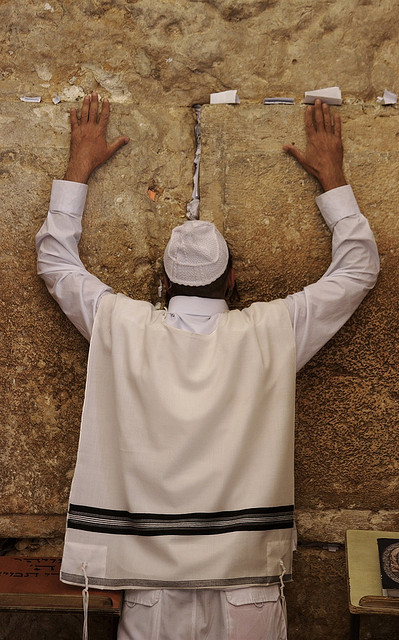
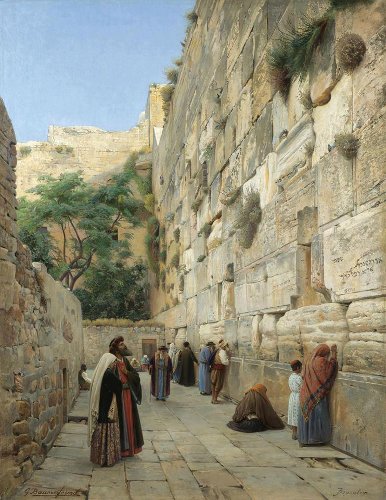
I will never live in Israel as a citizen, but someday before I die, I hope to visit and perhaps share in the experience of praying at the Kotel.

The Jesus Covenant, Part 8: Abraham, Jews, and Christians

Now the Lord said to Abram, “Go from your country and your kindred and your father’s house to the land that I will show you. And I will make of you a great nation, and I will bless you and make your name great, so that you will be a blessing. I will bless those who bless you, and him who dishonors you I will curse, and in you all the families of the earth shall be blessed.”

Genesis 12:1-3 (ESV)

To give a human example, brothers: even with a man-made covenant, no one annuls it or adds to it once it has been ratified. Now the promises were made to Abraham and to his offspring. It does not say, “And to offsprings,” referring to many, but referring to one, “And to your offspring,” who is Christ.

Galatians 3:15-16 (ESV)

For the past several installments of this series including Part 7, I’ve been focusing on aspects of the New Covenant, mainly because the little bits and pieces that relate to Christianity can only be tracked down in different parts of the New Testament. However, recent conversations have shown me that I should probably return to the foundation of my understanding for a bit to illustrate its solidity, or at least describe the trail of reasoning that I’m pursuing.

As you have probably guessed, it all goes back to Abraham and the covenant God announced to him in Genesis 12. But what exactly did God promise Abraham and what does it have to do with us, that is, with Christians?

Here’s my understanding:

  1. Genesis 12:1-3 – God promises to make Abraham into great nation, bless those who bless him and curse those who curse him, and all peoples on earth would be blessed through Abraham.
  2. Genesis 15:18–21 – God promises to give Abraham’s descendants all the land from the river of Egypt to the Euphrates, and this area is later referred to as the Promised Land or the Land of Israel.
  3. Genesis 17:2–9 – God promises to make Abraham a father of many nations and of many descendants and the land of Canaan as well as other parts of Middle East will go to his descendants.
  4. Genesis 17:9-14 – God declares that circumcision is to be the sign of the covenant for Abraham and all his male descendants and that this will be an eternal covenant.

This covenant is then reaffirmed to Isaac in Genesis 21:12, and again reaffirmed to Jacob in Genesis 26:3-4. (the New Covenant as recorded in Jeremiah 31 and Ezekiel 36 affirms and expands upon this and the Mosaic covenant) God confirmed that the promise of the covenant is specifically for the descendants of Abraham, Issac, and Jacob, the Children of Israel, in many places in the Torah, not the least of which is in Deuteronomy 34:4 (ESV):

And the LORD said to him, “This is the land of which I swore to Abraham, to Isaac, and to Jacob, ‘I will give it to your offspring.’ I have let you see it with your eyes, but you shall not go over there.”

As far as the land of Israel goes, there is no provision in the covenant to give it to anyone or any other people group besides the Children of Israel and their descendants forever, the Jewish people.

That takes care of the Land. But what about us?

We learn from Galatians 3:15-16 which I quoted above, that through Abraham’s seed, through his offspring (singular) we among the nations would be blessed. Paul declares that the offspring in question is specifically the Jewish Messiah, Jesus Christ. Our blessings that issue from the Abrahamic covenant are directly transferred to us through the Messiah.

So far, of the four items in the above-referenced list, only one of them seems to apply to Christians, the blessings of the Messiah.

What else do we know about the Messianic blessings in the Abrahamic covenant?

Is this blessing then only for the circumcised, or also for the uncircumcised? For we say that faith was counted to Abraham as righteousness. How then was it counted to him? Was it before or after he had been circumcised? It was not after, but before he was circumcised. He received the sign of circumcision as a seal of the righteousness that he had by faith while he was still uncircumcised. The purpose was to make him the father of all who believe without being circumcised, so that righteousness would be counted to them as well, and to make him the father of the circumcised who are not merely circumcised but who also walk in the footsteps of the faith that our father Abraham had before he was circumcised. –Romans 4:9-12 (ESV)

We see that it was Abraham’s faith that was counted to him as righteousness, and this was before the sign of the covenant was placed upon Abraham. We too, the “uncircumcised” of the nations, are called “righteous” because of our faith. Thus Abraham Avinu is our father, according to Paul, not just the father of the Hebrews. No, that doesn’t mean we are Hebrew (Jewish) too, nor does it mean we inherit the total body of covenant blessings and responsibilities that are incumbent upon the Jews, but it does make us connected to Abraham as the father of our faith, and through his covenant and the Messiah, with God.

This is kind of a delicate trail to negotiate, and we have to be careful that we don’t slip off the path and fall into erroneous thinking. The promise of the Land, and I believe the other specific promises, including the covenantal sign of circumcision, are for the physical descendants of Abraham and of Isaac, and of Jacob. That’s not the rest of us. That’s just the Jewish people.

In other words, all of the conditions of the Abrahamic covenant, including the blessings of the Messiah, flow to the children of Abraham, Isaac, and Jacob. The single blessing that we can be attached to through the Messiah is attached to Abraham alone, as he was before his circumcision, as he was before Isaac; a man of faith and righteousness before God.

That’s the split, the demarcation line between Christian and Jew, the slender thread of “covenanthood” by which we Gentile Christians are connected to Abraham, the Abrahamic covenant, and thus, to God.

So what do we get out of it? Well, first of all, a cautionary tale:

But if some of the branches were broken off, and you, although a wild olive shoot, were grafted in among the others and now share in the nourishing root of the olive tree, do not be arrogant toward the branches. If you are, remember it is not you who support the root, but the root that supports you. Then you will say, “Branches were broken off so that I might be grafted in.” That is true. They were broken off because of their unbelief, but you stand fast through faith. So do not become proud, but fear. For if God did not spare the natural branches, neither will he spare you. Note then the kindness and the severity of God: severity toward those who have fallen, but God’s kindness to you, provided you continue in his kindness. Otherwise you too will be cut off. And even they, if they do not continue in their unbelief, will be grafted in, for God has the power to graft them in again. For if you were cut from what is by nature a wild olive tree, and grafted, contrary to nature, into a cultivated olive tree, how much more will these, the natural branches, be grafted back into their own olive tree.

Romans 11:17-24 (ESV)

Paul seems to be toggling back and forth between addressing the Jewish believers and the Gentile believers. “You wild olive branches, you Gentiles,” Paul is saying. “Don’t get cocky just because you were grafted in. Remember, it’s the root that nourishes you, not the other way around. You think you are so hot just because a few Jews were knocked off the root to make room for you Gentiles? So what,” he might be saying. “If you fall away from the kindness of the Messiah, you can be knocked off and the Jews can be put back twice as fast!”

So to the Jews, don’t be arrogant to the Gentiles because they’re “newbies.” To the Gentiles, don’t be arrogant because some Jews were removed from the root to which you are now attached. Nothing is necessarily permanent. Anyone can be “ungrafted.”

That’s a terrific lesson for many non-Jewish believers to learn because, through one process or another, we have come to feel superior to the Jewish people who God, in the end, will reattach to the root, all of them. Remember, any of you out there who are not physical descendants of Abraham, Isaac, and Jacob, (apart from legitimate converts to Judaism) don’t get cocky. God not only didn’t get rid of the Jews, it is through them that your salvation and covenant connection to God is established and nourished in the first place.

And for those of you who feel that being “grafted in” has whitewashed any physical and covenant distinctions between you and the “natural branches,” think again:

Then what advantage has the Jew? Or what is the value of circumcision? Much in every way. To begin with, the Jews were entrusted with the oracles of God. What if some were unfaithful? Does their faithlessness nullify the faithfulness of God? By no means! Let God be true though every one were a liar, as it is written,

“That you may be justified in your words, and prevail when you are judged.”

But if our unrighteousness serves to show the righteousness of God, what shall we say? That God is unrighteous to inflict wrath on us? (I speak in a human way.) By no means! For then how could God judge the world? But if through my lie God’s truth abounds to his glory, why am I still being condemned as a sinner? And why not do evil that good may come?—as some people slanderously charge us with saying. Their condemnation is just.

Romans 3:1-8 (ESV)

Being Jewish is not beside the point just because we Gentiles have been grafted in. There remains much advantage to being Jewish. Even those Jews today who do not acknowledge Christ as Messiah are not permanently condemned as many Christians seem to believe. They are not discarded and cast aside.

Israel will be saved:

Lest you be wise in your own sight, I do not want you to be unaware of this mystery, brothers:a partial hardening has come upon Israel, until the fullness of the Gentiles has come in. And in this way all Israel will be saved, as it is written,

“The Deliverer will come from Zion, he will banish ungodliness from Jacob”; “and this will be my covenant with them when I take away their sins.”

As regards the gospel, they are enemies for your sake. But as regards election, they are beloved for the sake of their forefathers. For the gifts and the calling of God are irrevocable.

Romans 11:25-29 (ESV)

I’ve probably wandered from the strictly Abrahamic path, but with good purpose. The purpose is to illustrate that just because Jews and Christians share the Messianic blessings that are part of the wider Abrahamic covenant through faith, that does not mean we share all of the blessings attached to that covenant. Paul was extremely clear that there is a distinction between Jewish (native) and Gentile (wild) olive branches. They all didn’t “morph” into a single type of branch with no way to tell them apart.

Also, Paul was extremely clear that there were many advantages to being a Jew. Further, he said that even if some of the Jews were temporarily removed from the root for the sake of we Gentile Christians, in the end, God’s promises to the Jewish people are irrevocable; they cannot be revoked!

The really interesting thing about all of this is that a Christian must choose to become part of the covenant with God through Jesus and Christians can also “unchoose” Christianity for another religion or no religion at all. Not so with the Jewish people. If you are born a Jew, you are automatically born into the covenant (actually covenants, but I’m only talking about Abraham for the moment). God has temporarily turned His face away from His people Israel in the past, and He has temporarily exiled them in the past, but as “temporarily” implies, He always takes them back and He always will take them back.

In spite of the fact that this missive is longer than I intended, I didn’t get to say everything I could have said about Christianity and the Abrahamic covenant. Hopefully, I’ve said enough for now.