Tag Archives: Judaism

Devarim: One Man’s Story

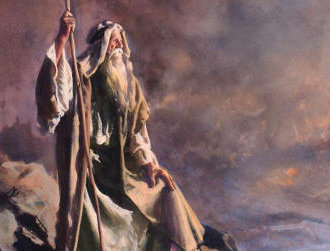
MosesThis week’s Torah reading begins: “These are the words that Moshe spoke to the entire Jewish people.” Noting the distinction between this book and the previous four, which are all “the word of G-d,” our Sages explain that Moshe recited the Book of Deuteronomy “on his own initiative.”

Rabbi Eli Touger
Commentary on Torah Portion Devarim
“A Mortal Mouth Speaking G-d’s Word”
Adapted from Likkutei Sichos, Vol. IV, p. 1087ff; Vol. XIX, p. 9ff
Chabad.org

For most Christians, who don’t have a conservative evangelical view like the one I had, these textual facts can be interesting, but there is nothing in them to challenge their faith, which is built on something other than having the very words that God inspired in the Bible. And I certainly never intended to lead anyone away from the Christian faith; critics who have suggested that I myself stopped being a Christian once I realized there were differences among our manuscripts are simply wrong and being ridiculous.

Author and New Testament Scholar
Bart D. Ehrman in his book
Jesus, Interrupted

Today’s “extra” meditation and my commentary on this week’s Torah Portion Devarim.

Occasionally people ask why most of the book of Deuteronomy (in Hebrew, “Devarim”) even exists. It seems to do little more than repeat and summarize the events in the first four books of the Torah. The answer can be a little disturbing to some Christians and even to some Jews. Our understanding is that the first four books of the Bible were the words of God as dictated to Moses and Deuteronomy is in Moses’ own words.

Does that mean Deuteronomy is completely human in origin and without the influence of God? Let’s return to Rabbi Touger’s commentary:

This does not…mean that the Book of Deuteronomy is merely a mortal invention. Our Rabbis immediately clarify that Moshe delivered his words “inspired by the Holy Spirit.” Similarly, when the Rambam defines the category of “those who deny the Torah,” he includes: “a person who says that the Torah even one verse or one word does not emanate from G-d. If one would say, ‘Moshe made these statements independently,’ he is denying the Torah.”

Not a single commentator maintains that there is a difference in this regard between the Book of Deuteronomy and the four preceding books.

For the Book of Deuteronomy are merely Moshe’s words. Moshe’s identification with G-dliness was so great that when he states: “I will grant the rain of your land in its season,” he speaks in the first person although the pronoun “I” clearly refers to G-d. “The Divine Presence spoke from his mouth.”

The origin of the Bible and exactly how it was written and codified is complex and more than a little mysterious. The simple belief among many Christians is that each author wrote under the influence and guidance of the Holy Spirit and what they wrote originally is exactly what we have in our Bibles today (translated into the language we prefer to read). I included the quote from Bart Ehrman’s book to illustrate that even among modern Bible scholars, there is some doubt as to whether or not we can read the Bible as if it were a history book, newspaper, and court reporter’s record all rolled into one. In fact, we can’t.

The Bible is as much a human document as a document of the Divine. It’s a series of “stories” that illustrate something about God and His interactions with humanity. That it contains internal inconsistencies and historic flaws in no way disqualifies its moral and mystic significance among the community of faith. The stories tell us what we need to know, not as a history lesson, but as a guide to righteous living and as a doorway into domains that leave our mortal plane and allow us to glimpse the Throne of God.

In referring to Midrash Tehillim to 90:4; Bereishis Rabbah 8:2, we see that the Sages believe that “The Torah preceded the world” and when we read John 1:1, we see that “In the beginning was the Word, and the Word was with God, and the Word was God”. From this, we understand that only part of the Bible’s function is to act as a record and a document. Beyond the scroll in the Ark or the book on our hand, it exists in transition between our world and the next.

Rabbi Touger continues:

Here, the concept of precedence is not chronological, for time like space is a creation, relevant only after G-d brought existence into being. Rather the intent is that the Torah is on a level of spiritual truth which transcends our material frame of reference. Although the Torah “descends” and “enclothes itself” in our world, speaking of seemingly ordinary matters such as agricultural laws, codes for fair business practice, and the proper structure for marriage and family relations, this is not its essence. The essence of the Torah is “G-d’s will and His wisdom,” united with Him in perfect unity (see Tanya, ch. 4).

The Amazon.com product description for Ehrman’s book states that “the New Testament is riddled with contradictory views about who Jesus was and the significance of his life”, yet from a mystic point of view, this doesn’t present a problem.
The Ba'al Shem TovWhen I was reading The Hasidic Tale by Gedaliah Nigal, I wrote several commentaries about what I gained from the text including The Messianic Tale and Stories are Miracles. From these, we see that the stories of the Chasidim are less a series of historical facts and more a collection of mystic and allegorical tales designed to reveal something about ourselves, about holiness, and about God. How much of each story is factually accurate isn’t particularly relevant, because one does not approach the tales of the Chasidim that way. What we are looking for is something that will peel away the covers from the world of the supernatural and give us a peek at what lies around the next bend on our path of faith.

We can apply that commentary back to the Bible thus.

Jorge Quinonez, in his book “Paul Philip Levertoff: Pioneering Hebrew-Christian Scholar and Leader” Mishkan 37 (2002): 21-34 (quoted in Love and the Messianic Age) describes Levertoff, a Chasidic Jew and devoted disciple of Jesus, this way:

He read the Gospels in German. Then he obtained a Hebrew version and reread them. Though he was in the midst of a Gentile, Christian city where Jesus was worshiped in churches and honored in every home, Feivel felt the Gospels belonged more to him and the Chasidic world than they did to the Gentiles who revered them. He found the Gospels to be thoroughly Jewish and conceptually similar to Chasidic Judaism. He wondered how Gentile Christians could hope to comprehend Yeshua (Jesus) and His words without the benefit of a classical Jewish education or experience with the esoteric works of the Chasidim.

This perhaps, is what scholars like Bart Ehrman miss when they study and criticize the Bible for not reading like a story posted at CNN. Divinity and humanity collide, meld, mesh, and blend within the pages of the Bible and we are not always meant to be able to tell where one leaves off and the other begins…or if that division is even possible.

Rabbi Touger states:

But why is the Book of Deuteronomy necessary? Enclothing the Torah in human intellect seemingly does nothing but lower its spiritual content. What purpose is served?

Nevertheless, this is G-d’s intent in giving the Torah: that it permeate mortal thought and thus elevate man’s understanding. Whenever a person studies Torah, regardless of his spiritual level, he is making its infinite truth part of his personal nature.

Were there to have been only four books in the Torah, it would have been impossible for our powers of understanding to unite completely with the Torah. It was only by having the Book of Deuteronomy pass through Moshe’s intellect that this goal accomplished. Moreover, Moshe’s review of the Torah in he Book of Deuteronomy gives us the capacity to understand the previous four books in a similar fashion.

Enclothing the Torah in mortal intellect does not merely grant man the opportunity for advancement, it also introduces a higher quality to the Torah itself, as it were. For clothing limitless spirituality in the confines of mortal intellect represents a fusion of opposites that is possible only through the influence of G-d’s essence. Because His essence transcends both finiteness and infinity, it can weld the two together, bringing the spiritual truth of the Torah within the grasp of mortals.

TranscendentWho we are and who God is in us requires that we leave behind some of our attachment to what we call “reality” and allow ourselves to stand transcendent at the uncomfortable and mystic threshold between Heaven and Earth. We don’t have to rely on the Bible to be a book of facts but rather a book of truth.

Consider this:

These are the words which Moses spoke to the children of Israel, across the Jordan, in the desert, in the plain, opposite Suf, between Paran and Tofel, Lavan, Chatzeiroth, and Di-Zahav –Devarim 1:1

All these “places” are allusions to sins committed by the Jewish people during their forty years of wandering in the Sinai Desert. Moses rebuked them only by insinuation so as not to embarrass them.

-Rashi’s commentary

Rabbi Menachem Mendel of Lubavitch once delivered a scathing critique of a certain type of outlook and behavior. Later, one of those present complained to him: “Rebbe, why did you rebuke me in public? Could you not have privately made me aware of my negative traits, without embarrassing me in front of everyone?”

Replied Rabbi Menachem Mendel: “Did I mean you? Obviously, I did. You see, I am a hat-maker. The hat-maker fashions a hat and places it in his window. People come in and try it on, until someone finds that it suits his head perfectly. Whom did he have in mind when he made this hat? Why, he made it precisely for the very customer who finds that it fits him!”

-Rabbi Yanki Tauber
Commentary of Torah Portion Devarim
“The Discreet Hatter”
Chabad.org

The Bible serves many purposes in our lives, not the least of which is to reveal the nature of who we are, for good or for ill. It is a book that condemns but also encourages. It shows us the goodness of God and where we fall short of that goodness (Romans 3:10). Let the Bible be what God intended it to be and let God be who He is. Listen to the words of Moses and his “Chasidic” tale of the wanderings of the Children of Israel, of his own journey with God, of the approach to the end of his life, and in listening to him, learn something about yourself.

Good Shabbos.

The Primordial Serpent

SerpentWhen people saw the snake, they understood that in order to elicit this transcendent divinity and be healed, they had to transform their own, inner “snake” – their evil inclination – into a force of good…The evil inclination impels us to sin for comfort, pleasure, or excitement. When we convince it that the truest comfort, pleasure, and excitement lie in holiness, it plunges headlong into fulfilling G-d’s purpose on earth, endowing our drive toward divinity with much greater power than it could have had otherwise. Thus, the initially evil inclination becomes the source of merit and goodness. The snake is transformed from the source of death to the agent of life.

From the teachings of the Lubavitcher Rebbe;
adapted by Rabbi Moshe Yaakov Wisnefsky
“Transforming the Primordial Snake”
[Based on Likutei Sichot vol. 13, pp. 75-77]
Kabbalah Online

This also alludes to the [Primordial] Snake. Originally, he was the tail and Adam was the head, but [because of the Primordial Sin] this was inverted and the snake became the head and Adam the tail.

From the teachings of Rabbi Yitzchak Luria
adapted by Rabbi Moshe Yaakov Wisnefsky
“The Snake at the Sea’s End”
Chabad.org

This is Part 2 in a 3-part series. Before reading this, see Part 1: Overcoming Evil.

The serpent of Eden isn’t quite what you expect him to be when you encounter him in Judaism, and particularly within the realm of Kabbalah. While not an entirely pleasant fellow, he doesn’t seem to be quite as bad as Christianity paints him. The “Transforming the Primordial Snake” article quoted above tells us that the serpent; the evil inclination within us, “impels us to sin for comfort, pleasure, or excitement”. The commentary goes on to explain that we can “convince” the evil inclination that the best way to meet its goal is to meet our goal of a life of holiness. Once the “serpent” is sold on this idea, the “snake is transformed from the source of death to the agent of life”.

Makes the snake sound almost reasonable, doesn’t it? However, the teachings of Rabbi Yitzchak Luria paint a darker portrait:

In the Zohar, the imagery of the snake putting its tail in its mouth is used to illustrate the sin of “the evil tongue”, i.e. slander, a gross misuse of the power of speech. (Zohar III:205b) People commit this sin when material consciousness gets the better of them. As is explained in the Tanya (ch. 32), those who give their bodies preeminence over their souls see only the outer shell of their fellow man, which differentiates between people, and are oblivious to the inner souls. They thus fall into the sin of hatred, which leads to slander.

Rabbi Luria makes slander sound awful, but how bad can it be? I mean, it’s not as bad as say, murder, is it?

“You have heard that it was said to the people long ago, ‘You shall not murder, and anyone who murders will be subject to judgment.’ But I tell you that anyone who is angry with a brother or sister will be subject to judgment. Again, anyone who says to a brother or sister, ‘Raca,’ is answerable to the court. And anyone who says, ‘You fool!’ will be in danger of the fire of gehinnom. –Matthew 5:21-22

I guess it is that bad.

But who is the serpent? Is it some sort of talking animal, like Balaam’s donkey or is this Satan, the Adversary, in disguise? Let’s cut to the chase and look at him from a traditional Jewish perspective:

Satan in Judaism is a very different beast than satan in popular culture (pun intended)

The snake in the garden of Eden is identified as the personification of the “Yetzerh Harah” (Bad/evil will/desires/inclination) by the midrashim.

The Talmud also states that the Yetzer Harah, Satan, and the angel of death are one. (Some might understand this to mean that they are ‘bad things’ which really are good, and necessary.

In Judaism, the Satan is an angel commanded by Gd to accuse human beings of wrong things. In modern terms, you might call satan the heavenly prosecutor, who seeks to bring all people to court.

-from the Jewish Life and Learning discussion board

Eve and the SerpentThat would seem to mesh somewhat with the Christian interpretation, however, the person who made this post offered a follow up:

A strict reading of the bible would tell you just a snake, and nothing else. An interpreted reading of the bible based on Jewish sources would tell you its the Evil Inclination. An interpreted reading of the interpretation based on Jewish sources would tell you that the snake represents three things. (Which, could be seen as a reason for only the serpent to be mentioned in the first place)

This is consistent with other Jewish sources which state that Adam personified the Good Inclination while the serpent was the embodiment of the Evil Inclination. In Kabbalistic thought, the serpent wasn’t so much a personality as a force of nature, or at least a representation of other forces. The serpent was the external manifestation of the evil inclination which, once Adam and Eve sinned, became man’s internal inclination for evil.

However, as I’ve heard it said just recently, “let Scripture interpret Scripture”:

The great dragon was hurled down – that ancient serpent called the devil, or Satan, who leads the whole world astray. He was hurled to the earth, and his angels with him. –Revelation 12:9

And I saw an angel coming down out of heaven, having the key to the Abyss and holding in his hand a great chain. He seized the dragon, that ancient serpent, who is the devil, or Satan, and bound him for a thousand years. –Revelation 20:1-2

Now we have to assume that the “ancient serpent” being referred to in these verses is the same one we see tempting Eve in the Garden, but that’s an assumption Christianity takes for granted. It’s not one that Judaism would make for obvious reasons.

A recent CNN news story, which was critical of the ability of many Christians to read and remember the Bible correctly (that part seems sadly true) suggested that the serpent was just a serpent (albeit an intelligent and talking one) and that the Adversary (HaSatan) was never mentioned. While it is true, Genesis doesn’t go out of its way to say, “Hey! The snake is the devil!”, the passages from Revelation seem to be a “smoking gun”.

Judah Himango started a conversation about this topic on his Kineti L’Tziyon blog the other day, and from his point of view, the matter is settled. Still, looking at the serpent through the lens of Jewish mysticism, there’s more to his story than meets the eye. Part 3 of this series, Healing the Wounded, will cover that tale in the next “morning meditation”.

Will My Grandchildren Be Jewish?

Jewish GrandchildrenYou could call this “extra” meditation a “Part 2” of my earlier blog post What God Has Joined Together. Part of the “mission” of my blog is to document the life of an intermarried couple and what that means. Here we go.

Based on current intermarriage rates and the average number of children per family, the chances of young, contemporary Jews having Jewish grandchildren and great-grandchildren, with the exception of the Orthodox, are increasingly remote.

From “Will Your Grandchildren be Jewish”
Aish.com (PDF/graphic)

Based upon the data and the various population studies that are now available, it appears that an extraordinary disintegration of the American Jewish community is in process. There was a time when every Jew could take it for granted that he or she would have Jewish grandchildren with whom to share Seders, Sabbath and other Jewish moments. However, the clear data indicates that this expectation is no longer well founded. Indeed, our studies show that within a short period of time the entire complexion of the American Jewish community will be altered inexorably.

From “Will Your Grandchildren be Jewish?”
VirtualJerusalem.com

Will my grandchildren be Jewish? Probably not. Let me explain, but I have to go back a little bit.

My wife is Jewish and I’m not. She’s Jewish because her mother was Jewish (both of my wife’s parents passed away many years ago). My wife’s father wasn’t Jewish and my wife wasn’t raised in a religiously or culturally Jewish home. She only realized that she was Jewish by halachah (because her Mom is Jewish) when she was a young adult. Even then, she waited decades until she fought to enter into a culturally and religiously Jewish world, and that’s where she is today.

My wife has two brothers and two sisters. None of them acknowledge being Jewish. One brother and one sister are actively Christian and her Christian brother even denies the possibility that his mother was Jewish, saying there’s no proof (we have tons of proof, including the documentation of many maternal relatives buried in Jewish cemeteries). Out of five children of a Jewish woman, my wife is the only one living a Jewish life today. Sad but typical. My wife beat the odds but she had to work really hard to do it.

We have three children. All self-identify as Jews, at least marginally. I say “marginally” because they don’t really involve themselves in Judaism on a cultural or religious level. My daughter is the one who has come closest to embracing her Judaism. She sometimes goes to Chabad functions with my wife. When she was an exchange student in Japan for a year during high school, my daughter made the effort (and it was significant) to attend the synagogue in Tokyo on a few occasions (my daughter lived about 50 miles away). My daughter has tutored Hebrew to some of the kids at our local Reform shul.

My sons acknowledge that they’re Jewish but that’s about it. I think David has a basic faith in Jesus but he doesn’t lead any sort of religious lifestyle. Michael doesn’t have a Jewish lifestyle as far as I can tell.

Only David is married and he’s married to a (wonderful) non-Jewish girl. They have one son, my grandson, the apple of my eye. And my grandson is not Jewish.

Michael will probably marry someday, but he’s not currently dating and the chances of him marrying a Jewish woman isn’t very good. My daughter Jamie says she wants to marry someday, but doesn’t want to have any children (even through adoption).

No, my grandchildren will not be Jewish.

Things seem grim for the Jews in America but I’m going to try to inject something upbeat.

Julie Wiener writes a series of articles for The Jewish Week magazine called In the Mix. Julie is intermarried to a “Righteous Gentile husband” and they have two daughters (and because Julie is Jewish, so are her kids…I don’t know if Julie’s parents are intermarried). According to an article she wrote last June, intermarried Jews are breeding like crazy.

Depending on your point of view, that’s either good or bad. Depending on who you are, intermarried couples (like Natalie Portman and her partner Benjamin Millepied) can raise their children Jewish or (like Anthony Weiner and his Muslim wife, Huma Abedin) not. Not that it’s up to the Mom exclusively what cultural and religious identity the children will have. Julie published a more recent article called Battle Hymn of the Gentile Mom describing how the non-Jewish wives of Jewish husbands commit to raising their children Jewish. There’s even this quote:

Also of interest in JTA is an article about a recent study of Chicago’s Jewish population, which finds that while intermarriage (and the Jewish population) has increased, the percentage of intermarried families raising Jewish children has also increased…

I can read all the articles and research studies I want, but all I really have to do to see where the children and grandchildren of intermarried couples end up is to look at my own family. We never chose to embrace Judaism in the home until fairly late in life when the kids were almost grown. I often wonder what would have happened if we could have made the decision earlier. A futile waste of time, I know.

God has never permitted the Jewish people to vanish from the face of the Earth and I don’t believe He ever will. When the Messiah comes, there will be Jews here. But it will be a miracle from God. It seems like people aren’t helping with the process all that much.

Overcoming Evil

Primordial SnakeThe vilna gaon, rabbi Eliyahu Kramer of Vilna, 1720-1797, one of the most influential Rabbinic figures since the Middle Ages, wrote on this topic in Even Shelaima. In commenting about how it was possible for Adam and Eve to sin if the evil inclination hadn’t fully be incorporated within humankind, he insists that indeed they did have an evil inclination. However, since they were fashioned from the “Hand of God,” their God-consciousness was so strong that it was axiomatic they would do the correct thing. As long as their inner-voice and spiritual essence radiated, it subdued any outside influences that may challenge this level of connection.

The primordial snake turned out to be just the agent to stimulate the notion of rebellion, ignite a spark of doubt in the divine command to refrain from eating of the Tree of Knowledge, and from the moment they imbibed in that forbidden fruit, their “eyes were opened.” From now on the possibility for allowing external stimuli to penetrate their inner-core of the soul’s sanctity and disturb their cleaving to God was activated. Humankind is constantly being tested with how much light their souls (inner essence) can muster to dispel the darkness associated with the myriad temptations of the world, which every moment attempts to suppress the sublime luster of that soul.

-Rav Aaron Perry
found at VirtualJerusalem.com

Despite everything, I believe that people are really good at heart.Anne Frank

Although I didn’t intend it this way, this “morning meditation” is Part 1 in a 3-Part series. See the bottom of this article for information on Part 2.

Given Anne Frank’s brief and tragic life, I’ve always wondered how she could say that. Living in the shadow of Nazi oppression and the horror of the Holocaust, I would imagine she’d see people as anything except “good at heart”.

Christianity teaches that created man was initially good and obedient to God but, thanks to the temptation of the serpent and Eve and Adam subsequently giving in to temptation, the fundamental nature of all human beings throughout time became evil. In other words, all people are inherently evil beings and only through the saving grace of Jesus Christ can we overcome our evil nature (“more than conquerors” as in Romans 8:37) and do good. According to the church, Anne Frank is wrong.

Actually, looking at the bloody and cruel history of humanity, it is easy to agree with Christianity’s viewpoint of man’s grim nature, and to conclude that Ms. Frank was a good but rather naive person. Yet Judaism has a very different take on the “primordial sin” of Adam and Eve.

Depending on who you talk to, Judaism believes that man was essentially operating under a “good inclination” (that’s just like it sounds, man was inclined to do good which in this case means obeying God) internally. Evil existed in the world in the form of the serpent (and at no time in this early Genesis narrative is the serpent equated with Satan) but as an external influence. According to this view, man had an internally good nature but could be impacted by external evil forces.

Rabbi Perry gives us a slightly different view of this, saying that man possessed an internal good and evil inclination. Referencing the Vilna Gaon, he states that, “…indeed they did have an evil inclination. However, since they were fashioned from the “Hand of God,” their God-consciousness was so strong that it was axiomatic they would do the correct thing. As long as their inner-voice and spiritual essence radiated, it subdued any outside influences that may challenge this level of connection.”

In other words, it was possible, but highly unlikely for man to give in to his evil inclination, because his “God-consciousness” overwhelmed the evil within him and generally dampened external evil influences. Once man sinned against God, the barriers inhibiting man from sinning were breached and now, humanity struggles between the two internalized inclinations for good and evil.

BurningDoes that mean, from a Jewish point of view, that Anne Frank is right? Are we really “good at heart” but with our goodness inhibited by our inclination for evil? If so, why is human history so dismal and corrupt? Why don’t we see a more “balanced” expression of human motivations, illustrating whole people groups who were essentially good and righteous vs. others who were dark and monstrous?

I’ve already addressed the issue of the “primordial sin” once before in my blog post Gateway to Eden and suggested that the way we can return to intimacy with God, at least to some degree and for a brief time, was to embrace Shabbat keeping. However, I didn’t try to directly confront the nature of humanity, although I did find this helpful quote:

After man ate from the Tree of Knowledge, however, he acquired the intimate knowledge of and desire for evil. The evil inclination was no longer an external force, represented by the Serpent. It was within. Our physical flesh was now a confused mixture of good and evil. Death was introduced into the world: human flesh, separated from the spirit, was a creature of the finite, physical realm — one which must ultimately decay and die. Man would now face a much greater challenge than before. He would no longer battle a Serpent from without. He would have to battle his own sluggish yet desirous flesh within.

Rabbi Dovid Rosenfeld
The Primordial Sin, Part II
Pirkei Avos Chapter 6, Mishna 5(b)
Torah.org

There is a drive among people, particularly people of faith, to rise above the mud and slime of thousands of years of war, crime, and misery, and to reach out for the heavens and the Throne of God. The Divine spark within us seeks out its Source and cannot be buried, no matter how depraved a people we become. God once chose to destroy all but a tiny handful of human beings and flooded the Earth because we had become so totally immersed in evil, but every time we see a rainbow, we can recall the promise that God will not repeat this action.

God gave the Children of Israel the Torah to establish a nation of mercy and justice and with the intent of sending the Torah from Zion and into the nations. God sent his “only begotten Son” so that everyone could be saved and none should perish for lacking the ability to have a relationship with the Creator.

We’ve previously encountered the question of how man could do evil if he was essentially good. Now we must ask ourselves, if man is essentially evil, why would he even desire to do good? Why would man seek God? For it seems “…man is born for trouble, As sparks fly upward” (Job 5:7 NASB).

Bending the verse just a little bit, I rather prefer, “For man is born to trouble but our sparks fly upward.” None of the translations available present the verse in such a way, but I think my version paints a truer picture of humanity…we battle between the inclinations of good and evil within us, but always present is the image of God in which we were created, and the slender, illuminated thread that inexorably attaches us to Him and leads us upward and back toward home.

All we have to do is resist the evil and seek the good within ourselves.

Do not repay anyone evil for evil. Be careful to do what is right in the eyes of everyone. If it is possible, as far as it depends on you, live at peace with everyone. Do not take revenge, my dear friends, but leave room for God’s wrath, for it is written: “It is mine to avenge; I will repay,” says the Lord. On the contrary:

“If your enemy is hungry, feed him;
if he is thirsty, give him something to drink.
In doing this, you will heap burning coals on his head.”

Do not be overcome by evil, but overcome evil with good. –Romans 12:17-21 (Deut. 32:35 Prov. 25:21-22)

It is not so much that we need to be taken out of exile. It is that the exile must be taken out of us.

-Rabbi Tzvi Freeman
“Inner Exile”
Based on letters and talks of the Rebbe, Rabbi M. M. Schneerson
Chabad.org

We are in the last nine days of the three weeks of mourning between 17 Tammuz and 9 Av, which commemorates the destruction of the First and Second Temples. It is believed that the Second Temple was destroyed and the Jewish people were sent into a 2,000 year exile due to their display of “wanton hatred” among each other. Right now, Jews all over the world are observing a period of intense mourning and prayer as they seek to put aside the desires of the evil inclination and turn to the God of their Fathers.

May we all pray for the courage and strength to do the same.

Part 2 of this series will be published in tomorrow’s morning meditation: The Primordial Serpent.

Know Before Whom You Stand

PrayingOur sages would put much effort into their prayer preparations (Talmud, Berachot 30b). The essence of prayer is kavanah — focus and concentration. In order to achieve proper kavanah, it is important to pray in the proper place and with as few distractions as possible. This article focuses on the appropriate location for prayer, as well as the immersion in a mikvah (ritual pool) before prayer. There are additional preparations; they will be discussed in another article, G-d willing.

Rabbi Aryeh Citron
Commentary on Parashat Chayei Sarah
“Preparing for Prayer”
Chabad.org

If you read the rest of Rabbi Citron’s article on prayer, you’ll find that Jews take praying very seriously and utilize a great deal more ritual in prayer than most Christians would find comfortable or necessary. And yet, think about what you are doing when you’re praying. Prayer isn’t just shooting off an email, IM, or text message; prayer is entering into the presence of the living and eternal God. If you were to enter into the court of a King, or even into the Oval Office of the President of the United States, wouldn’t you prepare extensively for the occasion?

Of course you would. It’s just amazing how much effort we’ll put into say, getting ready for a job interview, but we’ll just “drop in” in God anytime we feel like it, wearing whatever and saying whatever.

OK, I’m not suggesting that God isn’t available to us under any circumstances and that He would refuse to hear us if we prayed while wearing our pajamas on our sick bed, but perhaps there is some merit to approaching prayer the way we would approach a meeting with an important person.

Rabbi Citron suggests praying in a fixed place where you will not be distracted. This is derived both from “Abraham who, on the morning after Sodom was destroyed, went back to pray to the same spot where he had prayed the previous day to prevent its destruction” (Genesis 19:27) and from Isaac praying the afternoon (Minchah) prayer in a particular, secluded field (Genesis 24:63). The Rabbi goes on to say that the “very air of a synagogue is sanctified due to all the prayers uttered there” (See Rabbeinu Yonah on Berachot 4a, d.h. Eimasai). Perhaps prayer can make a place special and holy.

Jews also value praying in the synagogue rather than just alone:

The ideal place to pray is in a synagogue. One should always try to pray with a minyan (congregation); but even if one is unable to do pray with a minyan, he should still try to pray in a synagogue.

Corporate prayer is not unknown in Christianity, but it would be unusual for a Christian to pray with a “minyan” (in the Orthodox Jewish tradition, this is ten men) morning and evening. While corporate worship is generally conducted on Sundays in the church, Christianity still largely sees the Christian faith as a faith of individuals, with each one of us negotiating our own, personal relationship with Jesus. Judaism is much more about a faith of the community and that not only does the person approach God in prayer, Israel approaches God, much as they did at Sinai when they received the Torah from the hand of Moses (see Exodus 19 and 20).

For Christians, the most important thing we’ve been told we should know about prayer is said here:

“This, then, is how you should pray:

“‘Our Father in heaven,
hallowed be your name,
your kingdom come,
your will be done,
on earth as it is in heaven.
Give us today our daily bread.
And forgive us our debts,
as we also have forgiven our debtors.
And lead us not into temptation,
but deliver us from the evil one.’ –Matthew 6:9-13

The church tends to disdain (rather unfairly) the way Jews pray in the synagogue because of a misapplication of this:

“And when you pray, do not be like the hypocrites, for they love to pray standing in the synagogues and on the street corners to be seen by others. Truly I tell you, they have received their reward in full. But when you pray, go into your room, close the door and pray to your Father, who is unseen. Then your Father, who sees what is done in secret, will reward you. And when you pray, do not keep on babbling like pagans, for they think they will be heard because of their many words. Do not be like them, for your Father knows what you need before you ask him. –Matthew 6:5-8

Jesus was speaking of specific groups who practiced prayer so that others would see them and be “impressed” by their “holiness”, but that doesn’t taint all communal prayer. As Rabbi Citron said, prayer is about “kavanah — focus and concentration”, not about how you think others will perceive you when they see and hear you pray.

There is also a tradition of purifying oneself in the mikvah before prayer:

Ezra the Scribe instituted that a man who had a seminal discharge – during intercourse or otherwise – should go to the mikvah before praying, reciting blessings or studying Torah. The Jewish people found this decree too difficult to keep, so the Sages repealed it. Some say the decree was only repealed with regards to Torah study, not in relation to prayer. Although this is not the commonly accepted view, all agree that prayer is more accepted after immersion.

Throne of GodChristianity only immerses once for baptism, which is the extent of our adaptation of the Mikvah in our religious practice.

That said, if we want to take our approach to prayer and to God a bit more seriously, we might want to consider some form of preparation before prayer as a matter of self-cleansing. I’m not suggesting immersion as such, but I am saying that we might want to meditate upon the gravity and seriousness of approaching God. Yes, there will always be times when we need to cry out to Him in our anxiety, our torment, and our pain, but when we pray each day to make a connection, to pour out our hearts, to live and be with Him, is it so wrong to treat God with respect in the process? Is it a bad thing to prepare ourselves in advance, to adopt the proper intention before going before the Throne of the Eternal King?

da lifnei mi attah omed – “Know before whom you stand.”

-the words displayed before the Holy Ark in the synagogue

Two more things about prayer and our relationship with God before leaving this morning’s meditation:

To some who were confident of their own righteousness and looked down on everyone else, Jesus told this parable: “Two men went up to the temple to pray, one a Pharisee and the other a tax collector. The Pharisee stood by himself and prayed: ‘God, I thank you that I am not like other people—robbers, evildoers, adulterers—or even like this tax collector. I fast twice a week and give a tenth of all I get.’

“But the tax collector stood at a distance. He would not even look up to heaven, but beat his breast and said, ‘God, have mercy on me, a sinner.’

“I tell you that this man, rather than the other, went home justified before God. For all those who exalt themselves will be humbled, and those who humble themselves will be exalted.” –Luke 18:9-14

We are imprisoned because we have exiled our G-d.

As long as we search for G-d by abandoning the world He has made, we can never truly find Him.

As long as we believe there is a place to escape, we cannot be liberated.

The ultimate liberation will be when we open our eyes
to see that everything is here, now.

Rabbi Tzvi Freeman
Based on letters and talks of the Rebbe, Rabbi M. M. Schneerson
“G-d in Exile”
Chabad.org

We “exile” God from the world He made because we believe He stands apart from us. We believe that He is in Heaven while we are stuck on Earth. We long for the day when Jesus comes so that we can be with God and serve at the Throne of the Father and the Throne of the Lamb. But when we pray, we are not just reaching up to Heaven, we are bringing Heaven down to Earth. God is with us. While we pray with proper respect and awe of the King, once prepared, all we need to do to enter into His presence is to speak. He is already here listening.

Jerry Landers: Maybe, sometimes… couldn’t we just talk?
God: I’ll tell you what. You talk… I’ll listen.

from the film Oh, God! (1977)

Making Room for the Beloved

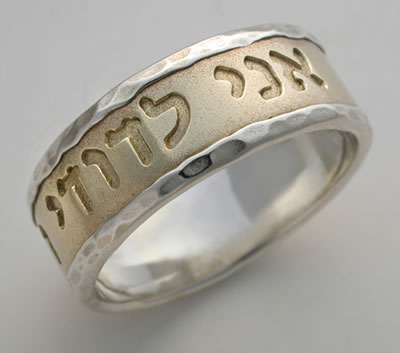
Engagement RingThe Chofetz Chaim, zt”l, explains the importance of keeping Shabbos with a parable. “God calls Shabbos a gift. Can you imagine a bride receiving a ring from her groom to symbolize their engagement and returning the ring? Everyone understands that this is a definite sign that their engagement is over. Shabbos is like an engagement ring since keeping Shabbos shows that we are betrothed to God. One who violates Shabbos is like a bride who breaks her engagement by returning her ring. How can a person act in a way that breaks his engagement with God, heaven forbid?”

We have no idea of the greatness of Shabbos. The Ohr HaChaim, zt”l, explains that no non-Jew — or even an angel — can fathom the deep connection to God that is imparted to Jews on Shabbos. But many wonder when they will actually come to feel this deep connection on Shabbos themselves.

Daf Yomi Digest
Stories Off the Daf
“Our Betrothal with God”
Chullin 36

One who is full of himself fills all the space around him. There is no room left for anyone else. Therefore, he despises another person by virtue of the space that other person consumes. He may give reasons for his disdain, but the reasons are secondary.

This is called wanton hatred. It is the reason given for our exile. It is the core of all evil. It is balanced and cured by wanton acts of love and kindness.

Rabbi Tzvi Freeman
Based on letters and talks of the Rebbe, Rabbi M. M. Schneerson
“Wanton Love”
Chabad.org

It is said in Jewish mystic tradition, that before Creation, God filled all areas of existence and there was no room for anything else but God. This is to be expected from a God who is infinite. When God desired to create the universe for the sake of our world and for us, He had to deliberately withdraw some portion of His infinite being; to “humble” a part of Himself, in order to make the room available for Creation.

God made room for us.

Compare this to the words of the Rebbe I quoted above. People who fill the world around them with only themselves have no room to love others and in fact, the Rebbe calls this “wanton hatred”. This is the very opposite of what God did for us. The quote from the Daf is also an example of making room for the sake of love.

When God created the Shabbat, he “made room” in time, setting aside one-seventh of our week so we could be able to totally devote ourselves to Him. He sanctified that day and made it holy (Genesis 2:2-3). From the Ohr HaChaim’s point of view, the Shabbat is specific to the Jewish people and is a sign of His deep love for the Jews, His beloved, His treasured splendorous people (Deuteronomy 14:2). As we’ve seen, a Jew who rejects the Shabbat is like a woman who throws her engagement ring back in her suitor’s face.

A little over a week ago, I suggested that there could be benefits for Christians to keep the Shabbat in some manner or fashion, in order to honor God and to observe a day when we can be totally devoted to Him. While Jewish sages do not consider non-Jews to be “betrothed” to God and, as we’ve seen, do not believe we are able to comprehend the depth of meaning that Jews experience when observing the Shabbat (and probably we don’t), we are indeed betrothed:

Husbands, love your wives, just as Christ loved the church and gave himself up for her to make her holy, cleansing her by the washing with water through the word, and to present her to himself as a radiant church, without stain or wrinkle or any other blemish, but holy and blameless. –Ephesians 5:25-27

Then I heard what sounded like a great multitude, like the roar of rushing waters and like loud peals of thunder, shouting:

“Hallelujah!
For our Lord God Almighty reigns.
Let us rejoice and be glad
and give him glory!
For the wedding of the Lamb has come,
and his bride has made herself ready.
Fine linen, bright and clean,
was given her to wear.” –Revelation 19:6-8

The church is sometimes called “the bride of Christ” based on these verses and this indicates that those of us who are grafted into the root of Jesse, and who are joined to the God of Israel through the Covenant of Jesus. also are especially loved. I’m not suggesting that God has two brides and I don’t know how this will all work out in the end, but we can see that God dearly loves both the Jewish people and the non-Jewish disciples of Christ.

Before the coming of Jesus, non-Jews had no way to enter into a special covenant relationship with God. Even the Gentile God-fearers attending synagogues in the Second Temple period, no matter how devoted they became, could not enter into a fully-realized relationship with God unless they converted to Judaism. Christ came and opened the door for the rest of us. He made it possible for us to completely access God and to totally benefit from a “treasured” status with Him through Christ. We were locked out of the promises but He made room for us.

If someone asked you to marry him or her and gave you a ring to symbolize their love, would you throw it back in their face? God made room for us in the Universe and He made room for us in His Kingdom. If He also made room in time for us so we can honor Him and to rest from our cares, shouldn’t we also make room for Him?