Tag Archives: Judaism

Giving

Now the full number of those who believed were of one heart and soul, and no one said that any of the things that belonged to him was his own, but they had everything in common. And with great power the apostles were giving their testimony to the resurrection of the Lord Jesus, and great grace was upon them all. There was not a needy person among them, for as many as were owners of lands or houses sold them and brought the proceeds of what was sold and laid it at the apostles’ feet, and it was distributed to each as any had need.

Acts 4:32-35 (ESV)

Communal life was not new to the first century Jews. The Essenses lived in a communal fashion somewhat similar to Luke’s description of the Jerusalem community. The Essenses surrendered property and possessions to the common fund. The disciples’ economic model of common property, shared meals, and communal life might also be compared to the socialist, secular Kibbutz movement in the modern state of Israel.

from Torah Club, Volume 6: Chronicles of the Apostles
Torah Portion Vayera (“And he appeared”) (pg 92)
Commentary on Acts 4:32-5:42
Produced by First Fruits of Zion (FFOZ)

Periodically, religion gets dragged into the political arena (and after all, this is an election year) or it is thrust into such an arena by some of its adherents. Christianity and Judaism are no exceptions, and particularly fundamental Christianity often makes its presence known, for better or for worse, in support or opposition to issues and candidates. On the other hand, there are Christians who use the example of the early Jewish disciples in the passage we see quoted above as an illustration of how we should “redistribute wealth” so that those who have should give to those who do not, creating a balance of sorts, where everyone possesses exactly the same material goods as the next person, with no one having more and no one having less.

I mentioned the concept of “Christian communism” in last week’s study on Acts and suggested that this particular scenario was never meant to be the eternal model of the Christian church. In fact, according to D. Thomas Lancaster’s study on this week’s portion of Acts, this particular type of community was responding to a very specific set of circumstances.

What factors gave rise to the communal economy of the Jerusalem believers? The apostles were all Galileans. None of them owned property in Jerusalem. With them came their families, wives, and children and several more Galilean followers of Yeshua (Jesus). The entire community intended on staying in Jerusalem where they could meet daily in the Temple. The Temple anchored the believing community in Jerusalem. It became their place of assembly and prayer and the central hub from which they proclaimed the gospel. In addition, pilgrims from all over the world, present at Jerusalem for Shavuot, had become disciples. Many elected to relocate to join the community. They were without property or career in Jerusalem. The establishment of the Jerusalem community required a corporate economy. Those relocating to Jerusalem sold their possessions and contributed to the upkeep of the community.

So, taking the specific context into consideration, we don’t particularly see a case where Peter or John cried out, “Hey everybody! Jesus told us sell all our stuff and give it to all the people who don’t have anything!” We also have to keep in mind that all of this giving was totally voluntary. No one was forced to give up all their personal possessions nor was it actually a condition of being part of the community. It was simply a practical consideration, especially for those Jews (and all of the people we’re talking about here are Jewish) who were making “aliyah,” if I can borrow the modern term, and returning to the Land.

But I know you’re thinking about Ananias and Sapphira.

But a man named Ananias, with his wife Sapphira, sold a piece of property, and with his wife’s knowledge he kept back for himself some of the proceeds and brought only a part of it and laid it at the apostles’ feet. But Peter said, “Ananias, why has Satan filled your heart to lie to the Holy Spirit and to keep back for yourself part of the proceeds of the land? While it remained unsold, did it not remain your own? And after it was sold, was it not at your disposal? Why is it that you have contrived this deed in your heart? You have not lied to man but to God.” When Ananias heard these words, he fell down and breathed his last. And great fear came upon all who heard of it. The young men rose and wrapped him up and carried him out and buried him.

After an interval of about three hours his wife came in, not knowing what had happened. And Peter said to her, “Tell me whether you sold the land for so much.” And she said, “Yes, for so much.” But Peter said to her, “How is it that you have agreed together to test the Spirit of the Lord? Behold, the feet of those who have buried your husband are at the door, and they will carry you out.” Immediately she fell down at his feet and breathed her last. When the young men came in they found her dead, and they carried her out and buried her beside her husband. And great fear came upon the whole church and upon all who heard of these things.

Acts 5:1-11 (ESV)

But what was their great crime and why did they die? Was it because they held back some of their wealth from the community? Peter seemed to think it was because they lied to the Holy Spirit. What if they had said, “we are selling our property but are giving only half the proceeds to the community, keeping the other half for ourselves?” Would they have died for being “greedy;” for desiring to keep some of what was rightfully theirs (and Peter acknowledges this)?

Probably not. But Ananias and Sapphira wanted to appear as if they were giving everything to the community when in fact, they kept back some if the profits. They wanted to “look good” and still secretly keep more for themselves. They wanted to have their cake and eat it too, as the saying goes. So it wasn’t greed as such that resulted in their deaths, but greed that lead to lying to God and to the community.

Perhaps the following will help to illustrate what happened and of what sort of economic model the early Jerusalem community was using.

There are four types of people. There’s the man who says, “What’s mine is mine, and what’s yours is yours.” This kind of man is neither good, nor bad, but some say this is the type of person that lived in Sodom. There is the man who says, “What’s mine is yours and what’s yours is mine.” This kind of man is an ignoramus. There is the man who says, “What’s mine is yours and what’s yours is yours.” This is a righteous man. Finally, there is the man that says, “What’s mine is mine, and what’s yours is mine.” This is a wicked man.

m.Avot 5:10

Applying this principle to the Jerusalem community, Lancaster says:

The third expression, “What’s mine is yours and what’s yours is yours,” best expresses our Master’s ideal for His disciples and describes the type of economy practiced by the Jerusalem community. They sold their possessions and goods only to meet the needs of others as those needs arose.
Notice that the focus is not on everyone being compelled to give up everything for the sake of the community, but rather, while you understand the value of giving and hospitality to others, it is not contingent upon the other having the same values as you. You do not demand that the other consider his possessions as yours. You only accept upon yourself the value your possessions also belonging to the other as the other has need of them. (Notice too, that the one who believes that “What’s mine is yours and what’s yours is mine” is considered an ignoramus.)

But again, we need to remember that we are reading here applies specifically to the Jerusalem Community and isn’t necessarily the universal model for what all Christian communities should be like in the world today. There are also other, related principles to keep in mind.

Now we command you, brothers, in the name of our Lord Jesus Christ, that you keep away from any brother who is walking in idleness and not in accord with the tradition that you received from us. For you yourselves know how you ought to imitate us, because we were not idle when we were with you, nor did we eat anyone’s bread without paying for it, but with toil and labor we worked night and day, that we might not be a burden to any of you. It was not because we do not have that right, but to give you in ourselves an example to imitate. For even when we were with you, we would give you this command: If anyone is not willing to work, let him not eat. For we hear that some among you walk in idleness, not busy at work, but busybodies. Now such persons we command and encourage in the Lord Jesus Christ to do their work quietly and to earn their own living.

2 Thessalonians 3:6-12 (ESV)

But if anyone does not provide for his relatives, and especially for members of his household, he has denied the faith and is worse than an unbeliever.

1 Timothy 5:8 (ESV)

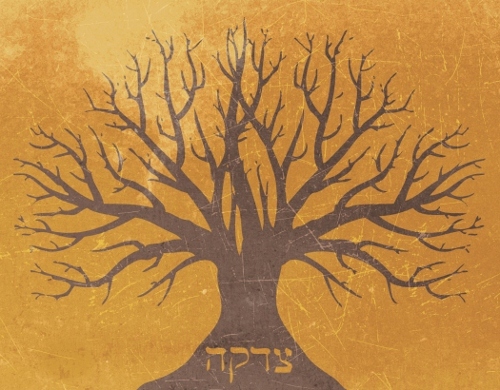
As far as Paul’s letters are concerned, we have to be careful to separate out what he intended to be universal principles of the faith vs. specific instructions to those individual churches with particular problems. However as far as the two above-quoted statements, it seems the ideal of being self-supporting and taking care of one’s family first is a good rule of thumb for any Christian. This certainly does not preclude charitable giving, and particularly providing care for the needy, and tzedakah is a long-established mitzvot among the Jews and was taught repeatedly by Jesus. However, none of that suggests we must give to charity before taking care of our families, nor that we should be compelled to give to what others consider a worthy cause at the cost of supporting our families.

But there’s another important example to consider, one presented to us by our own Master.

And he sat down opposite the treasury and watched the people putting money into the offering box. Many rich people put in large sums. And a poor widow came and put in two small copper coins, which make a penny. And he called his disciples to him and said to them, “Truly, I say to you, this poor widow has put in more than all those who are contributing to the offering box. For they all contributed out of their abundance, but she out of her poverty has put in everything she had, all she had to live on.”

Mark 12:41-44 (ESV)

In Judaism, the principle of giving tzedakah does not require that you give yourself into the poorhouse, so to speak, or require that you starve your family for the sake of others, even if those others appear more needy than you. Yet Jesus praises this poor widow who gave all she had to live on to the offering box. I don’t know if this was meant to be taken literally or as a parable to teach a lesson. For instance, the rich gave out of their wealth and thus sacrificed nothing of their own livelihood, so should they be as praiseworthy, giving thousands of dollars (this is just an example) as compared to one who sacrificed all that she had to live on, even though it was only pennies? What it seems Jesus is teaching is not spending yourself into poverty by giving to the poor, but that it is more praiseworthy for the poor to give little and yet have it be a significant impact on their livelihood, than for the rich to give much and to affect them not at all.

The Rebbe and the ChildIt would be like very small child giving everything in her piggy bank to a charity that supports needy children in disadvantaged nations, vs. Bill Gates giving millions to the same charity (although the child, of course, can depend on her parents to provide for her needs).

So what do we see in all of this that applies to Christians today? Christ does not expect us to do without personal possessions or to do away with belongings of our own. It seems the Christian principle of earning your own way and taking care of your own family is an important and even vital one. We are expected to give and give generously to those who are in need (as opposed to those simply in want who can provide for themselves), but Christianity does not require that literally no one has more than another person.

Also, and this is very important, giving is not mandatory and cannot be forced. If you say you are going to give a certain amount or value, then give it and don’t lie, just to be seen as more holy or more like a good guy. On the other hand, if you sell property, for example, and say you will give half the value to charity and keep the other half for yourself, there’s nothing un-Christian about that. Whatever you give, you give out of willingness, not because you were forced or coerced into it, either by your church, or by your government, or by pressure from a “politically correct” social group.

OK, I’m being maybe a little political here, but I’m trying to illustrate a point. Giving and sharing, as far as the Bible is concerned, cannot be defined by a social group, or a cultural value, or a political party, or a government. Charity is between you, those you give to, and God. It cannot be manipulated by any party or entity outside of those involved.

Blessings.

First Seek Peace

There are three ways to bring unity between two opposites:

The first is by introducing a power that transcends both of them and to which they both utterly surrender their entire being. They are then at peace with each other because they are both under the influence of the same force.

But their being is not at peace—their being is simply ignored.

The second way is by finding a middle ground where the two beings meet. The two are at peace where they meet on that middle ground—but the rest of their territory remains apart and distant.

The third way is to reveal that the essence of every aspect of the two beings is one and the same.

-Rabbi Tzvi Freeman
“Essential Peace”
Based on letters and talks of the Rebbe
Rabbi M. M. Schneerson
Chabad.org

All the possessions and pleasures of the world are only valuable to the extent they are accompanied by peace of mind. A person who has tremendous riches and can gratify all of his desires, will nevertheless suffer if he lacks peace of mind.

As a rule, the power-hungry and the status-seekers lack this obvious realization. Why work on obtaining power and status when you have the ability to work on something that is much more precious? A peaceful mental attitude and serenity of the soul are the most important factors for happiness.

It is related that when an ancient emperor was about to sail for Italy, an advisor asked him what his ultimate plans were. “To conquer Rome,” he replied. “What will be after that?” “To conquer Carthage, Macedonia, and Greece.” “And after you have conquered all that, what are your plans?” Then I will be able to spend my life in peace and comfort.” “But,” queried the wise advisor, “why not be in peace and comfort right now?”

-Rabbi Zelig Pliskin
“Daily Lift #620”
Aish.com

What is it to be at peace? What is it to be at peace with others, especially those who seem to be the opposite as you? In Rabbi Freeman’s commentary, who or what is he talking about? Could it be reconciling between a man and a woman. Plenty of married people feel they are joined with an “opposite” who doesn’t understand the first thing about them? Then again, he could have been talking about man and God, but then, how could he suggest that a third and larger force be able to bring peace between them, when there is nothing larger than God? How about Christian and Jew, but certainly they are not the only “opposites,” for there are many different religious traditions that seemingly contradict each other.

God only knows
God makes his plan
The information’s unavailable
To the mortal man
We work our jobs
Collect our pay
Believe we’re gliding down the highway
When in fact we’re slip slidin’ away

-Paul Simon
from the song “Slip Slidin’ Away” (1977)

Like the ancient emperor in Rabbi Pliskin’s story, we too make all kinds of plans that, in the end, are designed to bring us pleasure and peace. Who knows if they’ll ever work, but we’ve got to try. Of course, that often means putting off pleasure and peace for a long time, maybe many years, until our “retirement,” if it ever comes. In the meantime, what do we do? Do we ever have peace? What is peace?

It seems like we are in a life that is constantly in conflict. The world is in conflict, people in different nations and within our own nation contend with each other. We ruin each other’s peace. Sometimes I think it would be better to be alone. Then at least, there would be peace and quiet. But is that what God intended when he said “be fruitful and multiply,” first to Adam and then to Noah? Probably not. We seem to be expected to make peace with our “opposite,” who in one sense is the mate God chose to correspond to us. But how is this done? Must we just plan and scheme and wait for peace to come like Rabbi Pliskin’s mythical emperor?

“The land of a rich man produced plentifully, and he thought to himself, ‘What shall I do, for I have nowhere to store my crops?’ And he said, ‘I will do this: I will tear down my barns and build larger ones, and there I will store all my grain and my goods. And I will say to my soul, “Soul, you have ample goods laid up for many years; relax, eat, drink, be merry.”’ But God said to him, ‘Fool! This night your soul is required of you, and the things you have prepared, whose will they be?’ So is the one who lays up treasure for himself and is not rich toward God.”

Luke 12:16-21 (ESV)

That didn’t work, either.

What’s the secret? What must we do? Some believe that we must understand what God wants us to do; how God wants us to obey Him, right down to the slightest detail, in order to find peace. Peace is not a state of mind then, nor is it a relationship with an opposite, neither with a spouse, nor with another person such as Christian or Jew, nor with God. Peace is the perfect “doing” of things, like the mitzvot, not due to a desire to please, or as a means to express compassion, grace, or love, but for the sake of simply doing and simply knowing how to do. Is that what God intended, actions and things to be placed above people and particularly loved ones? Does that being peace within and peace with others?

Rabbi Yaakov Ruderman, zt”l, the former Rosh Yeshiva of Ner Yisroel, reported a story which the Chofetz Chaim had told him.

The Chofetz Chaim used to visit the saintly Rabbi Nachum from Grodna. The Chofetz Chaim considered him to be his teacher and Rebbe, as he studied and learned from his holy actions and customs in all areas of Torah. Once, on one of the nights of Chanukah, the Chofetz Chaim was at his Rebbe’s home, and nightfall came and went. The hours passed, the street traffic thinned out, and still the candles of the menorah remained unlit. Much later, the wife of Rabbi Nachum returned home, and only then did his Rebbe kindle the Chanukah lights.

The Chofetz Chaim asked his Rebbe for an explanation of what had happened, for the halachah seems to say that the lighting should be done in an expedient fashion, and his Rebbe’s wife’s obligation could have been fulfilled with her husband’s lighting, even without her being home at the time.

Rabbi Nachum explained. The halachah tells us that if a person has only enough money for either Shabbos candles or Chanukah candles, the candles of Shabbos have priority, for the glow of the Shabbos candles ensures and guarantees tranquility in the house – Sh’lom Bayis. “My wife,” continued Rabbi Nachum, “is selfless and dedicated. It is to her credit that I am able to learn Torah and to be involved in the many Mitzvah activities which I handle. She enjoys being present when I light the Chanukah candles. It is for this reason that I decided that the consideration of “Sh’lom Bayis” takes priority, and I waited for her, rather than light earlier during the prime hour.”

Daf Yomi Digest
Stories Off the Daf
“Sh’lom Bayis comes first”
Shabbos 23b

Obviously, study, learning, and understanding the mitzvot of God is not irrelevant, nor would I ever suggest such a thing, but as we see in this example, it’s not the doing of things that is the most important of the mitzvot, it’s the caring for others, including one’s beloved spouse.

“Do not lay up for yourselves treasures on earth, where moth and rust destroy and where thieves break in and steal, but lay up for yourselves treasures in heaven, where neither moth nor rust destroys and where thieves do not break in and steal. For where your treasure is, there your heart will be also.”

Matthew 6:19-21 (ESV)

Peace is not the absence of conflict, noise, strife, or struggle, but the presence of the heart. Our “treasure;” our peace, both within ourselves and with others including with God, is where ever we place our heart and our love.

If I speak in the tongues of men and of angels, but have not love, I am a noisy gong or a clanging cymbal. And if I have prophetic powers, and understand all mysteries and all knowledge, and if I have all faith, so as to remove mountains, but have not love, I am nothing. If I give away all I have, and if I deliver up my body to be burned, but have not love, I gain nothing.

1 Corinthians 13:1-3 (ESV)

How often is this simple lesson completely ignored or worse, reviled and ridiculed, in favor of “debate” and “argument” and “discussion” in order for people to jockey for position in the hopes of gaining some sort of superiority over their fellow disciples in Christ. Better that we just smile at and return our peace to those who continually seek to give us the gifts of strife and discord.

A caring person is an elevated person. It is a great act of kindness to express your caring for people who might not realize that you care about them.

Today, think of three people who would greatly appreciate your sincere caring. Be resolved to let them know that you care about them as soon as possible.

-Rabbi Zelig Pliskin
“Daily Lift #619”
Aish.com

We see in examples from the Master, the Jewish Messiah King, from his emissary to the Gentiles, the Jewish “sage” Paul, and down to the Rabbis of the modern era, that love, peace, and caring are not something that we consider only after knowledge, study, and scholarship. They are the very goal for which we study. The Bible exists so that we may know God, not as a Professor knows history or as a Scientist knows chemistry or physics, but as a man knows a woman in total intimacy and love. It is from that love and intimacy with God that we can represent His Name and His grace to our fellow human beings, to our spouse, our children, our neighbors, and to even strangers. We are commanded to love. We are made to love, first God and then the world, just as God so loved the world (John 3:16).

And one of the scribes came up and heard them disputing with one another, and seeing that he answered them well, asked him, “Which commandment is the most important of all?” Jesus answered, “The most important is, ‘Hear, O Israel: The Lord our God, the Lord is one. And you shall love the Lord your God with all your heart and with all your soul and with all your mind and with all your strength.’ The second is this: ‘You shall love your neighbor as yourself.’ There is no other commandment greater than these.” And the scribe said to him, “You are right, Teacher. You have truly said that he is one, and there is no other besides him. And to love him with all the heart and with all the understanding and with all the strength, and to love one’s neighbor as oneself, is much more than all whole burnt offerings and sacrifices.” And when Jesus saw that he answered wisely, he said to him, “You are not far from the kingdom of God.” And after that no one dared to ask him any more questions.

Mark 12:28-34 (ESV)

To those of you who have responded to me (for whatever reason) with anger and upset, I’ll have to take my lesson from Gandhi and refuse your “gift.” In seeking my peace, I desire to seek your peace as well. However, that is only available when we love God, for in loving Him and in loving our neighbor, can we be at peace with each other and within ourselves.

Shalom to you all.

64 Days and 41,000 Paths to Follow

Now when they saw the boldness of Peter and John, and perceived that they were uneducated, common men, they were astonished. And they recognized that they had been with Jesus. But seeing the man who was healed standing beside them, they had nothing to say in opposition. But when they had commanded them to leave the council, they conferred with one another, saying, “What shall we do with these men? For that a notable sign has been performed through them is evident to all the inhabitants of Jerusalem, and we cannot deny it. But in order that it may spread no further among the people, let us warn them to speak no more to anyone in this name.” So they called them and charged them not to speak or teach at all in the name of Jesus. But Peter and John answered them, “Whether it is right in the sight of God to listen to you rather than to God, you must judge, for we cannot but speak of what we have seen and heard.”

Acts 4:13-20 (ESV)

Solemnly charged not to speak in Yeshua’s (Jesus’s) name, the apostles replied, “Whether it is right in the sight of God to give heed to you rather than to God, you be the judge; for we cannot stop speaking about what we have seen and heard.”

The Sanhedrin could argue that they were God’s ordained authority on earth, therefore disobedience to them was disobedience to God. It was a difficult contradiction, and one faced by others in Jewish history. Decisions the legislators adopted by majority consensus were also adopted as the ruling in heaven. (see b.Bava Meitza 59a-b)

What does one do when God-ordained institutional authority rules in contradiction with the will of God? The Master had already prepared his disciples for just such a circumstance. He had foreseen the way things would go and had assured His disciples that they would possess “the keys to the kingdom of heaven” and the right to make legal determinations of binding and loosing. (Matthew 16:19) As apostles of Yeshua, the twelve disciples represented the authority of the throne of David. That important legal power gave Simon Peter and the Twelve the right to overrule the Sanhedrin if necessary.

-from Torah Club, , Volume 6: Chronicles of the Apostles
Torah Portion Lech Lecha (“Go Forth”) (pg 78)
Commentary on Acts 2:42-4:31
Produced by First Fruits of Zion (FFOZ)

It’s all fine and well for Jesus to assure “His disciples that they would possess ‘the keys to the kingdom of heaven’ and the right to make legal determinations of binding and loosing,” but what about us? The apostles represented a direct link to the Messiah, since they had been taught by him and the giving of the Holy Spirit to them, in a very public visible and physical demonstration, was only days or weeks old. While the Sanhedrin could attempt to refute and even defy their “Messianic authority,” a good many witnesses in Jerusalem were more than convinced, and correctly so. Not only that, but there could have been no doubt in the minds of Peter, John, and the rest of the apostles, that they were in the right. Thus they had not only the authority, but the confidence and certainty of mind to be able to stand up in defiance of an order of Israel’s authentic and authoritative legal court system.

But how does D. Thomas Lancaster’s commentary on the legal authority of the apostles to defy the legal authority of the Sanhedrin affect us? That is, who holds “the keys to the kingdom of heaven” today?

You might say, “the church,” but which one? How many denominations of the Christian church currently exist?

According to the Center for the Study of Global Christianity (CSGC) at Gordon-Conwell Theological Seminary, there are approximately 41,000 Christian denominations and organizations in the world. This statistic takes into consideration cultural distinctions of denominations in different countries, so there is overlapping of many denominations.

-quoted from “Christianity Today – General Statistics and Facts of Christianity”
christianity.about.com

Oh my!

That’s a lot of denominations, and they don’t take into account a lot of the more fringy or cult-like groups who also claim some sort of authority to interpret scripture over their flocks in a legal manner.

And then there’s the Internet. As we’ve seen in a seemingly endless stream of religious blogs and their associated comments, there is a plethora of groups and individuals who claim to collectively or personally possess “the keys to the kingdom of heaven” and the right to defy the more established Christian authorities.

I suppose we could split the difference 41,000 (legitimate) ways within the body of Christianity and say that each church possesses a set of keys as applied to their own communities, and that their authority, as it were, is limited to the confines of said-communities, but that’s not really satisfactory. There are not 41,000 Gods and there are not 41,000 Christs, and there are not 41,000 Holy Spirits. God is One. While I believe, to a certain degree, that how the Bible principles are applied may vary and even evolve over the centuries in order to serve the needs of each generation, there is still an objective God; a God unto Himself, the One God with One Mind, and One Spirit, who cannot be subdivided in any manner, even though we may want and even need Him to do so for the sake of our own priorities.

So who inherited the “keys of the kingdom of heaven” or were they simply lost over the course of time?

That’s the problem we are having today. Look at the struggles the “early church” had in Jerusalem. They never became a major power in the Jewish hierarchy. They remained a small Jewish sect operating within the larger collection of valid Judaisms of the late Second Temple period and to some small degree, beyond the destruction of the Temple (but not very much farther). If there was one authentic Messianic (Christian) Jewish authority with the living apostles of Christ among the many Judaisms, when the Jews either surrendered Christianity to the nations or were “kicked out” of the assembly of the Messiah by the Gentiles, what happened to that authentic authority? Was it divided and subdivided, and subdivided again, endlessly across history, like a single-celled organism replicating, evolving, developing to form some vast living mass that is associated but not particularly unified? Is that authority shared among 41,000 living “cells” in what is (loosely) collective Christianity today?

Who currently has the right to make legal decisions that are binding both on earth and in Heaven and to defy all of the others who claim authority over the “Christian church?”

Oh, it gets worse.

It has been taught: On that day R. Eliezer brought forward every imaginable argument, (Lit., ‘all the arguments in the world’) but they did not accept them. Said he to them: ‘If the halachah agrees with me, let this carob-tree prove it!’ Thereupon the carob-tree was torn a hundred cubits out of its place — others affirm, four hundred cubits. ‘No proof can be brought from a carob-tree,’ they retorted. Again he said to them: ‘If the halachah agrees with me, let the stream of water prove it!’ Whereupon the stream of water flowed backwards — ‘No proof can be brought from a stream of water,’ they rejoined. Again he urged: ‘If the halachah agrees with me, let the walls of the schoolhouse prove it,’ whereupon the walls inclined to fall. But R. Joshua rebuked them, saying: ‘When scholars are engaged in a halachic dispute, what have ye to interfere?’ Hence they did not fall, in honour of R. Joshua, nor did they resume the upright, in honour of R. Eliezer; and they are still standing thus inclined. Again he said to them: ‘If the halachah agrees with me, let it be proved from Heaven!’ Whereupon a Heavenly Voice cried out: ‘Why do ye dispute with R. Eliezer, seeing that in all matters the halachah agrees with him!’ But R. Joshua arose and exclaimed: ‘It is not in heaven.’ (Deut. 30:12) What did he mean by this? — Said R. Jeremiah: That the Torah had already been given at Mount Sinai; we pay no attention to a Heavenly Voice, because Thou hast long since written in the Torah at Mount Sinai, After the majority must one incline. (Ex. 23:2 though the story is told in a legendary form, this is a remarkable assertion of the independence of human reasoning)

R. Nathan met Elijah (It was believed that Elijah, who had never died, often appeared to the Rabbis) and asked him: What did the Holy One, Blessed be He, do in that hour? — He laughed [with joy], he replied, saying, ‘My sons have defeated Me, My sons have defeated Me.’

Baba Mezi’a 59b

The Torah Club commentary, from which I quoted above, refers to this Talmudic story, and it is believed in observant Judaism, that the right of the Rabbis to interpret and apply halakhah in an authoritative manner derives from this passage as attached to Deuteronomy 30:12 (Stone Edition Chumash):

It is not in heaven, [for you] to say, “Who can ascend to the heaven for us and take it for us, so that we can listen to it and perform it?”

My Christian reading audience is probably asking why any of this matters, since the Jews do not have authority to interpret scriptures for Christians, and especially not to establish halakhah for us. That’s a good question and you’re right. We don’t expect any of the Talmudic rulings to have any sort of impact, let alone authority, over any of the 41,000 Christian denominations (and their variants, spin-offs, or edge case adaptations) today.

But what about Jews who profess Jesus Christ as the Jewish Messiah King, not as members of a Christian church, but as disciples of Yeshuah HaMashiach (Jesus the Christ) within a wholly Jewish ethnic, cultural, and halakhic religious and lifestyle context? What about Messianic Judaism?

When G-d intrusted Israel with the Torah, He commanded them to appoint leaders to interpret the Torah and to judge whether or not the people had broken the Torah. Inherent in this process is the development of case law, history, tradition of the Jewish people which establishes the precedence that fleshes out the full meaning and implications of each of the commandments. This body of tradition was created by the Jewish people at the commandment of G-d…The Torah invests the divine authority in the spiritual leaders of the Jewish people (this is in the Deuteronomy ch. 17), where their rulings are called…”a word of Torah”. Any Israelite presumptuous enough to reject the rulings of the judges of Israel was cut off from his people, the same punishment as for someone who rejected the written Torah. How much more presumptuous is it for a gentile to cast off entire body of Jewish tradition and claim the right to act as the judge and definer of the Torah?

-Boaz Michael
President and Founder of First Fruits of Zion (FFOZ)
Speaking at the Union of Messianic Jewish Congregations (UMJC) July 2012 conference in Baltimore, Maryland
as quoted by Gene Shlomovich on his blog
Daily Minyan

We see that in some corners of Messianic Judaism (as I define it), there is a serious devotion to the authority of the Jewish people to define themselves as Jews and to determine halakhah for themselves based on the authority of the sages. This rather flies in the face of we non-Jewish Christians but is a particular “thorn in the side” of some of those non-Jews who have either directly (by attending authentic Messianic Jewish congregations) or tangentially (through an affiliation with some form of the Hebrew Roots movement) attached themselves to a (more or less) “Jewish” viewpoint on the New Testament scriptures, Jesus as the Jewish Messiah, and God as the God of Israel.

I’ll tell you right now that I don’t know what all this means and that I don’t have the answers to the questions I’m asking. Because of this, some people accuse me of not knowing if I’m coming or going, and I suppose that is a valid concern from an outside observer’s point of view. On the other hand, there are others who feel exactly the same way about the impact and the consequences of a real, authentic, and transparent life of faith and trust in God as we attempt to grasp the meaning of the Bible across the history of the Jewish people and the world.

The Messianic Jewish Rabbinical Council (UJRC) has established a written Standards of Observance (PDF) document that is intended to guide its member synagogues in the appropriate halakhic rulings as adapted for Messianic Jews, but it is only one body and cannot possibly represent all Jews who profess Yeshua as Messiah everywhere. It also, by necessity, defines a varying level of halakhic response for the non-Jewish disciples who come under the MJRC’s authority, but again, the scope if such authority is limited. These standards do not solve the problem or answer the questions I’ve been posing in today’s meditation however, but only because, like the multitude of Christian churches that exist today, it can’t, at least not outside its own community. We don’t have a universal legal and theological interpretation of scripture where “one size fits all.”

We long for the coming of Messiah. Christians desperately await the return of the King in all his glory. We have many reasons for doing so but one of the reasons I seek him and his presence is to help me understand who indeed on earth holds the “keys to the kingdom,” if anyone. Many claim to hold them or at least know the path on which to travel to find them. Many would-be “Messiahs,” religious leaders, pundits, and self-taught scholars of one stripe or another, profess to know “the truth.” But who are we to believe except God Himself, but how we understand God through the Bible and even through the Spirit, is split at least 41,000 ways, from a Christian perspective.

How am I to choose among 41,000 paths, and probably more if I factor in my own fascination with Judaism, as applied to my Christian faith? I can’t. I can only choose one of the myriad ways as they stand before me and start walking, trusting that God will not allow me to travel the wrong path, nor select a guide made out of my ego, my biases (at least not too severely), or my weaknesses, but only His Son, and the lamp of the throne of David.

May he and I walk together discovering the truth of his existence and my own. May God grant you this gift as well, for this may be all we can do until Messiah returns to rule in Jerusalem, and reveals clearly the One God and the One Way from His Temple.

Blessed is Hashem from Zion, He Who dwells in Jerusalem. Halleluyah!

Psalm 135:21 (Stone Edition Tanakh)

For from Zion shall go forth the Torah, and the word of Hashem from Jerusalem.

Micah 4:2 (Stone Edition Tanakh)

64 days from now, on my path, chosen from among 41,000 paths, (and probably more) where will I find myself?


A Walk to Redemption

WalkingThe chassidic community in Poland was in a state of shock. The great chassidic master Rabbi Moshe of Lelov had decided to ascend to the Holy Land and settle there. How could they possibly go on without his leadership?

To his closest disciples the rebbe revealed that when he was a small boy, his father, Rabbi David of Lelov, had said to him: “I did not merit to see the Holy Land, but you must go there. Through your divine service which you will perform there, you will succeed in bringing Moshiach sooner, and hastening the Redemption.”

-Rabbi Yerachmiel Tilles
“The Shattered Goblet”
Chabad.org

Last spring, after Shavuot, I wrote a two-part meditation called “Redeeming the Heart of Israel,” Part 1 and Part 2. I received a certain amount of criticism because I was perceived as somehow elevating Israel and the Jewish people above the non-Jewish believer in the Messiah. While the church is slowly moving away from its stance of supersessionism (I know, I used that word, again) and anti-Israel/anti-Jewish beliefs, it is still difficult for many Christians to take Paul at his word and believe that “all Israel will be saved.” (Romans 11:26)

Part of the problem is understanding what redemption means. From a traditional Christian point of view, individuals are redeemed; we are saved by our faith in Jesus Christ, which generally means, when we die, we go to Heaven. All seems so nice and simple and reassuring. But that’s generally not how Jews see the concept of redemption and the coming of Messiah. As we see from Rabbi Tilles’ story, it is clear that the coming of the Messiah is closely coupled with the redemption of national Israel, not necessarily focused on each individual’s redemption (although this too is important). However, the Jewish point of view is often criticized by Christians as extra-Biblical and thus invalid.

But is this actually true or did Christ’s own disciples believe he was supposed to accomplish Israel’s national redemption?

So when they had come together, they asked him, “Lord, will you at this time restore the kingdom to Israel?” He said to them, “It is not for you to know times or seasons that the Father has fixed by his own authority. But you will receive power when the Holy Spirit has come upon you, and you will be my witnesses in Jerusalem and in all Judea and Samaria, and to the end of the earth.”

Acts 1:6-8 (ESV)

I’ve mentioned all this before, but I don’t know if anyone is taking the message seriously. I’m not trying to “undo” or contradict the doctrine of personal salvation through Jesus Christ, but to illustrate that one of the things he will do upon his return, that was expected the first time he was here but not accomplished, is to restore Israel as a nation to a state of rule over the earth, and return the Jewish people to their Land and heritage in glory and honor.

That’s the part some Christians, including some of those in the Hebrew Roots movement, have a problem with. The “inequality” among the body of believers in the form of salvation coming from the Jews. (John 4:22) Traditional Christianity has historically taught (and thankfully, this is changing) that the church has replaced the Jews in all of the covenant promises, and that Jesus killed the Torah in the process. Hebrew Roots maintains that the Torah still lives, but that the distinctions between Jew and (Christian) Gentile have been totally eliminated and there is only one new identity before God, the “Messianic” identity, despite the fact that God has promised to be a God to the Jewish people forever, to return them to their Land, and to establish Israel as the head of all the nations (i.e. the rest of us).

If you read all of Rabbi Tilles’ tale, you’ll see that sadly, Rabbi Moshe of Lelov never accomplished his mission to reach the Kotel and summon the Moshiach. It is believed that this occurred because the time for the Moshiach’s arrival had not yet come. While Christianity doesn’t believe we can do anything to hasten the return of Jesus, Jews believe by performing acts of tikkun olam or “repairing the world,” that we all, Jews and Gentiles alike, can take part in bringing the time of his coming (or return) just a little bit closer.

In the face of everything I’ve just said, we Christians have a couple of choices. We can accept that the Bible is telling us that we are dependent on the Jews for our salvation through the Jewish Messiah and our covenant relationship with the God of Israel, or we can ignore those parts of the Bible that present this information and focus on either the traditional church doctrine of supersession, or one of the variants being created in minority movements within larger Christianity (which includes Hebrew Roots in general and it’s subgroups such as One Law, which indeed is a Christianity and not a “Judaism”).

Probably the most lively debate on this topic currently happening (though it seems to be winding down) in the blogosphere is on Gene Shlomovich’s blog. I’m actually learning a great deal from a few of the individuals posting (and I may mine some of those comments and pull them together for a future “meditation”), mixed in with the more expected objections to Jewish “choseness” within the Messianic body. But I struggle to remember a lesson that I very recently wrote discouraging the acceptance of someone else’s “gift” of their own anger and hostility, which is not an easy task on the web, but one that is absolutely necessary if we are to truly call ourselves disciples of our Master.

We see in the early chapters of Acts that the community of disciples of Jesus Christ were all Jewish and that, upon accepting the Spirit and declaring their discipleship, the Jews did not deviate in any way from being Jewish. In fact, in the Torah Club commentary I’m reading this week, the early Jewish disciples are referred to as “The Temple Sect.”

Contrary to popular assumptions, the disciples did not teach against the Temple or the Levitical worship system. If the gospel did cancel the Torah and the Levitical worship system, the apostolic community in Jerusalem seems to have been ignorant about the change. They continued to revere the Temple and participate in its services throughout their lives.

The disciples of Yeshua revered the Temple because their Master revered it. He regarded the Temple as his “Father’s house.” As a boy, Yeshua was reluctant to leave the Temple courts. As an adult, He was found in the Temple teaching and attending the festival services. He spent the last days of His life, prior to his crucifixion, in the Temple. He prophesied its coming destruction only with sorrow and weeping…

After the ascension, his disciples “were continually in the temple praising God” (Luke 24:53). They were likely in the Temple when the Holy Spirit was poured out upon them on the day of Pentecost. Aftr that, they remained day by day in the Temple together.

As I continue my study of the book of Acts in the First Fruits of Zion (FFOZ) Torah Club, I hope to find that my perceptions are becoming clearer on these points, including what redemption truly means for Israel and the nations, and where we all stand, Jews and non-Jews, as brothers and sisters in the Messiah.

In my Days series, I’ve been recording my plans to return to more traditional Christian fellowship, in part to reconcile on some level with the larger body of Gentile believers. I don’t know how successful I will be, but I’ve been challenged to trust God more than I have in the past. Hopefully, the ground will remain firm rather than falling out from under me.

Walter Donovan (Julian Glover): As you can now see, Dr. Jones, we are on the verge of completing a quest that began almost two thousand years ago. We’re just one step away.

Indiana Jones (Harrison Ford): That’s usually when the ground falls out from underneath your feet.

from the film
Indiana Jones and the Last Crusade (1989)

Hopefully and with God’s grace, my journey toward reconciliation and redemption will also have a “happy ending.”

Be Perfect On Earth and in Heaven

When Abram was ninety-nine years old, the Lord appeared to Abram and said to him, “I am El Shaddai. Walk in My ways and be blameless.”

Genesis 17:1 (JPS Tanakh)

“You have heard that it was said, ‘You shall love your neighbor and hate your enemy.’ But I say to you, Love your enemies and pray for those who persecute you, so that you may be sons of your Father who is in heaven. For he makes his sun rise on the evil and on the good, and sends rain on the just and on the unjust. For if you love those who love you, what reward do you have? Do not even the tax collectors do the same? And if you greet only your brothers, what more are you doing than others? Do not even the Gentiles do the same? You therefore must be perfect, as your heavenly Father is perfect.

Matthew 5:43-48 (ESV)

Another translation of “be blameless” from Genesis 17:1 is “be perfect,” such as we see the Master instructing his students (including us) in Matthew 5:48. But how is this possible, especially when Paul wrote:

…as it is written: “None is righteous, no, not one…

Romans 3:10 (ESV)

What does it mean to “be perfect?” I used to think this was one of the great mysteries of the Bible, but perhaps there is an answer after all.

If a human being cannot be perfect, why did God demand perfection of Abraham?

The entire context of the verse indicates both the definition of this perfection and the way in which it can be achieved. It is obvious that no human being can aspire to equal God’s degree of perfection. What man can achieve is to live according to God’s teachings and thereby live up to his own human potential; more than man’s personal maximum is not possible or expected. Thus, God did not say simply, “Be perfect”; He said, “Walk before Me and thereby you will be perfect.” When a person tries to live according to the Divine teachings, that constitutes human perfection, although one is technically never perfect.

Rabbi Samson Raphael Hirsch notes that the Hebrew word for “walk” in the above verse is not telech but heshalech which implies, “Go your way in spite of opposition, not making your progress dependent on external circumstances, but being led from within yourself: Let your movement proceed from your own free-willed decisions.”

The picture is now complete; human perfection can be achieved by making a free-willed choice to live according to the Divine teaching.

Today I shall…

try to realize that although I cannot be absolutely without flaw, I can be perfect if I make free-will decisions to obey the Divine will.

-Rabbi Abraham J. Twerski
“Growing Each Day, Cheshvan 6”
Aish.com

We all make choices. Every day, we make choices. Sure, some of those choices involve making mistakes, but we continue to strive, like Jacob, struggling with God and with our lives, to do better; to be better today than we were the day before. Of course, observant Jews and Christians have different ideas of what one must do to please God and to stand before the Throne of the Almighty as “perfect.” For Jews, it is an adherence to the mitzvot of the Torah, the study of Torah, and prayer. For Christians, prayer is a large component, as is Bible study, but most importantly, is the belief in the person and sacrifice of Jesus Christ. None of this makes us “perfect” people, but it does represent a journey that we each take upon ourselves, to seek God, even as He is also our traveling companion.

Somewhere in-between the doing and the experiencing of God is where we are supposed to be walking.

Rabbi Schneur Zalman of Liadi, the first rebbe of the Lubavitch dynasty, led the services for Yom Kippur, the holiest day of the year. He stood wrapped in his prayer shawl, profoundly entranced in the cleaving of the soul to its source. Every word of prayer he uttered was fire. His melody and fervor carried the entire community off to the highest and the deepest journey of the spirit.

And then he stopped. He turned, cast off his prayer shawl and left the synagogue. With a bewildered congregation chasing behind, he walked briskly to the outskirts of town, to a small dark house from where was heard the cry of a newborn infant. The rabbi entered the house, chopped some wood and lit a fire in the oven, boiled some soup and cared for the mother and child who lay helpless in bed.

Then he returned to the synagogue and to the ecstasy of his prayer.

The Rebbe added:

Note that the rabbi removed his prayer shawl. To help someone, you must leave your world, no matter how serene, to enter the place where that person lives.

-Rabbi Tzvi Freeman
“A Story”
A favorite story of the Rebbe, central to his activist view of life
Based on letters and talks of the Rebbe
Rabbi M. M. Schneerson
Aish.com

Whether you’re Christian or Jewish (or anyone else), the actions of Rabbi Zalman are bound to seem strange, but if you are aware of the extreme solemn devotion and majesty of the Yom Kippur service, certainly the most Holy Day on the Jewish calendar, then imagining the Rabbi abruptly throwing off his tallit in the middle of services, walking out of the synagogue, even in order to care for a newborn infant and his mother, probably seems startling and even shocking.

But what is it to be perfect? Is it entering into an ecstatic holy state of prayer, speaking in tongues, or other mystical or metaphysical experience that brings us closer to the Divine, or is it extending ourselves back outward, away from what we think we want or need, in order to serve someone who has greater needs than ours?

I suppose you could make the argument that it’s both, since after Rabbi Zalman finished his work at the new mother’s home, “he returned to the synagogue and to the ecstasy of his prayer.” On the other hand, he was willing to abandon, however temporarily, the “ecstasy of his prayer” in the middle of worship services on the Holiest day of the year, and perform a servile duty to the lowliest of God’s creatures in their helplessness. It would be as if a Christian Pastor, right in the middle of leading Easter services, were to suddenly stop, walk out of church, and perform the identical action for a new mother and her infant, then go back to church and pick up where he left off.

What would the parishioners think of what he did? Then again, what would God think?

Every person is a microcosm of the entire Creation. When a person brings harmony between his G‑dly soul and his material life, he brings harmony between the whole of heaven and earth.

-Rabbi Tzvi Freeman
“Microhealing”
Based on letters and talks of the Rebbe
Rabbi M. M. Schneerson
Chabad.org

What is it to be perfect? That’s not an easy question to answer. And yet we see that a significant portion of the answer is to strive to obey God and to bring harmony between our “G-dly soul” and our “material life.” The challenge is to find the balance between the two and to continually struggle to not let one overwhelm the other. We cannot serve Him in the material world without being attached to Him as He is in Heaven. But our service to Him in Heaven, so to speak, serves no one unless it is expressed here on Earth.

“Our Father in heaven,
hallowed be your name.
Your kingdom come,
your will be done,
on earth as it is in heaven.

Matthew 6:9-10 (ESV)

70 Days: The Lost Shabbat

Shabbat candlesWhen Lemech named his new son (at the end of last week’s reading, Gen. 5:29), he called the boy “Noach”, saying “this shall comfort us (yeNaCHameinu) from our work and the difficult labor of our hands.” But the name Noach was prophetic in a different vein, as the name also means to be at rest (“NaCH”). The Zohar, the fundamental work of the Kabbalah, of Jewish mysticism, says that “Noach” is thus a hint to the Sabbath, the day of rest. “Shabbos” is derived from the word “SHeVeS,” which also means to be at rest: “for in [the seventh day] He rested (“SHaVaS”) from all His work.” [Gen. 2:3]

In this week’s reading, Noach is commanded to make sure there is a light in the Ark, using the unusual word “Tzohar” (found nowhere else in the Bible) to indicate brightness like midday (“Tzaharayim”). The Avnei Azel writes that when we combine the numerical value of “Tzohar” with that of the Ark, “Tayvah,” the sum is the value of “Shabbos.” The Sabbath encapsulates both the Ark, the shelter from the flood, and the brightness within it.

We live throughout the week with work and other responsibilities, building up (and sometimes crashing down) around us. Shabbos is quite literally a shelter from the storm, and opportunity to withdraw from all the distractions and focus upon what is truly important. It is the busiest executives who, when they decide to fully observe the Sabbath, and stop using all electronic devices and not do business on that day, frequently remark that they don’t know how they survived without it.

Viewed correctly, the Sabbath isn’t about restrictions, but is the opportunity to focus upon the light within.

-Rabbi Yaakov Menken
“The Light Within”
Commentary on Torah Portion Noah
ProjectGenesis.org

I usually “get in trouble” when I post anything mentioning mysticism or Kabbalah, and I want to assure you that I tend to see mystic writings metaphorically, since I am nowhere near being any sort of “mystic” myself. But in reading Rabbi Menken’s commentary on last week’s Torah portion, I can’t help but once again be captured by the “magic” of the Shabbat. I don’t think it’s so much the mechanics of the seventh day, but the idea that God has provided the Jews with a way to wrap themselves inside a comforting blanket of sorts, that provides peace and a special closeness with God for one day a week. It’s as if the week is a cold, winter’s day with an icy wind blowing, freezing you to the marrow as you make your way about your tasks, and Shabbat is staying in bed late in the morning, toasty warm and pleasantly relaxed inside and under your comforter, while that self-same icy wind blows impotently outside.

I have been told more than once that the Shabbat is the sign of the Mosaic covenant with the Children of Israel and as such, is not “transferable” to the rest of the world, but of all the blessings that God provided the Jewish people, I must admit, I continue to “covet” only this one. I find it a particular disappointment that when Jesus made it possible, through certain blessings of the Abrahamic and New covenants, and through his broken body and blood, for we non-Jews to also enter into covenant relationship with God as his disciples, he didn’t make it possible for us to also enter into a weekly Shabbat as well.

More’s the pity.

But then again, early Christianity, when it threw off its Jewish mentors and guides like old rags and “reinvented” itself in the centuries after the destruction of the Temple by the Romans in Holy Jerusalem, set aside many of the “Jewish” aspects of its own Messianic worship, including meeting with other like-minded Gentiles and Jews in the synagogue to daven on Shabbos. We abandoned the potential for such a “rest” in both God the Father and in Christ. We did it to ourselves.

I say all of this because I’ve contacted a Pastor and set up an appointment to meet with him in a little less than two weeks to discuss my “situation.” As I’ve said in other Days blogs, I pretty much have to “fish or cut bait.” I can try to sit on the edge of a razor blade forever, or pick a side and jump off into whatever awaits me below. So I picked a side and jumped. Now, I’ll be in free fall for the next week and a half or so, and then I’ll arrive at ground level and make the first “bounce” in my landing. Believe me, I’ll make sure you hear it when I go “thump.”

But the closer I move toward Christianity and the church, the further I feel I am distancing myself from Judaism and, in some aspects, particularly from my Jewish wife. And as I said, of all the Jewish practices and values I have been exposed to, the Shabbat is the one closest to my heart. Even though the Shabbos candles are no longer lit in my home on Friday evening, I do not abandon it in my heart. But with my body and everything else, having chosen a “course correction” for myself which is designed to increase my trust in God, what am I leaving behind?

In describing the Shabbos, the verse in Bereshis (2:3) writes: “For on it [the seventh day] Hashem rested from all His work which He created לעשות —to do.” This final word in the verse…does not complete the thought of the verse the thought of the verse smoothly, and it seems to even be an extra word altogether.

A cursory observation of the world indicates that Hashem continues to sustain the world on Shabbos just as on every other day. Plants grow and creatures thrive on Shabbos, with the ongoing providence of Hashem overlooking every detail just as on the weekdays. In what manner, then, is the seventh day a day of rest for Hashem?

The Bnei Yisasschar explains that when the world was created, it was set into place with the potential it needed to continue, and for nature to take its course. Creatures were given the instincts necessary to procreate, and plants were placed into their environment for survival and in order to prosper. As the world continues to exist on Shabbos, it is within the realm of work that was put into place before Shabbos, and the work takes place on Shabbos automatically without further input.

The verse tells that Hashem created the world “to be done.” Hashem continually renews the world every moment. Yet, from the day of creation and onward, this supervision of Hashem is manifest in a manner as if the world is set and conducts itself naturally.

Daf Yomi Digest
Gemara Gem
“A World Set in Motion”
Commentary on Shabbos 17

I’ve sometimes wondered about Creation, the Seventh Day, and entropy, that property of all systems including the universe, to go from a more to a less organized state, very slowly running down like an old clock worked by a mainspring (if you’re old enough to remember such clocks and watches). When God “rested” and He built-in to His Creation the ability to continually move forward under its own “momentum,” so to speak, is what we see of the universe’s expansion, and the general long-term decay of systems (including human being “systems”) part of His “rest?”

Jewish philosophy sometimes states that God is continually renewing the universe and if He was to cease, even for the briefest of moments, existence itself would fly apart. But I seem to notice (and I believe the scientific world will agree with me here) that the universe is rather very slowly, ponderously, “flying apart” anyway. Sort of a disturbing counterpart to the “warm, comforting blanket Shabbat’s rest” I described above.

FallingApartBut if God’s rest isn’t a literal, one-to-one model of Shabbat between Creator and creation, then perhaps it is a twist on the metaphor that we should regularly rest in Him, or otherwise “fly apart” for lack of any rest in God at all. However, I understand that we can also consider the Shabbat as a hint or foretaste of the Messianic era to come, when all of our current concerns and labors will come to an end and we will all perpetually rest with Him.

The Jewish people are compared to the stars twinkling in the high heavens. By their light, even he who walks in the darkness of night shall not blunder.

Every Jew, man or woman, possesses enough moral and spiritual strength to influence friends and acquaintances, and bring them into the light.

“Today’s Day”
Wednesday, Cheshvan 5, 5704
Compiled by the Lubavitcher Rebbe
Translated by Yitschak Meir Kagan
Chabad.org

God gave a good many gifts to the Jewish people, not the least of which is the Shabbat. Although both Judaism and Christianity tend to agree that we non-Jews don’t enter into a weekly Shabbat’s rest (no Christian ever treats Sunday like an observant Jew treats the Shabbat, so no, Sunday is not the “Christian Shabbat”), it is much to our own regret that we fail to do so. For we have robbed ourselves of not only a weekly renewal in God, but of a preview of what life will be like when the Jewish King and Lord will take possession of his kingdom, and rule the world in true justice and in peace.

And yet today and in the weeks ahead, I find myself deliberately walking on a path that leads away from that peace. I hope this is me trusting in God rather than me just being foolish.