Tag Archives: Judaism

Noah, Moses, and Peter: Lessons from Acts 2

Receiving the SpiritFor the disciples of the Master, Shavuot already carried extra significance as the fiftieth day since His resurrection. He was the first fruits of the resurrection. The disciples and followers of Yeshua were themselves the first fruits of His labor. On Shavuot, they added 3,000 souls to their number and the great harvest of men began.

The story of Acts 2 depicts the early disciples of Yeshua still engaged in the biblical calendar, keeping the LORD’s appointed times as prescribed by the Torah of Moses. Unlike later Christian tradition which discarded the biblical calendar with its weekly Sabbaths and holy days, the early disciples remained steadfastly Torah observant, even after the resurrection of our Master.

Torah Club, Volume 6: Chronicles of the Apostles
Torah Portion Noach (Noah) (pg 30)
Commentary on Acts 2:1-41

“Chronicles of the Apostles” takes students on a year-long study of the book of Acts with Messianic commentary and Jewish insights into the Epistles.

Follow the lives and adventures of the apostles beyond the book of Acts and into the lost chapter of church history. Study Jewish sources, Church fathers, and Christian history to reveal the untold story of the disciples into the second century.

Promotional description of
Torah Club, Volume 6: Chronicles of the Apostles
from First Fruits of Zion (FFOZ)

All of them were gathered with one heart.

Ma’asei HaShlichim 2:1

So begins my year-long study of the Apostolic writings from Acts and other sources, which runs in parallel with the annual Jewish Torah reading cycle. I say “parallel” rather than a more closely connected link because, although this study in Torah Club is to be read for the Torah Portion Noach (Noah), they have little, if anything to do with each other. Noach doesn’t speak of Shavuot or the giving of the Torah at all, which are events that occur much later in the Torah narrative. And yet perhaps this is a good thing.

In traditional Christian Bible studies, the New Testament is given overwhelming preference with maybe a slight nod to the Old Testament, but almost certainly not the Torah (the Five Books of Moses). In the Hebrew Roots movement, where I have spent most of my history as a believer worshiping God and studying the Word, the Torah is given the greater preference, even though we are followers and disciples of Jesus, the Jewish Messiah. I think it’s good to try to even the scales, so to speak, and give equal time to all of the different portions of the Bible.

A traditional Jewish Torah reading will present from the Torah and the Prophets. Few synagogues also offer the opportunity to read the Psalm for the week, but each Torah Portion has a corresponding Psalm (Psalm 29 in the case of Noah). First Fruits of Zion (FFOZ) has also created a schedule of Gospel readings that map to the readings of the Torah, but the later portions of the Apostolic scriptures are largely ignored, at least formally.

In my “previous life” as a teacher in my former “One Law” (part of Hebrew Roots) congregation, I created an alternating cycle where for one year, Matthew through Acts was read along with the Torah cycle, and the next year, Romans through Revelation was read. So in two years, the congregation would go through the Torah twice, through the traditional readings of the Prophets and the Psalms twice, and through the entire New Testament. Imagine how much you would absorb after a decade of repeatedly reading and hearing read the vast majority of the Bible.

But reading and hearing read is one thing (or two things) and studying is something else. Here, FFOZ and D. Thomas Lancaster offers the Torah Club student (or class, since this material is designed to be used in a small group study) the opportunity to “dig deeper” into the scriptures and to learn how familiar passages in Acts are married back to the Torah, as well as to the Prophets, other portions of the New Testament, and as the study progresses through the annual cycle, to extra-Biblical learned texts as well.

Today, I am learning about the Acts of the early Jewish Apostles, This lesson is about the 3,000 Jews, many probably from the diaspora, who were in Jerusalem for the festival of Shavuot (Pentecost), which is held in the late Spring, and who came to receive the Spirit of the Lord and to come to faith in Jesus (Yeshua), the Jewish Messiah, the Son of the God of Israel, the redeemer of Israel and the world.

The disciples were all “filled with the Holy Spirit.” The Torah uses the same terminology to describe the endowment of God’s Spirit on Joshua, Caleb, Bezalel, and Oholiab. In those examples, the Torah likens a human being to a vessel. God’s spirit can fill a human being like water can fill a jar.

from “Chronicles”
Torah Portion Noah (pg 32)

And what is this supposed to teach me? I’m reminded of something I said just recently:

I’m still not sure of what the process is where I’m supposed to be emptied now and filled later, but in trying to live out that process in writing and in person, I prefer to think of myself as taking “the higher road less traveled”

But in reading Lancaster’s study of Acts 2 and the giving of the Spirit, I’m also reminded of this:

But we have this treasure in jars of clay, to show that the surpassing power belongs to God and not to us. We are afflicted in every way, but not crushed; perplexed, but not driven to despair; persecuted, but not forsaken; struck down, but not destroyed; always carrying in the body the death of Jesus, so that the life of Jesus may also be manifested in our bodies. For we who live are always being given over to death for Jesus’ sake, so that the life of Jesus also may be manifested in our mortal flesh.

1 Corinthians 4:7-11 (ESV)

So aren’t we all fragile jars of clay containing an unimaginably valuable treasure of the Holy Spirit of God, through our Master and Messiah Jesus Christ?

Acts 2 describes the giving of the Spirit to thousands of new Jewish disciples of the Messiah on the day of Shavuot. Is it too soon to bring in the idea that we among the nations were also to receive the Spirit?

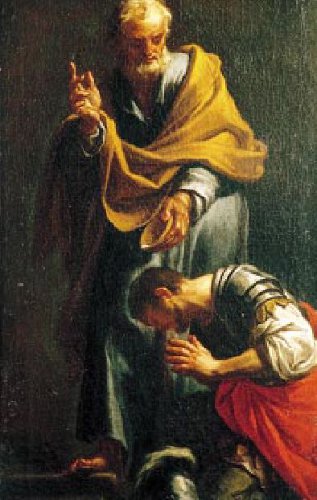
While Peter was still saying these things, the Holy Spirit fell on all who heard the word. And the believers from among the circumcised who had come with Peter were amazed, because the gift of the Holy Spirit was poured out even on the Gentiles. For they were hearing them speaking in tongues and extolling God. Then Peter declared, “Can anyone withhold water for baptizing these people, who have received the Holy Spirit just as we have?” And he commanded them to be baptized in the name of Jesus Christ. Then they asked him to remain for some days.

Acts 10:44-48 (ESV)

Perhaps I can also extend the lesson and the metaphor of “jars of clay” to include Gentile God-fearers like Cornelius and his transition into what was later known as Christianity through accepting discipleship under Jesus Christ…and also bring Noah into the lesson.

I establish my covenant with you, that never again shall all flesh be cut off by the waters of the flood, and never again shall there be a flood to destroy the earth.” And God said, “This is the sign of the covenant that I make between me and you and every living creature that is with you, for all future generations: I have set my bow in the cloud, and it shall be a sign of the covenant between me and the earth. When I bring clouds over the earth and the bow is seen in the clouds, I will remember my covenant that is between me and you and every living creature of all flesh. And the waters shall never again become a flood to destroy all flesh. When the bow is in the clouds, I will see it and remember the everlasting covenant between God and every living creature of all flesh that is on the earth.” God said to Noah, “This is the sign of the covenant that I have established between me and all flesh that is on the earth.”

Genesis 9:11-17 (ESV)

As we saw in Acts 10, Peter, the Jewish Apostle, was astonished to discover that the Spirit of God would also come upon the non-Jew who accepted Christ, just as it came upon the Jews during his experience of the events recorded in Acts 2. It had never occurred to him before that such a thing was even possible. What a wonderful God who can also save the children of the nations as well as the Children of Israel.

But earlier in the chapter, we learn some things about Cornelius as he was before becoming a disciple of Jesus:

At Caesarea there was a man named Cornelius, a centurion of what was known as the Italian Cohort, a devout man who feared God with all his household, gave alms generously to the people, and prayed continually to God.

“Cornelius, a centurion, an upright and God-fearing man, who is well spoken of by the whole Jewish nation, was directed by a holy angel to send for you to come to his house and to hear what you have to say.”

Acts 10:1-2, 22 (ESV)

The Roman Centurion Cornelius and his non-Jewish household were known as “God-fearers,” non-Jews who had come to the realization that the God of Israel was the God, the One and only, the Creator. In that realization, they came to faith, abandoned the pagan idols of Rome, and gave homage to God only. Often, non-Jewish God-fearers would worship in the synagogue on the Sabbath. Many took on some of the other Jewish religious practices of the day, including the daily prayers, and even, to a degree, a Kosher observance (for Peter to break bread in Cornelius’s house, this would have to be true in his case).

But would a Gentile simply walk into a Second Temple era synagogue on Shabbat and inform the Rabbi and other Jews that he intended to worship the Israelite God with them? How was this done and under what status would a Gentile appropriately do such a thing?

Recall Genesis 9 and the covenant God made with Noah and all of his descendents which, by definition, includes all of humanity.

The concept of the Noahide was not formalized, as we understand it today, until the Talmudic era, many centuries after Cornelius and Peter walked the earth. However, the covenant of Noah would have been well-known among the Jews and it’s not beyond reason to believe that a man as devoted to God as Cornelius would have learned or been taught that anyone from among the nations stands before God as subject to the covenant with Noah. Perhaps, though not called or even thought of as “Noahides,” many of the Gentiles who would later receive the Spirit and be baptized by water in Christ’s name, were nevertheless, viewed in such a manner, as God-fearing men and women who had heard the distant words of God to Noah at Ararat, and thus, believed.

To borrow more from Lancaster’s Torah Club lesson (pg 47), maybe we can understand the rite of baptism, especially as it related to the God-fearers, just a little better:

Based on this reading, Lichtenstein argues that the formula (see Acts 2:38) is not a baptismal confession but a statement of purpose. The disciples were to immerse people for the sake of declaring their faith in His messianic identity. Their immersion for His sake signified their entrance into His school of disciples and their allegiance to Him.

The apostles believed that the immersion in His name entailed a mystical union with Him, with His suffering, His death, and His resurrection. (see Romans 6:1-13 and 1 Corinthians 4:7-11)

This interpretation of the meaning of baptismal immersion signifies the crossing of a barrier for the non-Jewish adherents to the God of Israel, from God-fearers and possessors of the covenant of Noah, to disciples and people granted entrance to much greater covenant blessings under Messiah Yeshua.

In the events of Acts 2 and during the festival of Shavuot, every Jew present would be constantly reminded of the giving of the Torah at Sinai, of the awesome voice of God thundering from the smoke and fire, of the top of the mountain, smoldering in unspeakable tongues of flame. When the Spirit of God manifested as “tongues of fire” and rested upon the disciples of Moshiach at Solomon’s Portico, and they spoke in the many tongues of men and the languages of the nations, how much more significant was that Shavuot and all those that followed in their annual procession, to the older and newly made disciples? And when Peter saw that even the Hebrew FireGentiles could receive the Spirit, the greater mysteries of God’s work among all the world, linking Noah, to Moses, to Jesus, unfolded like an infinitely wide cloth, spilling amazing treasures across history, from Creation and into the future that even we now inhabit.

Admittedly, I’ve far exceeded the content of this part of volume 6 of the Torah Club in this “meditation,” (though I’ve included only a tiny fraction of what the over 20 pages of lesson notes – not to mention the accompanying audio CD – for this single teaching have to offer) but once I start learning, the connections to many other sparks of God’s wisdom were inevitable. If you continue to follow me in these studies or to embark on your own through the Torah Club, this will happen to you as well. Believe me, if you encounter the wealth of information in just this single study, it will illustrate to you that what you thought you knew about the events of Acts 2 only scratches the surface of what is actually there.

As humble and empty jars of clay, in seeking God and studying His Word, we desire to become filled with His Spirit and His Wisdom, every day, on each encounter with Him, and across all of our years.

…and that repentance and forgiveness of sins should be proclaimed in his name to all nations, beginning from Jerusalem.

Luke 24:47 (ESV)

73 Days: The Higher Road Less Travelled

The number of Americans who say they have no religious affiliation has hit an all-time high — about one in five American adults — according to a new study released Tuesday (Oct. 9) by the Pew Forum on Religion & Public Life.

Labeled “nones” because they claim either no religious preference or no religion at all, their ranks have hit 46 million people. Much of the growth is among young people — one in three U.S. adults under 30 are now considered nones.

The report also found that the number of self-described atheists and agnostics has hit a peak — 13 million people, or 6 percent of the U.S. population. That’s a rise of 2 percentage points over five years.

Still, claiming no religious identity does not mean an absence of religious beliefs, the report found.

The majority of “nones” — 68 percent, including some who say they are atheists — say they believe in God or some form of higher being. Half say they feel “a deep connection with nature,” and 20 percent say they pray every day.

-Kimberly Winston
“Losing our religion: One in five Americans are now ‘nones'”
Religion News Service story

Those who intermarry face barriers to religious affiliation. Interfaith families who want to educate their children in two religions often cannot affiliate with religious institutions. Many religious institutions discourage or even forbid families from belonging to more than one religious community, or enrolling their children in more than one religious education program. These families may turn for support and religious education to independent interfaith communities such as the ones in New York, Chicago, and Washington DC. Or they end up religiously homeschooling their children in both religions. Either way, they may become part of the “religious but not religiously affiliated” demographic documented in the study.

-Susan Katz Miller
“Interfaith Marriage and the Rise of the Religious ‘Nones'”
On Being Both blog

This is the other road I could take and in fact, it’s probably, to some degree, the road I’ve been walking lately. Although I do have a “religious affiliation,” it is self-declared and unsupported by any larger group or community, at least in the face-to-face world. I’m a Christian, but one who doesn’t go to church or interact with other Christians in any manner except online. Even then, most of the Christians I interact with are otherwise identified as “Messianics” and a significant number of my online peers are Jewish.

Yeah, I’m one strange Christian.

Until I read the Susan Katz Miller article, I had no idea to what extent my situation was rooted in being intermarried. Here’s more of what she wrote:

I am grateful to Pew for drilling down into data on the “nones” and discovering some of the rich complexity of religiously-unaffiliated spiritual life. In an interesting parallel, many of the early studies on interfaith families conflated “doing nothing” with “doing both.” Just because a family does not affiliate with a church or a temple does not mean they are doing nothing. On the other hand, families may claim to be doing both, or attempt to do both, but cannot always follow through successfully without the support of clergy, family, or like-minded interfaith families. It will be important in future studies to examine the full range of practices, beliefs and experiences of unaffiliated interfaith families.

I encourage you to read Susan’s entire blog post to get the full context of what she’s saying about being intermarried and being “religiously unaffiliated.” In some sense, it’s rather empowering to think that there are many more people like me who, rather than “splitting the difference” so to speak, and having husband and wife exist in different religious worlds, choose instead to live “outside of official religious institutions.”

But that puts me into a state of flux again. Should I start attending a church, or some activity held at a church, and thus associate with other Christians? If I don’t and instead, continue on my current path, does that qualify me as a “none” and a “nobody?”

In the beginning, G‑d created everything out of nothing. He could have decided to make everything out of something, but He knew that nothing is better material than something. Because something is already whatever something is, but nothing can become anything.

That’s why, at least as far as this universe is concerned, the only way to become a real somebody is by being a nobody first.

Many of us today are nobodies. That’s okay. The moon must disappear before it becomes full again. The seed must rot away before it becomes a great oak.

-Rabbi Tzvi Freeman
“How Nobody Became Somebody”
Chabad.org

Rabbi Freeman tells an entire story between the second and third paragraphs of the quote just above, so you’ll have to click the link to find the full details. But the core of the message is just what I posted: there is a required relationship between being “nobody” and “somebody;” there is a necessary process involved in being emptied so you can become filled.

I started this “days” series at 78 Days, giving myself that amount of time (my time expires on New Year’s Day, 2013) to either figure out where I belong in the online and face-to-face community of God, or give it up, the blog, and maybe even my faith (outwardly, anyway) and just let the world of vitriolic attack dogs and nudniks (pests) toddle along on the web without me. That has nothing to do with being intermarried, but a lot to do with my patience running out for so-called “Christians” who completely miss the point of the one commandment of Jesus that we should all obey. Tragically, it’s the one commandment of the Jewish Messiah that is most often ignored. More’s the pity.

But while the visigoths may be pounding at the (metaphorical) gate of my so-called “peace of mind,” ready to invade and visit wide-spread destruction on everything in their path, though I could escape simply by withdrawing from the web, I can’t withdraw from the world. I know I’m supposed to do something, but I continue to vacillate between my options. I know that God has placed me here for a reason, and that unpleasant experiences (and unpleasant people) are also here for a reason. I’m not supposed to give up on even the nudniks, (although I finally had to on one) so I guess that means I can’t give up on myself.

I’m still not sure of what the process is where I’m supposed to be emptied now and filled later, but in trying to live out that process in writing and in person, I prefer to think of myself as taking “the higher road less traveled” (and I’m indebted to Lrw in her comment on one of my blog posts for suggesting the title of today’s “extra” missive). Whether I ultimately choose to contact a church, to attend church-sponsored activities up to and including Sunday services, and whether I maintain a long-term relationship with a church or not, (and I’m discovering that I’m not the only Christian who is afraid of church) I do trust that I am walking with God on that “higher road less traveled,” and that one of the reasons I have so few “traveling companions” is that my situation as an intermarried spouse really is unique.

“You block your dream when you allow your fear to grow bigger than your faith.”

-Mary Manin Morrissey

There’s got to be a reason for this mess and for “messy” people. I just need to keep walking on my higher road, and may I uncover the sparks I’m supposed to find, and then release them to Heaven, returning them, and you, and me, to the God who made us all.

“Not all those who wander are lost.”

-J.R.R. Tolkien, British writer

74 Days: Contemplating Jumping

The Rebbe my father told someone at yechidus: Ever since G-d told our father Avraham, “Go from your land etc.” (Genesis 12:1) and it is then written “Avram kept travelling southward,” (Ibid 12:9) we have the beginning of the mystery of birurim. By decree of Divine Providence man goes about his travels to the place where the “sparks” that he must purify await their redemption.

Tzadikim, who have vision, see where their birurim await them and go there deliberately. As for ordinary folk, The Cause of all causes and the Prime Mover brings about various reasons and circumstances that bring these people to that place where lies their obligation to perform the avoda of birurim.

“Today’s Day”
Shabbat, Cheshvan 1, Shabbat Rosh Chodesh, 5704
Compiled by the Lubavitcher Rebbe
Translated by Yitschak Meir Kagan
Chabad.org

There are people who do many good things, but with pessimism—because to them the world is an inherently bad place. Since their good deeds have no life to them, who knows how long they can keep it up?

We must know that this world is not a dark, sinister jungle, but a garden. And not just any garden, but G‑d’s own pleasure garden, full of beauty, wonderful fruits and fragrances, a place where G‑d desires to be with all His essence.

If the taste to us is bitter, it is only because we must first peel away the outer shell to find the fruit inside.

-Rabbi Tzvi Freeman
“The Garden”
Based on letters and talks of the Rebbe
Rabbi M. M. Schneerson
Chabad.org

I suppose Rabbi Freeman has hit the nail on the head as far as I’m concerned (though of course, he’s not even aware that I exist or of my circumstances). I tend to see the world as a rather negative place, as defined by the negative people who express themselves in it. You don’t have to go far to see what I mean. Watch any news channel on TV or the Internet and you’ll see tragedy, horror, despair, murder, and many other depressing and disheartening things. The debates and controversies surrounding the upcoming Presidential elections are just another reason to consider our world a negative place. It doesn’t matter which political party you belong to, the supporters of one person invariably use any trick and tactic they can find to sully the reputation their opponent’s supporters. The world of religion and religious blogging is no better, it seems.

According to the Rebbe, “Tzadikim, who have vision, see where their birurim await them and go there deliberately,” however, for the rest of us, “the Cause of all causes and the Prime Mover brings about various reasons and circumstances that bring these people to that place where lies their obligation to perform the avoda of birurim.” In other words, if you are a truly righteous person, you know where you must go and what you must do in order to accomplish the purpose of your life. For everyone else, God leads us to the places we must go and shows us what we must do, but it’s up to us to correctly interpret these events and then take the correct action.

Which is why, for most of us, life and God and our purpose can seem like we’re endlessly trying to solve a mystery by traveling down a dark street late at night hoping for illumination.

This week’s Torah Portion is Noah, which tells a narrative even most non-religious people know quite well. But according to Rabbi Abraham J. Twerski in his Growing Each Day commentary for Cheshvan 1, it tells me something more specific.

God said to Noah, “Enter … into the ark.”

Genesis 7:1

The Hebrew word for ark, teivah, has two meanings: it can mean “an ark,” and it can also mean “a word.” In the above verse, the latter meaning tells us that God instructed Noah to “enter into the word.” Rabbi Moshe of Kobrin expounded on this theme, explaining that when we pray, we should “enter into the words,” i.e. totally immerse ourselves into each word of prayer, as though the word is encompassing us.

A listener once asked him: “How can a big human being possibly enter into a little word?” Rabbi Moshe answered, “People who consider themselves bigger than the word are not the kind of person we are talking about.”

The Talmud states that people’s prayers are not accepted unless they efface themselves before God (Sotah 5a). God abhors those who are egotistical, and therefore the prayers of a vain person are not likely to be received favorably.

People preoccupied with their egos remain external to their prayers. The truly humble person feels small enough to “enter” even the tiniest word.

Today I shall…

try to throw myself entirely into my prayers by setting aside those thoughts and feelings that would inflate my ego.

While I don’t think of myself as someone who struggles with an inflated ego, it has already been pointed out to me (correctly, I might add) that I don’t trust God as I should. I don’t “enter into the word” with complete abandon, trusting that God will take care of my well-being. Terrible things happen to good people every day. Why would I be exempt?

That goes for trying to solve the mystery of my path of faith as well. If I make one decision, how will I manage the consequences? If I make no decision, that’s a decision and it has consequences. Even standing still is really moving backwards. If only all of the “egos” on the web who casually malign their brothers of the faith and the Jewish people (who are sometimes one in the same) never seem to throw themselves entirely into their prayers, setting aside those thoughts and feelings that would inflate their egos, at least as evidenced by their online behaviors.

Maybe it is better to ignore the world and to simply throw myself into a life of prayer, study, and contemplation.

There was a story about a Torah scholar who died young… – 13a-b

The Gemara elaborates and tells the story of a Torah scholar who died young. This man’s wife came to the Beis HaMidrash carrying his tefillin, and she began to complain about his shortened life. Although this student was very diligent, and no one was able to respond to this woman’s bemoaning, finally Eliyahu discovered and exposed the tragic flaw which this young man and his wife possessed.

It is noteworthy that this woman specifically brought her late husband’s tefillin with her, as if it indicated more of a reason why he did not deserve to die. Maharsha explains that she brought the tefillin to increase the anguish of the other students who would see her. Sefer Gilyonei HaShas of R’ Yaakov Engel explains that tefillin specifically represents the connection which we have to Torah study. Her argument was sharper, as she demonstrated that her husband learned Torah and was bound up with Torah as his life pursuit.

Therefore, this woman took her husband’s tefillin as she circulated around the shuls and the Batei Midrash to demonstrate that her husband did not simply learn Torah, but he was bound up with the Torah, just as the tefillin is tied around one’s arm.

Daf Yomi Digest
Distinctive Insight
“Bound in Torah”
Shabbos 13

But even reading this commentary convinces me that there is an insufficient perspective being applied here. It’s not what you study and learn but what you do with it that counts. I sometimes define the difference between Christianity and Judaism as the difference between what you believe and what you do, but that’s not always a very fair comparison. In some aspects of Jewish thought, the person who studies Torah, binding themselves in it so to speak, is of greater value than the simple person who cannot study but only tries to live a descent life as best they can.

A person can be a Jew just by being born of a Jewish mother and on that virtue, is a member of the covenant and one of God’s chosen people. A Christian can be born anybody and all by itself, that means practically nothing. A person is only a Christian after making a decision and a declaration. After coming to faith and confessing Christ, the only way to tell a Christian from a secular person is by what they do. Even then, many secular people behave more righteously than many Christians.

However, faith and belief are invisible. Only God knows what is in a person’s heart. It is what we do that defines us, sometimes because of what we believe and sometimes in spite of it. When God leads each of us, even me, into any given situation on any given day, there’s an expectation about what we’re supposed to do there. Should we turn left or right? Should we go forward or back? From God’s perspective, the answer is obvious. From a human’s point of view, it can seem like an impossible puzzle, or we might even miss the fact that a decision must be made at all.

Or, we know what we should do and are just loathe to do it. But if God has sent us to “reveal a spark,” so to speak, who are we to say we won’t do it or pretend we don’t understand what He is asking of us?

The answer is that we are human and flawed.

It would be easy just to ignore my dilemmas by ignoring God, but God or my conscience won’t let me do that. But it still feels like He’s asking me to jump off a cliff into a bottomless void with only the promise that He’ll make me fly to sustain me.

Do Christians Practice Judaism?

You probably think I’m crazy even asking if Christians practice any form of Judaism. The vast, vast majority of both Christians and Jews would answer a resounding “no.” Only a tiny population of Jews and non-Jews in what is referred to as the Messianic Jewish and Hebrew Roots movements (they overlap somewhat but are hardly the same thing) even ask such a question. Moreover, only some of the people inside of those movements are considering or confused by the answer.

But why even ask such a ridiculous question? First of all, I recently read such a question as it was floating by in the blogoverse and was intrigued by its audacity. One such church-going (non-Jewish) Christian says he regularly tells other people in his church that he practices “Messianic Judaism”. This is just a hair off from his possibly telling other Christians that he’s a “Messianic Jew”. I don’t want to be unfair or inaccurate, and this person did not refer to himself as a Jew, Messianic or any other kind.

But as you know if you’ve been reading my blog for very long, I have a very definite perspective on What is Messianic Judaism. If you click that link, you’ll see that I don’t think it’s possible for a non-Jew and particularly for a Christian to actually “practice Judaism,” but apparently the question requires more attention.

There’s a conversation going on in Facebook currently (you may need to be logged into Facebook to see it) that was started by Boaz Michael, President and Founder of the educational ministry First Fruits of Zion (FFOZ). He asks:

A good benchmark for the Nations? The seven laws of Noach are all things that can be derived from one place or another in the Bible, if not directly from Genesis 9. They form a sort of minimalist approach to ethical monotheism: believe in God, be a decent person, be kind to animals, and settle your disputes in court.

Now to be fair, when I queried Boaz on the differences between how Noahides are viewed in Judaism and the blessings of being a Christian, he replied:

Yes, I think that for believers there are additional standards and expectations. After all, the God-fearing Gentile believers were not just “sons of Noah.” Through Paul’s gospel, they considered themselves co-heirs to the messianic promises and spiritual members of the people of Israel. They fellowshipped with the Jewish believers, shared meals with them, and worshipped in their synagogues. They considered themselves spiritual sons of Abraham.

Which brings us to a relevant point: Did Gentiles ever practice Judaism?

The complete answer would probably turn into a book or at least a doctoral thesis on the subject, neither of which I have time for. The short answer is a kind of “maybe” as I see it (well, not really, but I’ll get to that). It all hinges on whether or not you believe that Gentles imitated literally every behavior of their Jewish mentors when learning to become disciples of the Jewish Messiah, and even if they did, what that behavior meant to both the Jews and non-Jewish believers involved.

We see in Acts 10 that the Roman God-fearer Cornelius (who didn’t become a “Christian” as far as receiving the Spirit and water baptism until the end of the chapter) most likely prayed the daily prayers in the same pattern as the Jew.

…Four days ago, about this hour, I was praying in my house at the ninth hour…

Acts 10:30 (ESV)

The ninth hour is about 3 p.m. which would be the proper time to pray the mincha or afternoon prayers. As Boaz said, the early non-Jewish disciples also very likely shared meals with their Jewish counterparts, which would have required that they keep a kosher diet, at least during those shared meals, and if, as Boaz said, they also worshipped in Jewish synagogues, then they would have prayed the same prayers (which were said from memory rather than through use of a siddur) and gone through the same “order of service” as the Jews. In fact, it’s likely that significant portions of the lifestyle of an “early Christian” would have been substantially similar to that of a Jewish person (disciples of the Jewish Messiah, or otherwise).

This may have contributed to some of the confusion we see among a number of the Gentles, as recorded both in Galatians, where Paul admonishes the Galatian church goers, saying they do not have to convert to Judaism and keep the full yoke of Torah (see Galatians 5:3) in order to be justified, and in Romans where Paul goes to great lengths (see Romans 11) to explain to the Gentile disciples that their entry into covenant with God did not cause them to supersede the Jewish “branches.”

No wonder now that Jews are rediscovering Jesus as the Jewish Messiah and Christians are rediscovering their “Jewish roots,” that we are also reviving something of that confusion in the present day (I’m speaking with some poetic license, since I don’t know if or to what extent Gentiles in the early church experienced any sort of “identity crisis” the way we see it in certain corners of the modern Hebrew Roots movement). I want to make it clear that many Gentiles in Hebrew Roots do not think they are Jews, nor do they intend on practicing any form of Judaism, so those who are “confused” represent a very small minority in Hebrew Roots.

So, I’ll ask it point-blank. Did early Christians practice Judaism? In terms of actual worship and significant lifestyle behaviors, it probably looked that way to an objective observer (though we lack a lot of information about how early Christianity really worked relative to Judaism). They might have been mistaken by some for people undergoing the process of converting to Judaism. The Roman empire recognized Judaism as a valid religion and would allow Jews to cease work during the Shabbat and so forth, but “the Way” as it was practiced among the non-Jewish disciples, was not a legal religion in the empire, and it would have been extremely difficult for diaspora Gentiles to keep Shabbat as did the Jews, and probably observe many of the other obviously Jewish mitzvot as well, such as eating kosher and praying shacharit and mincha, if it meant ceasing work during the morning and afternoon prayers.

Of course, after the destruction of the Temple and the exile of the vast majority of the Jewish population from Israel (renamed “Palestine” by the Romans), the first non-Jewish “bishop of the church” (certainly those exact words weren’t used to define the “office” of the head of the “Jerusalem Council” in those days) had to be elected. That, and many more events, resulted in the non-Jews taking administrative control over “the church of Jesus Christ” and within a few centuries (exactly how many centuries is up for grabs), the schism between what became Christianity and any form of Judaism was complete. At that point, no Christian was practicing any form of Judaism and any Jews who may have still, even secretly, acknowledged Yeshua as Messiah, would have done so as part of a completely Jewish religious life, isolated in the extreme from the Gentile Christian.

As part of the research (such as it is) I did for writing this “extra meditation,” I read articles such as Who is a Jew and Definition of a Jew, but they don’t really respond to the question I’m asking. First of all, there may be a difference between being Jewish and practicing Judaism, though I’m sure the distinction is very fine and difficult to identify. Then there’s the idea that we have post-modern Jews defining themselves without the “benefit” of the New Testament, thus they do not take into account any Apostolic material that might modify such definitions (and please keep in mind that Jews have every right to define who is a Jew and what is Judaism).

I tried to see if there was any way of answering the question, “Do Noahides Practice Judaism,” but other than finding a rather interesting article written by Rabbi Shraga Simmons about his brief interview with Noahide Jim Long, I came up dry. Certainly a Noahide would have no other place to go to worship and find community except a synagogue, thus he would be singing, praying, and worshiping alongside Jews on every Shabbat and holiday, but does that mean gentlemen like Mr. Long, a Gentile Noahide, are “practicing Judaism?”

The Gentiles in Hebrew Roots or worshiping in authentic Messianic Jewish communities seem to think they are the only non-Jews who have been attracted to and captivated by the Torah, but reading some of the comments in Rabbi Simmons’ article, I see that there is a significant number of us who have chosen the Noahide route and set aside Christianity/Hebrew Roots and Messianic Judaism as viable options.

What is Judaism? Since Judaism is a people, a nation, and a religion, it’s difficult to say that just “behaving” like a Jew means you’re practicing Judaism. You, as a non-Jewish Christian or Noahide, may be worshiping alongside Jews in a synagogue setting, sharing their fellowship, and breaking bread with them, but it might be a bit of a stretch to say you are practicing Judaism in precisely the same sense as the Jew davening next to you. If a Jew, for example, were to visit a Christian church (say he was married to a Christian wife but maintained a Jewish cultural, ethnic, and religious identity), and prayed and worshiped God within that context, we wouldn’t say he was “practicing Christianity.” Of course, he wouldn’t be acknowledging Jesus as Messiah and Savior, either.

What about the “Messianic Jew” who maintains a Jewish cultural, ethnic, and religious identity but acknowledges Jesus as Messiah? Does he practice Christianity? Some “Jewish Christians” do, but they have voluntarily left a Jewish religious and (to some degree) cultural context to worship and identify primarily as a Christian, but one of Jewish heritage. If you are a Jew who is Messianic and maintains that Jewish cultural, ethnic, and religious identity, it’s easier and clearer to say that you are “practicing (Messianic) Judaism.” A Messianic Jew in a church isn’t practicing Christianity, but worshiping alongside their Christian brothers and sisters. (Dr. Michael Schhiffman commented about this significantly on his own blog recently)

I suppose on that basis, regardless of how we see those early, ancient Christians and what they were practicing in the synagogue, today, we Christians, even those of us who daven in the presence of our Jewish fellows in a (Messianic) Jewish synagogue, are not practicing Judaism, but worshiping God with the Jewish people who, in this case, have the same God as we do, and know the same Messiah as we do.

I realize my little missive is not perfect, but I think I have made a reasonably good case for my point of view. Last spring during Shavuot, I worshiped in a completely Jewish synagogue context at Beth Immanuel Sabbath Fellowship. But even though the prayers were in Hebrew, even though we davened using a siddur, even though the Torah was read, and even through we all ate kosher meals prepared in a kosher kitchen, that doesn’t mean I was “practicing Judaism.” I was a Christian worshiping with other Christians and a good many Jews in a place where we were all welcome to share fellowship in love and peace, each of us just as who we were created to be by God.

75 Days: A Little Help, Please

All over people are fighting. Religious fighting, national fighting, family fighting. Some are even ready to die because they think they’re right. How are we ever going to put this world back together?

Way #11 is dik’duk chaveirim – literally “cut if fine with friends.” See the importance of sitting down, of reasoning together. Don’t assume your viewpoint is correct. Open yourself to the ideas of others. “You don’t have to kill me. If you persuade me that you’re right, then I’ll join you.”

We need real friends – someone you can trust, to discuss plans, feelings, ambitions. With a friend, you don’t worry about scoring points or winning ego contests. A good friend will listen to the pros and cons and give you straight, honest feedback.

This is especially important with decisions like: Should I marry so-and-so? Should I accept this job offer? Should I move into this neighborhood? Everyone has different insights. Amongst many people you’ll find many solutions.

Some roads can be traveled alone, but the road of life shouldn’t be one of them. Go with a friend.

-Rabbi Noah Weinberg
“Way #11: Work It Through With Friends”
From the “48 Ways To Wisdom” series
Aish.com

So James, have you thought in terms that you’re robbing people of your fellowship? You have something that is vitally needed to be heard by the Christian community. Not to mention your sweet and gracious nature that is a great example.

I will also respectfully say you’re limiting God. I find that if I trust Him enough to obey and not focus on all the reasons I can’t, shouldn’t, it’s too hard too, then He is faithful to work out the details that I have no control over (the heart condition of others). After all, he doesn’t ask me to control others, only to obey Him.

-Lrw in a recent comment on my blog

What do I do when my love is away
Does it worry you to be alone?
How do I feel by the end of the day
Are you sad because you’re on your own

No, I get by with a little help from my friends
Mm, I get high with a little help from my friends
Mm, gonna try with a little help from my friends

-Lennon and McCartney
With a Little Help from My Friends

I suppose that’s how we all get through things…with a little help from friends. As you can see, it’s been suggested to me that not only might I benefit from fellowship with like-minded believers, but that they might benefit from fellowship with me. Sounds egotistical of me to say it like that, but I think I know what Lrw is saying. This is especially true when, as I’ve been describing in this series, there seems to be so much fighting and feuding and jockeying for position in the religious blogosphere and particularly within the Hebrew Roots movement.

But I must say that religious fighting and religious “haters” aren’t limited to the small corner of cyberspace I happen to occupy. Here’s two examples. First, from the Jewish side of things:

Question: I recently stumbled on an anti-Semitic website and they had a whole list of Talmud sayings that sound very non-PC. One example was: “It is permitted to marry a 3-year-old girl,” which they said means that Judaism condones sexual abuse of a young child. Another example was: “The best of the Gentiles, kill.” Does the Talmud really say this stuff?

The Aish Rabbi Replies: Misquoting Talmudic texts or taking them out of context is an age-old method used to incite anti-Semitism.

In the example that you cite, that a Jew may marry a 3-year-old girl, it simply means that under the age of 3, a “marriage” contract has no validity. Beyond that, any “marriage arrangement” made at above the age of 3 must be accepted and validated by the girl herself at such time that she attains maturity. The Talmud is discussing a technical legal point, not condoning abhorrent sexual activities.

As for: “The best of the gentiles, kill,” the context here is very crucial. The question was raised, how could there be any horses chasing after the Jews with chariots (in Exodus 14:7), when they were all killed in the plague of hail (Exodus 9:19). The Midrash (Tanchuma – Beshalach 8) answers that the horses were owned by those who heeded God’s warnings and locked his animals indoors (Exodus 9:20).

The Midrash concludes that these God-fearing Egyptians — the best Egyptians — turned out to be the ones that gave their horses to chase the Jewish people. In other words, in this particular instance, even the best Egyptians turned out to be oppressors, too. Yet even they – “the best of the gentiles” – were deserving of death.

The Torah states unequivocally that ALL men were created in the image of God (Genesis chapter 1). In fact, the Talmud emphasizes that Adam was created from the dust of all four corners of the earth (so to speak), so that no one nation could claim superiority. And of course, it is forbidden for a Jew to kill a Gentile. (source: Talmud Sanhedrin 57a; “Taz” Y.D. 158:1).

So you see, one can change the meaning of anything by taking it out of context. And better not to waste time refuting these points one by one. God’s Torah is morally perfect, and if something ever sounds otherwise, it is because it is not understood properly.

“Misquoting the Talmud”
from the “Ask the Rabbi” series
Aish.com

Christianity in general has an issue with the Talmud and how it is used in Judaism, believing that it is of no value and that it is the “wisdom of the elders” being placed higher than the Word of God. The Hebrew Roots movement also tends to disdain the Talmud and thus, the last 2,000 years or so of Jewish culture and philosophy as well as Jewish art, literature, lifestyle, and just about anything else Jewish that isn’t, strictly speaking, “Biblical.” And yet, it’s impossible in virtually any sense, for anyone, Jew or Gentile alike, to observe the Torah mitzvot without referencing Talmud and granting the ancient Jewish sages the right and ability to render authoritative halakah. In fact, the very structure of the books, chapters, and verses in the Tanakh (Old Testament) was created by those self-same sages. Try to avoid that if you can.

However, this isn’t just a problem on the Jewish side of the equation:

If you want to see a good example of what be-devils any scholarly analysis of practically anything to do with Jesus and early Christianity, have a read of the postings of the Canadian TV self-promoter, Simcha Jacobovici here.

Jacobovici (who styles himself “the naked archaeologist” on his self-produced TV programmes, and offers no competence in anything relevant to the analysis of the fragment) notes that various scholars (particularly Coptologists and specialists in ancient Greek palaeography) have raised questions about the authenticity of the fragment (announced to the scholarly world in Prof. Karen King’s paper presented at a conference in Rome several weeks ago), and simply trashes all the scholars and queries as “sleeper agents of Christian orthodoxy”.

He claims that they give no basis for their hesitations, which is patently incorrect and misleading. The several scholarly analyses that I’ve seen all in fact present in considerable detail reasons for wondering about this fragment. I’ve seen none, not a one of the scholarly analyses in question, that raises any issue about “Christian orthodoxy”.

-Larry Hurtado
from “The ‘Jesus’ Wife’ Fragment: Self-Promoting Personal Attacks”
Larry Hurtado’s Blog

I suppose I was being rather self-centered or myopic in believing this problem was confined to the wee online community in which I participate. As you can see (and I have discovered), these sorts of problems exist elsewhere and probably everywhere. The only way to avoid them is to be completely disengaged from community, even online community which is as easy to take or lose as opening and closing a web browser.

On the one hand, the thought of facing such vitriolic commentary either online or face-to-face isn’t appealing in the slightest. On the other hand, I have to remember that there are some “religious people” who don’t use God like a blunt instrument with which to beat others repeatedly about the head and shoulders:

Rav Levi Yitzchok of Berditchev was known for his love and good will toward his fellow Jews always trying to assess the good in people rather than expose the bad.

Once on the Fast of Tish’a B’av he saw a Jew eating in a non-kosher restaurant. He tapped lightly on the window of the establishment and summoned the man outside.

“Perhaps you forgot that today is a fast day?” Rav Levi Yitzchok queried.

“No, Rebbe,” the man replied.

“Then perhaps you did not realize that this restaurant in not kosher.”

“No, Rebbe, I know it is a traife (non-kosher) eatery.”

Rav Levi Yitzchok softly placed his hands on the man’s shoulders and looked heavenward. “Ribbono Shel Olam, Master of the Universe,” he exclaimed. “Look at how wonderful your children are. They may be eating on a fast day. In a non-kosher restaurant to boot. Yet they refuse to emit a falsehood from their lips!”

-Rabbi M. Kamenetzky
“Eve of Life”
Commentary on Torah Portion Beresheet
Torah.org

As much as I lament the few rather vocal and hostile nudniks (pests) on the web, there are a lot more people who represent the spirit demonstrated by Rav Levi Yitzchok who continue to be an encouragement to me.

However, the next step, if I understand what is being asked of me correctly, will be a lot harder.


76 Days: The Encouraging Shepherd

Realize that if you ever feel discouraged, your attitude of discouragement is a greater problem than any external hardship.

You can change your attitude.

-Rabbi Zelig Pliskin
“Daily Lift #607, At Least Don’t Be Discouraged”
Aish.com

A kind word can last forever. An encouraging word can be the foundation upon which many constructive years will be established. Enhancing the self-image of a child with a brief but powerful comment can create a magnificent human being. Words that inspire function like the fuel that enables the rocket to fly high and far.

-Rabbi Zelig Pliskin
“Daily Lift #608, An Encouraging Word”
Aish.com

Thanks for that, Rabbi. Maybe I ought to buy your book and read that every day rather than some of the more discouraging content found on the web. But on the other hand, even in the midst of contention and chaos can come a small thread of hope.

drschiffman: Dan that’s your opinion but you state it as a fact. I wouldn’t deny you your right to your opinion but I must ask your forgiveness that I can’t continue the discussion at this time. I’m dealing with very serious health issues and am just not up to it right now. I respect you and am sorry but this is how it’s got to be for now. Be well.

Dan: Praying for you Dr.

drschiffman: Thanks Dan, I appreciate it

-from comments on Drschiffman’s Blog post
Messianic Judaism and Christianity: Two Religions With The Same Messiah

If you take the time to read the content of the blog post and the entire discussion in the comments section below, you’ll see that Dr. Schiffman and Dan are not exactly in agreement on the topic in question. On the other hand, the second that it became clear Dr. Schiffman was dealing with a serious health problem, the disagreement was set aside and Dan’s compassion became immediately evident. In fact, looking at the quote of their conversation, both of these men, even in disagreement, remained courteous and respectful toward each other.

That’s sort of the model I have been hoping to follow in my “blogosphere” transactions with the folks who disagree with me. I’ve had similar conversations with Dan in the past, and as much of a “firebrand” as he can be at times, his ability to put that all to one side and express warmth toward others including me, seems rare in our little part of the world of religious blogging. He’s not the only one, and to be fair, I’ll assume that most of the people I disagree with are good people who only desire to do the will of God, but those few voices that don’t seem to give a rip about anything except “winning” (in a Charlie Sheen sort of way) speak (or yell) so much louder.

That’s why it was important for me to quote from the brief exchange between Dr Schiffman and Dan this morning. That’s why their words are linked back to Rabbi Pliskin’s brief commentaries on encouragement. That’s why the encouragement of others is so important and why we must encourage, rather than discourage, each other:

Hi James. Don’t let a small number of people sour you on blogging and transparency. That, my friend, would be awarding them a very undeserved victory.

-Rabbi Carl Kinbar
from a recent comment on my blog

I have keep reminding myself that as loud as discouraging voices can be, there really are just a few of them. It’s not disagreement that’s the problem, it’s the joy killers and the attack dogs who are the real adversaries, not necessarily to me, but to the purposes and plan of God.

Therefore encourage one another and build one another up, just as you are doing.

1 Thessalonians 5:11 (ESV)

Admittedly, it’s difficult to have a conversation where you’re building someone up while also disagreeing with them on the purpose and mission of believing Jews and non-Jews in God’s plan, but as we’ve seen in the transaction between Dr. Schiffman and Dan above, when something immediate and important comes up, the disagreement can be easily set aside and the “building up” instantly comes to the forefront.

It’s such a pity that not everyone in the body of believers can see that this is how it should be. It’s why I’m looking at the next 76 days and wondering what will happen next.

Actually, I feel more refreshed as I write this than when I pounded out the previous entry in this series, so there is hope. I’ve received a fair amount of encouragement, not just in blog comments, but also in emails and on Facebook, so I know that there are many more voices supporting me than tearing me down. I think that’s the important part to remember and it’s what I keep returning to. Only a few people see me as making “wrongful criticisms,” as if my motivation were one of malice. I’m not above admitting that I’m wrong, and I’ve done so in the past, but there’s a difference between that, and accusing me of bad motives and desiring to hurt others.

Really, in all that I’ve written to date, my desire has been to preserve, restore, and uplift others, not just believing Jews, but we non-Jewish Christians as well, illuminating the path we each must take, and showing how we all have a glorious mission and future in the plan of God. It just doesn’t have to be an identical path for the different parts of the body.

The goal is the same though, as is the Messiah, and as is God.

Behold, He stands behind our walls, looking through the windows, and peering through the lattices.

Song of Songs 2:9

“Whether God watches through the windows or through the lattices,” said Rabbi Yisrael of Salant, “God watches over us. The difference is that sometimes it is through a window, and then we can see Him just as He sees us. At other times, it is through a crack in the partition, where He can see us, but we do not see Him.”

Both in the history of the nation and in our personal lives, there have been times when Divine intervention was manifest. There have also been times when we were in great distress and felt abandoned, but even then, though God seemed to be absent, He was watching over us. The Torah foretold that there would be times of anguish when we would feel that God is not among us. At such times we must strengthen our faith and declare, “Behold, the Keeper of Israel does not sleep nor slumber.”

Commenting on the verse, He does great marvels alone (Psalms 136:4), our Sages tell us that “alone” means that only God is aware of some of the miracles He performs for us, because we are unable to recognize them as such. Those who failed to see the protective hand of God when the Iraqis rained scuds on Israel were morally and psychologically blind; anyone should have been aware of God’s protection. But even when His intervention is less evident, we must know that He watches over us, albeit “through cracks in the lattices.”

Today I shall…

try to reinforce my faith in the everpresent watchfulness of God over Israel as a whole, and over me as an individual.

-Rabbi Abraham J. Twerski
“Growing Each Day, Tishrei 28”
Aish.com

To adapt Rabbi Twerski’s lesson just slightly, I’ll say that God watches over not just Israel, although this is certainly important, but He also watches over us all, as a mother hen might watch over her precious chicks. He never slumbers or sleeps, and it is the Good Shepherd who guards his flock, all of us, and though we are from our different sheep pens, we are all his.

If we truly know his voice, we will follow him in peace.