
Tag Archives: kindness

Overcoming Humanity

It is human nature. When someone wrongs us, we want to retaliate. We are infuriated and hold onto memories of these “wrongs,” and when given the opportunity, we respond in kind.

Taking revenge is prohibited in Judaism.

Maimonides writes about revenge in his code of Jewish law:

Taking revenge is an extremely bad trait. A person should be accustomed to rise above his feelings about all worldly matters; for those who understand [the deeper purpose of the world] consider all these matters as vanity and emptiness, which are not worth seeking revenge for.” (Paraphrased from Mishneh Torah, De’ot 7:7.)

Rather, Maimonides continues, if someone who has wronged you comes to ask a favor, you should respond “with a complete heart.” As King David says in the Psalms, “Have I repaid those who have done evil to me? Behold, I have rescued those who hated me without cause”(Psalm 7:5).

In addition, Jewish law forbids us to bear a grudge. Thus, the Talmud explains, you may not even say to the person who wronged you that you will act rightly, even though he or she did not. (Talmud, Yoma, ibid.)

Rabbi Schneur Zalman of Liadi in his code of Jewish law concludes that, “one should erase any feelings of revenge from one’s heart and never remind oneself of it.”(Shulchan Aruch Harav, end of 156:3 [in the new Kehot editions (2001) p. 393].)

-Dovid Zaklikowski
“What Does Judaism Say About Taking Revenge?”
Learning and Values
Chabad.org

You shall neither take revenge from nor bear a grudge against the members of your people; you shall love your neighbor as yourself. I am the Lord.

Leviticus 19:18

I’m actually a lot more calm about this issue than I have been in previous days, but as I was studying this morning (as I write this), the topic came up and I thought I should continue with my commentary on the nature of human beings and our desire to strike back when someone causes us pain.

It’s difficult to not want to immediately hit back when someone does something to hurt or scare us. The sudden power surge of adrenaline hits our blood stream and our reflexes take over. The guy who cuts you off in traffic nearly hitting you, or the shock of someone accidentally bumping into you on the sidewalk and practically knocking you off your feet almost always produces a split second of tremendous emotion that we have to overcome with reason.

Of course, that isn’t really revenge as much as it is biochemistry. Once we get past the instant of emotion, we can stop ourselves before we go into a “road rage” or actually form a fist and hit the person who by now, is apologizing for walking into us and is trying to steady us on our feet. Revenge is longer lasting. Revenge is the desire to “get even” with whoever offended us and to, even days, weeks, or months later, make sure they “pay” for what they’ve done to us, whether the injury was real or imagined.

Here’s a classic Jewish example of revenge:

Taking revenge is when you ask someone, “Lend me your sickle,” and he says no. The next day he comes to you and asks you “Lend me your hatchet.” You respond, “I am not lending to you, just like you did not lend to me.”

This is an example of revenge.

—The Talmud, Yoma 23a

But revenge goes beyond what you actually do. It involves what you think and how you feel. How many people never actually “take revenge” but nurse it in their hearts, sometimes for years, letting it blacken not only that one relationship, but everything they are as a person, right down to the core of their soul?

Not taking revenge is not just about modifying one’s actual actions; it is also that the thought of revenge never even enter one’s heart. (See Rabbi Jonah Gerondi (1180-1263), Shaarei Teshuvah 3:38. See Nachmanides on Leviticus, ad loc.)

-Zaklikowski

That’s a tall order. It’s one thing to not act on the desire to take revenge or to even eventually put feelings of revenge aside, but it’s something else entirely to never experience thoughts or feelings of revenge in the first place when it would be otherwise expected to do so.

On the surface, the literal commandment we see in Leviticus 19:18 seems to address not acting on feelings of revenge and not carrying a grudge forward in time after the event, but how can you not have such thoughts and feelings in the first place? Zaklikowski’s response is this:

The verse prohibiting revenge ends with the famous maxim, “You should love your fellow as yourself.” Rabbi Moshe ben Nachman, “Nachmanides,” explains that erasing the event from your heart will guarantee that you will never come to transgress the commandment, allowing you to love your fellow, no matter what transpires between the two of you. (Igeret HaKodesh, Epistle 25.)
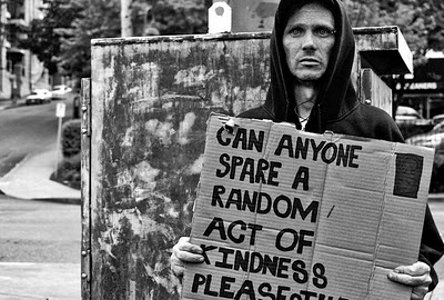
As I said before, that’s a tall order. It would mean that we would have to harbor love in our hearts for others as a matter of course and to learn to habitually forgive those who have wronged us. These are qualities that go beyond normal human experience, emotion, and reason. These are the lessons we learn from God and are the results of a life lived in faith.

“Be kind, for everyone you meet is fighting a hard battle.” -Plato

What would the world look like if we all internalized these lessons into our beings and committed to responding to our environment in this way all of the time?

When you look at a human being, you see his hands working, his feet walking, his mouth talking. You don’t see his heart, his brain, his lungs and kidneys. They work quietly, inside. But they are the essential organs of life.

The world, too, has hands and feet — those who are making the news and effecting change. The heart, the inner organs, they are those who work quietly from the inside, those unnoticed. Those who do a simple act of kindness without knowing its reward.

-Rabbi Tzvi Freeman
“Inside Workers”
Based on letters and talks of the Rebbe
Rabbi M. M. Schneerson
Chabad.org

Love is patient and kind; love does not envy or boast; it is not arrogant or rude. It does not insist on its own way; it is not irritable or resentful; it does not rejoice at wrongdoing, but rejoices with the truth. Love bears all things, believes all things, hopes all things, endures all things. –1 Corinthians 13:4-7 (ESV)


Friends

On today’s daf we find a discussion of the halachos of taking interest. Some people have a misguided conviction that all non-Jews are bad. This belief is not only very damaging for our relations with non-Jews wherever Jews live, it is also false. The Sefer Chasidim discusses davening for a non-Jew who is a good person.

One non-Jew was a very kind person, always helping his friends both Jewish and non-Jewish. He helped out one particular Jew in many ways, proving his friendship and earning his undying gratitude. When the non-Jew ran into financial troubles and asked his Jewish friend for a very large loan, the prospective lender was in a bit of a quandary. Although his friend had no way of knowing this, the lender’s finances were excellent; he could easily get along without charging interest. His greatest desire was to give his friend an interest-free loan. But he wondered if this was halachically permitted. In general it is forbidden to give an idolater a gift, including an interest-free loan — especially the astronomical sum the non-Jew required. But the Jew reasoned that this may be permitted in this case. After all, hadn’t his non-Jewish friend done so much to help him in the past? How could he be forbidden from responding in kind?

When this question reached Rav Shlomo Eiger, zt”l, he ruled that the lender was permitted to give his non-Jewish friend an interest-free loan. “Not only are you permitted to loan this non- Jew money interest free; if he did many kindnesses for you, you are obligated to give him a loan without charging interest. This is clear in the Radak in Tehillim 15:4, and is halachah l’maaseh!”

Daf Yomi Digest
Stories Off the Daf
“Two Friends”
Bechoros 16

I can only imagine that everytime I post a fairly large quote from Daf Yomi Digest or a similar source, that most Christians reading my blog tend to tune out (and probably a few Jewish people as well). It’s not easy to comprehend what the Rabbis are saying in these lessons and even when understood, the relevance may seem mysterious. Would it be that big a deal for a Jewish person to offer an interest-free loan to his non-Jewish friend without consulting his Rav? What tends to escape most of us is the need to be absolutely sure (if you are an observant Jew) that you are following the commandments in the proper manner. Certainly, this Jewish fellow wanted to do a kindness for his non-Jewish friend, but the path of Torah isn’t always easy to negotiate without correct halachic guidance and the desire is always to perform every action, including actions of charity and righteousness, in the manner that God has laid out for the Jewish people.

This is a detail that often escapes even those Gentiles who are Christians and believe they are to follow the commandments in the same way as the Jews.

After seeing some recent references of how some Jewish people view non-Jews as somehow “lesser” or lacking the ability to truly perceive God, reading this “story off the daf” was very refreshing. It also presented me with a minor mystery.

The PDFs I receive daily from the Chicago Center for Torah and Chesed (the source of my Daf Yomi lessons) provide footnote numbers but not the footnotes themselves. Their website isn’t particularly illuminating and I can only assume that the source from which they generate their PDFs has more information than survives the PDF creation process. For instance, when Rav Shlomo Eiger, zt”l cites “the Radak in Tehillim (Psalm) 15:4, and is halachah l’maaseh,” there is obviously more information available that interprets the Rav’s intent. How does Psalm 15:4 make it clear that the Jewish person in this story must give his Gentile friend the loan interest free?

A base person is despised in his eyes, and he honors the God-fearing; he swears to [his own] hurt and does not retract. –Psalm 15:4 (source: Chabad.org)

In whose eyes a reprobate is despised,
But who honors those who fear the LORD;
He swears to his own hurt and does not change –Psalm 15:4 (NASB)

It would help to read Psalm 15:1:

A song of David; O Lord, who will sojourn in Your tent, who will dwell upon Your holy mount?

Inner lightSo the person who is worthy to dwell in the Lord’s tent is the sort of person who “despises the base person” but “honors those who fear God”. Putting this back in the context of our commentary on the Daf, it seems as if the Rav is saying that the Jew (who is worthy of sojourning in God’s tent) must honor his non-Jewish friend, who obviously is God-fearing, in this case, by providing an interest-free loan.

I still needed the Radak’s commentary on Tehillim 15:4 but these sorts of references aren’t always easy to come by on the web. I did manage to find the following at DailyTehillim.com (print version only, though):

David here outlines the virtues that render a person worthy of dwelling in Hashem’s “tent” and residing in His “sacred mountain.” According to the Radak, David refers here to the resting place of the soul in the afterlife; it is thus here where we are told how a person earns his eternal share in the world to come. The Radak draws proof to this reading from the chapter’s final clause, where David exclaims, “he who does these shall not falter, forever.” The term “forever” implies that David refers here to eternal peace, which would suggest that he speaks of the soul’s reward in the afterlife.

In listing these virtues, David focuses first on proper interpersonal conduct: honesty and integrity (verse 2), and refraining from crimes such as gossip, causing others harm, and nepotistic protection of unworthy relatives (verse 3). In verse 4, he imposes an important qualification on the virtues of loving kindness and concern for others: “Nivzeh Be’einav Nim’as,” which Rashi translates to mean, “The shameful one is despicable in his eyes.” Although this prototype acts with love and sensitivity, he is at the same time prepared to confront evil and its advocates, rather than extend to them the same kindness and compassion he shows generally. He respects those who deserve respect, while condemning behavior that warrants condemnation.

The Ibn Ezra and Radak explain this verse differently, as meaning that the person sees himself as “shameful” and “despicable.” Despite his many fine qualities, he recognizes how much more he has to grow and accomplish in order to achieve perfection. Rather than falling into the trap of stifling complacency, he constantly strives to improve and to accomplish more.

The message conveyed by this Psalm is thus a dual one. On the one hand, David promises eternal life to everyone who lives in accordance with the basic values of honesty and Godliness; the world to come is not reserved for only the great Tzadikim who have reached the highest levels of spiritual devotion. At the same time, however, to earn eternal life one must spend his life in the pursuit of perfection, working each day to grow and become better than he is. This Psalm does not demand that everybody be perfect, but it does not demand that everybody work towards and strive for spiritual perfection.

This interpretation probably isn’t the one referenced in the Daf commentary, but it does give us more insight into the Psalm and it speaks to the character of both the Jew and his non-Jewish friend. My take on this is that a person who truly seeks to be worthy of God and to obey His desires, must honor others, regardless of who they are, who do the same. If you want to be a holy and honorable person, you must honor those who are holy and honorable. This crosses the Jewish/Gentile and hopefully the Jewish/Christian barrier (remember there are additional reasons why a Jew may object to a Christian Gentile as opposed to a more “generic” non-Jew) in “mixed” relationships but I think it could be justified based on our source story and especially on the line, “One non-Jew was a very kind person, always helping his friends both Jewish and non-Jewish.” Showing compassion and favor is not performing righteousness unless these acts are applied to everyone. Only helping those like you isn’t helping for the sake of God, at all.

For if you love those who love you, what reward do you have? Do not even the tax collectors do the same? If you greet only your brothers, what more are you doing than others? Do not even the Gentiles do the same? –Matthew 5:46-47 (NASB)

According to the Daf commentary, not all Gentiles “do the same”. Some Gentiles do better and live up to what Jesus was teaching. Marrying the “daf story” with the teachings of the Master, we understand what he meant when he said “salvation is from the Jews” (John 4:22). Where do we non-Jews get the idea to do kindness, charity, and righteousness? From our own souls? Perhaps, if we are listening to the voice of God as He whispers to us, but where is that voice expressed in its clearest form? The Bible. Where do we get the Bible? The Jews. Even the New Testament (or the vast, vast majority of it) was written by the Jewish disciples.

We see that despite some rather negative viewpoints about Gentiles that exist in modern Jewish commentary, a Jew is not limited to showing goodness just to his fellow Jew, and that Rabbinic judgment supports and even demands a good and kind Gentile be treated with the same compassion that he has treated others. Jesus takes it a step further and tells us to love our enemies (in this, he isn’t talking enemies in war but those who are in our own community but who are unlike us) and he re-enforces the message that it is not just those people who are like us who we must feed and clothe and visit when ill. It’s anyone.

If you are a Christian, you cannot ignore this. If you are a Christian who has been taught by your Pastor and your church to disdain and revile Jews because we (Christians) have replaced them and that they (Jews) are following a “dead” religion (how can something be dead that teaches so many lessons of life?), then you may want to revisit the Bible and revisit God in prayer. Something obviously has gone wrong with your faith and as a disciples, you are not following the lessons of your Master.

Being Heaven on Earth

feeding“Then the King will say to those on his right, ‘Come, you who are blessed by my Father; take your inheritance, the kingdom prepared for you since the creation of the world.

For I was hungry and you gave me something to eat, I was thirsty and you gave me something to drink, I was a stranger and you invited me in, I needed clothes and you clothed me, I was sick and you looked after me, I was in prison and you came to visit me.’

“Then the righteous will answer him, ‘Lord, when did we see you hungry and feed you, or thirsty and give you something to drink? When did we see you a stranger and invite you in, or needing clothes and clothe you? When did we see you sick or in prison and go to visit you?’

“The King will reply, ‘Truly I tell you, whatever you did for one of the least of these brothers and sisters of mine, you did for me.’Matthew 25:34-40

Question:

Each year, we Jews spend so many millions of dollars, and devote so much time and energy, to building synagogues, Jewish schools, and a slew of other religious and academic institutions. Wouldn’t it be better if we applied all those resources to feeding the hungry, housing the homeless, and working to alleviate all the horrendous suffering that goes on in so many places in the world?

Answer:

Jewish education is the impetus for charity. Any charity. People with a proper Jewish education are most likely to give more charity to the hungry, to the sick, and to the helpless. And to future Jewish education.

Because when you invest in Jewish education and Jewish institutions you are investing in every form of charity.

-Rabbi Tzvi Shapiro
AskMoses.com

What separates Jews and Christians? It shouldn’t be the desire, the will, and the action of helping others, such as feeding the hungry, clothing the unclothed, and visiting the sick. This is a value that is inexorably woven into the fabric of both faiths and has been since the beginning. Tzedakah or “charity” is at the very heart of the Jewish service to God. It is considered more than just a good thing to do and is an actual obligation to Heaven, as described at the Judaism 101 website.

Giving to the poor is an obligation in Judaism, a duty that cannot be forsaken even by those who are themselves in need. Some sages have said that tzedakah is the highest of all commandments, equal to all of them combined, and that a person who does not perform tzedakah is equivalent to an idol worshipper. This is probably hyperbole, but it illustrates the importance of tzedakah in Jewish thought. Tzedakah is one of the three acts that gain us forgiveness from our sins. The High Holiday liturgy repeatedly states that G-d has inscribed a judgment against all who have sinned, but teshuvah (repentance), tefilah (prayer) and tzedakah can alleviate the decree.

Numerous positive and negative commandments are devoted to the needs of the poor and unfortunate based on verses from Exodus, Leviticus, and Deuteronomy. When Jesus commands his disciples to “Love your neighbor as yourself”, he is quoting Leviticus 19:18, so the core of both Judaism and Christianity is charity and love. Nevertheless, as I pointed out in yesterday’s morning meditation, there is a startling degree of separation between Judaism and Christianity. Although much in our culture, worship, and identity keeps us apart, we also find there should be much that makes us alike.

A few events inspired me to write today’s “extra meditation”. The first was a story I read yesterday at jweekly.com about a woman named Linda Cohen.

When Linda Cohen’s father died in 2007, the mother of two was reeling. Grief-stricken, she decided to take time off from her active life and health consulting job in Oregon for a “spiritual sabbatical.”

“I just wanted to be quiet. I wanted the time to be with that loss,” recalls Cohen, a Boston native.

But within a month, she had a new sense of direction. Inspired by her father’s wishes to have friends and relatives make donations to charities in lieu of sending flowers after his death, she decided to honor his memory by performing 1,000 mitzvahs.

LindaCohenThe story goes on to say that Linda’s husband encouraged her to chronicle her progress on a blog which became 1000mitzvahs.org. Four years later, Linda’s compassion and her story has become a book: 1,000 Mitzvahs: How Small Acts of Kindness Can Heal, Inspire and Change Your Life.

Linda Cohen is just one person who lost her father. A lot of people have lost a loved one and we all know that sooner or later, our parents are going to die. We all go through that grief at some point in our lives, but most of us don’t recognize it as anything except another stage in our existence. Linda turned her grief into not only a way to honor her father, but a way to help many others and to inspire the rest of us.

The second inspiration came in the form of a video I watched on Facebook earlier this morning about a fellow in India who was so moved by compassion for the people starving in his own village, that he quit his job just to feed them, to clothe them, to bathe them, and to remind them that we are all human beings.

The original story is from CNN. Here’s the link to the Facebook page for Achyut Sharma’s Video on this story. It’s less than three minutes long. Please watch it before continuing to read here.

It’s not like any of this is revolutionary news, or at least it shouldn’t be. I’ve talked about being the answer to someone’s prayer before. You don’t have to quit your job and make it your full time mission to help the starving in your community. You don’t have to abandon you life, goals, and dreams, but you can make doing even one small mitzvah a day part of those goals and dreams.

Debate about what counted as a mitzvah – Replacing a roll of toilet paper? Smiling at a stranger? – became the stuff of Cohen family’s dinner-table discussion. (Cohen’s children were 6 and 9 when the project started, and grew to see the recurring topic as perfectly normal, she says.) These questions also served as conversation-starters on Cohen’s blog, which steadily gained followers over the course of the 2 1/2-year mission.

“There’s nothing really too small,” she says. “The idea is that bringing even a bit of kindness into the world is a holy connection.”

Just imagine if you did one thing today as a good deed that you didn’t have to do. It doesn’t have to be a big thing. Maybe it’s just picking up one piece of trash off the ground and putting it in a garbage can. Maybe it’s smiling at someone you pass on the street. Maybe it’s buying one extra can of food at the store and then stopping by the local food bank and donating it. Nothing big.

Now imagine doing that one thing every day. That’s 365 mitzvot in a year. Now imagine inspiring one other person to do the same thing. Imagine that other person inspires one other person, and so on, and so on, and so on, and…

Tikkun Olam doesn’t begin with huge, heroic, “Superman-like” acts of courage and strength. It begins with one person who cares enough to pass along some small blessing to the next person. It can be one person feeding the poor, the starving, the old, and the mentally ill in his village, or it can be a person taking five minutes out of their day to help their next door neighbor move a sofa. It can be anything, but it must be something.

You don’t have to be religious to do something like this and, to the shame of people who profess faith and yet do nothing for others, many secular people perform frequent acts of kindness for the sake of doing good. If you are a person of faith, it is a duty to God to serve other human beings, not as a burden and a chore, but because it is passing along the grace we received from God to the next person, regardless of who they are, or regardless if your acts ever become known to others.

You may never put your deeds on a blog, write a book, or be filmed by CNN, but as the Master taught, “whatever you did for one of the least of these brothers and sisters of mine, you did for me.”

You can change the world. You can inspire others to change the world. You don’t need to make some herculean effort to accomplish this. You only have to do one extra deed a day and then do it every day. Anyone can complain about the terrible condition of our world. Anyone can carry signs, protest, and cry out for justice. But very few actually do something about it, even though anyone can. If you seek justice, act justly toward others. If you seek mercy, then be merciful. If you want to be forgiven, then forgive. If you value kindness, then be kind.

I learned so much throughout this process,” she says. “I moved out of a place of grief, into a place of feeling very inspired. If there’s something negative that happens, I feel like there’s a lesson I can glean from that. I really learned how to see the good in the world.” –Linda Cohen

your kingdom come,
your will be done,
on earth as it is in heaven.
Give us today our daily bread.
And forgive us our debts,
as we also have forgiven our debtors. –Matthew 6:10-12

Don’t wait for goodness to come into the world. It’s here now because you’re here now. All you have to do is perform it. Your faith means nothing until you do. Then your faith means everything.