Tag Archives: light

Tetzavah: The Eternal Light Under the Throne

Leadership involves self-sacrifice. Everyone understands that to receive you have to give, but true leadership is above this type of barter. A genuine leader rises above self-concern entirely. He identifies totally with his people and their purpose, and is willing to give up everything for them.

Moshe Rabbeinu epitomized this type of leadership. When G-d told him that He would destroy the Jewish people because of the sin of the Golden Calf, Moshe responded: “If You would, forgive their sin. And if not, please obliterate me from the book You have written.”

By making this statement, Moshe offered to sacrifice more than his life; he was willing to give up even his soul. “The book You have written” refers to the entire Torah. Although Moshe is identified with the Torah, “he dedicated his soul for it,” he was, nevertheless, willing to sacrifice his connection with the Torah for the sake of Jewish people.

Why? Because Moshe is one with the Jewish people. “Moshe is Israel, and Israel is Moshe.” However deep his connection with the Torah, Moshe’s connection with the Jewish people was deeper.

-Rabbi Eli Touger
“A Paradigm Of Leadership”
Commentary on Torah Portion Tetzavah
Adapted from
Likkutei Sichos, Vol. XV, p. 34ff;
Vol. XVI p. 204ff; Vol. XXI, p. 173ff;
Sefer Maamarim Melukat, Vol. VI, p. 129ff
Chabad.org

I have heard it said that the Messiah, in being called the “Son of God,” is considered to be intimately associated with Israel. This is to the point that Messiah, for all intents and purposes, is Israel. He is the living embodiment of his people, even as Moses was, but much more so. Moses speaks about him thus:

“The Lord your God will raise up for you a prophet like me from among you, from your brothers—it is to him you shall listen— just as you desired of the Lord your God at Horeb on the day of the assembly, when you said, ‘Let me not hear again the voice of the Lord my God or see this great fire any more, lest I die.’ And the Lord said to me, ‘They are right in what they have spoken. I will raise up for them a prophet like you from among their brothers. And I will put my words in his mouth, and he shall speak to them all that I command him. –Deuteronomy 18:15-18 (ESV)

Rabbi Touger speaks of Moses and how much he identified with his people Israel and how, as their leader, he was willing to surrender his life and even his soul for the sake of the Sons of Jacob. We know that he was a “good shepherd” of his people, which was a lesson learned during the many years he was a shepherd of his father-in-law’s flocks in Midian. But “the prophet” that has been raised up from among Israel is also a good shepherd.

I am the good shepherd. I know my own and my own know me, just as the Father knows me and I know the Father; and I lay down my life for the sheep. –John 10:14-15 (ESV)

The Master’s words are more than just words. Like Moses, he was willing to lay down his life in order to save Israel. Indeed, he did lay down his life, not because of his own will, but because of the will of the Father.

And he withdrew from them about a stone’s throw, and knelt down and prayed, saying, “Father, if you are willing, remove this cup from me. Nevertheless, not my will, but yours, be done.” And there appeared to him an angel from heaven, strengthening him. And being in an agony he prayed more earnestly; and his sweat became like great drops of blood falling down to the ground. –Luke 22:41-44 (ESV)

This is a very simple “morning meditation” and Torah commentary, but for me, it says something powerful that we often take for granted. Jesus loved his people and he loves them still. He came for the “lost sheep of Israel” (Matthew 15:24)  and because “salvation comes from the Jews” (John 4:22) he also comes for us. Last night, I overheard my wife having a phone conversation with a friend from synagogue, and in the small part I understood, I heard my wife say that God chose the Jewish people and that they are to be a light to the nations. Jesus is the King of the Jews, and he is so much more. He is a light for Israel and as that light, he illuminates the rest of the world.

“The assembly of Israel said before the Holy One, blessed be he: ‘Master of the world, in the future I will be delighted in your light because of the Torah that you gave me, which is called “fountain of life” (Psalm 36:10). What is the meaning of “in your light we see light”? For what light is Israel waiting?’ This is the light of Messiah as it says, ‘And God saw the light that it was good.’ This teaches us that the Holy One, blessed be he, observed Messiah and his deeds before the creation of the world and concealed his Messiah under his throne until his generation” (Peskikta Rabbati 36).

-Tsvi Raban
from his forthcoming book (March 2012)
“The Concealed Light: Names of Messiah in Jewish Sources”

Messiah is a “concealed light” who will be revealed to his people in the last days. Blessed are those who have beheld his light in the current age and who have recognized him. Blessed is the Messiah, who will one day return for his people Israel, and by the grace of God, for we among the nations as well. As we continue to wait for him, Jew and Gentile, let us stand with each other and not against each other, for as he commanded, we are to love each other and in this, everyone will know we are his (John 13:34-35). This is how we are to show that his light is eternal.

When one speaks crushing words of rebuke, it must be with the sole purpose of enlightening, illuminating, and uplifting one’s fellow; never, G-d forbid, to humiliate and break him.

Rabbi Yechiel, Rebbe of Alexander

And from Rabbi Touger’s commentary:

This is reflected in the continuation of the charge to Moshe: “And they shall bring you clear olive oil, crushed for the lamp.” One might ask: why should the oil be brought to Moshe? It was Aharon who kindled the menorah.

The answer is found in the continuation of the verse, “to raise an eternal light.” Aharon has the potential to kindle Divine service and inspire people with light and warmth, but for the flame to burn as “an eternal light,” “from evening until morning,” Moshe’s influence is necessary. For it is Moshe that enables every Jew to tap his innermost spiritual resources and maintain a constant commitment.

If the influence of Moses kindled an eternal light by which every Jew was able to connect to his innermost spiritual resources, how much more so does the eternal light of Messiah allow every Jew and every Gentile to find the spark of the Divine within ourselves and send that light up to God.

Good Shabbos.

The Long Flight Home

There are two places to find the divine presence in all Her glory.

One: In the most holy of chambers, beyond the place of light and heavenly incense. There She is found by the most perfect of beings at the most sublime apexes of time.

The other: Beyond catacombs and convoluted mazes deep within the earth’s bowels. There She is found by those whose faces are charred with the ashes of failure, their hands bloody from scraping through dirt and stone, their garments torn from falling again and again and their hearts ripped by bitter tears.

There, in that subterranean darkness, they are blinded by the light of the hidden things of G-d, until that Presence will shine for all of us, forever.

So it is for the human spirit, and so it was in Solomon’s temple. There are two places for the Holy Ark: One in the chamber of the Holy of Holies; and one deep beneath that chamber, for us to find now.

-Rabbi Tzvi Freeman
“The Lost Ark”
Based on letters and talks of the Rebbe
Rabbi M. M. Schneerson
Chabad.org

We should expect holiness in the most holy of places, in the midst of the Heavenly Temple of God. But how can we expect to find holiness in the darkest and most dismal abyss under the earth or in the darkest heart of man? Of course, if holiness is present there, then the darkness can no longer be dark.

Or can it?

In Judaism and particularly through the philosophy of the Chabad, each of us contains a spark of the divine; of heaven come down to earth, which gives us our own unique identity and purpose. This spark is forever seeking its heavenly source, which is probably why, often against our human will, we find ourselves inexorably searching for God, so that our spark may return to Him.

I’ve recently been exploring the humanity of Jesus and have encountered some occasional resistance to my considering the “flesh” along with the spirit, but if God is One and we are, in some sense, part of God, even as Jesus was and is, then can we always separate the physical and the ethereal? Rabbi Freeman comments:

Yes, G-d is one. But, to share an analogy from the Maharal of Prague, from a simple point an infinite number of lines may be drawn through infinite dimensions.

So, too, with that divine spark within: On the one hand it is the same simple point within each one of us. Yet how that point expresses itself within you—another facet of the diamond, another ray of the light—that is unique. Both aspects, the point and its expression, are equally divine.

There’s no way to resolve this in some sort of mechanical sense or by use of a formula or diagram. This relationship within our human existence that connects to God exists, otherwise I would hardly be so obsessed with discussing it, yet I have no ability to explain the connection. The light is there in my inner darkness and it’s doing something, but I don’t know what it is, because I can’t clearly see it.

As I review my recent “meditations,” I find I’ve been writing about this a lot in one way or another. I have written of our human limits in exploring knowledge of God and how, though we are holy, can desecrate not only God, but ourselves.

Recently, I discovered that my original purpose and goal in creating this specific blog was completely in vain, and now I turn to God not knowing what to expect, and wondering if I should expect anything at all. I’ve even gone so far as to ask, in a completely Christian venue, if it’s possible for someone like me to find a church in which I, with all of my theological idiosyncrasies, could ever be at home (so far, it hasn’t worked out very well).

For many years, I called myself “Messianic,” but found that many Jews in the Messianic Jewish movement, to which I had once thought myself attached, objected to a non-Jew identifying himself as such. The Jews in Messianic Judaism saw me as a Christian, and my Jewish wife and children see me as Christian, in spite of my atypical beliefs. When I created this blog, I was determined to honor how they see me and to distance myself from anything that might cause them discomfort, and I agreed to call myself a Christian. I also felt that, if I wanted to reach a wider audience, which is part of the goal of this blog, I should attempt to reconnect with the larger body of Gentiles who call upon the name of Jesus.

So I’m a Christian.

But I wonder now if any of that matters. No, I’m not going back to calling myself “Messianic” or any variation on that theme. If indeed, it is a designation that is uniquely Jewish, I am content to leave it in that place and for those people who were called to the Creator and chosen at Sinai. But in leaving that behind, (if it was ever truly mine in the first place) I find, like fictional author George Webber (in Thomas Wolfe’s novel), you can’t go home again. I have no choice but to proceed forward into the dark unknown and seek a future to which I am blind.

And yet, if I dare the conceit of believing that the divine spark exists in me too, then the light must be there illuminating my darkness, though I can see nary a glimmer. If the spark exists, then does it conclude within me as Rabbi Freeman describes?

These two facets of the divine spark are expressed in every mitzvah: On the one hand, the act of the mitzvah is the same for each person–corresponding to the simple, essence-point of the soul. But the mental focus and passion you invest into the mitzvah, that is uniquely yours, expressing the unique mission of your soul.

Spiritual or “fleshly” (the latter being considered with disdain by many disciples of Christ) seem to be interchangeable in Jewish thought, like matter and energy in the realm of physics. In Judaism, you connect to the holy by performing “worldly” charity. I suppose it’s not as noble as prayer, laying tefillin (though this is a physical act), or singing the ancient Hebrew prayers, but it is something that is as accessible to me as to any of you reading this, or to any person who really can see only their holy light and nothing of their darkness.

Part of this blog, and my previous writing attempt, was to reinvent myself to be more consistent with how my understanding in God was being reinvented. Now I find that there is no rest for the “legless bird” and I must still continue to soar and search and continue to reinvent and reconfigure who I am and who I am in Him.

But to reverse causality, I’m going to ask the question that Rabbi Freeman already (supposedly) answered:

If the core of my being is a “spark of G-d,” then where is the me in me?

Is there a “me” in my or, as Rabbi Freeman also has said, there is only a “me” in the doing of mitzvot?

What is divine wisdom?
Divine wisdom is the inner delight of the Infinite, condensed and crystallized until fit for human consumption.

What is a mitzvah?
A mitzvah is divine wisdom condensed and crystallized until it can be performed as a physical action.

That is why in the study of Torah there is infinite delight.
That is why in the act of a mitzvah there is unlimited joy.

—Maamar Arbaah Rashei Shanim Heim, 5731

Somewhere in each of us, there is a spark of holiness. Somewhere in the holiness, is a lost human being, struggling in the glare and the abyss, trying to find his way, his face, and his name.

Somewhere in the sky, there is a bird, like the dove of Noah, soaring over an endless sea searching for a place to land and rest. Does the bird search in vain, as do I?

Cloaked in Light

Rav Levi Yitzchak of Berditchev, zt”l, offered a parable to understand why we do not say hallel on Rosh Hashanah and Yom Kippur. “This can be compared to a king who loves his children very much. Since they are close to the king they grasp his greatness and can sing his praises as is fitting.

After a while, these children left the king’s palace to a distant place. They went on a long and dark journey. Their expensive garments became soiled and torn. Any remnant of good they had taken from the king’s table was lost and they virtually forgot their noble lineage due to the difficult circumstances they were required to endure. After enduring much difficulty and pain, they returned to the gate of their father the king. Obviously they were filled with shame and at first they were certainly unable to praise the king as is fitting. How could they explain why they had left and strayed to such distant places? It was only after the king graciously forgave them and they were able to remove their soiled garments that they began to return to themselves. After spending some time in the presence of the king, partaking of the delicacies of the palace, they could once again praise the king as is fitting.”

Rav Levi Yitzchak explained, “Each year we are just like those princes. When Rosh Hashanah and Yom Kippur arrive, we feel so ashamed of our sins that we cannot possibly say hallel—fitting praise for the King. It is only after we are completely cleansed from all sins and have prepared for Sukkos that we can once again praise the King eight days as is fitting.”

Daf Yomi Digest
Stories Off the Daf
“The King’s Table
Arachin 10

Rema writes that one should attempt to begin reading about something good and finish reading about something good. Mishnah Berurah explains that Rema means that one should begin and end with something good about the Jewish People.

Mishna Berura Yomi Digest
Halacha Highlight
“Beginning and ending an aliyah with something good”
Rema Siman 138, Seif 1

The general custom during the traditional Torah readings on Shabbat, is to begin each Aliyah with something positive about the Jews and to end each aliyah in the same manner. It doesn’t always work out that way, but it is one of the reasons the portions of each aliyah are selected as they are. We can learn a general principle of life from this.

I once heard a high school teacher say that whenever he found it necessary to criticize a student, he would take the student to his office to avoid embarrassing him in front of the class, then he would begin the criticism by giving the student a compliment and, after delivering the “painful” portion of the rebuke, would end by delivering another compliment. In this manner, the student would not feel as if his relationship with the teacher was based solely on the child’s failure, and that there were other qualities of the student that the teacher recognized and admired.

In the Daf for Arachin 10, we see that the children of the King started life very well under his guidance but that life took a turn for the worse when they struck out on their own. Returning to their father, they were ashamed to the point of being unable even to praise the King as was his due. However, the King ended this period of failure in the lives of his children with the same goodness as it had begun, by removing the filth from upon them and returning them to a clean state. How like another parable that was told by the Master.

Our lives all begin in innocence at our birth but as is common with human beings, we turn to serve our own interests and to sin against other people and against God. Even people who are born in religious homes and who are raised by devout parents cannot maintain a life of pure innocence, and the “darkness” of our human natures begins to dampen the goodness of the image in which we were created.

BrillianceYet we have a King who is unwilling that we should begin but not end our lives in the same goodness, and like the parable of Rav Levi Yitzchak, all we need to do is return to our Father in humility and with a contrite heart, and He will remove that which is filth from upon our shoulders and clothe us in pure light.

Then he showed me Joshua the high priest standing before the angel of the LORD, and Satan standing at his right hand to accuse him. And the LORD said to Satan, “The LORD rebuke you, O Satan! The LORD who has chosen Jerusalem rebuke you! Is not this a brand plucked from the fire?” Now Joshua was standing before the angel, clothed with filthy garments. And the angel said to those who were standing before him, “Remove the filthy garments from him.” And to him he said, “Behold, I have taken your iniquity away from you, and I will clothe you with pure vestments.” And I said, “Let them put a clean turban on his head.” So they put a clean turban on his head and clothed him with garments. And the angel of the LORD was standing by.

And the angel of the LORD solemnly assured Joshua, “Thus says the LORD of hosts: If you will walk in my ways and keep my charge, then you shall rule my house and have charge of my courts, and I will give you the right of access among those who are standing here. –Zechariah 3:1-7

Bless the LORD, O my soul!
O LORD my God, you are very great!
You have donned majesty and splendor
cloaked in light as with a garment,
stretching out the heavens like a curtain. –Psalm 104:1-2

Shine

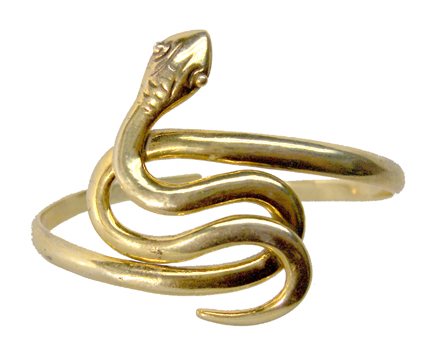
Inner lightThey set out from Mount Hor by way of the Sea of Reeds to skirt the land of Edom. But the people grew restive on the journey, and the people spoke against God and against Moses, “Why did you make us leave Egypt to die in the wilderness? There is no bread and no water, and we have come to loathe this miserable food.” The Lord sent seraph serpents against the people. They bit the people and many of the Israelites died. The people came to Moses and said, “We sinned by speaking against the Lord and against you. Intercede with the Lord to take away the serpents from us!” And Moses interceded for the people. Then the Lord said to Moses, “Make a seraph figure and mount it on a standard. And if anyone who is bitten looks at it, he shall recover.” Moses made a copper serpent and mounted it on a standard; and when anyone was bitten by a serpent, he would look at the copper serpent and recover.Numbers 21:4-9 (JPS Tanakh)

And just as Mosheh elevated the serpent in the wilderness, so must the son of man be lifted up, so that none who believe in his will perish, but rather they will live eternal life…

This is the verdict: that the light came into the world, but the sons of men loved the darkness more than the light because their deeds are evil. For all who do injustice hate the light and will not come to the light, so that they may not be rebuked for their deeds. But one who does the truth comes to the light so that it may be revealed that his deeds are done with God.John 3:14-15, 19-21 (DHE Gospels)

What does all this have to do with Chanukah? I admit, not very much. The themes are only superficial in terms of “light” and “renewal”. Or are they?

No, Chanukah doesn’t tell the story of Jesus in any real way, but it’s all but unavoidable to make some sort of connection between Chanukah and Jesus because the Festival of Rededication occurs so close to Christmas in our December calendar. Many Jewish parents struggle to try to disconnect this “proximity” association in my minds of their children, especially as their Jewish children see their goyim and especially Christian friends and classmates having fun with all the lights and music and Santa Claus and particularly all of the Christmas “loot”. The Christian Christmas has become tremendously influenced by the commercial, secular Christmas among the children of the church, and I can appreciate how Jewish parents don’t want all that to spill over into the lives of the children of Jacob.

Blogger Justin Bond recently wrote an article called Chanukah and a kosher Christmas, so I suppose anything I write that somehow associates these two events is redundant. On the other hand, my purpose today isn’t to compare and contrast the two holidays but to try to express what a Christian like me (and I’m not exactly a typical Christian) can get out of lighting the Menorah.

Look at the original event involving Moses and the copper snake on the staff. People were dying. Lots and lots of people were dying and frankly, it was their own fault. They had pushed God and pushed God and pushed God and this time, God pushed back. I wonder why people ever imagine they can just flaunt God’s will, but then, human beings have always been notoriously short-sighted.

So God tells Moses to do something a little unusual. He tells him to construct “a seraph figure and mount it on a standard. And if anyone who is bitten looks at it, he shall recover.” That’s kind of strange. It’s like God told Moses to make some sort of graven idol for the people to look at and then they would live. The interesting thing is, later in history, people actually did worship the thing (2 Kings 18:1-4). Given the commandment not to make any such images (Exodus 20:4), why would God put such an obvious temptation in the midst of the Children of Israel? Certainly he recalled the “incident” of the Golden Calf; the sin in which the Israelites partook while Moses was still on the mountain with God (Exodus 32).

And yet, Jesus actually compares himself to the copper snake in that, all who look upon him, as they looked upon the copper snake, though bitten and fatally poisoned, would live. Talmud Rosh Ha-Shanah 29a states that the reason people lived is that, in looking up to the snake (the image of what was killing them), they actually raised their eyes to Heaven. Though the son of God, Jesus allowed himself to be compressed or reduced or humbled so that he could become a human being, just like we are…something “ordinary” rather than Heavenly, so that we could actually see him and through him, the Father, and thus live.

Yeshua (Jesus) spoke to them once more, saying, “I am the light of the world. Anyone who follows me will not walk in darkness, for he will have the light of life. –John 8:12 (DHE Gospels)

We live in a world of darkness. I suppose it’s appropriate that Chanukah comes at this time of year, when it’s cold outside and the morning sun rises so late in our day. Each morning when I get up, it is still black outside, and it’s still, and it’s even lonely. Then the day comes and is gone and by the time I get home from work, it is black outside again. I suppose I can’t blame my Christian brothers and sisters for putting so many lights on their homes to keep the night and the coldness it brings at bay. During Chanukah in my home, only the light of a few tiny, faint candles illuminate the obsidian abyss, but that is a fitting metaphor for living in a dark and broken world.

We are all stumbling in the dark, like a blind person feeling about, trying to find some familiar landmark by touch alone. We strain to see even the faintest glimmer of hope and when we do, we rush toward it, terrified by what might be just behind us, pursuing us in the invisible space just inches from the nape of our necks. God sent a light into the world so we wouldn’t have to live in darkness but faith feeds the light. Fear, despair, and hopelessness feeds the darkness and human beings are suspended between these two forces, longing for illumination but struggling with the gloom.

Though it’s only symbolic, we can choose to see Messiah and Savior in the lights of our life and very soon, in the lights of the Chanukah menorah. The first night, we light only one, and the next night two, and the next night one more than two and so on, until we have fulfilled all eight nights. Each night our homes and presumably our hearts glow a little brighter as we push back the darkness and let the light enter more freely into our lives.

This year, Chanukah begins at sundown on Tuesday, December 20th and will continue through the 28th. Light the candles or the oil in your home this year. Create a spark in your life and in your heart. As Christians, we know that Jesus is the light of the world and he pushes back against the darkness that threatens to engulf us. As Christians we also know that we are the light of the world (Matthew 5:14-16) and that, to extend my metaphor, we must shine that light into not only our homes, but into lives of those around us.

So also, shine your light before sons of men, so that they may see your good deeds and praise your Father who is in heaven. –Matthew 5:16 (DHE Gospels)

Shine.

Happy Chanukah.

Awaiting Dawn

Waiting for DawnPeople ask, “But how could you see so much good in the future when so much evil predominates now —-and it grows day by day?”

But such is the order of things: Darkness was only placed in the world to challenge light. As the light intensifies, the darkness thickens to defy it.

-Rabbi Tzvi Freeman
“Defiant Darkness”
Chabad.org

Kletzky’s parents marked the end of their seven-day grieving period Wednesday morning with a religious tradition of walking outside their Brooklyn home. Nachman and Esty Kletzky, surrounded by relatives, walked around their block at 15th Ave. in Borough Park at about 6 a.m. “It’s a sign that your escorting the soul to its resting place,” said Jack Meyer, of Misaskim, an organization that provides services to grieving families.

Story from NYDailyNews.com

“In the midst of cruelty and horror, human beings can respond in such a warm and caring way it restores our faith in the world and mankind. That is the atmosphere I feel here right now,” said Rabbi Alvin Kass, describing public support for the Kletzy family.

Story from CBS New York News

This is the third “morning mediation” that has been prompted by the death of 8-year old Leiby Kletzky. Perhaps I’ve got this matter too much on my mind, but when something so horrible happens in the world, we should not disregard it after it has been discussed for only a week or so. Certainly Leiby’s parents will not be free of their mourning in so short a time, if at all. Yet the questions I pose here must also be at the forefront of their thoughts and feelings, only with far greater intensity and sharpness. I continue to search for answers within their own context and from the Rebbe, who knew their Brooklyn community and every soul in it so well.

They say the most profound darkness comes just before the dawn. The harshest oppression of our forefathers in Egypt came just before their liberation.

That was a coarse darkness of slavery of the body. Today it is a darkness of the soul, a deep slumber of the spirit of Man. There are sparks of light, glimmerings of a sun that never shone before —-but the darkness of night overwhelms all.

Prepare for dawn.

I woke up much earlier than I expected to this morning. It was still dark outside with no hint of dawn on the horizon. When you are the only one awake in your household, it can feel especially empty, no matter how many people are asleep in their beds. The first subtle bands of light in the east may be only minutes away, but they might as well be on the other side of midnight. Yet we wait for the light, not just out of expectation, but with enduring faith.

“Arise, shine, for your light has come,
and the glory of the LORD rises upon you.
See, darkness covers the earth
and thick darkness is over the peoples,
but the LORD rises upon you
and his glory appears over you.
Nations will come to your light,
and kings to the brightness of your dawn. –Isaiah 60:1-3

Tree of LifeThe Jewish people today exist in an unbroken line between the present and the ancient days when the words of the Prophet Isaiah were first spoken, so it is no surprise that in their darkest hours, they would turn to the light. Through Jesus Christ, the rest of the world can become attached; grafted in to these words and promises and become sharers of the light and indeed, disciples of the light of the world, who we all long to see come.

After 33 centuries, all that’s needed has been done. The table is set, the feast of Moshiach is being served with the Ancient Wine, the Leviathan and the Wild Ox —-and we are sitting at it. All that’s left is to open our eyes and see.

[Adapter’s Note: These words I write, but I do not understand. But then, if I understood them, I suppose I would not need to be told to open my eyes.] -Rabbi Tzvi Freeman

I say to you that many will come from the east and the west, and will take their places at the feast with Abraham, Isaac and Jacob in the kingdom of heaven. –Matthew 8:11

Rabbi Freeman quotes from a letter written by the Rebbe:

Before I had even started school, a picture of liberation was already forming in my mind.
Such a liberation, and in such a way, that it would truly make sense of all the suffering, all the oppression and persecution we have undergone.

It is not that there will be no more darkness, no more suffering, that those things shall cease to exist.
It will be such an essence-light that darkness itself will become light
—even the darkness and suffering of the past.

While the Rebbe wouldn’t have considered the following, we who are the disciples of the Master cannot help but recall these words of prophecy and hope as we continue to wait for him to come:

And I heard a loud voice from the throne saying, “Look! God’s dwelling place is now among the people, and he will dwell with them. They will be his people, and God himself will be with them and be their God. ‘He will wipe every tear from their eyes. There will be no more death’ or mourning or crying or pain, for the old order of things has passed away. –Revelation 21:3-4

In the midst of pain, all we can do is cry and call out, “Abba! Father!”, endure the suffering, and look forward to the days when there indeed will be no more tears, pain, and death. When sorrow will be abolished from the earth and the King will reign in justice, mercy, and bringing joy and peace to the subjects of the Kingdom. May the Moshiach come soon and in our days. Amen.

“They (Mr. and Mrs. Kletzky) have had thousands of people who came to show them moral support,” he said. “Now the trying time starts. They’re all alone. … Now they’ve got to cope with it on their own.” -Jack Meyer of Misaskim

Everyone will sit under their own vine
and under their own fig tree,
and no one will make them afraid,
for the LORD Almighty has spoken.
All the nations may walk
in the name of their gods,
but we will walk in the name of the LORD
our God for ever and ever. –Micah 4:4-5