Tag Archives: mark nanos

The Mystery of Romans: Who are the “Weak” and the “Strong”?

Apostle-Paul-PreachesWelcome those who are weak in faith, but not for the purpose of quarreling over opinions. Some believe in eating anything, while the weak eat only vegetables. Those who eat must not despise those who abstain, and those who abstain must not pass judgment on those who eat; for God has welcomed them. Who are you to pass judgment on servants of another? It is before their own lord that they stand or fall. And they will be upheld, for the Lord is able to make them stand.

Some judge one day to be better than another, while others judge all days to be alike. Let all be fully convinced in their own minds. Those who observe the day, observe it in honor of the Lord. Also those who eat, eat in honor of the Lord, since they give thanks to God; while those who abstain, abstain in honor of the Lord and give thanks to God.

We do not live to ourselves, and we do not die to ourselves. If we live, we live to the Lord, and if we die, we die to the Lord; so then, whether we live or whether we die, we are the Lord’s. For to this end Christ died and lived again, so that he might be Lord of both the dead and the living.

Why do you pass judgment on your brother or sister? Or you, why do you despise your brother or sister? For we will all stand before the judgment seat of God. For it is written,

“As I live, says the Lord, every knee shall bow to me,
and every tongue shall give praise to God.”

So then, each of us will be accountable to God.

Romans 14:1-12 (NASB)

I’ve just finished reading the third chapter in the Mark D. Nanos book The Mystery of Romans: The Jewish Context of Paul’s Letters. Yes, it did take me a long time and for two reasons. Nanos is quite erudite in his writing, packing each page densely with information. I have to take copious notes on all points of interest while I’m reading. Thus reading and writing while I’m reading makes for slow going.

But I’ve gotten through the eighty pages of “Chapter 3: Who Were the ‘Weak’ and the ‘Strong’ in Rome?” Hint: they aren’t who you think they are, at least according to Nanos.

But first things first.

There is almost universal agreement (it appears to be an almost unquestioned fact) that the “weak” were Christian Jews who still practiced the Law and Jewish customs (with most maintaining that this group would have included “God-fearing” gentiles as well), and that the “strong” were Christian gentiles (as well as Christian Jews like Paul who have supposedly abandoned Jewish practices).

-Nanos, Chapter 3, pg 87

Mark NanosIn my previous review of Chapter 1 of this book, I noted that Nanos takes a high view of Jewish Torah observance and a Gentile “Torah-respecting” lifestyle, meaning that, from a Pauline perspective (according to Nanos), Gentiles in the ancient Messianic Jewish communities were expected to support and uphold Jewish Torah observance while at the same time, conforming to the application of Torah to the Gentile believers as defined by the halakhic decision made by James and the Elders and Apostles in Acts 15 (which was probably supported and expanded by an oral teaching that accompanied the “Jerusalem letter,” the Didache being one possibility).

I mention this, because it must be taken into account in the current conversation, for this position is the template for everything that follows in Nanos’ analysis of Paul’s famous letter to the Romans.

Let’s cut to the chase:

Paul was not concerned with distinguishing between Christian Jews/gentiles who practiced (“weak”) or did not practice (“strong”) the Law and customs, with the hope that all would eventually abandon the Law and customers as they grew stronger in their faith in Christ. His concern was rather that all the non-Christian Jews (“stumbling” in faith toward Christ) in Rome would recognize that Jesus was the Christ of Israel, their Savior, and that they would thus believe in Christ and become Christians (“able” to have faith toward Christ) — Christian Jews. As Christian Jews they would indeed continue to be Jews in that they continue to practice the Law and Jewish customs in faith, not in order to justify themselves, but because they are Jews justified by the Jewish Savior/Messiah/Christ, thus joining with gentiles who are Christians in giving glory with “one accord” and thus “one voice” to the One Lord: “the God and Father of our Lord Jesus Christ” (15:6).

-Nanos, pp 154-5

In order to make that explanation work, the believing Gentiles and believing Jews must share a common synagogue or synagogues in Rome with the non-believing Jews. This isn’t as incredible as you might think. Most people assume that whenever Jews and Gentile God-fearers came to faith in Messiah, they left the synagogue and formed their own house churches. Sometimes that was true, but not always. Nanos and the resources he cites (you’ll have to see the book for the entire bibliography) support the idea that the believing body of Jews and Gentiles in Rome remained in their synagogue communities once they came to faith.
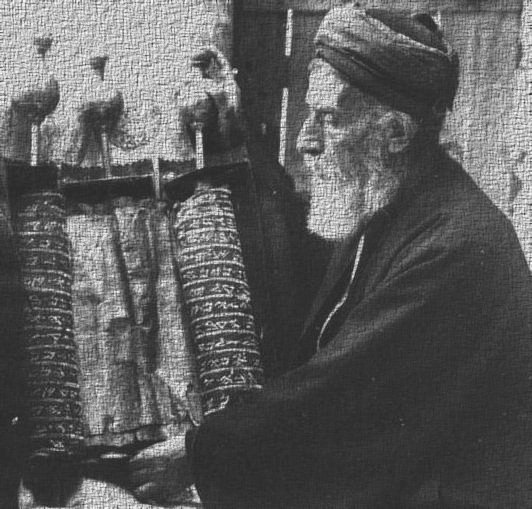
ancient-torahFor the Jewish believers, this probably seemed like a no-brainer at the time, since coming to faith in Yeshua as Messiah in the mid-first century was not particularly strange, and it certainly didn’t mean that the believing Jew was converting to a different religion as it would mean today if a Jew came to faith in Jesus and started going to Church (and for Messianic Jews today, they remain within Judaism as did Paul and the other Jewish believers in the apostolic era).

Also, Gentile God-fearers were commonly found in diaspora synagogues and although they had no covenant status reconciling them with God (unless some pre-Rabbinic status of “Noahide” were conferred upon them), nevertheless, they had come to believe that the God of Israel was the God over all. Once these Gentiles came to faith in Messiah, their was no requirement that their worship practices should change for after all, they were disciples of the Jewish Messiah King. Where else should they be but among Messiah’s people Israel? In fact, James and the Apostles in Jerusalem made this very point:

Therefore I have reached the decision that we should not trouble those Gentiles who are turning to God, but we should write to them to abstain only from things polluted by idols and from fornication and from whatever has been strangled and from blood. For in every city, for generations past, Moses has had those who proclaim him, for he has been read aloud every sabbath in the synagogues.”

Acts 15:19-21 (NASB)

Once coming to faith in Messiah, in order to fully comprehend and practice his teachings, it was necessary to continue accessing his “source material,” which, according to the ruling of the Council, were to be found in the Torah and the Prophets.

Those Jews and Gentiles in the local Roman synagogues who came to faith while davening and worshiping within those communities would still be attached to those communities, to their friends, to the Rabbis. And since Yeshua-worship wasn’t inherently “non-Jewish,” Nanos suggests the believing Gentiles and Jews would have remained in their original synagogues.

Why should we care about this?

Because we have several populations co-mingling within a single religious and community setting: non-believing Jews, believing Jews, and believing Gentiles.

Now this next point is important. As Gentile God-fearers, the non-Jews who regularly attended synagogue would have been observing a set of behaviors that would allow them to co-participate in the community without violating the requirements of Torah observant Jews. They would eat the same foods, probably pray the same prayers or prayers modified for non-Jewish people, and otherwise not interfere with the Jewish “ascendency” in their own synagogue.

In other words, they wouldn’t make waves.

But once the God-fearers became believers and realized, through Paul as well as through the halakhic ruling of the Apostles, that they were not obligated to convert to Judaism and take on the full yoke of Torah but they were still fully equal co-participants in salvation and justification before God, they got a little cocky.
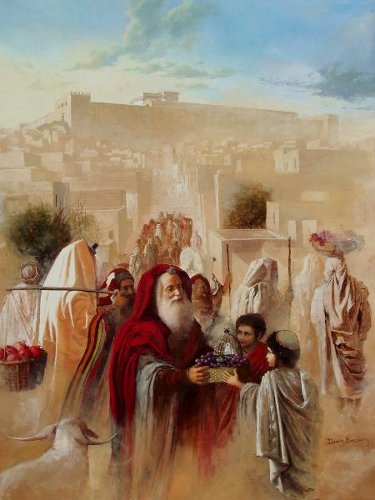
ancient_jerusalemIn Paul’s letter to the Galatians, the primary problem population (say that three times real fast) were “judaizers,” Jews or Jewish converts who were attempting to convince the Gentile population in the Galatian faith-communities that they had to convert to Judaism to be saved (and probably to re-enforce the idea among the Jewish population that being ethnically Jewish and Torah observant was what justified them before God, not faith in Messiah). The target population of Paul’s letter to Rome had the opposite problem: “gentilizers.”

The believing Jews wouldn’t bat an eye about continued Torah observance. For them, it would be a given, and of course, for the non-believing Jews in the synagogue, why should they change the observance given to them by their forefathers? But for the believing Gentiles, who didn’t have the same set of standards (although they definitely had standard of obedience as disciples), they started to “bug” the non-believing Jews about how now the believing Gentiles were “equal” without having to conform to the full body of Torah mitzvot.

And Paul was taking these Gentiles, the so-called “strong,” to task for disrespecting the “weak” who he felt in time, would also come to faith in Messiah. By their behavior, the Gentile believers were actually in danger of inhibiting Jews from coming to faith in their own Messiah (the parallels between this situation and the modern Christian Church are undeniable).

Let us therefore no longer pass judgment on one another, but resolve instead never to put a stumbling block or hindrance in the way of another. I know and am persuaded in the Lord Jesus that nothing is unclean in itself; but it is unclean for anyone who thinks it unclean. If your brother or sister is being injured by what you eat, you are no longer walking in love. Do not let what you eat cause the ruin of one for whom Christ died. So do not let your good be spoken of as evil. For the kingdom of God is not food and drink but righteousness and peace and joy in the Holy Spirit. The one who thus serves Christ is acceptable to God and has human approval. Let us then pursue what makes for peace and for mutual upbuilding. Do not, for the sake of food, destroy the work of God. Everything is indeed clean, but it is wrong for you to make others fall by what you eat; it is good not to eat meat or drink wine or do anything that makes your brother or sister stumble. The faith that you have, have as your own conviction before God. Blessed are those who have no reason to condemn themselves because of what they approve. But those who have doubts are condemned if they eat, because they do not act from faith; for whatever does not proceed from faith is sin.

Romans 14:13-23 (NASB)

Nanos asks his readers to look at this passage in sort of the opposite direction than the way we’ve been taught. Also keep in mind that, just like the situation we see in Galatians 2, the issue is table fellowship and offensive treatment, not food. If your brother or sister (here, Paul has to be relating believing Gentiles to non-believing Jews as “brothers and sisters,” perhaps because they attend the same synagogue community) stumbles (in their faith) because you, as a Gentile, are not obligated to keep the kosher laws, you are no longer walking in love.

While the Gentiles were “mere” God-fearers, they were in a “one-down” position in the synagogue because of legal status and let’s face it, it is a Jewish synagogue. Once they became co-participants in salvation because of Abrahamic faith, the Gentile believers became a tad bit obnoxious to the non-believing Jews and stopped “walking in love.”

There’s a lot Nanos says about the halachah of “walking in love” and the two greatest commandments of Jesus (Matthew 22:36-40) that applies here. You can’t really love God if you are taunting your neighbor who is “weak” in faith and has not yet become reconciled to Messiah.

I have great sorrow and unceasing anguish in my heart. For I could wish that I myself were accursed and cut off from Christ for the sake of my own people, my kindred according to the flesh.

Romans 9:2-3 (NASB)

stuart_dauermannPaul was desperate to share the “good news” to every Jew and he desired, above all else, that his own people should come to faith and redemption. So much so, that he was willing to surrender his own salvation if it would save some of his non-believing Jewish brothers and sisters. Clearly, Paul didn’t see himself, as a believing Jew, in any way disconnected from the larger community of non-believing Jews in Israel or the diaspora or national Israel as a whole. In other words, to reference Rabbi Dr. Stuart Dauermann, all Jewish people for Paul were Us, not Them.

I had a tough time with this chapter. I knew that Nanos was going to reframe the “weak vs. strong” argument in Romans 14, 15, but his build up to even stating his point took a long time. I finally had to jump back to the last pages of the chapter so I’d have some idea of what Nanos was getting at. Once I did, I found it easier to make it through the intervening pages.

According to Nanos, the “strong,” the believing Gentiles in the synagogue, should have known better than to try to “gentilize” the non-believing Jews and thus damaging relationships not only with them, but with the believing Jews who were also continuing to observe Torah and the Jewish customs. The Gentiles were cheapening their own “freedom” in Yeshua-faith by suggesting that the Torah devotion of non-believing Jews was a “weakness” on their part. However, Paul was actually saying that where they were weak was not in their faith in God and observance of the mitzvot, but their faith in Yeshua as Messiah. The Gentile “strong” were greater in that faith but ironically, they weren’t that strong either, for they became arrogant in their new status and in lacking love, I suspect they were also “weak” themselves.

Nanos makes such a complex argument, I don’t know that I can completely apprehend all of the nuances in just one reading, but I don’t really have the time to pour weeks more of study into a single chapter. The Mystery of Romans is such a compact container for such a large amount of data that I have no doubt I’ll have to read it a second time (or more) to tease out additional understanding and meaning. For now, I’m willing to entertain the idea that the “weak” and the “strong” can conform to an alternate meaning and in fact, they must if Paul is to remain consistent as a personality and in his theology throughout his letters and as depicted by Luke in Acts.

Addendum: Having just finished Chapter 4, a number of the points Nanos made about “weak” and “strong” are clearer, especially in relation to Gentile behavioral responsibilities toward Jewish people in general (both believing and non-believing). My next “meditation” on the Nanos book should be a great deal more coherent.

Where Romans and Galatians Meet: Analysis by Mark Nanos

Mark NanosBut when Cephas came to Antioch, I opposed him to his face, because he stood condemned. For prior to the coming of certain men from James, he used to eat with the Gentiles; but when they came, he began to withdraw and hold himself aloof, fearing the party of the circumcision. The rest of the Jews joined him in hypocrisy, with the result that even Barnabas was carried away by their hypocrisy. But when I saw that they were not straightforward about the truth of the gospel, I said to Cephas in the presence of all, “If you, being a Jew, live like the Gentiles and not like the Jews, how is it that you compel the Gentiles to live like Jews?”

Galatians 2:11-14 (NASB)

Table-fellowship, particularly in the context of gentile participation, was a significant concern among Diaspora Jews. The many laws and customs that made it necessary generally to separate from association in gentile meals, or from the eating of many gentile foods whether in the company of gentiles or not, made table-fellowship a notable issue. Jews often avoided meat and wine, for it was necessarily tainted by idolatry in Diaspora cities, unless special provisions had been made. However, Jews did eat with gentiles, given proper circumstances. And in the context of “righteous gentiles” attending synagogue this matter became a regular necessity.

Gentiles attending synagogue and participating in the lifestyle of the Jewish community, or visiting Jewish homes, were expected to adopt minimal Jewish practices. This behavior demonstrated respect not only for Jewish sensitivities, but in the mind of the Jews at least, it represented respect for the righteousness of God that would be expected to accompany the faith of the “righteous gentile” — for God is holy.

-Mark D. Nanos
“Chapter 2: The Historical Backdrop and Implied Audience,” pg 56
The Mystery of Romans: The Jewish Context of Paul’s Letters

No, I haven’t stopped reading this book, but the demands on my discretionary time plus the dense commentary in the Nanos book have slowed me down considerably. I just finished Chapter 2 (as I write this) but decided to take a detour into “Summary and Appendix 1: Peter’s Hypocrisy (Gal. 2:11-21) in light of Paul’s Anxiety (Rom. 7).” Given my lengthy and sometimes frustrating review of the Book of Galatians with my Pastor, I felt it necessary to get in some additional reading beyond Lancaster’s The Holy Epistle to the Galatians: Sermons on a Messianic Jewish Approach (although it seems my conversations on Galatians have reached a premature end).

I must admit, I too have had a difficult time fitting “Peter’s hypocrisy” and Paul’s criticism into my overall understanding of Paul’s relationship with the Torah as a Jew and an Apostle of Messiah. In a little over thirty pages though, Nanos managed to clear things up for me. It never occurred to me to look at that passage from the point of view Nanos presents.

In the first part of Appendix 1, Nanos reviews the traditional interpretation of Galatians 2:11-21, that Peter had been living like a Gentile, that is, not observing a Torah or Jewish lifestyle and eating all manner of non-kosher food at the same table as the Gentile disciples in Antioch. Then Torah observant Jews from James came to visit, and as a result of peer pressure, Peter separated himself from the Gentiles and resumed a Torah lifestyle, inducing others including Barnabas to do likewise. Paul calls Peter out for his hypocrisy, that he could live a Torah-free life with the Gentiles one minute, and then, weakening to pressure applied by more traditional Jews, back off from his “freedom” from Torah and rejoin the “circumcision party.”

But Paul says something else in verse 14:

…how is it that you compel the Gentiles to live like Jews?

The Mystery of RomansWe tend to miss that part of the verse but it may hold the key to understanding everything Paul is saying about Peter.

But first, lets take a look at how Nanos describes a mixed Jewish/Gentile synagogue in the city of Rome:

That is, the early Roman Christian communities were functioning as subgroups within the larger synagogue communities at the time of Paul’s letter, and Paul hoped that they would hear (shema) his epideictic message in a manner that would enhance their adherence to righteousness and the worship of the One God of Israel as the One God of the world even before his arrival. They would then be found fulfilling the eschatological expectation of Israel: gentiles declaring the Shema in the midst of the congregation of Israel to the glory of God, the One God of all.

-Nanos, “Summary and Appendix 1: Peter’s Hypocrisy (Gal. 2:11-21) in light of Paul’s Anxiety (Rom. 7),” pg 338

Nanos paints a portrait of Jews and Gentiles worshiping within a subset of larger Judaism and the larger Jewish synagogue community in Rome, with Jewish believers continuing to live Jewish lifestyles, including Torah observance, and Gentile believers living in respect of the Torah lifestyle of their Jewish mentors, and living within the behavioral constructs of the Noahide laws (Genesis 9) and the Apostolic Decrees (Acts 15). They enjoyed table fellowship with the Gentiles either consuming food totally acceptable to the Jewish believers or with the Jews restricting their diet to vegetables and water while sharing a table with gentiles.

So what’s Peter’s problem or for that matter, Paul’s? In the context of Galatians 2 not only does Paul say that Peter is living like a Gentile, but it is implied that Paul is too. Did both of these Jewish men apostate from Judaism and convert to Gentile Christianity? Like much of Christian doctrine teaches, did Christ turn Jewish believers into Gentiles?

The argument of the Church is that the disagreement is about food, that is, Peter was eating “trief” like a Gentile, having abandoned a kosher diet and presumably everything else about the Law. How like the misunderstandings most Christians have about Acts 10 and Peter’s vision. Was that about food, too?

I most certainly understand now that God is not one to show partiality, but in every nation the man who fears Him and does what is right is welcome to Him.

Acts 10:34 (NASB)

peters-vision-doug-jaquesPeter’s vision is recorded by Luke in verses 9-16 and verse 17 testifies that Peter did not know what the vision meant. We see that Peter finally figured it out by verse 34. The vision wasn’t about food, it was about equality. God was telling Peter that the Gentiles had equal access to justification before God through faith, just as the Jews have. He even testifies of that equality in a legal hearing in Jerusalem some time later (See Paul on Trial by John W. Mauck for more detailed information about the nature of the legal hearing in Acts 15):

And God, who knows the heart, testified to them giving them the Holy Spirit, just as He also did to us; and He made no distinction between us and them, cleansing their hearts by faith.

Acts 15:8-9 (NASB)

On pages 342-3 of his appendix, Nanos says this about the Church and Galatians 2:

The traditional assumption is of course that Paul opposed Peter in Antioch because of Peter’s change of behavior with respect to food.

But just as food wasn’t the issue in Acts 10, neither is it the issue in Galatians 2 according to Nanos.

Nanos goes on to say that if the traditional Christian interpretation of these verses is correct, then Paul had to have been saying there are no Jews in Christ, because to set aside the Law and live like Gentiles would make the Jewish believers no longer Jews. There would be only Gentiles (born Gentiles and formerly Jewish Gentiles) in Christ.

This contradicts the Bible on so many different levels it makes my head spin (although even an apostate Jew is still Jewish…you can’t become “unJewish”). You’d have to completely ignore all of the Messianic prophesies in the Tanakh (Old Testament) to make that interpretation work.

As already mentioned, the traditional interpretation of Paul’s rebuke of Peter turns on the issue of food. Although the balance of the letter is read with respect to the issue of justification by faith in Christ, and the explicit use of justification language in Galatians is concentrated around this incident, yet the traditional interpretation obscures the focus on justification in verse 14. I suggest that the language of Paul’s rebuke centers on the same justification language as the surrounding context, namely the position of one justified, that is, living “in Christ” by faith, whether “Jews by nature” (“even we” of 2:16) or “gentile sinners,” as equals. It is thus Peter’s withdrawal, not food, that is at issue in Antioch; what was eaten or how it was eaten was not the reason for Peter’s withdrawal. The issue entirely concerned those with whom he had been eating and then withdrawn; his exclusion of gentiles was because they were gentiles, not because they ate offensive food or in offensive ways.

-Nanos, pp 347-8

Apostle-Paul-PreachesGalatians 3:28 famously declares that there are no Greeks or Jews, no men or women, no slaves or freemen, but all of them are one in Christ. But just as women don’t have to turn into men to become saved in Messiah, neither do Gentiles have to turn into Jews or Jews turn into Gentiles to become disciples of Messiah. The “oneness” is as equal co-participants in the community with equal access to justification and the blessings of God.

What Peter was doing was indeed responding to peer pressure and as a result withdrawing from close association from the Gentile disciples, but it had nothing to do with Peter’s eating habits or Jewish vs. Gentile lifestyle. His hypocrisy had to do with accepting Gentiles as co-participants previously, and then treating them like second-class citizens by withdrawing from them when Jews from James showed up.

The issue of Galatians 2:11-21 was the same issue as the rest of the book of Galatians: Gentiles do not have to become circumcised and convert to Judaism, taking on board the full yoke of Torah in order to be justified before God and equal co-participants in the community of faith. Look at verse 14 again:

…how is it that you compel the Gentiles to live like Jews?

Peter was putting up the dividing wall that Paul was trying so hard to break down by saying Jews had a superior position in Christ and in justification and that only by compelling the Gentile disciples to live like Jews (convert to Judaism) would they be saved, undoing all of the blessings of Christ upon the world.

No wonder Paul was furious. Peter just slapped him and all of the Gentile disciples in the face by his withdrawal and worse, he compelled other faithful Jewish disciples, including Barnabas, to do the same.

Nanos wrote this appendix because of the apparent conflict, especially in light of his interpretation of Romans, between Romans 7 and Galatians 2. I’m only summarizing what he has to say. To get all of the details, you’ll need to read the Nanos book.

In Romans, Paul is encouraging Torah observance for the Jewish believers and respectfulness for the Torah and for Jewish observance from the Gentiles. However, much of Galatians, including Galatians 2, seems to contradict this. Nanos wrote this summary and appendix to set the record straight, or at least to give his readers something to think about.

Hopefully, this has given some of my readers something to think about as well.

The Mystery of Romans: A Review of Chapter One

The Mystery of RomansMoreover, Paul does not seem to be confronting an inflated view of the Torah in Rome among the Christian gentiles (“judaizing”) as is often assumed. Instead, he confronts the failure of the Christian gentiles in Rome to respect the role of Torah in the life of Israel as God’s special gift; in fact, he emphatically elevates the status of the Torah. Note, for example, the great advantage of the Jewish people is “that they were entrusted with the oracles of God” (3:2), and elsewhere in the litany of Jewish privileges he includes “the giving of the Law” (9:4); that the “Law is spiritual” (7:14) and again, “the Law is holy, and the commandment is holy and righteous and good” (7:12); and further that “the gifts [which clearly included as central the Law; cf. 9:4] and the calling [Israel’s election] of God are irrevocable” (11:29). Paul refers to the “Law of faith (3:27) and asserts that he is not teaching that faith nullifies the Law: “Christ is the end [goal] of the Law” (10:4). In fact, he even regards the “love” he is calling for among his Christian gentile readers “the fulfillment of the law” (13:8-10; cf. 8:4), not a demonstration of its failure but the embodiment of its true aims.

-Mark D. Nanos
“Chapter 1: To the Jew First and Also to the Greek,” pg 22
The Mystery of Romans: The Jewish Context of Paul’s Letter

No, I haven’t given up on my serial review of the articles in First Fruits of Zion’s (FFOZ) periodical Messiah Journal issue 114, but I’m also reading the Nanos “Romans” book (his book on Galatians is waiting in the wings) and I want to discuss my impressions so far (just gotten through Chapter 1 at this point).

As I read, I usually keep some post-it notes and a pen handy to take notes and stick on the appropriate pages for later reference (beats marking up the inside of the book with my poor handwriting). All I’m going to do here is review my notes and do a “data dump” into this blog post, along with a few of my thoughts on the matters brought up. To start off, I can certainly see why Nanos is considered “Messianic Judaism-friendly”.

For instance, in footnote 5 on page 23:

I don’t mean to suggest the doing of the Law was an “entrance requirement” for salvation, but rather the application of the Law and Jewish customs to the lifestyle of those believing in Jesus as the Christ; for the Jew believing in Christ Jesus would continue to be a Jew and thus obey the Law, and the gentile believing in Christ Jesus would continue to be a gentile and thus not under the Law, however, the gentile would now through Christ Jesus have a new relationship with Israel that made it necessary to respect the “rules of behavior” that had been developed in Judaism to define the minimal requirements of Law and custom for the “God-fearing” gentile wishing to associate with God and his people. Thus the phrase “Law-respectful gospel” is offered here to contrast with the “Law-free gospel” usually assumed to represent Paul and Pauline Christianity, incorrectly in my opinion.

A lot is packed into that one short paragraph regarding Nanos and his opinions on the relationship Jews and Gentiles in Messiah have with Torah, the Gospel, and each other. He is definite that the “Messianic Jew” remains a Jew and thus fully bound to the Torah of Moses, while the Gentile is bound, not to Torah as such, but to the essentials of the Acts 15 legal ruling that authoritatively established the halachah for Gentile admission into “the Way.”

Nanos, in my opinion, is also correct in saying that much of Christianity believes that Paul established a “law-free gospel” for both Gentiles and Jews in Christ and that the Church’s viewpoint has largely ignored what Paul was really saying. The quote from page 22 of the Nanos book above shows multiple examples of how Paul had a high view of Torah for the Jewish people in Messiah (and all of Israel). We also see from the “footnote 5” quote that Gentiles were admitted into the community of Messiah but with a different legal status than the Jews, one that did not make them “Israel” but that affirmed the Jewish people as “Israel” and “God’s people”. Gentiles are “associating” with God and Israel within the Messianic body.

That’s disturbing language for some Christians and Hebrew Roots adherents as it appears to develop “classes” within the body of Messiah, with the Jews in the ascendant position and the Gentiles being subordinate to them. My Pastor is an example of a Christian who believes Jews and Gentiles are totally uniform in identity and status based on the absence of the Law, while many in Hebrew Roots believe in the same uniformity, but based on an identical binding of Jew and Gentile to Torah.

Nanos also associates “Law-respecting lifestyle” for the Gentile with the concept of halachah, which literally means “walking” and denotes rules of behavior, usually as legally defined within a Rabbinic Jewish court system. As Nanos says, “it denotes rules of behavior…and is a frequent idiom in the Bible as well for discussing proper behavior” (pg 22, footnote 6). This again harkens back to the Acts 15 decision for Gentile disciples, which Paul appears to be upholding in his letter to the Romans (chapters 5-16, according to Nanos, and particularly chapter 14).

Upon his arrival he would execute his customary two-step pattern to ensure the restoration of the dispersed of Israel in the synagogues of Rome first, thereafter bringing the good news to the gentiles also, which was, surprisingly, a necessary part of the process of Israel’s restoration, a “mystery” in which those addressed shared an extremely significant role.

-Nanos, pg 26

everlastingI’ve been writing about the “extremely significant role” of gentile Christians as “a necessary part of the process of Israel’s restoration” ever since I attended my first FFOZ Shavuot conference in May of 2012. I often include a link to my blog post Provoking Zealousness as an illustration of this principle. I originally wondered where Boaz Michael came up with such a concept, and I can see now that in part, it must have come from the research and writing of Mark Nanos.

In May 2012, this whole idea of the Gentiles exalted role in relation to Israel was as clear as “Mississippi mud” to me, but I chose to struggle with it rather than discarding it out of hand. I’m glad I did. Things are much clearer for me now.

Paul’s concerns are those of a Jewish missionary, and his message and framework of thinking are those of one who considers himself working within the historical expectations of Israel — the Savior of Israel has come to Zion to rebuild the tabernacle of David and to bring light to all the nations — for the One God of Israel is the One God of the whole world.

-ibid, pp 26-7

I don’t know if Boaz Michael was thinking of Nanos when he conceived of and authored his book Tent of David: Healing the Vision of the Messianic Gentile, but the connection seems very apparent, and dovetails well with Boaz’s message to the “Messianic Gentile” audience of the book in how we have a critical role in restoring Israel that must be communicated to our traditionally Christian brothers and sisters in the Church.

Notwithstanding the many historical concerns associated with harmonizing the Paul of Romans with the Paul of Luke-Acts (note the conclusion of Beker, “Luke’s Paul as the Legacy of Paul,” p. 511: “The history of research has made it abundantly clear that the attempt to harmonize the historical Paul with the Paul of Luke-Acts has come to a radical end”), features of Luke’s presentation of Paul’s view of Law-respectful behavior and his two-step missionary pattern are to be noted in the Paul we meet in the text of Romans (see particularly chapters 4 and 5 herein). Note the challenge of Jervell, “Retrospect and Prospect in Luke-Acts Interpretation,” on p. 403: “What made the Lucan Paul possible? We have at least three different Pauls: The Paul of the Pauline letters, the Paul of Acts, and the Paul of the deuteropauline letters and Pastorals…”

-ibid, pg 28, footnote 13

I include this note here to illustrate that the confusing image I get of Paul in different parts of the New Testament isn’t some failing on my part. New Testament scholars experience Paul this way too, and struggle to make sense of how one man can present himself or be presented in such contradictory ways. Just who the heck is Paul, anyway? If we are to accept that the New Testament is the inspired Word of God and therefore “profitable for teaching, for reproof, for correction, for training in righteousness,” (2 Timothy 3:16) then we must believe that all that we read of Paul and about Paul is correct and consistent with a single man, who himself was consistent in regard to his faith in Messiah and his approach to the Jewish people, the Torah, and God.

So if the fault in understanding Paul isn’t to be found in an inconsistent and flawed New Testament record, it must be found in ourselves and how we are reading that inspired record. Where is the Holy Spirit when we need Him the most?

These observations challenge the prevailing views of Paul’s purpose for writing to Rome and, necessarily, the hermeneutical assumptions that lie behind the interpretation of Romans. Was Paul opposed to the practice of the Law and Jewish customs in the church in Rome? Did he believe that the church needed to sever ties with Judaic notions of righteous behavior? Was legalism his central concern, that is, faith versus works or grace versus the law? Was the church a completely separate institution from the synagogue that must seek to assert a Law-free interpretation of salvation and Christian behavior over against Judaism?

-ibid, pp 28-9

My Pastor would probably say “yes” to answer all those questions and then move on as if nothing were wrong, but I can’t do that. Nanos can’t either.

This reading of Romans suggests that the traditional answers to these questions are inadequate and that the historical situation addressed in Romans should be approached in a vastly different light than it has been in the past. For example, the message derived from Paul’s letter to Galatia should not be allowed, as it has so often in the past, to dictate the probable interpretation of Paul’s intentions toward Rome. The implied audience and the circumstances are quite different, including the important fact that Paul had an instrumental role in the development of the community he wrote to in Galatia while he had never been to Rome. Galatians was written to confront Christian gentiles attempting to “judaize,” and thus, in the opinion of Paul, to compromise the universal application of the promised salvation to all people equally through faith in Jesus Christ, whether Jew or gentile, for Paul emphatically argued that the One God of Israel was also the One God of the nations equally accessible to gentiles through faith in Jesus Christ.

ibid, pg 29

Mark NanosTraditional answers are inadequate and we cannot apply the situation and circumstances that inspired Galatians to what we see in Romans. We cannot ignore the context of each letter, the period of time in which each one was written (in all likelihood, Galatians was written before the Acts 15 decision and Romans afterward), Paul’s intent, his state of mind, the identity of his audience, and how they likely would receive and comprehend Paul’s words within their historic, cultural, linguistic, educational, and national context…a context which we either largely lack or ignore in favor of our historical, cultural, and traditional interpretation of Paul within the Christian Protestant church.

Nanos goes on to give a smart summary of why Paul wrote Galatians and how his motivation was different in writing Romans based on different circumstances. The Gentiles in the Galatian churches were somehow led to believe that only by converting to Judaism and observing all of the Torah mitzvot in the manner of the Jews could they be justified before God. This may have been driven by Jewish ethnocentrism or the belief that the Jews and only the Jews had the inside track with God, the Messianic Gospel notwithstanding.

In Romans, the problem seemed to be the opposite among the Gentiles. They believed that the grace of Jesus Christ diminished if not extinguished the binding of the Jewish believers and non-believers to Torah and even watered down any Gentile sensibilities required for Gentile/Jewish fellowship within the synagogue. There seems to have been a dynamic play between the Gentile position and the Jewish “pushback”, with each population asserting that they had the upper hand, the Gentiles because of grace and the Jews because of the Law. Paul was trying to “balance both sides of the equation,” so to speak. No easy task as anyone from the modern Messianic Jewish movement has discovered in speaking with our more traditional Christian brothers in the Church.

These traces have survived in the texts of Romans and the Apostolic Fathers in spite of Roman Christianity’s later disregard for these Jewish roots as it developed into the thoroughly gentile organization (the “gentilization” of the church).

-ibid, pp 32-3

It wasn’t that long ago that I had my own gentilization experience in my Sunday school class, and I can tell you it was disturbing. According to Nanos, we see the first, encroaching shadows of this behavior among the Gentile disciples in the synagogue in Rome, and it has been “snowballing” ever since.

Nanos repeatedly declares in this chapter of his book that Paul’s letter to the Romans was a reminder to the church in Rome, a large group of Gentiles associating with Jews under the authority of the synagogue, “of the importance of their ‘obedience of faith’…to clarify just how important the halakhah that had been developed in the synagogues of the Diaspora to define the behavior incumbant upon righteous gentiles really was now for redefining the Christian gentiles…” (ibid, pg 34).

In modern Judaism, there is also the concept of righteous Gentiles usually associated with those non-Jews who served some role in rescuing Jewish victims of the Nazi Holocaust, but a Gentile can be considered righteous as a Noahide as well. I find it rather illuminating to classify the status of the early Gentile believers in Jesus the Messiah as “righteous Gentiles” seeing that no one, Jewish or Gentile, has any righteous standing before God apart from faith in Messiah.

On page 37, Nanos states that the Gentile believers were “equal coparticipants in the blessings of God through faith without the need to become Jews.” He goes on to say that the Gentile “coparticipants” possessed an “explicit obligation…to serve non-Christian Jews in love by subordinating themselves to the authority of the synagogue…” inserting the idea that the problem with the Jewish/Gentile relationship in the synagogue did not only involve believing Jews. Was this the first recorded occasion of (Gentile) Christians playing the “grace” and “salvation” card in a game with the Jewish people, asserting superiority over the ancient people of God? Many Christians have historically played that card and many Churches today continue to do so, much to their shame.

However, Romans includes the unmistakable caveat that while Israel’s historical place is preeminent it is not exclusive, and while Christian gentiles must practice the intentions of the apostolic decree they must not misunderstand this and assume, as some were being tempted to assume in Galatia, that they are thereby in need of placing themselves fully under the Law…in order to be equal coparticipants in the blessings God promised to Abraham and revealed in Jesus Christ for all who believe in Him.

-ibid, pp 38-9

returning-the-torahI know I continue to repeat myself, but how like the current difficulties we experience in the Messianic movement were the struggles of Paul and the “church” in Rome. Paul could see clearly their dilemma and ours, but in the final chapter of his life, he was helpless to stop the rift between Gentiles and Jews from forming and ultimately dividing them and us. The question is, can we succeed where Paul (apparently) failed? Paul knew the answers we struggle so hard to acquire and yet he still couldn’t stop destiny’s cruel hand. On the last page of this chapter (40), Nanos reiterates what he said before about the true role of the Gentile in the Jewish community of “the Way”:

…Paul’s intended trip to Rome to bring about in Rome the beginning of the “fulness of the Gentiles.” This procedure would mark, paradoxically, the end of the suffering of the part of Israel presently hardened as it triggered the saving jealousy of “some of them,” resulting in the eschatological restoration of “all” of Israel — for of at least one mystery Paul was certain: “all Israel will be saved.”

The only hope Christianity and the Messianic Jewish movement has of coming to terms and then to unity is in the realization of Paul’s goal for the Romans, the proper orientation of the Gentile believers, not only to Messianic Jews, but to Israel as a whole, and that by provoking Jewish “zealousness” to repentance and Torah, we will not only help in sealing that ancient and bleeding wound, but summon the coming of Messiah, Son of David, may he come soon and in our day.

If this is what only one chapter of the Nanos “Romans” book holds, I’m looking forward to reading (and reviewing) the rest of it.

Romans 11:25 and the Healing of Calloused Wounds

palms of a elderly woman, isolated on black copyspace, grain addedIn spite of Paul’s explicit effort to check prideful attitudes toward Jews among the non-Jews to whom he writes in Rome, a negative characterization of Jews naturally arises from Paul’s use of πώρωσις in Romans 11:25, which is typically translated “hardening,” and thus, “a hardening has come upon part of Israel” (NRSV), or “that a partial hardening has happened to Israel” (NASB). Whether translated to indicate that only some Israelites have been hardened, as in the NRSV, or that Israel itself has been hardened to some degree, as in the NASB, commentators also regularly conflate this reference to hardness with God’s hardening of the heart of Pharaoh–although Paul does not refer to the heart of Israelites being hardened. A negative judgment of the condition of the Jewish other is thereby perpetuated, however unwittingly, within an interpretive discourse surrounded by language designed to argue against just such hostile assessments of their condition.

‘Callused,’ Not ‘Hardened’: Paul’s Revelation of Temporary Protection Until All Israel Can Be Healed (PDF), pp 1-2
by Mark D. Nanos, Rockhurst University, Paper Presented at the Central States SBL, St. Louis, March 22, 2010

I found a link to this paper at another blog a few days ago and went through Nanos’ treatment of this short section of Romans 11. I’m glad I did. I won’t go through all of the content (although I suppose I could since it’s only 34 pages), but I want to draw attention to the “hardness” of Israel as is described in most Bible translations of Romans 11:25.

As Nanos says, “commentators also regularly conflate this reference to hardness with God’s hardening of the heart of Pharaoh–although Paul does not refer to the heart of Israelites being hardened. A negative judgment of the condition of the Jewish other is thereby perpetuated…”

“Hard-hearted Israel” gets a bum rap in Nanos’ opinion and he goes out to prove it in his paper.

Πώρωσις Versus Σκληρός

Sklerōs is regularly applied to the hardening of the heart in the sense of being strengthened to express firm, stubborn resistance to God’s will, or being insensitive to it. Paul uses the verbal form, σκληρύνω, in 9:17-18, in keeping with the usage in Exodus 9:12, 16, where it metaphorically describes God’s hardening of Pharaoh’s heart (LXX usually for Hebrew ‫ , שׁה‬also). The σκληρός word group has to do with things hard or rough to the touch, harsh sounds, or harsh or bitter tastes and smells. When used metaphorically, it generally connotes harsh or hard in the sense of austere, stern, insensitive, or stubborn. Instead of eliminating Pharaoh, God is represented as making him stubbornly resistant to God’s will so that the people of Israel would be freed. This hardening is undertaken in order to heighten the impact when Pharaoh is ultimately compelled to change his mind in the face of the inexorable suffering that his resistance provokes. In this way, God’s power and thus name are made known among the nations.

-Nanos, pg 3

Well that doesn’t sound too good if applied to Israel’s response in Romans 11:25. However, there’s hope.

But Paul does not use σκληρός or cognates to describe the state of Israelites; instead, he uses πώρωσις in 11:25 (and as a passive verb in v. 7: ἐπωρώθησαν) to describe the state of some (many) of his fellow Israelites. Πώρωσις (verb πωρόω) refers to a “callus” (verb: to callus) not to “hardness” per se.

Πώρωσις is not a word common to the Tanakh. It is used once in verbal form in the Septuagint, Job 17:7, to refer to eyes “growing dim” from anger or grief  MT: ‫ . כהה‬As will be discussed, the context indicates that it is not “hardness,” or even “blindness” per se, but “impairment” of sight that is at issue, which is better expressed by the Greek variant πεπήρωνται. Πώρωσις is not used in the Pseudepigrapha, Josephus, or Philo. It is common in medical discussions in antiquity. According to Hippocrates, De alimento 53, it has to do with a process of healing following an injury: “Marrow nutriment of bone, and through this a callus forms [Μυελὸς τροφὴ ὀστέου, διὰ τοῦτο ἐπι πωροῦται]” (Loeb; trans. W. H. S. Jones). In other words, the formation of a callus—which involves a process of hardening, to be sure—is to offer protection so that the injured area can sustain life. It promotes healing of broken bones or wounds, not harm or destruction, or metaphorical resistance. It creates an area less sensitive to touch, but that too is a positive feature versus the continuation of the sensation of pain where the injury occurred.

-Nanos, pp 3-4

broken_branchesHow interesting. First of all, it explains why the word “blindness” or some variant is sometimes used instead of “hardened” for Israel or the heart of Israel, but the more important comparison is between “hardened” and “callused” (you can find a number of different translations for Romans 11:25 at biblehub.com). If a branch is broken on a tree (a related metaphor of Paul’s in this context), that doesn’t rule out new growth at all.

If Nanos is right and the word we typically read as “hardened” is more properly rendered as “callused,” then the implication of this verse and probably this entire chapter of Paul’s letter takes a different direction. Instead of suggesting that Israel became “hard” to the good news of Messiah and so it was given to the Gentiles, it seems that part of Israel is temporarily callused until a time of healing can take place. They are “less sensitive” to the gospel for a certain period of time for the sake of self-protection (and for the sake of the Gentiles), but will eventually heal and become more sensitive again.

Wow!

Oh, there’s more:

If Paul meant “callus,” that need not carry the negative valence that “harden” does. Instead, it would offer a more positive and arguably more salient choice that has to do with the healing and protecting process that takes place after an injury has occurred, such as after a branch has been broken or broken off. The translation “that a callus has happened to Israel” expresses the perfect active verb γέγονεν (“has become”) here. It allows the dative “to” or “for Israel” to be expressed. If discussing a callus in English, we would express this as “has developed” or “has formed”: “that a callus has developed/formed for Israel.” Either way, this also communicates the idea that the callus “has happened” for the benefit of some Israelites or Israel. (Of course, even the translation “callus” contains a value judgment that is at the very least patronizing, for Paul believes that his fellow Jews not joining him in declaring Christ to the nations have suffered a wound that elicits the need for this protective measure; but at the same time his point is that this is a part of the way God is working, using them, so that these Israelites are still a part of the way God is announcing the message to the nations.)

-Nanos, pp 18-19

It’s hard for me not to copy and paste large portions of the text from the Nanos paper because I find his commentary and conclusions so uplifting, but I don’t want to “reinvent the wheel,” so to speak. You can click the link I provided above and read the entire article for yourself. All I want to do is to introduce one small idea based on how a word or two is translated from the Greek into English. I also want to issue a reminder that interpretation begins at translation, not afterward. The fact that not one single translation I’m aware of uses “callused” and that they all use some variation of “hardened” or “blinded” indicates that either Nanos is a lot smarter than other Christian Bible translators, or that he doesn’t possess the specific perspective or theological bias as they do.

On the last page or so of Nanos’ paper, he offers his own translation, which I seriously recommend we consider because it paints a portrait of an Israel that has been injured and needs time to heal, not one that is permanently hardened against Messiah. Israel is temporarily insensitive to the Messiah, ironically both for its own sake and for the Gentiles. But the idea of temporary injury and healing tells us that Israel will heal and that, as Paul says, All of Israel will be saved.

When the time of the Gentiles becomes full, we are going to see some big changes. They’re starting to happen now.


The Unsimple Truth

einstein_simplyIf you can’t explain it simply, you don’t understand it well enough.

-attributed to Albert Einstein

According to Rashi, the question is directed against Rav Yirmiyah who had said that the basket in the tree does not actually have to be within ten tefachim of the ground to be valid. We are dealing with a long basket where it could be tilted and emptied even without being brought below into the reshus harabim. In contrast to this, Rav bar Sh’va brings a Baraisa where an eiruv is not valid unless it is actually brought to where it must be situated. Here, we do not take into consideration the fact that the eiruv should be valid due to the potential that it could
theoretically be brought during bein hashemashos to its destination.

Daf Yomi Digest
Distinctive Insight
from “Rabbinic injunctions and Bein HaShemashos
Eruvin 33

I’m a failure. More to the point, I don’t understand God, Jesus, faith, and spirituality well enough. I can’t explain it simply. I’m not sure I can explain it at all. Certainly the fact that I have posted nearly eight-hundred articles in this “morning meditations” blog (not to mention other blogs) about these subjects and have hardly scratched the surface must mean I don’t understand all this well enough. I can’t explain what I believe simply. I certainly can’t explain it briefly.

I quoted from a commentary on an excerpt from Talmud above to illustrate the level of complexity of the halachot related to Orthodox Judaism. Although I read from the Daf Yomi Digest daily, I scarcely comprehend what I’m reading and what I understand most clearly is that the Talmud is an enormously complex set of works. I don’t know how observant Orthodox Jews manage to obey all of the minute details involved in daily living. I can only imagine that Einstein would have contended with the sages based on his above-quoted statement (though it is unsure if Einstein or Richard Feynman actually said those words).

I can hardly be said to live anything close to an Orthodox Jewish lifestyle in my “observance” as a Christian, but as I write and write and write, and then read back what I’ve written, I realize that I am no closer to truly comprehending God and faith than I was when I first accepted Jesus Christ as Lord. Sometimes I wonder if I’ve even gone that far.

For I do not understand my own actions. For I do not do what I want, but I do the very thing I hate. Now if I do what I do not want, I agree with the law, that it is good. So now it is no longer I who do it, but sin that dwells within me. For I know that nothing good dwells in me, that is, in my flesh. For I have the desire to do what is right, but not the ability to carry it out. For I do not do the good I want, but the evil I do not want is what I keep on doing.

Romans 7:15-19

If we’re honest with ourselves as Christians, then I suppose we all have to admit that this statement of Paul’s is also true of us. How can we live a life we call “holy” and yet still struggle with the mundane, the common, and even the evil within us? If God’s Word is written on our hearts, how can we defy that word and pursue what we know isn’t right? I can only imagine that atheists have moral struggles as well, though as I recall myself from before I came to faith, they didn’t seem as dire.

Is a life of faith really that hard or that hard to explain? It certainly seems that hard to live. But then again, is Einstein’s quote the litmus test we should be using against ourselves? After all, he also said this:

If I could explain it to the average person, I wouldn’t have been worth the Nobel Prize.

Einstein made that statement in response to being asked to give a brief quote on why he won the Nobel Prize. That’s the problem with taking quotes out of context. It’s easy to make a person seem completely inconsistent. How much more difficult it is to analyze “chunks” of the Bible and find consistency and comprehension?

My conversations with Pastor Randy (which are on hiatus for the month of April and for several weeks in May) about D.T. Lancaster’s book The Holy Epistle to the Galatians aren’t hugely complex, but they do get detailed…and we’ve barely covered one chapter in Galatians! How about the book of Romans?

mystery-in-midtownI know that Mark Nanos is popular in Messianic circles, but some years ago, when I tried to read his book The Mystery of Romans, I gave up, not getting very far in his book. Maybe I’d be better able to comprehend his writing now, but Paul’s letter to the Roman church is extremely dense with meaning that I wonder if I’ll ever truly understand either Paul or Nanos. I know the Nanos books on Romans and Galatians should be on my “required reading” list, but who knows if they’ll do me any good? I’m tasked to understand a scholar and author in order to understand the mystery of “letter writer.” Are these reasonable goals?

In some ways, trying to comprehend a life of faith is a fool’s errand. While the concept of Christian salvation is supposed to be simple enough for a small child to understand, the fact remains that the Bible contains depths that if plumbed, would make even explorers such as Jacques Cousteau bolt for the surface as if hotly pursued by Leviathan.

Maybe it’s not quite that bad, but I feel that way sometimes.

Of course there’s a difference between understanding a life of faith and living it. Well, maybe not for the Orthodox Jews since behavior and conceptualization are largely interwoven, but certainly for Christianity, where one can live a basic Christian life without having to know much of the Bible at all. You can feed the hungry, visit the sick, remain faithful to your spouse, give to charity, pray to God, and fellowship with other believers without having to spend even a single day in seminary. Of course studying the Bible gives such a life context and meaning, but you don’t really have to know all of the arcane debates about the doctrine of Divine Election, for example.

Don’t get me wrong. I enjoy reading. I enjoy studying. I enjoy discussing all of these little details. But at what point do you turn it all off and just spend time with God? What’s the point of all of our debates on the web? Why do you try to convince me you’re right about something and why do I try to convince you that I’m right about something? What difference does it make? OK, probably a pretty big one, depending on what we’re talking about, but we can’t all be right? Can we all be wrong? That seems far more likely.

If we believe God exists, then He must exist separately from what we believe and from the web of theology and doctrine we’ve spun for ourselves. God must be an “objective” God. If the world’s population stopped believing in God totally and completely, God would continue to exist and His plan for the universe would continue to move forward toward its ultimate conclusion. We spend all our lives examining the Bible trying to uncover the clues to that plan and what it means in our lives, but we only get bits and pieces, and much of the time, we can’t really be sure we understand what we think we’ve got in our hands.

This theologian espouses one particular theory and another theologian opposes him or her. More theories spring up, more debates occur. But God is God. Our theories and debates don’t affect him in the slightest. He exists as He exists regardless of our “religious orientation.”

We’re all seeking truth but even with the help of the Holy Spirit, who is supposed to guide us in all truth (John 16:13), we all come up with different conclusions. You’d think if there were one Spirit and He was guiding us to One truth, we’d all arrive at the same conclusion.

But we don’t.

I’m most of the way through Carlos Castaneda’s book The Teachings of Don Juan: A Yaqui Way of Knowledge. It’s not really what I expected, but I appreciate Castaneda’s honesty in saying that he didn’t quite succeed either in his field study or as a disciple of don Juan. I decided to read this book because I hadn’t read any Castaneda before and felt I owed it to myself to have the experience.

letting-goMaybe I should just let go and move away from religious and spiritual reading altogether and just read for pleasure (not that reading books on religion and spirituality aren’t pleasurable). I used to read a lot of science fiction and mystery back in the day, with a few of the classics thrown in just for giggles. Maybe that would be more satisfying. Nothing I know or don’t know affects God. I’m not sure it even affects me. I can probably explain simply Castaneda’s book, but how could I possibly explain even one letter of Paul’s? Many have tried, including Nanos and Lancaster, but what does it matter if you end up with a body of work about the Bible that is fraught with disagreement?

I guess there’s a reason people pursue truth all their lives but either never find it or find only what some people (but not all) call “truth.” Maybe we never find it at all. Maybe we just delude ourselves and say what we have is “truth” because living a life of existential uncertainty is too difficult to bear.

Maybe that’s why there are so many atheists. There are no mysteries to the universe beyond what they can see. It’s all nuts and bolts with no colors, textures, or moods. There’s only light and darkness. More’s the pity.

One who returns from the darkness must bring of it with him and convert it to light. He must exploit his experience to surge higher and higher with greater strength.

Therefore, the one who returns from a distance is greater than the one who was always close. What matters is not so much where you stand, but with what force you are moving in which direction.

-Rabbi Tzvi Freeman
“Exploiting the Darkness”
Based on letters and talks of the Rebbe
Rabbi M. M. Schneerson
Chabad.org

So which direction should I move in next in pursuing truth or God or whatever?