Tag Archives: meditation

Beyond Reason

Out of the darknessA mind directed entirely by its own reasoning will never be sure of anything.

As good as the mind is at finding solutions and answers, it is even better at finding questions and doubts.

The path of Torah is to ponder its truths, so that your mind and heart will resonate with those truths, until all your deeds are guided by a voice that has no second thoughts.

-Rabbi Tzvi Freeman
“Certainty”
Chabad.org

How many of us ever take the time to stop and think about our theology, our deeply cherished and hard fought over arguments? Recently a popular blogger I know expressed a concern about even entertaining opposing arguments lest one lose one’s faith as a result of sown doubts – to him it wasn’t a good idea to engage the opposition in a non-polemic way, that is in a way that actually allows that other peoples arguments may, by some odd chance, hold water. And then I came across the following poignant remark that puts all this into better focus.

Gene Shlomovich
Ever thought you may be wrong about your cherished theology?
Daily Minyan blog

Questioning your own faith is a horrible thing. I know. I’ve been there. I spent an entire year, actually two, questioning the assumptions of my faith in virtually every detail. Eventually, I came to a crisis and fortunately passed through it with my faith in God intact. I recall the day I discovered what this person has just mentioned at Christian Forums:

wow, I never considered that 2 Peter was not written by Peter. Some say it was, some say it wasn’t. Hmff. Is there like a guarunteed listing of who wrote what or who didn’t write what?

Actually, most New Testament scholars acknowledge that not all of the Gospels and Epistles were written by the people to whom they are attributed. I discovered this reading Bart D. Ehrman’s Jesus, Interrupted (a challenging book which I highly recommend). Once I got past this, and the fact that there actually are inconsistencies in the Bible (compare the different Gospel versions of the day Jesus died and then try to figure out which day it was…the accounts conflict), I recovered my balance a bit. Then I realized that I didn’t have to depend on the Bible reading like a history book or a court deposition in order to gain wisdom and understanding from the stories the Bible tells us.

Questioning our assumptions isn’t a disaster and in my case, it resulted not only in a “course correction”, but in a greater zeal in returning to the Bible and seeing God in the writings of the Jewish prophets, apostles, and sages. However, in Judaism, the Torah isn’t simply a document or a way to try to grasp the essence of God through study. It is so much more and to understand this, we must step outside of what we consider a “rational reality”, for God doesn’t manifest in only the material world:

The answer depends on insight into the nature of the Torah. The Torah is one with G-d, an expression of His essential will. Therefore, just as His will is above intellectual comprehension, so too is the Torah. Nevertheless, G-d gave the Torah to mortals, not because He desires their obedience, but because He is concerned for their welfare. He wants man to develop a connection with Him, and for that connection to be internalized within man’s understanding, so that G-dly wisdom becomes part of his makeup. And with that intent, He enclothed the Torah in an intellectual framework.

This intellectual dimension is, however, merely an extension of the Torah. The Torah’s essence remains transcendent G-dliness, and cannot be contained within any limits even the limits of intellect. To relate to this essence, man must approach the Torah with a commitment that transcends wisdom or logic.

-Rabbi Eli Touger
“Beyond the Ken of Knowledge”
Parshas Chukas; Numbers 19:1-25:9
Adapted from
Likkutei Sichos, Vol. XVIII, p. 229ff

Christianity doesn’t even imagine the Bible being more than the Bible; a book written under the Divine inspiration of the Holy Spirit and recorded by many different people across thousands of years. It’s hard for me to imagine that the church misses this, since it’s stated quite plainly here:

In the beginning was the Word, and the Word was with God, and the Word was God. He was with God in the beginning. Through him all things were made; without him nothing was made that has been made. In him was life, and that life was the light of all mankind. The light shines in the darkness, and the darkness has not overcome it. –John 1:1-5

Path of TorahCertainly “the Word” is not just “the word” printed on a page in a book and in fact, this particular Word “became flesh and made his dwelling among us” (John 1:14). Of the four Gospels, John’s is considered the most “mystic” and it reads more like a chasidic story, which was a large part of what attracted a young Chasidic Jew named Feivel Levertoff at the end of the 19th century, to become a Chasid (a “devoted disciple”) of the “Maggid of Nazeret”, Jesus of Nazareth.

There’s a special depth in how Jews look at the Torah and find not only information about God but actually find God inhabiting the pages that are not just pages. There, they also find devotion and longing for the coming of the Moshiach (Messiah):

Yad HaChazakah is a book of laws, not a history book. What difference does it make from the perspective of Jewish law how many Parah Adumos were offered in previous generations? Moreover, why does the Rambam go on to add a prayer for the coming of Moshiach?

With regard to the obligation to believe in the coming of Moshiach, the Rambam states: “Whoever does not believe in him, or does not await his coming, denies not only [the statements of] the other prophets, but also [those of] the Torah and of Moshe, our teacher.” In other words, mere belief in Moshiach’s coming does not suffice, we are also obligated to hope for and await his arrival.

Moreover, this anticipation is to be in accordance with our thrice-daily recitation of the Amidah prayers: “Speedily cause the scion of David Your servant to flourish. for we hope for Your salvation all day.”

-Based on the teachings of the Lubavitcher Rebbe, Rabbi Menachem M. Schneerson
A Commentary on Torah Portion Chukas

For those of us who have faith and trust in Jesus as the Moshiach, who came once and will come again, we should take even greater comfort and meaning in the insights the Rambam and Rabbi Schneerson share with us. If we depend on “knowing God” through a Bible that must be completely internally consistent and absolutely a record of historical fact, we will become confused and disappointed or we will be forced to “bend reality” and make the text to fit our needs and preconceptions. As Rabbi Freeman says, the purpose of Torah (and the Bible as a whole) is so that we can “ponder truths” (not facts), not the least of which is the truth of the Messiah in our lives, allowing God’s Word to become intertwined into the fabric of who we are and letting all our deeds become “guided by a voice that has no second thoughts”

Good Shabbos.
Arise

The burning bushNow Moses, tending the flock of his father-in-law Jethro, the priest of Midian, drove the flock into the wilderness, and came to Horeb, the mountain of God. An angel of the Lord appeared to him in a blazing fire out of a bush. He gazed, and there was a bush all aflame, yet the bush was not consumed. Moses said, “I must turn aside to look at this marvelous sight; why doesn’t the bush burn up?” When the Lord saw that he had turned aside to look, God called to him out of the bush: “Moses! Moses!” He answered, “Here I am.” And He said, “Do not come closer. Remove your sandals from your feet, for the place on which you stand is holy ground. I am,” He said, “the God of your father, the God of Abraham, the God of Isaac, and the God of Jacob.” And Moses hid his face, for he was afraid to look at God.Exodus 3:1-6 (JPS Tanakh)

A spark of G-d slumbers within, as a flame hushed within the embers.

Will she awaken from ideas? They are only more dreams to sleep by.

Will she awaken from deep thoughts? Their depth will not reach her.

She will awaken when she sees her Beloved, the Essence of All Things with which she is one.

And where will she see Him? Not in ideas, not in deep thoughts, but in a G-dly deed that she will do, in an act of infinite beauty.

Then her flame will burn bright.

-Rabbi Tzvi Freeman
“Waking Up G-d”
Chabad.org

Arise, shine, for your light has come, and the glory of the LORD rises upon you.Isaiah 60:1

In Christianity, faith is largely a matter of contemplation; the private and internal consideration of God and a person’s prayers in the name of Jesus. In Judaism, faith is not a matter of thought but of action. Yes, Judaism places a very high value on Torah study, but the study, in and of itself, isn’t meaningful unless put into action.

What was happening with Moses, the shepherd of his father-in-law’s flocks in Midian? Probably not much during those forty years. There’s no indication that he considered the plight of his parents, his brother, and sister, and the other Israelites in their Egyptian captivity. There is certainly nothing recorded in Exodus saying Moses was planning to do anything about the slavery of his people. Yet, as Rabbi Freemen tells us, there’s a fire sleeping inside.

In the case of Moses, the “fire” literally appeared before him and the voice of God called out, commanding Moses into action. What about the fire and voice inside of you…or me?

No matter how much you distrust your own sincerity or question your motives, there is no trace of doubt that at your core lives a G-dly soul, pure and sincere.

You provide the actions and the deed. She needs no more than a pinhole through which to break out and fill those deeds with Divine power.

-Rabbi Tzvi Freeman
“The Promise Inside”
Chabad.org

What good is it, my brothers and sisters, if someone claims to have faith but has no deeds? Can such faith save them? Suppose a brother or a sister is without clothes and daily food. If one of you says to them, “Go in peace; keep warm and well fed,” but does nothing about their physical needs, what good is it? In the same way, faith by itself, if it is not accompanied by action, is dead. –James 2:14-17

Both Rabbi Freeman and James, the brother of the Master, remind us that concealing our faith and devotion to God inside is not faith or devotion at all. The Master himself reminds us that hiding our faith from the world illuminates no one (Matthew 5:14-16), probably not even ourselves. Nothing about who we are as disciples of our Master and children of God matters unless we shine our light into the world and extend our faith into the realm of deeds and actions. We are known by our fruit, not by the root that no one can see.

Dawn“Light” can take many forms. We can donate to worthy causes, volunteer our time feeding the hungry, visit the sick in the hospital, sing inspirational songs, speak of the Bible to our children and our children’s children, even write blogs, articles, and books spreading the good news of the Christ and the glory of God. Light under a bowl does not pierce the darkness and salt that loses its flavor gets thrown away. Living a meaningful life means that you have to actively live in the world, letting the fire inside yield its heat and light to everyone around you.

By acknowledging that within your body is a G-dly soul, a soul that can give your life purpose and lift it above the mundane pursuits of everyday life, you begin to put the pieces of your fragmented life in order.

from Toward a Meaningful Life: The Wisdom of the Rebbe
by Simon Jacobson
based on the teachings of the Lubavitcher Rebbe, of righteous memory.

In a previous blog post, I quoted from a commentary on Menachos 89 which says:

Mishnah Berurah writes that according to Kabbalists the primary time for Torah study is from chatzos until the onset of the morning. Shulchan Aruch HaRav writes that at the very least one should arise before morning to learn for some period of time at the end of the night.

The intent of my “morning meditations” is to offer something for you and for me that we can contemplate and then put into action as we start our day. I sometimes write my meditations before going to bed and study them right when I wake up. In the summer, the light of dawn is only slowly changing the horizon from black to grey as my thoughts and my spirit take in the words of the Master, the prophets, the apostles, and the sages.

The Gemara cites the verse in Tehillim (134:1) that mentions those who stand in Hashem’s house at night and R’ Yochanan explains that the verse refers to Torah scholars who engage in Torah study at night and the verse considers it as if they were involved in service of the Beis HaMikdash. The Gemara then cites a verse from Divrei HaYamim (II 2:2-3) and R’ Yochanan explains that this verse also refers to Torah scholars who study the halachos of service of the Beis HaMikdash and the verse considers it as though the Beis HaMikdash was rebuilt in their days. Sefer HoEshkol cites Rav Hai Gaon who notes that the two teachings of R’ Yochanan are juxtaposed to one another to teach that Torah scholars are obligated to study Torah at night and specifically the topic of korbanos. The implication of this teaching is that one who engages in the study of korbanos at night is considered as though the Beis HaMikdash was rebuilt in his days and he offered korbanos there.

Daf Yomi Digest
Halacha Highlight
“Reading korbanos at night”
Menachos 110

By the time the sun is hot and bright in the morning sky, I pray that the fire of God is burning even brighter in your heart and in mine.

Wake up.

Drawing Near

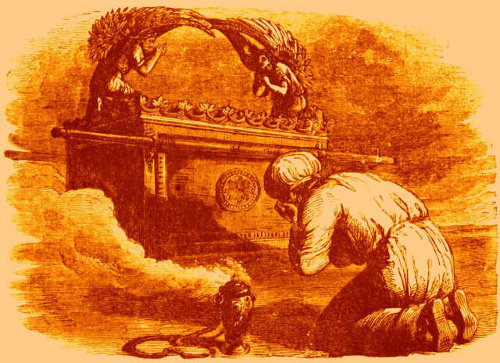
Kohen GadolThe name of this week’s Torah reading, Korach, provokes an obvious question: It is written: “The name of the wicked shall rot,” and on this basis, our Sages state that a person should not be named after a wicked man. Why then is an entire Torah reading named Korach? For with this title, Korach’s identity is perpetuated forever, since the Torah is eternal.

Among the explanations given is that Korach’s desire was, in essence, positive. Korach wanted to be a High Priest, to experience the absolute closeness with G-d that results from entry into the Holy of Holies. Indeed, when Moshe responded to Korach, he did not tell him this objective was unworthy. On the contrary, as Rashi relates, Moshe said he shared the same desire; he also wanted to be a High Priest.

Moreover, at Mount Sinai, G-d told the Jewish people that they are “a kingdom of priests,” and our Rabbis interpret this to refer to the level attained by a High Priest.

Rabbi Eli Touger
In the Garden of Torah
“Korach’s Positive Import”
Chabad.org

A third gentile wanted to convert so he could become the High Priest, and wear the Priestly garments. Shammai said no, but Hillel accepted him. After studying, he realized that even David, the King of Israel, did not qualify as a cohen, not being a descendant of Aaron…Hillel’s welcoming personality complements his saying: “Love people and bring them close to Torah.” (Avoth 1).

from -Hillel, Shammai and the Three Converts
Saratogachabad.com
citing Shabbos 31

“My job is not to distance anyone, but to draw them closer. If a person needs to be rebuked, let someone else take care of that.”

-from a letter of the Rebbe
quoted by Rabbi Tzvi Freeman
“Bringing Closer”
Chabad.org

I write a lot about praying, about reading Talmud, Chasidic stories, the Bible; and I write a lot about living out the life that God gave us, not just praying, reading, and studying. But what’s the point? Why do we do this? Why do I do this?

Why did the convert in the story about Hillel want to be a High Priest?

The motives are all the same. We want to draw closer to God. Even Korach, the subject of this week’s Torah Portion is said to have had good motives, though a bad way of expressing them. We all want to draw closer to God.

But what does that mean? I’m not sure anyone really knows.

What would we do if we were really close to God? You probably think you know the answer. You probably think it would the the most wonderful, peaceful, loving experience of your entire life. But do you know what you’re really asking for?

When the people saw the thunder and lightning and heard the trumpet and saw the mountain in smoke, they trembled with fear. They stayed at a distance and said to Moses, “Speak to us yourself and we will listen. But do not have God speak to us or we will die.” Moses said to the people, “Do not be afraid. God has come to test you, so that the fear of God will be with you to keep you from sinning.” –Exodus 20:18-20

When I saw him, I fell at his feet as though dead. Then he placed his right hand on me and said: “Do not be afraid. I am the First and the Last. I am the Living One; I was dead, and now look, I am alive for ever and ever! And I hold the keys of death and Hades. –Revelation 1:17-18

Do not be afraid? Are you crazy? who wouldn’t be afraid?

Sure, Abraham spoke with God “face-to-face” and Moses talked with God at the top of Mt. Sinai for forty days and forty nights, but that was Abraham and Moses. The Bible doesn’t relate tales of every one who encounters God having a perfectly comfortable and casual conversation and in fact, in the two scriptures from which I just quoted, we see that the more typical response of a meeting with the Divine was to expect to die in the next second or two. Why do we want to get closer to God?

We think we want to get closer to God when we imagine God is some sort of “cosmic teddy bear” who is all comfy and cozy and we can sit on His lap like kids telling Santa Claus what we want for Christmas. But it doesn’t work that way as we’ve seen in abundant measure. So why do we want to grow closer to God, abandoning all common sense and reason, desiring to have such an intimate and terrifying experience?

In Jewish mysticism, it’s believed that we contain a spark of the Divine; something of God, within each of us. That spark is always striving to return to the source. It’s like trying to hold a beach ball underwater in a swimming pool; the more you try to drive it downward, the more it pushes back toward the surface. The more darkness we pour into our being, the more sorrow and sin we find in the world, the more the Holy fire within us seeks out the conflagration of God.

From this life and light proceeds the divine “spark” which is hidden in every soul. Not all men succeed in rising to this close union with God at prayer, because this spark is imprisoned in them. “Yea, even the Shechinah herself is imprisoned in us, for the spark is the Shechinah in our souls.

-Paul Philip Levertoff
Love and the Messianic Age

Ezekiel's VisionIn yesterday’s morning meditation, I said that meeting God requires our “time, effort, and an unquenchable need to learn“. It’s that unquenchable, insatiable, unstoppable drive; like a spark seeking the fire, that pushes us forward, over the edge of the abyss, sometimes without our conscious will, pressing us across the threshold from our familiar world into the Presence of the Throne of God. This is what drives mystics to leave the universe and seek higher Heavens in vision and in spirit. This is what we see in the Merkabah or the Ezekiel’s chariot event and this is what John experienced in the vision he recorded in Revelation. Daniel’s visions all but drove him insane.

Most of us won’t have such intense encounters with God, but we seek something of Him nonetheless. It’s why we pray. It’s way we read the Bible. It’s why we study Talmud and Kabbalah. It’s why, night after night, we seek Him in our dreams and day after day, we call to Him to be with us along our way.

You shall teach them diligently to your children and you shall speak of them, while you sit in your home, while you walk on the way, when you retire, and when you arise. –Deuteronomy 6:7

This small portion of the Shema is part of what Jesus taught as one of the two greatest commandments; the commandments that are the “containers” for all of the Torah and the Prophets. Perhaps this is a clue telling us how we draw closer to God.

We know that Korach’s intentions were good, but intentions are not nearly as meaningful as the actions we take. His actions ultimately cost the lives of over 14,000 people. And while the actions of the convert who approached Hillel with the desire to become High Priest didn’t result in tragedy, he still was given the opportunity to learn a hard lesson in what it means to draw nearer to God.

Interestingly, the letter from the Rebbe quoted by Rabbi Freeman seems to speak somewhat of Hillel who, unlike his contemporary Shammai, did not rebuke the foolishness of the three converts but rather, welcomed them and gave them the time and the room to discover their mistakes. We make our own mistakes in trying to draw nearer to God. A lot of the errors we make have to do with arrogant presumption and the idea that the life, death, and life of Jesus Christ turned God the Father from a horrible, vengeful creature into everybody’s favorite uncle. Fortunately, God, like Hillel, gives us time and room to discover our errors.

It’s in our sincere attempts to encounter God that we actually discover when we’re walking the wrong path. Like Moses who saw only God’s “back” but not His “face”, when we’re ready, we realize just how vast and overwhelming even a momentary glimpse of God’s awesome glory is when it breaks into our world. However, to meet with God, we must make our humble efforts to seek Him out, in the pages of the Bible, in the halls of study, in the realms of prayer…and then we must wait.

From a mystic perspective, it is explained that Korach’s desires reflected the spiritual heights to be reached in the Era of the Redemption…The rewards of that age cannot, however, be attained prematurely, but only as a result of our Divine service. It is only through our selfless devotion to the Torah of Moshe and the directives of “the extension of Moshe in every generation” the Torah leaders of our people that we can elevate ourselves and the world to the point that “the world will be filled with the knowledge of G-d.”

-Rabbi Touger

Good Shabbos.

How Can We Pray?

PrayerThe mind will always find the answer most convenient for the mind.

Even in its search for spiritual enlightenment, the mind will only rest where there is enough room to remain a mind. Therefore, on its own, the mind can never grasp G-d.

To reach G-d takes a sense that is beyond the need to exist; the essential knowledge of the inner soul. Only once the mind has drunk from that fountain can it be trusted to see beyond itself. Only then can it see the place where mind ceases to exist.

Rabbi Tzvi Freeman
“The Convenient Mind”
Chabad.org

You desire but do not have, so you kill. You covet but you cannot get what you want, so you quarrel and fight. You do not have because you do not ask God. When you ask, you do not receive, because you ask with wrong motives, that you may spend what you get on your pleasures.James 4:2-3

We struggle all our lives to find our connection to God. Both Rabbi Freeman and James, brother of the Master, illustrate how we can get in our own way and inhibit that connection. We “settle” for a connection that we can understand and that fits with our “worldview”. We pray, but only to satisfy our desires and lusts and not to do His will. What do we know about God’s will for prayer?

“This, then, is how you should pray:

“‘Our Father in heaven,
hallowed be your name,
your kingdom come,
your will be done,
on earth as it is in heaven.
Give us today our daily bread.
And forgive us our debts,
as we also have forgiven our debtors.
And lead us not into temptation,
but deliver us from the evil one.’” –Matthew 6:9-13

If prayer seems difficult, it is only because we pray with the wrong motives and the wrong expectations. We pray to serve ourselves and not God, yet Jesus made it clear that, from His grace and mercy, God would take care of our needs too, if only we would pray:

Very truly I tell you, whoever believes in me will do the works I have been doing, and they will do even greater things than these, because I am going to the Father. And I will do whatever you ask in my name, so that the Father may be glorified in the Son. You may ask me for anything in my name, and I will do it. –John 14:12-14

If we know that God will meet our needs in the name of the Son, what else prevents us from “talking” to God? Certainly not God Himself, as we discover in this teaching from Chabad.org.

Once upon a busy life–maybe even two, three times or more–some of us are struck with a sense of being so small within something much larger and wouldn’t it be good for the two of us to have a chat. In other words, we would like to speak with G-d.

It’s not as outlandish as it seems; people do it all the time. Most never stop to think what is really going on, for if they did, they wouldn’t be able to open their mouths. But it is so essential to human life, so we continue on nonetheless.

We call it prayer, and we believe the second party of this dialogue is just as eager to join–if not yet more eager than ourselves.

To this lesson, Rabbi Naftali Silberberg adds:

Prayer comes naturally when a person, G-d forbid, experiences hardships. But passionate prayer when all is (relatively) well is, in a certain sense, a far more meaningful experience. Because our conversations with G-d serve a dual purpose: they are an opportunity to beseech our Provider for health, prosperity and nachas from our children; but more importantly, they are also moments when we connect with our beloved Father in Heaven. Indeed, to a certain extent, the content of our prayers is less significant than the experience itself–an opportunity to connect with G-d.

You have His attention; speak as long as you wish! The great sage Rabbi Yochanan summed it up with these words: “If only a person could pray all day long!”

Praying with TefillinGod is listening to you. He is always listening to you, waiting for you to make the connection. All you have to do is start talking. It doesn’t matter who you are. It doesn’t matter what you’ve done. No quality you possess or lack will prevent God from hearing your prayers. Even if you’ve turned away from Him, you can always turn back to Him, as illustrated by how Rabbi Freeman answered this question:

Question: “I don’t feel that that I have any right to pray to G-d. I’m not religious at all. Over the years, I’ve committed many sins. Since I’ve turned against G-d and transgressed His commandments, how can I approach Him in prayer?”

Answer: “Each morning, when we wake up, we say in our prayers, ‘My G-d, the soul You gave me is pure…’

No matter what you do with your life, your soul remains pure. Even at the time you are committing the worst crime, your soul screams inside like a captive woman, remaining faithful to her Beloved Above.

And now you want to take away from her that last opportunity to scream out loud for help?”

If God only heard the prayers of the righteous, God would hear no prayers at all. You do not have to be righteous. You do not have to be perfect. You do not have to say “magic” words or pray by a formula. All you have to do is start talking. God is waiting…and listening.

Significance in the Vortex of God

The VortexThere we saw giants… and we were in our own eyes as locustsNumbers 11:33

Someone once asked Rabbi Shmuel of Lubavitch: “What is true learning?”

The Rebbe replied: “When one studies a section of Talmud or an idea in chassidus, one is there, together with its illustrious author. He is building upon the sage’s wisdom like a midget perched upon a giant – he is riding on the giant’s shoulders. “One must be grateful to the giant that he doesn’t fling the nuisance from his shoulders.”

-Rabbi Yanki Tauber
“The Irksome Burden”
Commentary on Parshah Shelach

Heaven above and the soul of man below are two halves of a single form, two converse hemispheres that fit together to make a perfect whole.

Attuned in perfect consonance, they dance a pas de deux of exquisite form, each responding to every subtle nuance of the other, mirroring and magnifying the most subliminal inner thought, until it is impossible to distinguish them as two.

Within the human being is the consciousness of G-d looking back upon Himself from within the world He has made.

We sit upon the vortex of Creation.

-Rabbi Tzvi Freeman
“Heaven Above, Man Below”
Chabad.org

We have this idea that we are connected to God. I wrote yesterday that part of the function of God’s commandments is to connect people with the Almighty. Yet, the two commentaries I quoted above seem to paint different pictures about the relationship between created being and Creator. Are we annoying gnats sitting on the shoulders of giants, or are we fully integrated into the very fabric of God’s eternity?

I have a hard time judging my relative position to God. Oh, I realize that in absolute terms, God is infinite and I am beyond insignificant by comparison. It is only through God’s mercy and grace that He’s even aware of me at all:

LORD, our Lord,
how majestic is your name in all the earth!
You have set your glory
in the heavens.
Through the praise of children and infants
you have established a stronghold against your enemies,
to silence the foe and the avenger.
When I consider your heavens,
the work of your fingers,
the moon and the stars,
which you have set in place,
what is mankind that you are mindful of them,
human beings that you care for them? –Psalm 8:1-4

Yet without human beings, what is the point of Creation?

As much as I try, there are days when I wonder how or why God would attend to any single individual. Yes, I know that “God so loved the world” and all of that (John 3:16), but does every single, specific person who is alive or who has ever lived really have a critical, irreplaceable part in God’s majestic, eternal, infinite plan?

Do I?

Someone once posed the following question to Rav Yechezkel Landau, the author of Teshuvas Noda B’Yehudah. He wanted to know whether it is permitted to place Sifrei Torah that are invalid and incapable of repair into the Aron Kodesh that was made to store valid Sifrei Torah. The questioner initially cited our Gemara as proof that it should be permitted. The Gemara relates that the broken set of Tablets was placed in the Aron Kodesh together with the second set of Tablets that was complete. Even though the Aron Kodesh was made for the second set of tablets, nevertheless, the broken Tablets were stored inside indicating that as long as an item had sanctity before it became broken or invalid it may continue to be stored in the place designated for intact and valid sacred items.

The questioner then rejected this parallel since it is possible that the broken Tablets were placed in the Aron Kodesh because they were made by God and that added sanctity allowed them to be stored in the Aron Kodesh even though they were broken. This would not allow for the storage of an invalid Sefer Torah to be stored in an Aron Kodesh since the Sefer Torah was not made by God. Noda B’Yehudah rejected this distinction and cited our Gemara to prove his point. After the Gemara teaches that the broken Tablets were stored in the Aron Kodesh the Gemara comments that this teaches that one must continue to treat a Torah scholar who forgot his learning with respect since he is similar to the broken Tablets. The Torah scholar was not the creation of God and yet the Gemara finds it to be a valid parallel to the broken Tablets and as such an invalid Sefer Torah could also be equated with the broken Tablets.

Daf Yomi Digest
Halacha Highlight
“Storing an invalid Sefer Torah in an Aron Kodesh”
Menachos 99

I’ve felt like an invalid Sefer Torah “incapable of repair”. My life has been like a “broken set of Tablets”. Am I worthy of being contained in a holy place just because I was made by God? Am I like a Torah scholar who has forgotten his learning? Once having been made holy, can my holiness be diminished?

Menachos 99 answers the latter question, “No”:

The Mishnah tells us that the lechem hapanim loaves were placed upon a marble stand as they were being brought to be placed upon the Shulchan in the Sanctuary. The set of loaves which were removed were placed upon a golden table after being taken out of the Sanctuary. This was a fulfillment of the adage, “we rise in holiness, and we do not descend.”

I admit to taking liberties with the interpretation and applying what is being said here to human beings , but I think this is a valid perspective (considering the Torah scholar with memory problems). If we are each made by God in His image, then individual people are sacred because we are His creations. If, as Rabbi Freeman states, “Heaven above and the soul of man below are two halves of a single form, two converse hemispheres that fit together to make a perfect whole”, then people enjoy a special unity with God that nothing else in Creation can possess. If this is true, then how can we dare to feel broken, or lost, or alone, or afraid?

And yet, we do. I know I do.

The Noda B’Yehudah is at odds with the parallel between the broken Tablets and the invalid Sefer Torah because:

…he maintains that the Aron Kodesh was built to store the broken Tablets and since that was the original intent it is permitted for them to be stored therein. An Aron Kodesh in a Beis HaKnesses was designed to store valid Sifrei Torah and as such one that is invalid and irreparable should not be stored in the Aron Kodesh. He observes, however, that common custom allows for the storage of invalid Sifrei Torah in an Aron Kodesh…

This seems to match up with Rabbi Tauber’s interpretation that we exist like insects riding the shoulders of giants every time we even learn one small section of Talmud or other holy lesson, building on the insights of those people much wiser and more righteous than we. We exist as a “convention” in the sense that broken pieces of the Tablet are stored in the holy ark simply because the ark was designed for that purpose and not because we have any intrinsic value of our own.

It’s more than a little puzzling. Are we important to God (or for that matter, other people) as individuals or not? Sometimes the answer seems to be “Yes” and at other times, “No”. Perhaps it’s the difference between allowing the full experience of connection between ourselves and God vs. the realization that God is amazingly, awesomely, vast, and my own presence on earth, by comparison, is like a hardly visible bit of flotsam barely staying above the waves of some expansive, turbulent, unfeeling sea.

“Come to me, all you who are weary and burdened, and I will give you rest. Take my yoke upon you and learn from me, for I am gentle and humble in heart, and you will find rest for your souls. For my yoke is easy and my burden is light.” –Matthew 11:28-30

I could use some of that “lightness of burden” right now. Contemplating the unimaginable intensity of God and sitting upon the vortex of Creation has become too much for me.

Good Shabbos.

Crossroads

Crossroads“Let me explain,” Demonax continued. “To you philosophy is science. To me it is art. To you it is a method of discovering the truth. To me it is a guide to noble living.”

Demonax to Elisha in
Milton Steinberg’s book
As a Driven Leaf

In my previous blog post Two Worlds, I compared my journey of faith to that of Elisha’s. Elisha is a Jewish man living in the first fifty years after the destruction of the Second Temple in Jerusalem. He is a man who had been trained as a Rabbi and who had served as a member of the great Sanhedrin. Yet, in a profound crisis of faith, he has abandoned his Jewish heritage and the Torah of Moses and fled to the Syrian city of Antioch to try to find the truth of his existence in the realms of Greek literature, science, and philosophy.

I, for my part, am a person who came to faith in Jesus sometime after my 40th birthday and after a few years not being satisfied by the answers of the church, proceeded into a “blending” of Christian and Jewish practices in a small, local congregation. However, in recent years, from the vantage point of a Christian man, I’ve been watching my Jewish wife on her journey of discovery to embrace her Judaism. I now find myself challenged by both the Christian and Jewish worlds to explore the value of my own faith through a Jewish lens.

But Elisha has the worst position of the two of us. He is trying to seek an objective method of proving the existence of God (or proving God doesn’t exist) and then determining, regardless of the result, how men are supposed to live based on scientific and indisputable evidence.

Good luck.

But look at how Demonax, the Greek moralist and cynic philosopher, differs with Elisha in even describing the task and the goal. Elisha is trying to understand the “meaning of life” by scrutinizing existence as an astronomer looks at a planet through a telescope. By contrast, Demonax sees the meaning of life not as an attempt to understand existence, but to live it out. The mechanic vs. the poet. While both perspectives are valid, here they are placed at odds with each other.

But should they be?

Think about why a person comes to faith, any sort of faith, in any religious structure. There are two approaches. The first is that a person concludes in their current system that life is random and without meaning. Why is the earth here? What is the purpose of existence? Is the universe the result of a blind, unreasoning accident or is there a conscious creativity at work? How am I supposed to understand the world around me?

The second approach is that a person concludes in their current system that their life is random and without meaning. The questions are similar but pregnant with a profound difference. Why am I here? What is the purpose of my existence? Am I just the result of a random joining of two reproductive cells or is my life special and meaningful? Then, the most important question is, if my life is special, meaningful, and unique, what am I supposed to do? “How am I supposed to live?”

The two questions generally lead to the same answer, for in discovering the meaning of the universe, you discover the meaning of yourself and how you are to live out the life you were given. Both Elisha and Demonax are traveling to the same city but they’re taking two radically different routes.

ChasidNow consider the Chasidic understanding of the Torah. You may look at a Torah scroll or a Bible and see words on paper, but that’s only the surface appearance and this only hints at its true purpose and meaning. In the following series of short quotes, Rabbi Tzvi Freeman brings to light some of the wisdom of the Lubavitcher Rebbe, Rabbi Menachem Mendel Schneerson to help us understand what we are really seeing:

They translate it as “The Bible,” or “The Law,” but that’s not what the word means. Torah means “instructions.”

Whatever piece of Torah you learn, you must find the instructions it is giving you. -from Instructions

Torah is the blueprint by which the world was designed. Everything that exists can be found in the Torah.

Even more: In any one concept of Torah you can find the entire world. -from Blueprint

At Mount Sinai, tradition tells, there was no echo.

Torah penetrates and is absorbed by all things, because it is their essence. There is no place where it does not apply, no darkness it does not illuminate, nothing it cannot bring alive. Nothing will bounce it back and say, “Torah is too holy to belong here.” -from Penetrating Wisdom

We find that the Torah is not only the blueprint for existence, but a set of instructions for our existence. Beyond that, we discover that every object and being within the created universe is a container, of sorts, for the “material” used for its creation: the Torah. I don’t mean to say that all of humanity should attempt to live a “Torah lifestyle” identical to the Jewish people, but it seems more than reasonable that we should study the Torah to learn the essential truths by which God intends for us to live. After all, God’s instructions to do so are here:

Many peoples will come and say,
“Come, let us go up to the mountain of the LORD,
to the temple of the God of Jacob.
He will teach us his ways,
so that we may walk in his paths.”
The Torah will go out from Zion,
the word of the LORD from Jerusalem. –Isaiah 2:3

Rabbi Freeman’s teachings are not far from what this early 20th century Chasidic scholar had to say:

Why has God created the world and mankind, and for what purpose? Why has the soul descended into the body? (The preexistence of the soul was assumed in Chasidism.) Is there a more ideal world than the divine world in which the soul previously existed? Is there a greater joy than when man rejoices in God?

-Paul Philip Levertoff
as published in “The Love of God”
Messiah Journal issue 107

Elisha considers philosophy and thus the search for meaning and ultimately for God, to be a science. Demonax believes the same journey is the art of learning how to live in a noble, and even in a holy manner. Yet Elisha’s personal doubts have blinded him to what he should have known, having been a student of the Torah from childhood. He should have seen that the Torah contains all the questions and all the answers. Greek science and philosophy, like our modern, western thought, seeks to compartmentalize and to segregate our objective environment, our physical bodies, and our souls, but the Torah is the maker and container of all these and indeed, we are a container for the Torah, as is the entire universe and everything in it.

Like a splinter in our minds, the questions drive us madly to seek the answers of why we’re here and why the world exists, and yet the answers are right in front of us and they have been right in front of me all along:

One of the teachers of the law came and heard them debating. Noticing that Jesus had given them a good answer, he asked him, “Of all the commandments, which is the most important?”
“The most important one,” answered Jesus, “is this: ‘Hear, O Israel: The Lord our God, the Lord is one. Love the Lord your God with all your heart and with all your soul and with all your mind and with all your strength.’ The second is this: ‘Love your neighbor as yourself.’ There is no commandment greater than these.”

“Well said, teacher,” the man replied. “You are right in saying that God is one and there is no other but him. To love him with all your heart, with all your understanding and with all your strength, and to love your neighbor as yourself is more important than all burnt offerings and sacrifices.” –Mark 12:28-33 (quoting Deut. 6:4-5 and Lev. 19:18)

Christ’s answer tells us both the meaning of the universe and the meaning of our lives, what Creation is, who we are, and what we are supposed to be doing.

The great sage Hillel once summed up the Torah as that which is hateful to you, do not do to your fellow. That is the whole Torah; the rest is the commentary; go and study” (Shab. 31a). While the “two greatest commandments” don’t give us every detail of the journey on which we must travel, it does provide a clear direction. Here I am, standing at a crossroads looking for a direction, just as Elisha was. May I make a better decision than he did. I pray we all do.

Well I looked into dream of the millions
That one day the search will be through
Now here I stand at the edge of my embattled illusions
Looking into you

-Jackson Browne
“Looking into You” (1971)

Chag Sameach Shavuot.