Tag Archives: Noahide

Where Would Noahides Go If There Were No Synagogues?

Messiah’s community is a single community expressed in diverse forms within the Jewish community and among the nations. All are called to a dedicated life of worship, neighborly service, and public testimony to Yeshua. Unity and love throughout the entire community confirm Yeshua’s role, as the One sent by the Father, and God’s purpose in Messiah for Israel and the Nations. (John 17:20-21; Acts 21:20; Gal. 2:7-8)

-from the Union of Messianic Jewish Congregations (UMJC) Statement of Faith

I came across this link somewhat at random, and it reminded me of a question I wanted to ask the Internet.

Typically non-Jewish believers in Rav Yeshua (i.e. Christians) become aware of movements such as Messianic Judaism or Hebrew Roots through a sense of dissatisfaction with the Church, the feeling that something is missing. I remember having that sense early on in my “Christian walk”. My wife, who is Jewish, also felt something was lacking in our church experience, and when we encountered a local Hebrew Roots group (this was many years ago), she was immediately “hooked”.

It took me longer to get onboard, but eventually, as I started learning more, I began to realize that what the Bible actually said about the Jewish people, Judaism, and Israel wasn’t what was being preached and taught in most churches.

two pathsMy wife and I have since journeyed on separate trajectories relative to our faith and I respect her decision. She’s Jewish and she needs to be in Jewish community and to embrace Jewish identity.

My identity is less traditional and I’ve gone through a sometimes convoluted developmental process, finally arriving where I am today (though I don’t think God is finished with me yet).

Someone recently said (Don’t make me regret posting this link, Peter) that “Judaism is a communal faith and not designed to be practiced in isolation.” So is Christianity. The ideal is to find a like-minded community of fellow believers and to “fellowship” with them.

Over the years, I’ve transitioned between numerous communities, starting with a Nazarene church, then a Hebrew Roots/One Law congregation, then to a Bible study/home fellowship, then (eventually) back to Hebrew Roots, and most recently, I attended a Baptist Church for two years (and have since left). There were times in that history when our family was just alone in our faith, and times, including the present, when I am alone as an individual.

No, I’m not revisiting the idea of community for myself. As nearly as I can tell, that door is closed for more reasons than I can list in this brief blog post. However, it did occur to me that there are very few paths to community for someone, particularly a non-Jew, who generally believes in the tenets of faith as described by the UMJC (no, I’m not affiliated with them, and no I’m not specifically advocating for them — they just happen to be a handy example).

Even if there were a Messianic Jewish community in my area, and even if I felt I’d be welcome there, I probably wouldn’t attend out of respect for my wife’s sensitivities on the matter.

But what about other non-Jews who have my point of view?
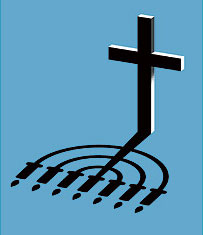
cross and menorahThere are plenty of Gentile-only Hebrew Roots One Law/One Torah congregations out there of various sizes and configurations. Some have a few Jewish worshipers, but they almost always were not raised in a Jewish home nor had the benefit of growing up in Jewish social and religious community. Those Hebrew Roots groups are also almost always run by non-Jews, although their leaders may wear a tallit and kippah and even call themselves “Rabbi”.

But there are also a number of non-Jews who have a more “Messianic Jewish-like” perspective on the Bible, the centrality of Israel, the primacy of the Jewish Messiah King, and how all that relates to the people of the nations. A view I advocate here on my blog.

If they don’t live within reasonable distance of a Messianic Jewish congregation established and operated by Jews as a Jewish community which graciously also admits non-Jews, where do they go?

It would be like being a traditional Noahide and not having a nearby Jewish synagogue to attend. I know of intermarried couples who attend both our local Chabad and the Conservative/Reform group here in my area, and the non-Jewish spouses are Noahides in Jewish community, not unlike how I think of non-Jews in Messianic Jewish community.

But what if there were a group of Noahides who lived nowhere near a synagogue? What if they weren’t intermarried to Jewish spouses, but through some other process, came to the realization that being a Noahide was what the Bible required of them in order to worship Hashem?

Apply those questions to those of us who are “Judaicly-aware” non-Jewish disciples of Rav Yeshua. Where would such a group of Gentiles go to find worship and community? Could a group of Gentiles band together to practice something analogous to “Messianic Judaism?” What would you call it, “Messianic Gentilism?”
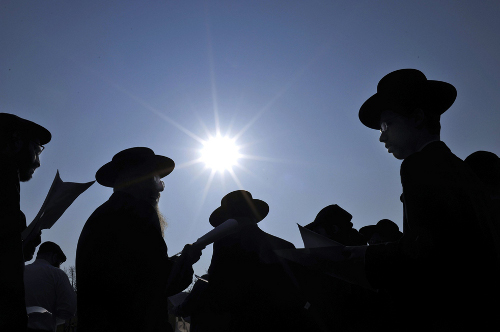
Orthodox JewsI was wondering if those organizations that generally call themselves “Messianic Judaism” (such as the aforementioned UMJC) have established any guidelines for non-Jews who want to come alongside them but who geographically are too far away from a Messianic Jewish congregation to attend. For that matter, that group of Gentiles may not even have a skilled teacher or leader among them. They probably could use a lot of assistance and guidance.

Although the community in ancient Antioch (Acts 13:1; 15:1-2), to the best of my understanding, had both Jewish and non-Jewish members, the Apostle Paul (Rav Sh’aul) also founded many Gentile-only communities, the one described in his epistle to the Galatians being the one that immediately comes to mind. Paul “kept tabs” on these various groups, when he couldn’t visit them, through his correspondence, but the vast majority of the time, for day-to-day operations, they were run by the local members.

What did a Gentile-only “Messianic” community look like in those days? We don’t really know. Probably they looked at least somewhat “Jewish,” if for no other reason than because that was the only communal model available to them.

But this is nearly two-thousand years later and a lot has changed. Yes, ultimately the Gentiles broke away from their Jewish base and invented Gentile-only (unless a Jew wanted to leave Judaism and convert) Christianity, which almost completely rewrote how the Bible was to be understood.

Judaism too has gone through a great deal of development, and what we think of as Rabbinic Judaism today (which, in my opinion, includes at least some Messianic Jewish groups) is not the same as the Judaism(s) practiced during the late Second Temple period.

rainbowSo theoretically, if a collection of “Noahide” Judaicly-aware non-Jews wanted to pursue a community consistent with how we think of Gentiles coming alongside their Messianic Jewish counterparts, is there anything or anyone they could contact to help them? What resources should they consult so they wouldn’t just be “shooting from the hip?”

And no, I’m not thinking of starting such a community here, but I’m thinking that this is an area where others like me in the world are underserved and, left on their own, are perhaps forming groups and fellowships that might be less than optimal. I think they could use some help. I’m just wondering if such help exists and if it is even possible to create viable, sustainable congregations of Gentiles who worship and live consistently with how Messianic Judaism envisions Gentiles in Messiah.

The Unexpected Appearance of Rosh Hashanah

I never know from day to day if I’ll ever write here again, but something just happened that caught me completely by surprise and I think it’s relevant.

My wife said she’d be going to shul tonight. I knew the High Holidays were coming up, but for the first time in a long time, I haven’t been keeping tabs on the exact dates. I don’t regularly read my email updates from Aish or Chabad anymore. And (gasp) I’ve stopped regularly reading the Torah portion.

That last part was initially because between the gym, yard work, and my “honey do” list, I didn’t have a lot of free time on Saturday, and by the time I did, my brain was too fried to really get much out of study. Also, I’ve been doing a free-lance project that I try to cram into my weekends.

Anyway, for a variety of reasons I’ve stated in previous blogs, I’ve become increasingly disconnected from the world of Messianic Judaism or any Judaism for that matter.

I wish I could say I’ve become increasingly connected with God through some other avenue, but this is not the case. My vague plans for forging a more one-on-one relationship with God haven’t come to fruition, primarily because I find other things to do with my time.

But I have, to a large degree, ceased to employ Judaism in any form to be the interface or conduit between me and God. The Church convinced me that I don’t belong within traditional Christianity and I’ve gotten a creeping suspicion over the last months or maybe even years, that I’ve been fighting a losing battle in believing that, even as a “Noahide-style” Gentile, I had a place within Messianic Jewish (online or otherwise) community.

And so I now have the proof that it is possible for me to pull away. Actually, I have two proofs. The first is the increasingly long gaps between making one blog post to another here. The second, and this is very dramatic to me, is forgetting all about Rosh Hashanah.

I wouldn’t have noticed at all if my wife hadn’t mentioned it. In fact, she just walked out the door to leave for synagogue.

So what is my morning meditation if it isn’t found in this place anymore? The very last vestige of what I’m beginning to think of as my former life is that I still mentally recite the Modeh Ani blessing when I first wake up, thanking God for returning my life to me each morning.

Interestingly enough, it was this blessing that I based my very first blog post here upon.

Gratitude to God for waking up alive each morning. A basic awareness that my life and everything in it is dependant on God’s grace and mercy.

Tonight, my Jewish wife is going to synagogue. It’s Rosh Hashanah. That’s where a Jew belongs on the Jewish New Year. May God grant her a sweet and good life in the coming year. But that doesn’t mean it signifies any sort of new beginning for me…at least not anymore.

I have to admit that it probably was arrogant presumption on my part to believe it ever did.

Tomorrow is Monday. Time to hit the gym and then go to work. The reinvention of whatever I am is going slowly.

Do Christians Practice Judaism?

You probably think I’m crazy even asking if Christians practice any form of Judaism. The vast, vast majority of both Christians and Jews would answer a resounding “no.” Only a tiny population of Jews and non-Jews in what is referred to as the Messianic Jewish and Hebrew Roots movements (they overlap somewhat but are hardly the same thing) even ask such a question. Moreover, only some of the people inside of those movements are considering or confused by the answer.

But why even ask such a ridiculous question? First of all, I recently read such a question as it was floating by in the blogoverse and was intrigued by its audacity. One such church-going (non-Jewish) Christian says he regularly tells other people in his church that he practices “Messianic Judaism”. This is just a hair off from his possibly telling other Christians that he’s a “Messianic Jew”. I don’t want to be unfair or inaccurate, and this person did not refer to himself as a Jew, Messianic or any other kind.

But as you know if you’ve been reading my blog for very long, I have a very definite perspective on What is Messianic Judaism. If you click that link, you’ll see that I don’t think it’s possible for a non-Jew and particularly for a Christian to actually “practice Judaism,” but apparently the question requires more attention.

There’s a conversation going on in Facebook currently (you may need to be logged into Facebook to see it) that was started by Boaz Michael, President and Founder of the educational ministry First Fruits of Zion (FFOZ). He asks:

A good benchmark for the Nations? The seven laws of Noach are all things that can be derived from one place or another in the Bible, if not directly from Genesis 9. They form a sort of minimalist approach to ethical monotheism: believe in God, be a decent person, be kind to animals, and settle your disputes in court.

Now to be fair, when I queried Boaz on the differences between how Noahides are viewed in Judaism and the blessings of being a Christian, he replied:

Yes, I think that for believers there are additional standards and expectations. After all, the God-fearing Gentile believers were not just “sons of Noah.” Through Paul’s gospel, they considered themselves co-heirs to the messianic promises and spiritual members of the people of Israel. They fellowshipped with the Jewish believers, shared meals with them, and worshipped in their synagogues. They considered themselves spiritual sons of Abraham.

Which brings us to a relevant point: Did Gentiles ever practice Judaism?

The complete answer would probably turn into a book or at least a doctoral thesis on the subject, neither of which I have time for. The short answer is a kind of “maybe” as I see it (well, not really, but I’ll get to that). It all hinges on whether or not you believe that Gentles imitated literally every behavior of their Jewish mentors when learning to become disciples of the Jewish Messiah, and even if they did, what that behavior meant to both the Jews and non-Jewish believers involved.

We see in Acts 10 that the Roman God-fearer Cornelius (who didn’t become a “Christian” as far as receiving the Spirit and water baptism until the end of the chapter) most likely prayed the daily prayers in the same pattern as the Jew.

…Four days ago, about this hour, I was praying in my house at the ninth hour…

Acts 10:30 (ESV)

The ninth hour is about 3 p.m. which would be the proper time to pray the mincha or afternoon prayers. As Boaz said, the early non-Jewish disciples also very likely shared meals with their Jewish counterparts, which would have required that they keep a kosher diet, at least during those shared meals, and if, as Boaz said, they also worshipped in Jewish synagogues, then they would have prayed the same prayers (which were said from memory rather than through use of a siddur) and gone through the same “order of service” as the Jews. In fact, it’s likely that significant portions of the lifestyle of an “early Christian” would have been substantially similar to that of a Jewish person (disciples of the Jewish Messiah, or otherwise).

This may have contributed to some of the confusion we see among a number of the Gentles, as recorded both in Galatians, where Paul admonishes the Galatian church goers, saying they do not have to convert to Judaism and keep the full yoke of Torah (see Galatians 5:3) in order to be justified, and in Romans where Paul goes to great lengths (see Romans 11) to explain to the Gentile disciples that their entry into covenant with God did not cause them to supersede the Jewish “branches.”

No wonder now that Jews are rediscovering Jesus as the Jewish Messiah and Christians are rediscovering their “Jewish roots,” that we are also reviving something of that confusion in the present day (I’m speaking with some poetic license, since I don’t know if or to what extent Gentiles in the early church experienced any sort of “identity crisis” the way we see it in certain corners of the modern Hebrew Roots movement). I want to make it clear that many Gentiles in Hebrew Roots do not think they are Jews, nor do they intend on practicing any form of Judaism, so those who are “confused” represent a very small minority in Hebrew Roots.

So, I’ll ask it point-blank. Did early Christians practice Judaism? In terms of actual worship and significant lifestyle behaviors, it probably looked that way to an objective observer (though we lack a lot of information about how early Christianity really worked relative to Judaism). They might have been mistaken by some for people undergoing the process of converting to Judaism. The Roman empire recognized Judaism as a valid religion and would allow Jews to cease work during the Shabbat and so forth, but “the Way” as it was practiced among the non-Jewish disciples, was not a legal religion in the empire, and it would have been extremely difficult for diaspora Gentiles to keep Shabbat as did the Jews, and probably observe many of the other obviously Jewish mitzvot as well, such as eating kosher and praying shacharit and mincha, if it meant ceasing work during the morning and afternoon prayers.

Of course, after the destruction of the Temple and the exile of the vast majority of the Jewish population from Israel (renamed “Palestine” by the Romans), the first non-Jewish “bishop of the church” (certainly those exact words weren’t used to define the “office” of the head of the “Jerusalem Council” in those days) had to be elected. That, and many more events, resulted in the non-Jews taking administrative control over “the church of Jesus Christ” and within a few centuries (exactly how many centuries is up for grabs), the schism between what became Christianity and any form of Judaism was complete. At that point, no Christian was practicing any form of Judaism and any Jews who may have still, even secretly, acknowledged Yeshua as Messiah, would have done so as part of a completely Jewish religious life, isolated in the extreme from the Gentile Christian.

As part of the research (such as it is) I did for writing this “extra meditation,” I read articles such as Who is a Jew and Definition of a Jew, but they don’t really respond to the question I’m asking. First of all, there may be a difference between being Jewish and practicing Judaism, though I’m sure the distinction is very fine and difficult to identify. Then there’s the idea that we have post-modern Jews defining themselves without the “benefit” of the New Testament, thus they do not take into account any Apostolic material that might modify such definitions (and please keep in mind that Jews have every right to define who is a Jew and what is Judaism).

I tried to see if there was any way of answering the question, “Do Noahides Practice Judaism,” but other than finding a rather interesting article written by Rabbi Shraga Simmons about his brief interview with Noahide Jim Long, I came up dry. Certainly a Noahide would have no other place to go to worship and find community except a synagogue, thus he would be singing, praying, and worshiping alongside Jews on every Shabbat and holiday, but does that mean gentlemen like Mr. Long, a Gentile Noahide, are “practicing Judaism?”

The Gentiles in Hebrew Roots or worshiping in authentic Messianic Jewish communities seem to think they are the only non-Jews who have been attracted to and captivated by the Torah, but reading some of the comments in Rabbi Simmons’ article, I see that there is a significant number of us who have chosen the Noahide route and set aside Christianity/Hebrew Roots and Messianic Judaism as viable options.

What is Judaism? Since Judaism is a people, a nation, and a religion, it’s difficult to say that just “behaving” like a Jew means you’re practicing Judaism. You, as a non-Jewish Christian or Noahide, may be worshiping alongside Jews in a synagogue setting, sharing their fellowship, and breaking bread with them, but it might be a bit of a stretch to say you are practicing Judaism in precisely the same sense as the Jew davening next to you. If a Jew, for example, were to visit a Christian church (say he was married to a Christian wife but maintained a Jewish cultural, ethnic, and religious identity), and prayed and worshiped God within that context, we wouldn’t say he was “practicing Christianity.” Of course, he wouldn’t be acknowledging Jesus as Messiah and Savior, either.

What about the “Messianic Jew” who maintains a Jewish cultural, ethnic, and religious identity but acknowledges Jesus as Messiah? Does he practice Christianity? Some “Jewish Christians” do, but they have voluntarily left a Jewish religious and (to some degree) cultural context to worship and identify primarily as a Christian, but one of Jewish heritage. If you are a Jew who is Messianic and maintains that Jewish cultural, ethnic, and religious identity, it’s easier and clearer to say that you are “practicing (Messianic) Judaism.” A Messianic Jew in a church isn’t practicing Christianity, but worshiping alongside their Christian brothers and sisters. (Dr. Michael Schhiffman commented about this significantly on his own blog recently)

I suppose on that basis, regardless of how we see those early, ancient Christians and what they were practicing in the synagogue, today, we Christians, even those of us who daven in the presence of our Jewish fellows in a (Messianic) Jewish synagogue, are not practicing Judaism, but worshiping God with the Jewish people who, in this case, have the same God as we do, and know the same Messiah as we do.

I realize my little missive is not perfect, but I think I have made a reasonably good case for my point of view. Last spring during Shavuot, I worshiped in a completely Jewish synagogue context at Beth Immanuel Sabbath Fellowship. But even though the prayers were in Hebrew, even though we davened using a siddur, even though the Torah was read, and even through we all ate kosher meals prepared in a kosher kitchen, that doesn’t mean I was “practicing Judaism.” I was a Christian worshiping with other Christians and a good many Jews in a place where we were all welcome to share fellowship in love and peace, each of us just as who we were created to be by God.

Praying As One on Sunday

T.G.

Dear Friends,

There will be a world-wide simultaneous event on Sunday, September 23 (11:00 AM New York time), for all Jews to say the following prayer for G-d to send Mashiach (the true Messiah) – see http://www.facebook.com/AllJewsAsOne.

“Master of the Universe, we, the children of Israel, ask You for Mashiach to redeem us, now and with mercy, from exile and all suffering, to reveal Your Name in the world and to bring peace.”

Rabbi Moshe Weiner of Jerusalem (author of Sheva Mitzvot HaShem and The Divine Code) has approved a separate version for ALL GENTILES world-wide, to say as one at that same designated time:

“Master of the Universe, we, the children of Noah, ask You for Mashiach, now and with mercy, to end all suffering, to reveal Your Name in the world and to bring peace.”

We are looking forward to your participation!

Best regards,

-Dr. Michael Schulman
Director
Ask Noah International

I received this as an email this morning and felt I should pass it along, not only to my Jewish readers but to everyone else. Most Christians don’t typically identify themselves as Noahides based on their (our) understanding of a Christian’s covenant relationship with God through Jesus Christ, but I would certainly encourage everyone reading this message to find the time to pray one of the above prayers (Christians will probably want to adapt the “Noahide” prayer) so that we all can be united in speaking to God at one time, with one voice, and one purpose; the purpose of bringing the Messiah.

The time of prayer is based on Israel time (winter time DST) and will begin there at 5 p.m. That will be 5 p.m. Paris time, 11 a.m. New York time, 9 a.m. Boise time (for my local readers), 8 a.m. Los Angeles time, and 1 a.m. (September 24th) Sydney time.

May we, the people of God, all of us, from our many backgrounds, faith traditions, and all peoples of every nation, tongue, and heritage, gather together from around the world and turn our hearts and our voices to God, begging Him to end the exile of the Jewish people and all of humanity’s suffering by bringing Messiah, Son of David, back to us.

May he come soon and in our day.

The Lord’s Sabbath

ShabbatQuestion: According to Jewish Law and tradition, is it acceptable, discouraged or totally unacceptable for a Gentile to keep the Sabbath according to the regulations spelled out in the Torah and the Talmud and expounded upon by the Rabbis?

Answer: A non Jew is not allowed to keep Shabbos. Those that are in the process of converting make sure to do at least one thing on Shabbos that would normally not be allowed. For example they might carry something in their pocket.

The quotes above are part of a discussion group thread at judaism.stackexchange.com (and thanks to Judah Himango of the Kineti L’Tziyon blogspot for posting the link on his Facebook page). As you can see if you follow the conversation, it is generally discouraged for a non-Jew, Christian or otherwise, to attempt to observe the Shabbat in the same manner (if at all) as a Jew. The observations are apparently from the perspective of Orthodox Judaism, so Conservative and Reform Jews may have a somewhat more lenient viewpoint, nevertheless, the Shabbat is generally reserved for the Jewish people.

This doesn’t really upset most Christians since the Saturday Sabbath, as with most other aspects of “the Law,” was deemed done away with. While Christians generally worship on Sunday, it’s not really considered a “Sabbath” in the church, based on Pauls’ statement in Romans 14:5-6:

One person considers one day more sacred than another; another considers every day alike. Each of them should be fully convinced in their own mind. Whoever regards one day as special does so to the Lord.

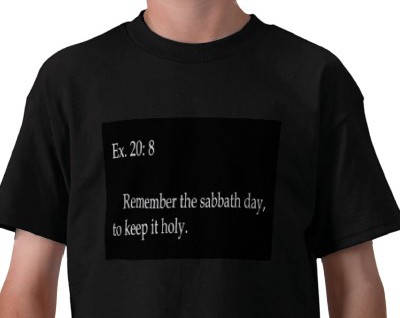
This effectively obliterates the fourth commandment to “Remember the Sabbath day by keeping it holy” for Ten Commandments believing Christians, but apparently, that can’t be helped. The result is that the vast majority of both Christians and Jews believe that Shabbat observance cannot and should not be applied to Gentiles and that is that.

Almost.

There is actually a lot of conversation going on in various circles about Gentles and the Shabbat, even as we’ve seen at judaism.stackexchange.com. In actuality, it doesn’t seem totally forbidden for a non-Jew to keep the Shabbat, they just can’t keep it in a way that is consistent with religious Judaism. AskNoah.org, a site created within an Orthdox Jewish context and dedicated to serving Noahides (righteous Gentiles), has this to say.

Question: I’ve been told that a Noahide must “mark” the Sabbath in some way. Could you give me examples of ways to mark Sabbath in the manner of a Noahide?

Answer: A Noahide is allowed to mark the seventh-day Sabbath in some types of ways. But there must not be a belief or conviction that he or she has – or is allowed to take on as a Gentile – any religious obligation to rest from all productive activity on the Seventh Day, or on any other day. (Although indeed, there must be an intellectual recognition that G-d assigns a special quality to the Seventh Day, since that is part of the Torah of Truth).

The answer continues by providing a number of suggestions for the Noahide as far as “marking” the Shabbat, but such marking must be done without making a vow of any kind in relation with the Shabbat, and with the understanding that “marking” the Shabbat is totally voluntary.

The world of Messianic Judaism, as seen from the point of view of Jews who accept discipleship under Jesus (Yeshua) as the Jewish Messiah, take a similar point of view. We can see one such illustration in a recent comment Derek Leman made in response to something I said on one of his blog posts at Messianic Jewish Musings:

So, I think a Divine Invitation exists for non-Jews. I don’t think (and the apostles didn’t think) it is a Divine Obligation.

My advice for non-Jews keeping Shabbat: learn the traditional prayers and songs. Make some modifications in parts where the wording is about God’s special relationship with Israel. Someone ought to make a Shabbat Seder (the Friday night prayers) for non-Jews which respects the wording of special relationship between God and Israel and pictures non-Jews coming into the sign between God and Israel as co-participants (not replacements, see Exod 31:13).

Shabbat candlesI’ve often said that I believe non-Jews who wish to honor God as sovereign Creator may do so based on Genesis 2:3, but AskNoah.org has a response for that as well:

Although it says in Genesis 2:1-3 that G-d designated the Seventh Day as holy and sanctified, don’t forget the basic principle that G-d did not limit Torah to always be a *chronological* account of events. In fact, G-d first dictated the book of Genesis to Moses shortly after the Israelites arrived at Mount Sinai. The first time there was any commandment about a special observance of a “Sabbath” was after the Israelites passed through the sea on dry land. When they ran out of the matzah they took out of Egypt, G-d provided them with mannah as food from Heaven. But no mannah fell on the Seventh Day. G-d instead provided a miraculous double portion on Friday afternoon, and He commanded the Israelites to remain in their camp on the Seventh Day. Moses explained to them that they were, from that time on, commanded to observe the Seventh Day as a day of rest and a holy Sabbath (Exodus 16:23). Thus, at the first mention of the Seventh Day in the text of Genesis, G-d told Moses to insert the information that He had blessed the Seventh Day (referring to the double portion of mannah that fell on Friday afternoon for the Israelites), and He made it holy (when He prohibited the Israelites from leaving their camp on that day).

It is true that in Judaism, the chronology of the writing and the order of events of and in the Torah aren’t considered to be strictly literal, so the authority answering the question about Genesis 2:1-3 may have a point. On the other hand, if we assume that there is a chronology to God’s creating the earth and that He actually “blessed the seventh day and made it holy,” relatively “soon” after He created the globe upon which we live, then the holiness of the Shabbat could precede the Sinai event by many hundreds or even thousands of years (or more).

Then we have another scripture which provides some illumination.

“And the foreigners who join themselves to the LORD,
to minister to him, to love the name of the LORD,
and to be his servants,
everyone who keeps the Sabbath and does not profane it,
and holds fast my covenant—
these I will bring to my holy mountain,
and make them joyful in my house of prayer;
their burnt offerings and their sacrifices
will be accepted on my altar;
for my house shall be called a house of prayer
for all peoples.”
The Lord GOD,
who gathers the outcasts of Israel, declares,
“I will gather yet others to him
besides those already gathered.” –Isaiah 56:6-8 (ESV)

This is very difficult to get around. While not a commandment, it certainly suggests that “foreigners” (non-Hebrews) not only may observe the Shabbat, but will derive some direct benefit for doing so, namely being brought to God’s “holy mountain”, which is probably the Holy Temple in Jerusalem, and having our offerings accepted by God in the Temple (and AskNoah.org does state that Gentiles will be able to worship at the Third Temple). Even the Master quotes the prophet Isaiah when he cries out that “‘My house will be called a house of prayer,’ but you are making it ‘a den of robbers” (Matthew 21:13).

I suppose Christians could say that the words of the prophet Isaiah were annulled when the Law was “nailed to the cross with Jesus”, but that hardly explains why Christ would quote prophetic words that would soon lose their power. Such a view also suggests that God’s Word is not eternal, so we have another puzzle when considering a traditionally Christian interpretation of scripture.

But if “Jewish” Shabbat observance is considered both by Christianity and by Judaism to be a dead issue for the Gentiles, why should the few of us who are not Jewish but who are drawn to the Shabbat care? Well, because we’re drawn and for whatever reason, God has written upon our hearts a desire to hold the seventh day as sacred.

As I’ve mentioned elsewhere, I don’t think Judaism has much to worry about as far as Christian or “Messianic Gentile” Shabbat observance goes. I’ve never met a person who was not Jewish who kept the Shabbat with anywhere near the level of sanctity and detail as an Orthodox Jew, so it can be truly said that we “mark” the Shabbat without ever actually “keeping it holy,” at least to the measure of accepted Jewish halachah.

But what does God think of the disciples of Jesus keeping the Shabbat? Even if we are not commanded, are we allowed and is our rest pleasing to Him? Or was that last question moot?

Then he said to them, “The Sabbath was made for man, not man for the Sabbath. So the Son of Man is Lord even of the Sabbath.” –Mark 2:27-28

If the Savior and Messiah is Lord of the Shabbat, what does that mean for we non-Jews who are his disciples?

We Have Met the Others and They Are Us

broken-crossIn rabbinic literature, reference is made to non-Israelites (gentiles of various descriptions). These “external others” often appear in rabbinic literature as mirror opposites of Israelites, and so sharpen the rabbis’ definition of Israel. However, insofar as this literature explores and develops a definition of the rabbi as the ideal Jew, reference is made to non-rabbinic Jews (of various descriptions). These “internal others” often appear in rabbinic literature as mirror opposites of the rabbis and so sharpen the rabbis’ definition of their own class.

-Christine Hayes
“The ‘Other’ in Rabbinic Literature” (p. 243)
The Cambridge Companion to the Talmud and Rabbinic Literature
Edited by Charlotte E. Fonrobert and Martin S. Jaffee

For the past few mornings, I’ve been “assaulting” the concept of religion as opposed to faith, first with my blog post Longing for the Dawn and then with yesterday’s Red Stew in Context (the latter being a wee commentary on Torah Portion Toldot). Today, I’m returning to the challenge of a Christian attempting to gain insights into a faith in Jesus by studying the Jewish texts. More specifically, I’m drilling once again down into the well of Jewish/Gentile relations from (as accurately as I can depict) the Jewish point of view.

The view isn’t always encouraging.

I was fascinated as I read the Hayes article on the use of the “other” in rabbinic literature. This isn’t an unknown technique and individuals and groups have frequently defined themselves in comparison to some outside “other”. Sometimes these comparisons are benign and meant to illustrate how different cultures and ethnicities approach the same concepts but often the comparison game is used to elevate one group at the expense of the other. Jews, more than most other people groups, are acutely aware of how they have been negatively compared to the world around them, being blamed for virtually every evil that has encountered mankind. It’s small wonder that the Rabbis might use the same method to point the finger in the opposite direction.

But what is it that the Rabbis are saying?

In rabbinic halakhah, the gentile can be imagined as an ethnic other or as a religious other. As an ethnic other, the gentile is merely a non-Israelite or goy (member of a non-Israelite nation) to whom the laws of the Mosaic covenant do not apply. In tannatic law, the gentile is seen in contrast to the Israelite, as one who does not observe the dietary laws, is not obligated by the ritual purity system, does not contribute to the upkeep of the sanctuary, does not pay the half-shekel tax, and so on.

-Hayes, p. 245

Here, we see the Jew and Gentile compared to each other from a Jewish point of view and that comparison is devoid of any value judgments regarding either group. Jews carry certain duties and responsibilities that the Gentiles don’t. It’s quite simple, really. Hayes breaks the comparison down even further:

This depiction of the ethnic other – as outside and ignorant of the covenant – is not as straightforward as it might appear. According to the Pentateuch, some of the terms of Israels’ covenant apply even to non-Israelites who choose to take up residence among the nation of Israel as resident aliens (ger, pl. gerim). The pentateuchal model of peaceful coexistence, cooperation, and even limited integration of an ethnic other is realized in halakhot that exempt but do not forbid gentiles from observing certain laws.

It’s interesting that the comparison here relative to Gentiles being “outside and ignorant of the covenant” is based on ethnicity and not religion. That means the covenant of Moses was given to the Children of Israel which, in the context of the rabbinic texts, is an effect of ethnicity. Christians see their access to God through the covenant of Christ as an effect of religious identity and the Messianic covenant being “ethnicity-blind”. What happens if the rabbis look at Gentiles as religious “others”?

The gentile is also imagined as a religious other (‘oved’ ‘avodah zarah’) who worships a deity or deities other than Israel’s deity. The gentle as religious other falls under greater suspicion and is subject to more severe and at times hostile legislation than the gentile as ethnic other.

-Hayes, p. 246

Hayes is addressing the Gentile as a “generic idol worshiper” here and not specifically talking about Christians, so we could say that Jews believe the Gentile Christian do worship the same God as the Israelites, with only a disagreement as to the identity and status of Jesus Christ. But it’s not that easy.

Early Christianity was a dissident Jewish movement among other Jewish movements. Only in the late first century do Christian writings begin to affirm Christianity over and against Judaism, a trend that increased rapidly in the second century. As rabbinic Judaism took firmer shape and gentile Christianity set itself off from Jews, the group referred to by scholars as Jewish Christians emerged in the middle. The latter were followers of Jesus who, like Jesus and the apostles, kept the law of Moses. In early rabbinic literature, Jews partaking of a Christian heresy fell under the classification of min (plural minim), an umbrella term that included not only Jewish Christians but also a variety of Jewish sectarian groups, such as Sadducees, Boethusians, Zealots, and Samaritans (but not in an early period in Palestine, gentiles).

-Hayes, p. 258

Reading this, I wonder how those “Jewish Christians” of the early 21st century who call themselves “Messianic Jews” are viewed by the larger Jewish rabbinic community. We know historically that Sadducees, while not fitting into the first century Jewish mainstream, were nevertheless considered Jews, however Samaritans, though related, were not. This was even acknowledged in an encounter between a Samaritan and Jesus.

When a Samaritan woman came to draw water, Jesus said to her, “Will you give me a drink?” (His disciples had gone into the town to buy food.) The Samaritan woman said to him, “You are a Jew and I am a Samaritan woman. How can you ask me for a drink?” (For Jews do not associate with Samaritans.) –John 4:7-9

In the closing decades of the first century, “Jewish Christians” were not yet considered to have completely left Judaism, but they were not exactly welcome either. Hayes attributes this to the Gentile Christians and their efforts to separate themselves and their faith from Jewish origins and indeed, to elevate Christianity as the branch, above its Jewish root, giving birth to the ugly spectre of supersessionism.

But, as Hayes goes on to state, “Minim are almost universally depicted as possessing a knowledge of Scripture, but differing from the rabbis in their interpretation of Scripture (some even mocking or criticizing it).” The rabbis chose to include the Minim in with other “Christians and heretics,” all but rejecting them as Jews. As the schism increased, so did the “otherness” of both Jewish and Gentile Christians in relation to mainstream rabbinic Judaism.

Early Palestinian sources, in particular, urge rabbis and their families to avoid all contact with minim and Christians. The most vehement set of proscriptions against minim is found in T.Hullin 2:20-21. Many of these prohibitions stand in explicit contrast to similar laws concerning gentiles and are remarkable for their severity.

In other words, rabbinic proscriptions against contact with Jewish and Gentile Christians were even more stringent than those against contact with more “generic” idolators. And it wasn’t going to get any better as history progressed beyond the initial Rabbinic era of the 2nd to 4th centuries CE.

Compare all this to my previous blog post about how people self-identify with a specific religious context. In Judaism, there is largely a sense of being “born to it”. Though Jews can reject their religious heritage, it can be argued that the Torah will always be a part of the Jew, even when the Jew rejects religion for a purely ethnic lifestyle. For the religious Jew, the connection to God through Moses is an absolute and thus, so is the “rightness” of their faith and status. In comparison to that, the worshipers of oto ha’ish are at best misguided and at worse, the most repulsive of idolators, who claim to honor a first century Jewish itinerant teacher as both the Son of God and as God. Apparently, worshiping Apollo of Zeus would be an infinitely preferable choice for a Gentile as a religious orientation. The Christian wouldn’t be appropriating significant sections of the Jewish religious structure and scriptures for their (our) own purposes and contradicting and facing down the Jews at every turn.

My brief analysis of the Hayes essay is that, assuming we can project its conclusions into the present, both Gentile Christians and Messianic Jews of today have a very long road to walk in terms of establishing and maintaining a positive and normative relationship with traditional Judaism. Previously, I appeared to separate Messianic Judaism and Rabbinic Judaism, and largely the separation exists, but there are Messianics who were born and raised in Jewish homes and educated in Torah and Talmud in the traditional Jewish fashion who nonetheless, have come to faith in “oto ha’ish” and who do not see the dissonance between the Messianic and the Rabbinic. For these Jews, it will be the hardest to see and think and feel and be Jewish while at the same time experiencing the centuries-old separation between themselves and their Jewish brothers who continue to consider the Messianic Jews are minim.

For Gentiles like me, it affirms that my course of religious study, from a Jewish point of view, is problematic at best. There’s no prohibition against it per se (and certainly any book available for sale at Amazon.com is at my Gentile fingertips), but it is still rabbinically “uncomfortable” for more conservative Jews when they consider a Christian goy attempting to comprehend the mysteries of Talmud. Of course, there would be the comfort that I probably won’t really “get it” since, as I’ve stated before, I lack the required context and education to truly understand the rabbinic intent, but on the other hand, I could be accused (and perhaps rightly so) of misappropriating what is Jewish to feed what most Jews consider, my faith in a religion that historically has been very anti-Jewish.

back to backEven (Messianic Jew) Mark Kinzer in his book Post-Missionary Messianic Judaism strongly urged Christians who “dabble” (my word, not Kinzer’s) in the Messianic world to return to their (our) churches and to leave Messianic Judaism to Jews, so any Gentile Christian who may consider the Messianic movement to be a “meeting place” for integrating a faith in Jesus with the Torah of Moses (for the Gentile) is likely engaging in wishful thinking. That wishful thinking could even evolve into an odd form of supersessionism by the Gentile who, while not replacing Judaism with Christianity, quite innocently replaces Jewish covenant distinctiveness with the Jewish/Gentile Messianic “blend”. Hence Kinzer’s message of the church and the (Messianic) synagogue operating side-by-side in their individual silos rather than overlapping or being combined in a giant, religious mixing bowl.

One way to keep all of our traditions “safe” is to, as Kinzer suggests (echoing larger Judaism), all keep to our individual silos, being self-contained communities, and not allowing a mixing of identities. The traditional Jews and Christians already have gotten quite good at this, so they don’t contribute to the “problem”. Messianics, both Jews and Gentiles, by their very existence, tend to blur the lines, both within their silos and between silos. We each identify ourselves in relation to the “other” but Messianic Jews are attempting to cease being the “other” in relation to larger Judaism. I, for my part, understand that I will always be “other” in terms of the Jewish identity and rabbinic learning, and only want to read, learn, and understand what small parts I may take upon myself for the sake of my Master. Though in my heart and my experience, I also am “other” in relation to the church, it would be false for me to not claim Christianity as my identity since, it is only the church built by Christ that allows a Gentile access to God at all as a member of a covenant relationship.

If this “meditation” seems slightly disjointed and incomplete, that’s because it is. The “minim” are rising again after centuries of dormancy and attempting to show their more traditionally Jewish brothers that the life of a Messianic Jew follows an authentic Jewish tradition. Some Gentiles are coming along for the ride with precious few, like me, not claiming Messianic lineage in the Jewish tradition but trying to rediscover if there are crumbs from the Master’s table that we may eat. The man sitting at the far end of the banquet table, furthest from the bridegroom continues to wait. I am not worthy to have the Master come to my house. I am waiting for him to speak to me as his humble disciple, and because if he says a thing, it is so.

Christians are very comfortable with the Christian Jesus, but our master is the Jewish Messiah. Most Christians haven’t met him yet, but as in days of old, the “minim”, the Jewish disciples of the Master, are going to introduce us to him to us. We have been invited to the wedding feast and must hurry to put on our wedding clothes, buy oil for our lamps, and then wait for the doors of the banquet hall to open. There are many barriers between us and our Master. Those barriers are human beings. Those barriers are us.