Tag Archives: Paul

The Broken Soreg

0 RBut now in Christ Jesus you who once were far off have been brought near by the blood of Christ. For he himself is our peace, who has made us both one and has broken down in his flesh the dividing wall of hostility by abolishing the law of commandments expressed in ordinances, that he might create in himself one new man in place of the two, so making peace, and might reconcile us both to God in one body through the cross, thereby killing the hostility.

Ephesians 2:13-16

Paul states that the Messiah abolished the “enmity” between Jew and Gentile. This is not the same as saying he abolished the Torah. Instead, the Messiah abolishes the requirement for Gentile believers to undertake circumcision and the covenant signs of Israel (the Law of commandments contained in ordinances) before they may be regarded as one body with the Jewish people.

-D. Thomas Lancaster
Commentary on Acts 21:15-22:30 (pg 689)
First Fruits of Zion’s Torah Club
Volume 6: Chronicles of the Apostles
Reading for Torah Portion Shemini (“Eighth”)

I’m sure most Christians will find Lancaster’s interpretation of Ephesians 2 to be very creative but not very convincing. The traditional Christian interpretation is that Jesus took down the wall by abolishing the Torah. Jews and Gentiles are identical in Christ and there are no distinctions based on Jewish observance of the Torah of Moses.

I’ve looked into Ephesians 2 before, but at the behest of someone who had the exact opposite opinion of this scripture. He said:

Ephesians 2 establishes gentiles as now part of the covenants, which I wonder how you deal with such, as I have never seen you address Ephesians.

This interpretation is probably just as startling to most Christians as Lancaster’s, since it declares that all believers, Jewish and Gentile alike, are obligated to the full observance of the Torah. In discussing the Hebrew Roots interpretation of Acts 15, Lancaster has this to say:

Hebrew Roots teachers often claim that the apostles only gave the four essentials to Gentile believers as a starting point. After that, the Gentiles were expected to learn the rest of the Torah in the synagogue every week. Eventually, they would be responsible for keeping all the laws of the Torah in the same manner as their Jewish brothers and sisters.

Acts 21:25 indicates that the apostles understood their ruling differently…Instead, the apostles viewed the four essentials as a standard for the God-fearing Gentile believers. They did not require a gradual process by which the Gentiles adopted the rest of the commandments.

-Lancaster, pg 686

I covered Acts 15 and its implications in much more detail in my multi-part Return to Jerusalem series so I’m not going to revisit that material here. I just wanted to briefly provide the different interpretations that could be applied to Ephesians 2 and where Lancaster stands on the matter of Jews vs. Gentiles and Torah observance.

But what about this “dividing wall of hostility” Paul mentions? I’m about to suggest something a little radical.

In the course of his massive remodeling of the Jerusalem Temple, Herod the Great extended the Temple Mount platform significantly by constructing a retaining wall and adding fill. A balustrade made of stone lattice work (soreg) marked off the original holy precinct. The balustrade functioned as a perimeter fence that kept Gentiles from straying into the sanctified area. The Mishnah reports the lattice work wall stood ten handbreadths (three feet) high. Josephus recalled it as slightly taller at three cubits (five feet) height. The people referred to the courtyard outside of the barrier as the Court of the Gentiles because Gentiles were allowed to congregate and worship in that courtyard, but they could not draw nearer than the balustrade. The Levitical guard posted plaques on the balustrade forbidding Gentiles from trespassing beyond that point.

-Lancaster, pg 688

middle-wall-partitionTo the best of my knowledge, there is nothing in the written Torah that mandates such a wall or a “Court of the Gentiles” on the Temple grounds, however especially during the days of Jesus and afterward, until the destruction of the Temple, there was much existing halachah that kept Jews and Gentiles apart. We see evidence of such in the vision Peter had in Acts 10 when Jesus makes clear to Peter that the halachah requiring that a Jew never enter a Gentile’s home was incorrect. God did not make the Gentiles an “unclean” people.

But the voice answered a second time from heaven, ‘What God has made clean, do not call common.’ This happened three times, and all was drawn up again into heaven. And behold, at that very moment three men arrived at the house in which we were, sent to me from Caesarea. And the Spirit told me to go with them, making no distinction.

Acts 11:9-12

Could Paul be using the idea of the soreg metaphorically in Ephesians 2?

I told you it was a radical idea. I’m not saying that this is even a valid interpretation of the text, but it is an interesting idea. In order for Paul’s mission to the Gentiles to be successful, one of the things that had to be broken down was Jewish hostility toward Gentiles. In the diaspora, by necessity, Jews had to interact, at least to a degree, with Gentiles, but in Israel and especially in Jerusalem, this was not the case (with the exception of forcibly having to “interact” with the Roman military occupation).

We see recorded in Acts 21:37-22:21, Paul apparently successfully defending himself against his Jewish accusers after the near riot he endured at the Temple when he was falsely accused of speaking against the Jewish people, the Torah, the Temple, and bringing a non-Jew past the Court of the Gentiles and into the Temple (Acts 21:28-29). It’s only when he mentioned the Gentiles, did his Jewish listeners go quite berserk:

And he said to me, ‘Go, for I will send you far away to the Gentiles.’” Up to this word they listened to him. Then they raised their voices and said, “Away with such a fellow from the earth! For he should not be allowed to live.” And as they were shouting and throwing off their cloaks and flinging dust into the air, the tribune ordered him to be brought into the barracks, saying that he should be examined by flogging, to find out why they were shouting against him like this.

Acts 22:21-24

I’d certainly call that a “wall of hostility.”

So one interpretation of having “broken down in his flesh the dividing wall of hostility by abolishing the law of commandments expressed in ordinances” is doing away with all Jewish Torah observance, which was apparently what was causing the separation and bad feelings between Jewish and Gentile believers. Except the Torah doesn’t say that. First century Jewish halachah said that and the lesson Peter learned was that such separation was incorrect halachah.

Another interpretation is that the wall being broken down was the wall that kept Gentiles out of membership in national Israel, and once broken down by their being “grafted in” (Romans 11:11-24), Gentiles gained full covenant relationship with God and Israel by essentially becoming Israel and thus, required to observe all of the Torah mitzvot. The only thing they didn’t have to do was convert to Judaism, but otherwise, they certainly looked like converts. That makes even less sense if the wall was broken down by “abolishing the law of commandments expressed in ordinances.” Nothing is abolished, the Gentiles are just added into the “law of commandments expressed in ordinances.”

Lancaster suggests that what Jesus broke down in his flesh when he was executed was how Gentiles were prevented from covenant relationship with God and the Jewish people without converting to Judaism. The legal requirement for conversion was the law that was abolished. This makes a bit more sense because it is through Messiah that we among the nations can become disciples and we are not required to convert to Judaism. But then, where does all the hostility come from that was preventing Gentiles from entering into covenant?

If what went away was a faulty interpretation and application of Torah that promoted an extreme hostility of Jews against Gentiles (which is not too hard to understand given that the Jewish nation was at that time being occupied by a harsh and cruel Gentile imperial army), Ephesians 2, especially when compared to Acts 10, begins to make more sense.

I’m sure my amateur interpretation can be criticized on a number of levels and again, I’m not saying that my little theory has much, if any, weight of evidence to support it, but I want you to think about it. I want you to consider the possibilities, especially in light of how Jewish audiences took less exception to the message of Jesus as the Messiah, and much more exception to the idea that such a message required doing away with the Torah, the Temple, and including unconverted Gentiles as equal covenant members.

infinite_pathsPaul was fighting an uphill battle and he was never entirely successful during his lifetime. In fact, after his death, the hostility between Jews and Gentiles continued to grow until Christianity was no longer a branch of religious Judaism, but instead, represented an entirely new theological discipline…one that was actually opposed to Judaism.

To the degree that Judaism and Christianity are still separate religions, with neither one wanting to have anything to do with the other for the most part (there are noteworthy exceptions), that wall of hostility still exists today. Part of why I write this blog is to offer avenues at, if not deconstructing the wall, punching a few holes in the “soreg” so we can see each other more clearly and even have a bit of a conversation.

When the Messiah returns, I believe he will finish what Paul started. I believe he will finish removing the wall we continually rebuild. I believe he will show us how to live with each other in peace. And Jews will remain a distinct people and nation as Jews. And Gentile believers will remain distinct from the rest of the world as non-Jewish disciples of the Master. And the different parts will truly act as one within a single body.
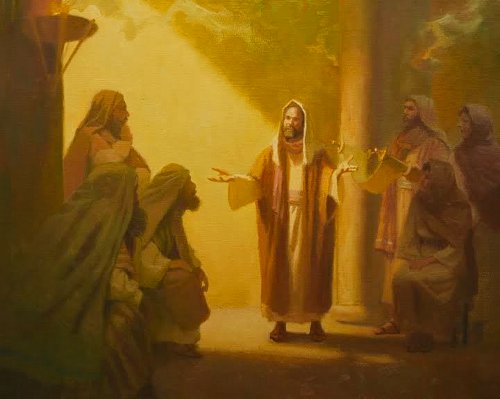
Paul the Apostle, Liar, and Hypocrite

Apostle-Paul-PreachesFor though I am free from all, I have made myself a servant to all, that I might win more of them. To the Jews I became as a Jew, in order to win Jews. To those under the law I became as one under the law (though not being myself under the law) that I might win those under the law. To those outside the law I became as one outside the law (not being outside the law of God but under the law of Christ) that I might win those outside the law. To the weak I became weak, that I might win the weak. I have become all things to all people, that by all means I might save some. I do it all for the sake of the gospel, that I may share with them in its blessings.

1 Corinthians 9:19-23

What then is to be done? They will certainly hear that you have come. Do therefore what we tell you. We have four men who are under a vow; take these men and purify yourself along with them and pay their expenses, so that they may shave their heads. Thus all will know that there is nothing in what they have been told about you, but that you yourself also live in observance of the law.

Acts 21:22-24

In one of the conversations I’ve had with Pastor Randy at my church, we discussed the activities of Paul as recorded by Luke in Acts 21. Included in some of the questions Pastor brought up was whether or not Paul was being disingenuous by offering to pay the vow price for four men at the Temple to avoid criticism from other Jews (see the quote from Acts 21 above) and that Paul had replaced this devotion for the Torah and for the Temple with faith in Jesus Christ. Interestingly enough, according to D. Thomas Lancaster in his commentary on Acts 21:15-22:30 (see First Fruits of Zion’s Torah Club Volume 6 Chronicles of the Apostles reading for Torah Portion Shemini [“Eighth”] for details), this is exactly what most Christian commentators believe.

Paul’s participation in the sacrificial services proved to the Jerusalem believers that he was not an apostate. Ironically, many Christian interpreters would consider participation in the Temple sacrifice as apostasy from Christ. They excuse Paul’s backsliding into Judaism on the basis that he was pressured into the ceremony by James and the elders. Moreover, Paul himself said, “I have become all things to all men so that I may by all means save some” (1 Corinthians 9:22).

-Lancaster, pg 684

The quote above from 1 Corinthians 9 seems particularly damning, but I want to mention something else first. In order to believe the traditional Christian interpretation of Paul’s participation in the Temple sacrifice, we have to believe that Paul is a terrible liar and hypocrite and we have to believe that James and the Council of Apostles of Christ not only condoned his dishonesty, but actively encouraged him in it.

If these are the sorts of people responsible for writing much of our New Testament, what does that say about the foundations of the Christian faith? Did God really entrust the establishment and dissemination of the Gospel of Jesus to not only flawed human beings (and all the writers of the Bible were imperfect), but deliberately dishonest, hypocritical liars? Do the ends justify the means? Should we emulate the apostles by also lying in order to win a few souls for Christ?

Assuming he’s not also lying in the following quotes, Paul defends himself before his Jewish accusers and the Romans:

Paul argued in his defense, “Neither against the law of the Jews, nor against the temple, nor against Caesar have I committed any offense.”

Acts 25:8

After three days he called together the local leaders of the Jews, and when they had gathered, he said to them, “Brothers, though I had done nothing against our people or the customs of our fathers, yet I was delivered as a prisoner from Jerusalem into the hands of the Romans.

Acts 28:17

But then what are we to make of Paul’s own words to the church in Corinth in his first letter to them? What is Paul saying?

whispererAccording to Lancaster’s commentary (pp 684-6), Paul was saying that he was merely crafting his message for different audiences, not that he was changing his overall behavior, especially in relation to Torah observance. When Paul said “to the Jews I became as a Jew,” it could hardly mean he “became a Jew” since he was already Jewish by birth (although some modern Jews believe Paul was born a Gentile and converted to Judaism). Lancaster states that in Paul saying this, he “only means that, when among Jewish people, he employed that common ground to his advantage” since he “shared with them a common cultural and historical heritage.”

I don’t have a problem believing this. My wife sometimes tells me that Jews today have a particular way of thinking and conceptualizing their world and that communication between Jews takes on a different “flavor” than between a Jew and a Gentile. It is likely that Paul would have presented his language and message within a heavily Jewish ethnic, cultural, national, and religious framework when sharing the good news of Messiah to an exclusively Jewish audience.

But what about when Paul said, “To those under the law I became as one under the law (though not being myself under the law) that I might win those under the law”? First of all, he already said he “became a Jew” so why add the redundancy (supposedly) of saying that he “became as one under the law?” Isn’t he saying the same thing twice and worse, isn’t he saying that he acted like someone under the law but actually wasn’t under the law? Isn’t that clearly being a hypocrite?

Lancaster answers those questions by saying that those “under the law” were not born-Jews but Gentile converts to Judaism or proselytes. That answers the question of why he wasn’t “under the law” if it means he’s not a convert to Judaism (a Gentile proselyte who chose place himself under Torah observance by converting). That seems a little weak, even to me, and I wish Lancaster had cited some sources to back up his claim. Apparently, this is his personal opinion but it does tend to solve why Paul engaged in “redundant language.”

On the other hand, he could have been referring to God-fearing Gentiles who were not proselytes (or who were considering conversion but had not yet made a commitment) but who voluntarily chose Torah observance. We see an example of such a person in Izates bar Monobaz who was a disciple of a Jewish merchant named Ananias and who, because of his royal position, was discouraged by Ananias from converting to Judaism. Izates vowed to observe all of the Torah mitzvot as the Jews do and later on, converted to Judaism, as did his mother Helena of Adiabene.

I also have to wonder about Cornelius, the Roman Centurion, who Peter encountered in Acts 10. In verses 3 and 30, Cornelius is seen or relates that he was praying at the ninth hour, or about 3 p.m. which is the set time for the mincha prayers in Judaism. Although the text doesn’t make it explicit, Peter and his Jewish companions stayed a number of days in the Roman’s household (see verse 48) and so they all must have eaten meals together. Unless you believe (and I don’t) that Peter’s vision (see verses 9-33) convinced him and his Jewish companions to permanently forego kosher foods, then, since there was a synagogue and thus a Jewish population in the largely Gentile community of Caesarea, it is likely that kosher food was available.

Just how many of the laws of Torah did Cornelius adhere to in his life as a God-fearer? We can’t possibly know, but it’s at least compelling to consider the idea that he may have kept a good many of them, as his position in the Roman military allowed.

under-law-torahI’m not saying any of my suggestions are fact, but it’s another way to look at Paul’s statement about “those under the law.”

Returning to Paul’s “those under the law” statement, Paul says he is not like them “under the law” but becomes like them. If Lancaster is right and they are converts, then of course, Paul doesn’t become a convert to Judaism and thus his statement is accurate. He can communicate to them in a way that they would understand in crafting his message specifically for converts (or Torah keeping God-fearers), though.

And what of “those outside the law” (1 Corinthians 9:21)? Lancaster defines them as Gentile God-fearers who do not live by the standards of Torah. If Paul becomes like them though, doesn’t that mean he puts away his Torah observance and eats ham sandwiches and shrimp scampi right alongside them at the lunch counter? Again, Lancaster refutes this and says that, “is not to say he ate forbidden foods or unclean meats, but wherever he had room to budge, he did so.” Lancaster goes on to say (pg 685):

Paul explained that he himself is not “outside of the law,” that is to say that he was not a Gentile God-fearer. Instead, he was under the “Torah of Messiah.” He remained legally Jewish in Messiah, but he bent where he could bend and flexed what he could flex in order to win those who were not Jewish.

Again, that seems a little thin, and again, Lancaster appears to be relying on his own interpretation and does not cite other authorities to back up his claim.

Traditional Christianity would probably jump all over these verses to illustrate that Paul was a behavioral chameleon and that Torah observance meant absolutely nothing to him unless he was talking to fellow Jews. Otherwise, he was under the “law of Christ,” which is to say “grace,” rather than the “Torah of Moses” or the traditional observances of the non-believing Jews.

Is there any other way to understand all this, particularly Paul’s behavior with Gentiles?

The only other way I can think of, and I’m no expert, is to say that Paul, like any good communicator, was able to craft the same message differently for different audiences. I’m a professional writer and that’s exactly what I do when constructing technical information about a software product for technical vs. lay audiences. The Gospels are largely thought to relate more or less the same information to different audiences, with Matthew written to Jews and Luke written to Greeks.

Even in ancient days, Jewish and Greek thought and conceptualization of ideas and actions was fundamentally different, and information about the same events and thoughts had to be constructed in different ways.

That’s how I would read Paul’s “chameleon” statements.

But that’s just me.

However, I also know this about Paul:

But I have made no use of any of these rights, nor am I writing these things to secure any such provision. For I would rather die than have anyone deprive me of my ground for boasting. For if I preach the gospel, that gives me no ground for boasting. For necessity is laid upon me. Woe to me if I do not preach the gospel!

1 Corinthians 9:15-16

I believe Paul. I believe he’d rather die than compromise his principles. I believe that he was devoted to the Messiah and to the truth of the Gospel. In fact, Paul ultimately did die for his faith, as did Peter, and the other apostles except arguably John. Like the other apostles, Jesus hand-picked Paul for his task and added to that, he did so as a supernatural event, well after Christ’s ascension to glory at the right hand of the Father. If God knows all things, it would be unlikely that such a man as Paul would have been selected if it was known that he was going to fail spectacularly as a liar and a hypocrite.

AbrahamYes, all men of God have failed. Abraham failed. Jacob failed. Moses failed. David failed. But not one of them failed in their mission for God. They failed in many human ways, but each successfully carried out the work that God gave them to do. Abraham failed when he lied about calling Sarah is sister (although arguably as his cousin, she could be called his “sister”), but he succeeded in having overwhelming faith in God and in the binding of Isaac. Jacob failed in his many acts of deceit, but he succeeded in fathering and raising the beginnings of the twelve tribes. Moses failed by desecrating God in front of the people when he struck the rock twice, which cost him his entry into Israel, but he succeeded in leading the Jewish nation in the wilderness for forty years as a shepherd leads and protects his flock. David failed with Bathsheba, but succeeded in conquering the Land and vanquishing Israel’s foes as her King.

Paul no doubt failed in many human ways too, but he succeeded in integrity, honesty, and courage, even in the face of death, many times defying opponents for the sake of his gospel and promoting Gentile inclusion in the Way of the Messiah.

If Paul was a liar and a hypocrite, then he only claimed to be serving Jesus. He couldn’t have been a real apostle and disciple. No one behaves so badly and yet serves a God of truth and justice.

“Not everyone who says to me, ‘Lord, Lord,’ will enter the kingdom of heaven, but the one who does the will of my Father who is in heaven. On that day many will say to me, ‘Lord, Lord, did we not prophesy in your name, and cast out demons in your name, and do many mighty works in your name?’ And then will I declare to them, ‘I never knew you; depart from me, you workers of lawlessness.’

Matthew 7:21-23

If Paul is the man who most Christian commentators (and most Jewish ones as well) believe him to be, then he was a “worker of lawlessness” literally, and a liar, and a hypocrite. If he was all of those things, then his epistles are a sham and we cannot trust them or their writer. If we can’t trust Paul, then most of the New Testament is unreliable. If that’s true, we Christians are in a horrible bind and we have to believe the modern Jews in saying that Paul took the basic teachings of Jesus and perverted them into an anti-Judaic religion, preaching hate of Jews, of the Temple, of the Torah, and of Israel.

That’s not the Paul I know. I’m sorry if you believe otherwise.

A Passover Seder in Philippi

passover-artBut we went out from Pilippi after the days of the Festival of Matzot.

Ma’asei HaShlichim (Acts) 20:6

Your boasting is not good. Do you not know that a little leaven leavens the whole lump? Cleanse out the old leaven that you may be a new lump, as you really are unleavened. For Christ, our Passover lamb, has been sacrificed. Let us therefore celebrate the festival, not with the old leaven, the leaven of malice and evil, but with the unleavened bread of sincerity and truth.

1 Corinthians 5:6-8 (ESV)

For I received from the Lord what I also passed on to you: The Lord Jesus, on the night he was betrayed, took bread, and when he had given thanks, he broke it and said, “This is my body, which is for you; do this in remembrance of me.” In the same way, after supper he took the cup, saying, “This cup is the new covenant in my blood; do this, whenever you drink it, in remembrance of me.” For whenever you eat this bread and drink this cup, you proclaim the Lord’s death until he comes.

1 Corinthians 11:23-26 (ESV)

D. Thomas Lancaster, in his Torah Club Vol. 6 commentary on Acts 20-21:14 states that Paul and his party had been trying to make it to Jerusalem for Passover, but various difficulties interrupted their trip.

Paul and the delegates immediately scuttled their plans. They did not dare board any vessel departing from Cenchrea together. They gave up hope of arriving in Jerusalem for the Passover. It was too dangerous.

-Lancaster, pg 651

But apparently, even in the days of the Second Temple, Jews in the diaspora commemorated the Passover in some fashion without traveling to Jerusalem to offer the sacrifice according to the Torah of Moses. So where was Paul for Passover that year?

Paul, Timothy, and Luke made their way backwards into Macedonia. They visited Berea and came to Thessalonica by Purim. They arrived in Philippi on (sic) time for Passover.

Paul decided to spend Passover with the believers of Philippi. The Philippians had far fewer Jews in their community than Gentiles. There simply were not many Jews in Philippi, so Paul decided to use the occasion of the feast to teach the Philippians the observances of Passover. He could teach them how to conduct a Seder according to apostolic custom in remembrance of the Master.

-Lancaster, pg 652

I’m not quite sure how Lancaster draws these conclusions, but it makes a wonderful picture of the Jewish apostle to the Gentiles teaching them a precious gift from the Master.

And when the hour came, he reclined at table, and the apostles with him. And he said to them, “I have earnestly desired to eat this Passover with you before I suffer. For I tell you I will not eat it until it is fulfilled in the kingdom of God.” And he took a cup, and when he had given thanks he said, “Take this, and divide it among yourselves. For I tell you that from now on I will not drink of the fruit of the vine until the kingdom of God comes.” And he took bread, and when he had given thanks, he broke it and gave it to them, saying, “This is my body, which is given for you. Do this in remembrance of me.” And likewise the cup after they had eaten, saying, “This cup that is poured out for you is the new covenant in my blood.”

Luke 22:14-20 (ESV)

It is unlikely that what we think of today as “taking communion” actually existed as a Christian practice in the days of Paul. It is far more likely that Paul and other apostles to the Gentiles, taught the believing God-fearing people of the nations of the Passover and the covenant of the Master that is commemorated in his body and blood on Pesach. We see in Paul’s first letter to the church at Corinth, that they also knew and understood the Passover language and symbolism, supporting the idea that at some point, it was relatively common for Jewish and Gentile believers to observe Passover in the diaspora together.

One can imagine the disciples in Philippi pressed in tightly around the triklinium table of Lydia the purple dealer. Over the seven days of Passover, they celebrated the resurrection of the Master together and began to count the days of the Omer leading to Shavuot.

-Lancaster, ibid

passover-art-slavery-to-freedomA few days ago, I wrote about my personal trepidation regarding the approach of Passover and the anticipation of leading a Seder with my family. I’m proceeding a little more optimistically, especially after discovering the sudden appearance of boxes of matzah in the kitchen pantry. But it’s the renewed realization of Paul and his Passover with the Gentiles in Philippi that reminds me that a Christian commemorating the Pesach isn’t just a “nice custom” for us, it’s a responsibility.

A Jewish person in Israel offered this comment on my blog:

But you have an opportunity for a fuller appreciation of it, for its additional implications for those who remember Rav Yeshua as reflected in its symbolisms. You may indeed identify with those few Egyptians who were willing to risk censure from their own people and join with the Jews who were eating lamb and matzah, and painting blood on doorposts, in order to flee with them in a mixed multitude. You may savor the metaphor of fleeing likewise from sin, having attached yourself to follow Rav Yeshua as an exemplar of Israel. If you choose not to remain in the Israeli camp throughout 40 years of desert wandering, you may settle somewhere along the way for a separate existence that nonetheless eschews idolatry and respects Torah values. I don’t really know if it was possible in that time to be intermarried, remain among Jews, and yet remain distinct by not becoming absorbed into the Jewish commonwealth. Ignoring Torah instructions in that era as some Jews did was a recipe for being destroyed in some quite unpleasant fashion. Thankfully today a non-Jew among Jews isn’t under quite the same pressure.

And today, there are believing Gentiles not only commemorating Passover with Jewish families, but leading Seders as well. I thought it appropriate to offer up this sort of “meditation” since tonight, as you read this, is Erev Pesach, and Jewish (as well as a few Christian and intermarried) families all over the world will be sitting at their tables, reciting from haggadahs, eating bitter herbs, asking four questions, and at the end of the evening, shouting with earnest desire, “Next year in Jerusalem!”

I have desired to visit Jerusalem and particularly to pray at the Kotel during my lifetime. If God is gracious and it is within His desire, then this will occur. If not, then one day in the world to come, I will offer a sacrifice at the Temple and eat at the feast of Abraham, Isaac, and Jacob in the presence of the King.

May this Pesach meal be in honor of my Master and may I give thanks that because he gave himself, his body, his blood, his suffering, that I can turn away from sin and turn to God as a partaker of salvation and redemption, and call myself a son of the Most High.

Chag Sameach Pesach!

Paul Picks Up His Cross

pick-up-your-crossAnd when they came to him, he said to them:

“You yourselves know how I lived among you the whole time from the first day that I set foot in Asia, serving the Lord with all humility and with tears and with trials that happened to me through the plots of the Jews; how I did not shrink from declaring to you anything that was profitable, and teaching you in public and from house to house, testifying both to Jews and to Greeks of repentance toward God and of faith in our Lord Jesus Christ. And now, behold, I am going to Jerusalem, constrained by the Spirit, not knowing what will happen to me there, except that the Holy Spirit testifies to me in every city that imprisonment and afflictions await me. But I do not account my life of any value nor as precious to myself, if only I may finish my course and the ministry that I received from the Lord Jesus, to testify to the gospel of the grace of God. And now, behold, I know that none of you among whom I have gone about proclaiming the kingdom will see my face again.

Acts 20:18-25 (ESV)

While we were staying for many days, a prophet named Agabus came down from Judea. And coming to us, he took Paul’s belt and bound his own feet and hands and said, “Thus says the Holy Spirit, ‘This is how the Jews at Jerusalem will bind the man who owns this belt and deliver him into the hands of the Gentiles.’” When we heard this, we and the people there urged him not to go up to Jerusalem.

Acts 21:10-12 (ESV)

Several days ago, in my blog post about my second conversation with Pastor Randy on D. Thomas Lancaster’s Galatians book, I discussed the possibility that Paul may have lied to the Jews in Jerusalem about teaching the diaspora Jews to not circumcise their sons and not follow the Torah of Moses. Was Paul afraid for his life and out of that fear, would he have lied or “bent the truth” about any portion of his mission in order to save himself?

I gave my opinion, based on my general understanding of Paul, that he would not have lied and he would have unflinchingly told the truth about his activities among the diaspora Jews and God-fearing Gentile believers, regardless of the consequences. I found the concrete proof (blame my failing middle-age memory for not recalling these verses earlier) in the passages of scripture I quoted above. Not only would he face many hardships to serve the Master, but he had a pretty good idea that once he entered Jerusalem, he might not be leaving again alive.

But he went to Jerusalem anyway, even after repeated warnings not to go. And once he was in Jerusalem and his adversaries among the Jewish people began to respond to the false rumors about him, he followed the advice of James and the elders to quickly reassure the Jewish population, including the believing Jews who were zealous for the Torah, that he had not forsaken the customs of their fathers, the Law of Moses, and was not teaching other Jews to abandon the Torah.

What then is to be done? They will certainly hear that you have come. Do therefore what we tell you. We have four men who are under a vow; take these men and purify yourself along with them and pay their expenses, so that they may shave their heads. Thus all will know that there is nothing in what they have been told about you, but that you yourself also live in observance of the law.

Acts 21:22-24 (ESV)

Later passages in Acts 21 and beyond tell us that the rumors continued and the prophesied troubles of Paul that were a consequence of his entering Jerusalem all came to pass. But Paul went to Jerusalem with high hopes:

Paul wanted to present these [God-fearing Gentile] men to the apostles and Jewish believers in Jerusalem. He hoped that the character and quality of the delegates would silence his critics and set all fears to rest about the type of disciple he raised in the Diaspora.

-D. Thomas Lancaster
Commentary on Acts 20-21:14, read with Torah Portion Tzav (“Command”), pg 651
Torah Club Volume 6: Chronicles of the Apostles

Paul-ArrestedOne of those Gentile disciples that Paul wanted to present to the apostles was probably Trophimus the Ephesian, the man some Jews from Asia thought Paul had taken into the Temple, defiling the Holy Place. Again, this wasn’t true, but as Winston Churchill once said, “a lie gets halfway around the world before the truth has a chance to get its pants on.” Apparently that was true nearly 2,000 years before Churchill was born and I don’t doubt that it’s true today. The sad outcome is that Paul stood condemned before the Jewish population of Jerusalem based on a fabric of lies that whipped the crowds into a frenzied riot.

But Paul knew he would face hard trials before they actually happened and nevertheless, went ahead into Jerusalem to accept whatever God had planned for him.

And now, behold, I am going to Jerusalem, constrained by the Spirit, not knowing what will happen to me there, except that the Holy Spirit testifies to me in every city that imprisonment and afflictions await me.

Acts 20:22-23 (ESV)

The dedication of Paul to God was remarkable, but then again, a disciple always seeks to emulate the life of his Master, even unto death.

And I have other sheep that are not of this fold. I must bring them also, and they will listen to my voice. So there will be one flock, one shepherd. For this reason the Father loves me, because I lay down my life that I may take it up again. No one takes it from me, but I lay it down of my own accord.

John 10:16-18 (ESV)

Greater love has no one than this, that someone lay down his life for his friends.

John 15:13 (ESV)

“Father, if you are willing, remove this cup from me. Nevertheless, not my will, but yours, be done.”

Luke 22:42 (ESV)

Paul also emulated his Master by being a “good shepherd” to his own flock, and as such, Paul strived to make provisions for their continuation and guidance under other “good shepherds.”

Pay careful attention to yourselves and to all the flock, in which the Holy Spirit has made you overseers, to care for the church of God, which he obtained with his own blood. I know that after my departure fierce wolves will come in among you, not sparing the flock; and from among your own selves will arise men speaking twisted things, to draw away the disciples after them. Therefore be alert, remembering that for three years I did not cease night or day to admonish every one with tears. And now I commend you to God and to the word of his grace, which is able to build you up and to give you the inheritance among all those who are sanctified. I coveted no one’s silver or gold or apparel. You yourselves know that these hands ministered to my necessities and to those who were with me. In all things I have shown you that by working hard in this way we must help the weak and remember the words of the Lord Jesus, how he himself said, ‘It is more blessed to give than to receive.’”

Acts 20:8-35 (ESV)

Paul knew the dangers that the believing Jews and Gentiles in the diaspora were facing, particularly if Paul would no longer be alive or at least not be free to continue to visit them and support them with his letters. So he, like Moses before him, gave them a warning to watch out for apostasy and for “wolves” who would come in and surely lead them astray. He also very likely knew, just as Moses did, that apostasy was inevitable.

For I know that after my death you will surely act corruptly and turn aside from the way that I have commanded you. And in the days to come evil will befall you, because you will do what is evil in the sight of the LORD, provoking him to anger through the work of your hands.”

Deuteronomy 31:29 (ESV)

In his letter to the mixed congregation of believing Jews and Gentiles in Rome, he tried exceedingly hard to give the same warning.

So I ask, did they stumble in order that they might fall? By no means! Rather through their trespass salvation has come to the Gentiles, so as to make Israel jealous. Now if their trespass means riches for the world, and if their failure means riches for the Gentiles, how much more will their full inclusion mean!

Romans 11:11-12 (ESV)

Read the entire chapter for the full argument, but it seems apparent to me that Paul was urging the Jewish and Gentile disciples to regard each other as equal before God in salvation and access, working as different parts with different functions and responsibilities, but all operating in a single body:

For as in one body we have many members, and the members do not all have the same function, so we, though many, are one body in Christ, and individually members one of another.

Romans 12:4-5 (ESV)

So, in what he knew was his final journey to Jerusalem and possibly the last journey of his life, Paul encouraged the “shepherds” placed over the Master’s flocks, to “feed the sheep.”

When they had finished breakfast, Jesus said to Simon Peter, “Simon, son of John, do you love me more than these?” He said to him, “Yes, Lord; you know that I love you.” He said to him, “Feed my lambs.” He said to him a second time, “Simon, son of John, do you love me?” He said to him, “Yes, Lord; you know that I love you.” He said to him, “Tend my sheep.” He said to him the third time, “Simon, son of John, do you love me?” Peter was grieved because he said to him the third time, “Do you love me?” and he said to him, “Lord, you know everything; you know that I love you.” Jesus said to him, “Feed my sheep.

John 21:15-17 (ESV)

the-shepherdOther passages in the letters of Paul testify to his disregard for his own safety and even his life in the service of the Master. Consider 2 Corinthians 4:7-5:10, 6:4-10, Philippians 1:19-26, 2:17, 3:8, and 2 Timothy 4:6.

No, Paul did not lie, bend the truth, or misrepresent any of his actions in order to protect himself. The Paul we see in Acts 21 is the genuine Paul, who was given a hard task by his Master and Lord, and fulfilled it with remarkable courage in the face of overwhelming hardships. He never told the diaspora Jews to not follow the Torah of Moses or the traditions. He never encouraged Jews to not circumcise their sons. He never taught anyone against the Jewish people, against the Temple, or against the Law.

Even when he knew that disaster awaited him in Jerusalem, he did not fail, he did not shirk his responsibilities, but instead, continued to follow where Jesus the Nazarene led him.

From that time Jesus began to show his disciples that he must go to Jerusalem and suffer many things from the elders and chief priests and scribes, and be killed, and on the third day be raised. And Peter took him aside and began to rebuke him, saying, “Far be it from you, Lord! This shall never happen to you.” But he turned and said to Peter, “Get behind me, Satan! You are a hindrance to me. For you are not setting your mind on the things of God, but on the things of man.”

Then Jesus told his disciples, “If anyone would come after me, let him deny himself and take up his cross and follow me. For whoever would save his life will lose it, but whoever loses his life for my sake will find it. For what will it profit a man if he gains the whole world and forfeits his soul? Or what shall a man give in return for his soul? For the Son of Man is going to come with his angels in the glory of his Father, and then he will repay each person according to what he has done. Truly, I say to you, there are some standing here who will not taste death until they see the Son of Man coming in his kingdom.”

Matthew 16:21-28 (ESV)

Should such a time come in our lives when the Master asks us to pick up our cross and follow him, to offer more of ourselves than we would like to give, even including our lives, may we remain as steadfast in our mission as Paul, the Jew from Tarsus, the good shepherd.

Lancaster’s Galatians: Sermon Two, Influencers, Circumcision, and What is Torah?

circumcision-mohelNo word in the Jewish religion is so indefinable and yet so indispensable as the word Torah. Torah is the most comprehensive term for the substance of Judaism. Torah is Teaching. Torah is Law. No one can hope to achieve even a minimal appreciation of the Jewish religion without learning, and then reflecting on, the idea of Torah and its place in the life of the Jew. Torah has been for ages the sum and substance of Jewish scholarship. But it would be utterly wrong to conclude from this emphasis on study that Jewish spirituality runs dry in the sands of intellectualism.

-Rabbi Maurice Lamm
“What is Torah”
Aish.com

After greeting them, he related one by one the things that God had done among the Gentiles through his ministry. And when they heard it, they glorified God. And they said to him, “You see, brother, how many thousands there are among the Jews of those who have believed. They are all zealous for the law, and they have been told about you that you teach all the Jews who are among the Gentiles to forsake Moses, telling them not to circumcise their children or walk according to our customs.

Acts 21:19-21 (ESV)

Last night’s conversation with Pastor Randy about the second chapter (sermon) in D. Thomas Lancaster’s book The Holy Epistle to the Galatians wasn’t quite as intense as the previous week’s talk (though it had its moments early on). A lot of the focus was on who Paul’s intended audience was supposed to be, what Paul was trying to say, and why he was saying it.

I think Pastor Randy wanted to pull in all of the material from the letter whilst I wanted to try to contain our investigation to the current chapter of Lancaster’s book, which only covers Galatians 1:6-10. Yes, that’s pretty hard to do, but as I’ve mentioned before, I wasn’t satisfied with my original reading of Lancaster’s book, and I wanted to take this opportunity to go through it again with the proverbial fine-toothed comb, sifting its pages, and uncovering its message, along with Paul’s message to the Galatian churches.

Pastor Randy remains convinced that Paul was writing to the Gentile and Jewish populations in the churches in Galatia, and it’s hard to refute that. Pastor did back away from his comments of the previous week regarding Paul’s addressing of “Brothers” as being only to Jews, but he maintains the term can be applied to both Jews and Gentiles in the community of believers.

And then I brought up how silly it would be for Paul to tell Jews not to become circumcised and convert to Judaism.

And then he brought up how some/many of the Jews in the diaspora may not have been circumcised and may not have been all that Torah observant.

What?

It would seem, summoning Occam’s razor to my rescue, that the most reasonable understanding of the Jewish population of the diaspora was that they were observant to Torah relative to the normative halachah of their day, and that the Jewish males would routinely have been circumcised on the eighth day, even as Jesus was circumcised on the eighth day.

I’ll get back to that in a moment, but before I forget, we also discussed the identity of the influencers:

I am astonished that you are so quickly deserting him who called you in the grace of Christ and are turning to a different gospel—not that there is another one, but there are some who trouble you and want to distort the gospel of Christ. But even if we or an angel from heaven should preach to you a gospel contrary to the one we preached to you, let him be accursed.

Galatians 1:6-8 (ESV)

Who were these “troublers and distorters?” Christian expository preaching for centuries has referred to them as “Judaizers.” We will take a look at that terminology as we wrestle with this question in the ensuing material, but for now, we will adopt a term currently popular in Pauline studies and simply refer to them as the “influencers.” They are within the Galatian communities who are influencing the God-fearing Gentiles to undergo conversion.

One quick observation about the “influencers:” They are most likely believers in Yeshua of Nazareth. This possibility is lost on many interpreters. They might be Jewish believers or believing proselytes to Judaism, but they are almost certainly believers.

How do we know? We will consider the evidence as we work through the epistle, but from the outset, Paul says that they “want to distort the gospel of Messiah.” A non-believer does not want to distort the gospel; he wants to refute it and repudiate it. Only believers distort the gospel. Paul says that they preach “a gospel contrary to the one we preached to you,” but they [are] preaching a gospel, they [are] teachers of good news. For that reason we may deduce that they are believers in Yeshua of Nazareth.

-Lancaster, “Galatians” Sermon Two

When I arrived for my appointment with Pastor Randy, he was working on his computer with translations of Galatians 1:6-8 from the ESV, the KJV, and the Greek text in preparation for our meeting. Here’s the relevant portions of vv. 6-7 from the King James Version with emphasis added:

I marvel that ye are so soon removed from him that called you into the grace of Christ unto another gospel: Which is not another; but there be some that trouble you, and would pervert the gospel of Christ.

paul-editedI can’t reproduce the Greek but the question Pastor was asking is if the “gospel” being preached by the Influencers was indeed the gospel of Christ, or another preaching altogether. While we can agree that there is no other “gospel” of Christ, there can be other types or fashions of “good news,” and Pastor’s opinion is that the Influencers didn’t have to be believing Jews based on the text or context, and indeed, they might not be believers at all.

There’s a certain merit in this, since during Paul’s time with the Jewish communities in the area of Galatia, he encountered many Jewish people and God-fearing Gentiles who listened to the message of the Gospel, but not all of them came to faith.

One of the big, big problems that all Jewish people had with “the Way,” including many of the Jews within the Way, was how to admit Gentiles as equal covenant members without requiring that they become circumcised and convert to Judaism. Acts 15 answers that question, but Galatians was almost certainly written before the Acts 15 event. The decision that Gentiles were not required to convert seems to have been clear to Paul as he was writing the letter to Galatia, but James and the Council had not yet rendered a halakhic ruling based on legal proof-texts. The “Jerusalem Letter” made the decision official, but at this point, Paul is going by his understanding of the Messiah’s plan for the Gentiles through the guidance of the Holy Spirit.

Getting back to circumcision, Pastor maintains that Paul very well could have been telling both Gentiles and Jews that they did not have to become circumcised and observe the Law in order to be disciples of Jesus Christ, the Messiah.

OK, I accept that was Paul’s message to the Gentiles, but to the Jews? Would Paul ever say such a thing?

…and they have been told about you that you teach all the Jews who are among the Gentiles to forsake Moses, telling them not to circumcise their children or walk according to our customs.

Acts 21:21 (ESV)

That’s what finally got back to the Jews in Jerusalem about Paul, and they were taking it very seriously. What was Paul going to do to quell these rumors?

What then is to be done? They will certainly hear that you have come. Do therefore what we tell you. We have four men who are under a vow; take these men and purify yourself along with them and pay their expenses, so that they may shave their heads. Thus all will know that there is nothing in what they have been told about you, but that you yourself also live in observance of the law.

Acts 21:22-24 (ESV)

That’s the solution, but was Paul being disingenuous? That is, was he just going through the motions to mollify the Jerusalem Jews by undergoing a Jewish vow ritual, something he no longer saw as relevant in his life because of his faith in Messiah?

In other words, was he lying to the Jerusalem Jews (and was James and the Elders supporting his lies) about whether or not he was telling the diaspora Jews not to circumcise their sons and to forsake Moses? Did he really tell all those things to the Jewish populations in Galatia?

“I am a Jew, born in Tarsus in Cilicia, but brought up in this city, educated at the feet of Gamaliel according to the strict manner of the law of our fathers, being zealous for God as all of you are this day.

Acts 22:3 (ESV)

Now when Paul perceived that one part were Sadducees and the other Pharisees, he cried out in the council, “Brothers, I am a Pharisee, a son of Pharisees.

Acts 23:6 (ESV)

If anyone else thinks he has reason for confidence in the flesh, I have more: circumcised on the eighth day, of the people of Israel, of the tribe of Benjamin, a Hebrew of Hebrews; as to the law, a Pharisee; as to zeal, a persecutor of the church; as to righteousness under the law, blameless.

Philippians 3:4-6 (ESV)

arrestedPaul was certainly working to establish his “Jewish credentials” in these circumstances. I know that a lot of people, when in fear of their lives, would lie to save themselves, but if Paul were telling diaspora Jews to not circumcise their sons and to go against the Torah, would he have lied about it, even to save his own life?

That hardly seems likely. We know from the New Testament record that Paul endured enormous hardships for the sake of the Gospel of Christ, and that his own life was worth less to him than preaching the good news of Moshiach to the Jews and the Gentiles. If he was trying to save his own life, he wouldn’t have done what we know he did on numerous occasions, which resulted in him being beaten, left for dead, shipwrecked, arrested, put in prison, and ultimately executed by the Romans.

We also know this about some of the Jews in Jerusalem.

And they said to him, “You see, brother, how many thousands there are among the Jews of those who have believed. They are all zealous for the law…

Acts 21:20 (ESV)

Jewswho have believed and all zealous for the law. Believing Jews zealous for the law. Jewish disciples of Jesus as the Messiah who were also zealous for the Torah.

Of course they were upset at the thought that Paul was rumored to be teaching against the law to the diaspora Jews. Of course they were upset when they thought he had taken Trophimus the Ephesian into the Temple (Acts 21:29).

When the seven days were almost completed, the Jews from Asia, seeing him in the temple, stirred up the whole crowd and laid hands on him, crying out, “Men of Israel, help! This is the man who is teaching everyone everywhere against the people and the law and this place. Moreover, he even brought Greeks into the temple and has defiled this holy place.”

Acts 21:27-28 (ESV)

Paul was believed by the Jews from Asia to have taken a Greek into the Temple, defiling it (think “Maccabees” and Chanukah), and speaking against the people (Jews) and the Torah, and they called to the crowds of Jerusalem Jews to help capture this “traitor.” Either that was true and Paul lied about it to save himself, or it was untrue and Paul was defending himself from these vicious rumors. As I mentioned, Paul lying about this seems completely inconsistent with what we know about his history. If he’s telling the truth and the rumors are false, then Paul never told the diaspora Jews to not circumcise their sons, to not observe Torah, and he never took a Gentile into the Temple or spoke against Jewish people or Israel.

But if Paul supported Jewish observance of Torah and circumcision and if there were Jerusalem Jews who were both believers and zealous for the Torah, then they obviously didn’t see any sort of inconsistency between faith in Messiah Jesus and a traditional Jewish life of Torah observance.

I think I gave Pastor something to think about but he is going to test my beliefs very stringently, as well he should.

What is Torah?

Silly question, right? Not according to the quote from Rabbi Maurice Lamm I put at the top of this blog post. And yet, Pastor Randy said that he and I need to have a working definition of “Torah” so that we can know what we’re supposed to be talking about in these conversations. When I say, Paul was a “Torah observant Jew,” what do I mean? I think I know what I mean, but the answer is far more complex than we might imagine.

simhat-torahIt’s also important to understand what “Torah” was in the days of Paul and the Apostles so that we can establish how that relates to what Torah is today. What “Torah” observance is appropriate for a modern “Messianic Jew” to follow? Are those practices identical to say, an Orthodox Jew? How does that observance relate to modern Jewish halachah, let alone the future of the Torah and the rebuilding of the Temple?

Rabbi Yanki Tauber calls the Torah a guidebook, a contract, an identity, a vision, and a daughter and wife. Rabbi Tzvi Freeman calls Torah “oneness.”

The writers at First Fruits of Zion (FFOZ) say this about Torah:

The Torah is the foundation of faith in Yeshua. All of the concepts associated with the Gospel—such as God, holiness, righteousness, sin, sacrifice, repentance, faith, forgiveness, covenant, grace and the kingdom of heaven on earth—are introduced in the Torah. Basic sacraments and rituals like baptism, communion, prayer and blessing all come from the Torah. Faith in Jesus is meaningful because of the Torah. Without the Torah, the Gospel has no foundation on which to stand.

The Hebrew word torah is translated “law” in most of our English Bibles. The Torah is called the Law of Moses because Moses wrote it, but the Torah is more than just a legal code. The word “Torah” (תורה) is from the Hebrew root, yara (ירה) which means “to instruct,” or “to teach.” Although it does contain laws, Torah itself is not only a “law,” but it is God’s “teaching” and “instruction.” That explains why the word Torah is often used to refer to the whole Bible. From our perspective, even the Gospels, Acts, Epistles, and Revelation fall under the broad definition of Torah. It’s all God’s instruction, and it’s all rooted in the Torah of Moses.

The Torah is the story of God’s people and how they came to be the people of God in the first place. The Torah is something all believers have in common. We all have this common ground. The Torah is our shared origin. It is God’s book.

And that hardly scratches the surface.

What is “Torah” relative to my conversations with Pastor Randy when trying to comprehend Paul, his letter to the Galatian churches, and the wider scope of how to understand Jews in Messiah today?

I am entertaining suggestions and comments. Please let me…let us know what you think and let’s see if we can be pointed in the right direction.

Lancaster’s Galatians: Introduction, Audience, and What Happened to the Torah?

Apostle-Paul-PreachesThe Apostle Peter said that the writings of “our beloved brother Paul” contain “some things hard to understand.” If that was true in Peter’s day, how much more so today. Paul was a prodigy educated in the most elite schools in Pharisaism. He wrote and thought from that Jewish background.

-D. Thomas Lancaster
from the Introduction (pg 1) of his book
The Holy Epistle to the Galatians: Sermons on a Messianic Jewish Approach

I know I’m going to regret this, but if I wait until tomorrow or later in the week to write this, I’m going to forget something about my conversation with Pastor Randy. I have to get up at an insanely early hour tomorrow, but I need to make a record of what we discussed tonight.

As I write this it’s Wednesday night. I left Pastor’s office just about fifteen or twenty minutes ago after discussing the Introduction and first chapter of Lancaster’s Galatians book with him. You’ll recall I mentioned a few days ago our intention to make a study of Lancaster’s Galatians chapter-by-chapter, week-by-week as the subject of our Wednesday night discussions. I wasn’t sure what to expect when I agreed to focus our weekly talks on this book, but I never thought I’d be involved in such a densely packed conversation. Actually, I was afraid that we would run out of material, since Chapter One (really, Sermon One) is very introductory. However, we barely made it out of the Introduction section and into the first chapter before time ran out.

I finally confessed to Pastor Randy tonight that I’m more than a little in awe that we’re having these conversations. Debating theological topics with him, given his intellect, education, and his fluency in languages, makes me feel like a five-year old trying to discuss the Grand Unified Theory with Albert Einstein. OK, maybe it’s not quite that extreme, but I’m definitely out of my depth. To his credit, Pastor Randy said the benefit he receives is that I am well versed in the New Testament from a Messianic Jewish point of view.

I’m sure there are a few people out there who would disagree with that assessment or me, but such is life.

Did Paul convert to Christianity? That question came up rather abruptly.

No, not from my point of view and Pastor Randy agreed but he believes that Paul changed direction 180 degrees from his former life as a Pharisee, not just in turning from persecuting believing Jews to supporting them and evangelizing the Gentiles, but in his entire conceptualization and attitude about Judaism (as opposed to “Jewishness” which is the quality of a person being a Jew without the religious and halalaic implications) and the Torah.

Acts 15 came into the conversation very quickly and I realized that Pastor Randy believes that not only did James and the Council absolve the Gentiles from having to observe Torah, but the Jewish believers as well. As I’ve said before when addressing Acts 15, I don’t believe James made a decision that extended beyond the Gentile disciples of Messiah.

This all goes back to our previous conversations about the purpose of the Torah, which we’ve been having for many weeks. While Pastor Randy doesn’t believe Jews and their “Jewishness” ended with Jesus, ultimately, he believes the Torah pointed to Jesus as a sort of culmination and that it’s not Judaism but the message of the Gospel that saves. He believes that if Jews had continued in the “Messianic faith” (i.e. Christianity) beyond the first century or two after the ascension, the observance of Torah would have largely fallen away. Certainly the vast majority of what we think of as Rabbinic Judaism wouldn’t have gained traction and evolved and expanded to what we see today, particularly in Orthodox Judaism.

I know more than a few Jews reading my blog post probably just winced or gasped a bit. when reading the last few sentences.

On the other hand, looking at the opposite end of history, we both agree that the Jewish Messiah King will return and sit on the Throne of David in Jerusalem. There will be a Third Temple. The festivals will be reinstated. Gentiles as well as Jews will observe the festivals but, according to Pastor Randy, the Messiah will be the focus, not simply observance for its own sake.

But will “Judaism” disappear? Should “Judaism” (as opposed to “Jews” and “Jewishness”) disappear?

I didn’t hear Pastor say that Jews should disappear, quite the opposite, but we did discuss, and discuss, and discuss what is a Jew, what is Jewishness, and what is Judaism. My argument is that, whether you agree with everything that the Rabbis said, did, and wrote over the past twenty centuries, for right or for wrong, it was the necessary element and organizational structure for the preservation of Jews as a people and without that ethnic, traditional, legal, corporate structure, with only a string of DNA identifying the Jewish people as Jewish , they would ceased to exist as an identifiable people group in the world a very long time ago.

Both Pastor Randy and I agree that God will not allow the Jewish people to perish.

But what then are the distinctions between Jewish believers and Gentile believers in Messiah, both in ancient times and now? That was a hotly debated discussion. No, we didn’t get “hot under the collar,” but we did go around and around the point, orbiting it like two comets chasing each other’s dust trails.

judaismIf the Torah is to be observed in Messianic Days during the time of the Third Temple and if God meant for the Torah to be obeyed by the Jewish people prior to the first coming of Messiah and even during his lifetime, what was supposed to happen to it between the ascension and the return? Granted, we have no Temple today, but does that mean the entire Torah is in cold storage awaiting a spring thaw? And what about the sages? Are none of their interpretations, rulings, and judgments valid? Even in Yeshua’s day, he agreed with some of the halachah of the Jewish authorities (PDF) and indeed, he agreed they had authority to make such rulings.

At one point in the conversation, Pastor Randy said that he believes both Jews and Gentiles in Messiah in today’s world should look and behave in substantially similar ways, if not identically based on his understanding of the New Testament. His issue is that Torah was always impossible to keep and was put in place primarily to point to that impossibility and why we all need the Messiah. My point is that such an act looks like God just set the Jews up to try to obey an impossible set of rules for the sake of eventually pointing to Jesus. Those hundreds of generations of Jews who lived and died struggling to obey Torah would have led lost lives if the only reason for Torah’s existence was to make a point. What saved those ancient, devout Israelites?

“Grace,” says Pastor Randy.

My point exactly. Torah never, ever was intended to save. It was always faith and grace.

I think he can agree with the value of the Jewish traditions if they’re viewed as traditions and not behaviors one must do in order to please God. “But what about feeding the hungry and visiting the prisoner,” says I? The Torah didn’t stop, particularly the parts that clearly are a responsibility for Christians and Jews today. And if “Rabbinic Judaism” was God’s mechanism for preserving the Jewish people as a people since the fall of Jerusalem in 70 C.E., then who is to say that it’s wrong? After all, what systems have been put into place to implement and sustain Christianity over the long course of history?

One of the big stumbling blocks in the discussion was “Rabbinic Judaism” which could be defined as relying on a “system” instead of what the Bible says. I countered that a Christian denomination is a system and that Pastor Randy operates within one. He countered that he can and has existed outside a denomination before and that what the Bible says is ultimately more important than a denomination or any other system of religious practice.

But do we have unfiltered access to the Bible and to God? Don’t we use “systems” as the means by which we implement what the Bible tells us to do in our daily lives? Yes, if we take all of the incredible detail involved in living life as an Orthodox Jew, for example, those “implementations” are vast, multi-layered, and frankly, there are many that seem to go too far (I know I’m going to catch heck for that), but it’s still fits my definition of what humans do to “operationalize” a life of faith. Christian denominations do this to a lesser or greater degree, but without the same level of formalization (after all, what is Christmas, what is Easter, and what is Lent?).

Can we live a life of just the Bible without a system (be careful how you answer that)? Are there portions of both the modern Christian and the modern Jewish “systems” that are valid interpretations of a Biblical life, even if Messiah would (and will) have “issues” with other portions?

Jesus made distinctions between halachah he supported and did not support (is it lawful to heal on the Shabbat?) when he was first here and I suspect that he’ll “straighten out” both Jews and Gentiles when he returns. Some Jewish authorities write that one of the things Messiah will do when he comes (returns) is teach Torah properly and I believe it, too.

Shofar as sunrisePastor Randy says he believes that Gentiles should and will observe Pesach, Shavuot, and Sukkot along with the Jews but you can’t do that without the Torah not only being intact, but valid, and able to be applied in our world.

You can see why we almost didn’t make it out of page 1, let alone the Introduction of the book, and this is where we spent most of our discussion time. Sermon One runs from page 9 to page 19. It’s where we’ll have to pick up next week, but we did encounter an interesting question in the Sermon One material, and one I thought I knew the answer to. To whom did Paul write the Galatians letter? Yes, the churches in Galatia, but who in those churches? On page 19, Lancaster says it’s to the “God-fearing Gentile believers in Galatia” specifically.

But get this:

For I would have you know, brothers, that the gospel that was preached by me is not man’s gospel.

Galatians 1:11 (ESV)

Would Paul have called Gentles “brothers?” Wouldn’t it have made more sense for him to call his fellow Jews by that name?

We ourselves are Jews by birth…

Galatians 2:15 (ESV)

Paul is obviously talking to Jewish people at this point.

To give a human example, brothers…

Galatians 3:15 (ESV)

Brothers, I entreat you…

Galatians 4:12 (ESV)

I could go on. There’s 4:28, 4:31, 5:11, 5:13, and 6:1 to consider, but according to these references, there’s every reason to believe that Paul was addressing both a Jewish and a Gentile audience in this letter. That being the case, Pastor Randy suggests that Paul is explaining to both Jewish and Gentile believers that obedience to the Law is not necessary if one is in Christ. Is obedience to the Law unnecessary for either the Jew or the Gentile if Messiah is your Master?

Salvation is through Jesus but does that obliterate the Sinai covenant for the Jews? Pastor Randy and I agree that it is through Abraham and the New Covenant that we Gentiles are “grafted in.” We know that the Hebrew for the word “New” in “New Covenant” really means “new” and not “renewed,” even though the wording of the New Covenant (see Jeremiah 31 and Ezekiel 36) largely confirms and expands all of the covenants that God previously made with Israel.

Something I didn’t remember to bring up during my conversation with Pastor Randy is the question of whether or not the New Covenant is already completely written on our hearts or if God is in the process of doing the writing? If the latter, then God may be rather slowly (from a human perspective) doing away with the old (yes, the Torah will go away when heaven and earth go away) and replacing it with the new, but that such a thing has not been accomplished yet (Hebrews 8:13). As I alluded to a moment ago, Jesus also said that “until heaven and earth pass away, not an iota, not a dot, will pass from the Law until all is accomplished,” (Matthew 5:18) and I don’t think that “all is accomplished” yet. After all, the Messiah hasn’t returned, we don’t have universal peace on earth, the Temple hasn’t been rebuilt, and Israel is not yet the head of the nations.

You can see why I didn’t want to wait until later to get this all down. I’m tired but energized at the same time. I’m fighting well out of my weight class, so to speak, but I have to keep going. I agreed to have these conversations in order to learn and I know that Pastor Randy is both teaching and learning as well.

There’s nothing better to show you what you truly know and believe than to have your belief’s challenged and be asked to give a “ready defense.”

western-wall-jerusalem-dayThe funny thing is, after the conversation was over and Pastor Randy was walking me to the door of the church (by the time we’re done talking, just about everyone is gone and he wants to make sure all the doors are securely locked for the night), he continued to share with me his love for the Jewish people and his fascination with Judaism. Listening to him talk about his life in Israel and his relationship with his Jewish friends, it is abundantly apparent that he adores the texture, fabric, and essence of living among Jews. But at that moment, his words and emotions seemed so inconsistent with his beliefs on the Law and Judaism relative to our conversation. And yet in every other way, he confirms my own belief in the exceptional “specialness” of what it is to be Jewish and to live a fully realized Jewish life. The Jewish Jerusalem is where we feel the beat of God’s heart.

If ten thousand religious Jewish people came to faith in Yeshua as Messiah tomorrow, should we really ask them to give up everything in their lives that defines them as Jewish and that allows them to worship God as Jews? It sure didn’t sound like Pastor Randy was saying that in those last seconds we had together before I walked out into the night. I know he agrees that we Christians haven’t gotten it all right and we’ve built up our “systems” that help us understand how to obey God. Someday, Messiah will show us what we did right and what we didn’t do right, what we should have included, and what we should have let go.

In examining the vast body of Jewish practice, particularly the complexities of Orthodox Judaism, can we say that much of it is right and necessary now but that when Messiah returns, he will also say what is proper and what is not? Will there be a distinction in Torah for Jews that will be Jewish and will be a Judaism but will not look quite the same as Judaism looks right now?

Incredibly tough questions. I don’t have the answers. Messiah does but he’s not here yet.

This series of conversations and my blogs about them are controversial by design and I don’t expect all of my readers to accept everything I’m documenting here. I have no idea what kind or how much “blowback” I’m going to receive, but I expect there will be some.

Please be patient and exercise kindness and even some restraint in your responses, should you choose to respond. This is a journey of exploration into what for me is an undiscovered country. If you know the territory and would like to share some details about the road ahead, you are welcome to participate.

The journey continues next week.

Addendum, March 15: After reading all of the comments and continuing to struggle with the conversation and the issues involved, I have produced another reflection of my thoughts in an “extra meditation,” Broad Strokes.